Getting To Millwall
I like going to see Ipswich play at Millwall.
The New Den is a compact ground, where away supporters get a good view of the action. In fact, as the view is one of the best, the stewards are generally friendly and it is an easy ground to get to by public transport, it is one of the best away experiences in English football, if you support a reputable club.
It is also exceedingly good value, as my senior ticket cost just £17 and of course because of my Freedom Pass, I had no travel costs. So my total expenditure was much the same cost as taking a lady to the cinema. Although in that case, I’d probably have to buy a drink or even a meal!
I went by taking the Overground to Canada Water station, from where I got a P12 bus directly to the ground. Even though, these buses are every 20 minutes on a Bank Holiday, I still did the journey in just over thirty minutes.
Coming back, I walked to South Bermondsey station and took the train to London Bridge, from where I got a 141 bus home.
wikipedia also says that a 21 bus goes close to the New Den, so as it goes past the end of my road, I might try that next year. You get off at Ilderton Road.
It certainly is the easiest ground for me to get to, with the probable exception of Arsenal’s ground at The Emirates. But that would cost a lot more for a match.
An Overground Station With On-Platform Cafe And Toilets
On Friday, I came home from Euston, by taking the Overground to Willesden Junction station and then taking the North London line to Highbury and Islington station.
I was surprised to see that at Willesden Junction station, there was not only a cafe on the platform, but toilets too!
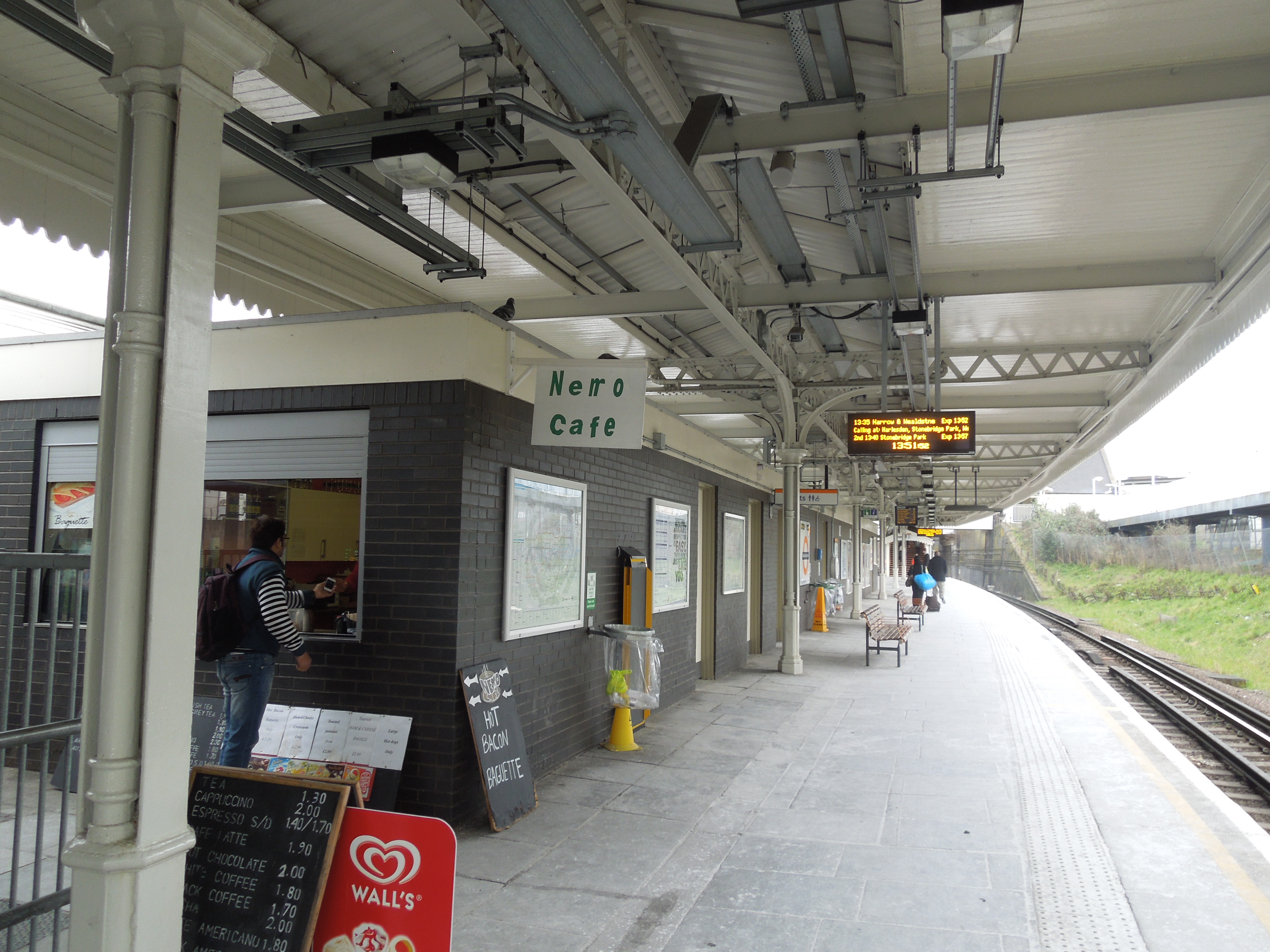
An Overground Station With On-Platform Cafe And Toilets
I wonder if there are any others!
It may seem a bit of a roundabout route, especially, as I could have taken the Victoria line to do the same journey. But I wanted to see if the sun was creating any good views of London between Camden Road and Canonbury and Barnsbury stations.
Unfortunately, it wasn’t! BUt it is a good trip for visitors, as this post showed. Unfortunately, the trains have been such a success, that you may not get good views as they can be a bit crowded.
What A Mistaker To Make!
The phrase borrowed from Hello hello, was a phrase that C and myself used to use, when we did something, which we construed as stupid.
When I come home from Canary Wharf, I usually use one of three routes.
1. I take the Jubilee line to London Bridge station and then get a 141 bus from the bus station.
2. I go just one stop on the Jubilee line to Canada Water station and then get the Overground to Dalston Junction station.
3. I get a 277 bus all of the way.
When I arrived at Canary Wharf, I ascertained the the bus station at London Bridge was still not working, so route one was not one to try, as I would have shopping with me and was in walk-avoidance mode.
The bus takes a few minutes longer, so I took the Canaqda Water route.
But I’d gambled without the knowledge that the Overground was shut at Whitechapel because of CrossRail.
On Sundays, you should always check and my mistake wasn’t to do this.
So I was turfed off the train at Shadwell station and advised to get the DLR to Bank. Which is what I did, taking the Northern line from there to Moorgate, from where I got the 141 bus, that I should have been able to get from London Bridge station.
In the grand scheme of things, it’s not a great inconvenience, but I’ll be glad when CrossRail is finished and lines are not shut down at the weekend.
Sebi’s Cafe At Canonbury Station
A lot of the Overground stations have space for a small cafe.
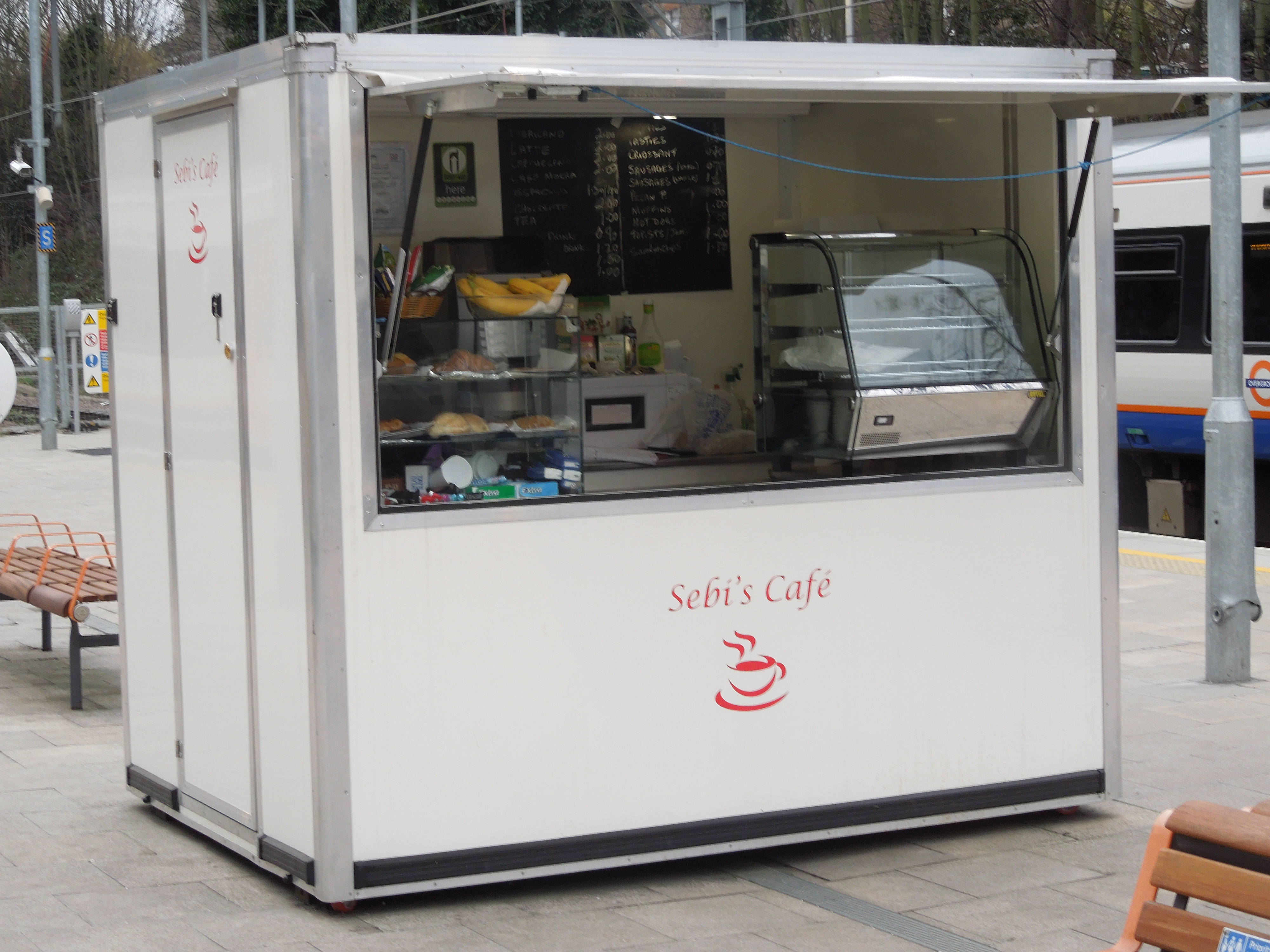
Sebi’s Cafe At Canonbury Station
We need more like this one on Canonbury station.
Canonbury is an ideal place for a cafe, as the platform is wide and there is quite a few passengers changing from the North to East London lines and vice versa.
m
Why We Need More Walk-Through Trains?
The Class 378 trains on the London Overground are completely articulated and you can walk through from one end to the other.
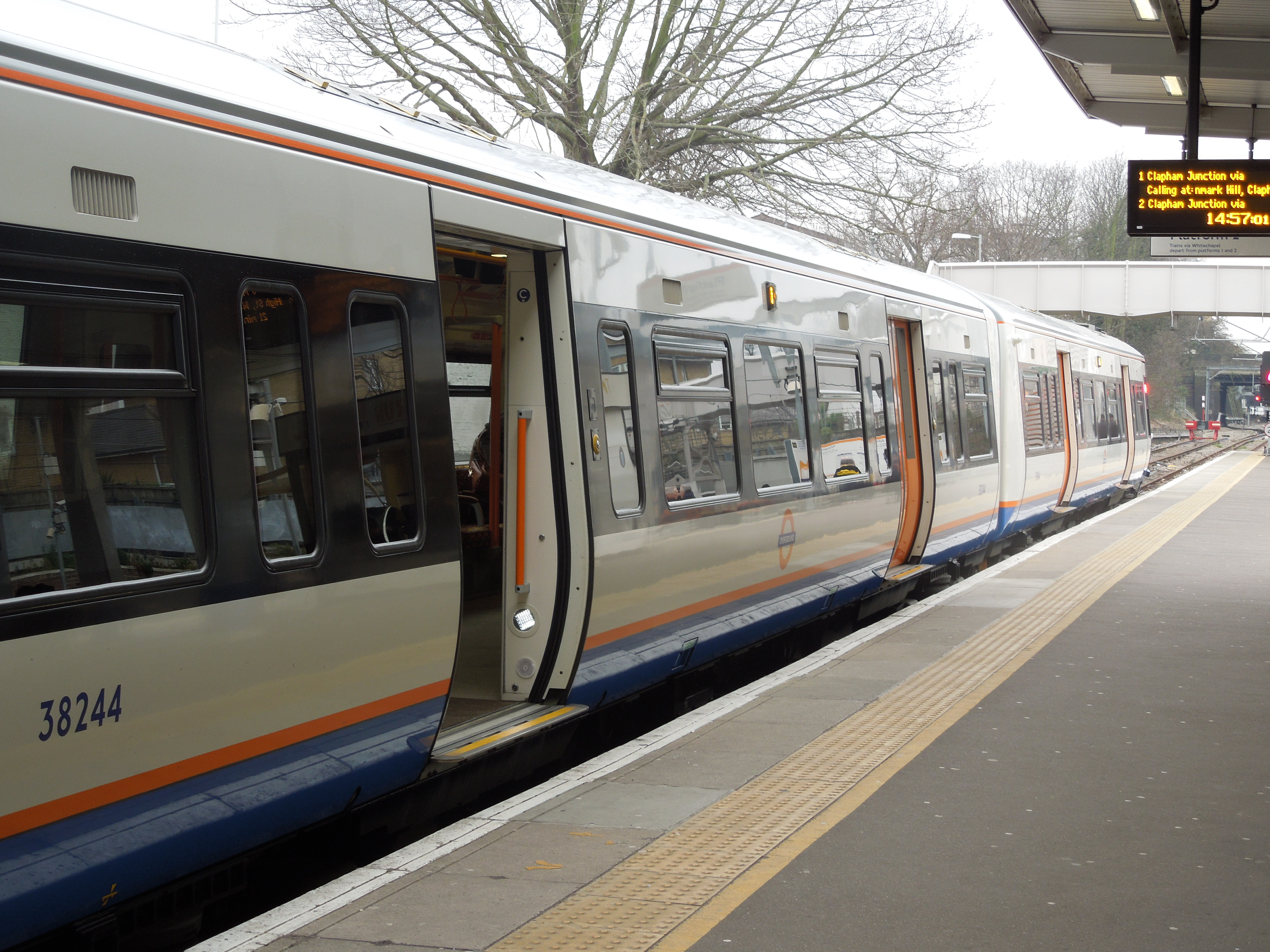
Class 378 At Highbury And Islington Station
The picture shows the train I got on to return from Highbury and Islington station, today. I got in at the end where you walk down to the platform at the station and then walked through to the other end, as that end is best for getting off at my station, which is Dalston Junction.
As there is no doors to open or close as on most trains, it’s an easy process and is something I’d like to see on a lot more trains, as not only is it more convenient, it might well be safer too! Already the new S stock trains for the London Underground are built similarly.
A Great British Compromise
This is the title of an article in Modern Railways which discusses how you measure how late trains are.
The trouble is that what is late to passengers is very different to what is late for the train companies.
Take these scenarios.
1. You are wanting to catch a particular train at 10:00 and you get there at that time, just as the train is moving off. You’ll be annoyed and ask why couldn’t the train wait. But then to the train company, every time they’re late away means they’ll have to catch up somewhere to avoid their punctuality figures being ruined.
2. If train timetables had contingencies, they’d all wait regularly, so they left and arrived on time. Do we want more time to sit and twiddle our thumbs?
3. What passengers like too, is being early and how many times, have you waited outside a terminal station for a platform, before arriving dead-on the correct time?
4. You’re catching a connection at somewhere like Ipswich and you have two minutes to get the other train. But you’ve got a heavy case and you’ve got to get across the overbridge, which has got lifts. The lifts however are busy with someone in a wheelchair and you miss the train you need to catch. Who’s fault is that?
You can probably think of many other scenarios.
You get annoyed because of the lost time, but rail companies get their statistics mucked up. You might not travel that way again and the train company is out of pocket.
So we have two possible solutions.
1, We either build enough slack into the timetables, as they do in some other countries, so that the trains always arrive and leave as the timetable says. But this means a lot more thumb-twiddling.
2. We adopt a good British compromise, with give and take on both sides.
If we go for the second option, passengers must accept that occasionally they will be late, but sometimes they will be early. So you win some and lose some.
There are also a few responsibilities, that the second option places on both parties.
1. The first is a variation of the mirror-in-the-lift solution. I can’t find a full reference, but there is this post on Yahoo Answers. Basically giving people something to do, makes the waiting shorter. So perhaps a cafe and a toilet would help pass the time. Even good informational posters will help!
2. Train companies must also provide information in a timely manner. I was on a train recently and as it approached a stop, an announcement told passengers wanting the train to Somewhere, that it was on Platform 3 over the bridge or whatever.
3. Some station signage is also pretty poor. If you get the Overground from Stratford, you walk up the stairs and there are often two trains at the top. So do you go left or right? A simple next train out sign, like several Underground stations have, would solve the problem.
4. Passengers should be prepared and if they don’t know what to do, then they should leave themselves more time.
So it’s all give and take and if we get it right everybody wins.
The Flexibility Of Public Transport In East London
After my tea, I had to get home. To get from Pudding Mill station to where I live halfway between Highbury and Islington, and Dalston Junction stations, there are many possibilities.
So I resorted to the Monte Carlo method and took the first train that arrived. It was going to Stratford. I could have walked through the station to the overground, but noticed that despite it almost being the rush hour, the Central line trains towards Central London were fairly empty.
So I took the first one, intending to go to Bank, to take the `141 bus to my house. But at Mile End station, where the Central and sub-surface lines have a cross platform interchange, I decided to get a Metropolitan line train to Moorgate to pick up the bus there. I waited just a minute before I was on my way.
In the end, I went just two stops to Whitechapel station, where I used the quick interchange to get an Overground train to Dalston Junction, where I caught one of innumerable 38 buses down the Balls Pond Road.
I may have used five different modes of transport, but I had a seat all the way and never waited more than a minute anywhere.
Incidentally, CrossRail will change all this, as the simplest route, would be to take CrossRail to Moorgate and then get the 141 bus. Let’s hope they get the bus connection right.
A Unique Station Indicator
I didn’t quite get the picture correct, as the display change was too quick for me.
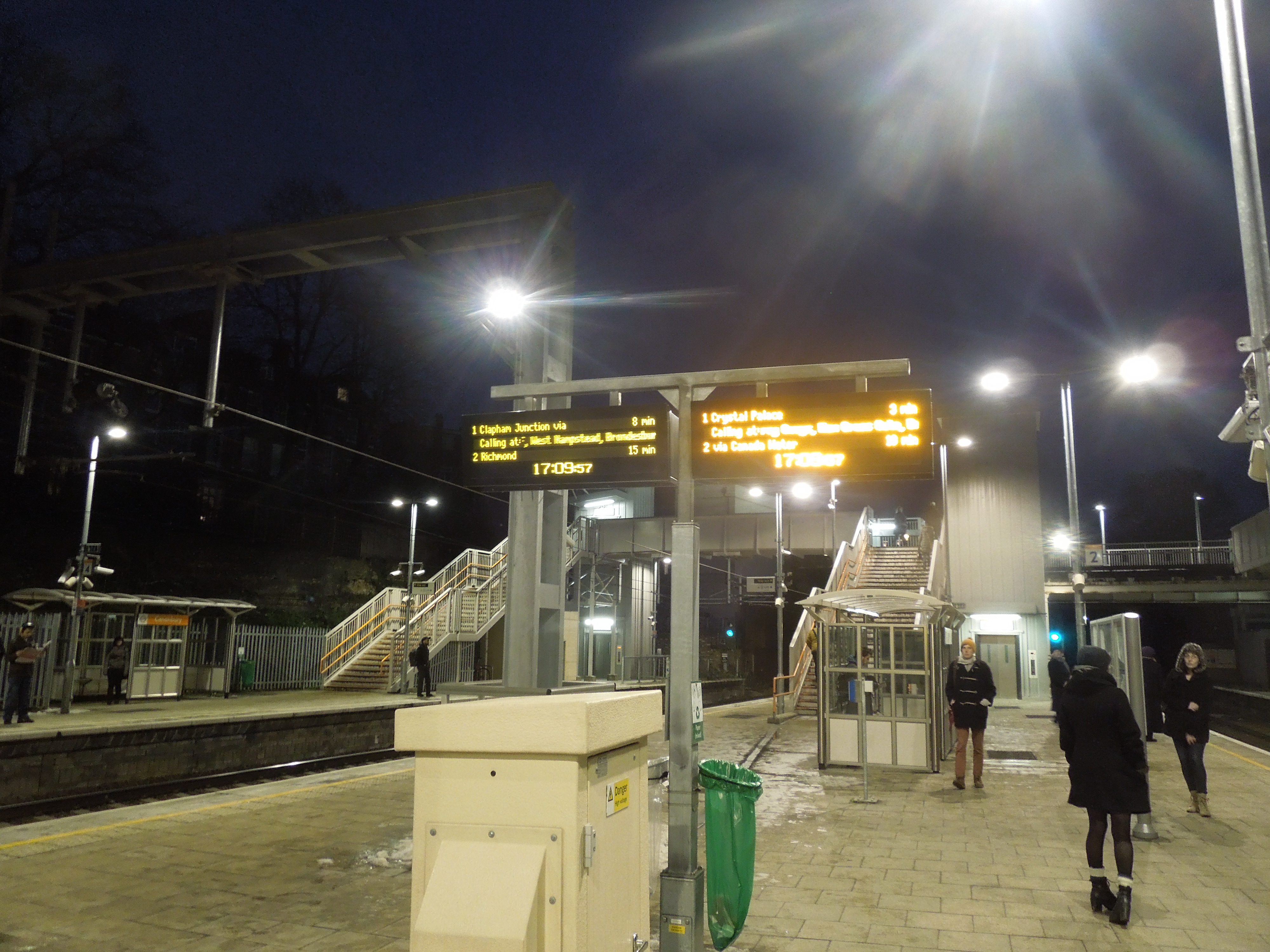
A Unique Station Indicator
The sign is at Canonbury station and is between the two platforms; 2 and 3. Platform 3 is on the left and takes North London line trains towards Highbury and Islington station and the west, whereas Platform 2 takes East London line trains towards Dalston Junction station and the south.
When I got the camera out. it was showing trains to Clapham Junction station on both platforms. One has since changed to “Via Canada Water” to indicate the direction. I must get a better picture in the future.
I wonder how many places this happens regularly? But with a circular railway like the Overground, it will happen all the time, as half the trains at this station, go to Clapham Junction.
Graffiti On The London Overground
The trains in the United Kingdom, don’t often seem to get the awfully boring paint jobs, that you see in many other countries, so I was surprised this morning to this train at Highbury and Islington station.
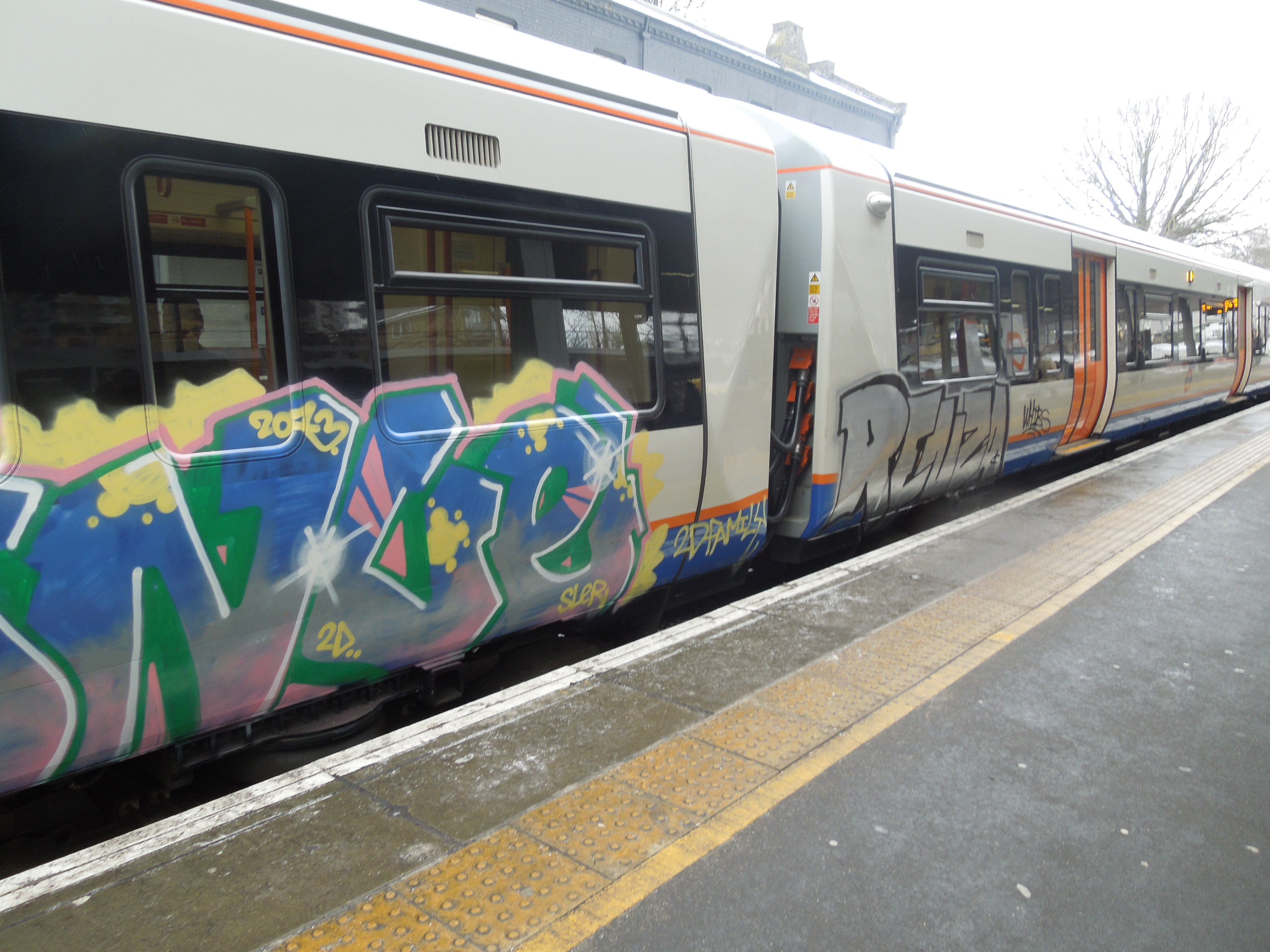
Graffiti On The London Overground
i hope this isn’t an advance warning of more to come.
A Circular Journey In The Snow
Very often on a Sunday I go across the Emirates Air-Line cable car, have a tea, coffee or lunch somewhere and then return home by a different route.
Today with all the snow, was just too good to miss.
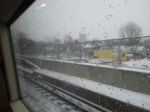
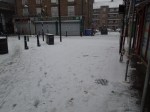
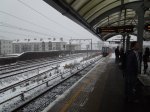
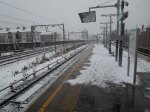
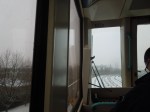
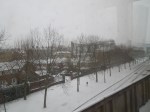
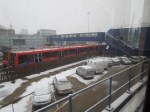
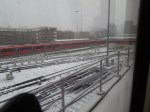
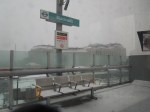

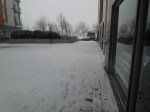
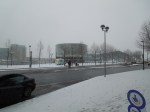
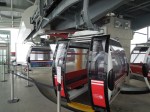
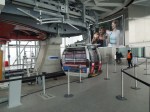

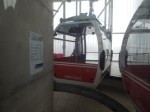
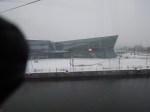

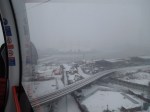
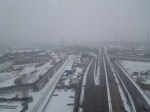
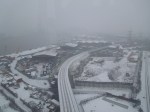
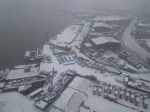




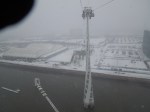
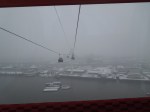
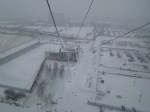




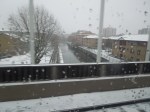

My route was to walk to Dalston Junction station and then get a train south to Shadwell. I then took the DLR from there to the cable car. I came back via Canary Wharf, where I had a cup of tea and the London Overground back to the start.
The only problem, was that visibility wasn’t that good, but it was what the cable-car is for. It must have felt pleased to be in the land of its birth; Austria.
 The Anonymous Widower