The Castle Climbing Centre
Ever since I started driving in London in the 1960s, i’ve been past this building on Green Lane.

The Castle Climbing Centre
Yesterday, I walked past the building, which was originally a Victorian pumping station and found that it is now an indoor climbing centre. What a good use for a magnificent building!
What’s Red and Lies Upside Down in the Gutter?
This is an old elephant joke from the 1960s and the answer is a dead bus.
It’s funny, but I’ve been on trains and planes that have broken down or developed faults, but I’ve never been on a bus that has suffered a similar fate.
Until today, that is!

A Dead Bus
As I was close to Turnpike Lane station, I took the Piccadilly Line to Manor House. This is one of the longest runs between stations on the tube and breaks the two-minute rule of calculating how long the journey will take. A good estimate of journey time is two minutes per station with five minutes for each change of line.
I’m not sure if it is unique, but Turnpike Lane still has the classic 1930s uplighters on the escalators. One place that still has them is Moscow, where London Underground installed all the original escalators. In Moscow, when I was there a few years ago, most of the escalators were still in wood, just like they used to be in London, until they were replaced after the King’s Cross fire.
A Walk Down Memory Lane
Or more correctly between Turnpike Lane and Wood Green stations on the Piccadilly Line.
I’d taken a 141 bus to Turnpike Lane from the end of my road and alighted opposite the station.
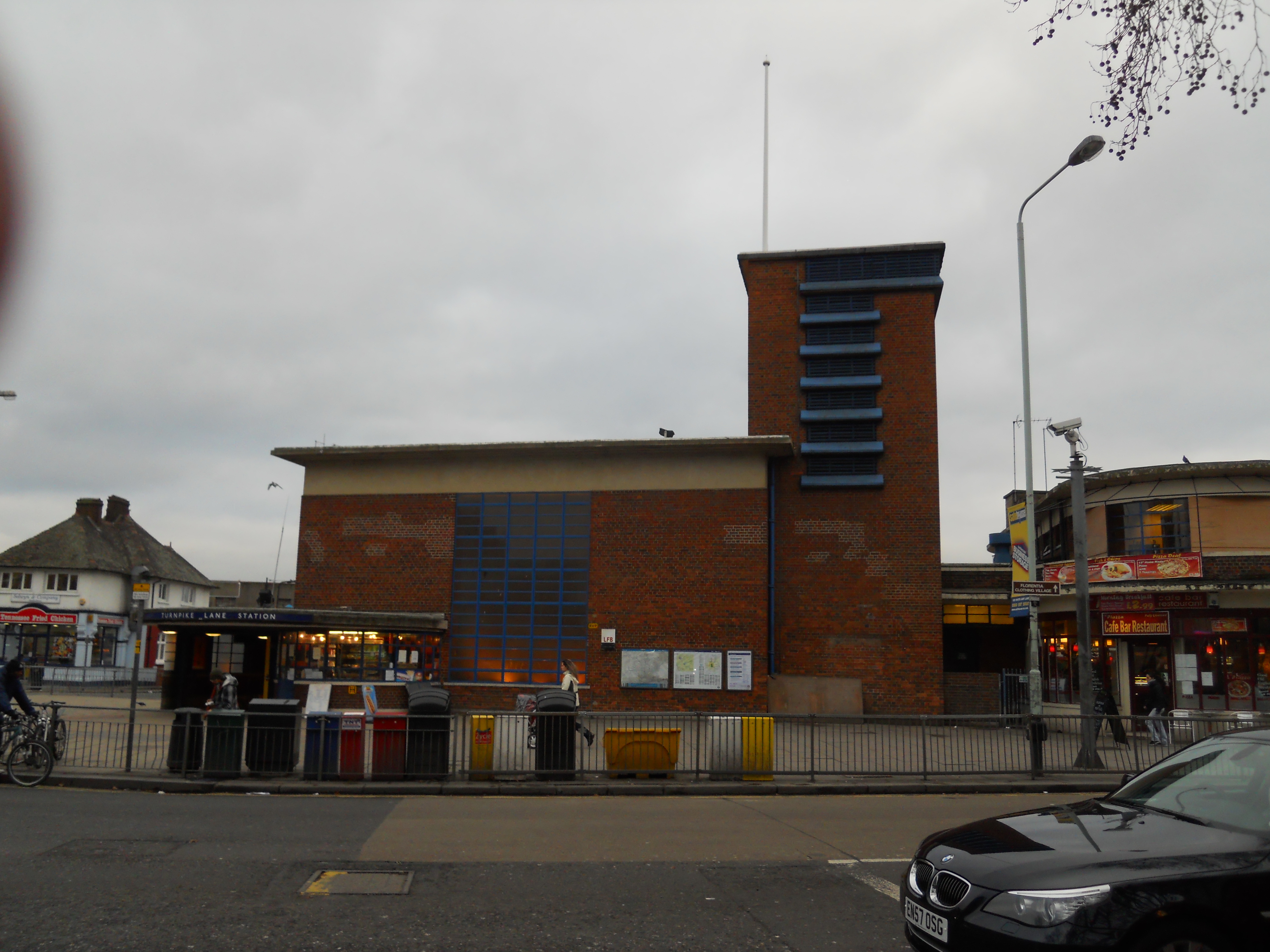
Turnpike Lane Tube Station
Or should I put the local name underneath which sounded like Turnpicky Larny. I wonder if it’s still used.
I walked down the west side of Wood Green High Road and the first place I remembered was the Marks and Spencer on the other side.
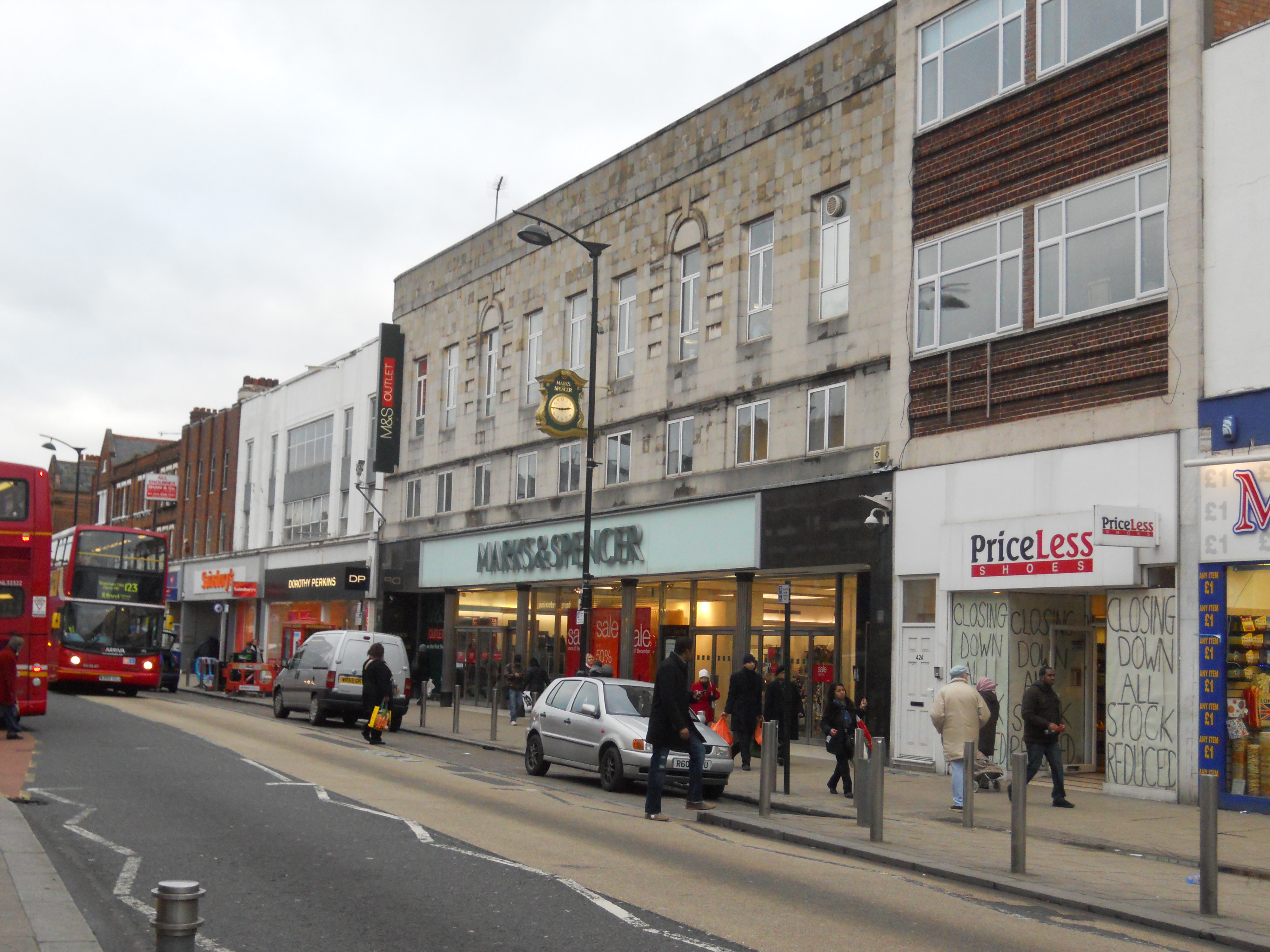
Marks and Spencer at Wood Green
I didn’t go in, but it certainly looked to be in a worse state than how I remember it from the 1960s, when it was one of their flagship stores. I visited it many times, as a bag carrier for my mother, when she used to do the food shopping, when she was working with my father in Wood Green.
Further up you can still see the remains of the old Wood Green Empire above the Halifax.
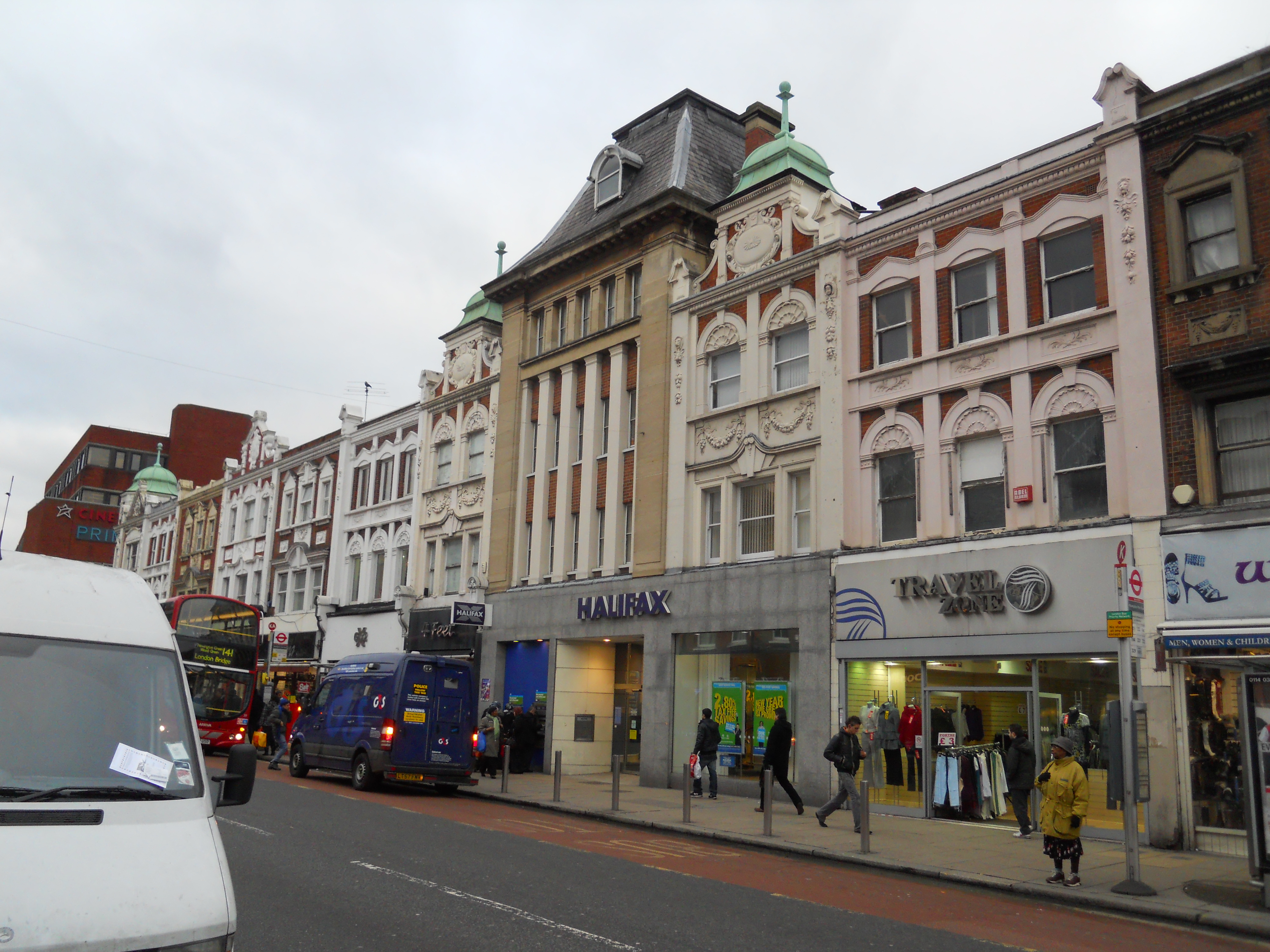
The Remains of the Wood Green Empire
I can remember going there once to see the pantomime. It may have been Babes in the Wood, with Ted Ray, but even if I hadn’t had the stroke, I wouldn’t be sure.
My father also claimed that he’d appeared on the stage there in a variety show. But at one time, I know he did print the programs and posters for the theatre, so perhaps he did a deal. Knowing him, that could have been possible.
The centre of Wood Green High Road used to be crossed by a railway bridge that carried the Palace Gates railway line to Palace Gates from Seven Sisters. At one time there was a station in the area called Noel Park and Wood Green, but although I can remember the bridge and trains running on the line, I can’t remember the station. To the south of the bridge there used to be a pub called the Alexandra, which was pulled down in the 1960s or just before to build Wood Green’s first supermarket. Now the whole area has been redeveloped as Wood Green Shopping City.
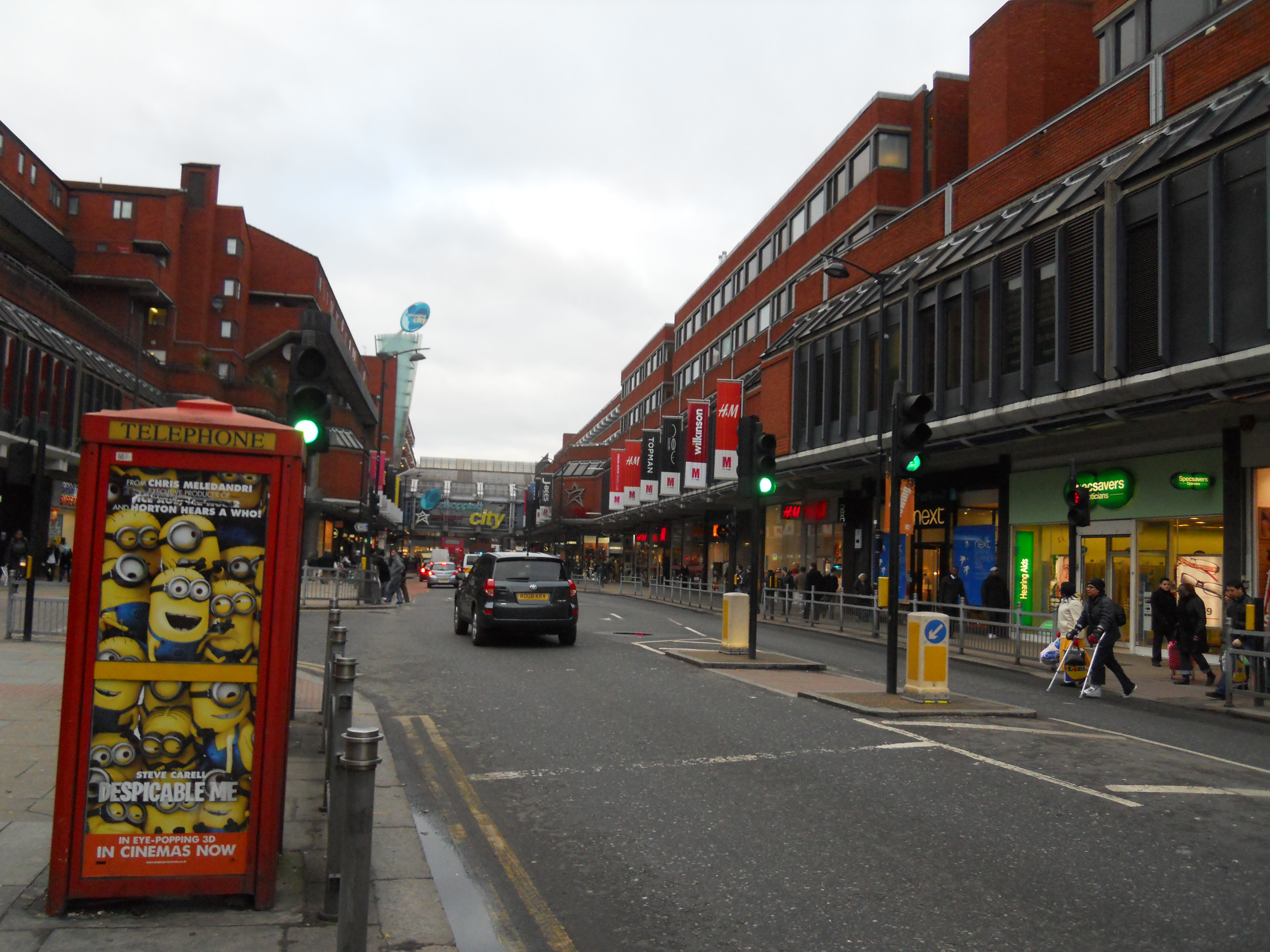
Wood Green Shopping City
Moving along towards Wood Green tube station, I passed what some refer to correctly as the Broadway, but I just remember it as the place where you caught the trolley buses. On the left there used to be a restaurant called the QS for Quick Service and one of the first burger bars. I can remember visiting both quite a few times with my mother. I can still remember and smell, the chef, Ally, turning the greasy burgers as he fried them.
On the corner opposite the tube station, there is a pub which is now called the Goose.
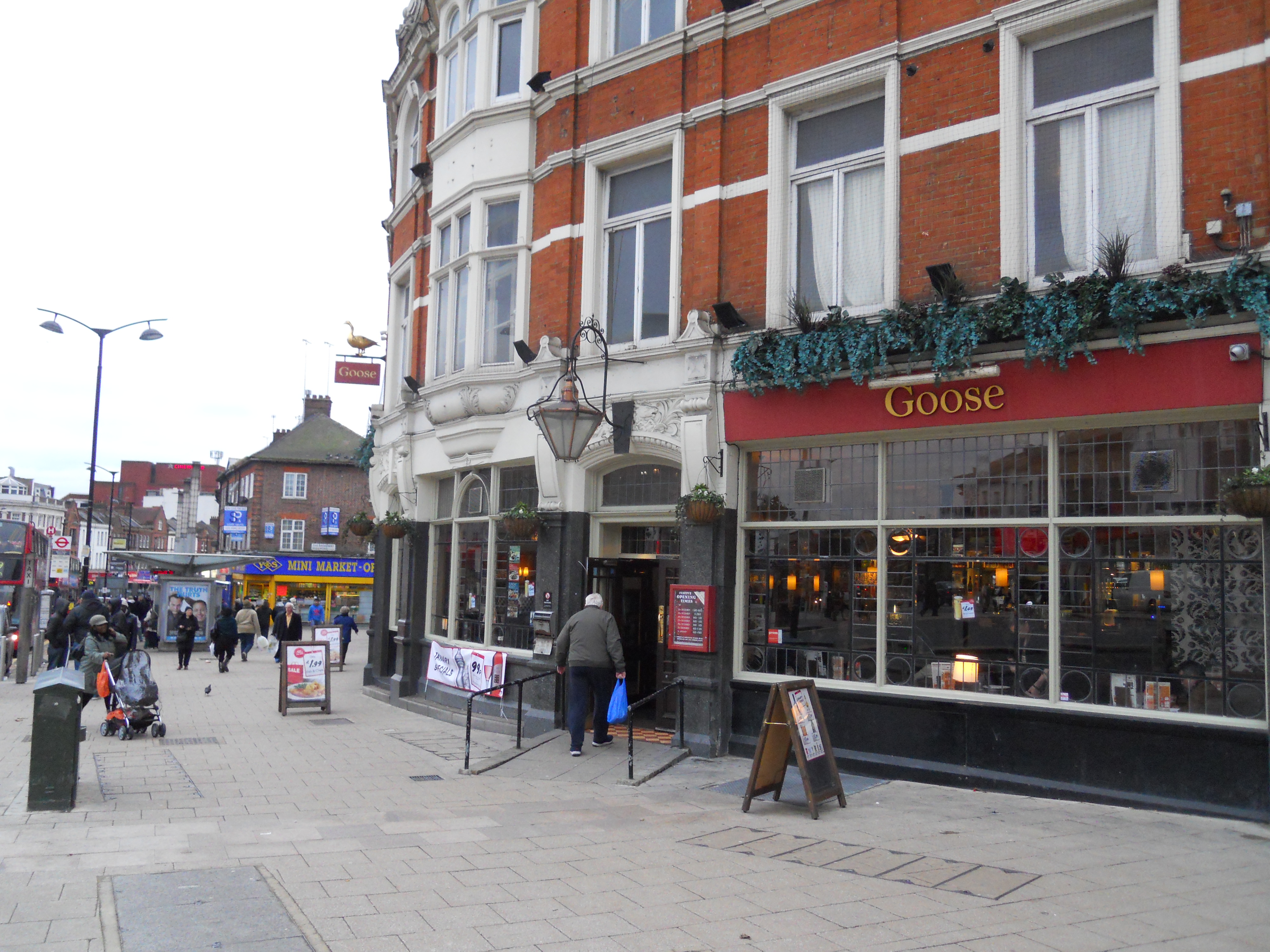
The Goose, Wood Green
I think the pub used to be called the Nag’s Head and it is part of a family tale. My father used to live with his mother over the print works in Station Road, which is just around the corner. One Sunday morning her dog, who was a renowned thief, arrived back with a large cooked joint of beef in his jaws. My grandmother, immediately washed such a prize present off and that was the family’s Sunday lunch. My father surmised that the chef in the Nag’s Head had put the cooked joint on the window sill of the kitchen at the back of the pub to cool down a bit and the dog just couldn’t resist.
I then crossed the road by the tube station to catch a 141 bus back home from where the trolley buses stopped.
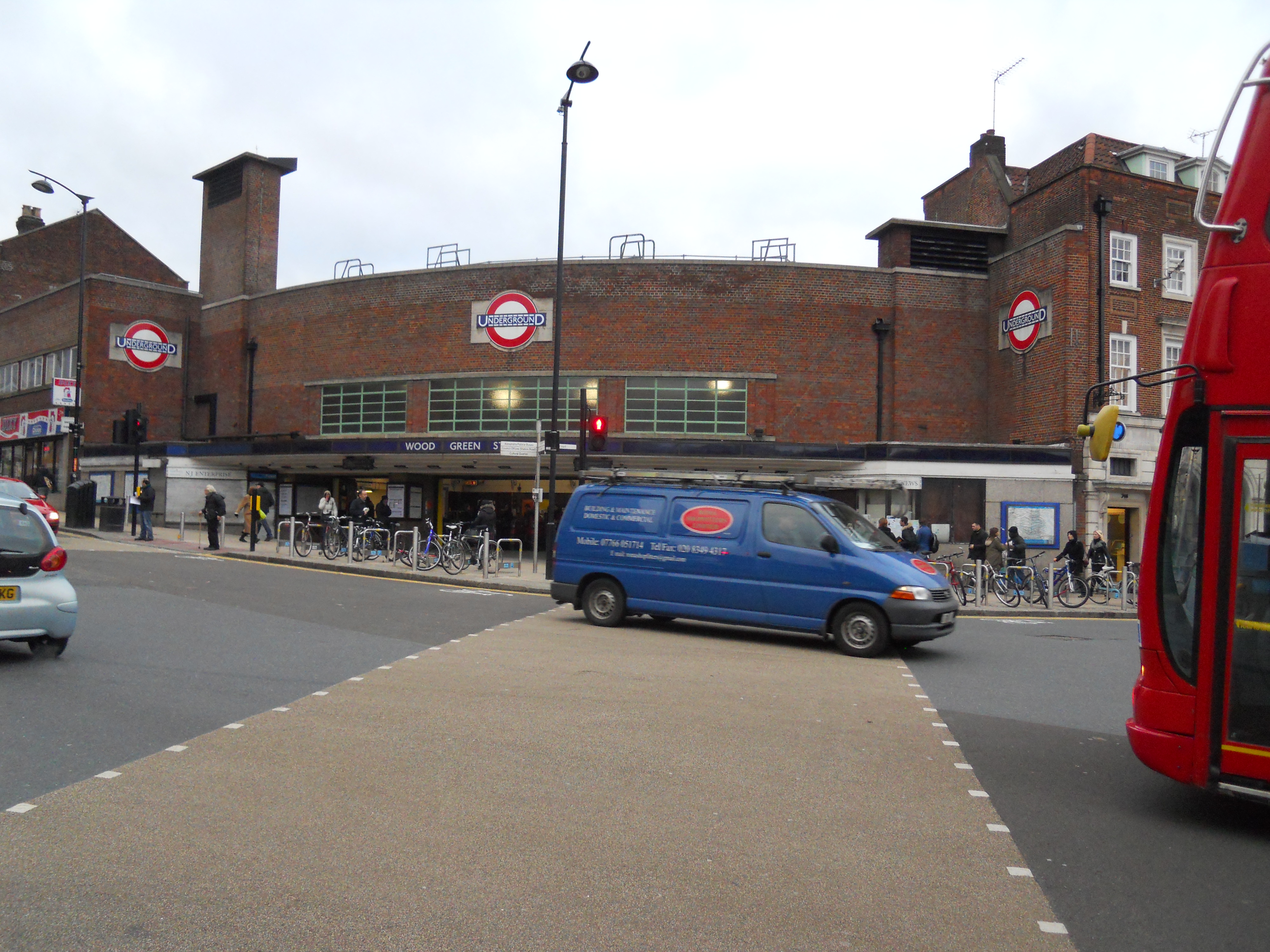
Wood Green Tube Station
All of these stations from Cockfosters to Turnpike Lane are very much part of my childhood and I remember them all with affection.
The Bus Powered by a 2-Litre Diesel Engine
The 141 bus passes the end of my road, on its way to Wood Green, where my father’s print works used to be.
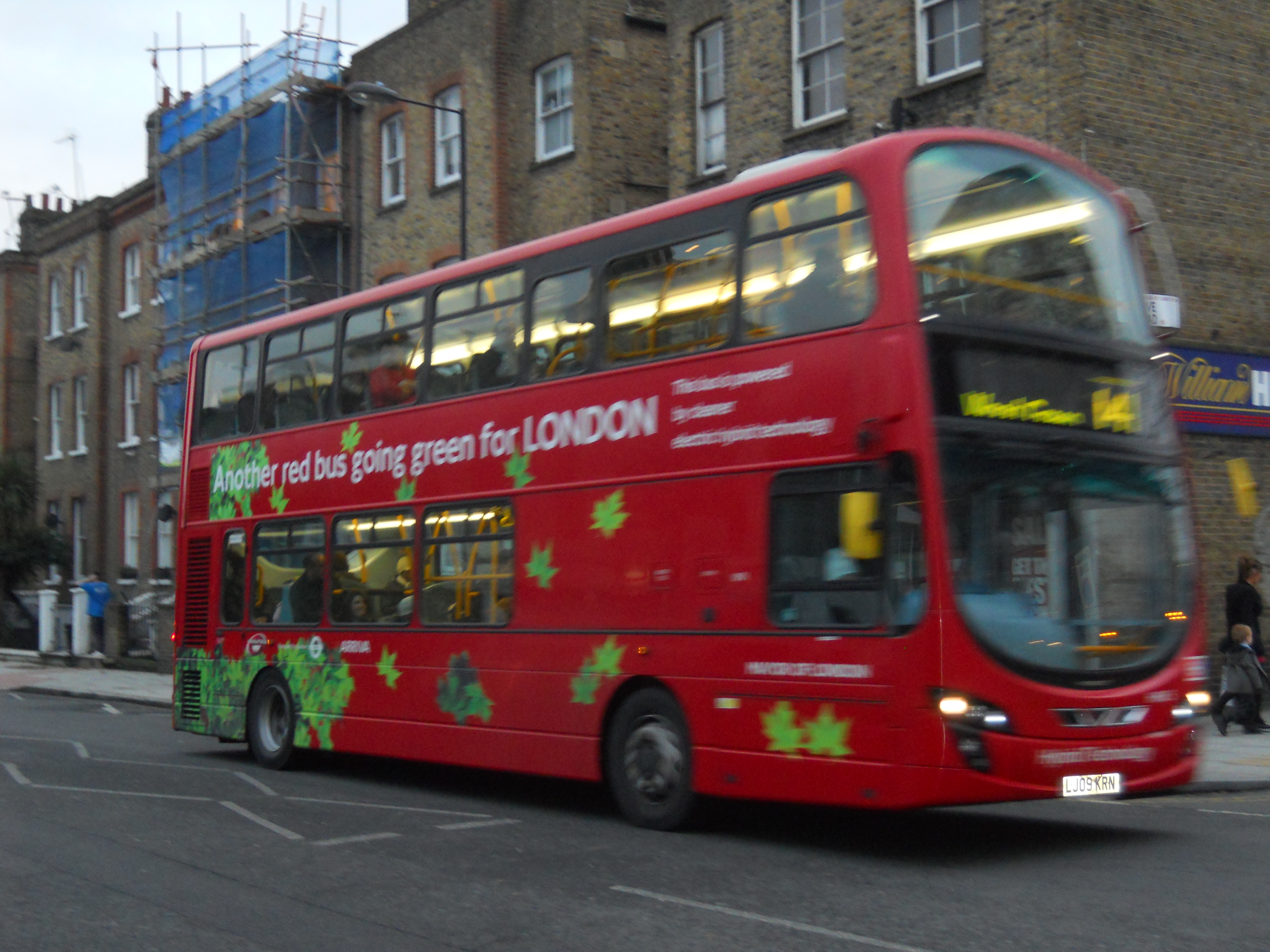
A 141 Bus to Wood Green
The route is partly operated by hybrid buses, some of which are Wright Gemini 2 HEVs, which are powered by the 2-litre diesel engine from a Ford Puma.
I’ve always been a bit suspicious of hybrid cars, but surely this bus must be more fuel-efficient, than a similar-sized traditional bus.
An interesting aside here is that the bus is also built without a chassis, partly to save weight and the company that builds these buses, the Wright Group, is family-owned in Northern Ireland.
So does innovation and good design flourish in companies which benefit from not being under the control of unimaginative shareholders and wunches of bankers?
The Not-So-Quick Brown Fox
I went to Sainsbury’s in the Essex Road this morning and on the zebra crossing, close to where my mate, Sid, used to live was a dead fox. He was rather a small and mangy individual and had probably been hit by a vehicle.
I’ve seen a couple in my road, but at least they keep quiet at night and I haven’t smelled one yet. Once smelled, you never forget the pungent odour.
Eclipse of the Sun
Tomorrow’s partial eclipse of the sun could be one of the most spectacular seen from the UK for some time, as the sun will rise partially obscured by the moon at around 8:00 in London.
You will need to be able to have good view to the south east, so I’ll be going to either Primrose Hill or Hampstead Heath depending on the weather.
Amazing People
There have been some amazing stories in the papers about the aftermath of the Lonon bombings, but surely there is none to compare with that of the Hyman family, who have setup the Miriam Hyman Memorial Trust in memory of Miriam, who died on the number 30 bus in Tavistock Square.
This is the statement on the front of the Trust’s website.
Miriam was one of the fifty-two people killed in the London bombings of 7/7/05. Her family and friends set up the Miriam Hyman Memorial Trust in May 2008 and equipped the Miriam Hyman Children’s Eye Care Centre within the L V Prasad Eye Institute in Bhubaneswar, Orissa, India. This is a living memorial; a place of hope, healing and rehabilitation for children who need eye care services, irrespective of the ability to pay.
The suffering that follows violent terrorism is intense, extensive, avoidable and cannot be justified in any circumstances. In addition to its work in India, the Miriam Hyman Memorial Trust is seeking to address this by promoting social cohesion and good citizenship primarily, but not exclusively, through schools.
Let’s hope they succeed in their aims.
Tired Euston
Euston has hardly changed since it was rebuilt in the 1960s. The black marble inside the station has always made it a bit of a black hole and I’ll admit it used to be worse as you walked down the ramps to the trains. They seemed to have brightened up this area with perhaps just a few more lights and some new paint.
But it is in the Underground and the connections to it, that it is really lacking; from the inadequate escalators from the station and the rather dull tunnels connecting you to the Northern and Victoria lines. Compared to later stations like Liverpool Street, it is all very poor. It will look even more so, once King’s Cross and St. Pancras are finished.
Euston also needs to be properly connected to the Metropolitan and Circle lines, which run just in front of the station, by some form of proper people mover.
Perhaps in the future, all the Marylebone/Euston Road stations could be properly linked, so that passengers arriving at Marylebone and Euston could be quickly whisked to St.Pancras and King’s Cross for Paris, Brussels and the North East.
I think, I would ban cars and lorries from the route, put a travelator down each side, with trams and gardens in the middle and cafes and restaurants along the side.
New Year in the South
Last night, I went to a New Year’s party in South London. Because of the various transport options and the fact that I can’t drive, I decided to take two buses; a 21 to Lewisham and then a 75 onwards towards Croydon. If it hadn’t been New Year, but say a Sunday lunch, I’d have taken the East London Line and walked to and from the stations at both ends. But in a way, I wanted to prove that someone who has had a stroke can cope with the same problems everybody else has to deal with.
So how did I cope?
The outward run was pretty easy, as I’d done most of the journey on the 21 before. I had thought of taking the East London Line, but I wanted to be sure of the interchange for the return. I did have to wait about fifteen minutes for the 75 at Lewisham and the wait would have been improved if the bus stop had had a proper display announcing the arrival of the buses. I also got off at the wrong stop and had to walk back, but that was my mistake.
Coming home was slightly more difficult and this was mainly due to having to take the N47 to London Bridge from Lewisham rather than my intended 21. But as there was no information of any sort at Lewisham, I felt that keeping going was a better option than waiting. From London Bridge, northbound buses were thin on the ground and everything was rather crowded, so in the end I got a 43 to just past the Angel and walked home. It wasn’t the best option, but I quite like walking cities at night and always have. The trip didn’t appear to be too dangerous, with the biggest obvious danger seeming to come from police cars rushing up and down everywhere and some fairly frightening characters on the bus. But no-one bothered me in the least way at all.
So would I do the trip again on a New Year’s Eve? A lot depends if I get invited to a party again.
But I wouldn’t chose to stay as late again and would probably prefer a train or tube back most of the way.
On the other hand, why miss a good party!
So thanks to all who entertained me last night.
The Wife Market
When I say that there used to be a wife-market in Smithfield, I’m generally not believed. But here’s the proof.
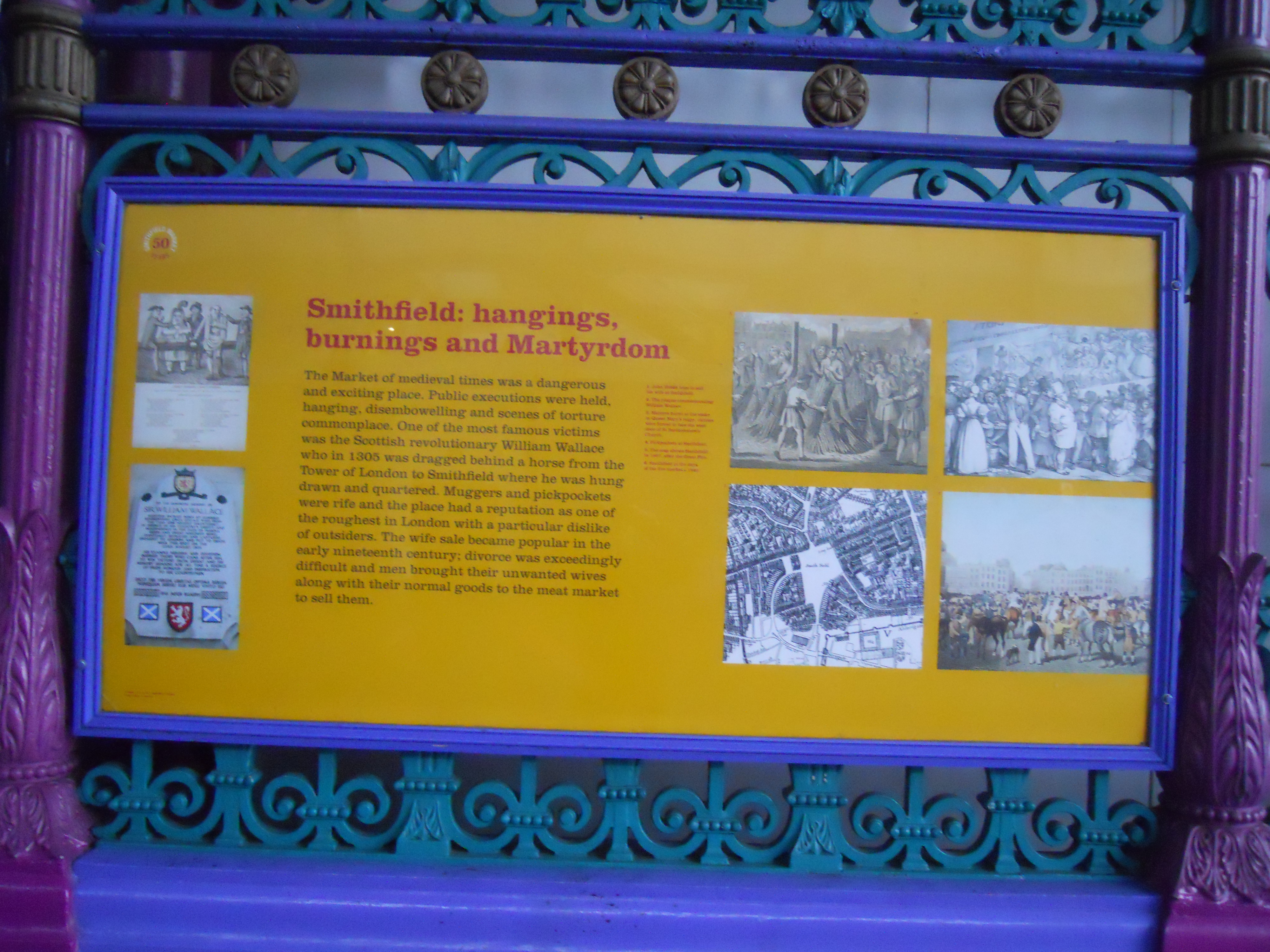
Smithfield Market
If you look at the enlarged picture you’ll see the details of the wife-market.

