A Gluten-Free Lunch in Beautiful Surroundings
I had perhaps intended to have lunch in Carluccio’s in Smithfield, but on the way I walked behind St. Paul’s to take a photograph of the Temple Bar.
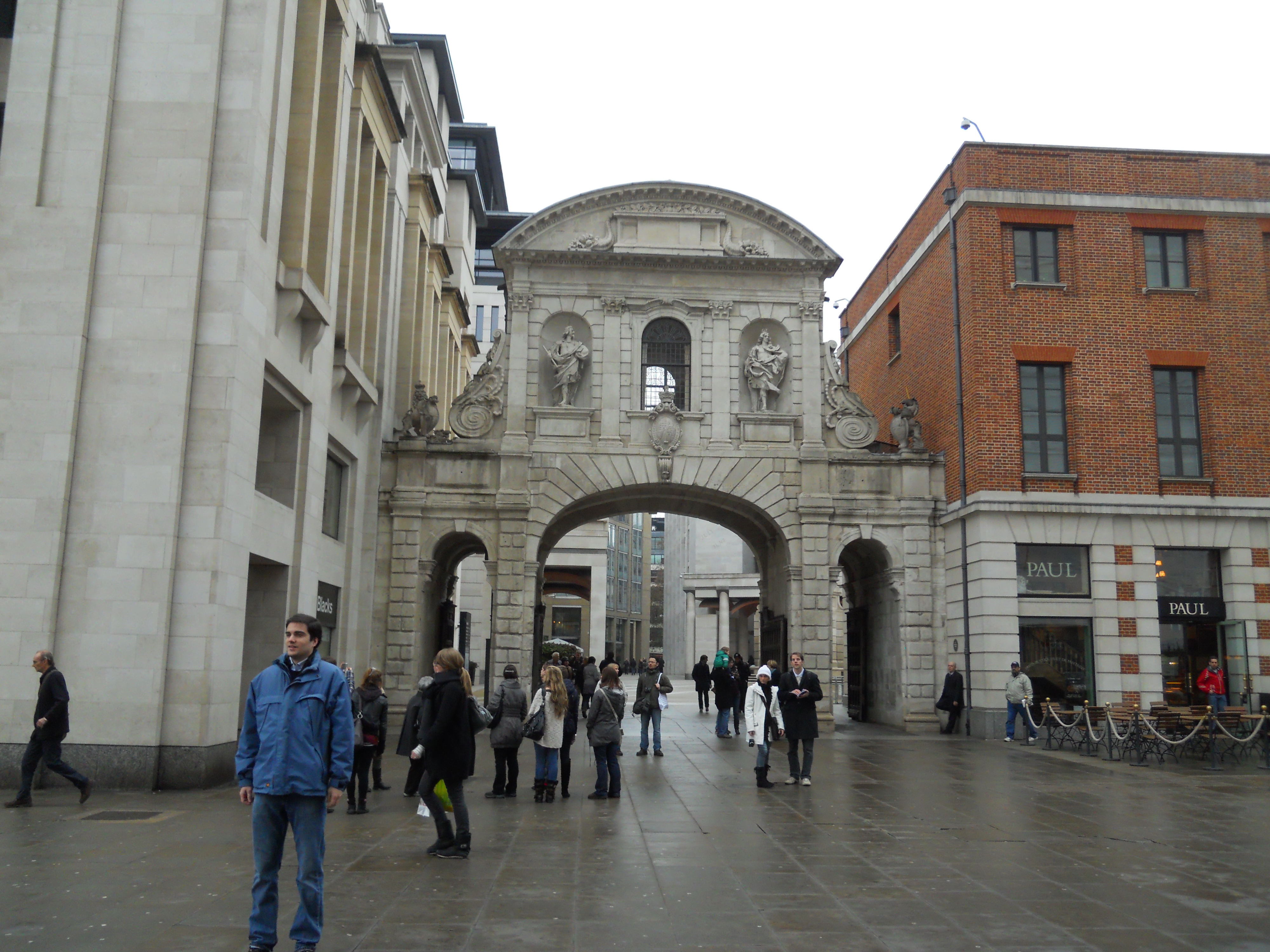
Temple Bar
Instead of passing through, as I intended, I spotted a sign saying restaurant and pointing to the crypt of the cathedral.
So I explored and found a restaurant with a full coeliac, not just gluten-free menu. It was more than I needed, so I approached the adjoining cafe and asked if the soup was gluten-free. The waitress said she was a coeliac too and said she’d check and also get me some gluten-free bread if I would like some. In the end I had some excellent parsnip soup and one of Fentiman‘s exotic soft drinks for about eight pounds.
So now, I can add a hole-filler to my walking routes around London.
London’s Forgotten Cathedral
Southwark is the third Anglican cathedral in central London and the least visited.
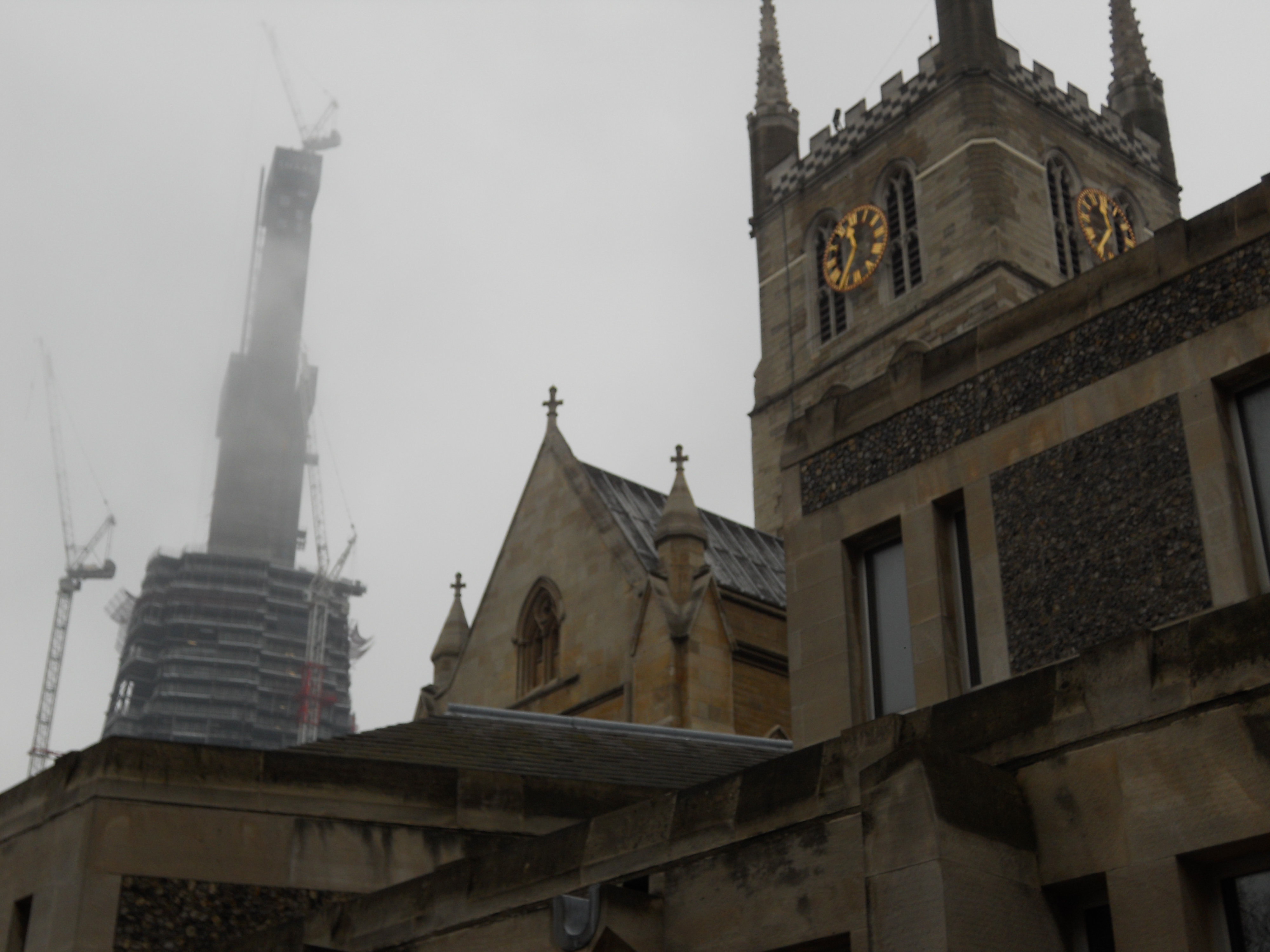
Southwark Cathedral with the Shard Behind
But to me, it will always have a strong place in my heart, as it is where the memorial service was held for C and all the others, including that great humanitarian Chad Varah who gave their bodies to medical science in 2007. The service was non-denominational and very moving.
Forgotten and ignored it may be to many but not to me and my family.
The Second Great Fire of London
Today is the seventieth anniversary of the night when the Luftwaffe made some of their heaviest raids of the Blitz and almost destroyed St. Pauls. The survival of the cathedral is immortalised in one of the greatest photographs ever taken.
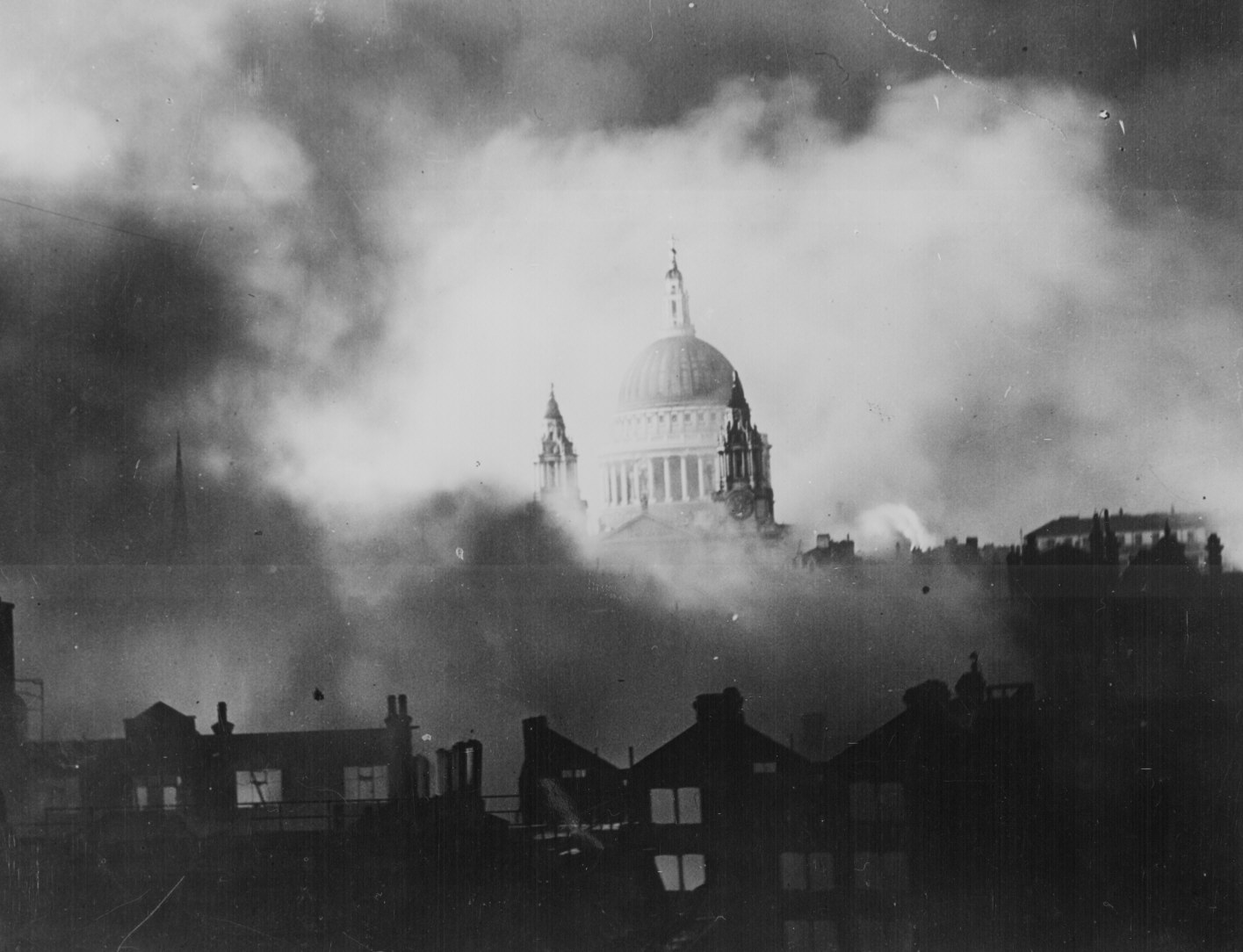
St. Pauls in the Blitz
Today I went to B & Q at Peckham and stopped off at the monument to the Great Fire in 1666.
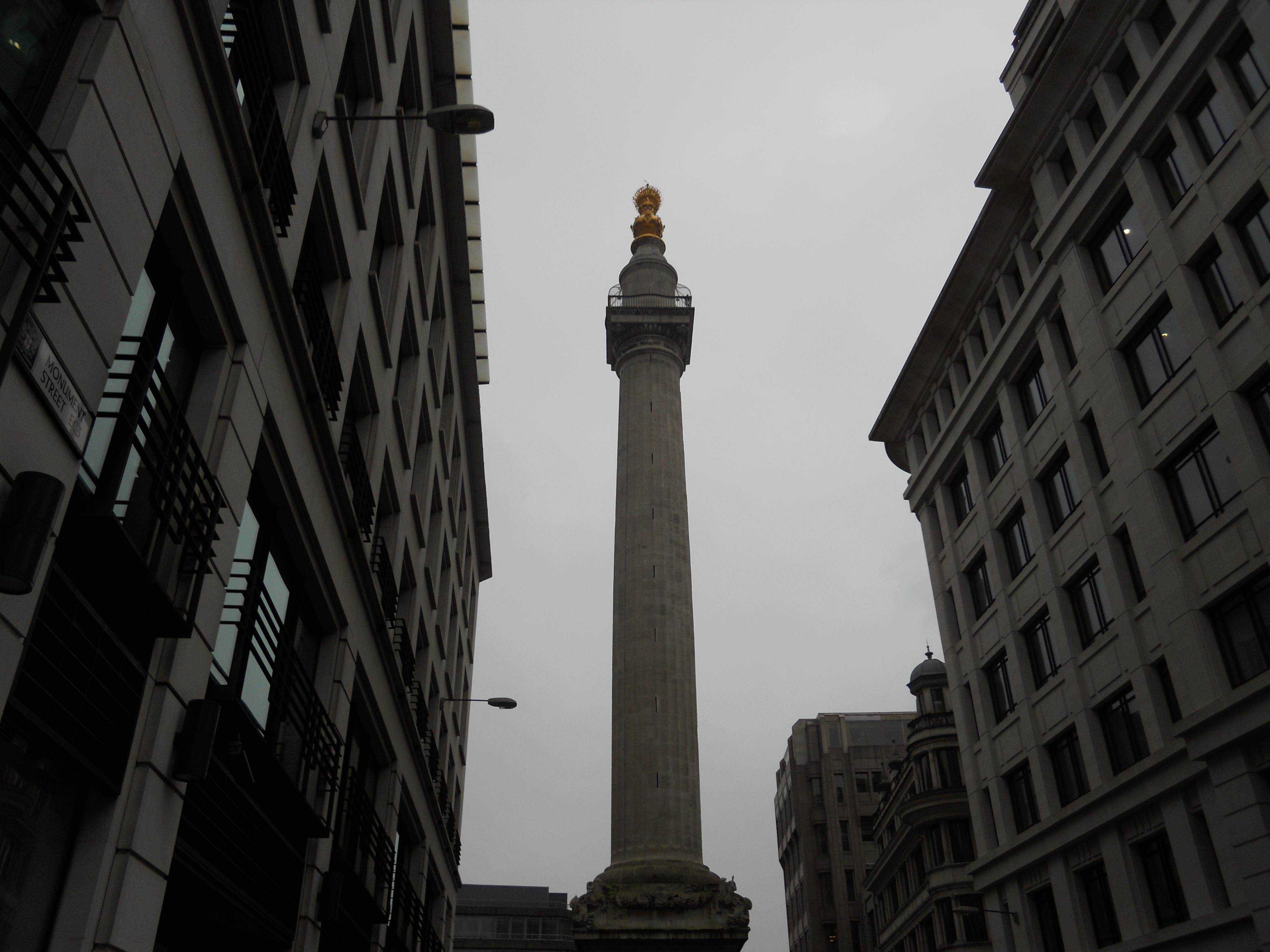
The Monument
There isn’t really a monument to the second fire, except perhaps for Wren’s magnificent cathedral, which replaced the medieval one after the Great Fire.
But there is a memorial to the firemen who died in the Second World War and whose heroic efforts probably saved the cathedral.
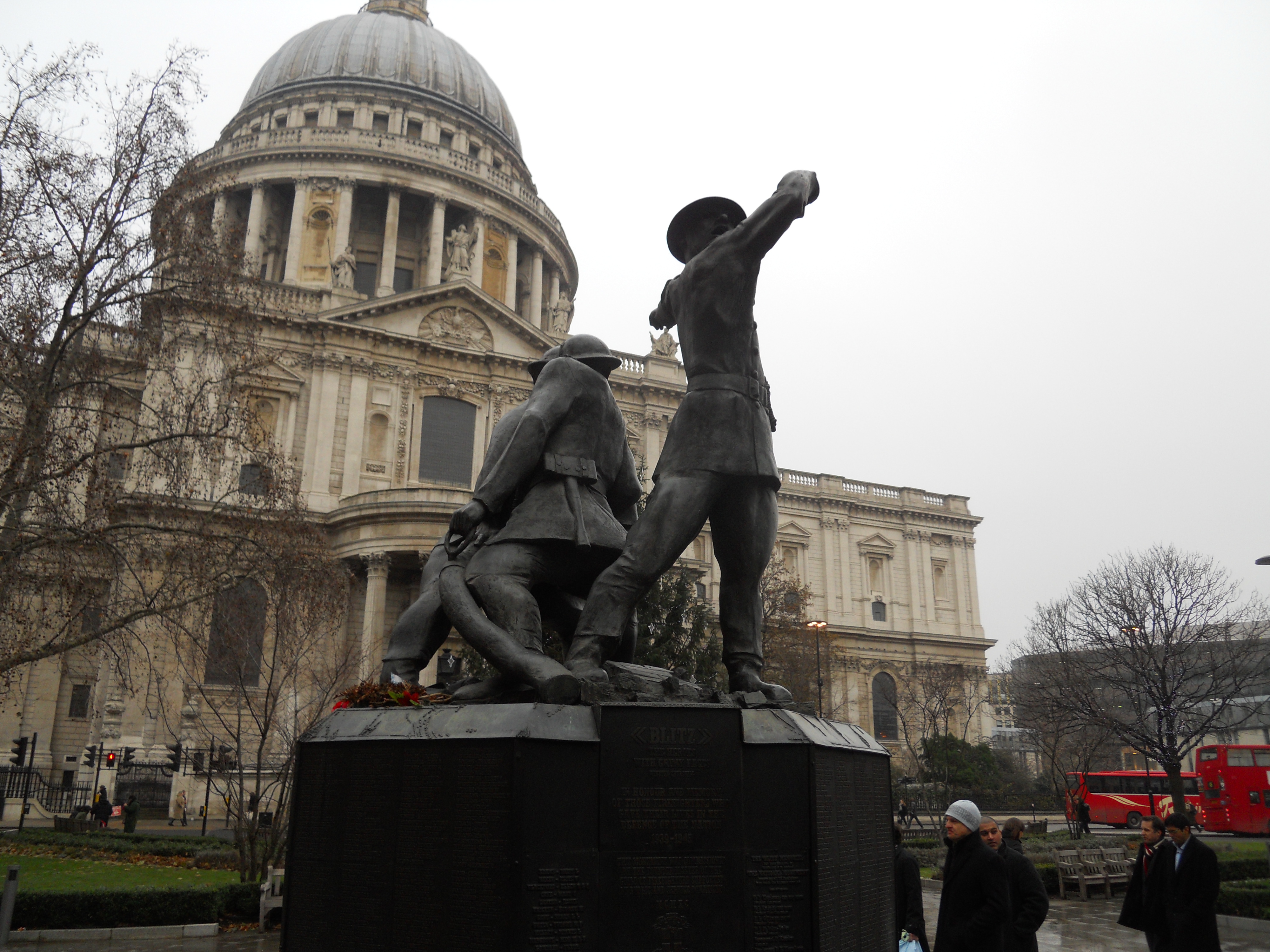
The Fire Brigade Memorial, St. Paul's
The Golden Age of Tunneling
London is one of the most dug under cities in the world and has been for many years.
The first large tunnels under London were Sir Joseph Bazalgette‘s Victorian sewers, built in response to the Great Stink. In some ways it was a large and very expensive scheme, but it started the clean-up of the Thames and effectively removed cholera from the City. It was in some ways the first great project, as it did what it said in the spec, vast numbers of people weren’t killed builling it and lots of it still works today. It is all documented in an excellent book; The Great Stink of London: Sir Joseph Bazalgette and the Cleansing of the Victorian Metropolis
Then came the Underground described so well in the Christian Wolmar’s book; The Subterranean Railway: How the London Underground Was Built and How it Changed the City Forever
Since the Second World War, we have seen a few tunneling projects and the reuse of some of the old ones.
The Victoria Line, the world’s first totally automated passenger railway was built in the 1960s. We missed a trick here, as we never realised what we had built. So the automation was vacuum tube, but for well over thirty years it showed how a well-designed underground railway could perform. It is now being upgraded with new signalling and new trains and the old reliability is rumoured to be suffering. Everybody is blaming the convenient scapegoat of the old 1967 trains running in partnership with the new ones, until all the new are delivered. I don’t! I blame bad project design and management. In the 1960s they got the automation absolutely correct and created a good system. They should have replaced all the old stuff with something that was modern and compatible and then built new trains, that were compatible with the old signalling.
They should also have used the principles of the line; no junctions, totally underground, hump-backed stations to save energy, full automation to create new lines where they were needed. But they didn’t, as the Victoria Line wasn’t sexy and didn’t appeal to the vanity of politicians. But it was and still is a superb design.
The Jubilee Line was then created by splitting the Bakerloo. The extension to Stratford was built on a grand scale and has some of the most amazing stations in the world. Was it the first example of bad co-operation between bankers and politicians, designed to appeal to both their vanities? It was also designed to serve that other monument to the vanity of politicians; the Dome.
In some ways a lot of the design of the extension of the Jubilee line, with large stations and platform edge doors were an attempt to future proof the line and in some ways, this has been vindicated by the decision to stage the 2012 Olympics at Stratford and the decision to build other lines which interchange with it. Only time will tell if the original cost was worth it.
In some ways the design of the Jubilee shows just how good the design of the Victoria was and the trick we missed was not building the Jubilee to the principles of the earlier line. Even now, despite being still a relatively new line, it is still being constantly upgraded.
There was also the building of High Speed One, which tunneled into St. Pancras from East London. Did they get this right? Substantially yes and it seems to work, although the Eurostar trains have suffered reliability problems. But that’s not down to the tunnels.
Other unqualified successes are the Docklands Light Railway extensions to Lewisham and Woolwich in tunnels under the Thames. The original DLR was built down to a cost, but in some ways this has proven to be a virtue, as like Topsy it keeps growing and has earned a big place in the hearts of those who use it. It will also play a big part in getting people to the Olympics.
But two of London’s most successful tunneling projects are reuse of old tunnels; Thameslink and the East London Line.
Thameslink was originally built by connecting the suburban lines running out of St. Pancras to those running south of London to Gatwick and Brighton using the old Snow Hill Tunnel. The economic argument says that as you do away with expensive terminal platforms in London, you can spend the money to buy more trains and electrify the lines. Thameslink was a victim of it’s own success and the necessary upgrades with a new station over the river at Blackfriars and twelve-coach trains are running many years late and billions of pounds over budget. Perhaps we needed a less elaborate Julibee Line, that interfaced properly with Thameslink?
The new East London Line uses the Thames Tunnel under the Thames. In some ways, it is a modest scheme, but I believe that like the DLR, it’ll prove to be an unqualified success. It surely must be the only new railway in the world running through a tunnel built in the first half of the nineteenth century. The tunnel surely is the supreme monument to its creator, Sir Marc Brunel and his more famous son, Isambard Kingdom Brunel, who was engineer in charge for much of the building.
Now, two major tunneling projects are in progress; CrossRail, which is actually being built and High Speed Two, which is just being planned. I am dubious about the latter, as I think that the money could be better spent upgrading existing lines and trains.
But in some ways to London, the most important scheme is the creation of electrical cable tunnels under the city to carry the high voltage mains here, there and everywhere. This PDF explains the project and shows how good thinking and engineering can benefit everyone.
So perhaps the golden age of tunneling will arrive in the next few years.
Going to the Supermarket Past One of Your Heros’ Grave
I said in an earlier post that I preferred to use the Waitrose in the Barbican, as it is less-crowded and an easy bus ride home.
Today I took the bus to the supermarket and found that I could walk through Bunhill Fields to cut the corner off from Old Street. It is an old and famous cemetery, where such as Isaac Watts, John Bunyan, Eleanor Coade, Thomas Newcomen, Daniel Defoe and William Blake were laid to rest.
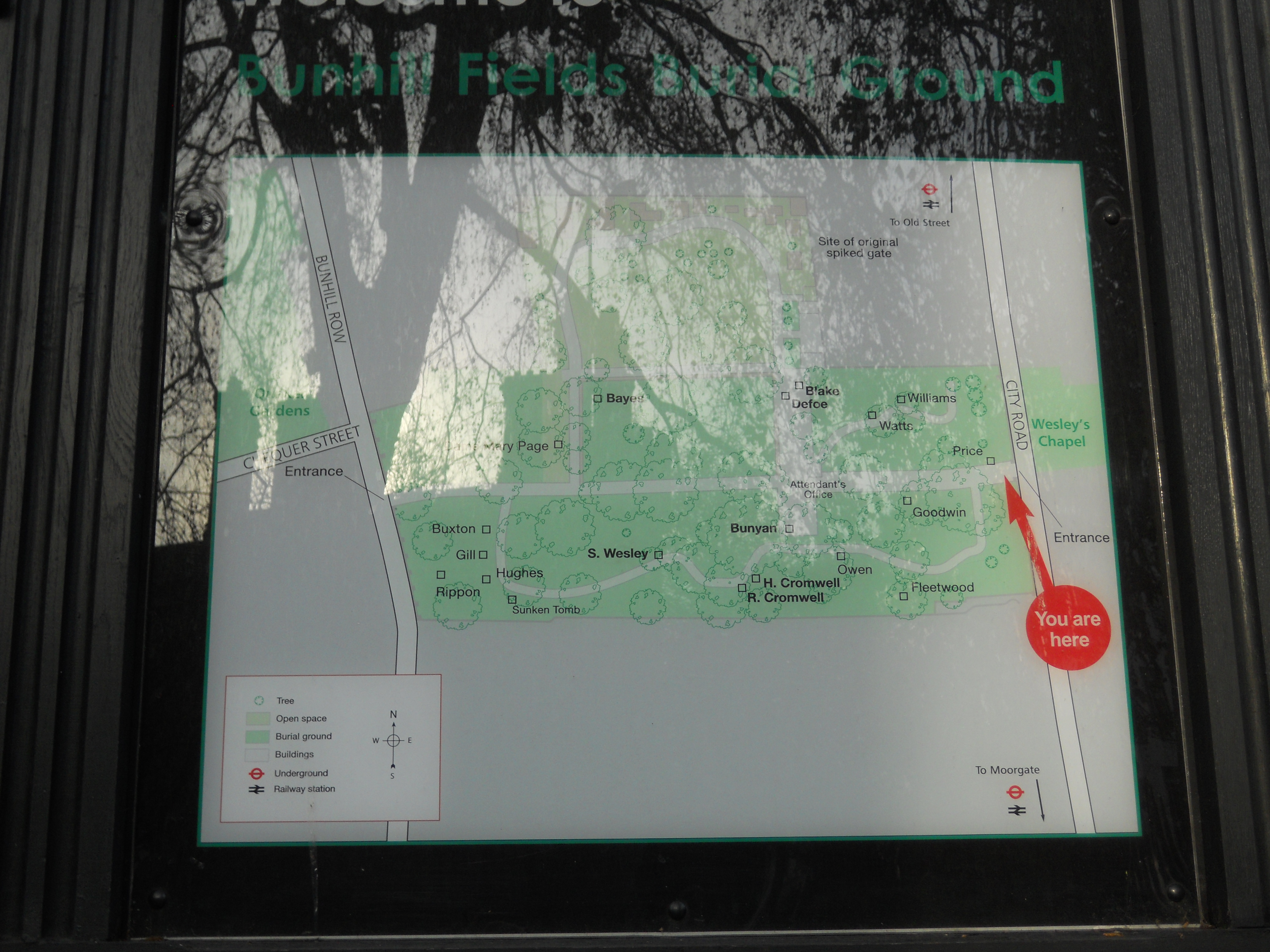
Bunhill Fields
It also contains the grave of a man, whose legacy touches us thousands of times every year, the Reverend Thomas Bayes. His grave is in this picture somewhere.
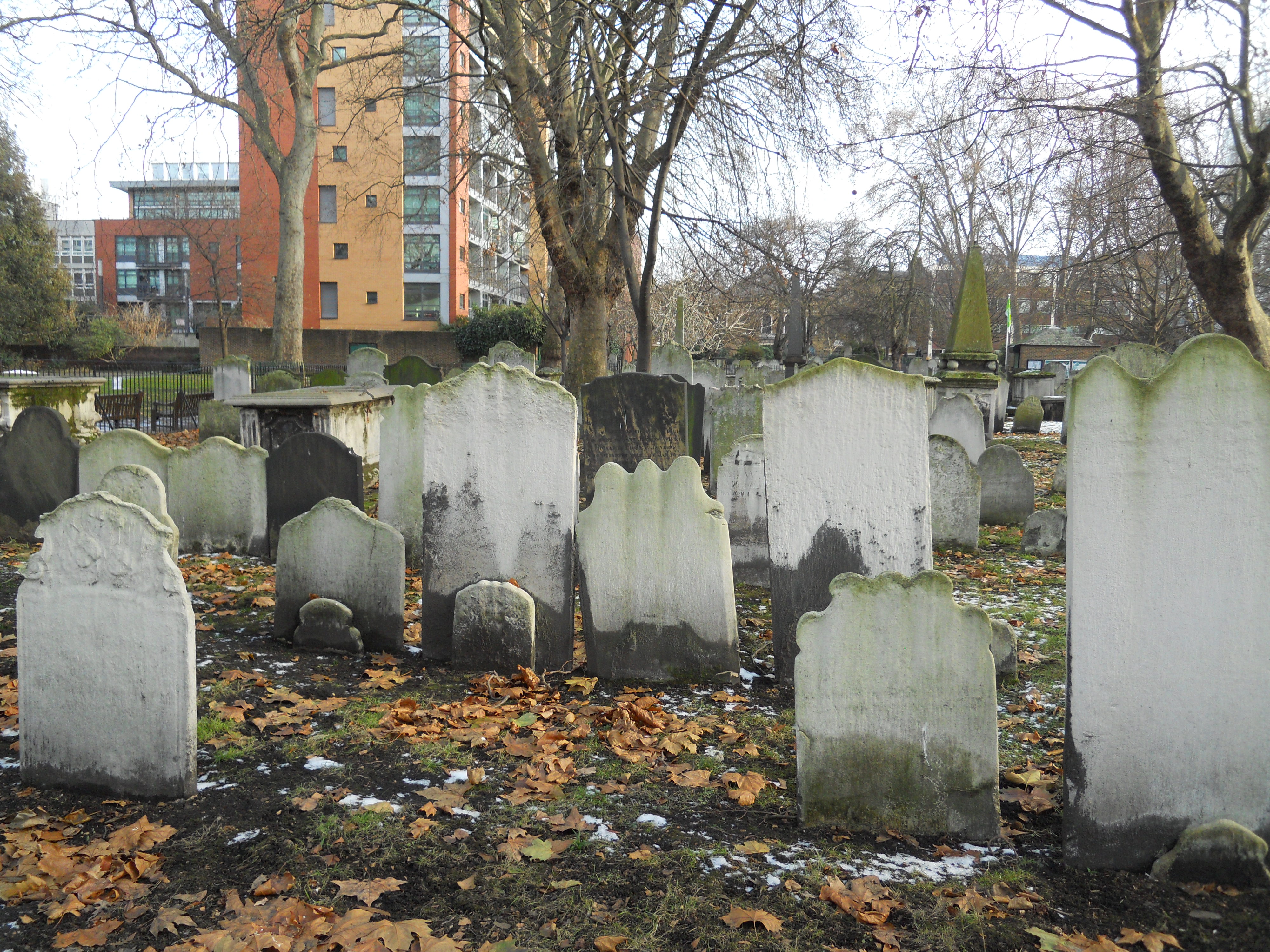
The Grave of Thomas Bayes
So why does Bayes touch us every day? His legacy is also totally positive as it is his thinking that is behind Bayesian spam filtering, used in all those programs that attempt to stop all of those rediculous e-mails we don’t want, getting to our computer.
But this is only one of a myriad set of applications of the work of Thomas Bayes. There aren’t many people, who’ve had such a beneficial effect on such a broad front, centuries after their death.
So when it comes to Great Britons, Bayes is in the first rank.
never has going to the supermarket for basic daily needs, been so interesting.
London Takes Charge of One of its Lost Sons
There are cities, mega-cities and then there is London, a unique blend of people, races, buildings, transport systems and history.
Today the city of my birth and most of ancestors took control and welcomed me back and protected me.
The first thing I did was go and get my copy of The Times and have a coffee in the local Deli. I’ve never been able to do this before at any time of my life. But the Deli was selling smoked salmon from the Butley Oysterage in Suffolk,so my adopted county was making its presence felt. If only the rest of the country had only half as much get up and go as London and Suffolk have we wouldn’t be having a recession.
Also in the morning I registered at my new doctor’s. No problems at all and very different to when registration last happened twenty years ago. I should say that there was one small problem in that I forgot to take the urine sample I’d provided in the morning. But even that was quickly solved by a two-hundred metre walk home from the surgery to collect it and a quick walk back. My short term memory may be suffering, but I’ll get it back, by practice.
I then took a bus to St. Paul’s and took a few pictures on the so-called Wobbly Bridge, which is one of my favourite structures.
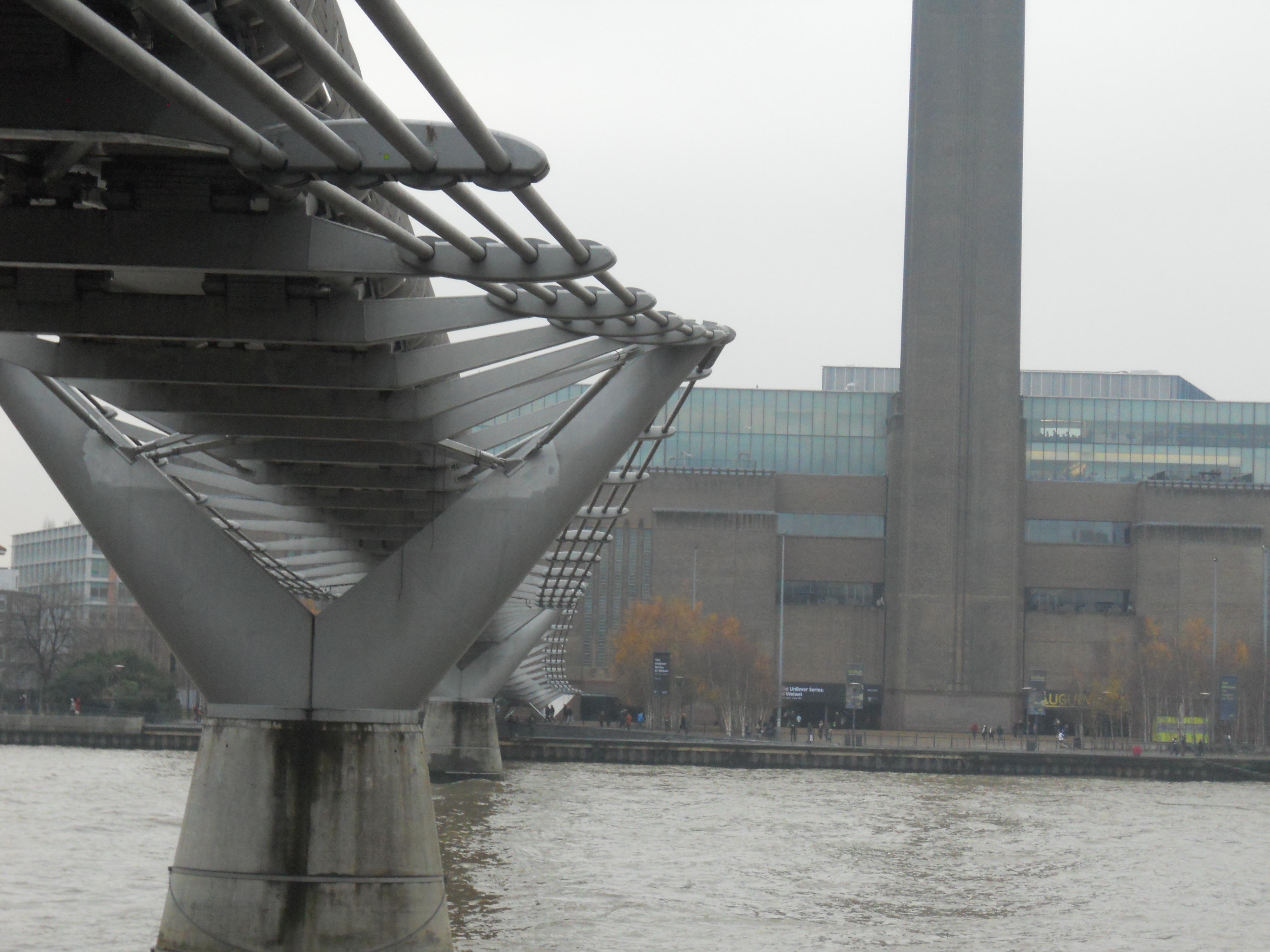
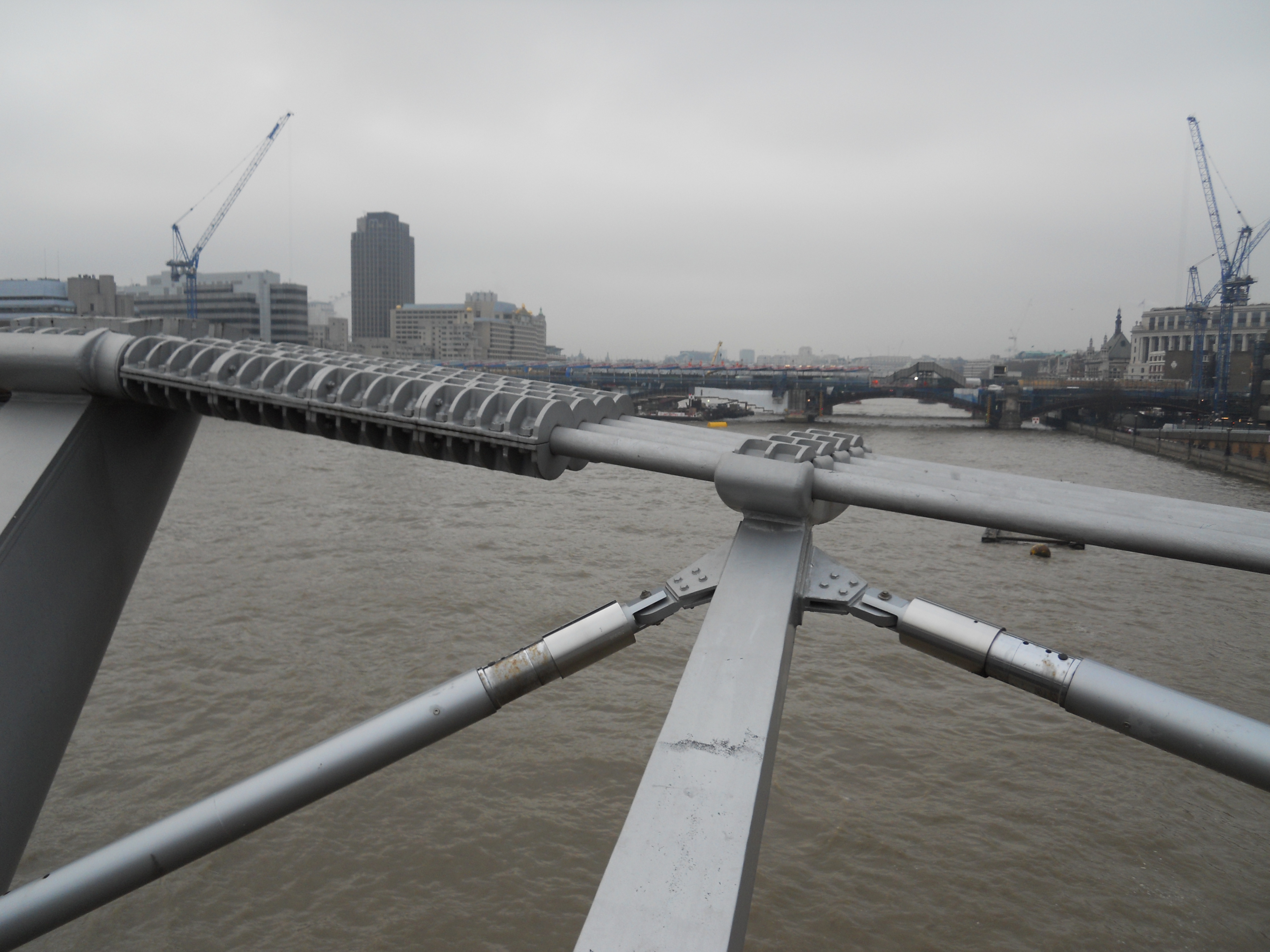

I then walked through to Carluccio’s in Smithfield to have some lunch.
And then London sent me an angel in the form of a female oriental banker, who’d just arrived in the UK, who was exploring before starting work in the New Year. We chatted for a minute or so and then she asked if there was anything to see in this part of London on a very cold day. So I showed her the wife market description in the meat market, St. Bartholomew the Great, Bart’s Hospital and then the Museum of London. I can still see my sons performing in the Nativity play at the church and my mother-in-law in the hospital after having her heart valve replaced.
We then walked through the city to Leadenhall market before having a glass of mulled wine in a pub. She then went home from Bank and I walked through the city back to the Barbican and the Waitrose in Whitecross Street. When we lived in Cromwell Tower, there were no supermarkets in the area. But it was a pleasure to be in an area with so many happy memories. Luckily we were away for the weekend when the Moorgate tube crash, which killed nearly fifty, happened.
The Waitrose there though is in some ways more homely and much less crowded than those at the Angel or the Holloway Road, but it had everything I needed and it was only a short walk away from the bus home, which ran on a much less crowded route to a stop just a hundred metres from my home.
So thank you London! Thanks also go to my charming companion for a lovely couple of hours in the afternoon.
Not Many Takers for Boris’s Bikes
I took this picture in Bunhill Row in the City.
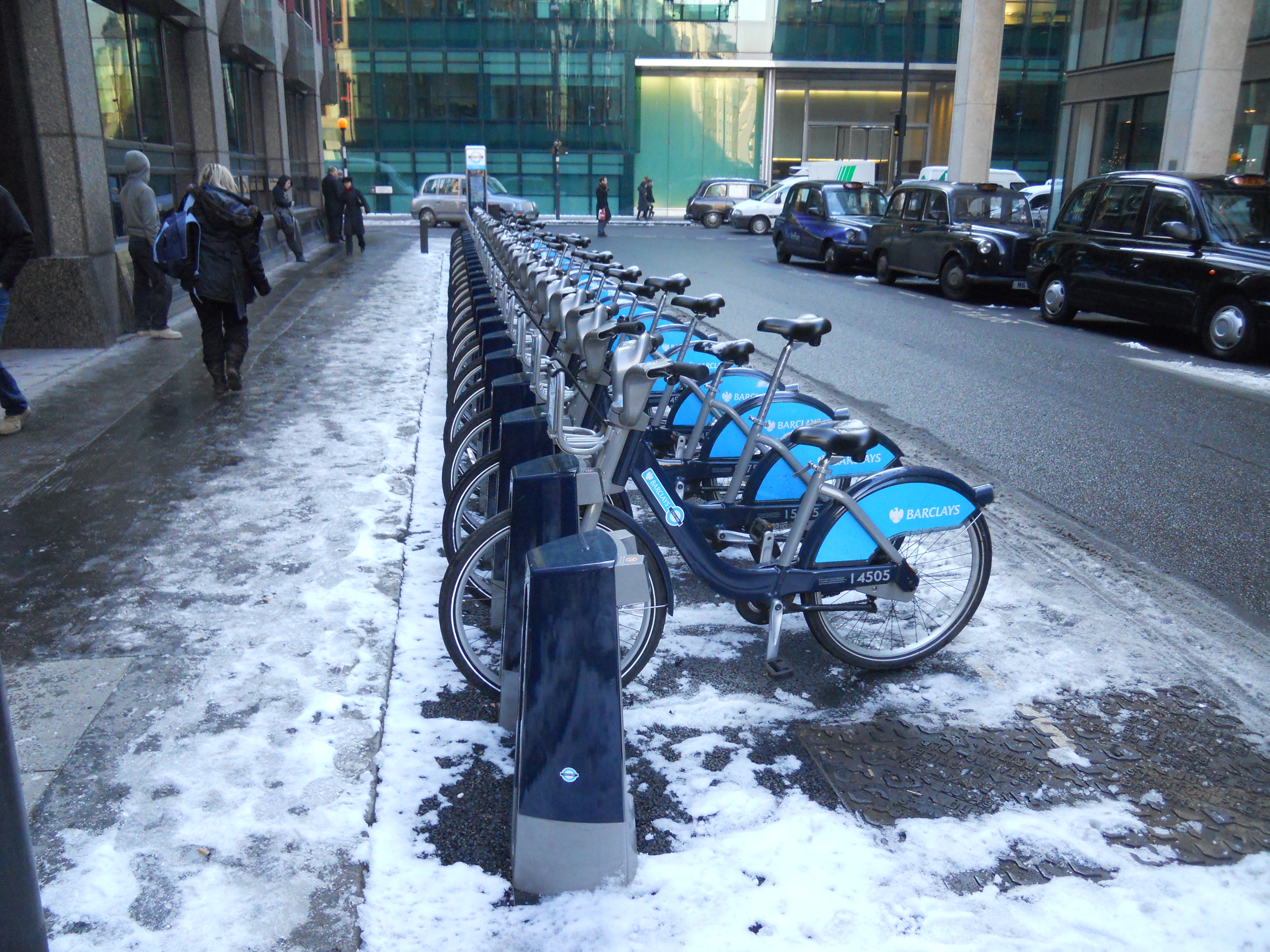
Boris's Bikes in the Snow
Only five of the bikes had been taken.
But then it isn’t good weather for cycling. I did see a few runners though!
London Water
I’ve never been a great water drinker and certainly not of the bottled variety, but since I’ve moved here I’ve taken to drinking water straight from the tap.
Perhaps it’s a child hood taste, as I was brought up in London.

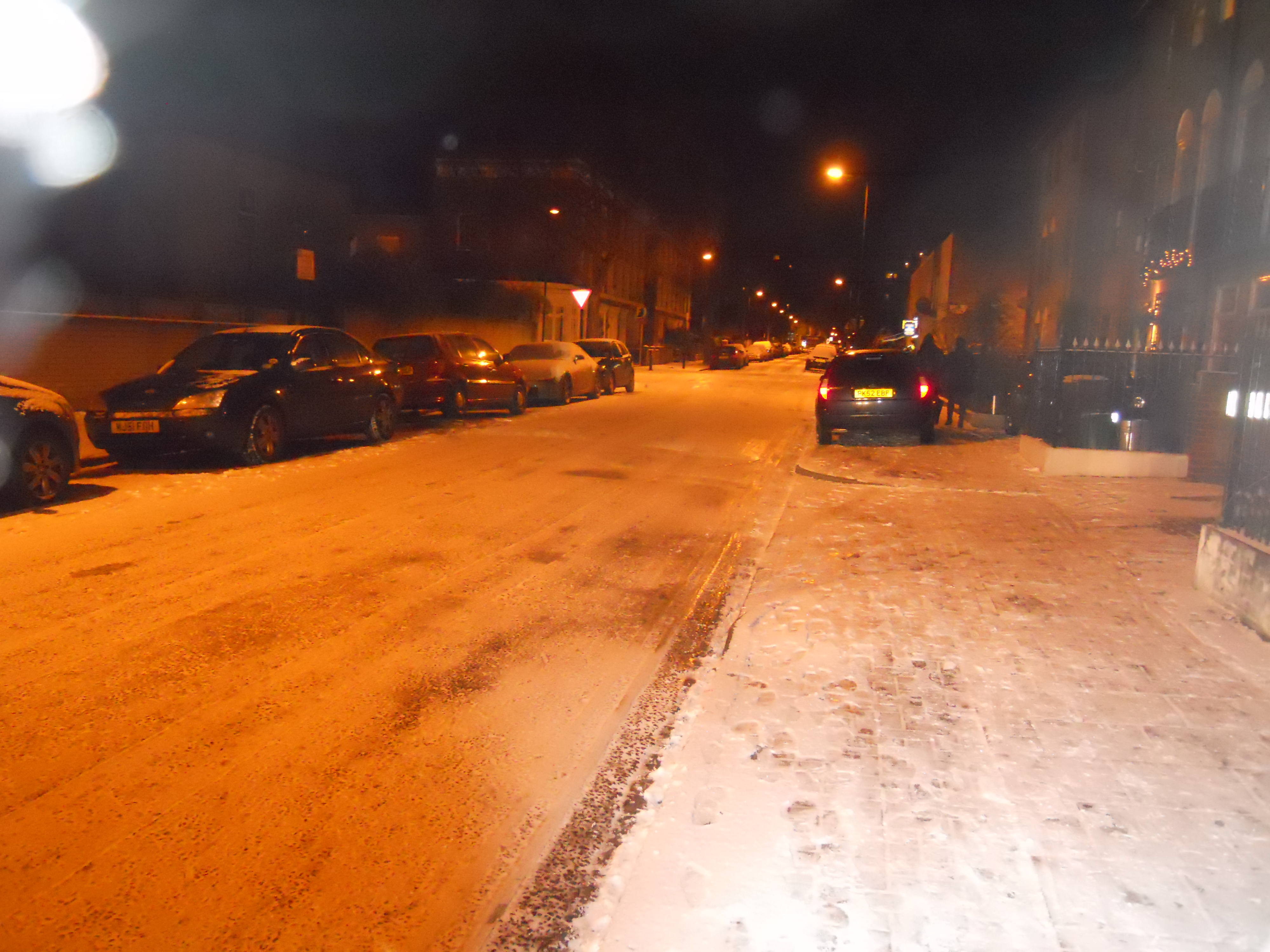

The Western Curve Appears to be Going Well
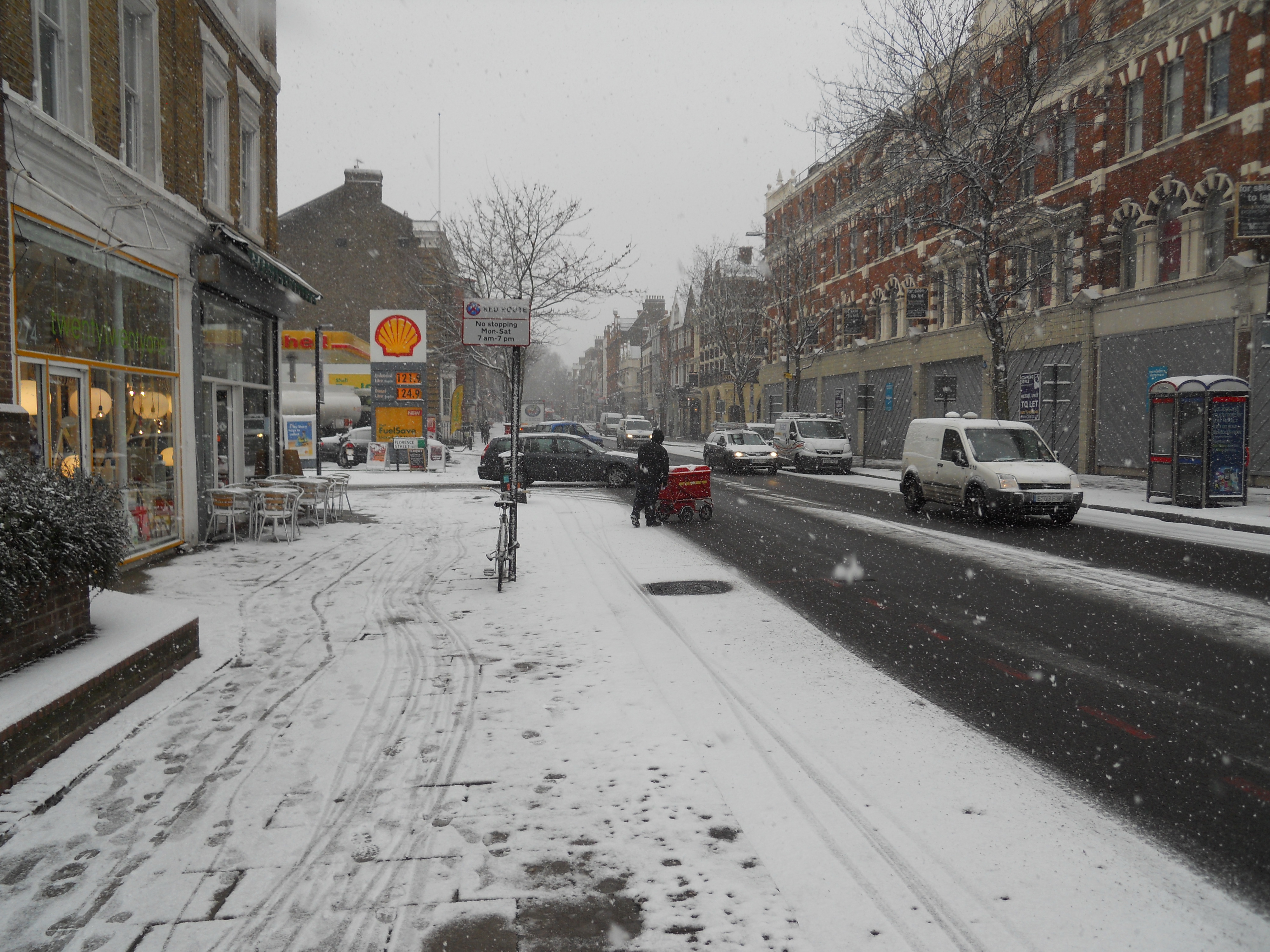
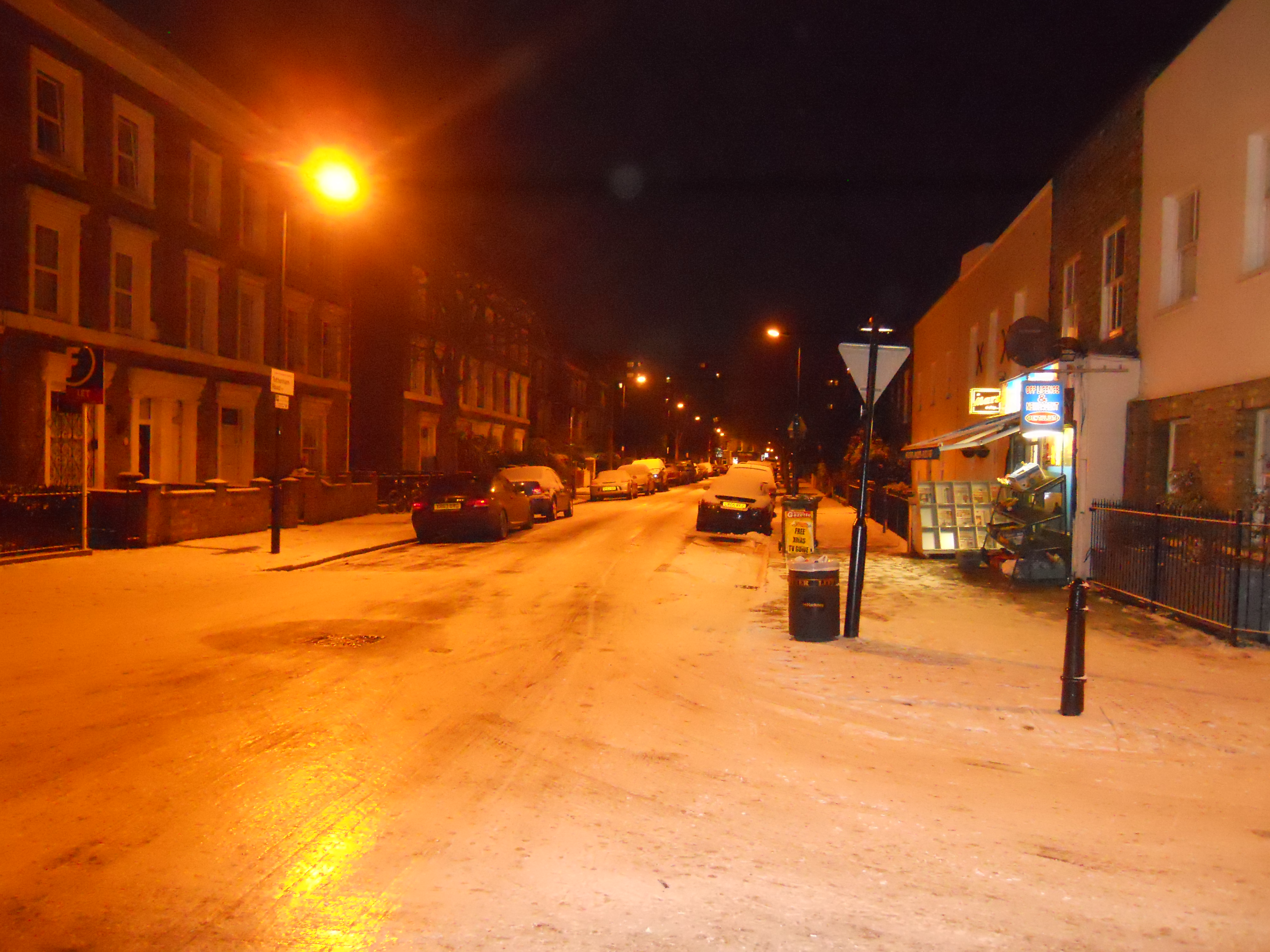
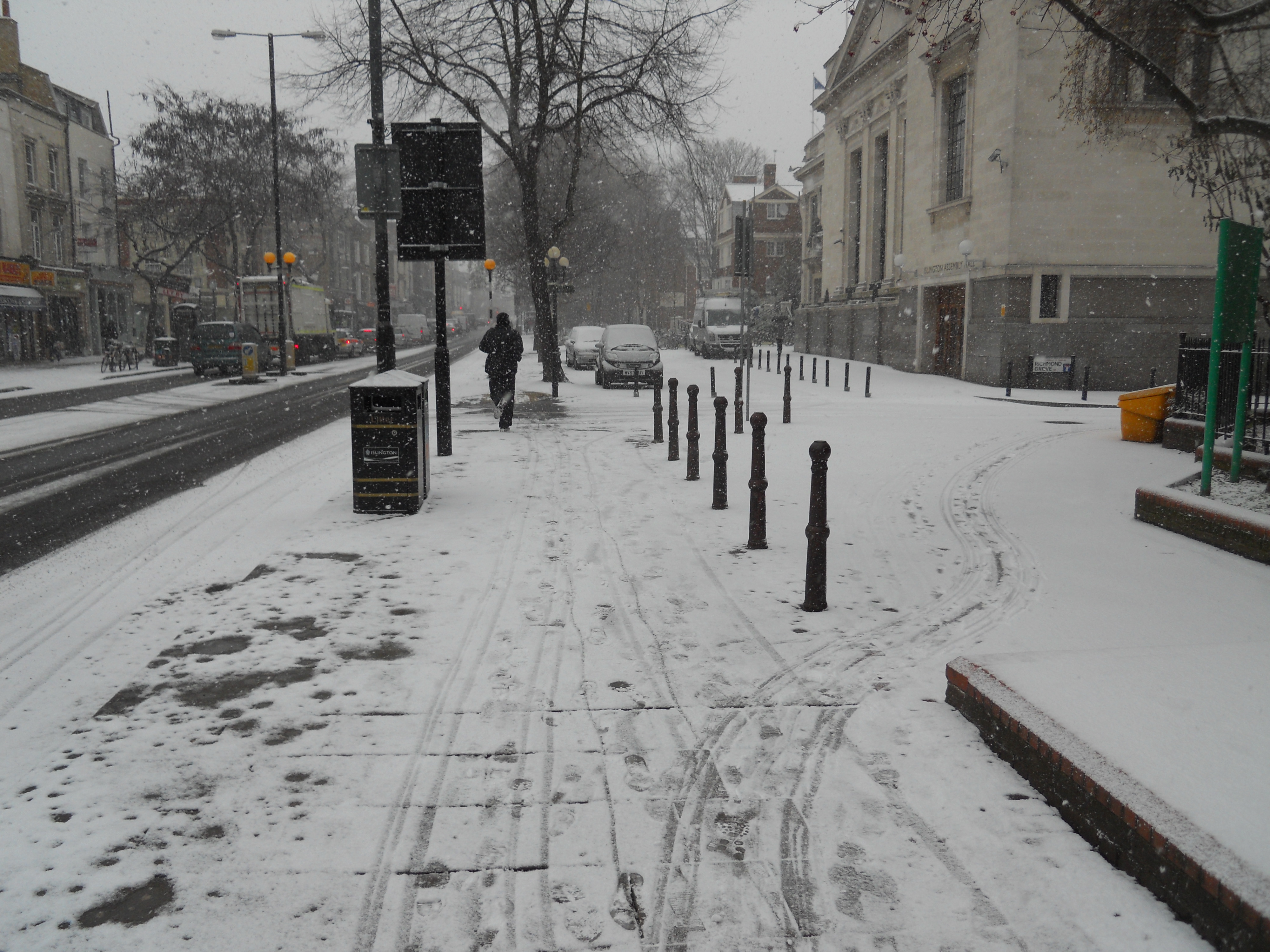
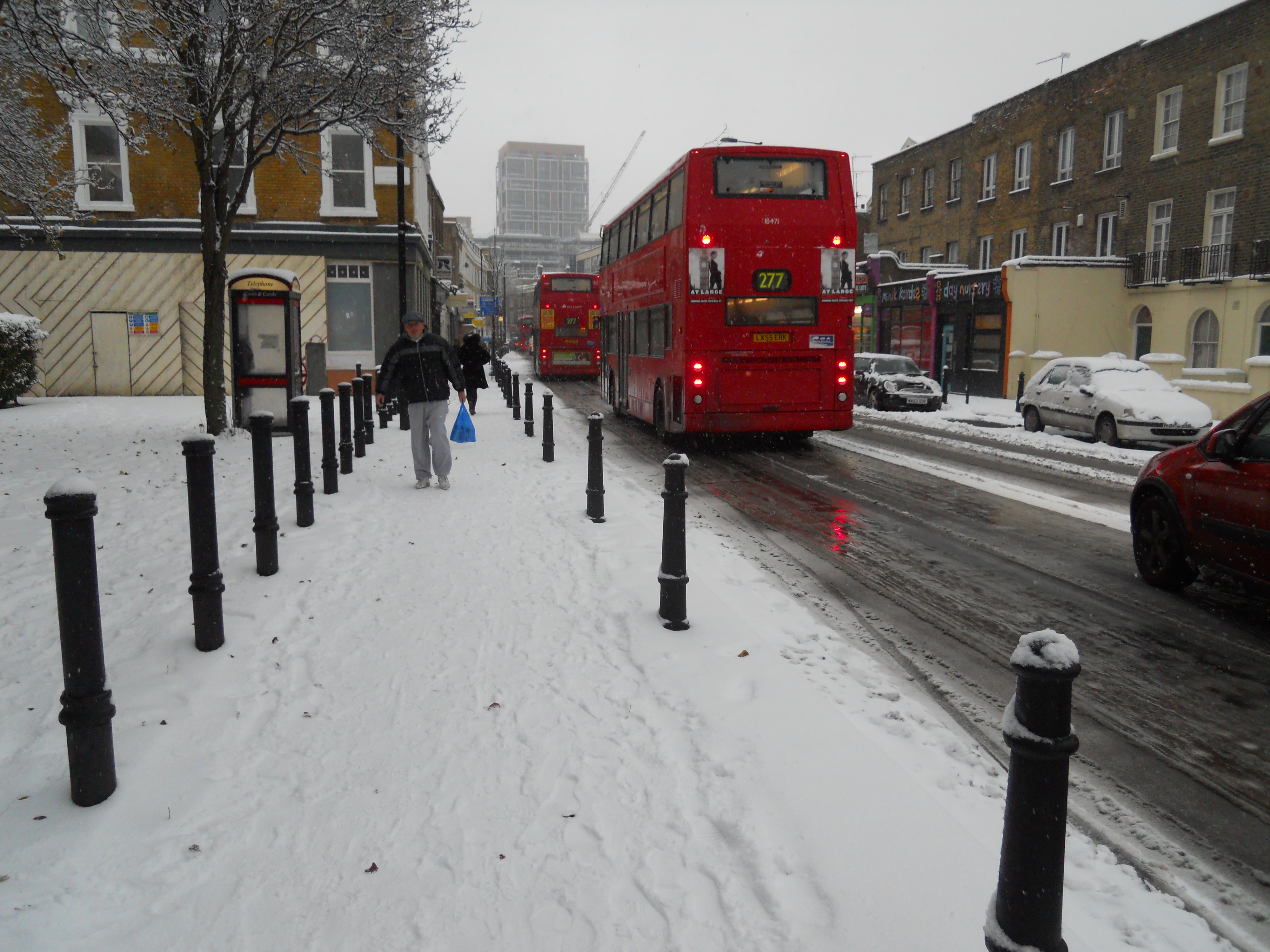
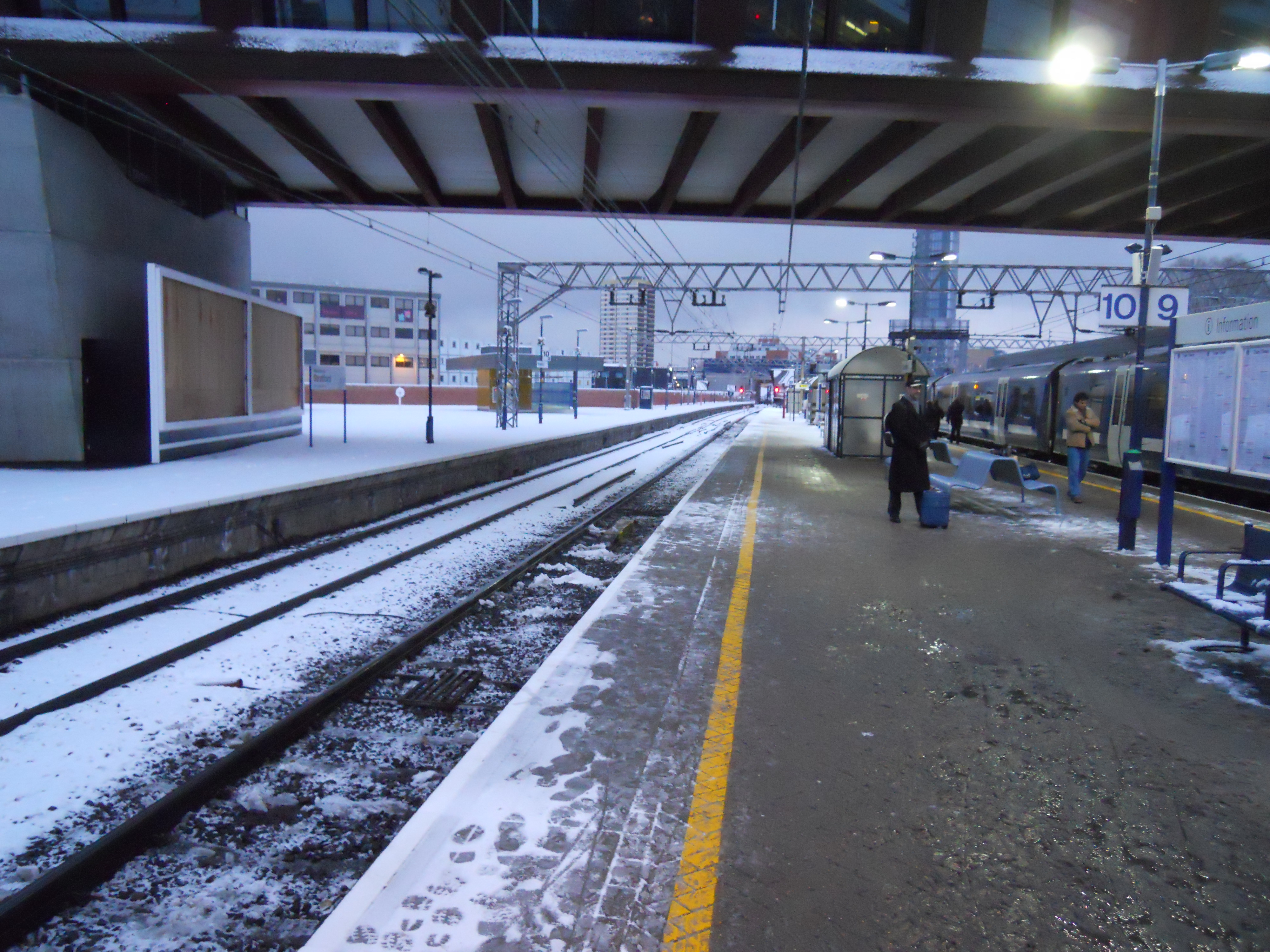
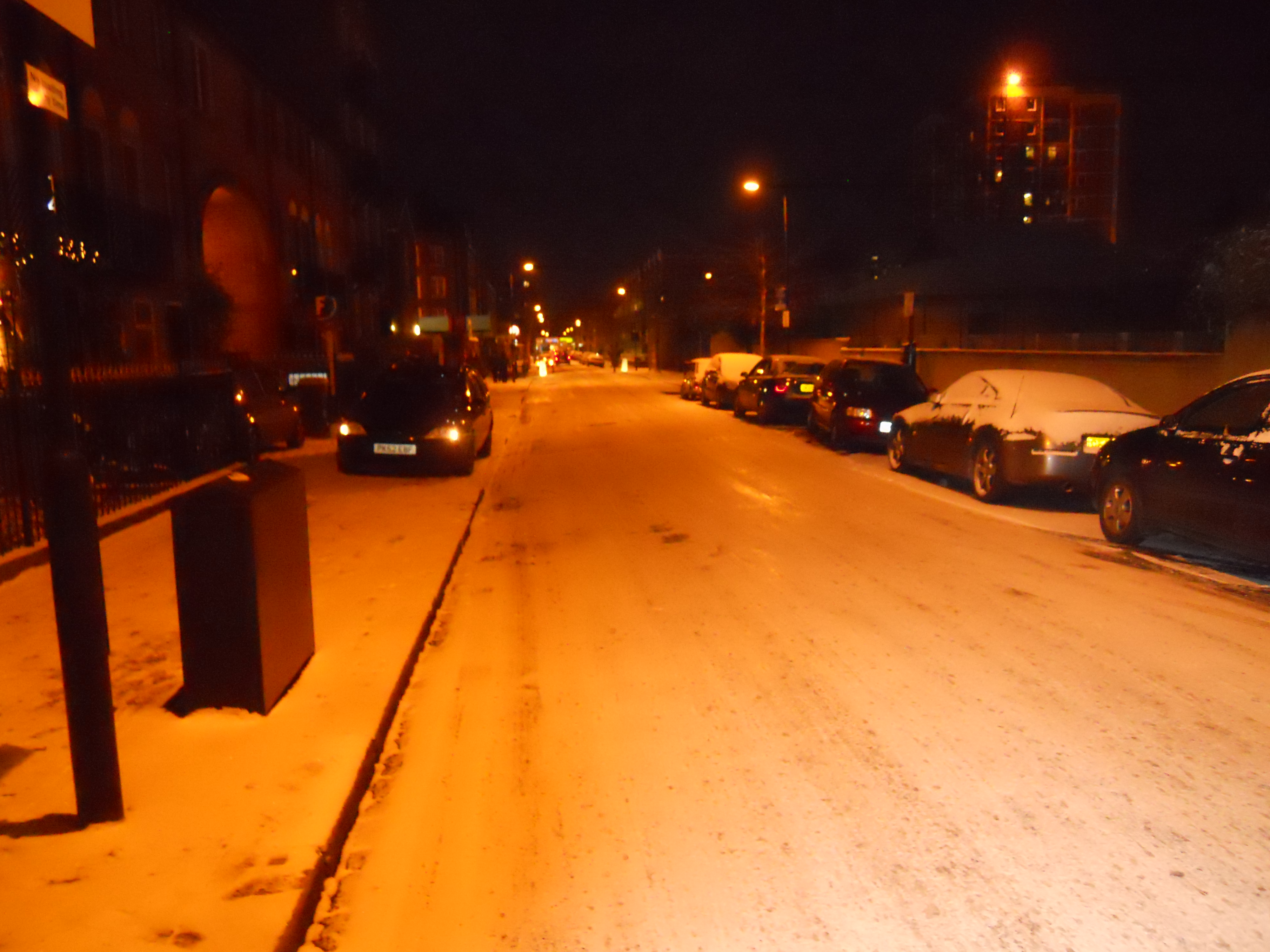
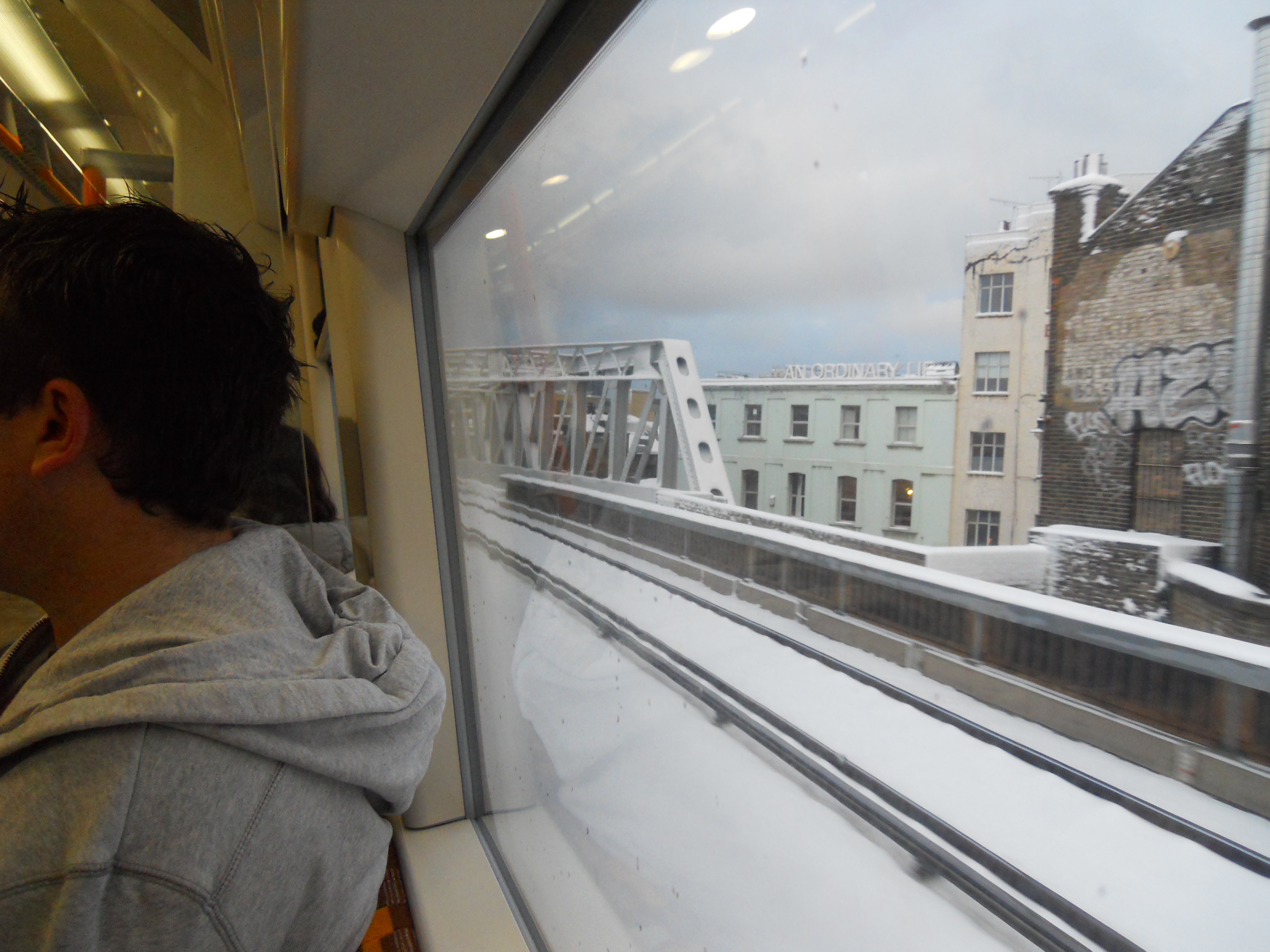
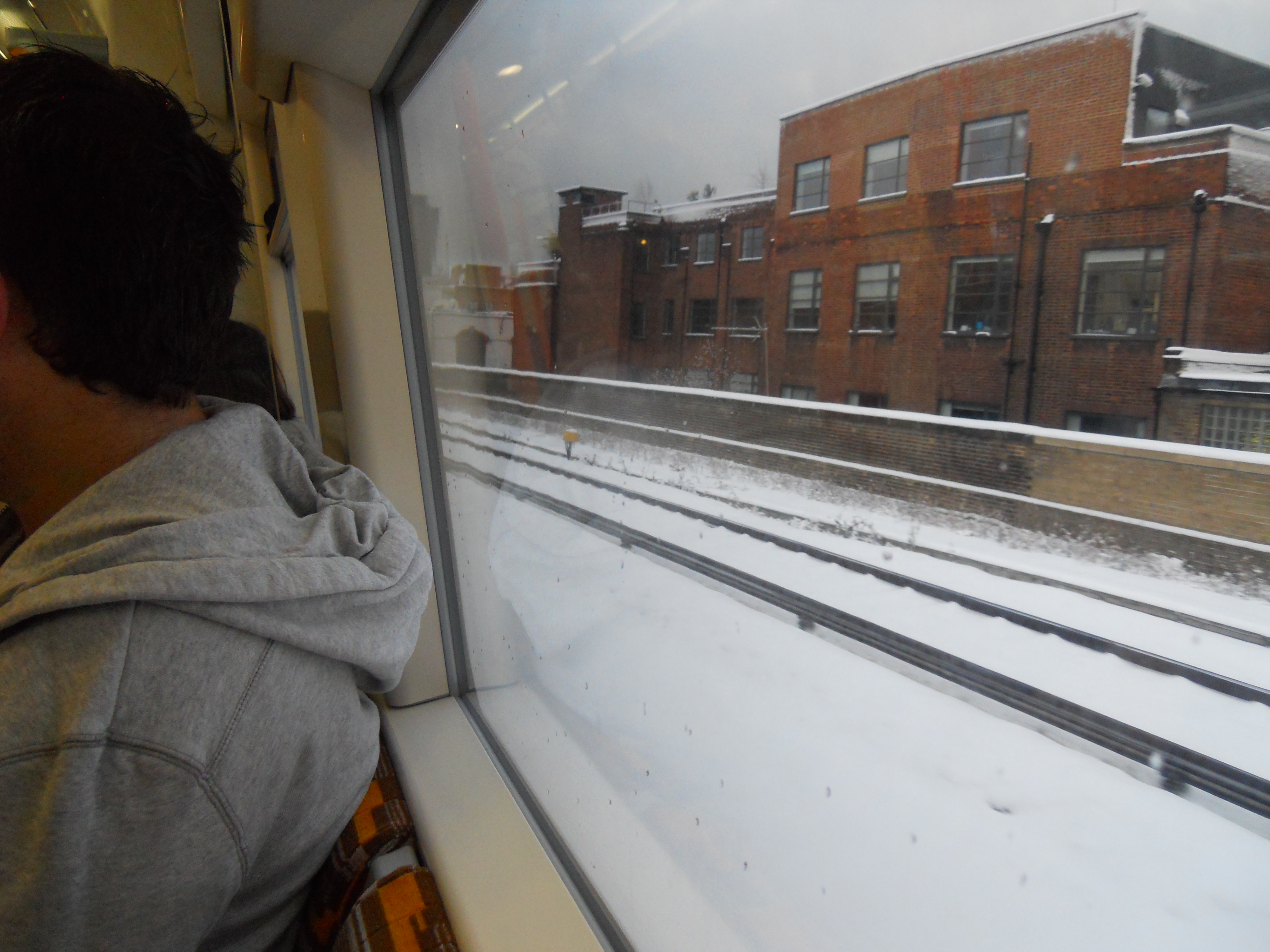
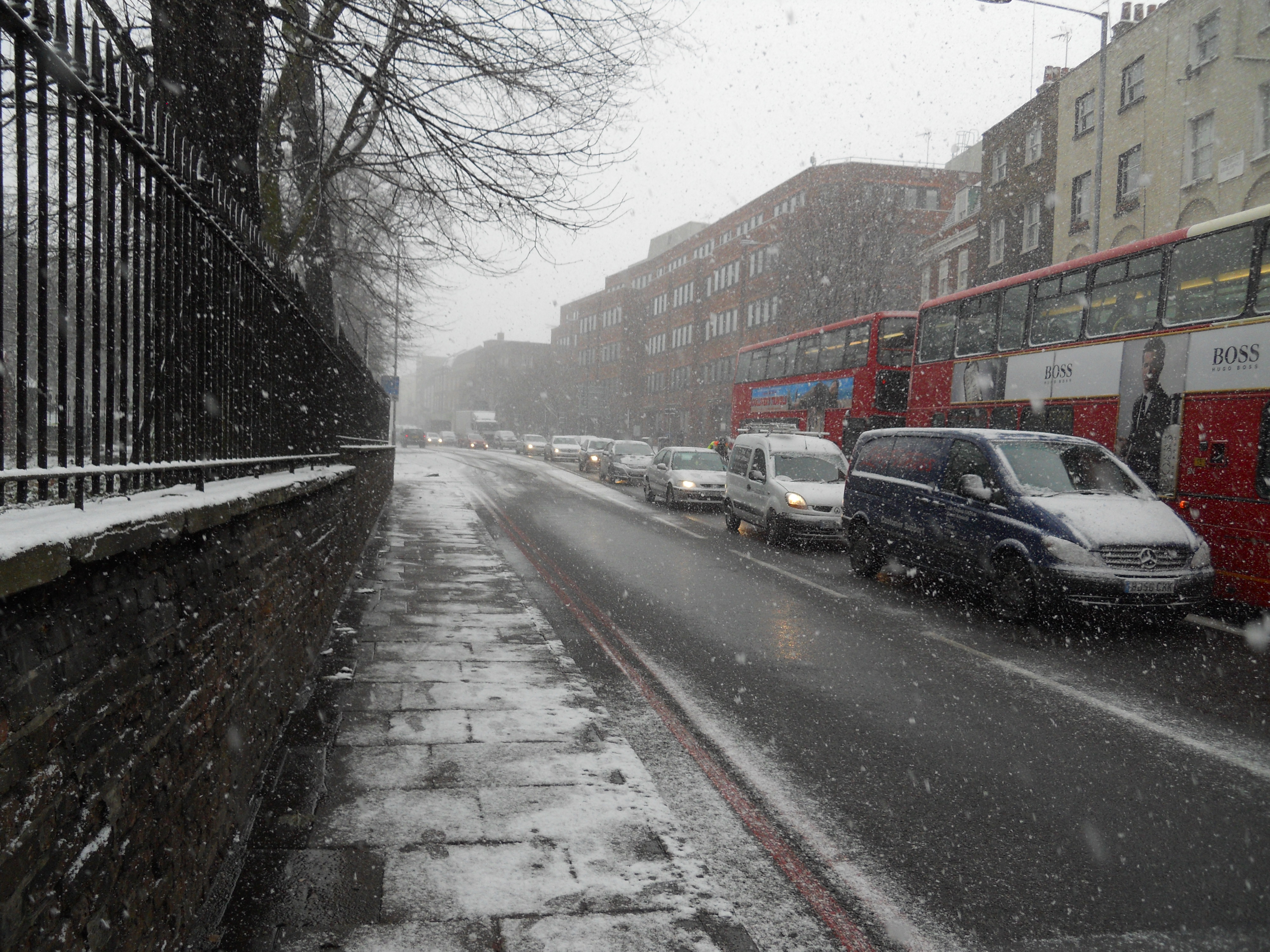
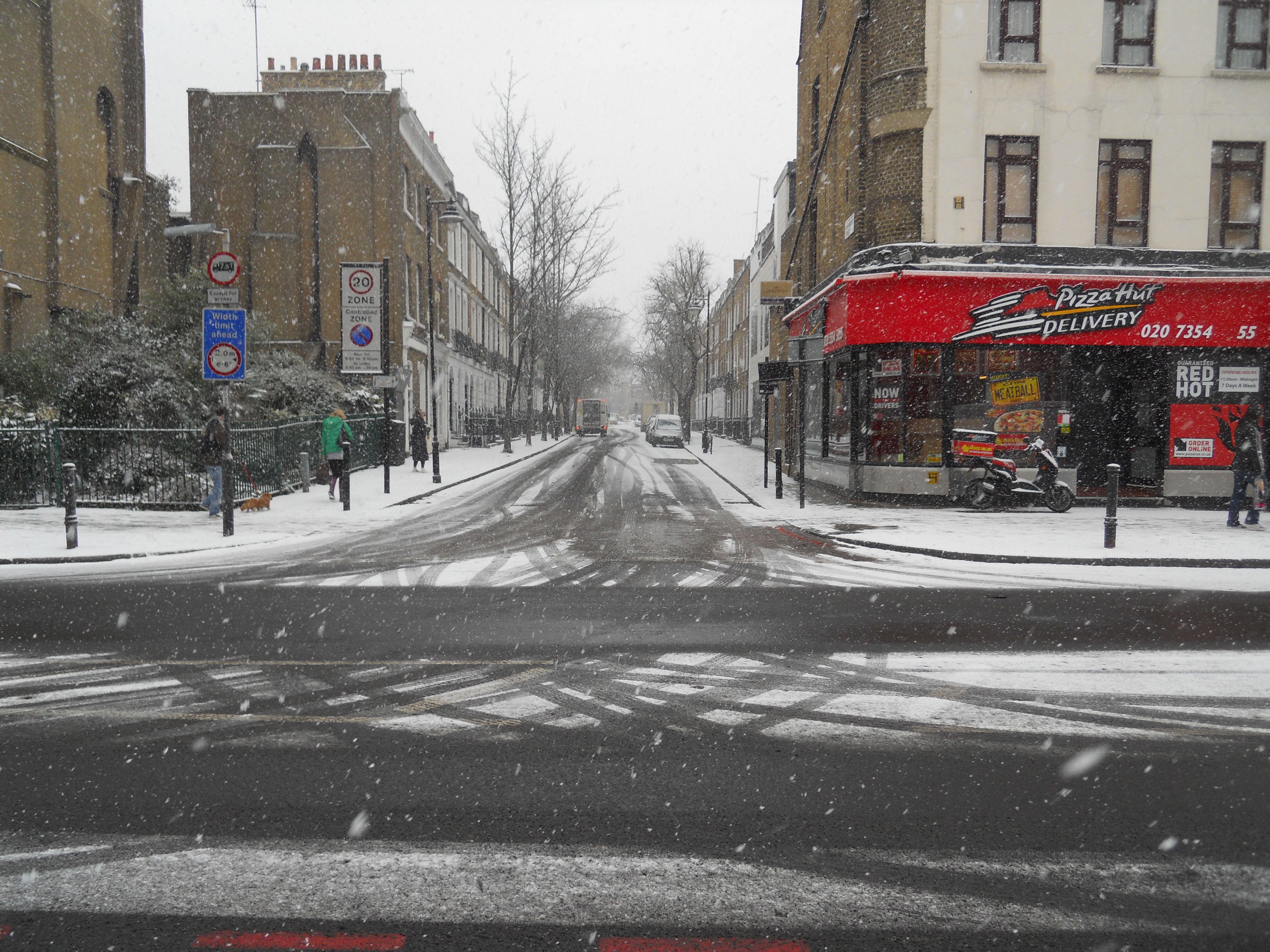
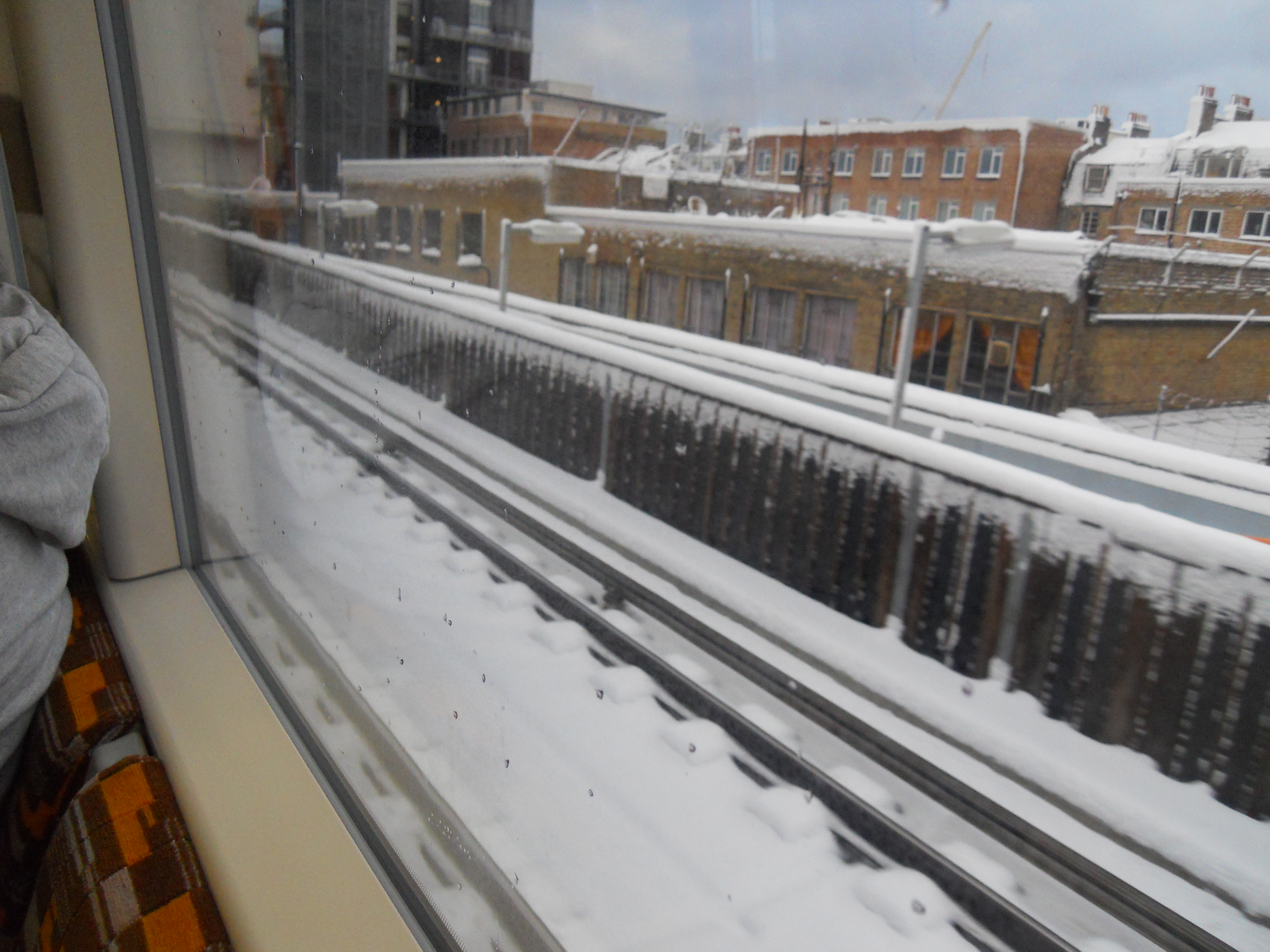
At present there is no link between the new East London Line and the old North London Line, so passengers wishing to transfer have to walk down the busy road, that connects the two stations, as I did yesterday, when I needed to divert because of the snow.
But the Western Curve which connects the two lines appears to be a project that is running to time, if you read this article.

