St. Pancras And Leicester Via Corby
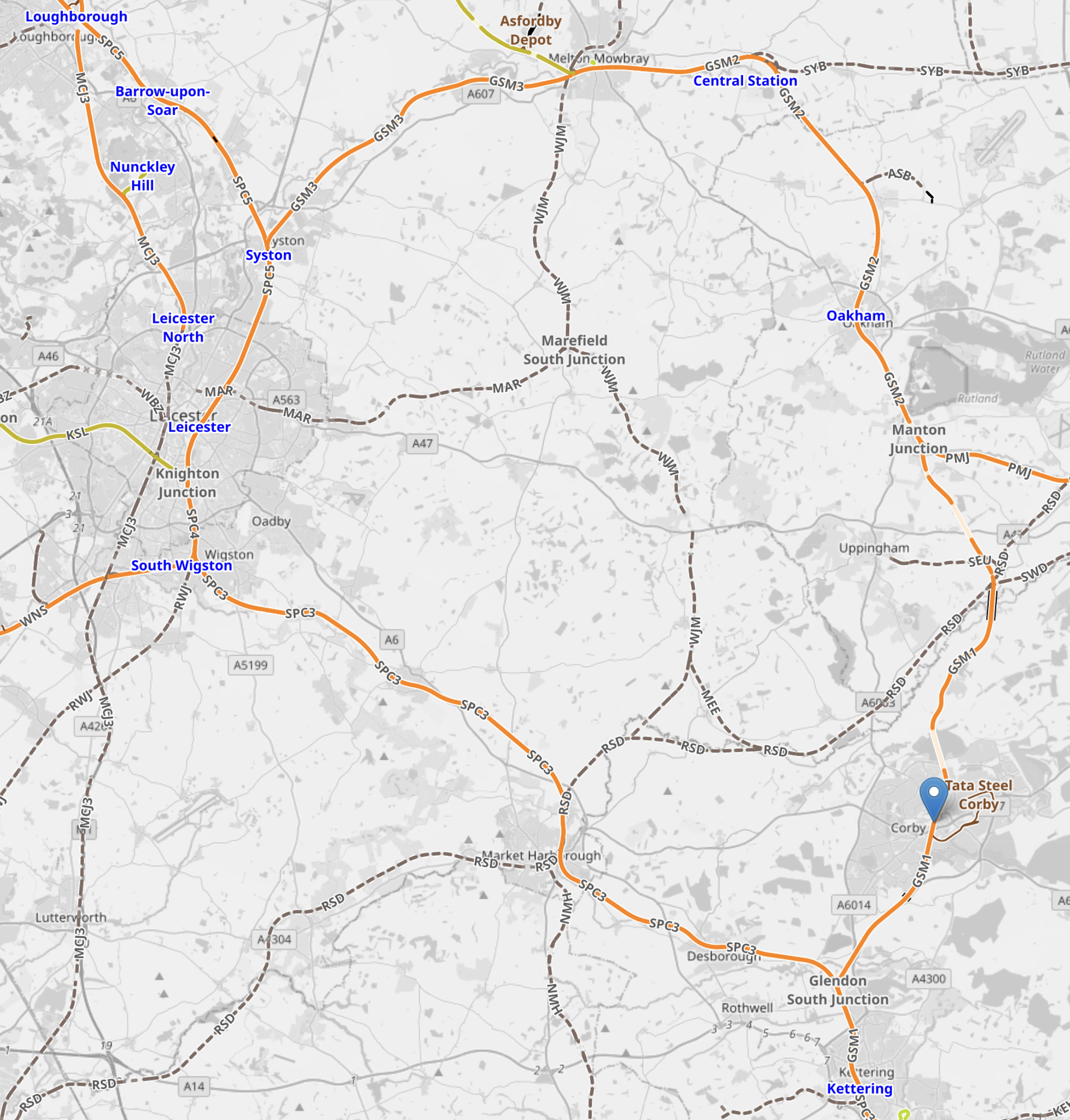
This OpenRailwayMap shows the route between Kettering and Leicester via Corby.
Note.
- Kettering station is in the bottom right corner of the map.
- Kettering is on the Midland Main Line from St. Pancras.
- North of Kettering the route splits into two.
- The Midland Main Line goes North-West through Market Harborough to Wigston junction and Leicester.
- The Midland Main Line is electrified to Wigston junction.
- The Corby branch goes North-East to Corby, which is indicated by a blue arrow.
- The Corby branch is electrified to Corby.
On Saturday, I went to Leicester and because there were engineering works at Market Harborough, the train went via Corby.
Over The Welland Viaduct
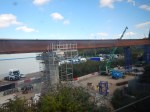
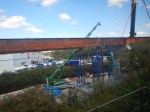
After Corby, the train went over the Welland Viaduct and I took these pictures.
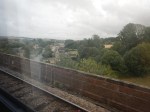
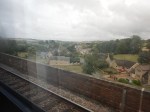
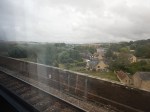
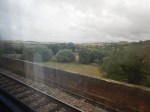
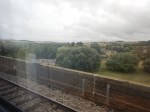
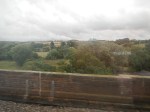
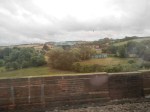
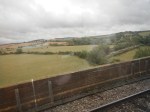
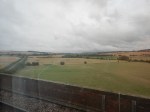
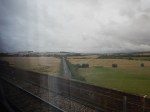


It is an impressive viaduct and is the longest viaduct across a valley in the United Kingdom.
I have some further thoughts.
Could The Corby Service Be Extended to Leicester?
Consider.
- Between Corby and Leicester is 40.8 miles of track without electrification.
- Trains could call at Oakham, Melton Mowbray and Syston stations.
- Oakham, Melton Mowbray and Syston stations, could be given an appropriate number of trains every day to Leicester, Corby, Kettering, Wellingborough, Bedford, Luton, Luton Airport Parkway and London St. Pancras International stations.
- No new infrastrructure would be needed.
- I suspect an hourly service would be sufficient.
I am fairly sure that a Class 810 train fitted with batteries could work the route.
Leicester, Oakham, Melton Mowbray And Syston Stations Would Get A Direct Connection To Luton Airport
Some travellers might find this very useful.
Leicester Station Would Have A Neat Passenger Drop-Off For Luton Airport
I wrote about this in Busiest UK Airports Raise Kiss-and-Fly Fees, Says RAC.
Every rail station needs a passenger drop-off as good and affordable as the one at Leicester station.
Thoughts On The East Midlands Railway Timetable After Class 810 Trains Enter Service
East Midlands Railway will soon be replacing their diesel Class 222 trains with new bi-mode Class 810 trains.
- 32 trains will be replaced by 33 trains.
- 167 cars will be replaced by 165 cars.
- The current trains come in four, five and seven cars.
- The new trains come in five-cars only.
- The platforms at St. Pancras station can accept a pair of the new trains.
- Both Class 222 and Class 810 trains are genuine 125 mph trains.
- St. Pancras and Corby takes one hour and fifteen minutes
- St. Pancras and Nottingham takes hour and forty-five minutes
- St. Pancras and Sheffield takes two hours
The current services are as follows.
- St. Pancras and Corby via Luton Airport Parkway, Luton, Bedford, Wellingborough and Kettering
- St. Pancras and Nottingham via Kettering, Market Harborough, Leicester, Loughborough (1 tph), East Midlands Parkway (1 tph) and Beeston (1 tph).
- St. Pancras and Sheffield via Leicester, Loughborough (1 tph), East Midlands Parkway (1 tph), Long Eaton (1 tph), Derby and Chesterfield.
Note.
All services are two trains per hour (tph)
If all services were run by single trains, the following number of trains would be needed for each service.
- St. Pancras and Corby – 6 trains
- St. Pancras and Nottingham – 8 trains
- St. Pancras and Sheffield – 9 trains
Note.
- This means a total of twenty-three trains.
- I am assuming, that trains can turn round in fifteen minutes at each end of the journey.
- If pairs of trains run, then the numbers can be doubled to forty-six trains.
These are my thoughts.
Do The Luton Airport Express Services Need Pairs Of Trains?
The Corby service is now branded as the Luton Airport Express.
This picture shows a packed Luton Airport Express at Luton Airport Parkway station.

After seeing this, I believe that a pair of trains must run to Corby to pick up passengers, who want a fast service to and from Luton Airport.
Will The Class 810 Trains Replace The Class 360 Trains To Corby?
If all services are run by single Class 810 trains, the following would apply.
- The current service pattern would need 23 trains.
- All stations would get the same number of trains to and from St. Pancras.
- All East Midlands Railway out of St. Pancras would use the same 125 mph electric trains and services could probably be speeded up.
- The Class 810 train has 2.94 MW on diesel and the Class 360 train has 1.55 MW on electric, so I suspect that the Class 810 train has the faster acceleration.
- Bedford, Kettering, Luton, Luton Airport Parkway, Market Harborough and Wellingborough would have 125 mph electric commuter services to and from London.
- Corby and Luton Airport Parkway services would have marginally more seats, if Corby services were pairs of trains.
There would be ten spare trains, if the Class 360 trains were replaced or four spare trains, if pairs of trains ran to Corby.
Would Class 810 Trains Running On Electric Execute Stops Faster?
This document on Rail Engineer gives these figures for total power on electric of Class 802 trains.
- Five-car – 2712 kW
- Nine-car – 4520 kW
Note.
- These figures are based on a Hitachi figure of 226 kW for the power of a traction motor.
- The five-car train has twelve motors and the nine-car has twenty.
- As a five-car train has three powered cars and a nine-car train has five, it looks like each powered car has four traction motors.
- The document also says that the power to weight ratio on electric is thirty percent more than on diesel.
This document on the Hitachi web site provides this schematic of the traction system.

Note that four traction motors are confirmed.
Consider the power of the various trains, that run or will run on the Midland Main Line.
- Four-car Class 180 train has one 559 kW diesel engine per car.
- Four, five and seven-car Class 222 train has one 559 kW diesel engine per car.
- Four-car Class 360 train has 1.55 MW on electric – 387 kW per car.
- Five-car Class 810 train has 2.94 MW on diesel – 588 kW per car.
- Five-car Class 810 train has 2.94 MW on electric – 588 kW per car.
Note.
- The Class 810 train will out-accelerate the Class 360 train as it has at least 40 percent more power on electric.
- The Class 810 train has pantographs on both driving cars.
- The Class 810 train has two powered cars; numbers 2 and 4.
- I have assumed that if the Class 810 train can handle 2.94 MW on both diesel and electric.
- With eight traction motors, they would need to be 367.5 kW.
- The Class 810 train should out-accelerate the Class 180 train and Class 222 train as it has at five percent more power on both diesel and electric.
I think it is also relevant that the order for the Class 810 trains was placed in August 2019 and Hitachi announced their collaboration with Eversholt Rail Group to develop the battery-electric versions of the Class 802 trains only sixteen months later. As the Class 810 appears to be an revolution of the Class 802 train, I suspect that Hitachi were working hard on battery design, as this train’s design evolved.
These are the five cars of the Class 810 train.
- 1 – DPTS – Driver-Pantograph-Trailer-Standard with Generator Unit
- 2 – MS – Motored-Standard with Generator Unit
- 3 – TS – Trailer-Standard with Transformer
- 4 – MC – Motored-Composite with Generator Unit
- 5 – DPTF – Driver-Pantograph-Trailer-First with Generator Unit
Note.
- Generator Unit is a diesel generator.
- Motored means the car has four traction motors.
- Composite means a car with both First and Standard accommodation.
- Cars 1-2, and 4-5, form two power units with two generator units, four traction motors and a pantograph, at each end of the train. Cables would connect them to the transformer in car 3.
It looks a neat solution, which probably has high reliability.
I can envisage the two generator units under cars 2 and 4 could be replaced by battery packs.
- The battery packs would mimic the function of the generator units.
- Noise in cars 2 and 4 would be reduced.
- Carbon emissions would be reduced.
- The battery packs would be charged, when running under the wires or possibly from chargers or short length of overhead wires at terminal stations.
- The battery packs would handle regenerative braking.
- Adding battery packs would allow the trains to jump gaps left in the electrification.
At some point in the future, the other two generator units could be removed or replaced with battery packs, depending on whether full electrification happens on the Midland Main Line.
These meanderings convince me that the Class 810 trains will be able to save time in the stops on the Midland Main Line.
Because of these savings, I can see East Midlands Railway, reorganising stops on the electrified section of the route, as although the stop will add a minute or two, this lost time will be picked up on savings at existing stops and by more 125 mph running.
Could The Nottingham And Sheffield Services Be Combined?
These are the current services to Nottingham and Sheffield.
- St. Pancras and Nottingham via Kettering, Market Harborough, Leicester, Loughborough (1 tph), East Midlands Parkway (1 tph) and Beeston (1 tph).
- St. Pancras and Sheffield via Leicester, Loughborough (1 tph), East Midlands Parkway (1 tph), Long Eaton (1 tph), Derby and Chesterfield.
Note.
- Both services call at Leicester , Loughborough and East Midlands Parkway.
- Some trains call at Luton Airport Parkway, Luton, Bedford, Wellingborough, Kettering and Market Harborough on the section of the Midland Main Line, which is currently being electrified between Kettering and Wigston.
- A lot of money has been spent on the Luton DART and it only has two fast trains from St. Pancras. Four tph would be ideal.
Suppose the Sheffield and Nottingham trains operated like this.
- A pair of Class 810 trains would leave St. Pancras.
- South of Leicester, they would call at one or two stations, as defined in the timetable.
- They would then call at Leicester , Loughborough and East Midlands Parkway.
- At East Midlands Parkway, the two trains would split.
- One train would go to Sheffield and the other would go to Nottingham, stopping as defined in the timetable.
Note.
- Because of the trains superior performance, they would be doing quicker calls at stations, which should allow the existing timetable to be maintained or even improved.
- Hitachi trains can split and join in around two minutes.
- These trains would call at Luton Airport Parkway, to give that station four tph from St. Pancras, Luton and Bedford.
I calculated earlier that a 2 tph Sheffield service would need nine trains. So if it served both Nottingham and Sheffield it would need another nine trains. This would give a total of eighteen trains.
- If the St.Pancras and Corby service were to be run by pairs of Class 810 trains, this would require twelve trains.
- Adding the two services together would require thirty trains. Would three trains be enough for backup and in maintenance?
I suspect splitting and joining at East Midlands Parkway could be beneficial.
Could Four tph Be Run To Nottingham And Sheffield?
Consider.
- Bristol, Cardiff, Edinburgh, Leeds, Liverpool, Manchester, Newcastle, Norwich, Southampton and York all get two tph from London.
- Some closer stations like Birmingham, Cambridge, Ipswich, Leicester, Oxford and Reading get more.
- Most of these routes are electrified and run modern trains.
I wouldn’t say never, but adding two tph to both Nottingham and Sheffield services would require.
- Two more hourly train paths on both between St. Pancras and Nottingham, and St. Pancras and Sheffield.
- Eighteen extra trains.
But as a sub-two hour service would be running on both routes, it would probably be possible to accurately predict, when more trains were needed.
Electrification Through Leicester
As more electrification is added, this should result in faster journeys, that reduce carbon emissions.
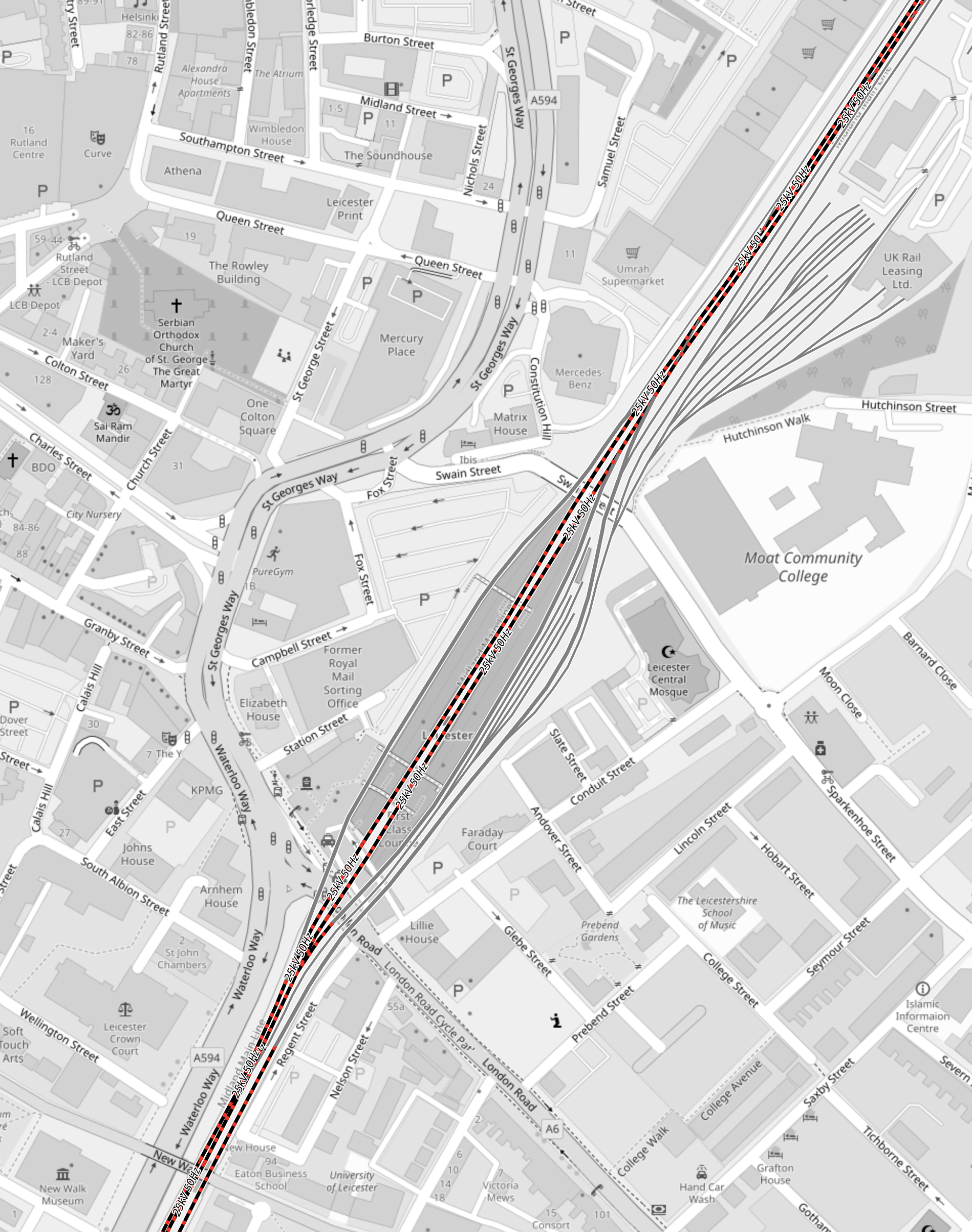
OpenRailwayMap is now showing the electrification as dotted lines on the Midland Main Line.
This map shows the electrification scheme through Leicester.
Note.
- Only the two main lines in the centre of the station seem to be going to be electrified.
- These lines are used by East Midlands Railway’s through trains and surprisingly some freight trains.
- Terminating services from places like Birmingham, Grimsby and Lincoln seem to stop in the outer platforms.
This picture shows the platforms from the Northern footbridge.

This picture shows the platforms from the Northern footbridge.
At the Southern end of the station, the tracks go under the London Road bridge. This map shows the tracks there.

Note.
- The two main tracks of the Midland Main Line appear that they will be electrified.
- But the lines at each side are not electrified.
Some years ago I came back to London from Leicester with a group of drivers. At one point, the conversation turned to electrification and they said that they had met a Network Rail engineer, who had told them, that the bridge was rather low for electrification and the track couldn’t be lowered because Leicester’s main sewer was underneath the railway.
It looks like Network Rail have found a way to squeeze two electrified tracks through the middle of the bridge and then use diesel, battery or other self-powered trains on lines without electrification on either side.
Moorgate And Luton Airport Parkway
This morning I went by train from Moorgate to Luton Airport Parkway to have a look at the Luton DART.
I used the following route.
- Elizabeth Line – Moorgate to Farringdon.
- Thameslink – Farringdon to Luton Airport Parkway.
I came back from Luton Airport Parkway on a Luton Airport Express.
I took these pictures on the route.
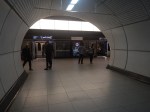






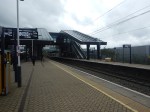
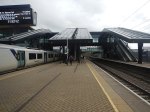
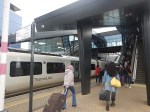
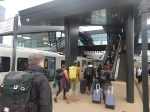
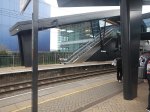



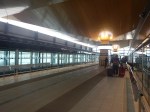
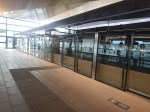
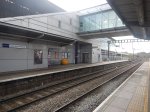
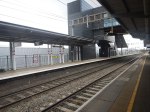
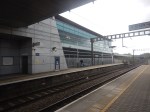
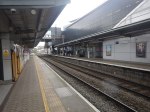

Note.
- The change at Farringdon station was very easy.
- You walk past toilets at the Farringdon change.
- There are two bridges, lots of escalators and lifts at Luton Airport Parkway station.
- I didn’t take the DART to the airport.
These are some detailed thoughts.
Luton Airport Parkway Station
It is a much improved station, but still has some work to do.
- There was a problem with one escalator.
- Some of the signage is not finalised.
- I had a problem with ticketing, as I was sold the wrong ticket.
- Staff probably need a bit more training.
But then the station has only been open three weeks.
Luton Airport Express
East Midland Railway’s St. Pancras and Corby service is now branded as Luton Airport Express.
- It has its own web site.
- Trains only stop at Luton Airport Parkway, Luton, Bedford, Wellingborough and Kettering.
- Trains take as little as twenty-two minutes between St. Pancras and Luton Airport Parkway.
- Class 360 trains are used.
- Trains run every thirty minutes.
As it serves the local area, I wonder how many airport employees, now use this train to get to work?
A Trip To Corby
I took these pictures on a trip to Corby this morning.
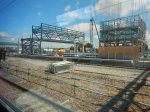
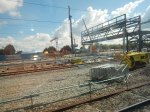


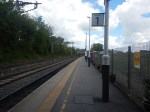
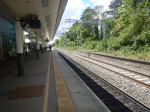
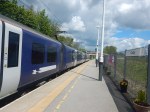
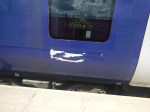
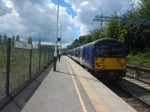
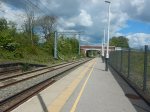
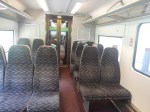
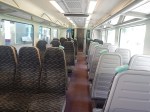

These are my thoughts.
Trains To And From Corby
I got a Class 222 train to Corby and an eight-car Class 360 train back.
Brent Cross West Station
There was a lot of constructruction activity at the new Brent Cross West station.
Luton Airport Parkway Station
The extensions to Luton Airport Parkway station look to be comprehensive, with several escalators.
The Luton DART connection to Luton Airport appears to be under test, so should open in 2022.
But will there be any air passengers to use it?
I last used it in 2008, when I went to see England play in Belarus.
Electrification North Of Bedford
The electrification North of Bedford station is obviously complete on the slow lines, but on the fast lines, as the pictures show, the gantries are all erected, but there are still wires to be installed.
But as the Class 810 trains won’t be in service until 2023, there’s still a bit of time.
The gantries certainly look sturdy, as this picture shows.
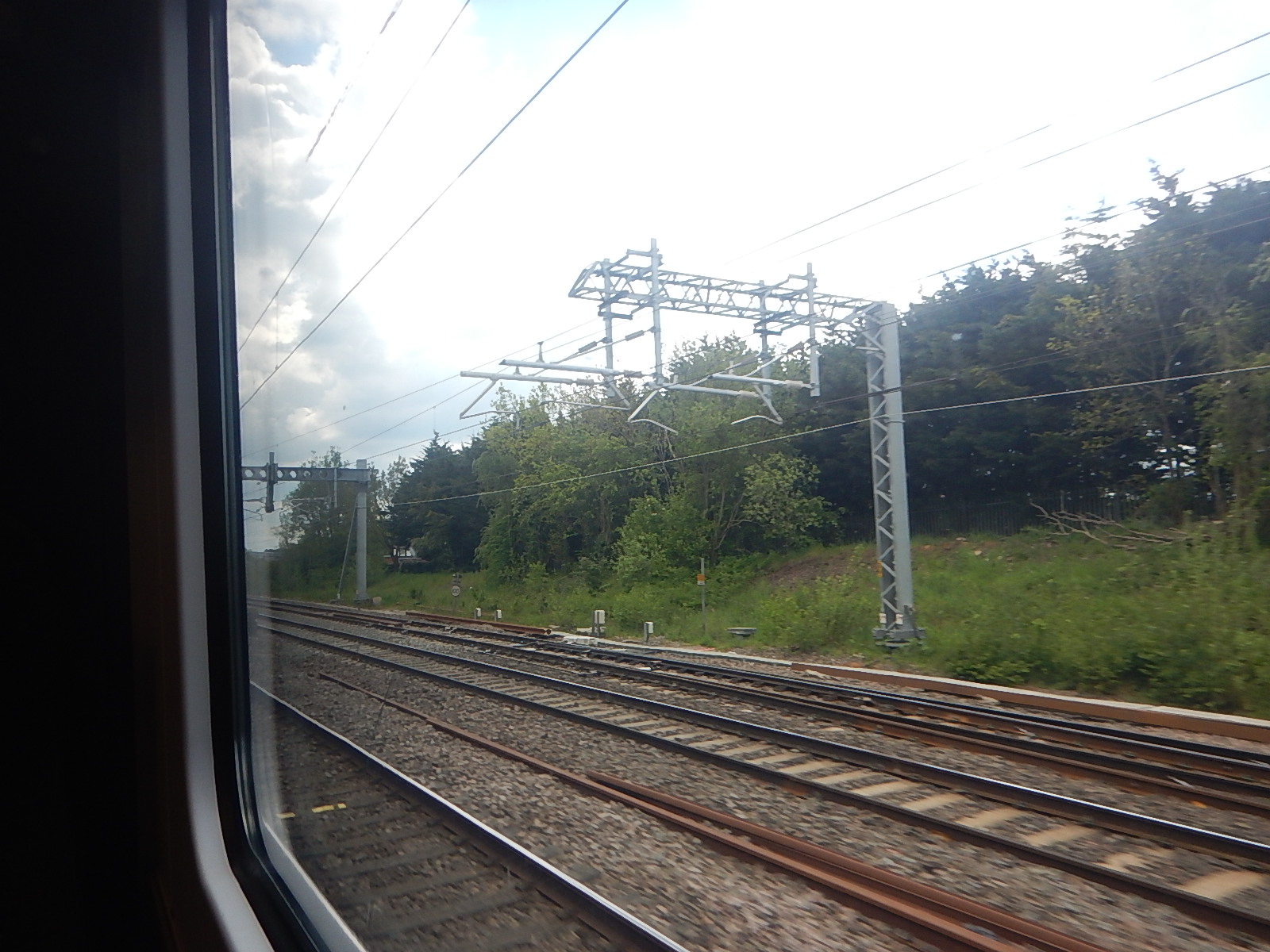
They’re certainly built for 125 mph, but as the Class 810 trains will be capable of 140 mph with full digital in-cab signalling, I would hope that the electrification has been installed to that standard. Or at least to a standard, that can be easily upgraded!
Corby Station
Corby station has been finished to a single-platform station, which is able to accept a twelve-car Class 360 train.
This should be adequate for the current half-hourly service, as a single platform can handle a least four trains per hour (tph) and several around the country regularly do.
Both tracks through the station are electrified and I suspect with a second platform bridge, both could be used by electric trains to create a two-platform station.
But there would appear to be no need at the moment.
Even, if it were to be decided to extend one tph to Oakham and Melton Mowbray stations, this could probably be accommodated on the single-platform.
Network Rail seem to have already installed a crossover South of Corby station, so that trains can use the single platform.
Serving Oakham And Melton Mowbray
I discussed this extension in detail in Abellio’s Plans For London And Melton Mowbray Via Corby And Oakham.
In the related post, I said this.
This page on the Department for Transport web site is an interactive map of the Abellio’s promises for East Midlands Railway.
These are mentioned for services to Oakham and Melton Mowbray.
-
- After electrification of the Corby route there will continue to be direct service each way between London and Oakham and Melton Mowbray once each weekday, via Corby.
- This will be operated with brand new 125mph trains when these are introduced from April 2022.
This seems to be a very acceptable minimum position.
When my Class 222 train arrived in Corby at 1154, it waited a couple of minutes then took off to the North.
I then took the next train to London, which was an eight-car Class 360 train which formed the 1211 service back to St. Pancras.
Meanwhile the Class 222 train, that I’d arrived on did a reverse in the Corby North Run Around Loop finally arriving back in Corby at 1345. The train had taken one hour and forty-nine minutes to return to Corby.
It might be just coincidence, but are East Midlands Railway doing timing tests to see if services can be extended to Oakham And Melton Mowbray?
It should be noted that service times North of Corby are as follows.
- Corby and Oakham – 19 mins – 14.3 miles
- Corby and Melton Mowbray – 31 mins – 25.7 miles
- Melton Mowbray and Leicester – 17 mins – 12.8 miles (estimate) – CrossCountry service
My logic goes like this.
- It looks to me that it would not be unreasonable that a Class 222 train could run between Corby and Leicester in forty-eight minutes.
- Double that and you get one hour and thirty eight minutes, for a journey from Corby to Leicester and back.
- Subtract that time from the one hour and forty-nine minutes that my train took to reverse and there is eleven minutes for a turnback at Leicester station.
- Eleven minutes would certainly be long enough to tidy a train and for the crew to change ends.
I also believe that the 35.8 miles would be possible for a Class 810 train fitted with one or more battery power-packs instead of a similar number of the four diesel engines.
So are East Midlands Railway doing tests to find the most efficient way to serve Oakham And Melton Mowbray?
On The Corby Branch
I travelled North on a Class 222 diesel train and South on an electric Class 360 train.
On the Corby branch, I was monitoring the train speed on an app on my phone and both trains travelled at around 90 mph for most of the way.
There were sections at up to 100 mph and the track was generally smooth.
I was left with the impression, that trains might be able to go faster on the branch.
Average speeds for the 2.5 miles of the branch were as follows according to these timings from realtimetrains.
- Class 222 train – Arriving – 5.25 mins – 28.6 mph
- Class 222 train – Leaving – 5 mins – 30 mph
- Class 360 train – Arriving – 7.5 mins – 20 mph
- Class 360 train – Leaving – 5 mins – 30 mph
It doesn’t appear that there are much difference in the timings, although it might be said, that the electric approach is more cautious.
The Class 360 Trains
The Class 360 trains have not been refurbished yet although as my pictures show, some have been given a new livery.
In Are Class 360 Trains Suitable For St. Pancras And Corby?, I said this about the train refurbishment.
This page on the Department for Transport web site is an interactive map of the Abellio’s promises for East Midlands Railway.
These features are mentioned for Midland Main Line services to Corby.
-
- Increased capacity
- Twelve-car trains in the Peak.
- More reliable service
- Improved comfort
- Passenger information system
- Free on-board Wi-Fi
- At-seat power sockets
- USB points
- Air conditioning
- Tables at all seats
- Increased luggage space
- On-board cycle storage
What more could passengers want?
It certainly hasn’t happened in full.
I did ask a steward, when the new interiors will be installed and he said they were running late because of the pandemic.
Performance Of The Class 360 Trains
I used my app to follow the speed of the Class 360 train, that brought me back to London.
- The train hit a maximum speed of about 105 mph.
- The train arrived in London a minute late.
I feel that as the drivers get used to their new charges, they will match the timetable.
Conclusion
I have a feeling that in a couple of years, these trains will fulfil Abellio’s promises.
Thoughts On The Class 360 Trains On The London St. Pancras And Corby Route
In May the Class 360 electric trains will be introduced by East Midlands Railway on the service between St. Pancras and Corby stations.
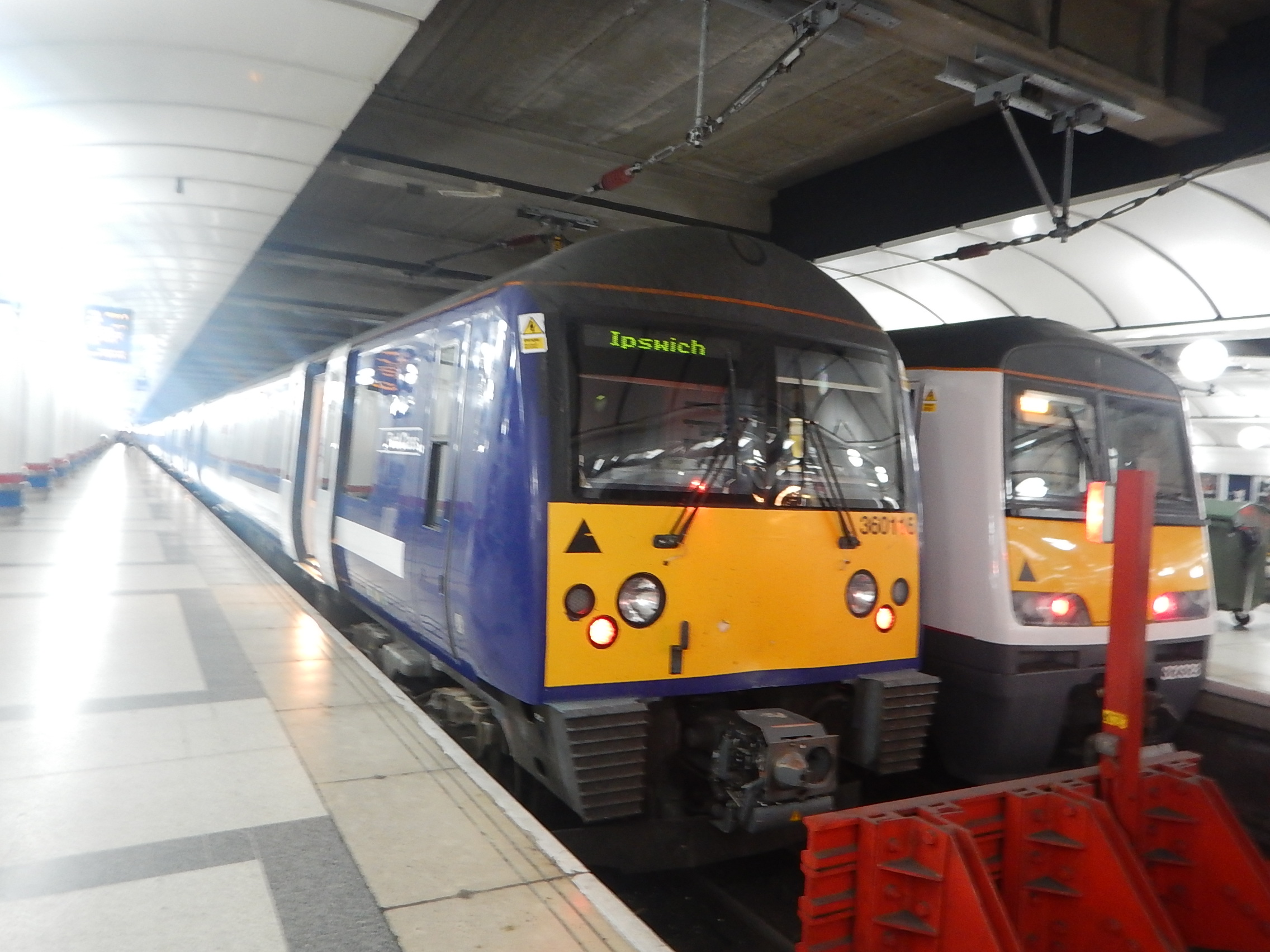
The Class 360 train is on the left.
The following data has come from Real Time Trains.
- St. Pancras and Corby are 79.3 miles apart.
- The current service stops at Kettering, Wellingborough, Bedford and Luton.
- The new electric service stops at Kettering, Wellingborough, Bedford and Luton and Luton Airport Parkway.
- Current services take between 67 and 73 minutes
- The new electric services take between 71 minutes
- Services leave St. Pancras at XX:15 and XX:45
- Services leave Corby at XX:11 and XX:40
- Turnround at St. Pancras appears to be about 23-25 minutes
- Turnround at Corby appears to be about 12-16 minutes.
- St. Albans and St. Pancras takes 14 minutes.
Note.
- The Class 222 train has a top speed of 125 mph and a maximum acceleration: of 0.80 ms-2
- The Class 360 train has a top speed of 110 mph and a maximum acceleration: of 0.98 ms-2
Looks like a case of swings and roundabouts to me!
I can deduce the following.
Average Speed
Consider.
- Assuming a trip time of seventy minutes for the Class 222 train, gives an average speed of 68 mph including stops.
- Assuming a trip time of seventy-one minutes for the Class 360 train, gives an average speed of 62 mph including stops.
These speeds don’t seem to be too difficult to achieve. Especially, as the Midland Main Line is a series of straight line between a number of stations., which are ideal for a quick dash in between.
It’s A Three Hour Round Trip
Add up the two 71 minute trips and the turnaround times and it looks to be a comfortable three hour round trip.
So for a two trains per hour (tph) service, you will need six formations of Class 360 trains.
As it looks like each formation will be twelve cars long, that will mean that eighteen of the current twenty-one trains will be needed.
The three spare trains will be very useful, whilst the trains are refurbished with new liveries and interiors.
Route Capacity
This picture shows a five-car Class 222 train at Corby station.
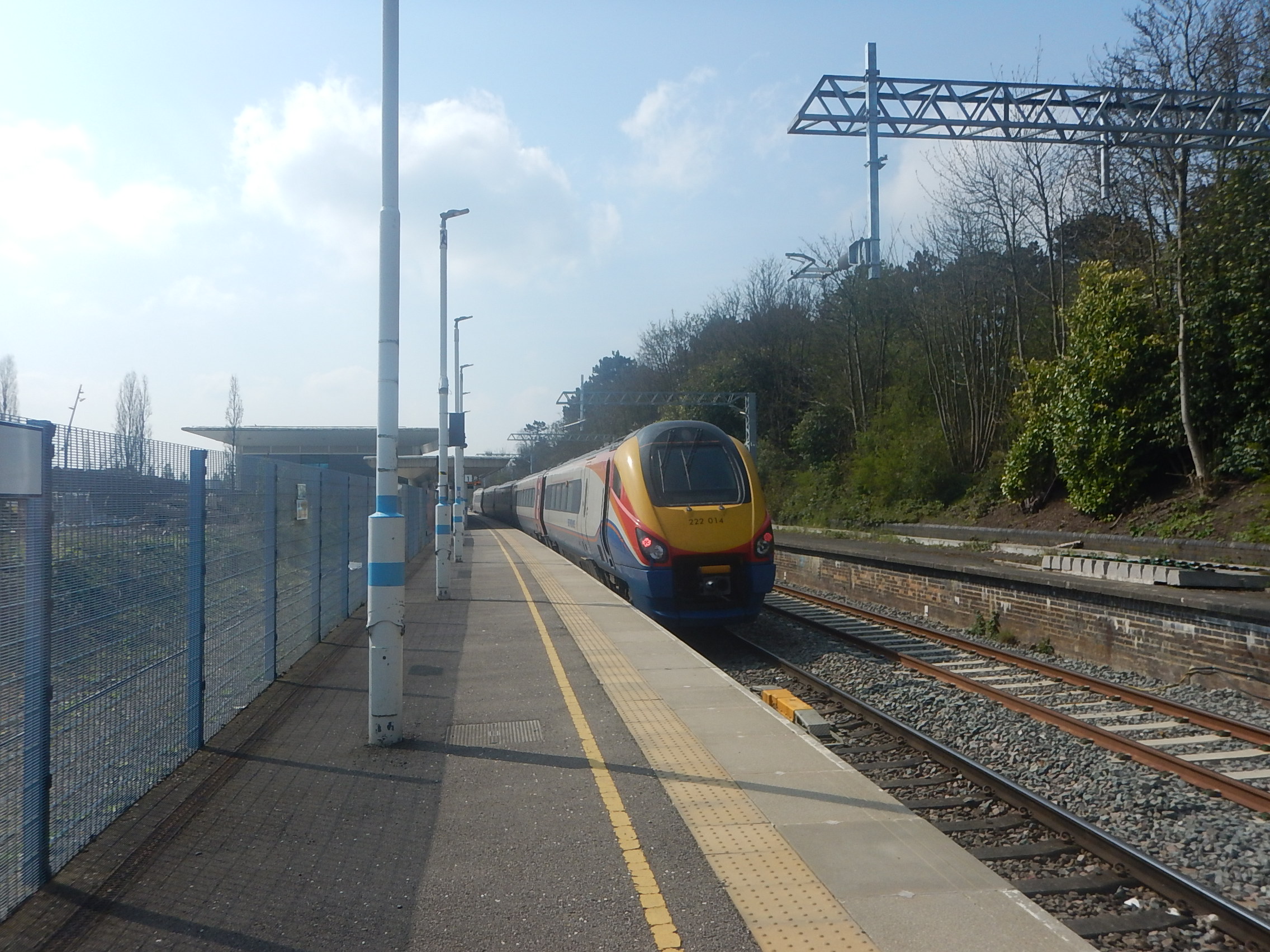
Consider.
- The current five-car Class 222 trains have a capacity of 50 First Class and 192 Standard Class seats
- Four-car Class 222 trains have a capacity of 33 First Class and 132 Standard Class seats.
- A four-car Class 360 train has a capacity of 16 First Class and 264 Standard Class seats.
I can do a simple calculation.
- The current one tph service, if run by a five-car Class 222 trains would have an hourly capacity of 50 First Class and 192 Standard Class seats.
- The planned two tph service if run by twelve-car 360 trains has an hourly capacity of 96 First Class and 1584 Standard Class seats.
First Class capacity on the route has doubled and Standard Class accommodation has gone up by a massive 8.25 times.
The latter figure will probably be reduced as some of the seats are to be removed for a more spacious interior with tables.
Serving Luton Airport
It looks like these trains will enable a quick journey to Luton Airport.
- The St. Pancras and Corby train will take 22 minutes between St. Pancras and Luton Airport Parkway stations.
- There will be the Luton DART connecting Luton Airport Parkway to the Airport from 2022.
- I suspect Luton Airport will be aiming for a thirty minute journey between St. Pancras and the Airport.
- The fast service will have a frequency of two tph.
It will not compare badly with rail times from London to Gatwick of 35 minutes and to Stansted of 50 minutes.
Services To Oakham And Melton Mowbray
Consider.
- Oakham and Melton Mowbray stations are on the route between Corby station and the Midland Main Line North of Leicester.
- Oakham and Melton Mowbray stations have a one train per day (tpd) in both directions to London via Corby.
- In Beeching Reversal – Increased Services To Nottingham And Leicester, via Syston And Loughborough From Melton Mowbray. I wrote about how the local MP wants better services at Melton Mowbray.
- Oakham is 11.5 miles from Corby.
- Melton Mowbray is 25.8 miles from Corby.
- Leicester is just over forty miles from Corby and could be covered in under an hour.
- A pair of Class 810 trains are the same length as a trio of Class 360 trains, so both trains would fit all platforms.
I think that there are a lot of possibilities for services through Corby.
- Class 810 trains could use Corby as a diversion, when the Midland Main Line is closed for engineering works.
- Class 810 trains could run a service between St. Pancras and Leicester via Corby, Oakham and Melton Mowbray.
- If the Class 360 trains could be fitted with batteries, they should be able to provide a service from St. Pancras to Melton Mowbray and perhaps Leicester.
It could even provide an alternative route to London, if Leicester station has to be substantially rebuilt for electrification..
Conclusion
This not the longest of electric services, but I can see it carrying a lot of passengers.
It will also give a boost to Luton Airport.
Luton DART Fly Through
This video does what it says in the title.
It certainly looks like the DART will greatly improve the experience of getting to Luton Airport.
Construction Of The Luton Direct Air-Rail Transit (DART) Has Started
The Luton DART will connect Luton Airport to Luton Airport Parkway station.
This map from the London Luton Airport web site shows the route.

It is comprehensive with three planned stations.
- Luton Airport Parkway station.
- Central Terminal
- as it is planned to build a stop at the Mid-Stay car park, at a later date.
Note how the DART runs along the Airport side of the Midland Main Line before crossing over into the Airport on the Gateway Bridge, which is shown as an inset on the map.
These pictures show the construction of the DART underway at Luton Airport Parkway station.




It certainly looks substantial.
According to Wikipedia, it will open in 2021.
East Midlands Railway Announces Three Brands
The title if this article is the same as that of this article on Railway Gazette.
This is a quote about their electric trains to Corby, which will run under the brand name of EMR Electrics.
EMR said that once various developments had been completed, passengers would be able to reach the terminal at Luton Airport in ‘a little under half an hour’ from central London.
Currently, the fastest services going to between St. Pancras and Luton Airport Parkway stations take twenty-four minutes using 125 mph Class 222 trains with Luton Airport Parkway as the first stop.
Thameslink using 100 mph Class 700 trains take 30 minutes and more!
I question, whether the 100 mph Class 360 trains, running with Luton Airport Parkway as the first stop, can do the trip in the 24-26 minutes to get to the terminal in under half an hour, even with Luton Airport’s DART shuttle train working!
In Are Class 360 Trains Suitable For St. Pancras And Corby?, I looked at Class 360 trains running the service between St. Pancras and Corby stations.
I came to this conclusion.
In my view there is a lot of upgrade work to be done to the Class 360 trains to make them suitable for working on the services between St. Pancras and Corby.
- They need a new upgraded interior.
- The trains need upgrading to at least 110 mph.
- A possible upgrading with digital signalling.
I can’t help feeling that the Class 360 trains would make a good stop-gap, but in the long-term it might be better to have a small fleet of electric trains.
Electric AT-300 trains must be one of the favourites, although Class 745 trains, similar to those that Abellio will run between Liverpool Street and Stansted Airport, would do nicely.
So will East Midlands Railway have updated and faster Class 360 trains or will they be bringing in 125 mph trains to hit the required schedule to Luton Airport Parkway?
Conclusion
Luton Airport will have a real Airport Express!
But will the Class 360 trains, be able to deliver it? I have my doubts!
Work Starts On £225m Luton Airport Automated People-Mover
The title of this post is the same as that of this article on Global Rail News.
This is said about the contractors.
A VolkerFitzpatrick-Kier joint venture is the project’s civil works contractor and Doppelmayr Cable Car UK is supplying the APM system.
Note that Doppelmayr Cable Car built the Emirates Air-Line and the AirRail Link at Birmingham Airport.
This video shows the proposed system at Luton Airport.
It appears to be very similar to the Birmingham system.
This Google Map shows the position of the terminal at Luton Airport Parkway station.

The terminal is in Bartlett Square, which is indicated by the red arrow in the top right corner.
My initial thought, is that it could be a long walk for some.
Luton Trains Its Eye On Sub 30-Minute Express
This was the headline on a small piece in The Times on Monday.
Luton Airport want the following from the new East Midlands Franchise.
- A dedicated fast train.
- Four trains an hour (tph) to and from St. Pancras.
- A journey time of less than thirty minutes.
The airport says it won’t need any new infrastructure, but they are planning a fast link from Luton Airport Parkway station, which I wrote about in Luton Airport Goes For Light Rail.
This is an extract from the article..
The move would add up to £110million of extra fare revenue to the government over ten years and take almost 1 million cars off the road, a study by North Star, the consultancy found.
At present there are two separate services to Luton Airport.
- Thameslink, which leaves from the low-level Thameslink platform takes 45 minutes to the airport, with a frequency of six tph.
- East Midlands Trains, which leave from the high-level platforms take around 30 minutes to the airport, with a frequency of 1-2 tph.
Note these points about the current service.
- The lack of a dedicated platform for the fast trains to the airport, must confuse occassional passengers.
- The time of sub-thirty minutes is certainly possible on East Midlands Trains.
- There is not enough platforms in the high-level station for a dedicated platform for an express Luton Airport service.
The problems are made worse by A Fur Coat And No Knickers Station at St. Pancras.
The new franchise will probably be buying new electric trains for the Midland Main Line services. These could be key to providing an express airport service to Luton Airport.
Abellio has stated that their new Flirts and Aventras for Greater Anglia, will have a very fast stop and restart time, thus enabling services like Norwich in Ninety and Ipswich in Sixty.
So we then have the possibility of similar trains on the Midland Main Line to Corby, Derby, Leicester, Nottingham and Sheffield stopping at Luton Airport Parkway, without adding a large delay to the service. This would give Luton Airport, the following express services.
- At least four tph to and from St. Pancras in under thirty ,minutes.
- At least two tph to and from Derby, Nottingham and Sheffield.
- At least three tph to and from Leicester.
The only complaints would come from East Midlands Airport.
As there will be at least eight tph on Thameslink, this should be enough trains for everyone.
 The Anonymous Widower