Am I Sleeping Better Because Of Ocado?
A couple of months ago, I switched to shopping for food on-line at Ocado, and I am certainly sleeping better.
The only big change in my eating habits, is that I am now having a Marks & Spencer’s Lamb’s Liver and Bacon ready meal once a week.



Is that Vitamin B12 making a difference?
I do wish, that someone would do a proper Italian fegato, like Carluccio’s used to do. It’s virtually unobtainable in London.
After they stopped selling it, I used to have lunch with a friend in a pub in Oxfordshire. But sadly they died a couple of years ago.
If anybody knows of a decent country pub, by a station, that services excellent liver please let me know.
Mushroom Management On TfL Buses
Transport for London or as all Londoners abuse them as TfL, are getting the masters at applying mushroom management to running the buses. Especially at the weekends.
For those of you not familiar with the last century term, it means keeping everybody in the dark and throwing in lots of manure. As in the 1970s, I used to live next door to a mushroom factory, I know it at least works with fungi, but I’m not sure of it’s effectiveness with fleets of buses about moving passengers.
Most Saturdays, I take a 141 bus to Moorgate and have a full English gluten-free breakfast in the Leon cafe there, as I like to set myself up for the weekend.
The 141 bus may be one of the least reliable buses in the capital, but last Saturday, I was dropped close to Liverpool Street station and yesterday, I was dropped under the Barbican.
No warning, advice or apology about the change of plan.
But then like the Mayor, TfL are never in the wrong.
Today was different!
After taking a 56 bus from near my house to the Angel I had another full English gluten-free breakfast in the Leon cafe there, before taking the Northern Line to Euston station.
I was hoping, I could take a trip somewhere, but there were extensive engineering works, so I just came home from Euston on the Overground via Willesden Junction station.
I ended up at Hackney Central station, where I did a bit of shopping in the excellent M & S Food shop.
Normally, I just get a 38 bus home from the side of the station, but there weren’t any around.
Again, there was no warning, advice or apology. Just loads of people looking for non-existent buses.
It was a full three hours before I completed my round trip.
Transport for London has no respect for its passengers.
Normal businesses would go bust, if they treated their customers like this.
Are Best Before Dates Reliable?
This picture shows one of Marks and Spencer’s gluten-free All Butter Fruit Scones, that has been all dressed up and is ready to eat.

It no longer exists, as I have just eaten it.
It tasted fine, despite having a best before date of the 7th August, 2024.
Liver From Ocado
I like to eat liver, as it supplements my B12 injections.
So I was pleased to see that Ocado stock Marks and Spencer’s Liver and Bacon meal-for-one.
Note, that I cooked it in the oven, which is recommended.
I enjoyed it and I will cook it more often, provided Ocado keep delivering it.
Gluten And Heart Disease
Type “Gluten And Heart Disease” into Dr. Google and you find two major peer-reviewed studies.
This study is entitled Effects Of A Gluten-Reduced Or Gluten-Free Diet For The Primary Prevention Of Cardiovascular Disease.
These are the authors’ conclusions.
Very low-certainty evidence suggested that it is unclear whether gluten intake is associated with all-cause mortality. Our findings also indicate that low-certainty evidence may show little or no association between gluten intake and cardiovascular mortality and non-fatal myocardial infarction.
There would appear to be no strong link, between gluten and heart disease.
This British study is entitled Long Term Gluten Consumption In Adults Without Celiac Disease And Risk Of Coronary Heart Disease: Prospective Cohort Study.
These were the authors’ conclusions.
In these two large, prospective cohorts, the consumption of foods containing gluten was not significantly associated with risk of coronary heart disease. Although people with and without celiac disease may avoid gluten owing to a symptomatic response to this dietary protein, these findings do not support the promotion of a gluten restricted diet with a goal of reducing coronary heart disease risk. In addition, the avoidance of dietary gluten may result in a low intake of whole grains, which are associated with cardiovascular benefits. The promotion of gluten-free diets for the purpose of coronary heart disease prevention among asymptomatic people without celiac disease should not be recommended.
As before there would appear to be no strong link between gluten and heart disease.
To me, this is the most important sentence.
In addition, the avoidance of dietary gluten may result in a low intake of whole grains, which are associated with cardiovascular benefits.
So can we do something about it?
Enter The First Great Ethiopian Marathon Runner
I used to run a bit (badly) at school and my three heroes were Chris Brasher, Bruce Tulloh and Abebe Bikula.
The Ethiopian; Abebe Bikula was a double Olympic marathon champion.
- In 1960, he won in Rome, running barefoot.
- In 1964, he won in Tokyo, a few days after leaving hospital after having his appendix removed.
Both wins were in world record time.
Since 1964, three Olympic men’s marathons have been won by Ethiopians.
Ethiopian women have also won two gold and one bronze medals since the women’s marathon was inaugurated in 1984.
And then there’s the Kenyans, who’ve won a hatful of marathon medals.
Their competence is generally put down to living at altitude and I wouldn’t disagree with that.
My Experience Of Kenya
Soon after C died, I went on holiday to Kenya.
In one part of the holiday, I was riding horses in the Masai Mara and in the other I was glamping.
The second part was upmarket and one evening the chef approached me to find out more about my gluten-free diet. At breakfast next day, he presented me with a couple of rolls made from a local flour, which was probably something like millet or perhaps, teff from Ethiopia.
I had no adverse reaction. and he said, I could eat like a true African, as Western flour had no place in the local diet.
Conclusion
If we are worried about the lack of whole grains in gluten-free food, then perhaps we should add gluten-free whole grains from East Africa.
As a manager in a Marks and Spencer store, told me that they used Ethiopian flour in their gluten-free breads, I suspect this is already happening.
I Was Kathleened At The Weekend
Saturday
At 0200 on Saturday morning, I couldn’t sleep.
So in the end, I got up, made myself a mug of tea and did Saturday’s puzzles in The Times.
I had no trouble doing them, so my brain function was normal.
But my left hand wasn’t working that well.
I had breakfast in Leon and had a bit of trouble with their sauce containers, but otherwise I was fine.
I did a bit of shopping in M & S on Moorgate and came home.
I wasn’t having any problems.
For the rest of the day, I watched television and listened to the radio.
Sunday
I got up late, as I was probably catching up the sleep from the night before.
I had lunch in Gordon Ramsey’s Street Burger about one.
My left hand wasn’t working that well and I was making a bit of a mess.
After, I got home, I watched television and listened to the radio.
Monday
I slept in late, but as my left hand wasn’t being very co-operative, I had a small bit of trouble dressing, due to an uncooperative left hand.
My INR was 2.0, so I took 5 mg. of Warfarin.
I had breakfast in Leon, where I made a mess with the sauce container.
I then went looking for a book, which I couldn’t find.
Tuesday
Everything seems better today.
My INR was 2.1, so I took 5 mg. of Warfarin.
I did my usual Monday morning trip, of visit to Marks & Spencer for about three days of food and then had breakfast in Leon.
Conclusion
This seems to be a pattern.
- A storm goes through, I can’t sleep and after some drinks of tea or zero alcohol beer, I feel a bit better.
- My left hand often stops co-operating and won’t do simple things.
- But it does seem to clear up, when the storm passes.
This is probably the third time, that it’s happened.
Note.
- My left humerus was broken by the school bully.
- I had a stroke in 2011, which affected my left arm.
- If I carry shopping in my left hand, the pulling action on my humerus seems to help.
Any ideas will be gratefully received.
ICE Report Shows Majority Open To Net Zero Changes
The title of this post, is the same as that of this article on The Engineer.
This is the sub-heading.
A new report has found that a majority of the UK public is amenable to the behavioural changes needed to hit the country’s net zero targets.
These two paragraphs summarise the findings of the report.
Published by the Institution of Civil Engineers (ICE) and the All-Party Parliamentary Group on Infrastructure (APPGI), the report was based on a survey of 1,000 respondents. It found that 57 per cent were open to change, with 23 per cent described as net zero enthusiasts who were likely to have already altered their behaviours, and 34 per cent wanting change, but feeling they needed further empowerment to achieve it.
However, there is far from universal agreement when it comes to behavioural change around climate action. The report found that 30 per cent of people were ‘reluctant followers’, largely acknowledging that the UK must act on emissions, but not feeling personal responsibility for that action. This segment will likely only change their behaviours if forced to do so or seeing a majority of others doing it first. Finally, 13 per cent of those surveyed were classed as ‘net zero resistors’, people who don’t believe action is necessary and have no intention of doing so.
Summing the figures up gives us.
- Net-Zero Enthusiasts – 23 %
- Wanting Change – 34 %
- Reluctant Followers – 30 %
- Net-Zero Resistors – 13 %
All politicians should be forced to read the full report.
What Would I Need To Do To Achieve a Personal Net-Zero?
My circumstances probably cover a lot of people.
- I am a widow living alone.
- My house is well-insulated with solar-panels on the roof, but heated by gas.
- I don’t have or need a car.
- I do nearly all my shopping by public transport and carry it home.
- When I go away in the UK I use trains.
- If I go to Europe, I either go or come back by train.
- I am coeliac, which means I need to eat some meat to stay healthy.
My largest carbon-emitted is probably my house, but it would be unsuitable for most current solutions.
I would put myself in the Wanting Change group, but I could move to a Net-Zero Enthusiast, if the right technology came along.
- I have seen one bolt-in electric replacement for by boiler and when the right one arrives, I’ll probably fit one.
- An affordable battery to work to with my solar panels and also allow me to use Off Peak electricity would be nice.
- As I’m coeliac, I tend to buy in the same food each week from Marks and Spencer to eat in. I might be able to cut my carbon footprint by getting Ocado to deliver. Especially, as some deliveries seem to be bike.
- If TfL decarbonised the bus, that I use most days to and from Moorgate would that lower my carbon footprint?
I suspect the largest amount of carbon outside of my house’s heating, that I’ll emit, will be tomorrow, when I take a train to Newquay.
How Do We Convert The 13 % Net-Zero Resistors?
The recent protests by French and Belgian farmers indicate, that these farmers are probably in this group. And there are other forthright groups!
The only way, that they’ll be converted, is if technology allows them to earn the same amount of money and have the same outgoings, as they do now!
The Biggest Strawberry In The World
I eat a lot of strawberries, either as fruit or as jam on a scone or bread.
- I always have done since I left home to go to Liverpool University.
- I do wonder, if it was a subconscious decision on my part, as my body reacted to all the alternatives like puddings with all their gluten.
- Certainly, by the time, I was married, I know that I always annoyed my mother-in-law by never eating her gluten-rich puddings.
- Strawberries were also my wife’s passion, when she was pregnant.
Have other coeliacs avoided gluten before diagnosis. I certainly did.
Today, I bought a punnet of strawberries in Marks & Spencer.

Note.
- They were Spanish strawberries.
- To say they were large would be an understatement.
- One weighed in at a massive 64 grammes.
But they all tasted fine with a good texture!
The Proof Of The Pudding
In A December Treat For £3.70, I talked about buying English strawberries in Marks & Spencer in December.
I said I’d post again, when I ate them.
This picture shows the pack on a plate.

And this a close-up of a single strawberry, which cost 37 pence.

I’m afraid the photos don’t do justice to their taste, as they were definitely some of the best strawberries, I’ve ever eaten.
I did buy another two punnets this morning, to see me through the weekend.
Dyson Farming has a web page, which describes how they produce the strawberries.
The page contains an explanatory video, which is well worth a watch.
Will developments like this be the future of farming?
A December Treat For £3.70
T am not a great person for sugary treats. But I do like strawberries and regularly buy a punnet, when they are in season, cut the green off and eat them one after another.
But in my seventy-six years, I’ve never eaten English strawberries in England in December, although I must have eaten strawberries in December in warmer climes, like Australia, Gambia or South Africa
Until today, when I bought this punnet in Marks and Spencer on Moorgate in the City of London.


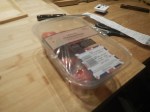


Note.
- The strawberries are from Dyson Farming in Lincolnshire.
- The strawberries are the fourth item in the bill in the first picture.
- The label says that they are grown by innovative methods for outstanding depth of flavour.
- They look as if they’ve been individually vacuumed.
I’ll post again when I’ve eaten them!
 The Anonymous Widower