Waterloo Upgrade August 2017 – Timelapse Video Of Platforms 1-4 At Waterloo Station
This video dates from the 14th August 2017.
The story seems to have gone rather quiet.
There are these possible explanations.
- Everybody is getting through the station without any trouble.
- It was so bad on the first day, everybody has given up.
- The upgrade has finished and everything is running normally.
Or it could just be that it’s all going well and good news doesn’t sell newspapers!
Waterloo Upgrade August 2017 – Was It Alright On The Day?
This article in the Standard had a headline of Waterloo station upgrade: Furious commuters hit out at ‘shambolic’ queues on first weekday of major works.
This article on the BBC had a headline of Waterloo station: Stations quiet after upgrade warnings.
This article on the Independent had a headline of Waterloo station upgrade: Passengers report trains better than normal despite predictions of ‘month of chaos’.
There certainly isn’t lots of interviews on the BBC this morning with irate passengers.
This was the first paragraph from the Independent.
Commuters reported easier journeys than normal on train lines into London Waterloo on Monday morning as some passengers apparently took alternative routes or worked from home to avoid a predicted “month of chaos”.
But I think that Network Rail and South West Trains must have got it more or less right.
London thought they would have a problem during the 2012 Olympics and Transport for London flooded the streets and stations with extra staff to help passengers.
And it worked!
Network Rail and South West Trains have done the same, at least at Waterloo.
And it seems to be working!
Has Network Rail Opened The Door To A New Railway Age?
The title of this post is the same as this article on Construction News.
It is a good read!
Innovation In Railway Projects
This article in Rail Technology Magazine is entitled NR routes to publish ‘pipeline’ of third party opportunities by year end. It lays out a new philosophy of how rail infrastructure projects could be handled in the future. I suggest you give the article a careful read.
Some politicians will say it is privatisation by another name. But to me it is just a way of getting a project built faster in a safe manner.
This is a paragraph.
By the end of this year, NR’s routes will publish ‘pipelines’ of projects that they want to put out to market. The infrastructure owner will also be working with government on producing a list of third-party opportunities. Initially these opportunities may be at the smaller end of the spectrum such as new stations, depots and car parks.
Take the simple example of a depot. These days fleets of new trains often mean a large increase in depot capacity as trains are longer and fleets are larger. As fleets are often bundled in with maintenance, there is a specialised multi-million pound asset that needs to be created. Big investors create office blocks, sporting venues and shopping centres and lease them to other businesses, so why shouldn’t they build the infrastructure that the railway needs?
This article in the EADT is entitled New rail depot unveiled by Greater Anglia at Brantham on Suffolk/Essex border.
The article dates from February 2017 and says that design is starting and the depot will be open by the end of 2018.
Not a bad timescale for a depot covering 22 acres with fifteen electrified tracks, two of which are under cover.
Why should the taxpayer get involved in a project like this?
Network Rail’s only involvement should be to ensure that the depot interfaces with the railway correctly.
This article on the BBC is entitled Crossrail stations in west London delayed until 2019.
I took this picture at one of the of the five stations; West Ealing, yesterday.
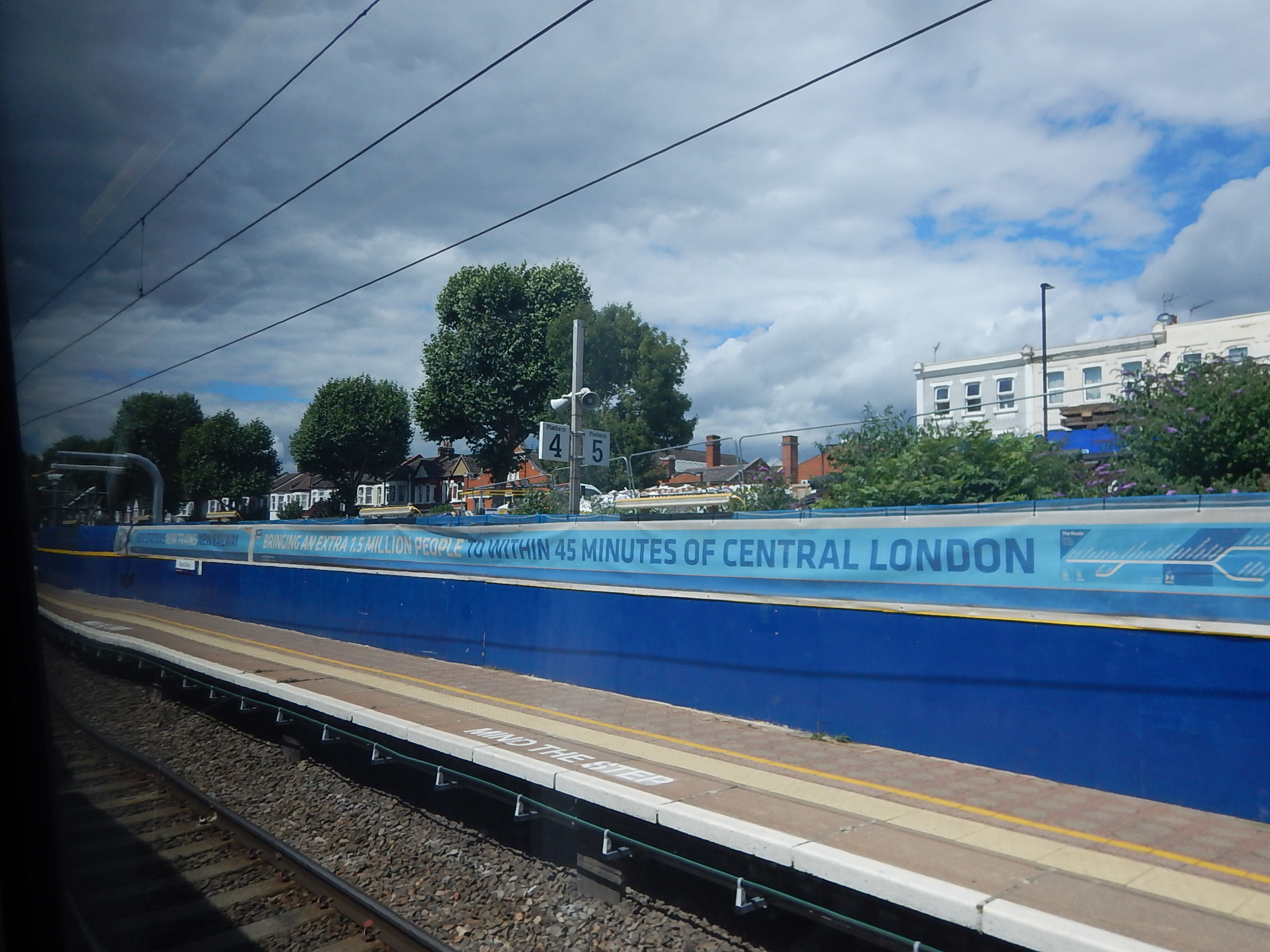
Nothing appeared to be going on, despite the fact that much of the construction is well to the side of the railway. Compare this with the situation at Abbey Wood station, that I saw a few days ago.
I suspect Crossrail wish they had taken control of the Project Management of the five West London stations themselves.
Network Rail seem to have a culture that if assets are built a few years late, it is totally acceptable.
This culture must stop!
Gibb Report – Hoo Junction Depot
The Gibb Report, looks in detail at GTR’s depot capacity and especially the stabling for Thameslink.
This is a paragraph, which suggests creating a new depot at Hoo Junction.
I recommend a different approach: I think a dedicated GTR Thameslink stabling facility should be built at Hoo Junction, near Gravesend. There is a large former freight yard there, on both sides of the railway, which now stables engineering trains for Network Rail. This should be rationalised and space created for stabling all the North Kent Thameslink Class 700s, in sidings with newly created servicing facilities.
The Wikipedia entry for Crossrail has a section entitled To Gravesend And Hoo Junction, where the following is said.
The route to Gravesend has been safeguarded by the Department for Transport, although it was made clear that as at February 2008 there was no plan to extend Crossrail beyond the then-current scheme. The following stations are on the protected route extension to Gravesend: Belvedere, Erith, Slade Green, Dartford, Stone Crossing, Greenhithe for Bluewater, Swanscombe, Northfleet, and Gravesend.
This area around Hoo Junction has also been suggested as a possible depot for Crossrail.
In addition, Southeastern are running short of space in Slade Green Depot.
This Google Map shows the Hoo Junction area, with the North Kent Line passing through from Gravesend station in the West to Higham station in the South East.
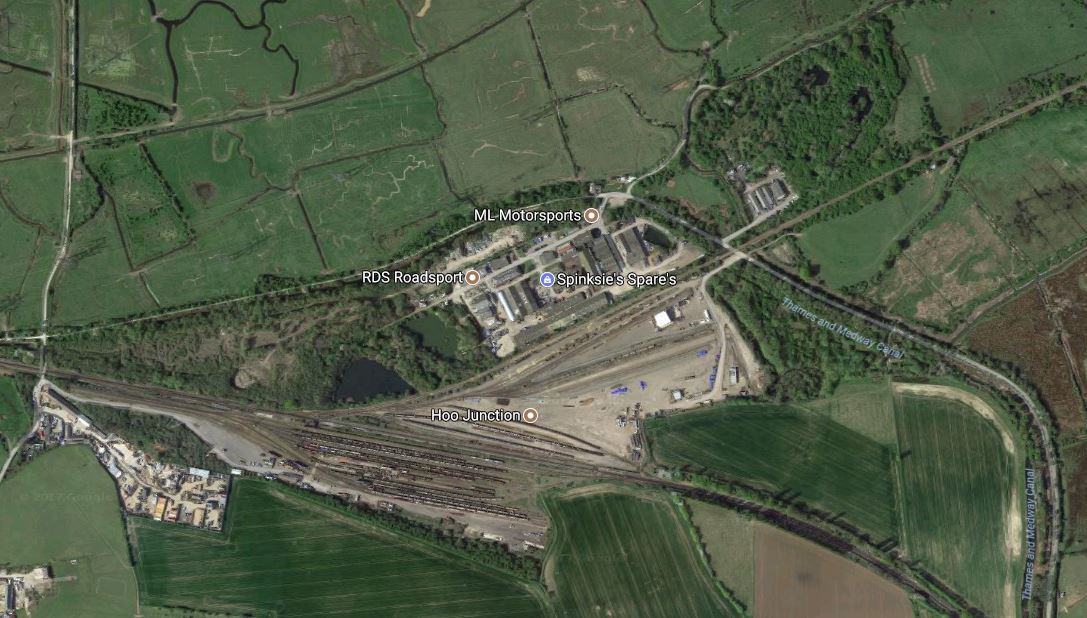
There looks to be space for multiple depots with a large number of sidings at Hoo Junction.
These pictures show the apace to the North of the North Kent Line.


And these show the space to the South.
There even used to be a Staff Halt at Hoo Junction.
But that’s just the railways.
This report on the BBC indicates that the new Lower Thames Crossing will cross North-South between Gravesend and Hoo Junction.
Perhaps the developments at Hoo Junction, should incorporate a Park-and-Ride station.
Conclusion
This is a good idea and I would go further than Chris Gibbs does in his report, which is mainly into the problems of GTR.
Crossrail, the Department of Transport, Kent County Council, Network Rail, Southeastern, Thameslink and all other stakeholders and residents should sit round a large table and agree a common long-term philosophy that is in all their best interests for the future.
Who Would Want An Electric Train Powered Only By Diesel?
I have just seen a an early copy of Porterbrook’s brochure for their new Class 319 Flex train.
From one statement, it appears that a diesel-only version of the train is going to be delivered to one operator.
If this is a prototype, this is eminently sensible as the train could be used for the following.
- Full testing of the diesel power generators and all non-standard systems.
- Performance Assessment
- Driver training.
- Route Proving.
- Customer reaction.
The prototype could even be run on the example route from Manchester Piccadilly to Buxton and back to validate the route could be handled by the train.
Strangely, it would probably have the capability to do the route faster than the current Class 150 and Class 156 trains, as it is more powerful.
But a diesel-only version could have other uses in the long term.
Route Proving And Testing
Surely, a diesel-only Class 319 Flex train, must have uses, where an operator wants to run a service to check a new route or test a market.
Occasional Services
Events like the Open Golf and Glastonbury create a big demand for travel, often to difficult to access places. A refurbished diesel-only Class 319 Flex could have uses to serve events like these. Or it could be used as a blockade buster or train to by-pass difficulties or cover for rolling stock shortages.
The interior could even be tailored for the use.
Have Direct Rail Services done their sums and found that instead of using two new Class 68 locomotives and a few clapped-out Mark 2 coaches, a diesel-only Class 319 Flex train is better value for themselves and the train operator?
Direct Rail Services certainly seem to be good niche market spotters, as their purchase of the Class 68 locomotives shows!
Small Measurement Train
Would a diesel-only Class 319 Flex train make a smaller version of the New Measurement Train?
- It’s diesel powered, so can check all routes and those with power switched off.
- It can probably run on routes, where the HST-based New Measurement Train can’t.
- It has a 100 mph capability, so could deploy to an area, where problems have occurred quickly.
- It’s even got a pantograph well.
Currently, it takes the New Measurement Train about a couple of weeks to check all the lines it can.
From what I’ve read, Network Rail seem to keep adding capability and with the need to check more lines, there must be a need for at least a second train to help the current one.
Would Network Rail do what they have done with other complex specialist equipment and base several around the UK, so that if a possible problem occurs or some new work on the track or overhead wires has been done, engineers can check the line quickly?
Affordable Quality Four-Car Diesel Multiple Unit
There are lines in the UK, like the Heart of Wales Line and the Far North Line, which will never be electrified and need a modern diesel unit with everything customers expect at an affordable price.
Most suitable units like the two-car Class 158 trains and three-car Class 159 trains could be too small for some routes and their current operators have uses for them.
So is a niche for a reliable four-car diesel multiple unit to work all sorts of routes?
Conclusion
When I saw that Porterbrook were going to produce a diesel-only version in their brochure, I was mildly surprised.
But then I was surprised, when I saw Vivarail‘s proposal for the Class 230 train based on old London Underground D78 Stock.
So did one of the operators interested in the Class 230, see the Porterbrook announcement for the Class 319 Flex train, put two and two together and say, a four-car Class 319 Flex would do us just fine. But forget the electrification gubbins!
A Wildlife Problem That Network Rail Don’t Have
Network Rail might get trouble with newts and bats, when they try to build a station, but at least they don’t get this problem that happened in India.
How do you make elephant-proof level crossings?
West Anglia Route Improvement – A Look At Lea Bridge Station
Lea Bridge station opened in May 2016, so as I was investigating the new STAR service, which will call at the station, I took some pictures.
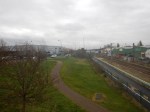
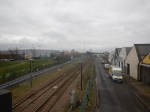
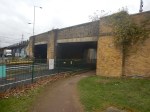
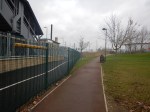

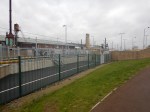
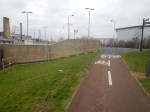
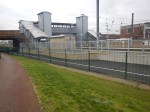

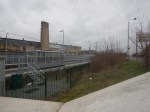
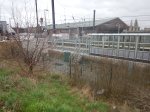

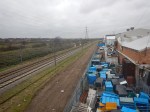
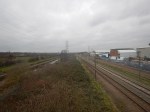
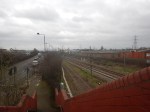
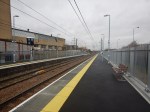

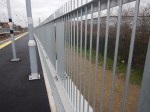
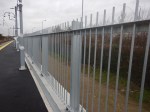
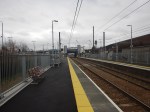
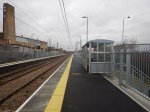
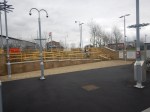

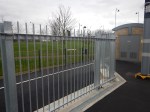
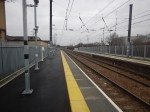
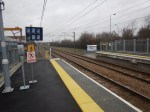
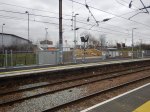
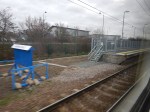
These are my thoughts on the station and its design.
No-Frills Station
In some ways the station could be considered a no-frills station, with two simple platforms on either side of double-track line with a bridge at one end.
There is none of the following.
- Car parking.
- Station buildings.
- Staff
- Anything to stop people walking in.
But there is the following.
- Secure bicycle parking and clearly marked bicycle routes.
- Several bus routes stopping outside.
- A step-free bridge.
- Shelter from the worst of the weather.
- Enough driver screens for Driver Only Operation to satisfy reasonable union officials.
- Lots of CCTV cameras.
- Clear sound system for announcements.
In some ways the station is unusual for one in an inner city area of London.
You can imagine a station like this in a rural county like Suffolk or Wiltshire, perhaps with a bit more shelter.
No Graffiti
I use this station fairly regularly and I’ve never seen any graffiti.
Could the lack of graffiti be bacause.
There are lots of CCTV cameras.
Despite not many trains, there always seems to be passengers around.
Anmy graffiti os quickly cleaned away.
Stephen Bayley has said that good design discourages graffiti.
Whatever the reason is, it seems to work.
The Curious Secure Walkway
When I saw it, I wondered why there was a secure walkway inside security fencing at the station.
I think it must be so that workers can get from the portable offices a couple of hundred metres South of the station to the various worksites for the STAR project, some of which are North of the station.
I wonder when STAR is complete, if the walkway will be converted into a cycle path alongside the railway.
The Cable Duct
A lot of the work at present for the STAR project seems to be moving the cables out of the way and installing a new cable duct.
The pictures show the new cable duct coming from the Tottenham Hale direction along the East side of the railway.
At the North end of the platforms, the duct disappears and looks like it heads under the railway to continue on the other side.
Could this be a deterrent for cable thieves, who now would have to dig up the railway to find them?
The Possible Platform 0
To the Eastern side of the station behind Platform 1, a space would appear to have been left for a possible bay platform.
I have not seen any plans that might need another platform at Lea Bridge station, but if it was absolutely necessary to create one, it wouldn’t be too difficult.
Network Rail score high for future p[roofing here, but it would be good, if it was now standard practice, when a new station is built.
Upgrading Waterloo Station
Some reports are giving Network Rail a good kicking over a month-long closure in August of Waterloo station.
I will point readers to this article on Time Out, which is entitled Passengers have been told to avoid Waterloo station for a whole month during major re-building works, as it gives facts rather than emotion.
I have found this video on this page of the South West Trains web site.
It explains the problem well.
South West Trains summarise the work at Waterloo as follows.
- Create a spacious, modern and accessible station concourse by rebuilding the former Waterloo International Terminal.
- Increase services by bringing platforms 20–24 back into use and introducing modern facilities along with new track and signalling.
- Allow longer ten-carriage trains to run to suburban routes by extending platforms 1–4.
Time Out finish their article like this.
All the chaos is down to an £800 million upgrade of Waterloo and South West, which aims to provide 30 percent more space for passengers as well as faster, more frequent services. If anything, it could be a decent excuse to book a holiday somewhere sunny. That’s how we’re taking the news, anyway.
It is probably good advice.
 The Anonymous Widower