Airbus, Rolls-Royce, EasyJet Headline Formation Of UK Hydrogen Alliance
The title of this post, is the same as that of this article from Future Flight.
These two paragraphs outline the story.
A group of leading companies in the UK aviation and renewable energy sectors including EasyJet, Rolls-Royce, and Airbus has established the Hydrogen in Aviation (HIA) alliance to accelerate the delivery of zero-carbon aviation, the companies said Tuesday. HIA, whose partners also include Ørsted, GKN Aerospace, and Bristol Airport, said decarbonization efforts involving hydrogen should assume more urgency at a time when sustainable aviation fuel and batteries have drawn so much of the sector’s attention.
Working with government, local authorities, and the aviation and hydrogen sectors, the group plans to draw on members’ expertise to propose “a clear and deliverable pathway” to achieving hydrogen-powered aviation. Efforts center on clearing a pathway for preparing the needed infrastructure as well as policy, regulatory, and safety frameworks.
This Airbus infographic describes the aircraft in Airbus’s ZEROe project.
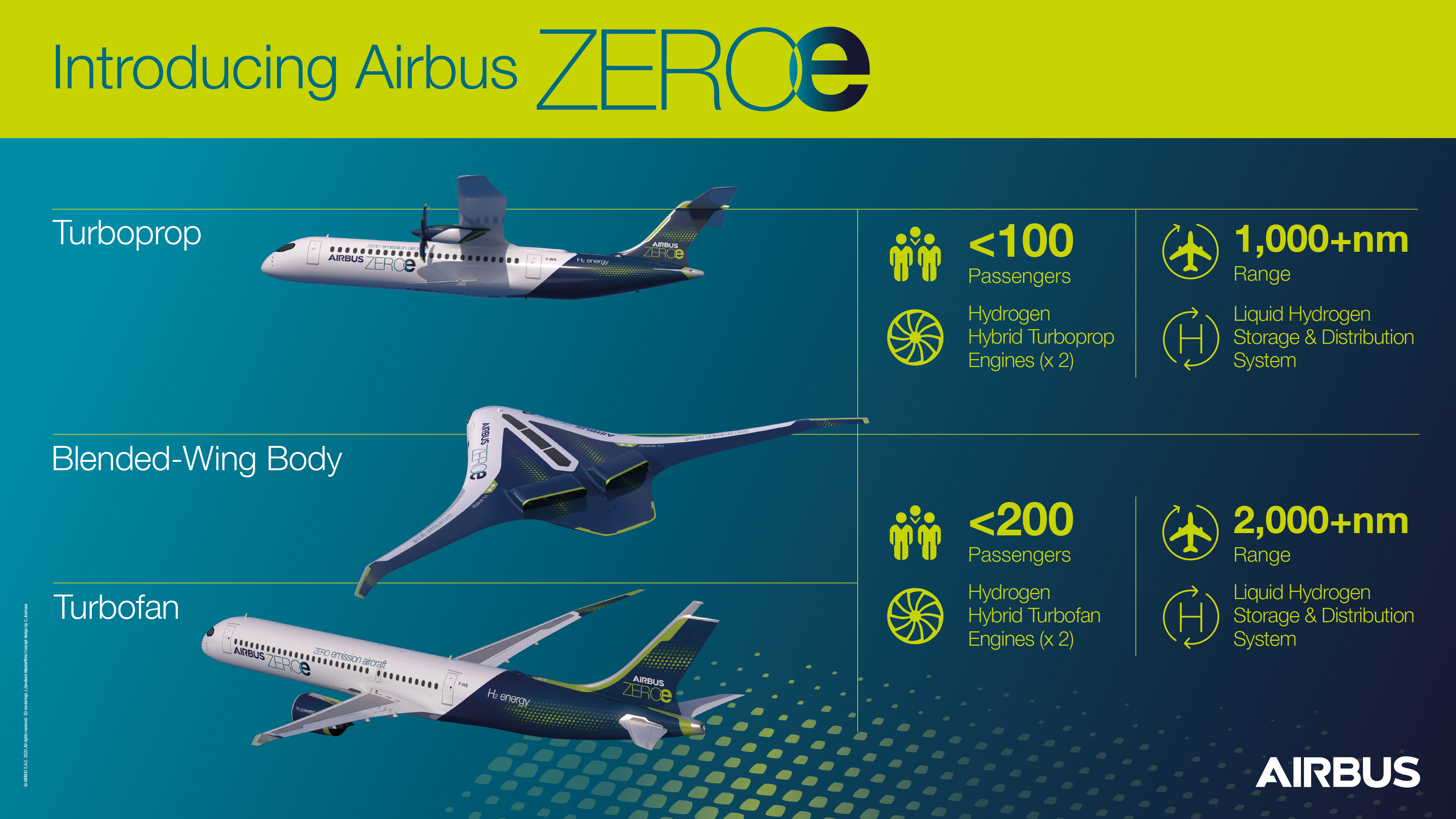
Discover the three zero-emission concept aircraft known as ZEROe in this infographic. These turbofan, turboprop, and blended-wing-body configurations are all hydrogen hybrid aircraft.
These are my thoughts.
Do The ZEROe Turboprop And The ZEROe Turbofan Have Similar Hydrogen Systems?
This is Airbus’s summary of the design of the ZEROe Turboprop
Two hybrid-hydrogen turboprop engines, which drive eight-bladed propellers, provide thrust. The liquid hydrogen storage and distribution system is located behind the rear pressure bulkhead
This screen capture taken from an Airbus video, shows a rear view of the plane.
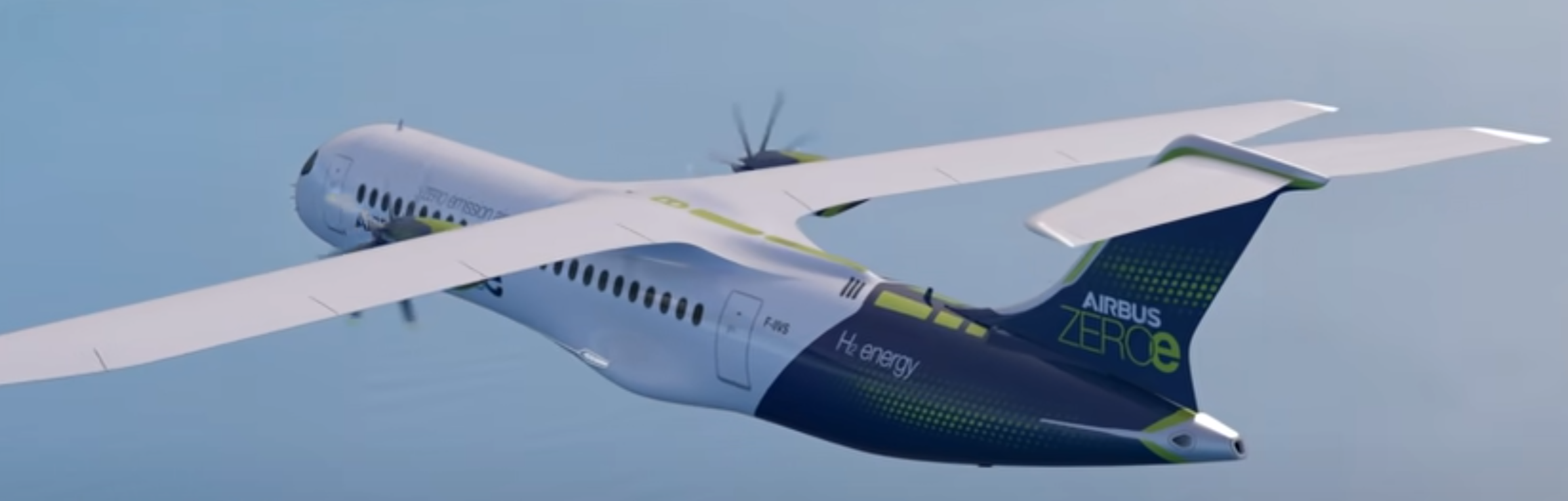
Note the sizeable cone-shaped rear end to the fuselage with no windows.
This is Airbus’s summary of the design of the ZEROe Turbofan
Two hybrid hydrogen turbofan engines provide thrust. The liquid hydrogen storage and distribution system is located behind the rear pressure bulkhead.
This screen capture taken from an Airbus video, shows the plane.
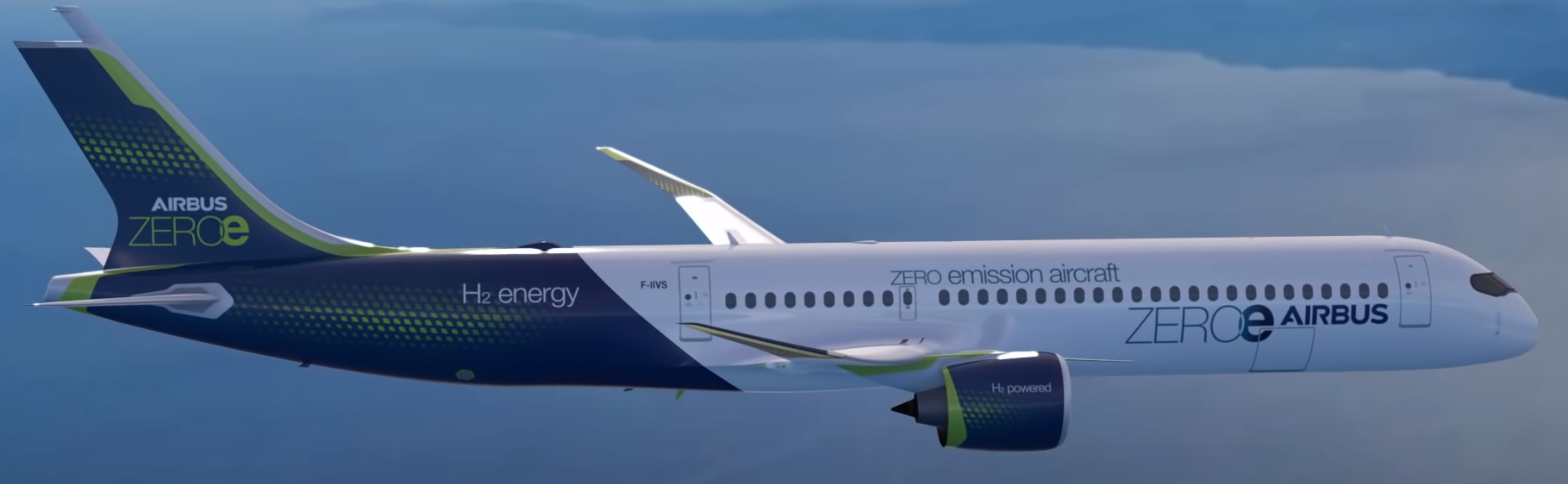
Note how there are no windows at the back of the fuselage, as the hydrogen tank doesn’t need them.
It looks to me, that similar cone-shaped tanks for hydrogen, customised for each aircraft could be placed behind the rear bulkhead.
There would probably be space for any pumps needed to distribute the hydrogen to the engines.
All the stored hydrogen and its gubbins could be safely sealed behind the rear bulkhead.
I am fairly certain that the ZEROe Turboprop and the ZEROe Turbofan will have similar hydrogen systems.
Do The ZEROe Turboprop And The ZEROe Turbofan Have Auxiliary Power Units?
The auxiliary power unit or APU in an aircraft that provides energy for functions other than propulsion.
In Airbus To Trial In-flight Auxiliary Power Entirely Generated By Hydrogen, I wrote about Airbus’s development of APU’s based on fuel cells and running on hydrogen.
This surely could be a way to go.
- A battery could store power.
- Fuel cells are proving to be reliable.
- The plane would have two independent electrical systems.
Power would always be available for the cockpit, flying controls and to restart the engines, just as it is in any airliner today.
Do The ZEROe Turboprop And The ZEROe Turbofan Have The Same Cockpit?
The cockpits of the A 320 neo and the A 320 ceo seem to have a similar profile, but the cockpit of the ZEROe Turbofan seems to have been reprofiled.
In ZEROe – Towards The World’s First Zero-Emission Commercial Aircraft, I showed these front on views of the cockpits of the ZEROe Turboprop and ZEROe Turbofan.
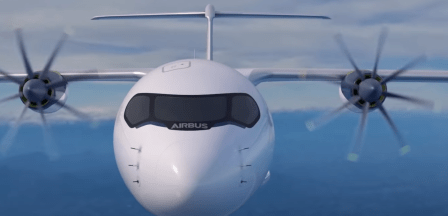

I questioned if the two cockpits were related.
- A single cockpit for both aircraft would surely ease manufacture, maintenance and pilot training.
- I’m no aerodynamicist, but it certainly looks that the new cockpit will reduce drag and fuel consumption.
This common cockpit concept was used for the Boeing 757 and the Boeing 767 in the 1980s, so it is not a new concept.
Although the cockpit, appears to be being used in the ZEROe for the first time, I would expect it is already under development and might feature in any later version of the A 320 neo.
Do Airbus Have A Preferred Development Order?
Consider.
- My product development experience indicates that the development of the ZEROe Blended-Wing Body will involve more flight testing and aerodynamic checks than the other two aircraft, so I would make it the last aircraft to enter service.
- The ZEROe Turboprop appears to be a development of the ATR 72.
- The ZEROe Turbofan appears to be a development of an A 320 neo.
- The ZEROe Turboprop and ZEROe Turbofan would appear to have similar designs of cockpit, hydrogen systems and auxiliary power units.
- It looks to me that either of the ZEROe Turboprop or ZEROe Turbofan could be developed first.
I would develop the ZEROe Turboprop first, as it is the smaller aircraft.
Why Bristol Airport?
This page on the Airbus web site is entitled Airbus In The United Kingdom, where this is the first paragraph.
Building on a proud 100-year British aviation heritage, Airbus is part of the very fabric of the UK – which is one of the company’s four home markets, alongside France, Germany and Spain. Its 11,000-strong UK workforce is part of a global family of 125,000 employees.
This is said under Commercial Aircraft.
The sites at Filton and Broughton design, test and manufacture the wings for all Airbus’ A320 family, A330 and A350 commercial aircraft, directly sustaining more than 8,000 full-time jobs and hundreds of apprenticeships.
A220 family wings are designed and built by Spirit AeroSystems in Belfast, Northern Ireland.
Broughton has a proud tradition of aerospace manufacturing dating back 80 years, having supplied the RAF with vital aircraft during the Second World War. Employing almost 5,000 people, Broughton is a global centre of excellence for manufacturing and delivers over 500 wing sets per year for the A320 family, A330 and A350. Airbus has invested more than £2 billion in the Broughton plant over the past 10 years.
Core activities at Filton, where an additional 3,000 people work, are the design, engineering and support for Airbus wings, fuel systems and landing gear systems. Teams also work on aerodynamics research, development and test facilities, including our future zero-emissions programme, ZEROe, while wings for the A400M transporter are assembled on site.
It would appear that Filton in Bristol, is a very important part of Airbus’s operations in the UK.
- It appears to have major responsibility for all Airbus wings except the smallest.
- It has a large responsibility with respect to the ZEROe family of aircraft.
- Filton Airfield is now closed.
- Filton can do substantial assembly if required.
So was it just a logical decision to phone up Bristol Airport and ask, if they’d like to join the project?
In addition.
- Bristol Airport has a 2000 metre East West asphalt runway.
- The airport can handle a Boeing 787 Dreamliner and Airbus A330.
- It is the eighth busiest airport in the UK.
- It is a busy general aviation airfield.
- There is plenty of electricity in the area and Hinckley Point C will open down the road in a couple of years.
Bristol Airport is probably typical of many provincial airports around the world.
Why EasyJet?
These paragraphs from the Future Flight article help to explain.
“There is no doubt that the UK has the potential to become a world leader in hydrogen aviation, which could bring with it a £34 billion per annum boost to the country’s economy by 2050, but in order to capture this opportunity, rapid change is needed and the time to act is now,” said Johan Lundgren, CEO of EasyJet and HIA’s first chairman.
“We must work together to deliver the radical solutions required for a hard-to-abate industry like aviation so we can protect and maximize the benefits that it brings to the UK economy and society and that we know British consumers want to be preserved.”
Under its Zero-E program, Airbus aims to bring to market the first hydrogen-powered narrowbody commercial airplane by 2035. Separately, a partnership between Rolls-Royce and EasyJet signed last year saw the companies test hydrogen fuel in gaseous form in an adapted AE2100-A turbine, the engine that powers the Saab 2000 regional airliner. The November 2022 test, which used hydrogen produced in the Orkney Islands by the European Marine Energy Centre using renewable energy, marked the first run of a modern engine using hydrogen.
EasyJet seems to be enthusiastic about hydrogen and their CEO will be the HIA’s first chairman.
EasyJet also has a series of routes from Bristol Airport.
- Alicante – 907 miles
- Amsterdam – 326 miles
- Athens – 1592 miles
- Antalya – 1981 miles
- Barcelona – 733 miles
- Basel/Mulhouse – 530 miles
- Belfast–City – 259 miles
- Belfast–International – 269 miles
- Berlin – 694 miles
- Bilbao – 559 miles
- Bodrum – 1772 miles
- Bordeaux – 462 miles
- Catania – 1295 miles
- Chania – 1719 miles
- Copenhagen – 694 miles
- Corfu – 1356 miles
- Dalaman – 1981 miles
- Dubrovnik – 1155 miles
- Edinburgh – 316 miles
- Enfidha – 1241 miles
- Faro – 1026 miles
- Fuerteventura – 1687 miles
- Funchal – 1473 miles
- Geneva – 536 miles
- Gibraltar – 1060 miles
- Glasgow – 317 miles
- Gran Canaria – 1749 miles
- Grenoble – 556 miles
- Heraklion – 1768 miles
- Hurghada – 2526 miles
- Ibiza – 887 miles
- Innsbruck – 693 miles
- Inverness – 429 miles
- Isle of Man – 203 miles
- Kefalonia – 1451 miles
- Kos – 1770 miles
- Kraków – 991 miles
- La Rochelle – 366 miles
- Lanzarote – 1649 miles
- Larnaca – 2126 miles
- Lisbon – 925 miles
- Lyon – 529 miles
- Madrid – 755 miles
- Málaga – 1020 miles
- Marrakesh – 1393 miles
- Marseille – 662 miles
- Menorca – 863 miles
- Milan–Malpensa – 682 miles
- Murcia – 945 miles
- Mykonos – 1670 miles
- Nantes – 251 miles
- Naples – 1085 miles
- Newcastle upon Tyne – 256 miles
- Nice – 704 miles
- Olbia – 929 miles
- Palma de Mallorca – 859 miles
- Paphos – 2087 miles
- Paris–Charles de Gaulle – 285 miles
- Paris–Orly – 290 miles
- Pisa – 808 miles
- Porto – 755 miles
- Prague – 746 miles
- Preveza/Lefkada – 1421 miles
- Pula – 885 miles
- Reykjavík–Keflavík – 1121 miles
- Rome–Fiumicino – 968 miles
- Rovaniemi – 1436 miles
- Salzburg – 745 miles
- Santorini – 1726 miles
- Sharm El Sheikh – 2507 miles
- Sofia – 1359 miles
- Split – 927 miles
- Tenerife–South – 1766 miles
- Toulouse – 569 miles
- Turin – 645 miles
- Venice – 798 miles
- Zakynthos – 1484 miles
Note.
- There are nine routes under 400 miles, which might enable a round trip without refuelling in a ZEROe Turboprop.
- There are nine routes under 800 miles, which might enable a round trip without refuelling in a ZEROe Turbofan.
- There are only four routes over 2000 miles, which might make a single trip difficult in a ZEROe Turbofan.
- Bristol and Toulouse is a convenient 569 miles for Airbus and its employees, customers and contractors.
It does appear that, EasyJet’s routes fit the 1000 mile range of a ZEROe Turboprop and the 2000 mile range of a ZEROe Turbofan exceedingly well.
Conclusion
Bristol will be important in the development of Airbus’s three ZEROe aircraft.
Ørsted Divests Remaining Stake In London Array For EUR 829 Million
The title of this post, is the same as that of this article on offshoreWIND.biz.
This is the sub-heading.
Ørsted has signed an agreement with funds managed by Schroders Greencoat to divest its remaining 25 per cent minority interest in the London Array offshore wind farm in the UK.
These first three paragraphs outline the deal and give Ørsted reasons.
The total value of the transaction is GBP 717 million (approximately EUR 829 million).
Ørsted originally owned 50 per cent of the project and divested an initial 25 per cent of London Array to Caisse de dépôt et placement du Québec (CDPQ) in 2014.
The company does not have operations and maintenance (O&M) responsibility at the 630 MW London Array, and as the firm only holds a minority interest, Ørsted said it considers the asset non-strategic.
Note.
- Ørsted is the world’s largest developer of offshore wind power by number of built offshore wind farms.
- Schroders Greencoat LLP is a specialist manager dedicated to the renewable energy infrastructure sector.
This is a typical transaction, which is enabled between companies in the world’s financial centres all the time.
- Company A has an asset, which generates a predictable cash flow and needs money to invest in similar assets.
- Fund B has lots of money, but needs a predictable cash flow to pay interest to its investors.
So it is not surprising, that Fund B buys the asset from Company A.
I should say that the project management computer system, that I designed; Artemis was leased to the end users.
This eased the process of funding the sales.
In later years, I seem to remember, that we took bundles of leases with companies like BAe, BP, Shell, Texaco and sold them to banks, who needed a safe investment.
Ørsted Receives Development Consent For 2.6 GW Hornsea Four Offshore Wind Farm
The title of this post, is the same as that of this article on offshoreWIND.biz.
This is the sub-heading.
The UK Secretary of State for Energy Security and Net Zero has granted development consent to Hornsea Project Four, a 2.6 GW offshore wind farm Ørsted plans to build some 69 kilometres off the Yorkshire Coast.
This is the first paragraph.
The UK government, in a press release issued on 12 July, stated that Hornsea Four was the 126th Nationally Significant Infrastructure Project and 73rd energy application to have been examined by The Planning Inspectorate within the timescales laid down in the Planning Act 2008.
It certainly looks like The Planning Inspectorate has been working overtime.
Note that the four Hornsea wind farms are planned to have at least the following sizes.
- Hornsea 1 – 1218 MW
- Hornsea 2 – 1386 MW
- Hornsea 3 – 2852 MW
- Hornsea 4 – 2600 MW
These four wind farms give the Hornsea complex, a total capacity of at least 8056 MW.
When I worked at ICI in Runcorn in the late 1960s, I used to cross the Runcorn Bridge twice every day and would see Fiddlers Ferry power station, with its eight cooling towers, on the North Bank of the River Mersey to the East. It was generally thought of as a large coal-fired power station.




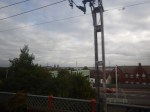


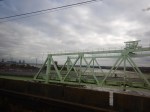
These pictures of Fiddlers Ferry power station were taken in 2021, from a Liverpool-bound train on the railway bridge.
This Google Map shows the power station.

Note.
- Fiddlers Ferry may have been large for its time at 1989 MW, but it is still less than a quarter of the size of the Hornsea wind farm!
- Drax power station in 1986 at 3960 MW, was larger than Fiddlers Ferry, but was still less than half of the size of Hornsea!
Hornsea wind farm is a true green giant!
This paragraph is from the Hornsea Project 4 section of the Wikipedia entry for the Hornsea wind farms.
Construction of the wind farm was provisionally expected to start in 2023, and be operational by 2027, at the earliest. The project’s capacity is unknown by Ørsted due to the ever increasing size of available wind turbines for the project.
When completed, it could be even bigger.
Denmark Exploring Multiple Platforms As Alternative To Building Artificial Island
The title of this post, is the same as that of this article on offshoreWIND.biz.
This is the sub-heading.
After concluding that the current concept of its North Sea Energy Island would be too expensive for the State, the Danish government, the transmission system operator (TSO) Energinet, and other relevant agencies are now looking into the concept for the island to be established on several large platforms.
I feel this could be a sensible decision, as it would fit well with a modular approach to the building of offshore wind farms.
Suppose, the floating turbines used by a company like Ørsted were all similar. This would surely simplify management of their portfolio of wind farms.
If it works for floating wind turbines, surely, it would work for substations, electrolysers and other offshore hardware.
Conclusion
Artificial energy islands may seem an impressive way to go, but I suspect that the modular approach using standard components, that either sit on the sea bed or float may be a more affordable and faster way to build offshore wind farms.
Take A 360° Tour Of World’s Largest Offshore Wind Farm In Operation
The title of this post, is the same as that of this article on offshoreWIND.biz.
This is the sub-heading.
Located some 89 kilometres off the Yorkshire Coast, the UK, the 1.3 GW Hornsea Two comprises 165 Siemens Gamesa 8 MW wind turbines and is currently the world’s largest fully commissioned offshore wind farm.
The article has a link to an excellent Ørsted video, about they access and service the wind farm.
Ørsted Posts All-Time High Offshore Wind Earnings
The title of this post, is the same as that of this article on offshoreWIND.biz.
This is the sub-heading.
World’s leading offshore wind developer, Ørsted, has reported DKK 6.9 billion (EUR 926 million) operating profit (EBITDA) for the first quarter of 2023, DKK 2.5 billion less compared to the same period a year earlier.
For those, who are sceptical about offshore wind, these results must surely pour cold water on your views.
The profits also appear to have in part been driven by the commissioning of the Hornsea Two wind farm.
Highview Power And Ørsted Collaborate To Unlock Greater Value From The Next Generation Of Wind Farms
The title of this post, is the same as that of this press release from Ørsted.
This is the sub-heading.
Highview Power and Ørsted have signed a Memorandum of Understanding aiming to prove the feasibility and economic value of co-locating long duration energy storage with offshore wind.
This first paragraph indicates how the two companies will work together.
The two companies will carry out detailed technical analysis and an economic assessment during 2023 that will investigate how combining Ørsted’s wind technology with Highview Power’s liquid air energy storage can deliver a stronger investment case for future offshore wind projects by reducing wind curtailment, increasing productivity, and helping the move to a more flexible, resilient zero carbon grid.
This all good stuff and as a Control Engineer, I know, there is a very good chance, it will bring forward worthwhile benefits.
Siemens Gamesa, Ørsted Link Up With UK Universities To Boost Wind Turbine Efficiency
The title of this post, is the same as that of this article on offshoreWIND.biz.
This is the sub-heading.
A major collaboration between universities and energy companies has made “vital” improvements to offshore wind turbines, which could help them generate more renewable energy and reduce the UK’s reliance on fossil fuels.
This paragraph outlines the research.
The GBP 7.7 million partnership between the Universities of Sheffield, Durham, Hull, and two global energy companies, Siemens Gamesa Renewable Energy and Ørsted, could help offshore wind turbines run for longer periods of time – boosting the amount of energy each wind farm generates.
We may not manufacture a large proportion of wind turbines, but companies do turn to UK universities, when they need important research to be done.
Ørsted Joins Global Offshore Wind Alliance
The title of this post, is the same as that of this article on offshoreWIND.biz.
This is the sub-heading.
Ørsted has become the first energy company to join the Global Offshore Wind Alliance (GOWA) to support a faster deployment of offshore wind and create a global community of action.
These two paragraphs outline GOWA.
GOWA is a new global organisation that brings together governments, the private sector, international organisations, and other stakeholders to accelerate the deployment of offshore wind power.
The alliance was launched last year at COP27 by the International Renewable Energy Agency (IRENA), the Global Wind Energy Council (GWEC), and the Danish government.
For more information look at the GOWA web-site.
Kittiwake Compensation
The title of this post, is the same as that of this page of Ørsted’s Hornsea Three web site.
The first section of the page gives the background.
Hornsea 3 Offshore Wind Farm received planning permission in December 2020. As part of our Development Consent Order, a requirement was included for ecological compensation measures for a vulnerable seabird species whose populations could be affected by wind farms – the Black-legged kittiwake (Rissa tridactyla).
Our compensation plan focusses on providing artificial nesting structures for kittiwake along the east coast of England. This project is the first of its kind and we are working on new and innovative designs for the artificial nesting structures. Each structure will be purpose-built, bespoke and specific to the landscape characteristics of each location. The structures also present an educational opportunity, allowing researchers to better understand kittiwake.
Developing effective environmental compensation measures is essential to ensure the UK Government’s targets for offshore wind can be realised, to deliver a net zero-carbon future.
So kittiwakes are not being paid compensation, as I don’t suspect many have bank accounts.
But they are being built a few new nesting structures.
Wikipedia has an entry on kittiwakes.
It notes that all European kittiwakes are of the black-legged variety and this is a picture, I took of some on the Baltic in Newcastle.
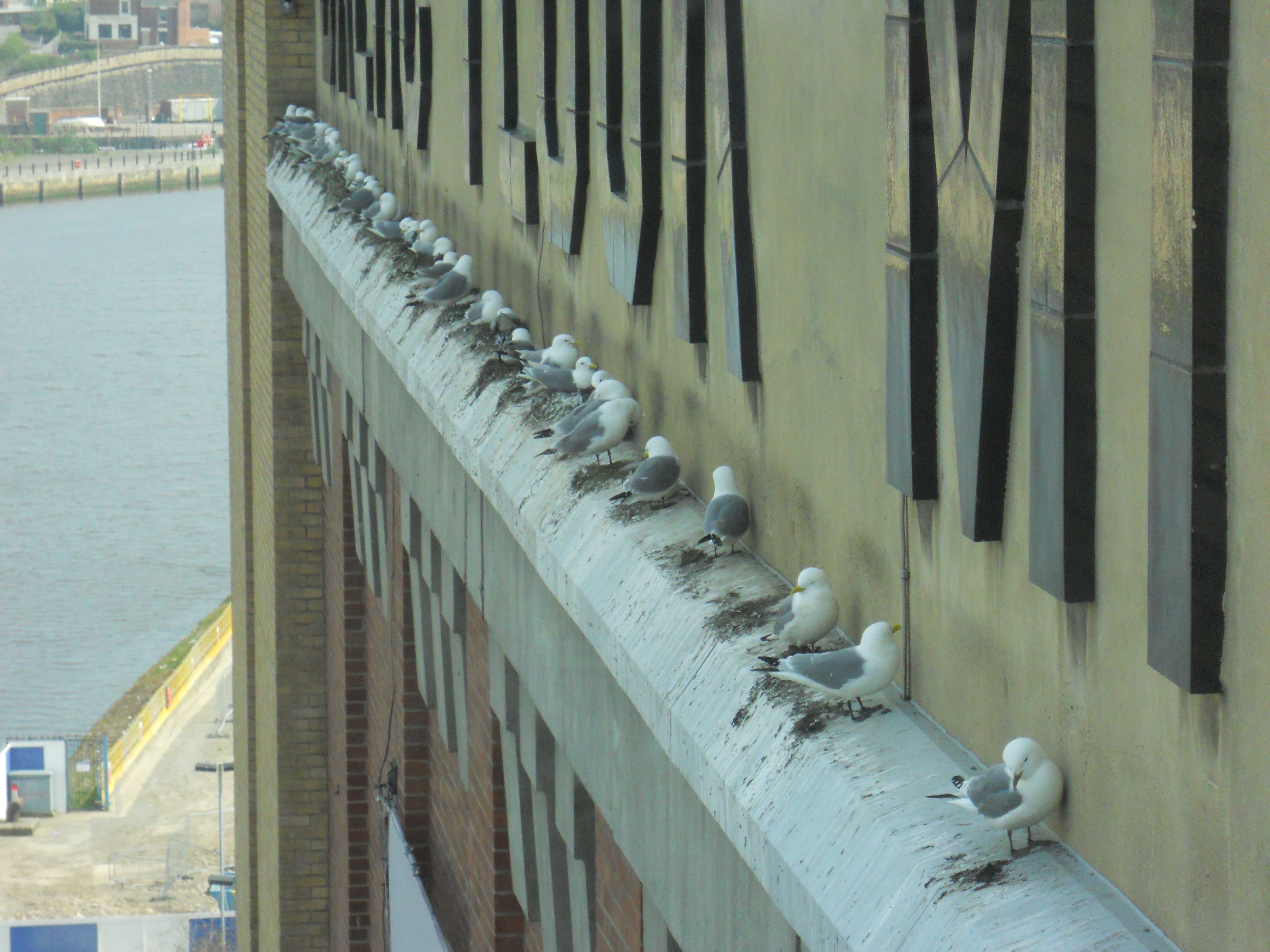
I’ve seen several pictures of kittiwakes lined up like these.
The document goes on to describe the work being done for the kittiwakes and this is said about work in East Suffolk.
Lowestoft and Sizewell are the only locations between Kent and Humberside with thriving kittiwake colonies. Kittiwake normally nest on steep cliffs with narrow ledges. East Anglia doesn’t have these natural nesting spaces, so kittiwake have reverted to colonising urban areas, for example on windowsills and ledges of buildings. Kittiwake breeding for the first time are most likely to find artificial structures that are situated close to these urban areas. They are less likely to find structures in places where there are not already kittiwake. Lowestoft and Sizewell are therefore two of the few places in East Anglia where artificial structures could be colonised quickly. These purpose-built nesting sites would improve breeding conditions for kittiwake, whilst successfully achieving our compensation requirements to unlock the world’s biggest offshore wind farm.
I took this picture of kittiwakes at Sizewell.
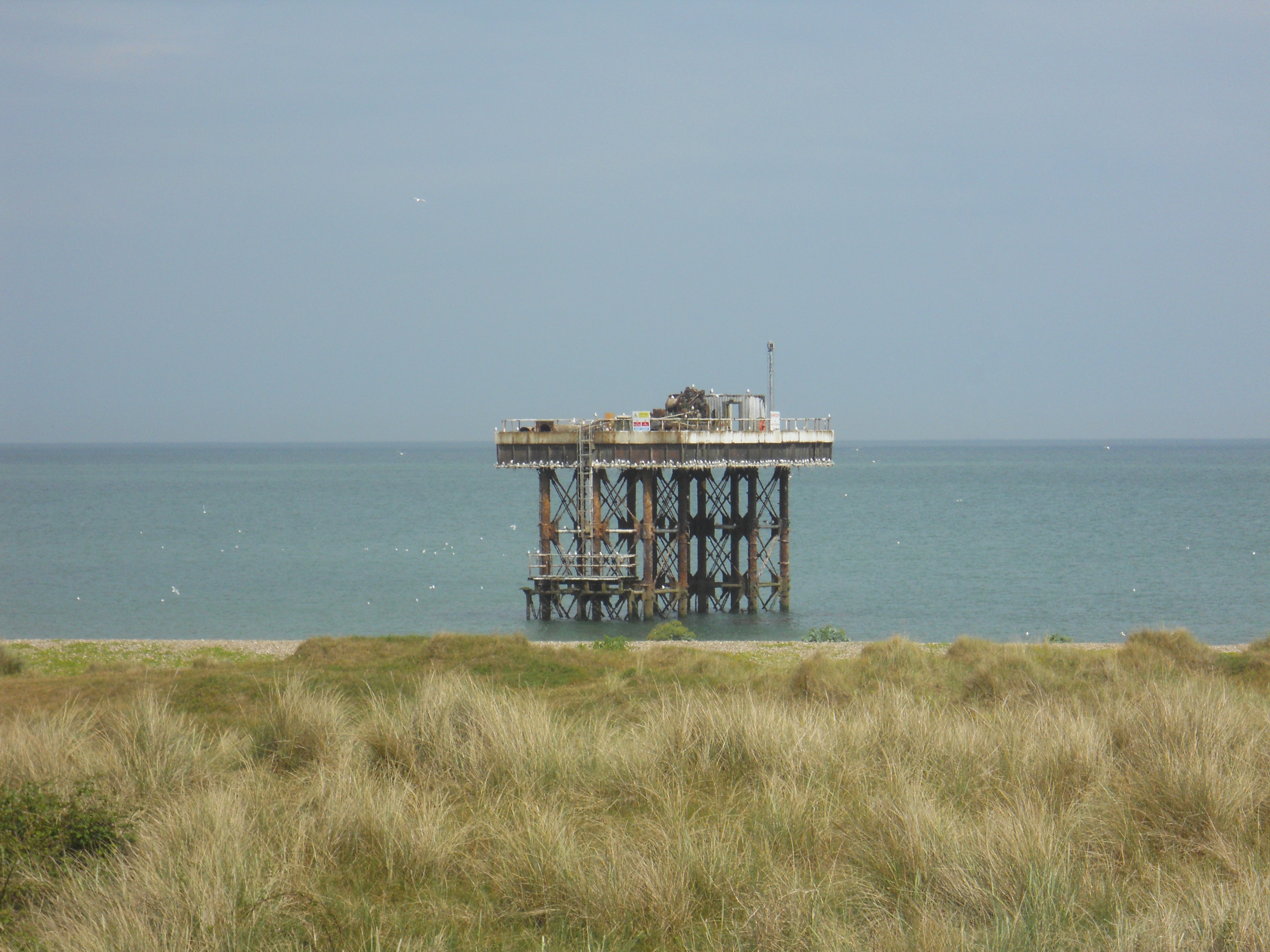
It doesn’t seem too unlike the structure on the Hornsea 3 web site.

