Knightsbridge Station – 25th April 2022
I wrote Development Of Knightsbridge Station on November 27th 2017.
It is now a few days short of four years and five months later and the station looks a bit different.

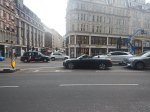
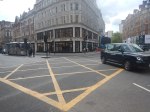

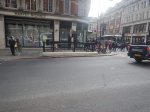

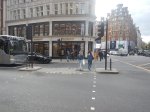

Note.
- The original station entrance on the corner of Sloane Street and Knightsbridge is now a new retail unit for Burberry.
- The original entrance in front of Harvey Nicholls is still open.
- The entrance opened in 2017 on the North side of Knightsbridge is still open.
- The new step-free entrance with lifts, is behind the black hoarding to the right of the new Burberry.
- The pavements are wider around the frontage of Burberry, than they were, when it was the station entrance.
The station is intended to fully open with lifts to the Piccadilly Line by Summer 2022.
Conclusion
This Google Map shows the site of the original Sloane Street entrance.
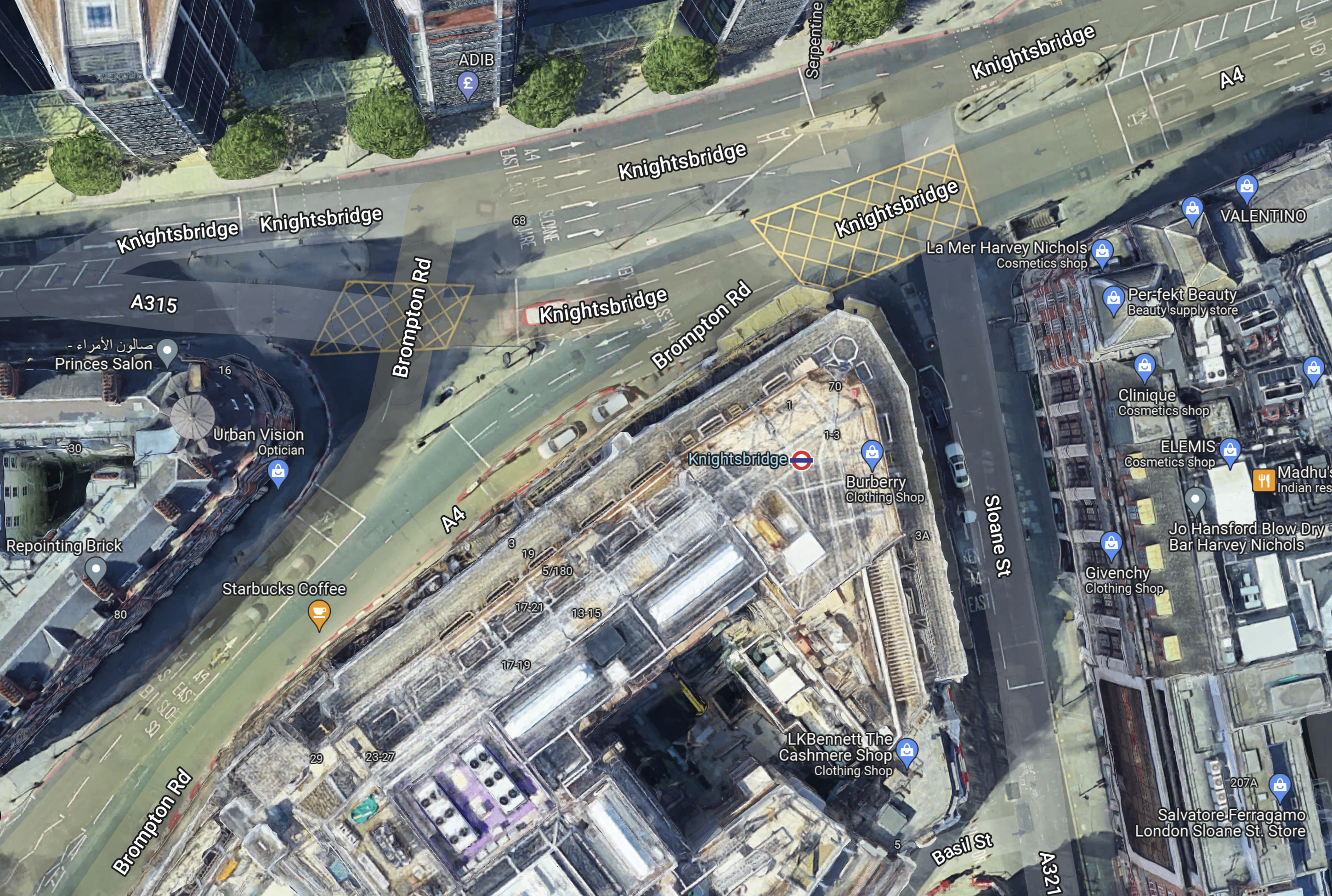
Note.
- Knightsbridge running East-West across the top of the map.
- Brompton Road running towards the South-West and past Harrods.
- Sloane Street running North-South towards the right of the map.
- The London Underground roundel indication the old entrance.
- Thee large size of the development site.
Is this going to be the world’s most expensive step-free rebuild of a Metro station?
The development is being carried out by the owners of the site; the Knightsbridge Estate, who are ultimately owned by one of Saudi Arabia’s richest families.
On the Development page of the web site, this is said about improving the public realm.
Significant improvements are being made to the public realm. The pavements on Brompton Road and Sloane Street have been widened to ease the pedestrian flow, Hooper’s Court, which links Brompton Road and Basil Street, is being completely remodelled and the Knightsbridge underground station is being substantially upgraded. A brand new tube entrance is being created further west along Brompton Road, a step-free access via two 17-person lifts located on Hooper’s Court will be introduced as well as on-platform cooling systems.
How many other tube stations are there in London with air-cooled platforms?
But then those, who buy the multi-million pound flats in this development, will expect a constant atmosphere between flat and platform. Remember too, that the New Tubes for London being built by Siemens for the Piccadilly Line will be air-conditioned.
A Thought On The Prospects For Crossrail
Someone asked the question, in a discussion group, that I visit, if Crossrail will be a success.
I believe that you only have to look at the success of the London Overground to realise that Crossrail will be a success.
When the North London Line reopened as the first route of the London Overground with new Class 378 trains, it used to run four-car trains at a frequency of six trains per hour (tph) between Stratford and Willesden Junction stations.
Now the line runs eight tph on that route and the trains are five cars.
That is a capacity increase of 66% in terms of cars per hour.
And still at times, the trains are full and Transport for London are looking at ways of adding extra trains and/or cars.
Crossrail will have the factors going for it, which helped to make the Overground that success. It is new and has a novelty value, but above all like the Overground, it is built for full-sized people, who could be pushing bikes and buggies and trailing baggage.
Crossrail, also increases options for alternative routes for Londoners , who are World Champions at ducking-and-diving.
Crossrail has also been designed so that the trains can be extended.
If Crossrail has a problem, other than the lateness and budget overrun, it is that it doesn’t connect to the Victoria or Piccadilly Lines.
Does London Need High Capacity Bus Routes To Extend Crossrail?
If Crossrail has a major problem, it is that some areas of the capital will find it difficult to access the new line.
Up to the age of sixteen, I used to live half-way between Oakwood and Cockfosters stations on the Piccadilly Line.
There are a large number of people who live along the Northern reaches of the Piccadilly Line, who might want to use Crossrail to perhaps go to Heathrow or places in East London.
But the journey will need a double change as there is no interchange between the Piccadilly Line and Crossrail.
I suspect that many will link to Crossrail by taking the Piccadilly Line to Wood Green, Turnpike Lane or Manor House and then get a 141 bus to Moorgate. It is a route, I use if I want to go to Southgate or Cockfosters from my house, which has a 141 stop opposite.
But then as a child to go to Harringay, where my father had an uncle, my mother would use a 641 trolley bus from Wood Green or Turnpike Lane.
Do people follow the public transport habits of their parents?
I know I do!
My father never went on a deep tube. As he several times mentioned the terrible Bank station bombing in the Blitz, which killed 56 people, I always thought that was his problem. But now living as I do along the Northern and Northern City Lines, I suspect it was more to do with air quality, as we were or are both bad breathers.
I suspect that when Crossrail opens, the 141 bus will be heavily used by travellers going between the Northern reaches of the Piccadilly Line and Crossrail at Moorgate.
The 141 bus goes between London Bridge station and Palmers Green and it has a route length of about nine miles.
Currently, buses run every fifteen minutes or so, but I doubt it will be enough in future as Transport for London are rerouting the closely-related 21 bus.
I suspect any route seen as an extension of Crossrail needs to have the following characteristics.
- High frequency of perhaps a bus every ten minutes.
- Interior finish on a par with the Class 345 trains.
- Wi-fi and phone charging.
I would also hope the buses were carbon-free. Given that some of these routes could be quite long, I would suspect hydrogen with its longer range could be better.
Other Routes
According to me, the 141 bus route needs improvement!
But how many other routes could need similar improvement?
Sudbury Town Station – 6th January 2022
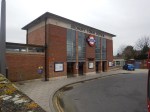
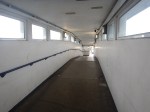
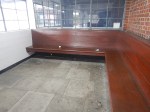
As I was visiting the next station Sudbury Hill, I popped in to Sudbury Town station and took these pictures.


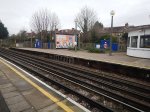
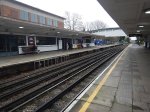
Note.
- The station is Grade II* Listed.
- It has been made partially step-free by the means of a crude ramp.
- It is a typical Charles Holden design.
Despite its high status, it is not one of the best stations on the Piccadilly Line.
Sudbury Hill Station – 6th January 2022
Sudbury Hill station is now step-free, as these pictures show.
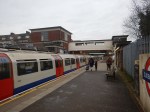
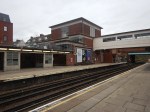
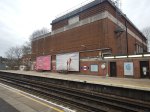
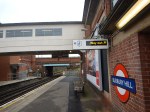
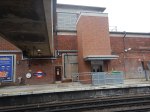

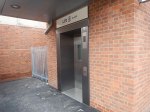
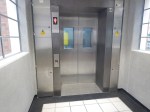
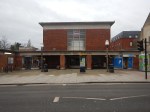
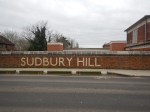
Adding two brick lift towers seems to work well at this Grade II Listed station, that was designed by Charles Holden.
Digital Signalling Work Outlined By Network Rail For Northern City Line
The title of this post, is the same as that of this article on Rail Business Daily.
This is the first paragraph.
Network Rail has detailed work due to be delivered on the Northern City Line to Moorgate.
I use this line regularly and I believe that with digital signalling the Northern City Line could see a large increase in frequency.
Currently, the service from Moorgate is as follows.
- 4 tph to Welwyn Garden City via Potters Bar
- 4 tph to Hertford North of which 2 tph extending to Watton-at-Stone and 1tph of those continuing to Stevenage.
Note.
- tph is trains per hour.
- Although the service is reduced from that shown, because of the pandemic and lower passenger demand.
But eight tph means a train every seven minutes and thirty seconds.
If you look at London’s high frequency lines, they have or will have passenger frequencies as follows.
- Crossrail – 24 tph on dedicated tracks with digital signalling.
- East London Line – 16 tph on dedicated tracks.
- North London Line – 8 tph on tracks shared with freight trains.
- Thameslink – 24 tph on dedicated tracks with digital signalling.
Note.
- The East London Line is planned to go to 20 tph with two extra tph to Clapham Junction and Crystal Palace.
- 20 tph means a headway between trains of three minutes.
- 24 tph means a headway between trains of two minutes and thirty seconds.
It should also be noted that the Victoria Line runs upwards of thirty tph on a fully digitally-signalled line.
What Level Of Service Would Be Possible?
These are my thoughts on various aspects of the Northern City Line.
How Many Trains Could Be Handled Between Finsbury Park And Moorgate?
This section of track is a simple double-track with a diamond crossing to the North of the two platforms at Moorgate, so that trains can use either platform.
This layout is used at Brixton and Walthamstow Central on the Victoria Line and Battersea Power Station on the Northern Line to name just three of many.
So I suspect that the track layout at the terminus at Moorgate can handle well-upwards of twenty tph.
The new Class 717 trains that run into Moorgate have an operating speed of 85 mph, which is faster than the previous Class 313 trains, which appear to have run at 30 mph South of Drayton Park.
I suspect that eventually twenty or even twenty-four tph will be possible on a digitally-signalled route between Finsbury Park and Moorgate.
But in the interim, sixteen tph would be a good compromise.
How Many Trains Could Be Handled On The Current Routes?
Currently, four tph use the both the Welwyn Garden City and the Hertford East/Stevenage routes.
I am fairly sure that both routes could handle eight tph, with the only proviso, that there is enough terminal capacity to turn the trains.
Looking at the layout of Welwyn Garden City station, I am certain that it could be modified to be able to handle eight tph.
I would hope that the new platform at Stevenage station, built to handle trains to and from Moorgate, can cater for four tph. As there are turnback platforms at Gordon Hill and Hertford North stations, I’m sure the other four tph could be handled.
The Piccadilly Line And The City of London
It has always been difficult to get between the Northern section of the Piccadilly Line and the City of London.
In the 1960s, I used to use my bicycle. By public transport, you generally had to use the bus or the 641 trolley bus to Moorgate.
With the improvement of the Northern City Line and Finsbury Park station, the fastest route to Moorgate is probably to change between the Piccadilly and Northern City Lines at Finsbury Park station.
Increasing the frequency of Northern City Line services between Finsbury Park and Moorgate would create a high-capacity route to the City for those commuting from the Northern section of the Piccadilly Line.
The Piccadilly Line And Crossrail
There is no connection between the Piccadilly Line and Crossrail.
A trip between Oakwood and Canary Wharf would be difficult.
As with getting to the City of London, the improvement of the Northern City Line and Finsbury Park station offers a route to Crossrail.
Oakwood and Canary Wharf would probably be done with changes at Finsbury Park and Moorgate.
The Victoria Line And The City of London
There is a cross-platform interchange at Highbury & Islington station between the Victoria and Northern City Lines.
With an increased frequency of Northern City Line services between Finsbury Park and Moorgate, I would expect that more people would use this route.
The Victoria Line And Crossrail
There is no connection between the Victoria Line and Crossrail.
The easiest route will be to take the route in the previous section and join Crossrail at Moorgate.
Conclusion
It does look that with the current routes sixteen tph to and from Moorgate could be a practical limit.
But that would still be a train every three minutes and forty-five seconds between Finsbury Park and Moorgate.
This increased frequency could be needed to create a high capacity link between the Northern sections of the Piccadilly and Victoria Lines and the City of London and Crossrail.
Should All Trains Have Grab Handles By The Doors?
These pictures show the vertical grab handles on London Overground Class 710 trains.
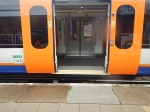
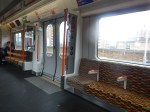
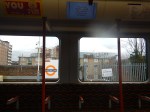
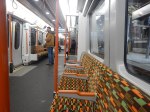


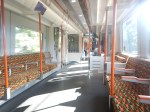
Note the vertical handles everywhere and especially tucked into the corner behind the door.
These pictures show the interior of a 1973 Stock train on the Piccadilly Line.
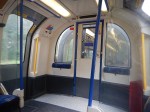


There are worse trains in the UK.
It should be noted that the trains were extensively refurbished in 1996-2001.
Should all trains have lots of grab handles like these two examples? And especially by the door?
I think they should.
This is an interesting picture of a Siemens design study, which I wrote about in Siemens’ View Of The Future Of The Underground.
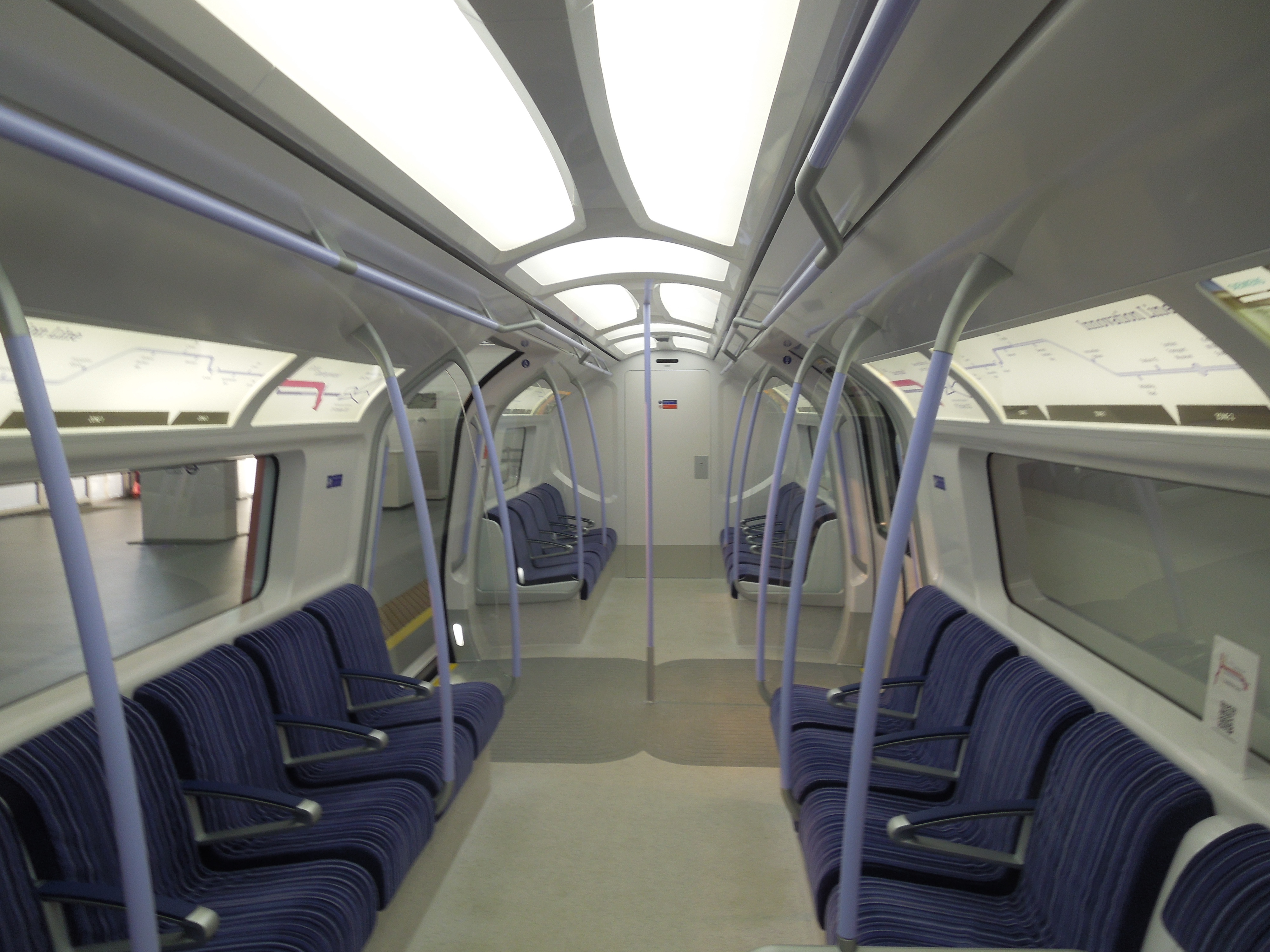
Note the grab handles by the sides of the doors.
So at least Siemens are following the rule of grab handles by the door.
Osterley Becomes 89th Step-Free London Underground Station
The title of this post, is the same as that of this article on Rail Technology Magazine.
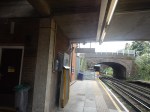
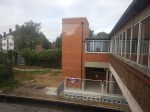
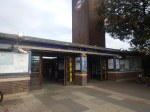
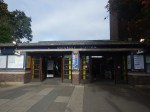
So I went to Osterley station and took these pictures.
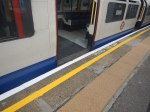


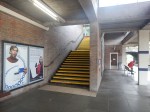


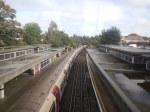
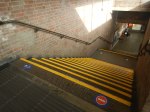
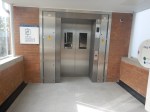
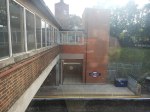
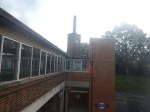
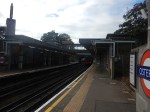
Note.
- Osterley station is Grade II Listed and was built in the style of Charles Holden.
- It does look that there is also step-free access between train and the platform for most wheelchair-users, buggy-pushers and case-draggers.
- The two new lift-towers are typical steel-and-brick constructions.
I don’t think that the most militant member of the Heritage Taliban will object to the quality of the design and the construction.
Ickenham Station Has Gone Step-Free
I wrote West London Stations To Be Made Step-Free in January 2018.
One of the stations on the list; Ickenham station, is now step-free.
These pictures showed the station, when I visited the station in early 2018.
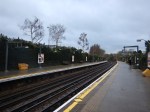
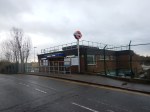
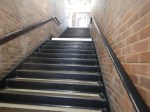
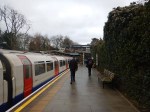
And these show it, after the addition of step-free access.
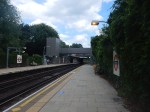
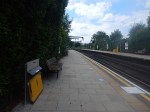
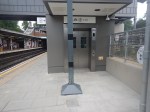
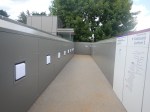
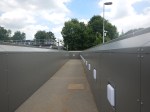
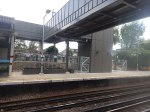
It is a practical rather than architectural lift installation incorporating new walkways connecting the two lifts and the main entrance to the station.
- Unlike many Underground stations, Ickenham station, does not appear to be Listed.
- The cladding for the installation, appears to be in a slate-grey steel.
- The stairs are still there for the agile.
As the pictures show the walkways are open to the elements, but there is enough headroom to use an umbrella.
Crossrail’s Inclined Lifts
This page on variably, shows the inclined lifts on Crossrail, at Liverpool Street station.
Take a look, as they are impressive. To my built-in video camera with an enormous instant-access store, they look like modern versions of the first inclined lift, I ever saw, which was on the Stockholm Metro.
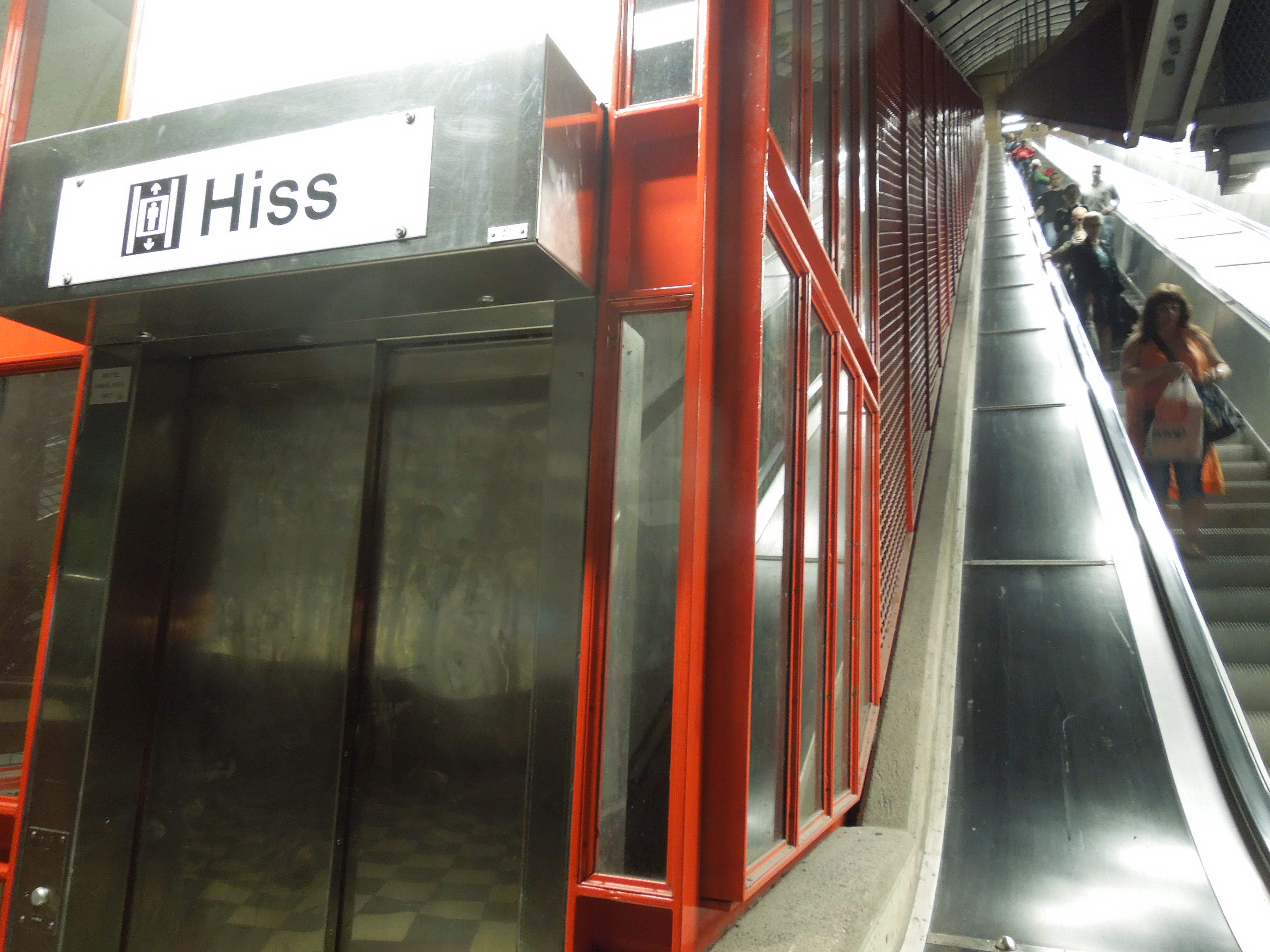
If I remember correctly, the Swedish one was installed on if not an Angel-sized set of escalators, certainly one of a good length.
It looks like it was at Duvbo station.
Enjoy the video.
It’s not this set of escalators at Duvbo, as it is the other way round, but it certainly is very similar.
Are they available in bronze for the Northern reaches of the Piccadilly Line, where I suggested inclined lifts for step-free access in Thoughts On Step-Free Access At Manor House Station.
One could be built in like this short one at Greenford station.
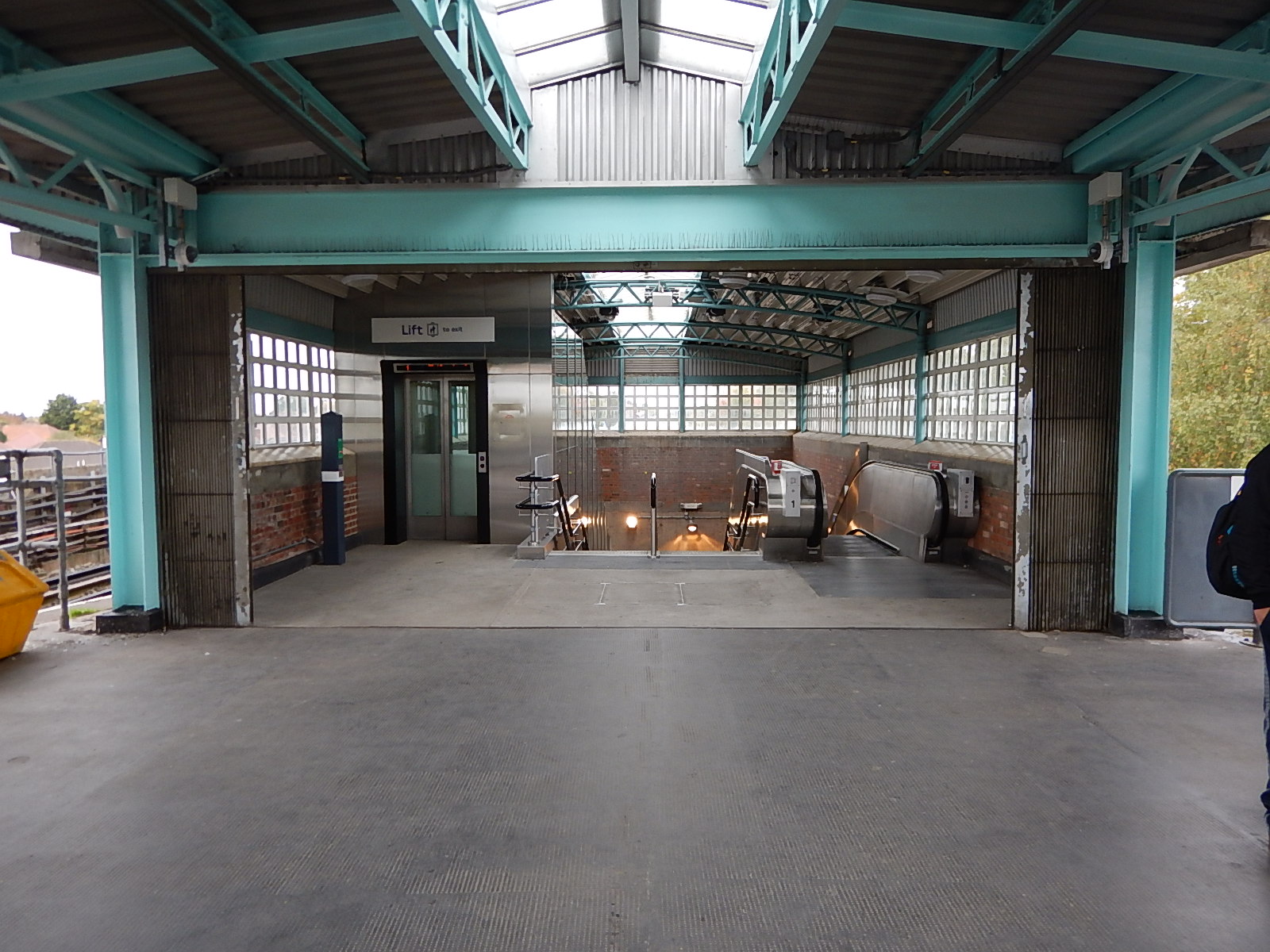
I shall replace this picture with a better one.
 The Anonymous Widower