19MW Storage Capacity To Participate In Three UK Flexible Markets
The title of this post is the same as that of this article on Smart Energy.
in Batteries On The Boil As Fund Attracts Investors, I talked about energy storage funds, which are a way of investing in energy storage to add capabilities to electricity grids.
This article talks about how the Gore Street Energy Fund is investing in two energy storage facilities at the Port of Tilbury and Lower Road in Essex
I have also found this article on Solar Power Portal, which is entitled Gore Street Fund Makes New Battery Acquisitions With New 19MW Pair From Origami Energy.
The second article has a picture of a 4 MW/4.8 MWh Tesla battery at Cenin Renewables.
The link to Tesla gives a well-presented page of applications of these batteries.
One example given is Renewable Integration, where this is said.
Smooth and firm the output of a renewable power generation source such as wind or solar.
This will be a large application for these types of large batteries, as although we don’t have masses of sun, we do have a lot of wind.
Big financial institutions like Pension Funds and Insurance Companies need secure long term investment to place their money and these energy storage devices, would appear to offer a sensible return, that enables them to pay their investors, like anybody who has a pension. Traditionally,these financial institutions have invested in property and government bonds for example.
Lately, they have been investing in railway rolling stock, which have a life of up to forty years. These energy storage systems should offer a reasonable life, if well-maintained and updated.
As there will large numbers of energy storage systems installed in the UK in the next decades, I think they could be a big area for investment.
At an individual level, we will also see houses built or refurbished with solar panels and batteries.
We are at the start of an exciting revolution!
Huge Solar Farm Plan
The title of this post is the same as that of a small article in today’s copy of The Times.
This is said.
Plans for Britain’s largest solar farm have been submitted to the government. Cleeve Hill Solar Park between Whitstable and Faversham in Kent would be five times bigger than the present largest solar farm, in Wiltshire, and provide enough clean energy to power more than 91,000 homes. A ruling is expected by the end of 202.
According to this page on the OVO Energy web site, the average household in the UK used 3,940 kWh in 2014.
This is 0.45 kWh per hour.
On this figure, the 91,000 houses would use 358.4 GWH
Compare this output with the 240 MW of the world’s first nuclear power station at Calder Hall, which opened in 1956, which in a year would generate 2104 GWH
Cleeve Hill Solar Park has a web site, which together with other sites gives more details of the project.
- The project has an area of 360 hectares.
- The project will be connected to the grid using an existing sub-station, that is used to connect the London Array wind farm in the Thames Estuary to the grid.
- The solar panels are laid close together to create the maximum amount of electricity.
On this information it looks like a solar farm in the UK, which is the size of 360 football pitches, can generate a sixth of the power of the world’s first and admitted small nuclear power station.
The web site also includes this informative schematic of a typical solar farm.
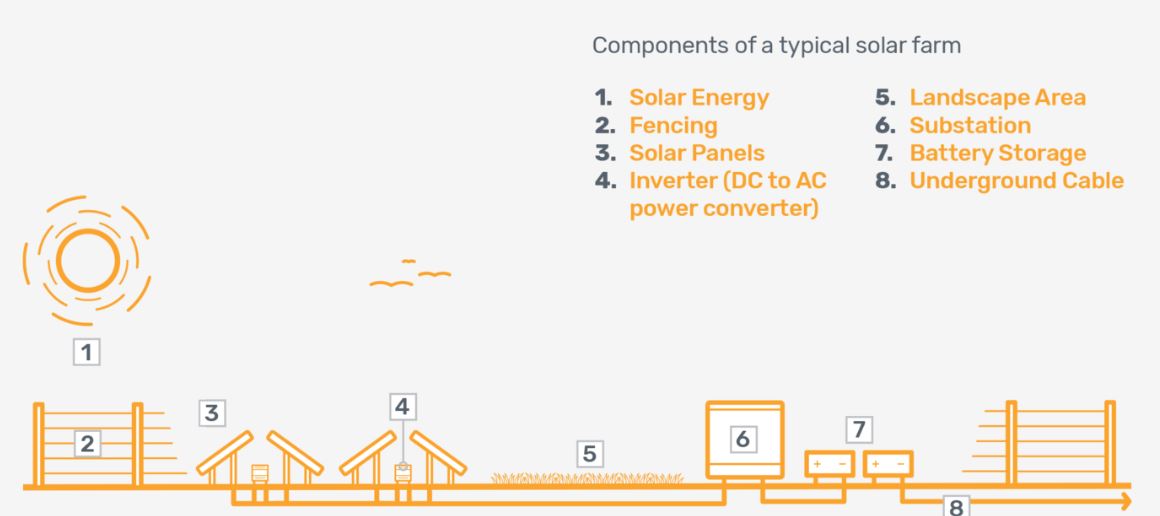
Note that battery storage is included, which I find significant.
- Battery or some other form of energy storage would be used to smooth the peaks and troughs of generation and use.
- Is it significant that it shares a sub-station that is used to connect wind turbines to the grid?
- So will the solar panels charge the batteries and then this energy will be sent to the grid, when the wind isn’t blowing?
The battery would be sized accordingly and calculating the size required is a the sort of problem that needs some comprehensive mathematical modelling.
- Using past sun and wind data, it would be possible to predict likely weather on a day-to-day basis.
- This data would be fed into a mathematical model of the wind and solar farms, with different sizes of batteries.
- A battery size would be chosen, that didn’t allow 91,000 houses in Kent to be without power.
But don’t worry, if you live in Kent, as there are other power stations nearby that could step in.
Having run mathematical models for complicated systems since the late 1960s, I know that this problem is within the capabilities of today’s mathematicians and computers.
The Potential Power Of The Cleeve Hill Solar Farm
The Internet entry for Solar Power In The UK has a section called Solar Potential, where this is said.
London receives 0.52 and 4.74 kWh/m² per day in December and July, respectively. While the sunniest parts of the UK receive much less solar radiation than the sunniest parts of Europe, the country’s insolation in the south is comparable with that of central European countries, including Germany, which generates about 7% of its electricity from solar power. Additionally, the UK’s higher wind speeds cool PV modules, leading to higher efficiencies than could be expected at these levels of insolation.
I’ll start by looking at December.
The solar array at Cleeve Hill will be 360 hectares, which need to be converted to square metres. A hectare is roughly the size of a football pitch like Wembley or 100 metres x 100 metres.
So I can say the following.
- The area of the Cleeve Hill solar farm is 3,600,000 square metres.
- If I assume that Cleeve Hill gets the same amount of sunlight as London, I can say that on each day in December the solar farm will receive an average of 0.52 * 3,600,000 kWh or 1872 MWh of solar energy.
- I have found web sites that say that the best solar panels are twenty percent efficient, which means that on an average December day 374.4 MWh will be generated.
- This is 4.11 kWh for each of the 91,000 households.
Looking at July, I can say the following.
- If I assume that Cleeve Hill gets the same amount of sunlight as London, I can say that on each day in July the solar farm will receive an average of 4.74 * 3,600,000 kWh or 17064 MWh of solar energy.
- Using the same twenty percent efficiency, which means that on an average July day 3412.8 MWh will be generated.
- This is 37.5 kWh for each of the 91,000 households.
I have created an Excel Workbook, that shows the energy generation for a 360 hectare solar farm, through a year.
- I obtained the insolation rates from this page on the Contemporary Energy web site.
- Other data came from Cleeve Hill Solar Farm.
- All parameters can be changed are and at the first part of the workbook.
- It is in Word 97 format
Click this link to download.
Batteries On The Boil As Fund Attracts Investors
The title of this post is the same as that of an article in the Business section of today’s Times.
This is the first two paragraph.
Investors have sunk £100million into a new listed company that aims to use shipping containers packed with lithium-ion batteries to buy, store and sell electricity.
Gresham House Energy Storage Fund claims that it will make a return of 15 per ceent a year by providing electricity when surges in demand coincide with periods when the wind is not blowing or the sun is not shining.
Gresham House Energy Storage Fund is the second listed energy storage fund in London, after Gore Street Energy Storage Fund , launched in May.
I think we’ll see more of these funds and use of the technology.
Suppose you were a farmer with a windy hill top farm, that had a heavy electricity bill.
Realistically, sized, priced and financed a wind-turbine and a container full of batteries, might be just what your finances wanted.
All you’d need now would be an electric Range-Rover and a fleet of electric tractors!
HyperSolar Granted Critical Patent for Producing Low Cost Renewable Hydrogen
The title of this post is the same as that as this article on Global News Wire.
It looks to me that a company call HyperSolar is working on producing hydrogen direct from solar power from any water source.
This is technology to watch. Pending full development, you can always watch this video on the HyperSolar web site.
Gravitricity Sets Sights On South Africa To Test Green Energy Tech
The title of this post, is the same as that of this article on ESI Africa, which describes itself as Africa’s Power Journal.
This is the first two paragraphs.
Disused mine shafts in South Africa have been identified as an ideal location to test UK-based energy start-up Gravitricity’s green energy technology.
The company announced plans to transform disused mine shafts into hi-tech green energy generation facilities through a system that uses gravity and massive weights.
This is surely a classic fit, as Africa has plenty of sun and some of the mine shafts in South Africa, like the TauTona mine are getting towards two miles deep.
A weight of 1,000 tonnes in a two mile deep shaft would store nearly nine MWh. By comparison, Dinorwig Power Station or Electric Mountain, has a capacity of 500 MWh.
But Electric Mountain was built in the 1970s, cost £425 million and took ten years to construct.
Rail Engineer On Hydrogen Trains
This article on Rail Engineer is entitled Hydrail Comes Of Age.
It is a serious look at hydrogen-powered trains.
This is typical information-packed paragraph.
Instead of diesel engines, the iLint has underframe-mounted traction motors driven by a traction inverter. Also mounted on the underframe is a lithium-ion battery pack supplied by Akasol and an auxiliary converter to power the train’s systems. On the roof is a Hydrogenics HD200-AT power pack which packages six HyPMTM HD30 fuel cells, with common manifolds and controls, and X-STORE hydrogen tanks supplied by Hexagon xperion which store 89kg of hydrogen on each car at 350 bar. These lightweight tanks have a polymer inner liner, covered with carbon fibres soaked in resin and wrapped in fibreglass.
They have interesting things to say about the trains and the production and delivery of the hydrogen, which can be what they call green hydrogen produced by electricity generated by wind power.
This is said about supplying the hydrogen.
It takes 15 minutes to refuel the iLint, which holds 178kg of hydrogen supplied at a pressure 350 bar. It consumes this at the rate of 0.3kg per kilometre. Thus, Lower Saxony’s fleet of 14 trains, covering, say, 600 kilometres a day, will require 2.5 tonnes of hydrogen per day. If this was produced by electrolysis, a wind farm of 10MW generating capacity would be required to power the required electrolysis plant with suitable back up. This, and sufficient hydrogen storage, will be required to ensure resilience of supply.
These are the concluding paragraphs.
With all these benefits, a long-term future in which all DMUs have been replaced by HMUs is a realistic goal. However, the replacement, or retrofitting, of 3,000 DMUs and the provision of the required hydrogen infrastructure would be a costly investment taking many years.
Germany has already taken its first steps towards this goal.
For myself, I am not sceptical about the technology that creates electricity from pure hydrogen, but I think there are design issues with hydrogen-powered trains in the UK.
The German trains, which are built by Alsthom and should start test runs in 2018, take advantage of the space above the train in the loading gauge to place the tanks for the hydrogen.
Our smaller loading gauge would probably preclude this and the tanks might need to take up some of the passenger space.
But in my view, we have another much more serious problem.
Over the last twenty years, a large number of high quality trains like electric Desiros, Electrostars and Junipers, and diesel Turbostars have been delivered and are still running on the UK network.
It could be that these trains couldn’t be converted to hydrogen, without perhaps devoting a carriage to the hydrogen tank, the electricity generator and the battery needed to support the hydrogen power.
It is for this reason, that I believe that if we use hydrogen power, it should be used with traditional electrification and virtually unmodified trains.
A Typical Modern Electric Train
Well! Perhaps not yet, but my view of what a typical electric multiple unit, will look like in ten years is as follows.
- Ability to work with 25 KVAC overhead or 750 VDC third-rail electrification or onboard battery power.
- Ability to switch power source automatically.
- Batteries would handle regenerative braking.
- Energy-efficient train design.
- Good aerodynamics.
- Most axles would be powered for fast acceleration and smooth braking.
- Efficient interior design to maximise passenger numbers that can be carried in comfort.
- A sophisticated computer with route and weather profiles, passenger numbers would optimise the train.
The battery would be sized, such that it gave a range, that was appropriate to the route.
In an article in the October 2017 Edition of Modern Railways, which is entitled Celling England By The Pound, Ian Walmsley says this in relation to trains running on the Uckfield Branch.
A modern EMU needs between 3 and 5 kWh per vehicle mile for this sort of service.
As I’m talking about a train that has taken energy efficiency to the ultimate, I think it would be reasonable to assume that 3 kWh per vehicle mile is attainable.
As I believe that most axles would be powered, I feel that it would be electrically efficient for a battery to be fitted into each car.
Suppose we had a five-car train with a 30 kWh battery in each car.
This would give a total installed battery capacity of 150 kWh. Divide by five and three and this gives a useful emergency range of ten miles.
These facts put the battery size into perspective.
- , 30 kWh is the size of the larger battery available for a Nissan Leaf.
- A New Routemaster bus has a battery of 75 kWh.
Where will improved battery technology take us in the next decade?
Use Of Hydrogen Power With 750 VDC Third-Rail Electrification
This extract from the Wikipedia entry for third-rail, explains the working of third-rail electrification.
The trains have metal contact blocks called shoes (or contact shoes or pickup shoes) which make contact with the conductor rail. The traction current is returned to the generating station through the running rails. The conductor rail is usually made of high conductivity steel, and the running rails are electrically connected using wire bonds or other devices, to minimize resistance in the electric circuit. Contact shoes can be positioned below, above, or beside the third rail, depending on the type of third rail used; these third rails are referred to as bottom-contact, top-contact, or side-contact, respectively.
If a line is powered by third-rail electrification, it needs to be fed with power every two miles or so, due to the losses incurred in electricity passing along the steel conductor rail.
I suspect that Network Rail and our world-leading rail manufacturers have done as much as they can to reduce electrical losses.
Or have they? Wikipedia says this.
One method for reducing current losses (and thus increase the spacing of feeder/sub stations, a major cost in third rail electrification) is to use a composite conductor rail of a hybrid aluminium/steel design. The aluminium is a better conductor of electricity, and a running face of stainless steel gives better wear.
Suppose instead of having continuous third-rail electrification, lengths of electrification with the following characteristic were to be installed.
- Hybrid aluminium/steel rails.
- Power is supplied at the middle.
- Power is only supplied when a train is in contact with the rail.
All trains would need to have batteries to run between electrified sections.
The length and frequency of the electrified sections would vary.
- If a section was centred on a station, then the length must be such, that a train accelerating away can use third-rail power to get to operating speed.
- Sections could be installed on uphill parts of the line.
- On long level sections of line without junctions, the electrified sections could be more widely spaced.
- Battery power could be used to take trains through complicated junctions and crossovers, to cut costs and the difficulties of electrification.
- Electrified section woulds generally be placed , where power was easy to provide.
So where does hydrogen-power come in?
Obtaining the power for the track will not always be easy, so some form of distributed power will be needed.
- A small solar farm could be used.
- A couple of wind turbines might be appropriate.
- In some places, small-scale hydro-electric power could even be used.
Hydrogen power and especially green hydrogen power could be a viable alternative.
- It would comprise a hydrogen tank, an electricity generator and a battery to store energy.
- The tank could be buried for safety reasons.
- The installation would be placed at trackside to allow easy replenishment by tanker-train.
- It could also be used in conjunction with intermittent solar and wind power.
The tanker-train would have these characteristics.
- It could be a converted electrical multiple unit like a four-car Class 319 train.
- Both 750 VDC and 25 KVAC operating capability would be retained.
- One car would have a large hydrogen tank.
- A hydrogen-powered electricity generator would be fitted to allow running on non-electrified lines and give a go-anywhere capability.
- A battery would probably be needed, to handle discontinuous electrification efficiently.
- It might even have facilities for a workshop, so checks could be performed on the trackside power system
Modern digital signalling, which is being installed across the UK, may will certainly have a part to play in the operation of the trackside power systems.
The position of all trains will be accurately known, so the trackside power system would switch itself on, as the train approached, if it was a train that could use the power.
Use Of Hydrogen Power With 25 KVAC Overhead |Electrification
The big difference between installation of 25 KVAC overhead electrification and 750 VDC third-rail electrification, is that the the overhead installation is more complicated.
- Installing the piling for the gantries seems to have a tremendous propensity to go wrong.
- Documentation of what lies around tracks installed in the Victorian Age can be scant.
- The Victorians used to like digging tunnels.
- Bridges and other structures need to be raised to give clearance for the overhead wires.
- There are also those, who don’t like the visual impact of overhead electrification.
On the plus side though, getting power to 25 KVAC overhead electrification often needs just a connection at one or both ends.
The electrification in the Crossrail tunnel for instance, is only fed with electricity from the ends.
So how could hydrogen help with overhead electrification?
Electrifying some routes like those through the Pennines are challenging to say the least.
- Long tunnels are common.
- There are stations like Hebden Bridge in remote locations, that are Listed Victorian gems.
- There are also those, who object to the wires and gantries.
- Some areas have severe weather in the winter that is capable of bringing down the wires.
In some ways, the Government’s decision not to electrify, but use bi-mode trains is not only a cost-saving one, but a prudent one too.
Bi-mode trains across the Pennines would have the advantage, that they could use short lengths of electrification to avoid the use of environmentally-unfriendly diesel.
I have read and lost an article, where Greater Anglia have said, that they would take advantage of short lengths of electrification with their new Class 755 trains.
Electrifying Tunnels
If there is one place, where Network Rail have not had any electrification problems, it is in tunnels, where Crossrail and the Severn Tunnel have been electrified without any major problems being reported.
Tunnels could be developed as islands of electrification, that allow the next generation of trains to run on electricity and charge their batteries.
But they would need to have a reliable power source.
As with third-rail electrification, wind and solar power, backed by hydrogen could be a reliable source of power.
Electrifying Stations With Third Rail
It should be noted, that the current generation of new trains like Aventra, Desiro Cities and Hitachi’s A-trains can all work on both 25 KVAC overhead or 750 VDC third-rail systems, when the appropriate methods of current collection are fitted.
Network Rail have shown recently over Christmas, where they installed several short lengths of new third-rail electrification South of London, that installing third-rail electrification, is not a challenging process, provided you can find the power.
If the power supply to the third-rail is intelligent and is only switched on, when a train is on top, the railway will be no more a safety risk, than a route run by diesel.
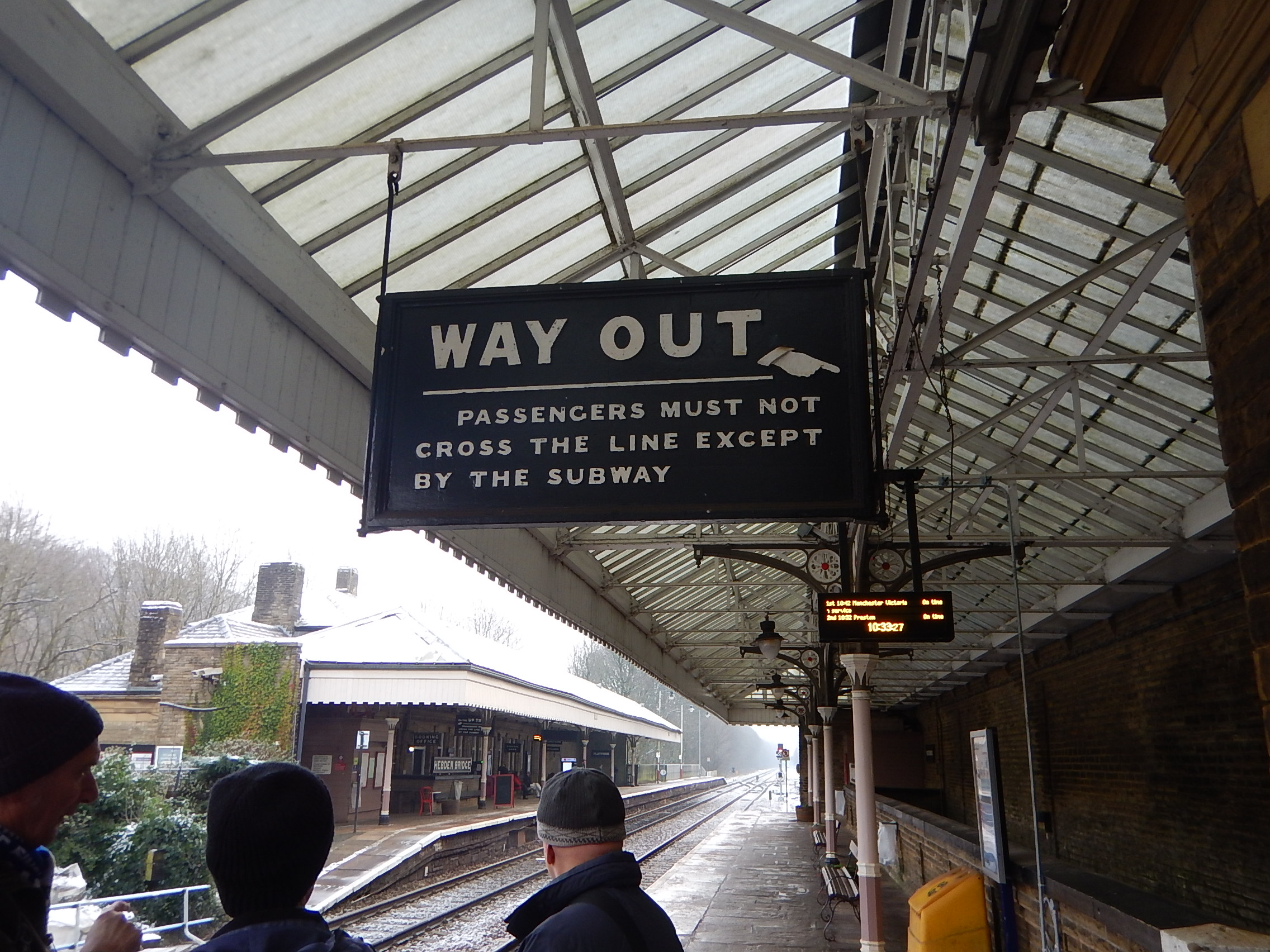
The picture shows the Grade II Listed Hebden Bridge station.
Third-rail electrification with an independent reliable power supply could be a way of speeding hybrid trains on their way.
Power Supply In Remote Places
Communications are essential to the modern railway.
Trains and train operators need to be able to have good radio connections to signalling and control systems.
Passengers want to access wi-fi and 4G mobile phone networks.
More base stations for communication networks will be needed in remote locations.
Wind, solar and hydrogen will all play their part.
I believe in the future, that remote routes in places like Wales, Scotland and parts of England, will see increasing numbers of trains and consequently passengers., many of whom will be walking in the countryside.
Could this lead to upgrading of remote stations and the need for reliable independent power supplies?
Conclusion
I am very much coming to the conclusion, that because of the small UK loading gauge, hydrogen-powered trains would only have limited applications in the UK. Unless the train manufacturers come up with a really special design.
But using hydrogen as an environmentally-friendly power source for UK railways to power electrification, perhaps in combination with wind and solar is a definite possibility!
.
Hebden Bridge Station
Hebden Bridge Station is Grade II Listed and is a busy station in West Yorkshire on the Calder Valley Line.


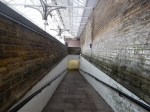
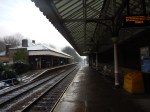


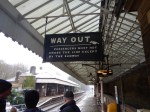
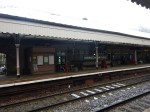
The service through the station is being improved.
The Wikipedia entry for the station has a section called Future Improvements. This is said.
The station will see a variety of improvements to facilities and train services from March 2017 onwards, as part of an investment package for the Calder Valley line as a whole. New lifts are finally to be installed to make both platforms fully accessible, whilst track and signalling upgrades will help reduce journey times in both directions and allow more trains to run to/from Bradford. This will result in the closure of the listed signal box here by October 2018, with control passing over to the Rail Operating Centre at York. New rolling stock and timetable improvements will then follow, with regular through trains to Liverpool Lime Street, Manchester Airport and Chester by late 2019.
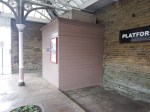
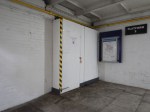
Note the parcel lifts in the pictures, which will be converted for passenger use.
Turnback Facility
The pictures also show the turnback facility at the station, which allows trains to arrive from the West in the Westbound platform and then changeover to the Eastbound platform to go back to Manchester or Preston or perhaps other destinations in the future.
Electrification
When I first saw this Victorian station, I came to the conclusion, that it would be difficult to electrify in a sympathetic manner with 25 KVAC overhead wires, without upsetting English Heritage.
Now the Government has decided that there will only be selective electrification, I suspect Network Rail will file Hebden Bridge station in the tray marked Too Difficult.
But I also think that the station could be electrified using innovative methods to improve the passenger service in terms of frequency and times.
Consider.
- Modern bi-mode trains can switch between power sources automatically.
- Modern electric trains can raise and lower the pantograph quickly and automatically.
- Most modern electric trains made for the UK, can be fitted with third-rail contact shoes.
- To the West of the station, there are a succession of tunnels, that might be possible to electrify using overhead rails.
- Zero-carbon power sources for short lengths of electrification exist, as I wrote about in Solar Power Could Make Up “Significant Share” Of Railway’s Energy Demand.
- Although solar power might not be appropriate here, short lengths of third-rail electrification may be suitable.
- The turnback facility could also be electrified with third-rail to charge trains fitted with batteries.
Somewhere in my ramblings, I’m sure a solution exists to make Hebden Bridge an environmentally-friendly power station in the heart of the Pennines.
The Ordsall Effects
There is now a large brown steel elephant in the North, in the shape of the Ordsall Chord in Manchester, that connects most of Central Manchester’s stations together and to the Airport.
- Hebden Bridge is between thirty and forty-five minutes from Manchester Victoria station, depending on if you get a semi-fast or stopping train.
- Northern have plans to extend these Manchester Victoria to Leeds services all the way to the Airport.
- In fact from Monday, some of these services now terminate at Manchester Oxford Road station.
- When I mentioned to the lady in the cafe, that services would go to Manchester Airport within months, she was surprised and very pleased.
I suspect that Hebden Bridge will be one of the tourism centres of the North that will substantially benefit from a direct link to Manchester Airport created by the Ordsall Chord.
But this could only be the start.
To maximise the benefits of the Ordsall Chord, Northern and Network Rail will want to connect services that go North and South of Manchester, back-to-back across the City.
Northern have already said, that they’ll be trains going from Hebden Bridge to Chester and Liverpool by late 2019.
But I suspect these two cities won’t be the only ones getting a quality service from Hebden Bridge.
If the service ran directly over the Ordsall Chord, then historic Buxton and well-connected Crewe must be possibilities.
That turnback facility is starting to look important, as not all services will be needed to cross the Pennines.
Westwards To Preston, Blackpool and Liverpool
Currently, the only Westbound service is an hourly train to Preston and Blackpool North.
It is not enough.
The proposed Liverpool service from Hebden Bridge, that starts in late 2019, can either go via Manchester or Preston.
If it were to be the latter, a second fast train every hour, connecting Burnley, Blackburn and Preston would certainly be welcomed on what can be a very overcrowded line.
As all Calder Valley Line services stop at Hebden Bridge, the Ordsall Chord and Northern’s plans seem to be giving the town, a more than worthwhile economic boost.
Solar Power Could Make Up “Significant Share” Of Railway’s Energy Demand
The title of this post is the same ass this article in Global Rail News.
This is the first three paragraphs.
Solar panels could be used to power a sizeable chunk of Britain’s DC electric rail network, a new report has suggested.
Climate change charity 10:10 and Imperial College London’s Energy Futures Lab looked at the feasibility of using solar panels alongside the track to directly power the railway.
The report claims that 15 per cent of the commuter network in Kent, Sussex and Wessex could be powered directly by 200 small solar farms. It suggested that solar panels could also supply 6 per cent of the London Underground’s energy requirements and 20 per cent of the Merseyrail network.
In another article in today’s Times about the study, this is said.
Installing solar farms and batteries alongside lines also could provide the extra energy needed to power more carriages on busy routes that otherwise would require prohibitively expensive upgrades to electricity networks.
Note the use of batteries mentioned in the extract from The Times. This would be sensible design as power can be stored, when the sun is shining and used when it isn’t!
If you want to read the full report, click here!
I will lay out my thoughts in the next few sections.
Is This Technique More Applicable To Rail-Based Direct Current Electrification?
All of the routes mentioned for application of these solar farms,; Southern Electric (Kent, Sussex and Wessex), London Underground and Merseyrail are electrified using one of two rail-based direct current systems.
Consider the following.
Powering The Track
In the September 2017 Edition of Modern Railways, there is an article entitled Wires Through The Weald, which discusses electrification of the Uckfield Branch in Sussex, as proposed by Chris Gibb. This is an extract.
He (Chris Gibb) says the largest single item cost is connection to the National Grid, and a third-rail system would require feeder stations every two or three miles, whereas overhead wires may require only a single feeder station for the entire Uckfield Branch.
It would appear that as rail-based direct current electrification needs a lot of feeder stations along the line, this might be better suited for solar power and battery electrification systems.
Consider.
- Most of the feeder stations would not need a connection to the National Grid.
- Solar panels generate low direct current voltages, which are probably cheaper to convert to 750 VDC than 25 KVAC.
- In installing electrification on a line like the Uckfield Branch, you would install the extra rails needed and a solar farm and battery system every two or three miles.
- With the situation mentioned in the extract from The Times, you might add a solar farm and battery system, to a section of track, where more power is needed.
- For efficiency and safety, power would only be sent to the rail when a train was present.
I trained as an Electrical Engineer and I very much feel, that solar power and battery systems are better suited to powering rail-based electrification. Although, they could be used for the overhead DC systems we use in the UK for trams.
Modular Design
Each of the solar farm and battery systems could be assembled from a series of factory-built modules.
This would surely make for a cost-effective installation, where capacity and capabilities could be trailored to the location.
Regenerative Braking
Modern trains use regenerative braking, which means that braking energy is converted into electricity. The electricity is handled in one of the following ways.
- It is turned into heat using resistors on the train roof.
- It is returned through the electrification system and used to power nearby trains.
- It is stored in a battery on the train.
Note.
- Option 1 is not efficient.
- Option 2 is commonly used on the London Underground and other rail-based electrification systems.
- Option 2 needs special transformers to handle 25 KVAC systems.
- Option 3 is efficient and is starting to be developed for new trains and trams.
If batteries are available at trackside, then these can also be used to store braking energy.
I believe that using solar farm and battery systems would also enable efficient regenerative braking on the lines they powered.
But again, because of the transformer issue, this would be much easier on rail-bassed direct current electrification systems.
Could Wind Turbines Be Used?
Both solar farms and wind turbines are not guaranteed to provide continuous power, but putting a wind turbine or two by the solar farm would surely increase the efficiency of the system, by generating energy in two complimentary ways and then storing it until a train came past.
Wind energy could also be available for more hours in the day and could even top up the battery in the dark.
In fact, why stop with wind turbines?
Any power source could be used. On a coastal railway, it might be wave or tidal power.
Could Hydrogen Power Be Used?
I think that hydrogen power could be another way to create the energy needed to back up the intermittent power of solar farms and wind turbines.
I put a few notes in Hydrogen-Powered Railway Electrification.
Would The Technique Work With Battery Trains?
Most certainly!
I haven’t got the time or the software to do a full simulation, but I suspect that a route could have an appropriate number of solar farm and battery systems and each would give the battery train a boost, as it went on its way.
Would The Technique Work With 25 KVAC Electrification?
It would be more expensive due to the inverter involved to create the 25 KVAC needed.
But I feel it would be another useful tool in perhaps electrifying a tunnel or a short length of track through a station.
It could also be used to charge a train working a branch line on batteries.
Would The Technique Work With Dual Voltage Trains?
Many trains in the UK can work with both third-rail 750 VDC third-rail and 25 KVAC overhead electrification.
Classes of trains include.
- The Class 319 trains built for Thameslink in the 1980s.
- The Class 345 trains being built for Crossrail.
- The Class 387 trains built for various operators.
- The Class 700 trains recently built for Thamelink.
There are also other classes that could be modified to run on both systems.
Provided they are fitted with third-rail shoes, there is no reason to stop dual-voltage trains running on a line electrified using solar farms and batteries.
The technique could surely be used to electrify a branch line from a main line electrified using 25 KVAC.
Consider the Henley Branch Line.
- It is four-and-a half miles long.
- It is not electrified.
- It connects to the electrified Great Western Main Line at Twyford station.
- The line can handle trains up to six-cars.
- All services on the line are worked by diesel trains.
Services consist of a shuttle between Henley-on-Thames and Twyford, with extra services to and from Paddington in the Peak and during the Regatta.
Network Rail were planning to electrify the line using 25 KVAC overhead electrification, but this has been cancelled, leaving the following options for Paddington services.
- Using battery trains, possibly based on the Class 387 trains, which would be charged between Paddington and Twyford.
- Using Class 800 bi-mode trains.
- Using Class 769 bi-mode trains.
All options would mean that the diesel shuttle continued or it could be replaced with a Class 769 bi-mode train.
An alternative would be to electrify the branch using third-rail fitted with solar farm and battery systems.
- All services on the line could be run by Class 387 trains.
- Voltage changeover would take place in Twyford station.
There are several lines that could be served in this way.
Installation Costs
I’ll repeat my earlier quote from the Modern Railways article.
He (Chris Gibb) says the largest single item cost is connection to the National Grid, and a third-rail system would require feeder stations every two or three miles, whereas overhead wires may require only a single feeder station for the entire Uckfield Branch.
If you were going to electrify, the twenty-four non-electrified miles of the Marshlink Line, with traditional Southern Electric third-rail, you would need around 8-12 National Grid connections to power the line. As the Romney Marsh is probably not blessed with a dense electricity network, although it does have a nuclear power station, so although putting in the extra rails may be a relatively easy and affordable project, providing the National Grid connection may not be as easy.
But use solar farm and battery systems on the remoter areas of the line and the number of National Grid connections will be dramatically reduced.
Good National Grid connections are obviously available at the two ends of the line at Hastings and Ashford International stations. I also suspect that the electricity network at Rye station could support a connection for the electrification.
This could mean that six to eight solar farm and battery systems would be needed to electrify this important line.
I obviously, don’t have the actual costs, but this could be a very affordable way of electrifying a remote third-rail line.
Which Lines Could Be Electrified Using Solar Farm And Battery Systems?
For a line to be electrified and powered by solar farm and battery systems, I think the line must have some of the following characteristics.
- It is a line that is suitable for rail-based direct current electrification.
- It is not a particularly stiff line with lots of gradients.
- It is in a rural area, where National Grid connections will be difficult and expensive.
- It has a connection to other lines electrified by rail-based systems.
Lines to electrify are probably limited to Southern Electric (Kent, Sussex and Wessex), London Underground and Merseyrail.
- Borderlands Line between Bidston and Wrexham.
- Kirkby to Skelmersdale
- Marshlink Line
- North Downs Line between Reading and Gatwick Airport.
- West of England Line between Basingstoke and Exeter
- Uckfield Branch
I also suspect there are several branch lines that could be reopened or electrified using rail-based electrification.
Riding Sunbeams
Note that the project is now called Riding Sunbeams.
Conclusion
It’s a brilliantly simple concept that should be developed.
It is well suited to be used with rail-based direct current electrification.
It would be ideal for the electrification of the Uckfield Branch.
OVO Offers Solar Panels And A Battery
There are a couple of reports on the Internet, that the smaller energy supplier; Ovo Energy, is now offering deals on solar panels and a battery.
I have been thinking of adding a battery for some time, but I don’t think the time is quite right yet, as the price of batteries is becoming more affordable.
However, I do think that Ovo’s move is the first of many we will see in the next few months and years.
This march towards solar and batteries could have various consequences for the UK.
- Many house builders will add solar panels and a battery to new houses.
- Domestic electricity needs will reduce.
- Solar panels and batteries may have some interesting effects on the property market.
Battery owners could also charge up overnight on low-price electricity, so the daily operation could be something like.
- Overnight the battery is charged on low-price electricity.
- Morning ablutions and breakfast, thus uses low-price electricity.
- Hopefully, the sun charges the battery during the day.
- Evening electricity would in part be what has been stored during the day.
One overall effect of the battery is to smooth the energy needs of a property.
So as the proportion of houses with batteries increases, the National Grid will see a reduction in the spikes of electricity demand, as evetybody makes a cup of tea in the advert breaks.
But the biggest effect will be on how the UK would generate its electricity.
I am not against nuclear power for any technical or environmental reasons, but I do think that the cost of new nuclear power stations like Hinckley Point C are not good value for money compared with other methods of generation. On the other hand, if we are going to have much smoother electricity needs, then we do need the nuclear power station’s ability to produce a steady baseload of power.
I am against inappropriate on-shore wind in many locations, but I am not against off-shore wind or perhaps a few large turbines in an industrial estate.
I feel that solar, batteries and off-shore wind could give the UK very affordable electricity, but they need to be backed by some form of baseload power stations, which at the moment can only be nuclear.
Conclusion
Following my logic, I believe, that as more batteries are installed in the UK, the following will happen.
- Those who install a battery will save money whether they have solar panels or not!
- Batteries will be allowed to be charged on low-cost overnight electricity.
- As more batteries are installed in the UK, the UK power needs will be smoother.
- Overnight off-shore wind could be used to charge all these batteries.
This leads me to the conclusion, that the Government should create incentives for homes to install batteries, which would be charged with low-cost overnight electricity or solar panels.
Giant Batteries To Store Green Energy
In today’s Sunday Times, there is a small article with this title.
This is the first two paragraphs.
Britain could soon be relying on battery power under plans to create a network of electrical storage facilities around the national grid.
Greg Clark, the Business Secretary, is expected to announce plans this week for giant rechargeable battery facilities to be installed near wind and solar farms to store the energy generated when demand is low. It can then be released when demand rises.
The article also says that householders will be encouraged to use batteries alongside solar panels.
I think this is only the start.
Imagine an estate of new houses, an office development, a factory estate or a business park.
- Solar panels would be everywhere.
- Wind turbines could be strategically placed.
- A central CHP system would provide heating and some electricity.
Everything would be backed up by a suitably-sized battery.

