Passing Through Shrewsbury Station
Returning from Ludlow, I came back via Shrewsbury station.


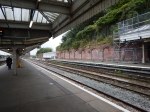
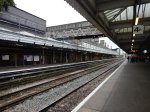
For a important place and railway interchange, the station is really not up to much, with the only facilities being toilets and a Starbucks.
Changing Trains At Carmarthen Station
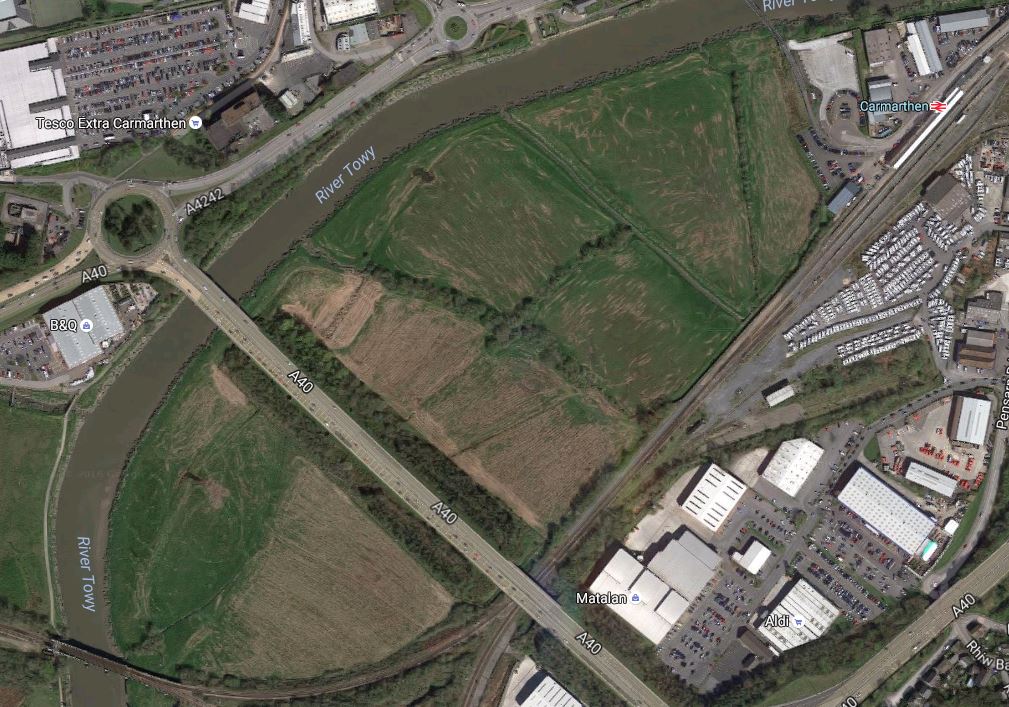
Carmarthen station is on a spur from the West Wales Line from a triangular junction.
This Google Map shows the station and the junction.
Carmarthen Station
My train from Swansea arrived in the station and I crossed the tracks to the other platform to get my onward train to Pembroke.
These are some pictures of the station.


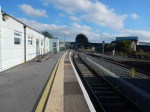

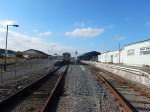
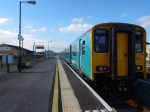
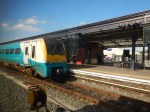

There aren’t many stations, where passengers are allowed to cross the lines.
This Google Map shows the station layout in detail.
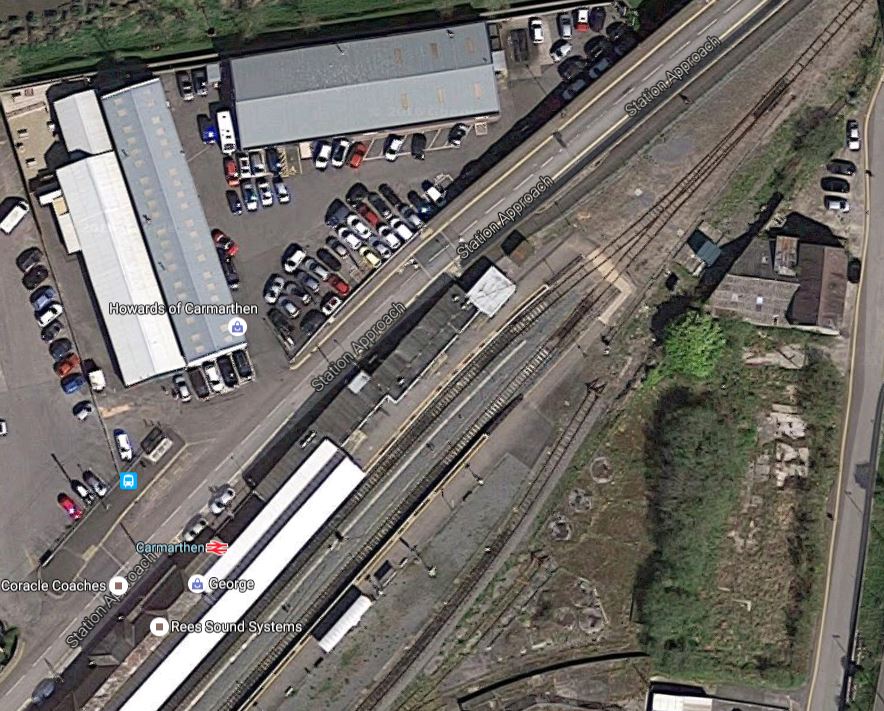
Carmarthen Station Layout
It is a good example of how a reversing siding works.
Note in the larger map, the railway crosses over the River Towy, as it goes to the West.
There is a lifting bridge over the river called Carmarthen Bridge.
This web page on Movable Bridges, describes the bridge and has a picture.
The bridge was built in 1911 and hasn’t worked since about 1956.
Escalators In Station Design
Over the last few months, I’ve been to three brand-new stations.
- Kirkstall Forge, which I nwrote about in Kirkstall Forge Station
- Lea Bridge, which I wrote about in The People Of London Welcome Lea Bridge Station
- London Bridge, which I wrote about in Details Of The New London Bridge Station
All are well-built stations with step-free access.
But I have to ask, if Kirkstall Forge and Lea Bridge would be better stations with a more favourable financial outlook, if they had escalators instead of stairs to the bridge.
Consider.
- London Transport used escalators extensively before the Second World War and few think that was wrong.
- Escalators must surely attract more paying passengers.
- If escalators are used could we see them paired with inclined lifts. to perhaps create more compact stations.
Quite frankly, Kirkstall Forge and Lea Bridge have boring layouts. I do think, we need more innovative station designs.
In some ways the most interesting station I’ve seen in the last few months is Welwyn Garden City, where the station is on the First Floor of a Shopping Centre. The main escalators and lifts are in the Shopping Centre with individual lifts and stairs to the platforms.
Improving Services To Cannon Street And Charing Cross Stations
Platform Changes At London Bridge Station
The Thameslink Programme will change the platform layout at London Bridge station considerably.
In 2012, the platform layout at London Bridge was as follows.
- Platform 1 – From Cannon Street
- Platform 2 – To/From Cannon Street
- Platform 3 – To Cannon Street
- Platform 4 – From Charing Cross
- Platform 5 – From Charing Cross and Bedford
- Platform 6 -To Charing Cross and Bedford
- There was also a through line to Charing Cross without a platform.
I can’t remember much about those days, except that the platforms were very crowded.
When London Bridge station and the Thameslink Programme is completed, the new platform layout will give opportunities to create new services through London Bridge to both; Cannon Street and Charing Cross stations.
The platform layout at London Bridge station will be as follows.
- Platform 1 – From Cannon Street
- Platform 2 – To/From Cannon Street
- Platform 3 – To Cannon Street
- Platform 4 – From Thameslink
- Platform 5 – To Thameslink
- Platform 6 – From Charing Cross
- Platform 7 – From Charing Cross
- Platform 8 – To Charing Cross
- Platform 9 – To Charing Cross
So, six through platforms and seven lines have been replaced by nine through platforms. This is a 50% increase in platforms and a 28% increase in tracks. The Borough Market Viaduct was the major engineering in creating the extra two tracks across the South Bank.
Other factors help capacity in the area include.
- The Bermondsey dive-under sorts out all the lines South of London Bridge station and will present trains to the right platforms at London Bridge. |Spaghetti Junction is so 1960s!
- Effectively, there are now three parallel and probably separate railway systems virtually from Bermondsey through London Bridge station, that split after the station; a pair of lines for Cannon Street, another pair for Thameslink and two pairs for Charing Cross.
- There has been a lot of work on track and signalling.
- The Tanners Hill Fly-Down has been built to improve capacity between London Bridge and Lewisham, which must help Cannon Street and Charing Cross services.
- The design of London Bridge station with its wide through platforms and more escalators than a science-fiction fantasy, could mean that passengers are there in time for their trains.
- The electrification changeover for Thameslink has been streamlined.
- The Class 700 trains must be better at changing voltages in the Thameslink tunnel.
All of these factoras must have positive affects on the capacity of the system.
I also think that one of the major benefits of the new layout, is what happens if something goes wrong.
If say a train breaks down on Thameslink at Blackfriars, because it is a separate railway, this doesn’t affect Cannon Street and Charing Cross services in the way it did before the new layout. There would still be the problems of fixing the train and what to do with those following behind, but the new design of London Bridge station means that passengers can be handled safely in all the space.
I’d love to see Network Rail’s thinking for handling all problems, but the design of London Bridge and its tracks could be one of those designs, that in a hundred years, engineers will look at and copy.
I can’t believe that the new layout won’t allow more trains to go to and from Cannon Street and Charing Cross, just as it allows more trains to go through the core Thameslink tunnels.
Thameslink is going from something like fifteen trains per hour (tph) to 24 tph or an increase of 60%. So what sort of increase will we see into Charing Cross and Cannon Street?
Services To Charing Cross
In 2012, Charing Cross to London Bridge was handled on three tracks between the two stations and three platforms at London Bridge. Two of the platforms were shared with Thameslink running 15 tph through them.
These three tracks and platforms have been replaced with four tracks, each with its own platform at London Bridge and possibly Waterloo East stations.
The tracks must have been fitted with a higher-capacity signalling system and an efficient track layout.
I am surprised that the four lines to and from Charing Cross share a platform at London Bridge with the other line going the same way.
Surely, it could be better if the Thameslink and Charing Cross services shared an island platform, when they were going in the same direction.
This would give a same-platform interchange between Thameslink and Charing Cross services, which the 2012 layout had.
I suspect that sharing is not possible, as it would mean that services would have to cross other lines to get there and the track doesn’t and can’t allow it.
But if the current service level of fourteen tph to and from Charing Cross station, can be achieved with just two platforms at London Bridge station as they are in the half-completed station, then there must be potential to increase the number of services to and from Waterloo East and Charing Cross, by a worthwhile margin.
Compared to some places in the UK, Charing Cross station already has an intense level of services to stations in South East London and beyond.
These are some example of trains out of Charing Cross between eleven and twelve in the morning.
- Abbey Wood – 2 trains
- Ashford International – 2 trains
- Dartford – 6 trains
- Gravesend – 4 trains
- Greenhithe – 4 trains
- Hayes – 4 trains
- Lewisham – 7 trains
- Orpington – 6 trains
- Rochester – 2 trains
- Sevenoaks – 8 trains
- Tonbridge – 6 trains
- Woolwich Arsenal – 2 trains
If this is increased, I can’t see any complaints from passengers, especially as most trains appear to have ten-cars or more.
I do think though that there will be a need to improve capacity, onward connections and walking routes at Waterloo East and Charing Cross stations.
I say more about these two stations in A Look At Charing Cross Station and Around Waterloo East Station.
It’s just that all these passengers will need somewhere to go.
Services To Cannon Street
Cannon Street station will be getting the same number of lines in 2018, as it did in 2012.
So I doubt, that the service will be any less intense, than it was in 2012.
Currently, in the Off Peak, there is a sixteen tph service, to and from Cannon Street station, which compares well with the current fourteen to and from Charing Cross station.
There is also going to be improvement at Cannon Street station with respect to onward connections and walking routes.
- Bank tube station is getting two new entrances, which are closer to Cannon Street.
- The connection between Cannon Street station and the Central Line will be improved with a travelator running North-South between the two Northern Line tracks at Bank station.
- The connection between Cannon Street station and the Northern Line will be improved with triple escalators directly down from Cannon Street, perhaps a hundred metres from Cannon Street station.
- The link to the District and Circle Lines is already excellent and those lines will be improved and get higher frequencies in the next few years.
- The City of London has ambitions to pedestrianise a lot of the area around Bank station.
Cannon Street station will certainly become one of London’s better-connected terminal stations.
There are more observations in Improvements At Bank Station.
Interchange At London Bridge Station
Effectively, London Bridge station has four sets of services.
- Those that terminate in the station.
- Through services on Thameslink
- Through service to and from Charing Cross station.
- Through service to and from Cannon Street station.
I’ll leave out the Underground, as the entrance to that hasn’t been fully opened yet!
All the current sets of services have their own set of platforms.
Interchange between the various services is a matter of taking an escalator down from the platform on which you arrive and then take another escalator up to your departure platform.
At present, they seem to be using the rebuilt through platforms flexibly as follows.
- Platform 7 – From Charing Cross
- Platform 8 – To/From Charing Cross
- Platform 9 – To Charing Cross
As trains out from Charing Cross seem to pass through London Bridge on either platform 7 and 8, there does seem to be a degree of flexibility in the track. But then there are no Thameslink services needing to be accommodated.
I do wonder if at some time in the future, they will arrange the lines at London Bridge, so that there is some cross platform interchanges. But I suspect that given the complex layout of the tracks, changes will only be limited.
So passengers will continue to go down and up the escalators. But they don’t seem to be complaining!
The Southeastern Metro
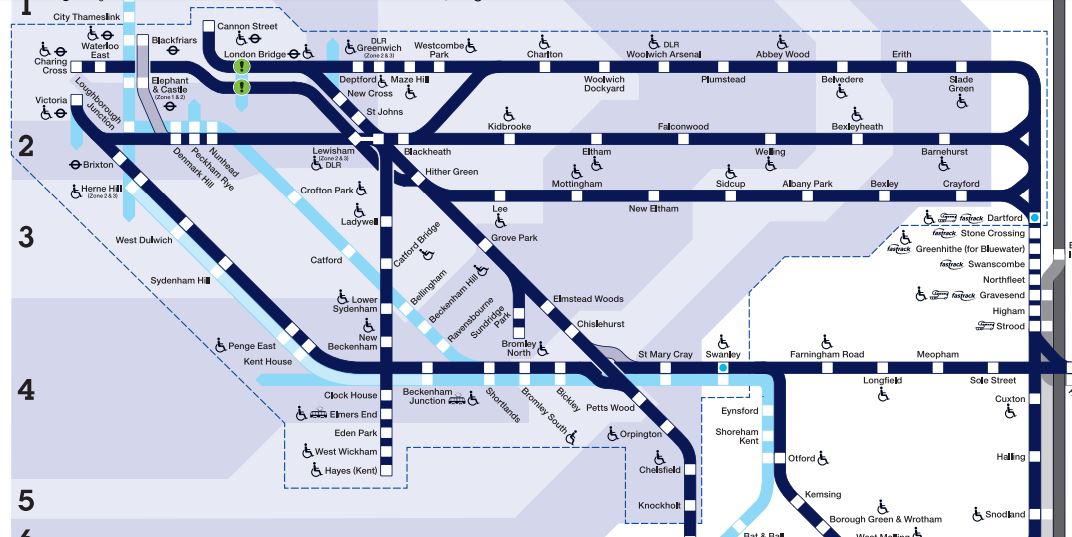
This map shows Southeastern Metro services, which are close to the London termini and fall within the Oystercard area.
Southeastern Metro
If nothing else the map shows why Transport for London want to get control of Southeastern Metro services and paint them orange, as it is a ready made network that compliments the current Underground and Overground services.
The network has five Central London termini and stations; Cannon Street, Charing Cross, London Bridge, Victoria and Waterloo East.
It also connects to the following other lines.
- Several Underground Lines including the Bakerloo, both branches of the Northern Line, the District Line and and the Circle Line.
- The Overground at Denmark Hill, New Cross and Peckham Rye
- The Docklands Light Railway at Greenwich, Lewisham and Woolwich Arsenal.
- Tramlink at Elmers End.
- Crossrail at Abbey Wood.
- Thameslink at Dartford, Greenwich, London Bridge and Orpington.
In addition, many of the stations have step-free access..
These are the services from a selection of stations close to London.
- Dartford has six tph to Charing Cross and two tph to Cannon Street and Victoria.
- Greenwich has six tph to Cannon Street.
- Hayes has two tph to Charing Cross and Cannon Street.
- Lewisham has eight tph to Cannon Street, 4 tph to Charing Cross and 2 tph to \Victoria.
- Orpington has four tph to each of Cannon Street, Charing Cross and Victoria
- Woolwich Arsenal has six tph to Cannon Street and 2 tph to Charing Cross.
So in some ways it’s an all-places-to-all-terminals Metro.
Transport for London must look at the Southeastern Metro and have all sorts of ideas about how they could use the network to the benefit of London.
These are some Off Peak service levels.
- Sixteen tph between London Bridge and Cannon Street.
- Fourteen tph between London Bridge and Charing Cross.
- Ten tph between New Cross and Cannon Street.
- Eight tph between Orpington and London Bridge.
- Eight tph between Dartford and London Bridge
- Twelve tph between Lewisham and London Bridge.
Also consider.
- Would more services be possible after Thameslink is completed between London Bridge and Charing Cross.
- Could more use be made of an interchange at New Cross to get passengers to Canada Water for Canary Wharf and Witechapel for Crossrail?
- Could better use be made of Orpington station?
- Could Lewisham be improved?
- Will Brockley Lane station be rebuilt and a connection to the East London Line created?
- How would the area be affected by an extended Crossrail to Gravesend?
- How would New Cross cope with more than four tph on the East London Line?
I think that TfL could have lots of fun!
For instance, with a bit of reorganisation of services, it might be possible to create a ten tph or upwards set of lines across South London.
As an example Lewisham to Charing Cross via New Cross, London Bridge, Waterloo East could easily be ten tph.
No new trains, track or signalling would be needed, but the bottleneck of London Bridge must probably be removed before it is possible. And the Thameslink Programme is doing that!
Effects On The Jubilee Line
I don’t have any figures on passengers, but the section of Jubilee Line from London Bridge, will get a high-capacity by-pass on the surface.
But if we assume the current 14 tph on the rail line and 2019 frequency of 36 tph on the Jubilee Line, these are the numbers of carriages going between London Bridge and Charing Cross/Waterloo.
Heavy rail – 14 tph x 12 cars = 168
Jubilee Line – 36 tph x 7 cars = 252
Incidentally, the seats per hour figures are 10206 for Class 377 trains and 8424 for the S Stock on the Jubilee Line.
So will passengers choose to travel on the surface, thus freeing up capacity on the Jubilee Line?
Consider.
- Changing from say Thameslink after travelling up from Brighton to a Charing Cross service at London Bridge will be down and up two escalators and fully step-free.
- How many passengers will walk or take a bus to and from London Bridge to complete their journey?
- Some connections to the Underground at London Bridge require lots of walking.
- Going between London Bridge and Waterloo by a train rather than the Jubilee Line may well be a more pleasing experience.
- There are people like me, who prefer not to use a deep-level Underground Line, if there is an alternative.
Remember though that the the Charing Cross platforms at London Bridge are paired with 6/7 handling trains from Charing Cross and 8/9 trains the other way. Both pairs will share an island platform, escalators and a lift. So it may be quicker if you’re going to say Waterloo station, Trafalgar Square or Covent Garden to take a train.
Every so often, various plans are put forward as to what to do with the closed Jubilee Line platforms at Charing Cross. This is said about the platforms in Wikipedia.
As the Jubilee line platforms and track are still maintained by TfL for operation reasons, they can can also be used by film and television makers requiring a modern Underground station location. While still open they were used in the 1987 film The Fourth Protocol, and after closure in numerous productions, including different episodes of the television series Spooks.
I can envisage someone coming up with a plan, whereby these platforms are used as a second Southern terminus for the Jubilee Line. By 2019, it is intended that 36 tph will be running from North Greenwich to West Hampstead.
But there could be a problem, in that depending on what you read, there may not be enough trains for this increase in service.
But if, the uprated service between London Bridge and Charing Cross takes passengers from the Jubilee Line between London Bridge and Waterloo could the service be split into two?
- Most Jubilee Line trains would run as now and provide sufficient service between North Greenwich to West Hampstead.
- A small proportion of trains, perhaps 10 tph, would divert into the closed platforms at Charing Cross station.
It would give some advantages.
- There would be improved Underground connections at Charing Cross station.
- Trafalgar Square would gain another Underground Line.
- Charing Cross would have a two-stop link to Crossrail and the Central Line at Bond Street station.
Unlike most new station and interchange projects, the infrastructure is already there and maintained.
Consequences For Southern Crossrail
If everything works out with the Thameslink Programme and the rebuilding of London Bridge station, I can see no point to Southern Crossrail.
However, there idea of rebuilding Waterloo East station, is probably a good idea, to improve connectivity to the Underground and Waterloo station.
Waterloo East station could be handled a lot more passengers in the near future.
Conclusion
It looks to me, that Thameslink has been well-thought out and if the trains, track and signalling performs from London Bridge along the South Bank, as everybody hopes it should, we will see a world class Metro service across South-East London.
But I do feel that if the service along the South Bank is a quality one, then it will take passengers from the Jubilee Line and this line could be open for development.
Improvements At Bank Station
As I passed Bank station, there was a lot going on in the area and in the short walk to Cannon Street station.




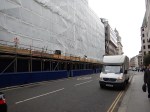


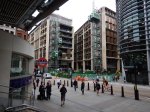
What is happening on the surface, is only small beer compasred to what is going on under the ground.
This visualisation, shows what the new Bank station will look like.
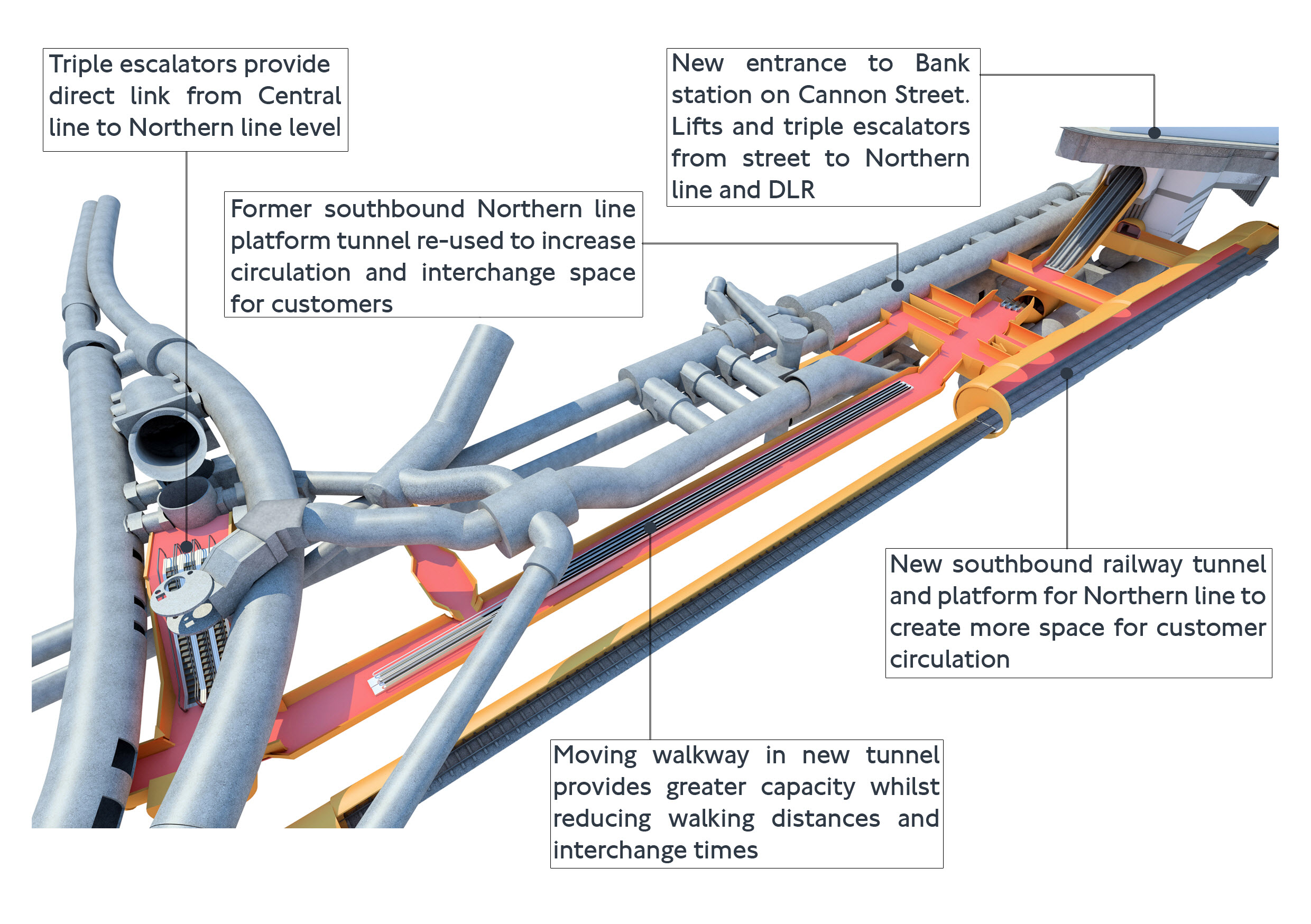
Completion dates look like 2017 for the Walbrook entrance and 2021 for the completed Bank station.
I think that this development will have one of the largest effects of any transport-related project in London.
A Trip To Halifax
These are pictures I took on a short visit to Halifax.
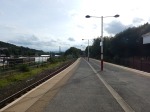
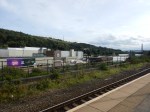

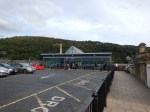




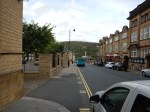
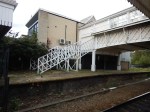
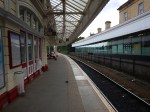
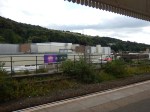
There is certainly work to do, to make the place somewhere that will attract visitors.
The centrepiece is the restoration of the Grade 1 Listed Piece Hall, Lets hope the redevelopment does what the restoration of Albert Dock did for Liverpool’s waterside.
I had hoped to find something hot to drink. All I found was a very bad hot chocolate in the station.
Surely, something better could be done in the green space by the station.
Bradford Low Moor Station
Bradford Low Moor station was scheduled to open in Sprint 2016.




At the moment it is just a building site sitting by the railway.
The opening date is now set at May 2017.
The station is already on this Google Map.

Bradford Low Moor Station
I hope people don’t travel there expecting to find a train, because they see the symbol on the map.
Sittingbourne Station
Sittingbourne station is the next major station after Rainham station, as you go East on the Chatham Main line.
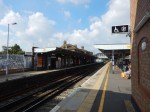
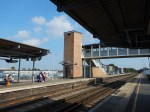
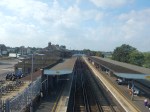
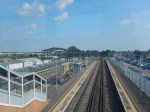
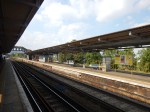
It doesn’t want for much more, as it has three long platforms, a step-free footbridge and most of the things a good station needs.
It is the station that connects the Sheerness Line to the Chatham Main Line.
So would it be a better idea to run the Thameslink service to Sittingbourne instead of Rainham?
The trains could even co-ordinate with the shuttle train to Sheerness.
It is a possibility, but Sittingbourne has five trains per hour (tph) going into London and they all pass over the bottleneck of the the level crossing at Rainham station.
I discuss this more in What Do You Do With A Problem Like Sheppey?
Rainham (Kent) Station
There are two stations with the same name and this Rainham station is the one in Kent, which is to the East of Gillingham on the Chatham Main Line.
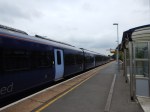
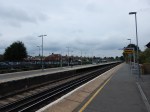

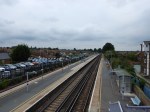
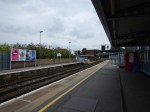


It is a busy station, which has these typical off-peak services.
- 2 trains per hour (tph) to London St Pancras via Chatham and Ebbsfleet International
- 3 tph to London Victoria via Chatham and Bromley South (1ph calling at Denmark Hill)
- 1 tph to Sittingbourne and Faversham only
- 2 tph to Dover Priory via Canterbury East
- 2 tph to Ramsgate via Margate
Adding them up gives 5 tph in both directions, with a choice of Highspeed or traditional services to and from two London termini.
The station has benefited from the East Kent Resignalling Project. This is said in Wikipedia.
Rainham has a new bay platform off the up-line, which can accommodate a 12-car train, labelled Platform 0. It is now being used as a Terminus for a couple of evening rush hour trains.
It would appear to be an extra platform, that has been fitted well into the layout of the station.
If Thameslink does run a service from Rainham to Luton from 2018, the platform would have no difficulty turning the two trains per hour.
This will give a 2 tph service to three London termini; London Bridge, Blackfriars and St. Pancras on its way to Luton.
The level crossing at the station, probably limits the number of trains through Rainham station, despite the fact that some may be timed to pass in the station, which reduces the number of times it closes to road traffic.
So using the bay platform 0 for Thameslink, increases the frequency to the West of the station to 7 tph, but leaves that through the crossing at 5 tph.
It seems to be a sensible way to increase train frequencies without choking road traffic too much.
I very much like the thinking behind the design.
Related Posts
A Design Crime – Ebbsfleet International Station
Between Abbey Wood And Belvedere Stations
Connecting North Kent And The Medway Towns To Ebbsfleet International Station
Extending Crossrail To Gravesend
What Do You Do With A Problem Like Sheppey?
New Stations On The Chingford Branch Line
I have pulled this post out of What Might Have Been At Walthamstow And Woodford, as I want to have a series of linked posts that described the various ways that the Chingford Branch Line could be improved.
In the Future Developments section of the Wikipedia entry for the Chingford Branch, it is said that there may be a station at both Forest Road and Chingford Hatch, either side of Highams Park station.
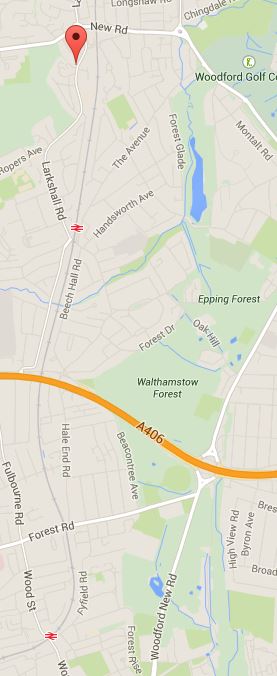
This map shows the area.
Around Highams Park
The red arrow indicates Chingford Hatch, with the two stations shown being Highams Park in the middle and Wood Street at the bottom.
Chingford Hatch Station
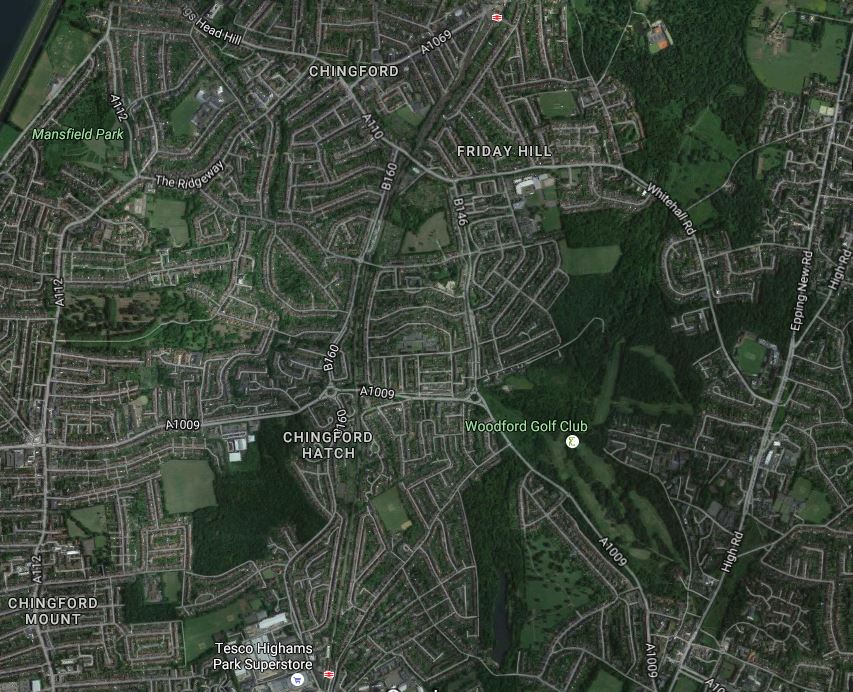
This Google Map shows the location of Chingford Hatch between Highams Park and Chingford stations.
Chingford Hatch
Chingford station is at the top and Highams Park station is st the bottom.
I suspect if the station is built, it will be somewhere near the roundabout. The railway is a short distance to the East.
As the railway appears to be on a bridge, it won’t be a simple station to build.
Forest Road Station
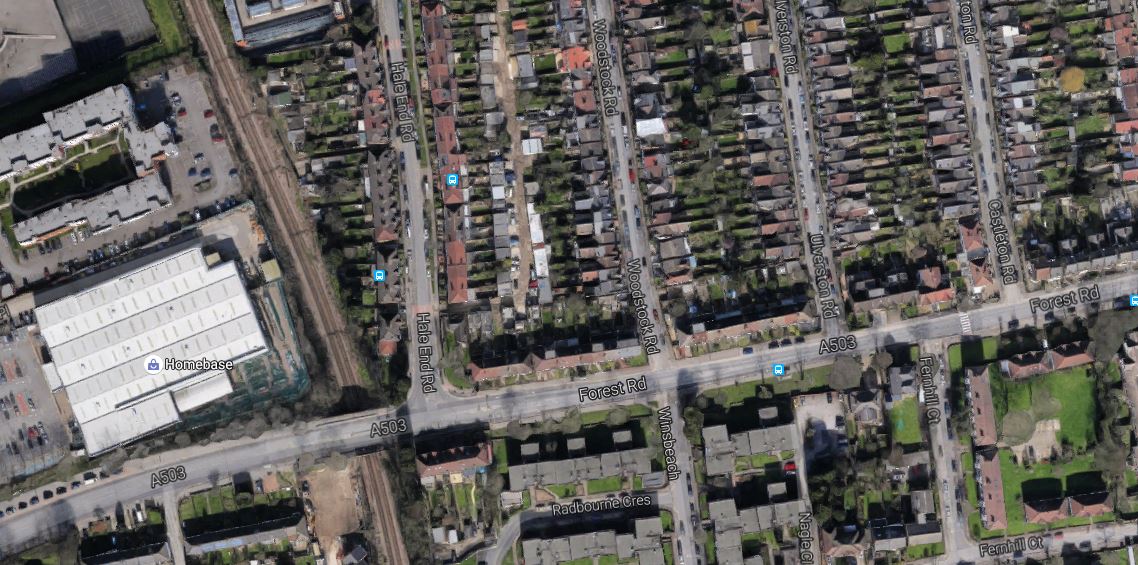
This Google Map shows the probable location of a new station on Forest Road in Walthamstow.
Forest Road Station
The station would probably be built where Forest Road crosses the railway line.
I suspect that if the station was built, it would be a simple affair with platforms on either side of the current line.
At present there is no more information on either station.
Walthamstow Village Station
This Google Map shows the up-and-coming area of Walthamstow Village.

Walthamstow Village
The railway is in a deep cutting and I suspect despite what the locals might think a station wouldn’t be practical.
But I suspect, there would be space for a reversing siding, that could be used by trains reversing at Walthamstow Central station.
Conclusion
Both proposals look sound, but passenger statistics will define if new stations are built.
Related Posts
Improving The Chingford Branch Line
Could Electrification Be Removed From The Chingford Branch Line?
Could Reversing Sidings Be Used On The Chingford Branch Line?
Could The Hall Farm Curve Be Built Without Electrification?
Crossrail 2 And The Chingford Branch Line
Rumours Of Curves In Walthamstow
Will Walthamstow Central Station On The Victoria Line Be Expanded?
Wikipedia – Chingford Branch Line
 The Anonymous Widower