A Second New Stations Fund Is Launched
This article in the European Railway Review is entitled £20m fund for new railway stations across England and Wales.
The twenty million pounds is the second New Stations Fund, which provides up to seventy-five percent of the cost of a new or reopened station.
The first fund was used to help fund the following stations.
- Ilkeston in Derbyshire – New station – Opening in Autumn 2016
- Kenilworth near Coventry – New station – Opening in Summer 2017
- Lea Bridge in London – Reopened station – Opened in May 2016
- Newcourt in Devon – New station – Opened in June 2015
- Pye Corner, Newport – New station – Opened in December 2014.
Note that all stations are on existing railway lines.
Incidentally, I use Lea Bridge station about three or four times a month, as I have a direct bus connection to the station to connect to trains along the Lea Valley.
Which stations in Wikipedia’s lkist of possible proposed stations, do I think will be funded by the next New Station Fund?
These are a few that I think could be possible.
- Aldridge in Walsall
- Ashton Gate in Bristol
- Caerleon in Newport
- Castle Bromwich in Birmingham
- Charfield in Gloucestershire
- Chipping Sodbury in Gloucestershire
- Cottam in Preston
- Corsham in Wiltshire
- Cwm in Monmouthshire
- Egginswell in Devon
- Finningley in South Yorkshire
- Haxby in York
- Henbury in Bristol
- Horfield in Bristol
- Leiston in Suffolk
- Long Ashton in Somerset
- Marsh Barton in Devon
- North Filton in Bristol
- Park Farm in Kent
- Portishead in Bristol
- Soham in Cambridgeshire
- Town Meadow in Wirral
- Wisbech in Cambridgeshire
- Wootton Bassett in Wiltshire
Note.
- Bristol seems to have a lot of possibilities, but that is because they are creating MetroWest.
- I have rejected several schemes as they are rather large and I reckpon, there is a practical limit of a station costing say five million pounds.
- I have also rejected stations, where a whole line like the Camp Hill Line or the Wealden Line is proposed to be reopened.
- Leiston, Soham and Wisbech are additions of my own, based on my thoughts in Making Sense Of The New East Anglia Franchise.
- There are no new Welsh proposals outside South-East Wales, which got Pye Corner in the first New Stations Fund.
I suspect that now the fund has been announced, some good proposals will be put forward.
Out of interest, these are the numbers of new and reopened stations of the last few years.
- 2013 – 1
- 2014 – 3
- 2015 – 12
- 2016 – 4
I think that 2015 has the highest total, due to the reopening of the Borders Railway.
A Walk Between Colchester’s Two Stations
I’ve not been to Colchester many times.
Once I remember, I had to go to Celia’s Chambers on North Hill and for some reason I took the train and walked. I think, it could have been that we were going out with friends from the Chambers and she must have driven me home. But it was probably around twenty years ago.
So as I’d certainly never been to Colchester Town station and wanted to get some photos for Making Sense Of The New East Anglia Franchise, I thought it might be a please to go and have a walk to Colchester station to get the train home.
This Google Map shows the two stations and the town.
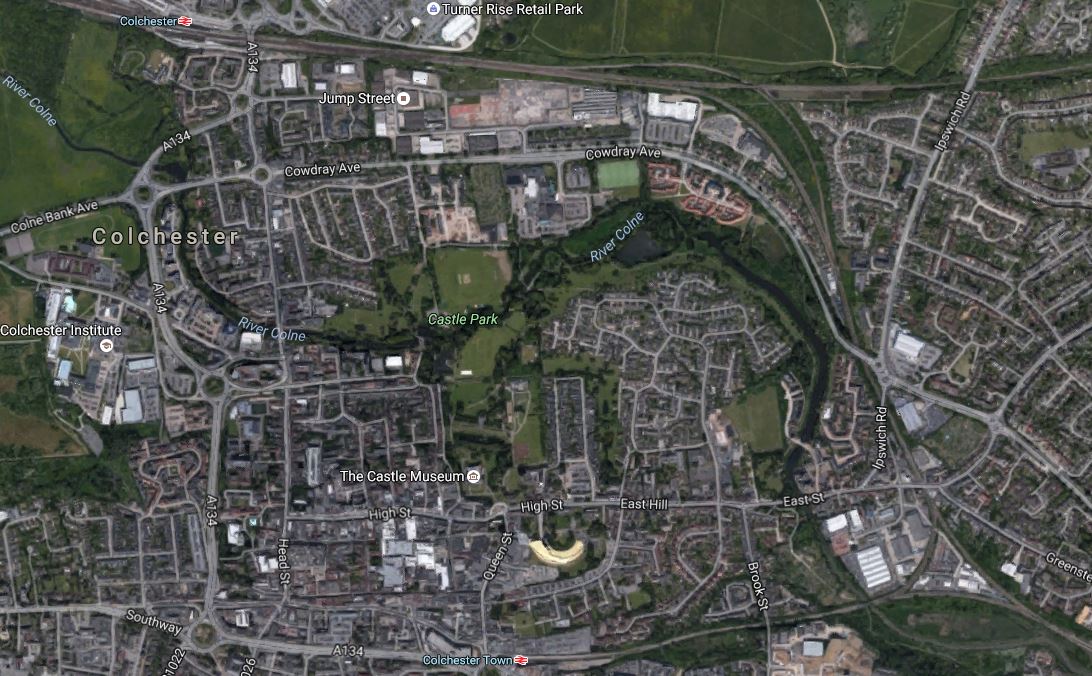
Colchester Stations
Colchester station is at the top, with the Great Eastern Main Line going through in a West-East direction, from Chelmsford to Ipswich.
The Sunshine Coast Line breaks off the main line, turns South and goes out of the South-East corner of the map.
There is a branch from this line, that goes from a triangular junction to Colchester Town station, which is in the midde at the bottom of the map.
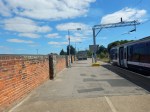
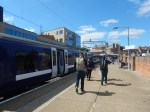
These are pictures, I took on my walk.

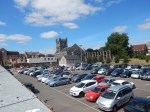
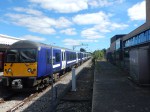
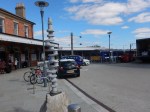




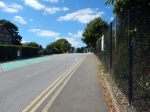
Note.
- It is not a very well-signposted route.
- There is plenty of space at Colchester Town station and it would be possible to walk across between the two platforms.
- It is quite a steep walk up from both stations.
- What didn’t help, was that the Town Centre was being landscaped and there was builders rubbish everywhere.
If you look at the Google Map, I’m certain there must be a better walking route, than the one I used. But then if Councils put up decent walking maps and routes, the natives complain, as they say they know their town and city well.
The Composite Platform 1 At Tulse Hill Station
Tulse Hill station is a typical South London station, that has been upgraded several times and probably if money was no object, would be knocked down and rebuilt.
But that would be expensive, so they have replaced Platform 1 with a composite one.
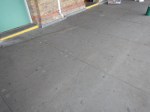

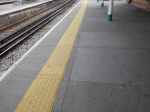

This page from the Dura Composites web site, says more about the installation. Reading about the platforms, the following advantages are mentioned.
- The platform doesn’t suffer from compaction issues.
- The surface is very passenger-friendly, with less likelihood of slips and falls.
- The yellow edge line is build into the platform.
- The stepping distance can be reduced.
- Installation of the platform is faster and needs less line closures.
- There are plans to install LED lights in the these platforms for safety reasons.
Overall the platform has a lower lifetime cost.
This to me is a classic innovation, that makes life easier and better for passengers, train companies and station builders.
Something Must Be Done About Cambridge Station
Cambridge station used to be an easy station to use, in that, when you arrived, you either got a taxi from outside the station or walked across the road to get a bus to the centre.
Since the dreaded busway has been built, the buses are about as well-organised as the Labour Party, with information designed to confuse visitors.
Yesterday, it was particularly bad, when I decided to pop in to the City to have a coffee with a friend, on my way to football at Ipswich. There wasn’t a bus in sight and the queue for the taxis was totally blocking pedestrians wanting to get out of the station.
In fact, I took about five minutes to actually get off the platform as it was so busy.
In the end, I walked into the City Centre.
Getting back, I was running late, so I decided to take a bus. But could I find one? No!
So in the end, I took a taxi, which had to take a very roundabout route. Getting into the station was just as bad as getting out had been, but I caught my train with a couple of minutes to spare.
The train is the big improvement on the line between Cambridge and Ipswich.
In 2010, this was a typical train on the route.

Gerald Fiennes and Delia Smith at Dullingham
At least that day, it was two Class 153 trains, when often it was just one crowded carriage.
Yesterday, the train was a comfortable three-car Class 170 train.

The First Ipswich-Cambridge Class 170 at Cambridge
This is a lot better and with the new franchise in October, I think it could be signalled, as getting better again.
But all of this increase in capacity, is straining Cambridge station even further.
At present, the problems at Cambridge seem to be caused by too many people going in different directions, whose routes seem to conflict with each other. Many of these are first time visitors and foreign topurists, who just wander aimlessly around, causing even more conflict.
Cambridge North station, when it eventually opens, might help, as many will cycle and drive to the new station. It will also make it a lot easy to get to the North of the City.
I think, that if most Cambridge trains serve both stations in the future, I’ll go to Cambridge North and get a bus into the City Centre to avoid the scrum at Cambridge station, which I’m sure will get worse, as more and more trains are scheduled between London and Cambridge. At least Thameslink have decided to go to Cambridge North.
One of the problems is that Cambridge station is on a cramped site, which is not an easy walk to the City Centre for the average visitor.

Cambridge Station
The walking route to the centre is along Station Road and then Hills Road, where the payments are crowded and not very wide.
It is my view that something radical needs to be done.
But Cambridge’s problem is not unique and getting from the station to the town or city centre is a problem in many places like Bristol, Leicester, Norwich and Oxford to name just four. Nottingham and Sheffield have used trams to solve the problem, but I don’t think that would work for everyone, as the disruption of building would be just too much.
So what would I do at Cambridge?
It must be a nightmare living on the South-East side of the station opposite to the main station buildings. An entrance on the other side of the station would surely help.
If you take Euston, Kings Cross, Liverpool Lime Street, Sheffield and a few other stations, the area in front of the station has been turned into a public space, so that people can gather their thoughts and plan their next move. It would appear from the amount of building at Cambridge station, that this is now impossible.
A decent walking and cycling route to the centre must be created.
In the future, I feel that Cambridge probably needs an innovative Street Tram, as do many other places.
It would have the following characteristics.
- It would be battery-powered and charged at each end of the route.
- It would be double-ended, so it would just reverse at the end of the route.
- It could be on rails or rubber tyres on a single-line segregated track.
- The vehicle would have three or four segments to give a high capacity.
- It doesn’t have to be single-deck vehicles.
- Why not double-deck vehicles with panoramic windows for tourists?
- It would be free.
If a passing loop could be built at half-way then the route could be run by two vehicles. Or in Cambridge’s case perhaps a different route could be used in each direction.
The nearest thing to what I have described is the 1.4 km long MetroCentro in Seville.
I would feel that a track-less solution based on bus-technology might be better, as in a congested City Centre ;like Cambridge the route could be flexible.
I’m All For More Of This!
This article from Global Rail News is entitled Toronto park plan for downtown railway.
The article describes how Toronto wants to purchase the air rights over a 21-acre railway through the City Centre and put a park on the top.
There are certainly places in the UK, where this approach can be used to create parts, housing or commercial buildings over the railway.
Especially in Londom, where land is so expensive.
Look at this Google Map of the rail lines into Liverpool Street as they pass Shoreditch High Street station on the East London Line.
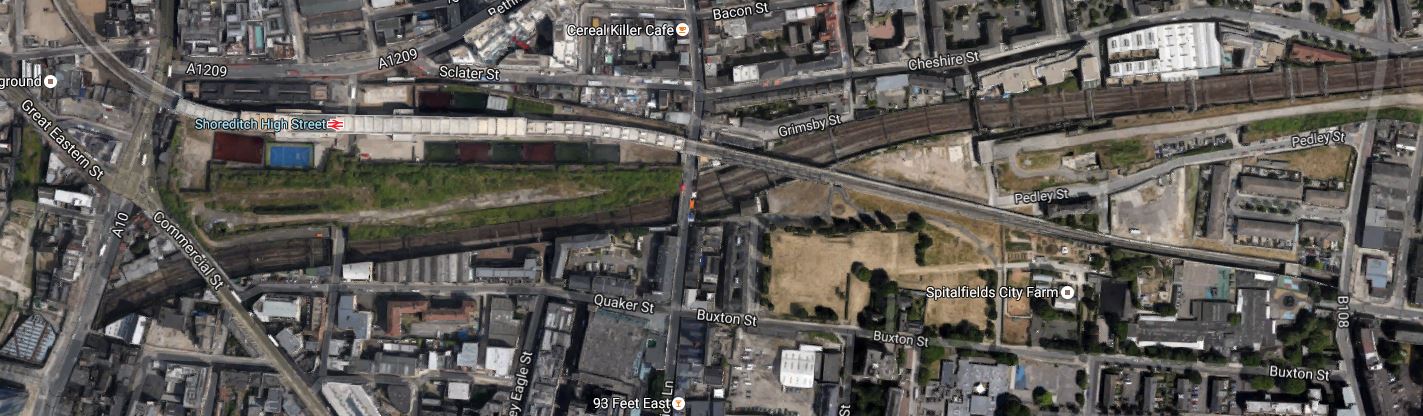
Lines Through Shoreditch
Surely, a better use could be found for the space above this railway. I estimate this space must be about ten hectares and if properly developed could contain lots of buildings and a green walkway connecting Shoreditch High Street station to Liverpool Street station.
And what about the waste of space that is Euston station?
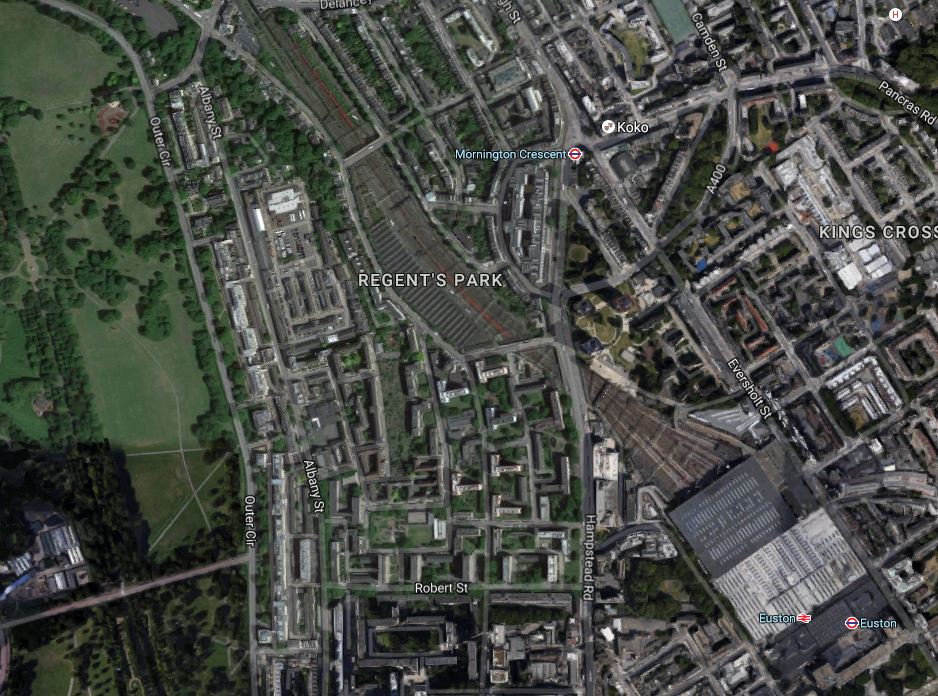
Euston Station And The Approach Lines
Hopefully adding HS2 to the station will improve things.
A Glimpse Of London’s Future
London will soon be getting Crossrail, but Leipzig already has a cross-city underground railway called the Leipzig City Tunnel, which is the centrepiece of the S-Bahn Mitteldeutschland.
These are a collection of pictures taken of the various stations in the tunnel and on the surface sections of the lines.

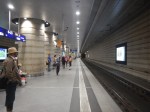


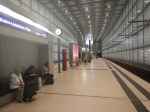
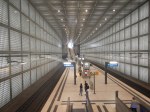
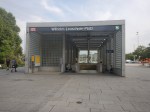



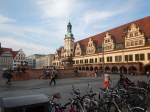

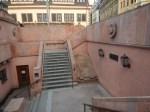



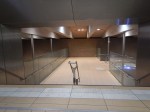
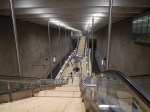

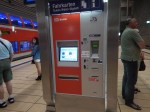

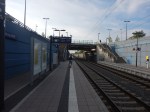

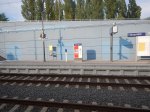
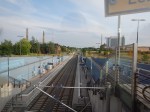
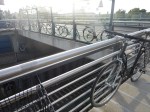
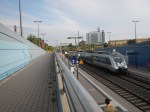
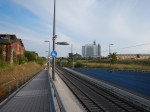

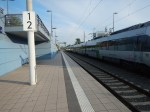

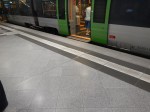
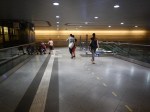
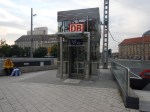
Unlike Crossrail, which is considered one line with two branches at both ends, there are several railways through the tunnel.
Wikiedia has a section on the Operating Schedule.
This is said.
It was planned that each hour and in each direction, there were up to ten S-Bahn, two regional trains and one express (as of July 2007)
There would appear to be seven S-Bahn routes, with intervals of between 30 and 120 minutes. As Crossrail, Thameslink and the East London Line in London, are all planned to or could handle twenty-four trains an hour, it does seem the Germans do things differently.
Note the following.
- The Seaside Park Hotel, where I stayed was about 200 metres from the trains.
- The line certainly has some spectacular stations.
- Central stations in the tunnel appear to be island platforms.
- Ticket machines were on the platforms, where they are really needed.
- Bicycles were everywhere underground.
- There are no platform-edge doors.
- Leipzig Markt Station was of an older era on the surface.
- There tended to be two escalators and steps to descend to and ascend from the trains. That is usually, the design-on-the-cheap problem.
- The one surface station I visited, Liepzig MDR, wasn’t step-free.
- The frequency through the Leipzig ity Tunnel, is low compared to the sixteen trains per hour through the East London Line and very low compared to that proposed for Crossrail and Thameslink.
I have a feeling that because it was designed a few years before Crossrail and uses older, refurbished rolling-stock, that certain features of the line are not as good as others.
Looking at the three systems; Leipzig, Crossrail and Thameslink, I feel that to get the most out of an expensive tunnel, you must do the following.
- Use trains designed specially for the tunnel.
- Design the trains for fast entry and exit.
- Make access between surface and platforms fast and with a large capacity.
- Use double-ended stations to ease passenger journeys.
- Have a large selection of routes through the tunnel, to get a maximum return for the tunnel. It may be that Crossrail needs more destinations.
- Use island platforms if possible.
- Make all stations step-free.
I think too that after seeing Leipzig, there are implications for London.
Bicycles
One problem for London, shown up by the Leipzig system, is what to do with bicycles on the train. These seem to be allowed at all times in Leipzig, but this page on the Thameslink web site, says that we do things differently.
More Destinations
As I indicated earlier, I think, that to maximise return on the massive investment of the tunnel, that Crossrail needs more routes and destinations, as Leipzig and Thameslink have.
As things stand, Crossrail intends to run a service like this according to Wikipedia.
The Elizabeth line will run a familiar London Underground all-stops service in the core section, but the western section will have non-stopping stations – like the Metropolitan line. The Eastern section has extra peak hour services that will either not enter the core section or that will be non-stopping at some stations. Similar to the Bakerloo line’s outer sections, the Elizabeth line will share platforms and rails with other services outside the tunnelled sections. About two-thirds of all Elizabeth line westbound trains will loop back after Paddington, about one third of peak-hour Elizabeth line trains to/from the north-east section will start/end at Liverpool Street main line platforms bypassing Whitechapel.
So it looks like if 24 trains per hour go through the centre tunnel, that sixteen of them will turn-back at Paddington.
That looks like a waste of resources to me.
Suggestions have been for services in the West to go.
- Up the West Coast Main Line to Watford, Tring and Milton Keynes.
- Along the Chiltern Line to West Ruislip and High Wycombe.
I wouldn’t be surprised if a couple of trains an hour went to Oxford.
The East is more problematic, as the only suitable extension is probably Southend, unless the Great Eastern Main Line is four-tracked, which would be very unlikely.
Kent is more fruitful territory, as an extension to Gravesend has been safeguarded. But surely Ebbsfleet with its Continental links would be better.
The Long Distance Crossrail Train
The Class 345 trains that will be used on Crossrail are Bombardier Aventras. According to serious reports, these trains could have the following features if needed.
- 200 kph capability.
- Metro, commuter or long-distance interior.
- 750 VDC, 25 KVAC or battery power.
- The ability to fit the platform-edge doors in Central London.
So you might reserve a few paths through Central London for long distance trains, if passenger statistics showed it would be profitable.
Imagine being able to get a train from Cardiff to Ebbsfleet for the Continent or from Birmingham to Southend.
Obviously services would only be provided if there was seen to be a demand.
But Crossrail’s and Bombardier’s engineers have designed the tools, so that many East-West journeys are possible.
Could Beckenham Junction To Birkbeck Be Run On The Zwickau Model?
Look at this map from carto.metro.free.fr, which shows the lines to the west of Beckenham Junction station.
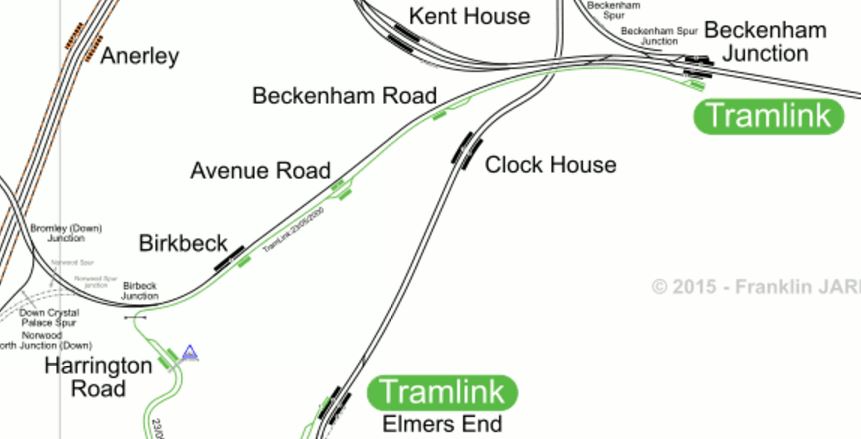
Lines To The West Of Beckhenham Junction Station
At Beckenham Junction station, there are the following platforms.
- Two through platforms.
- Two Westward-facing bay platforms for trains.
- Two Westward-facing bay platforms for the Tramlink.
But the real problem of operation of the section of line through Beckenham Junction station is that, both the main line and tram line to Birkbeck station are bi-directional, which must limit capacity.
Running Under The Zwickau Model
After what I saw at Zwickau and wrote about in Riding The Vogtlandbahn, I feel that a similar solution could be applied to this section of line.
The following would be done.
- The current Tramlink line would be for all Westbound trams and trains.
- The current heavy rail line would be for all Eastbound trams and trains.
- Both lines would have no third rail electrification and would be electrified for trams only.
- All trams using the line would be identical to now.
- All trains using the line would need to have onboard energy storage. I suspect some Class 377 trains could be modified to work the required services.
- All platforms would need to be adjusted to give step-free access to the two type of vehicles.
- There would need to be adjustment to the crossings and tram electrification at Beckenham Junction.
The whole plan is very similar to that carried out and working successfully between Zwickau Hbf and Zwickau Zentrum, except that the Germans have the problems of different tram and train gauges and use diesel multiple units.
The Current Services
The typical off-peak service frequency is:
- 4tph (trains per hour) to London Victoria (Southeastern)
- 2tph to London Bridge via Crystal Palace (Southern)
- 4tph to Orpington (Southeastern)
The Orpington to Victoria trains would be unaffected, as they don’t use the changed section of line.
The London Bridge to Beckenham Junction stations would need to be operated by an IPEMU or a train with onboard energy storage, as they’d need the power between Beckenham Junction and Birkbeck stations.
The tram services would be generally unaffected, although they would need to cross over from the Eastbound line into Beckenham Junction, as trains do now.
Advantages
I can’t believe that creating a double-track railway, that can be used by both the current trams and say Class 377 trains with an IPEMU capability, doesn’t have advantages.
The passing loops on the tram line would not be needed, as Eastbound and Westbound trams would be on different lines.
The double-tracking should reduce train delays.
It would allow the tram frequency to Beckenham Junction to be increased., which might enable a whole lot of possibilities.
I do feel though that the biggest advantages might be enabled, if Birkbeck, Avenue Road and Beckenham Road became single island platforms between the tracks. This would enable.
- Same platform interchange.
- Train passengers going East could change to a tram going West and vice-versa.
- A single lift could be installed at Birkbeck, Avenue Road and Beckenham Road stations for step-free access.
St. Enoch Station
St. Enoch station is on the Glasgow Subway.
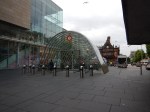
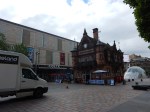
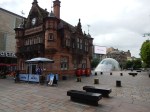
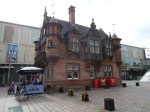
It is one of the buildings by the architect; James Miller
Learning To Love Stations Again
The title of this post is that of an article on the Rail Staff web site.
This is the introductory paragraph.
The Great British public are learning to love railway stations again, says Rob Naybour, one of the founding partners of architects Weston Williamson. While so many buildings, which have for generations served as the hubs of their communities, are being repurposed, railway stations have endured and are rediscovering their role in our towns and cities.
The article is well worth reading.
The Platform For The Future
The June 2016 Edition of Modern Railways has a section about The Railway Industry Innovation Awards 2016.
One is labelled the Platform for the Future.
That probably sounds rather boring, but I’m a great believer in disruptive technology and using new and innovative methods to replace something that is rather dull, with something that is better, quicker to be installed and get working and more affordable.
This is said.
Abellio Greater Anglia and Dura have pioneered the use of a composite platform at Needham Market station in Suffolk, which was installed in just 36 hours.
This installation might be considered surprising as Needham Market station is a Grade II Listed building. So it can’t look like.
A monstrous carbuncle on the face of a much-loved and elegant friend.
But the product comes with these advantages.
- The design life is sixty years.
- A financial saving of 25% is reported.
- As the platforms are built in a factory, the quality should be tip-top.
- Other features like Harrington Humps could be built-in.
Hopefully, this would dissuade even the most determined member of the Heritage Taliban from objecting.
There’s more here on the Dura website. There’s also this video, of the platform being installed at Needham Market station.
This is a picture I took from a p[passing train.
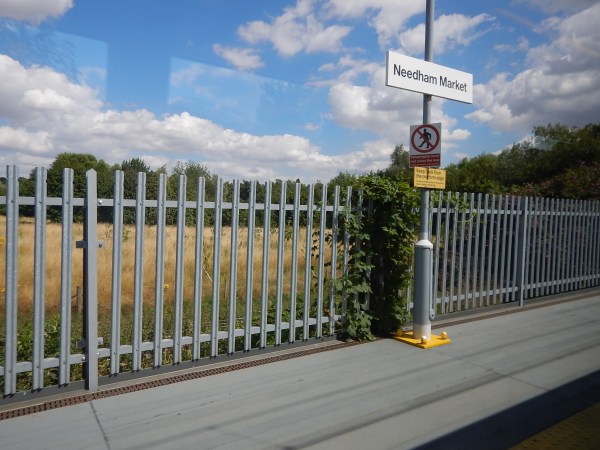
It looks good and who would think it was long-life hard-wearing plastic.
Only members of the Taliban tendency of the Green and Heritage lobbies would probably object!
I think that this product could find lots of applications, in traditional heavy rail, light rail and tramways. Certainly, it could be used to create some of the needed extensions to platforms on the Gospel Oak to Barking Line.
Look at these pictures taken at Harringay Green Lanes station.
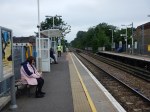
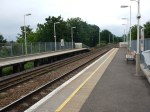

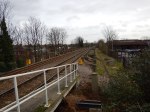
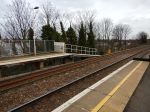
Would composite platforms make extending these platforms an easier process?
The company might also have the solution to the dual-height platforms, that some people feel are needed for tram-trains. The Germans certainly use stepped platforms so that different types of tram-trains have step-free access.
In fact, why restrict it to rail applications?
It could be used to provide a disabled viewing platform at somewhere like a horse racecourse or other sporting venue.
Or how about helping to create step-free bus stops, that I wrote about in One Of London’s Step-Free Bus Stops?
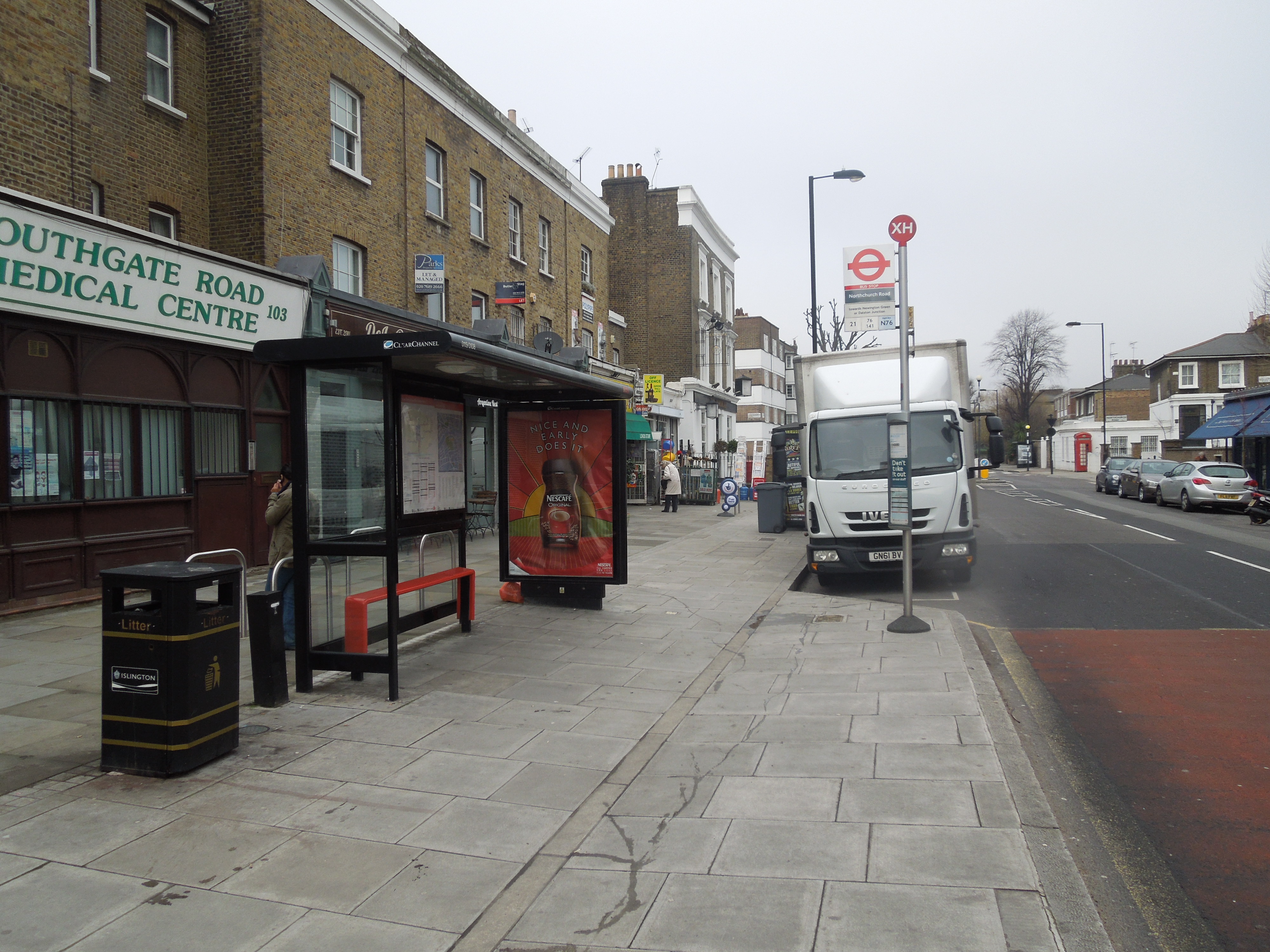
One Of London’s Step-Free Bus Stops
It’s certainly a very good innovation.
 The Anonymous Widower