Zero Carbon? Not Here! Carbon-Fibre Bogie Frame
When I was at University in the 1960s, the big UK engineering project was the Rolls-Royce RB-211 turbofan engine.
One of the features of the engine was a carbon-fibre fan blade, which saved weight and thus made the engine lighter and more efficient.
However the blades were found to shatter with bird strikes and titanium had to be used instead.
At Liverpool University, we knew something was wrong, as a fellow student on our course was the son of the Manager of Tesco in Derby. What used to happen to Tesco’s out-of-date chickens? They ended up at Rolls-Royce, where they were used to test jet engines for bird-strikes. He told us the story of the failed testing one liquid lunch-time.
That was over fifty years ago and the RB-211 has morphed into the successful Rolls-Royce Trent engine, which first ran in 1990 and is still going strong.
Carbon-fibre has gone its own way and is used in many applications from cars to tennis rackets and golf clubs.
The title of this post is the same as that of this article on Rail Engineer.
The article describes work at Birmingham University to create a carbon-fibre bogie frame.
This paragraph from the article describes the outcome.
A major achievement is that the mass of the frame as built is 350kg, compared to the steel equivalent of 936kg. By the time the metal fittings were installed and paint applied, the mass had increased to 940kg compared with the steel equivalent of 1468kg, a reduction of over half a tonne per bogie.
Lighter bogies mean lower track-access charges.
I will be interesting to see how this project ends, when a prototype has been running in a real train.
Get Set For Max Return, Says Boeing
The title of this post is the same as this article in The Times.
This is the introductory paragraph.
Boeing is to fire up its 737 Max production line by May as it seeks to return the aircraft to service by the middle of the year.
Two points from the article.
- Some suppliers have been asked to start shipping parts from April.
- Boeing’s share price has risen, by 34.3%
But given the shadow over air travel caused by COVID-19, is restarting production a wise move?
I certainly don’t trust the Boeing 737 MAX!
But then if you live in London, I don’t think, you will need to fly in one, as there are a good selection of short haul trains and airlines that fly the smaller Airbuses.
I probably won’t fly short-haul again, until an airline starts flying electric aircraft.
Coronavirus Pushes Switch From Cash To Card Payment
The title of this post is the same as that as this article on Railway Gazette.
This is the introductory paragraph.
Cash sales of tickets on the Metlink transport network in Greater Wellington will end on March 23, in a move which Metlink said was designed ‘to stay one step ahead of Covid-19 and give our passengers and staff more peace of mind’.
Should all buses, trams and trains go cash-free and contactless in the UK?
Travel Industry Confirms Rail ‘Renaissance’ In Europe
The title of this post is the same as that of this article on Railway Gazette.
This is the introductory paragraph.
Assertions that long-distance rail services in Europe are rapidly becoming more popular as passengers eschew flying for environmental reasons were amply confirmed at the Rail Innovation Forum organised by Amadeus at its head office near Nice on October 9-10.
The article also gives these points.
- Swiss Federal Railways are reporting a 26 % year-on-year increase in passengers for the first quarter of 2019 for night trains.
- Sweden is reporting a 12 % increase in rail traffic and a 4 % drop in air traffic.
- Flight bookings across Scandinavia are down by 10 %.
- German long-distance rail travel is rising.
This all seems good news for carbon emissions.
Rail Passengers Can Now Get From Farnworth To London In Two And A Half Hours
The title of this post is the same as that on this article on This Is Lancashire.
It may seem to be a bit of a parochial story for those near Farnworth station in Greater Manchester, but it is a problem that sffects many rail passengers all over the UK.
From Farnworth, the quickest way to London, is not the obvious one to go to Manchester Piccadilly.
This may involve changes of trains and busy trains in the Manchester Rush Hour.
Locals find a better way, is to take a train the other way and catch a train from Wigan North Western., where the hardest thing is to decide, whether you want a coffee, as you walk across the platform to catch the London train.
The on-line timetable now has been fixed to offer this route in addition.
These computer-knows-best routes crop up everywhere.
If I want to get to Victoria station from the bus stop around the corner, the best way is to catch a 30 bus to Highbury & Isligton station. There is a walk through the everlasting road-works at the station and a long walk in a tunnel to get to the platform, but it works.
However, the recommended route is to take a 38 bus to Essex Road station and then go out of London, by one stop to Highbury & Islington station.
This route has three problems.
- There is a double-crossing of busy roads at Essex Road station.
- Essex Road station was last cleaned and given a makeover, when King George was on the throne.
- The interchange at Highbury & Islington station is not for the unfit or anybody with a baggagge, bike or buggy
Only a computer working without human help, could design such a bad route.
As at Farnworth and with me in London, local knowledge is everything.
Sorting Out Manchester’s Routes
Northern Trains may have been thinking about passengers getting to the less busy stations.
They have introduced three new services that connect the West Coast Main Line and Greater Manchester.
- Wigan North Western and Alderly Edge
- Wigan North Western and Stalybridge
- Chester and Leeds via Warrington Bank Quay, Manchester Victoria, Rochdale, Hebden Bridge, Halifax and Bradford.
The latter route is an interesting one, as not only does it offer some good journey possibilities, but it is a scenic route through the Pennines.
£100m Train Test Complex Plans For Neath Valley Backed
The title of this post is the same as that of this article on the BBC.
This much-needed project, which some wag has called Project Hornby, seems to be moving on..
This brief description is from the article.
The complex would allow trains to be tested on special tracks – laid out on 4.5 mile (7.3km) and two mile (3.1km) ovals – at speeds of up to 100mph (160kph).
It will certainly test their ability to go round corners.
Hopefully, the test track will shorten the time, it takes new and updated trains into service.
Newquay Link With Heathrow Takes Off Courtesy Of Taxpayer
The title of this post is the same as that of an article in today’s copy of The Times.
This is the first paragraph.
From next weekend air travellers will be given the equivalent of a £5 bung, courtesy of the taxpayer, to use Newquay airport in Cornwall for four flights a day both ways to Heathrow.
The article describes how the service is run under a Public Aervice Obligation or PSO.
Other air services in the UK run on this basis include.
- Stansted to Derry
- Stansted to Dundee
Similar subsidies are used in the EU and the United States.
This Google Map shows Newquay (indicated by a red marker,and the airport.
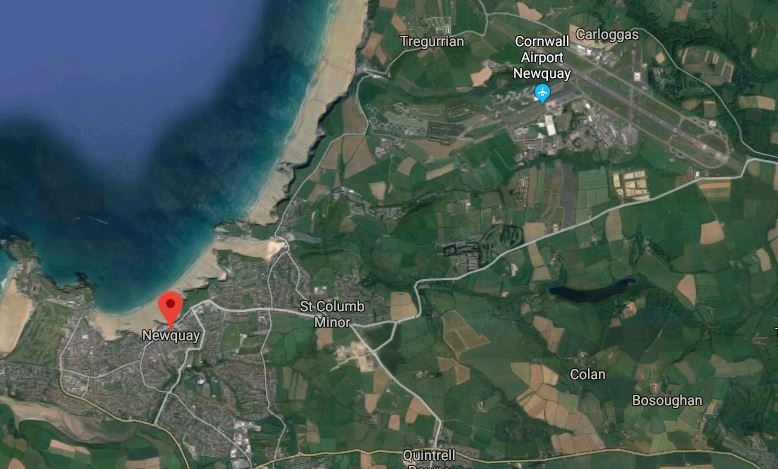
The town and the airport are about 4.3 miles apart.
This Google Map shows the centre of Newquay.
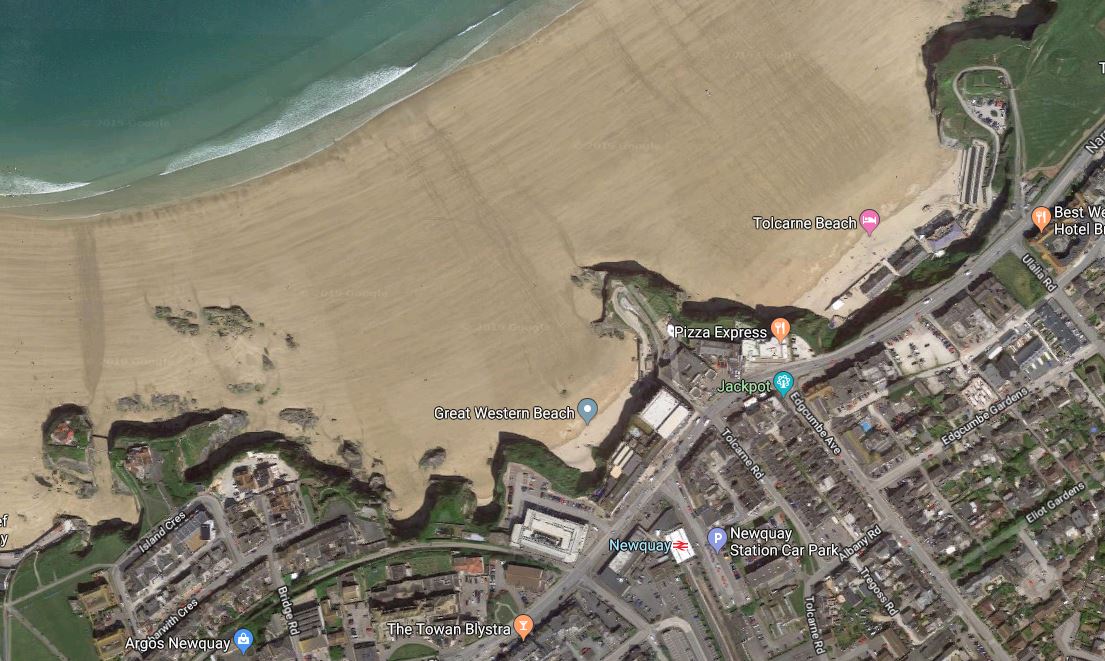
Note Newquay station in the middle of the town close to the beach.
- How rare to see a coastal town with a well-placed station.
- It does seem that in the Summer, there are more than just a rudimentary local service to the town.
- In the Summer, there are also long distance services, to London, Manchester and Scotland.
I also think, that GWR might run one of their shortened HSTs to the town from perhaps Exeter with upmarket service on board.
So I have to ask, the question, if the a subsidy for the air service is really necessary?
Finland – Estonia Tunnel Secures €15bn In Funding
The title of this post is the same as that of this article on the International Rail Journal.
This is the first paragraph.
FINEST Bay Area Development has signed a memorandum of understanding (MOU) with Touchstone Capital Partners, China, to secure €15bn in financing for construction of a 100km railway tunnel under the Gulf of Finland between Helsinki, Finland, and Tallinn, Estonia.
Linked to the planned Rail Baltica, it will mean that passengers and freight will be able to use railways between the UK and Finland.
 The Anonymous Widower