Crossrail Trains Will Have Auto-Reverse
I am a control engineer and I have worked in industrial automation on and off since I was sixteen, when I had a summer job in the electronics laboratory at Enfield Rolling Mills at Brimsdown.
One of the problems of running a railway to a high frequency, is that when you get to the terminus, the driver has to get off the train, walk to the other end and then step-up into the other cab. So a couple of minutes or so is wasted. On some lines, where drivers change over, there are delays and extra costs. It is one of the reasons, why train lines sometimes have reversing loops, like the Piccadilly Line at Heathrow and the Wirral Line underneath Liverpool.
It is also why, there has been talk of extending the Victoria Line in a large loop to a single platform at a new station under Herne Hill. I wouldn’t be surprised if when they extend the Northern Line Extension to Clapham Junction or the Bakerloo Line to Lewisham, that they use loops with single platform stations. The layout has the following advantages.
- The driver stays in his seat and drives the train normally.
- Stations are more affordable as they only have one platform.
- Passengers always go to the same platform and get the first train.
- It might be possible to dig the reversing loop with a single tunnel boring machine.
It is such a simple concept, I can’t understand why it isn’t used more.
Crossrail has a different problem in that all branches, except Heathrow, end on the surface and the Class 345 trains are two hundred metres long. So running a train every two minutes or so, means that drivers have a lot to do in the turn-round including a 200 metre walk.
The Class 345 trains are designed to incorporate auto-reverse. This extract from this article in Rail Engineer, which is entitled, Signalling Crossrail, explains the concept.
A new facility called ‘auto reverse’ is being provided at Westbourne Park (no station) for turning the 14 trains per hour in the reversing sidings. The driver selects ‘auto reverse’ on leaving Paddington station and walks back through the train, obviating the need for drivers to ‘step-up’. By the time the train gets back to Paddington (about a mile) the driver should be in the other cab ready to form the next eastbound departure.
The facility has the capability to turn round a full 30 tph service. There is just time for the driver to walk back through the train whilst in the reversing siding but doing so on departure at Paddington gives that extra time that will also help recover from perturbation.
Essentially, the driver does his walk whilst the train is travelling to the reversing siding. It must have other advantages.
- The driver can check the train as he walks.
- Cleaners can get on at the actual terminus and then get off again with the usual rubbish.
- Someone who goes to sleep, just gets an extra ride into the reversing siding and out again.
It’s a very simple piece of automation, which as the extract says, enables a full 30 tph service and makes recovery from delays easier.
The only problem, I can see is that the drivers’ unions could insist that a driver is in the cab at all times.
It would appear that the system will be used by Crossrail at Abbey Wood and Paddington.
I also suspect that the driver will have a rudimentary train controller to stop the train in an emergency.
How To Charge A Battery Train
There is a Twitter hashtag of #ipemu and this tweet has been posted, which describes something called a Railbaar from a well-known Swiss company called Furrer + Frey, who are very much involverd in transport electrification.

Railbaar
This could be the missing link in running IPEMU trains on branch lines, like those to Barrow, Lowestoft, Scarborough or Windermere. After pulling into the terminal, the battery is topped up to make sure the train gets all the way back.
As an example, current schedules at Windermere allow somewhere between six and fifteen minutes for the turnround, which is probably typical around the UK rail network
From Charing Cross To London Bridge
I took these pictures on a trip from Charing Cross station to past London Bridge station.
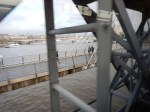
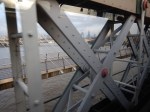


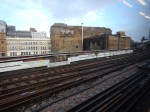
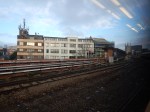
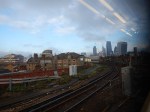


The train used the new viaduct over Borough Market.
The Future Of The Calder Valley Line
On Saturday and Sunday, I did four trips on the Calder Valley Line
- From Leeds to Burnley Manchester Road
- From Burnley Manchester Road to Manchester Victoria
- From Manchester Victoria to Hebden Bridge
- From Hebden Bridge To Leeds
The pictures aren’t as comprehensive, as I would like, but at times the rain was very heavy.
The Route And Trains
This diagram clipped from Wikipedia, shows the route of the Calder Valley Line.
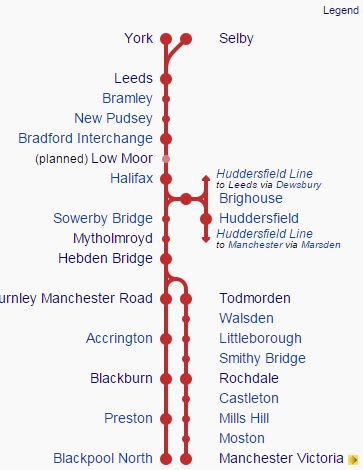
Calder Valley Line
Note.
- Since the opening of the five hundred metre long Todmorden Curve last year, there is now a direct hourly service between Blackburn and Manchester Victoria via Accrington, Burnley Manchester Road and Todmorden. I used this valuable new service on Sunday.
- Brighouse station reopened in 2000 on a link between the Calder Valley Line and the Huddersfield Line.
- The Huddersfield Line is being electrified.
- Low Moor station is being built and should open next year.
There is not much electrification.
- Leeds to York is either electrified or will be in conjunction with the Huddersfield Line electrification.
- Other routes between Leeds and the other Bradford station; Forster Square are electrified.
- Manchester Victoria station is electrified.
- Preston station is electrified and hopefully will be electrified to Blackpool North station.
The trains are a mixture of diesel Class 150 and Class 158 trains, run by Northern Rail. The Class 150s are a bit small and uncomfortable for the route and the top speeds of 75 mp for the Class 150s and 90 mph for the Class 158s, are probably not fast enough, especially as the two ends of the line have higher speed limits.
The Future
Wikipedia has a section on the Future of the Calder Valley Line. This is said.
Improvements to the line are proposed as part of Network Rail’s Northern Hub plans, which would allow for more frequent services on the line. Some services via Bradford would also be extended to Chester,Crewe, Liverpool and Manchester Airport. The Chester & Liverpool services have since been incorporated into the new Northern Rail franchise agreement – awarded to Arriva Rail North in December 2015 and due to start in April 2016, these will be marketed under the “Northern Connect” brand and operated by new 100mph DMUs once delivered. The Manchester Airport trains will follow one the Ordsall Curve is completed in 2018.
Low Moor station, between Bradford Interchange and Halifax, is due to be re-opened in 2016. A business case is being developed to re-open Elland station between Halifax and Brighouse.
There is no mention of electrification, for which the earliest dates are quoted as somewhere in the period from 2019-2024.
But there is this article is on the Shields Gazette web site, with a title of Electrification of the Calder Valley is ‘top priority’ says Rail Minister.
This article is backed up by other statements, so Network Rail and the Government are thinking seriously about electrification of the Calder Valley Line.
Network development and/or electrification is happening at both ends of the Calder Valley Line and I’ll look at both.
Network Development in Leeds and Bradford
The West Yorkshire Metro has proposed electrification of the Harrogate Line and have performed an extensive new station study.
They have already opened Apperley Bridge station and Kirkstall Forge station will follow in a few weeks.
The new stations survey mentions these new stations.
- East Leeds Parkway – This will be a Parkway station on the Selby Line and will also be a terminus for services from the West, that now terminate in Leeds.
- Elland – This will be between Halifax and Brighouse.
- Haxby – This will be on the York to Scarborough Line
- Crosshills – This will be on the Airedale Line
As I said earlier Low Moor station is being built. It will be on the unelectrified line between Bradford Interchange and Halifax. If Elland station is reopened, then it will be the other side of Halifax towards Brighouse. To serve both these new stations trains will have to serve the following stations.
- Bradford Interchange
- Low Moor
- Halifax
- Elland
- Brighouse
- Huddersfield
This is a modification to the current hourly service from Bradford Interchange to Huddersfield via Brighouse.
In the next few years hopefully, Huddersfield will be electrified, but there is no chance that this route into Bradford Interchange will be electrified at the same time. It would probably be pointless, as Bradford Interchange station, unlike Bradford Forster Square station is not electrified.
To make matters a lot more complicated, the stupid fact that Bradford has two entirely separate stations, means the following.
- There is no train, that calls at both Leeds and Bradford and goes on to Huddersfield and Manchester.
- There is no train, that calls at both Leeds and Bradford and goes on to Halifax and Hebden Bridge.
- There will be no direct train between Leeds and Low Moor.
I think other journeys of less than twenty or thirty miles in the Leeds-Bradford area will probably be either impossible or much more complicated than they should be.
Also, at the moment, two of the Leeds-Bradford routes are electrified and the Calder Valley Line is not.
The only new electrification in the area planned, will be the fast route on the Huddersfield Line from Leeds to Huddersfield via Dewsbury.
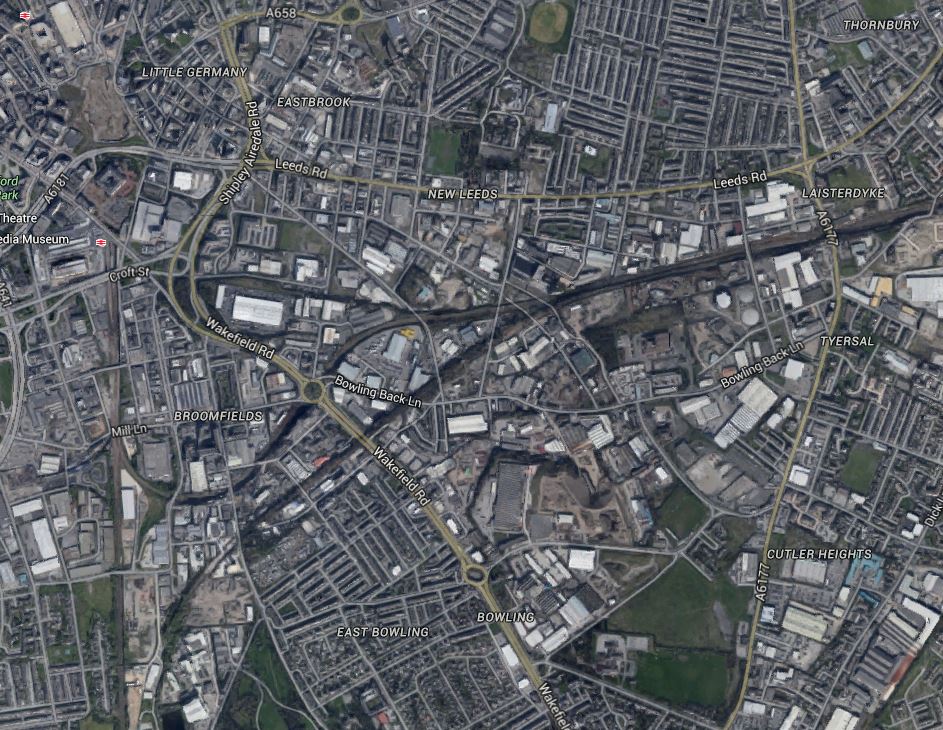
To help in comprehension, this is a Google Map, showing how the Calder Valley Line links into Bradford Interchange.
Bradford And The Calder Valley Line
Bradford Forster Square Station is in the North-East corner of the map, with Bradford Interchange below it.
Note how the Calder Valley Line comes in from Leeds in the east, before doing a turn to the north and Bradford Interchange station. After reversing in the station, trains leave the station in a southerly direction towards the new Low Moor station and onto the West. Because of the dark scar below the line, I wonder if in the past, there has been a connection by-passing the station.
It’s a mess!
The solution needs to be four-fold.
- Electrify Leeds to Huddersfield via Dewsbury. This is being done.
- Electrify the Calder Valley Line from Leeds through Bradford and Low Moor as far as Halifax.
- Electrify the link between the Calder Valley Line and the Huddersfield Line through Brighouse.
- Sort out the absurd situation of the two Bradford stations.
This would enable the West Yorkshire Metro to expand its network of electric trains in the area. It could even use IPEMUs, which would charge their batteries on the electrified core network and then provide services to other towns and cities.
- Scarborough via York and Haxby
- Hull
- Sheffield via Doncaster
- Ripon via Harrogate – I wrote about this in North Yorkshire Proposes Rail Expansion
- Colne via Skipton and a new section of track. – I wrote about this in The Todmorden Curve Has Helped A Campaign For More
I’m sure that the West Yorkshire Metro can be ambitious and will have other and better ideas.
Network Development in Lancashire
Currently, there is a lot happening at the other end of the Calder Valley Line.
- The Todmorden Curve has opened and a new hourly service runs between Blackburn and Manchester Victoria.
- Manchester Victoria station is becoming a top class station and an electrified hub for services spreading out from Manchester.
- Manchester Victoria to Liverpool Lime Street is now electrified.
- Manchester Victoria to Blackpool North via Bolton and Preston is being fully electrified.
- The Ordsall Curve is finally being built to link Manchester Piccadilly and Victoria stations.
- Merseyrail is acquiring a new fleet of trains, which may include IPEMUs.
With the devolution of local rail services to local bodies, I suspect other things will happen.
Northern Connect
Northern Connect is a new sub-brand that will be introduced by Arriva Rail North.
Services in the sub-brand using the Calder Valley Line include.
- Chester to Leeds via Warrington, Manchester Victoria and the Calder Valley
- Blackpool North to York via Preston and Leeds
- Bradford to Manchester Airport via the Calder Valley.
Will the first two services call at Bradford Interchange and will the third call at Leeds?
According to the January 2016 Edition of Modern Railways, these routes will be worked by new diesel multiple units.
The Chester and Manchester Airport services may need to be delayed until after the Ordsall Chord is opened.
But whatever happens Arriva Rail North will be running more services on the Calder Valley Line.
For commercial reasons, they would like to do the following.
- Run faster services.
- Run more frequent services.
- Run services with smart new trains.
- Run services with electric trains.
All except the last could be possible in the next few years.
The Current Infrastructure
The Calder Valley Line between Halifax and Burnley is summed up by Wikipedia like this.
For the section between Halifax and Burnley the line uses the valley of the River Calder, which in fact comprises two separate valleys with rivers of the same name, that of West Yorkshire and the Lancashire River Calder thus giving the services their name; it also follows the Rochdale Canal from Todmorden into Manchester. Since the route crosses the Pennines, there are many tunnels to negotiate en route.
I counted twelve tunnels and at least two major viaducts. The tunnels include at least three over a thousand metres, one of which; the Summit Tunnel is over 2.6 miles long.
The Summit Tunnel is one of the oldest rail tunnels in the world, is lined with 23 million bricks and has been used continuously since it opened in the 1840s.
This Google Map shows the challenging nature of the line.

Between Burnley And Todmorden
Note how the line threads its way between the hills and houses and uses a tunnel to get through.
It must be a nightmare on which to work.
As if the hills, valleys and rivers wasn’t enough, stuck in the middle of the line is the Grade II Listed Hebden Bridge station. I wrote about it in Hebden Bridge and feel that the heritage lobby will strongly resist any changes to this station.
In fact, electrification across the Pennines could bring out all the environment lobby, who feel views are more important, than jobs and prosperity.
I have a feeling, that any sane electrification engineer will look at this line between Manchester Victoria and Halifax and between Blackburn and Todmorden and say that electrifying the line is just not on!
He or she would also feel that leaving the sleeping giant of the Summit Tunnel lie would be best.
But apart from that, the line seems sound and in good order.
Electric Trains On The Calder Valley Line
If electrification of the Calder Valley Line is a top priority of politicians how can that be squared with the undoubtedly difficult nature of the work that would be required to electrify the line.
So what can be electrified?
- As I said earlier, there will be strong pressure to electrify around Leeds and Bradford. to perhaps as far as Halifax and Brighouse.
- I also suspect that electrifying from the West Coast Main Line at Preston to Blackburn would be relatively easy.
So this would leave the these gaps of lines and routes without electrification.
- Blackburn to Halifax – Around thirty miles
- Manchester Victoria to Halifax – Around thirty-five miles
- Blackburn to Manchester Victoria – Around forty miles
All of these runs would be totally within the range of an IPEMU.
Preston to Blackburn electrification, might also allow IPEMUs to take over the following routes.
- Blackpool South to Colne and possibly on to Skipton on a new section of track.
- Blackpool North to Settle
- Manchester Victoria to Clitheroe via Blackburn
So I believe it is possible for the Calder Valley Line to get electric trains, without the cost and disruption of installing the overhead wires.
Why Does Bradford Have Two Stations?
When I wrote The New Apperley Bridge Station, I noted that on my journeys on the Calder Valley Line on Saturday and today, my trains called at Bradford Interchange, but that the trains through Apperley Bridge station called at Bradford Forster Square station.
So I asked myself, the question, that is the title of this post.
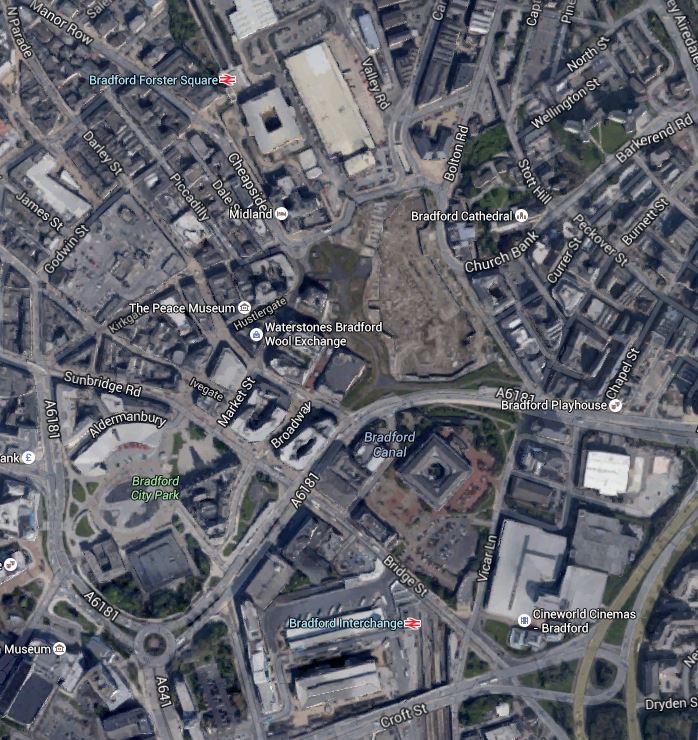
This Google Map shows the two stations.
Bradford Stations
Bradford Forster Square station is towards the top and Bradford Interchange station is towards the bottom of the map.
Bradford Interchange, which is a combined bus and rail station rebuilt and opened in the 1970s, which is not an outstanding period for superbly executed Rail stations.
To make matters worse, all trains must reverse at Bradford Interchange, which means the driver changes ends.
Note that between the two stations, there is a large shopping centre, that has been opened in 2015.
You’d have thought with all this rebuilding that a solution to the two station problem would have been found.
Two solutions have been proposed.
- Bradford Crossrail – A heavy rail link between the stations.
- A tram-train is outlined in this article in the Bradford Telegraph and Argus.
I know the Germans would squeeze a tram-train through somewhere, but I suspect there might be something more imaginative and much more affordable.
After all the distance is 0.7 km. and the stations only have seven platforms between them.
Around the world, there are several successful lightweight people movers in city centres.
- High-tech and expensive monorails.
- Light railways like the Docklands Light Railway in London.
- Tram shuttles.
- Travelators and escalators.
- Free mini buses as in Manchester.
Surely, a good engineering solution at an affordable price must exist., which could connect the two stations to each other and to the shopping centre.
But what about some eco-friendly battery buses, as the distance is under a kilometre.
.
Hebden Bridge
I’m treating Hebden Bridge and the Grade II Listed Hebden Bridge station as a single post, as one would do other places where the station welcomes you to the town or city and is most certainly part of the identity. I would also place Brighton, Cambridge, Liverpool Lime Street, Portsmouth and Rochester, in that category, but there are others.
These pictures show my very wet visit.
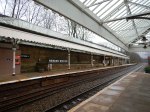

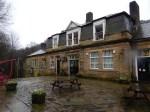

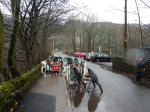
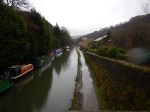
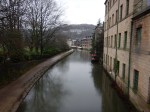
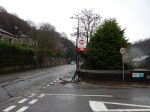
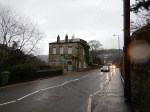
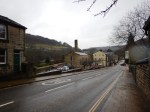
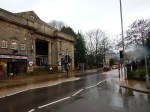
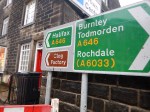
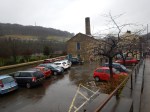
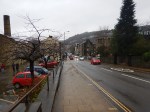
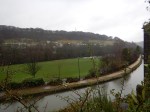
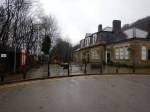
I shall go back one dsy, when the weather is better.
This Google Map shows the town and the station.
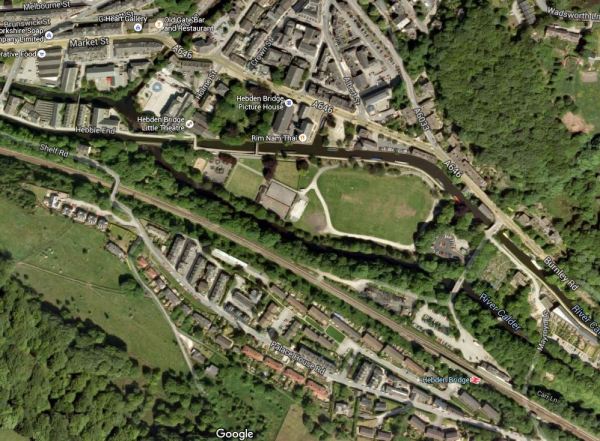
Hebden Bridge
Note the Rochdale Canal and the River Calder running in the same direction as the railway.
I believe that Hebden Bridge could be key in the electrification strategy of the Calder Valley Line.
A personable member of Northern Rail’s staff told me a tale about step-free access at the station. There is a subway under the tracks and this used to be served by two parcels lifts. I was told, that it was suggested that the lifts be replaced by passenger lifts, to make the station step-free, but as the station is Grade II Listed, this was not allowed.
What will happen in the end over access, I know not, but in my dealings with Listed Buildings Officers in Suffolk, they tend to be practical and lookfor a compromise, that satisfies all parties. Surely, there could be a design of lift, that would satisfy both the heritage and disabled lobbies without an outrageous expense.
This leads me to the electrification through Hebden Bridge station.
Look at this enlarged Google Map of the station.
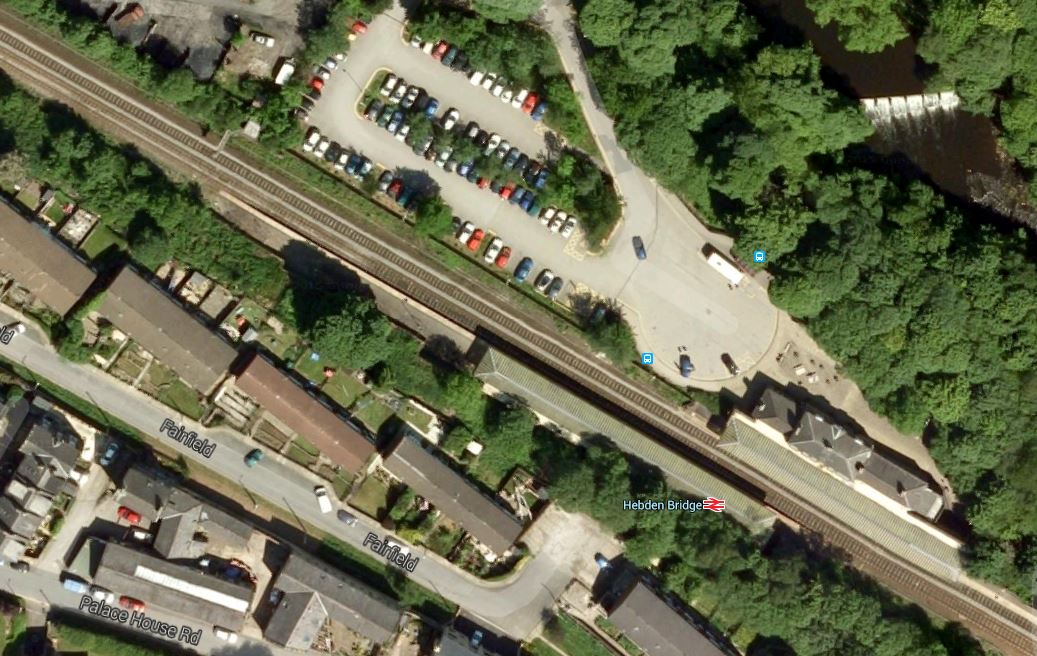
Hebden Bridge Station
I think you can see the following.
- The platforms aren’t that long and would need to be lengthened for the four-car trains that would surely be appropriate after electrification.
- The canopies of the platforms will have to be cut back, so that the overhead wires and their supports can be erected.
I don’t think the heritage lobby will like either of these changes.
But what could they object to, if the electric trains were quiet four-car Class 387 IPEMUs, using selective door opening on the current platforms?
These trains could serve Hebden Bridge station tomorrow, if Leeds to Bradford and Blackburn were electrified.
There would be no other overhead wiring needed
IPEMU Trains And Terminal Tunnels
The strongest hint about purchasing trains with an IPEMU capability has come from Merseyrail.
I wrote about these trains in a Merseyside context in Is Liverpool Planning To Invade Manchester By Train? This is an extract from the post, which details their declared interest in IPEMUs.
In the October 2015 edition of Modern Railways, there is an article about Merseytravel looking for a new fleet of trains for their 750V DC network, which is entitled New Trains For Liverpool. This is said.
Merseytravel has indicated that it will be seeking ‘innovative proposals’ from manufacturers, with considerable emphasis being placed on the overall cost of operating the fleet rather than just the basic cost of the trains themselves. Options such as regenerative braking and onboard systems to store energy under braking to be used for acceleration will attract particular interest. The independently-powered EMU (IPEMU or battery train) concept evaluated earlier this year on a modified Class 379 in East Anglia ,might see an application here.
I thought that the main reason for the IPEMU capability would be to connect Preston to Liverpool via Ormskirk and Manchester Victoria to Liverpool via Kirkby.
But does Merseyrail have other reasons? Type “Merseyrail power supply problems” into Google and you get a lot of matches, especially concerning Kirkdale depot.
To emphasise this in Liverpool City Region Long Term Rail Strategy, this is given as an objective.
Future proofing the power requirements of the Merseyrail network by undertaking a full power upgrade.
This question has to be asked – If all trains had an IPEMU capability, could the power supply to the tracks be simplified?
Perhaps the tunnels under Liverpool could be worked on battery power, with the trains charging on the surface. Would it be an advantage, for maintenance and safety reasons not to have any electrical power supply in the tunnels?
So are there any other lines that end in tunnels in other parts of the UK?
I can only think of one – The Northern City Line, which terminates at Moorgate station.
This is said, under Current Roling Stock in the Wikipedia entry for the line.
The line is electrified with 25 kV AC overhead line from Finsbury Park to Drayton Park, and 750 V DC third rail from there in tunnel to Moorgate. Services are operated by dual-voltage Class 313 electric multiple units(EMUs), the only units certified for use on the line. In keeping with regulations for trains operating in single-bore tunnels, they have emergency doors at the end of each unit, and when operating on 750 V DC the two motor coaches are electrically separate as far as the traction supply goes. Unlike other contemporary units, there are no DC traction supply jumper cables between carriages. All Class 313 units operating over the NCL have their Driving Motor B vehicle at the London end, and whilst on DC are electronically limited to 30 mph,[8] which is the maximum line speed. All stations are long enough to accept six car trains.
The Class 313 units are amongst the oldest still operating on the National Rail network. As a consequence, when it took over the Thameslink/Great Northern franchise, Govia Thameslink Railway announced that it would procure a total of 150 new carriages to completely replace the Class 313 fleet operating services to Moorgate
So it would appear that an IPEMU capability on the trains, which would use battery power south of Drayton Park, could be an alternative to a dual-voltage train, with an unusual configuration to meet the regulations.
But as I reported in One Of North London’s Forgotten Lines Is Awakening, Siemens have already received an order for twenty-five six-car Class 700 trains, to run on the line.
So IPEMUs won’t be used there!
One of North London’s Forgotten Lines Is Awakening
Four of the nearest stations to my house are Moorgate, Old Street, Essex Road and Highbury and Islington. which all lie in an arc on the Northern City Line to Finsbury Park and on to North London and Hertfordshire, where it terminates at Hertford North, Letchworth, Stevenage and Welwyn Garden City.
Traditionally, the line has always only run on a five day-a-week basis, with no service at weekends. As it serves Arsenal’s past and future stadia, I’ve always thought this was a bit short-sighted.
But then I’ve always felt that British Rail considered it was a railway, that they didn’t really want after they acquired it from London Underground following the Moorgate Tube Crash.
So when this month, when they decided to run a weekend service and the weekday service until 23:59, I did not notice any announcement. I use Highbury and Islington station several times a week and I certainly didn’t see a poster.
This is one of those things that should be filed under At Last! Especially, as the southern end of the line in a few years time will connect a large number of lines together.
- Moorgate – Northern, Metropolitan and District Lines and Crossrail (2019)
- Old Street – Northern Line
- Essex Road
- Highbury and Islington – East London, North London and Victoria Lines
- Drayton Park
- Finsbury Park – Piccadilly and Victoria Lines and Thameslink (2019)
If Crossrail 2 ever gets built, it will connect to this line too!
The forgotten nature of the Northern City Line is illustrated, by the elderly Class 313 trains on the line. There are currently forty-four three-car sets on the line, usually working as six car services, so giving effectively twenty-two trains.
But the days of the Class 313 are numbered as according to this article on Rail Magazine, the operator; Govia Thameslink Railway has just ordered twenty-five six car Class 700 trains from Siemens. This is said about the trains.
The new trains will be Class 700s, and will be a variant of the 1,140 vehicles currently being delivered by Siemens to GTR for Thameslink. They will run on routes from Moorgate and London King’s Cross to Welwyn, Hertford, Stevenage and Letchworth. They will be fixed length with full width inter-vehicle gangways, air-conditioning, real time information and power points.
Of all the lines in London that could benefit from a fleet of new trains, this must be one of those routes, where they will give the greatest improvement.
Especially, as for the operator, it is just more of the same trains, they will be using on Thameslink.
But will they be exactly the same?
This is said in the Wikipedia entry for Class 313 trains.
Since they were designed for use on Great Northern Suburban Inner Suburban services from Moorgate to Welwyn Garden City or Hertford North, Letchworth Garden City which included a section of ‘tube’ line built to take standard size trains between Drayton Park and Moorgate, they are built to a slightly smaller loading gauge than conventional trains. They are standard length and width, but the roof is lower, most noticeable due to the lack of a “well” for the Stone Faiveley AMBR pantograph on the centre coach. They have to comply with regulations for underground trains, such as having doors at each end of the train for evacuation onto the tracks, and when on 750 V DC supply the traction supply for each motor coach is separate, whereas on conventional 750 V DC trains each coach in a unit is linked by a 750 V bus line. Due to this, each motor coach has shoe gear on both bogies, whereas normally it would only be on the leading bogie. They are fitted with trip-cocks that are struck by a raised train-stop arm at red signals and will apply the brakes if the train passes one.
I suspect there will be some intensive work to make the Class 700 trains meet the regulations for underground trains.
To say some of the stations at the southern end of the route are tired and/or difficult for those who need step-free access, would be an understatement.
Moorgate is getting improved for Crossrail and Finsbury Park is getting a much-needed redevelopment. This will only increase the pressure to rebuild stations like Old Street, Essex Road, Highbury and Islington and Drayton Park.
As it goes further north, I do wonder if we’ll see new stations to serve future housing developments, especially on the Hertford Loop Line.
The other possibility of improving services from Moorgate is that the top speed of the new Class 700 trains is 100 mph, whereas the speed limit on the Hertford Loop is only 75 mph.
So will we see the extra three trains available used to move services off the crowded section of the East Coast Main Line over the Digswell Viaduct onto the Hertford Loop Line.
With some clever rescheduling, this might create a path or two on the East Coast Main Line.
The operator is not going to spend those millions on a new set of trains and not make them sweat!
I certainly think, that we’ll see good connectivity between trains on the Northern City and Hertford Loop Lines with Thameslink services to Peterborough and Cambridge.
It will be interesting to see their plans, when they are revealed.
My one worry is that all those new trains will tempt a lot of passengers out of the woodwork!
But one of London’s railways will not be forgotten for very long!
Exploring The Sutton Loop Line
The Sutton Loop Line is not well known in North London, except as a routing shown on Thameslink train information displays.
This morning, I took the line from Tooting station and after a short stop at Sutton station, I continued on my way back into Central London.
These are some of the pictures that I took.


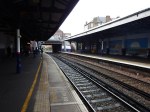

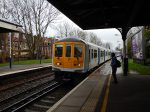




I think the trip did give me a better understanding of this line in South London.
These points are general.
Step Free Stations
Very few of the stations I passed through had any form of step-free access.
Some were island platforms, which have their advantages, but access up and down a single wide staircase to a road overbridge is so nineteenth century.
Variable Quality Stations
Some stations have had a refurbishment and others haven’t!
A Curious Timetable
Streatham to Sutton via Wimbledon calls at more stations, than the other way via Mitcham Junction and this is reflected in the times, with the shorter route taking fifteen minutes and the longer one thirty-one minutes
The curious timings on the loop, actually mean that from Streatham station northwards or southwards, the trains have an interval of very close to fifteen minutes.
So it would be prudent to check, that you’re always taking the best way to get to your destination station!
These points are specific to stations of sections of the line.
St. George’s Hospital
According to this article in he Local Guardian entitled St George’s Hospital Trust announces support for Tooting Broadway in Crossrail 2 plans, the hospital trust is not happy.
It would be ridiculous to spend the best part of an extra billion pounds on Crossrail 2 to put the line through Tooting Broadway station, rather than Balham station, when that money could probably be spent on a mixture of patient care , better bus links, and a lift or two at the Underground station. The latter will happen anyway, whether Crossrail 2 is built or not!
Could there be a better solution for step-free transport access to St. George’s Hospital?
Look at this Google Map of the hospital in relation to Tooting Broadway station and the Sutton Loop Line to the west of Tooting station.
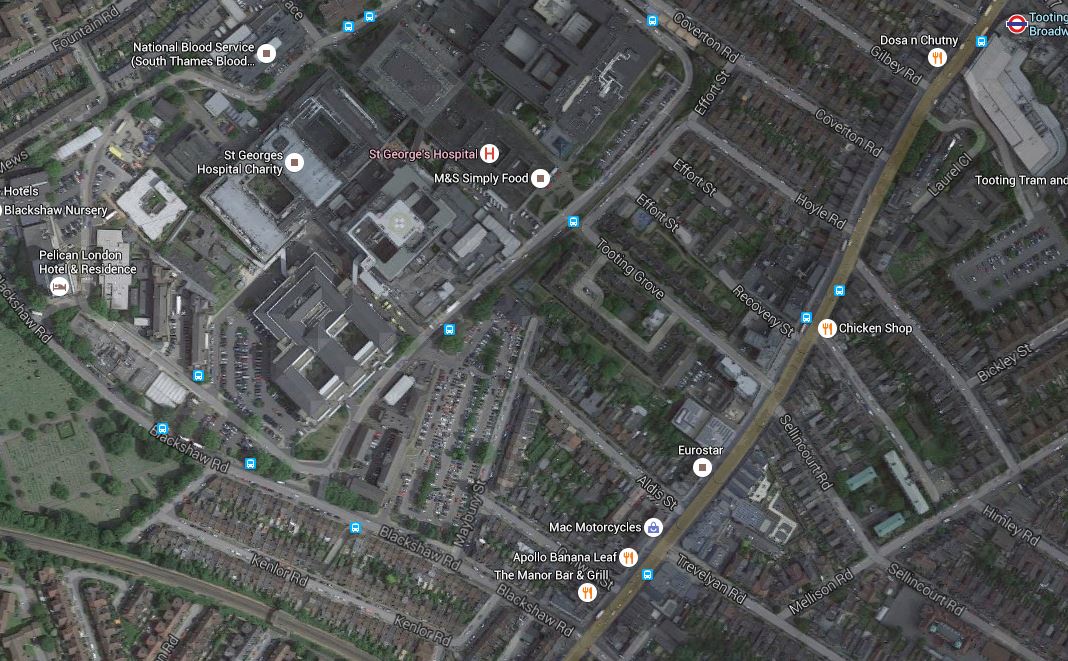
St. George’s Hospital, Tooting Broadway Station And The Sutton Loop Line
Tooting Broadway station is at the top right of the map and the Sutton Loop Line runs across the South West corner of the map.
If a new station were to be built on that line, with full step-free access, it would be closer to the Hospital, than any station on Tooting Broadway. It would also be close to some of the bus stops that serve the hospital.
Haydons Road Station And AFC Wimbledon’s New Stadium
This Google Map shows Haydons Road station and the site of AFC Wimbledon‘s new home at Wimbledon Stadium.

Haydons Road Station And AFC Wimbledon’s New Stadium
The stadium will be at the old greyhound stadium, which is the two green circles at the top.
The green scar from the stadium site to the east of the station, is the course of the River Wandle. Surely, a riverside walk should be created for supporters walking between the stadium and station.
The map also shows the amount of land wasted in the area by unnecessary cemeteries. How many houses could be built on the land they occupy?
Wimbledon Station
Trains on the Sutton Loop Line always use Platform 9 at Wimbledon station, which gives cross-platform access to Tramlink on Platform 10.
So one train might be going to Sutton and the next to Central London and beyond.
Wimbledon Chase And South Merton Stations
These two stations are shown on this Google Map.
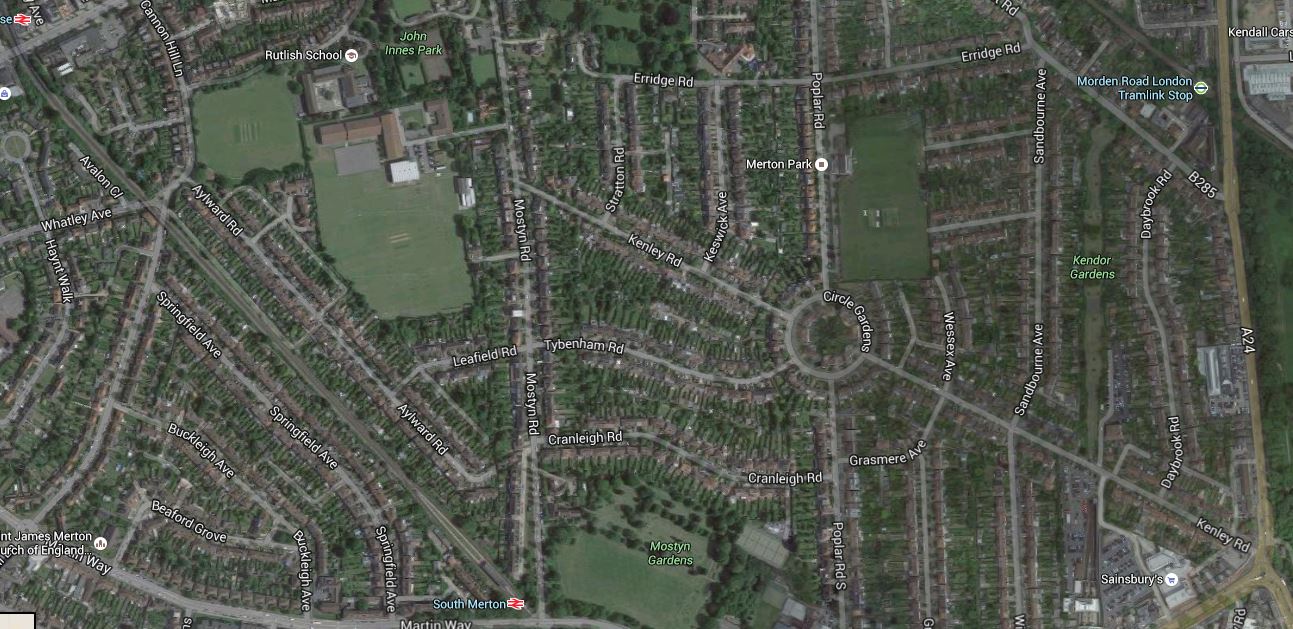
Wimbledon Chase And South Merton Stations
Wimbledon Chase station is at the top left and South Merton station is at the bottom, just tom the left of the middle.
You will notice, I’ve included the main A24 road on the map.
This is because that road could be used for an extension of Tramlink from South Wimbledon to Sutton via St. Helier Hospita;. This map shows that extension.
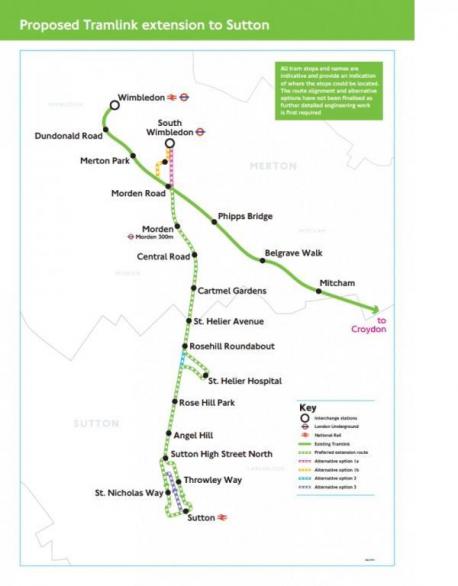
St Helier Tramlink
Transport for London and the London Borough of Merton are opening up a lot of possibilities here and I hope that a world-class solution emerges, to link the whole corridor together.
Morden South And Morden Stations
This Google Map shows the close relationship between Morden South station and Morden station
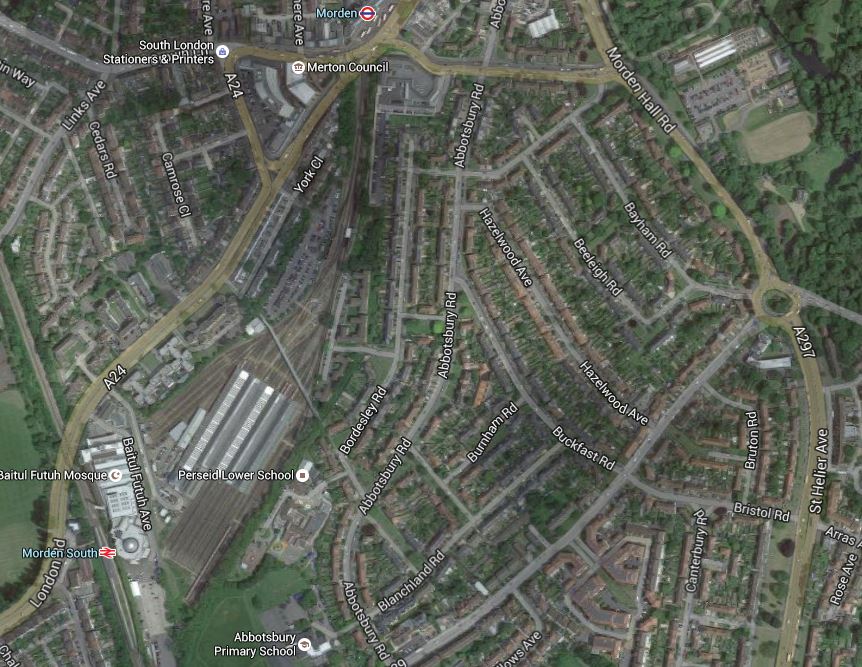
Morden South And Morden Stations
Their close location and the depot in betwen, has always puzzled me. It is explained in the History section for the Wikipedia entry for Morden station.
It was all down to railway politics, between Southern Railway and the Underground companies.
You just wonder though, if they were sorting out the lines around Wimbledon, that something could be done to make it easy to connect between the two stations.
Hackbridge
I hadn’t heard about Hackbridge, which is a suburb in the London Borough of Sutton.
But there is a Hackbridge Masterplan on Wikipedia. This is the first paragraph.
The London Borough of Sutton is working to make Hackbridge the ‘UK’s first truly sustainable suburb’. There has been a regeneration scheme in Hackbridge which has a number of developments on many sites. These are mentioned as part of the Hackbridge Regeneration. Detailed plans include proposals for new eco-friendly homes, more shops, leisure and community facilities, jobs, sustainable transport and pedestrian/ cycle initiatives, improved networks and open spaces.
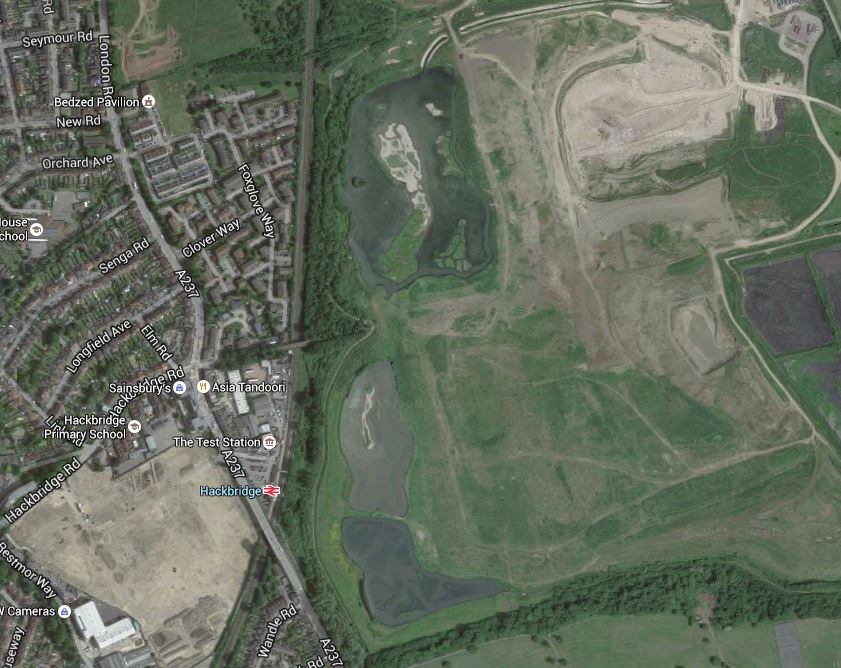
It all sounds good to me. This is a Google Map of the area.
Hackbridge
Note the rail line going up the map with Hackbridge station about a quarter of the way up.At the top of the map, is an icon indicating the BedZed Pavilion.
If they are truly into green transport, it strikes me, that there needs to be another station between Hackbridge and Mitcham Junction, which is the next one to the North. As the Tramlink through Mitcham Junction runs down the eastern side of the site and has a stop at Beddington Lane on the north east corner, I would also feel that there scope for extensions to the through Hackbridge.
The Future Of The Sutton Loop
With all the investment in Thameslink, there is no doubt that the future of the Sutton Loop is secure, but what will it look like in ten or twenty years?
I think it seems to have suffered a lack of imaginative thinking in the past few years, but with Transport for London thinking hard about a new interchange hub at Streatham Common station, that I wrote about in Puzzled Over Streatham Common Station, I think we’ll see some more improvements.
A lot of the stations need to have a refurbishment and proper step-free access.
If this follows the pattern of previous lines in London and elsewhere, I think that after station improvement, this line will need additional services.
As it won’t be possible to get more trains through the core, then this could need for some form of local train or tram-train on the loop. Perhaps these would terminate at perhaps Streatham Common station, which I wrote about in Puzzled Over Streatham Common Station.
If two extra trains each way round the Sutton Loop were to be added, they could be timed to run every fifteen minutes between the existing services. So each station on the loop would get a four trains per hour service both ways.
One possibility would be to do the extra services with tram-trains, which after Streatham Common, went on to Croydon to connect up with the existing Tramlink routes.
As I said earlier trains go through Streatham to and from the loop every fifteen minutes, which would be every 7-8 minutes with the extra trains.
So if say you wanted to go to Central London, if you caught an intermediate train on the loop, you might have to wait 7-8 minutes for a Central London train.
The possibilities are endless.
Obviously, traffic patterns will determine how the line develops, but I predict that there will be a big future for the Sutton Loop.
 The Anonymous Widower