World’s First Solar-Powered Trains Are Coming To England
The title of this post, is the same as that on this article on Lonely Planet.
This is the first paragraph
The first ever solar unit to directly supply a railway line with electricity has been put in place in England, paving the way for the world’s first solar-powered trains
I am not sure yet about this technology., powering large sections of the UK’s railways.
But the technology does have applications, if it is combined with energy storage.
Boosting Power With Third-Rail Electrification
Third-rail electrification has a problem, in that it needs to be fed with power every few miles. Inevitably, as timetables get busier, there are areas, where there is not enough power to supply the trains.
These systems can provide that fill-in power.
Note that 25 KVAC overhead electrification doesn’t have the problem, as the wires themselves distribute the electricity.
This means that the Great Western Main Line electrification is only supplied with power from the electricity grid at three places; the two ends and one in the middle.
Electrification In Visually-Sensitive Places
Look at this picture of Brunel’s magnificent Wharncliffe Viaduct.
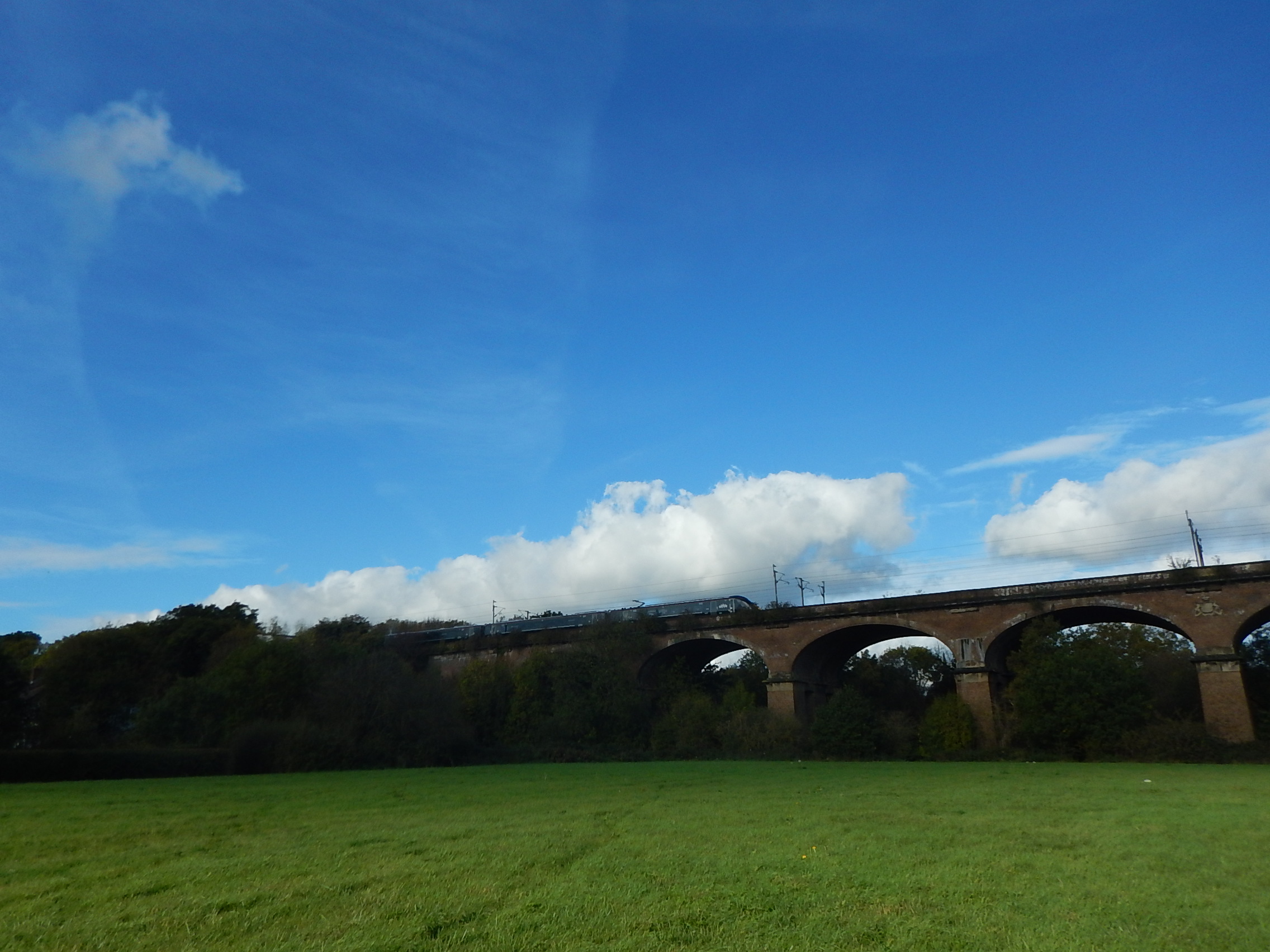
It has been recently electrified and some groups object to the electrification of Grade I Listed structures like this.
Most modern electric trains can be dual-voltage and can work on both electrification systems used in the UK; 25 KVAC overhead and 750 VDC third rail. They can also change between electrification systems at maximum speed
So could we see selective use of solar-powered third-rail electrification in visually-sensitive areas?
Possibly! But battery/electric trains may be a better alternative!
Charging Battery-Electric Trains
There are some branch lines, that will be served by battery-electric trains in the future.
These solar-powered systems could be used to provide the energy to charge the batteries for the return journey.
Powering Remote Stations
Stations are increasingly needing better electricity supplies with more lighting and various ticket and parking machines, and charging for electric cars will become more important.
Solar power systems and batteries could be used.
Conclusion
Solar power will be increasingly used on the railways, with a large number of stations like Blackfriars and the recently-opened White Hart Lane.
But that will happen, irrespective of the result of the Aldershot trial, as many stations are easy places to install solar panels, either on the roof or redundant spaces.
This Google Map shows one of my local stations; Haggerston.

It was rebuilt and reopened in April 2010, so solar panels were probably not thought about for the station.
From my helicopter, it appears that the stations at Dalston Junction, Hoxton and Shoreditch High Street, which were all built at the same time, don’t have solar rooves either.
Perhaps Transport for London and/or Network Rail should rent their roof areas to companies, who run solar farms?
I’m sure there’s a mutually beneficial deal in there somewhere!
As to powering trains, I’m sure they that Riding Sunbeams has a place on third-rail networks, where power needs boosting.
However, electric trains with batteries might be a better option in other applications.
If This Is The End For The £1.3bn M4 Relief Road, Radical Thinking Is Needed
The title of this post is the same as that of this article on Wales Online.
The article is a good analysis of one of South Wales’ major transport problems; How do you relieve capacity on the ageing M4 around Newport?
I haven’t been on that section of road for perhaps twenty years or even longer, but I can’t ever remember the road, not being full of traffic.
Abolition Of Tolls Not The Smartest Move
This is a subsection of the article about the abolition of tolls on the Severn Crossing, where this is one sentence.
The abolitions of tolls, as predicted, have already driven a 20% rise in traffic levels on the existing M4, which will only put more pressure on its resilience.
Any sensible person could have told you that.
Surely, the extra capacity should have at least been planned before the tolls were abolished.
But then politicians like buying votes with unsustainable decisions that benefit their electorate.
As another example, look at the problems, Sadiq Khan’s fare freeze has caused Transport for London. But then you can’t expect a lawyer and politician to get their sums right. My late wife was a lawyer and many of our friends in Suffolk were in the same profession. Few had any clue about handling numbers properly.
Aviva Investors Acquires 101 Moorgate Development Site
The title of this post is the same as that of the title of this article on Property Funds World.
This introductory paragraph says it all.
Aviva Investors, a global asset management unit of Aviva, has completed the acquisition of the long leasehold interest in 101 Moorgate, EC2, from Transport for London (TfL). Aviva Investors will develop a mixed-use retail and office site above Crossrail infrastructure and opposite the new Crossrail Liverpool Street Station western entrance.
This Google Map shows a 3D visualisation of the site.
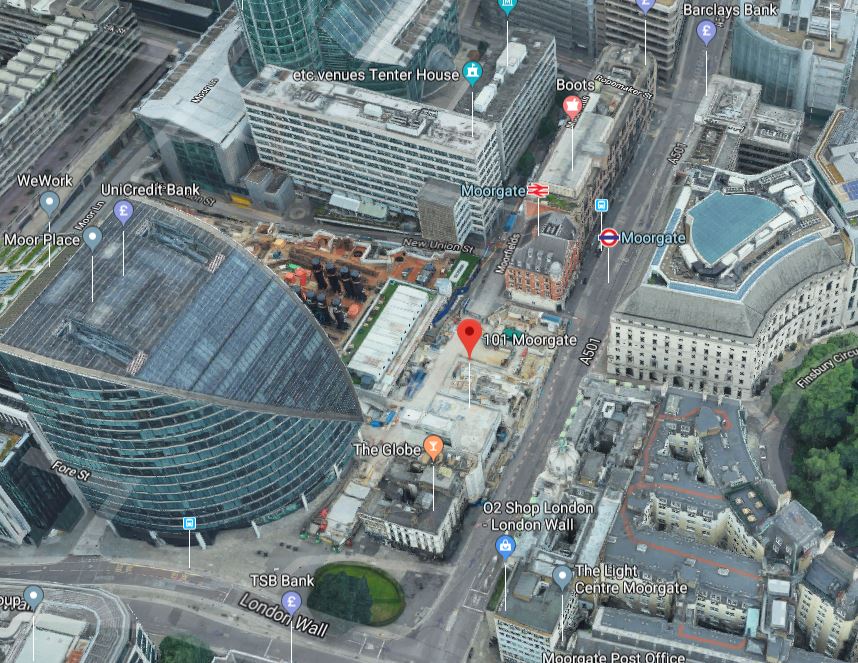
Note the site is indicated by the red arrow.
To its left is the distinctive Moor House, which as well as being a large office block, incorporates a Crossrail ventilation shaft.
Hopefully, Transport for London raised a few pennies for that deal.
Abbey Line Passing Loop Proposed
The title of this post is the same as that of an article in the June 2019 Edition of Modern Railways.
Bricket Wood station used to be an important station on the Abbey Line, with grand buildings and a passing loop to allow trains to run a teo trains per hour (tph) service as opposed to the current inconvenient train every forty-five minutes.
Consultants have now said that a traditional passing loop, with a second platform and a bridge would cost up to £10million, which is probably not viable.
The Penryn Solution
The article says this about the consultants’ alternative solution.
The platform at Bricket Wood be lengthened such that trains stop at different ends of a single platform, similar to the solution adopted in Penryn on the branch line from Truro to Falmouth, which would help to minimise costs.
This Google Map shows Penryn station.
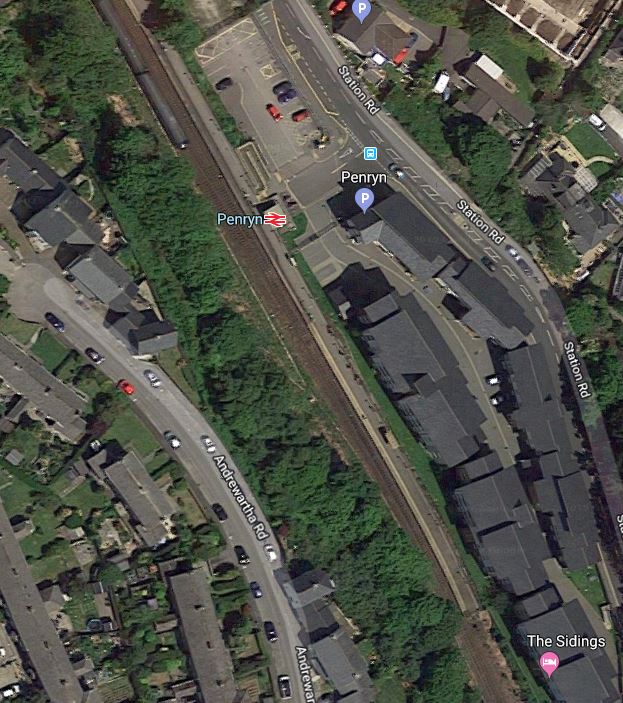
Note the long single platform in the station.
This section in the Wikipedia entry called Signalling, gives a full explanation of the method of operation at Penryn.
Truro-bound trains use the northern end of the station (Platform 2), arriving before the Falmouth-bound train, which will pass through the new loop and to the southern end of the platform (Platform 1), allowing the Truro-bound train to continue its journey north. This gives a rare situation in the United Kingdom where trains run on the right, instead of on the left as is usual in this country. Trains are scheduled to depart simultaneously for Truro and Falmouth.
Bricket Wood station already has a platform, that can take a comfortably take a four-car Class 319 train, as this Google Map shows.
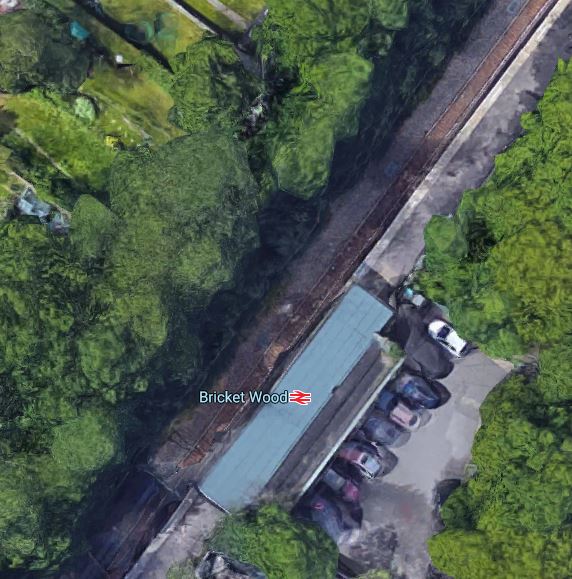
Consider.
- I estimate from Google Maps, that the single platform at Bricket Wood station is currently around 190 metres long.
- Looking at the map, it might be possible to add another ten metres or so to the platform length.
- The current Class 319 trains are 79.5 metres long or 159 metres for a pair.
- It wouldn’t matter, if for reasons of safety, the front of the trains were allowed to extend for perhaps ten metres past the end of the platform.
- There also appears to be space to put a second track alongside the current single track.
I also suspect, that Network Rail have track design software, that can precisely calculate the size and position of the points, so that the manoeuvre can be safely executed every time.
I very much feel, that a design can be produced, that will staff, passengers and regulators.
Can This Proposal Handle More Than Two tph?
If you look at the timings of the train, it takes eight minutes to run these legs.
- Watford Junction and Bricket Wood
- Bricket Wood and St. Albans Abbey
The times are identical, irrespective of direction.
If times are the same after installation of the novel loop. A train will take sixteen minutes plus however much time, it takes to turnback the train to get back to Bricket Wood.
As trains will be running every thirty minutes and both trains will leave Bricket Wood at the same time, the train must be able to run the out-and-back journey from Bricket Wood in thirty minutes or less.
- The out and back legs both take eight minutes.
- This means that the turnback time must be less than fourteen minutes.
Currently, turnback times are fourteen minutes or less.
- If you look at four tph, there is a train every fifteen minutes. As each leg is eight minutes long, it would appear another method of operation will have to be used.
- If you look at three tph, there is a train every twenty minutes. Would it be possible to turn back the trains in under four minutes? It might be possible, but it would be a tough call.
I would suspect, that for a reliable service, the proposed method of operation has a maximum frequency of two tph.
I suspect, that the only way to get more than two tph, would be to fully double track the route, with two platforms at all stations on the route.
Does The New Track Need To Be Fully-Electrified?
There would be around two hundred metres of new track and if electrification were to be installed, a pair of the current Class 319 trains could provide a two tph service.
Surely Network Rail can manage to put up this amount of new electrification without massive cost and time overruns?
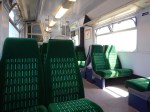
Despite being over thirty years old, the Class 319 trains scrub-up well as these pictures show.
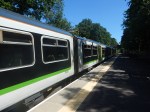
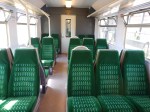
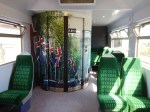
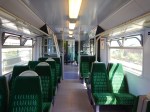
But what could be done if electrification was deemed to be outside the budget? Or it was decided that new zero-carbon trains should be used on the Abbey Line?
Battery trains are coming and there are several trains that can use both electric and battery power under development, in the UK, Europe, China and Japan.
Battery Power On The Abbey Line
Bricket Wood station is 3.5 miles from the Watford Junction end of the Abbey Line and perhaps three miles from the St. Albans end.
In an article in the October 2017 Edition of Modern Railways, which is entitled Celling England By The Pound, Ian Walmsley says this in relation to trains running on the Uckfield Branch, which is not very challenging, as is the Abbey Line.
A modern EMU needs between 3 and 5 kWh per vehicle mile for this sort of service.
So if a four-car electric-battery hybrid train was to handle the whole of the 6.5 mile route, it would need a battery of between 156-260 kWh to go between Watford Junction and St. Albans Abbey stations and back. It would also need charging at one or both ends of the route.
But supposing trains used the current electrification between Watford Junction and Bricket Wood stations to both power the train and charge their batteries.
- The trains would only be doing six miles on batteries, so the battery would be between 72-120 kWh.
- Trains would raise and lower their pantographs at Bricket Wood station.
- No new electrification would be required.
- If trains needed to top-up their batteries, they would do this using the electrification in the two terminal stations.
It might even be preferential to remove electrification between St. Albans Abbey and Bricket Wood stations to save maintenance costs and improve safety.
Could West Midlands Trains’ Class 730 Trains Be Used?
The current franchise holder; West Midlands Trains has ordered a large fleet of Class 730 trains for services between London and the West Midlands and for local electric services in the West Midlands.
Included are thirty-six three-car trains for working suburban services across Birmingham. These have twenty-four metre long cars, so are eight metres shorter than the four-car Class 319 trains, so they are another possibility, unless their longer car length would cause problems in the Bricket Wood manoeuvre.
Should The Abbey Line Be Transferred To Transport for London?
There have been suggestions in the past, that the route be transferred to Transport for London.
I’ll leave the politics aside, but electric-battery hybrid versions of London Overground’s Class 710 trains, which will soon be serving Watford Junction station would probably be ideal.
As they are dimensionally similar to the Class 319 trains, they may also be able to work the route under electric power.
Conclusion
There are certainly, several affordable ways to improve the Abbey Line.
My preferred solution would be go for the Penryn solution, using a fleet of Class 319 trains.
- Penryn seems to be working well.
- Track would need to be re-laid through Bricket Wood station, to add the passing loop.
- About two hundred metres of extra electrification would need to be erected.
- There would probably need to be some modification to the signalling, as there was at Penryn.
- Three trains as a minimum, would be needed, two for the service and one as a spare or as maintenance cover.
- West Midlands Trains already have fifteen Class 319 trains, so finding a viable fleet in top-class condition, shouldn’t be difficult.
- If slightly shorter trains could be needed, the trains might be able to be shortened to three-car trains.
- Staff training would be minimal.
- The current trains are liked by drivers.
- The trains would be zero-carbon.
- The current trains are in very good condition.
- The current trains even have toilets, which are probably not needed on a six-and-a-half mile journey
- If say in ten years time, new trains are needed, I suspect there will be fleets of suitable electric multiple units, less than eighty metres long.
It is probably the most affordable solution.
Will Crossrail Open To Reading in 2019?
The latest rather dodgy date for the opening of Crossrail’s Core Tunnel is Autumn 2019.
In the January 2019 Edition of Modern Railways, there is an article, which is entitled Crossrail Can’t Commit To Autumn Opening.
This a paragraph from the article.
TfL also says that it is exploring with DfT the possibility of beginning to operate Reading to Paddington services ahead of the completion of the Elizabeth Line to help provide a boost in revenue.
This is a very interesting possibility.
How Much Work Is Still To Be Done To The West of Hayes & Harlington?
This is the key factor as to whether Western Branch of Crossrail can be opened.
- The biggest problem is that Class 345 trains can’t run to Heathrow as there are signalling issues to eradicate.
- There are also several stations, that need to be completed.
There is no work-round to the first problem, but trains seem to be able to call at the unfinished stations.
It would appear, that for TfL’s proposal to be taken fully forward, the signalling issues to and from Heathrow, must be dealt with.
The stations can be finished later.
The Current Proposed Crossrail Service To Reading And Maidenhead
These are the proposed services shown on Wikipedia, so they could have been updated.
Reading To Paddington – Limited Stop
This service will be run at two trains per hour (tph) in the Peak with no trains in the Off-Peak.
Stops are Twyford, Maidenhead, Slough, West Drayton and Ealing Broadway.
Reading To Paddington – All Stations
This service will be run at two tph all day.
The service will call at all stations except Hanwell and Acton Main Line.
Maidenhead To Paddington
This service will be run at two tph all day.
The service will call at all stations except Hanwell and Acton Main Line.
A Summary Of Peak/Off Peak Calls
Adding these service up, gives the following numbers for Peak and Off Peak calls in trains per hour (tph)
- Reading – 4,2
- Twyford – 4,2
- Maidenhead – 6,4
- Taplow – 4.4
- Burnham 4,4
- Slough – 6,4
- Langley – 4,4
- Iver – 4,4
- West Drayton – 6,4
- Hayes & Harlington – 4.4
- Southall – 4,4
- Hanwell – None to Reading/Maidenhead
- West Ealing – 4.4
- Ealing Broadway – 6,4
- Acton Main Line – None to Reading/Maidenhead
- Paddington – 6,4
Note.
- 4,2 means 4 tph in the Peak and 2 tph in the Off Peak.
- It would appear that all stations except Reading and Twyford have at least four tph all day.
- Stations between Hayes & Harlington and Ealing Broadway will get another six tph all day going to Heathrow.
- Acton Main Line station will get another four tph all day going to Heathrow.
This gives the following frequencies.
- Reading – 4,2
- Twyford – 4,2
- Maidenhead – 6,4
- Taplow – 4.4
- Burnham 4,4
- Slough – 6,4
- Langley – 4,4
- Iver – 4,4
- West Drayton – 6,4
- Hayes & Harlington – 10,10
- Southall – 10,10
- Hanwell – 6,6
- West Ealing – 10,10
- Ealing Broadway – 12,10
- Acton Main Line – 4,4
- Paddington – 12,10
I can draw these conclusions from the figures.
- Every station has a good service from Crossrail.
- But could Reading and Twyford have another two tph in the Off-Peak to make the services four tph all day?
- Paddington station would need perhaps two or three platforms dedicated to Crossrail to handle twelve tph.
- The maximum frequency of 12 tph should be easily handled with conventional signalling and could be increased with modern digital signalling.
It looks like running the Western services of Crossrail from Paddington could be a possibility.
Consider.
- The Reading and Maidenhead services will be run on routes with mainly conventional signalling.
- The Class 345 trains, which each can hold 1,500 passengers would give a massive capacity boost to the outer Crossrail stations.
- Heathrow services can be run with Class 345 trains, when the signalling problems are solved.
- Higher frequencies to and from Paddington may enable trains to provide a better interchange with branch line services, at West Ealing, Slough, Maidenhead and Twyford.
But I think that separating these services initially from Crossrail will have substantial operational and development benefits.
- Paddington to Reading is essentially a self-contained railway, with a major branch to Heathrow and four small branch lines worked by diesel shuttle trains.
- The route, with the exception of the Heathrow branch, has conventional signalling.
- The signalling problems of the Heathrow branch can be solved independently.
- The Western branches of Crossrail could be fully debugged before trains start running through the Core Tunnel.
I also wonder, if the route could be useful for mileage accumulation, driver training and certification of newly-delivered trains.
Is It Just About The Money?
The original Modern Railways extract said that the proposal was to help provide TfL with extra revenue.
It must bring in revenue and especially when the Heathrow Branch is working reliably to plan.
Faster Journeys
Modern Class 345 trains have the following advantages over the current British Rail-era Class 156 trains.
- They are slightly faster.
- They have better acceleration.
- They are modern trains designed for short dwell times at stations.
It would be very likely, that journey times between Paddington and Reading, will improve..
Passenger Behaviour
But passengers may change their behaviour .
- Will passengers use Crossrail as a lower-cost alternative to Heathrow Express?
- Will passengers use Crossrail as a faster alternative to the Piccadilly Line?
- Will passengers, going between Heathrow and the West and Wales, use Crossrail to and from Reading, with a change at Hayes & Harlingon?
- Will passengers on branch lines find the extra capacity helpful, when travelling to London or Reading?
In addition, as I said earlier, I think opening Paddington to Reading early,, could make finishing the Crossrail project easier.
If nothing else, it shortens the to-do list!
GWR Might Object
Will GWR object to losing their local services between Reading and London to Crossrail?
Consider the following issues.
Heathrow Express
GWR have taken over the lucrative Heathrow Express.
- Heathrow Express will be run using 110 mph Class 387 trains in an Airport Express configuration.
- Will these trains be less of a block on the line, than the 100 mph Class 332 trains currently running the service?
- Currently both Class 332 and Class 800 trains take nine 9½ minutes to go between Paddington and Heathrow Airport Junction.
Perhaps GWR could squeeze in extra trains, by replacing the Class 332 trains with faster Class 387 trains?
The more trains they could squeeze into Paddington, the larger their revenue.
Reading, Bedwyn and Oxford Services
I am not sure, but it does appear that GWR services to places like Bedwyn and Oxford will in future be run using the new five-car Class 802 trains.
- The trains will surely use electric traction on the fast lines to Paddington.
- Will passengers going between Bedwyn/Oxford and stations between Reading and Paddington, be happy to change at Reading?
As it appears that Bedwyn/Oxford services might not need to use the slow lines, these will be used exclusively by Crossrail and the occasional freight.
Could Bedwyn And Oxford Services Be Combined?
There is also the possibility that to save paths on the fast lines between Reading and Paddington, that hourly Bedwyn and Oxford services could be combined and split at Reading.
- GWR already splits and joins Class 387 trains at Reading.
- Class 800/802 trains are designed to be split and joined quickly.
- Timings to the two destinations are about the same, being around 75 minutes.
Two five-car Class 802 trains with one running to Bedwyn and one to Oxford might be a good idea. Especially, as it saves one high-speed path between Paddington and Reading and possibly a few trains.
It does look, that Oxford and Bedwyn services could be moved out of the way of Crossrail services.
Will There Be Enough Class 800/802 Trains?
In Huge Increase In Capacity On GWR As Final Class 800 Enters Traffic, I wrote that there are now only fifteen trains of a total fleet of 93 trains to be delivered.
I suspect that GWR can find enough trains to run Bedwyn/Oxford services to London.
Too Many Class 387 Trains!
But it does strike me that GWR will have too many Class 387 trains, if Crossrail takes over local services to Reading and Class 802 trains take over services to Bedwyn and Oxford.
Twelve Class 387 trains are being converted to take over Heathrow Express services, but that still leaves GWR with 33 trains to find a use for.
It seems like Greater Anglia’s twenty Class 379 trains, they could become homeless orphans.
Will The Class 769 Trains Get In The Way?
Original plans talked about using 100 mph Class 769 trains to back up the Class 387 trains, whilst twelve of these were updated to Heathrow Express standard.
But it appears now from Wikipedia and other sources on the Internet, that these trains will concentrate on the following services.
- Reading To Gatwick Airport
- Reading to Oxford
I can’t find any reference of them continuing to serve Paddington, so it looks like they should keep out of the way.
Serving The Henley And Marlow Branches
Henley-on-THames station on the Henley Branch Line and Bourne End station on the Marlow Branch Line are having their Peak services to London gradually withdrawn.
If Crossrail took over services between Reading and Paddington, the frequencies in the Peak at the interchange stations would be.
- Maindenhead for the Marlow Branch Line – 6 tph,
- Twyford for the Henley Branch Line – 4 tph
Two tph at each interchange station run limited stop to and from Paddington.
The trains will each hold 1,500 passengers.
Could it be that GWR feel that the increased frequencies and reduced journey times to and from Paddington mean that there is a lesser need to run a direct diesel service.
But I could see the following.
- A four-car shuttle train, which could be a Class 769 bi-mode, at two tph on the Henley Branch Line.
- Two tph on the Marlow Branch Line.
At least GWR have the trains to provide a service to match customer demand.
I also wouldn’t be surprised to see a radical plan for these branches.
No Diesel Running Into Paddington
Every train run by GWR and Crossrail, between Paddington and Reading, would use electric traction.
- Now that large numbers of Class 800/802 trains have been delivered, it can’t be long before the last InterCity 125 runs into Paddington on a regular service.
- Class 165 and Class 166 diesel trains will be refurbished and sent to the West Country.
- Bedwyn and Oxford services will be run by Class 800/802 trains.
In addition all GWR trains running into Paddington will be 125 mph units running on electricity.
What is that worth as a marketing hook?
Conclusion
It looks to me, that running a full Western Branch service for Crossrail could be a good move.
So will it happen in 2019?
I think it all depends on solving the signalling issues on the Heathrow Branch!
But I feel, it should be possible, otherwise TfL wouldn’t have suggested it!
Monetarising The Freedom Pass
I find my Freedom Pass extremely valuable and I’m extremely grateful for it, as I can’t drive after a serious stroke, that left me with eyesight problems.
But I feel Freedom Pass use could be expanded, to improve the efficiency of London’s transport network and generate some much needed cash flow for Transport for London.
Some Principles
What I am proposing here will obey these principles.
- Charges will only occur, when the card is used in conjunction with a bank card to buy tickets or services.
- Any tickets or services bought through the Freedom Pass system, will be at the best possible price.
But the major principle will be that if a Freedom Pass holder continues to use their card as they do now, they will not pay any charges.
An Updated Web Site
The current web site at www.freedompass.org is mainly for information only.
This function could be increased, but I also think the website could be extended in several ways.
A Personal Profile
Some pass holders might like to add a personal profile with perhaps a photograph and selected personal details, next of kin and some medical details.
Obviously, creating a profile would be at the pass holder’s discretion.
Journey Logging
I believe that with Oyster, you can check where you’ve been on a ticket machine.
Some Freedom Pass holders might like to have a similar facility on a web site.
Railcard Management
If you have a Freedom Pass, the site will know if you are over a certain age or have a qualifying disability. I would actually get a Freedom Pass, even if I wasn’t quite as old, as my eyesight was deemed not good enough to drive.
So the Freedom Pass web site could prompt you when you needed to renew your Railcard.
Adding A Bank Card To A Freedom Pass
To get between Dalston Junction and Gatwick Airport stations, I need to buy a ticket from the Zone 6 Boundary to the Airport. It would be very handy, if a Freedom Pass could be linked to a bank card, so that there was no need to buy an extra ticket. The few pounds to get to the Airport, would be automatically charged to the linked bank card.
I would not need to buy a ticket and would just touch in at Dalston Junction station and touch out at Gatwick Airport. My bank card would be charged a few pounds.
The link would also work, where a journey was done before the 09:30 start time of Freedom Pass on many routes.
So if Esmerelda, who lived in Camden wanted to get to Orpington to walk her grandchildren to school., she would be able to use the Freedom Pass for a normal fare, which would be charged to her bank card.
I would assume that Transport for London would pick up a small commission for the National Rail tickets.
A Ticket Buying Web Site
Depending on the company, the rules for using Freedom Passes with National Rail tickets aren’t always simple.
Yesterday, I went to football at Ipswich and bought a return ticket between Harold Wood and Ipswich stations.
- Harold Wood is the Zone 6 boundary.
- I was also able to get on a Liverpool Street to Norwich train, despite it not stopping at Harold Wood.
- As a Greater Anglia ticket inspector told me off for not doing this about six months ago, when he saw my Freedom Pass alongside my Senior Railcard, when he checked my tickets, I feel it must be right.
But I don’t think all train companies are so accommodating.
Suppose you were able to buy any rail ticket on the Freedom Pass web site and I wanted to buy a return ticket on a Saturday from Dalston Junction to Ipswich.
- Logging in, the site would know I had a Freedom Pass and a Senior Railcard.
- I would ask for my ticket and then the web site would find my cheapest ticket.
- I would pay for it as one does on any of the numerous rail ticket web-sites.
But it would probably add a third orange ticket, giving my route and conditions.
Should Ticket Buying Be Limited To Freedom Pass Holders?
If you are a London resident, would you use a trusted ticket buying web site from Transport for London, where you knew any profits would be reinvested in London’s transport network?
If it was a best price, I would!
Conclusion
The right design of web site could be a nice little earner for Transport for London.
Or any other regionalised transport organisation, like Transport for Wales or Merseytravel.

