SeaTwirl AB Signs Agreement To Explore Ehe Feasibility Of Electrification Of Aquaculture In Chile
The title of this post, is the same, as that of this press release from SeaTwirl.
This is the sub-heading.
SeaTwirl AB has entered into an agreement to carry out a feasibility study for electrification of fish farms together with a global industrial supplier. The intention of the collaboration is to assess the use of SeaTwirl’s floating vertical-axis wind turbines to provide renewable electricity to offshore-based equipment at aquaculture assets in Chile.
These three paragraphs add more details.
The feasibility study will cover a comprehensive scope, including energy demand and power system requirements, environmental site conditions, cost assessments, supply chain opportunities, and logistics in Chilean waters with the intention to reduce dependence on diesel. The study is expected to be completed during 2026, and the results will help determine next steps.
Chile is home to one of the largest aquaculture industries in the world, and the sector is pursuing ambitious sustainability goals including lower emissions, increased use of renewable power and reduced risk of spills. While the contractual value of the agreement is limited, at approximately SEK 0,8 million, the engagement will generate revenue and represent an important step in SeaTwirl’s commercialization effort.
“This collaboration marks an exciting step towards our purpose to enable floating wind power wherever it is needed, and to expand the use of floating wind technology beyond traditional grid-connected applications. The aquaculture industry has a clear need for offshore renewable energy, and we believe our technology can deliver a robust and cost-effective solution. It is also a major milestone to become involved in the southern hemisphere where many of the challenges we try to address, such as limited availability of cranes, vessels, and yard infrastructure, may be more challenging than in the north. We see significant potential in the aquaculture segment and look forward to beginning this journey in South America”, says Johan Sandberg, CEO of SeaTwirl.
I do find it strange, that the two vertical wind turbines, that both seem to be more than prototypes are both Scandinavian.
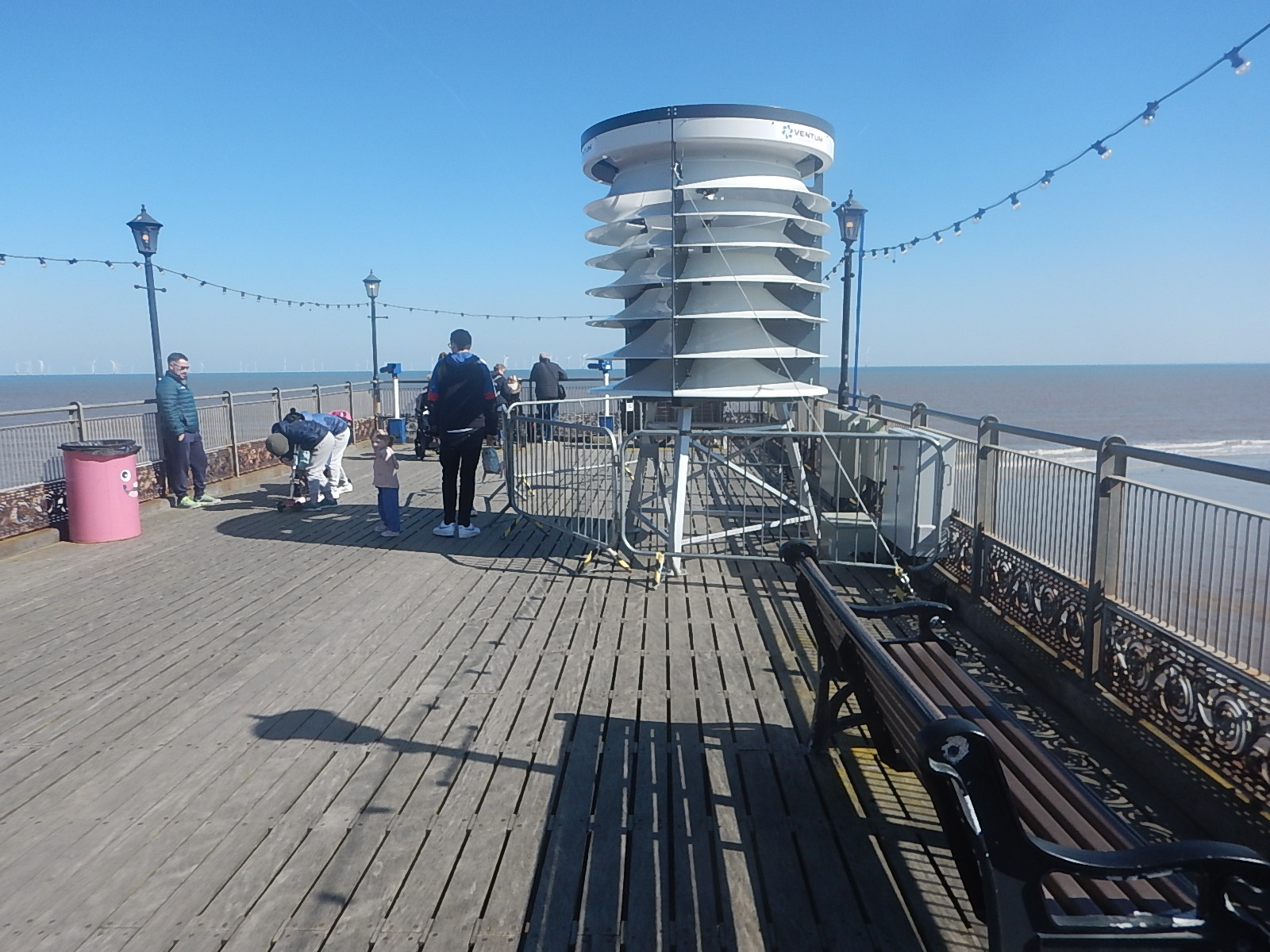
The Ventum Dynamics turbine, that I talked about in Are These Turbines An Alternative To Solar Panels? is Norwegian and this one is installed on Skegness Pier.
IKEA could sell these for DIY-enthusiasts to assemble and erect. On my stud, I used to have a barn, that could certainly have taken two of these 1.5 KW VX175 turbines.
This link is video of a dancing and swimming SeaTwirl.
If you follow, the SeaTwirl video to its conclusion, you’ll see one being erected in the sea. I can assure you that in the 1970s, my 25-year-old self, did the calculations for a reusable oil production platform called a Balaena, which erected on the same principle. So, I’m fairly certain, that SeaTwirls can be an alternative to traditional wind turbines.
German Firm Plans To Build Britain’s Biggest Solar Farm
The title of this post, is the same as that as this article on The Times.
These three paragraphs outline the project.
The developers behind a controversial solar power project in Oxfordshire have submitted a planning application for what is thought will be the largest such scheme in western Europe.
The site in Botley West is being developed by Photovolt, a German company, and could generate 840 megawatts (MW) of electricity, enough to power about 330,000 homes.
However, the project has sparked a backlash among some local residents, who argue the scheme will blight the landscape.
A map shows the site and it is certainly a large one.
- The Botley West site will cover a total of about 3,200 acres.
- It will pass through 15 villages.
- About 1,235 acres will not be covered with solar panels.
- It has a web site, which gives more information.
- There is also a Stop Botley West web site.
I can certainly understand the opposition.
These are my thoughts.
I Would Add A Battery To The Panels
An added battery would undoubtedly smooth the output of the solar panels. Especially, when the sun is not out to play!
A total capacity of 840 MW is planned for Botley West and in my opinion as a Control Engineer, a sizeable battery is needed.
I would not use a Battery Energy Storage System or BESS based on lithium-ion batteries, as I believe that Highview Power’s liquid air batteries and others offer cost and environmental advantages. But that is one for the accountants and the environmentalists!
I Might Add A Few Appropriately-Sized Wind Turbines To The Farm
In Skegness Wind Turbine Trial To Light Up Pier In UK First, I discuss using small, vertical wind turbines from a Norwegian company called Ventum Dynamics.
This picture shows a Ventum Dynamics turbine on Skegness Pier.
On the Ventum Dynamics web site, there are several pictures of buildings with flat roofs, that have several turbines on each.
Surely, if you’re installing a comprehensive electrical network, then it should be used to collect all the electricity it can.
I believe that Ventum’s turbines could be alternated in a line with trees, so that they merged more into the countryside. Some experiments need to be done.
I Would Also Fit Solar Roofs To Suitable Buildings
Every little helps!
Conclusion
When mixing solar panels and wind turbines into the countryside, you need to be bold and discard preconceived ideas.
Centrica And Moog Inc. Agree Major Solar Power Purchase Agreement
The title of this post is the same as that of this press release from Centrica.
This is the sub-heading.
Centrica Business Solutions has completed a long-term solar power purchase agreement (PPA) with aerospace defence designer and manufacturer, Moog Inc. The solar array will accelerate the decarbonisation of its aerospace manufacturing site in Wolverhampton and help the business achieve its net zero goals.
These three paragraphs introduce the project.
The agreement sees Centrica lease roof space from Moog Inc. to install a 2,200 solar panel array capable of generating circa 1MW. The energy company will finance the project and have agreed on a PPA with Moog Inc. for the renewable electricity generated on site.
Construction is set to complete in the spring and the panels will provide Moog Inc. with 800 MWh of renewable, reliable energy every year for the next 25 years – around 10 per cent of the site’s existing electricity requirements.
This gives Moog Inc. price certainty and access to green electricity without any upfront costs, and it will reduce operational CO2 emissions by 175 tonnes every year.
Note.
- The roof is one of Centrica’s biggest roof top solar arrays to date.
- It’s the first retrofit on an existing manufacturing plant of a solar array for Moog Inc. and wthe’re looking forward to doing more.
The Wikipedia entry for Moog Inc. starts with this paragraph.
Moog is an American-based designer and manufacturer of electric, electro-hydraulic and hydraulic motion, controls and systems for applications in aerospace, defense, industrial and medical devices. The company operates under four segments: aircraft controls, space and defense controls, industrial controls, and components. Moog is headquartered in Elma, New York and has sales, engineering, and manufacturing facilities in twenty-six countries.
Bill Moog, who founded the company, was a cousin of the guy who invented the Moog synthesizer.
Their products feature on the Airbus A 350, the Boeing 787, the Lockheed Martin F 35 and are used to operate the roofs on Centre Court and Court One at Wimbledon.
Conclusion
We will see a lot more solar installations like these.
I am not sure of the type of solar panels used on Moog’s Wolverhampton factory, but these roofs must be an ideal place to use BIPVco steel solar panels as Network Rail used at Denmark Hill station.
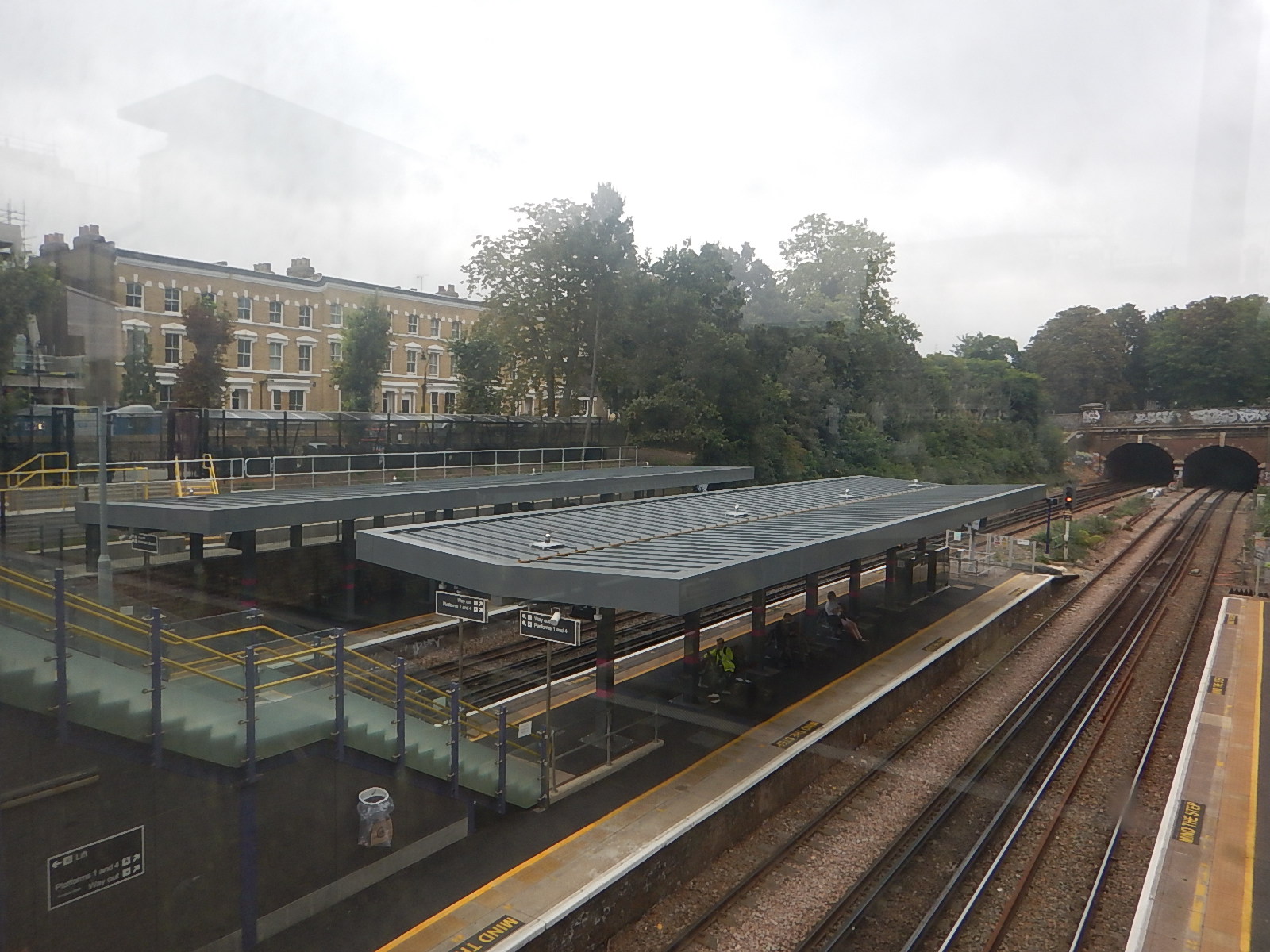
This roof became operational in 2021.
This picture shows a Ventum Dynamics turbine on Skegness Pier.
On the Ventum Dynamics web site, there are several pictures of buildings with flat roofs, that have several turbines on each.
I believe these turbines would fit neatly on some large industrial roofs with solar panels to form an efficient wind/solar application.
Are These Turbines An Alternative To Solar Panels?
I took this picture yesterday of the Ventum Dynamics turbine on Skegness Pier.
On the Ventum Dynamics web site, there are several pictures of buildings with flat roofs, that have several turbines on each.
I have some thoughts.
Connecting The Turbines
The Skegness turbine has been installed to light up the pier, but it doesn’t seem to have masses of cabling!
So can one of these turbines or a whole fleet of them be connected up by a qualified electrician, who is familiar with connecting up solar panels?
It would certainly, be a positive feature if they could, as these turbines could be another string to the bow of a solar power company.
I would design them to be electrically interchangeable with solar panels, so that roofs could be covered by a mixture of both solar and wind power.
Will We See more Hybrid Systems?
Cleve Hill Solar Park in Kent is being built as a solar park with a battery close to the London Array offshore wind farm.
I can see batteries and Ventum’s turbines being added to solar farms.
Conclusion
Ventum’s turbines are both an alternative and a partner to solar panels.
Skegness Pier With Wind Turbines
These pictures were taken today from Skegness pier.
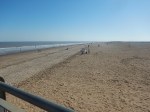
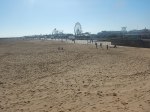

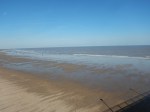
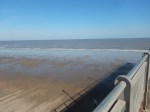
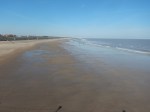
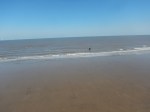
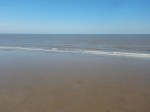
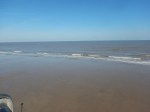
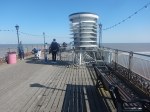

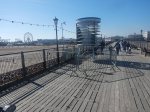

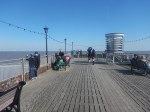
Note.
- The wind turbines on the horizon in the first seven pictures are the 270 MW of the Lincs wind farm and the 194 MW Lynn and Inner Dowsing wind farm.
- All wind turbines are just a few miles offshore.
- All turbine in these wind farms has a capacity of 3.6 MW.
The small cylindrical object actually on the pier in the last five pictures is also a wind turbine.
It is a vertical-axis turbine from Ventum Dynamics of Norway.
In Skegness Wind Turbine Trial To Light Up Pier In UK First, I wondered if it is noisy! It is not!
Skegness Wind Turbine Trial To Light Up Pier In UK First
The title of this post, is the same as that of this article on the BBC.
This is the sub-heading.
A Lincolnshire seaside pier is being lit up at night with the help of a new mini wind turbine.
These are the first three paragraphs.
One of the 6ft (2m) vertical turbines has been installed on Skegness Pier with another fitted on a factory roof in Spalding.
They are able to capture wind from all directions without turning, making them low maintenance.
Both are made by Norwegian company Ventum Dynamics, which is testing the technology with local councils.
I believe it is one of those ideas, that proves the Sliced-Bread Theory of Innovation.
I have a few thoughts.
Design
The design looks clean, modern and unobtrusive.
I don’t know what the noise level is like, but I suspect good design means, it could be fairly low.
I’ll just have to visit Skegness on a windy day, which won’t be a difficult thing to arrange.
Easy To Add To An Existing Or New Building
The Ventum web site has some good pictures.
From my flying experience, I suspect that the higher a turbine is mounted, the more power will be generated.
The only problem would be the heritage lobby.
This picture shows Oakwood station on the Piccadilly Line.
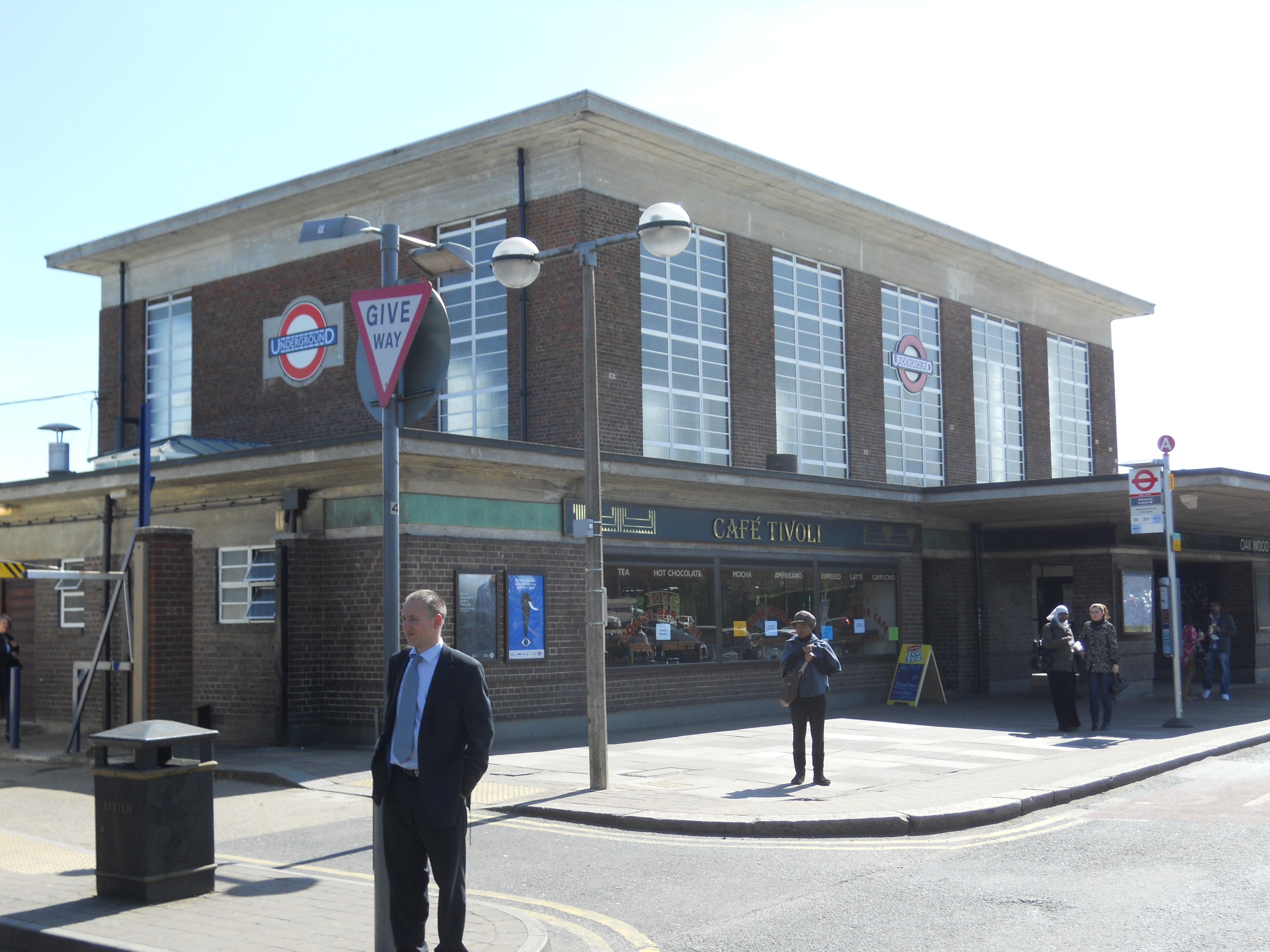
Note.
- The station is the second most Northerly on the line.
- It opened in 1933.
- It is a classic Charles Holden design.
- It is a Grade II* Listed building.
- The station is on top of a hill and has an elevation of 71 metres above sea level.
It might be the ideal place to put perhaps six turbines on the roof.
But would the heritage lobby allow it?
Remote Power
Teamed with a battery, they would be the ideal remote power solution for buildings and locations without a mains supply.
Finance
I used to part-own a finance company and feel that these turbines would be attractive to a finance company, if ethically sold.
Conclusion
I like them!
Zero-Carbon Lighting Of Large Spaces
In Cockfosters Train Depot – 12th January 2023, I took a series of pictures of Cockfosters Train Depot, of which these are a selection.

Note, the lamp clusters on top of tall poles to light the area.
You see lots of these lights to illuminate play areas, car parks, rail sidings and truck depots.
Could a SeaTwirl or another vertical wind turbine be placed as high as possible up the pole, that supports the lights?
- A battery would be needed for when the wind doesn’t blow.
- A control system would be used to use the lights, when they are needed.
- The poles would be able to be laid down, like many lights can be, for servicing from the ground.
Cockfosters would be an excellent location for a test, as the wind is always blowing and the site has an altitude of nearly a hundred metres.
Would A Solar Roof With Added Vertical Turbines Work?
This picture shows Oakwood station on the Piccadilly Line.
Note.
- The station is the second most Northerly on the line.
- It opened in 1933.
- It is a classic Charles Holden design.
- It is a Grade II* Listed building.
- The station is on top of a hill and has an elevation of 71 metres above sea level.
This Google Map shows a close-up of the roof.
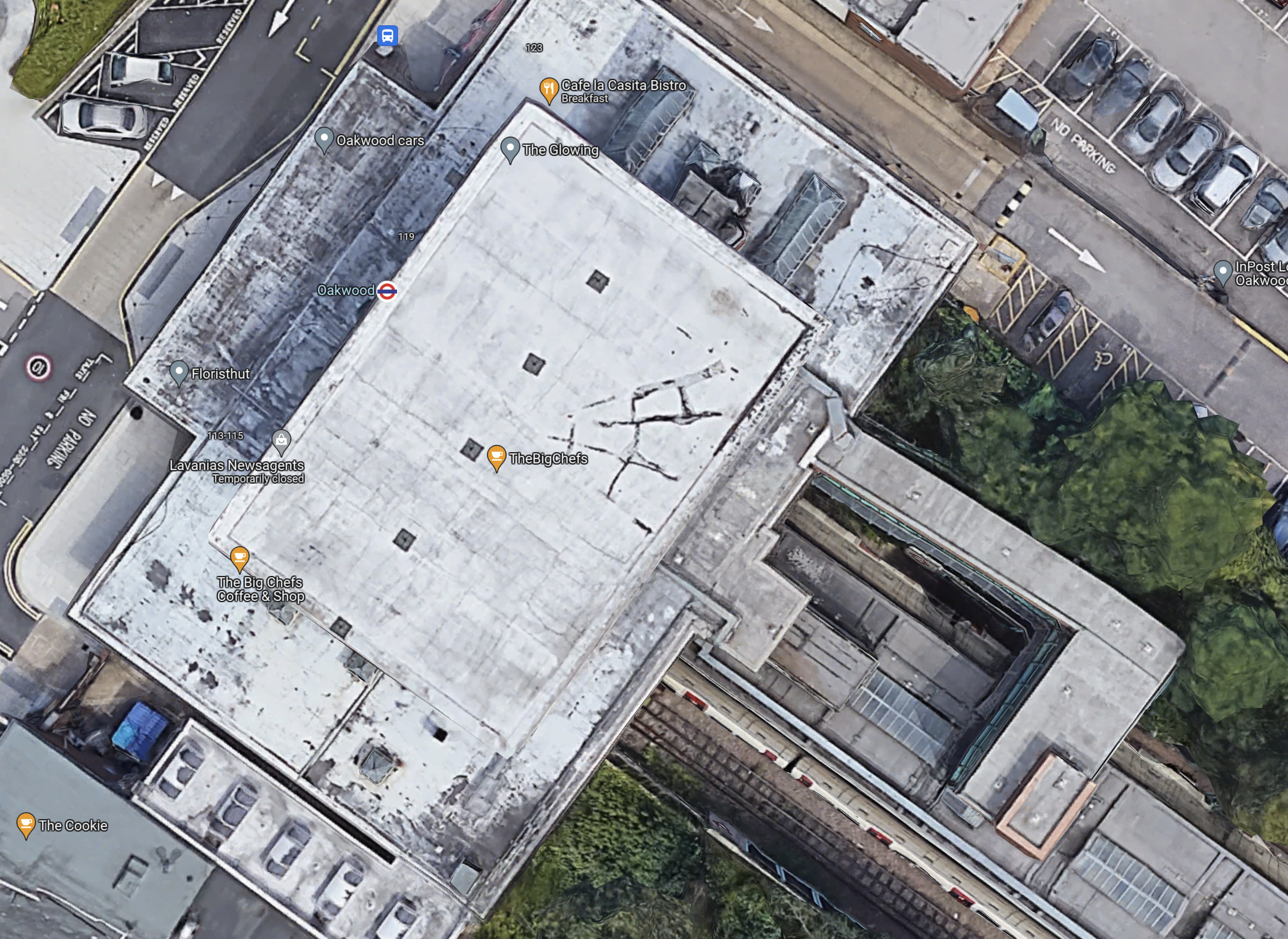
There might be a few aerials on the roof, but no solar panels.
Oakwood’s Location And Weather
I used to live near Oakwood station and it had its disadvantages.
- Cycling home was always up a steep hill.
- It could get very cold at times.
There even used to be a plaque at the station, which said that if you flew East, the first land you would hit would be the Urals.
Oakwood station could be an ideal renewable power station.
- The concrete and brick box of the station is probably exceedingly strong.
- Solar panels could cover the flat roof.
- SeaTwirls or other vertical turbines could be mounted around the solar panels.
- There could still be spaces for the aerials.
- I wonder what the reaction of English Heritage would be.
Should we call this mixed solar and wind power generation, hybrid renewable energy? Or do we overdo, the use of hybrid?
London Underground have other stations of a similar design including Sudbury Town and Acton Town.
The Wider Area To The West Of Oakwood Station
This Google Map shows the area to the West of Oakwood station.
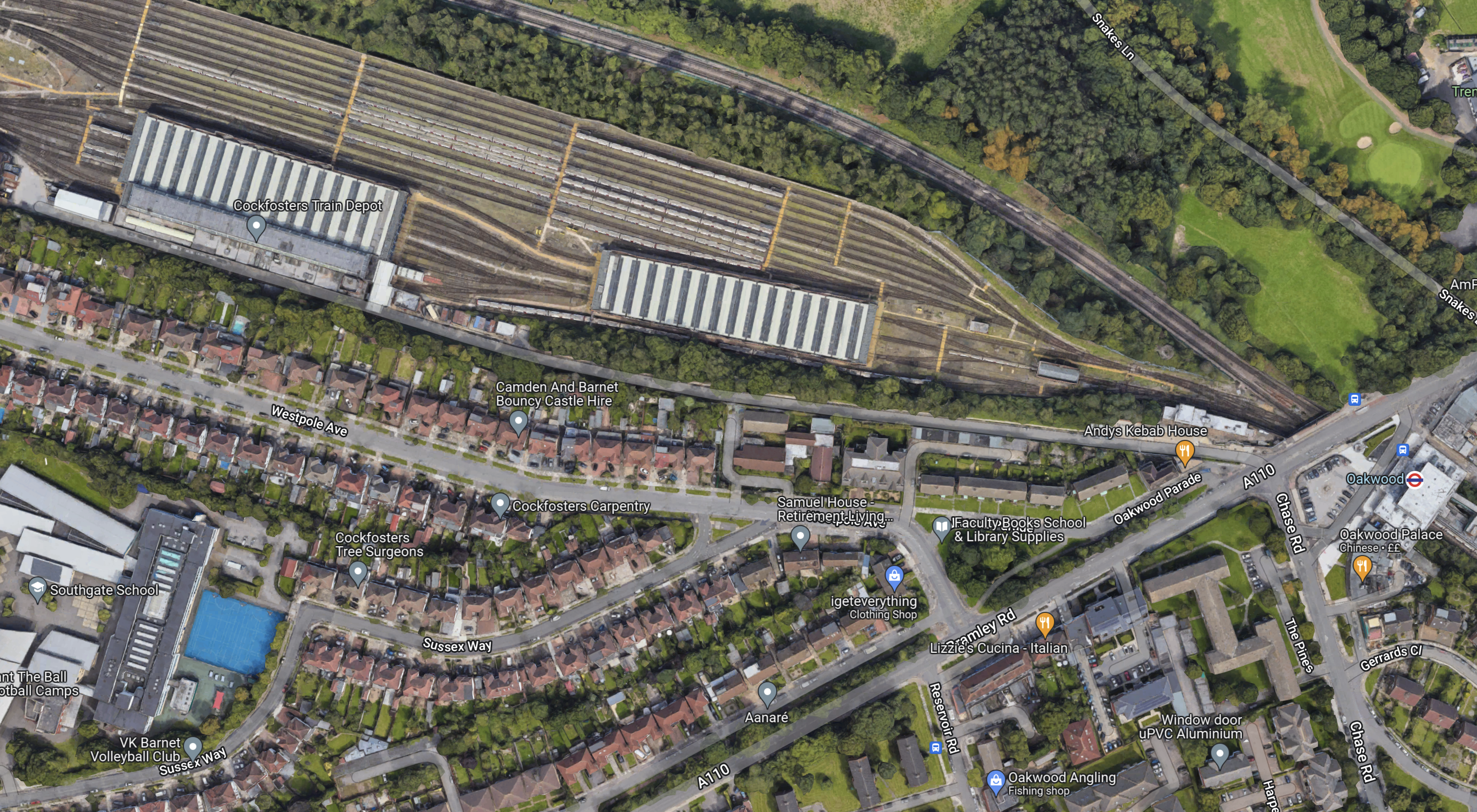
Note.
- The striped roofs at the top of the map, with sidings for trains to the North, is Cockfosters Train Depot for the Piccadilly Line..
- The large building in the South-West corner is Southgate School, which I watched being built in the early 1960s, from my bedroom window in our house opposite. It is a concrete frame building typical of the period.
- Oakwood station is at the East side of the map and indicated by a London Underground roundel.
I think the possibilities for hybrid power generation in this area are good.
Cockfosters Depot
Cockfosters Depot could be an interesting site to develop as a renewable power station.
- There’s no way the site could be developed for housing, as it’s in the Green Belt.
- Road access is bad, but access for trains is good.
- I estimate that the depot is an area of at least five square kilometres.
- It’s still windy in the depot.
But it could have a solar roof and a few vertical wind turbines over the whole depot as designs and panels improve.
Southgate School
Southgate School could have a similar setup to Oakwood station.
Opportunities At Cockfosters Station
This Google Map shows a 3D image of Cockfosters station and the buildings around it.

Note.
- Cockfosters station is indicated by the roundel.
- The station is a Grade II Listed building.
- The station has an elevation of 97 metres.
- Half of the station car park is going to be turned into housing.
- Trent Park lies to the North of the station.
- The road in front of the station is Cockfosters Road, which to the North joins the M25 at Junction 24.
- The building between Cockfosters Road and the railway used to be offices, but it is now being converted into housing.
That high roof of the housing development, must be an ideal candidate for solar panels and vertical wind turbines.
Conclusion
I have tried to show the potential of just one of the small hills that ring London.
 The Anonymous Widower