Could Anglia Railways’ London Crosslink Be Recreated As Part Of The London Overground?
This is the first paragraph of the Wikipedia entry for the original London Crosslink.
London Crosslink was a passenger train service operated by Anglia Railways between Norwich and Basingstoke, using the North London Line to bypass central London. Class 170 Turbostar diesel multiple units were used, and the service operated between 22 May 2000 and 28 September 2002, supported by funding from the Strategic Rail Authority through its Rail Passenger Partnership fund.
Note.
- The service called at Diss, Stowmarket, Ipswich, Colchester, Whitham, Chelmsford, Ingatestone, Romford, Stratford, Highbury & Islington, Camden Road, Willesden Junction, West Hampstead Thameslink, Brentford, Feltham, Staines, Woking, and Farnborough (Main)
- It ran six times on Monday to Friday and five times on Sunday.
- Feltham and Woking stations have a coach link to Heathrow.
- Journeys took around 3 hours and 44 minutes.
Over the years, attractions and other rail lines and stations served by the route have changed. improved and been added.
- In 2006, the Arsenal’s Emirates Stadium opened within walking distance of Highbury & Islington station.
- In 2012, the Olympic Stadium opened at Stratford and is now used by West Ham United.
- In 2020, Brentford Stadium opened within walking distance of Brentford station.
- There are long-term plans for a station at Brentford stadium.
- In 2022, Romford and Stratford stations were connected to the Elizabeth Line.
- In 2025, Beaulieu Park station was added to the Greater Anglia Main Line.
- In 2026, both ends of the route came under the control of Great British Railways.
At some point in the future, Old Oak Common Lane station will open to link the route to High Speed Two, the Great Western Main Line and the Elizabeth Line.
In Can The Signalling Of The London Overground Be Improved?, I looked in detail at the signalling of the London Overground and if it could handle more trains.
My conclusion was that on the East and North London Lines, another three trains per hour (tph) could probably be accommodated, which over an average day was probably around sixty trains.
As a restored London Crosslink would need just six paths per day, I would suspect the service could be restored, if it were thought to be a good idea.
I certainly feel that capacity would not be a problem.
These are a few other thoughts.
Will There Be Political Problems?
Providing the London Mayor approves, I can’s see any problem with Labour and I can’t see other parties objecting if passengers like it.
Would It Be Sensible To Use Lumo Branding And Trains?
Consider.
- Lumo is trusted branding.
- A five-car Lumo Class 803 train is 132 metres long and a pair of four-car London Overground Class 710 trains is 166 metres long, so I suspect platform length problems will be minimal.
- I doubt there will be problems on the Greater Anglia network.
- Stratford and Norwich is mainly a 100 mph network.
- Not all parts of the route have 25 KVAC overhead electrification, but batteries can be fitted to the Class 803 trains, that will cover any gaps.
- My calculations show that the modern trains will be twenty-two minutes quicker, than Anglia Railways Class 170 diesel trains.
- At one point Anglia Railways was owned by First Group, so FirstGroup may have knowledge of the problems of the route.
I believe it would be sensible to use Lumo branding and trains.
Could The Route Be Extended?
Consider.
- It could probably be extended to Winchester, Southampton and Bournemouth in the South.
- If offshore hydrogen takes off at Great Yarmouth, it might be worth extending with a reverse to Yarmouth in the North.
- Yarmouth has had a direct service from London in the past.
The service could also develop days out by the sea.
Heathrow Rail Link Project Could Be ‘Reopened’
The title of this post, is the same as that of this article on the BBC.
This is the sub-heading.
Network Rail has said plans for a rail link between the Great Western mainline and Heathrow Airport could still move forward if funding is found in the future.
These three paragraphs give the current status of the scheme.
The Local Democracy Reporting Service recently reported that the project had been put on hold.
It began in 2012 and involved proposals for a 4 mile (6.5km) rail link to allow train services from Reading and Slough in Berkshire to reach Heathrow using a tunnel.
The £900m scheme would allow people living to the west of Heathrow to travel direct to the airport, instead of having to go into London.
These are some other facts and my thoughts.
The All-Party Parliamentary Group (APPG) For The Western Rail Link To Heathrow
According to the BBC article, this has now been established and this is said.
Labour MP for Slough, Tanmanjeet Singh Dhesi, held a debate in parliament on the western rail link in April and established the All-Party Parliamentary Group (APPG) for the Western Rail Link to Heathrow, to make sure it “remains on the government’s agenda”.
He said the project had been “beset by delays and funding challenges” but still had “wide cross-party and local support”.
Parliamentary backing is surely a good thing.
The Current Scheme
The BBC article shows this map with a rail link connecting the Great Western Main Line to Terminal 5 railway station.
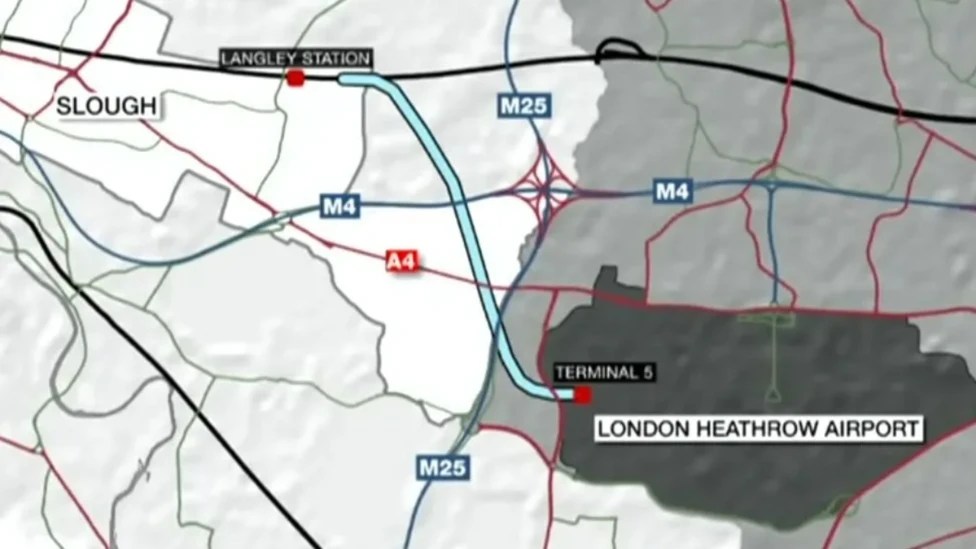
Note.
- The rail link starts from East of Langley station.
- Terminal 5 station can take full-length Elizabeth Line trains.
- Main line trains from Bristol, Cardiff and Wales and the West should be able to access Heathrow.
But I suspect, that there would be extensive changes to Heathrow’s railways to access the other terminals. This would explain the near billion pound cost of the link.
I also suspect that it would take about eight to ten years to build and from what I havc heard, the rail link is urgently needed.
RailAir
RailAir is the current way of travelling between Reading station and Heathrow Airport.
This is the first paragraph of RailAir’s Wikipedia entry.
RailAir describes a number of airport bus and coach services designed to connect the National Rail network to airports in the United Kingdom. Services are currently concentrated on Heathrow Airport, with one other from Luton Airport. RailAir services are operated as public transport services by or on behalf of train operators, where the whole journey is paid for as a through-ticket which combines the railway and bus journey, although journeys can be made using the bus only. As such, many are operated where the train and bus operator are owned by the same company.
Could RailAir be updated to be a more frequent and integrated service?
CoacH2
This page on the Advanced Propulsion Centre UK web site is entitled CoacH2 – Next Generation Hydrogen Fuel-Cell Coach Powertrain Demonstrator.
This is the sub-heading.
Accelerating the development of zero-emission hydrogen fuel-cell electric coaches, with a full on-vehicle technology demonstrator.
These are the first two paragraphs.
Coaches are an integral part of the public transport network, with over 30,000 diesel coaches operating across the UK and Ireland. Due to the specific demands of coach operation (motorway driving, long-range, high passenger and luggage loading capacity) decarbonisation options for this sector are extremely limited with hydrogen fuel-cell technology considered the most viable choice. This project will tackle this difficult to decarbonise sector by developing, testing and validating an innovative hydrogen fuel-cell powertrain suitable for coach applications.
Delivered by a Northern Irish consortium spanning OEM, coach operator and academia, CoacH2 will accelerate the development of zero-emission, fuel-cell electric coaches, with a full on-vehicle technology demonstrator to be manufactured and showcased at Cenex Expo 2024.
As I indicated in British Buses For British Bottoms, Wrightbus build a good well-built, smooth-riding and comfortable bus, so now they can add hydrogen-powered coaches to the product range.
This press release on the Wrightbus web site is entitled Wrightbus Coach Demonstrator Unveiled At Cenex Expo, gives more information on CoacH2.
- The demonstrator has a power of 300 Kw.
- It has a range of 1,000 km. on one refueling.
- An internet search reveals a launch date of 2026 for the hydrogen-powered coach.
I wonder, if RailAir changed their coaches to these new Wrightbus hydrogen-powered coaches, they would transform travel to airports all over the UK.
If the hydrogen-powered coaches are of the same quality of their hydrogen-powered siblings, they will be a quality product with good road-holding, sufficient performance and superb passenger comfort.
RailAir could be the ideal, initial application.
Conclusion
A proper rail link to Heathrow from Reading is needed, but it will take at least ten years to build and cost a billion pounds.
However the RailAir links to Heathrow from Reading and Woking can be improved by using high-performance Wrightbus hydrogen-powered coaches.
Scrap Rail Caused Train Derailment – Network Rail
The title of this post, is the same as that of this article on the BBC.
These three paragraphs introduce the story.
Scrap rail left on tracks following engineering works was the cause of a derailment in Surrey, according to Network Rail.
The company said a train hit the object at about 05:50 GMT on Monday in a 90mph area near Walton-on-Thames.
A Network Rail Wessex safety bulletin said it was the first train on the fast line following the weekend works.
I wrote about this incident before in Woking: Train Derailed On 90mph Line After Hitting Object On Track.
Someone is going to get their knuckles rapped or posterior spanked after this serious incident.
Woking: Train Derailed On 90mph Line After Hitting Object On Track
The title of this post, is the same as that of this article on the BBC.
This is the sub-heading.
Disruption has hit a rail operator’s entire network after a train hit an object on a 90mph track in Surrey.
These three paragraphs describe the derailment.
The incident initially closed four tracks between Woking and Surbiton before disruption spread across the South Western Railway (SWR) network.
Network Rail said the train hit the object at about 05:50 GMT in a 90mph area near Walton-on-Thames in Surrey.
SWR said services were impacted between London, Exeter St David’s, Portsmouth Harbour and Weymouth.
It appears that no-one was hurt.
But derailments like this have happened before.
This article from The Mail is entitled Furness Passengers Able To Walk Away From Major Rail Accident.
These paragraphs detail the story.
Furness rail passengers were woken from their slumbers 50 years ago as the carriages of an express train heading for Barrow came off the rails at 80mph.
Half-dressed and dazed sleeper-car travellers from London were led to safety up a grass embankment near Warrington in 1967.
Amazingly, not one of the passengers was killed or badly injured in what could easily have been a major disaster
The Mail on Friday, September 15, in 1967 noted: “Furness and West Cumberland passengers hung on for their lives when 11 coaches of the London-Barrow express hurtled off the rails at 80mph near Warrington today.
“The coaches bounced and zig-zagged for nearly a quarter of a mile, tearing up the permanent way and completely blocking the main London-Glasgow line.
“Miraculously, only one of the 60 passengers, who included many people from Furness and West Cumberland, was injured.
“He was Rohan Kanhai, the West Indian test cricketer, who was on his way to Blackpool.
“He was taken to Warrington Infirmary with an arm injury. After receiving treatment he was allowed to continue his journey.
I remember the story for two reasons.
- Obviously, because a well-known sportsman was involved.
- But also because British Rail put the low injuries down to new couplings between the coaches, which kept the train together.
Could it be that over fifty years after the Warrington derailment, no injuries occurred because the improved design of the train kept it all in one piece and most of the damage was to the infrastructure?
A Dreadful Hot Chocolate At Woking Station
On my trip to the Isle of Wight today, to ride on the new Class 484 trains on the Island Line, I got on a Portsmouth & Southsea train, rather than one to Portsmouth Harbour station.
I was told be the guard, that it would be convenient to change at Woking station, which I did.
I took these pictures at the station.

Note.
- I alighted on Platform 5, where there is a Starbucks.
- I bought a hot chocolate in the Starbucks.
- I then moved to Platform 4 to catch my train to Portsmouth Harbour.
- It was a bit of a precarious platform transfer as the lifts are at the other end of the station.
- Where there was a Pumpkin.
It’s a pity, I didn’t wait to get my drink, as it was one of the worst Hot chocolates I’ve ever tasted.
Later I had a much better hot chocolate in another cafe at Ryde.
Heathrow Southern Railway And Woking Station
This news item on the Heathrow Southern Railway web site is entitled Plans Announced For £1 billion Rail Link Between Southampton And Heathrow.
This is an extract.
We hope three trains an hour (tph) could be running to Southampton by 2026.”
That is the message from Graham Cross, chief executive of Heathrow Southern Railway (HSR), which is preparing plans for a £1 billion rail link between the city and the UK’s biggest airport.
This map shows a schematic of the Heathrow Southern Railway.
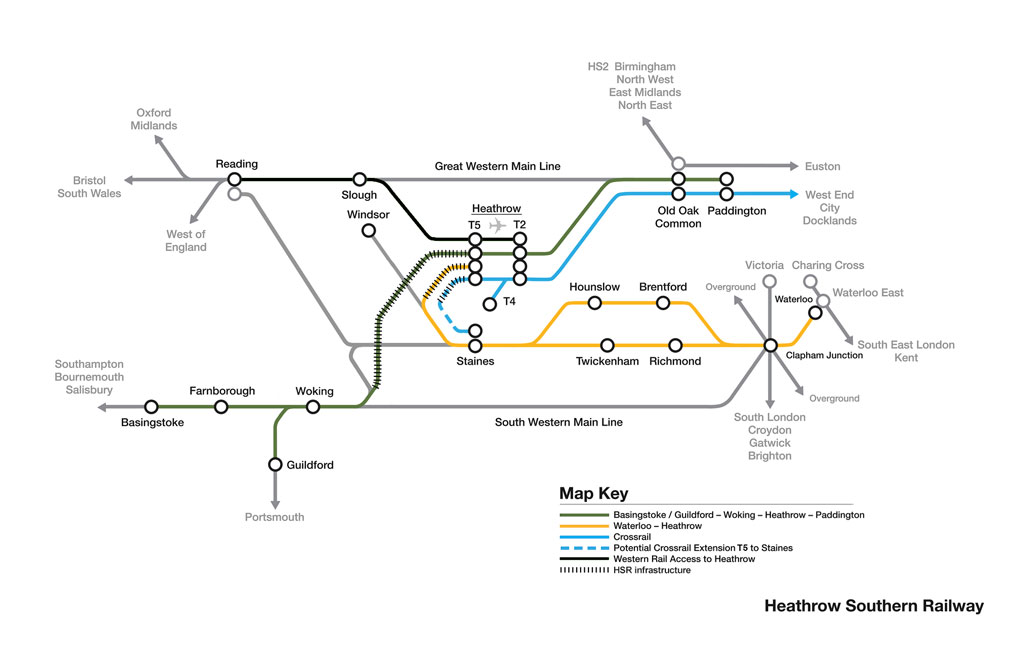
Hethrow Southern Railway’s plans are as follows.
- A new section of railway will connect the Chertsey Branch Line to Heathrow Terminal 5 station.
- This new section of railway will be built alongside the M25 to minimise environmental disruption.
- From there trains will call at Heathrow Central and Old Oak Common stations before terminating at Paddington station.
- Trains will connect Heathrow to Woking station and on to Basingstoke and Guildford.
Currently, the service between Southampton Central and London is as follows.
- South Western Railway – One tph – Poole and Waterloo
- South Western Railway – One tph – Weymouth and Waterloo – Stops at Woking
- South Western Railway – One tph – Weymouth and Waterloo
- Southern – One tph – Southampton Central and Victoria – Stops at Gatwick
If we take Graham Cross at his word, that the following frequencies to various stations.
- Gatwick Airport – 1 tph
- Heathrow Airport – 3 tph
- Old Oak Common – 3 tph
- Victoria – 1 tph
- Warerloo – 3 tph
- Woking – 4 tph
Passengers from Southampton.Bournemouth, Poole and Weymouth would have a much larger choice of London stations.
As Heathrow Southern Railway also plan to run two tph between Paddington and Guildford via Heathrow, Woking could become a busier place.
These pictures show Woking station.
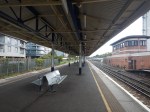
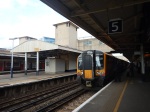
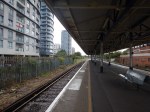
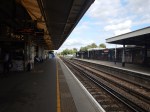
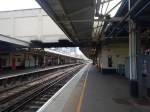
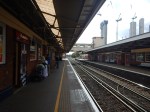

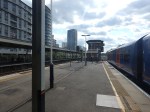
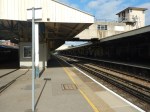
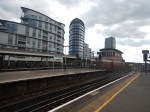

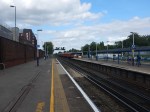
This Google Map shows the station.
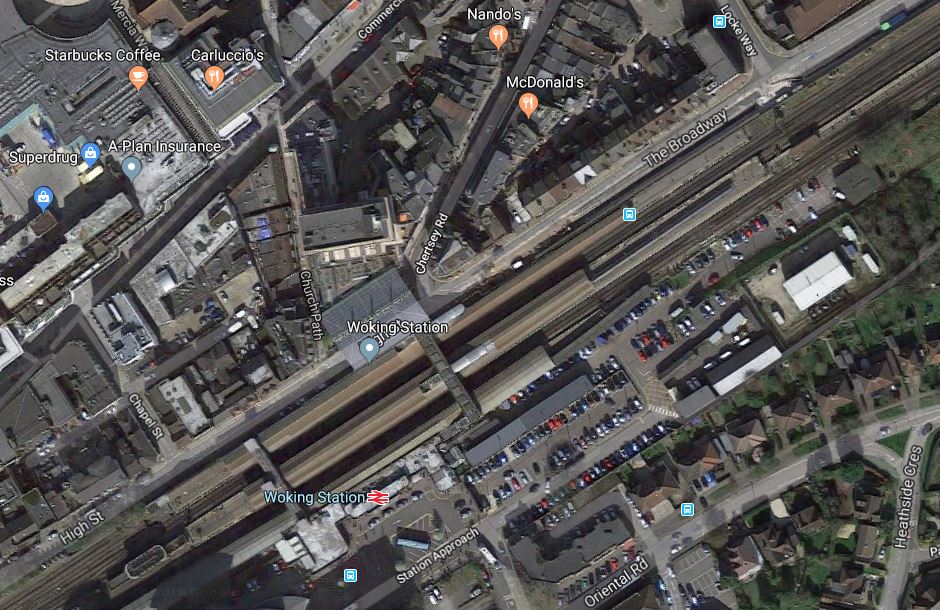
Note some of the characteristics.
Four Long Through Platforms
The station has four long through platforms, which can accommodate the longest ten-car trains used by South Western Railway.
Twelve-Car Class 387 Trains
Two five-car Class 444 trains are 230 metres long, when running as a ten-car train.
If Heathrow Southern Railway want to run Class 387 trains, train lengths will be as follows.
- Eight cars – 163 metres
- Twelve cars – 280 metres
Twelve-cars trains may be too long for the platforms at Woking and other stations. but as Heathrow Southern Railway won’t open for a few years, I wouldn’t be surprised to see new trains used by Heathrow Express and Heathrow Southern Railway.
Splitting And Joining Trains At Woking
I also think, that these platforms are ideal for pairs to join and split here, so that trains are say tencars between Woking and Paddington via Heathrow and Old Oak Common and five cars to the South West of Woking.
Conclusion
Woking’s long platforms will be used to great advantage by Heathrow Southern Railway to match their services to the capacity needed.
- For passengers and workers to and from Heathrow Airport.
- For commuters and passengers to and from Paddington, Central London, the City of London and Canary Wharf
- For passengers to and from HS2 at Old Oak Common.
Heathrow Southern Railway will do a lot more, than just provide Southern access to Heathrow.
A Shorter Bay Platform At The London End
There is a shorter bay platform at the London end of the station, which is currently used for stopping trains to London.
It can’t handle long trains like the through platforms and for this reason along, I doubt it will be used by services to Heathrow.
But I wouldn’t be surprised to see a second bay platform added to improve capacity.
A Shorter Bay Platform At The Country End
Wikipedia says this about Plstform 6, which is a short by platform facing West.
The first train of the day to Portsmouth Harbour via Eastleigh starts from this platform, and it is often used to stable diesel locomotives in the event of a train failure.
It is probably best filed under operationally useful and I doubt it will be used by Heathrow Southern Railway, as it faces away from Heathrow.
Woking Station Is Surrounded By Tower Blocks
In the pictures, you can see tower blocks rising all round the station.
There will obviously be more, even if as I suspect the local residents object.
But we do need more housing in this crowded country of ours and Woking is a convenient distance from London for commuters.
Should Tracks At Woking Station Be Remodelled?
After Heathrow Southern Railway opens, trains calling at Woking station will use the following routes towards London.
- Via Clapham Junction to Waterloo.
- Via Heathrow to Old Oak Common and Paddington
And the following routes away from London.
- Via Basingstoke to Bournemouth, Exeter, Poole, Salisbury, Southampton and Weymouth.
- Via Guildford to Portsmouth
An ideal layout might be two wide island platforms, as they have at Reading stations.
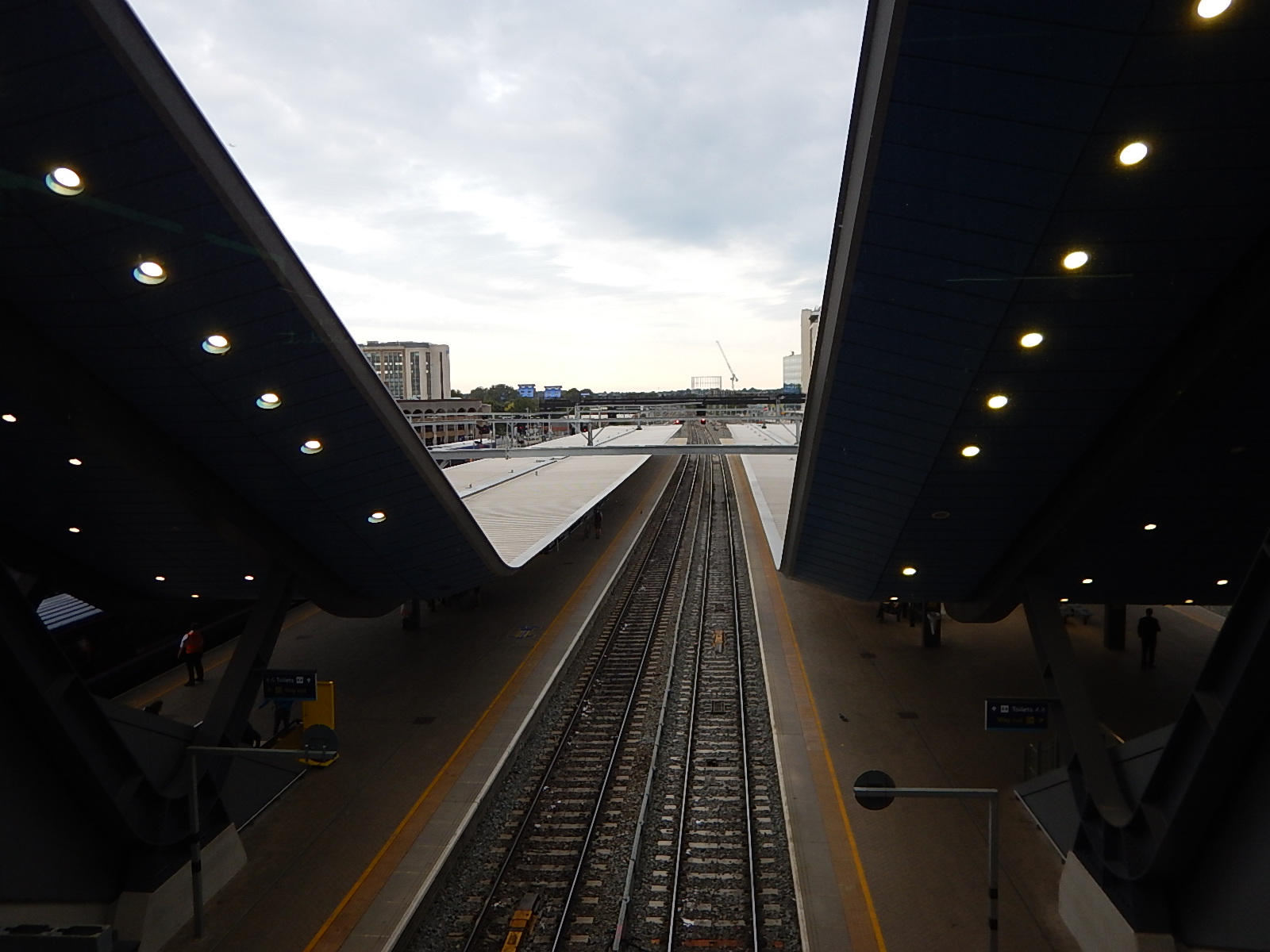
The platforms are connected to a wide overbridge with coffee kiosks and useful shops, by escalators and lifts.
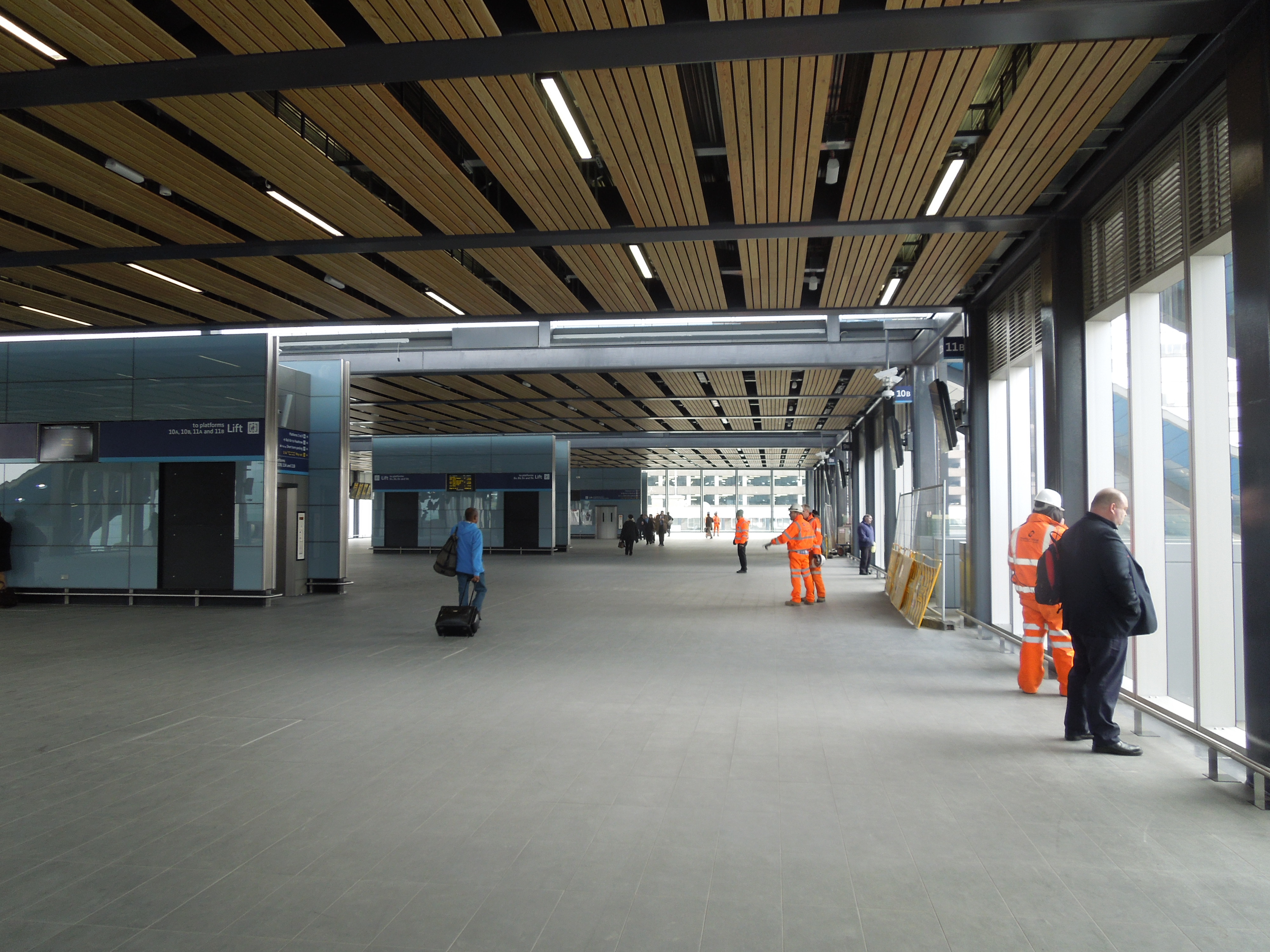
The picture shows the wide open spaces of the overbridge at Reading on the day it opened.
At Reading passengers can change trains, by waiting on the platform or sitting on the overbridge.
Would a similar design work at Woking?
Certainly something designed on similar principles to fit the circumstances of Woking station would!
Reading incidentally manages at least six tph on each face of the wide island platforms.
They are able to do this because.
- The platforms are very wide.
- Trains are increasingly Class 800 trains with modern doors.
- There are both up and down escalators.
- There are lifts.
I suspect, that when InterCity 125 trains no longer call at Reading and all trains are using modern in-cab signalling, that the frequencies of train through Reading will rise significantly.
Space To The West
To the West of Woking station, where the routes to Guildford and Basingstoke divide, there is a lot of space and if required a flyover or dive-under could be built to minimise the need for flat junctions.
West Byfleet and Byfleet & New Haw Stations
West Byfleet and Byfleet & New Haw stations are between Woking station and Byfleet Junction, where Heathrow and Waterloo services will divide.
This map from carto.metro.free.fr shows Byfleet & New Haw station and Byfleet Junction.
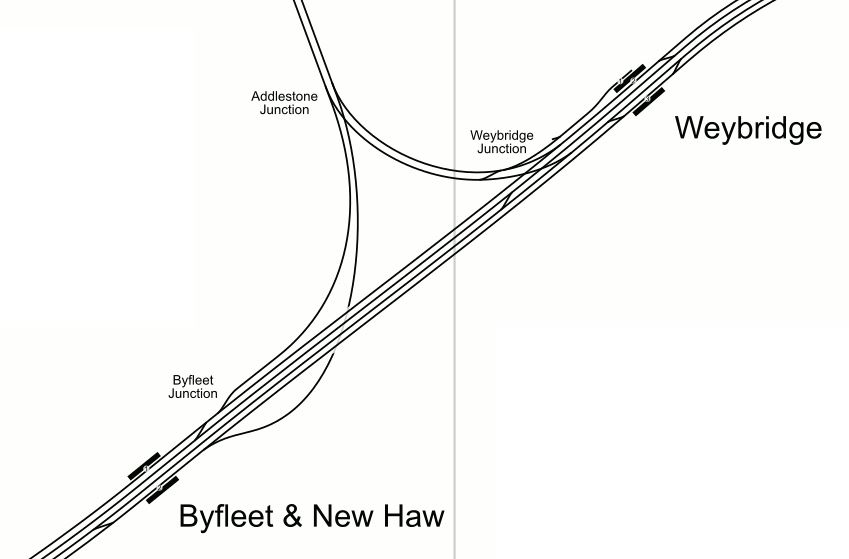
Note.
- There is only four tracks between Byfleet junction.
- Byfleet junction connects to the slow lines.
- Crossovers connect the slow and fast lines.
This layout means that fast trains coming from Heathrow will have to go through the slow platform at Byfleet & New Haw station.
There are two ways to increase safety.
- Increase the number of tracks between Woking station and Byfleet Junction to six, with dedicated tracks for Heathrow services.
- Rebuild the platforms on the two intermediate stations to the design rules in Two Platform Stations With 125 mph Trains.
It all depends, whether Heathrow Southern Railway want to use 125 mph trains on their services to Heathrow!
I discussed this in Will Heathrow Southern Railway Use Trains Capable Of 125 mph?, where I came the conclusion that the railway will be built to that standard.
Will Woking Station Be Rebuilt?
To work efficiently, as a railway station, I very much feel that Woking station will be rebuilt.
As at Reading, this will probably be done without too much disruption to passengers and trains.
It is quite a large station site and I wonder, if the ideal solution would be to build a concrete deck over the station and railway and put developments like housing, offices, shops, cafes and green spaces over the top.
Why shouldn’t we create more land for useful purposes?
The Station Concourse
The station could have a massive concourse.
- Wide lines of gates on either side would give quick access to the Town Centre and the Car Parking.
- Escalators and lifts would lead down to the platforms
- Useful shops and cafes would be on the concourse.
Think Edinburgh Haymarket station, only bigger, more spacious and with escalators
A Capacity Of 24 Trains Per Hour
The new station should be designed to allow up to 24 tph, through the station.
Currently, services include
- 14 tph to Waterloo
- 4 tph to Portsmouth
- 2 tph to Salisbury and/or Exeter
- 6 tph to Southampton, Bournemouth and/or Poole
Perhaps it would be sensible to design fora capacity of 12 tph on all branches.
With modern signalling and perhaps a degree of automatic train control, these frequencies shouldn’t be a problem.
Wide Platforms
Wide platforms, that allow passengers to change trains, by just getting off one train and onto another a few minutes later are an essential.
A double-faced island platform could be used or a single wide platform in each direction as on Thameslink at St. Pancras station.
The platforms at St. Pancras work reasonably well and have been designed to handle 24 tph.
- They have three escalators.
- They have a lift.
- The platforms are fully-manned.
- Passenger information displays are magnitudes better than most stations.
- There are Harrington Humps for step-free access to the Class 700 trains.
- Only one class of train uses the platforms.
- Modern digtal signalling is used.
- Passengers use the station to change trains, when perhaps they are on a train going to one direction and need another.
To complicate matters at St.Pancras, there is a flat junction to the North of the station, where services go to and from the Midland Main and East Coast Main Lines. It appears the junction causes no delays to services.
So perhaps at Woking we could see one very wide platform in each direction.
Building On Experiences At London Bridge, Reading And St. Pancras
I’m sure that Network Rail and their architects can use the experience gained at other stations in the UK to create an interchange station at Woking, that is fit for the 21st Century.
Conclusion
I feel there is a lot to be gained by creating a bold interchange at Woking station to integrate the Heathrow Southern Railway and the existing services into Waterloo
 The Anonymous Widower