Are Londoners The Tunnel Kings?
I was born in 1947 and it was in the early 1960s, that I started to develop an interest in engineering, which eventually led me to study Electrical Engineering and Electronics at Liverpool University.
Like most Londoners, I was a frequent user of the Underground and for six or seven years, I took the Piccadilly Line many days between Oakwood and Southgate to go to Minchenden Grammar School. Often, after school, I would go on to my father’s print works near Word Green tube station.
But not memories of London’s tunnels were so memorable at that time. One day, we were driving to see my Uncle Bert in Broadstairs and we were held in the Blackwall Tunnel for an hour or so because of an accident.
Perhaps, this is why I can remember a black-and-white video of digging the Western Tunnel of the Dartford Crossing so vividly. But as Raymond Baxter probably explained to BBC viewers at the time, it dug using a Greathead shield under pressure to keep the water out. It was probably the last tunnel dug under the Thames using methods, that would have been familiar to Victorian engineers.
This British Pathe video shows some of the construction of the Western tunnel.
This paragraph from the Wikipedia entry for the Eastern Tunnel describes its construction.
Construction was approved in April 1971, with an initial expected opening date in 1976. Work was delayed due to a lack of funds, which was resolved by EEC funding granted in 1974. The second tunnel opened in May 1980, allowing each tunnel to handle one direction of traffic, by which time the joint capacity of the two tunnels had increased to 65,000 vehicles per day. Connection of the crossing to the M25 was completed on the northerly Essex side in September 1982 (Junction 31), and to the southerly Kent side in September 1986 (Junction 1a)
The tunnels may be inadequate in terms of capacity, but they have certainly done a reliable job for sixty and forty-three years respectively.
There are other tunnels under the Thames, that have been built in my lifetime.
- Thames Cable Tunnel – 1970 – National Grid’s 400 kV cable.
- High Speed One – 2007
- Dartford Tunnel (East) – 1980
- Dartford Tunnel (West) – 1963
- Dartford Cable Tunnel – 2004
- Docklands Light Railway Tunnel – 2009
- Elizabeth Line Tunnel – 2014
- Millennium Dome Cable Tunnel – 1999
- Jubilee Line Tunnels – 1999 – Planned by Artemis
- Blackwall Runnel (East) – 1967
- Isle of Dogs Jubilee Line Tunnels – 1999 – Planned by Artemis
- Docklands Light Railway Tunnel – 1999 – Planned by Artemis
- Deptford Cable Tunnel –
- Jubilee Line Tunnels – 1999 – Planned by Artemis
- Victoria Line Tunnel – 1971
- New Cross to Finsbury Market Cable Tunnel – 2017
- Wimbledon to Pimlico Cable Tunnel – 1996
- London Power Tunnels – 2018, 2011
There are also these tunnels, which don’t go under the Thames
Bank Station Expansion And New Southbound Northern Line Tunnel – 2022
- Elstree to St. John’s Wood Cable Tunnel – 2005
- Heathrow Rail Tunnels – 1998
- Lee Tunnel – 2016
- Limehouse Link Tunnel – 1993
- Lower Lea Valley Cable Tunnels – 2008
- Northern Line Extension To Battersea – 2021
- Piccadilly Line Extension To Heathrow – 1975-2008
- Thames Tideway Tunnel – Estimated completion in 2025 – Tunnelling ended in 2022.
- Thames Water Ring Main – 2010
Note.
- The date is the opening date.
- I am pleased to see that at least some projects were planned, with the software, I wrote in a Suffolk attic.
In my lifetime, at least 27 substantial tunnels have been completed, a very large proportion of which have been on time and on budget, with the possible exception of the Heathrow Rail Tunnels, which collapsed.
So Why Has London Got A Good Record On Tunnelling?
In Millicent And Ursula Prepare To Go Tunnelling, I describe my visit to the Tideway Open Day today to see the tunnel boring machines; Millicent and Ursula before they went tunnelling.
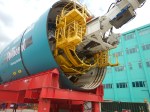
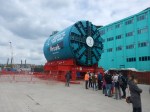
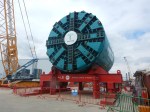
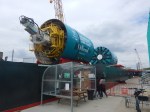
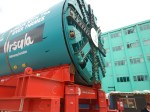
On that Sunday morning, I also chatted with the engineers and tunnelers.
- All had worked on at least one of London’s previous tunnels.
- One had worked on the Second Dartford Tunnel, the Channel Tunnel and Crossrail.
- A couple said, that after the Tideway finished, they would be off to High Speed Two.
Is London’s good record on delivering tunnels safely and on time and on budget, a case of lots of experience and practice makes perfect?
If it is, we should definitely think hard about how we handle large projects.
Wind Farms
Many have been constructed this way.
- The grid substation and connection to the grid is built.
- The foundations of the turbines are installed.
- The turbines are erected.
- All the turbines are commissioned.
This sequence or something like it can be applied to onshore and offshore wind farms.
- Most jobs are repeated many times by specialist teams using purpose-built cranes, ships and other equipment.
- Bigger wind farms, just need more repeated operations.
- All operations are generally in a small geographical area.
- I suspect specialist software has been built to project manage, the building of wind farms. If it hasn’t, I have my ideas.
Project management should be relatively easy.
Improving The Wood Green And Moorgate Public Transport Corridor
This morning I went for coffee with an old school friend from Minchenden Grammar School at Southgate station.
Southgate is not a bad place to meet someone.
- There are a couple of good coffee shops.
- There are plenty of buses.
- It has a couple of the better chain restaurants including a Pizza Express.
- The area also has a lot of memories for me.
It also has one of London’s most iconic Underground stations.
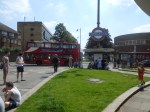
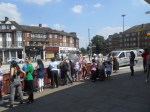
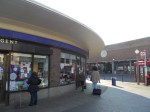
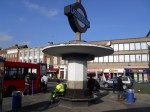
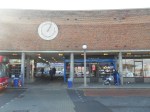
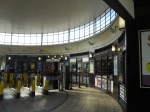
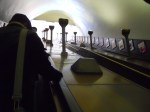
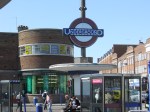
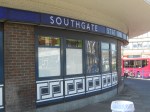
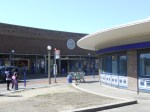
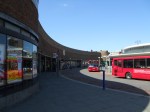
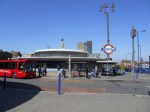
It may look familiar, as it regularly crops up in film and television dramas.
- One station guy told me, that the ticket barriers have been designed to be easy to remove, so filming of an historic drama is possible.
- It was used in The End Of The Affair to portray a Central London station.
- As the escalators have the same bronze fittings as Moscow, they could be used in a story set in Russia.
As the Piccadilly Line doesn’t go anywhere near my house, to get to Southgate, I take a 141 bus to and from a convenient Piccadilly Line station.
- Going North, I changed at Manor House station.
- Coming South, I changed at Turnpike Lane station.
- I could have also have changed at Wood Green station.
The journey home had four major problems.
- The bus stop at Turnpike Lane station, is a few hundred yards from the station.
- I waited fifteen minutes for a 141 bus.
- When it did arrive, it was so packed, it didn’t have space for a miniature dachshund to squeeze in between the feet of the standing passengers.
- The traffic was very heavy, so the journey was slow.
How can this bus route cope in the Peak, if it can’t cope on a Sunday morning?
Various issues and actions and will make these capacity issues worse.
The Victoria Line Has No Direct Connection With The Elizabeth Line
In my view, this was a mistake, although not that serious, as the young or energetic can probably walk between Oxford Circus and the Hanover Square entrance to Bond Street station on the Elizabeth Line.
Will this connection develop with coffee and snack shops to ease passenger interchanges?
When and if Oxford Circus station is ever made step-free, I can imagine a tunnel, perhaps with a moving walkway being built between Oxford Circus station and he Hanover Square entrance to Bond Street station.
There is also the cross-platform interchange at Highbury & Islington station with the Northern City Line that links with Moorgate and the City of London.
The Piccadilly Line Has No Direct Connection With The Elizabeth Line
To get between the Northern stations on the Piccadilly Line and the Elizabeth Line is either a double-change at Finsbury Park and Highbury & Islington stations or a ride on the 141 bus.
I wrote about these issues in Extending The Elizabeth Line – Improving The Northern City Line.
The Elizabeth Line Will Attract Travellers To Moorgate
I notice that my own travelling patterns have changed from using the Central, Circle, District, Hammersmith & City and Metropolitan Lines to using the Elizabeth Line since it opened and I suspect, when the Elizabeth Line is fully joined up, that more passengers will travel to Moorgate to access the Elizabeth Line.
Transport for London and the Mayor Are Rerouting The 21 Bus
The 21 bus duplicates the 141 bus between Newington Green and Moorgate station.
But it is being rerouted next year, which will increase the loading on the 141 bus.
The 141 Bus Used To Be The 641 Trolleybus
When I was a child, London’s trolleybus network was extensive and to get between Wood Green and Moorgate, you would have used the 641 trolleybus.
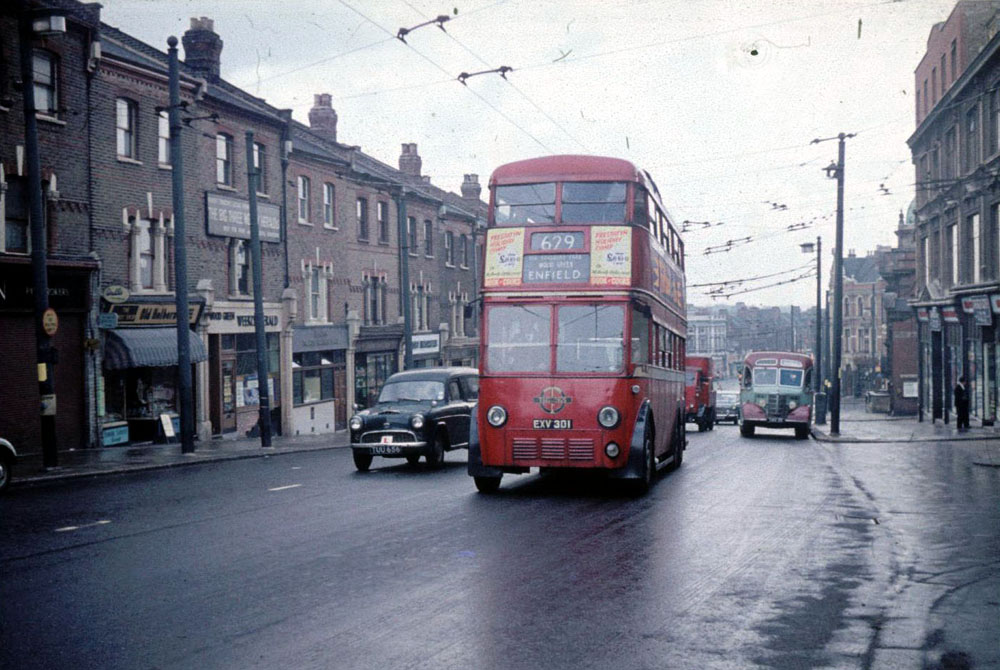
Trolleybus Ascending Jolly Butchers Hill in Wood Green
Many like me, look back on trolleybuses with affection.
Does this historical connection encourage passengers to use the 141 bus, which is the 641 trolleybus’s successor on the route?
My parents certainly had lots of trolleybus stories.
So What Could Be Done?
There are a variety of actions that could be taken to strengthen public transport between Moorgate and Wood Green stations.
Improve The 141 Bus Route
In Does London Need High Capacity Bus Routes To Extend Crossrail?, I put forward ideas for using buses to link to the Elizabeth Line.
This was my suggestion.
I suspect any route seen as an extension of Crossrail needs to have the following characteristics.
- High frequency of perhaps a bus every ten minutes.
- Interior finish on a par with the Class 345 trains.
- Wi-fi and phone charging.
I would also hope the buses were carbon-free. Given that some of these routes could be quite long, I would suspect hydrogen with its longer range could be better.
I feel that a high-quality 141 bus running every ten minutes between London Bridge station and Palmers Green, would be just what the passengers would order.
- Palmers Green bus garage is at the Northern end of the route, so could be used for refuelling or recharging.
- London Bridge station is at the Southern end of the route and was designed with an efficient bus station.
- The 141 route connects London Bridge, Bank, Moorgate and Old Street stations in the City of London.
With the right buses, this could be a route with real quality and usefulness.
Increase The Frequency On The Northern City Line
The Northern City Line may have new Class 717 trains, but it still has a pathetic frequency of eight trains per hour (tph)
- I am sure it could be increased to at least 12 tph between Moorgate and Alexandra Palace stations.
- Something like six tph would go to Welwyn Garden City, four tph to Hertford East station and two to Stevenage.
- Large areas of the Northern suburbs would get a much better connection to the Elizabeth Line.
Once the digital signalling is installed and commissioned, no new infrastructure will be needed.
I am sure, that this would be the easiest way to improve public transport in North London.
Add Step-Free Access To As Many Stations As Possible
Moorgate, Finsbury Park, Oakwood and Cockfosters are step-free with lifts.
As many stations as budgetary constraints allow, should be made step-free.
Thoughts On Step-Free Access At Manor House Station
I use Manor House station regularly, as I have a bus-stop by my house, that is perhaps fifty metres from my front door, that connects to the station.
- There is also a zebra crossing to get to the other side of the road.
- The 141 bus actually connects me to Manor House, Turnpike Lane and Wood Green stations on the Piccadilly Line.
- This is because it was a replacement for the 641 trolley-bus route that used to run between Winchmore Hill and Moorgate via. Milmay Park.
- I also use the station as a convenient station to go West on the Piccadilly Line.
- As it connects step-free at Finsbury Park station to the Victoria Line, it certainly has its uses.
Click this link to see an excellent photo of a 641 trolley-bus at Manor House station.
The pub in the photo was the Manor House, where I saw such performers as John Mayall and Eric Clapton amongst others.
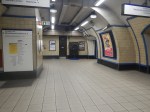
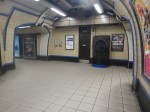
I took these pictures today
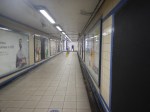
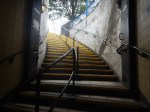
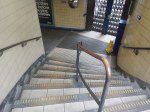
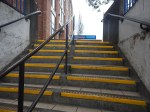
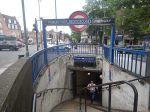

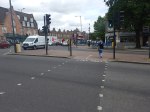
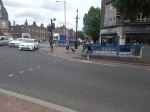
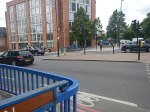
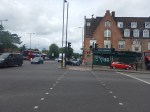
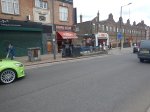
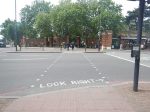
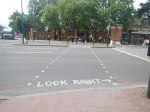
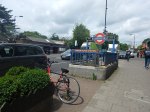
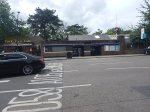
The station has an unusual layout.
-
-
- Two major roads; the Seven Sisters Road (A503) and Green Lanes (A 105) cross at the station.
- The four major roads are all controlled by traffic lights, which also allow pedestrians to cross the major roads safely on the surface.
- There are a couple of staircases at each corner of the junction and these lead down to a maze of passages that connect these entrances to the escalators that lead up and down to the platforms.
- The former Manor House pub and a new Travel Lodge sit opposite each other on the junction.
- The Travel Lodge sits on the South-West corner.
- The North-West corner leads directly into Finsbury Park., which is not a bad place to go for a walk or a jog.
-
The below ground subways in the station are all level.
The staircases between subway and street level are very reminiscent of those at Piccadilly Circus or Leicester Square stations.
The staircases also have some excellent period details.
But then they tend to do things as they should in my part of North London.
This picture was taken after a World Cup Third!
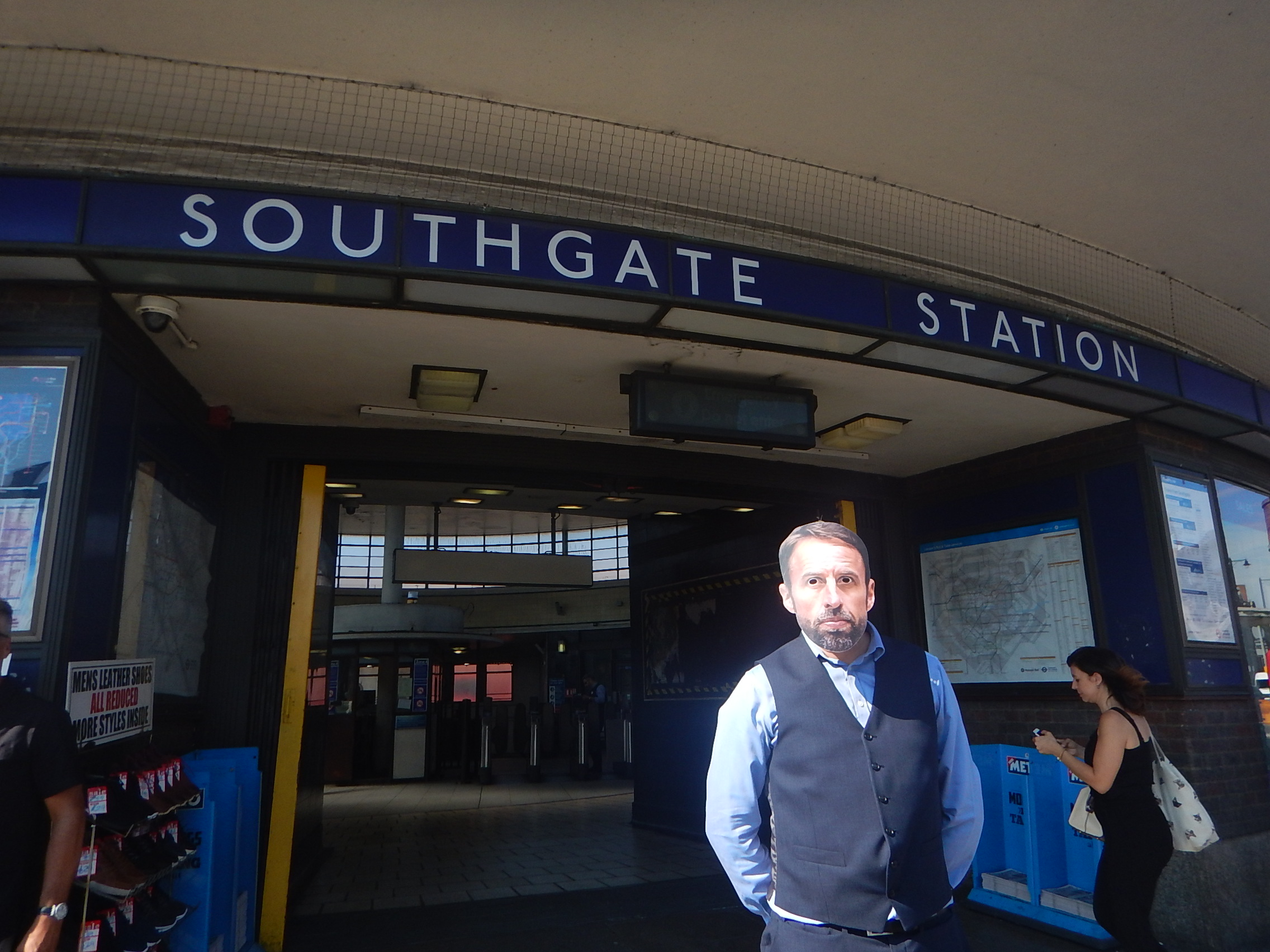
What will happen, if England win the Euros?
Manor House station’s design can best be summed up as two level areas connected by a series of staircases.
- Central London stations with this layout include Bank, Cockfosters, Kings Cross St. Pancras,Leicester Square, Manor House, Piccadilly Circus. Tottenham Court Road and Victoria.
- At least Cockfosters, Kings Cross St. Pancras, Tottenham Court Road and Victoria have lifts between the two levels.
- Bank station will have more lifts than Oti Mabusi in a dance routine, after the rebuild.
- Old Street was similar, but Transport for London (TfL) are rebuilding the station.
Cockfosters has level access at both the surface and the platform level and they have sneaked in a lift in a corner of the station.


Grandparents in a wheel-chair or Louis or Lilibet in a pushchair can easily be taken easily between train and the car-park.I am certain, that if there are a number of lifts at the four corners of the road junction at Manor House, then access both to the station and across the junction will be substantially eased.
That just leaves us with the problem of getting between subway and platform levels.
This map from cartometro.com shows the platform layout.

Note that as at Turnpike Lane station in this platform layout, there is also a generous space between the platforms.
The two escalators and a set of stairs face North.

Wood Green station is a bit different, as it has a turnback siding
The two escalators and a set of stairs also face South.

When I used to use the Piccadilly Line in the 1960s, it tended to be pain, if a Wood Green train turned up, when you wanted to go to Oakwood or Cockfosters.
Bounds Green station is shown in this map.
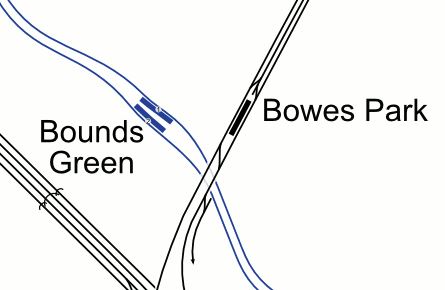
Again the tracks appear to have been curved to allow generous space.
The two escalators and a set of stairs face North.
Arnos Grove station is a station with sidings and four platforms on the surface.
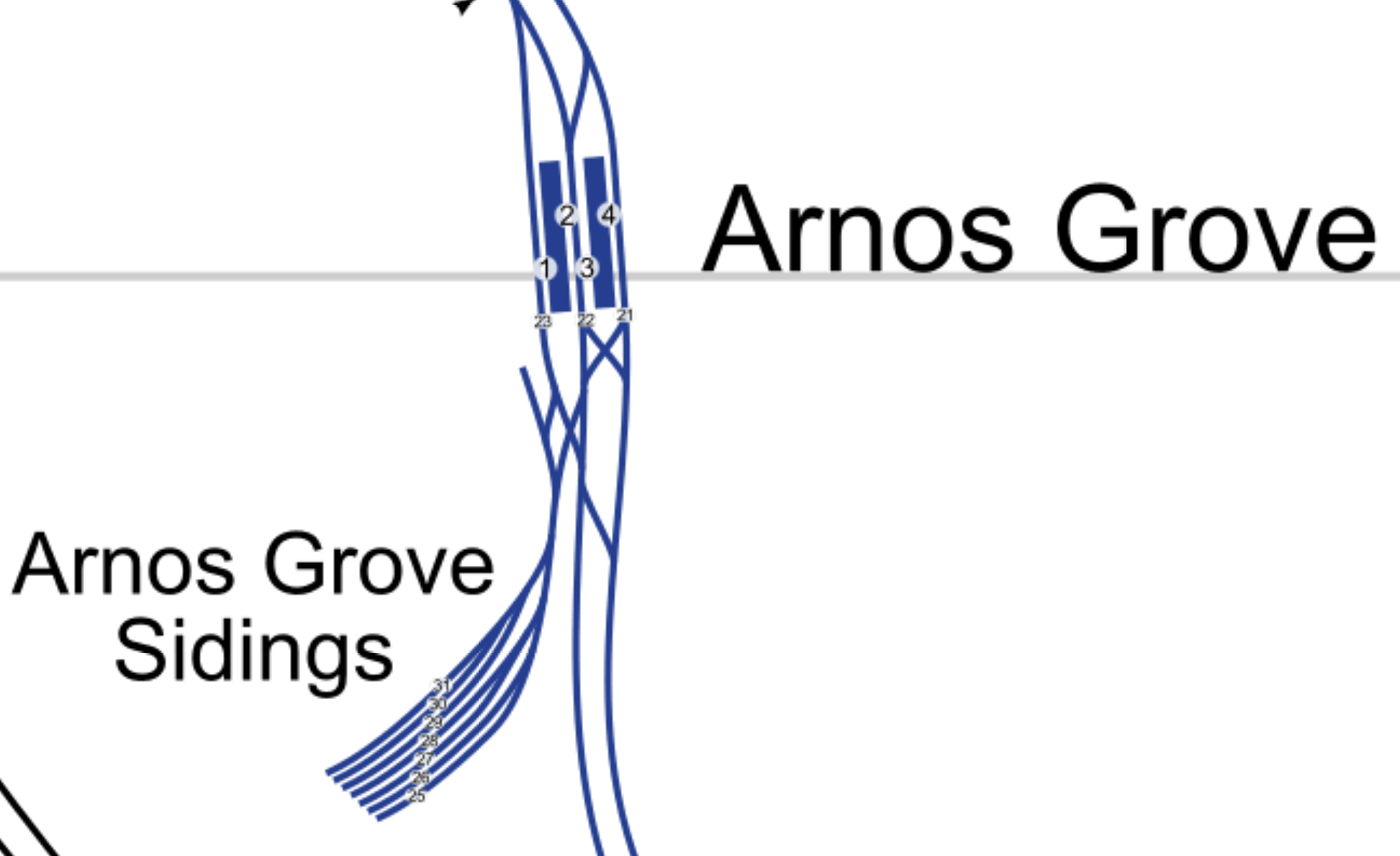
The car parks are likely to be developed for housing, so there will be major changes at the station.
Southgate station is the last station, that doesn’t have step-free access.
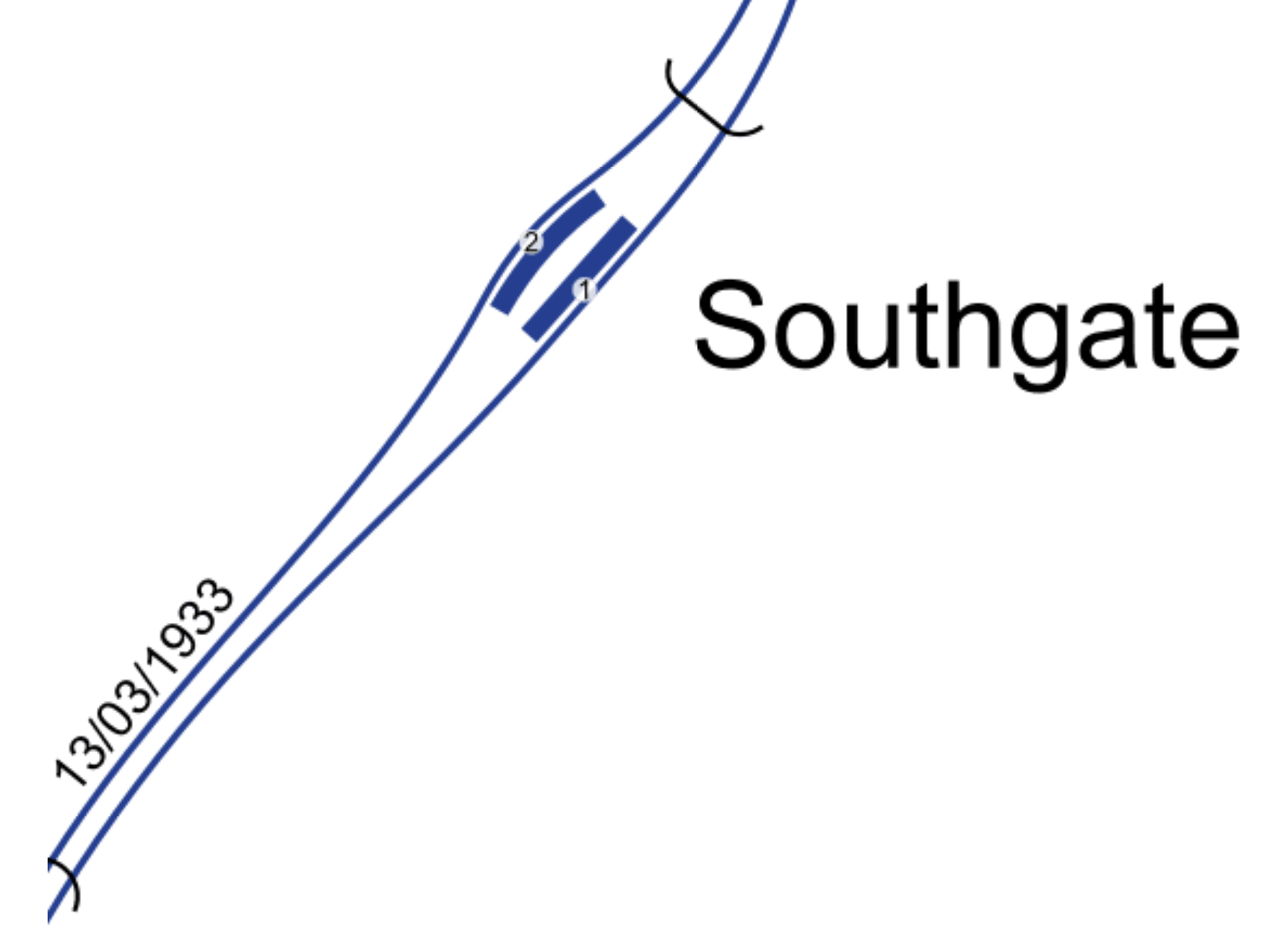
But again there is some space between the tracks.
The two escalators and a set of stairs face North.
So did the designers of the Northern Extension of the Piccadilly Line leave space to put in more equipment or even lifts?
After all they didn’t stint themselves on the design of the stations.
Designing Step-Free Access
This is not easy and various considerations must be taken into account.
Revenue Protection
At Cockfosters station, the new lift goes between two areas that are outside the ticket barriers.
If as I have proposed at Manor House station, where there would be lifts between the surface and the subway level, both areas are outside the ticket barriers.
At Tottenham Hale station, there several lifts all of which are inside the ticket barrier.
Staff At The Barrier
Nearly all ticket barriers in London are watched by staff to sort out problems like passengers, who don’t know how to use the system.
Costs
It is unlikely, that large sums of money will be available to add step-free access to all stations on the Underground.
I also think, that step-free access at stations will be funded by developments close to stations.
A London-Wide Solution
It is for these and other reasons, that I think London needs to look in detail at all stations and see if a series of solutions can be developed for all stations.
In this section of the Piccadilly Line, there are five stations with three escalators or two escalators and a staircase.
But there are others on the other deep tube lines.
So should a standard solution be developed for all stations like this? And for all groups of similar stations.
Could An Inclined Lift Be Used At This Group Of Stations?
This picture shows the first inclined lift, I ever saw, which was on the Stockholm Metro.
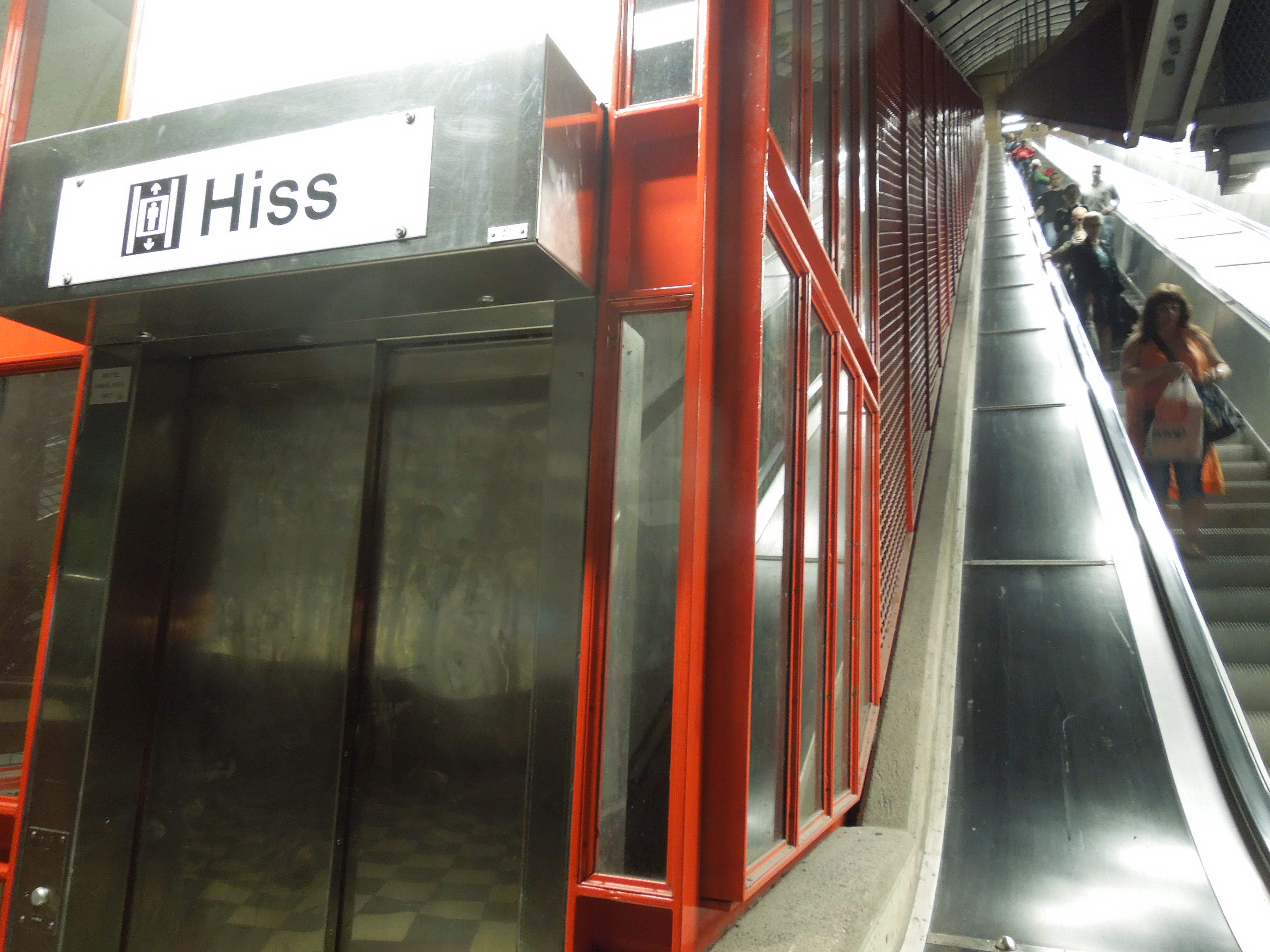
Looking at the picture shows it was installed on a very long set of escalators.
At present, there is only one inclined lift on the London Underground and that one is at Greenford station.
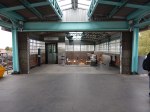

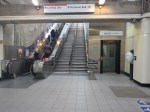
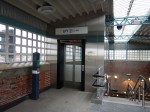
It is a very neat and compact installation, that incorporates a double-staircase, an up escalator and an inclined lift in a confined space.
I think we’ll see similar solutions to Greenford employed in some stations on the Underground. In Is This A Simple And Affordable Solution To Providing Step-Free Access At Essex Road Station?, I outline how an inclined lift could be used at Essex Road station.
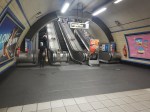
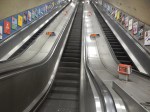
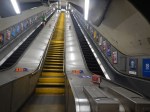
These pictures show the three escalators at Manor House station.
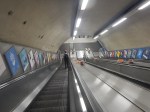
Note.
- The middle escalator was switched off.
- There is a spacious lobby at the bottom of the escalators.
The other four below-ground stations North of Finsbury Park; Turnpike Lane, Wood Green, Bounds Green and Southgate all have two escalators and a central staircase
These pictures show Bounds Green station.
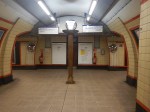
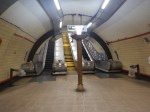
Note that the stairs are in the middle.
It looks to me, that all five escalator systems to the North of Finsbury Park are more or less identical.
- Only Manor House has a third escalator.
- There is a large lobby at the bottom.
- All stairs are in the middle escalator slot.
- Are the stairs designed to be replaced with a third escalator?
So would it be possible to design an inclined escalator solution for all stations, that fitted all of the stations?
I think it might be very much a possibility.
- The central staircase would be replaced by a third escalator.
- One of the outside escalators would be replaced with an inclined lift.
Note
- Many of these escalators were probably installed in the early 1990s, a few years after the Kings Cross Fire.
- Escalators are replaced regularly every ten or twenty years.
So could the installation of the inclined lifts, be worked into the schedule of escalator maintenance and replacement?
I believe with good project management it could be arranged.
- At no time during the works would any station have less than two escalators.
- If there were to be an escalator failure, all of the stations are connected by frequent buses and some are even within walking distance.
The works could also be arranged to fit in with available cash-flow.
I believe that eventually all these stations will need to be provided with full step-free access.
Conclusion
I believe that a sensible program of works can be developed to make all deep-level stations North of Finsbury Park step-free on the Piccadilly Line.
- The deep-level platforms would be served by two escalators and an inclined lift.
- The works would be performed alongside the regular maintenance and replacement of the current escalators.
- There would be no substantial tunneling.
- The works could also be arranged to fit in with available cash-flow.
The technique would be applicable to other stations on the Underground network.
Turnpike Lane Station
In Is Turnpike Lane Tube Station Going Step-Free?, I tried to explain the puzzling works going on at Turnpike Lane station.
Could those works be digging a lift-shaft or something in a more engineering line, like installing more ventilation or new power cables?
There’s certainly no clues on the Internet.
This table shows step-free status and 2019 passenger numbers at the Piccadilly Line stations to the North of Kings Cross St. Pancras station.
- Cockfosters – Step-Free – 1.86 million
- Oakwood – Step-free – 2.78 million
- Southgate – 5.43 million
- Arnos Grove – 4.44 million
- Bounds Green – 5.99 million
- Wood Green – 12.13 million
- Turnpike Lane – 10.6 million
- Manor House – 8.55 million
- Finsbury Park – Step-free – 33.40 million
- Arsenal – 2.77 million
- Holloway Road – 6.69 million
- Caledonian Road – Step-free – 5.60 million
- Kings Cross St. Pancras – Step-free – 88.27 million
Note.
- The high passenger numbers at Finsbury Park and Kings Cross St. Pancras, where there is interchange with lots of other services.
- The long gap of step-free access between Oakwood and Finsbury Park.
- Arnos Grove could be an easier station to make step-free.
I just wonder, if a lift at Turnpike Lane station could be the interim solution, until inclined lifts are installed in the distant future.
 The Anonymous Widower