Airbus, Rolls-Royce, EasyJet Headline Formation Of UK Hydrogen Alliance
The title of this post, is the same as that of this article from Future Flight.
These two paragraphs outline the story.
A group of leading companies in the UK aviation and renewable energy sectors including EasyJet, Rolls-Royce, and Airbus has established the Hydrogen in Aviation (HIA) alliance to accelerate the delivery of zero-carbon aviation, the companies said Tuesday. HIA, whose partners also include Ørsted, GKN Aerospace, and Bristol Airport, said decarbonization efforts involving hydrogen should assume more urgency at a time when sustainable aviation fuel and batteries have drawn so much of the sector’s attention.
Working with government, local authorities, and the aviation and hydrogen sectors, the group plans to draw on members’ expertise to propose “a clear and deliverable pathway” to achieving hydrogen-powered aviation. Efforts center on clearing a pathway for preparing the needed infrastructure as well as policy, regulatory, and safety frameworks.
This Airbus infographic describes the aircraft in Airbus’s ZEROe project.
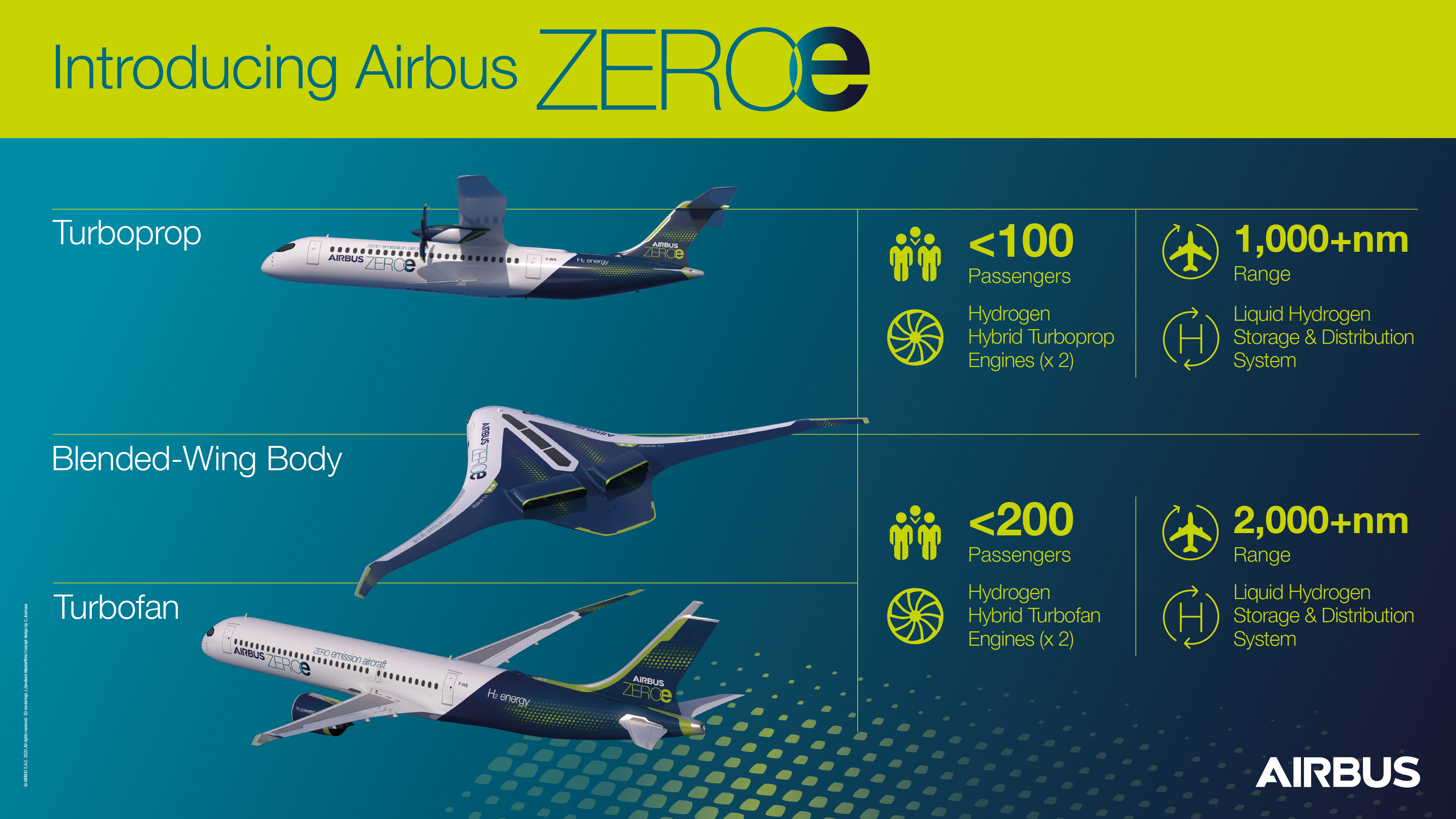
Discover the three zero-emission concept aircraft known as ZEROe in this infographic. These turbofan, turboprop, and blended-wing-body configurations are all hydrogen hybrid aircraft.
These are my thoughts.
Do The ZEROe Turboprop And The ZEROe Turbofan Have Similar Hydrogen Systems?
This is Airbus’s summary of the design of the ZEROe Turboprop
Two hybrid-hydrogen turboprop engines, which drive eight-bladed propellers, provide thrust. The liquid hydrogen storage and distribution system is located behind the rear pressure bulkhead
This screen capture taken from an Airbus video, shows a rear view of the plane.
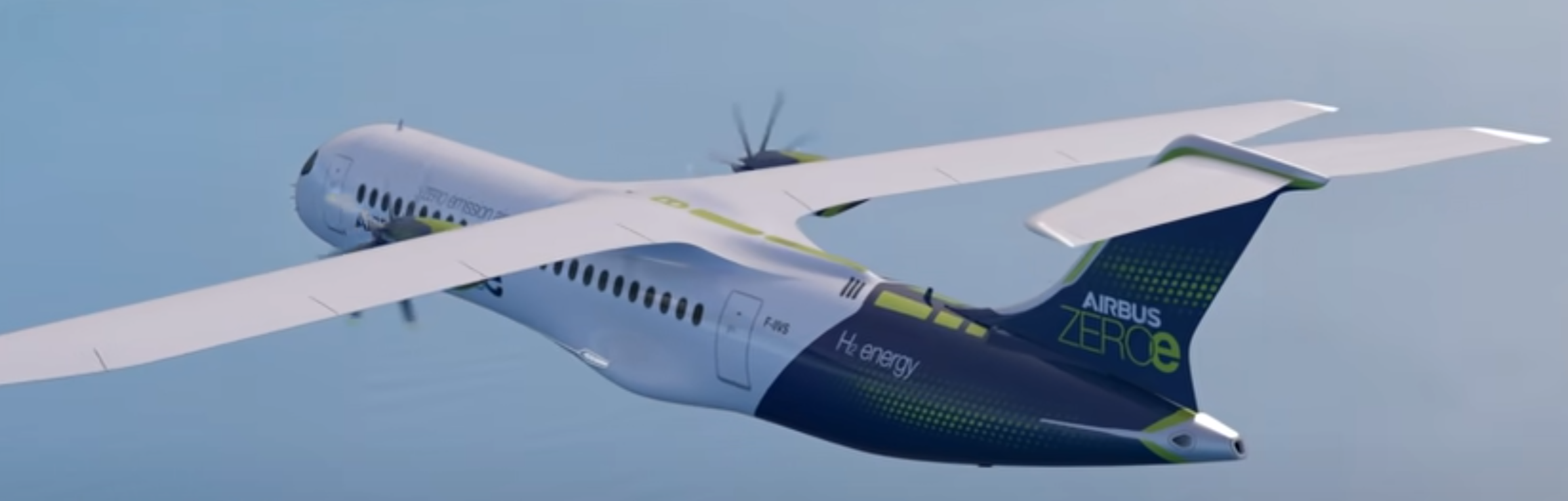
Note the sizeable cone-shaped rear end to the fuselage with no windows.
This is Airbus’s summary of the design of the ZEROe Turbofan
Two hybrid hydrogen turbofan engines provide thrust. The liquid hydrogen storage and distribution system is located behind the rear pressure bulkhead.
This screen capture taken from an Airbus video, shows the plane.
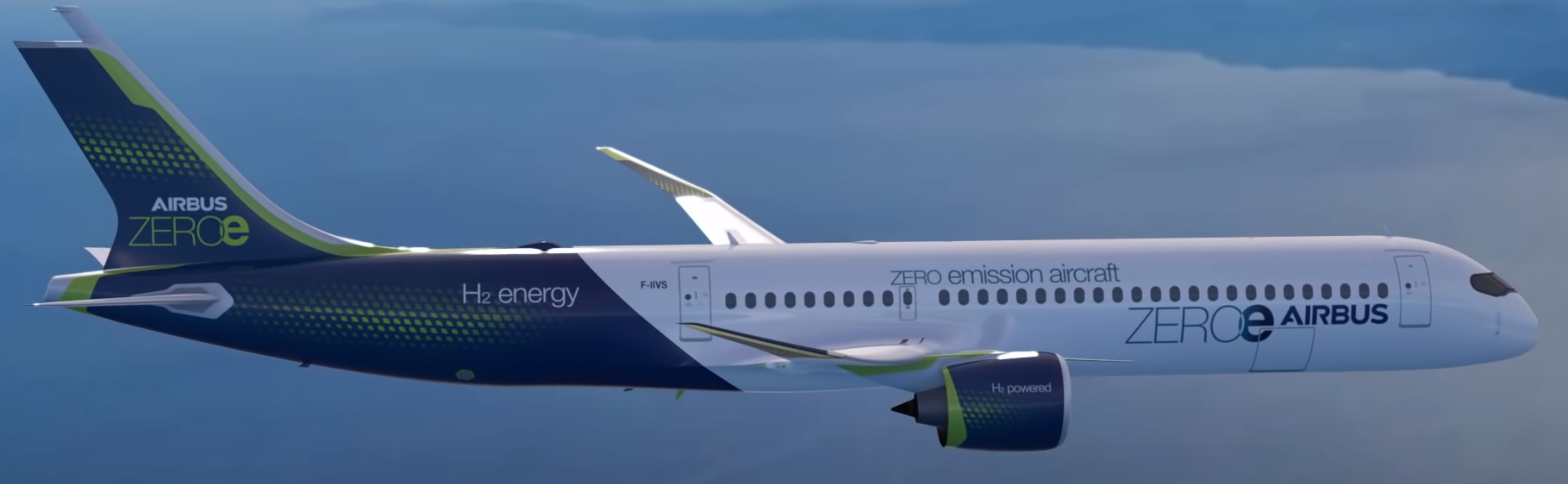
Note how there are no windows at the back of the fuselage, as the hydrogen tank doesn’t need them.
It looks to me, that similar cone-shaped tanks for hydrogen, customised for each aircraft could be placed behind the rear bulkhead.
There would probably be space for any pumps needed to distribute the hydrogen to the engines.
All the stored hydrogen and its gubbins could be safely sealed behind the rear bulkhead.
I am fairly certain that the ZEROe Turboprop and the ZEROe Turbofan will have similar hydrogen systems.
Do The ZEROe Turboprop And The ZEROe Turbofan Have Auxiliary Power Units?
The auxiliary power unit or APU in an aircraft that provides energy for functions other than propulsion.
In Airbus To Trial In-flight Auxiliary Power Entirely Generated By Hydrogen, I wrote about Airbus’s development of APU’s based on fuel cells and running on hydrogen.
This surely could be a way to go.
- A battery could store power.
- Fuel cells are proving to be reliable.
- The plane would have two independent electrical systems.
Power would always be available for the cockpit, flying controls and to restart the engines, just as it is in any airliner today.
Do The ZEROe Turboprop And The ZEROe Turbofan Have The Same Cockpit?
The cockpits of the A 320 neo and the A 320 ceo seem to have a similar profile, but the cockpit of the ZEROe Turbofan seems to have been reprofiled.
In ZEROe – Towards The World’s First Zero-Emission Commercial Aircraft, I showed these front on views of the cockpits of the ZEROe Turboprop and ZEROe Turbofan.
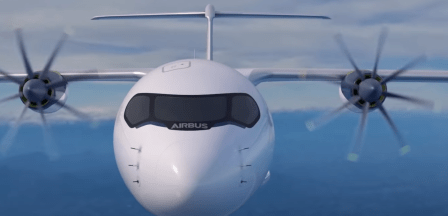
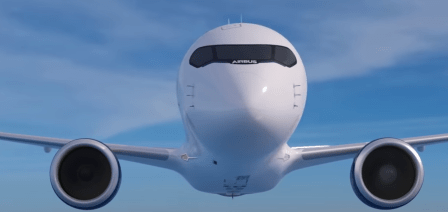
I questioned if the two cockpits were related.
- A single cockpit for both aircraft would surely ease manufacture, maintenance and pilot training.
- I’m no aerodynamicist, but it certainly looks that the new cockpit will reduce drag and fuel consumption.
This common cockpit concept was used for the Boeing 757 and the Boeing 767 in the 1980s, so it is not a new concept.
Although the cockpit, appears to be being used in the ZEROe for the first time, I would expect it is already under development and might feature in any later version of the A 320 neo.
Do Airbus Have A Preferred Development Order?
Consider.
- My product development experience indicates that the development of the ZEROe Blended-Wing Body will involve more flight testing and aerodynamic checks than the other two aircraft, so I would make it the last aircraft to enter service.
- The ZEROe Turboprop appears to be a development of the ATR 72.
- The ZEROe Turbofan appears to be a development of an A 320 neo.
- The ZEROe Turboprop and ZEROe Turbofan would appear to have similar designs of cockpit, hydrogen systems and auxiliary power units.
- It looks to me that either of the ZEROe Turboprop or ZEROe Turbofan could be developed first.
I would develop the ZEROe Turboprop first, as it is the smaller aircraft.
Why Bristol Airport?
This page on the Airbus web site is entitled Airbus In The United Kingdom, where this is the first paragraph.
Building on a proud 100-year British aviation heritage, Airbus is part of the very fabric of the UK – which is one of the company’s four home markets, alongside France, Germany and Spain. Its 11,000-strong UK workforce is part of a global family of 125,000 employees.
This is said under Commercial Aircraft.
The sites at Filton and Broughton design, test and manufacture the wings for all Airbus’ A320 family, A330 and A350 commercial aircraft, directly sustaining more than 8,000 full-time jobs and hundreds of apprenticeships.
A220 family wings are designed and built by Spirit AeroSystems in Belfast, Northern Ireland.
Broughton has a proud tradition of aerospace manufacturing dating back 80 years, having supplied the RAF with vital aircraft during the Second World War. Employing almost 5,000 people, Broughton is a global centre of excellence for manufacturing and delivers over 500 wing sets per year for the A320 family, A330 and A350. Airbus has invested more than £2 billion in the Broughton plant over the past 10 years.
Core activities at Filton, where an additional 3,000 people work, are the design, engineering and support for Airbus wings, fuel systems and landing gear systems. Teams also work on aerodynamics research, development and test facilities, including our future zero-emissions programme, ZEROe, while wings for the A400M transporter are assembled on site.
It would appear that Filton in Bristol, is a very important part of Airbus’s operations in the UK.
- It appears to have major responsibility for all Airbus wings except the smallest.
- It has a large responsibility with respect to the ZEROe family of aircraft.
- Filton Airfield is now closed.
- Filton can do substantial assembly if required.
So was it just a logical decision to phone up Bristol Airport and ask, if they’d like to join the project?
In addition.
- Bristol Airport has a 2000 metre East West asphalt runway.
- The airport can handle a Boeing 787 Dreamliner and Airbus A330.
- It is the eighth busiest airport in the UK.
- It is a busy general aviation airfield.
- There is plenty of electricity in the area and Hinckley Point C will open down the road in a couple of years.
Bristol Airport is probably typical of many provincial airports around the world.
Why EasyJet?
These paragraphs from the Future Flight article help to explain.
“There is no doubt that the UK has the potential to become a world leader in hydrogen aviation, which could bring with it a £34 billion per annum boost to the country’s economy by 2050, but in order to capture this opportunity, rapid change is needed and the time to act is now,” said Johan Lundgren, CEO of EasyJet and HIA’s first chairman.
“We must work together to deliver the radical solutions required for a hard-to-abate industry like aviation so we can protect and maximize the benefits that it brings to the UK economy and society and that we know British consumers want to be preserved.”
Under its Zero-E program, Airbus aims to bring to market the first hydrogen-powered narrowbody commercial airplane by 2035. Separately, a partnership between Rolls-Royce and EasyJet signed last year saw the companies test hydrogen fuel in gaseous form in an adapted AE2100-A turbine, the engine that powers the Saab 2000 regional airliner. The November 2022 test, which used hydrogen produced in the Orkney Islands by the European Marine Energy Centre using renewable energy, marked the first run of a modern engine using hydrogen.
EasyJet seems to be enthusiastic about hydrogen and their CEO will be the HIA’s first chairman.
EasyJet also has a series of routes from Bristol Airport.
- Alicante – 907 miles
- Amsterdam – 326 miles
- Athens – 1592 miles
- Antalya – 1981 miles
- Barcelona – 733 miles
- Basel/Mulhouse – 530 miles
- Belfast–City – 259 miles
- Belfast–International – 269 miles
- Berlin – 694 miles
- Bilbao – 559 miles
- Bodrum – 1772 miles
- Bordeaux – 462 miles
- Catania – 1295 miles
- Chania – 1719 miles
- Copenhagen – 694 miles
- Corfu – 1356 miles
- Dalaman – 1981 miles
- Dubrovnik – 1155 miles
- Edinburgh – 316 miles
- Enfidha – 1241 miles
- Faro – 1026 miles
- Fuerteventura – 1687 miles
- Funchal – 1473 miles
- Geneva – 536 miles
- Gibraltar – 1060 miles
- Glasgow – 317 miles
- Gran Canaria – 1749 miles
- Grenoble – 556 miles
- Heraklion – 1768 miles
- Hurghada – 2526 miles
- Ibiza – 887 miles
- Innsbruck – 693 miles
- Inverness – 429 miles
- Isle of Man – 203 miles
- Kefalonia – 1451 miles
- Kos – 1770 miles
- Kraków – 991 miles
- La Rochelle – 366 miles
- Lanzarote – 1649 miles
- Larnaca – 2126 miles
- Lisbon – 925 miles
- Lyon – 529 miles
- Madrid – 755 miles
- Málaga – 1020 miles
- Marrakesh – 1393 miles
- Marseille – 662 miles
- Menorca – 863 miles
- Milan–Malpensa – 682 miles
- Murcia – 945 miles
- Mykonos – 1670 miles
- Nantes – 251 miles
- Naples – 1085 miles
- Newcastle upon Tyne – 256 miles
- Nice – 704 miles
- Olbia – 929 miles
- Palma de Mallorca – 859 miles
- Paphos – 2087 miles
- Paris–Charles de Gaulle – 285 miles
- Paris–Orly – 290 miles
- Pisa – 808 miles
- Porto – 755 miles
- Prague – 746 miles
- Preveza/Lefkada – 1421 miles
- Pula – 885 miles
- Reykjavík–Keflavík – 1121 miles
- Rome–Fiumicino – 968 miles
- Rovaniemi – 1436 miles
- Salzburg – 745 miles
- Santorini – 1726 miles
- Sharm El Sheikh – 2507 miles
- Sofia – 1359 miles
- Split – 927 miles
- Tenerife–South – 1766 miles
- Toulouse – 569 miles
- Turin – 645 miles
- Venice – 798 miles
- Zakynthos – 1484 miles
Note.
- There are nine routes under 400 miles, which might enable a round trip without refuelling in a ZEROe Turboprop.
- There are nine routes under 800 miles, which might enable a round trip without refuelling in a ZEROe Turbofan.
- There are only four routes over 2000 miles, which might make a single trip difficult in a ZEROe Turbofan.
- Bristol and Toulouse is a convenient 569 miles for Airbus and its employees, customers and contractors.
It does appear that, EasyJet’s routes fit the 1000 mile range of a ZEROe Turboprop and the 2000 mile range of a ZEROe Turbofan exceedingly well.
Conclusion
Bristol will be important in the development of Airbus’s three ZEROe aircraft.
Ecojet: Dale Vince Launches An Aviation Revolution
The title of this post is the same as that as this news story from Ecotricity.
This is the sub-heading.
The world’s first electric airline powered by renewable energy
These three paragraphs outline the project.
Ecotricity founder, Dale Vince, has announced the launch of Ecojet, the world’s first Electric Airline, powered by renewable energy. The move marks the beginning of an aviation revolution by making net-zero, emission-free air travel possible for the first time.
Ecojet’s fleet will comprise conventional planes retrofitted with hydrogen-electric powertrains. Once converted, the aircraft will operate with the same power output as before, but with a one-hundred percent reduction in CO2 emissions.
The decision to repurpose old planes rather than build new models from scratch will save 90,000 tonnes of carbon per year. The only byproduct will be water, which can be captured and released into the lower atmosphere to avoid the harmful effects of contrails.
These ae my thoughts.
The Aircraft
The news story contains pictures of two aircraft; a de Havilland Canada Twin Otter and a 737 or A320 variant.
- It also says that hydrogen-electric powertrains will be used.
- ZeroAvia in partnership with Cranfield Aerospace are developing such a powertrain and I suspect they could have one certified by 2025.
This would be used in the Twin Otter.
But what about 737 or A320 variant?
Airbus are already proposing the ZEROe Turbofan, which appears to be based on an improved A320 neo.
But the image on the news story looks more like a Boeing 737 from the wing-tips.
This article on the IET web site, which is entitled Airbus And Boeing To Embrace Hydrogen From Mid-2030s, indicates that it will be the mid-2030s before hydrogen twinjets of this size are in service.
This paragraph from the news story indicates his philosophy about the aircraft.
Short-term, to secure routes and a license from the Civil Aviation Authority, Ecojet will initially launch using conventionally fuelled planes. Ecojet will launch with two different sizes of turboprop aircraft (a 19-seat aircraft and a 70-seat aircraft). These aircraft will be retrofitted with the hydrogen-electric powertrains as they become approved for service by the CAA – the first retrofits will take place in 2025, one year after the commencement of flights.
Note.
- The news story clearly states that two types of aircraft will be used; a 19-seat turboprop and 70-seat turboprop.
- So the second picture of a Boeing 737 had nothing to do with the news story.
- They will be retrofitted with hydrogen-electric powertrains, when they have been certified.
- Flights are planned to start next year.
It looks a very canny philosophy, as Ecojet will be able to prove the route with aircraft running on traditional fuels or sustainable aviation fuel (SAF) and only switch to hydrogen, when the hydrogen-electric powertrains are proven, certified and installed, and the hydrogen infrastructure is in place.
The Smaller Aircraft
The first picture in the news story is of a de Havilland Canada Twin Otter.
- This aircraft accommodates 19-20 passengers.
- It has two turboprop engines.
- Production started in 1966 and it is still ongoing.
- Nearly a thousand have been built, so plenty of nearly-new examples will be available for refurbishment and conversion.
- Loganair operate three aircraft in Scotland.
It looks fairly certain, that Ecojet’s 19-seat aircraft will be a Twin Otter.
The Larger Aircraft
Possibilities would include these aircraft.
- ATR-72 – 72 seats
- de Havilland Canada Dash 8 – > 50 seats
Note.
- Both aircraft are still in production.
- In ZeroAvia To Bring Zero-Emissions Flight To Sweden, I talk about how ZeroAvia have sold their hydrogen-electric powertrains to Swedish ATR-72 operator; Braathens and are targeting Dash 8 operators.
- In Universal Hydrogen Successfully Completes First Flight Of Hydrogen Regional Airliner, I talk about Universal Hydrogen’s successful progress in selling hydrogen-electric powertrains for ATR-72s and Dash 8s. The first flight of their system was in an ATR-72.
It looks to me, that Dale Vince has a choice of two 70-seat aircraft and hydrogen-electric powertrains from two manufacturers; ZeroAvia and Universal Hydrogen.
In Monte To Purchase 100 FC Aircraft Drives From ZeroAvia, I talk about how Monte Aircraft Leasing have done a deal with ZeroAvia to lease ZeroAvia’s hydrogen-electric powertrains to regional airlines.
Has Dale Vince done a deal with Monte Aircraft Leasing for his aircraft?
- Monte Aircraft Leasing and ZeroAvia would get an eco-celebrity customer, who could even be the launch customer.
- Ecojet’s aircraft would all have similar ZeroAvia hydrogen-electric powertrains, although the size might be different.
- Dale Vince would only be sharing the risk, if the technology was a dog.
- De Havilland Canada and/or ATR will see how the passengers like zero-carbon flight.
There is also, one of aviation’s most powerful companies close to the deal, as Airbus own half of ATR.
Airbus are developing the hydrogen-powered ZEROe Turboprop, which is shown in this Airbus image.
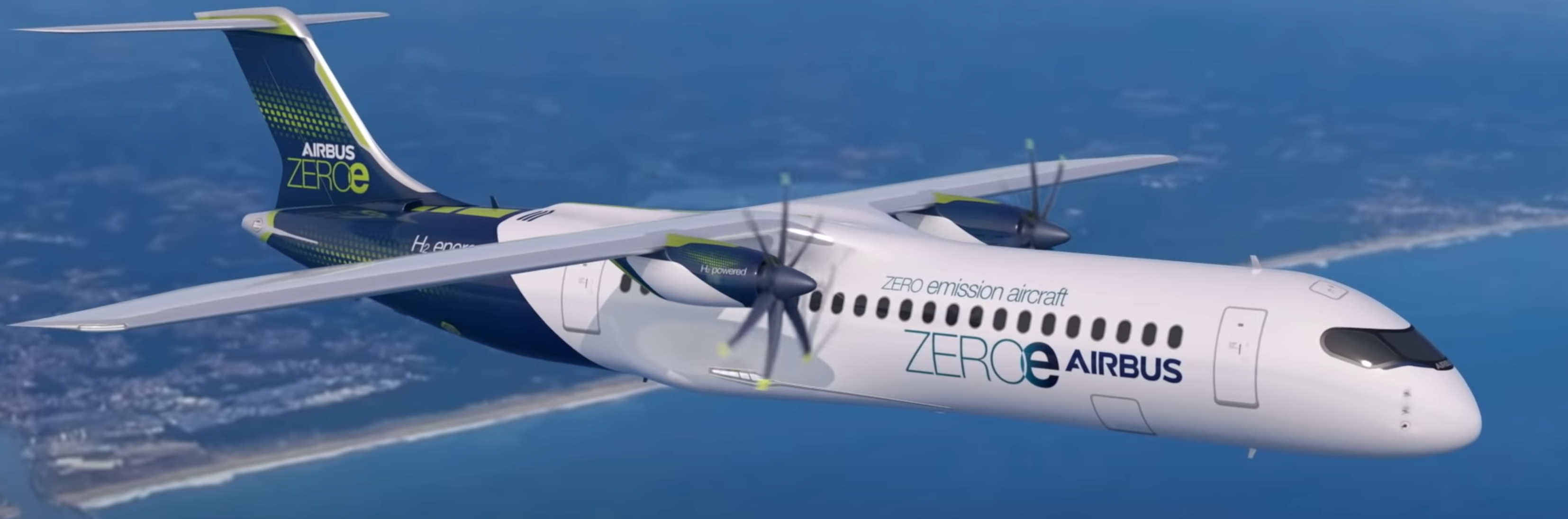
Note.
- It looks very much like an improved ATR-72.
- It has more extreme propellers and probably better aerodynamics.
- Airbus might like to persuade Ecojet to use ATR-72s as their 70-seat airliner.
- Information from an operator of hydrogen-powered airliners would be very valuable to Airbus.
I wouldn’t be surprised to see Ecojet lease some nearly new ATR-72s.
Would Airbus Fit ZeroAvia Hydrogen-Electric Powertrains In The ZEROe Turboprop?
This page on the Airbus website is entitled ZEROe.
In a section, which is entitled Hydrogen Propulsion To Power Future Aircraft, this is said.
All three ZEROe concepts are hybrid-hydrogen aircraft. They are powered by hydrogen combustion through modified gas turbine engines. Liquid hydrogen is used as fuel for combustion with oxygen.
In addition, hydrogen fuel cells create electrical power that complements the gas turbine, resulting in a highly efficient hybrid-electric propulsion system. All of these technologies are complementary, and the benefits are additive.
In 2022, we launched our ZEROe demonstrator with the aim to test hydrogen combustion technology on an A380 multimodal platform. Through future ground and flight testing, we expect to achieve a mature technology readiness level for a hydrogen-combustion propulsion system by 2025.
Note.
- Airbus state they are using modified gas turbine engines.
- Airbus also talk about using fuel cells to create electrical power that complements the gas turbines.
- Could the hydrogen fuel cells be used to power the aircraft’s systems, like avionics, control systems, air-conditioning and the hydrogen system for the main engine?
- This concept of effectively a hydrogen auxiliary power unit, might be a more efficient way of using the hydrogen, which either gives longer range or a smaller fuel tank.
- In The ZEROe Demonstrator Has Arrived, I talk about the ZEROe Demonstrator, which is a modified Airbus A 380.
Did the adding of hydrogen fuel cells to the ZEROe aircraft, lead to the concept of a hydrogen-powered auxiliary power unit, that I talked about in Airbus To Trial In-flight Auxiliary Power Entirely Generated By Hydrogen?
It looks to me, that Airbus have developed their own simple concept of powering the aircraft.
I doubt they will need ZeroAvia’s technology.
But.
- Aircraft manufacturers like Airbus generally fit the best and most suited engines they can find in their aircraft.
- The Wikipedia entry for ZeroAvia says that the prototype hydrogen-electric powertrain is in the cabin, consisting of two fuel cells and a lithium-ion battery for peak power.
- ZeroAvia have powerful shareholders like Amazon, Bill Gates and Royal Dutch Shell.
- ZeroAvia have also received grants from the UK Government.
I wouldn’t be surprised to learn, that Airbus have taken a long hard look at ZeroAvia’s technology.
After all, ZeroAvia could probably build a hydrogen fuel cell power pack, that would meet Airbus’s needs for a hydrogen-powered auxiliary power unit.
Remember too, that many fleets of aircraft have been updated with new engines for decades and I don’t think Airbus would mind ZeroAvia giving a new zero-carbon lease of life to the hundreds of ATR-72s in service around the world.
Surely, a successful hydrogen-powered ATR-72 is only going to create more interest in airlines buying ZEROe Turboprops.
All the converted aircraft will still need support from ATR.
Both the converted and new aircraft will need hydrogen refuelling services, so could the two aircraft use a common standard.
Airbus and ZeroAvia would appear to have several common interests.
Ecojet’s Core Route
This is a paragraph from the news story on the Ecotricity web site.
Dale has partnered with experienced pilot Brent Smith and a team of aviation specialists to set up Ecojet. Flights across the UK will commence in early 2024, starting with the Edinburgh to Southampton route, and expanding to mainland Europe shortly after, with long-haul flights planned for the future.
Note.
- The ATR-72 has a range of 949 miles, which is more than adequate for Southampton and Edinburgh, which is just over 350 miles.
- Diagonal journeys in the UK are often the most passenger-unfriendly by rail and tend to use diesel trains.
- Southampton Airport has good road and rail connections, with the terminal less than a minute from the station.
- Edinburgh Airport has good road and tram connections, with rail connections needing a short journey on the tram.
- Southampton Airport has flights to the Channel Islands, Ireland and Schiphol.
- Edinburgh Airport has a comprehensive service from major airlines and low-cost carriers, and several flights to destinations in the North of Scotland and on the Islands.
I think that it is a well-chosen core route for their 70-seat aircraft.
Which Routes Will Ecojet Fly With The Twin Otters?
Consider.
- My Scottish friends tell me that flying to the Scottish Islands, like the Hebrides, Orkney and Shetland is expensive.
- The growth of the Scottish wind power industry will mean, that more capacity is needed to serve the North of Scotland and the Islands.
- Tourism to the North of Scotland and the Islands is on the up.
- There will not be a shortage of green electricity to produce green hydrogen.
- The North of Scotland isn’t short of airports.
- The Twin Otter has a surprisingly long range on aviation fuel and I suspect, that a hydrogen version would be designed to have a similar range.
- The longest flight needed would probably be Edinburgh and Sumburgh, which is about 280 miles, which should be well within the range of a Twin Otter.
- I suspect that hydrogen refuelling could be easily provided at enough airports, to support hydrogen-powered airliners.
- I am sure, that the Twin Otters could be used on a network of zero-carbon flights from Edinburgh to the North of Scotland and the Islands.
- A zero-carbon airline would help Scotland’s net-zero ambitions.
There is certainly a need for another airline to connect Edinburgh to the North of Scotland and the Islands and the infrastructure could be upgraded to support a hydrogen-based zero-carbon airline.
Could Ecojet build a similar network at Southampton, that served the Channel Islands, Southern Ireland and Northern France?
Conclusion
There’s a lot more to this venture, than there appears at first sight.
O wish Vince and his partners well, but as a coeliac, I’ll skip the food.
Net-Zero Concept Aircraft: Which Designs Are The Current Front Runners?
The title of this post is the same as that of this article on Simple Flying.
The article is a good summary of what may happen in the field of Net-Zero aircraft in the next ten or twelve years.
DHL Express Determinedly On Course To Achieve Net-Zero Emissions
The title if this post is the same as that of this article on The Lodestar.
This was the introductory paragraph.
DHL Express chief executive John Pearson came out with all guns firing when detailing the firm’s efforts to hit net-zero by 2050, during a press junket this week.
The rest of the article is basically in three sections.
The Use Of Sustainable Aviation Fuel (SAF)
Summed up by three sentences.
“When it comes to sustainable aviation fuel (SAF), we know this is expensive, but we have also put a big chunk of change into this,” he said.
By the end of the year, we want 2% of flights fuelled by SAF.
DHL has bought 15% of all globally available SAF
DHL seem to have a comprehensive policy on the use of SAF.
This reinforces my view that SAF will be important.
Alternative Approaches
This paragraph sums up some of the more alternative approaches DHL are looking at.
SAF use forms only one part of the migration to net-zero: fleet renewal; decarbonising ground handling; a fuel optimisation programme; and the use of electric aircraft, following the successful September trial over Seattle of the Alice e-cargo plane, are all critical.
I suspect there are other alternative approaches.
Fleet Renewal
The last two paragraphs talk about fleet renewal.
Fleet renewal comes after a particularly pronounced moment of growth for the company: it added 10 widebody and 70 small- and medium-body planes during the pandemic.
Described by Boeing as one of the most “fuel-efficient” aircraft on the market, thanks to its twin-engine design, the 777 freighter forms a central part of DHL Express’ renewal plans, said Mr Pearson, adding that 28 were on order.
With 28 777 freighters on order, DHL will need a lot of SAF.
A Last Thought
Given the size of DHL’s fleet, which in their Wikipedia entry is given as 197, seventy-three of which are narrow bodies, I am surprised that no dedicated zero-carbon small or medium-sized cargo aircraft, except for the Alice is under development.
Perhaps, in areas like Europe, this niche is being taken by rail or perhaps by Airbus’s proposed hydrogen-powered ZEROe Turbofan.
I wrote in detail about this hydrogen-powered aircraft in Could An A320 neo Be Rebuilt As A ZEROe Turbofan?.
Airbus say that the passenger version of the ZEROe Turbofan could handle up to 200 passengers, despite having a large hydrogen tank in the rear fuselage.
The cargo capacity of a ZEROe Turbofan would probably be a bit smaller than say the latest Airbus A321 or Boeing 737, but if the hydrogen-powered aircraft was built to accept a stretch, I wouldn’t be surprised to find it was a viable aircraft for DHL, with a fuselage stretch!
It would surely help passengers of future hydrogen-powered aircraft, overcome their fear of an aircraft fueled by hydrogen.
The ZEROe Turbofan is quoted as having a range in excess of two thousand nautical miles, so it would have Europe and North America fairly well covered.
I also wouldn’t rule out use of Airbus’s proposed hydrogen-powered ZEROe Turboprop for flying cargo.
It would have a smaller capacity than the ZEROe Turbofan.
- It would have a useful range of over a thousand nautical miles.
- I feel that both ZEROe aircraft have the same fuselage cross-section, which could ease cargo handling, by using the same equipment for both aircraft.
- I also feel that both ZEROe aircraft will have the same cockpit, which should reduce crew costs.
I feel that smaller cargo aircraft will play a large part in the development of hydrogen-powered aircraft.
If the plans of some companies and individuals work out, hydrogen might be a better alternative financially to SAF.
Aerospace Electrified By New Technology
The title of this post, is the same as of this article on the BBC.
The article is a good summary of the state of zero-carbon aviation.
The ZEROe Demonstrator Has Arrived
The title of this post, is the same as that of this press release from Airbus.
This is the introductory paragraph.
2022 marks a new and exciting phase for ZEROe – Airbus’ ambition to develop the world’s first zero-emission commercial aircraft by 2035. The multi-year demonstrator programme has officially been launched with the objective to test a variety of hydrogen technologies both on the ground and in the air.
The ZEROe demonstrator will be the first Airbus A 380 aircraft and it is shown in this Airbus visualisation.
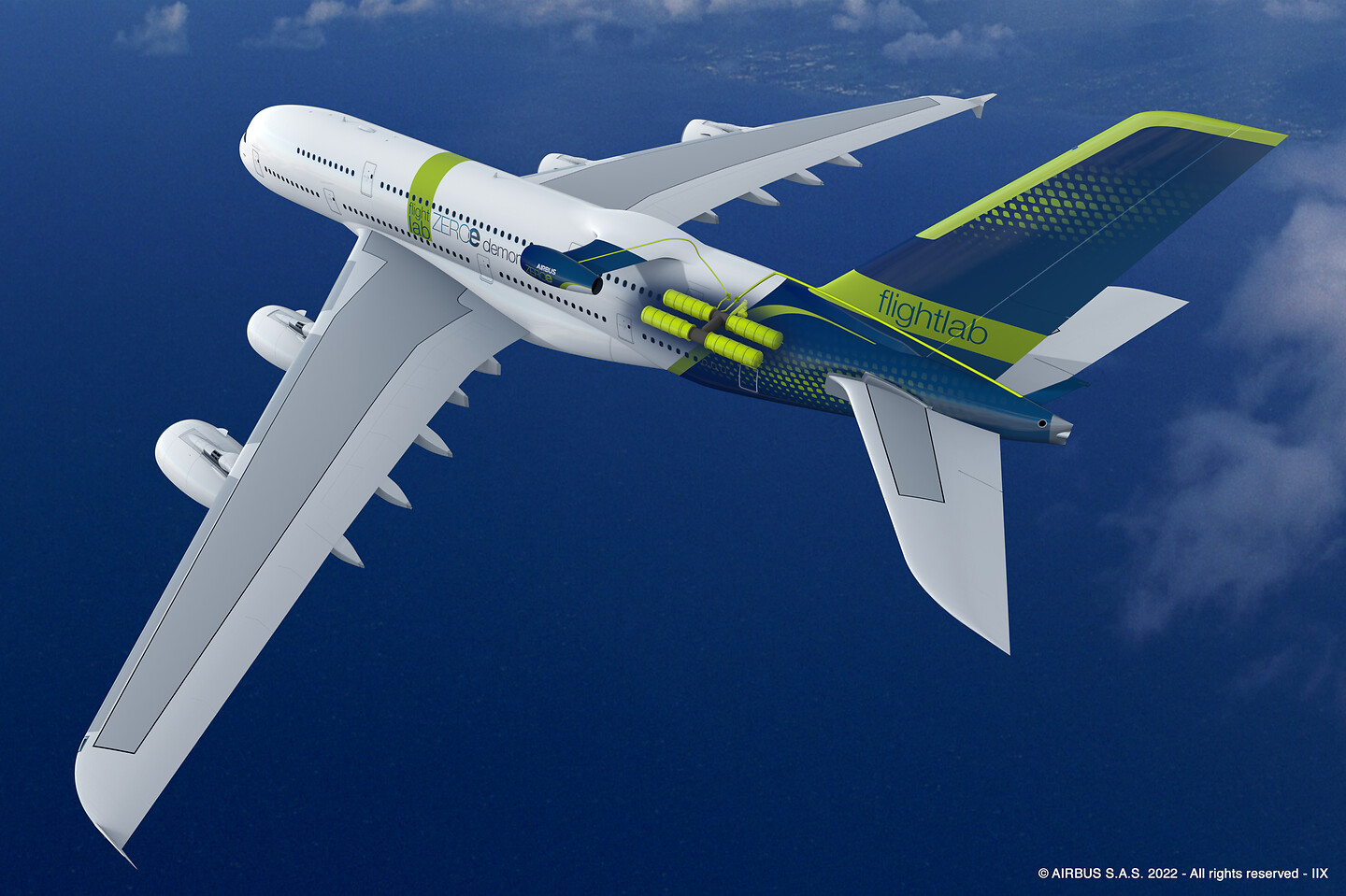
Note.
- The four hydrogen tanks in the fuselage.
- The fifth engine mounted in a pod on the fuselage.
- There’s certainly lots of space inside the fuselage for more hydrogen tanks and test and monitoring equipment.
I have a few thoughts.
This Aircraft Will Be A Superb Demonstrator
The press release says this about the use of an A 380 as a demonstrator.
The A380 is the world’s largest and most spacious passenger jet ever built – a size that makes it ideally suited to the role of test platform.
Today, the A380 MSN1 test aircraft is earmarked for a new role: to take the lead on testing the technologies that will be vital to bringing the world’s first zero-emission aircraft to market by 2035.
“The A380 MSN1 is an excellent flight laboratory platform for new hydrogen technologies,” says Mathias Andriamisaina, Airbus ZEROe Demonstrator Leader. “It’s a safe and reliable platform that is highly versatile to test a wide range of zero-emission technologies. In addition, the platform can comfortably accommodate the large flight test instrumentation that will be needed to analyse the performance of the hydrogen in the hydrogen-propulsion system.”
Initially, I suspect the aircraft will fly as a four-engined turbofan aircraft running on standard or sustainable aviation fuel.
The performance of the hydrogen engine will be tested in all phases of operation and at different altitudes.
What Size Is The Fifth Engine?
This layout is clever.
If Airbus want to test a smaller hydrogen engine for say an Airbus A 320-sized hydrogen aircraft like the ZEROe Turbofan shown in this Airbus visualisation, they fit it to the fifth pylon.
Note.
- The fifth pylon on the ZEROe Demonstrator could be the proposed pylon for the ZEROe Turbofan.
- The ZEROe Demonstrator could probably carry a lot of hydrogen to test out the hydrogen engine over a long duration.
- The hydrogen engine could be tested out over the full flight envelop of an Airbus A 380.
I would suspect that the tests on the hydrogen engine would be some of the most comprehensive ever carried out on a new engine.
If Airbus want to test a larger hydrogen engine for say an Airbus A 350-sized hydrogen aircraft, they would probably replace one of the four main engines with the hydrogen engine.
It looks like Airbus will be able to test hydrogen engines for all sizes of plane in their current range.
What Will Happen To Current A 380s?
Consider.
- The production of the A 380 has been stopped.
- There are 251 aircraft in service.
- They appear to be a reliable and safe aircraft.
- The aircraft can run on sustainable aviation fuel.
- The oldest aircraft are only thirteen years old.
- They are still reasonably modern aircraft, that if they needed to be updated to the latest standards could probably be easily done so.
- The aircraft have a lot of volume, which can hold over 500 passengers in a typical configuration.
- The flying characteristics and structure of the aircraft is well known.
I suspect there are a lot of aircraft leasing companies, who feel these aircraft are too good to scrap, just because they are not zero-carbon.
Could Hydrogen Be Stored In The Wing Of An A 380?
Hydrogen storage will get more capable in the next few years and we will see hydrogen stored in strange places in vehicles and aircraft using the gas as a fuel.
The A 380 may well have an advantage in that its wing is relatively thick compared to that of other airliners.
- The A 380 has a wing aspect ratio of 7.53.
- The Boeing 787 has a wing aspect ratio of 11.
- Gliders have wing aspect ratios as upwards of 30.
High aspect ratios are generally more economical on fuel.
But this relatively thick wing, may make it possible to store hydrogen in the wing of an A 380.
Could There Be A Hydrogen-Powered A 380?
I suspect part of the Airbus ZEROe progam will be to investigate the possibility of converting existing A 380 aircraft into a capable hydrogen-powered aircraft.
In Could An A320 neo Be Rebuilt As A ZEROe Turbofan?, I looked at the possibility of turning an existing Airbus A 320 neo into a ZEROe Turbofan running on hydrogen.
This was my conclusion.
I very much feel that there will be a route to convert some or all of the A 320 neo aircraft to hydrogen power.
So what will a ZEROe A 380 look like if it follows the same design route as an A 320 neo to a ZEROe Turbofan?
- There would be a large hydrogen tank in the rear fuselage.
- As I explained earlier, there may be a possibility for some hydrogen to be stored in the wing.
- Both passenger decks would be shortened and perhaps be able to hold the 350-410 passengers of the Airbus A350-1000.
- The cockpit, front part of the fuselage, wings, tailplane and landing gear would be unchanged.
- The aircraft would fit existing jetways at any airport, that can handle an existing A 380.
I believe that converting an existing Airbus A380 to a hydrogen-powered aircraft is possible and the conversion falls within Barnes Wallis‘s rule of problem solving.
There is no greater thrill in life, that proving something is impossible and then showing how it can be done.
The quote comes from a BBC program, where he was interviewed by Chris Brasher, who was another for whom impossible was just a minor hurdle in the way of meeting objectives.
Could There Be A Hydrogen-Powered A 380 Freighter?
Consider.
- I think it is likely, that companies like Amazon will come under pressure over their carbon footprint, as they transport increasing numbers of packages around the world.
- In DHL Express Shapes Future For Sustainable Aviation With First Order Of All-Electric Cargo Planes From Eviation, I talk about how DHL Express have ordered twelve Eviation Alice aircraft to create a zero-carbon service. DHL must feel this would be good for their image. So would they like an intercontinental zero-carbon freighter?
- Some people worry about the air-miles on their food!
There could be a worthwhile niche market for a high capacity intercontinental zero-carbon freighter.
Because it has such a large internal volume, an Airbus A 380 might make an ideal aircraft to convert.
Conclusion
Airbus will learn a lot from the ZEROe Demonstrator.
They may even learn how to develop, a long-range hydrogen-powered zero-carbon A 380 variant that could carry four hundred passengers between Europe and Australia.
Anglesey Hydrogen Can Bridge UK’s Energy Gap Says Economics Expert
The title of this post, is the same as that of this article on the University of Bangor web site.
This is the sub title.
Anglesey can become a UK leader in hydrogen energy technology, cleaning up the transport sector and creating high quality jobs across North Wales, according to a leading Welsh economic expert.
The University of Bangor is a respected university, that goes back to the nineteenth century.
But for Liverpool giving me an unconditional offer, as Bangor was one of the universities on my UCCA form, I could have studied in the North-West corner of Wales.
After a resume of where we are with hydrogen in the world, Dr. Edward Jones of Bangor University outlines how North West Wales can be turned into a hydrogen hub, to join similar hubs at Deeside in Flintshire and at Milford Haven in Pembrokeshire.
This is a paragraph of the article.
Dr Jones believes hydrogen could also hold the key to powering transport in future through a Welsh invention from the 19th century (the hydrogen fuel cell was developed in Swansea by William Grove in 1842).
William Grove was an interesting lawyer and scientist.
Dr. Jones would appear to be very much in favour of using hydrogen to take Wales forward to being zero-carbon in 2050.
I have written a few posts about the transformation of Anglesey and North West Wales, as Wales moves towards this goal. I also have some other thoughts of my own.
Holyhead Hydrogen Hub
This is happening and I wrote about it in Holyhead Hydrogen Hub Planned For Wales.
High Speed Two To Holyhead
I believe this could be a way to create a zero-carbon route between London and Dublin in under five hours and I wrote about it in Could High Speed Two Serve Holyhead?.
- London and Holyhead in a battery-equipped High Speed Two Classic-Compatible train should be under three hours.
- A single High Speed Two Classic-Compatible train would run between London and Holyhead, with a passenger capacity of around five hundred. It would probably split and join with another service at Crewe.
- Discontinuous electrification would be provided along the North Wales Coast Line.
- The trains could call at Old Oak Common, Birmingham Interchange, Chester, Crewe, Llandudno Junction and Bangor.
A High Speed catamaran would speed passengers between Holyhead and Dublin in under two hours.
Hydrogen-Powered Catamarans From Holyhead
The dynamics of a diesel-powered high speed catamaran are well-proven, with some large craft transporting passengers and vehicles on sea crossings all over the world.
Type “hydrogen-powered high speed catamaran” into Google and you get several hits to research and development projects, but no-one appears to have taken a large high speed craft and converted it to hydrogen.
But I do believe that someone somewhere is developing a hydrogen-powered catamaran with something like the following specification.
- 200 passengers
- 100-mile range
- 60 knot operating speed.
The HSC Francisco is a high speed craft that plies between Buenos Aires and Montevideo carrying over a thousand passengers and a hundred cars at 58 knots. It is powered by gas-turbine engines running on liquified natural gas.
I believe I’m not asking for the impossible.
Anglesey Airport As A Zero-Carbon Airport
Anglesey Airport uses part of RAF Valley and has hosted services to Cardiff.
This Google Map shows the runways of RAF Valley.
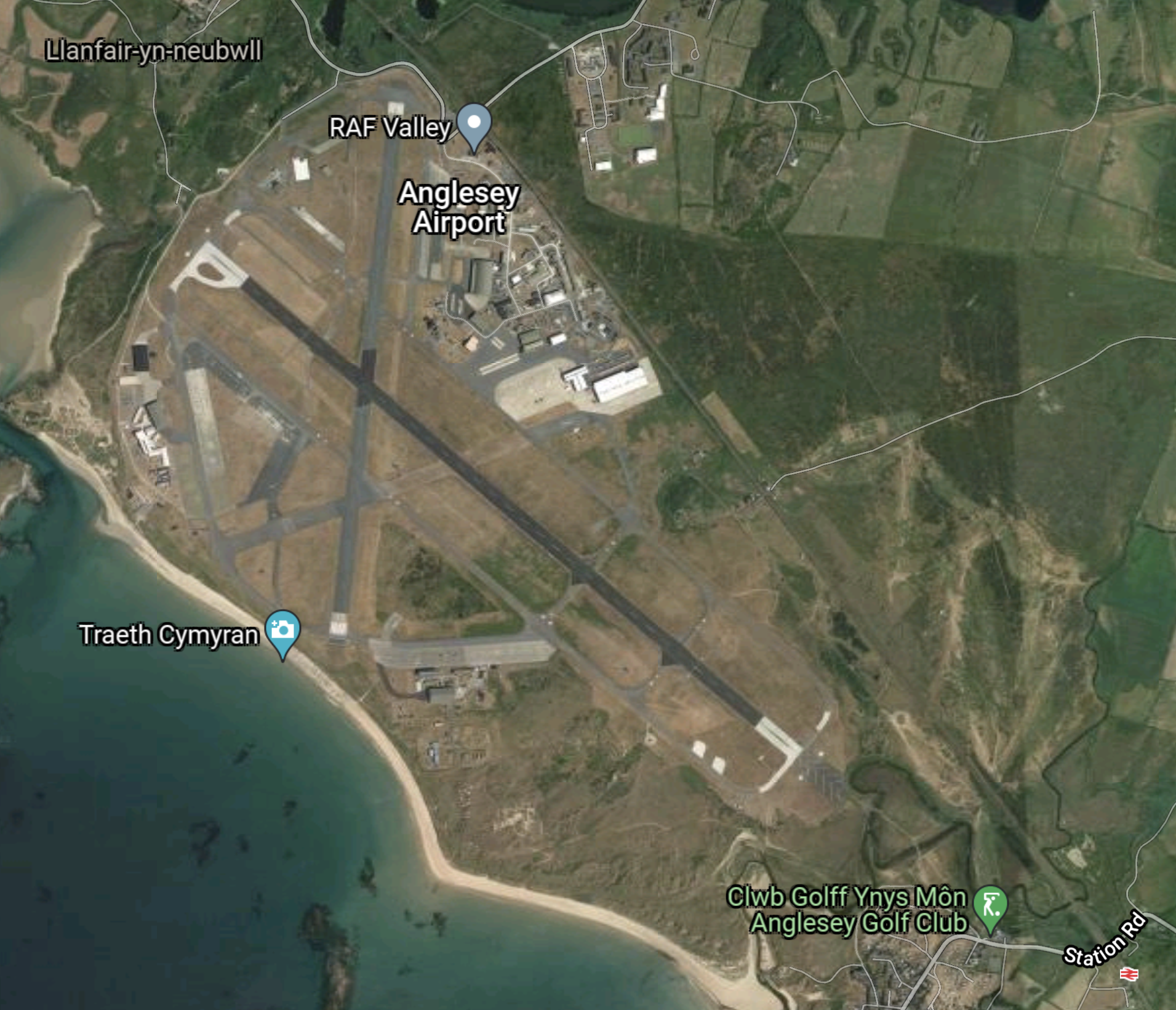
Note.
- The longest runway 14/32 is over two thousand metres long.
- Rhosneigr station in the South East corner of the map.
- The facilities of Anglesey Airport to the North-East of the runways.
The railway forms the border of the airport, as this second Google map shows.
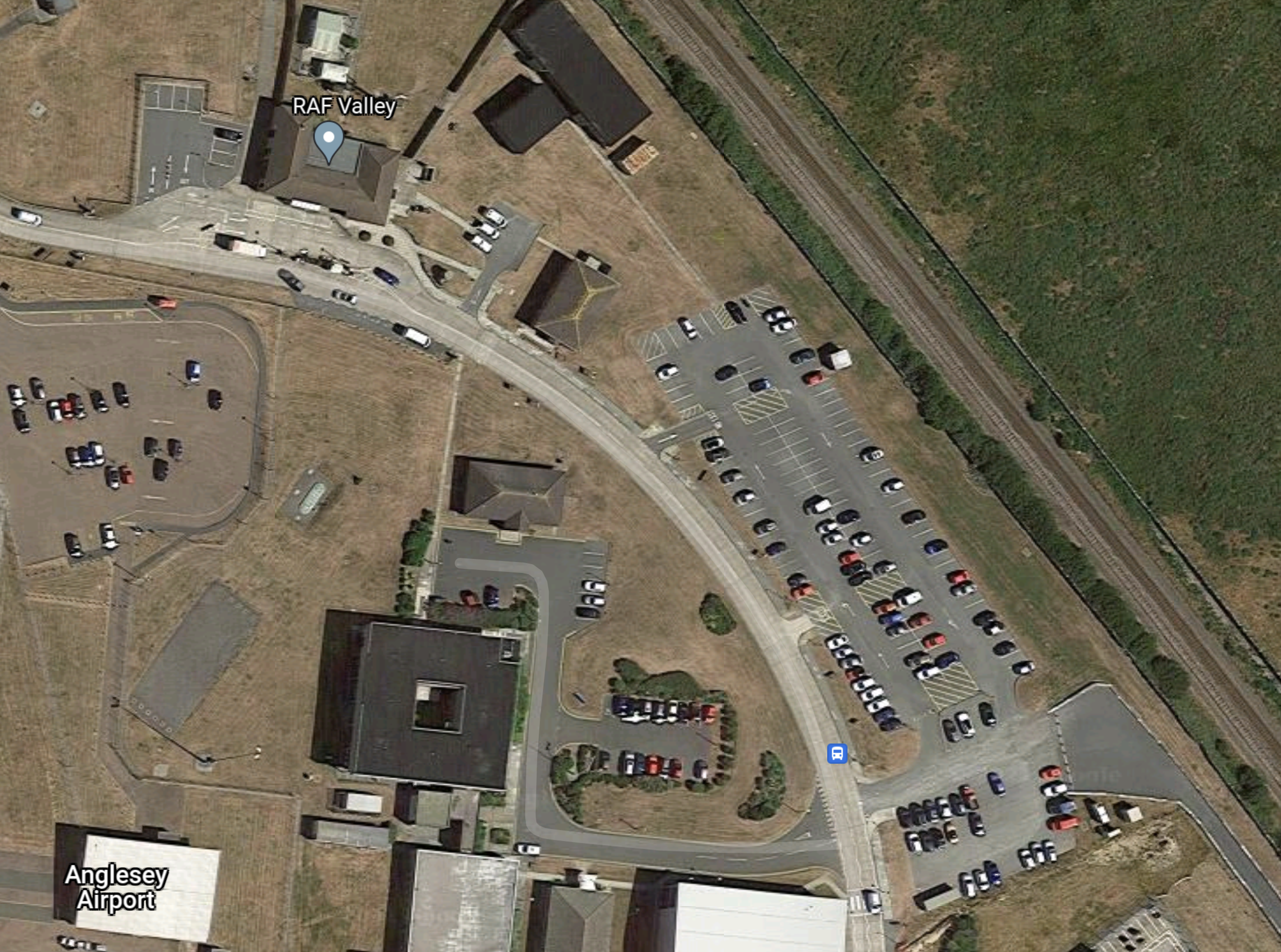
The railway is straight as it passes the Airport and there would be space for a two-hundred metre bi-directional step-free platform for passengers for the Airport.
Airbus are proposing a hydrogen-powered ZEROe Turbofan.
If you think it looks familiar, I believe that Airbus are proposing to develop the aircraft out of the current Airbus A320neo.
- The capacity will be up to 200 passengers.
- The range will be up to 2000 miles.
- Dublin and Anglesey Airports are just 71.5 miles apart.
- The cruising speed of Mach 0.78 would be irrelevant on this route, as it would probably fly a route to minimise noise.
The plane would probably be able to do several trips between Anglesey and Dublin without refuelling.
As the Port of Holyhead is developing a hydrogen infrastructure, I suspect that to provide hydrogen refuelling at Anglesey Airport would be possible.
I believe that by combining hydrogen-powered aircraft with battery-electric trains, some difficult sea crossings can be made carbon-free.
I believe that Anglesey Airport could be key to a zero-carbon London and Ireland service.
- Airbus are also proposing a 100-seat ZEROe Turboprop.
- Belfast, Cork, Derry and Shannon would also be in range.
Flights could also continue to and from Cardiff.
Reopening The Anglesey Central Railway
This has been proposed as a Beeching Reversal project.
I wrote about it in Reopening The Anglesey Central Railway.
It could be reopened as a zero-carbon railway.
Conclusion
There is a lot of scope to use hydrogen in North West Wales and Anglesey.
Ryanair Backs Away From Boeing Jet Order
The title of this post, is the same as that of this article on The Times.
These are the first two paragraphs.
Ryanair has ended talks to purchase tens of billions of dollars of Boeing jets amid a stand-off over the price.
The Irish budget airline had been in talks to buy as many as 250 planes of the 737 Max 10 model but said yesterday that the talks had collapsed.
But have Michael O’Leary and Boeing fallen out over hydrogen?
Consider.
- Many countries in Ryanair’s largest markets are aiming to go net carbon-free by 2050 or even earlier. Scotland is aiming for 2045.
- An airliner delivered today will still be flying twenty or even thirty years later.
- I believe that by 2030, small airliners up to thirty passengers will be zero-carbon.
In Could An A320 neo Be Rebuilt As A ZEROe Turbofan?, I came to this conclusion.
I very much feel that there will be a route to convert some or all of the A 320 neo aircraft to hydrogen power.
If Airbus can offer an airliner, that can be rebuilt as a hydrogen-powered plane that must change the economics of purchasing a fleet of airliners, which could be made worthless by worldwide carbon emission legislation.
Because the Boeing aircraft is a 1960s design with an aluminium airframe, I would doubt it is designed to be converted to hydrogen power.
Councillors Approve Train Station For Inverness Airport
The title of this post, is the same as that of this article on Rail Technology Magazine.
These are the first two paragraphs.
Planning permission has finally been granted for a two-platform train station at Inverness Airport.
The plans were “reluctantly” granted by the Highland Council, as much debate over the Petty Level crossing which is to be removed as a consequence.
Ir certainly looks like there were strong arguments over the level crossing.
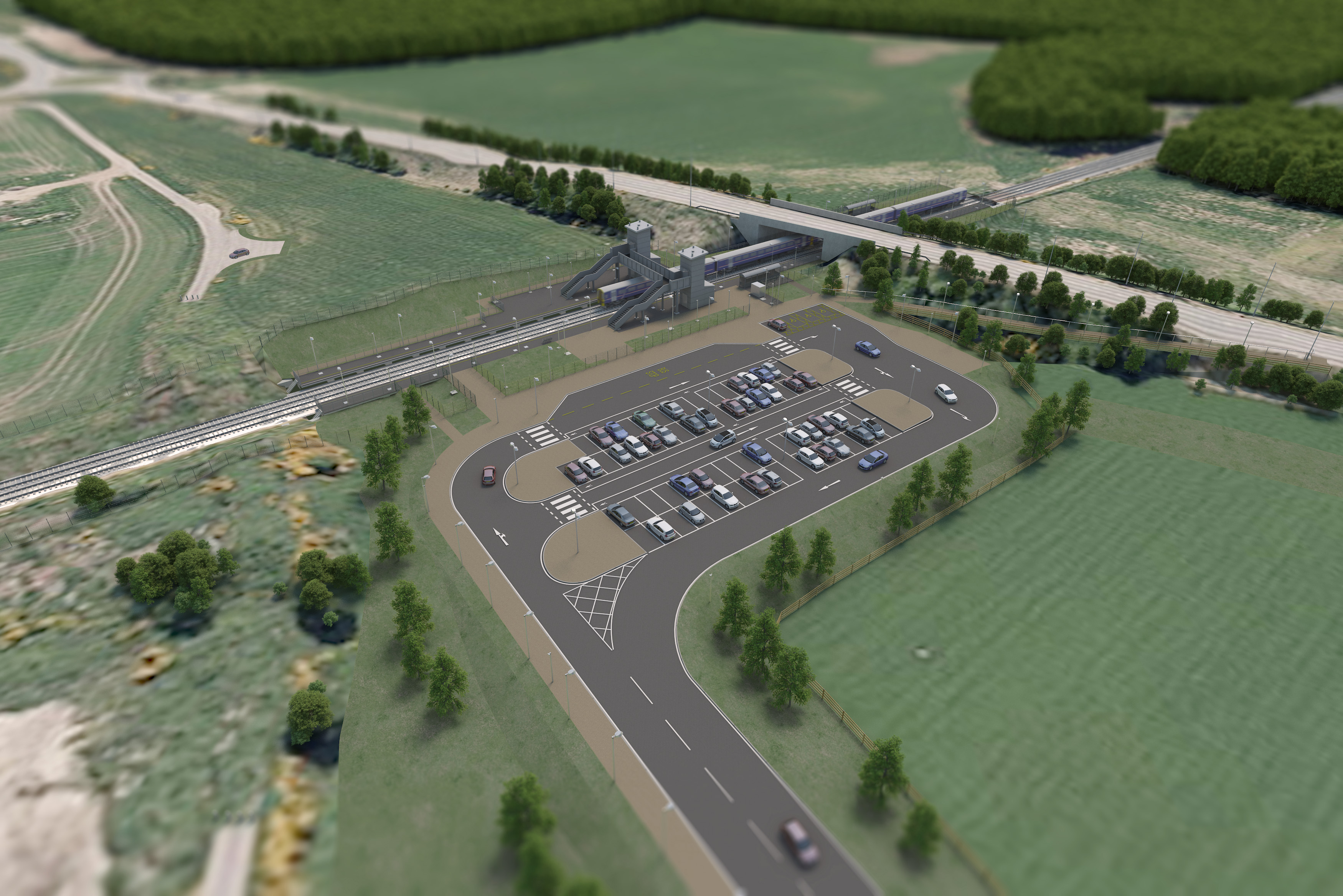
This Network Rail visualisation shows the station from a virtual helicopter hovering over the Airport.
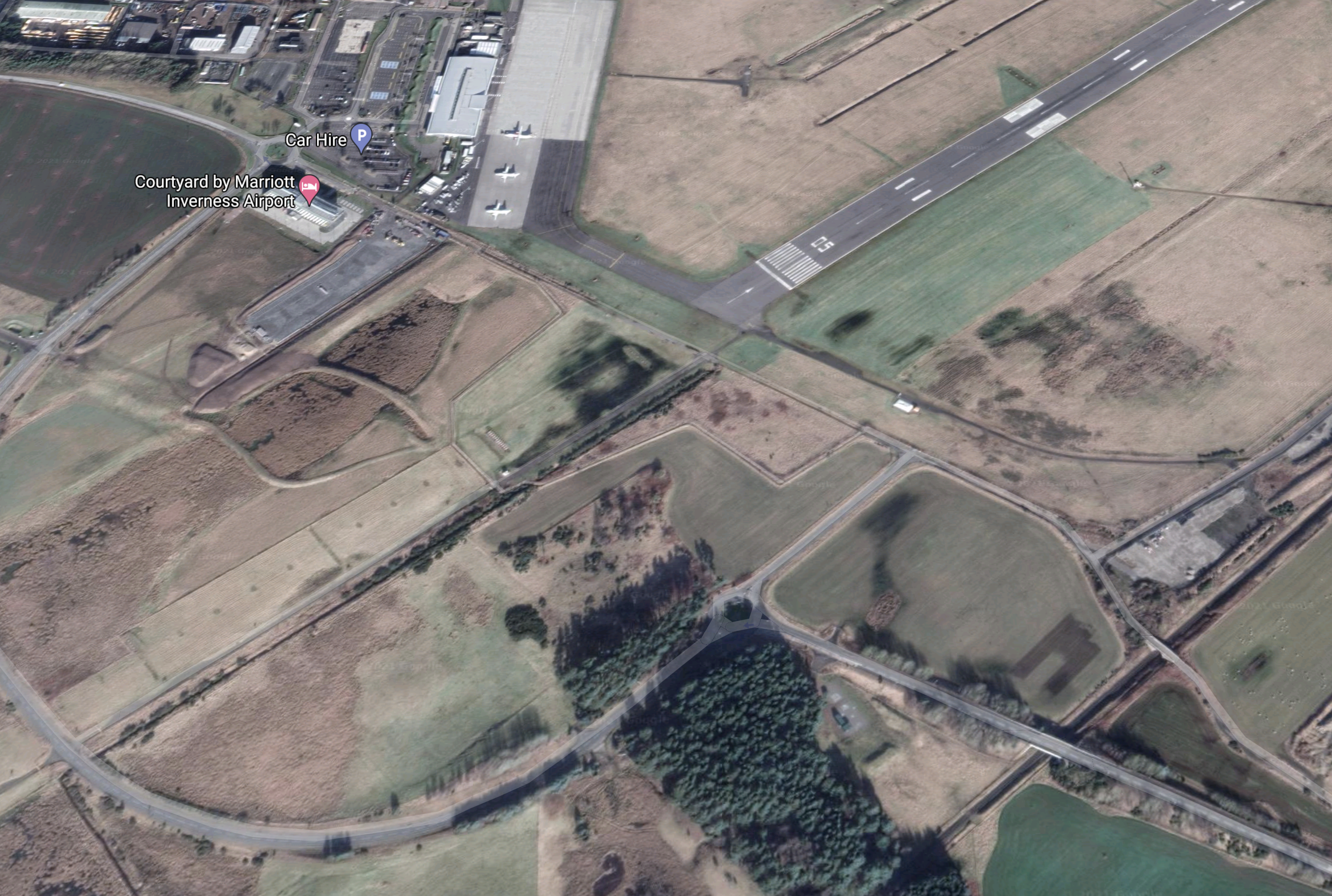
And this Google Map shows the Airport from the South-West
Note.
- The link road to the A96 crossing the railway in both images. But from opposite directions.
- In the Network Rail visualisation you can see the roundabout, where the link road joins the A96 in the top left corner.
- The current railway is only single track, but Network Rail will be doubling it.
- From these images and this document on the Network Rail web site, I can deduce this about the station.
- The station will have two platforms that will be capable of handling six-car trains.
- The footbridge is shown with lifts.
- The station will be able to be used as a Park-and-Ride for Inverness.
I suspect there will be a shuttle bus to the Airport terminal.
Travel Between London And Inverness
I’ve been to Inverness twice and and in both cases, I’ve gone by train.
- The first time, I went by a day train from Edinburgh. And I was in the cab courtesy of East Coast. I wrote about it in Edinburgh to Inverness in the Cab of an HST.
- The other occasion, I took the Caledonian Sleeper to Inverness and that is a civilised way to go.
I feel that on this route very keen competition could develop.
Advantages Of Flying
Flying to Inverness Airport has these advantages.
- A shorter journey time.
- A greater choice of destinations.
- Destinations in the sun.
- After the new station is built it will be rail connected all the way to Aberdeen.
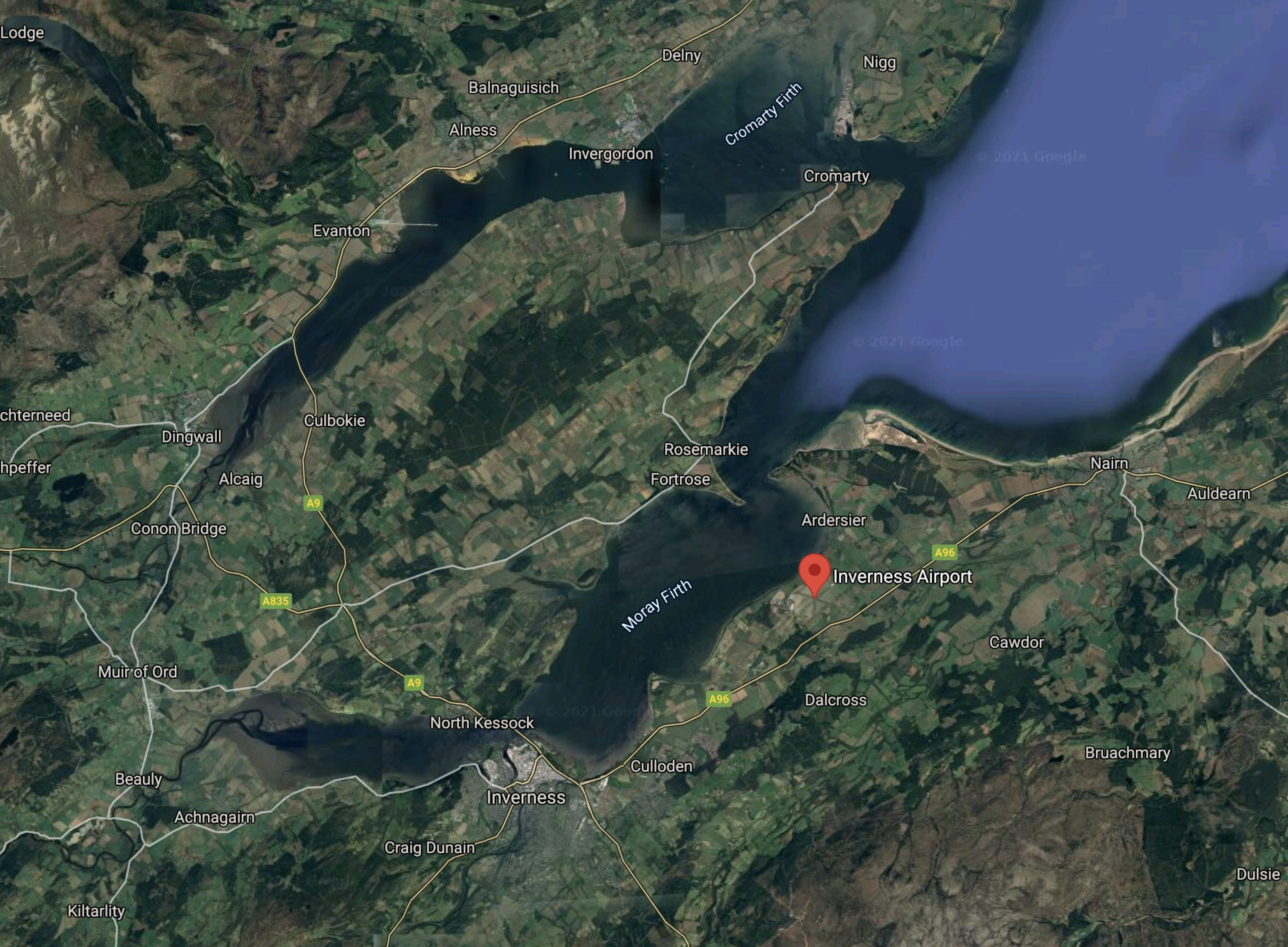
This Google map shows Inverness and Inverness Airport.
Note.
- The city of Inverness is at the Southern end of the Moray Firth.
- With all the water, I suspect the airport can be a good neighbour as far as noise and pollution are concerned.
- The Airport would have good access to green hydrogen and electricity from renewable sources.
- Even the Airport train and all the ground-handling equipment could run on hydrogen.
I feel that the Airport could sell itself as an environmentally-friendly way to the Highlands, when sufficient numbers of zero-carbon aircraft are available.
- You should be able to fly in from Amsterdam, Birmingham, Brussels, Geneva, London, Manchester etc. and not feel any environmental guilt.
- Airbus’s proposed hydrogen-powered ZEROe Turbofan is quoted as having a range of 2,000+ nautical miles,
- That distance would put a lot of the sun in range of Inverness Airport.
- Smaller feeder airliners could connect to other airports in the North of Scotland and the islands.
Inverness Airport will not be beaten without a fight.
Advantages Of Trains
Taking the train to Inverness has the following advantages.
- Luxury
- Zero Carbon-Footprint
- The possibility of an overnight trip on a sleeper train.
- The scenery through the Highlands.
I also believe that it would be possible to design a hydrogen-powered luxury train. I laid out my ideas in LNER Seeks 10 More Bi-Modes.
I believe a train could have this specification.
- 140 mph operation on 25 KVAC overhead electrification. This was done by British Rail almost forty years ago.
- Ability to use full digital in-cab signalling. This is on its way and already working in some applications.
- 110 mph operation on hydrogen. Hitachi are planning 100 mph battery trains, so it should be possible.
- 400 mile range on one filling of hydrogen. This is working in Germany.
- Ability to be upgraded to higher speeds on electric power, should the East Coast Main Line be upgraded for higher speeds in the future. The train manufacturers are probably ahead of track designers with this one.
I believe a sub-seven hour time would be possible between London and Inverness.
Conclusion
This is the sort of route, where rail and air will have a hard fight for supremacy.
Wizz Air Plans Cheaper Fares As Capacity Grows
The title of this post, is the same as that of this article on The Times.
This is the introductory paragraph.
One of Europe’s leading budget airlines is forecasting a sharp drop in the price of fares as it expects to increase the number of flights this summer to as much as 80 per cent of normal capacity.
That sounds fair to me, as it’s just supply and demand.
I’ve only ever flown Wizz Air once and that was from Liverpool to Gdansk, where I had a memorable couple of days, before taking the train home to London.
I would certainly rate them better than Ryanair.
The article intrigued me.
It said that Wizz Air had made a large loss but had raised a sum to more than cover it on the bond market.
So I looked up their fleet on Wikipedia.
- A 320-200 – 66
- A 320 neo – 6
- A 321-200 – 41
- A 321 neo – 23 – Deliveries until 2026
- A 321 XLR – 20 – Deliveries from 2023 to 2026
In 2026, Wizz Air will end up with forty-nine neo aircraft and how many of the 107 older ones, they want to keep.
Under Environmental Protection on the Wikipedia entry for Wizz Air, this is said.
One year later, in November 2020, among the European airlines, Wizz Air was able to show the lowest CO2 emissions per passenger / kilometre and underlined their commitment to further reducing their environmental footprint. As part of their strategy, all fuel-saving flight phases of take-off and landing are continuously monitored for maximum environmental optimization, which has a significant impact on further continuous reductions in CO2 emissions.
I would assume, that this means, they take carbon emissions seriously.
When I saw these fleet sizes and put them together with Wizz Air, I wondered if Airbus have offered the airline a route to decarbonisation by converting the neo aircraft to hydrogen. I believe this is possible and said so in Could An A320 neo Be Rebuilt As A ZEROe Turbofan?
These fleet sizes don’t rule it out and if there was a way to remanufacture later A 320s to hydrogen aircraft, it would be a good way to continue to sell aircraft.
 The Anonymous Widower