A Pit Stop At Halifax
One of the objectives of my journey from Blackburn to Leeds was to visit the Piece Hall in Holifax.
Last year in A Trip To Halifax, I had a quick look and said this.
I had hoped to find something hot to drink. All I found was a very bad hot chocolate in the station.
Surely, something better could be done in the green space by the station.
These are pictures I took.


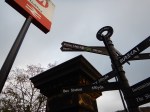











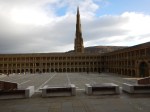
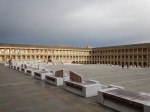

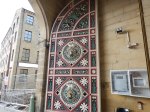


As you can see the Piece Hall is now restored and a magnificent space surrounded by craft shops, bars and restaurants.
I had an excellent breakfast in a bar and restaurant called Elder.
There would also appear to be a sensible hotel just outside the station on the short walking route to the Piece Hall. It is called the Imperial Crown Hotel and it could be a convenient place to stay on a visit to the area.
- It’s within a hundred metres of the station and the Piece Hall.Trains from the station.
- Trains are approximately every thirty minutes to Bradford, Hudderfield, Leeds and Manchester.
- Trains take around thirty minutes to Leeds.
Next time, that I go to Leeds or Bradford, I’ll give it a try.
A Walk Between Burnley Barracks And Burnley Manchester Road Stations
Burnley Barracks and Burnley Manchester Road stations are not that far apart.
This Google Map shows Burnley’s three stations in relation to the Town Centre and Turf Moor.
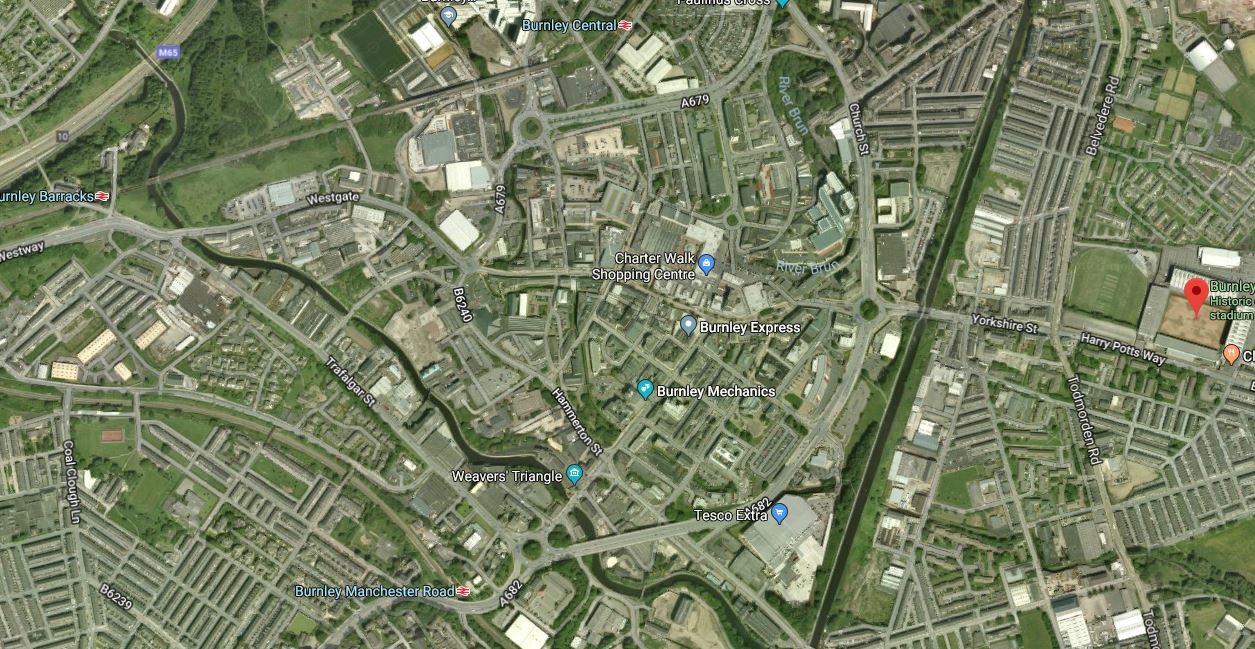
The various locations are as follows.
- Turf Moor is indicated by the red arrow in the East.
- Burnley Barracks station is in the North-West corner.
- Bunley Central is at the North.
- Burnley Manchester Road is at the South.
- The Leeds and Liverpool canal weaves its way through the town passing close to Burnley Barracks station.
What the map doesn’t show is the terrain. The main station at Manchester Road is on one stretch of high ground and Central station and Turf Moor are on another.
So I walked between Barracks and Manchester Road stations along the canal.
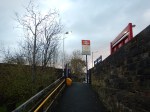
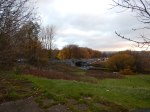
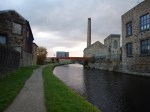


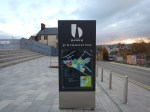
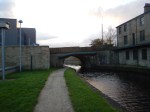
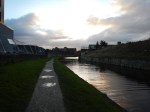
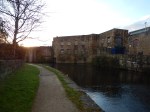
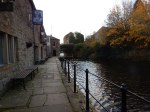
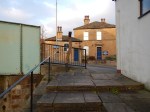
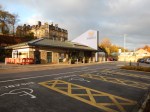
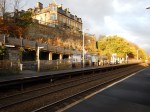
It was a pleasant walk, but I still had a stiff climb up to Manchester Road station.
The East Lancashire Line
The East Lancashire Line is the line that runs through Burnley Barracks station.
The route needs to be improved and I wrote about this in Improving The Train Service Between Rose Grove And Colne Stations.
I suggested that Class 769 bi-mode trains would be ideal for the route.
Burnley Barracks Station
There would appear to be a lot of development planned along the canal.
Surely, this development will generate passenger traffic, as many will prefer to walk along the level canal tow-path, rather than climb the hill to Burnley Manchester Road station.
Burnley Barracks station needs improvement.
- Better shelter.
- Ticket machine.
- Better means of requesting the train to stop.
- Ideally, there would be a lift to street level.
But at least Network Rail are replacing the bridge over the canal and the platform can already accommodate a four-car train.
Conclusion
If refurbisheed four-car Class 769 trains replace the current two-car scrapyard specials on the East Lancashire Line, the following will happen.
- Capacity on the route will be doubled.
- The service will be faster, due to the increased speed and power.
- No expensive platform lengthening will be required.
- An hourly service between Blackpool South and Colne will have no problems operating seven days a week.
- Some stations, like Burnley Barracks, will need improvements to handle the extra passengers.
Two trains per hour will need track work to add a passing loop and modern signalling, and a few more trains.
Bolton Station Is Still An Ongoing Project
I Bolton station still needs a lot of work to be done to allow electric trains to pass through.
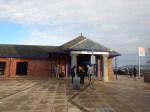


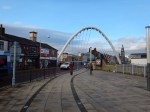


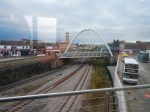
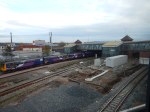


I had just intended to change trains at Bolton on a trip from Deansgate to Blackburn. But because the trains to Blackburn are only hourly, I had to wait nearly an hour.
Hopefully, when the service between Bolton and Blackburn is doubled in frequency, as I wrote about in Blackburn To Manchester Every Thirty Minutes, the wait will be reduced too!
Hopefully
Progress At Pomona – 17th November 2017
Pomona tram stop will become the interchange between the Eccles Line and the new Trafford Park Line on the Manchester Metrolink.
As work has now started on the Trafford Park Line, I went to take a look.


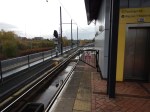
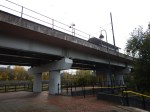

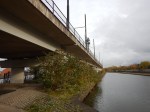
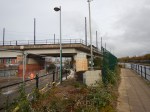
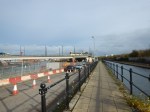
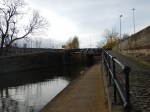
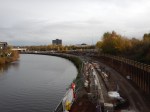
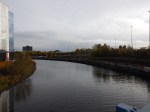

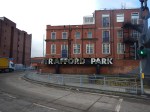
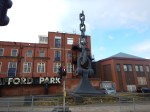
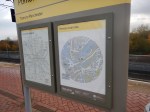

I also walked along the canal to the entrance to the Trafford Park Estate.
This Google Map shows the area.
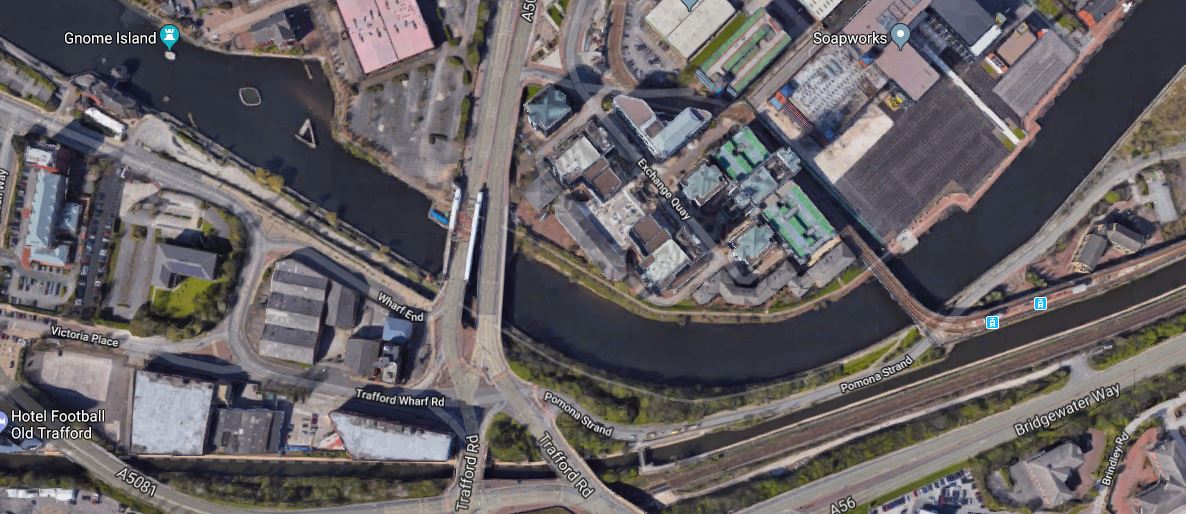
Note.
- The single bridge to the East takes the tram over the Irwell.
- The double-bridge takes masses of traffic to and from Manchester City Centre.
- The Trafford Park Line goes along the River Irwell.
When completed, there will be the River Irwell, the Trafford Park tram line, the Canal and the railway running through together.
The rail line is a curious one, as it has a two-hourly service between Manchester Piccadilly/Oxford Road and Liverpool Lime Street via Warrington, which stops at Trafford Park station and additionally Manchester United Football Ground station on match days only.
I’m pretty certain, that in perhaps 1966, I had my last ride on a steam-hauled British Rail service between Oxford Road and the football ground.
Surely in these days, a two-hourly service is inadequate and the frequency should be at least two trains per hour.
Karlsruhe would apply a tram-train solution and tram-trains from perhaps Warrington, would join the Trafford Park tram line to go through Manchester City Centre.
Assange Isn’t A Dreamer He’s A Destroyer
The title of this post is the same as that of an article in yesterday’s Times, by David Aaronovitch.
It is subtitled.
Don”t be fooled by the Wikileaks e founder’s supposed idealism; he is in the same destructive club as Putin and Trump.
It is thoughtful and well worth a read.
Liverpool Lime Street Station Upgrade – 16th November 2017
The upgrading of platforms at Liverpool Lime Street station seemed to be progressing well as I passed through.
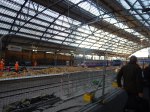
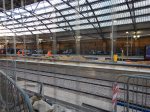

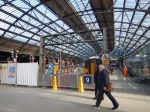
Note.
- Work even seems to have started on the second platform for Virgin services, which would allow two trains per hour.
- Extra platforms will also allow direct Liverpool to Glasgow services.
In some ways, the Grade II Listed station, will become the first station in the North ready to be ready for high speed trains from London and across the North of England.
How Much Energy Does A Crossrail Class 345 Train Use?
I will start with the Crossrail Rolling Stock Technical Fact Sheet, which dates from 2012.
The Class 345 trains were built to this specification.
This is said about the power required.
Energy efficiency of 24 KWh per train kilometre (equivalent of 55g CO2 per passenger kilometre)
So what does this mean now that trains are running and trains will have been designed and probably accepted to this specification.
Assuming, that trains will be nine-car when completed, 24 KWh per train per kilometre translates into 2.67 KWh per car per kiometre or 3.29 KWh per car per mile.
Ian Walmsley’s Train Energy Usage Figure
In an article in the October 2017 Edition of Modern Railways, which is entitled Celling England By The Pound, Ian Walmsley says this in relation to trains running on the Uckfield Branch.
A modern EMU needs between 3 and 5 kWh per vehicle mile for this sort of service.
My calculated value is in line with this figure, as the Uckfield Branch is not that different to some of the Crossrail branches.
What Is The Kinetic Energy Of A Crossrail Train?
I ask this question to show the energy values involved.
If I take a nine-car Class 345 train, this has a mass of less than 350 tonnes and a maximum speed of 145 kph.
1500 passengers at 80 kg each works out at another 120 tonnes.
So for this crude estimate I’ll use 450 tonnes for the mass of a loaded train.
This gives the train an energy of 365 megajoules or 101 KWh.
This amount of energy is only a couple of KWh larger than the largest battery size of a Tessla Model S car.
It leads to the conclusion, that batteries could be large enough to store the regenerative energy generated by the train, when it stops.
How Far Could A Crossrail Train Run On Batteries?
If the batteries were sized for the regenerative braking, then a battery of 100 KWh would probably be sufficient in most circumstances.
Using Crossrail’s figure of 24 KWh per train per kiometre, gives a convenient range of four kilometres, which is probably in excess of the largest distance between stations.
But Crossrail trains are effectively two half-trains with two pantographs.
So perhaps they will be fitted with two batteries!
The battery capacity would be arranged to give the desired amount of emergency power.
Conclusion
There’s a lot more to learn about these Crossrail trains.
Siemens Joins The Hydrogen-Powered Train Club
This article on Global Rail News is entitled Siemens Working On Fuel Cell-Powered Mireo Train.
Siemens Mobility’s Mireo is their next-generation electric multiple unit.
This description is from Wikipedia.
The railcars have an articulated design and aluminium carbodies, with 26 metres (85 ft) cab cars on each end of a trainset and 19 metres (62 ft) passenger cars between them, with trainsets between two and seven cars long. The use of aluminium, combined with new control systems, is intended to reduce energy use by up to 25%. compared to previous Siemens EMUs. The railcars can reach a top speed of up to 160 kilometres per hour (99 mph)
The first units were ordered in February 2017 by DB Regio, which ordered 24 three-car trainsets with a passenger capacity of 220 for service on its routes in the Rhine valley in southwestern Germany.
This train has a lot in common with other offerings from the major train manufacturers.
- Light weight
- Articulated design.
- Sophisticated control systems.
- Low energy use.
Is it a case of engineering minds thinking alike?
The Global Rail New article says this about the hydrogen-powered trains.
Siemens is partnering up with Canadian manufacturer Ballard Power Systems to develop a fuel cell engine for its new Mireo train platform.
The two companies have signed a Development Agreement to produce a 200 kilowatt fuel cell engine to power a Mireo multiple unit.
The first fuel cell-powered Mireo could be running by 2021, Siemens and Ballard have announced.
There is a page on the Ballard web site, which lists their fuel cell engines called FCVeloCity.
- FCVeloCity-MD – 30 kW
- FCVeloCity-HD – 60kW, 85kW, 100kW
- FCVeloCity-XD – 200 kW
I would assume that as there is no product sheet for the XD, that the 200 kW unit is still in development.
The first application would appear to be the Siemens Mireo.
Is Two Hundred Kilowatt Enough Power?
Bombardier’s four-car Class 387 train, is a typical electric muiltiple unit, that has been built in the last few years.
It has an installed power of 1.68 megawatts or 420 kW per car.
Porterbrook’s brochure says this about the two diesel engines in their Class 769 train, which is a bi-mode conversion of a Class 319 train.
The engine is a MAN D2876 LUE631 engine which generates 390 kW at 1800 rpm, giving an acceptable power output.
So that works out at 195 kW per car.
Both these trains have similar performance to the Siemens Mireo.
- The trains will be substantially heavier than the Mireo.
- The trains will do a lot of acceleration under electrification.
The 200 kW of the Mireo, isn’t much compared with the current generation of train.
As with the Alstom Coradio iLint, that I wrote about in Is Hydrogen A Viable Fuel For Rail Applications?, I suspect the Mireo has the following features.
- Use of batteries to store energy.
- Regenerative braking will use the batteries.
- Selective use of electrification to drive the train directly.
- Intelligent control systems to select appropriate power.
Given that the light weight will also help in the energy-expensive process of electrification, the intelligent control system is probably the key to making this train possible.
Will The Train Have One Or Two Hydrogen Power Units?
Wikipedia says this about the layout of the train.
The railcars have an articulated design and aluminium carbodies, with 26 metres (85 ft) cab cars on each end of a trainset and 19 metres (62 ft) passenger cars between them, with trainsets between two and seven cars long.
The trend these days in modern trains, is to fit large numbers of axles with traction motors for fast acceleration and smooth regenerative braking. As an Electrical Engineer, I believe that the most efficient electrical layout, would be for any car with motors to have some form of energy storage.
Have Siemens designed the train to use two identical cab cars?
- These are longer to meet higher crash-protection standards.
- Any diesel or hydrogen generator would be in these cars.
- Energy storage would be provided.
Two cab cars with generators would have 400 kW, which would be more likely to be an acceptable power level.
Would the intermediate passenger cars be powered or just trailer cars?
I very much believe that the ideal intermediate cars should be powered and have a battery for regenerative braking.
Will Other Companies Join The Hydrogen Club?
Alstom, who are merging their train business with Siemens have announced orders for the Coradia iLint, so they are obviously a full-paid up member.
Bombardier have said nothing, but like Ballard, they are a Canadian company.
The key though, is that modern intelligent train control systems, which are used by all train manufacturers, have been designed to do the following.
- Select appropriate power from electrification, battery or an on-board diesel generator.
- Deploy pantograph and third-rail shoe as required.
- Drive the train in an efficient manner.
Just swap the diesel generator for a hydrogen one.
Having a light weight, energy efficient train design will also help.
Conclusion
Expect hydrogen-powered trains from most manufacturers.
Location! Location! Location!
I’ve heard it several times, that the title of this post is the three most important things about property.
This article on Construction Enquirer is entitled Great Portland Estates Plans Work on £233m Trio Of Schemes.
The three schemes are.
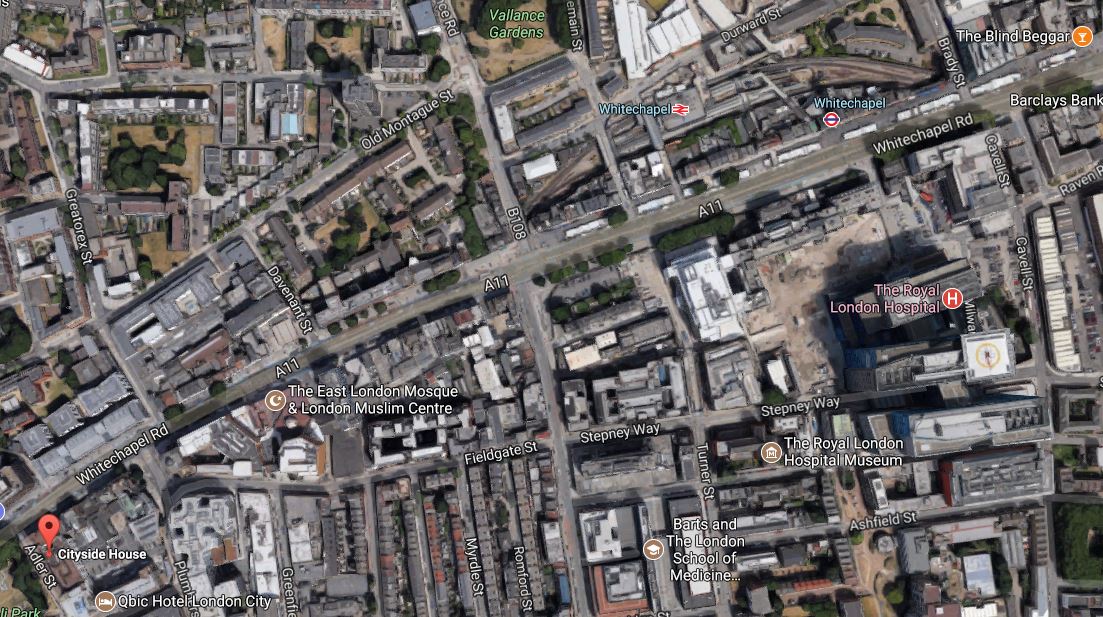
Cityside House E1
This Google Map shows the location.
Note.
- The block is indicated by a red arrow.
- It is a short walk from Whitechapel station, which is served by Crossrail.
The office accommodate is being upgraded and residentialo and a hotel will be added.
Oxford House W1
This Google Map shows the location.
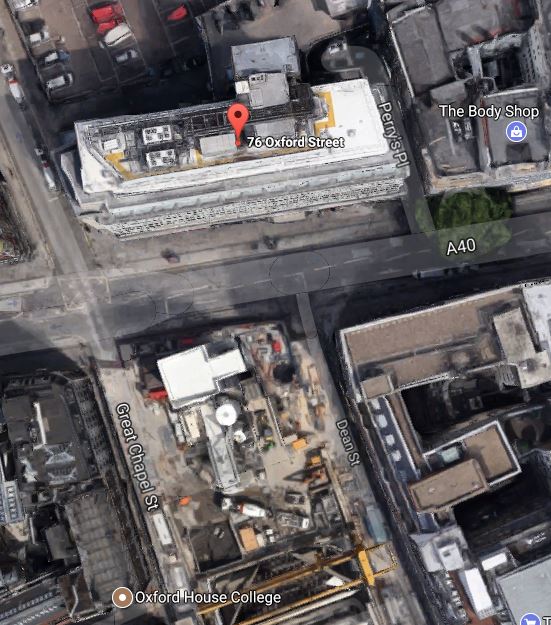
Note.
- The block is indicated by a red arrow.
- The building site opposite is the under-construction Western entrance to Tottenham Court Road station, which is served by Crossrail.
- Tottenham Court Road station is just thirty minutes to Heathrow on Crossrail, with a train every ten minutes.
The block is to be redeveloped.
Is there a better location for an office block?
Hanover Square W1
This Google Map shows the location.
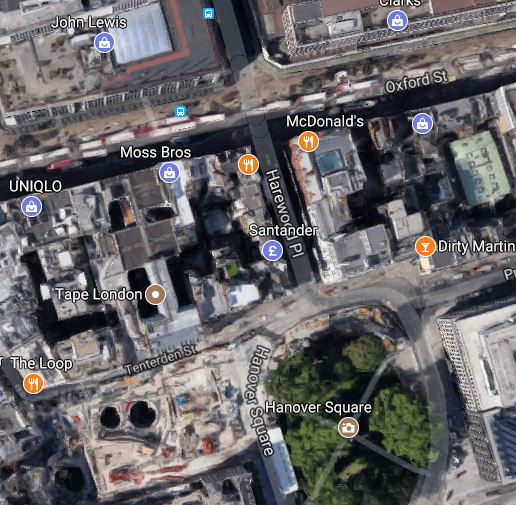
Note.
- The site is on the North-West corner of Hanover Square.
- The building will be on top of the Hanover Square entrance to Bond Street station, which is served by Crossrail.
- Bond Street station is just twenty-seven minutes to Heathrow on Crossrail, with a train every ten minutes.
I doubt Great Portland Estates will have problems filling this development.
Conclusion
These three property developments are all tightly tied to Crossrail.
There will be many more!
Will The New Class 710 Trains Use Selective Door Opening At Gospel Oak Station?
These two pictures were taken of a Class 172 train in Platform 3 of Gospel Oak station.
The two-car Class 172 trains are just over 47 metres long.
In The Aventra Car Length Puzzle, I said that the Class 710 trains for the Overground would have twenty metre long cars, which is similar to the 20.4 metres of the Class 378 trains.
For information other four-car electric units, that Aventras are likely to replace have the following car-lengths
- Class 315 trains – 19.80 metres
- Class 317 trains – 19.83 metres
- Class 319/769 trains – 19.83 or 19.92 metres
- Class 321 trains – 19.95 trains
- Class 455 trains 19.83 trains.
So it looks like the Class 710 train, has been sized as a direct replacement foe much of the Mark 3-based electric multiple units.
This would mean, that no platform lengthening work needs to be done, when the many older units are replaced with new Aventras.
It would also mean that as I talked about in Musical Trains On The Overground, that Aventras could share routes with Class 378 trains without too much trouble on the North and West London Lines.
So will a four-car Class 710 train, which will be about eighty metres long fit Platform 3 at Gospel Oak station?
This Google Map shows the station.
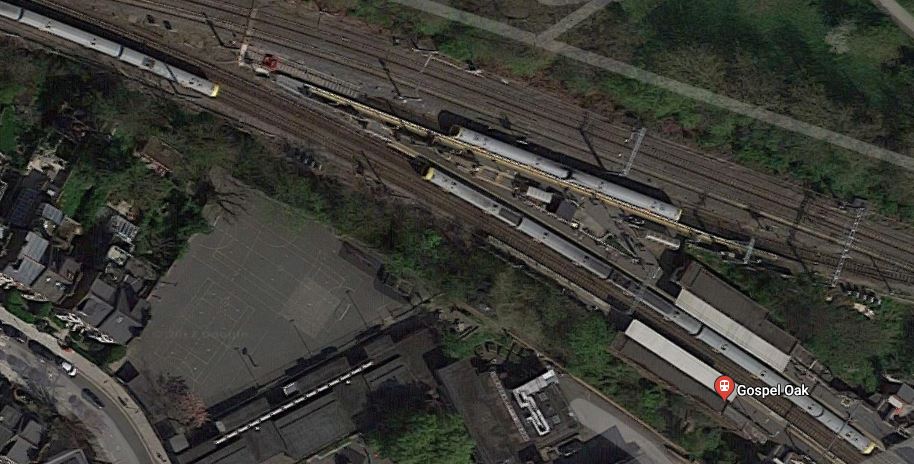
Note that a Class 172 train is in Platform 3 and in Platform 2 there is a five-car Class 378 train.
The length of Platform 3 can be ascertained and it looks like that Platform 3 is already long enough for an eighty metre train.
If it isn’t Bombardier certainly have fitted Selective Door Opening to the new trains.
 The Anonymous Widower