Is This A Plan For The Marshlink Line?
Uckfield Third Rail Is NR Priority is based on an article in the April 2022 Edition of Modern Railways, with the same name.
The Modern Railways article also has this to say about the Marshlink Line.
By contrast, the shorter trains in use on the Marshlink Line between Ashford and Hastings made bi-modes with batteries a realistic option there.
The Marshlink Line is electrified at both ends at Ashford International and Ore stations.
- In between there are four small stations and one large one Rye in the middle.
- Ashford and Rye are 15.3 miles apart.
- Rye and Ore are 10.1 miles apart.
- As it runs across the Romney Marsh, there probably aren’t too many gradients.
It would appear that with a fast charge system at Rye, battery-electric operation should be possible.
In an article in the October 2017 Edition of Modern Railways, which is entitled Celling England By The Pound, Ian Walmsley says this in relation to trains running on the Uckfield Branch, which is not very challenging.
A modern EMU needs between 3 and 5 kWh per vehicle mile for this sort of service.
For different lengths of trains, battery sizes can be calculated based on a distance of sixteen miles.
- A five-car train would need a battery capacity of between 240 and 400 kWh.
- A four-car train would need a battery capacity of between 192 and 320 kWh.
- A three-car train would need a battery capacity of between 144 and 240 kWh.
In Uckfield Third Rail Is NR Priority, I estimated that the Uckfield branch could be served using five-car trains with batteries between 180 and 300 kWh.
It does look that a five-car battery-electric train could be developed that would handle both the Uckfield Branch and the Marshlink Line.
The Vivarail Fast Charge System At West Ealing – 4th May 2022
This article on Rail Business UK is entitled UK Railway News Round-Up.
This is the first section.
Vivarail has awarded Sella Controls a contract to supply of Tracklink III Readers and beacons for GWR’s Class 230 battery train fast charging trial on the Greenford branch. As the train enters the station one beacon will initiate the deployment of the train collectors for charging, and another beacon will trigger the charging process when the train is in the correct position.
I went to West Ealing station today and took these pictures.
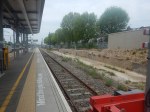
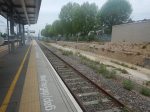
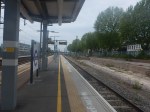
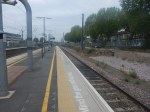
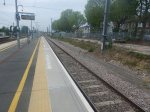

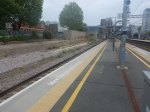
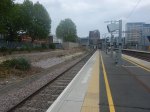
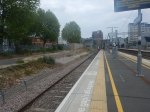
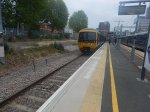
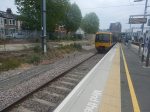
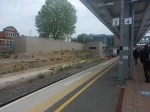
Note.
- The bay platform is Platform 5.
- I couldn’t see any signs of any Tracklink III Readers.
- I wouldn’t be surprised to find that two Class 230 trains could fit in Platform 5.
I took these pictures of the station in April 2021.
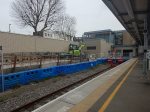
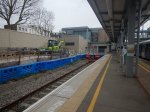
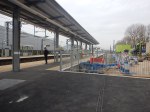
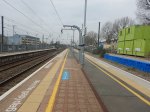
It does appear by comparing the pictures, that the biggest change is that the area on the far side of the track in Platform 5, which has been cleared.
Vote Hydrogen For London
London has an air pollution problem, as do many cities around the UK and the world.
This web page from Imperial College is entitled Air Pollution Research in London.
It starts like this.
Why Do Research In London?
- Air pollution is a very large public health issue in London. It shortens the lives of Londoner’s leading to up to 9,400 extra deaths per year.
- We still do not fully understand the health effects of air pollution.
- London is a good place to do air pollution research, and acts as a giant laboratory.
- Air pollution is well recorded in London, starting in 1993 and now covering about 200 sites.
- London has a large population and good data on health, movement and population.
Surely, 9,400 extra deaths per year are 9,400 extra deaths too many!
These pictures were taken close to where I live in Hackney, mainly on the Bals Pond Road and Moorgate.

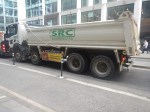
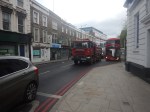


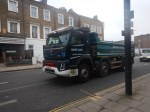

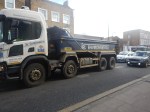




All show heavy diesel trucks, spewing out large amounts of carbon dioxide and other emissions.
So how can we reduce the pollution from these heavy trucks?
Consider.
- I doubt that despite what Elon Musk says, these six- and eight-wheeled trucks can’t be powered by batteries.
- Nearly all of these trucks, never go far from London.
- Many of these trucks could be converted to hydrogen and thus become zero-carbon.
- When they are replaced, these trucks should be replaced by zero-carbon hydrogen trucks.
But there is one big problem. Unlike Aberdeen, Birmingham, Glasgow and a few other areas, London has no hydrogen infrastructure and the Mayor has no plans to develop one.
I will not vote for any politician, who doesn’t support developing a hydrogen infrastructure and a hydrogen policy for London.
Eridge Station – 3rd May 2022
I documented the work at Eridge station in Eridge Station – 12th July 2021 and it was finished a few days ago.
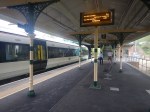
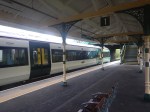
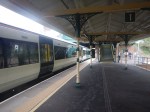
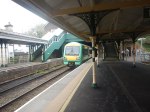
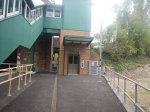
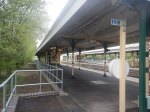
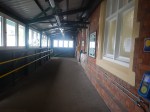
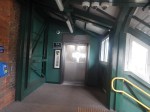
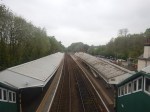


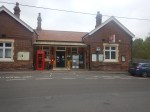
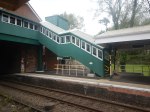
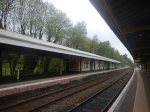
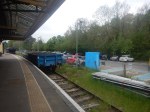
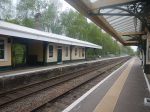
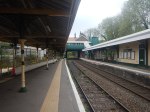

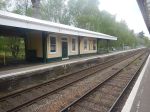
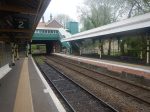
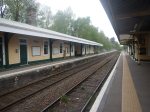
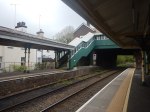


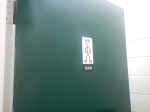


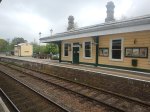
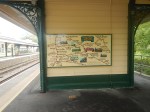
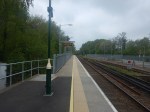
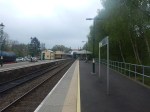
Note.
- The platforms can take ten-car trains.
- The lift on the National Rail side of the station.
- The restored iron supports for the roof.
- The two waiting rooms; one by the ticket hall and the other on the platform.
- The well-appointed toilets, with quirky signs and the all important coat hook.
- There’s even an Amazon Hub.
It certainly is a quality restoration and upgrading to step-free access.
Possible Future Electrification
In Uckfield Third Rail Is NR Priority, I discussed ways that the Uckfield Branch could be electrified.
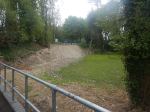
This picture shows the platforms from the Spa Heritage Railway.
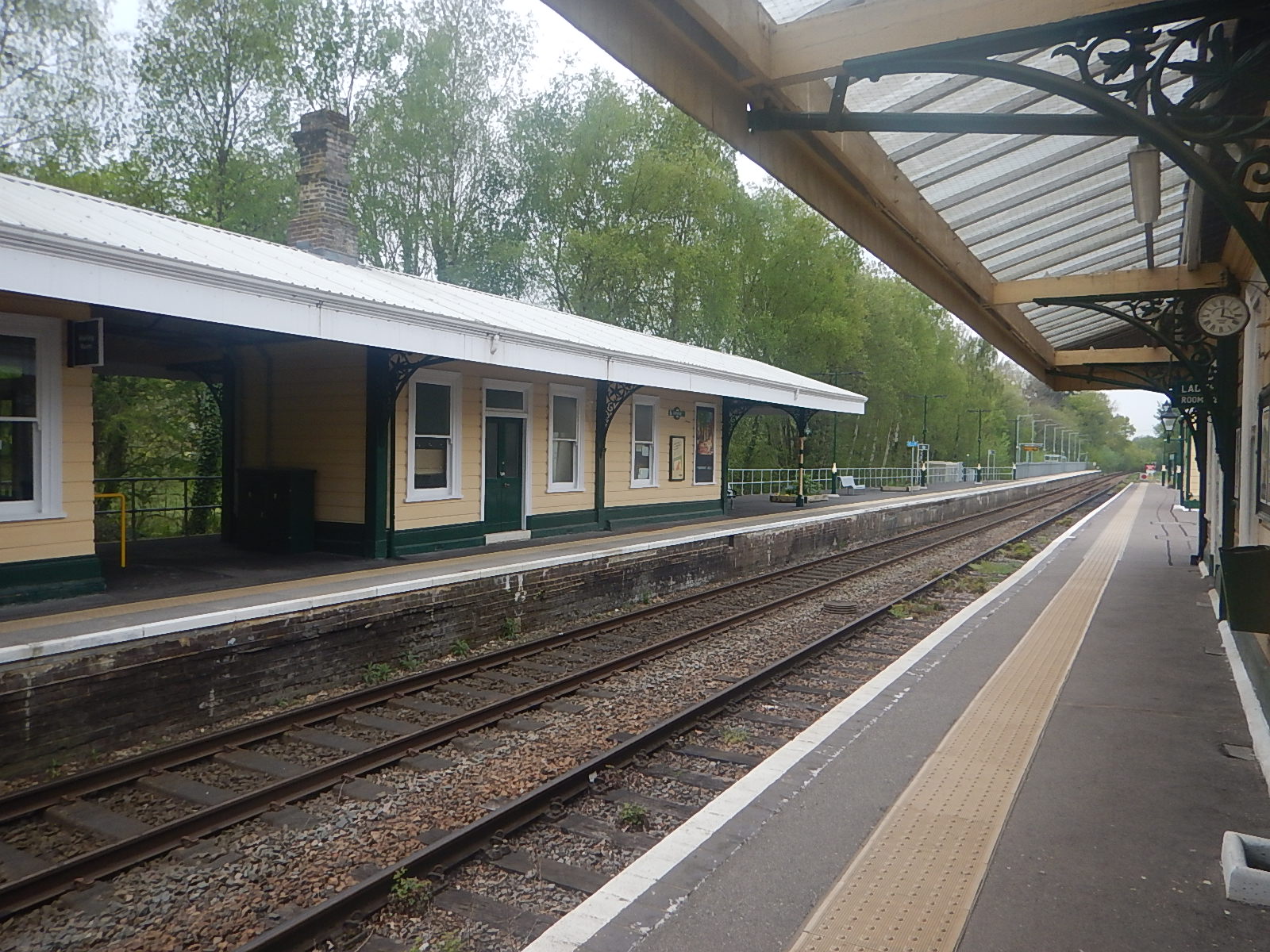
Note.
- All National Rail services call in the far platform.
- The platform will take a ten-car train.
- There is plenty of space for a single extra third-rail between the tracks.
If the power were only switched on whilst trains were in the platform, surely it would be safe.
Uckfield Third Rail Is NR Priority
The title of this post, is the same as that of an article in the April 2022 Edition of Modern Railways.
This is the first two paragraphs.
Electrification of the line between Hurst Green and Uckfield in East Sussex and the remodelling of East Croydon are the top Network Rail investment priorities south of the river, according to Southern Region Managing Director John Halsall. He told Modern Railways that third rail is now the preferred option for the Uckfield Line, as it would allow the route to use the pool of third-rail EMUs in the area. This is in preference to the plan involving overhead electrification and use of dual-voltage units put forward by then-Network Rail director Chris Gibb in his 2017 report (p66, September 2017 issue).
NR has put forward options for mitigating the safety risk involved with the third-rail system, including switching off the power in station areas when no trains are present and section isolation systems to protect track workers.
The Office of Road and Rail hasn’t given Network Rail’s scheme the OK yet, but as an Electrical Engineer, I believe that a safe system is possible.
Making Charging Safe At Greenford
This article on Ian Visits is entitled Ex-London Underground Trains To Be Tested On The Greenford Branch Line.
The article describes how despite using London Underground’s four-rail electrification, it will be possible with the right interlocks and systems to make such a system safe.
As Vivarail’s system is to be installed, it must already agree with all the Health and Safety rules.
A Safe System On The Uckfield Branch
Consider.
- The unelectrified section of the Uckfield Branch is twenty-five miles long.
- There are seven intermediate stations, with the longest section between any two stations under five miles.
- Trains stop in each station on the route.
- Trains appear to have a dwell time of about a minute in each station.
- A ten-car pair of Class 707 trains would be 203.2 metres long.
- All platforms have been lengthened for ten-car trains.
- A battery-electric train running along unelectrified track, is no more dangerous than a diesel train.
This picture shows some typical third-rail electrification at Kidbrooke station in South East London.
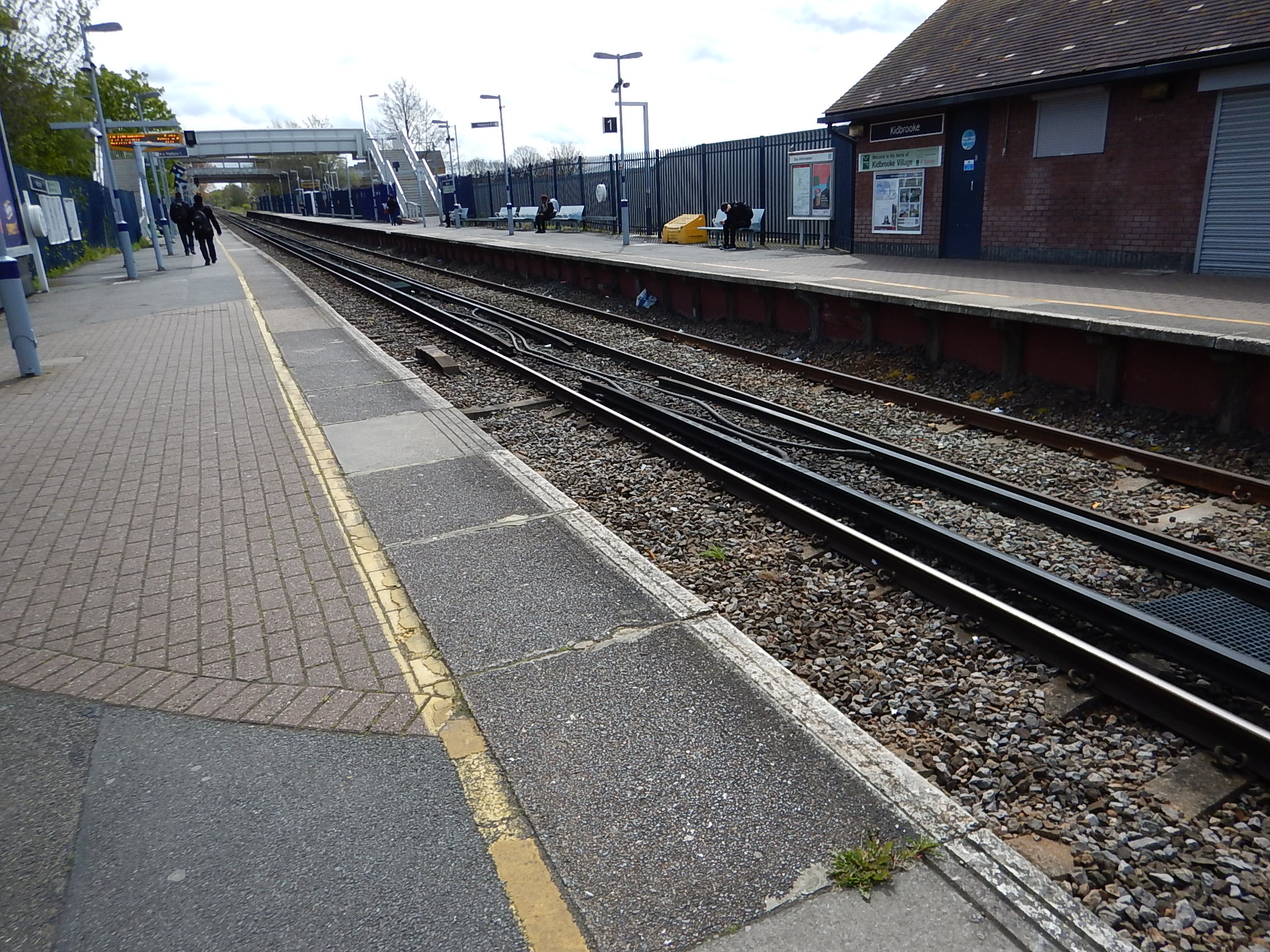
Note.
- The electrified rails are between the tracks.
- Gaps are possible to isolate sections of tracks.
- The third-rail is tapered, so that the third-rail shoes on the train can connect and disconnect easily.
Suppose you have a third-rail electric train with a range of say seven or eight miles on batteries.
Would it be possible to devise a safe electrified railway using this train and standard third-rail electrification with some safety modifications?
- The track in each station would be electrified in the normal way with the third-rail away from the platform.
- The length of electrification in each station would be a few metres shorter than the length of the ten-car pair of Class 707 trains.
- This would mean that the train would completely cover the electrification, when it stopped in the station.
- The third-rail electrification would only be switched on, when a train is stopped in the station and the right interlocks are engaged.
- Even if a passenger fell onto the tracks, they would probably be safe, unless they crawled through the wheels to the centre of the tracks.
- There would be no electrification between the stations, which would protect track workers and trespassers.
I believe that a safe system can be devised.
A train going through a station would do the following.
- Slowing down, the train would use regenerative braking, that helped to charge the batteries
- The train would stop in a station, so that it connected with and covered the third-rail.
- When the charging system recognised that a train was connected, it would start to charge the batteries.
- When all passengers had unloaded and loaded and the train was ready, the driver would stop the charging process.
- The train would move to the next station on battery power.
- Safety interlocks would stop the charging under various unsafe circumstances.
I believe that Siemens could have developed a charging system like this for their Class 707 trains, as some of their other trains of a similar vintage to the Class 707 trains already offer battery options.
A Stepping Stone Approach
On the unelectrified section between Hurst Green Junction and Uckfield, there are the following stations.
- Edenbridge Town – two platforms
- Hever – two platforms
- Cowden – single bi-directional platform – 7.9 miles South of Hurst Green Junction.
- Ashurst – two platforms
- Eridge – single bi-directional platform – 6.3 miles South of Cowden
- Crowborough – two platforms
- Buxted – single bi-directional platform – 4.7 miles South of Eridge
- Uckfield – single platform – 2.3 miles South of Buxted
Suppose the following were to be done.
- Do nothing at the two platform stations.
- Fit an intelligent fast charging system at Cowden, Eridge, Buxted and Uckfield.
- If it was felt to be needed to ensure reliable operation, the power supply to the Southbound platform could be boosted at Hurst Green station.
- Procure some ten-car battery-electric trains, which have regenerative braking and a range of perhaps ten-twelve miles on battery power.
Note.
- A pair of five-car trains could be used instead of ten-car trains.
- Some five-car Class 377 trains fitted with batteries might be ideal.
- This would mean only four platforms would need to be electrified with fast charging systems.
I am sure that Vivarail Fast Charge systems could be used, if they were modified to work with standard third-rail systems and for bi-directional use.
What size of battery would be needed for this approach?
In an article in the October 2017 Edition of Modern Railways, which is entitled Celling England By The Pound, Ian Walmsley says this in relation to trains running on the Uckfield Branch, which is not very challenging.
A modern EMU needs between 3 and 5 kWh per vehicle mile for this sort of service.
So for a ten-car train running for twelve miles, the train would need a battery capacity of between 360 and 600 kWh.
Or if it was two five-car trains between 180 and 300 kWh in each train.
Note that Vivarail find space for 424 kWh in the two-car Class 230 train, I wrote about in Battery Class 230 Train Demonstration At Bo’ness And Kinneil Railway.
I believe that a five-car Class 377 or 707 train could be fitted with a 300 kWh battery and this would give the train a range of 12 miles, which would enable it to provide a battery-electric service on the Uckfield Branch.
Effort To Contain Costs For Hoo Reopening
The title of this post, is the same as that of an article in the April 2022 Edition of Modern Railways.
This is the first paragraph.
Medway Council is working with Network Rail and other industry players in an effort to make restoration of a passenger service to Hoo on the Isle of Grain branch feasible. The Council was awarded £170 million from the Housing Infrastructure Fund in 2020 to support schemes to facilitate building of 12,000 new houses in the area, with £63 million of the HIF money for reinstatement of services on the Hoo Branch.
The article mentions, this new infrastructure.
- A new station South of the former Sharnal Street station.
- Works to level crossings, of which there are six between Gravesend station and proposed site of the new Hoo station.
- A passing place at Hoo Junction, where the branch joins the North Kent Line.
- A passing place at Cooling Street.
Note.
- The single-platform Bow Street station cost £8 million.
- The single-platform Soham station cost nearly £22 million, but it has a bridge.
- Reopening the Okehampton branch and refurbishing Okehampton station cost £40 million.
I think costs will be very tight.
Possible Train Services
This is said in the article about the train service on the branch.
While third rail electrification was originally proposed, this idea has been discarded in favour of self-powered trains on the branch, such as battery-operated trains. Possible destinations include Gravesend, Northfleet or Ebbsfleet for interchange with trains going to London, or extension of London to Dartford or Gravesend services over the branch, using hybrid third-rail/battery trains.
Consider.
- Merseyrail will be using battery-electric trains to provide services to the new Headbolt Lane station, as permission was not available for extending the existing third-rail track.
- Electrification would probably cost more than providing a charging system at Hoo station.
- Turning the trains at Gravesend, Northfleet or Ebbsfleet could be difficult and a new bay platform would probably break the budget.
- Both Dartford and Gravesend have two trains per hour (tph), that could be extended to the new Hoo station.
- Hoo junction to Hoo station is no more than five or six miles.
- There are also half-a-dozen level crossings on the route, which I doubt the anti-thord rail brigade would not want to be electrified.
- The Dartford services have a possible advantage in that they stop at Abbey Wood station for Crossrail.
- It may be easier to run services through Gravesend station, if the terminating service from Charing Cross were to be extended to Hoo station.
- A two tph service between London Charing Cross and Hoo stations, with intermediate stops at at least London Bridge, Lewisham, Abbey Wood and Dartford would probably be desirable.
I feel that the most affordable way to run trains to Hoo station will probably be to use battery-electric trains, which are extended from Gravesend.
It may even be possible to run trains to Hoo station without the need of a charging system at the station, which would further reduce the cost of infrastructure.
Possible Trains
Consider.
- According to Wikipedia, stopping Gravesend services are now run by Class 376, Class 465, Class 466 and Class 707 trains.
- Real Time Trains indicate that Gravesend services are run by pathed for 90 mph trains.
- Class 376, Class 465 and Class 466 trains are only 75 mph trains.
- Class 707 trains are 100 mph trains and only entered service in 2017.
I wonder, if Siemens designed these trains to be able to run on battery power, as several of their other trains can use batteries, as can their New Tube for London.
In Thoughts On The Power System For The New Tube for London, I said this.
This article on Rail Engineer is entitled London Underground Deep Tube Upgrade.
This is an extract.
More speculatively, there might be a means to independently power a train to the next station, possibly using the auxiliary battery, in the event of traction power loss.
Batteries in the New Tube for London would have other applications.
- Handling regenerative braking.
- Moving trains in sidings and depots with no electrification.
It should be born in mind, that battery capacity for a given weight of battery will increase before the first New Tube for London runs on the Piccadilly line around 2023.
A battery-electric train with a range of fifteen miles and regenerative braking to battery would probably be able to handle a return trip to Hoo station.
An Update In The July 2022 Edition Of Modern Railways
This is said on page 75.
More positive is the outlook for restoration of passenger services on the Hoo branch, where 12,000 new houses are proposed and Medway Council is looking to build a new station halfway down the branch to serve them. As the branch is unelectrified, one idea that has been looked at is a shuttle with a Vivarail battery train or similar, turning round at Gravesend or another station on the main line.
Steve White worries that this could mean spending a lot of money on infrastructure work and ending up with what would be a sub-optimal solution. ‘Do people really want to sit on a train for 10 minutes before having to get out and change onto another train? I don’t think so. Ideally what you want is through trains to London, by extending the Gravesend terminators to Hoo.’
That would require a battery/third rail hybrid unit, but Mr. White thinks that is far from an outlandish proposal; with Networker replacement on the horizon, a small bi-mode sub-fleet could dovetail neatly with a stock renewal programme. Medway Council and rail industry representatives are working on coming up with a solution for Hoo that could do what it does best; facilitating economic regeneration in a local area.
Note that Steve White is Managing Director of Southeastern.
I’ll go along with what he says!
Conclusion
I believe that a well-designed simple station and branch line could be possible within the budget.
A battery-electric upgrade to Class 707 trains could be a solution.
But the trains could be very similar to those needed for Uckfield and to extend electric services in Scotland.
Only In Norfolk
I have a Google Alert for “Norfolk Vanguard wind farm” that picked up this story, which is entitled Norfolk Constabulary Issues Inclusive Language List Of 37 Sexual Identities And Genders.
Only in Norfolk!
DP Energy And Offshore Wind Farms In Ireland
DP Energy are a company that are developing these offshore wind farms in Ireland.
Located off the West Coast of Ireland, the Clarus Offshore Wind Farm project will utilise Floating Offshore Wind (FOW) technology and upon completion, will have the potential capacity of up to 1 GW.
Located off the South Coast of Ireland, the Inis Ealga Marine Energy Park project will utilise Floating Offshore Wind (FOW) technology and upon completion, will have the potential capacity of up to 1 GW.
Latitude 52 Offshore Wind Farm
DP Energy has given the name Latitude 52 to the area it is exploring for a potential future offshore wind farm off the coast of Counties Wicklow and Wexford.
It appears to be another 1 GW project.
Located off the East Coast of Ireland, the Shelmalere Offshore Windfarm project will utilise fixed bottom wind turbines and upon completion, will have the potential capacity of up to 1 GW.
Note.
- These wind farms are being developed in a partnership with Spanish Energy company; Iberdrola.
- Each is a one GW offshore wind farm.
They are also developing the Gwynt Glas offshore wind farm in the UK sector of the Celtic Sea.
- In January 2022, EDF Renewables and DP Energy announced a Joint Venture partnership to combine their knowledge and
expertise, in order to participate in the leasing round to secure seabed rights to develop up to 1GW of FLOW in the Celtic Sea. - The wind farm is located between Pembroke and Cornwall.
The addition of Gwynt Glas will increase the total of floating offshore wind in the UK section of the Celtic Sea.
- Blue Gem Wind – Erebus – 100 MW Demonstration project – 27 miles offshore
- Blue Gem Wind – Valorus – 300 MW Early-Commercial project – 31 miles offshore
- Falck Renewables and BlueFloat Energy – Petroc – 300 MW project – 37 miles offshore
- Falck Renewables and BlueFloat Energy – Llywelyn – 300 MW project – 40 miles offshore
- Llŷr Wind – 100 MW Project – 25 miles offshore
- Llŷr Wind – 100 MW Project – 25 miles offshore
- Gwynt Glas – 1000 MW Project – 50 miles offshore
This makes a total of 2.2 GW, with investors from several countries.
It does seem that the Celtic Sea is becoming the next area of offshore wind around the British Isles to be developed.
Interconnectors
Interconnectors are to be built to connect Ireland, UK and France.
The Celtic Interconnector is being built between County Cork in Ireland and the North West Coast of France.
Greenlink is being built between County Wexford in Ireland and Pembroke in Wales.
Conclusion
Are the British, Irish and French governments, planning to build a large wind power resource in the Celtic Sea?
 The Anonymous Widower