Lifting The Barriers To Refueling
The title of this post, is the same as that of this article on Railway Age.
It is a good summing up of Alstom’s problems of getting hydrogen for the iLint in Germany.
This paragraph from the article is puzzling.
Alstom’s task now is to clear external hurdles out of the way. Sprotte explains this using the Bremervörde project as an example: “The location is geographically favorable, almost in the middle of the regional transport network. If they were allowed to, Alstom and Linde could jointly supply several surrounding communities with ready-made hydrogen, for example for municipal commercial vehicles. But they can’t, and that’s because public funding for the project was only granted on the express condition that the filling station be used exclusively for rail transport.” This was met with incomprehension by the partners involved.
The Bremervörde project is to provide hydrogen for the Cuxhaven route that I wrote about in My First Ride In An Alstom Coradia iLint.
It strikes me that a certain amount of bureaucracy, is stopping the full deployment of the trains.
But then the London Mayor has a hydrogen policy of ignore it and it might go away.
Can Park-And-Ride Stations Be Used To Increase Motorway Capacity?
This article on the BBC is entitled New Smart Motorway Plans Being Scrapped.
I’ve never driven or even been driven on a smart motorway. But one incident in the 1970s, convinced me that we should have full hard shoulders on motorways and probably some dual carriageway roads.
I was travelling North on the then-two-lane M11 just North of Stansted Airport, doing around seventy in the outside lane of a not very busy motorway.
From nowhere an MGB convertible appeared in my mirrors and I pulled over to let the other car through.
There was a slight bend to the right at that point and the road was in a cutting.
The MGB just went straight on, climbed the banking and then turned over and rolled down and into the middle of the motorway.
A couple of other cars stopped on the hard shoulder and I initially pulled in behind them.
Miraculously, the driver had got out of the upside-down MGB and was standing beside the car.
I noticed that someone was using the emergency telephone by the side of the motorway, but I was worried that someone could come along too fast.
So as I had a large white car, I switched on the hazard lights and reversed down the hard shoulder. It certainly slowed everybody down and there were no more bumps or injuries. But what would have happened if the motorway had been busy?
When I first heard that smart motorways were going to be introduced in 2007, I was immediately against the idea because of that serious incident on the M11.
So what can we do to increase the capacity of our motorway and main road network?
Mathematical Modelling
In the 1970s, my software was used to model water supply in the UK. This piece of software just solved simultaneous differential equations and was used by the Government’s Water Resources Board.
I believe that software like I wrote fifty years ago and other more modern systems can be applied to traffic flows.
This should mean that any solutions put forward should be able to be tested.
Use Of Trains
If people can be encouraged to mode-shift and use trains, that must reduce the number of cars on the motorways.
But to get people out of their cars, there must be more Park-and-Ride stations.
And these new Park-and-Ride stations, must be attractive to motorists.
In Was Baldrick An Essex Man?, I looked at the design of the new Beaulieu Park station.
I feel that this is almost a new type of Park-and-Ride station, so is it part of a cunning plan to attract more passengers to the trains.
- It has a high-quality specification.
- Seven-hundred parking spaces will be built with hopefully an adequate number of chargers for electric vehicles.
- There will be five-hundred bicycle spaces.
- As it appears the station will be surrounded by 14,000 houses, I expect Network Rail are hoping lots of passengers will use the station.
But what is most unusual is that the station has an avoiding line, which should increase capacity and speed on the line through the station.
I also think, that the station is not just about journeys to London and Chelmsford, but also to other places in East Anglia like Cambridge, Ipswich and Norwich.
So have Network Rail designed a station that will maximise the return on their investment?
Only time will tell!
Conclusion
I think that Network Rail are trying to see if there is money to be made in the design of Park-and-Ride stations.
Norway Has Room For 338 GW Of Offshore Wind, New Analysis Finds
The title of this post, is the same as that of this article on offshoreWIND.biz.
This is the sub-heading.
Norway has the potential to develop up to 338 GW of offshore wind in areas with a low level of conflict, according to a new analysis performed by Multiconsult and commissioned by the industry organisation Norwegian Offshore Wind, Equinor, Source Galileo, Hafslund and Deep Wind Offshore.
These two paragraphs are the main findings of the report.
The report, issued on 14 April, maps 28 areas as suitable for floating wind and 18 areas for fixed-bottom offshore wind, estimating the total potential installed capacity to be 241 GW at 5 MW/km2 and 338 GW at 7 MW/km2.
Of this, floating wind could account for 156 GW and up to 219 GW, while fixed-bottom capacity is between 85 GW and 119 GW.
So how does that figure look for the UK?
Consider.
- The UK has an Exclusive Economic Zone of 773,676 sq. kilometres.
- But if you include overseas territories, the UK’s area is 6,805,586 sq. kilometres and is the fifth largest in the world.
- Norway has an Exclusive Economic Zone of 2,385,178 sq. kilometres.
So taking the 338 GW figure for Norway and ignoring overseas territories, we could generate 109.6 GW.
Gravity-Based Green Energy Storage Tech Pioneer Eyes US Mineshafts
The title of this post, is the same as that of this article on Recharge News.
This is the sub-heading.
Gravitricity and IEA Infrastructure Construction to seek funding under government scheme for projects at ex-mining sites.
These are the first two paragraphs.
A pioneer in gravity-based energy storage technology aims to make its US debut after linking with a major American construction group.
Gravitricity, which uses giant weights hung in deep shafts to store energy, will partner with IEA Infrastructure Construction to jointly seek US funding for projects at former mines.
I wonder how many other companies will go chasing the money, that President Biden has put on offer in the US?
Could High Speed Two Have An Underground Station In London?
The Achievement Of The Bank Station Upgrade
This map from OpenRailwayMap shows the lines through Bank and Monument stations.
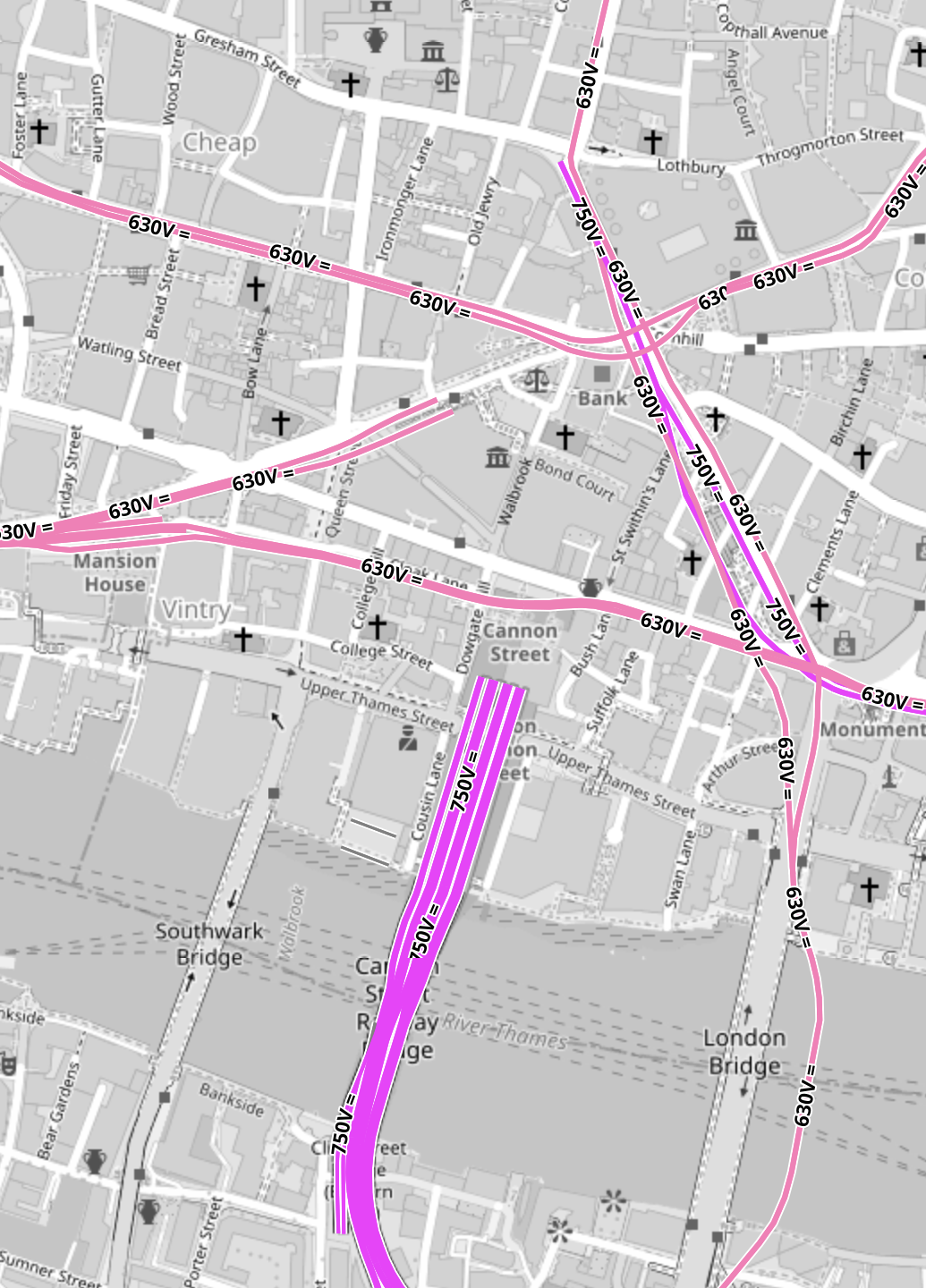
Note.
- All the pink lines are the lines of the London Underground.
- The line running alongside London Bridge is the Northern Line, which is deep under the Thames.
- The mauve lines are those with the slightly higher voltage of the UK National Rail network going into Cannon Street station.
In part of the Bank Station Upgrade, a new Southbound tunnel for the Northern Line was dug, so that the Northern Line platforms at Bank station could be farther apart.
This visualisation shows the station.
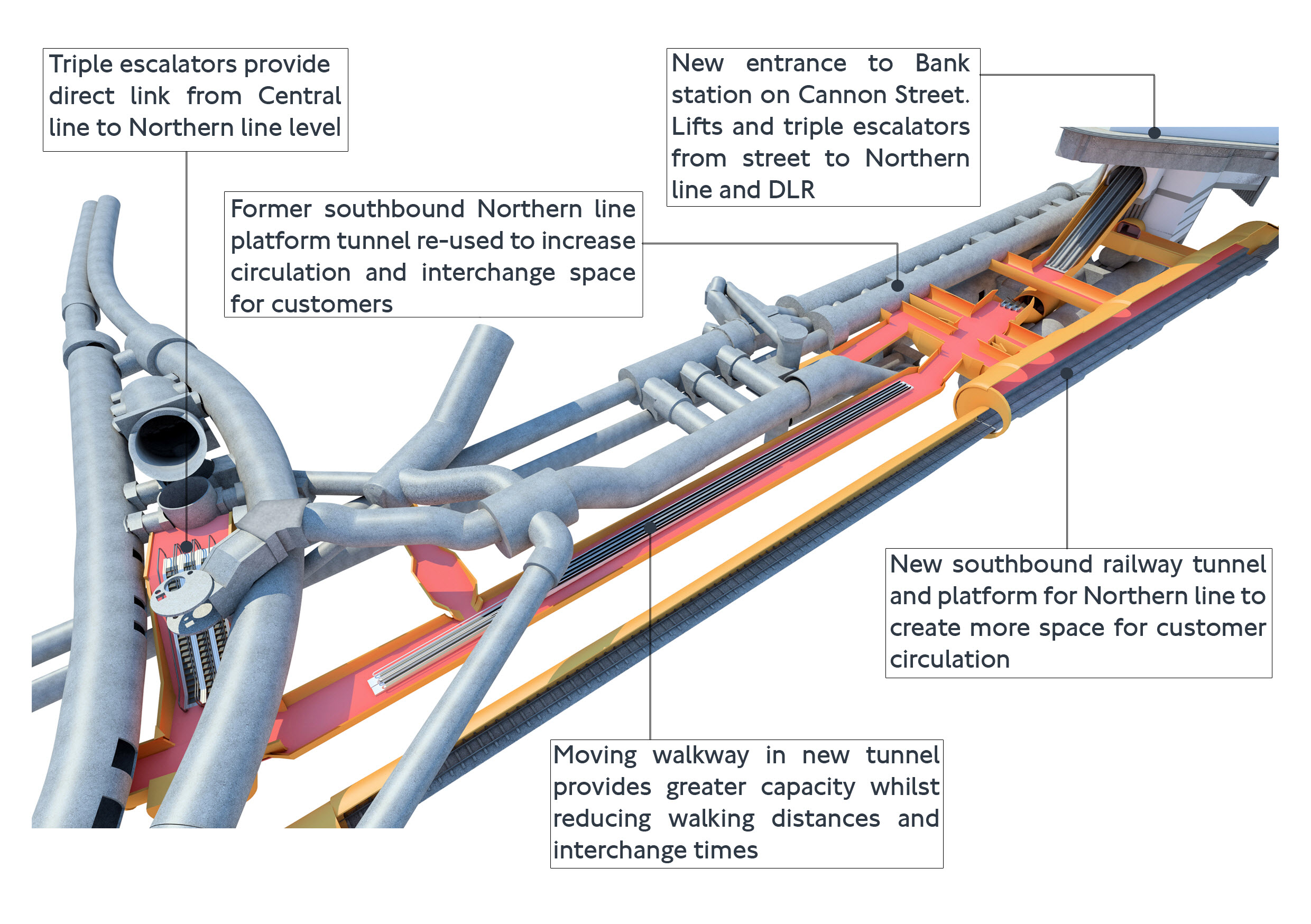
The project was an amazing demonstration of what is possible to be achieved in underground construction.
- There is a moving walkway to move passengers between the Central and Northern Lines.
- There are escalators and lifts everywhere.
It was also dug out from London’s helpful soils under scores of important buildings, many of which are listed.
These pictures give a flavour of the underground section of the completed upgrade.




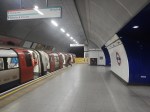
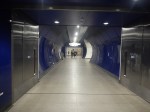








These pictures show the buildings on top of the complex.
















Note.
- There is no building of any great height above the station complex.
- There are a lot of quality buildings.
- During all the work underground, I didn’t see any reports of any problems with the buildings on top.
- In How Many Entrances And Exits Does A Station Need?, I counted that the complex now has twenty entries.
It is probably a project that could be repeated elsewhere.
Camden Town, Holborn and Bond Street/Oxford Circus are probably suitable cases for treatment.
Weston Williamson’s Plan For Manchester Piccadilly Station
In The Rival Plans For Piccadilly Station, That Architects Say Will ‘Save Millions’, I wrote about Weston Williamson’s plan for Manchester Piccadilly station.
This was their visualisation.

Note.
- In the visualisation, you are observing the station from the East.
- The existing railway lines into Piccadilly station are shown in red.
- Stockport and Manchester Airport are to the left, which is to the South.
- Note the dreaded Castlefield Corridor in red going off into the distance to Oxford Road and Deansgate stations.
- The new high speed lines are shown in blue.
- To the left they go to Manchester Airport and then on to London, Birmingham and the South, Warrington and Liverpool and Wigan, Preston, Blackpool, Barrow-in-Furness, the North and Scotland.
- To the right, they go to Huddersfield, Bradford, Leeds, Hull and the North East, and Sheffield, Doncaster and the East.
- Between it looks like a low-level High Speed station with at least four tracks and six platforms.
- The Manchester Metrolink is shown in yellow.
The potential for over-site development is immense. If the Station Square Tower was residential, the penthouses would be some of the most desirable places to live in the North.
Londoners Are The Tunnel Kings
Bring On The Robots
Could High Speed Two Have An Underground Station In London?
Look at this map from OpenRailwayMap.
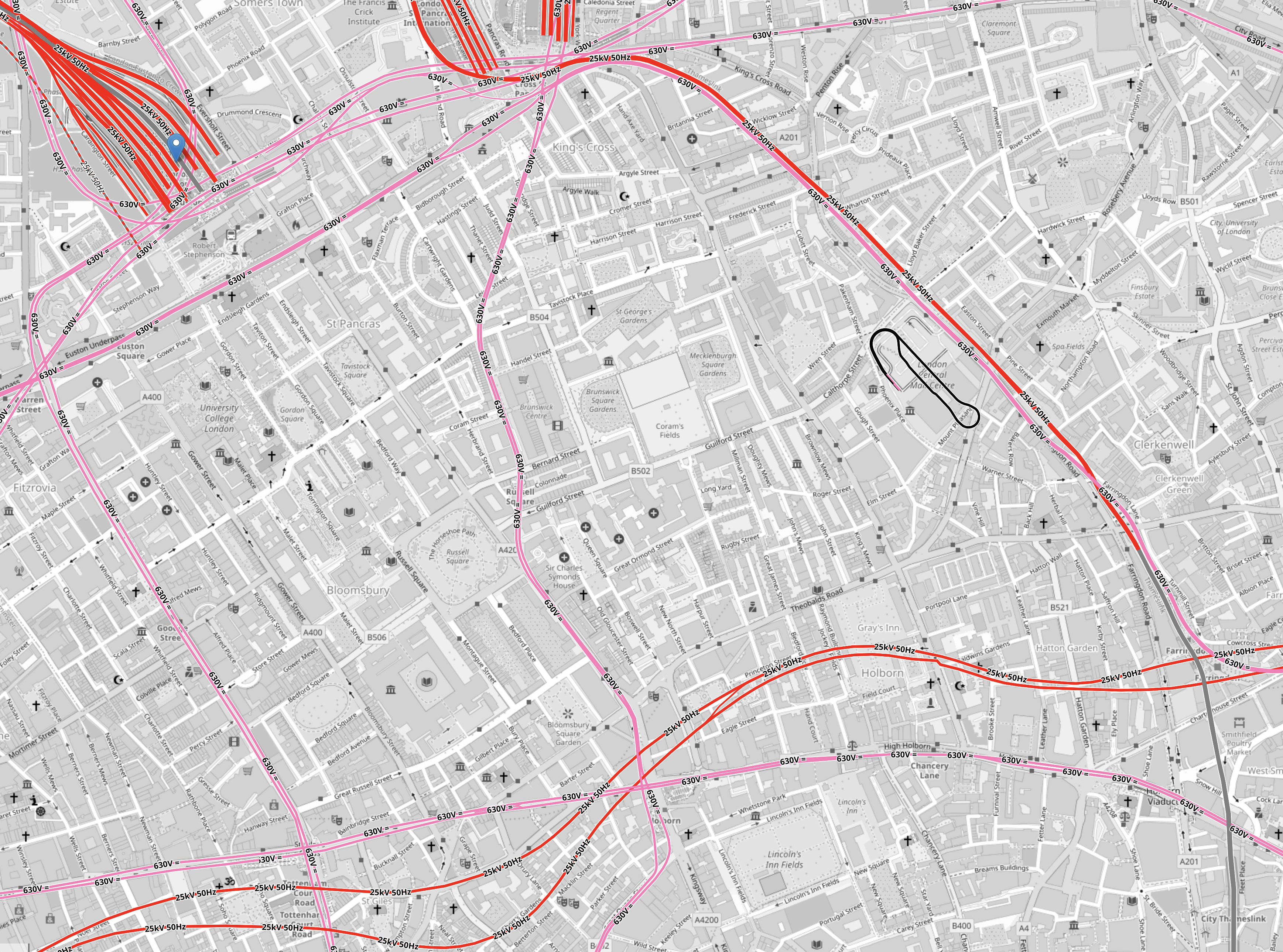
Note.
- Euston station is in the North-West corner of the map.
- St. Pancras and King’s Cross stations can just be seen at the top of the map.
- All lines shown in red have 25 KVAC overhead electrification.
- All lines shown in pink are the London Overground.
- The double track electrified railway meandering across the map from West to East is the Elizabeth Line.
- The pink line going down the middle of the map is the Piccadilly Line.
- The pink line going down the left of the map is the Charing Cross branch of the Northern Line.
There is a large square area to the South of Euston that doesn’t have any railways crossing it.
It is shown in this map from OpenRailwayMap.
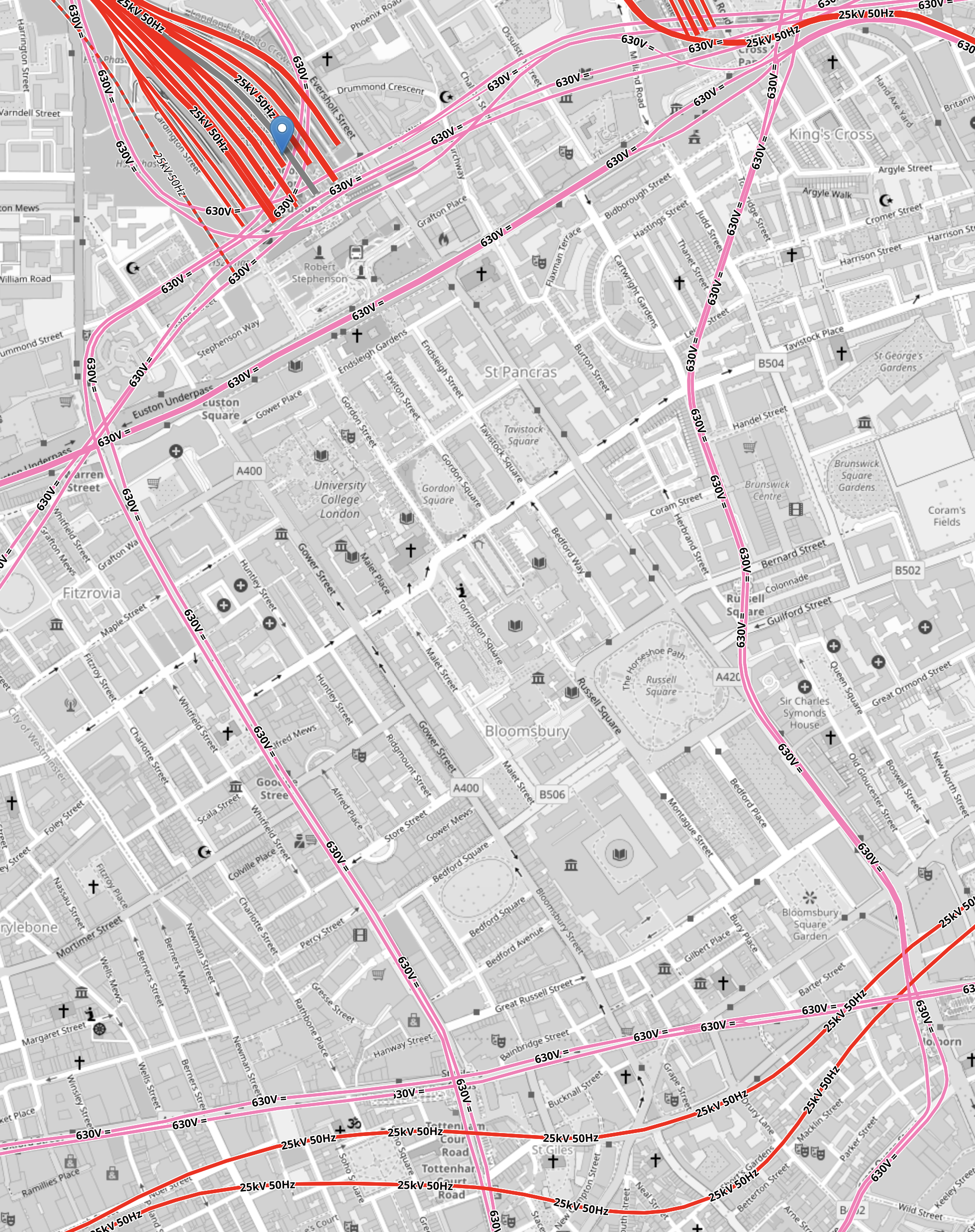
Note.
- As before, red lines have 25 KVAC overhead electrification and pink lines are the Underground.
- The Western boundary of the area is the Charing Cross branch of the Northern Line, which runs between Euston in the North and Tottenham Court Road in the South.
- The Eastern boundary of the area is the Piccadilly Line, which runs between King’s Cross in the North and Holborn in the South.
- The Northern boundary of the area is the sub-surface Circle, Hammersmith & City and Metropolitan Lines, which runs between Warren Street in the West and King’s Cross in the East.
- The Northern and Victoria Lines also run East-West to the North of the sub-surface lines.
- The Southern boundary of the area is the Central and Elizabeth Lines, which run between Tottenham Court Road in the West and Holborn in the East.
It is a substantial area.
So could it be hollowed out to create a below-ground London terminal for High Speed Two?
I got a bus from Tottenham Court Road to Euston station and then walked to Holborn, taking these pictures.



















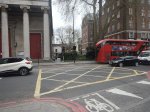
























Note.
- There are only two buildings in the area with more than about six floors; University College Hospital and Senate House.
- There a lot of green spaces.
- Bloomsbury Square does have a car park beneath it.
I wonder if a terminal station could be build under the area?
- I suspect if you went fifty metres down there could be plenty of space, that could be excavated.
- Tunnels with moving walkway and escalators could link the station to the Central, Circle, Elizabeth, Hammersmith and City, Metropolitan, Northern and Piccadilly Lines.
- There would be space to have 400 metre long platforms.
- As all trains would be electric, there would be no fume problems.
- There could be lifts and escalators to the green spaces on the top.
I have a feeling that most of people living or working inside the North and South Circular Roads could get to the station by public transport with at most a single change.
World’s First Unmanned HVDC Offshore Platform Installed At World’s Largest Offshore Wind Farm
The title of this post, is the same as that of this news item from the Dogger Bank wind farm web site.
These are the two bullet points.
- Dogger Bank Wind Farm will be first UK High Voltage Direct Current (HVDC) connected offshore wind farm
- 70% reduction in topside weight per MW for offshore platforms
These are my thoughts.
High Voltage Direct Current
Wikipedia has an excellent entry on high voltage direct current, which is commonly referred to as HVDC.
The news item says this about how the electricity is brought ashore from the Dogger Bank wind farm.
The innovative offshore platform has a lean design and is the first unmanned HVDC platform which will be operated from shore and accessed only by a Service Operations Vessel. The platform will receive 1.2GW of AC power from Dogger Bank A’s 95 offshore wind turbines and convert it to DC, which will then be sent ashore to an onshore convertor station near Beverley in East Riding of Yorkshire.
Fitted with Hitachi Energy’s latest generation HVDC converter technology, Dogger Bank will be the first offshore wind project in the UK to use this technology to transmit the electricity produced back to shore, ensuring that the electricity is transmitted efficiently over long distances while minimising losses.
Note.
- Wind turbines generate AC.
- There will be conversion to DC on the substation and conversion back to AC onshore.
- It should also be noted, that large undersea interconnectors are generally built around HVDC technology.
Wikipedia says this about the advantages of DC transmission.
A long-distance, point-to-point HVDC transmission scheme generally has lower overall investment cost and lower losses than an equivalent AC transmission scheme. HVDC conversion equipment at the terminal stations is costly, but the total DC transmission-line costs over long distances are lower than for an AC line of the same distance. HVDC requires less conductor per unit distance than an AC line, as there is no need to support three phases and there is no skin effect.
Depending on voltage level and construction details, HVDC transmission losses are quoted at 3.5% per 1,000 km (620 mi), about 50% less than AC (6.7%) lines at the same voltage. This is because direct current transfers only active power and thus causes lower losses than alternating current, which transfers both active and reactive power.
It looks like cost is a big factor.
My knowledge of grid systems and AC power is limited, as I was more of a Control Engineering and Electronics student at university.
But could HVDC-connected wind farms have advantages, when it comes to providing a reactive power capability to the grid, as I wrote about in Dogger Bank C In UK Offshore Wind First To Provide Reactive Power Capability.
Extra income is another good reason to choose something.
Lightweight Platforms
I’ve always been a fan of lightweight structures and it does seen that the engineers of the Dogger Bank Wind Farm have gone down that route.
This is a paragraph from the news item.
The platform will be controlled from shore and by removing the need for personnel to stay on the platform meant it has been possible to eliminate elements such as the living quarters, helideck and sewage systems, resulting in a 70% reduction in weight (per megawatt) of the topside compared to previous platforms installed, and cost savings of hundreds of millions of pounds.
Again costs are being reduced and profits increased.
We should never rule out the importance of the finances of a project. Once by simulating a chemical process on the computer for ICI, I knocked ten metres off the height of a chemical plant. I got a nice little bonus for that!
If they have made a substantial reduction in substation weight, this surely means that the supporting structure can probably be smaller and less costly.
Conclusion
I suspect, a lot more wind farms will follow the Dogger Bank example.
 The Anonymous Widower