No Progress At Syon Lane Station
I visited Syon Lane station this morning and there has been no progress on the footbridge, that Network Rail say will be installed by late summer.
Over the weekend various works were done along the line, including some conductor rail replacement.
There’s another blockade next weekend, so I’ll see what happens then!
Conclusion
The longer it goes without any visible progress, does it make it more likely, that some form of prefabricated bridge will be assembled like giant Lego?
I can’t see how, if a traditional footbridge is used, it can be built to their timescale.
Sheffield Region Transport Plan 2019 – Hope Valley Line Improvements
The improvements to the Hope Valley Line are listed under Plans in the Wikipedia entry for the line.
This is said.
Network Rail, in partnership with South Yorkshire ITA, will redouble the track between Dore Station Junction and Dore West Junction, at an estimated cost of £15 million. This costing is based on four additional vehicles in traffic to deliver the option, however, this will depend on vehicle allocation through the DfT rolling stock plan. This work will be programmed, subject to funding, in conjunction with signalling renewals in the Dore/Totley Tunnel area.
Other proposals include a loop in the Bamford area, in order to fit in an all-day (07:00–19:00) hourly Manchester–Sheffield via New Mills Central stopping service, by extending an existing Manchester–New Mills Central service. Planning permission for this was granted in February 2018.
These changes to allow three fast trains, a stopping train and freight trains each hour were also supported in a Transport for the North investment report in 2019, together with “further interventions” for the Northern Powerhouse Rail programme.
So what does that all mean?
All of the stations mentioned like Dore & Totley, Bamford are at the Sheffield end of the Hope Valley Line, where it joins the Midland Main Line.
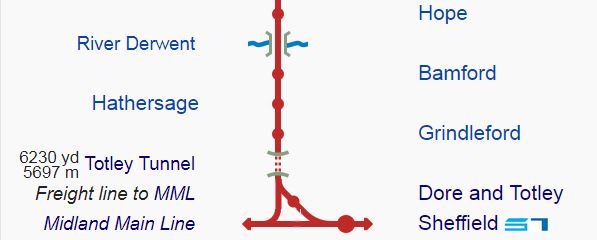
This map, which was clipped from Wikipedia, shows the lines and the stations.
Note.
- The Midland Main Line runs South to North and West is upwards
- Dore West Junction is close to the Eastern end of Totley Tunnel.
- The Hope Valley Line is double track from Dore West Junction to the West.
- The Midland Main Line is double-track.
- Dore & Totley station is on a single-track chord, between Dore West Junction and Dore Station Junction.
- Another single-track chord connects Dore West Junction and Dore South Junction on the Midland Main Line.
I’ll now cover each part of the work in seperate sections.
Dore Junction And Dpre & Totley Station
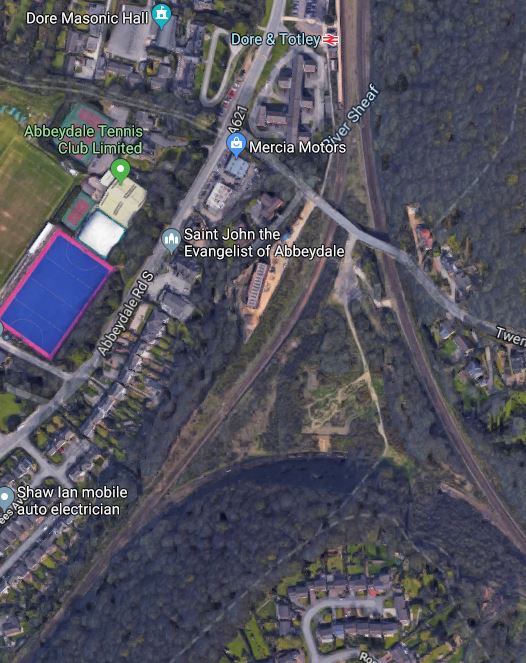
This Google Map shows the area of Dore & Totley station and the triangular junction.
Note.
- Dore & Totley station is at the North of the map.
- The Midland Main Line goes down the Eastern side of the triangular junction.
- The Hope Valley Line goes West from Dore West Junction.
- The Midland Main Line goes South from Dore South Junction.
Network Rail’s plan would appear to do the following.
- Create a double-track between Dore Station Junction and Dore West Junction, through the Dore & Totley station.
- Add a second platform and a footbridge with lifts to the station.
Instead of a single-track line handling traffic in both directions, there will be a double-track railway with a track in each direction.
Capacity will have been increased.
In some ways Network Rail are only returning the station to how it existed in the past, so it shouldn’t be the most difficult of projects. But many of this type of project have surprises, so I’ll see it when the new station opens.
The Bamford Loop
On this page on the Friends of Dore & Totley Station web site, this is said about the Bamford Loop.
A Bamford Loop which is a place to halt frieight trains to allow passenger trains to overtake. This is east of Bamford station.
It is around a thousand metres long.
Flying my helicopter between Bamford and Heathersage stations, the track appears almost straight and adding a loop shouldn’t be that difficult.
The only problem is that there is a level crossing for a footpath at Heathersage West.
This will be replaced by a footbridge.
Benefits
The page on the Friends of Dore & Totley Station gives the main benefits of the scheme are to :-
- Increase the number of fast trains from 2 to 3 per hour
- Increase the stopping trains from 1 every 2 hours to 1 per hour
- To provide for 3 freight trains every two hours as at present.
- Allow trains of up to 6 cars to use the route
- Accommodate longer freight trains
- Improve reliability on the route
These seem to be fairly worthwhile benefits from a relatively simple scheme
Schroders Unveils Global Energy Transition Fund
The title of this post, is the same as that of this article on Investment Europe.
This is the first paragraph.
Schroders has launched global energy transition fund in order to harness the global shift towards a low carbon energy system and meeting growing client demand for actively-managed exposure to this fast-evolving and ground-breaking sector.
Read the rest of the article about their new fund.
I pick out this paragraph, that defines the strategy.
The strategy will not invest in companies with exposure to nuclear or fossil fuels. It will harness three significant global trends; the decarbonisation of power generation, the electrification of energy use and increased energy efficiency for its investment process.
This is the first sentence in the Wikipedia entry for Shroders.
Schroders plc is a British multinational asset management company, founded in 1804. The company employs over 5,000 people worldwide in 32 different countries around Europe, America, Asia, Africa and the Middle East. Headquartered in the City of London, it is traded on the London Stock Exchange and is a constituent of the FTSE 100 Index.
I think that launch of this global energy transition fund by one of the City of London’s most respected institutions, will eventually be one of many similsr and related funds launched by companies and institutions and that these funds will play a big part in decarbonisation of the planet.
Investment from the big boys is going green.
Sheffield Region Transport Plan 2019 – Doncaster Sheffield Airport
Sheffield’s plans for Doncaster Sheffield Airport are ambitious.
This is said in the report.
The airport’s proximity to the ECML offers a deliverable short term solution to accelerate the growth hub’s
impact.Doncaster Council, the SCR and the airport’s owner the Peel Group are working alongside Network Rail and TfN to progress delivery of a new ECML station at the airport’s site, through just 4.5 miles of new track off the mainline and rejoining via the existing Doncaster – Lincoln Line running adjacent to the top of the runway.
This Google Map shows the Airport and its relationship to Doncaster.
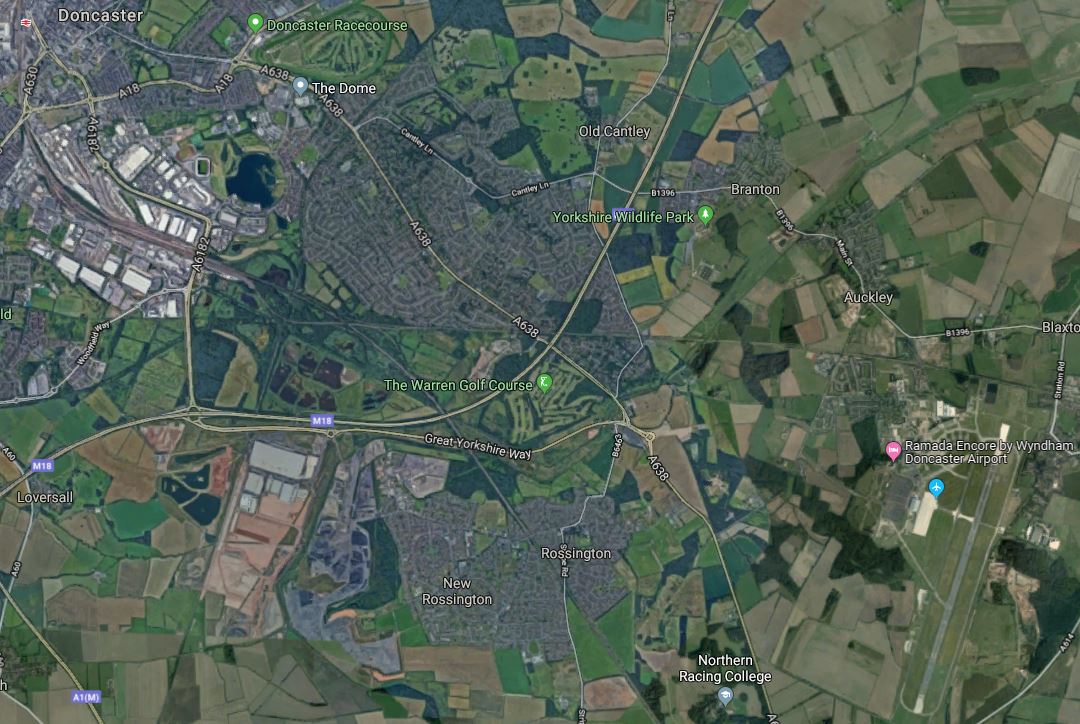
Doncaster is in the North-West corner of the map and the Airport is in the South-East corner.
The Airport has one very long North South runway, which was a designated emergency field for the Space Shuttle, although it was never used.
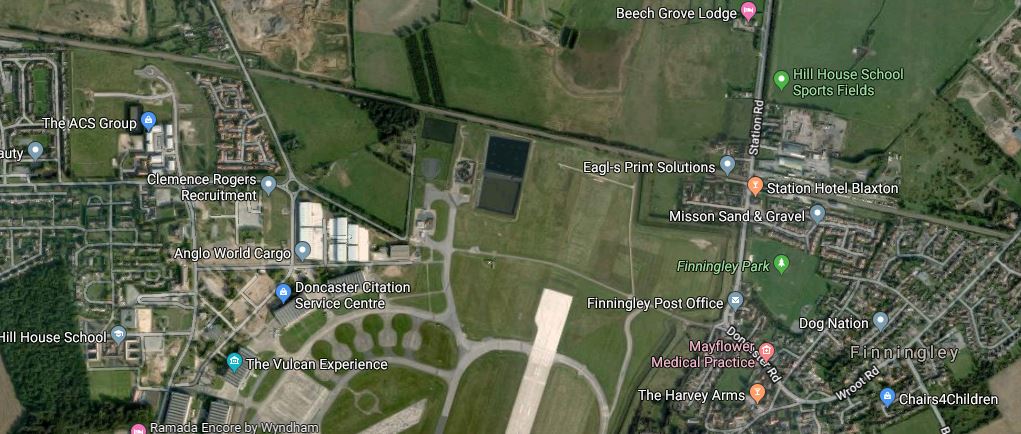
This Google Map shows the Northern end of the runway and the Doncaster-Lincoln Line running East-West across the runway.
And this Google Map, shows the relationship between the East Coast Main Line (ECML) and the Airport.
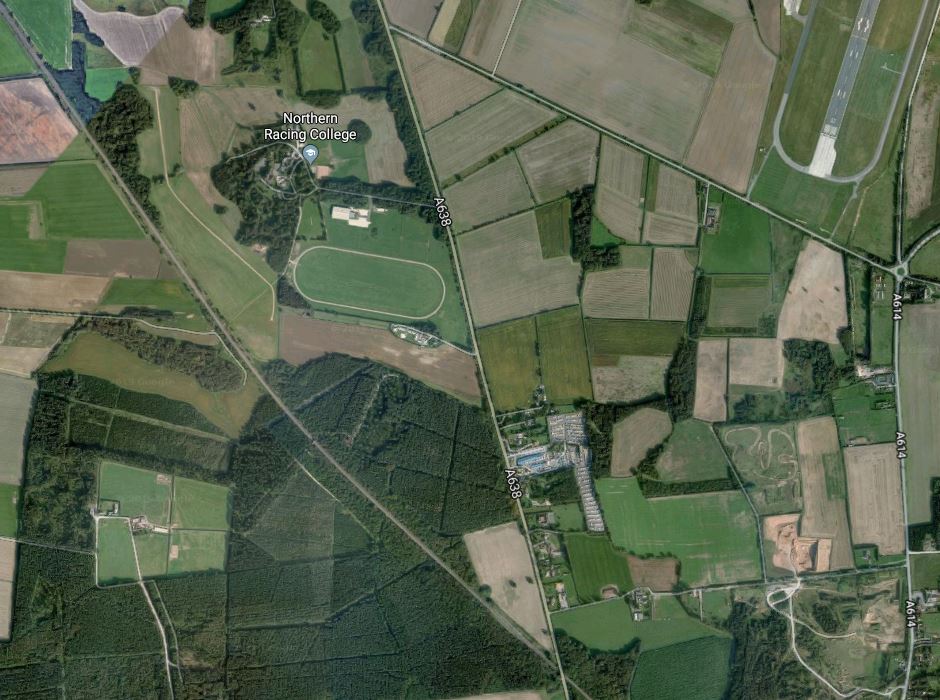
The ECML runs diagonally across the Western side of this map, passing to the West of the Northern Racing School, with its oval track.
Looking at the map of the area, I feel that a loop from the ECML could have the following route from South to North.
- Leave the ECML to the South of the Northern Racing School.
- Pass through the Airport parallel to the runway.
- Stop at a station connected to the terminal.
- At the North of the Airport connect to the Doncaster-Lincoln Line.
I think the design could give a lot of scope for services to the Airport.
- Up to four trains per hour between Doncaster and the South.
- Up to four tram-trains per hour to and from Sheffield, via Doncaster and Rotherham.
- Several freight service per hour.
I have clipped this map of services from the report on Sheffield’s plans.
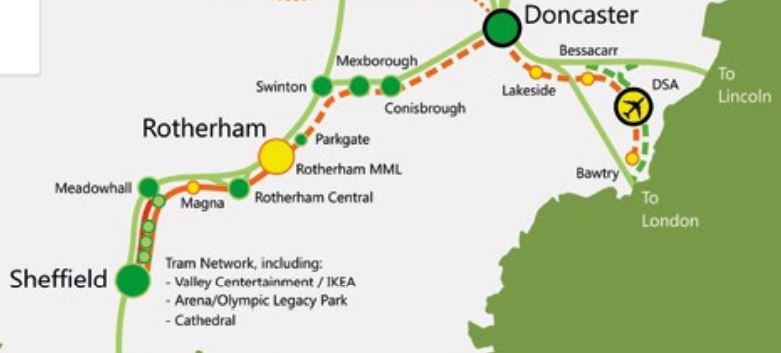
Some points to note.
New Tram-Train Stops
The tram-train extension from Rotherham Parkgate to Doncaster Sheffield Airport via Doncaster has new stations at Lakeside, Bessacarr and terminates at a new station at Bawtry.
Bi-Directional Connection To The Doncaster-Lincoln Line
This is a sensible idea.
- It gives a direct passenger route to and from most of Lincolnshire.
- If the Airport develops a substantial air-freight business, it connects the airport to the freight route between Peterborough and Doncaster, that has recently been created to take freight trains from the ECML.
There is also plenty of space in the flat lands South of the Humber.
Electrification
This is one line that will be electrified, so that the Class 800 trains can use the loop efficiently.
Electrification would also be used by the tram-trains.
The Tram-Trains Don’t Use The East Coast Main Line
Consider.
- Only when they are threading their way through South of Doncaster, will the tram-trains affect the express trains on the ECML.
- The tram-trains may need to reverse at Doncaster.
But I suspect, Network Rail have a cunning plan to run everything efficiently.
Times To And From London And The South
A fast time between Kings Cross and Doncaster-Sheffield Airport is important, if the Airport is to tempt travellers along the ECML to use the Airport.
I reckon, that the following times will be possible.
- London and DSA – 90 minutes
- Peterborough and DSA – 50 minutes
Note that the second time is under half the time it takes to get from Peterborough to Heathrow or Gatwick.
Conclusion
Developing Doncaster Sheffield Airport seems like an excellent idea to me.
Sheffield Region Transport Plan 2019 – Tram-Trains Between Sheffield And Doncaster-Sheffield Airport
The Sheffield plans, state this as a medium to long-term priority.
Regional tram-train services to be maximised through Rotherham Central, with direct fast services to Doncaster, DSA and Sheffield.
The tram-train route between Sheffield and Doncaster, would probably be as follows.
- Tinsley Meadowhall South
- Magna
- Rortherham Central
- Rotherham Parkgate
- Swinton
- Mexborough
- Conisbrough
- Doncaster
The distance between Rotherham Parkgate and Doncaster is under twelve miles and has full electrification at both ends.
The Class 399 tram-trains being built with a battery capability for the South Wales Metro to be delivered in 2023, should be able to reach Doncaster.
But there are probably other good reasons to fully electrify between Doncaster and Sheffield, via Meadowhall, Rotherham Central and Rotherham Parkgate.
The major work would probably be to update Rotherham Parkgate to a through station with two platforms and a step-free footbridge.
Currently, trains take twenty-three minutes between Rotherham Central and Doncaster. This is a time, that the tram-trains would probably match.
Onward To Doncaster Sheffield Airport
I have clipped this map of services from the report on Sheffield’s plans.
The tram-train route to the Airport is clearly marked in a broken orange line.
- The tram-train uses a loop from the East Coast Main Line.
- It shares the loop with expresses between London and Doncaster, that call at the Airport.
- The tram-train extension from Doncaster to Doncaster Sheffield Airport has new stations at Lakeside, Bessacarr and terminates at a new station at Bawtry.
It looks a well-thought out plan.
Sheffield Region Transport Plan 2019 – Renewal Of Supertram Network
Sheffield’s plan has renewal of the Supertram network as a short term priority.
The Sheffield Supertram is twenty-five years old and when you consider, many UK urban railway and tram systems of the same vintage have been substantially updated with new rolling stock and new routes.
The plan lists three things that must be done.
Network Rerailing
This has already been done over part of the network to allow the Class 399 tram-trains to operate on the Supertram network.
So I suspect that the rest of the network needs to be re-railed.
Certainly, the Class 399 tram-trains, which are cousins of the tram-trains working in Karlsruhe don’t seem to have had any serious problems, that have surfaced in the media.
New Vehicles
New trams are needed, mainly because the original trains are twenty-five years old.
But will these new trams, be trams or tram-trains?
That question has already been answered, as Sheffield uses some Class 399 tram-trains as capacity enhancers on some normal tram routes.
The Class 399 tram-trains that have been ordered for the South Wales Metro are being delivered with a battery capability.
So if Class 399 tram-trains or something similar, should they have a battery capability?
Undoubtedly, as Birmingham are showing, the ability to extend a route without wires is extremely useful and cost-saving.
I also suspect that Cardiff, Karlsruhe and Sheffield will share similar vehicles, as the latter two cities do now.
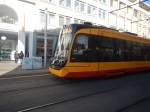
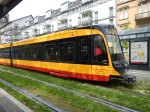
The only differences are the German version runs on 15 KVAC as opposed to the UK’s 25 KVAC, some changed body panels, boarding heights, door number and position, colour schemes and couplers.
Sheffield and Cardiff will be using a standard European tram-train, adapted to our working practices and track standards.
Extending The Network
Suppose Sheffield choose as the tram replacement, a vehicle with the following characteristics.
- Tram-train.
- Able to use 25 VAC and 750 VDC overhead wires.
- Able to use battery power.
- Regenerative braking to battery.
- Enhanced performance, as the original vehicles struggle on the hills, according to drivers to whom I’ve spoken. But the 399s are much better!
- Extra capacity.
- 75 mph operating speed
Sheffield would be able to develop several new routes.
I am particularly curious, as to whether a tram-train with a battery capability delivered in say 2025, will have the capability of handling a route like the Penistone Line.
It should be noted, that if Sheffield were Karlsruhe, there would be tram-trains to Doncaster, Doncaster-Sheffield Airport, Huddersfield, Retford and Worksop.
But the German city is at the centre of a network of electrified lines.
Conclusion
Sheffield will be the next city in the UK, after Cardiff, that will have a wide-spread battery-electric tram-train network.
Sheffield Region Transport Plan 2019 – A New Tram-Train Route To A New Station At Waverley
Sheffield’s plans state that a medium to long term priority is to have a new station on the Sheffield-Lincoln Line.
This Google Map shows the location of Waverley between Darnall and stations.
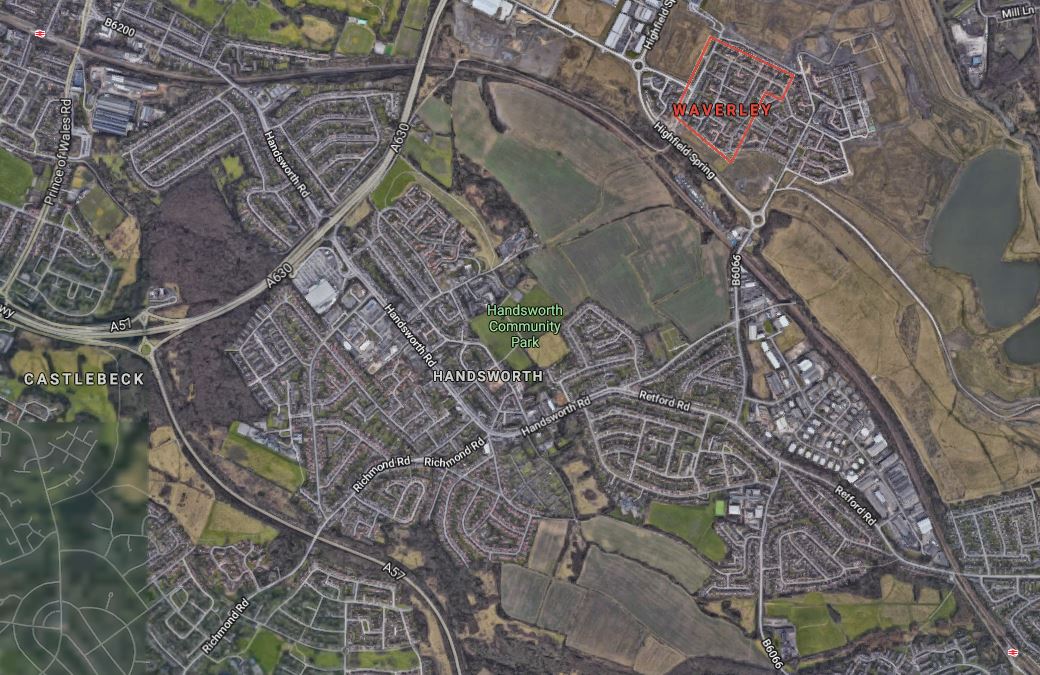
Note.
- Darnall station is in the North-West corner of the map.
- Woodhouse station is in the South-East corner of the map.
- Waverley is a new housing area and is highlighted in red towards the North-East corner of the map.
The plans also propose that the service will be run by tram-trains and they will also serve the Advanced Manufacturing Park (AMP)
This Google Map shows AMP and Waverley in a larger scale.
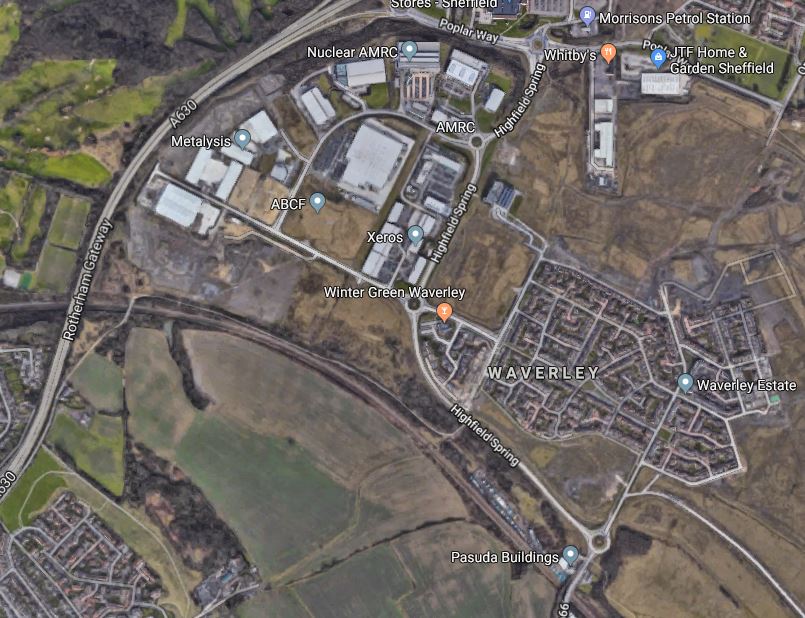
Note.
- Waverley in the South-East corner of the map.
- The AMP in the North-West corner of the map.
- The Sheffield-Lincoln Line curving through to the South.
Most rail and tram systems are straight out-and-back layouts, but there are two very important loops that serve a wider area under Liverpool City Centre and Heathrow Airport.
Could Waverley and the AMP be served by a surface loop from the Sheffield-Lincoln Line?
- The loop could be single- or double-track.
- Stops would be in appropriate places.
- The loop could be electrified as needed with 750 VDC to the Sheffield Supertram standard.
As Sheffield is less than three miles from Waverley, the battery-electric version of Class 399 tram-trains could be used.
- These have been ordered for the South Wales Metro,
- They are now numbered Class 398 tram-trains.
- They should be able to run to and from Sheffield on battery power.
- If the loop was fully electrified, this could charge the tram-trains.
The Sheffield-Lincoln Line passes to the back of the Sheffield Supertram Depot, so I suspect, if required the tram-trains could sneak through the depot to join the main tram route through Sheffield City Centre.
But as the Sheffield Supertram expands, there must surely come a point, where a second route across the City is needed to handle increasing numbers of trams. Manchester found this a few years ago and have since built the Second City Crossing.
Sheffield already has a second route across the City and it is the rail line through Sheffield station, which will be electrified in the next few years, to allow High Speed Two trains to reach the City.
So I can see no reason, why tram-trains from Waverley and the AMP can’t terminate in Sheffield station or go across the City.
To show what the Germans get up to, here’s one of Karlruhe’s tram-trains in a platform in Karlsruhe HBf, with a double-deck TGV in an adjacent platform.
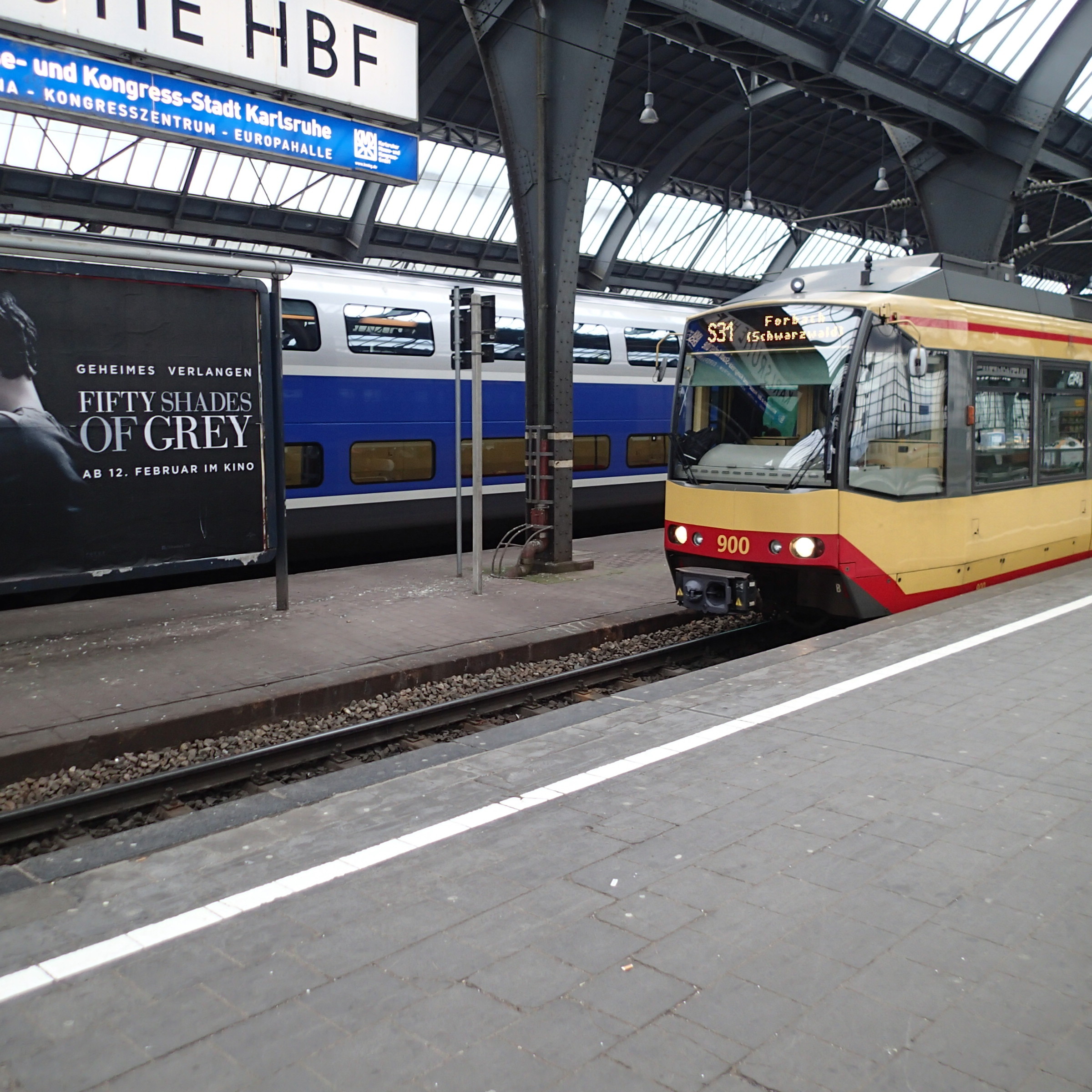
This is one of Karlsruhe’s older train trains, that are being replaced by tram-trains, which are cousins of those in Sheffield.
If the Waverley loop is built, it can be considered as a separate tram system, that connects to Sheffield station, by running as a battery-electric train.
Conclusion
Why shouldn’t Sheffield have an advanced tram-train system to serve the Advanced Manufacturing Park?
I feel the service should be as follows.
- It should be terminated in a loop around the Waverley area and the Advanced Manufacturing Park.
- In the West it could terminate in Sheffield station or perhaps pass through and terminate in the West of the City.
- The service could be run using battery electric tram-trains, similar to the Class 398 tram-trains, that will be used on the South Wales Metro.
I don’t think that the engineering will be very challenging.
High Speed Two And Brexit
This article on the BBC, is entitled HS2: High-Speed Line Cost ‘could Rise By £30bn’.
Brexiteers like Boris Johnson and Nigel Farage have said in the past, that they are minded to cancel the project.
But surely Boris and Nigel believe that we’ll all be better off under Brexit, so we will have the money for the NHS, kicking the foreigners out of the UK, building a wall to stop the emigrants walking across the Irish Border and High Speed Two.
They can’t have it both ways!
Or is it that both wouldn’t be seen dead on a train?
 The Anonymous Widower