Network Rail Bids For Part Of British Steel
The title of this post, is the same as that of this article on the BBC.
This is the first paragraph.
Network Rail is looking to buy part of British Steel, as bidders have until the end of Sunday to put in offers for all or part of the troubled firm.
Many would say, why does the nationalised industry Network Rail, which let’s face it, has had its troubles in recent years, want to get involved with a bankrupt company?
You have to remember, how big companies work.
- They need to manage their cash flow.
- They need quality supplies, that will do what it says on the specification.
- They want supplies to be delivered as and where they need it.
But above all they need to be properly financed.
Making And Delivering Rails
This paragraph in the BBC article says a lot.
Network Rail owns and operates the UK’s railway network, including 20,000 miles of track, and buys 100,000 tonnes of rails from British Steel each year.
Suppose, you want to lay new rails urgently between Inverness and the Far North of Scotland. Getting it there will be a logistics problem, which will be made worse, if the source is halfway around the world.
And suppose, when it arrives in the UK, it fails the quality test! You can’t just give it back to the postman.
So for a reliable railway, Network Rail also needs a reliable supplier making rails, close enough for product to be delivered by special train.
From what I have read in the railway press, British Steel are good at the following.
- Manufacturing quality rail.
- Developing special products for rail companies.
- Delivering it on special trains.
To illustrate this, read British Steel Secures Major Contract From Deutsche Bahn.
I also think, that in addition to the Germans, British Steel sell rail to the Belgians, French and the Dutch, to name but three.
So certainly, British Steel seem to be on the ball with making and delivering rails.
But they appear to be seriously underfunded.
Acquiring British Steel
If I was a financier, thinking about taking over British Steel, one of the most important things would be to secure the sales and the resulting cash flow for the company.
I would be on the train to all of the major rail infrastructure companies, that could be reached by British Steel’s special trains from Scunthorpe.
Network Rail have already put a marker down, that they would buy British Steel’s Rail Products Division, but are other rail infrastructure companies also looking at securing quality product, by either buying the division themselves or pledging support alongside Network Rail.
Network Rail are also aware that their predecessor Railtrack, was brought down by the Hatfield Rail Crash, so they are probably and rightly so, paranoid about safety.
The very fact that Network Rail have put in a bid, suggests to me that they know their power in the negotiations to follow, as any purchaser, who doesn’t have the major customers onside, is probably doomed to fail.
On the other hand, if British Steel was bought by someone, that would increase the risk of dodgy product, Network Rail would go elsewhere.
But would they be able to get the same quality and service?
Conclusion
I am sure, that Network Rail, Deutsche Bahn and all the other rail infrastructure companies will play a large park in the fate of British Steel.
A London Overground Replacement For Southern’s East Croydon And Milton Keynes Service
In July 2017, I discussed this suggestion by Chris Gibb in Gibb Report – East Croydon – Milton Keynes Route Should Be Transferred To London Overground.
In an article, in the July 2019 Edition of Modern Railways, , which was entitled ‘710s’ Debut On Goblin, this was this last paragraph.
On the West London Line, TfL is curremtly working with the Department for Transport on options for the devolution of services originally suggested in Chris Gibb’s report on the Govia Thameslink Railway franchise, which could lead to ‘710s’ being deployed here.
It made me think, that further investigation was called for.
An Apology
I apologise, if you think I’m repeating myself.
What The Gibb Report Says
The Gibb Report, says this about the current service between East Croydon and Milton Keynes Central stations.
I believe there is an option to transfer the East Croydon – Milton Keynes operation to TfL and it’s London Overground concession in 2018.
TfL may decide to change the service, for example by not running it north of Watford Junction, or running it to an alternative southern destination other than East Croydon. They could also develop the combined West London line service to better match available capacity to demand.
They would have a number of crewing and rolling stock options, but should be able to operate the service more efficiently than GTR in the longer term, without the involvement of Selhurst.
Selhurst TMD is the depot in South London, where the current Class 377 trains are based.
A few of my thoughts.
The Trains
Using Class 710 trains as suggested in the Modern Railways article, would surely offer a suitable crewing and rolling stock option for the route, if they were based at the convenient Willesden TMD, where the fleet of up to twenty-five dual-voltage Class 710/2 trains are stabled.
The Northern Terminus
Chris Gibb suggested the service might not go past Watford Junction.
I think that could be difficult.
- The longitudinal seating of the Class 710 train, is probably not suitable for outer suburban services North of Watford.
- East Croydon to Watford Junction takes 69 minutes, which is not a good journey time to create an efficient service.
It would also appear to be tricky for a train to transfer between the West London Line and the Watford DC Line.
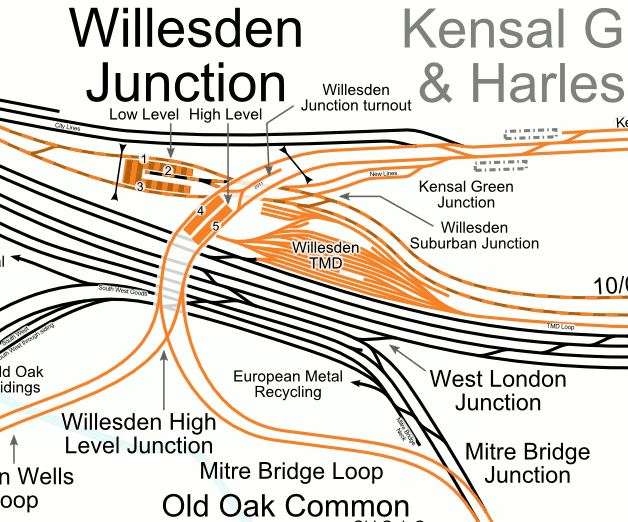
This map from carto.metro.free.fr shows the complicated track layout in the Willesden Junction area.
Note.
- The two Willesden Junction stations, labelled High Level and Low Level.
- The Watford DC Line, which is shown in black and orange, passing to the North of Willesden TMD. and through the Low Level station.
- The four tracks shown in black are the West Coast Main Line, with Watford to the West and Euston to the East.
- The North London Line to Richmond and the West London Line to Clapham Junction splitting at Wilesden High Level Junction.
The current service between East Croydon and Milton Keynes, is only one train per hour (tph) and uses a succession of flat junctions to take the slow lines to and from Watford.
This is not a good operational procedure and I suspect Network Rail and various train operators, would like to see it discontinued.
So if trains in a new London Overground version of the service, don’t go up the Watford DC Line or the West Coast Main Line, where do they turn back?
Note the siding to the East of the High Level platforms, which is labelled Willesden Junction Turnout.
This is regularly used to turnback London Overground services on the West London Line.
I feel that London Overground will be turning their replacement service in Willesden Junction High Level station.
Current train services at the station include.
- For passengers, who want to go further North, there is a good connection to the Watford DC Line for Wembley Central, Harrow & Wealdstone and Watford Junction stations.
- The Watford DC Line can also take you to Euston.
- The Bakerloo Line between Stonebridge Park and Elephant & Castle via Central London.
- Frequent North London Line services between Stratford and Richmond.
The station has kiosks, coffee stalls, toilets and waiting rooms.
There are certainly worse places to change trains.
The Southern Terminus
Obviously, existing travellers on the route would like to see as few changes as possible.
East Croydon station must be a possibility for the Southern terminus, as it is the currently used.
But East Croydon is a busy station and perhaps it is not a convenient station for trains to wait in the platform.
On the other hand, West Croydon station offers some advantages.
- The station has a long bay platform, which might be long enough for nine or ten cars.
- There is a separate turnback siding.
- It has space to add another bay platform, but this may have been sold to a developer.
- It already has a four tph London Overground service to Highbury & Islington station.
- Using West Croydon avoids the crowded lines to the North of East Croydon station.
It is also managed by London Overground, so the landlord would be co-operative.
How Many Trains Would Be Needed For A West Croydon And Willesden Junction Service?
West Croydon station has two possible routes, that trains could take to Willesden Junction.
- Via Norwood Junction and Clapham Junction in 55 minutes.
- Via Selhust and Clapham Junction in 45 minutes.
These times mean that a two-hour round trip between West Croydon and Willesden Junction should be possible.
Trains required for various frequencies would be as follows.
- One tph – Two trains.
- Two tph = Four trains.
- Four tph – Eight trains.
They would need to be dual voltage Class 710/2 trains, as are now running on the Gospel Oak to Barking Line.
Compare the figures with those for the current East Croydon and Milton Keynes service, which needs four pairs of four-car trains for an hourly service.
What Would Be The Frequency?
I think one, two and four tph are all possibilities!
One tph
One tph would be a direct replacement for the current service. But is it enough?
Services at West Croydon could probably share the bay platform with the existing Highbury & Islington station service.
Two tph
Two tph could be a compromise frequency.
Two tph could probably still share the current bay platform with the Highbury & Islington service.
Four tph
Four tph would be a full Turn-Up-And-Go service,
- It would probably be London Overground’s preference.
- It would give a very passenger-friendly eight tph between Willesden Junction and Clapham Junction stations.
- The two services would call at opposite sides of Clapham Junction station.
- It would give a four tph link between Croydon and High Speed Two.
- Westfield wouldn’t mind all the extra shoppers at Shepherds Bush!
But there could be downsides.
- The service could need an extra bay platform at West Croydon.
- Would it be possible to turn four tph at Willesden Junction?
- Will the train paths be available through South London.
But four tph would probably would be London Overground’s preference.
It will be interesting to see the reasons, why Transport for London choose a particular frequency.
A Trip Between Imperial Wharf And East Croydon Stations
Today, I took a trip between Imperial Wharf and East Croydon stations at around 11:30.
- The train was two four-car Class 377 trains working as an eight-car train.
- After Clapham Junction it wasn’t very busy.
- I was in the last car, which was empty, except for myself.
I came to the conclusion, that an eight-car train was too much capacity for the Southern section of the journey.
I suspect that Transport for London have detailed passenger estimates for this route, so they should be able to determine the frequency and length of replacement trains required.
The Upgraded Norwood Junction Station
In Major Upgrade Planned For Norwood Junction Railway Station, I talked about a plan to upgrade Norwood Junction station.
The idea behind the upgrade is to improve connectivity and capacity in the crowded Croydon area.
If the West Croydon and Willesden Junction service, was routed via Norwood Junction station, the upgraded station would give easy access to both East and West Croydon stations.
Conclusion
I’ve always liked Chris Gibb’s suggestion of the transfer of the service between East Croydon and Milton Keynes stations to the London Overground and I can now start to see flesh on the bones!
At the present time and until better data is available, I think the replacement service should be as follows.
- The Northern terminus should be Willesden Junction.
- The Southern terminus should be West Croydon station, where there are good tram and train connections.
- The route would be via Shepherds Bush, Kensington Olympia, West Brompton, Imperial Wharf, Clapham Junction, Wandsworth Common, Balham, Streatham Hill, West Norwood, Gipsy Hill, Crystal Palace and Norwood Junction.
- Going via Gipsy Hill, rather than the current route via Selhurst, would give access to the connectivity at Norwood Junction.
- The frequency should be four tph.
- Trains will be four- or five-car Class 710 trains.
The benefits would be as follows.
- The rail hubs of Clapham Junction, Norwood Junction, West Croydon and Willesden Junction would be connected together by a Turn-Up-And-Go service.
- The proposed four tph service would need eight Class 710 trains, whereas the current one tph service needs eight Class 377 trains. Would this be better value?
In the future with a connection to High Speed Two in the Old Oak Common area, the benefits would increase.
- There would be a simple interchange with High Speed Two.
- South London from Clapham to Croydon, would get a direct service to High Speed Two.
- There would also be a better connection to Heathrow Airport and other rail services through Old Oak Common.
I think that the connection to High Speed Two trumps everything else.
Gluten-Free Spring Rolls In Summer
I picked up these gluten-free spring rolls in Marks and Spencer today.

I know it’s now Summer, but enjoy!
‘710s’ Debut On Goblin
The title of this post is the same as an article in the July 2019 Edition of Modern Railways.
The article is mainly about the introduction of the Class 710 trains on the Gospel Oak to Barking Line.
But the last sentence of the article is worth more investigation.
On the West London Line, TfL is curremtly working with the Department for Transport on options for the devolution of services originally suggested in Chris Gibb’s report on the Govia Thameslink Railway franchise, which could lead to ‘710s’ being deployed here.
I investigate it fully in A London Overground Replacement For Southern’s East Croydon And Milton Keynes Service.
This was my conclusion.
At the present time and until better data is available, I think the replacement service should be as follows.
- The Northern terminus should be Willesden Junction.
- The Southern terminus should be West Croydon station, where there are good tram and train connections.
- The route would be via Shepherds Bush, Kensington Olympia, West Brompton, Imperial Wharf, Clapham Junction, Wandsworth Common, Balham, Streatham Hill, West Norwood, Gipsy Hill, Crystal Palace and Norwood Junction.
- Going via Gipsy Hill, rather than the current route via Selhurst, would give access to the connectivity at Norwood Junction.
- The frequency should be four tph.
- Trains will be four- or five-car Class 710 trains.
The benefits would be as follows.
- The rail hubs of Clapham Junction, Norwood Junction, West Croydon and Willesden Junction would be connected together by a Turn-Up-And-Go service.
- The proposed four tph service would need eight Class 710 trains, whereas the current one tph service needs eight Class 377 trains. Would this be better value?
In the future with a connection to High Speed Two in the Old Oak Common area, the benefits would increase.
- There would be a simple interchange with High Speed Two.
- South London from Clapham to Croydon, would get a direct service to High Speed Two.
- There would also be a better connection to Heathrow Airport and other rail services through Old Oak Common.
I think that the connection to High Speed Two trumps everything else.
I will keep returning to this vital link down thw West London Line.
Thurso Company Powers Up UK’s First Green Train
The title of this post is the same as that of this article on the John O’Groat Journal.
Lithium-ion batteries for a hydrogen-powered Class 799 train are not the sort of product, you’d expect to be sourced from the Far North of Scotland.
Up To £3 Billion For Crossrail To Ebbsfleet
The title of this post, is the same as that of an article in the July 2019 Edition of Modern Railways.
This is an extract.
Current estimates gave a cost range of between £1.3 billion and £3 billion, which Mr. Williams said depended on whether services shared tracks with existing Southeastern services east of Abbey Wood or had their own segregated tracks.
Mr. Williams is Transport for London’s Direct of City Planning; Alex Williams.
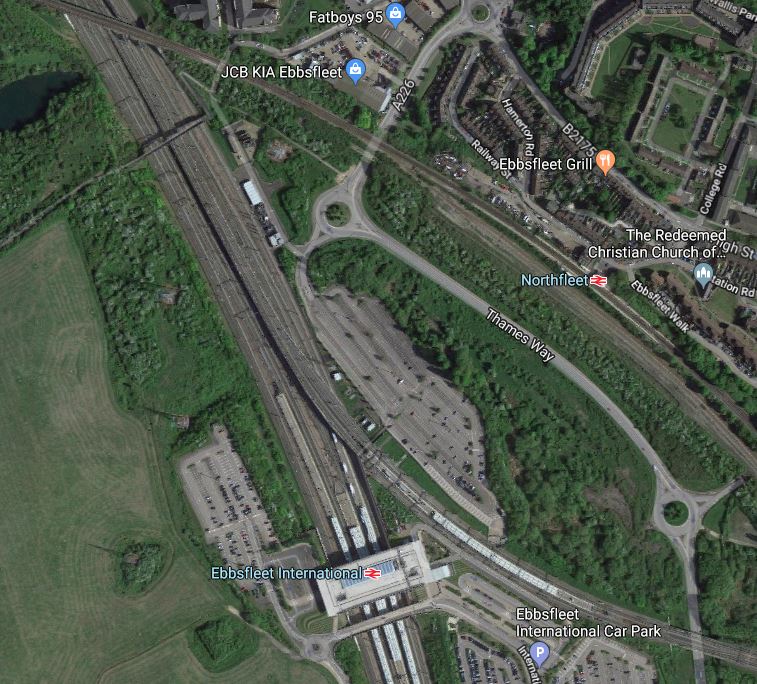
This Google Map shows Northfleet and Ebbsfleet stations.
Note.
- The large Ebbsfleet International station towards the bottom of the map.
- Northfleet station on the North Kent Line in the North East corner of the map.
- The two stations are about five hundred metres apart as the crow flies.
There has been a lot of pressure in the past to build a pedestrian link between the two stations, as reported by the Wikipedia entry for Northfleet station.
The station is very close to Ebbsfleet International station (the NNE entrance is only 334 yards (305 m) from Northfleet’s station), but passengers (using public transport) will find it far easier to access Ebbsfleet International from Gravesend or Greenhithe, as these stations are more accessible and offer easy access to Fastrack bus services. The walking route between the two stations is 0.6 miles (1 km) or 0.8 miles (1.3 km) and a suitable pedestrian link has not been built because of funding issues and objections from Land Securities.
Why when Ebbsfleet International station was built in the early 2000s for opening in 2007, was a pedestrian link not built between the two stations?
How much did omitting the link save?
Luton Airport are building the Luton DART, which is a people mover to connect Luton Airport Parkway station with the airport.
- It is 1.4 miles long.
- It is fully automated.
- It might have an extra station serving the mid-stay parking.
- It appears to be taking three years to build.
All of this very comprehensive system appears to be costing around £200 million.
I doubt that a simple pedestrian link, like a bridge with travelators, would have cost more than a few tens of million pounds.
To me, it is one of the great mysteries of the building of the Channel Tunnel Rail Link, that this pedestrian link wasn’t built.
I think, in future, we could come to regret that it wasn’t built along with the rest of Ebbsfleet International station in the early 2000s.
The extension of Crossrail to Ebbsfleet is about the following.
- Creating a high-frequency railway to serve all the new housing developments in the Thames Gateway and along the South Bank of the Thames.
- Connecting Ebbsfleet International station and other developments around the station to Crossrail.
In some ways, these two objectives are incompatible.
- To serve the housing developments along the river, the Crossrail extension needs to run roughly along the route of the North Kent Line.
- To serve Ebbsfleet International station, the route needs to be further inland.
Choosing either route is going to annoy people who live on the other.
For this reason, I feel we need a good old-fashioned British compromise or some very-radical thinking.
Current Services Along The North Kent Line
I shall start by looking at current services on the North Kent Line.
Thameslink – Luton And Rainham (Kent)
A Thameslink service
- Two trains per hour (tph)
- South of the Thames, the service calls at London Bridge, Deptford, Greenwich, Maze Hill, Whatcombe Park, Charlton, Woolwich Arsenal, Plumstead, Abbey Wood, Slade Green, Dartford, Stone Crossing, Greenhithe for Bluewater, Swanscombe, Northfleet, Gravesend, Higham, Strood, Rochester, Chatham and Gillingham.
- Eight-car Class 700 trains work the route, which have a 100 mph operating speed.
- The service calls at Northfleet for a possible interchange with services running from Ebbsfleet International station
- The service calls at Abbey Wood for interchange with Crossrail.
If there needed to be more capacity on this service, I suspect Thameslink could run twelve-car trains.
Southeastern – London Charing Cross And Gravesend
A Southeastern Metro service.
- Two tph
- Calls at Waterloo East, London Bridge, New Eltham, Sidcup, Bexley, Crayford, Dartford, Stone Crossing, Greenhithe for Bluewater, Swanscombe and Northfleet
- The service calls at Northfleet for a possible interchange with services running from Ebbsfleet International station.
- The service calls at Gravesend for interchange with Southeastern HighSpeed services between St. Pancras International station and North-East Kent, East Kent and soon-to-be East Sussex.
- Class 465 trains work the route, which have a 75 mph operating speed.
This picture shows a train for Gravesend in London Bridge station.
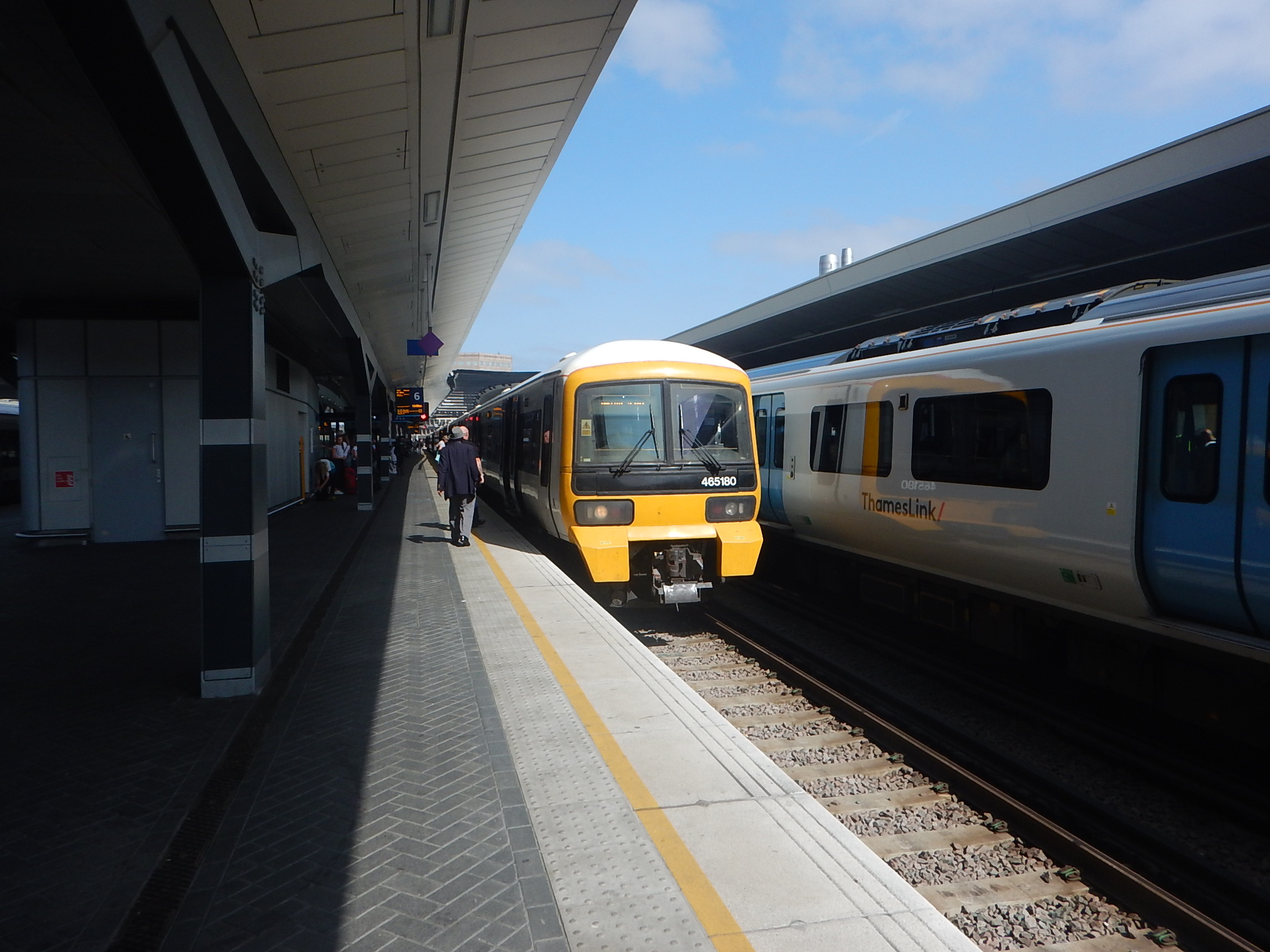
My feeling, is that the service would be improved by modern 100 mph trains, as these antique slow-coaches must restrict the speed of faster trains.
Southeastern – London Cannon Street And Dartford Loop Line
A Southeastern Metro service.
- Four tph in both directions.
- Calls at London Bridge, Deptford, Greenwich, Maze Hill, Westcombe Park, Charlton, Woolwich Dockyard, Woolwich Arsenal, Plumstead, Abbey Wood, Belvedere, Erith and Slade Green.
- Two tph return to Cannon Street via Crayford and Sidcup and two tph return to Cannon Street via Barnehurst and Bexleyheath.
- The service calls at Abbey Wood for a planned interchange with Crossrail.
- Class 465 trains work the route.
As I said with the previous service, these 75 mph trains need replacing with 100 mph trains.
Southeastern – London Charing Cross And Dartford
A Southeastern Metro service.
- Two tph
- Calls at Waterloo East, London Bridge, Lewisham, Blackheath, Charlton, Woolwich Dockyard, Woolwich Arsenal, Plumstead, Abbey Wood, Belvedere, Erith and Slade Green.
- The service calls at Abbey Wood for a planned interchange with Crossrail.
- Class 465 trains work the route.
As I said with the two previous services, these 75 mph trains need replacing with 100 mph trains.
Southeastern – London Victoria And Dover
A Southeastern Mainline service.
- Two tph
- Calls on the North Kent Line at Rochester, Chatham, Gillingham and Rainham.
- Class 465 trains work the route.
As I said with previous services, these 75 mph trains need replacing with 100 mph trains.
Southeastern – London Victoria And Ramsgate
A Southeastern Mainline service.
- One tph
- Calls on the North Kent Line at Rochester, Chatham, Gillingham and Rainham.
- Class 465 trains work the route.
As I said with previous services, these 75 mph trains need replacing with 100 mph trains.
Southeastern – London St. Pancras And Faversham
A Southeastern HighSpeed service.
- One tph
- Calls at Stratford International, Ebbsfleet International, Gravesend, Strood, Rochester, Chatham, Gillingham, Rainham and Sittingbourne.
- The service calls at Ebbsfleet International for an interchange with Continental services.
- Class 395 trains work the route, which have a 100 mph operating speed on lines electrified using a third-rail.
This picture shows a Class 395 train at Gravesend station.
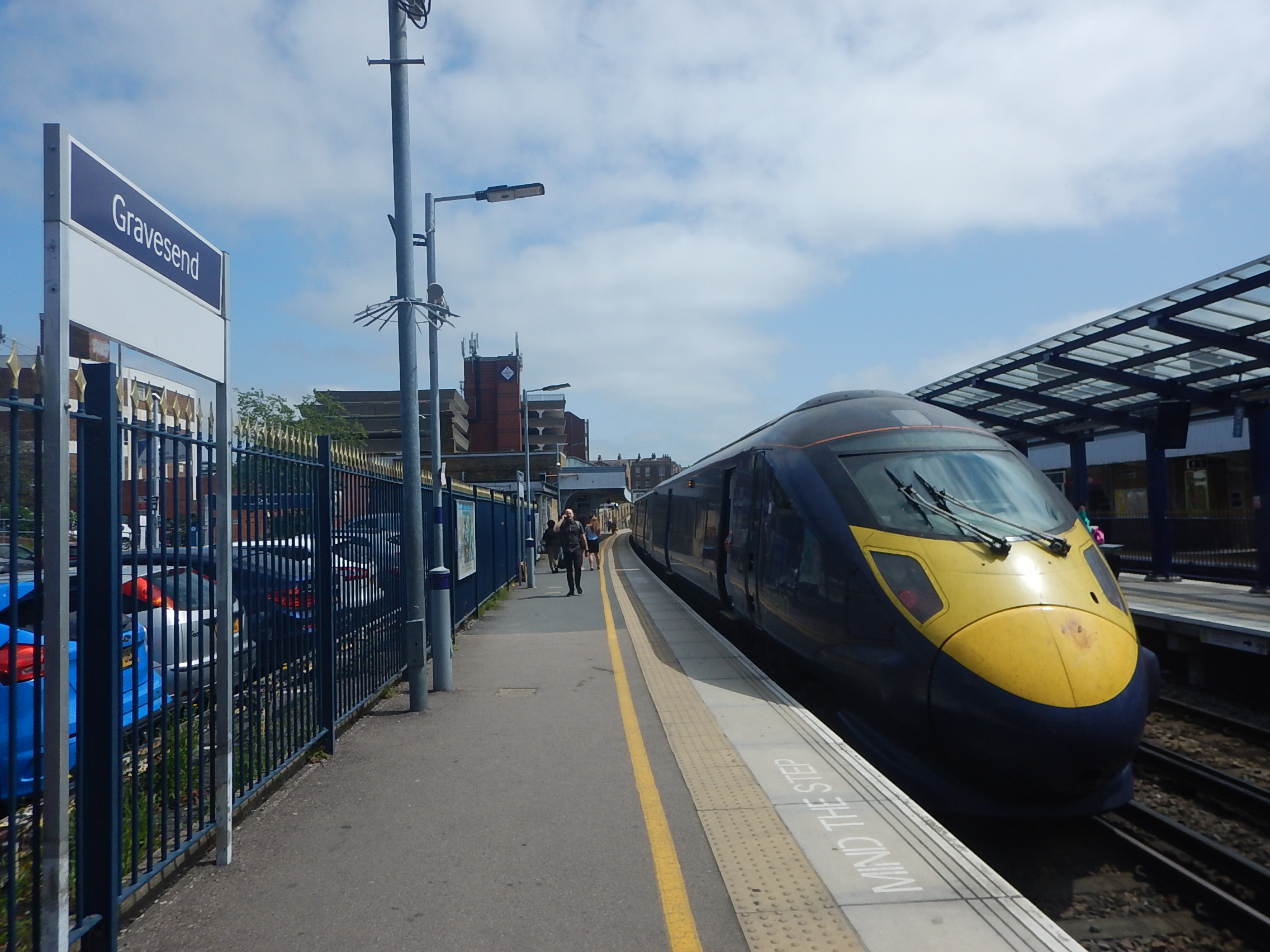
East of Ebbsfleet International, this service can be considered a 100 mph local train, that gets slowed by the 75 mph services.
Southeastern – London St Pancras International Loop Service
A Southeastern HighSpeed service.
- One tph
- Calls at Stratford International, Ebbsfleet International, Gravesend, Strood, Rochester, Chatham, Gillingham, Rainham, Sittingbourne, Faversham, Whitstable, Herne Bay, Birchington-on-Sea, Margate, Broadstairs, Ramsgate, Sandwich, Deal, Walmer, Martin Mill, Dover Priory, Folkestone Central, Folkestone West, Ashord International, Ebbsfleet International and Stratford International.
- The service calls at Ebbsfleet International and Ashford International for an interchange with Continental services.
- Class 395 trains work the route.
East of Ebbslfleet International, this service can be considered a 100 mph local train, that gets slowed by the 75 mph services.
Southeastern – London St Pancras International And Ramsgate
A Southeastern HighSpeed service.
- One tph
- Calls at Stratford International, Ebbsfleet International, Ashford International, Canterbury West, Ramsgate and Broadstairs
- The service calls at Ebbsfleet International and Ashford International for an interchange with Continental services.
- Class 395 trains work the route.
East of Ashford International, this service can be considered a 100 mph local train, that gets slowed by the 75 mph services.
A Summary Of Services By Station
I will look at the current number of trains at stations between London Bridge and Faversham.
- Deptford – 6 tph
- Greenwich – 6 tph
- Maze Hill – 6 tph
- Westcombe Park – 6 tph
- Charlton – 8 tph
- Woolwich Dockyard – 6 tph
- Woolwich Arsenal – 8 tph
- Plumstead – 8 tph
- Abbey Wood – 8 tph
- Belvedere – 6 tph
- Erith – 6 tph
- Slade Green – 6 tph
- Dartford – 12 tph to London and 6 tph to the East
- Stone Crossing – 4 tph
- Greenhithe for Bluewater – 6 tph
- Swanscombe – 4 tph
- Northfleet – 4 tph
- Gravesend – 6 tph to London and 5 tph to the East
- Higham – 2 tph
- Strood – 4 tph
- Rochester – 7 tph
- Chatham – 7 tph
- Gillingham – 7 tph
- Rainham – 7 tph to London and 5 tph to the East
- Sittingbourne – 5 tph
- Faversham – 5 tph
This is almost a train every ten minutes all the way from London to Faversham.
In addition Ebbsfleet International has four tph to and from London St. Pancras International.
Could Extra Services Be Run Along The North Kent Line?
Consider.
- Six tph is not a high frequency for a relatively simple route like this.
- The East London Line, which has about the same level of complication easily handles sixteen tph and it is planned to go to twenty tph in the next couple of years.
- Digital signalling and Automatic Train Control will handle twenty-four tph on Crossrail and Thameslink.
- Freight trains do not run at a high frequency on the route.
I wouldn’t be surprised to see another eight-ten tph added to the route.
How Many Trains Should Terminate At Ebbsfleet?
Currently, Crossrail has six fully-planned and built terminals.
- Abbey Wood will handle twelve tph in the Peak and ten tph in the Off Peak
- Heathrow Terminal 4 will handle four tph all day
- Heathrow Terminal 5 will handle two tph all day
- Maidenhead will handle two tph all day.
- Reading will handle four tph in the Peak and two tph in the Off Peak
- Shenfield will handle twelve tph in the Peak and ten tph in the Off Peak
It would appear that most terminals only handle between two and four tph.
I very much suspect, that research will show that four tph to and from Ebbsfleet will be sufficient.
It certainly meets the requirement for a Turn-Up-And-Go service, as used by London Overground and Merseyrail.
Possible Terminals For Crossrail In Kent
Wikipedia gives services to Abbey Wood station under Services as follows.
- Peak – Twelve tph
- Off Peak – Ten tph
There are several possible terminals for Crossail in Kent
Gravesend Station
When Crossrail was planned, the route was safeguarded to Gravesend station, with a depot at Hoo Junction to the East.
This section in Wikipedia, which is entitled To Gravesend And Hoo Junction, gives more details. This is the first sentence.
The route to Gravesend has been safeguarded by the Department for Transport, although it was made clear that as at February 2008 there was no plan to extend Crossrail beyond the then-current scheme.
These pictures show Gravesend station.
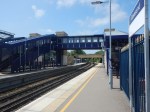
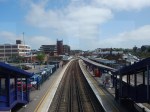
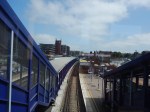
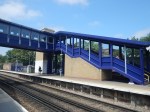
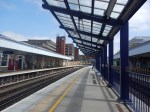
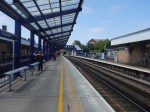
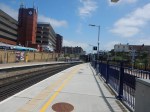
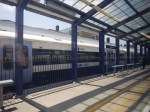
The station is well-appointed and has good services.
- The station is close to the Town Centre.
- It is step-free.
- There is a West-facing bay platform, which is currently used for a two tph service to Charing Cross.
- The platforms are very long.
- HighSpeed commuter services and Thameslink call at the station.
Crossrail services could either terminate in the bay platform or run through the station to a turnback siding at Hoo Junction.
Either way, I’m sure four tph could be easily handled.
Ebbsfleet International Station
Ebbsfleet International station is named in the title of this post and many are expecting that Crossrail will be extended to the station.
This Google Map shows this station.
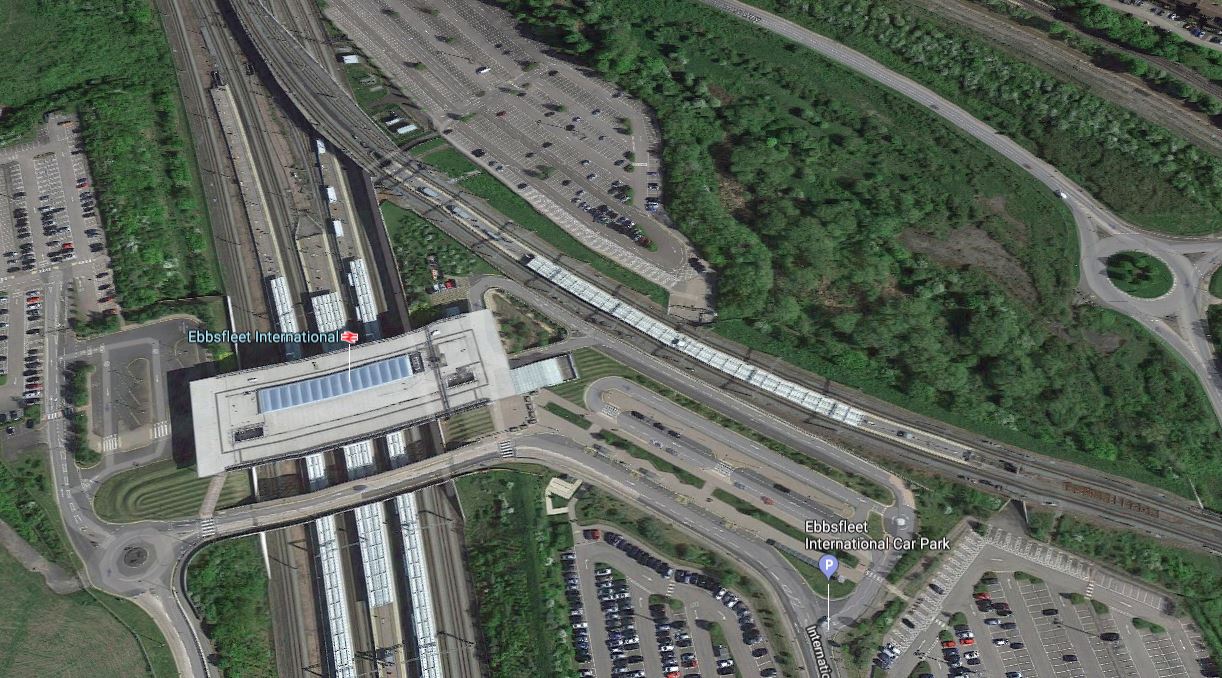
Note.
- The High Speed platforms 1 to 4, for St. Pancras, Ashford International and the Continent are to the left.
- The two separate platforms 5 and 6 for high-speed services to and from North Kent.
- The large amount of car parking around the station.
It’s not obvious, where a platform or two for Crossrail could fit in.
The Wikipedia entry for Ebbsfleet International station, says this about Crossrail.
It was formerly planned that Crossrail would terminate at a separate station between Northfleet and Ebbsfleet International but under the current plan, Abbey Wood further west will be the eastern terminus. However, a Crossrail extension from Abbey Wood to Gravesend (Hoo Junction) remains safeguarded
Perhaps, Crossrail platforms could be on the Northfleet side of the station, to the North of platforms 5 and 6.
If two platforms are good enough for Abbey Wood station, then surely, two platforms would be sufficient at Ebbsfleet International station.
This Google Map shows where the North Kent Line rrosses the Channel Tunnel Rail Link about five hundred metres North of Ebbsfleet station.
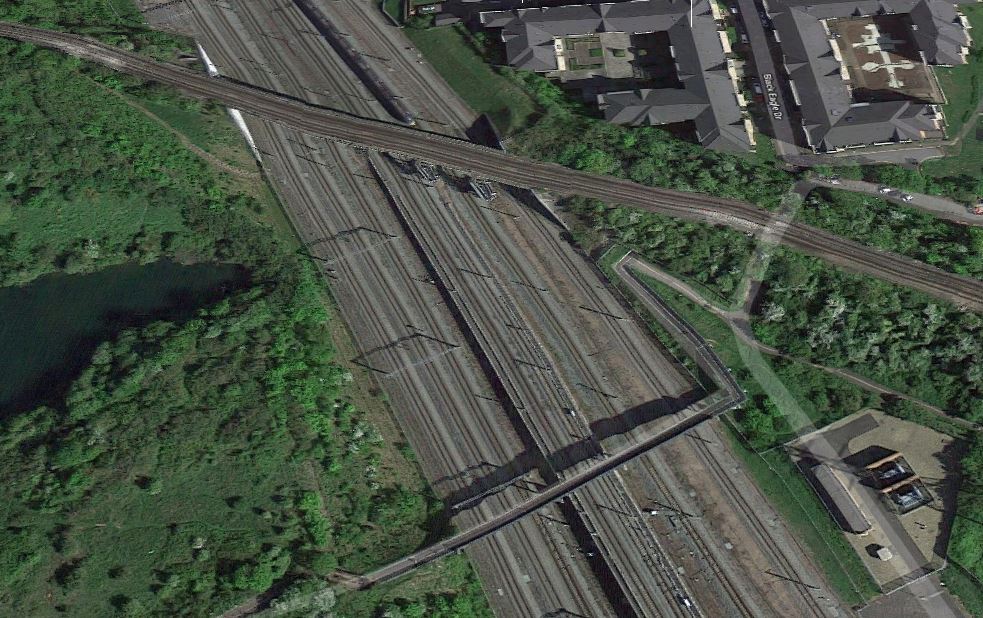
Could a flyover or dive-under be created to create a spur from the North Kent Line, that would allow Crossrail trains to sneak down the Eastern side of the high speed lines to platforms, alongside the current Platforms 5 and 6?
This picture was taken from a train on the bridge that carries the North Kent Line over the high speed lines.
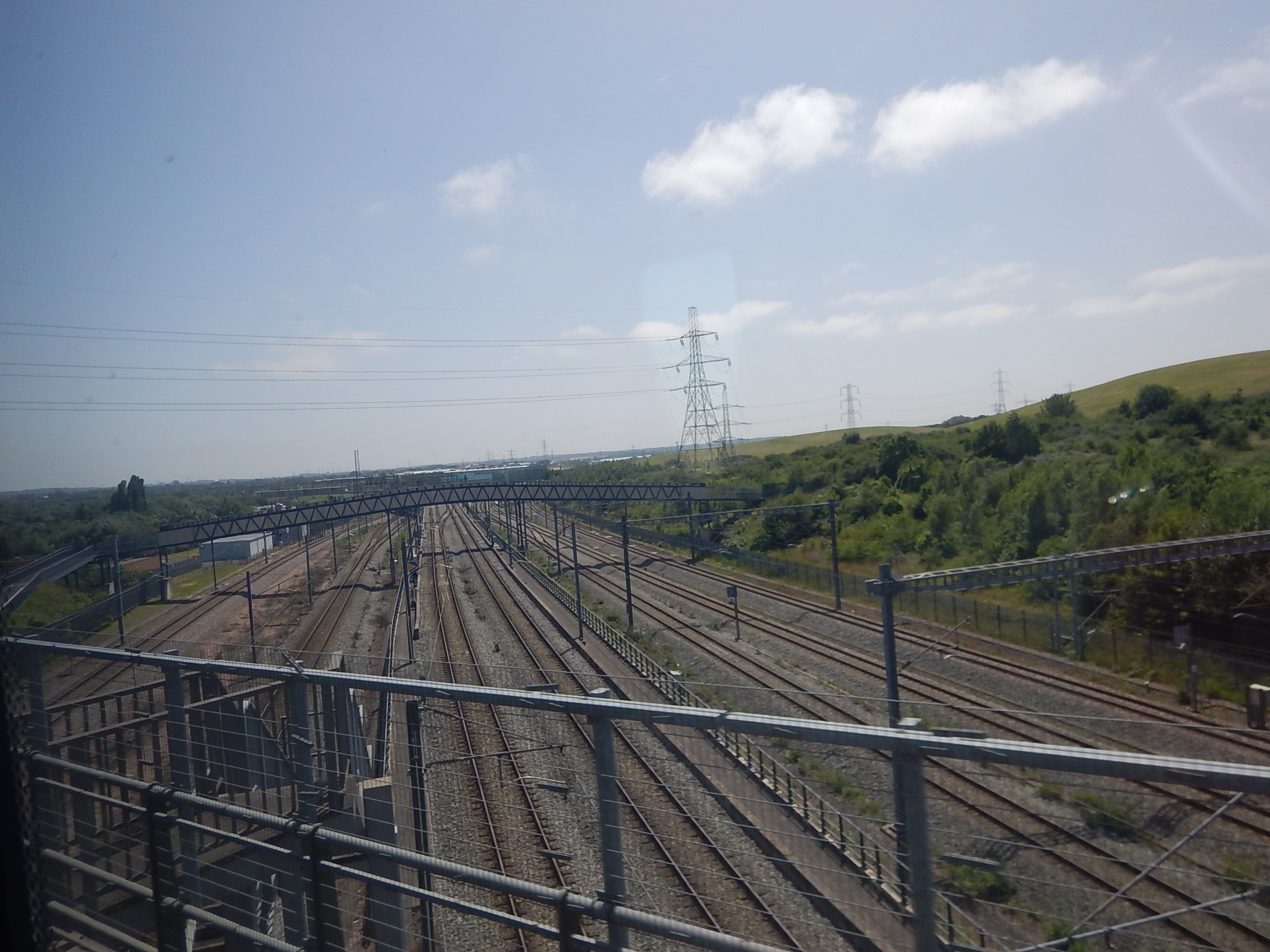
I suspect there is a solution in there somewhere.
One interesting possibility could be for the Crossrail trains to share Platforms 5 and 6 at Ebbsfleet International station with the HighSpeed commuter services to North Kent.
This picture shows the flying junction, where the tracks through Platforms 5 and 6, join the North Kent Line between Northfleet and Gravesend stations.
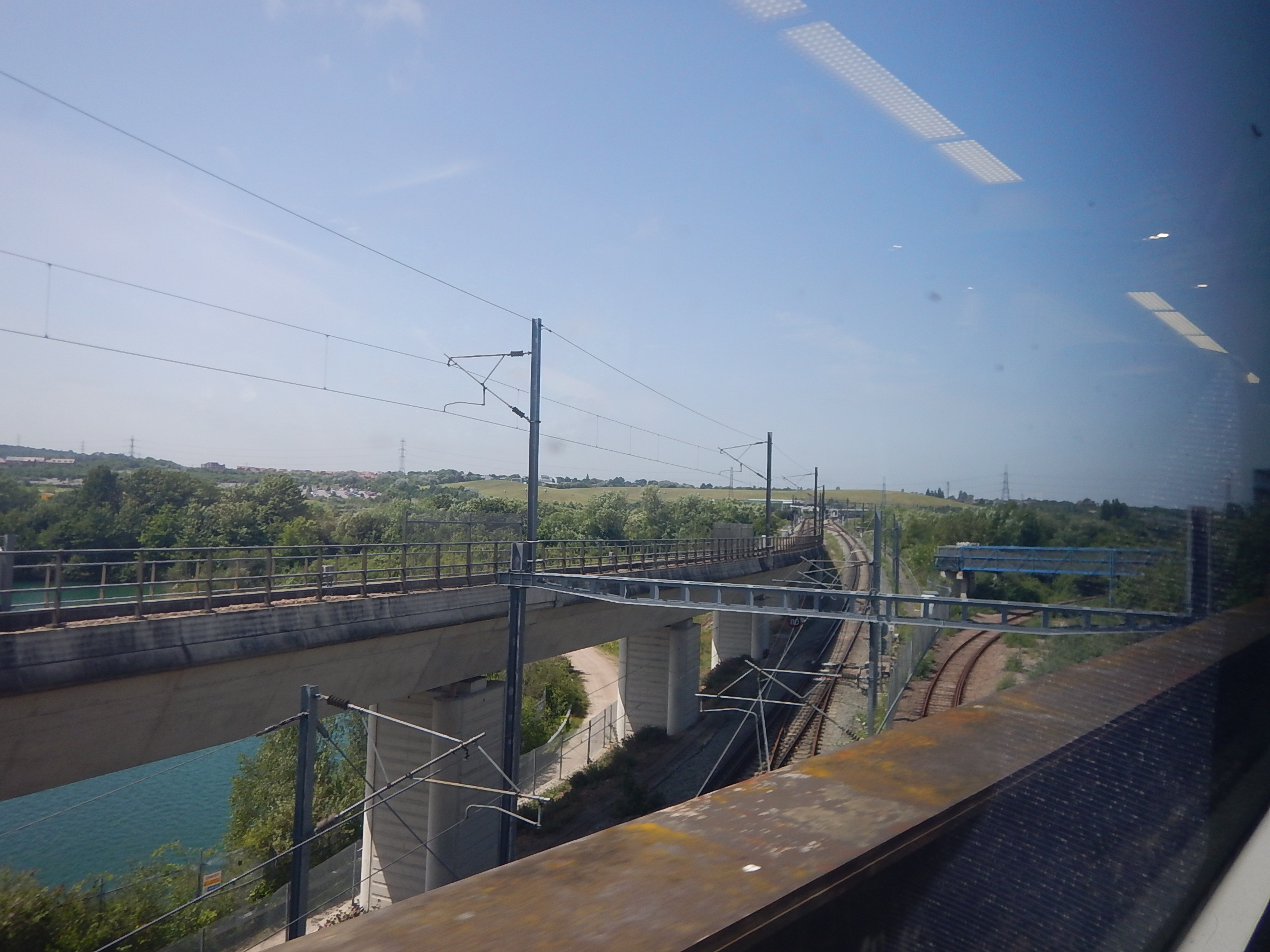
As currently, only two tph use the link, surely, Crossrail services of four tph could share, if they were to go through Ebbsfleet International and terminate at Gravesend?
I’m not an expert on designing bridges, but to my untrained eye, a flyover to connect the Ebbsfleet loop to the North Kent Line to the West of the station, wouldn’t be much more complicated, than the flyover to the East.
I think, a loop to serve Ebbsfleet would have other advantages.
- Crossrail would have access to a much-needed Park-and-Ride site.
- The interchange between Crossrail and Continental services would be a short walk.
- Probably only minimal improvements would be needed to Ebbsfleet International station.
- There would be a same-platform interchange between Crossrail and HighSpeed commuter services to and from St. Pancras.
- Construction would be more affordable and less disruptive.
Perhaps, it’s a better idea, than I originally thought?
Abbey Wood
Abbey Wood station has been designed to handle twelve tph.

The picture shows the four platforms at Abbey Wood station with a Class 345 train in one of the two Crossrail platforms.
- Two platforms can handle twelve tph.
- A turnback facility that has been built at the station to handle more trains or service recovery.
- There are three bridges, two escalators and at least two lifts to facilitate transfer between Crossrail and other services.
- Platforms are spacious.
- There is a wide gate line controlling entry to the station.
- The station is well-served by buses, but car parking is limited.
It is one of the better new stations and would certainly have no problems handling the eight tph, it would need to in the Peak, if four tph, carried on to terminate at Ebbsfleet.
Dartford Station
Dartford station probably has claims to be terminal for Crossrail.
It is a large town, clustered around the station.
There is a lot of new housing close to the station.
It has regularly services to several London terminals, by a variety of routes.
But it appears to be a very cramped station with narrow platforms, as some of these pictures shows.

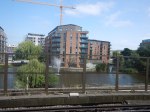
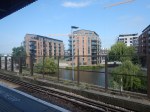
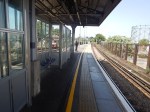
Services at the station include.
- Eight tph – Charing Cross
- Two tph – Victoria
- Four tph – Gravesend
Thameslink also run two tph between Luton and Rainham.
It is much-more a station where travellers change trains, than one where services terminate..
But even for that it needs improvement.
My Preferred Crossrail Option
I would extend Crossrail to Ebbsfleet in a simple manner, that was capable of being expanded, as traffic needs changed in the future.
Four tph Would Continue Through Abbey Wood Station
I feel that a Turn-Up-And-Go service between Abbey Wood and Ebbsfleet, of four tph would be sufficient, especially if other services on the route, were to be increased in frequency and capacity.
Services Would Terminate At Gravesend Station
The original safeguarded plan for Crossrail to be extended to Gravesend, with a depot at Hoo Junction, is in my mind a good plan.
- Gravesend station is probably Crossrail-ready.
- Gravesend station could handle the turnround of Crossrail running at a frequency of four tph.
- There is plenty of space for a depot at Hoo Junction.
But perhaps most importantly,, it is the original plan suggested in the original design of Crossrail.
Have decisions been made by the various councils on the extended route, based on this plan?
Crossrail Services Would Use The North Kent Line
The extended Crossrail service would call at Belvedere, Erith, Slade Green, Dartford, Stone Crossing, Greenhithe for Bluewater, Swanscombe and Northfleet.
Frequencies of trains at the stations between Abbey Wood and Gravesend would be.
- Belvedere – 10 tph
- Erith – 10 tph
- Slade Green – 10 tph
- Dartford – 16 tph to London via a variety of routes and 10 tph to the East
- Stone Crossing – 8 tph
- Greenhithe for Bluewater – 10 tph
- Swanscombe – 8 tph
- Northfleet – 4 tph
In addition, Gravesend would have ten tph to and from London.
Handling these frequencies on a modern double-track railway shouldn’t be a problem.
Will Digital Signalling Be Needed?
Crossrail and Thameslink are both digitally signalled and will use a degree of Automatic Train Control, to handle up to twenty-four tph.
I could see advantages in applying similar systems to the Crossrail extension to Ebbsfleet.
Merging Of Services Between Abbey Wood And Belvedere Stations
Services through both these stations would include.
- 4 tph – Crossrail between London and Ebbsfleet/Gravesend
- 2 tph – Thameslink between Luton and Rainham, which don’t stop at Belvedere.
- 4 tph – Southeastern which are the Dartford Loop service to and from Cannon Street.
- 2 tph – Southeastern between Charing Cross and Dartford
The current track layout appears to allow Crossrail trains to access the North Kent Line, but Class 345 trains are not fitted with shoes for third-rail elecrification.
This Google Map shows the Western end of Belvedere station.
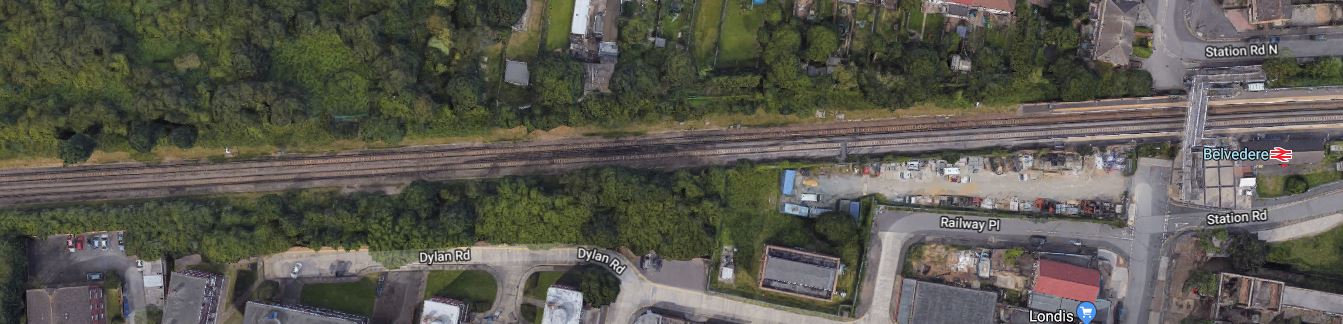
Note how there appears to be space on either side of the double track, which continues as far as Abbey Wood station.
I suspect that a track layout can be designed between the two stations, so that trains can merge and diverge efficiently between the four tracks at Abbey Wood and the two tracks at Belvedere.
Digital signalling would make it easier.
Station Improvement Between Abbey Wood and Grsvesend Stations
As I indicated earlier, Dartford station would need improvement.
On the other hand Abbey Wood, Greenhithe for Bluewater and Gravesend will need very little modification.
I also suspect, Dartford would not be the only station, that will need improvement.
All stations would be made step-free.
A Loop For Ebbsfleet International Station
I feel that the best way to give access to Ebbsfleet International station would be to create a loop from the North Kent Line and use the current island platform 5 and 6 at the station for Crossrail as well.
The Eastern end of the loop has already been built to a high standard and it would only need a Western connection to be designed and constructed.
I’ll repeat the advantanges of this scheme, I listed earlier.
- Crossrail would have access to a much-needed Park-and-Ride site.
- The interchange between Crossrail and Continental services would be a short walk.
- Probably only minimal improvements would be needed to Ebbsfleet International station.
- There would be a same-platform interchange between Crossrail and HighSpeed commuter services to St. Pancras.
- Construction would be more affordable and less disruptive.
Each side of the he island platform 5 and 6 would handle.
- Two tph – HighSpeed commuter services.
- Four tph – Crossrail services.
They may even be able to handle more trains in the future.
Will Crossrail’s Class 345 Trains Fleet Need Upgrading?
Crossrail’s Class 345 trains have a 90 mph operating speed, as opposed to the 100 mph operating speed of Thameslink’s Class 700 trains.
Southeastern Class 465 trains are even slower at 75 mph.
If all trains working the North Kent Line were 100 mph trains, it would surely make a robust timetable easier to create and operate.
I would expect that in a few years time, all trains working between London and Kent will be capable of at least 100 mph.
Where Will Gravesend and Ebbsfleet International Services Terminate In The West?
The obvious terminal would surely be Heathrow, as this would give a useful service Heathrow and Continental rail services, without the need to change trains.
Wikipedia is quoting 52 minutes between Heathrow and Abbey Wood on Crossrail and current times give twenty-three minutes between Abbey Wood and Gravesend stations, with perhaps four minutes less to Ebbsfleet in the future.
So timings could be as follows.
- Heathrow and Ebbsfleet – 75 minutes
- Heathrow and Gravesend – 79 minutes
Surely, this will be better than struggling around a crowded M25.
Southeastern HighSpeed Commuter Service Improvements
The Southeastern franchise may change later in the year and speculation has started on what this will mean for services and the trains used.
A Revamped HighSpeed Service
In an article in the July 2017 Edition of Modern Railways, which is entitled Kent On The Cusp Of Change, some well-founded speculation is made about the future of the HighSpeed commuter service.
- More Class 395 trains or similar need to be procured.
- A new service between St. Pancras and Hastings is planned.
- An all-day service between St. Pancras and Maidstone West via Gravesend.
- An extra two tph between St. Pancras and Ebbsfleet International.
- A second London terminal may be opened at possibly Waterloo or even Victoria.
Only the Maidstone West service would pass through platforms 5 and 6 at Ebbsfleet International station and would add a third hourly HighSpeed service.
In some ways, it might be better for HighSpeed services to run at four tph between Gravesend and St. Pancras via Ebbsfleet International and Stratford International, as this would fit much better with a four tph Crossrail service.
Improvements To Stratford International Station
Pedestrian routes between the various services and the Olympic Park at Stratford International station are not good.
- If HighSpeed services are going to be expanded, then it is only right that Stratford International station is improved, to a good modern connectivity standard.
- If Stansted Airport and Cambridge services serve Stratford in the future, then there must be an easy pedestrian route between the two services.
- Connectivity between HighSpeed and Great Eastern Main Line and Crossrail services is particularly poor.
- The HighSpeed platforms at Stratford International station are bleak and draughty and need improvement.
It’s almost as if, the whole station complex was designed for the Eastfield Shopping Centre.
A Summary Of Services By Station
I will look at the current number of trains at stations between Abbey Wood and Faversham, after adding in two extra HighSpeed sevices.
- St. Pancras and Maidstone West via Strood.
- St Pancras and Faversham.
These would give.
- Belvedere – 10 tph
- Erith – 10 tph
- Slade Green – 10 tph
- Dartford – 16 tph to London via a variety of routes and 10 tph to the East
- Stone Crossing – 8 tph
- Greenhithe for Bluewater – 10 tph
- Swanscombe – 8 tph
- Northfleet – 4 tph
- Gravesend – 8 tph to London and 7 tph to the East
- Higham – 2 tph
- Strood – 6 tph
- Rochester – 8 tph
- Chatham – 8 tph
- Gillingham – 8 tph
- Rainham – 8 tph to London and 6 tph to the East
- Sittingbourne – 6 tph
Thameslink Improvements
My only thought about Thamesink, is that if Crossrail and Southeastern’s HighSpeed services run at a frequency of four tph, through Gravesend, then surely Thameslink should run at the same frequency Between St. Pancras and Rainham.
I say St. Pancras rather than Luton, as it would probably be sensible to send the extra two tph up the East Coast Main Line to either Welwyn Garden City, Peterborough or Cambridge.
A Summary Of Services By Station
I will look at the current number of trains at stations between Abbey Wood and Faversham, after adding in two extra Thameslink sevices.
These would give.
- Belvedere – 12 tph
- Erith – 12 tph
- Slade Green – 12 tph
- Dartford – 18 tph to London via a variety of routes and 12 tph to the East
- Stone Crossing – 10 tph
- Greenhithe for Bluewater – 12 tph
- Swanscombe – 10 tph
- Northfleet – 6 tph
- Gravesend – 10 tph to London and 9 tph to the East
- Higham – 4 tph
- Strood – 8 tph
- Rochester – 10 tph
- Chatham – 10 tph
- Gillingham – 10 tph
- Rainham – 10 tph to London and 6 tph to the East
- Sittingbourne – 6 tph
When you consider that these frequencies are obtained by trains running at 100 mph on a railway, that was most;ly built in the mid-nineteenth century and electrified with 750 VDC third rail before the Second World War.
Southeastern Improvements
Both Southeastern’s Metro services to and from Dartford and Chatham and their main line services to East Kent will probably be improved under the new franchise holder
- New or refurbished 100 mph trains will replace the 75 mph Class 465 trains.
- Dover and Ramsgate will get increased frequencies from Victoria.
- Metro services to and from Dartford and Chatham will be at least a Turn-Up-And-Go four tph.
- The enhanced performance of the new trains would enable faster services and more stops to be made without degrading the timetable.
I feel that it would not be impossible to see every station between London Bridge and Rainham having twelve tph.
The Pedestrian Link Between Northfleet And Ebbsfleet International Stations
I am not saying a pedestrian link between Northfleet and Ebbsfleet International station shouldn’t be built, but consider that the loop through Ebbsfleet International station gives two routes between Swancombe and Gravesend.; one via Northfleet and the other via Ebbsfleet International.
A lot depends on how many passengers will actually want to travel between the two stations.
- Those from the West could change at a station like Dartford or Greenhithe for Bluewater to a train going to their required destination.
- Those from the East could change at Gravesend to a train going to their required destination.
All changes would be same-platform changes and the best stations could be encouraged by coffee kiosks and comfortable waiting rooms.
For passengers starting from Northfleet the following rules would apply.
- Passengers going East would take the first train and change if required at Bravesend, Rochester or their preferred station.
- Passengers going West would take the first train and change if required.
- Passengers going to Ebbsfleet International would probably catch the first train for a single stop and then cross-over to the other platform for a train to Ebbsfleet International.
If there were upwards of six tph on both routes and step-free access at all stations, these procedures would not be unduly tiresome.
Similar rules would apply for those starting their journeys at Ebbsfleet International.
Note that, as more trains ran on both routes between Swanscombe and Gravesend, the time to get between the two stations would decrease.
If as seems to be planned, a lot of housing is built on the undeveloped land between the two stations, I wouldn’t be surprised to see a progressively-minded developer build a pleasant tree-lined pedestrian and cycling route between the two stations.
This would be mainly to give easy access to the development to the two stations, but it would also link them together.
Conclusion
Everything, I have written in this post is based on sound facts and is possible with today’s technology.
- 100 mph suburban electric trains have been around for several decades.
- Digital signalling has been successfully running on Thameslink in the UK and other places in the world for a couple of years.
- The construction methods to build a loop at Ebbsfleet station are nothing out-of-the-ordinary.
What I have outlined would be much more of a £1.3 billion project than a £3 billion one!
I also believe everything can be achieved without massive disruption or inconvenience to passengers and probably delivered in full by 2025.
It should be noted that North Kent will be reaping the benefit of three major new cross-London high-capacity railways.
- The Chanel Tunnel Rail Link between Ebbsfleet International and St. Pancras via Stratford International.
- Crossrail between Abbey Wood and West London via Canary Wharf, the City and West End of London, Paddington and Old Oak Common.
- Thameslink between Kent and North of London via London Bridge, Blackfriars and St. Pancras.
As cross-London routes continue to develop in future decades, other commuter routes will benefit from similar strategies.
Transport for Wales Is Invading England
There is an article in the July 2019 Edition of Modern Railways, which is entitled TfW Targets Swansea To Bristol Services.
This is the first paragraph.
Transport for Wales Rail Services is aiming to start an open access service between Swansea and Bristol Temple Meads, commencing in December 2020.
These are characteristics of the proposed service.
- Hourly service
- Calls at Neath, Port Talbot Parkway, Bridgend, Cardiff Central, Newport, Severn Tunnel Junction and Filton Abbey Wood stations.
- Sixteen services per day will run Monday to Saturday in both directions, with twelve services on Sundays.
- Trains will be Class 170 or Class 175 diesel trains.
Looking at current times of sections of the route, I suspect that services could take a few minutes under two hours and would need four trains.
Reasons given for planning the service include.
- Long-term political pressure.
- Welsh ministers abandoning plans for the £1.6 billion M4 Relief Road around Newport.
- Cross-Severn road traffic has increased after abolition of tolls.
- Main roads on either side of the Severn are congested.
- Increased house sales in South Wales to people who work in the Bristol area.
Incidentally, before I read the article, if you asked me, I’d have thought there would be a direct service.
My only thought about the service, is that as there will be electrification between Bristol and Cardiff, why not run a proper fast bi-mode train like a Hitachi Class 800 train or a Stadler Class 755 train. The latter of which Transport for Wales have on order, for delivery in 2023.
The Class 755 train or its Welsh cousin, could be an interesting option.
- The distance without electrification between Cardiff and Swansea is 46 miles.
- Transport for Wales tri-mode version of the Class 755 train could have three batteries and a diesel engine in the four slots in the powrpack car.
Could it have the capability of jumping the gap.
Birmingham Services
The article also says that, Transport for Wales are also planning to extend their services that terminate at Birmingham to Coventry.
- Holyhead and Birmingham New Street takes three hours.
- Aberystwyth and Birmingham New Street takes three hours
- Pwllheli and Birmingham New Street takes five hours
As Birmingham and Coventry takes twenty minutes or perhaps a convenient hour to go to Coventry and return with a relaxed turnround, does the extension make these three long services simpler to operate?
Extra positioning services from Crewe to Coventry in the morning and return in the evening are also proposed.
These would also suggest that improving the ease of operation of these services is the reason for the extension to Coventry.
Liverpool Services
The article also says that these services to Liverpool will be added in 2022.
- An hourly service to Llandudno.
- A two-hourly service to Cardiff.
It isn’t said, if one of these services is an extension to the recently launched Liverpool and Chester service.
Conclusion
The Welsh are getting ambitious.
 The Anonymous Widower