Where The Queen Gets Her Energy
Yesterday’s edition of Countryfile on BBC1, was entitled Royal Special: Windsor.
In the program, they shows how Windsor Castle and the surrounding estate, use an Archimedes screw in the River Thames to generate electricity.
I found this video on the Internet.
There is also this document on the Internet.
It may look crazy, but after reading the document, it would appear to be cost effective.
This Google Map gives aerial view of the weir and the installed screws.

The two screws are installed in two sections of the weir at the right end.
It may look crazy, but after reading the document, it would appear to be cost effective.
- At peak flow the two units generate a total of 320kW/hour.
- There is a six year return on investment.
- The design life is fifteen years..
- The owner of the generators has a forty year lease on the site.
I suspect, we could see more units like this!
The Intelligent Bi-Mode Train
In the June 2019 Edition of Modern Railways, there is an article, which is entitled Stadler Bi-Modes Taking Shape.
It gives a deep insight into the philosophy of how the trains was designed and how they operates.
Abbreviations Used
- BMU – Bi-mode Multiple Unit – Class 755 train
- EMU – Electrical Multiple Unit – Class 745 train
- Flirt – Stadler’s family of regional trains.
Low-Floor Design
This is said.
Both the BMUs and EMUs will have a low-floor design enabling level boarding at every passenger door, with retractable steps bridging the gap between the train and the platform edge.
How simple is that?
This picture show’s a Flirt in Italy.
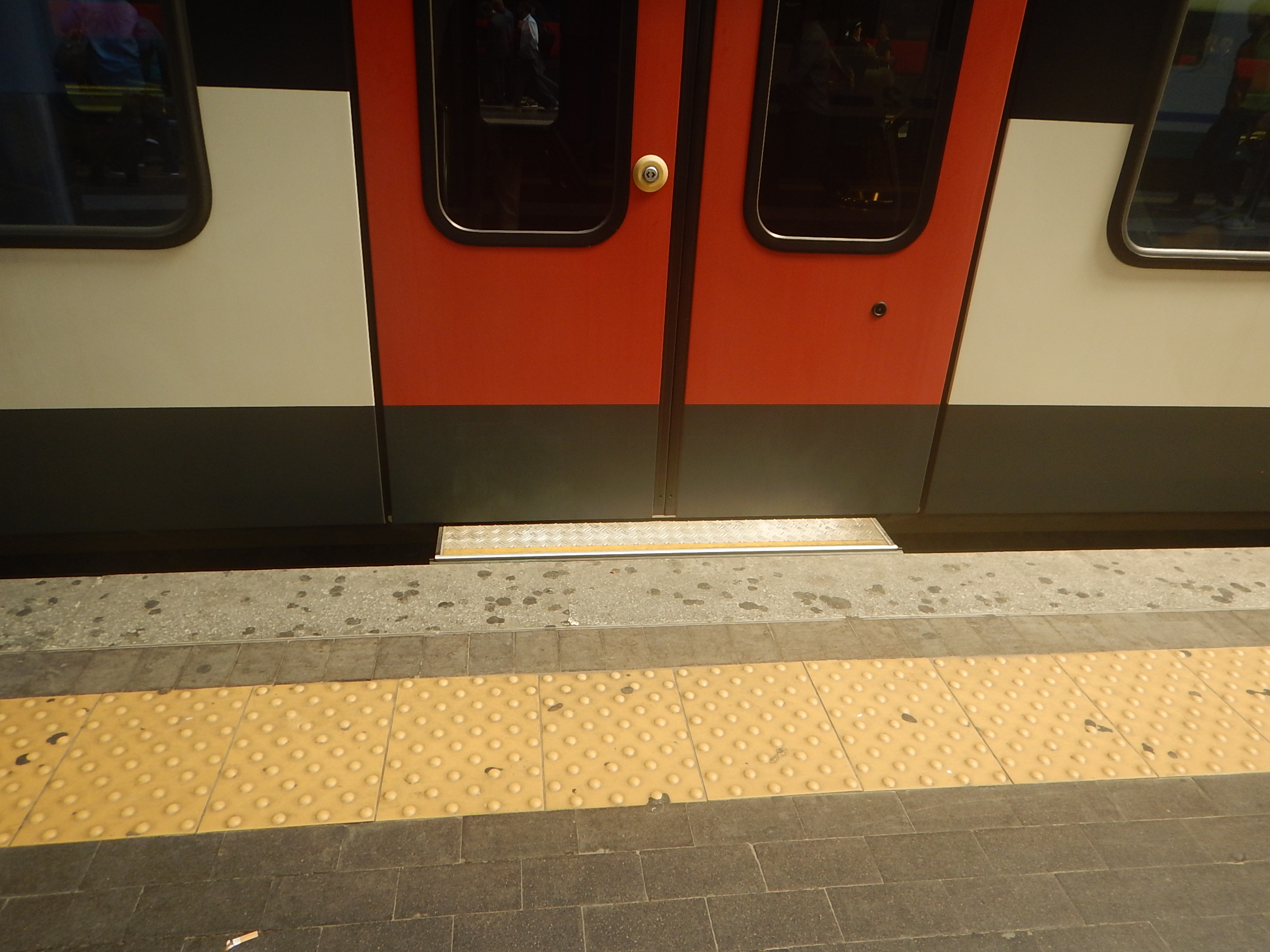
Surely, every train should have level boarding!
Passive Provision For Digital Signalling
The cabling is already installed and rack space has been left.
Sensible!
But I suspect there will be a new train fleet delivered, in the next couple of years, where the trains are not future-proofed.
Drivers Helped Design The Cabs
Consultation was about both hardware and software.
Lots Of Cameras
This is said.
Extensive video surveillance and bodyside cameras will allow drivers to control the opening and closing of doors.
Surely, more cameras means better safety and security, so why are the RMT against these new trains?
Perhaps, RMT members didn’t get free trips to Switzerland?
Twelve-Car Trains Are Possible
This is said.
Up to three BMU sets can operate in multiple, allowing a 12-car formation to run should this ever be required.
Why would Greater Anglia need a twelve-car BMU?
Problems do occur and suppose one of the London-Norwich EMUs had a serious problem, that meant it would be in the workshop for several weeks.
During this time, three four-car BMUs could be run as a twelve-car formation to cover for the missing EMU.
- Performance would be the same.
- Both trains carry around 700 passengers.
- The BMUs would be on electric power all the way.
The only disadvantage would be that the BMUs have no buffet and First Class seats.
In my regular travelling on the Great Eastern Main Line in the last thirty years, I have been involved in two incidents where all trains stopped because of weather or a derailment. If the track, electrification and trains are the best, then there will still be the occasional closure.
But a twelve-car BMU would still be able to use the alternative route via Cambridge!
Do Greater Anglia see the BMUs as a means of getting passengers to their destimation, in circumstances, which interrupt normal service?
They’ve obviously done their sums and is it cheaper to have a couple of BMUs spare to cover for problems, than have passengers wait until everything is fixed?
I think, t is more likely that eight-car trains will be used.
Could for instance two four-car trains start from Lowestoft and Bury St. Edmunds in the morning and then join at Ipswich for a fast run to London for commuters?
Or would eight-car trains be used on Cambridge-Ipswich and Cambridge-Norwich, when there are important football matches?
The BMU train lengths of three and four cars, would also allow train capacity to be geared to the route.
Will we see other train companies buying this type of flexible capacity?
Flexible Power Source
This is said.
Stadler says the bi-mode Flirts are EMUs with a power pack in between just to generate power, adding that the power pack can be removed later to create an EMU or the equipment in the power module exchanged for batteries or other power sources.
Stadler says this flexibility will be important in the train’s lifespan of between 30 to 35 years.
All End Cars Are The Same
Both the BMUs and EMUs have the same end cars.
Except for a switch box to change power source in the BMU.
The four-car BMUs have two extra cars, both of which have a pantograph, whereas the three-car BMUs have just a single extra car.
It has been said, that three-car trains can be converted to four-cars, by just adding another car.
This picture, clipped from Wikipedia, shows the layouts of both trains.
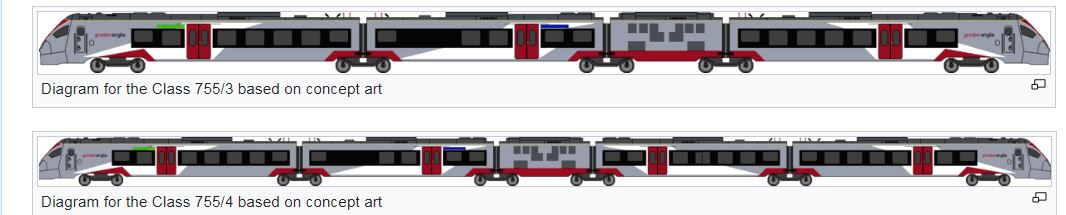
What does a design like this save in manufacture, operation, driver training and maintenance?
Environmentally-Friendly
It goes without saying that the trains comply with the latest emission and noise regulations.
Changing Power Source
This is said.
Drivers of BMUs will be able to switch between electric and diesel modes whilst on the move if agreement is reached with Network Rail.
As a Control Engineer by training, I would feel that if a BMU can’t switch between modes on the move, then it is a very poor design of BMU.
Regenerative Braking
Regenerative braking is fitted and it works in diesel mode as well as electric, but it is not stored on the train in a battery and is just burned off in a brake-resistor, if it can’t be returned through the overhead line.
I would expect, that at some point in the future batteries will be added to the power module to capture and resuse this energy, which is now wasted.
Intelligent Engine Management
This is said.
When the output of all the engines is not required one or more can be shut down to save fuel, with the engine management system ensuring this is shared across all engines over a period of time to balance maintenance schedules.
Sensible.
But, I worked for ICI in the 1970s and some of the early computerised chemical plants used optimisations like this to improve efficiency!
Bicycle Spaces
East Anglian trains, especially those starting or finishing in Cambridge, carry a lot of bicycles.
All the BMUs have provision for six bicycles! Is that enough?
Conclusion
The Class 745 and Class 755 trains are an interesting dual-solution to the problem of East Anglia’s railways, which have a dual electric spine from London to Norwich and Cambridge and a plethora of connecting routes without wires.
Other franchises must be looking seriously at a similar solution.
It should also be noted that Stadler have delivered Flirt EMUs with a 125 mph operating speed to Norway and Sweden.
So could we see 125 mph BMUs operating on lines, like the Midland Main and West Coast Main Line?
It could be that the weight of the power module means that the 100 mph of Greater Anglia’s Class 755 trains is the maximum possible speed on diesel.
In which case could we see a Flirt with 125 mph on electric power and 100 mph on diesel?
A Visit To The Swanage Railway
Yesterday, I noticed this article on Railnews which was entitled National Rail Trains To Score Heritage First.
This was the first two paragraphs.
Scheduled National Rail trains will run on a heritage railway tomorrow for the first time.
South Western Railway is launching Saturday services to Corfe Castle on the Swanage Railway, and Corfe Castle has been restored to the national stations database.
So I thought, I’d be on the first South Western Railway train on a scheduled service into Corfe Castle station on the Swanage Railway.
I caught the 08:25 train from London Waterloo to Weymouth and I alighted at Wareham station to catch the 11:12 train to Corfe Castle.
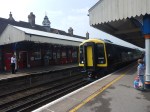
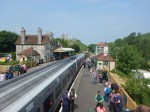
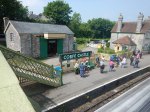
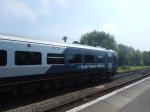
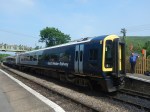
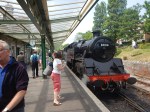
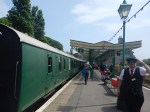
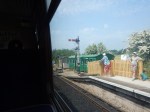
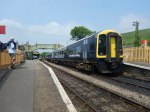
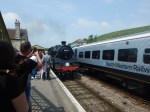
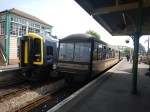
These pictures illustrate my trip.


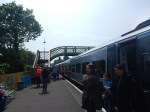
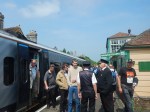
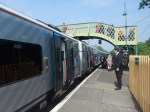
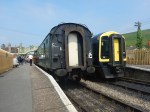

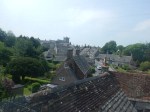
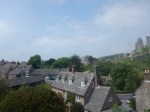
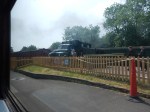





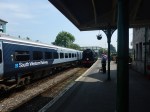
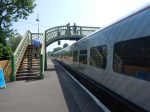
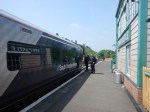
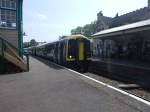

I have various observations.
Costs
I came down from London, so I had to pay for that ticket, but train tickets to Swanage from Wareham cost me five pounds for the South Western Railway leg and ten pounds for steam haulage.
Operations
Everything was very professional and there seemed to be a high-level of communication and good humour between the staff of South Western Railway and the volunteers of the Swanage Railway.
Swanage Railway were operating a steam-hauled shuttle along their line between Norden and Swanage stations and as the pictures show, both companies were able to run their own services, without interrupting the other.
Does Swanage Need A Year Round Train Service?
After my father retired, my parents went to live in Felixstowe.
It certainly didn’t work for me, as it was not the sort of place, a late teenager, could amuse himself, especially as all my friends were in London. As we hadn’t sold the house in London, I was usually to be found there.
I don’t know Swanage and I don’t know what it is like to live there!
But I do remember a short film on the BBC program Tonight in the early 1960s.
They were talking about long-distance commuting and they used as an example, a guy, who had moved his family to Swanage and was leaving home very early in the morning to go back to London for his work.
He was very happy with the arrangement, but the last shot of the film was after the reporter had asked his two teenage daughters what they thought of it all. Their faces said it all and I can remember my mother made an acerbic comment.
I wonder what a year round hourly service would do for Swanage?
Felixstowe has a year-round hourly rail service to Ipswich, but then Felixstowe is over twice as large as Swanage.
On the other hand, Felixstowe also has a fast dual-carriageway road connecting it to the rest of East Anglia.
Providing An Hourly Service To Swanage
Unlike many rail schemes aiming to create a new branch line, a lot of infrastructure is already in place.
Track
Yesterday, the following services were running.
- A roughly hourly steam service between Norden and Swanage stations, run by the Swanage Railway.
- A two-hourly service diesel service between Wareham and Corfe Castle stations, run by South Western Railway.
The track, which is a mixture of single and double track, seemed to cope well.
Interestingly, there is a mothballed oil terminal at Furzebrook, which was used to export oil from the large field at Wytch Farm. It is connected to the Swanage Railway between Norden station and the South Western Main Line.
As development and exploitation of oil fields is a very unpredictable process, I suspect that the Northern section of the Swanage railway is kept in very good condition by Network Rail, just in case Furzebrook has to reopen.
Norden Station
Norden station is the Northernmost station on the Swanage Railway.
This Google Map shows the station.
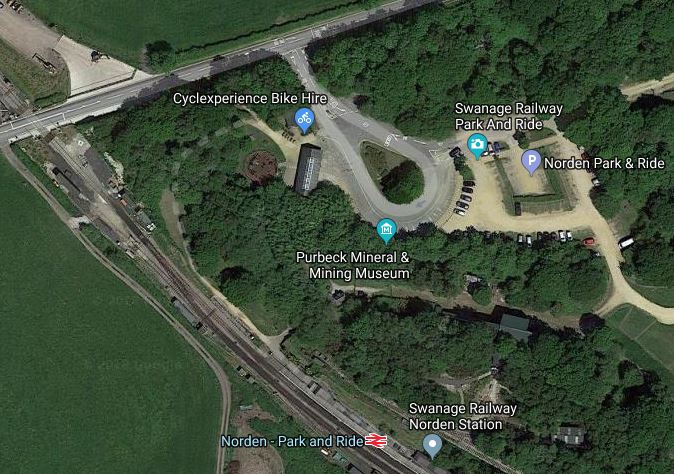
The map clearly shows the single platform, the Purbreck Mineral and Mining Museum and the Swanage Railway Park & Ride.
The Wikipedia entry for Norden station, says this about the car park.
A large car park, provided by Purbeck District Council, allows the station to function as a park & ride facility for the tourist centres of Corfe Castle and Swanage
Could this car park, also be used by local residents wanting to commute to or go shopping in Poole or Bournemouth?
Corfe Castle Station
Corfe Castle station is a well-built station with two platforms and a footbridge, that is as good if not better than many rural stations.
Harman’s Cross Station
Harman’s Cross station is a two platform station, without a footbridge.
It appears from the Google Map of the area, that new houses are being built in Harman’s Cross.
Swanage Station
Swanage station is the terminus station with two platforms.
As the pictures show, the platform used by the steam train is long and would certainly take an eighty metre long train.
Operating As A Single-Track Branch Line
I suspect that on days, when the heritage railway is not in operation, that the Swanage Railway could be used as a single-track branch line.
So perhaps, a diesel multiple unit could run a passenger shuttle along the branch. Operation would be little different to any of several diesel-operated branch lines in the UK.
Surely, if the CAA can allow Loganair to use Barra Airport, which is a beach on the island of the same name, then the ORR must be able to write a sensible rule book, to allow an hourly passenger service between Wareham and Swanage.
This picture shows Zwickau Zentrum station in the centre of the German town of Zwickau.
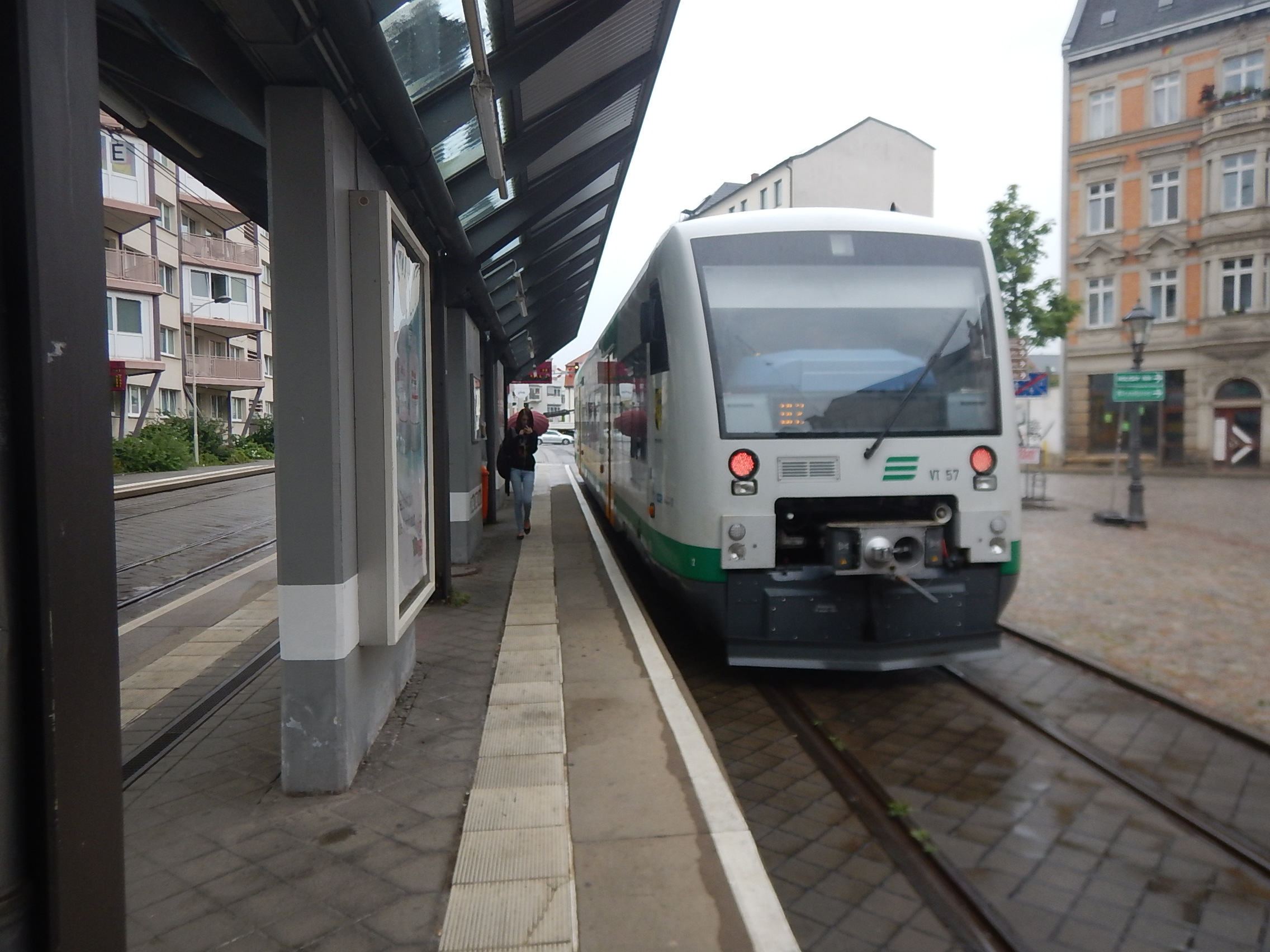
It is the simplest station, I’ve ever seen in a town centre. The diesel multiple unit appears to come into the city under the following rules.
- A sensible speed.
- Orange lights flashing.
- Two crew operation.
Effectively, the train service in Zwickau is run like a tram and even has an unusual three-rail track, that it shares with metre-gauge trams.
Note that as the Swanage Railway is a heritage railway, the speed limit is only 25 mph anyway.
As yesterday showed, South Western Railway and the Swanage Railway are able to operate a practical shared service on days, when the heritage railway is in operation.
Connecting To South Western Main Line Services
As was demonstrated yesterday by South Western Railway’s Class 159 train, operation between Corfe Castle and Wareham stations, is not the most difficult of operations.
Two things help.
- The South Western Main Line is not the busiest of routes through Wareham station.
- There is a cross-over to the West of the station.
These allowed the Class 159 train to use one of the through platforms to turnback.
Would this continue, if say the Swanage Railway were to run an hourly shuttle between Corfe Castle and Wareham stations?
Look at this Google Map of Wareham station.
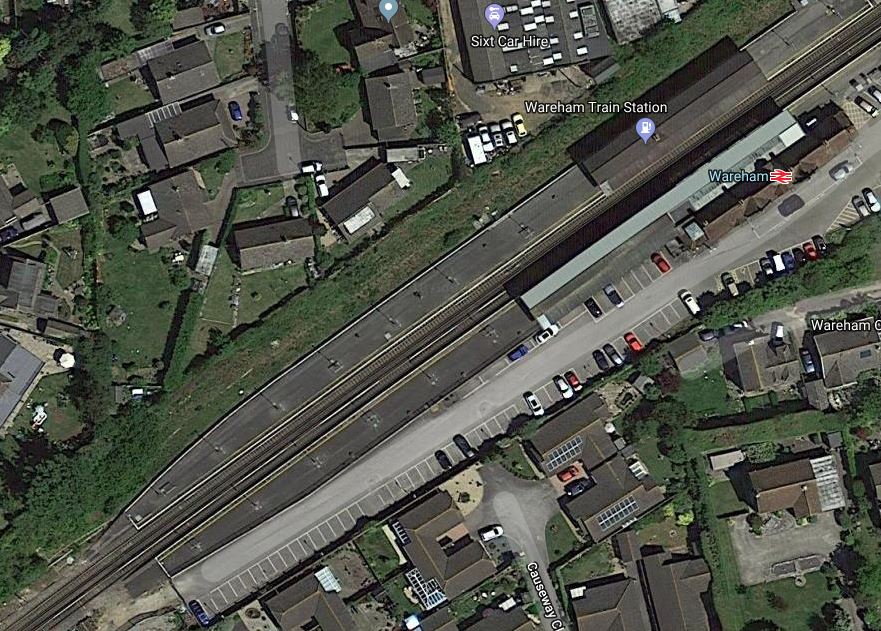
Is there space on the Northern side of the station to add a bay platform, to allow the shuttle to terminate in its own platform?
When I returned from Wareham to Waterloo, I just missed a train and I had to wait thirty minutes for the next train.
Looking at the Google Map of Poole station, there would appear to be a large amount of space around the station,
The Wikipedia entry for Poole station, also says this.
In 2004 proposals were drawn up for the current station buildings and footbridge to be replaced as part of redevelopment plans for the old goods yard. A hotel was to be built on the site of the current station building, however as of 2010 these plans have not progressed.
So would it be feasible at some time in the future to terminate a Swanage service in a bay platform in the much larger town of Poole?
There are certainly possibilities to use Poole or even Bournemouth stations as a terminus of a service to Swanage station, that would also increase the frequency on the South Western Main Line between Bournemouth and Weymouth.
How Long Would A Train Take To Go From Wareham To Corfe Castle And Back?
Looking at yesterday’s figures on Real Time Trains, the following times were achieved yesterday.
- Wareham to Corfe Castle – 21 minutes
- Corfe Castle to Wareham – 26 minutes
Yesterday, the trains were waiting for a long time at Corfe Castle station, to fit with their two-hourly timetable and that of the steam trains on the other track.
If you add in sensible turnback times at Wareham and Corfe Castle, I doubt that a round trip could be done in an hour, making it difficult to run an hourly shuttle between the two stations.
How Long Would A Train Take To Go From Wareham To Swanage And Back?
Using yesterday’s figures and the quoted times for steam trains between Corfe Castle and Swanage stations, we get the following times.
- Wareham to Corfe Castle – 21 minutes
- Corfe Castle to Swanage – 22 minutes
- Swanage to Corge Castle – 20 minutes
- Corfe Castle to Wareham – 26 minutes
Or a total of 89 minutes plus how long the turnround will be at Swanage station.
I have a feeling that timetabling an hourly service could be difficult.
What Rolling Stock Can Be Used?
If the trains travel for more than a few miles on the South Western Main Line, being able to use the third-rail electrification would be useful.
But they would also need to be self-powered on the Swanage Railway.
So perhaps, a bi-mode would be ideal.
As they have rather a heritage flavour, perhaps a Class 769 train would be ideal?
Conclusion
There is a lot of potential to improve services on the Swanage Railway.
I suspect that if South Western Railway and the Swanage Railway got into serious discussion, there will be a solution, that would be beneficial to both parties and all those who live and work in or visit Swanage and the Isle of Purbeck.
The Hydrogen Train Of The Future Is A Lot Like The Train Of Today
The title of this post, is the same as that of this article on engardget.
It is an article worth reading ass it gives details of the philosophy of the guy behind the concept; Dr. Jörg Nikutta.
A Reconnaissance To Market Harborough
This morning, I took trains between St. Pancras and Market Harborough stations, and then came back with a pit-stop at Wellingborough station.
These were my observations.
Electrification Between Bedford And Kettering/Corby
The electrification seems to be progressing, as these pictures show.

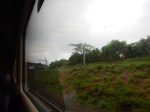
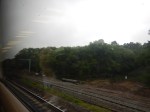
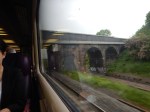
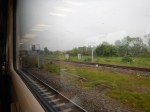

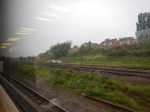

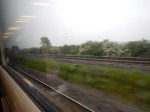
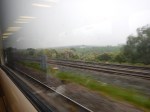


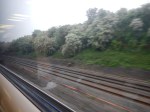


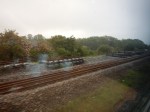
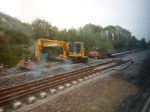
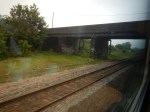
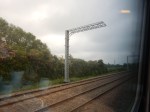
Note.
- Quite a few orange-capped piles have been installed.
- The gantries are going up.
- Extra tracks are being added.
One difference between this electrification project and others I have seen lately in the UK, is the aura of tidiness.
Electrifying From Glendon Junction To Market Harborough Station
One of the objectives of my reconnaissance was to see how much work needed to be done to the bridges between Glendon Junction and Market Harborough station, so that the overhead lines could be installed.
I counted nine bridges over the tracks and all seemed to offer sufficient clearance for freight trains and overhead wires.
It appeared that some bridges had been rebuilt and I suspect that Network Rail have completed their gauge clearance on this section of the Midland Main Line.
Line Speed From St. Pancras To Market Harborough
I chose to ride North in an InterCity 125, as having ridden in the cab of one of these iconic trains, I know a bit more about their capabilities.
What surprised me was how much of the journey was spent running at a speed in excess of 120 mph. There was one section where we were limited to about 90 mph, but I got the impression that Network Rail and their predecessors have created a high quality high speed line.
I would think it would be highly unlikely that by the time new bi-mode trains come into service in a few years time, that much of the route will be able to handle 125 mph running.
The train was almost at this speed between Glendon Junction and Market Harborough, so when the track through the station is straightened, it looks to me that journey times will be reduced.
Market Harborough Station
The station is a typical smaller main line station.
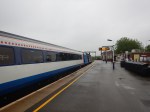

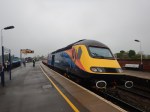
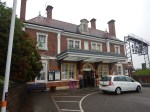


Note.
- Access to the London-bound platform is not step-free.
- Shelters are rather basic.
- The lines through the station will be straightened soon, to increase line speed.
Overall, it is a station with a good building, that should be improved.
Surely, if the tracks are being remodelled, then the foundations for electrification gantries should be installed.
Wellingborough Station
On the way back, I stopped off at Wellingborough station.
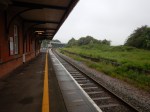
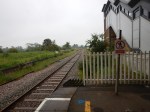
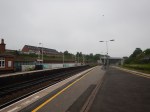
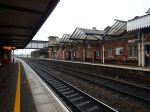

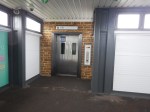
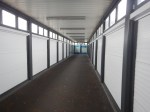
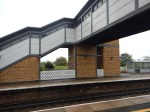
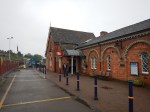
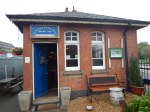
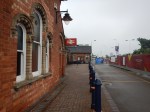
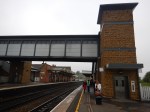
Note.
- Wellingborough station is being improved.
- All trains seem to stop at the two main platform 1 and 2.
- The bay platform 3 seems to have been rebuilt as a through platform to serve the new track being created through the station.
- There is rather a nice real ale and cider bar on the entrance side of the station.
- The station has a footbridge with lifts, which is better designed than many.
All of the improvements are to support the new housing being built around the station.
This Google Map shows the area around the station.
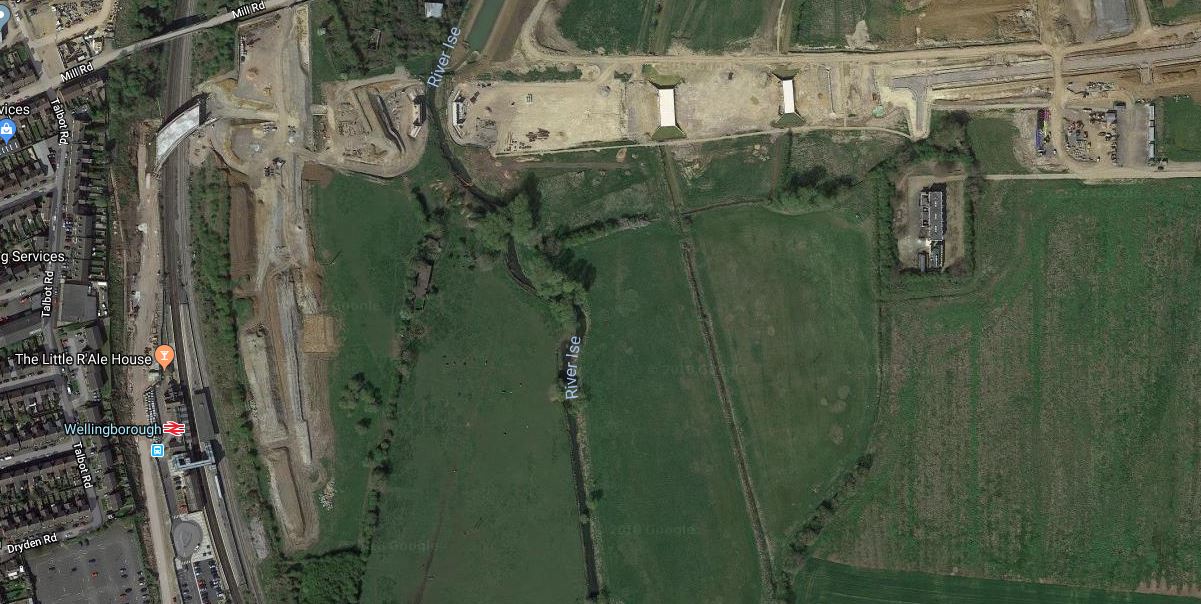
Note the new road crossing the railway to the North of the station.
It certainly looks like the upgraded station will be needed.
Views Of Drivers
I travelled back to London, with a group of drivers.
Two specific points emerged.
Electrification at Leicester could be difficult, as there are sewers under the track, which might mean the whole station and bridges would need to be substantially rebuilt.
South of Bedford, the Thameslink’s new Class 700 trains get in the way as they are too slow at 100 mph.
It is interesting to note the following.
- Class 387 trains working the East Coast Main Line and Great Western Main Line are 110 mph trains.
- Class 350 trains working the West Coast Main Line are 110 mph trains.
Are the Class 700 trains reducing the capcity of the Midland Main Line?
Novel Solution Cuts Cardiff Bridge Wiring Cost
The title of this post is the same as an article in the May 2018 Edition of Modern Railways.
This is the first paragraph.
Network Rail has applied an insulating coating to the underside of a bridge in Cardiff to protect against flashover from the future Overhead Line Equipment (OLE). It also intends to fit surge arresters at the bridge to prevent any sudden spikes in voltage overcoming the protection provided by the coating.
Network Rail reckon that the solution will save about £10million on this bridge alone, as it avoids the need for an expensive rebuild of the bridge.
Could wider applications of solutions like this, reduce the cost of electrification?
MML Wires Could Reach Market Harborough
The title of this post is the same as that of an article in the June 2018 Edition of Modern Railways.
It appears that Network Rail have a problem.
- Electrification of the Midland Main Line (MML) is to run as far as Kettering and Corby stations.
- The power feed is to be located at Braybrooke, which is just South of Market Harborough station.
So Network Rail are now looking for a twelve mile long extension lead.
A Network Rail spokesman, says they are looking at various options, including an underground cable or extending the Overhead Line Equipment.
Extending The Electrification To Market Harborough
There must be a scenario, where extending the electrification as far as Market Harborough, is a feasible and cost-effective engineering solution.
Consider, the MML between Market Harborough station and Glendon Junction, where the Corby Branch Line joins.
- The distance is less than twelve miles.
- There are no stations, which can be a pain to electrify.
- The track through Market Harborough station is being re-aligned, so the station should be easy to electrify.
- Glendon Junction is the only junction.
- The electrification will reach as far as Glendon Junction from St. Pancras.
- The route is is a double-track railway, which appears to be over fairly level terrain.
- There appears to be wide margins on either side of the railway.
- There are about half-a-dozen bridges over the railway, some of which could have been fairly recently built or rebuilt.
I doubt, it would be one of the most difficult of electrification projects.
I also suspect, that after their electrification fiascoes of the last few years, Network Rail might have learned enough to do this at an affordable cost.
For example, if the bridges are a problem, they might be able to use the technique I described in Novel Solution Cuts Cardiff Bridge Wiring Cost.
East Midlands Trains Services To And From London
If you look at the current long distance service of East Midlands Trains, there are the following four services between St. Pancras and Derby, Nottingham and Sheffield stations.
- Nottingham (stopping) – Stops at Luton Airport Parkway, Bedford, Wellingborough, Kettering, Market Harborough, Leicester, Loughborough and Beeston.
- Sheffield (semi-fast) – Stops at Leicester, Loughborough, East Midlands Parkway, Long Eaton, Derby and Chesterfield
- Nottingham (fast) – Stops at Market Harborough, Leicester and East Midlands Parkway
- Sheffield (fast) – Stops at Leicester, Derby and Chesterfield.
Note.
- Market Harborough, Leicester, Loughborough, East Midlands Psrkway, Derby, Nottingham, Chesterfield and Sheffield stations, all get at least two trains per hour (tph) to and from London.
- Include the Corby service and Bedford, Wellingborough and Kettering have two tph to and from London.
- All trains stop at Leicester station, which gives the city four tph to and from London.
- Market Harborough to Leicester is only sixteen miles.
Bi-Mode Trains
From 2021, it is expected that these services will be run by 125 mph bi-mode trains.
So how will electrification help these bi-mode trains?
Class 802 Trains
Suppose the services were to be run by a Class 802 train, which can do at least 125 mph using electric power.
An article on Christian Wolmar’s web site, is entitled Bombardier’s Survival Was The Right Kind Of Politics.
This is said.
The Hitachi bi-mode trains can only go 110 mph when using diesel.
The article was written a year ago, so this figure may be higher now!
So a Hitachi bi-mode will be able to go to the end of the electrification at either Glendon Junction or Market Harborough, as fast as the track allows and then at 110 mph on diesel.
Currently, services between St. Pancras and London take around seventy to eighty minutes.
What difference would the planned electrification to Glendon Junction make to this time?
Consider.
- Electrification to Glendon Junction or Market Harborough station could save more time, through faster running.
- Electrification to Market Harborough would mean only sixteen miles to Leicester would be on diesel.
- Electrification at Market Harborough station would cut time for those services stopping at the station.
- Track improvement could allow more 125 mph running using electric power.
- Modern in-cab digital signalling might allow sections of even faster running under electric power.
- Modern trains should save time at stations.
I’m certain that the right combination of improvements to track, stations and trains, will mean all services between St. Pancras and Leicester would be around an hour with Class 802 trains.
Bombardier’s Proposed 125 mph Aventra Bi-Mode
Bmbardier have announced a 125 mph bi-mode Aventra, which I wrote about in Bombardier Bi-Mode Aventra To Feature Battery Power.
I said this about the train.
- Development has already started.
- Battery power could be used for Last-Mile applications.
- The bi-mode would have a maximum speed of 125 mph under both electric and diesel power.
- Bombardier’s spokesman said that the ambience will be better, than other bi-modes.
This train with its faster speed on diesel would certainly achieve a time between St. Pancras and Leicester of under an hour.
I also think that this time will be achieved, whether or not, the wires are extended to Market Harborough.
Improving The Track
Many politicians, union leaders and environmentalists, see electrification as the main answer to better train services.
But before you can electrify a route, the track must be in a state, so that trains can run at a high speed, with long gentle curves and as few junctions as possible.
In the Wikipedia entry for Market Harborough station, there is a section called Future. This is said.
Market Harborough station is located on a large curve on the Midland Main Line, as a result of this line speeds through the station have always been relatively slow, at around 60 mph (100 km/h). The track layout is set to change significantly over the next couple of years as Network Rail engineers set about straightening the line, as part of their overall plan to increase overall line speeds.
How many other sections between Glendon Junction and Leicester could benefit from this type of improvement?
Should Market Harborough To Leicester Be Electrified?
As Market Harborough and Leicester stations are only about sixteen miles apart, surely it would be sensible to electrify this section, if Glendon Junction to Market Harborough is electrified?
I have flown my helicopter from Market Harborough to Leicester and the whole route has the following characteristics.
- Double-track
- Fairly level
- Wide margins.
- Market Harborough is the only station.
- There are junctions South of Leicester.
It would be fairly easy to electrify, but for one thing.
Although, there are only half-a-dozen bridges South of Market Harborough, it would appear there to be up to twenty bridges on the Northern section, some of which look like they would need serious work to get the wires underneath.
I have a feeling that electrifying between Market Harborough and Leicester would cause massive disruption to road traffic, if some bridges needed to be demolished and rebuilt.
A bi-mode travelling at upwards of 110 mph would probably achieve the same times on this section, without the disruption of installing the electrification.
Could Discontinuous Electrification Be Used Between Market Harborough And Leicester?
This is an additional section, that has been added after the announcement of March 5th 2019, that stated that the Midland Main Line would be electrified as far as Market Harborough.
Discontinuous electrification is to be used on the South Wales Metro and the difficult section, South of Leicester, which has lots of road bridges, might be a section, where the technique could be used to advantage.
Conclusion
I think that electrification between Glendon Junction and Market Harborough station will happen.
- The section wouldn’t be the most difficult to electrify.
- As there needs to be an electrical connection between Market Harborough and Glendon Junction, electrification of that section of the railway, might be a cost-effective solution to provide the connection.
- Electrification of Market Harborough station would cut the time to make a call at the station.
- It would offer enough time reduction on the Midland Main Line, that to give Leicester a four tph service to and from St. Pancras, with a journey time of under an hour, using existing train designs.
However, electrifying from Market Harborough to Leicester would be more difficult and I can’t see it offering any substantial benefits over a modern bi-mode train.
Some Class 700 Trains Now Have Tables
I took this picture yesterday, on a Class 700 train.
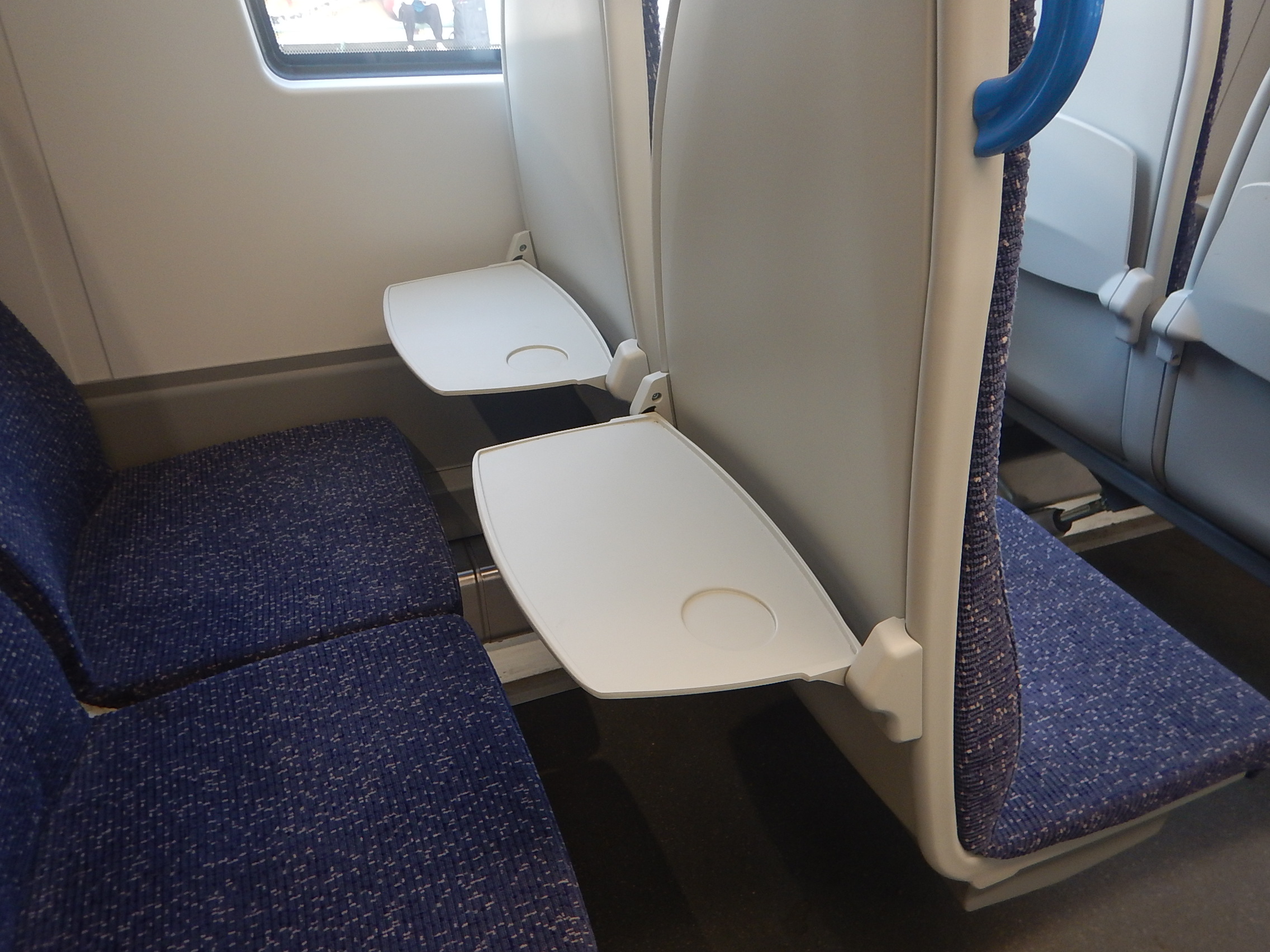
But they still have hard seats, no wi-fi and no power sockets.
The New London Rail Maps Are Out, And They Are Horrible
The title of this post, is the same as that on this article from CityMetric.
I haven’t seen the maps yet, so I won’t comment in detail.
But read the article!
Could it be that London’s rail maps are now getting so complicated, there needs to be some very deep thought?
London Tram Enhancements Included In Growth Fund
The title of this post is the same as that of this article in Metro Report International.
This is the first two paragraphs.
Transport for London is to finance around one-third of the cost of double-tracking the Elmers End branch of the tram network, Mayor of London Sadiq Khan announced on May 21.
TfL is to provide £3·3m from its Growth Fund towards the estimated £9m estimated project cost. In addition to double-tracking the short branch, this would add a second tram platform to the Elmers End terminus. TfL says that this would enable service improvements and ‘address reliability issues’ on the network.
This map from carto.metro.free.fr, shows the track layout between the Arena tram stop and Elmers End station.
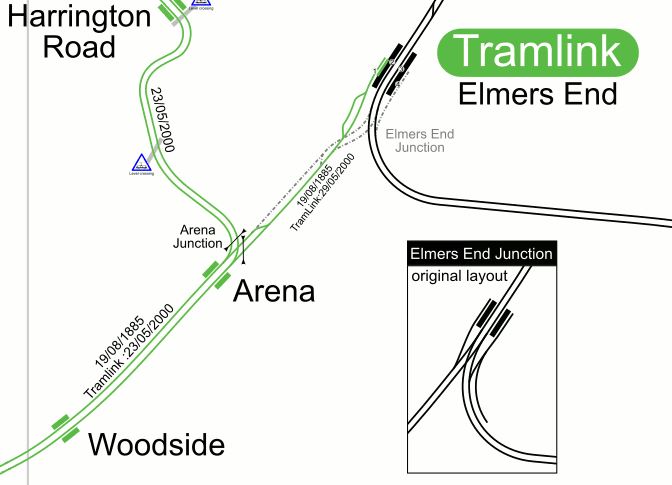
My thoughts on the various works follow.
Double-Tracking
From the map, it doesn’t appear that a very large amount of track needs to be doubled.
This Google Map shows some of the single track section of the route.

Note the passing loop to the South of Elmers End is visible, at the top of the map.
It would also appear that there is space to add the second track, which used to exist when the tram line was the Addiscombe Line.
These pictures, which were taken from a tram, show the section of line in the map.


I suspect that a second track linking the double track at Arena to the passing loop South of Elmers End can be created.
Electrification Or Battery
Battery trams will soon be running on many tram networks around the world, including Birmingham in the UK.
Tramlink has a problem, in that they have two types of trams.
Because of their age, I think the CR4000 trams might be difficult to be fitted with batteries.
But Munich already has Variobahn trams fitted with batteries.
If battery power were needed just on the route to Elmers End, I think it would not be an economic decision to fit all trams with batteries.
Obviously, if in the future, more trams were to be ordered, there may be other routes, where batteries are ideal.
I don’t think, there will be any issues about putting up more wires.
Being able to use the current trams on the new track to Elmers End would be very convenient
For these and other reasons, I suspect this line will be electrified.
The New Elmers End Platform
Elmers End is the only one of the four Tramlink termini with a single platform, as Beckenham Junction, New Addington and Wimbledon all have two platforms.
So a second platform at Elmers End would surely make running a service easier, when things go a bit awry.
The need was illustrated as my tram left Elmers End. We stopped for a couple of minutes in the passing loop just outside the station to let another tram enter the platform.
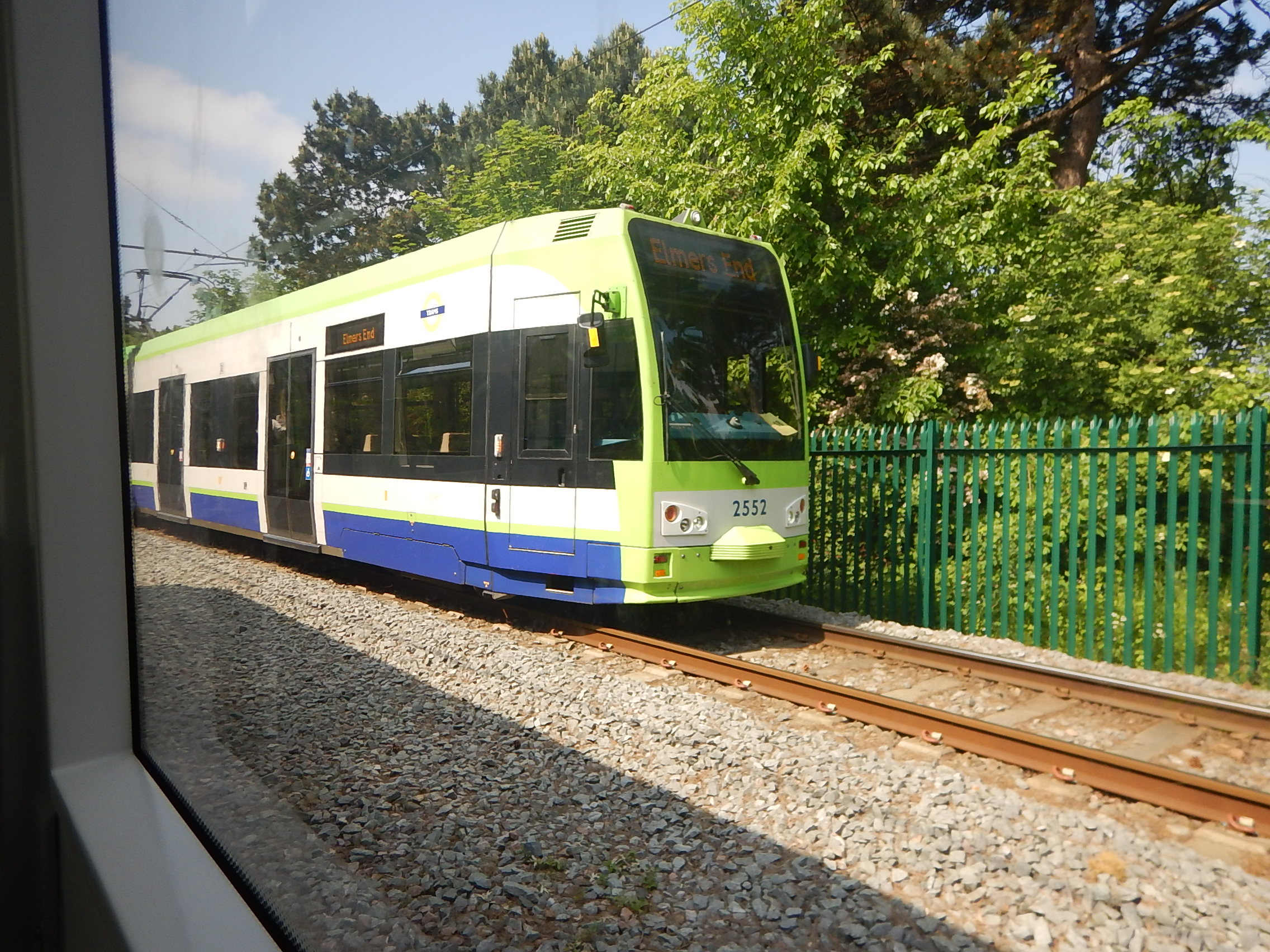
After the proposed works, the two trams would have passed on the double-track to the East of the Arena tram stop.
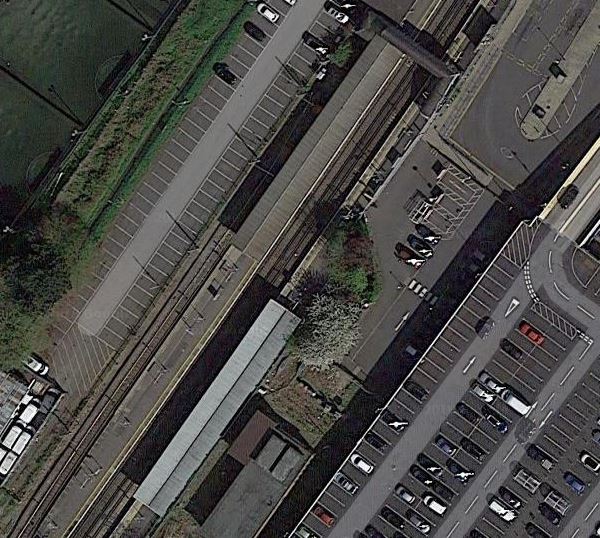
This Google Map shows the platforms at Elmers End station.
These pictures show the station and in particular, the current single tram platform.

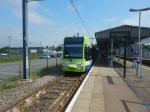


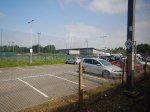
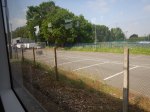
Note.
- Platform level is such, that platform-to-tram is step-free.
- The current platform has a cross-platform interchange with the Northbound Platform 2 on the Hayes Line.
- It would appear, that there is space alongside for a second platform, although it might mean the loss of some car parking spaces.
- Some equipment might need to be moved.
- The footbridge could probably need to be made step-free.
- There is space to add the gantries for the electrification.
The original Addiscombe Line had a platform on the other side of the tracks as shown in the map earlier in this post.
I doubt this old layout will be used, as a flat junction would be rather difficult to operate and a flyover would be expensive.
Could we see a staggered platform layout, so that both platforms are accessible from Platform 2?
This map from carto.metro.free.fr shows the track arrangement at New Addington.
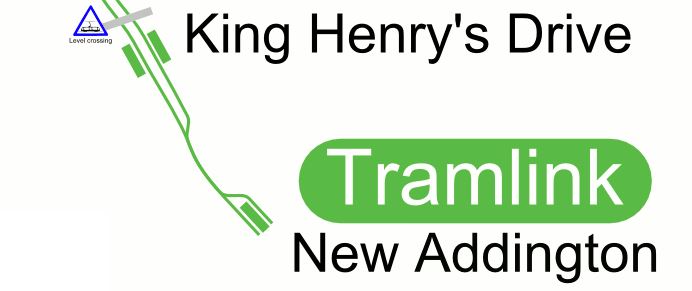
The line appears to be singled a convenient distance from the terminus and then it splits again just outside the platforms.
Beckenham Junction and Wimbledon, both use a similar track layout.
If a layout similar to this were to be applied at Elmers End, it would have the collateral benefit of reducing the current three sets of points to two.
A single track, would also be easy to squeeze through the gap into Elmers End, provided there was space for the points before the platforms.
I believe this layout, would work with staggered platforms.
Would The Elmers End Platforms Be Made Longer?
Wikipedia talks about expanding Tramlink. Under Phase C of Trams 2030, this is said.
Furthermore, if extra capacity is required, tram stops could be lengthened to serve either longer trams or two trams coupled together on services between Wimbledon and Beckenham Junction or Elmers End.
I think that Elmers End will be future-proofed.
An Increase In Frequency To Elmers End
The Wikipedia entry for Elmers End station, says this about current tram frequencies under Services.
Trams depart from the station every 12 minutes; this service falls to four trams per hour during the early morning and evenings. Each tram travels towards Croydon town centre; trams on Route 1 continue to West Croydon tram stop, before travelling back as Route 2 to Beckenham Junction, while trams on Route 4 continue to Wimbledon.
A second platform would surely allow the five trams per hour frequency to be doubled to ten trams per hour, if this was thought necessary.
These trams would either be turned in Croydon or continue to Wimbledon.
Some might use a proposed diverting loop in Dingwall Road, by East Croydon station.
More Trams
If more trams are needed, I’m sure Stadler would oblige with a few new Variobahn trams.
Future Expansion
I also think, that because after the Elmers End scheme is completed, all the Tramlink termini will have two platforms, this will make it much easier to expand the system.
Conclusion
It seems a relatively simple scheme with no serious construction problems.
 The Anonymous Widower