Nineteen Tri-Mode Flex Class 769s For GWR
The title of this post is the same as that of this article on Rail Magazine.
This brings the number of Class 319 trains to be converted to Class 769 trains, to thirty five.
- These trains for Great Western Railway (GWR) will be tri-mode trains and able to operate on 25 KVAC overhead and 750 VDC third rail electrification and diesel power.
- The Rail Magazine article, says they will support the introduction of refurbished Class 387 trains on Heathrow Express and on services from Reading to Gatwick and Oxford.
- The trains would release diesel Class 165 trains and Class 166 trains to be refurbished and improve services in the Bristol area.
Although, there appears to have been so sighting of a Class 769 train on the UK network, the trains must have shown up well in testing, as no-one would order nineteen trains, that didn’t meet the specification.
According to the Future section in the Wikipedia entry for the Class 319 trains, there are forty-five of the trains sitting in sidings off lease.
So there won’t be a shortage of trains to modify.
Good Design Always Wins!
I do find this story rather heartwarming.
When the Advanced Passenger Train project fell well behind schedule, Terry Miller and his team at Derby, came up with a short-term proposal for a High Speed Diesel Train, which when launched in 1975 was known as the InterCity 125.
Forty years later most of these iconic trains are still in service
But that wasn’t the end of the story.
The design of the Mark 3 carriages of the InterCity 125, was used by British Rail to build large numbers of less iconic electric and diesel multiple units, of which the Class 319 train was just one of seventeen classes of train based on the Mark 3.
The legacy of Terry Miller and his team is echoing down the years.
The Class 769 train is one of the ultimate echos.
How Will GWR Deploy The Class 769 Trains?
Nineteen trains is a substantial order and train companies don’t buy trains to stick them in sidings, so how will they be used?
Before answering the question, I’ll put in a few facts.
- According to Porterbrook’s brochure, Class 387 trains are four twenty metre coaches.
- According to Wikipedia, Class 319 trains are four twenty metre coaches.
- Both trains can be configured to work on 25 KVAC overhead of 750 VDC third-rail electrification.
- Porterbrook’s brochure says that Class 387 trains have a lot of modern features like, information systems for driver and passengers, air conditioning and passenger counting. The brochure also says that Class 387 trains will be ERTMS-ready.
I wouldn’t be surprised to see the Class 769 trains given a quality refurbishment, very much in excess of that Northern have given to their Class 319 trains.
Remember, that GWR must have massive experience about improving Mark 3 carriages from forty years of work with InterCity 125 trains.
GWR were also behind the superb refurbishment of a Class 150 train, that I wrote about in What Train Is This?. So they have form!
The quality must be in excess of that of the Class 165 and Class 166 trains, that they will often replace. And those two classes are not crap, just diesel, too slow for some routes and often lacking in capacity.
In Could A Three-Car Class 769 Train Be Created?, I showed that if a three-car Class 769 train is needed, that this is possible. But it would lose about sixty seats and the universal access toilet, if it follows a similar route as converting a four-car Class 321 train to a three-car Class 320 train.
Covering For Class 387 Trains Going To Heathrow Express
This page on the First Group web site, is the original press release about the procurement.
This is said.
Initially, the fleet will support the introduction of refreshed trains on Heathrow Express services, but will be predominantly be used on routes between Reading and Gatwick, and Reading and Oxford, where the train’s tri-mode can be used to its fullest. However, the tri-mode nature of the train will give GWR maximum flexibility to use them in other areas of the network should they be required.
The purchase of nineteen trains will surely be enough to cater for the loss of Class 387 units to Heathrow Express duties to replace the Class 332 trains.
I wrote about this in GWR Announces Plans To Replace Class 332s As It Takes Over Heathrow Express Service.
I estimated that if each Heathrow Express train eventually becomes two Class 387 trains working together as opposed to the current pair of Class 332 trains, that fourteen Class 387 trains will be needed for Heathrow Express.
Consider.
- GWR have forty-five Class 387 trains in their fleet.
- If Heathrow Express needed to be be worked by twelve-car trains, this would increase the number needed to twenty-one. That would still leave GWR with twenty-four trains for other services.
- There are plans for Southern and Western access to Heathrow, which could mean a need for more Class 387 trains for Heathrow Express .
- c2c could release their six Class 387 trains in the early 2020s, when their new Aventras arrive.
- Great Northern might be persuaded to release some of their twenty-five Class 387 trains.
It certainly looks, that all possibilities are covered for Heathrow, who are probably paying a substantial fee to GWR to run the service.
Reading And Oxford
The First Group press release mentions that Class 769 trains could be running between Reading and Oxford stations.
So does this mean that the current two trains per hour (tph) service between Paddington and Didcot Parkway station will be extended to Oxford and run by Class 769 trains?
Consider.
- A new South-facing bay platform is planned at Oxford station, that could be sized for a trio of Class 769 trains.
- All services between Paddington and Oxford will become electric or bi-mode.
- Class 387 and Class 769 trains are based on twenty metres carriages, so there should be no platform issues.
- A number of Class 387 trains would be released for modification.
- Several Class 165 and Class 166 trains will be released on other parts of the GWR network.
The only problem I see is that some passengers may complain about losing the Class 387 trains, with their comfortable seats and tables..
GWR must get the interior of the Class 769 trains spot-on!
Reading And Bedwyn
This is another route, where Class 769 trains could be used to advantage.
The turnback siding at Bedwyn station would need modification to incoporate a bi-mode Class 800 train, but a Class 769 train would fit the existing infrastructure.
Reading And Gatwick
If ever the Victorians designed a route that would be ideal for a tri-mode train it is GWR’s service between Reading and Gatwick Airport.
- It has sections with 750 VDC third-rail electrification.
- At Reading, it could be extended using the 25 KVAC electrification along the Great Western Main Line to perhaps Oxford.
- Currently, the service is run by Class 165 trains.
Could a way be found to take the trains into Heathrow as an alternative Western terminal, when the Southern and Western rail routes to the Airport are built?
This route has needed a bi-mode train for decades.
Cardiff to The South Coast via Bristol, Bath, Salisburu and Southampton
This over three hour route is currently run by Class 156 trains.
Consider.
- This route has significant overcrowding according to Wikipedia and my personal experience
- Cardiff to Bath should eventually be electrified with 25 KVAC overhead wires.
- Brighton to Southampton is electrified with 750 VDC third rail.
- GWR run this route and have Class 800 trains.
- Running at over 100 mph is only possible in a few places.
- Dual voltage Class 800 trains must be possible, but at five-cars, they may be too long for some stations.
To run this route efficiently, GWR would need an appropriate number of dual voltage bi-mode trains.
GWR will soon have two trains that could handle the route; Class 800 trains or Class 769 trains.
I suspect that the Class 769 train would be most suitable, especially as at busy times like the summer, they could run eight-car trains.
Transwilts
Transwilts is a Community-run rail service in Wiltshire. This page on the Transwilts web site, shows the rail routes in their area.
Currently, most local services seem to be run by two-car Class 150 and one-car Class 153 trains, so when passenger numbers increase, larger trains including Class 679 trains may be used.
I was in this area once a few days before the Glastonbury Festival. You couldn’t have squeezed ia chihuahua onto the train!
Slough And Windsor And Eton Central
Class 769 trains could work this short branch line. But they might be need to use a three-car version.
Henlry Branch Line
The Henley Branch Line has the following characteristics.
- The branch is not electrified.
- The branch is only single track.
- There is a single-track bridge over the Thames.
- Most services are shuttles between Henley-on-Thames and Twyford stations.
- In the Peak and during the Henley Regatta direct trains operate to and from Paddington.
- Crossrail will call at Twyford with a frequency of four tph between London and Reading.
I have just flown my virtual helicopter along the line and it looks like there is insufficient space to create a complete double track railway, that could work at a very high frequency.
But there is space to add a passing loop or loops, that would allow a four tph frequency on the branch to match Crossrail.
Class 769 trains would be able to work the updated branch using their onboard diesel generators.
- Modern signalling would probably be needed to be installed on the branch, as it will certainly be on the trains, as they work between Paddington and Reading.
- Selective door opening or platform extensions will be needed at intermediate stations, so that two Class 769 trains working as an eight-car train could use the branch.
- Trains could either run as shuttles or direct to Paddington.
In my view, there is a simple solution in there, which is much better than mine.
But the residents of and visitors to Henley will get the quality service they desire.
- Comfortable, air-cooled trains with wi-fi.
- Four tph with a change at Twyford to Crossrail.
- Direct electric trains in the Peak and during the Henley Regatta.
Maidenhead And Marlow
The Marlow Branch Line must be a particular problem for GWR.
- The line is single track.
- There is no electrification.
- The one tph shuttle trains between Marlow and Maidenhead take around 20-25 minutes, with a reverse at Bourne End station.
This extract from the Wikipedia entry for Bourne End station described the Services.
Bourne End is a terminus but effectively acts as a through station, with the driver having to change ends to continue to the next station. During peak hours service frequency is increased by having two trains work the line, each using Bourne End as the terminus: one runs Marlow – Bourne End and one Maidenhead – Bourne End, with passengers changing trains at Bourne End. Four trains per weekday operate between Bourne End and Paddington in the morning peak and coming back in the evening peak.
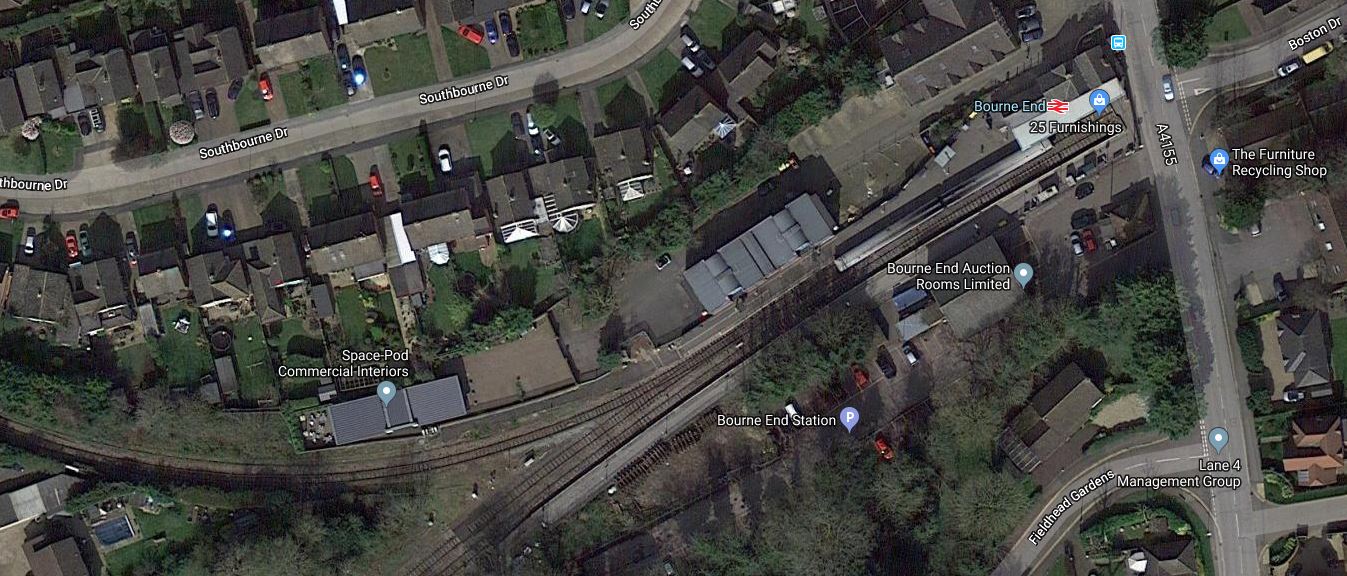
This Google Map illustrates the problem at Bourne End station.
Note.
- The line to Marlow curves out of the Western side of the map.
- The double-track to Maidenhead goes in a South-Westerly direction out of the Southern side of the map.
- The Class 165 or Class 166 train in Platform 1 of the station is formed of two twenty-three metre carriages, so it’s forty-six metres long.
- Platform 1, is connected to both Marlow and Maidenhead, whereas Platform 2, is only connected to Maidenhead.
- A four-car Class 769 train is eighty metres long, with a three-car Class 769 at just sixty metres.
Just looking at the geography, I have my doubts that the existing track and platform layout at Bourne End could handle the reversing of a four-car Class 769 train. It’s might be too long to clear the junction, so would be unable to reverse and take the other route.
But I suspect with a bit of innovation, this might be possible.
Track realignment is the obvious possibility.
The other possibility would be to use a three-car Class 769 train, which is just fourteen metres longer than the current trains.
Four-car Class 769 trains could also be used for a direct service between Bourne End and Paddington in the Peak.
Greenford Branch Line
In Could Three-Car Aventras Run Services On The Greenford Branch?, I tried to answer the question in the title.
This was my conclusion.
Three-car Aventras could provide a good service on the Greenford Branch Line, but there are issues and it may be more complicated than anyone thinks to run a service, that is acceptable to passengers.
I was assuming three-car Aventras with batteries, but three-car Class 769 trains, which carry much more energy in their diesel tanks, might do it.
Conclusion
Nineteen Class 769 trains will find a lot of work to do.
I also feel that three-car trains will also be needed for routes like the Green and Marlow branches.
Report: Gravity-Based Energy Storage Could Prove Cheaper Than Batteries
The title of this post, is the same as this article on Business Green.
This is said.
Storing energy by suspending weights in disused mine shafts could be cheaper than batteries for balancing the grid, new research has found.
According to a report by analysts at Imperial College London and seen by BusinessGreen, gravity-fed energy storage systems can provide frequency response at a cost cheaper than most other storage solutions.
This was the conclusions of the Imperial College report.
According to the paper, gravity-fed storage providing frequency response costs $141 per kW, compared to $154 for a lithium-ion battery, $187 for lead acid batteries and $312 for flywheel.
Despite its high upfront cost, the paper argued that unlike battery-based storage systems, gravity-fed solutions have a long lifespan of more than 50 years and aren’t subject to degradation. This means they could cycle several times a day – allowing them to ‘stack revenues’ from different sources.
I always puzzle why this idea hasn’t been seriously tried before.
Work Starts On £225m Luton Airport Automated People-Mover
The title of this post is the same as that of this article on Global Rail News.
This is said about the contractors.
A VolkerFitzpatrick-Kier joint venture is the project’s civil works contractor and Doppelmayr Cable Car UK is supplying the APM system.
Note that Doppelmayr Cable Car built the Emirates Air-Line and the AirRail Link at Birmingham Airport.
This video shows the proposed system at Luton Airport.
It appears to be very similar to the Birmingham system.
This Google Map shows the position of the terminal at Luton Airport Parkway station.

The terminal is in Bartlett Square, which is indicated by the red arrow in the top right corner.
My initial thought, is that it could be a long walk for some.
Passenger Crowding On Platform 14 At Manchester Piccadilly Station
After changing trains at Salford Crescent station, I arrived on Platform 13 at Manchester Piccadilly station.
Everybody says the two island platforms need more capacity and another two platforms.
This picture shows a train in Platform 14.
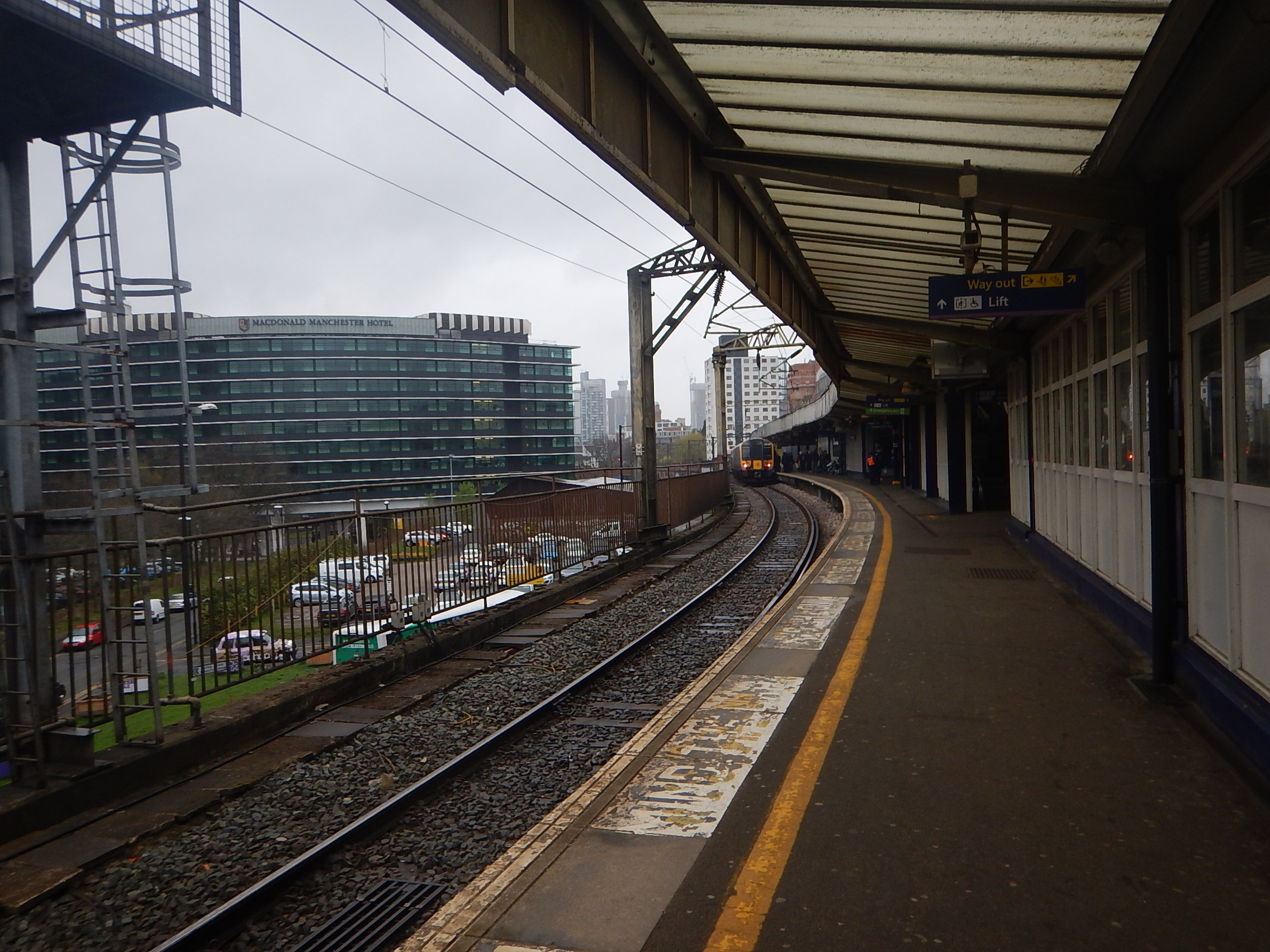
Note all the passengers alongside the train at the bottom of the stairs. Many of whom are waiting for later trains.
There are also few passengers waiting on the platform.
Consider.
I am writing this at eight in the morning and there are seventeen trains in total calling at Platforms 13 and 14, in the next hour.
- As one train starts from Platform 13, that is just nine trains per hour (tph) on each platform.
- The two platform station at Canada Water on the London Overground handles sixteen tph and in 2016-17, around 25 million passengers used the station.
- By comparison Manchester Piccadilly station handles around twenty-seven million passengers on fourteen platforms.
Because of the numbers of trains and passengers involved, I believe strongly that a rebuild of Platforms 13 and 14 could raise the numbers to those currentl achieved at Canada Water.
So what are the differences between Platform 13 and 14 ar Manchester Piccadilly and Canada Water?
- Both were originally built in the Victorian era.
- Both have been improved since 2000.
- The Manchester Platforms have a lift, two staircases and an up escalator, whereas each platform at Canada Water has a lift, and at least one of both a staircase and an escalator.
- Access at the Manchester Platform is all at one end, whereas access at Canada Water is to the centre of the platforms, where there is a wide lobby set back from the platform.
- The Manchester Platforms are narrower, than those at Canada Water.
- Canada Water has the advantages that it is only served by Class 378 trains and there is level access between platform and all trains.
- Canada Water is a well-designed light and airy below ground station, whereas the Manchester Platforms have all the dtyle and charm of a Victorian toilet block.
So what would I do to Platform 13 and 14 at Manchester Piccadilly?
- If all trains were at least four carriages, this might encourage people to spread out, instead of hanging about at the bottom of the main stairs.
- If platforms could be released in the main section of Manchester Piccadilly station, by virtue of the Ordsall , this might help.
- Increase the width of the platforms.
- Add more escalators.
- Put an enlarged waiting room on top of the current platforms, with quality information, so passengers can wait in the warm, with perhaps a cup of coffee.
In addition, the ultimate solution would be to built a long footbridge to connect the Southern end of all platforms.
It would be wide
Each pair of platforms would have lift and escalator access to the footbridge.
- It could have a lift to street level at both ends.
- I believe that this could be built, without disrupting the current traffic through the station.
Hopefully, this will all be sorted, when the HS2 station is built.
If something like it is not built, it will be a very long walk, between the HS2 platforms and Platforms 13 and 14.
No Wires At Bolton Station – 17th April 2018
These pictures show the state of the electrification at Bolton station.
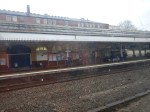
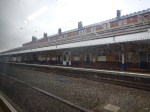
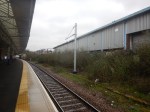

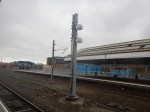
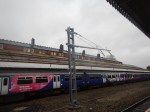
Little seems to have happened since my last visit on November 17th last year.
Although it does seem that the new Manchester-facing bay platform is complete except for the electrification.
I also saw no electrification between Bolton and Salford Crescent stations.
If I reckoned that the progress of the electrification on the Gospel Oak to Barking Line was slow, this beats it by a country mile!
No Wires At Salford Crescent Station – 17th April 2018
These pictures show the state of the electrification at Salford Crescent station.
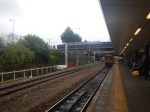
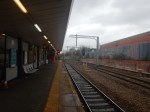
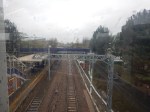
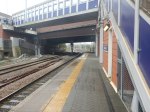
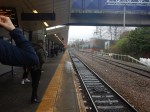
Note that there were no overhead wires through the station and also on the line to Salford Central and Manchester Victoria station. There still appears to be a lot of work to do.
Under Improvements the Wikipedia entry for the station says this.
In 2007, Network Rail recognised that Salford Crescent could not cope with existing passenger levels, leading to platform overcrowding. It suggested expansion of the station with extra platforms, greater use of it as an interchange and use as a terminus for services from east of Manchester. It also raised the possibility of moving the station.
In 2012, improvement work started at the station, including platform extensions, a new rain canopy and the relocation of the ticket office to street level. The works were completed in October 2013 and officially opened by Mayor of Salford, Ian Stewart.
This Google Map shows the station.
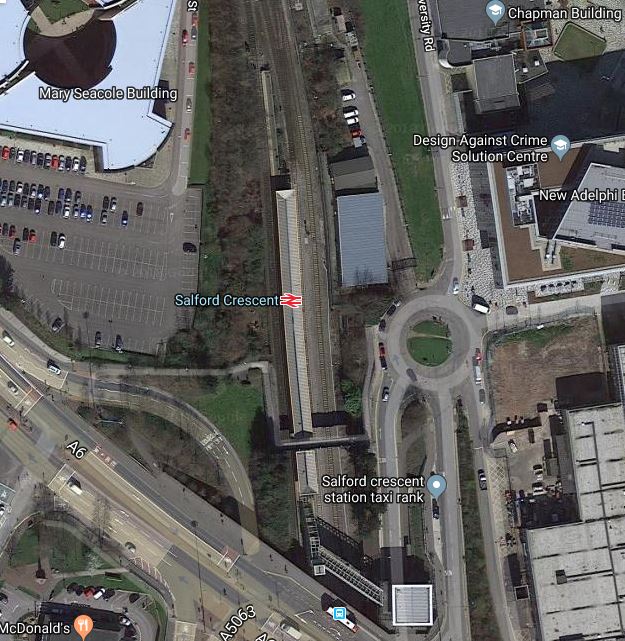
I think, it will be a tight fit for extra platforms, as the station is surrounded on all sides by Salford University.
The solution would probably be to build on top of a new station, that was in a strong concrete box.
Changing Trains At Salford Crescent Station
Today, I arrived at Salford Crescent on a train running between Bolton and Manchester Victoria stations.
As I needed to go to Manchester Piccadilly station, I left on a train running between Blackpool North and Manchester Airport stations.
Consider.
- In the few minutes, I was on the station, I must have heard staff asked, which train do I get to Piccadilly or Victoria, several times.
- Surrey Quays station handles three routes at the South end of the Thames Tunnel and currently handles sixteen trains per hour (tph)
- With high-quality signalling and a measure of automatic train control, I could expect Salford Crescent station to handle at least 12 tph, in both directions.
- Is the island platform wide enough?
- Is loading slowed as a lot of trains calling at the station are just two cars, with four doors?
- Is loading slowed as many of the trains, aren’t step-free from the platform to the train?
- Are there always staff on the platform.
I believe that operation of the station could be improved.
Reversing Direction At Salford Crescent Station
The current island layout allows passengers to change direction by walking across the platform.
As an example, if you go between Farnworth and Swinton stations, one of the recommended routes is via Salford Cresent.
An Improved Design For Salford Crescent Station
Perhaps before deciding to rebuild the station, serious work should be done to see if the station throughput in terms of trains and passengers can be improved.
My ideas would include.
A Wider Platform
This picture shows the island platform at Canonbury station.
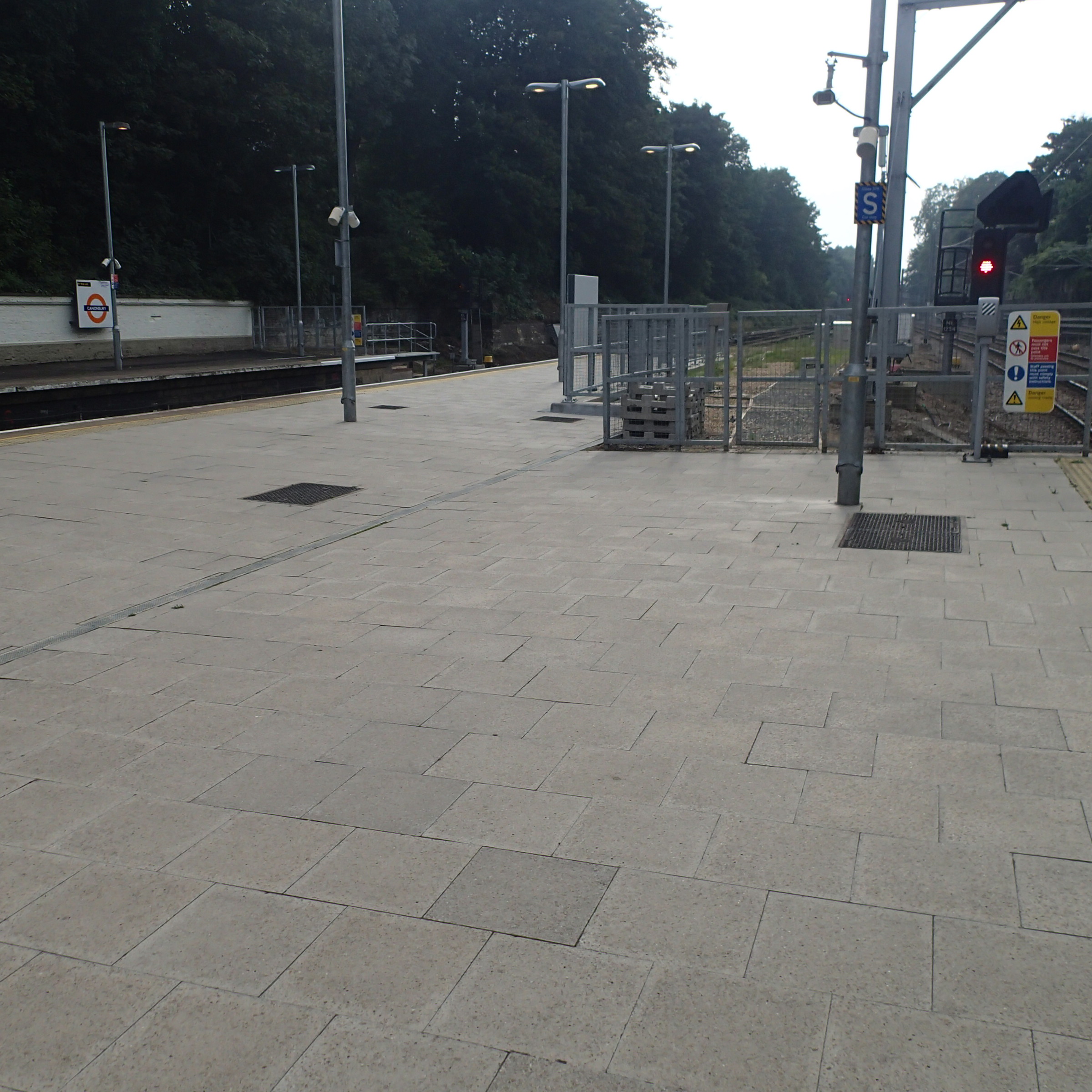
It could handle a whole company of Grenadier Guards and all their kit, whereas Salford Crescent would struggle with a platoon.
Canonbury’s wide platform also has the following in the centre.
- A large covered shelter.
- A large number of seats.
- A coffee stall
It also allows passengers to stand well-back when a train goes through the station, without stopping.
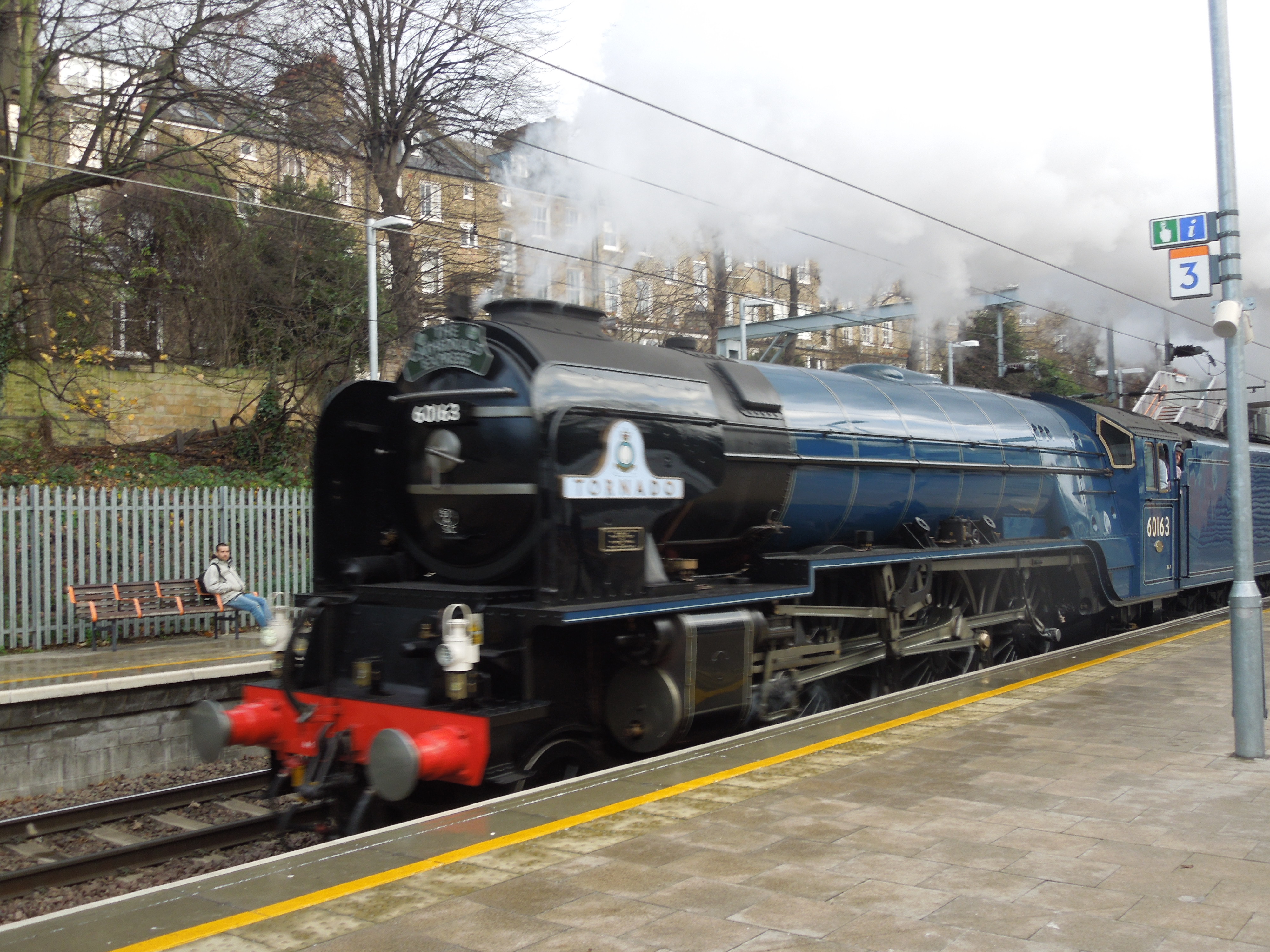
Note that Canonbury is a station, where the platforms are uncovered. Would this be a wise idea in Manchester, even with a large central shelter?
Lomger Trains
a lot of trains going through Salford Crescent station are just two cars.
Northern‘s new trains will include, the following electric trains and bi-mode trains.
32 – four-car Class 319 trains
12 – four-car Class 331 trains
31 – three-car Class 331 trains, which will replace the Class 323 trains.
11 – four-car Class 769 bi-mode trsins.
If all trains calling at Salford Crescent were four-cars or more, this would probably mean at least eight doors, which would would speed up loading and unloading.
This would reduce dwell times at the station and increase capacity in terms of the number of trains per hour.
Level Access Between Platform And Trains
If the platforms are widened, I susopect with Harrington Humps, that this could be achieved.
This picture shows two Hsrrington Hump is at Canonbury.
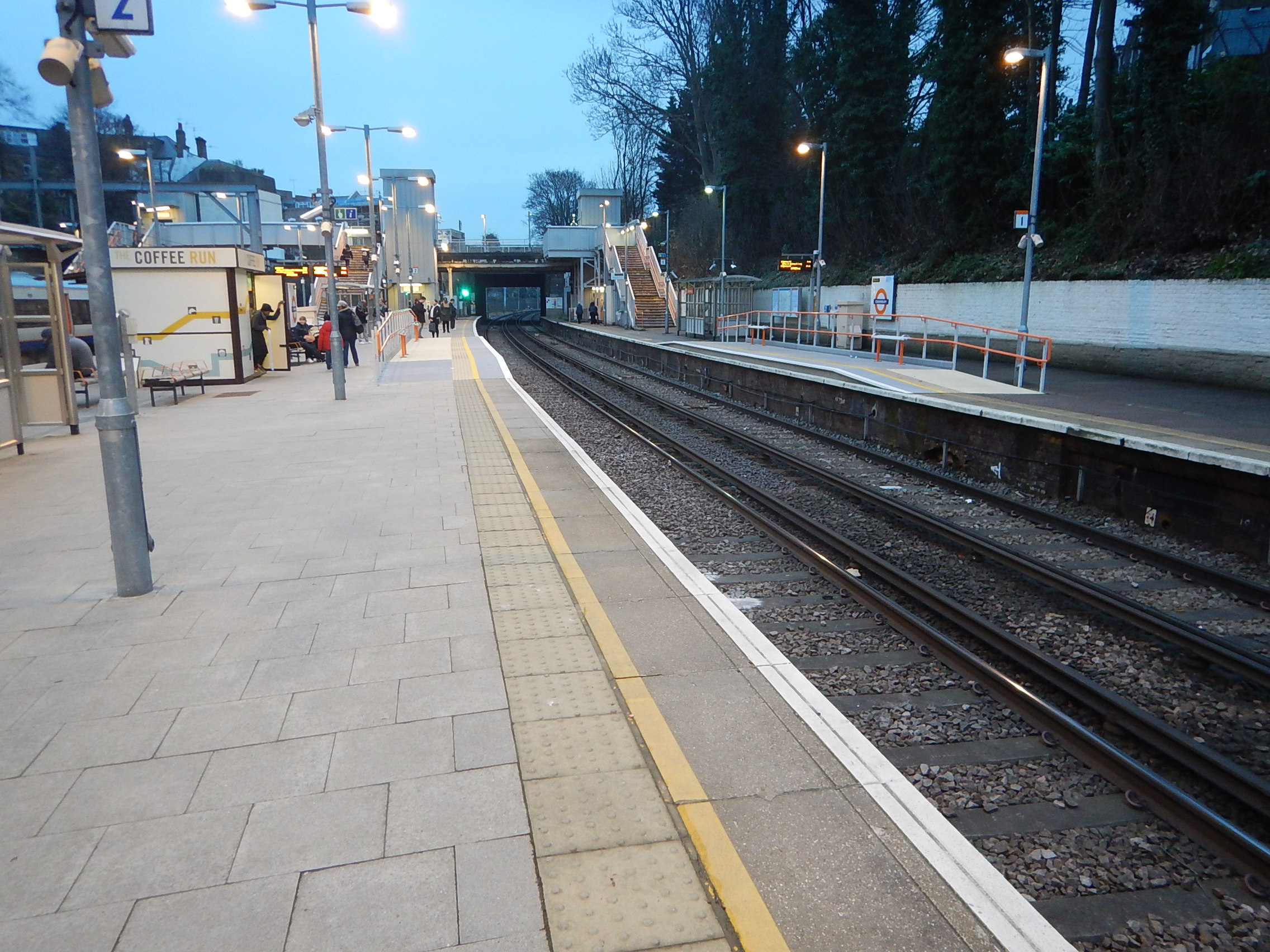
If passengers in wheelchairs, buggy-pushers and those pulling heavy cases could just walk or push the,selves across.
Again, this would reduce dwell times and increase capacity.
Better Information
Given that I heard passengers asking the same question, I suspect that better informayion, could make the station easier fot interchang passengers.
Using the displays on Thameslink and at London Bridge station would be a good start.
An Up Escalator
Sal;ford Central station has a long set of stairs and a lift.
Many passengers with movement difficulties would welcome an up escalator.
Conclusion
I believe that a much improved station can be creased , without the expence of adding a new platform.
Wires, New Platforms And Sidings At Blackpool North Station – 17th April 2018
I took these pictures as I entered Blackpool station.
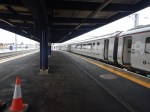
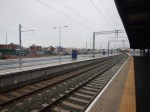
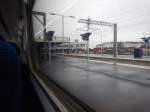
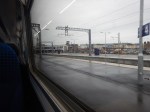
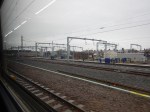
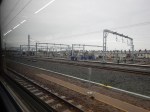
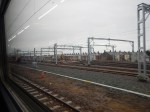
Note.
- There are now six straight platforms at the station.
- The platforms are long and can probably take an eleven-car Class 390 train.
- There seems to be five or six long sidings for trains, just outside the station.
- There is certainly evidence of ongoing work.
They certainly seem to be expecting a lot of trains.
If not soon, the station is future proofed.
What Trains Will Run To Blackpool?
I think the routes from Blackpool should have a minimum frequency of at least two tph.So the base local service should be.
- Two tph – Blackpool North to Liverpool Lime Street Class 319 train
- Two tph – Blackpool North to Manchester Airport – Class 319 train
- Two tph – Blackpool South nto Colne – Class 769 train
Other routes could include these services.
- 1-2 tph – Blackpool North to York via Leeds
- 1-2 tph – Blackpool North to Hazel Grove via Manchester Piccadilly – Class 319 train
- 1-2 tph – Blackpool North to Huddersfield via Manchester Victoria.
- 1-2 tph – Blackpool North to Ormskirk via Preston – Class 769 trains.
I wrote about the last service in Northern’s Plans For Between Preston And Ormskirk. But as Blackpool North station has six terminal platforms, it might be a better terminus than Preston.
Even if all of these services were to be two tph, this would only be fourteen tph between Preston and Kirkham and Wesham stations.
But the signalling is now modern and Northern have ordered a lot of 100 mph trains.
Obviously, Network Rail have got to finish the electrification.
Wires At Poulton-le-Fylde Station – 17th April 2018
These pictures show Poulton-le-Fylde station.
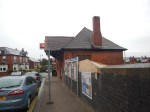
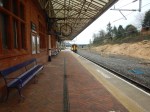
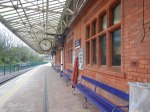
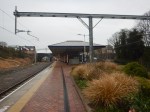
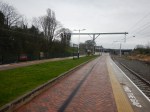
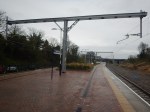
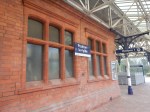
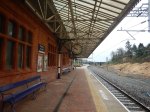
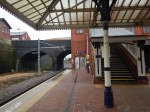
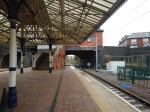
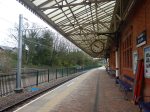
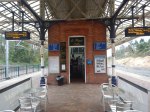
Note.
- The station has been refurbished.
- The overhead wires appear to be complete.
- A lift has been installed.
- The cafe has reopened.
- The island platform is wide.
- There are a pair of proper clocks.
It is surely now one of the best stations in the country with a single island platform, serving both lines.
Wires At Kirkham And Wesham Station – 17th April 2018
These pictures show Kirkham and Wesham station.
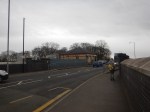
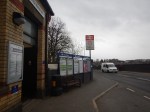
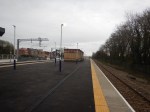
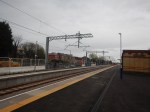
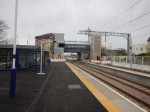

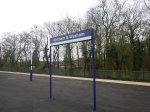


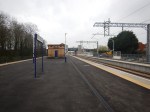
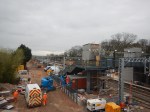
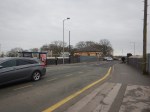
Note.
- Two new lifts are being installed.
- The overhead wires appear to be complete on the two main lines.
- The platform used by the Blackpool South Branch appears not to have been electrified.
Does anybody know if the line to Blackpool South station will be electrified?
- After all a four-coach bi-mode train like a Class 769 train could run the service.
- The last two Open Championships at Royal Lytham and St.Annes, were in 2012 and 2001, so it could return in the early 2020s.
But that gives the Blackpool area and Northern time to create the proper transport solution for the next Open at Royal Lytham and St. Annes.
Another Ambitious Tunnel
This article on Global Rail News is entitled Study Finds C$1.7bn Undersea Rail Tunnel The Most Attractive Option For Labrador-Newfoundland Link.
The article cites innovations in tunnel technology is one of the reasons, that this tunnel is now possible at an affordable cost.
The study also proposed that the single rail tunnel, uses this operational method.
Travelling at up to 100km/h, the train would take 20 minutes to cross the strait. It would operate 12 hours a day, seven days a week, carrying a maximum of around 130 vehicles.
They indicate because of low traffic levels, this would handle traffic for over forty years.
Tunnel builders will increasingly get more ambitious and we’ll see more plans for tunnels in the future.
 The Anonymous Widower