Has Network Rail Opened The Door To A New Railway Age?
The title of this post is the same as this article on Construction News.
It is a good read!
Musings On The West Anglia Main Line
The West Anglia Main Line is the main railway between Liverpool Street station in the City of London and the Scientific Powerhouse of Cambridge via Stansred Airport.
This post started off as The Mother Of All Level Crossing Jams, when I got caught in a jam caused by the level crossing at Enfield Lock station.
It has since grown into a long post of the inadequacies of this important main line.
The Mother Of All Level Crossing Jams
These are pictures I took at Enfield Lock station in mid-morning.
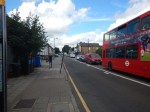
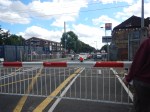
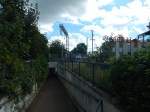

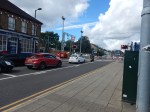

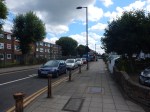
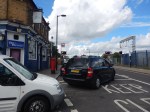
I had arrived at the station at 11:04 and my train had departed on its way at 11:08.
I was in no hurry taking the pictures and I left at 11:22 after eight trains had gone through, without the gates being raised.
In two of the pictures, you can see a discarded broken gate. Was it caused by an irate motorist?
After I got back to the station, the barriers were still going up and down like a whore’s drawers and talking to a fellow passenger, she said it happens all the time.
Improving The West Anglia Main Line
Consider the following, which could effect what happens in the future.
- Stansted Airport, Greater Anglia, Transport for London, the London Borough of Enfield, Cambridge City Council and the local MPs, all want the line to be four-tracked so that services to Cambridge and Stansted Airport can have their own dedicated fast lines.
- ,Greater Anglia have ordered lots of new trains and I suspect they want to run much-needed extra services into both Stratford and Liverpool Street stations.
- Enfield Lock could be a Crossrail 2 station in ten years or so.
- Crossrail 2 would want to run up to twelve trains per hour (tph).
It is a certainly a case of squeezing a couple of gallons into a pint pot.
Enfield Lock And Brimsdown
To make matters worse there is another equally congested level crossing at the next station to the South; Brimsdown.
This Google Map shows the area.
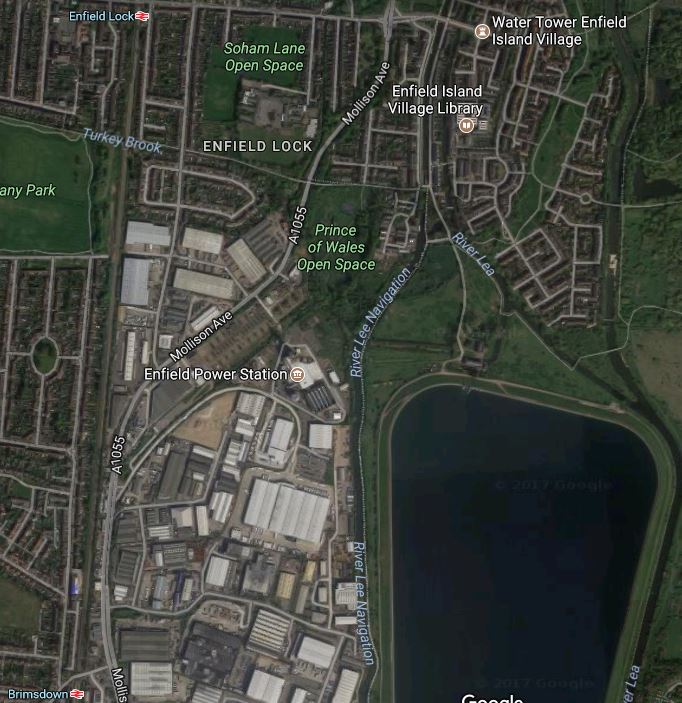
Note.
- Enfield Lock station is in the North West corner of the map, with Brimsdown in the South West corner.
- Mollinson Avenue, which tracks along the railway to its East, is nearly all dual carriageway.
- These is a lot of industrial premises in the area.
- There are a lot of distribution depots that need road access for heavy trucks.
- It is going to use all the ingenuity that Network Rail can muster to squeeze two extra tracks between those two stations.
If ever there was an area that needs an increased rail service it is this stretch of the West Anglia Main Line between Tottenham Hale and Cheshunt stations.
Improving The Lea Valley Lines
I suspect that British Rail foresaw the problem in the 1950s, as by 1960, they had electrified all the Lea Valley Lines including the goods-only Southbury Loop, which is now part of the London Overground, who run two tph on the route.
Both London Overground and Greater Anglia are getting new Aventra trains, which should increase the capacity and speed up services on both routes.
However, this could create a problem, in that they are such good trains, they may persuade more commuters to leave their cars at home and take the trains.
More Frequent Services
London Overground like to run four tph on their various routes.
At present, their Lea Valley services are as follows.
- 4 tph from Liverpool Street to Chingford.
- 2 tph from Liverpool Street to Enfield Town, with more services in the Peak and when Spurs are playing at home.
- 2 tph from Liverpool Street to Cheshunt.
I suspect that they would like to run four tph all day and that after Crossrail opens and releases some platforms at Liverpool Street, this might happen.
However in Increased Frequencies On The East London Line, I publish a table, which says that from 2019, Enfield Town will get four tph.
Greater Anglia must be looking to improve services on the West Anglia Main Line, so that all stations South of Broxbourne get four tph, with perhaps two tph to each of Liverpool Street and Stratford.
And then there’s STAR, which is a new service between Stratford and Angel Road stations. This article on IanVisits, which is entitled One of London’s quietest train stations set for major upgrade, gives a good explanation of this service, which will provide four tph between Stratford and a rebuilt Angel Road station, which will be renamed Meridian Water.
More Terminal Capacity In London
Adding these services together, I feel that more capacity is needed at the London terminals of Liverpool Street and Stratford.
There are two short term solutions and one long term one.
Create More Capacity At Liverpool Street
This is the simplest short-term solution.
In the Wikipedia entry for Liverpool Street station, this is said.
Once Crossrail opens, platform 18 at the main Liverpool Street station will be decommissioned to allow platforms 16 and 17 to be extended, enabling them to accommodate longer trains.
I would assume this platform-lengthening is to accommodate the full-length Class 345 trains, that will run the Peak Hour service between Liverpool Street and Gidea Park stations.
I suppose too, having two platforms in Liverpool Street, that are capable of handling Crossrail trains must also be useful in special or exceptional circumstances.
Platform 18 is a curiosity, in that it is used by c2c as a diversion platform, when Fenchurch Street station is closed because of engineering works.
So after the work on platforms 16 and 17 is complete, will it be recommissioned?
That leaves fifteen platforms for Greater Anglia and London Overground to argue over.
If you compare the way Liverpool Street is organised compared to some more modern stations, I suspect that more modern trains can be handled without any expensive modifications to the existing station.
Modern practice means that a single platform can easily handle four tph, so as destinations like Norwich and Southend will only have three tph, could it mean that these destinations can be served by a single platform?
It would certainly make it easy for me, if I knew the fast Ipswich trains always left from platform 9.
I suspect that as London Overground has only three destinations; Cheshunt, Chingford and Enfield Town, whiich have a maximum frequency of four tph, that they could easily manage with four platforms; one for each destination and a spare.
This would give Greater Anglia eleven platforms.
Note this about Greater Anglia’s new trains.
- The Class 745 trains will be of a fixed formation of twelve cars.
- Will the three-car and four-car Class 755 trains have the ability to join and split automatically?
- Will the five-car Class 720 trains have the ability to join and split automatically?
Having seen how Class 395 trains and others can do this in under a couple of minutes and the flexibility of destinations it gives, I will be very surprised if Greater Anglia haven’t specified this capability.
- As an example, two four-car Class 755 trains could start at Lowestoft and Bury St. Edmunds respectively and then join at Ipswich, before proceeding to London as an eight-car train.
- Would it be sensible that all trains go into Liverpool Street at maximum length?
- Trains might split and join at Ipswich, Colchester and perhaps Chelmsford. All that is needed is a long platform.
Perhaps Greater Anglia’s platforms at Liverpool Street could be allocated something like this.
For Flirts (Class 745 and Class 755)
- Norwich
- Ipswich/Lowestoft
- Stansted Airport
- Cambridge
For Aventras (Class 720)
- Bishops Stordford/Broxbourne/Hertford East
- Colchester/Harwich
- Clacton/Walton
- Chelmsford/Braintree
- Southend
On this rough assessment, it would appear that at least for a few years Liverpool Street station could cope.
Developing Stratford As A Second Terminal
Consider these facts about the railway hub at Stratford.
- Stratford has not been fully developed as a terminal for the West Anglia routes and only handles two tph to and from Bishops Stortford.
- Stratford has two platforms 11 and 12, that were built to serve the West Anglia routes; the West Anglia Main Line and the Lea Valley Lines.
- Platforms 11 and 12 are on the High Meads Loop, which would reverse the trains on West Anglia routes.
- Stratford is well connected to Crossrail, Central and Jubilee Lines of the Underground, the DLR, the Overground , Highspeed services to Kent and Greater Anglia services on the Great Eastern Main Line.
- Stratford has better connections than Liverpool Street to London Bridge and Waterloo
- Stratford could have excellent connections to Highspeed services to Kent and Continental services at Ashford International.
- Stratford will be only a few minutes from Liverpool Street on Crossrail.
Stratford is also a destination in its own right, with the Queen Elizabeth Olympic Park and the massive shopping complex.
This map from carto.metro.free.fr shows the complex at Stratford.
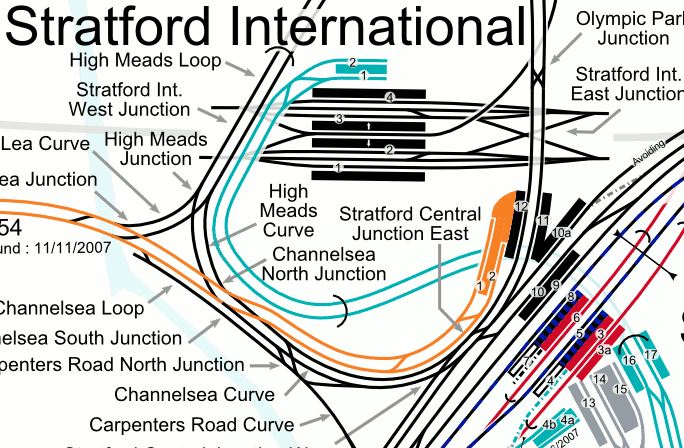
It is very much capable of development.
- Better connections could be made between Stratford International and the main station.
- The subways in the complex could be improved.
- The Hall Farm Curve could be reinstated to give direct connections between Stratford and Walthamstow/Chingford.
I would not be surprised if Greater Anglia increased their services to and from Stratford.
I could also envisage a timetable, where trains alternate between the two terminals., as every passenger will have their favoured terninal.
Crossrail 2
Crossrail 2 is the long-term solution.
Upwards of ten tph will run between Broxbourne and Tottenham Hale, before entering the tunnel to Central and South West London.
It will obviously handle all the local services South of Broxbourne, with just the services from the North continuing to Liverpool Street and Stratford.
Following Abbey Wood, Reading and Shenfield stations on Crossrail, I think that we would see Broxbourne station developed as a simple interchange between longer distance services and Crossrail 2.
Both services would have their own tracks to London.
Conclusion
The West Anglia Main Line urgently needs improvement and this improvement can be broken down into a series of smaller projects, the first three of which have already started and could be completed by 2020.
- Creation of STAR – The Stratford-Angel Road Metro – Already started.
- Building of new Meridian Water station to replace Angel Road station – Already started.
- Rebuilding of Tottenham Hale station – Already started.
- Post-Crossrail Improvements at Liverpool Street and Stratford stations.
- Removal of level crossings at Brimsdown, Enfield Lock and Waltham Cross
- Four-tracking between Tottenham Hale and Broxbourne.
- Step-Free Stations
- Reinstatement of the Hall Farm Curve.
These projects will also get the main line Crossrail 2-ready.
This process has already started with the creation of STAR, which will create a third track as far as Angel Road station. In the article on IanVisits, this is said.
Along the tracks nearby there are already hi-vis wearing Network Rail contractors clearing the land to prepare it for the Stratford to Angel Road (STAR) rail upgrade project which will see a third railway track added. Passive provision for a fourth track will be included for Crossrail 2.
This work has already closed the level crossing at Nothumberland Park station.
In Innovation In Railway Projects, I describe how Network Rail are aiming to create a pipeline of smaller projects.
I feel that some parts of the updating of the West Anglia Main Line can be done in this way.
Conn By Name, Con Artist By Nature
I have just seen the Chief Executive of Centrica; Ian Conn, giving the most unfeasible explanation, why despite the fact that electricity prices are going down, British Gas will be putting them up by 12.5% from September 11th.
This article on the BBC gives more details.
Now is the time to give British Gas a good kicking by moving to an alternative smaller supplier.
I moved to OVO over two years ago and have had no trouble except.
- Changing from my old Bog Six supplier was a pain, due to the original company’s incompetence. Was that real or deliberate?
- OVO have still not fitted me with a smart meter. But I’m not sure I need one!
OVO have also handled my solar panels without trouble.
Innovation In Railway Projects
This article in Rail Technology Magazine is entitled NR routes to publish ‘pipeline’ of third party opportunities by year end. It lays out a new philosophy of how rail infrastructure projects could be handled in the future. I suggest you give the article a careful read.
Some politicians will say it is privatisation by another name. But to me it is just a way of getting a project built faster in a safe manner.
This is a paragraph.
By the end of this year, NR’s routes will publish ‘pipelines’ of projects that they want to put out to market. The infrastructure owner will also be working with government on producing a list of third-party opportunities. Initially these opportunities may be at the smaller end of the spectrum such as new stations, depots and car parks.
Take the simple example of a depot. These days fleets of new trains often mean a large increase in depot capacity as trains are longer and fleets are larger. As fleets are often bundled in with maintenance, there is a specialised multi-million pound asset that needs to be created. Big investors create office blocks, sporting venues and shopping centres and lease them to other businesses, so why shouldn’t they build the infrastructure that the railway needs?
This article in the EADT is entitled New rail depot unveiled by Greater Anglia at Brantham on Suffolk/Essex border.
The article dates from February 2017 and says that design is starting and the depot will be open by the end of 2018.
Not a bad timescale for a depot covering 22 acres with fifteen electrified tracks, two of which are under cover.
Why should the taxpayer get involved in a project like this?
Network Rail’s only involvement should be to ensure that the depot interfaces with the railway correctly.
This article on the BBC is entitled Crossrail stations in west London delayed until 2019.
I took this picture at one of the of the five stations; West Ealing, yesterday.
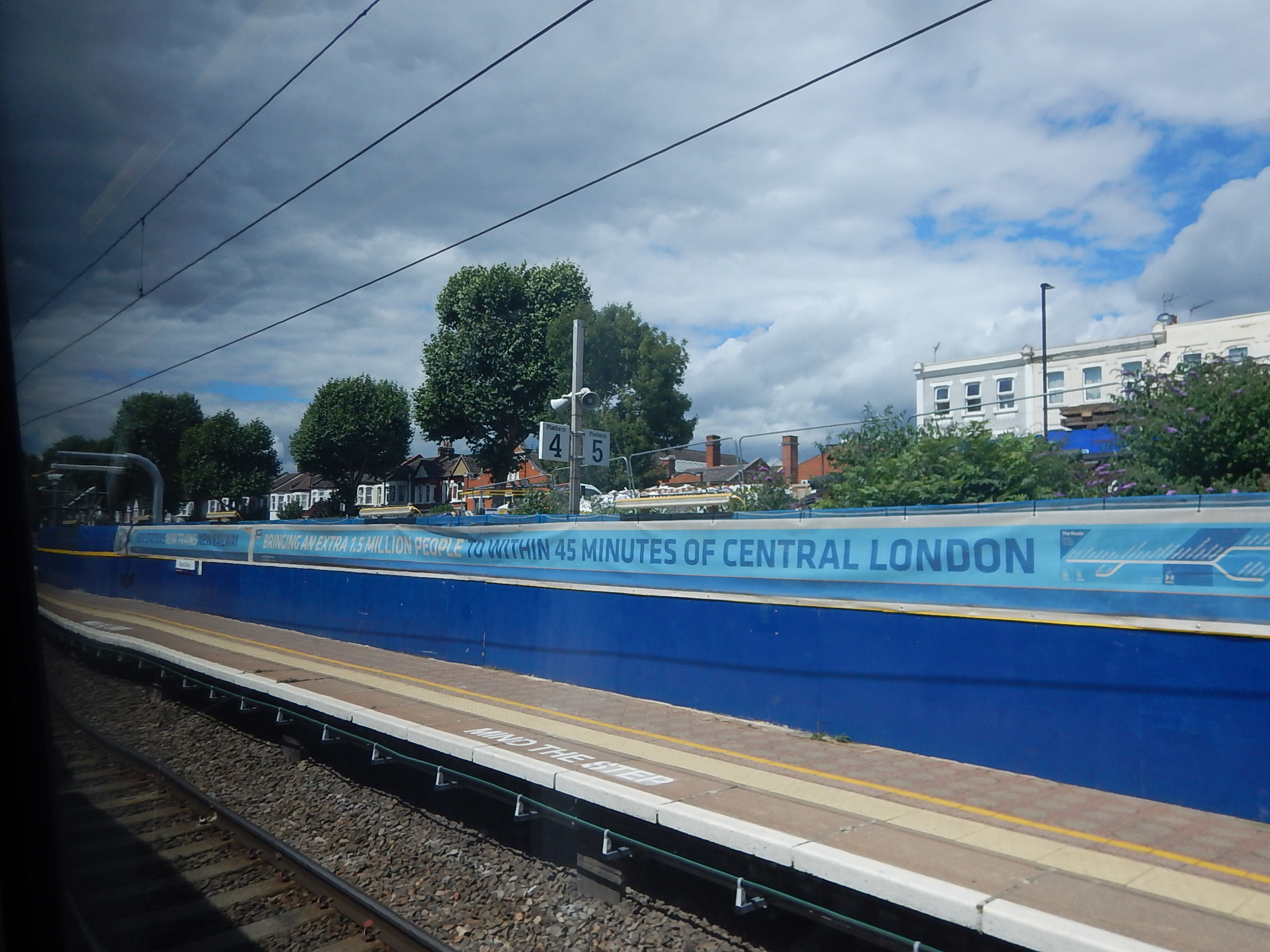
Nothing appeared to be going on, despite the fact that much of the construction is well to the side of the railway. Compare this with the situation at Abbey Wood station, that I saw a few days ago.
I suspect Crossrail wish they had taken control of the Project Management of the five West London stations themselves.
Network Rail seem to have a culture that if assets are built a few years late, it is totally acceptable.
This culture must stop!
Could Trump Organise A Piss-Up In A Brewery?
After reading this report on the BBC and seeing it in full on the ten o’clock news, I think the answer is no!
I am old enough to remember the Cuban Missile Crisis and the Six Day War, which were both events that if they’d been handled in an insensitive manner could have led to something a lot more serious.
Can Trump’s judgement be trusted to deal with Vladimir Putin and Kim Jong-un?
The guy is just too inexperienced!
Abbey Wood Station – 30th July 2017
I took these pictures at Abbey Wood staeion.


Note my other post about Abbey Wood station called Construction Of The Platform Structures And Tracks For Crossrail At Abbey Wood Was Cimpleted By Network Rail In May 2017, which was based on a picture caption in the August 2017 Edition of Modern Railways.
Does this also include the electrification?
It now appears that West of the station, the electrification runs all the way to the tunnel entrance. But the electrification is treated differently in the two Crossrail platforms.
- In Platform 3, which traditionally would be the London-bound platform, the wires go under the station bridge and finish on a single vertical gantry. Conveniently, it’s shown in the last picture in the gallery.
- In Platform 4, which is the Northernmost platform, the wires are fixed to the station building. This is shown in the penultimate picture in the gallery.
So it would appear, that Crossrail trains can only go East of the station under electric power only using the track through Platform 3.
I couldn’t see if there was any connection between the track through Platform 4 and that through Platform 3, but there was also some supports for the old bridge in the way.
There would need to be a connection, if the track to the East of the station was to be used as a reversing siding.
What is now clear is that the station must be one of the few stations with three footbridges.
- There is the main one at the East containing the main station building, which probably has lifts.
- One in the middle of the platforms, which looks like it might have lifts.
- There is a smaller footbridge at the Western end of the station.
According to this page on the Crossrail web site the station has a total of six lifts.
I suspect the number of lifts is because the site and the track layout, mean that it has not been possible to organise cross-platform interchange bettween Crossrail and the North Kent Line.
We Should All Think Radically!
In the August 2017 Edition of Modern Railways, Ian Walmsley, who is a writer, that I respect, thinks radically about how to upgrade or replace the High Speed Trains on the Midland Main Line.
He has a lot of experience in the rail industry and his views in this issue, are probably worth the price of the magazine alone.
He feels the InterCity 125s should be replaced as you can only make-do-and-mend for so long and he proposes replacing them with a modern equivalent, which would initially be two diesel locomotives topping and tailing a rake of new coaches, and then if electrification happens, the diesels are replaced with electric units.
Ian’s article comes a few days after this article in Rail Technology Magazine, entitled New bi-mode fleet a requirement for East Midlands as consultation opens, was published.
This is the first paragraph.
The DfT has this week launched its public consultation on the new East Midlands franchise, including specifications for a new bi-mode fleet of intercity trains, whilst at the same time revealing that plans to electrify the Midland Main Line north of Kettering have been abandoned.
There is going to have to be a lot of radical thinking to get a solution for that.
To make the replacement harder, Ian indicates various problems, which I won’t disclose here.
But I do think Ian’s idea is sound and it could be the solution to the problem of running modern 125 mph trains from St. Pancras to Derby, Nottingham and Sheffield.
So How Feasible Is Ian’s Plan?
Maths and physics don’t change. so I suspect that the calculations done by Terry Miller and his team in the 19670s, which led to the iconic InterCity 125 are still valid.
Locomotive Haulage
The power output of each Class 43 power car is 2,250 hp, so to propel an appropriate number of new carriages, you still need a locomotive at each end of the train.
The most modern diesel locomotive in the UK is the Stadler-built Class 68 locomotive, which has a power voutput of 3,800 hp, but a top speed of only 100 mph. The only 125 mph diesel locomotive in the UK is the Class 67 locomotive. To complicate matters, there is also the Stadler-built Class 88 locomotive, which is a 100 mph electro-diesel locomotive, but this locomotive is more a powerful electric locomotive with a sensible-sized last-mile diesel engine.
Ian suggests, that as the Class 68 is a few tonnes lighter than the Class 67, that a 125 mph Class 68/2 locomotive would be possible.
I don’t disagree, but given the quality of railway engineering coming out of companies like Bombardier, CAF and Stadler, that someone will do better.
We should also consider that the UK will need more than a few new freight locomotives in the next few years, as they do seem to be scratching around for motive power, as this picture shows.
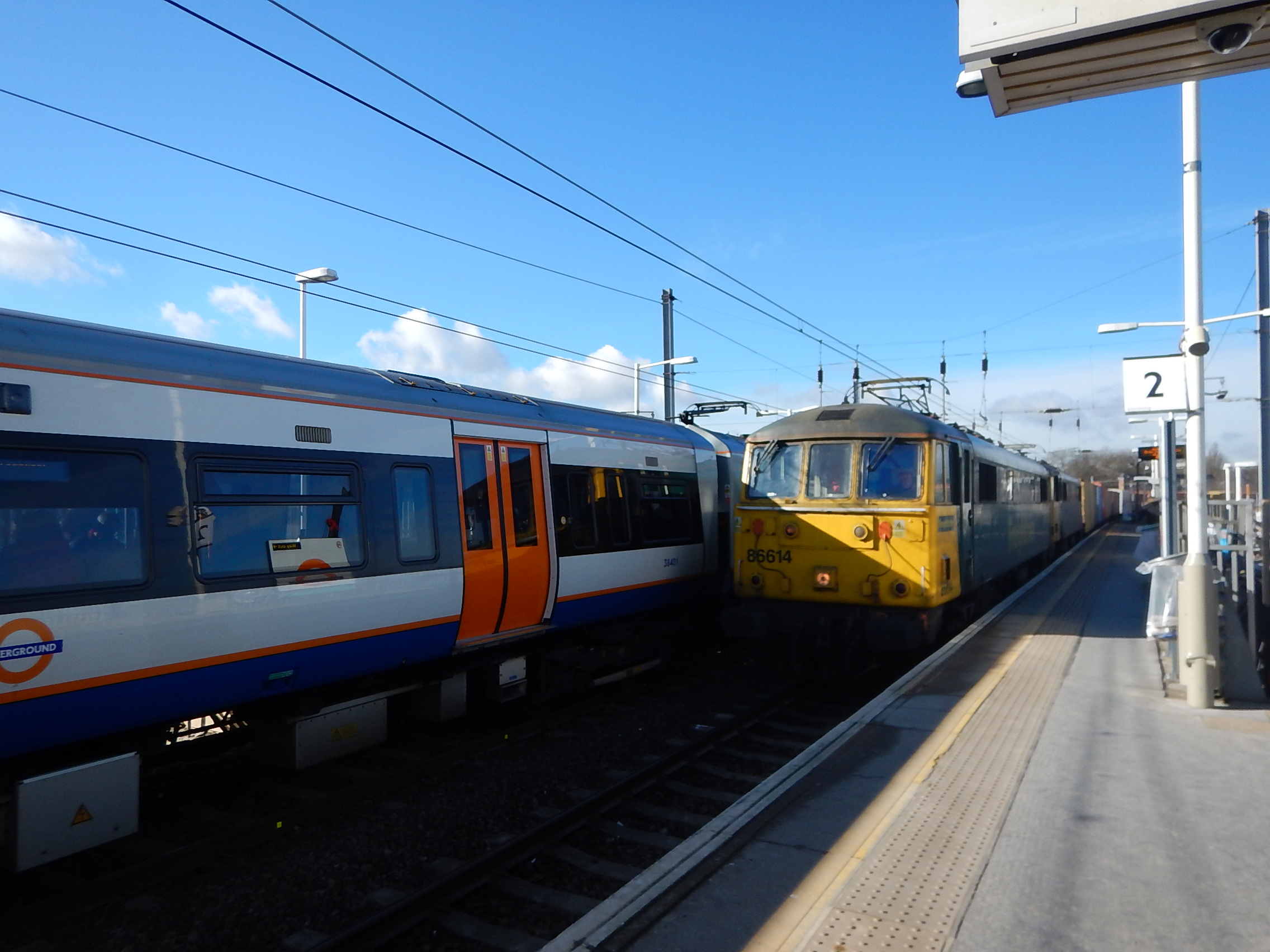
These two Class 86 locomotives date from the mid-1960s. But they do have around 3,600 hp each and a top speed of around 100-110 mph.
I even saw this interesting combination at Shenfield.
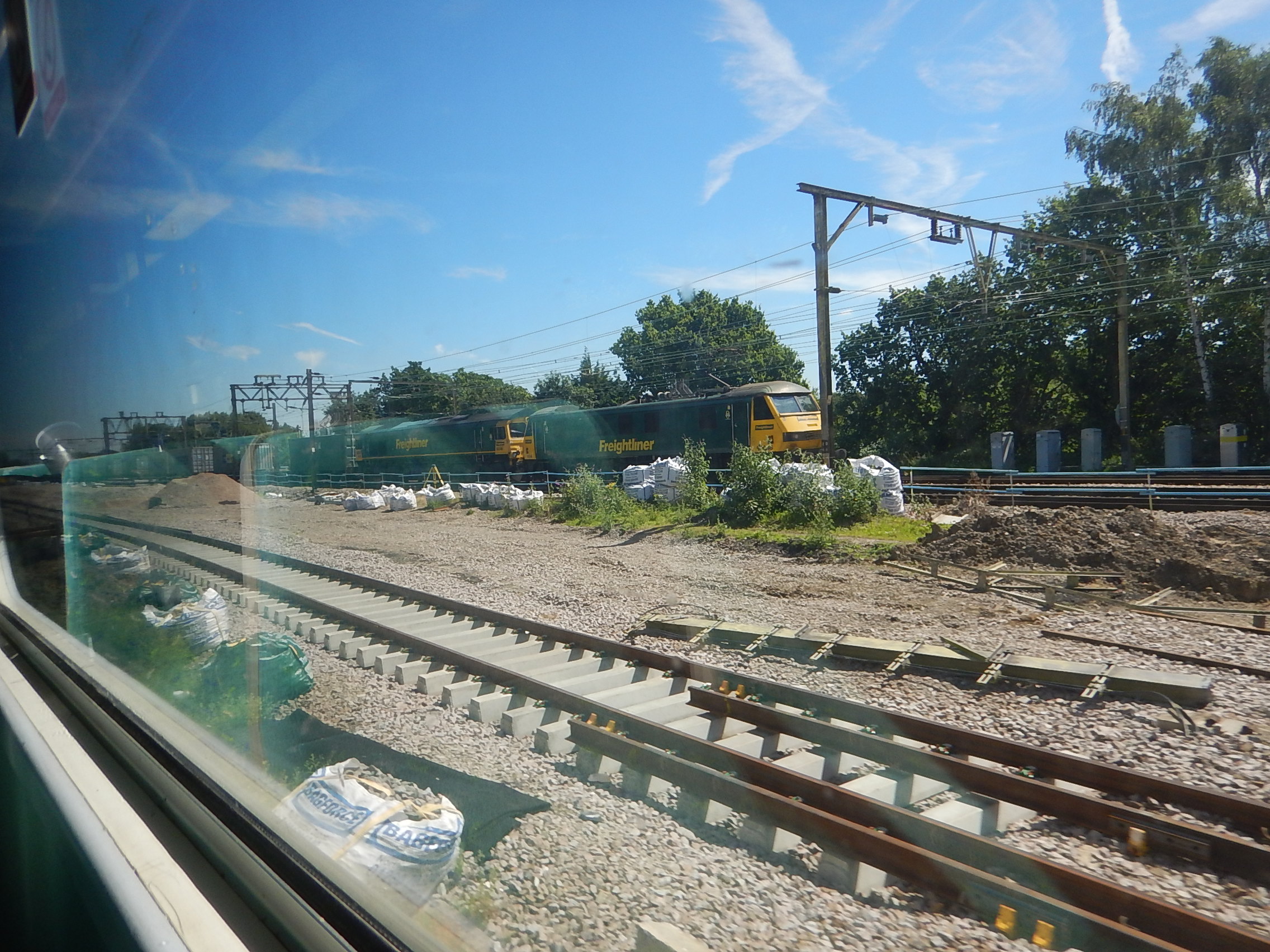
The Class 90 and Class 66 locomotives appear to be double-heading the heavy freight train. The Class 90, of which several will become available soon from Greater Anglia are 5,000 hp units with a top speed of 110 mph, whereas the ubiquitous Class 66 has only 3,300 hp and 75 mph.
With more and more long freight trains appearing on increasingly busy main lines, these freight trains must be becoming unwelcome to the companies running passenger trains and also to those, who live alongside the lines.
So is there another desperate need for a powerful locomotive to pull express freight trains at maximum length and weight around the country?
Some main freight routes like these are electrified with 25 KVAC overhead wires or will be soon.
- East Coast Main Line
- West Coast Main Line
- Greast Eastern Main Line
- Great Western Main Line
- North London Line
- Gospel Oak to Barking Line
But others are not.
- London to Southampton
- Felixstowe to Peterborough and The Midlands
- Peterborough to Doncaster via Lincoln
- Trans-Pennine Routes
And that’s just for starters.
I think it becomes obvious, why Direct Rail Services and Stadler came up with the Class 88 locomotive. The 5,300 hp available under the wires is more than adequate for the heaviest express intermodel freight train and the 1,000 hp under diesel can probably move the train into and out of the docks.
But this amount of diesel power is probably inadequate for hauling a heavy freight train at 100 mph.
A New Electro-Diesel Locomotive
So could we see a new electro-diesel locomotive with the following characteristics?
- The ability of a pair to top-and-tail an express passenger train on both diesel and 25 KVAC overhead electrification.
- The ability to haul the heaviest intermodal freight trains at up to 100 mph on both diesel and 25 KVAC overhead electrification.
- The ability to switch between modes at line speed.
- Regenerative braking underboth elkectricity and diesel.
In a few years time the diesel might be replaced by hydrogen or some other exotic fuel.
Electrification South Of Bedford
It might appear that these locomotives if working the Midland Main Line could switch to electric power South of Bedford or in the near future; Kettering, but the electrification is limited to 100 mph and there is no planned upgrade. This is a familiar story for anybody like me who uses the Great Eastern Main Line, where the inadequate electrification has had to be upgraded over the last couple of years to allow faster services.
The Coaches
The coaches are the least of the problems for Ian’s proposals.
This article on Rail Technology Magazine is entitled First bodyshell completed by CAF for new TPE fleet.
This is the first paragraph.
Pictures of the first bodyshell for new rolling stock to be used by TransPennine Express (TPE) have been unveiled as the operator looks to introduce 13 five-car Mark 5A Coaches – being built by Spanish company CAF – as part of its brand-new fleet.
The Mark 5A coaches, being built by CAF are designed for 125 mph! So all that is needed is to specify the interior!
As the Spanish train manufacturer has just announced the building of a factory at Llanwern in South Wales, that might be an ideal place to build the coaches needed.
Beating The PRM Deadline In 2020
The Mark 5A coaches for TransPennine Express are scheduled for delivery in 2018-2019, so I suspect the coaches for the Midland Main Line could start to be delivered after the TransPennine Express and Caledonian Sleeper orders are complete.
The locomotives might be move problematical, but if they are a derivative of an existing type, then surely this wouldn’t delay fleet introduction.
I suspect that a certain amount of testing can be done in parallel too!
So having some trains in service by the PRM eadline of 2020 could certainly be possible.
Conclusion
Ian Walmsley’s proposal for the next Midland Main Line franchise is possible.
Construction Of The Platform Structures And Tracks For Crossrail At Abbey Wood Was Cimpleted By Network Rail In May 2017
The title of this post, was stated under a picture in the August 2017 Edition of Modern Railways.
The picture had been taken on site from the other side of the fence through the station to this picture I took in July 2017.
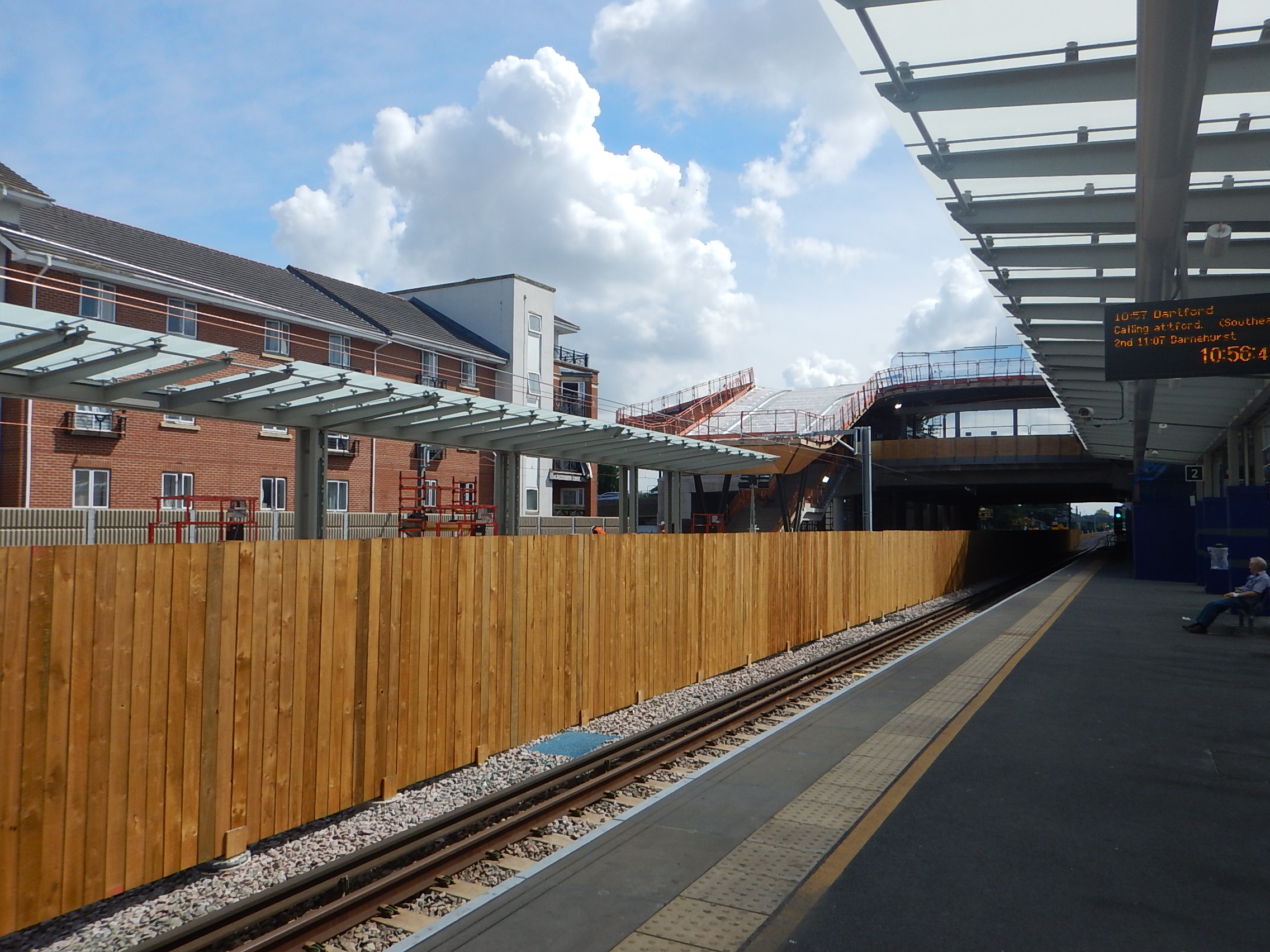
My later picture shows some of the canopies for the Crossrail platforms in position.
If Network Rail’s statement that formed the title of this post is correct, then is the track layout to the East of the station complete?
This picture shows the unelectrified line leading away from the station.
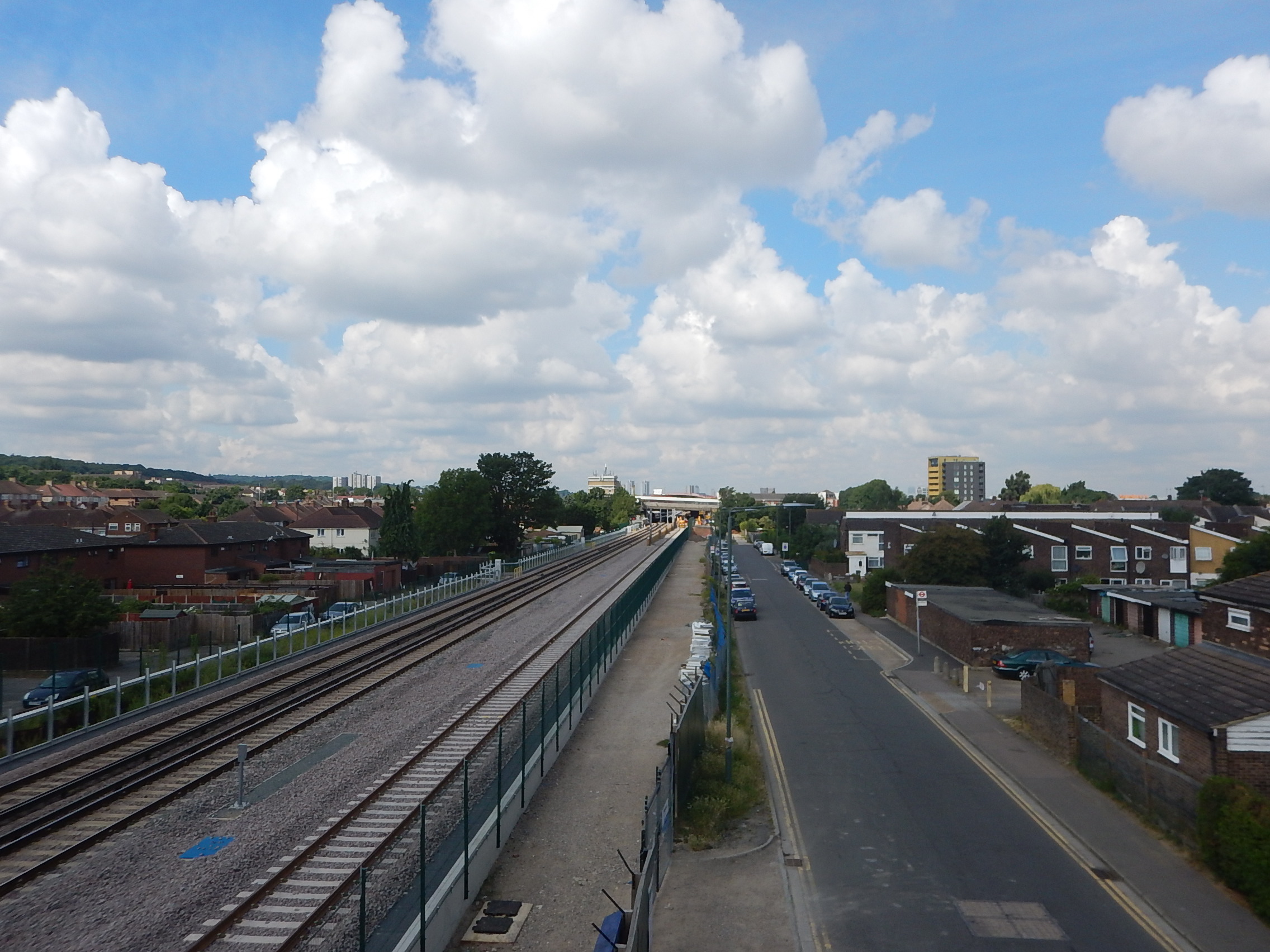
Note the track without any electrification by the fence in the right foreground and the two third-rail electrified North Kent tracks in the left background.
This picture shows the track going towards Belvedere station.

Note the cross-over by the signal.
Can Crossrail Reverse All The Scheduled Trains At Abbey Wood?
Crossrail have now published a more detailed schedule for the services.
The schedule shows that a maximum of twelve trains need to be reversed at each of Abbey Wood, Paddington and Shenfield stations.
In this article on Rail Engineer, which is entitled Signalling Crossrail.
The Class 345 trains are fitted with a system called Auto-Reverse, which I explained in Crossrail Trains Will Have Auto-Reverse.
The driver selects auto-reverse and walks back through the train, as it changes platforms automatically. By the time the driver is in the other cab, the train is in position in the other platform, ready to go back to London.
But the article in Rail Engineer also says this.
Auto reverse (AR) is not provided on Network Rail infrastructure. There will also be the possibility to use AR into and out of the stabling sidings at Abbey Wood so the driver will be at the correct end of the train to finish a shift or, when coming on duty, to start a new run westwards. Service trains will, however, normally reverse in the station. AR may also be used at Custom House and anywhere using crossovers in the central section.
As the normal twelve trains per hour (tph) making up the service, will be using both platforms, cross-overs are provided to the West of Abbey Wood station, as is shown in this picture.
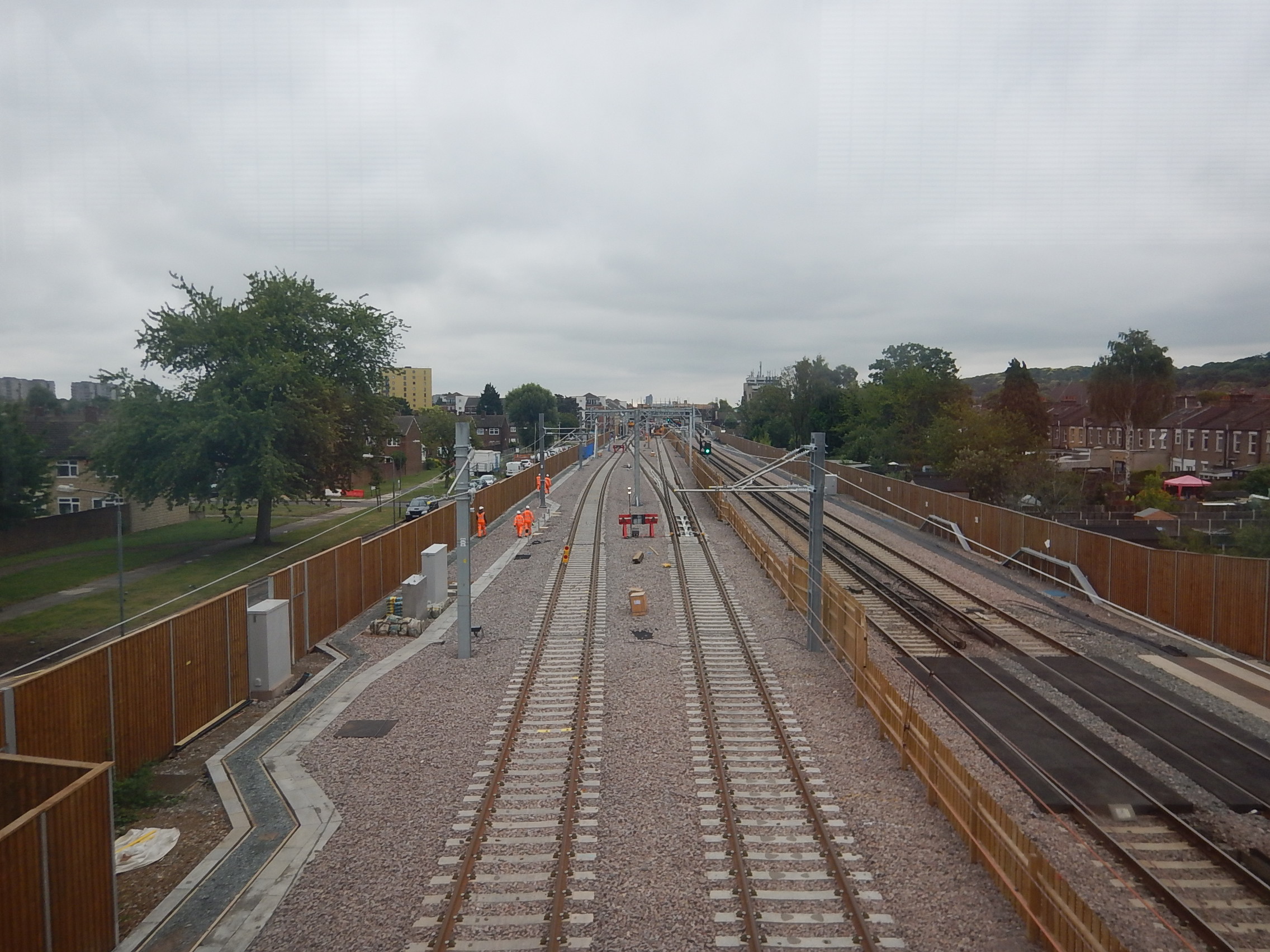
The system used at Abbey Wood will also be used at Shenfield.
Why Has The Reversing Siding Not Been Electrified?
In my view there can only be two explanations, if Modern Railways have got their picture caption right, which categorically said work was finished.
- My reconnaissance was wrong.
- Full electrification is not needed to reverse the trains.
On digging deeper, I took these four pictures at Abbey Wood station.
The pictures show in order.
- The overhead wires for Platform 4 fixed to the station building. Look under the top of the staircase.
- The overhead wires for Platform 3 passing under the station building.
- The overhead wires for Platform 3 passing under the station building.
- The overhead wires for Platform 3 anchored to a solid girder on the other side of the station building.
I couldn’t see the track layout because the wooden fence was in the way, but it would seem logical that the track through Platform 4 will eventually connect to the track through Platform 3.
This would allow the following.
- Trains arriving in Platform 4 to transfer to Platform 3 using the reversing siding.
- Crossrail trains to continue East on the North Kent Line using the single track and the crossovers to the East of the station.
- A failed train could be pushed into the reversing siding, which could probably accommodate two trains.
- Service and maintenance trains to access Crossrail’s Plumstead depot from the East.
But even if there is no connection, two independent platforms can handle the twelve trains per hour, as they will do at Shenfield.
The Rise Of One-Platform Stations
As I was writing DfT Names Five Winners Of Fresh £16m Stations Fund, I came to the conclusion that a lot of well-designed one-platform stations have been built since the turn of the millennium.
New one-platform stations include.
- Alloa – Scotland – Reopened 2008 – Commuter and terminal station
- Alesbury Vale Parkway – Bucks – Opened 2008 – Park-and-Ride, commuter and terminal station.
- Beauly – Scotland – Reopened 2002 – £250,000 – 75% of local commuters switched from road to rail.
- Bow Street – Wales – Reopened 2021 – £8million – Park-and-Ride, commuter and rural station
- Brunstane – Scotland – Opened 2002 – Commuter station
- Chandler’s Ford – Hampshire – Reopened 2003 – Commuter station
- Chatelherault – Scotland – Reopened 2005 – Commuter station.
- Conon Bridge – Scotland – Reopened 2013 – £600,000 – Local station
- Cranbrook – Devon – Opened 2015 – Commuter station
- Ebbw Vale Parkway – Wales – Opened 2008 – Park-and-Ride and commuter station.
- Ebbw Vale Town – Opened 2015 – Commuter and terminal station.
- Eskbank – Scotland – Opened 2015 – Commuter station
- Fishguard and Goodwick – Wales – Reopened 2012 – £325,000 – Local station and bus interchange.
- Galashiels – Scotland – Reopened 2015 – Commuter station and bus interchange.
- Gorebridge – Scotland – Opened 2015 – Commuter station
- James Cook – Teeside – Opened 2014 – £2.2million – Serves the hospital
- Kelvindale – Scotland – Reopened 2005 – Commuter station
- Kenilworth – Warwickshire – Reopened 2018 – £11million – Commuter station
- Llanhilleth – Wales – Reopened 2008 – Commuter station
- Merryton – Scotland – Opened 2005 – Commuter station
- Newbridge – Wales – Reopened 2008 – Commuter station
- Newcourt – Devon – Opened 2015 – £4million – Commuter station.
- Newcraighall – Scotland – Opened 2002 – Park-and-Ride
- Newtongrange – Scotland – Opened 2015 – Commuter station
- Pye Corner – Wales – £3.5million – Commuter station
- Rogerstone – Wales – Opened 2008 – Commuter station
- Soham – Cambridgeshire – Opened 2021 – £21million – Commuter station
Note.
- I am adding to this list, as new one-platform stations are opened.
- That is a total of twenty-four stations including three termini since 2000.
Several of the stations are on three reopened or new lines.
The three routes have sections of single-track.
How many more one-platform stations will we see in the next few years?
- They must be more affordable.
- They don’t need expensive pedestrian bridges.
- They are usually step-free.
- They can be as long as you need
- They are ideal for single-track lines without electrification.
On the other hand there may be signalling and safety issues.
Integrated Design Of Rail Routes, Stations And Trains
If you look at the design of a new or reopened railway line like the Borders Railway, there have been various complaints from residents, commuters, railway purists and tourists.
- Why wasn’t it built as double-track throughout?
- There is no siding to help if a train brakes down.
- Parking is insufficient.
- The capacity of the trains is small.
- The trains are old and tired.
- The trains perform poorly.
A lot of the complaints can be blamed on the need to deliver the railway on a minimum cost.
But, I also believe that if the line had been designed to fit around a small fleet of trains, designed specifically for the route, then more money could have been saved and the railway would offer a better service to everyone.
Imagine a train with these characteristics.
- At least four comfortable carriages.
- Ability to run on electricity, where 25 KVAC overhead electrification is available.
- Ability to run on diesel or batteries, where there is no electrification.
- Change of power mode would be automatic and at line speed.
- Level access to Harrington Humps at all stations for those needing step-free access.
- Integrated CCTV between train and stations, so train crew can check if there are any possible problems or passengers who need assistance as they approach a station.
- Wi-fi and 4G, although the latter might be difficult on the Borders Railway.
- An onboard ticket machine, so late passengers can board without a ticket and the conductor is busy.
The train doesn’t need to be new, but designed for the route and of refurbished to a high standard.
I believe that train designers can come up with a train that would be more efficient to operate at stations, so that time-keeping would be spot on.
A Rail Link To Saint Andrews
I will use this rail link as an example, because of the importance of the historic City and its links to golf.
The length of the route by road between Leuchars station and Saint Andrews is 5.8 miles.
This is not much longer than the 4.4 miles of the Greenford Branch Line in West London, which has a frequency of two trains per hour (tph).
The service is provided by a single Class 165 train. So I suspect, a single train could maintain a two tph shuttle between Leuchars station and Saint Andrews.
The minimum infrastructure to sustain this two tph service would be as follows.
- A single bay platform at Leuchars station.
- A single platform terminus at Saint Andrews.
- Perhaps a single platform station for golfing visitors convenient for the courses.
- All platforms would be able to handle six car trains.
- A single track would connect all the stations.
But surely this is not good enough for Saint Andrews.
- A passing loop could be provided at halfway.
- There must also be the possibility of a triangular junction to link the rail link to the main line.
Doing both, might allow four tph and direct trains from Dundee, Edinburgh and Glasgow to Saint Andrews.
DfT Names Five Winners Of Fresh £16m Stations Fund
The title of this post is the same as an article in Rail Technology Magazine.
It announces the five winners of funding from the Second New Stations Fund.
Stations chosen are as follows.
- Horden Peterlee in County Durham
- Warrington West in Cheshire
- Reading Green Park
- Bow Street in Ceredigion, Wales
- Portway Parkway near Bristol
Note the fund is for England and Wales only!
The stations will be described in the next few sections.
Horden Peterlee
Horden Peterlee station will be on the double-track Durham Coast Line, between Seaham and Hsrtlepool stations.
This Google Map shows the area of the proposed station close to South East View.
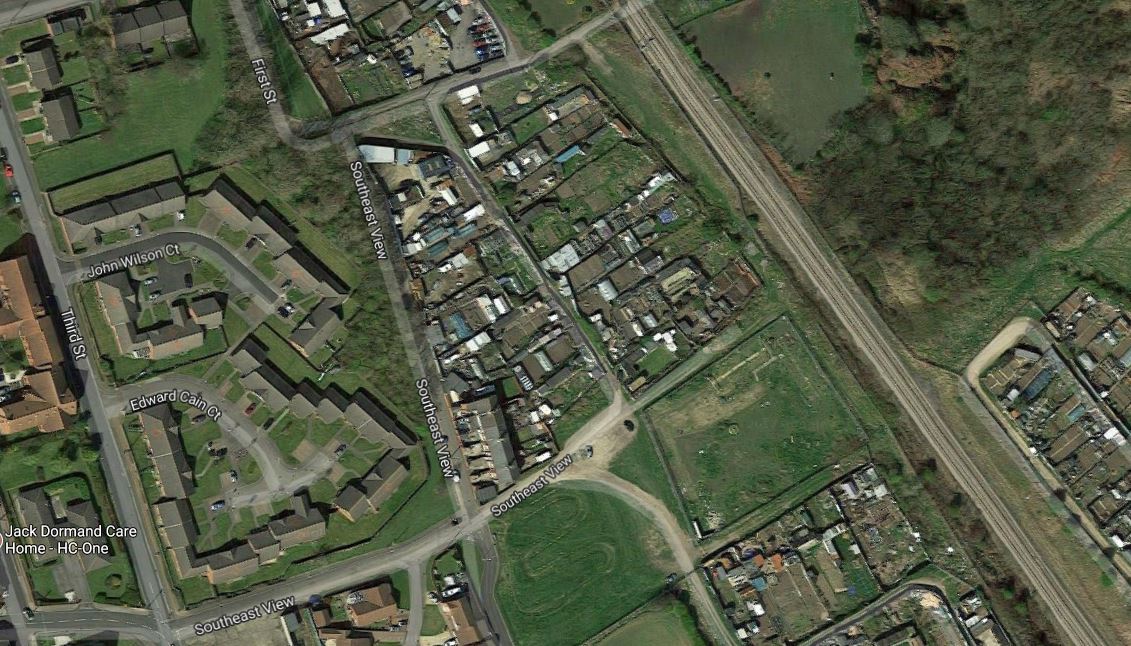
Wikipedia says this about the proposed station.
This station, if built, would have 2 platforms with waiting shelters, benches, lighting, help points and CCTV. The platforms would be linked by a covered footbridge and the station would have a car park with space for up to 100 cars as well as facilities for drop-off, taxis and bus services.
Let’s hope the lie of the land, enables the architects to design a good station.
Wikipedia also says this as the reason for building the station.
It was identified that one of the key benefits of reopening Horden station rather than any of the other closed stations on the line was its close proximity to Peterlee which has grown significantly since 1964 and thus, if constructed, a new station in Horden could allow 61,000 residents to benefit from improved access to employment opportunities across the region.
It sounds to me like this station is needed. I would hope to go when this station opens, as it could be a day to remember in Horden.
Train Services
Looking at Passenger Services in the Wikipedia entry for the Durham Coast Line, it would appear that local services between Middlesbrough and Newcastle are a bit thin, at just hourly. An important local route like this deserves to have at least two trains per hour.
Grand Central and Virgin do run trains through the area to Sunderland, but I don’t think they will stop at Horden Peterlee station.
Certainly, a smart new station deserves to have a train service to natch.
Warrington West
Warrington West station will be on the southern Liverpool to Manchester Line between Sankey and Warrington Central stations.
This Google Map shows the area of the station.
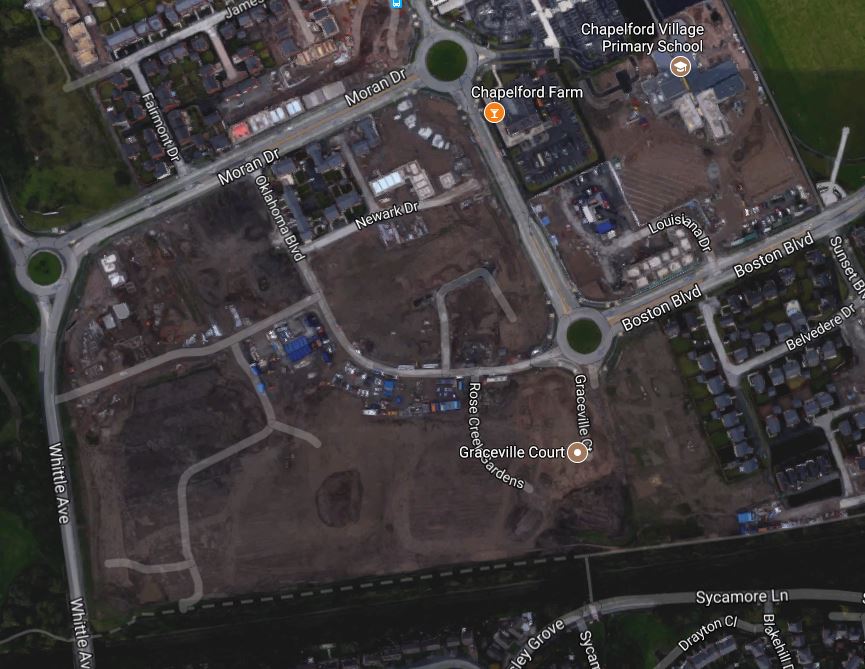
It looks like the development site in the South East corner of the map could be Chapelford urban village, with the railway running East-West across the map.
This article in the Warrington Guardian gives more details of the station.
This is a visualisation of the station.
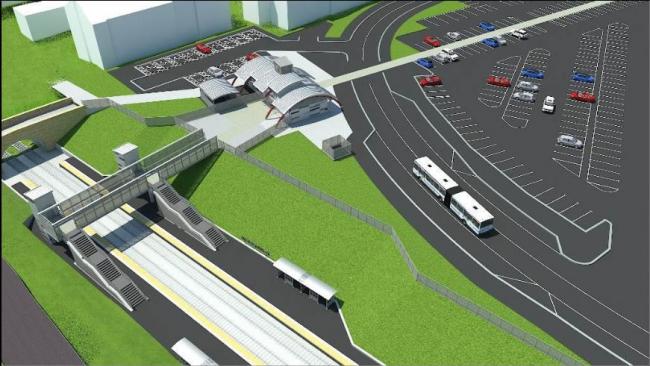
As this station is halfway between Liverpool and Manchester, I have a feeling, this could be a very busy station.
Train Services
Services at Warrington Central station has as many as eight trains per hour passing through.
There is a lot of scope to provide a quality southern service between Liverpool and Manchester calling at Liverpool South Parkway, Widnes and Warrington Central. Warrington West station could be a part of this and I could see it getting between two and four semi fast trains per hour
Reading Green Park
Reading Green Park station will be on the Reading to Basingstoke Line between Reading West and Mortimer stations.
This Google Map shows the area.
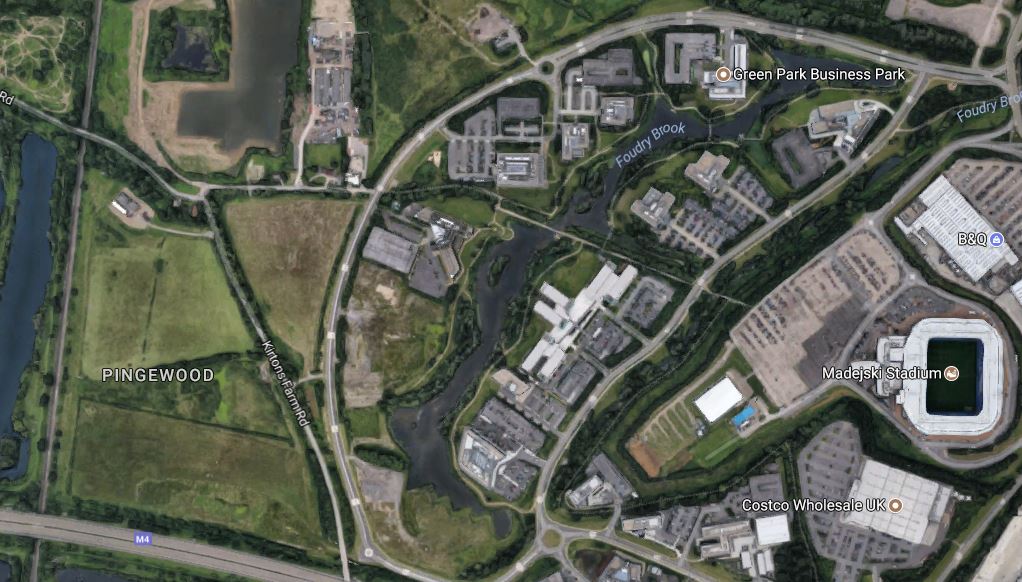
Note the Reading to Basingstoke Line down the Western edge of the map.
Train Services
It is expected that services will be at least two trains per hour at the station.
The Reading to Basingstoke Line has the following characteristics.
- It is electrified with 25 KVAC overhead at the Reading end.
- It is electrified with 750 VDC third rail at the Basingstoke end.
- It has less than fifteen miles of line without electrification,
Consequently, I feel that in a few years, this line will be within the capability of a battery powered train, charging on the short lengths of electrification at either end.
Bow Street
Bow Street station will be on the Cambrian Line between Aberwrystwyth and Borth stations.
This article on the BBC gives more details.
Train Services
The Cambrian Line has approximately pne train per hour between Aberwrystwyth and Shrewsbury.
Portway Parkway
Portway Parkway station will be a one platform station on the Severn Beach Line adoining the Portway Park-and-Ride.
Train Services
Wikipedia describes the Services on the line.
Costs Summary
This article from Railway Gazette International has a detailed summary of the costs of the five stations.
Horden Peterlee, Warrington West and Reading Green Park are medium-sized schemes to support housing and business developents and make it easier to get to employment in nearby towns and cities. But they will cost an average of £15million a station.
Certainly, where I live in Dalston and all across North London, the improved North London Line has had several positive effects.
Bow Street and Portway Parkway are small one-platform schemes, which hopefully will provide better Park-and-Ride facilities. The averae cost is a lot less at £4.5million.
Conclusion
It is well-proven that new stations are a way of increasing train usage and they are generally welcomed by train companies, passengers, residents and businesses.
But as the costs for these stations show, medium-sized full-function stations don’t come cheap.
Surely, though on the right housing or business development, designing a station into the development, as at Warrington West or Reading Green Park, must give a payback to the developer in easier sales and rentals.
The two simpler schemes would seem to be part of a trend, where well-designed one-platform stations are built for Park-and-Ride facilities, hospitals, housing developments and sporting venues.
I discuss these stations in The Rise Of One-Platform Stations.
Bow Street and Portway Parkway stations will add two more one-platform stations.
 The Anonymous Widower