Trains Along The South Coast
I had lunch today with an old friend who lives near Bosham station in West Sussex.
They indicated that the train service along the South Coast to Brighton wasn’t the best.
So I thought, I’d have a bit of an explore on Wikipedia.
The route between Ashford International and Weymouth stations can be divided into four sections.
Weymouth To Southampton – The South Western Main Line
The South Western Main Line runs between Weymouth and Southampton Central stations.
- There are twenty stations.
- The operating speed is 100 mph.
- The line is fully electrified.
- The line is double-track, except for between Dorchester South and Moreton stations.
- There would only appear to be one level crossing at Brockenhurst station.
it is a high quality electrified line, where a well-driven train can keep up a good time.
The fastest trains take an hour and twenty minutes between Weymouth and Southampton with nine stops.
Southampton To Brighton – The West Coastway Line
The West Coastway Line runs between Southampton Central and Brighton stations.
- There are thirty-nine stations.
- The operating speed is 75 mph with up to 85 mph in places.
- The line is fully electrified.
- The line is double-track.
- There are twenty level crossings, including at Portslade, Shoreham-by-Sea, Lancing, Worthing, West Worthing, Goring-by-Sea, Angmering, Ford, Chichester(2), Fishbourne, Bosham, Warblington, Bedhampton and Cosham stations.
Following the line on Google Maps, the line could probably have an increased speed limit, but the problem is obvious in the number of level crossings.
Timings on the line are as follows.
- Southampton Central to Brighton takes one hour forty-five minutes.
- Portsmouth to Brighton takes one hour twenty minutes.
- Portsmouth to Southampton takes forty minutes.
These times are for faster journeys without changes.
Brighton To Hastings – The East Coastway Line
The East Coastway Line runs between Brighton and Hastings stations
- There are seventeen stations.
- The operating speed is 90 mph.
- The line is double-track.
- The line is fully electrified.
- There are seven level crossings, including at Berwick, Polegate, Hampden Park, Westham and Pevensey, Pevensey Bay, Normans Bay stations.
Fastest journeys between Brighton and Hastings take an hour.
Hastings To Ashford International – The Marshlink Line
The Marshlink Line runs between Hastings and Ashford International stations.
- There are nine stations.
- The operating speed is 60 mph.
- The line is double-track with sections of single-track.
- The line is not electrified.
- There are several level crossings.
Fastest journeys between Ashford Internsational and Hastings take forty minutes.
The May 2017 Edition of Modern Railways has an article entitled Kent Capacity Constraints Highlighted.
One sub-section is entitled High Speed To Hastings and it lists options as to how high-speed services could be run to Hastings via Ashford International station and the Marshlink Line.
- Electrify Ashford To Hastings At 25 KVAC
- Electrify Ashford To Hastings At 750 VDC
- Use Class 802 Electro-Diesel Trains
- Use Class 395 Or Class 801 Trains With Batteries
I examined the options in full detail in Options For High Speed To Hastings.
Class 313 Trains
When I travel to the area I inevitably find that I’m travelling in a Class 313 train.
- The trains entered service in 1976.
- The trains are the oldest electric multiple units in service on the British mainland.
- The trains are only three cars.
- The trains have no toilets.
- The trains have a maximum speed of 75 mph.
Their biggest problem, is that because the trains have such a poor performance, all routes on which they are likely to run have to be geared to a train running at 75 mph, that is not the quickest at executing a stop at a station.
It should be remembered that the time a train takes to stop at a station, unload and load passengers and then restart and accelerate to linespeed, is a major factor in determining the schedule on a route with a lot of stations.
Train manufacturers and operators have been doing a lot of work to reduce this time and a modern train could be almost a minute or even more quicker than a Class 313 train, at each stop.
Wikipedia says this about the introduction of the Class 313 trains, which replaced more modern and faster Class 377 trains.
The 313s commenced operations with Southern on 23 May 2010, providing a two-trains-per-hour service between Brighton and Seaford, and some trains between Brighton and Lewes, Hove, West Worthing and Littlehampton.[12] From 13 December 2010, their operation expanded to stopping services from Brighton to Portsmouth Harbour and the Littlehampton to Bognor Regis shuttle.
The decision to use 313s on the Coastway lines has been controversial, as they are much older than the 377s and have fewer on-board passenger facilities.
The rail union RMT criticised the move and many publications including the BBC have questioned the introduction of 35-year-old trains with no lavatories in place of much newer units. These trains are deployed on services that operate predominantly over short distances, such as Brighton to Hove and Brighton to Seaford, and some longer (but stopping) services that provide predominantly local links that run alongside 377s on faster services.
The introduction of 313s on the Coastway routes facilitated the delivery of additional capacity on high-demand suburban routes in South London, where 10-car trains services are to be introduced combined with platform lengthening.
This report on the BBC gives more details.
The Major Problems Along The South Coast
Summarising the previous sections, the major problems on the route can be summarised.
- The Class 313 trains with their poor performance are not fit for purpose.
- The numerous level crossings significantly reduce the operating speed of the route.
- The lack of electrification on the Marshlink Line is a serious obstacle to better London-Hsstings services via HS1.
I would also question, if there is sufficient capacity along the line, especially as there are now three Premier League clubs along its route.
In the following section, I shall detail what is proposed and a few extra actions, that I feel should be taken.
Improve The Marshlink Line
The May 2017 Edition of Modern Railways has an article entitled Kent Capacity Constraints Highlighted.
One sub-section is entitled High Speed To Hastings and it lists options as to how Southeastern High-Speed services could be run to Hastings via Ashford International station and the Marshlink Line.
- Electrify Ashford To Hastings At 25 KVAC
- Electrify Ashford To Hastings At 750 VDC
- Use Class 802 electro-diesel trains
- Use Class 395 Or Class 801 trains With Batteries.
As to which option is chosen, Modern Railways says this.
The option to use a ‘hybrid’ electric/self-powered (diesel or battery) train is suggested as being a ‘more cost-effective way forward’, with linespeed improvements then delivered in an incremental way.
I examined the options in full detail in Options For High Speed To Hastings.
If the improvement was comprehensive, it would give the following advantages.
- High-Speed services from St. Pancras to Hastings.
- Journeys from Ashford International to Portsmouth, Southampton, Bournemouth and Weymouth would be all electric and if desired could be without a change of train.
- Better connectivity along the South Coast to Continental services at Ashford International station.
- A secondary route from London to Brighton in case of closure of the Brighton Main Line.
If an off-the-shelf solution like Class 802 trains were to be used, the improvements could be delivered in a timely manner.
Remove As Many Level Crossings As Possible
Removal of level crossings is a sensitive issue, but from Southampton to Ashford International, they are a serious limit on the operating speed of the trains.
But it is not just the trains that suffer, but road traffic as well.
Consider Hampden Park station, where Wikipedia says this about the level crossing.
The level crossing at Hampden Park is thought to be one of the busiest in the country, with an average fourteen train movements an hour off-peak, and this can lead to significant traffic congestion on adjacent roads.
As some services actually cross it twice to call at Eastbourne station, this level crossing certainly needs to be eliminated.
Improved Stations
Several of the stations have been upgraded, but I believe that step-free access and longer platforms are needed at quite a few stations.
Brighton and Hove Albion are now one of three Premier League football teams along the South Coast and Falmer station needs to be improved, so that higher-capacity trains can serve the ground on match days.
The Plans Of South Western Railway
The May 2017 Edition of Modern Railways also gives details of the plans of the new South Western Railway franchise from December 2018.
This is said.
A direct service will link Portsmouth, Southampton and Weymouth, while there will be a second hourly semi-fast service between Portsmouth and Southampton offering a total of 29 additional services between the cities on Mondays to Saturdays.
Wikipedia also says that there will be another thirty five Monday to Saturday services between London and Portsmouth, with more on Sundays.
Services Between London And Portsmouth
Currently, on a typical day there are sixty-nine down services and seventy-one up services. So as thirty-five extra services are going to be provided, then that means there will be a twenty-five percent increase in services between London and Portsmouth.
So would this mean that London to Portsmouth has a frequency of five trains per hour (tph), as against three tph for Southampton?
As South Western Railway will be introducing additional Portsmouth to Weymouth services, will this mean that there will be two fast routes to London from Weymouth?
- A direct train.
- One with a change at Havant on to Portsmouth Direct Line services.
South Western Railway have certainly thought long and hard.
The Class 313 Trains Will Go To The Scrapyard
With all the fast 100 mph trains rushing between Ashford International and Brighton and Portsmouth and Weymouth, the Class 313 trains will be worse than inadequate and the best place for them will be the scrapyard.
I just wonder though if South Western Railway’s unwanted but new Class 707 trains could replace the Class 313 trains along parts of the South Coast.
- They are 100 mph trains, probably with a good stopping performance, which could save a minute at every stop.
- They are five-car units.
- They have toilets.
As an illustration of the difference the new trains could make, the current Portsmouth to Brighton service takes around one hour twenty minutes with twenty stops.
A rough estimate indicates that Portsmouth to Brighton could be under an hour with new 100 mph trains.
The only problems would be that they couldn’t work a Marshlink Line without electrification and services along the South Coast are provided by three different companies.
Conclusion
A lot of improvement is possible in services along the South Coast.
Adjusting current timings for new trains with a better stopping performance could give the following sectional timings.
- Ashford International to Hastings – 35 minutes
- Hastings to Brighton – 60 minutes
- Brighton to Portsmouth – 60 minutes
- Portsmouth to Southampton – 35 minutes
I believe that an Ashford International to Southampton time of three hours is possible.
This is a similar time as going via London and using HS1.
Crossrail And Heathrow In Legal Dispute Over Fees
This title of this post is the title of an article in the Financial Times.
This dispute will run and run, as it is a gift to the lawyers.
As it is the greedy owners of Heathrow, won’t allow Crossrail trains to go directly to Terminal 5, which means you will have to use the Piccadilly Line or change trains.
But I think, that there are obstacles to Heathrow’s plans to rip-off passengers.
- They still need to get Planning Permission for the Third Runway.
- Transport for London will start to upgrade the Piccadilly Line in 2019 and new trains will arrive in 2022.
- Heathrow Express will still only get you to Paddington at a rip-off price.
The other winner could be Gatwick, who seem to want to work with Transport for London, rather than fight with them.
The New Orchard At Hackney Downs Station
I took these pictures of some of the new trees installed on the sunny side of Hackney Downs station.

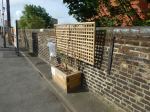

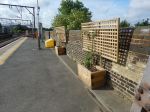
It surprised me, that they are apple trees.
Cambridge Gets Its Own Mini-Crossrail
This morning I went to see the very newly-opened Cambridge North station.


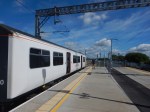
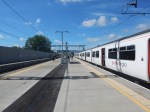
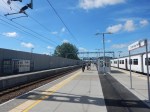


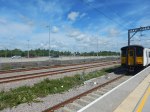
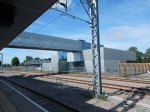

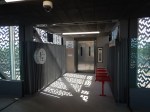
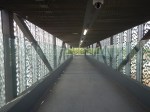

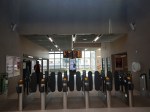




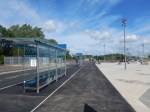


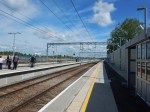
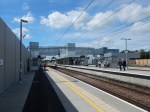
The station is probably best described as a Parkway station close to the Cambridge Science Park and the A14 on the Northern Side of Cambridge.
The station is not short of facilities and service pattern.
- Two through platforms and one bay platform, all capable of taking a 12-car Class 700 train.
- Two avoiding lines for freight trains.
- Full step-free access.
- 450 car park spaces.
- Parking under cover for a thousand bikes.
- Access to the Cambridgeshire Guided Busway.
- Close to the A14.
- Customer toilets.
- A proper ticket office and several ticket machines.
- A square outside to meet people if it’s sunny.
- Retail units and some greenery will be added later.
- Currently, it is planned for about four trains per hour to stop at Cambridge North station in each direction.
According to this article on the BBC, the station cost £44million.
It is all pretty impressive and practical.
Are Cambridge, Cambridge North, Waterbeach and Ely stations the first four stations of a Cambridge Mini-Crossrail or Metro?
Consider.
- Cambridge South station could be built close to Addenbrooke’s Hospital.
- Lines fan out from Ely to Bury St. Edmunds and Ipswich, King’s Lynn, Norwich and Peterborough.
- Lines will fan out to the South of Addenbrooke’s to Bedford, Hitchin and Kings Cross, Stansted and Liverpool Street.
- Cambridge station has more platforms than many terminal stations.
- Cambridge North station has space for extra platforms.
- A lot more trains could stop in the stations.
It will be interesting to see how the system develops in the future.
The Changing Face Of Cambridge
I took these pictures, as my train to Cambridge North station, made a stop at Cambridge station.

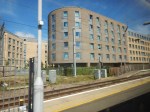


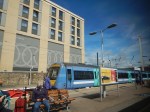
There’s certainly been a lot of new building.
Over the years, I’ve seen Cambridge station change from a simple station, where staff had to work hard to juggle terminating and through trains to maintain a decent service into a major rail interchange with the following platforms.
- Two very long through platforms; 1 and 7, capable of taking the longest trains on the UK rail network.
- Platform 1 is actually bi-directional and can be used as two shorter platforms; 1 and 4.
- Two London-facing bay platforms; 2 and 3 capable of taking eight-car trains.
- Two North-facing bay platforms; 5 and 6, capable of taking six-car trains from Ipswich, Norwich, Peterborough and the North.
- A twelve-car platform; 8, that can be used as either a through or a bay platform.
Is there another regional station in the UK with such a comprehensive layout?
Cambridge station and its new sibling a few miles to the North are certainly ready for all the rail developments planned to happen in the next few years.
- Thameslink arrives in 2018
- Greater Anglia’s new trains arrive in 2019.
- The East-West Rail Link could arrive in the mid-2020s.
I would not be surprised if Cambridge created the Trinity by starting the proposed new Cambridge South station at Addenbrooke’s Hospital in the next couple of years.
After all, a third station, will give Cambridge one more station than Oxford.
Crossrails For The North
Regularly there are references in the media for Crossrail for the North.
This article in Rochdale Online is entitled Andy Burham calls for ‘Crossrail for North’
Note that the misspelling of Andy Burnham; the Mayor of Manchester’s name is from the web site.
Andy Burnham and many others have a point that West-East connections across the North are not good, but it is not that simple.
Hence the reason, I’ve called this post Crossrails For The North and not Crossrail For The North.
Northern And London Crossrails Compared
If you look at Greater London, the distance between Reading and Shenfield stations, which are two of the termini of London’s Crossrail, is about eighty miles and when Crossrail opens a train will take about one hour forty minutes.
By comparison, Liverpool to Leeds is just over seventy miles and the current fastest trains take ninety minutes with two stops at Manchester Victoria and Huddersfield stations.
Those that live East of Leeds, keep reading.
The differences between the two routes, when Crossrail opens will be mainly down to the number of stops, frequency and connectivity.
- The Northern Route is shorter and hence marginally faster.
- The London route has more stops.
- The London route has a higher frequency.
- The London route is electrified.
- The London route will be served by specially-designed Class 345 trains.
But possibly most importantly, the London route connects to a large number of North-South cross-city railways.
It is sensible to think of London’s Crossrail as a loose ball of chunky knitting wool with a big fat needle stuck through it.
The ball of knitting wool is Central London with all its Underground and Overground Lines.
- Bakerloo Line – North-West – South-East through City Centre
- Central Line – West-East through City Centre
- District Line – West-East through City Centre
- East London Line – North-South to East of City Centre
- Gospel Oak to Barking Line – West – East to North of City Centre
- Hammersmith and City Line – West – East through City Centre
- Jubilee Line – North-East through City Centre
- Metropolitan Line – West – East through City Centre
- Northern Line – North-South through City Centre
- Northern City Line – North from the City Centre.
- North London Line – West – East to North of City Centre
- Piccadilly Line – North – West through City Centre
- Thameslink – North – South through City Centre
- Victoria Line – North-East – South-West through City Centre
- Waterloo and City Line – South from the Centre Centre
- West London Line – North-South to West of City Centre
Crossrail is the big fat needle struck right through the middle.
You could actually argue that not just one big fat needle is through the middle, as Crossrail is paralleled by some of London’s historic Underground Lines.
- The Central Line connects at Stratford, Liverpool Street, Tottenham Court Road, Bond Street and Ealing Broadway stations.
- The District Line connects at Whitechapel and Ealing Broadway stations.
- The Metropolitan Line connects at Whitechapel, Farringdon and Paddington stations.
- In the future, the North London Line will connect at Stratford and the new Old Oak Common station.
Crossrail is going to be a massive playground for the duckers-and-divers, as they search for the fastest route.
How London Crossrail Will Develop
London Crossrail is not a complete system, with certain connections not of the best.
- Eurostar from St. Psncras International
- HighSpeed services from Stratford International
- HS2
- Piccadilly Line
- Scottish and Northern services from Euston and Kings Cross
- Victoria Line
Several of these connections can be addressed by smaller projects like the necessary rebuilding of tube stations like Bank, Charing Cross, Euston and Oxford Circus.
A lot of London politicians are pushing for Crossrail 2 , but London will be given a big increase in capacity with Crossrail and I think there is an opportunity to redefine the scope of the later project, in the light of what happens after Crossrail opens.
Consider the following, which will happen after Crossrail opens.
- Huge pedestrianisation will happen in the City of London and the West End.
- Hopefully, walking in large parts of Central London will improve to the standard of the bus- and car-free Central Liverpool.
- On foot interchanges like Oxford Circus-Bond Street and Bank-Liverpool Street will be easier and quicker than now.
- The long-neglected and ill-fated Northern City Line is getting new trains, higher frequencies and hopefully a deep-clean of the stations.
- Liverpool Street and Moorgate stations will effectively become one station with world class connectivity.
- The Waterloo and City Line will be improved and probably go 24/7!
- Waterloo station will get a forty percent capacity increase this summer.
- The Northern Line Extension to Battersea will open in 2020.
- New trains will have been delivered for London Overground’s Liverpool Street and Gospel Oak to Barking services.
Londoners will fully exploit the network and importantly Transport for London will have detailed information from the ticketing system on the routes taken and the bottlenecks as they develop.
Access For All
Access for All is a National programme, that is making stations all over the country accessible to as many passengers as possible.
Check the list of stations being updated under Access For All
After the General Election, I would not be surprised to see funding for this programme increased all over the country, as it is both necessary and a quick way to attract more passengers to the railways.
New Stations
Since 2000, seventy-four new stations have opened or reopened.
I can rarely remember stations reopening last century, but the 4-5 new stations every year since the turn of the Millennium, seems to have continued this year with the opening of Cambridge North, Ilkeston and Low Moor
The New Franchises
Five franchises have been awarded lately.
- Greater Anglia
- Northern
- ScotRail
- South Western Trains
- TransPennine
A feature of all these franchises is that the operators are introducing a lot of new trains and substantially refurbishing others.
Will this trend continue?
Obviously, the operators have done their sums and find that new trains attract more passengers.
There is a major problem with new trains, in that capacity to build them must be getting very short. I also don’t think that Chinese trains will be welcomed.
If I was Prime Minister, I’d make sure there was enough capacity to build and refurbish trains in the United Kingdom.
Building Crossrail 2
There is no doubt that at some time in the future, Crossrail 2 will be built.
But unlike Crossrail, which is a massive project similar in size to the Channel Tunnel,, the electrification of the Great Western Railway or HS2, it is a collection of smaller projects that can be phased over the years, with each phase giving substantial benefits to London, train companies and passengers, be they Londoners, commuters, visitors or tourists.
I would build it in the following sequence of sub-projects.
- Four-Tracking Of The West Anglia Main Line – Extra capacity on the West Anglia Main Line is needed for both improved London-Stansted-Cambridge services and Crossrail 2.
- New High-Capacity Crossrail-Compatible Trains North of London – Greater Anglia and London Overground have already ordered these trains to replace the current thirty-year-old trains.
- Station Improvements North of London – Improvement are much needed and are already planned and underway at Tottenham Hale and Meridian Water.
- Improve Connection To Sub-Surface Lines At St. Pancras Station – The current connectivity is terrible between these lines and Thameslink and the HighSpeed lines to Kent.
- Connect Euston Square Tube Station To Euston Station To Give Extra Capacity During Euston Rebuilding For HS2
- Introduction Of A New Stratford-Tottenham Hale-Angel Road Service – The delivery date for STAR is 2019.
- Introduction Of Chingford-Walthamstow-Stratford Services – This would improve access to Crossrail and take pressure from the Victoria Line.
- New Stansted And Cambridge Services From Stratford – Greater Anglia have suggested this and there’s even an unused loop at Stratford, that could be used to turn trains and allow them to call at Stratford International for Eurostar to the Continent and HighSpeed services to Kent.
- More Terminal Capacity for Trains From North of London – The Stratford loop would increase the terminal capacity for Greater Anglia and also give access to the Jubilee Line for London Bridge, Waterloo and Westminster.
- Use Improved Capacity At Waterloo To Increase Services On Proposed Crossrail 2 Southern Branches – The extra capacity should help.
- New High-Capacity Crossrail-Compatible Trains South of London – South Western Trains have indicated this will happen.
- Station Improvements South of London – Improvements are much needed.
- Rebuild Euston Tube Station In Cnjunction With HS2 –
Only when these phases are completed, would the central tunnel be bored.
This step-by-step approach has several advantages.
- The pace of the project can be geared to the finance and resources available.
- Some developments can have a significant local design and scope input.
- Much needed stations can be built early to generate passengers and cash flow.
- Trains can be follow-on orders to Crossrail.
- The suburban sections of the route will always be available for passenger traffic.
When Crossrail 2 is complete, the second big fat knitting needle has been stuck in the ball of wool.
What Can The North Learn From London?
I would argue that one of the keys to London’s success over the years has been its comprehensive multi-layered public transport system.
- Crossrail, Crossrail 2, Thameslink and the Overground could be considered the top layer.
- The Underground, the Docklands Light Railway and the suburban electric trains are the middle layer.
- Buses form the local and bottom layer.
Underneath a walking and cycling layer is emerging.
The North of England can be considered a series of local transport networks, which are connected by a series of major lines, which are equivalent to London’s Crossrail, Crossrail 2 etc.
Northern Connect
I find it interesting that Northern are introducing a Northern Connect service, which Wikipedia describes as follows.
From December 2019, Northern will operate a network of twelve Northern Connect interurban express services. Eleven of these will be operated by brand-new Class 195 diesel multiple units and Class 331 electric multiple units, whilst the Middlesbrough to Carlisle via Newcastle route will be operated by refurbished Class 158 units.
Places that will be served by Northern Connect routes include Bradford, Chester, Halifax, Leeds, Liverpool, Manchester, Middlesbrough, Nottingham, Newcastle, Preston, Sheffield, Barnsley, Lincoln, Wakefield and York.
Local Networks In The North
Some of the local Northern networks in places like Leeds, Liverpool, Manchester, Newcastle, Nottingham and Sheffield are certainly better than others.
It could also be argued that the six cities I named, are among the most successful and vibrant cities of the North.
I feel that for the railways to be successful in the North and for some cities to have a major improvement in prosperity, that some of the local networks need substantial improvement.
TransPennine And Feeder Routes
The starting point is to detail the Northern Connect and TransPennine Express services in the North.
The Northern Connect services given in the January 2016 Edition of Modern Railways are as follows.
- Middlesbrough to Newcastle
- Newcastle to Carlisle
- Hull to Sheffield
- Nottingham to Bradford via Leeds
- Lincoln to Leeds via Sheffield and Barnsley
- Liverpool to Manchester Airport via Warrington
- Chester to Leeds via Warrington, Manchester Victoria and the Calder Valley
- Blackpool North to York via Preston and Leeds
- Barrow to Manchester Airport
- Bradford to Manchester Airport via the Calder Valley.
- Blackpool to Manchester Airport
- Windermere to Manchester Airport
I suspect plans have changed since January 2016, but the possible routes are a good start.
According to Wikipedia, TransPennine routes are as follows.
- Liverpool Lime Street to Newcastle via Manchester Victoria, Huddersfield, Leeds and York
- Manchester Airport to Middlesbrough via Manchester Piccadilly, Huddersfield, Leeds and York
- Manchester Airport to York via Manchester Piccadilly, Huddersfield and Leeds
- Liverpool Lime Street to Scarborough via Manchester Piccadilly, Huddersfield, Dewsbury, Leeds and York
- Manchester Piccadilly to Hull via Huddersfield, Dewsbury, Leeds and Selby
- Manchester Airport to Cleethorpes via Manchester Piccadilly, Stockport, Sheffield, Meadowhall and Doncaster
- Manchester Airport to Edinburgh Waverley/Glasgow Central via Manchester Piccadilly
These routes will change in the next year, when the Ordsall Chord opens.
The opening of the chord, may mean that certain services to Manchester Airport, will not need to reverse at Manchester Piccadilly.
Summarising the East-West routes across the Pennines gives.
- Newcastle to Carlisle
- Manchester Victoria to Leeds via the Calder Valley Line
- Manchester Victoria to Leeds via Huddersfield
- Blackpool North to Leeds via Preston and the Calder Valley Line
- Manchester Piccadilly to Doncaster via the Hope Valley Line and Sheffield
None of these lines are fully electrified.
They are also connected to their ultimate destinations by feeder lines.
- Liverpool to Manchester Airport via Warrington
- Chester to Manchester Victoria via Warrington
- Liverpool to Manchester Victoria
- Leeds to Newcastle via York
- York to Middlesbrough
- York to Scarborough
- Leeds to Hull
Only the following lines will be fully electrified by December 2017.
- Liverpool to Manchester Victoria
- The West Coast Main Line
- The East Coast Main Line
- Some Suburban Routes in Blackpool, Liverpool, Manchester and Preston
- Some Suburban Routes in Bradford and Leeds
Most of the routes will have to be run by diesel or bi-mode trains.
The Crossrails For The North
There are five East-West routes across the Pennines used by Northern Connect and TransPennine Express.
- Newcastle to Carlisle
- Manchester Victoria to Leeds via the Calder Valley Line
- Manchester Victoria to Leeds via Huddersfield
- Blackpool North to Leeds via Preston and the Calder Valley Line
- Manchester Piccadilly to Doncaster via the Hope Valley Line and Sheffield
To these I would add two extra lines.
- Leeds to Carlisle via Settle
- Preston to Leeds via Burnley, Colne and Skipton.
Note
- I have added the Settle-Carlisle Line, as it is world-renowned, is in excellent condition and if provided with a decent train service, could be a major attraction, that would bring tourists to the area.
- The Skipton to Colne Line should be reinstated, to create a direct connection between the electrified local networks servingLeeds/Bradford and Liverpool/Manchester/Preston.
But there would be seven magnificent routes across the Pennines, which could be updated to the following objectives.
- Frequent trains on all lines with at least two trains per hour (tph)
- 100 mph running where possible.
- As high a frequency as possible on the core section between Manchester Victoria and Leeds. Plans exist for six tph, which is a good start.
- In the East trains would fan out to Cleethorpes, Grimsby, Hull, Newcastle and Scarborough, as they do now.
- In the West trains would fan out to Blackpool, Chester, Crewe and Liverpool.
- Lots of cross-platform connections at stations like Leeds, Liverpool, Manchester Victoria, Newcastle, Preston and York with long distance North-South services to London and the South and Scotland.
- All stations would be step-free with lifts or ramps.
In addition provision should be made early to make sure that there are good connections to HS2.
Electrification
Obviously, electrification would be an ultimate goal on all these East-West routes.
But there are various problems with the electrification of the Peenine sections of the routes.
- These lines have large numbers of low bridges and high viaducts.
- Electrification would need to be robust because of the weather.
- Electrification gantries might not fit well in the scenery.
- Installation and servicing of overhead electrification may not be an easy process.
On the other hand, the noise of diesel trains might not be welcomed.
However, I believe that in the next ten years much quieter self-powered trains will be commonplace.
At the present time, if diesel or bi-mode trains are acceptable, then they should be used to provide a service.
Looking at the various feeder routes to the East and West of the Pennine sections, it is a different matter.
- Routes are less challenging.
- There are fewer bridges and viaducts.
- Installation and servicing of overhead electrification would be easier.
There is already a lot of electrification at the East and West, which could be extended to places like Chester, Hull and Middlesbrough.
A Pennine core without difficult electrification, between electrified feeder routes may be the most efficient way to run the routes using bi-mode trains.
It might be sensible to use Class 88 bi-mode locomotives instead of the currently proposed Class 68 locomotives with rakes of coaches, as is planned by TransPennine Express.
A Hull to Liverpool service would run under the following power.
- Hull to Bradford via Leeds – Electricity
- Bradford to Stalybridge- Diesel
- Stalybridge to Liverpool via Manchester Victoria – Electricity.
Around thirty miles would be on diesel and the difficult electrification in the Pennines would be avoided.
Infrastructure
This table is a brief summary of the routes.
- Newcastle to Carlisle – Double track, 18 stations
- Manchester Victoria to Leeds via the Calder Valley Line – Double track – 17 stations
- Manchester Victoria to Leeds via Huddersfield – Double track – 14 stations
- Blackpool North to Leeds via Preston and the Calder Valley Line – Double track – 14 stations
- Manchester Piccadilly to Doncaster via the Hope Valley Line and Sheffield – Double track – 18 stations
- Leeds to Carlisle via Settle – Double track – 10 stations
- Preston to Leeds via Burnley, Colne and Skipton – Part Single track
Note.
- Most routes are double track, which aids train scheduling.
- All except Skipton to Colne seem to be in good condition.
- I can’t find much information about speed limits.
I think it is true to say, that none of the routes could be a high speed line, although a large proportion could have substantial speed increases.
From what I have seen in East Anglia, I suspect most routes could be upgraded to 100 mph, which with the train frequencies of say four tph could give a substantial increase in service quality.
Stations
Many of the secondary stations on these routes are not blessed with facilities like ticket machines, lifts and step-free access.
If I compare, what I see on the web, with what I have experienced in East Anglia, the quality of the smaller stations is not good.
Services
The services along the lines are not of a high frequency or of a high speed, but Northern and TransPennine Express intend to increase frequencies and speed.
The new trains with their faster stops will help.
This is said about the Future Services of TransPennine Express on Wikipedia.
A twice-hourly service between Manchester and Newcastle will be phased in between December 2016 and December 2017, made up of the existing service from Liverpool and a reinstated service from Manchester Airport. Trains between Liverpool and Newcastle will be extended to Edinburgh via the East Coast Main Line, giving a twice-hourly service between Leeds and Edinburgh together with an hourly CrossCountry service. Trains between Liverpool and Scarborough will be rerouted via Manchester Victoria and Newton-le-Willows to provide a half-hourly fast service between Liverpool and Manchester. It is also planned to operate a six train per hour frequency between Manchester and Leeds, up from five today.
I can’t find anything about timings.
A High Speed Line
Building a new high speed line will be difficult, expensive and may take years, as there will probably be a need for a costly tunnel through solid rock between Manchester and Leeds.
So a prudent Project Management strategy could be phased in the same way I proposed for London’s Crossrail 2.
- Increase Line Speed – This would probably give the largest benefit, as it would enable more and faster trains.
- Electrify From Leeds To York – This would enable TransPennine’s Class 802 trains between Liverpool/Manchester Airport and Newcastle/Edinburgh to run more efficiently.
- Electrify From Liverpool To Manchester Airport Via Warrington – This would tidy up electrification between Liverpool and Manchester.
- Electrify To Chester From Crewe and Warrington – This would link North Wales to the TransPennine routes.
- Electrify From Leeds To Hull – This would be a comparatively easy electrification.
- Create The Skipton To Colne Link – This would link the two Norhern suburban electric networks and become a valuable transport asset for both local residents and visitors.
- Improve Stations – Better facilities and atep-free access is desperately needed. Especially at secondary stations.
- Improve Local Networks In Selected Cities – Some are much better than others.
- Increase Train Frequencies – Run at least two tph on all routes.
Hopefully, a decent service can be provided, until a new high speed route can be built.
One great advantage that this project has compared say to the electrification of the Great Western Railway, is that because there are several current routes, if one needs to be closed for a short time, there is a suitable alternative.
Cross City Rail Lines
This list of cross-city rail lines is for my own information.
The line must go from one side of the city to another, with at least one stop in the City or Town Centre.
United Kingdom
Birmingham
- Camp Hill Line – West-East to South of the City Centre
- Chase Line – North-East – South-West through City Centre
- Cross-City Line – North-East – South-West through City Centre
- Midland Metro – North-West – South-East through the City Centre
- Snow Hill Lines – North-South through the City Centre
- West Coast Main Line – North-West – East through City Centre
Brighton
- East Coastway and West Coastway – West-East through City Centre
Liverpool
- Northern Line – North-South through City Centre
- Wirral Line – Loop to/from Wirral under City Centre
London
- Bakerloo Line – North-West – South-East through City Centre
- Central Line – West-East through City Centre
- Crossrail – West-East through City Centre
- District Line – West-East through City Centre
- East London Line – North-South to East of City Centre
- Gospel Oak to Barking Line – West – East to North of City Centre
- Hammersmith and City Line – West – East through City Centre
- Jubilee Line – North-East through City Centre
- Metropolitan Line – West – East through City Centre
- Northern Line – North-South through City Centre
- North London Line – West – East to North of City Centre
- Piccadilly Line – North – West through City Centre
- Thameslink – North – South through City Centre
- Victoria Line – North-East – South-West through City Centre
- West London Line – North-South to West of City Centre
Northern City Line and Waterloo and City Line go partly under the City Centre, but not across it.
Birmingham Airport Mulls Plan For Terminal Inside HS2 Station
This is the title of an article in Construction News.
This Google Map shows Birmingham Airport, the current Birmingham International station, the NEC, with the M42 Motorway going North-South down the Eastern side.
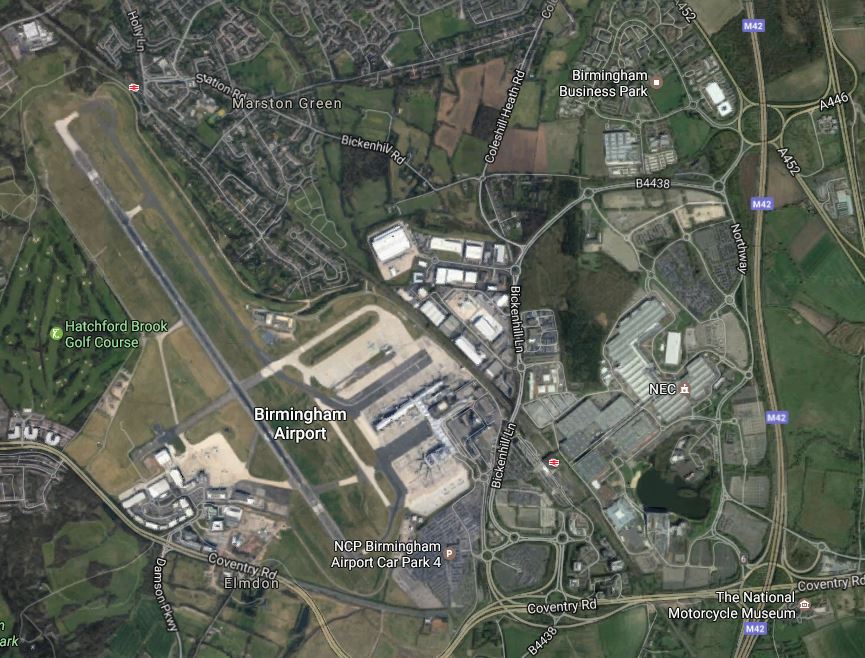
Currently, it is planned that the Birmingham Interchange station for HS2, would be on the other side of the M42 to the NEC.
Surely, the Construction News headline is indicating that something better can be done.
In an ideal world, Birmingham Airport would have one station for HS2, West Coast Main Line and local train and tram services, with a step-free lift/escalator connection between all platforms and both Departures and Arrivals at the Airport.
Conservative Manifesto On The Railways
The Conservative Manifesto says this on railways.
We will focus on creating extra capacity on the railways, which will ease overcrowding, bring new lines and stations, and improve existing routes – including for freight. We will increase services on our main lines and commuter routes, and launch new services to places which are poorly served or host major new housing projects.
This would seem a sensible policy and it is probably very little different to what has been done over the last fifteen years.
- Quite a few new trains have been procured.
- New rail and tram lines like the London Overground, the Borders Railway, the Manchester Metrolink, the Midland Metro and others have been opened.
- Around seventy new stations have been opened.
- Some lines have been electrified.
- Some lines have been improved and resignalled.
- Mechanisms have been developed , so that developers can help to provide stations for their new developments.
But there is one big difference.
A lot of quality trains are now being replaced by new or much better trains in the next few years.
- Virgin Trains East Coast‘s and First Great Western‘s InterCity 125s are being replaced by new Class 800 trains.
- Thameslink’s Class 319 trains are being replaced by new Class 700 trains.
- Greater Anglia‘s Class 90 locomotives and Mark 3 coaches are being replaced by new Stadler FLIRTs.
- Greater Anglia’s Class 379 trains are being replaced by new Stadler FLIRTs.
- Greater Anglia’s Class 156 trains are being replaced by new Stadler FLIRTs
- Greater Anglia’s Class 170 trains are being replaced by Stadler FLIRTs.
- Greater Anglia’s Class 321 trains are being replaced by new Class 720 trains.
- Greater Anglia’s Class 317 trains are being replaced vt new Class 720 trains.
- Greater Anglia’s Class 360 trains are being replaced by new Class 720 trains.
- London Overground‘s Class 172 trains are being replaced by new Class 710 trains.
- Various operators have Class 317 trains, which will be replaced by new trains.
- Heathrow Connect’s Class 360 trains are being replaced by new Class 345 trains.
- TransPennine Express wil be returning twenty-two Class 185 trains to the leasing company.
- TrnsPennine Express’s Class 350 trains will be replaced by new Class 397 trains.
Some of these were built this century and will have plenty of takers, whilst others despite being a lot older have already been earmarked for substantial refurbishment.
Remember that, just as our architects and builders are good at taking ruins and creating high quality dwellings, offices or commercial buildings, our engineers, designers and train building and refurbishment companies are good at taking trains of an advanced age and creating high quality trains and locomotives, as comfortable, reliable, safe and passenger, crew and operator-friendly, as new ones straight from the factory.
In What Train Is This?, I show a refurbished Great Western Railway Class 150 train. This picture shows the quality that can be achieved, by refurbishing a thirty-year-old Mark 3-based train.
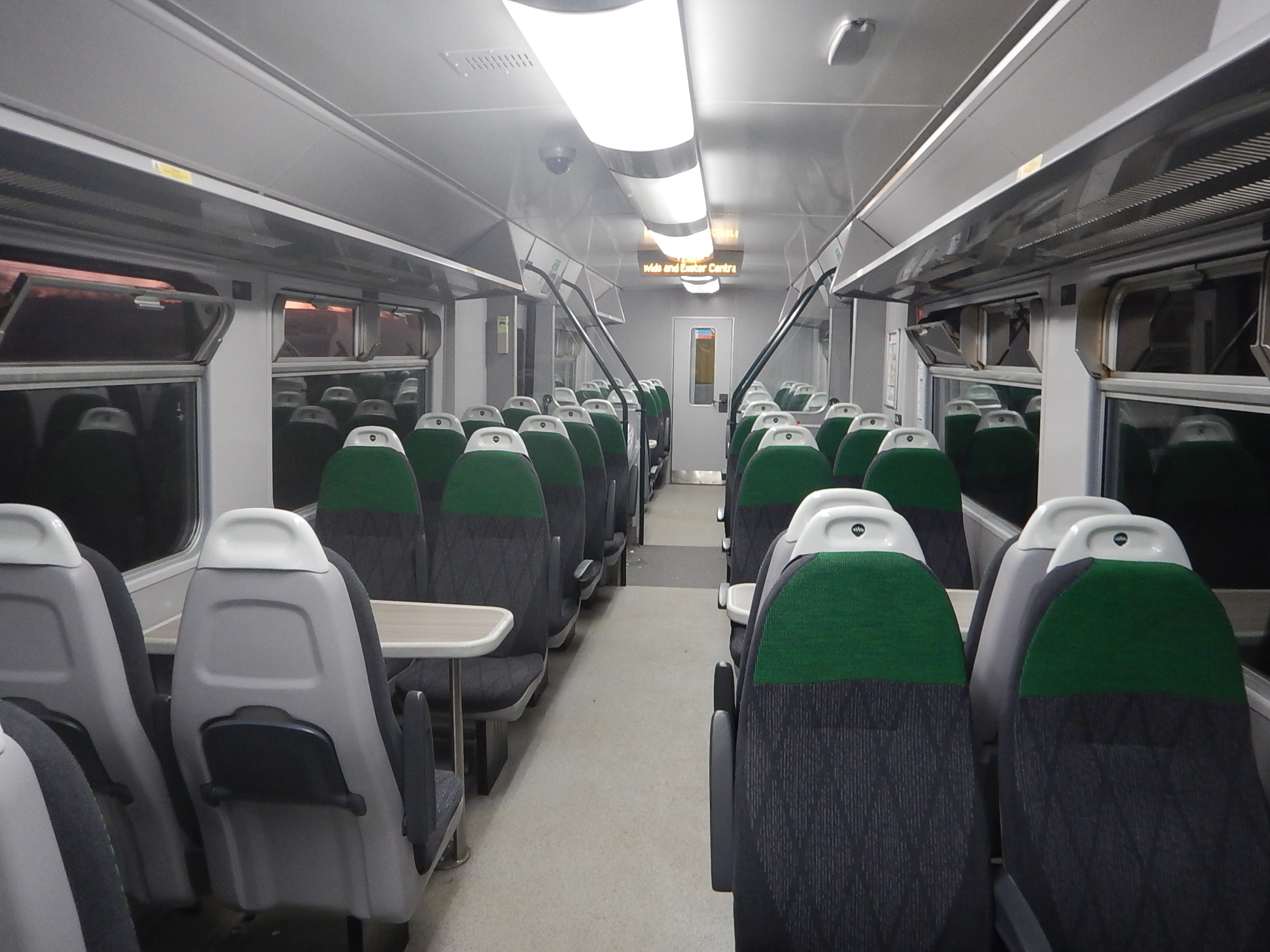
Who would complain about this superb refurbishment, which I suspect was done by Great Western Railway’s depot at Laira in Plymouth?
This table summarises what has been planned and what trains are worth saving.
- Forty of the hundred InterCity 125 sets are being converted into quality four and five carriage trains for ScotRail and Great Western Railway – Equivalent to forty four-car diesel trains.
- Some InterCity 125 sets might end up as high-speed parcel trains. Although if Scotrail and Great Western Railway prove the Pocket Rocket four-car HST to be viable, other companies may copy the concept.
- Will the 137 Class 150 trains be refurbished to the standard shown in the picture?
- The 114 Class 156 trains can be refurbished to a high standard for local routes. – Perhaps half will go to new operators.
- The twelve Class 170 trains were built in 1999 and will go to another oiperator – Probably equivalent to another six four-car diesel trains,
- The 72 Class 317 trains are in surprisingly good condition for thirty-year-old trains. They are also 100 mph units and Mark 3-based. If Network Rail were good at electrification, they would find a home. They are seventy-two four-car electric trains.
- The 86 Class 319 trains will find homes, with some converted into Class 319 Flex bi-mode trains. – Probably equivalent to another thirty four-car trains, of which some would be electric and some bi-mode.
- The Class 90 locomotives will go to freight operators.
- The 130 Mark 3 carriages will find a use, as they always do. Chiltern probably need some more.
- The 100 Class 321 trains could be refurbished and go to another operator. They are 100 four-car electric trains .Some could even be converted to bi-modes.
- The 10 Class 350 trains were built in 2013 and will go to another operator. They are 10 four-car electric trains.
- The 26 Class 360 trains were built in 2002 and will go to another operator. They are twenty-one four-car and five five-car electric trains.
- The 30 Class 379 trains were built in 2010 and will go to another operator. They are thirty four-car electric trains.
The totals in four-car trains are roughly as follows.
- Diesels and bi-mode – 100 – 50 already allocated
- Electric – 170
These totals don’t include all the plans.
What will the new owners of these franchises do?
- East Midlands
- London Midland
- Southeastern
- South West Trains
- Wales
Only South West Trains has been settled and it looks they’ll be releasing the new Class 707 trains.
Conclusion
It does look that there could be enough diesel trains.
- There could be quite a number of Sprinters, Class 170, Class 172 and Class 185 trains, which after refurbishment could be providing excellent service for perhaps another twenty years.
- The pride of lions in the room will be the shortened InterCity 125s, that Scotrail and First Great Western are creating and introducing in the next couple of years.
- Will they have cubs or be imitated, by creating rakes of four or five Mark 3 coaches, with a Class 43, Class 68 or Class 88 locomotive at each end?
- TransPennine Express have already ordered Mark 5 coaches and Class 68 locomotives to do the same thing.
- A hybrid electric/diesel/battery locomotive could be used with the coaches. Hitachi created such a beast from a Class 43 some years ago and the Germans are experimenting.
Terry Miller should be awarded a posthumous knighthood, as his amazing stop-gap design that saved British Rail forty years ago, could be about to play an encore.
If there is a problem, it is that there are a lot of electric trains.
- The more recent ones like Class 379, Class 350, Class 360 and Class 707 trains will probably find homes in places like Birmingham, Leeds, Liverpool, Manchester and Scotland.
- Surely, Class 379 trains would be ideal on shorter distance services to Manchester Airport, as they were designed for Stansted services.
- If the Class 319 Flex train is a success, expect to see more of these trains converted to 100 mph dual-voltage four-car bi-modes trains.
There is still a lot of electric trains to be allocated.
The Class 319 Flex train may be based on the forty-year-old Mark 3 coach design, but I believe it fits the specification of the train we need to expand our rail services.
- 100 mph on either 25 KVAC overhead or 750 VDC third-rail electrification.
- 90 mph on diesel.
- Four-coaches meeting all regulations laid out to the operator’s required configuration.
- Can work in eight and twelve car formations.
- Ability to go on virtually all rail lines in the UK.
- Proven reliable systems.
- In service by the end of 2017.
- Liked by the drivers
- Fits the niche below the five-car Hitachi Class 800 bi-mode.
But above all there are numerous Class 319 trains available for conversion and they are affordable.
If the concept takes off in a big way, then the engineers would just move on to the Class 321 trains.
But there will still be a lot of quality electric trains left over.
They will have to be scrapped or exported, unless Network Rail can get its electrification work into line.
Perhaps we will see limited electrification between existing electrification and major cities and junctions, with services run by bi-mode, battery or diesel trains to jump the missing electrification.
Areas where this approach might work could include.
- South Yorkshire between Leeds, Wakefield, Doncaster, Sheffield and Rotherham.
- North Yorkshire between Leeds, Skipton, Harrogate, Ripon and York.
- East Yorkshire between Doncaster, Hull, York and Scarborough.
- Blackpool, Preston, Blackburn, Clitheroe, Burnley, Colne and Hebden Bridge.
- Southport, Preston, Kirkby, Wigan and Manchester.
- Crewe, Chester, Wrexham, Shotton and the Wirral.
- Darlington, Middlesbrough and Teesside.
- Birmingham, Snow Hill and Camp Hill Lines
- Edinburgh to Dundee and the branches to Leven and St. Andrews.
Engineering is the Science of the Possible, whereas Politics is Dreaming of the Impossible.
A Class 345 Train Passing Stratford Station
I took these pictures of a Class 345 train, as it passed through Stratford station.




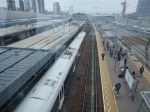

The pictures were taken from the pedestrian bridge that connects Eastfield to the station.
Note.
- Pantographs on cars two and six.
- Both pantographs are up.
- The rounded ends of each car.
- The generally smooth roof.
Points 3. and 4. are probably there to improve the aerodynamics.
I found this snippet on the Internet which gives the formation of the new Class 345 trains.
When operating as nine-car trains, the Class 345 trains will have two Driving Motor Standard Opens (DMSO), two Pantograph Motor Standard Opens (PMSO), four Motor Standard Opens (MSO) and one Trailer Standard Open (TSO). They will be formed as DMSO+PMSO+MSO+MSO+TSO+MSO+MSO+PMSO+DMSO.
So as both PMSO cars are there, I would assume that the current seven-car trains are two MSO cars short of a full-train.
The power cars/total cars ratio will be as follow.
- Seven-car train – 0.86
- Nine-car train – 0.89
Could this mean that the full nine-car trains will accelerate faster?
I suspect Bombardier know a lot about passenger behaviour in walk-through trains running in the UK and London in particular, as London Underground’s S Stock and London Overground’s Class 378 trains have similar layouts, with all and eighty percent of the cars powered respectively.
If passengers even themselves out between the cars and most cars are powered, this must surely help the dynamics of the train.
Passengers too, probably have a better ride if they are spread out along the train.
It will be interesting to ride in a full train between Shenfield and London, to see how the Self Loading Cargo behaves.
 The Anonymous Widower