Step-Free Interchanges In East London
This map from carto.metro.free,fr shows the lines around where I live, which can be best described as a post code of N1.
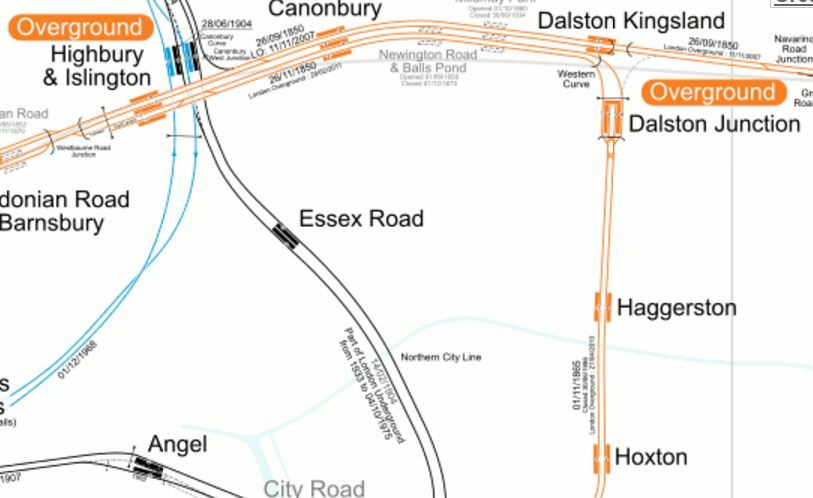
Lines Around N1
I live halfway on the diagonal line between Dalston Kingsland and Essex Road stations. Years ago, there used to be a station at Mildmay Park, between Dalston Kingsland and Csnonbury, which if it still existed would be very useful for me, as it would be about a hundred and fifty metres away.
So my journeys often start from one of the half dozen bus routes, that have stops within fifty metres or so of where I live.
- I’ll take a 38, 30, 56 or 277 to Dalston Kingsland or Dalston Junction stations for the North London Line and East London Line respectively.
- I’ll take a 141 to Manor House station for the Piccadilly Line.
- I’ll take a 38 or 56 bus to Essex Road station for the Northern City Line
- I’ll take a 38 or 56 bus to Angel station for the Northern Line.
- I’ll take a 21 or 141 bus to Moorgate for the Metropolitan and Circle Lines
- I’ll take a 21 or 141 bus to London Bridge for main line trains.
- I’ll take a 21 or 141 bus to Bank for the Central and Waterloo and City Lines
- I’ll take a 56 bus to St. Paul’s for the Central Line
- I’ll take 30 bus to Kings Cross, St. Pancras and Euston for main line trains.
Who said the three most important things when buying a house, are location, location and location?
Strangely, I rarely go directly to Highbury and Islington station, as the station is one of the worst in London for passenger convenience, with long and crowded tunnels and no step-free access to the deep tunnels.
If I need to go North on the Victoria Line, I will sometimes go to Essex Road and then take the Northern City Line for one stop to Highbury and Islington station, where there is a step-free level interchange to the Victoria Line.
There are several of these interchanges in East London, making train and tube travel easier.
Northern City And Victoria Lines At Highbury And Islington Station
This map from carto.metro.free.fr, shows the layout of lines at the station.
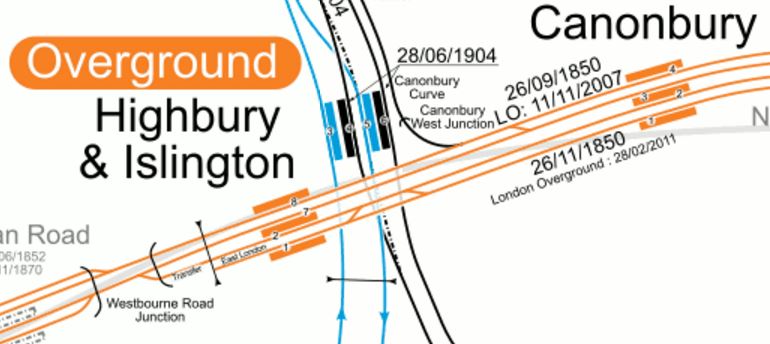
Note how the two Northbound lines and the two Southbound lines of the Victoria and Northern City Lines are paired, so that passengers can just walk through one of several short tunnels that connect the two platforms.
This connection will get more important in the future, as improvements will bring more passengers through the interchange.
- Highbuty and Islington station will be rebuilt, with access to the deep level platforms much improved.
- If traffic said it was needed, the Southbound and Northbound deep-level platforms, which are not far apart might even be connected together and to a second entrance on the other side of Holloway Road.
- The Northern City Line is getting new Class 717 trains, which will give an increase in capacity and I believe that the frequency on the Northern City Line will improve to 6, 8 or even 10 trains per hour (tph), thus making my ducking and diving easier.
- The Northern City Line will connect to Crossrail and for the first time N1 to lots of places, will be one change at Moorgate from the Northern City Line to Crossrail.
- The Victoria Line will increase in frequency to possibly 40 tph and benefit from station improvements at stations like Tottenham Hale, Blackhorse Road and Walthamstow Central.
It should also be noted how the Crossrail connection at Moorgate will help me.
When going to football at Ipswich, I may walk to Essex Road and then get a train to Moorgate, where I will take Crossrail to perhaps Shenfield for a fast train to Ipswich.
But who knows what I’ll do, as there will be several different routes, all of which will have their advantages?
East London Line To North London Line At Highbury And Islington Station
This is only from the East London Line trains arriving from West Croydon in Platform 2 at Highbury and Islington station to Westbound trains on the North London Line in Platform 7.
Although not as powerful as the double interchange at Highbury and Islington station between the Victoria and Northern City Lines, it is typical of well-thought out connections all over the Overground.
Piccadilly And Victoria Lines At Finsbury Park Station
This is a cross-platform interchange, that is heavily used as effectively it gives a simple choice of route through Central London for passengers from the Northern ends of the Piccadilly and Northern Lines. It’s a pity that the interchange between the two lines at Kings Cross St Pancras and Green Park aren’t as simple.
Metropolitan/District And Central Lines At Mile End Station
This picture gives a flavour of the interchange at Mile End station.
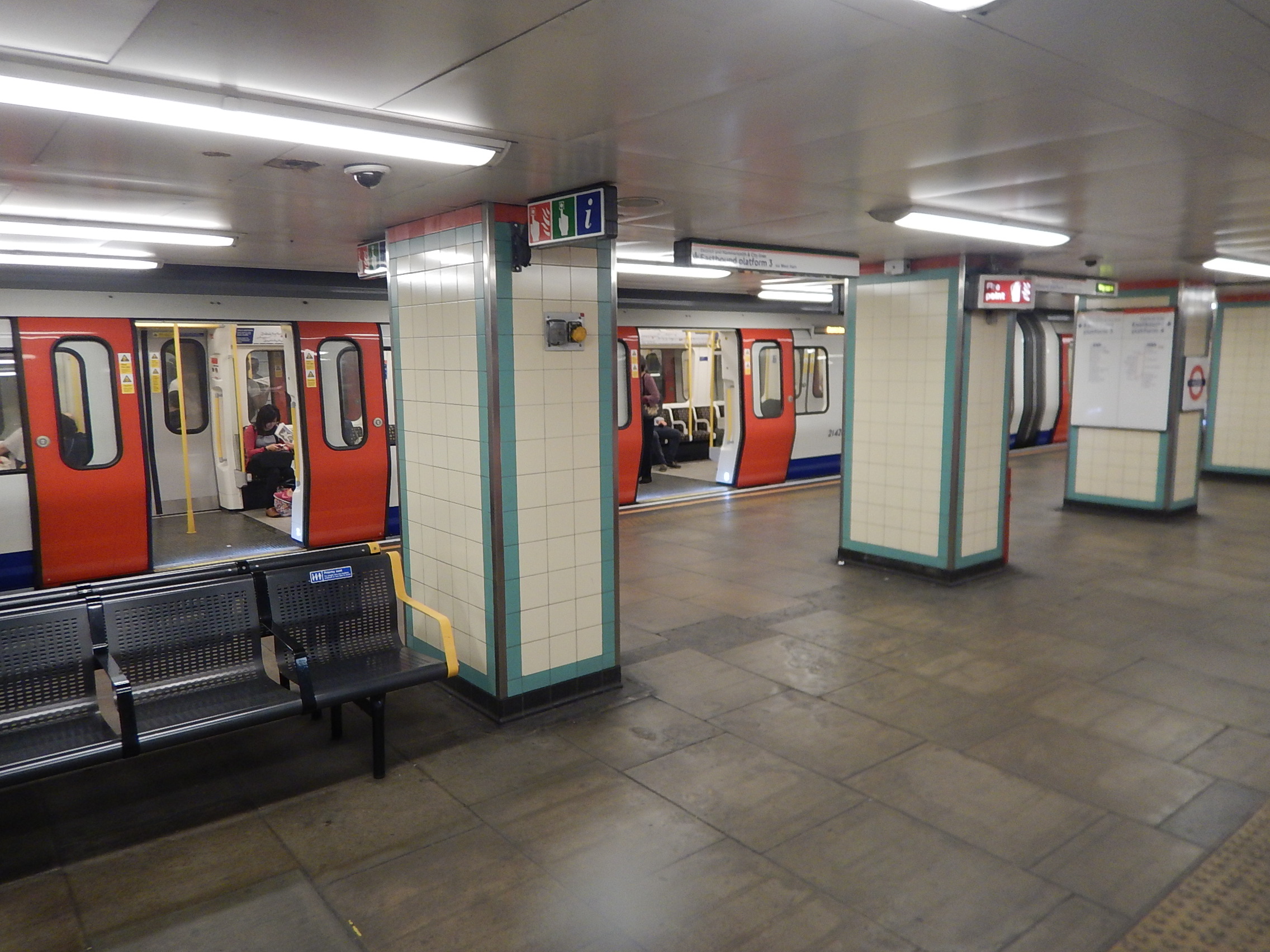
Cross-Platform Interchange At Mile End Station
It is a cross-platform interchange, that I use more and more, to go to the East on the Central Line. I usually arrive on a Metropolitan/District Line train from Whitechapel station, which is just a few stops down the East London Line.
Central Line And Shenfield Metro/Crossrail At Stratford Station
This interchange at Stratford station is going to be an integral part of Crossrail, as it will firmly connect the new line to the Central Line, with advantages to both.
This picture shows the interchange on the Eastbound platform.
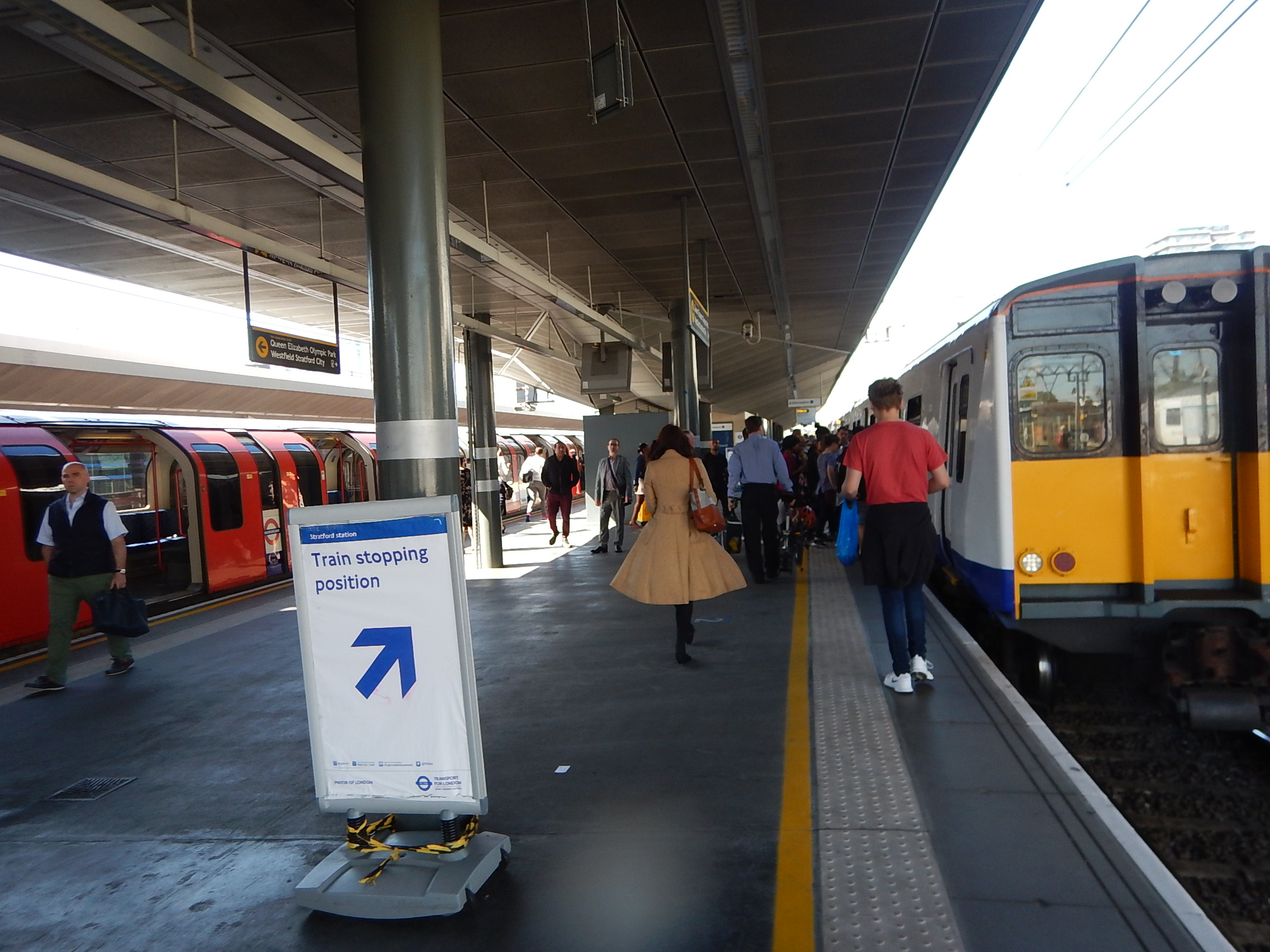
Central Line To Shenfield Metro/Crossrail Interchange
This interchange is certainly well-used and Crossrail will only increase that use.
Why Is This Not Done More Often?
These interchanges seem to work well!
But what always puzzles me, is why this layout is not used more often. And I don’t just mean in London. In all my travels, I can’t remember getting off a train in Europe and just walking across the platform to get a metro or a tram.
I suspect it could be because to get this type of interchange, you need to build some expensive railway infrastructure.
All of the examples I have given concern where a new line is being added to an existing network.
I am surprised that Crossrail doesn’t use a similar interchange anywhere else on its route.
Look at the Crossrail stations I documented in How Are Crossrail’s Eastern Stations Progressing?
In all stations, the Crossrail and fast lines are in pairs, whereas to get Cross-platform interchange between fast and stopping services, probably needs a different layout. That is not the fault of Crossrail, but the way the Great Eastern Main Line was built decades ago.
At the London end of the East Coast Main Line, the two slow lines are on either side of the two fast lines. At Stevenage, they have put two island platforms between the slow and fast lines, so that passengers have a cross-platform interchange between trains.

Stevenage Station
The Google Map clearly shows the layout.
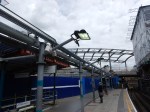
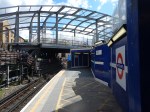
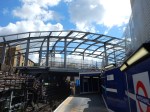
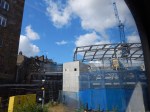
The Frame Of The New Roof At Whitechapel Station Takes Shape
I’ve been through Whitechapel station several times in the last few days and I’ve taken these pictures of the structure of the new roof.

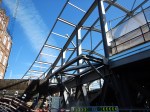

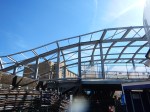
This image from the Whitechapel station page on the Crossrail web site, shows what I take to be a visualisation of the inside.

The ticket hall seems big enough for the performance of a large troupe of appropriate dancers
How Are Crossrail’s Eastern Stations Progressing?
I took a train to Shenfield and back again, taking pictures on the way.

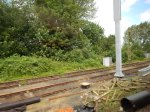
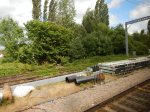
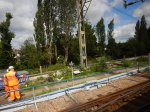
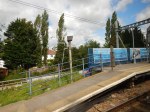


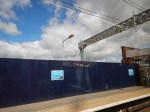
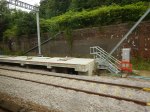



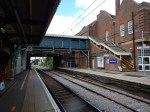

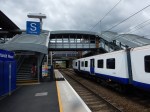
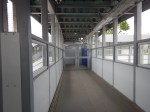
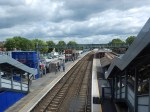
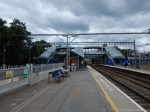

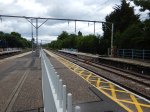
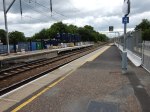
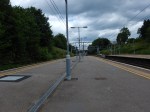
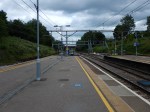




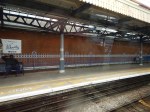
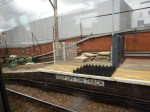
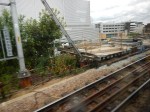
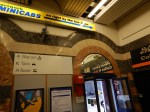
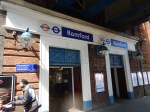

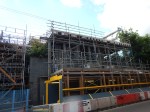
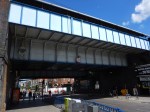
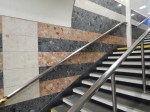
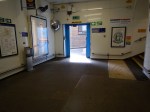
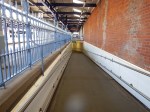
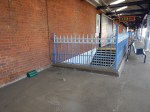
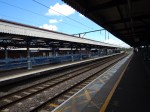
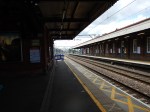
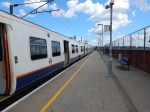
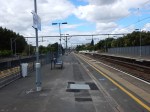
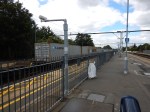
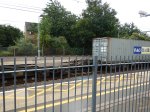
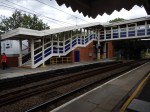

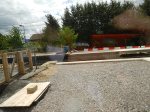
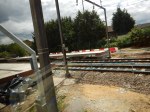
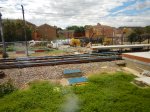
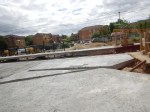
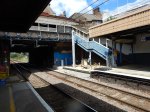
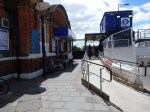

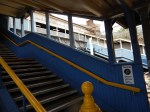
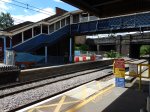
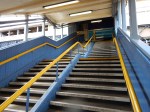
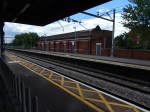
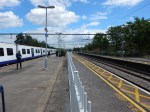
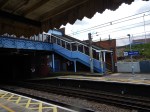
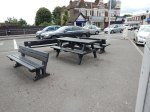
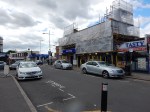
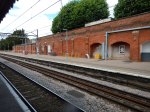

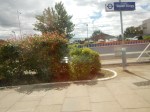
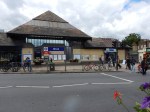
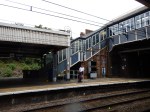


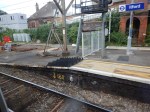
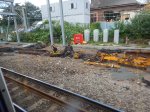


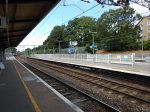


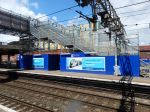
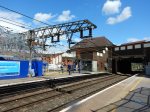
Before discussing the stations, it is worth reading this extract, from the Wikipedia entry for the Great Eastern Main Line.
The GER was grouped in 1923 into the London and North Eastern Railway (LNER). In 1931/32 the LNER quadrupled the tracks to Shenfield which became the terminus for inner-suburban operation.
In the 1930s a flyover was constructed just west of Ilford to switch the main and electric lines over, to enable main line trains to utilise Liverpool Street’s longer west side platforms without having to cross east side suburban traffic in the station throat. The new arrangement also facilitated cross-platform interchange with the Central line at Stratford, with services commencing in 1946. Either side of the Ilford flyover there are single-track connections between each pair of lines, with the westbound track extending to Manor Park and just beyond. The eastbound track extends as far as Ilford station. It was also envisaged that a flyover would be built at the country-end of the carriage sidings at Gidea Park to allow trains bound for the Southend line to change from the main line to the electric line, instead of at the London-end of Shenfield as they do now.
Plans were drawn up in the 1930s to electrify the suburban lines from Liverpool Street to Shenfield at 1500 V DC and work was started on implementing this. However, the outbreak of the Second World War brought the project to a temporary halt and it was not until 1949 that the scheme was completed with electrification being extended to Chelmsford in 1956.
So it could be said that the quadrupling of the tracks to Shenfield, was the legacy of Sir Nigel Gresley and his team, that has enabled Crossrail to be easily extended to the East.
I suspect that Crossrail’s engineers, regret that the flyover at Gidea Park, as proposed in the LNER plans, was never built. It would have helped one of Crossrail’s problems and that is how you fit two Southend trains per hour, that call at Stratford, Romford, Gidea Park, Harold Wood, Brentwood, Shenfield and then all stations to Southend Victoria into Crossrail’s eight trains per hour schedule. I wouldn’t be surprised if Southend Victoria becomes an extra terminal for Crossrail, that receives four trains per hour.
On the other hand, the foresight of Gresley’s team would appear to have led to one of the most powerful features of Crossrail in the East, which will be the cross-platform interchange between the new line and the Central Line.
This 1930s rebuild also explains, why the stations have .a solid feel of the first half of the twentieth century, which means that some of the stations although needing a lot of work, are solid underneath and all seem to be capable of upgrading, rather than needing the substantial rebuilding of some of the stations in the West.
Summing up the stations, you would say the following.
Shenfield
Shenfield station is already fully step-free.
- The station building probably just needs sprucing up.
- The platforms all seem to be long enough, as Platforms 1, 2 and 3 take twelve-car Class 360 trains and Class 321 trains.
- Platforms 4 and 5 aren’t much shorter, but may need to be lengthened, especially as trains will go through the station to new Eastern sidings.
- The space for the new Platform 6 has been created, but work is continuing on the platform and track.
- Work on the track is also continuing to update the electrification to a modern standard and the two western sidings that Crossrail trains will use.
Given that a proportion of passengers will probably want to interchange between Crossrail, services up and down the Great Eastern Main Line and to and from Southend Victoria, I do wonder, if there will be a reorganisation of stopping patterns for the longer distance services between Shenfield and London.
The works at Shenfield station, would appear to be taking a well-built mainly 1930s station and turning it into a terminus for Crossrail able to handle up to twelve trains per hour and an interchange with services to Colchester, Ipswich, Norwich, Southend and all points to the North and East of East Anglia.
Brentwood
Brentwood station has a lot of work completed or underway.
- The station office seems to have been refurbished.
- There are only lifts to the central Platforms 2 and 3.
- Platform extensions to all four platforms are underway.
- The bridge seems to be being refurbished rather than replaced.
I can find no references to lifts for Platform 1 and 4.
The works at Brentwood station would appear to be much simpler than Shenfield, but from the look of the new entrance and the visualisation in the Brentwood station web page on the Crossrail web site, they will create a very capable two platform station for Crossrail.
Harold Wood
Harold Wood station has a lot of work completed or underway.
- A new bridge has been installed, but not completed.
- Lifts are to be installed.
- Platform extensions to all four platforms are underway.
- The platform buildings seem to have been refurbished.
I would also assume that the station office will be refurbished.
The works at Harold Wood station, show that it will be good station, with a good interchange between Crossrail and services on the fast lines.
But why is there such a good interchange between the two sets of lines? Is it just because Brentford is not a full interchange?
Or is it so that the services to and from Southend Victoria can still call??
Gidea Park
Gidea Park station is very much a work in progress.
- A new bridge is being built with lifts under the largest plastic umbrella in London.
- Platform extensions to all four platforms are underway.
- The platform buildings seem to have been refurbished.
The works at Gidea Park station will create another good station, that has an excellent step-free interchange between Crossrail and the fast lines.
I must ask the same questions as I did for Harold Wood.
Romford
Romford station doesn’t appear to be seeing much work yet.
According to the Romford station page on the Crossrail web site, this is being done.
- A substantially improved ticket hall with revised entrances
- Three new lifts for step-free access to platforms
- Platform extensions to accommodate the new 200 metre long Crossrail trains.
This is obviously in addition to revised and improved signage, help points and seating.
Romford station from the pictures looks to be a solid station with nice period features, with some excellent marble and quality ironwork.
Chadwell Heath
Chadwell Heath station is very much on the way to be ready.
- A new footbridge has been built and commissioned.
- Platform extension work is underway.
- A turnback siding has been built east of the station.
I didn’t check out the actual station building, but this web page from Crossrail has a visualisation.
Goodmayes
Goodmayes station is in the process of being updated.
- The current footbridge is being updated.
- Three lifts will be added to provide step-free access to all platforms.
- The station building is being rebuilt.
- Platform extension work is underway.
The works at Goodmayes station will create a good suburban station, by building on the existing station office and footbridge.
Seven Kings
Seven Kings station is going through refurbishment.
- Lifts will be added
- The station building looks like it will be substantially rebuilt.
- The area outside the station will be improved.
From the pictures, it does appear that the station is one of the few with a picnic table outside.
Ilford
Ilford station is scheduled to be completely rebuilt according to the Ilford station page on the Crossrail web site.
- A new spacious, modern and bright station building on Cranbrook Road
- A larger ticket hall with simplified ticket facilities and larger gate-line
- A full refurbishment, by Transport for London, of the York Mews entrance
- New lifts for platforms 1, 2/3, and 4
- Platform extensions to accommodate the new 200 metre long Elizabeth line trains.
Only the platform extension seems to be starting.
At least the visualisation on the Crossrail web site seems promising, with a large pedestrianised area in front of the station.
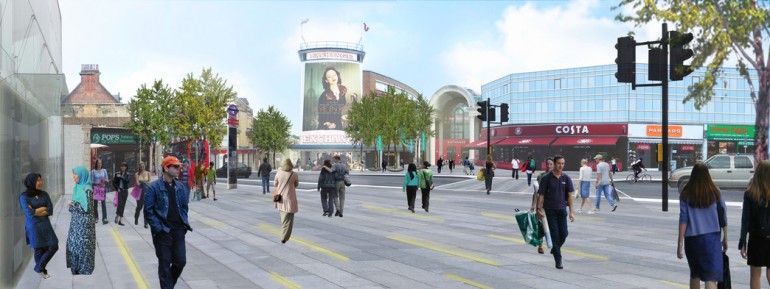
Arriving At Ilford Station
This picture was taken from the right and shows the current traffic in the area.
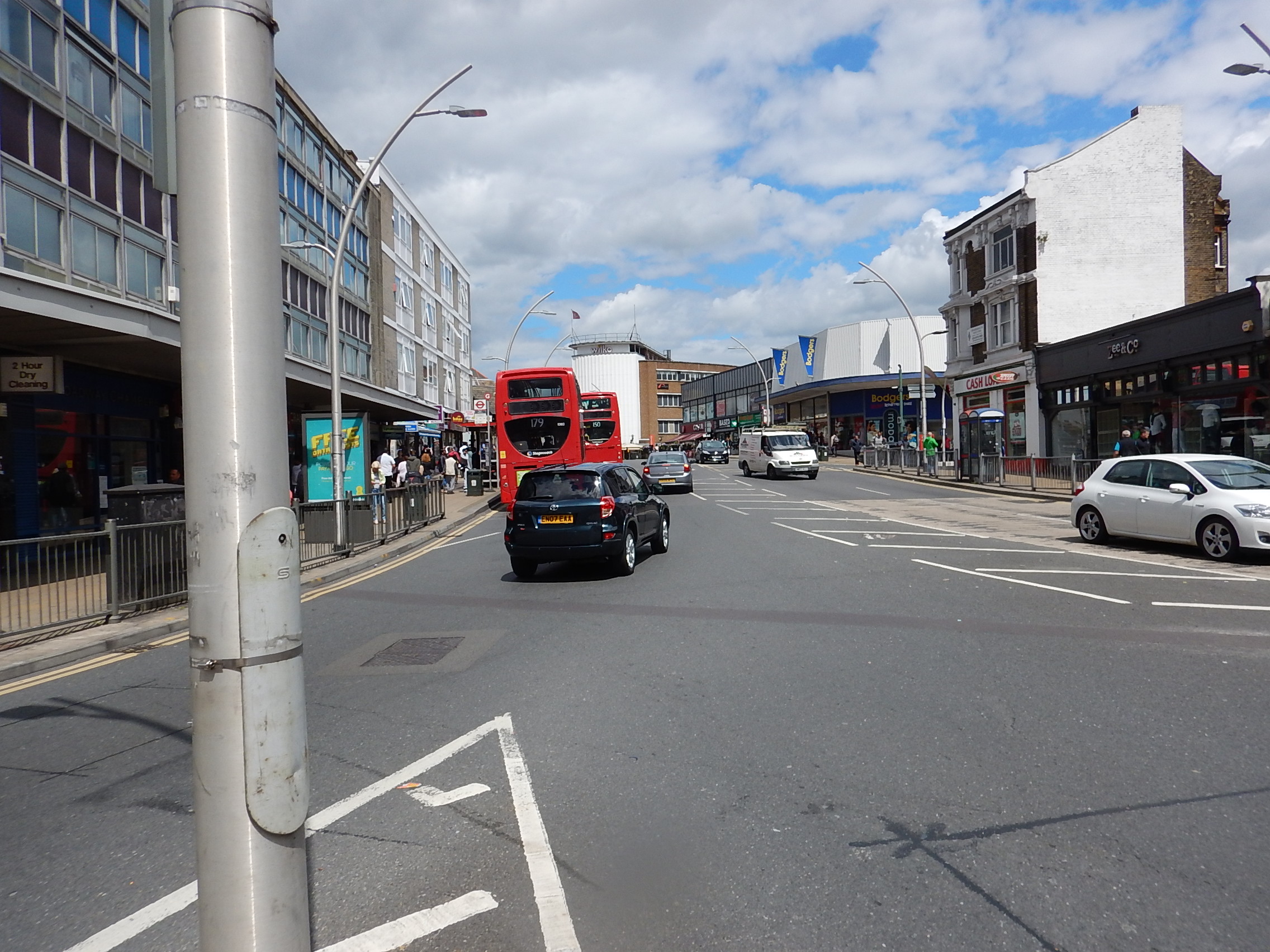
In Front Of Ilford Station Now
As with Romford, the station is right in the middle of the shopping area.
Manor Park
Manor Park station is undergoing refurbishment. This is said about the station in Wikipedia.
Manor Park will be fully served by Crossrail from 2019 but part of the route is scheduled to open in 2017 and new Class 345 trains will enter service. Platforms 1 and 2 are only 168 metres (184 yd) and 185 metres (202 yd) long respectively and cannot physically be extended to accommodate the new trains, which will be over 200 metres (220 yd) in length, so selective door operation will be utilised. The freight loop around platform 1 is due to be removed and replaced by a new loop line further down-line, west of Chadwell Heath.
Due to the narrow platforms and the layout of the station, fitting lifts for disabled access would be difficult, requiring the walkways to be rebuilt and closing parts of the station for several months. The station will receive new ticket machines and gates, an accessible toilet and new retail space.
As the Manor Park web page on the Crossrail web site, says new lifts will be installed, I suspect this station will face several months of closures.
Given its location by the Southern end of Epping Forest, I do wonder, if it could be a Crossrail station with a walking and picnic area close by. This Google Map shows the station and the green space to the North.
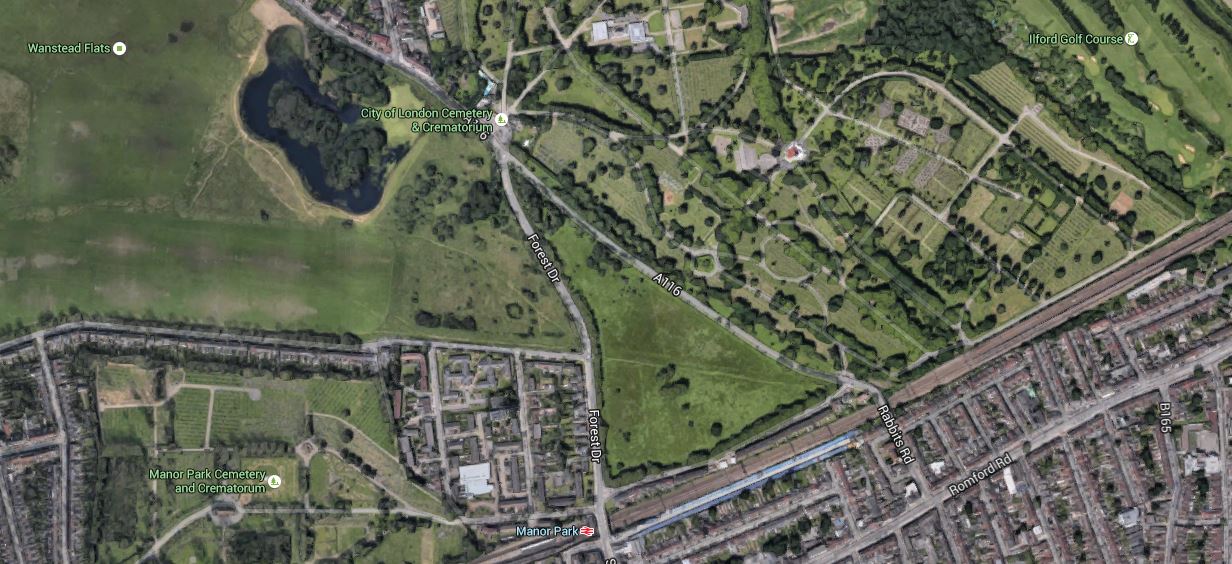
North Of Manor Park Station
As the area is mainly controlled by the City of London and there are also two large cemeteries, I suspect that any development will be totally appropriate. I suspect too that there are a lot of walks through the area to stations on the Central and Gospel Oak to Barking Lines.
Brexit And The Abolition Of Slavery
In my view, voting for Brexit is the same sort of independent decision, equivalent to the passing of the Slevery Abolition Act of 1833.
Both votes were opposed by large sections of the population and commerce.
I know slavery still exists, but who would deny, that what happened in 1833, was right and proper with hindsight of nearly two hundred years?
I think the Brexit vote will change Europe for the better, as we are by no means the only country, where the voters disapprove of Brussels!
Although, I support staying in Europe, I’ve never been in favour of appointed presidents with political power and vast armies of civil servants.
Is Everybody Keeping Calm And Carrying On?
Perhaps, I should have excluded the Welsh from this, as they may be carrying on, but they certainly haven’t kept calm, as the Dragon rampages through France.
I ask this question because since the Brexit vote on June 23rd, there has not been much real news.
There has been no mass redundancies, the financial markets have settled and there have been no pro- or anti-Brexit riots on the streets.
The only real news from the Government was from George Osborne, who made the decision not to balance the budget by 2020.
It’s reported in this article on the BBC, which is entitled Osborne abandons 2020 budget surplus target.
The national media is obsessed with who will be leading the Labour and Tory parties.
I’m actually taking a practical attitude to these elections.
- Who leads the bitterly-divided Labour Party, is about as relevant these days to the UK, as who is the captain of the Mongolian football team.
- When the Tory party is in crisis, a leader usually appears, who although unfancied does at least a competent job for a few years.
The Tory party will still be here in a decade or so, but without the Sword of Europe hanging over it.
As to the Labout Party, who knows? Party members don’t!
We are facing a fascinating remainder of this year, where these important questions will be answered.
- Will Wales win Euro 2016?
- Will Andy Murray win Wimbledon?
- Will Leicester City carry on next season as they did last?
- Will Mo Farah complete a double-double of the five and ten thousand metres?
- Will Chris Froome win a third Tour de France?
- Will the weather improve and the sun break through?
- Will we ever see any electric trains running on the Great Western?
We will just carry on and apply an appropriate demeanour.
Is A Secondary Effect Of London’s Air Pollution Making Me Ill?
There is no doubt, that i am suffering from a vitamin D deficiency, as it has been measured and I have several of the classic symptoms. Several of my friends seem to be suffering too!
As a coeliac, I get no or little vitamin D from my food, as vitamin D is not added to gluten-free food, so I rely on the sun for my vitamin D.
And there has been very little of that over the last few years in London and the South East of England.
I take vitamin D supplements and these help, but if say I get half an hour in strong sunlight, I feel a lift and a lot better.
I got to wondering, if London’s pollution is cutting out the UVB radiation that I need to generate vitamin D in my skin.
I can’t find any scientific paper, which shows the effect of airpollution on UVB radiation.
Now my health has got worse over the l;ast decade or so, which is a time that corresponds to more diesel cars polluting the atmosphere.
I may be talking sabsolute claptrap, but if I could find a scientific paper, I might be able to be proven wrong.
But I can’t get iot out of my head, that all these diesels are producing pollution, that is cutting the UVB radiation. As my health was appalling in the 1950s, during the legendary London smogs, I wonder if there is a connection.
Unfortunately, to many UVB radiation is an evil as it causes skin cancer. So anything that cuts UVB radiation levels is to be welcomed.
Crossrail In The Home Straight
Crossrail’s opening dates are only just over a couple of years in the future and this article in Rail Engineer, which is entitle Crossrail – The Deadline Is looming, describes what is happening on the Eastern branch to Shenfield.
The article is a must-read and details how the project is organised, to make sure it is delivered on time and on budget. The last paragraph sums up the project.
In engineering terms, this project couldn’t be described as ‘cutting edge’ but, in railway engineering terms, it would be hard to find a more complex environment to work in with potential challenges at every step. Costain has reached almost two million man-hours on the project, and the team is confident that all of the deadlines will be met and train testing will be underway after November 2016 as planned.
East London and East Anglia have fed on scraps for decades and I think that meeting the target of November 2016, so trains can be tested, is highly likely.
Is This How To Do Small Business?
Opposite Ed’s Shed in De Beauvoir Town is an old factory block of indeterminate age, with little architectural merit.


So what is happening?
It is being turned into a series of units for small businesses called the De Beauvoir Block.
Surely, we need more initiatives like this?
I should say, that although De Beauvoir Town is mainly residential, tucked into lots of the nooks and crannies , there are small business units.
Like the De Beauvoir Block, many have been created by the landowner, the Benyon Estate.
The estate are not distant, like many of the owners of large parts of our cities, but seem to want to create a vibrant and prosperous community.
After all, modern economics says they would make more money by flattering the block and building tower blocks of buy-to-leave flats.
The biggest tragedy of the area is that parts of De Beauvoir Town were demolished in the 1960s to build anonymous local authority housing, some of which has already been rebuilt.
The good thing though, is that there are still more nooks, crannies and factories to do some more creative development.
Ed’s Shed
This house is in the heart of De Beauvoir Town, which is the area of London, where I live on the Northern edge.
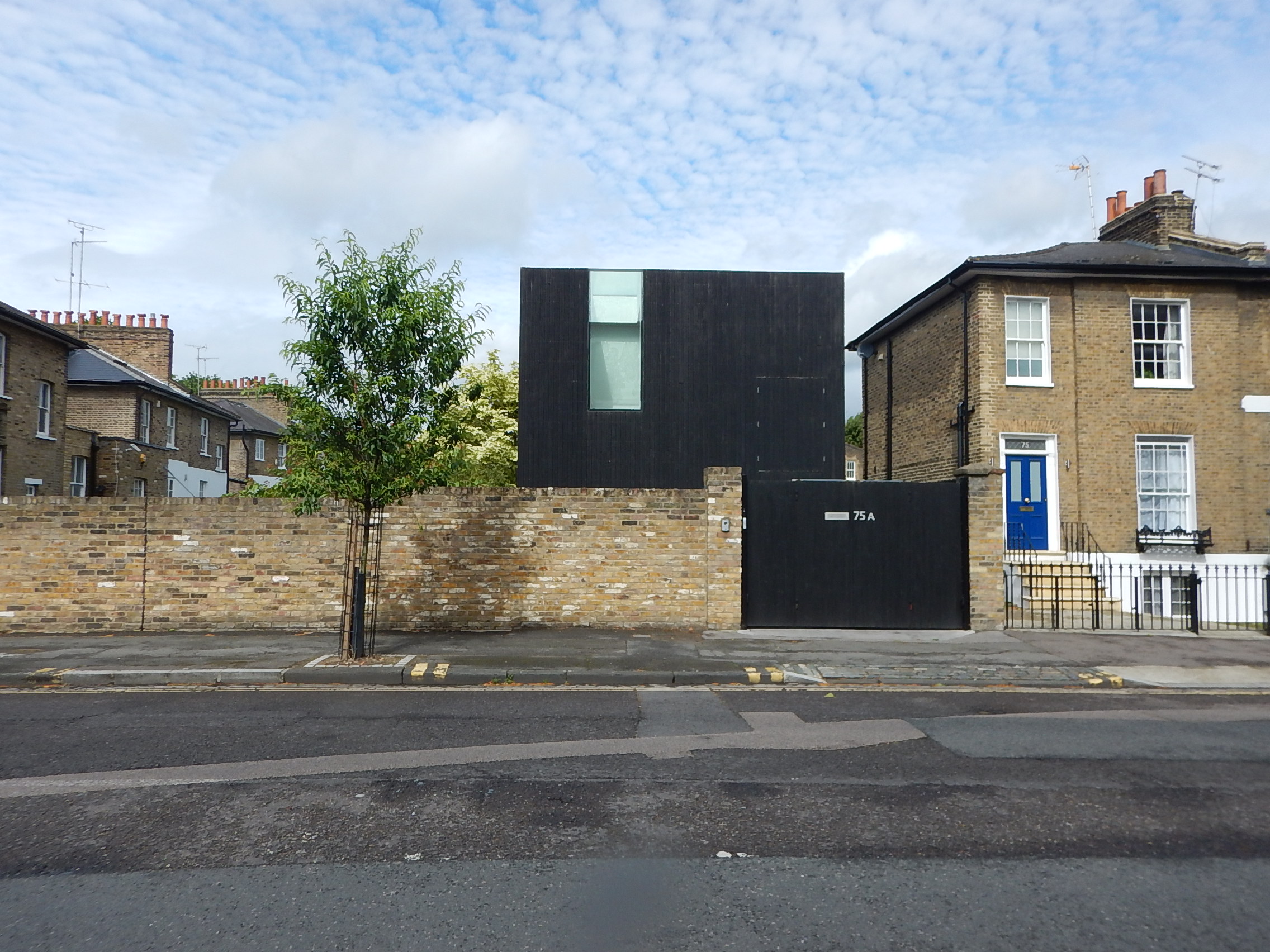
Ed’s Shed
It is an unusual modern house to sit amongst all the Georgian ones. It is not the only one in the Conservation Area.
It’s called Ed’s Shed and there is a web site.
I like it!
Why don’t we get more adventurous modern houses? Architects are creating the future and we don’t want uniformity!
Community Toilets In The City Of London
I saw this sign on the door of a pub near Liverpool Street station in the City of London.
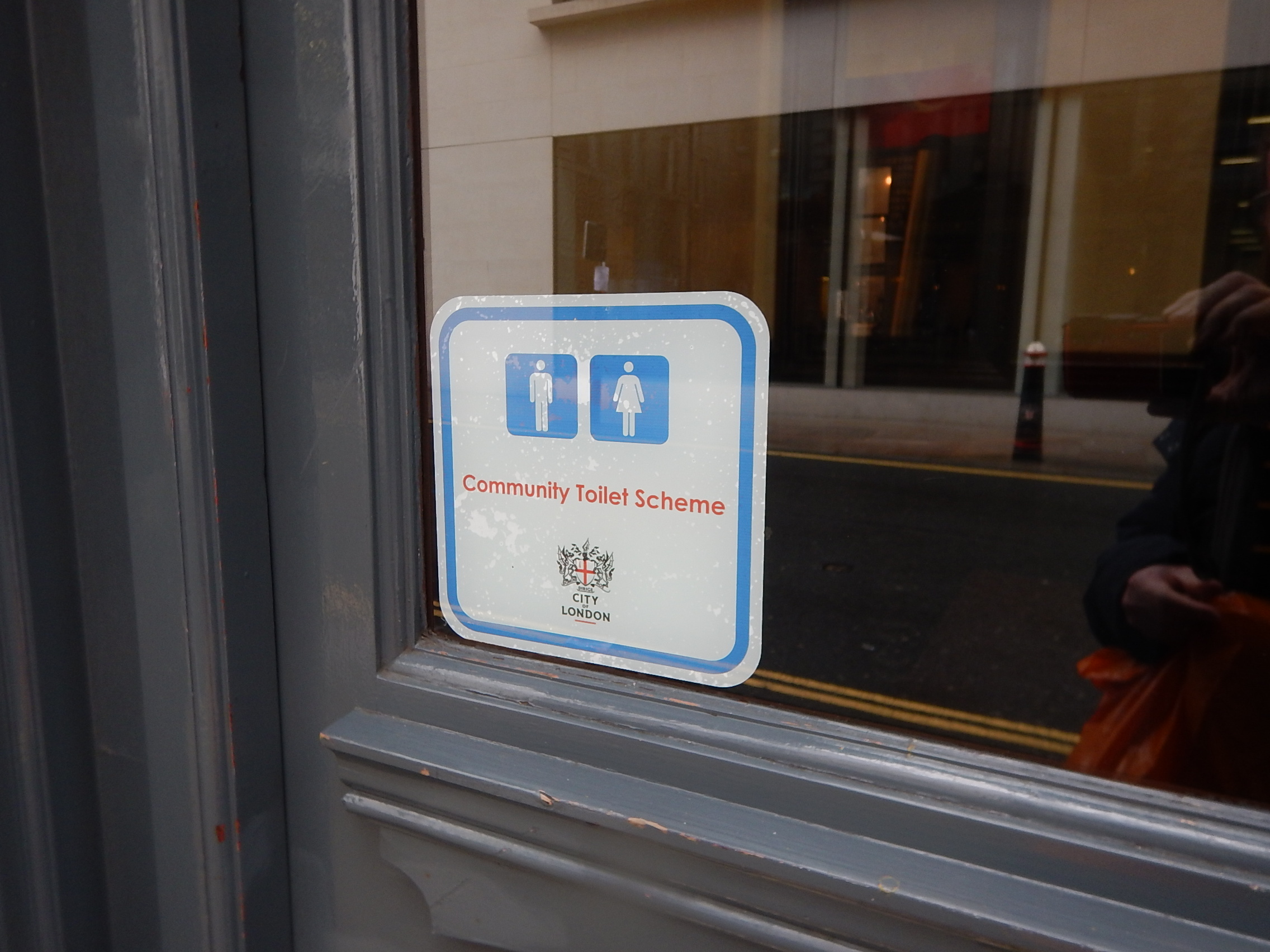
Community Toilets In The City Of London
Read more about it on this page on the City of London web site.
If you look at the page, you’ll see something rare on a web site – The author of the page is credited.
Does your council have community toilets?
The web page does say, that there is a payment from the council for providing the service.
 The Anonymous Widower