It’s All Change At Whitechapel Station
This article from The Wharf entitled Work begins to prepare Whitechapel station for Crossrail, is one of several reporting that this weekend is the big changeover at Whitechapel station, where a temporary ticket office is brought into use to allow work to start on the old station. This is said.
Work has begun to transform Whitechapel station ahead of the start of Crossrail services in 2018.
The station will be made step-free, the ticket hall will be expanded and the new Crossrail platforms will be integrated with the existing Tube and London Overground services.
Once the work is complete in late 2018, new lifts from street level to all train platforms will make the station fully accessible. The ticket hall will also be refurbished and expanded with wider pathways and more ticket gates.
These pictures were taken on January 13th.
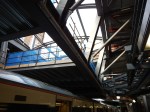
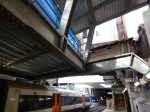
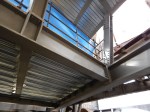
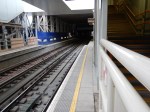
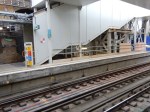
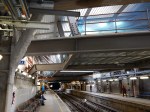
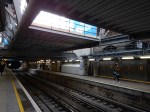
I have long thought that Whitechapel station will be Crossrail’s Jewel In The East.
Why should signature stations be the just for the rich and the City?
Challenger Brands
This article from PR Week is untitled Challenge, stand up and stand out in 2016.
It’s aread that makes you think!
I picked the article up because it mentioned OVO Energy, s company I use and like!
A Shelf Above My Cooker
The two IKEA wall cabinets either side of my cooker hood have lights underneath. To connect the lights, I needed to run a cable across. So to solve two problems in one go, I decided that a shelf above the cooker between the units would work.
I could have used wood and painted it to match the black-brown colour of the units. but as the house has lots of exposed steel beams, I thought I’d experiment with a steel beam powder coated to patch the IKEA cabinets.
It was made for me by Anglia Fabrication and Design in Newmarket. It cost me about a hundred pounds and I could have had it in any RAL colour.


I think it works. As the pictures show, I don’t think, I’ve got the layout of the tools right yet.
My Hungarian handyman and myself mounted the steel beam on the wall using some impressive Rigifix dry wall fixings.
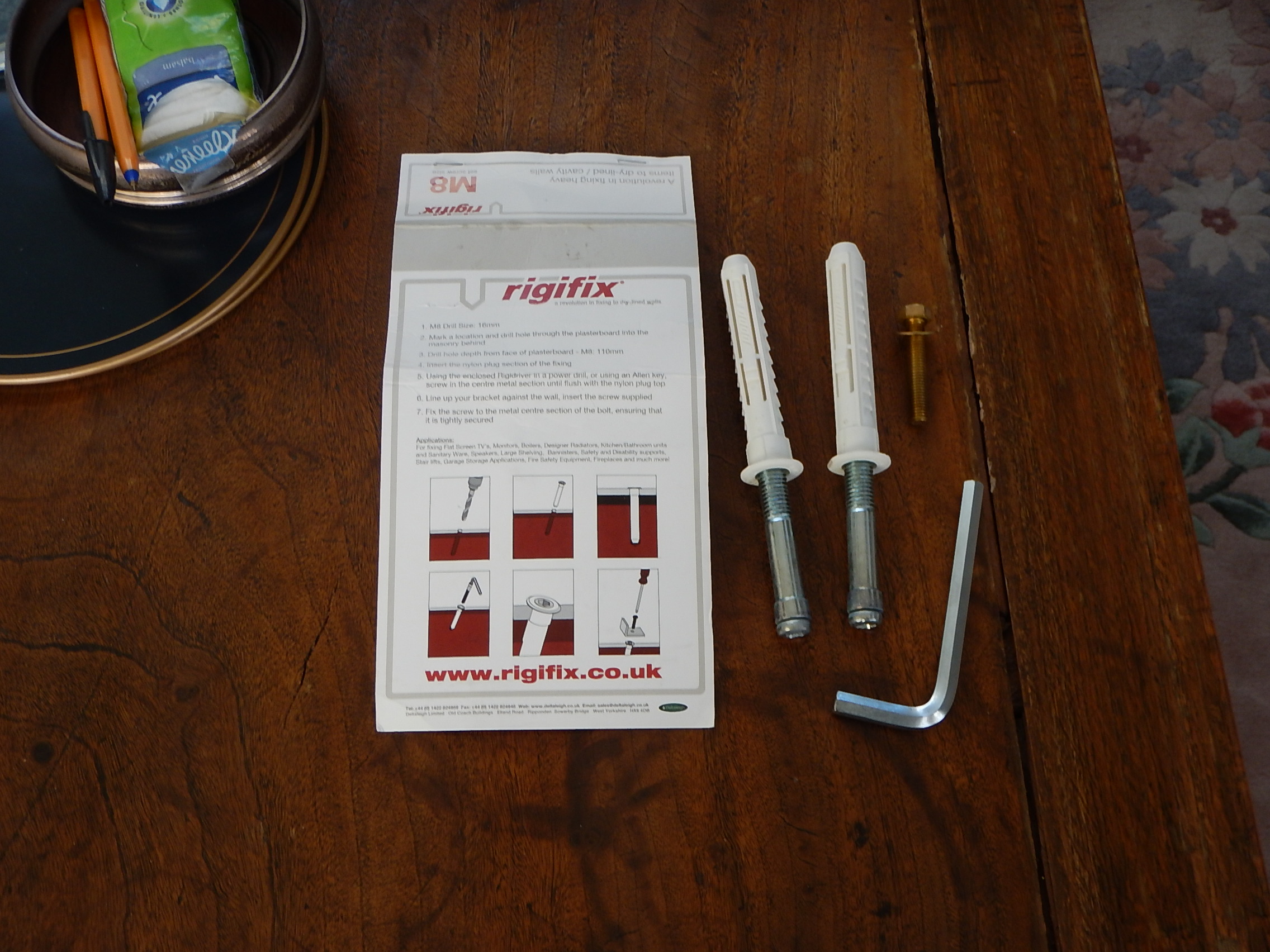
Rigifix Dry Wall Fixings
Note that we used a brass bolt with the fixing, which is rated at over a hundred kiolgrams.
The only problem was Jerry’s brickwork, which produced a wall as flat as the Pennines.
Should Crossrail 2 Be Extended?
In the gestation of Crossrail, alternative proposals were made including the ambitious Superlink, which would have linked Ipswich, Cambridge and many other places into the network.
Even as Crossrail was being built, in March 2014, it was decided to extend the line to Reading.
As the plans for Crossrail 2 are being developed, various councils are proposing that Crossrail 2 serve their area.Here’s three of those proposals!
- This article on the BBC is entitled Call to extend Crossrail 2 further into Surrey.
- This article on Your Harlow is entitled Crossrail could benefit Harlow economy says council.
- This article on Hertfordshire Mercury is entitled Railway station in Turnford could be part of Crossrail 2 plans.
There will probably be a few others too!
I think that during the consultation process one or two small extensions or additional stations might be incorporated.
The Ideal Cross City Line
A lot of my working life has been spent in writing scheduling software for large projects and sometimes it is just too complicated.
For this reason, a rail line like Crossrail, where services are queuing up to go through a series of stations, needs to have scheduling policy that is simple and easily understood, by passengers.
The classic cross-city line is London’s Victoria Line, which was built simple with no junctions and has now been reduced by cutting out the Seven Sisters turnback to a line where thirty-six trains per hour shuttle between Walthamstow Central and Brixton.
London’s Jubilee Line is another line that has been built simple. After signalling upgrades, this line will be able to run at thirty-six trains per hour from 2019.
London has a long-term objective in splitting the Northern Line into two separate 30-36 trains per hour lines. Perhaps, these could be.
- Edgware to Morden via Bank
- High Barnet to Battersea via Charing Cross.
This can only happen once the Northern Line Extension to Battersea and the rebuilding of Camden Town station are complete.
London’s Piccadilly Line is a simple continuous line, that splits at Acton Town in the west into two branches. The line needs resignalling and currently can only operate at twenty-one trains per hour through Central London. It could appear that new trains and resignalling could increase the capacity of this line substantially. According to Wikipedia, the resignalling could start in 2019 and new trains could start to be delivered in 2022.
Looking at these deep-level Underground lines in London, it would appear, that this type of metro line, has a top frequency of over thirty trains per hour, when running under modern signalling with partial automatic train control. It could be full automatic train control, like the Docklands Light Railway, if the Mayor and London’s population decided to give the unions a good kicking!
At the present time, the heavy-rail Thameslink Programme is underway and this will give it twenty-four trains per hour through a central core line from St. Pancras to Blackfriars.
Crossrail will be designed with a central-core frequency of twenty-four trains per hour
London’s other high-capacity cross-city heavy-rail line is the East London Line of the London Overground, where the core section from Dalston Junction to Surrey Quays has been designed to handle twenty-four trains per hour, with aspirations to make all trains six-car. That would be a capacity upgrade of eighty percent on the current five-car sixteen trains per hour.
The East London Line has a simple route structure, where four dedicated platforms in the North serve four separate destinations in the South, through the central core on a four trains per hour basis.
I think the simple concept copes better with things like train or power failures, but it will be interesting to review this statement over the years and especially, when Crossrail and Thameslink are fully open.
The question has to be asked, why London’s Underground lines are moving upwards to frequencies over thirty trains per hour and that the heavy rail lines seem to be aiming for a pathetic twenty-four trains per hour.
The biggest difference between the two sets of lines are the increasing automation of the Underground and the over-complicated nature of heavy-rail lines.
If the farce of the Sutton loop on Thameslink is anything to go by, then passenger conservatism is probably to blame as well.
My engineering and scheduling experience, tells me, that a well-designed partially-automated heavy rail line through a major city, should be capable of thirty trains per hour. This is said under usage for the Paris RER.
Despite a frequency of more than one train every two minutes, made possible by the installation of digital signalling in 1989, and the partial introduction of double-decker trains since 1998, the central stations of Line A are critically crowded at peak times.
London’s cross-city lines have a lot of improvement to catch up with Paris.
Crossrail
In Crossrail the original terminals were.
- Abbey Wood
- Heathrow
- Maidenhead
- Shenfield
Maidenhead has since been changed to Reading. In my view this was a sensible change, as Maidenhead is not a large station and Reading is one of the busiest interchanges in England.
These are my thoughts on the terminals in a bit more detail.
- Abbey Wood has only two Crossrail platforms and two for North Kent Line services. I was disappointed that the station wasn’t designed with cross-platform interchange between the two sets of lines.
- Heathrow is rather a cobbled-together station, that doesn’t serve Terminal 5 directly.
- Reading is a proper terminus and I suspect that when it becomes operational, changing between Crossrail and longer-distance services will be easy.
- Shenfield is getting an extra platform and will have three Crossrail platforms and two for longer distance services.
I think that all terminals need a touch of the Readings about them.
- A larger station in a town or city centre, that is a destination in its own right, with lots of shops and restaurants.
- More than two Crossrail platforms.
- Easy access, which preferably should be cross-platform, to longer-distance services.
- The ability to be a terminus for services coming from the other direction.
In some terminal stations, the ability to run Crossrail or cross-city services, to another terminal a few miles further out could be useful. Reading probably doesn’t need that, but Shenfield services could run to Southend Victoria and Abbey Wood services to Ebbsfleet International.
I doubt we’ll see Shenfield services extended, but Abbey Wood to Gravesend is safe-guarded.
On the other hand, I suspect that Crossrail could handle thirty trains per hour and possibly thirty-six, through the central core.
As plans have been mentioned to extend Crossrail up the West Coast Main Line, surely a route like Ebbsfleet International to Milton Keynes would be possible.
- It would provide a high capacity north-west to south-east cross-London link from Abbey Wood to Old Oak Common and Watford.
- It would link the West Coast Main Line and HS2 directly to Continental train services at Ebbsfleet International.
- If services in South East London were organised around a hub at Abbey Wood, it would improve transport links substantially in the area.
- Old Oak Common, Watford and Milton Keyns could become hubs linked to St. Albans, Amersham and large parts of North West London, Hertfordshire and Bucks.
- Could suburban services be removed or substantially reduced out of Euston to ease HS2 construction?
- Could services be semi-fast perhaps only stopping at Old Oak Common, Paddington, Bond Street, Farringdon, Liverpool Street, Whitechapel, Canary Wharf and Abbey Wood?
The vision of up to a dozen trains an hour from Milton Keynes to Ebbsfleet International is truly mind-blowing.
Crossrail 2
Crossrail 2 is similar to Crossrail.
- It has a high-capacity central tunnel under London.
- It probably is being designed to a pathetic twenty-four trains per hour.
- There is good connectivity with other lines.
- The two main northern branches or Crossrail 2 to New Southgate and Broxbourne, which join at Dalston Junction, mirror Crossrail, where the eastern branches to Shenfield and Abbey Wood, join at Whitechapel.
But the southern end of Crossrail 2 seems to have been designed like the western end of Crossrail on a see-what-we-can-join-up basis.
In the north the two terminals of New Southgate and Broxbourne could certainly be mini-Readings, that collect passengers for the line and provide access to longer-distance services.
But there is no terminal in the South that does a similar job.
Wimbledon is more of a Stratford than a Shenfield and I’m not saying, it won’t work, but building it will be horrendous upheaval for the area.
So to return to the reports of places wanting Crossrail2 extensions.
Harlow
Harlow Town is just a big station on a section of line between Broxbourne and Cambridge, that needs better services to serve Cambridge, Stansted Airport and the increasing population.
Perhaps, a tram-train or metro network centred on Cambridge, with links to Broxbourne, Harlow and Stansted Airport in the South, Ely and Peterborough in the North and perhaps Bury St. Edmunds, Haverhill and Newmarket in the East would be much better.
If tram-trains were to be used, they could go walkabout in the larger towns and cities, like Cambridge, Harlow and Peterborough. Tram-trains would also be an ideal replacenment for the guided bus.
Turnford
This Google Map shows it all.
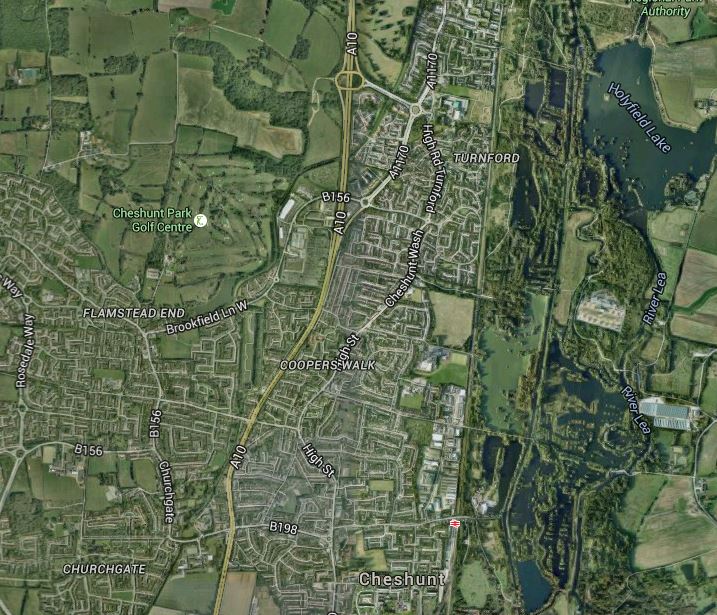
The Area Of The Proposed Turnford Station
Note.
- Cheshunt station is the station towards the bottom of the map.
- The Broxbourne Campus of Hertfordshire Regional College is surrounded by playing fields just off the roundabout on the A10.
- The plans call for the station to be built close to the College.
- The station would also be close to Holyfield Lake.
- Because of the links to the A10, would it make a good Park-and-Ride station?
I think that a station here, could open up the area for residential and leisure purposes.
Woking and Dorking
The BBC article about Surrey, mentioned earlier says this.
A new rail route running crossing from north London into Surrey should extend as far as Woking and Dorking, according the the county council.
Plans for Crossrail 2 currently include Shepperton, Surbiton, Epsom, Hampton Court and Chessington South stations.
But Surrey County Council (SCC) said extending it further south would bring significant benefits to commuters and businesses in the county.
I think that the Crossrail 2 designers have laboured long and hard at the southern end of the route.
The current design effectively combines all the suburban services from Waterloo to Shepperton, Surbiton, Epsom, Hampton Court and Chessington South stations, comines them and sends them in a new tunnel to Clapham Junction, Victoria.
This takes twenty-four trains an hour out of Waterloo, but means passengers wanting to travel to and from Waterloo will have to change trains at Wimbleon or Raynes Park.
I will look at important stations in detail, but before let’s consider 2012-13 passenger numbers at Crossrail 2’s chosen terminal stations and others mentioned as possibilities.
- Chessington South – 493,000
- Dorking – 1,234,000
- Epsom – 3,741,000
- Hampton Court – 2,238,000
- Shepperton – 427,000
- Surbiton – 9,031,000
- Woking – 7,463,000
Also consider the following points.
- Woking and Dorking to Waterloo are 36 and 48 minutes respectively, which are quicker journeys that both Reading and Shenfield to Central London on Crossrail.
- The South Western Main Line is at full capacity.
- Crossrail 2 adds up to another twenty-four train per hour between Central London and Wimbledon/Raynes Park
- Crossrail 2 frees up terminal platforms in Waterloo.
- Extra tracks may be possible between Surbiton and Clapham Junction according to Wikipedia on the future of the South Western Main Line.
- Crossrail’s two hundred metre long Class 345 trains or similar may give the capacity increase needed between London and Woking to Dorking.
- The mess that is Raynes Park station could be rebuilt to create a better interchange, between the line through Surbiton and Working and that through Epsom and Dorking.
- Space is available at both Dorking and Woking station for extra platforms, some of which could face out of London.
- Could it result in a simpler Wimbledon station?
- Dorking could be properly connected to the North Downs Line.
So I do wonder if Surrey County Council has a point.
I do think that Wimbledon and Raynes Park stations are the key, that could unlock a much better Southern end to Crossrail 2.
Wimbledon Station
There is a lot of opposition to the rebuilding of Wimbledon station, so could it be simplified if the following was done.
- Crossrail 2 serves the station in underground platforms.
- The Crossrail 2 tunnels would surface between Wimbledon and Raynes Park
- The trams cross over the main lines on a flyover and meet the District Line platforms head on.
- The station is rebuilt within its current boundaries.
Three other developments could have effects on Wimbledon station.
- Transport for London have plans for a Streatham Common hub. I wrote about that in Puzzled Over Streatham Common Station
- Transport for London’s Transport Plan for 2050 talks about improving the Overground, by using existing lines to create a circular railway based on the Gospel Oak to Barking Line. It could be routed via the Dudding Hill Line to Hounslow and then via Twickenham, Wimbledon and Peckham Rye to Abbey Wood, from where a new Thames Crossing would take the line to Barking to complete the circle.
- The Tramlink could be extended.
All could be built before Crossrail 2, to take pressure off Wimbledon.
I certainly believe that there is a better design to Wimbledon station, that would cause less disruption during the construction and might even cost no more than the current design.
Raynes Park Station
This Google Map sums up Raynes Park station.
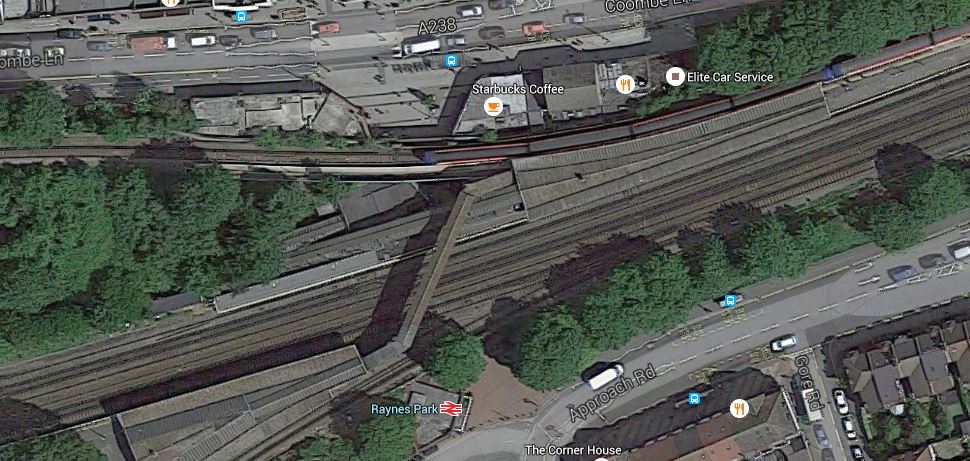
Raynes Park Station
And these are some pictures of the station.
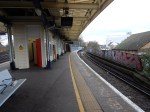
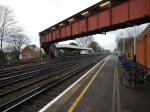
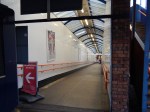
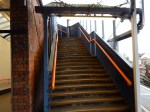
Topsy certainly had a hand in the design.
- Effectively the station has two island platforms; the eastbound 1/2 and the westbound 3/4, which are connected by the footbridge across the fast lines between them.
- All trains from platforms 1 and 2 go to Waterloo, which seems unusual.
- Platform 3 serves services via the South Western Main Line, including Hampton Court, the Kingston Loop and Shepperton.
- Platform 4 serves services via the Mole Valley Line, including Chessington South, Dorking, Epsom and Guildford.
- I think all of the current services that stop at Raynes Park, will transfer to Crossrail 2.
Whitechapel station on Crossrail has a similar problem, where the two eastern branches of the line must be joined or split to the east of the station.
Whitechapel will use only two platforms both handling twenty-four trains per hour, to give walk across interchange between passengers wanting to reverse direction, in perhaps a journey between Romford and Canary Wharf.
As there is plenty of space around Raynes Park station, which will handle only twelve Crossrail 2 trains per hour in both directions, I’m sure that there must be a solution to providing a much better layout at this station.
Look at this map of the lines from carto.metro.free.fr.
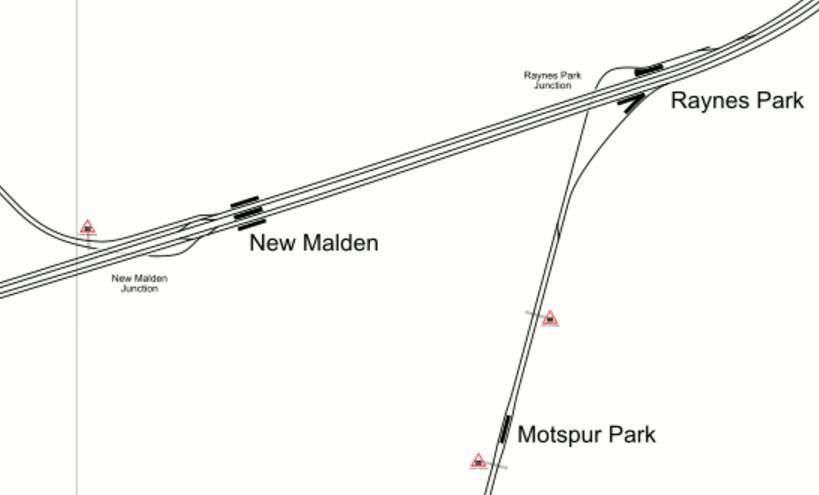
Lines Through Raynes Park Station
Note.
- How close to the east of the station, the lines split and join.
- The level crossings bracketing Motspur Park station. These need to be removed.
- New Malden station to the West has platforms on both slow and fast lines, although those on the fast lines can’t be used.
I think it would be possible to do the following.
- Move the junction to the west of single platforms on the single slow lines.
- If Crossrail 2 is built, the two slow lines would go into tunnels and platforms under Wimbledon at a convenient point.
- All crossings from the fast to slow lines between Wimbledon and Raynes Park would be eliminated.
- Move the two platforms opposite each other.
- Connect the platforms by an updated subway or even a spectacular wide bridge with a cafe above the lines.
- The platforms would be served by escalators and lifts.
Surely if the number of platforms devoted to stopping services could be reduced from four to two, would this mean it would be easier to increase the capacity of the main lines through the station?
After my brief look and a think, I’m sure that there is a very cost effective solution to Rayne Park station, whether Crossrail 2 is built or not. It just needs an architect, engineer or railway professional with imagination.
Dorking Station
Dorking station is one of the alternative termini put forward by Surrey County Council, probably as an alternative to Epsom, which I wrote about in Before Crossrail 2 – Epsom.
Compare this Google Map of Epsom station.

Epsom Station
With this one of the two stations in the centre of Dorking.
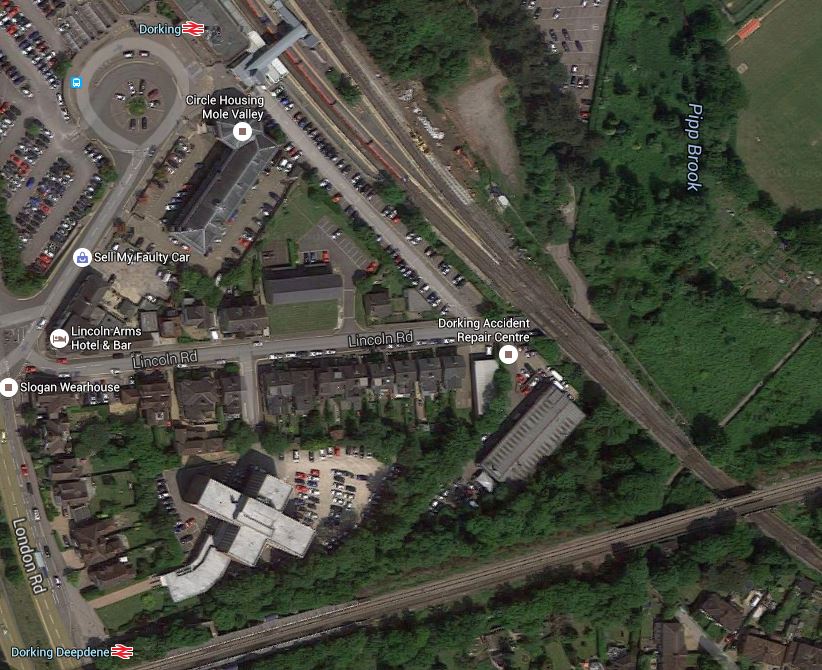
Dorking And Dorking Deepdene Stations
Dorking Deepdene station is on the North Downs Line from Reading to Gatwick Airport.
The big advantage of Dorking over Epsom, is that, it is surrounded by so much space and not crowded round with buildings and rail bridges.
I also feel that a good architect could extend and upgrade Dorking station so that it connected to the North Downs Line , which crosses about two hundred metres or so south of the station.
Dorking station is shown in these pictures.

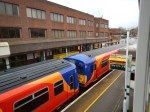
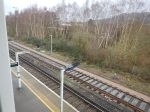
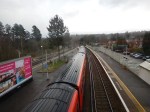
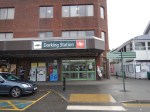
I feel that Crossrail 2’s engineers will look seriously at extending the Epsom branch to Dorking.
Woking Station
Woking station is an important one in a town of around a hundred thousand people.
This Google Map shows the station.
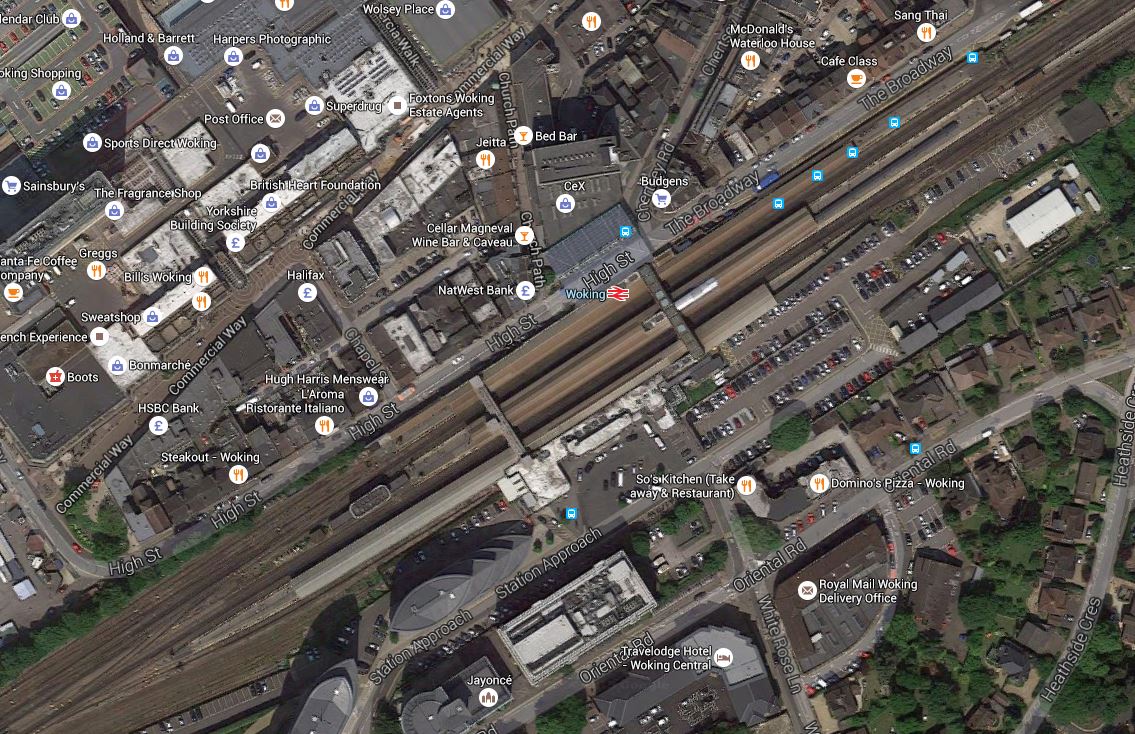
WokingStation
Note how the railway line goes right through the town centre.
It would be difficult, but not impossible, to put a sensible number of new platforms for Crossrail 2 in the station.
These are some pictures of the station.
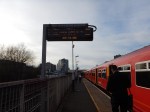
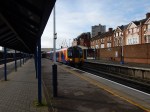
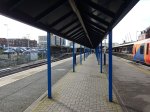
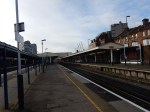
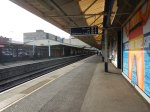



I believe Working has possibilities to provide a busy terminus in the South West to match Broxbourne in the North and Reading and Shenfield on Crossrail.
Conventional solutions are possible with bay terminal platforms replacing the car parks to the south-east.
Other radical solutions might be implemented.
As the fast main lines are the middle two of the four lines, could they not be dropped into a cut and cover tunnel, which had the terminal platforms for Crossrail 2 on top? I wrote about Antwerp Central station in A Triple Decker Station. So it wouldn’t be a first!
Land is an expensive resource in a railway station and we must make it work harder with-over station developments and innovative station layouts.
Flat land used for car parking is a waste of space.
Other Stations
The other stations from Raynes Park outwards are a bit of a mixed bunch, with only a few having step-free access. These are some pictures, I took on the way to Woking.

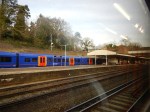
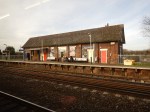
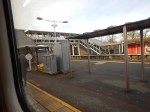
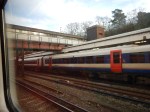



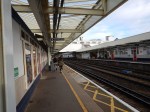
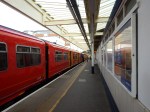
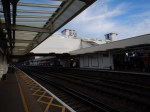
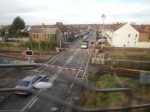

Whether Crossrail 2 is built or not, some of these stations must be updated to a modern standard.
Conclusions
As to Crossrail 2 being extended north and south, I’ll leave that to the planners.
But if Crossrail 2 is built or not, this will not affect the fact, that there are a lot of stations on this line, that need updating to a modern standard.
I also feel that there is scope to create local metro networks, based on large towns and cities served by Crossrail, Crossrail 2 and Thameslink.
For Crossrail these might be based on.
- Abbey Wood and Dartford.
- Milton Keynes, Reading, Slough and Basingstoke.
- Shenfield, Billericay, Basildon and Southend.
- Watford, Amersham and St. Albans.
For Crossrail 2 these might be based on.
- Broxbourne, Harlow and Cambridge.
- New Southgate.
- Wimbledon, Surbiton and Raynes Park.
For Thameslink these might be based on.
- Brighton and the East and West Coastways.
- Croydon, where Tramlink already exists.
- Cambridge
- St. Albans and Hatfield
- Peterborough
These metro networks could be a mixture of trains, trams and tram-trains. Add tram-trains to the Tramlink and you would have a good model to start from.
Crossrail, Crossrail 2 and Thameslink are just the long distance string, that would connect everything together.
One action that would help capacity in London, would be to screw as much increase in frequency out of the cross-London routes. Compared to the Victoria Line, Jubilee Line and Paris, twenty-four trains per house is a very poor frequency.
Platform Extensions At South Tottenham Station
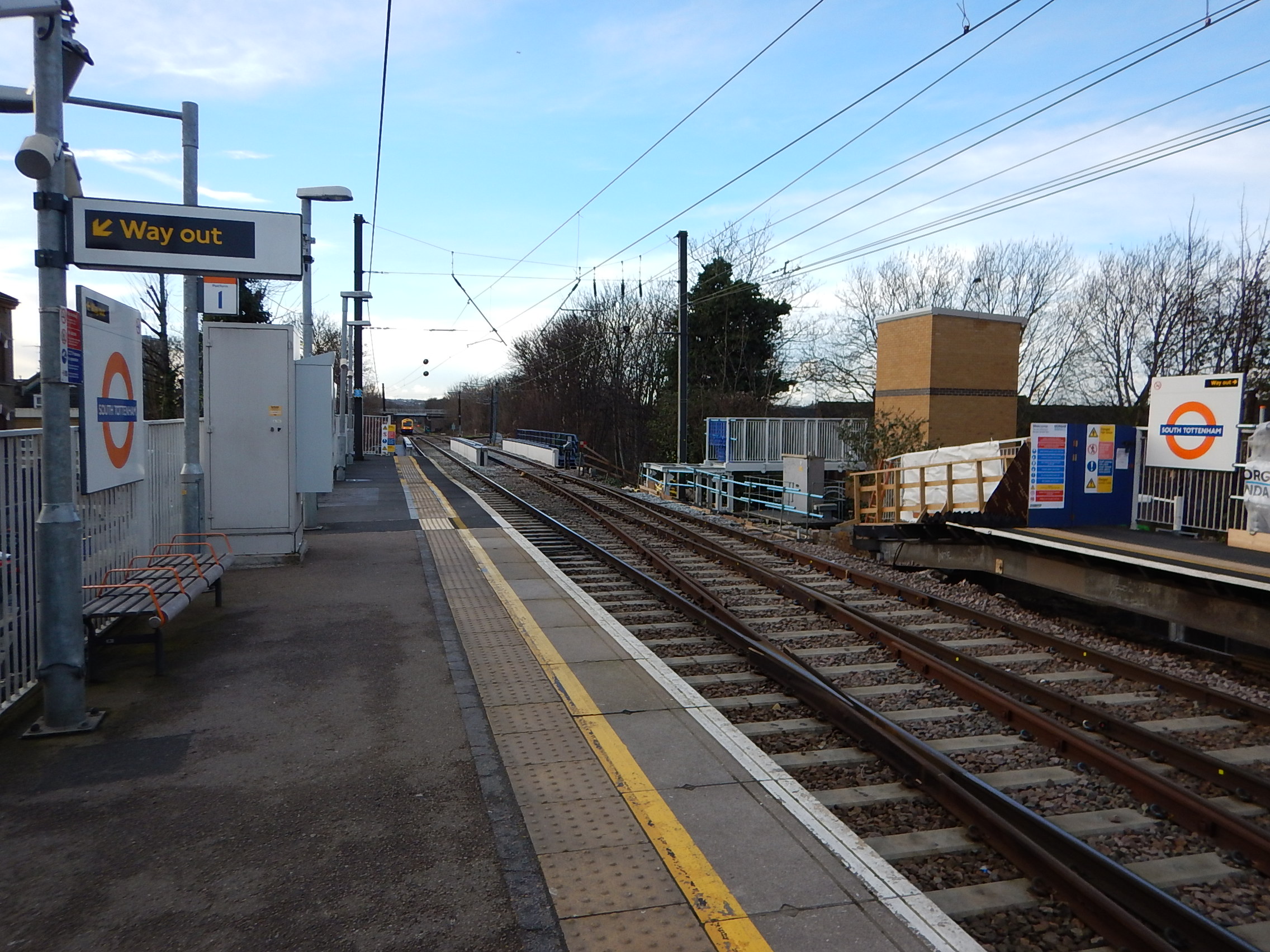
The platforms at South Tottenham Station need to be lengthened for the new four-car Class 710 trains, that will run on the Gospel Oak to Barking Line from 2018.
This pictures show the lengthening is in process, at the same time as lifts are being added to the station.
Platform Extensions At South Tottenham Station
This Google Map shows the station a couple of years ago.
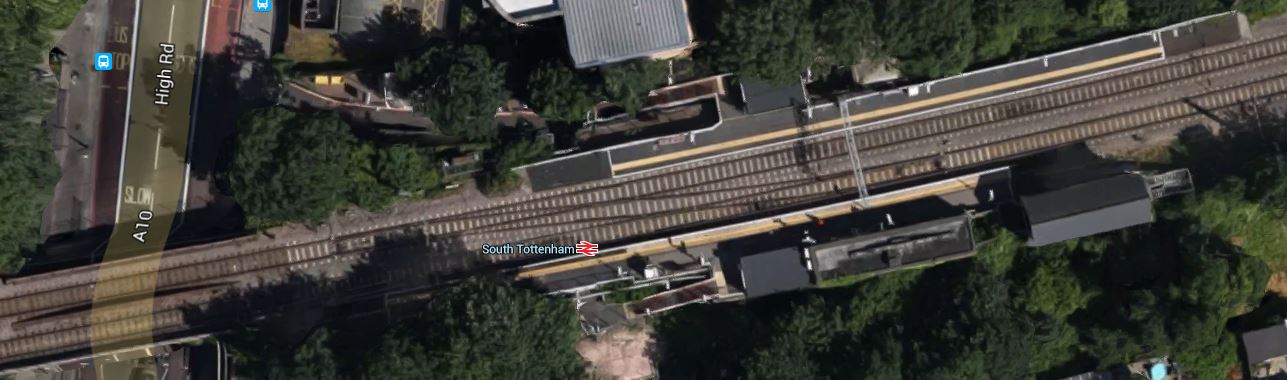
South Tottenham Station
Note that as the bridge doesn’t appear to be the blue colour it now is, I would assume this picture is from before the bridge was replaced at Christmas 2014.
You can gauge the length of the extension by the position of the rail crossing between the two tracks.
Is A Rail War Starting To London’s Airports?
The following sections sum up the rail services to the various London airports.
London City Airport
London City Airport may only be small, but some people use it a lot. I never have, but that’s not for dint of trying. It’s just that if I include all the factors, by which I choose a flight, it hasn’t come out top yet!
London City Airport is only on the Docklands Light Railway, but when Crossrail is open and Bank station has been fully upgraded in 2021, it will be a relatively easy airport through which to travel.
Crossrail passes very close to the Airport and passive provision has been made for a Silvertown station that could be connected to the Airport. At present, the Docklands Light Railway provides enough capacity.
Eurostar
Eurostar is the cuckoo in the nest and should be included, as it will offer rail services to a couple of European Airports.
By the early 2020s, there will be new direct or single-change services to France, Germany, The Netherlands and Switzerland.
I also suspect that one of the first extensions of Crossrail will serve Ebbsfleet International station, so it will give a lot more passengers easy access to European services.
Gatwick Airport
This year the rail links to Gatwick Airport are getting a major upgrade.
- The current unsuitable Class 442 trains used on Gatwick Express, are being replaced with new Class 287/2 trains, designed for the route.
- The current mixture of Thameslink Class 319 and Class 387 trains are being replaced with new higher capacity walk-through Class 700 trains.
- Gatwick Airport station was redeveloped with new buildings and two extra platforms under two years ago.
- Gatwick Airport has now been brought into London’s Oyster and contactless ticketing area. This report in Rail Technology Magazine gives more details.
And increasingly, as the next few years roll on, various developments will or could happen.
- Thameslink and particularly London Bridge station will have greater capacity.
- Thameslink will add many direct trains to new destinations like Cambridge, Stevenage and Peterborough.
- Thameslink and other developments, will mean that nearly all stations East of the Midland Main Line, will have access to Gatwick Airport through with only a single change at a convenient interchange like Bedford, Cambridge, Farringdon, Finsbury Park, Luton, Peterborough or Stevenage.
- The dreadful links to the Thameslink platforms at St. Pancras, from some other lines at Kings Cross and St. Pancras will be improved.
- An IPEMU variant of the Class 387 Gatwick Express could easily reach Reading on an hourly-basis, to give single-change access between Gatwick Airport and Wales and the West.
- The East Coastway and West Coastway routes could be extended to Ashford and Bournemouth respectively, improved with more and faster trains and a better interchange to Gatwick services at Brighton.
But I believe that what would transform train services to Gatwick, is when the whole of the area from Weymouth and Reading in the west to Ramsgate in the East becomes part of London’s Oyster and contactless bank card ticketing area.
Heathrow Airport
Heathrow Airport will have to wait until December 2019 before it gets any more capacity to Central London, in the shape of Crossrail.
Until then, it will have to make do with the current services.
- The very crowded and slow Piccadilly Line.
- The infrequent Heathrow Connect.
- The overpriced and much unloved Heathrow Express.
But there are serious problems.
- The rail lines into the airport are designed to maximise revenue for Heathrow, rather than the convenience of passengers.
- Crossrail hasn’t been designed to serve Terminal 5 directly. How daft is that?
- Links to the West are atrocious and rely on going into London and out again. Gatwick has better links to Reading!
- As I wrote in Heathrow Express And Crossrail, Heathrow and TfL are still arguing about access for Crossrail into Heathrow.
- Boris has indicated that Freedom Passes will be allowed on Crossrail to Heathrow.
- Heathrow Express will be killed by Crossrail, if Heathrow allows it to serve the airport.
- Gatwick, Luton and Stansted Airports will become part of London’s Oyster and contactless bank card ticketing area. Will Heathrow?
- Improved rail links and services at Gatwick, Luton and Stansted Airports will make these airports more attractive for a lot of passengers than Heathrow.
On top of all this, Heathrow needs Crossrail to give the Airport connectivity to large parts of the South East, the West Coast Main Line and HS2.
I think all candidates for the next London Mayor, will be playing the anti-Heathrow card frequently and with immense relish.
In the end Heathrow will have to accept the following.
- The closure of Heathrow Express.
- Full access of Crossrail directly to all terminals, at an agreed price with TfL.
- Oyster and contactless bank card ticketing.
- A rail link from the West, under probably Network Rail, Great Western and TfL control.
If they don’t like it, then I’m sure Gatwick, Luton and Stansted Airports will take up the slack.
Luton Airport
Luton Airport is in some ways the joker in the pack, but also it has plans to expand, as is reported in this article in the Daily Mail, entitled Luton Airport reveals plans for direct rail line that would cut train journey from central London to just 20 minutes.
In Will Bombardier Develop The Ultimate Airport Train, I discussed Luton Airport in detail and came to the conclusion that if Bombardier Class 387/2 trains as used on the Gatwick Express were fitted with an IPEMU capability, they could easily use terminal platforms without electrification in a tunnel under the Airport.
Whether they will or not, I don’t know, but there is scope for very affordable solutions to providing a fast rail link into Central London.
Luton Airport is closer than Gatwick is to Central London, so I would expect that Oyster and contactless bank card ticketing, would not be a problem.
Southend Airport
Southend Airport is the newest of London’s airports. I know it well from my days as a pilot and occasionally use it on trips to the Netherlands on easyJet.
Operationally for airlines, Southend Airport’s location, close to the Essex Coast is ideal, as it is away from other airports and pilots can get planes in to and out of the airport without too much delay. Also, flights coming in from the East have an uncluttered approach, over the sea and marshland. I once came in to the airport on a flight from Schipol and was on the train from Southend Airport station to Central London, within an hour of boarding the flight in The Netherlands.
I can understand why the Roskill Commission recommended that London’s new airport should be built on Maplin Sands.
This airline-friendly location could drive growth at the airport, especially if the airport keeps its reputation for fast passenger handling.
The Airport talks about handling two million passengers by 2020 and I can’t feel that this is unreasonable.
What could help passenger growth is that there is plenty of scope for making rail trips to Southend Airport easier, especially for Southend’s typical traveller with just hand-baggage and perhaps a wheeled case.
At present Southend Airport and Southend Victoria have three services to and from Liverpool Street per hour, which stop at all stations between Shenfield and Southend Victoria and then just Stratford and Liverpool Street. This is a recent upgrade, as Wikipedia says one train stops at all stations.
Journey times are as follows.
- Liverpool Street – 64 minutes – Just four minutes longer than Stansted.
- Stratford – 57 minutes
- Shenfield – 27 minutes
Capacity isn’t a problem as all stations can take eight-car trains.
The airport station is very close to the terminal and is fully step-free. Incoming passengers from the London direction, don’t even have to cross the railway to get to the terminal.
Crossrail and the new East Anglia franchise will certainly have effects, some of which have already happened.
- Between Shenfield and London there will be at least eight high-capacity Crossrail trains per hour.
- Will Crossrail run on a twenty-four hour basis?
- Shenfield will have Oyster and contactless card ticketing. Will this go all the way to Southend Victoria?
- Shenfield will be Freedom Pass territory.
- Will Norwich-in-Ninety improvements mean that times between Shenfield and London are reduced?
- Will more of the longer distance services to East Anglia, stop at Shenfield for interchange with Crossrail?
I suspect that the answer to the two last questions, will be yes. This improved connectivity and reduced journey time, would mean that a lot of places in East London, Essex and East Suffolk, would be just one change at Shenfield away from Southend Airport.
I wouldn’t be surprised to see some upmarket trains between Southend Victoria and Liverpool Street, with a four trains per hour frequency. Partly, this will be driven by the airport, but also by the competition for passengers between the two companies running services to Southend.
Stansted Airport
Stansted Airport is currently served by the adequate but slow Stansted Express.
Stansted Airport is owned and operated by the ambitious Manchester Airports Group and I can’t see them sitting idly by, whilst Gatwick and Luton expand into their market. After all, they have resources that other airports in the South East lack; space and spare capacity on the current runway.
The rail links need improvement and these will or could happen in the next few years.
- The West Anglia Main Line will be developed and given four tracks between at least Broxbourne and Lea Bridge stations, with higher speed limits.
- There will be a higher frequency for Stansted Express trains into Liverpool Street.
- Stansted Express will serve Stratford several times an hour.
- Stansted Airport station will gain a second tunnel and platform.
- There will be an improved service between Stansted and Cambridge.
- Stansted Airport will become part of London’s Oyster and contactless bank card ticketing area.
The service between Cambridge and Stansted is a truly inadequate, single train per hour to and from Birmingham via Peterborough and Leicester.
I believe that when the new East Anglian franchise is awarded, the route north from Stansted will see the greatest improvement. Note that Thameslink will have four trains per hour to Cambridge going through London of which two will go all the way to Gatwick Airport and Brighton.
I wouldn’t be surprised to see two half-hourly services added to the airport.
- Stansted Airport to Peterborough via Cambridge, Cambridge North and Ely.
- Stansted Airport to Norwich via Cambridge, Cambridge North and Ely.
Even if the current Birmingham service was cut back, this would still give four trains per hour between Stansted Airport and one of its most important catchment areas.
Note how Cambridge North station, which serves the North of the City and the Cambridge Science Park, will be given good rail links.
In Better East-West Train Services Across Suffolk, I wrote about a radical idea of Network Rail to create a much improved service between Peterborough and Ipswich, based on a rebuilt Newmarket station.
But who knows, what will actually happen? I don’t!
But whatever happens to the North of Stansted Airport, the rail links to the airport will be much improved by 2020 or so.
Road Improvements
Road improvements will not be numerous, but one new road will effect the use of airports.
If a new Lower Thames Crossing is built, it could make driving to Gatwick, Stansted and Southend Airports easier and some travellers will shun Heathrow.
On the other hand, if it wasn’t built, it might favour other airports.
Conclusion
All of London’s six airports, except probably London City will be seeing large investments in rail infrastructure, stations and trains in the near future.
Heathrow won’t like it, but I think the political consequences for the major parties of a new runway at Heathrow will make it unlikely that Heathrow gets another runway.
But given the rail infrastructure, I suspect that the other airports will take up the increased traffic for several years.
Gatwick, Luton and Stanstead will get very much improved services and I think Southend could become a Luton in the East.
As passengers will get increasingly savvy as to the routes they use, it will be very difficult to predict how the transport pattern to London’s Airports, will look say in 2025.
I’ll finish by listing some ideas I’ve read over the years.
- The Windsor Link Railway to connect Heathrow to the Great Western Main Line via Windsor.
- A Heathrow Hub station at Iver linked to Heathrow.
- Reopening the line from Bishops Stortford to Braintree via Stansted Airport and Dunmow.
- Extending the Chingford Branch past Chingford to Stansted Airport.
- Creating a Southend Metro to connect the two main Southend stations to Southend Airport.
- Extending some Crossrail trains to Southend Victoria.
There’ll be others and some might even be built.
The Walbrook Entrance To Bank Station
This press release from TfL is entitled BANK STATION: WORK STARTS ON A NEW ENTRANCE.
It describes how work has started to fit out the new Walbrook entrance, which will give step-free accress to the Waterloo and City Line.
So I went to have a look.









I didn’t see an obvious entrance, but is it actually on the north-west corner where Walbrook joins Cannon Street.
This Google Map shows the area.
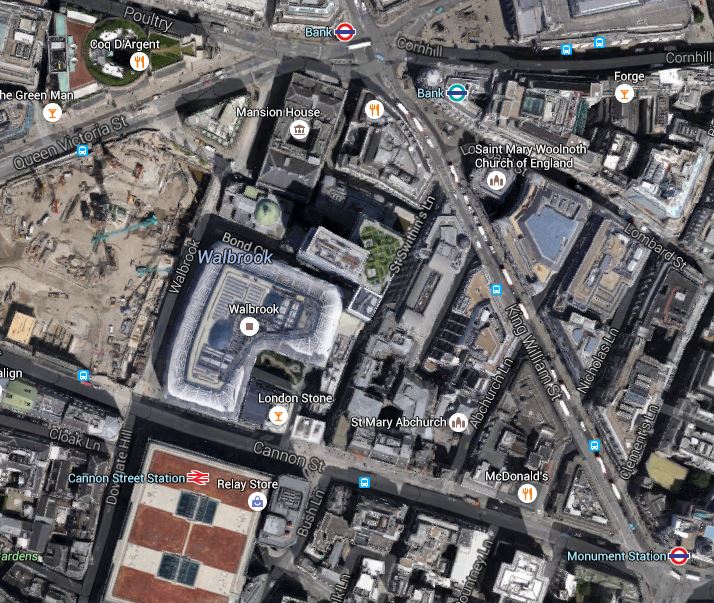
The New Walbrook Square Entrance At Bank Station
Cannon Street station is the brown and white roofed building at the bottom, which is south-east of the junction of Walbrook and Cannon Street. The big bare site on the opposite quadrant of the junction, now contains Walbrook Square, with the station entrance to be built on or close to the junction on the Walbrook side of the building.
Note the three other main entrances to Bank station.
- The roundel at the top in the middle is main entrance under the major road junction called Bank.
- The roundel at the bottom-right indicates the Monument entrance.
- The McDonald’s on Cannon Street will be replaced by the new Cannon Street entrance.
The station certainly has the area covered, when you add in all the smaller entrances.
I returned a few days later on a Sunday in the sun. This picture from the hoardings outside the construction side, shows the corner of the building opposite Cannon Street station.
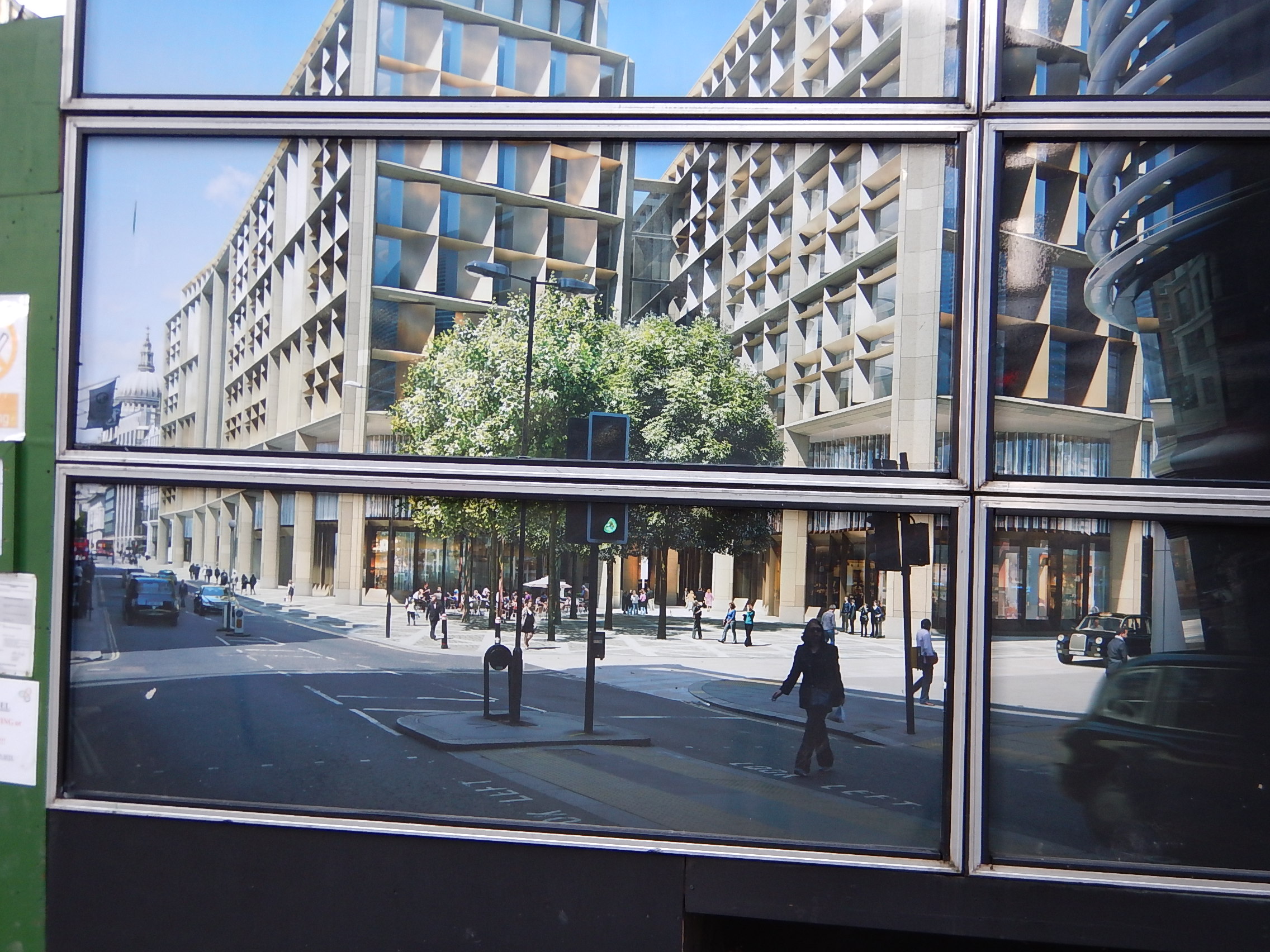
The Walbrook Entrance To Bank Station
That looks like a square with a cafe to me.
I assume the Walbrook entrance to Bank station is somewhere behind.
The Connection Between Northern And Circle/District Lines At Bank Station
I’ve done this interchange at Bank station a few times but not that I remember it. These pictures show my route as I walked from a southbound Northern Line train to the Circle/District Lines, where I went one stop to Cannon Street station.



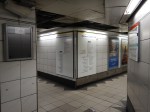
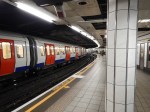
The Northern Line is unusual in Bank station, in that the southbound track is on the right hand side of the two lines, whereas normally in the UK, they follow the same rules as the roads.
I walked down the platform, took the exit at the far end and then used the escalators to get to the passageway leading to the Circle/District Line platforms.
When the station is upgraded with a new Cannon Street entrance, a new southbound tunnel will be bored several metres to the west and the space between the two tunnels will become a generous circulation space, with four cross tunnels linking the two Northern Line platforms, which hopefully will be wider than the current narrow ones.
Connections to and from the circulation space will be as follows.
- A set of three escalators will ascend to the new entrance. They are actually two sets vertically, with a landing to turn everthing the right way.
- Two travalators will connect to the Central Line platforms to the North.
- Another set of three escalators will descend to the DLR platforms some ten metres below.
- Two lifts will connect to the new entrance above and the DLR platforms below.
- The two escalators and their connection to the Circle/District Lines will be opened out and upgraded.
I’m not sure how this space connects to the Waterloo and City Line, but I’m sure that the architects have a solution.
But I do think, it’s rather a neat solution to convecting all the lines together, as the amount of walking that passengers will do compared to the current station will be greatly reduced.
I also think, it’s going to be a straightforward station to build, in that you can leave the current platforms to handle the trains until you’ve dug most of the station tunnel for the new southbound line, completing as much of the entrance as you want above the working Northern Line and DLR. Once the Northern Line is closed, the circulation space with all its lifts, escalators and travalators is put together.
I think a lot of the work will be done from the top in a big hole, lifting everything in, by the use of large cranes.
Will much of the mechanical infrastructure be put together in a nice, warm, dry factory?
The New Cannon Street Entrance To Bank Station
This entrance will help to solve Bank station’s chronic problems. It will go on the corner of Nicholas Lane and Cannon Street.
These pictures were taken on a walk from King William Street to Cannon Street station.
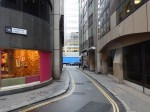





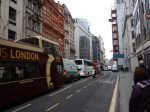

I would assume, it will replace the McDonald’s, with a new office block on top.
This Google Map shows King William Street, Nicholas Lane, Cannon Street and the various stations.
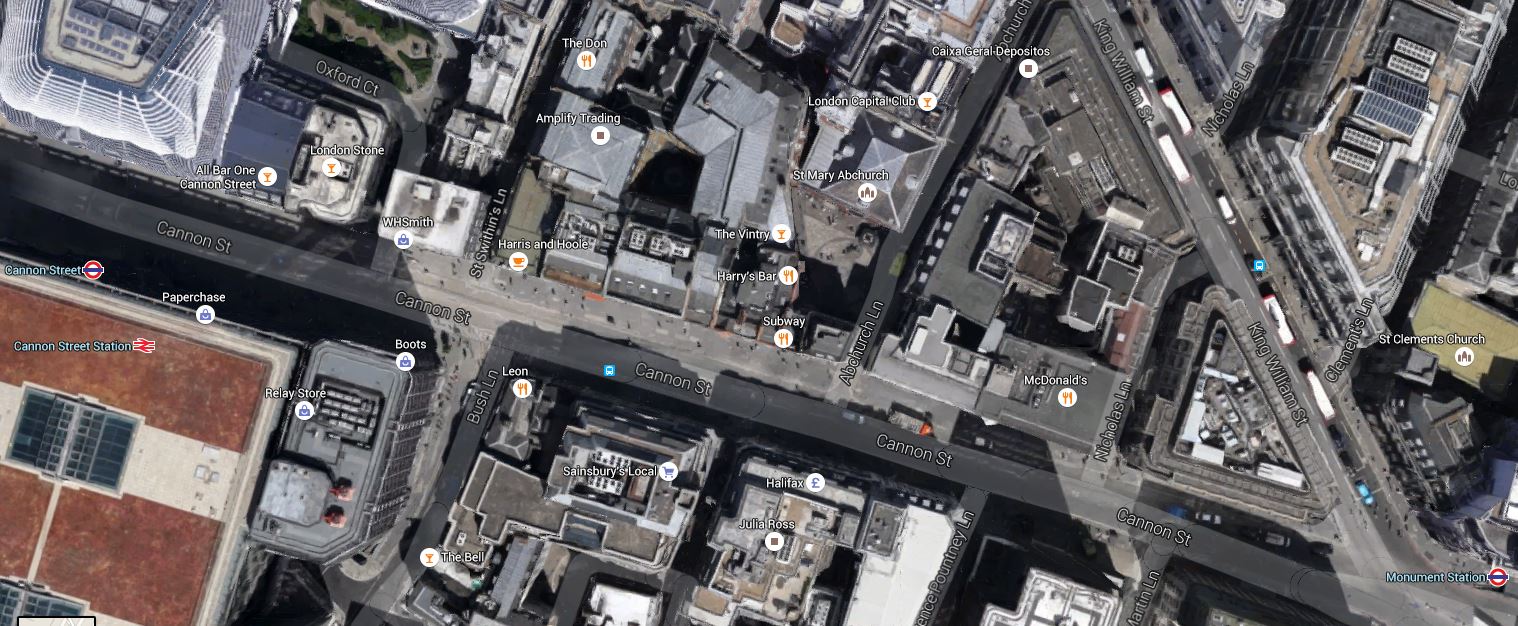
New Cannon Street Entrance At Bank Station
Note the McDonald’s. I had an excellent lunch in the Leon.
If you want to read more about the proposed station, you start by looking at this page on the TfL web site, which is entitled.
I found these two documents answered a lot of the questions, I had about the design of the station.
Design and Access Statement – Part 1 – Opens with a detailed drawing of the whole new entrance project.
Design and Access Statement – Part 2 – Opens with a detailed summary of the proposal.
They also have a lot of good images, visualisations and diagrams.
Summarising what I learned, I will make the following points.
- The new entrance will be a wide one where the current McDonald’s is situated.
- Passengers will go through the wide gate line and banks of escalators will take them down to the Northern Line.
- Passengers requiring step-free access will have a dedicated route to the lifts from two wide gates on the left of the entrance.
- The Northern Line is deep and because of the constricted nature of the site, the escalators will be vertically split into two banks with a landing, as some at London Bridge station are.
- At the bottom of the escalator will be a large circulation area, with cross passages accessing the rebuilt and wider Northern Line platforms.
- Moving walkways from the circulation area, will take you to the Central Line.
- The rise between the Northern and Central Line levels will be handled by escalators between the Central Line platforms.
- Access to the DLR platforms, which are several metres below and parallel to the Northern Line platforms, will be via escalators in the middle.
- The District and Circle Lines will be accessed from the Southern end of the circulation space by means of an improved passage to existing escalators.
- I suspect that the access to the Central Line and DLR platforms, can be built without any lengthy closures.
- Don’t forget that there is a new entrance at Walbrook Square being built to give lift and escalator access to the Waterloo and City Line, that will open in 2017.
- All existing links between lines and the existing entrances will be preserved and upgraded.
- Two seventeen passenger lifts will descend from the new entrance to both the Northern Line and the DLR.
- The station is to be completed by 2021.
I think it is true to say, that the new Cannon Street entrance is effectively a second station that is connected to all the existing lines.
In the latter part of the project, the Bank branch of the Northern Line will be closed, so that the new running tunnel can be dug. I don’t think it will be possible to turn trains at say Moorgate and London Bridge, so the branch will cease to be any use.
Could this blockade, be planned to happen after Crossrail opens, so that passengers can walk to Liverpool Street/Moorgate to access other North-South routes?
- Crossrail to Farringdon station for Thameslink
- Crossrail to Tottenham Court Road station for the Charing Cross Branch of the Northern Line.
- Crossrail to Whitechapel for the East London Line.
- The Northern City Line at Moorgate station.
The Central, District and Circle Lines had better behave too!
So how would the new station at Bank change my transport habits?
- Journeys between my house and Bank station are often done on a 21 or 141 bus, where the stops are within a hundred metres of my house. I would hope for better access between buses and the new complex at Bank.
- The new Wallbrook entrance and the improved access to the Waterloo and City Line, will greatly improve one of my routes to Waterloo,
- I often go south on the Northern Line, as it is easy to get a 38 or 56 bus around the corner from my house and dive straight into the Northern Line at Angel station. From Bank I will use the easy access to the DLR and the District and Circle Lines.
- I suspect that when I need the DLR, I will go to Bank, rather my route now via Shadwell on the East London Line.
- If I’m coming North on the Northern Line, I get out at either Bank, Moorgate or Old Street and take the 21 or 141 bus.
I shall certainly have a lot of interesting transport routes.
The expansion of the station, in addition to sorting the connection between the various lines at the station, will after the Wallbrook entrance is complete, create two new terminii for the two smaller lines at the station.
Waterloo And City Line
The new Wallbrook entrance will create a step-free entrance into an upgraded Waterloo and City Line.
This will generate a few questions.
- How long will it be before demand is such, that the Waterloo and City Line opens on a seven-day-a-week basis?
- Will the passageways still connect the Waterloo and City Line platforms to the to the DLR and the Northern Line?
- Will the connections to other lines at Bank station be good enough?
- As the Bank end of the line will be step-free, what will happen at the Waterloo end?
- Could access to the line be improved from Waterloo East station?
I think that the Waterloo and City Line will get a few more small upgrades. Especially, as during the blockade of the Northern Line to build the new spouthbound tunnel, it will be used to bring travellers to and from Bank station.
Docklands Light Railway
The two DLR platforms and their connections to the other lines will be transformed by the station expansion.
- Many of the walking routes to other lines and the exits will be step-free, and all will be an improvement on the present routes.
- The important connection to the Northern Line will be by escalator or lift.
- There will be a lot more space around the two DLR platforms.
I think this ease-of-use of the DLR part of the station, will increase passenger numbers dramatically.
It appears to me that the new design will future-proof the DLR terminus, as the new layout of the DLR platforms and their connections seems to have been designed, so that the DLR can be extended to the West.
According to Wikipedia, two possible westward extensions have been proposed.
I think that the former which would take the DLR to Charing Cross and possibly Victoria via City Thameslink and Aldwych would be the most promising.
This would give me a route to Charing Cross station, which is probably the most difficult station to get to from Dalston.
But will it ever happen?
Bank station will certainly ready for a DLR extension in 2021.
From Cannon Street To London Bridge
I took this journey after the Christmas reorganisation of services through London Bridge station.





It’s all coming on.
The next big date is August, when a bit more of London Bridge station opens.
 The Anonymous Widower