UK Investor Takes Stake In Hornsea Two Transmission Assets
The title of this post, is the same as that of this article on offshoreWIND.biz.
This is the sub-heading.
London-based international investor and manager, John Laing Group, has acquired a stake in the transmission assets for the 1.3 GW Hornsea Two offshore wind farm in the UK, as part of a portfolio acquisition from HICL Infrastructure.
These two paragraphs outline the deal.
John Laing Group has agreed to acquire HICL Infrastructure’s entire equity interest in four UK public-private partnership projects, including a 37.5 per cent stake in the Hornsea Two offshore transmission assets for a total consideration of GBP 204 million (EUR 236 million).
All five acquisitions are expected to be completed before the end of March 2024.
I wrote World’s Largest Wind Farm Attracts Huge Backing From Insurance Giant in November 2018.
Funds and investors with money don’t seem to be losing their appetite for assets, that can provide a regular income.
Silvertown Tunnel Works – 24th September 2023
I took these pictures of the Silvertown Tunnel works on the North Bank of the Thames today.



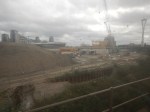


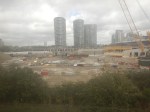




I was on a train going to Woolwich Arsenal.
What Is The Silvertown Tunnel?
The title of this section, is the same as that of this article on the Londonist, which is an excellent description of the Silvertown Tunnel.
The article says this about tolls.
The new tunnel will require you to part with some pounds if you want to use it. Despite the consultation on this taking place a decade ago, the final details have yet to be publicised. We can expect something similar to the Dartford Crossing (currently £2.50 for cars etc, free for motorbikes/mopeds).
As there is a mayoral election next year, I doubt that Sadiq Khan will announce the charge on the Silvertown and Blackwall Tunnels before the election.
Let’s Play Accountants
This is a paragraph in the Londonist Article.
Construction of the tunnel is eating up something like £1.2 billion (2020 estimate). It’ll then cost another estimated £1 billion over 25 years to pay for maintenance, financing and operation. Riverlinx paid up-front costs and will be paid back by TfL through money collected from tolls.
The running costs would appear to be a billion over 25 years, which is £ 40,000,000 in a year.
This is said on this page on the Greater London Assembly web site.
Blackwall tunnels (northbound and southbound) each carry approximately 50,000 vehicles per day in only two lanes of traffic.
That means that each tunnel handles approximately 18,250,000 vehicles per year.
Dartford Crossing charges are according to the Wikipedia entry are as follows.
- Cars, motorhomes, small minibuses – £ 2.50
- 2-axle buses, coaches, vans, goods – £ 3.00
- Multi-axle goods, coaches – £ 6.00
The Wikipedia entry also says this about the capacity and traffic through and over the Dartford Crossing.
The design capacity is 135,000 vehicles per day, but in practice the crossing carries around 160,000.
My good friend; Bob from the 1970s had an impeccable cv.
- Chief Accountant of Vickers.
- Chief Management Accountant of Lloyds Bank.
He was also one of two outstanding practical accountants I have known.
Several of his practical tips on how to handle money in computers, ended up in Artemis; the project management computer system, I wrote in the 1970.
Bob and I would solve problems in Mother Bunches Wine Bar and I suspect, we’d come to the conclusion, that an average charge of £3 per vehicle will be charged in the Blackwall and Silvertown Tunnels.
I also believe from my fluid flow experience, that a proportion of the excess traffic through and over the Dartford Crossing will divert to the new Silvertown Tunnel.
- Together the Blackwall and Silvertown Tunnels will have four lanes in both directions.
- The Silvertown Tunnel will hopefully designed to modern standards and be more free-flowing, than the Blackwall.
- Sat-navs will direct drivers to the quickest routes.
Just as water finds its own level, an equilibrium will develop between the flows.
- I suspect that during the day, the flow over the Dartford Crossing will drop to the design capacity of 135,000
- At night, will vehicles divert through the free-flowing Blackwall and Silvertown Tunnels?
- Will those living in North Central London inside the North Circular Road drive through the Blackwall and Silvertown Tunnels?
- Will the free-flowing Blackwall and Silvertown Tunnels encourage people crossing the Thames to use their car, rather than the train, as the car is more convenient and the toll will be less than the train fare?
- We should also beware that new roads, railways and tunnels generate new traffic, that no-one predicts.
My feeling is that combined traffic through the four lanes of the Blackwall and Silvertown Tunnels will be upwards of seventy thousand per day.
I can now calculate revenue for different levels of combined traffic through the Blackwall and Silvertown Tunnels.
- 40,000 vehicles in each direction per day is a total of 29,200,000 vehicles per year, which would raise £ 87.6 million per year in toll charges.
- 50,000 vehicles in each direction per day is a total of 36,500,000 vehicles per year, which would raise £ 109.5 million per year in toll charges.
- 60,000 vehicles in each direction per day is a total of 43,800,000 vehicles per year, which would raise £ 131.4 million per year in toll charges.
- 70,000 vehicles in each direction per day is a total of 51,100,000 vehicles per year, which would raise £ 153.3 million per year in toll charges.
- 80,000 vehicles in each direction per day is a total of 58.400,000 vehicles per year, which would raise £ 175.2 million per year in toll charges.
I am assuming the following.
- All days of a 365-day year have similar traffic.
- Everybody pays without fuss, by technology like number-plate recognition.
- The average toll chare paid is £ 3.
I am drawn to the conclusion, that the contract signed between Transport for London and Riverlinx, is a licence to print money.
Even, if the tunnels only attract 40-50,000 vehicles per day, the revenue is way in excess of the £40 million needed for maintenance, financing and operation of the Silvertown Tunnel.
I have a few further thoughts and questions.
Who Are Riverlinx?
This is said on the About Roverlinx page of the Riverlinx web site.
TfL awarded Riverlinx SPV (Special Purpose Vehicle) the contract for financing and overseeing the design, build and maintenance of the Silvertown Tunnel in 2019.
The Riverlinx CJV (Construction Joint Venture) is contracted by TfL and Riverlinx SPV to complete the design and construction works, delivering the Silvertown Tunnel on time and on budget.
Riverlinx CJV is a joint venture, a partnership bringing together international, market leading expertise from three civil engineering and construction companies: BAM Nuttall, Ferrovial Construction and SK ecoplant.
In collaboration with TfL, our supply chain and other key stakeholders in the project, Riverlinx CJV will complete construction of the Silvertown Tunnel in Spring 2025.
Note.
- BAM Nuttall is a construction and civil engineering company, that is a subsidiary of the Dutch Royal BAM Group.
- Ferrovial Construction is the construction subsidiary of Spanish company; Ferrovial.
- SK ecoplant is a subsidiary of the South Korean conglomorate; SK Group.
These companies should be capable of building the Silvertown Tunnel.
Where Will The Money To Build The Tunnel Come From?
In World’s Largest Wind Farm Attracts Huge Backing From Insurance Giant, using an article in The Times, I explain how Aviva invest our pensions and insurance money in wind farms.
Strangely, a tolled tunnel is a bit like a wind farm financially, in that if it’s working and the wind is blowing or the traffic is coming, it will continue to generate an income.
Built by quality construction companies, as most tunnels are, they will be the sort of investment, that would satisfy the Avivas of this world.
Will Riverlinx Get All The Tolls From The Tunnel?
Nothing is said about how the excess of income over expenditure will go.
I suspect, as the project is being designed, financed and built by Riverlinx, that they will not go unrewarded.
Will The Mayor Set The Toll Charges?
I suspect that the Mayor and TfL will set the charges.
These are some figures with different charges for 70,000 vehicles in each direction per day or a total of 51,100,000 vehicles per year.
- £3 in each direction would raise £ 153.3 million per year in toll charges.
- £4 in each direction would raise £ 204.4 million per year in toll charges.
- £5 in each direction would raise £ 255.5 million per year in toll charges.
- £6 in each direction would raise £ 306.6 million per year in toll charges.
Note.
- Some of the papers are talking of a four pound charge.
- A pound increase may not be much to the average driver, but they will certainly mount up.
Higher toll charges could be used by an unscrupulous Mayor to deter vehicles entering Central London or nudge people towards public transport.
What Happens If The Tunnel Springs A Leak?
I can remember the following tunnels being built under the Thames in my lifetime.
- Blackwall Tunnel – second bore
- Dartford Tunnel
- DLR to Greenwich and Lewisham
- DLR to Woolwich
- Elizabeth Line to Woolwich
- Jubilee Line – four crossings
- Victoria Line to Vauxhall
None of these seven seems to have sprung a leak recently. And neither have the older Victorian tunnels.
Tunnels with an income stream, appear to be a good risk, if they don’t spring a leak.
But London tunnels don’t seem to have a high likelihood of leaking.
Fines
Fines could be a problem, but this article on Kent Online, which is entitled Dartford Crossing Continues To Generate more Than One-Third Of Income From Fines As Profits Total More Than £100m, says otherwise.
Conclusion
This would appear to be a low risk venture and I suspect it will make Riverlinx and TfL a lot of money.
What Percentage Of Government Finance Is Fuel Duties?
I typed the title of this post into Google.
Google found this page from the Office of Budget Responsibility.
This was the first paragraph.
Fuel duties are levied on purchases of petrol, diesel and a variety of other fuels. They represent a significant source of revenue for government. In 2023-24, we expect fuel duties to raise £24.3 billion. That would represent 2.3 per cent of all receipts and is equivalent to £867 per household and 0.9 per cent of national income.
I don’t drive after a stroke ruined my eyesight, so I pay nothing directly.
But when everybody is in electric vehicles, how is the £24.3 billion hole in the government’s finances caused by no-one paying duty on petrol and diesel to be filled?
I would assume that everyone will have a black box in their vehicle and they’ll pay according to the miles they drive, their speed, the congestion and the vehicle type.
And of course if a driver exceeds the speed limit, they’ll be automatically sent a ticket.
I can understand why Labour politicians like Mark Drakeford and Sadiq Khan are so keen on 20 mph limits.
Has that nice Rachel Reeves told them what she has planned for motorists?
Their eyes must be rolling like cash registers.
Iberdrola Secures EUR 500 Million Loan For East Anglia Three
The title of this post, is the same as that of this article on offshoreWIND.biz.
This is the sub-heading.
Spain-headquartered Iberdrola has secured a EUR 500 million loan from Citi, partly guaranteed by the Norwegian Export Credit Agency (Eksfin), to support the development of the 1.4 GW East Anglia Three offshore wind farm in the UK.
It certainly doesn’t seem that raising the money to build this wind farm has been difficult.
Octopus Energy To Pour Billions In Offshore Wind Globally By 2030
The title of this post, is the same as that of this article on offshoreWIND.biz.
This is the sub-heading.
UK green energy supplier Octopus Energy Group has announced that it will invest, through its generation arm, USD 20 billion (about GBP 15 billion) into offshore wind by 2030.
These three paragraphs outline the investment.
The company said that this will go towards the generation of 12 GW of renewable electricity a year, enough to power 10 million homes.
Octopus is targeting projects across the globe, with a focus on Europe, and already has several deals in the pipeline.
It will back developers of new offshore wind farms as well as projects that are under construction operational, according to the press release.
Note.
- This is the original press release from Octopus Energy, which is entitled Making Waves: Octopus Energy To Unleash $20bn Of Investment In Offshore Wind By 2030.
- According to the press release, Octopus Energy also backs Simply Blue, a developer of innovative floating offshore wind projects, a type of offshore wind technology that taps into strong winds deeper out at sea.
- I will be interested to see how much capacity, Octopus Energy builds in the UK and how the capacity relates to their electricity sales in the UK.
Octopus Energy seem to have their tentacles into several worthwhile projects.
They will certainly need a lot of finance.
In World’s Largest Wind Farm Attracts Huge Backing From Insurance Giant, I describe Aviva’s philosophy about investing in renewable electricity infrastructure, based on an article in The Times.
I suspect other reputable companies and funds will follow Aviva’s lead. Provided, that the infrastructure is top-notch and well-managed.
Ørsted Divests Remaining Stake In London Array For EUR 829 Million
The title of this post, is the same as that of this article on offshoreWIND.biz.
This is the sub-heading.
Ørsted has signed an agreement with funds managed by Schroders Greencoat to divest its remaining 25 per cent minority interest in the London Array offshore wind farm in the UK.
These first three paragraphs outline the deal and give Ørsted reasons.
The total value of the transaction is GBP 717 million (approximately EUR 829 million).
Ørsted originally owned 50 per cent of the project and divested an initial 25 per cent of London Array to Caisse de dépôt et placement du Québec (CDPQ) in 2014.
The company does not have operations and maintenance (O&M) responsibility at the 630 MW London Array, and as the firm only holds a minority interest, Ørsted said it considers the asset non-strategic.
Note.
- Ørsted is the world’s largest developer of offshore wind power by number of built offshore wind farms.
- Schroders Greencoat LLP is a specialist manager dedicated to the renewable energy infrastructure sector.
This is a typical transaction, which is enabled between companies in the world’s financial centres all the time.
- Company A has an asset, which generates a predictable cash flow and needs money to invest in similar assets.
- Fund B has lots of money, but needs a predictable cash flow to pay interest to its investors.
So it is not surprising, that Fund B buys the asset from Company A.
I should say that the project management computer system, that I designed; Artemis was leased to the end users.
This eased the process of funding the sales.
In later years, I seem to remember, that we took bundles of leases with companies like BAe, BP, Shell, Texaco and sold them to banks, who needed a safe investment.
Gore Street Energy Storage Fund’s Portfolio Increases To Over 1GW
The title of this post, is the same as that of this article on the Solar Power Portal.
By any measure a GW is a substantial amount of power and the article gives all the figures for the fund.
One thing, I feel, I can say, is that large grid-connected lithium-ion batteries, as deployed by Gore Street, are more reliable than the similar smaller batteries in e-bikes and e-scooters.
The media and especially the financial pages would have had a field day, if a lithium-ion battery caught fire. Certainly Gore Street and others building large batteries, don’t seem to have any planning permission problems from Nimbys.
Germany Rakes In EUR 12.6 Billion Through ‘Dynamic Bidding’ Offshore Wind Auction
The title of this post, is the same as that of this article on offshoreWIND.biz.
This is the sub-heading.
Germany’s first dynamic bidding process, covering four offshore wind zones with a combined capacity of 7 GW, has generated EUR 12.6 billion in proceeds, according to the Federal Network Agency.
This dynamic bidding process seems to have brought in the euros.
I hope the Crown Estate is going to look at this bidding, to see if it would be good for the UK.
CIP’s Flagship Fund On Track To Become World’s Largest Dedicated To Greenfield Renewable Energy Investments
The title of this post, is the same as that of this article on offshoreWIND.biz.
This is the sub-heading.
Copenhagen Infrastructure Partners (CIP) has reached the first close on its fifth flagship fund, Copenhagen Infrastructure V (CI V), at EUR 5.6 billion in capital commitments received. This puts the fund on track to reach its target size of EUR 12 billion, which would make this the world’s largest dedicated greenfield renewable energy fund, according to CIP
These three paragraphs give more details on the size and investments of the latest fund, which is named CI V.
The first close of the flagship fund saw a large group of leading institutional investors across continental Europe, the Nordics, the UK, North America, and the Asia-Pacific region.
CIP noted that there is a strong interest from additional investors already in process, so CI V is on the way to reaching its target fund size of EUR 12 billion.
The fund now has ownership of more than 40 renewable energy infrastructure projects with a total potential CI V commitment of approximately EUR 20 billion, corresponding to more than 150 per cent of the target fund size.
The CIP web site gives more details on the company, including this summary on the front page.
Founded in 2012, Copenhagen Infrastructure Partners P/S (CIP) today is the world’s largest dedicated fund manager within greenfield renewable energy investments and a global leader in offshore wind. The funds managed by CIP focuses on investments in offshore and onshore wind, solar PV, biomass and energy-from-waste, transmission and distribution, reserve capacity, storage, advanced bioenergy, and Power-to-X.
CIP manages 11 funds and has to date raised approximately EUR 25 billion for investments in energy and associated infrastructure from more than 150 international institutional investors.
In the UK, CIP are currently involved in the Ossian and Pentland floating wind farms.
 The Anonymous Widower