Bus Information In Shops And Cafes
Several years ago, I wrote to Transport for London and suggested that the 5- digit code that you text to get bus information, be displayed inside the bus shelter. So you could read it whilst staying in the dry in bad weather.
There is now a space for the code on the instructions inside the shelter, but it is never filled in.
This morning, I had breakfast in Leon and afterwards I did some food shopping in Marks & Spencer, before walking back to Leon to get the bus home from outside.
It was cold in London this morning, so as I had a few minutes to wait for a bus, I ducked back into the Leon, as it was warmer in there.
I know the 5-digit code, that I should use, so I only emerged, when the bus was close.
Perhaps Transport for London, should provide small information posters that can be downloaded, printed and displayed by cafes, shops and other businesses close to a bus stop.
HS2 Smashes Carbon Target
The title of this post, is the same as that of this article on Rail Engineer.
This is a must-read article which explains how the various companies building High Speed Two are progressing in making all of the work sites diesel-free.
GeoPura is mentioned in the article and on this page on GeoPura’s case studies, which is entitled HS2 Reveals Successful Results Of Hydrogen Generator Trial, full details of the trial are given.
An HS2 construction site in London has held successful trials for two zero-emissions hydrogen fuel cell-based electricity generators – cutting carbon and improving air quality for workers and the local community.
The two GeoPura 250kVA hydrogen power units (HPUs) were trialled over the last year at HS2’s Victoria Road Crossover Box in Ealing, as a direct replacement for diesel generators to power machinery on the site.
There is also this video from High Speed Two.
Note.
- The use of electric cranes, diggers, dump trucks.
- The red trailer with lots of small cylinders, which is used to supply hydrogen.
- HS2 are also using HVO and flywheels to store energy.
- The video is narrated by HS2’s Air Quality Manager. If every project had one of these, it must surely speed decarbonisation.
We need more electric construction.
Cars In Central London Surged 60% After Khan Stopped Evening Congestion Charge
The title of this post, is the same as that of this article on the Standard.
These are the first two paragraphs.
Transport for London’s own data shows the dramatic impact of the Mayor’s decision to shorten the £15-a-day C-charge’s operating hours, ending it at 6pm rather than 10pm.
Last February, an average of 12,968 vehicles entered the zone between 6pm-10pm. But by October this had increased to 20,654 — a rise of 59 per cent.
To a Control Engineer like me, it is obvious that if you reduce the cost of the London Congestion Charge in the evenings between 18:00 and 22:00, you’re going to get more traffic.
Was that what was intended?
Or was the Mayor given bad advice?
I would have thought, the best course of action would have been to keep the charges as they were and use some the money to improve public transport in the central area.
Zero-Carbon Lighting Of Large Spaces
In Cockfosters Train Depot – 12th January 2023, I took a series of pictures of Cockfosters Train Depot, of which these are a selection.
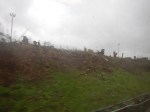
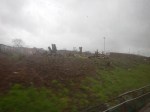

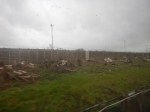
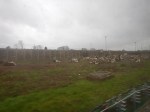

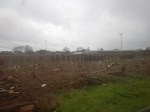
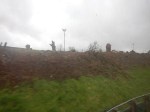
Note, the lamp clusters on top of tall poles to light the area.
You see lots of these lights to illuminate play areas, car parks, rail sidings and truck depots.
Could a SeaTwirl or another vertical wind turbine be placed as high as possible up the pole, that supports the lights?
- A battery would be needed for when the wind doesn’t blow.
- A control system would be used to use the lights, when they are needed.
- The poles would be able to be laid down, like many lights can be, for servicing from the ground.
Cockfosters would be an excellent location for a test, as the wind is always blowing and the site has an altitude of nearly a hundred metres.
Tevva Starts First Mass Production Of Electric Lorries In UK
The title of this post, is the same as that of this article on Professional Engineering.
These are the first three paragraphs.
Tevva is building its 7.5 tonne vehicles at Tilbury in Essex after it received European Community Whole Vehicle Type Approval (ECWVTA), meaning it can start producing and selling in volume across the UK and Europe.
The start-up has already started delivering its first mass-produced lorries to customers including Travis Perkins and Royal Mail. It expects to sell up to 1,000 in 2023.
Described as “ideal” for last mile and urban delivery fleets, the electric truck offers up to 227km range from its 105kWh battery on a single charge. It will be followed later in 2023 by a 7.5 tonne hydrogen-electric alternative. The hydrogen range extender will reportedly increase the range up to 570km.
That seems like a good start to me; certification, orders for a thousand and generous ranges with or without a hydrogen extender.
In Equipmake Hybrid To Battery Powered LT11, I described Equipmake’s battery-electric New Routemaster bus.
Both the battery-electric Routemaster and the Tevva truck seem to have generous ranges, so has better battery technology been developed.
The Bowes Park And Bounds Green Out-Of-Station Interchange
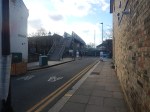
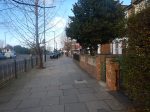
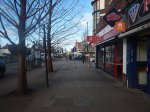
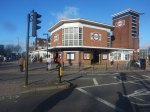
After I’d taken the latest pictures in Bowes Park Station – 12th January 2023, I walked to Bounds Green station to go back South to the Angel.
I took these pictures on the way.
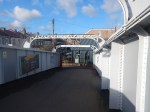
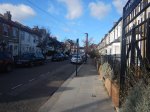
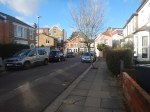
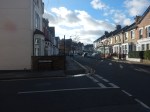
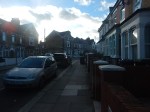
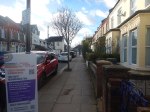
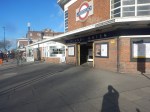
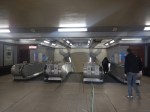
Note.
- The walk is level and could be done easily, if you were pushing a buggy, dragging a case or in a wheel-chair.
- There is a footbridge over the busy Bowes Road, which doesn’t have lifts. But you don’t need it to go between the stations.
- There is a light-controlled crossing outside Bounds Green station to cross Brownlow Road.
- The walk took me about six minutes.
These pictures show the escalators at Bounds Green station.
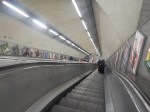
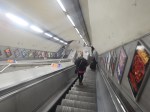
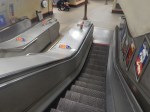
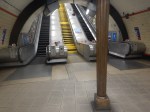
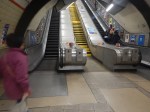
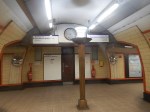
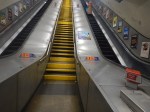
Could the central stairs be replaced by an inclined lift?
Would This Out-Of-Station Interchange Create An Easy Route Between Northern Piccadilly Line Stations And The Elizabeth Line?
Consider.
- Cockfosters, Oakwood and Arnos Grove stations have car parking.
- All stations on the Piccadilly Line from Bounds Green Northwards are well-connected by buses.
- Bounds Green station has escalators.
- Bowes Park station has stairs.
- Bowes Park station has a well-stocked cafe.
- Moorgate station has escalators and lifts to the Elizabeth Line.
For a perfect route, some things must be done.
The Frequency Of Trains On The Northern City Line
At the moment the trains through the station are two trains per hour (tph) between Moorgate and Stevenage.
But the frequency has been as high as four tph.
The frequency needs to be higher to cut waiting for a train.
Step-Free Access
This needs to be installed or improved at Bounds Green, Bowes Park and Moorgate stations.
Signage
The route between Bowes Park And Bounds Green stations needs better signage.
Conclusion
This Out-Of-Station Interchange could be made more use of.
A Road Scheme That Appears To Going Nowhere
This article on the BBC is entitled A57 Link Roads Mottram Bypass: Charity Seeks Judicial Review.
This is the sub-heading.
Environmental campaigners are seeking a judicial review of proposals designed to ease road congestion between Manchester and Sheffield.
And these are the first two paragraphs.
Plans for the A57 Link Roads Mottram Bypass scheme were boosted in November when Transport Minister Huw Merriman granted a development consent order.
But countryside charity the CPRE said there was no evidence building a new road “moves away a traffic problem”.
I remember this area well from the 1960s, when I was studying at Liverpool University and my parents lived in Felixstowe.
- There was no motorway across the Midlands between Coventry and Stafford and the alternative of the A5 was a nose-to-tail crawl.
- The M62 was still in the design phase.
So I took to using this cross-country route.
- A45 between Felixstowe and Huntingdon.
- A1 to Worksop, which was mainly dual-carriageway.
- A57 to Manchester, through Sheffield and Glossop, which was and still is single-track.
- A580 to Liverpool.
I think my best time was about five hours in a 1954 Morris Minor.
I feel, I must have gone through Mottram in Longdendale, judging by the map on the BBC article.
It is interesting to read the Wikipedia entry for the Longdendale Bypass, which starts like this.
The Longdendale Bypass (also known as the A57/A628 Mottram-in-Longdendale, Hollingworth & Tintwistle Bypass) is a long-planned road scheme in England by the Highways Agency. The aim is to alleviate traffic congestion on the A57 road/A628 road/A616 road routes that presently pass through the villages. There is both support and opposition for this long-planned scheme which will pass through the valley of Longdendale and part of the Peak District National Park.
The scheme was approved by the Highways Agency in 2014, so politicians have not exactly been quick off the mark.
These are some choice phrases from the Wikipedia entry.
- It is used by a relatively large number of heavy goods vehicles.
- Supporters of the scheme say that the A628 is one of the most congested A-road routes in the country.
- There is no viable alternative to a bypass.
- A survey in 2010 found that the junction of the A57 and M67 was the most congested in Manchester.
It is a disaster and the intervention by the CPRE will further delay a solution.
Conclusion
It is problems like this, that lead me to one solution.
On the one hand, you improve the railways and on the other you bring in universal road charging.
Hopefully passengers and freight will find a happy equilibrium.
But voters wouldn’t like it and any Government, that brought it in would lose the next election to a yet-to-be-formed Motorists Party.
Cockfosters Train Depot – 12th January 2023
In Would A Solar Roof With Added SeaTwirls Work?, I showed this map of Oakwood.
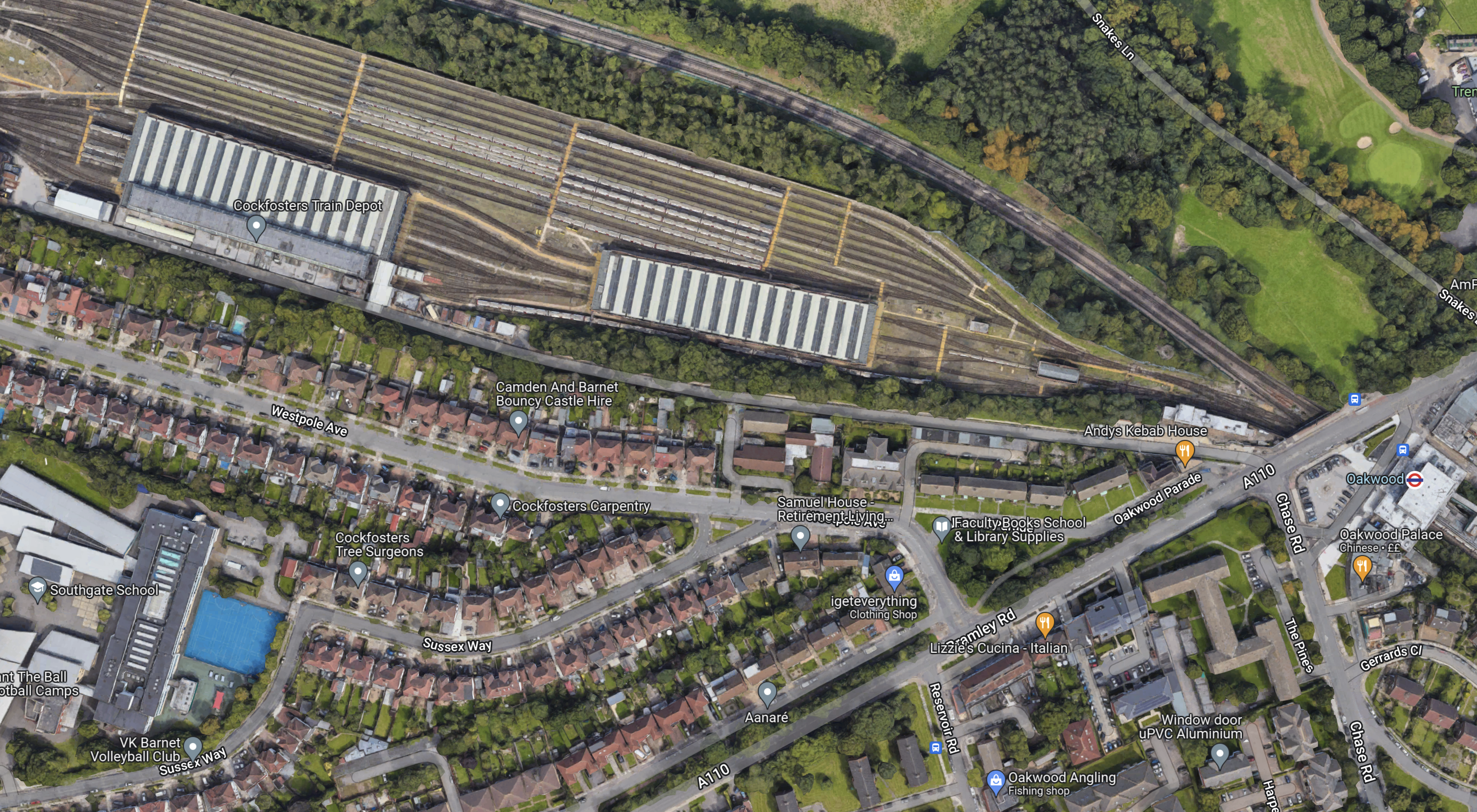
Note.
- The striped roofs at the top of the map, with sidings for trains to the North, is Cockfosters Train Depot for the Piccadilly Line.
- Cockfosters station is off the map on the West side of the map.
- Oakwood station is at the East side of the map and indicated by a London Underground roundel.
- The two tracks of the Piccadilly Line between Oakwood and Cockfosters stations, running across the map to the North of the depot.
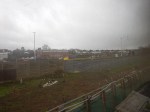
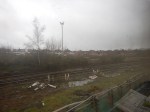
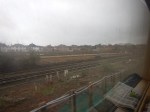
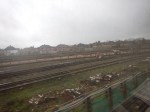
I took these pictures of the Cockfosters Train Depot as my train went between Oakwood and Cockfosters.

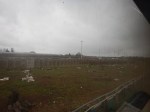
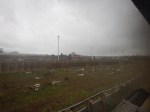
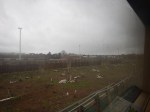
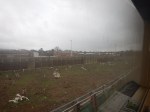





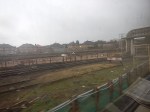
Note.
- The land between the Piccadilly Line and the depot seems to be being cleared.
- Is this to expand the depot for the new trains?
- There are some high lights mounted above the sidings.
- The depot buildings don’t look anything special.
This article on Ian Visits is entitled Depot Upgrade At Cockfosters For The Piccadilly Line’s New Trains.
- Before and after maps show a lot more sidings.
- The new siding layout reaches almost all the way to the Piccadilly Line.
- The old depot has been assessed to be utilitarian with low architectural and historic value.
- The depot will be completely rebuilt over the next two years for the new Siemens trains.
- Nothing is said as to whether the new depot will be fitted with a solar roof.
The new trains will start running in 2025. It seems that the work hasn’t progressed very far.
Bowes Park Station – 12th January 2023
I’d never used Bowes Park station until I moved back to London in 2011, despite the fact I had friends in the 1960s, who lived nearby.
Today, I was wanting to go from the Northern end of the Piccadilly Line to Moorgate station.
There are a number of ways to do this journey.
- Piccadilly Line to Bounds Green tube station and then a Great Northern train from Bowes Park station to Moorgate
- Piccadilly Line to Wood Green tube station and then a 141 bus to Moorgate.
- Piccadilly Line to Manor House tube station and then a 141 bus to Moorgate.
- Take the double cross-platform change route, I outlined in Extending The Elizabeth Line – Improving The Northern City Line.
I decided to take the first route.
I took these pictures at Bowes Park station.
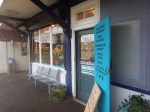
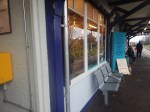
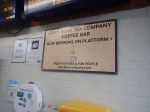
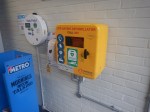
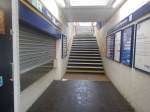
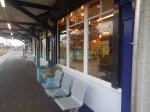
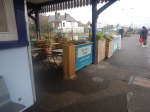
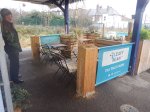
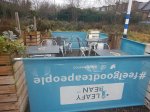
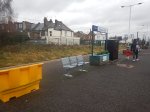
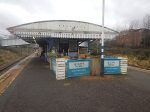
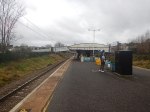
Note.
- The station has a warm well-stocked cafe, that is an asset to the station.
- The station has a defibrillator.
In an ideal world the station would have step-free access, as this would give a step-free route to Moorgate and the Elizabeth Line.
I returned a day later and took these pictures to see if a lift could be fitted.
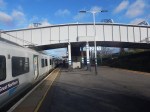
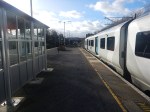
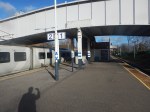
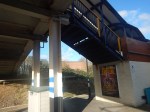
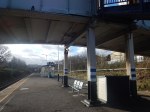
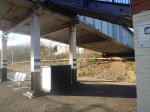
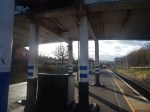
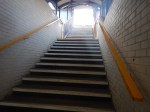
I don’t think it would be one of the most difficult or expensive jobs to fit in a lift, that took passengers between the platform and the bridge.
The existing stairs would be retained and fitted with a decent fully-compliant handrail.
If a single lift were to be placed on the opposite side to the stairs, passenger access to the station would be possible during the installation.
The Ultimate Bus Stop
London has very comprehensive bus stops as these pictures show.
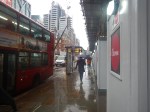
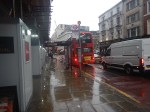
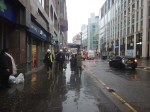
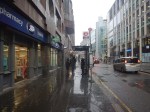
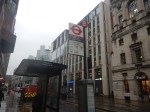
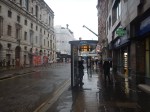
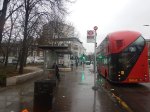
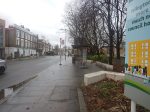
Note.
- Most bus stops have a pole mounted roundel, that can be seen from a reasonable distance. In many cases, anybody with reasonable sight can see the roundel for the next stop.
- Where space permits, bus stops have a shelter with seats, maps and instructions on ticketing.
- Some stops have been extended into the road, so that it is a level step into and out of the bus.
- As shown in the pictures, so bus stops have displays showing the next ten buses, that will be arriving.
But I do think, they could be improved, with extra features.
Internet Connectivity
I feel strongly, that all bus stops should have good internet connectivity.
This could be 4G, 5G or just wi-fi, but I believe this could help with the safety of people on the street.
Comprehensive Lighting
To contribute to safety, I also feel that all bus stops should be well lit.
CCTV Issues
I also feel that all bus stops should have provision for CCTV, so if there was a need, it could be quickly fitted. But if the bus stop had good internet connectivity, then this shouldn’t be a problem.
Phone Charging
New buses have this feature, so why not at the stops?
Power Supply Issues
If we add all these features, we could be needed an uprated power supply.
- So could we see bus stops, with solar panels on the roof.
- Perhaps even a mini wind turbine?
- I think a vertical wind turbine, which was similar to a SeaTwirl, but smaller, could be ideal!
- Could it be called a StreeTwirl?
- A self-powered bus could be created with the addition of a battery.
Self-powered bus stops might be easier to install.
Conclusion
Bus stops will have more features in the future.
 The Anonymous Widower