HS2 Completes First Tunnel Cross Passages
The title of this post, is the same as that of this press release from High Speed Two.
This is the first paragraph.
As the tunnelling machines under the Chilterns approach the four-mile mark, HS2 completes the first of thirty-eight underground connections between the northbound and southbound tunnels.
This video from High Speed Two, shows the construction of the cross tunnels.
There appears to have been a resurgence of traditional tunneling methods, albeit it with the assistance of modern mechanised tools.
In London recently, these tunnels have been dug without the use of expensive tunnel boring machines.
- The running and station tunnels for the Bank Station Upgrade.
- The tunnel for the Paddington Bakerloo Line Link.
I suspect there will a lot more dug traditionally in the future.
Bank And Moorgate
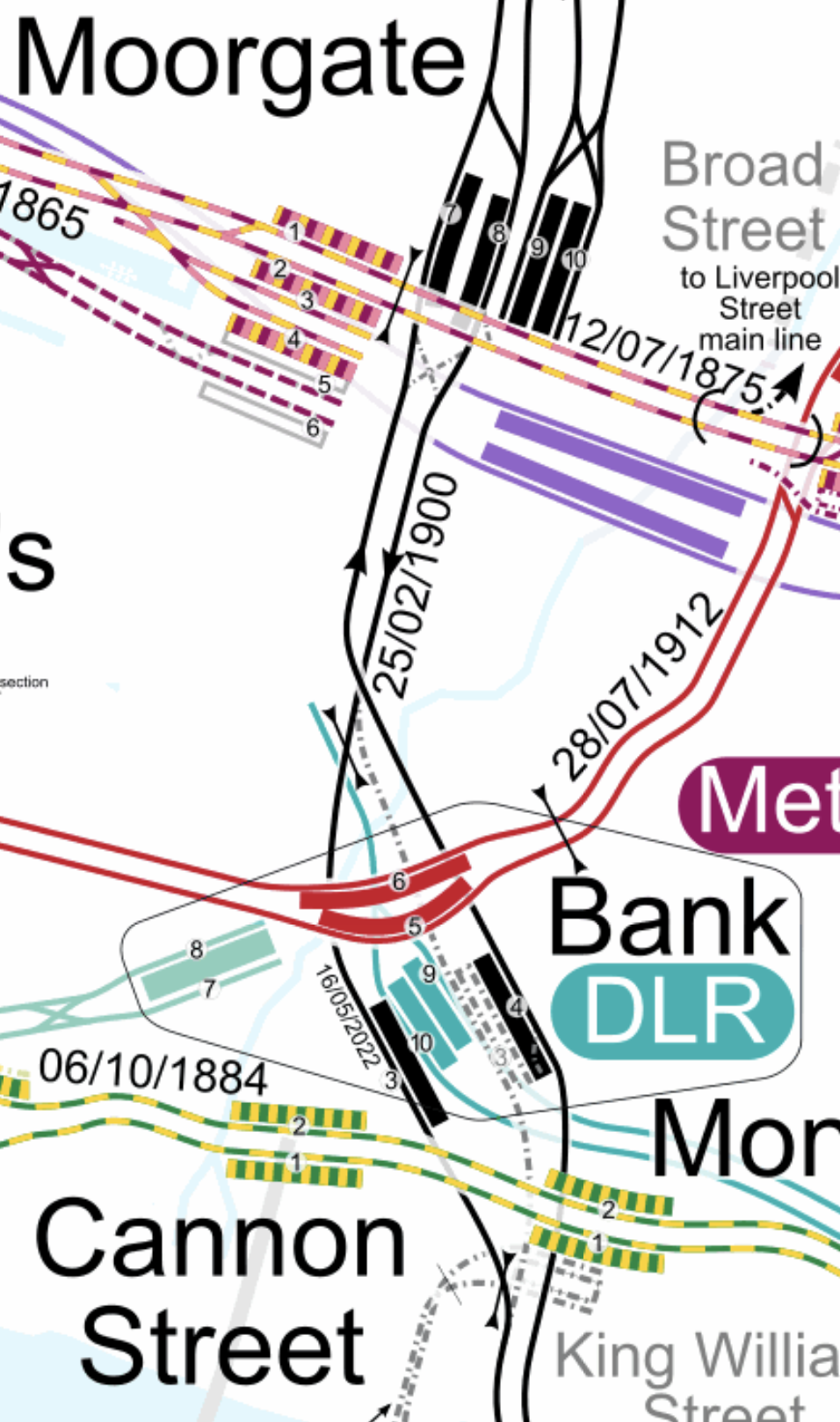
The map from cartometro.com shows the plethora of lines at Moorgate and Bank stations.
Note.
- Moorgate station is served by the Circle, Elizabeth, Hammersmith & City, Metropolitan, Northern and Northern City Lines.
- Bank station is served by the Central, Circle, District, Northern and Waterloo & City Lines.
- Bank station is also one terminus of the DLR.
I believe it would be possible to dig a long pedestrian tunnel with a travelator, between Moorgate and Bank stations under Moorgate, which connects the two stations.
City Thameslink Station And St. Paul’s
I discussed this in A Pedestrian Connection Between City Thameslink Station And St. Paul’s Tube Station.
Cummins Fuel Cell Technology Powers Coradia iLint Fleet In Germany
The title of this post, is the same as that of this article on Green Car Congress.
This is the first paragraph.
Cummins is powering the world’s first fleet of hydrogen trains in Bremervörde, Lower Saxony, Germany. The Alstom Coradia iLint trains (earlier post) are outfitted with Cummins fuel cell systems and will run on the world’s first 100%-hydrogen train route in passenger operation. The first zero-emissions passenger trains in the 14-train fleet arrived in mid-summer.
I rode the prototype in March 2019 and wrote My First Ride In An Alstom Coradia iLint.
I took this picture at the time.

Note.
- The new fleet seem to have a slightly different front end with a snow plough, and a new colour scheme.
- According to the article, the Cummins fuel cell systems were assembled in Germany.
I have a few thoughts.
Cummins Fuel Cells
I must admit, I was a bit surprised to see that Cummins fuel cells are being used, as most other companies seem to be using Ballard.
But, having worked with Cummins on diesel engine testing and seen their thoroughness, I’m sure that their fuel cells will do a good job.
Is The Cummins Choice About Marketing?
Consider.
- Alstom has manufactured or assembled trains for the US market at Hornell, New York.
- Cummins is a large United States company.
- United States and Canadian railways are standard gauge, like most of Europe.
- United States and Canadian railways have a lot of track mileage without electrification.
- United States and Canadian railways use right hand running as does Germany.
- The Coradia iLint doesn’t need any electrification.
- The Coradia iLint has a range of 600–800 kilometres (370–500 mi) on a full tank of hydrogen.
I suspect that a German-specification, Coradia iLint might be possible to run in the United States and Canada, with only a different interior and signage.
If you are an Alstom train salesman in the United States, selling a commuter train to American cities and transit authorities, must be easier if the train has a substantial United States content.
I don’t think Cummins will be worried that the smart new train has their fuel cells, as it might help convert truck, van and car drivers to Cummins hydrogen technology.
I wouldn’t be surprised to learn, that Alstom got a premium deal from Cummins.
Are Hydrogen-Powered Trains Suited To North America?
Consider.
- There is a lot of track without electrification.
- Distances are long, which makes electrification expensive.
- Providing hydrogen for trains should be no more difficult than in Europe.
- In my experience hydrogen trains are a better passenger experience than diesel, in terms of noise and vibration.
I suspect that Alstom/Cummins could sell a lot of hydrogen-powered trains in the North America.
Leading Transport Experts To Explore Innovative Options For The Watford To Croxley Link
The title of this post, is the same as that of this news item on the Watford Borough Council web site.
The news item starts with this sub-title.
A wide range of proposals to bring a long disused stretch of railway back to life as a key transport link between Watford and Croxley Green are to be explored…
These four paragraphs then outline what is to be done.
A wide range of proposals to bring a long disused stretch of railway back to life as a key transport link between Watford and Croxley Green are to be explored by three leading travel and transport consultancies.
Atkins, SYSTRA UK and Wood Group will work in partnership with Hertfordshire County Council, Watford Borough Council, Three Rivers District Council and Network Rail to provide innovative solutions to improve connectivity within the area.
The transport link will connect important areas of Watford like the town centre, hospital, Watford FC and Croxley Park with Croxley Green and Watford Junction and the travel network beyond.
Securing the right solution is an important part of the overall plans of the partnership and Network Rail for future cleaner, healthier and greener travel in the area for the benefit of residents, visitors and commuters.
Note.
SYSTRA UK and the Wood Group are respected consultancies.
The main railway station, town centre, football ground and the hospital should be connected together by decent public transport. In Watford, as in many towns, they currently are a long walk or a taxi.
Watford Junction and Croxley stations will be connected together.
These are my thoughts.
The Abbey Line
I believe that the Abbey Line, which links Watford Junction and St. Albans Abbey stations should be included in any proposals.
- It has a rather unusual timetable with trains running every forty-five minutes.
- Proposals exist for a passing loop, which would allow two trains per hour (tph)
- All stations only have a single platform.
If it were updated to a modern railway, it would be a valuable asset with charm.
Connecting St. Albans Abbey And St. Albans City Stations
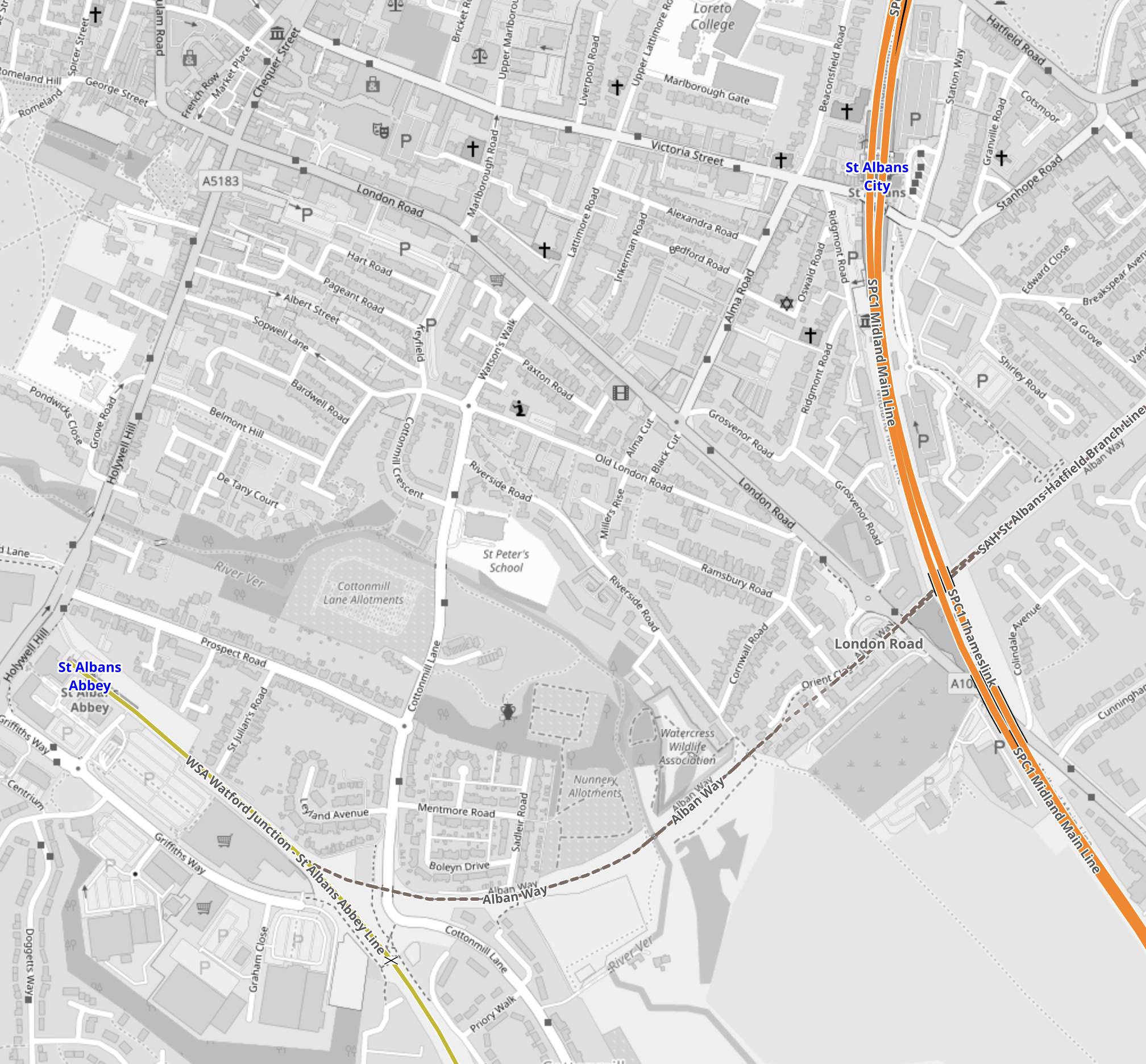
This map from OpenRailwayMap shows the two stations.
Note.
- The yellow line in the South-West corner is the Abbey Line that terminates in St. Albans Abbey station.
- The orange line is the Midland Main Line passes through St. Albans City station.
- The dotted line crossing the Midland Main Line and linking to the Abbey Line is a disused railway that has been converted into the St, Albans Way.
Tram-trains with a tight turning circle might be able to use the Abbey Line and with selected use of street running be able visit the City Centre and terminate at St. Albans City station.
Connecting The Abbey Line And The London Overground
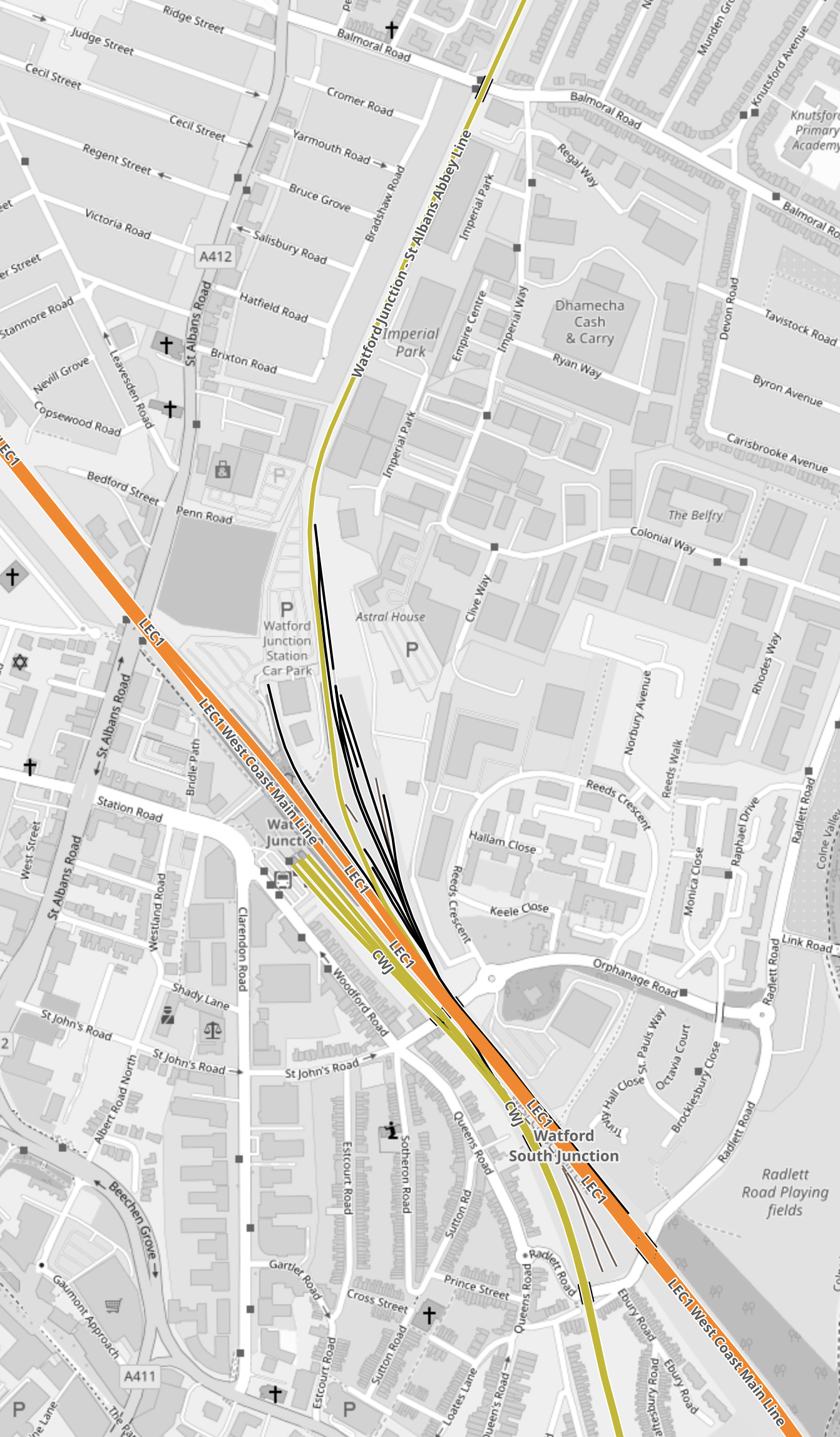
This map from OpenRailwayMap, shows the track layout at Watford Junction station.
Note.
- The orange tracks are the West Coast Main Line.
- The yellow track to the North of the West Coast Main Line is the Abbey Line.
- The yellow track to the South of the West Coast Main Line is the Watford DC Line of the London Overground.
If you were using tram-trains, like the Class 399 tram-trains on the Abbey Line, I suspect a single-track dive-under could connect the Abbey Line with the Overground tracks to Watford High Street station.
Why Tram-Trains?
Tram-Trains have advantages in a scheme like this.
- They can run as trams on the streets.
- They can run as trains on railway tracks.
- They can use lightweight catenary, which is quicker and more affordable to erect.
- They are narrower and lighter than trains.
- They have a tighter turning circle than trains.
But most importantly, tram-trains have been running successfully in Sheffield for several years.
The Eastern Section Of The Croxley Rail Link
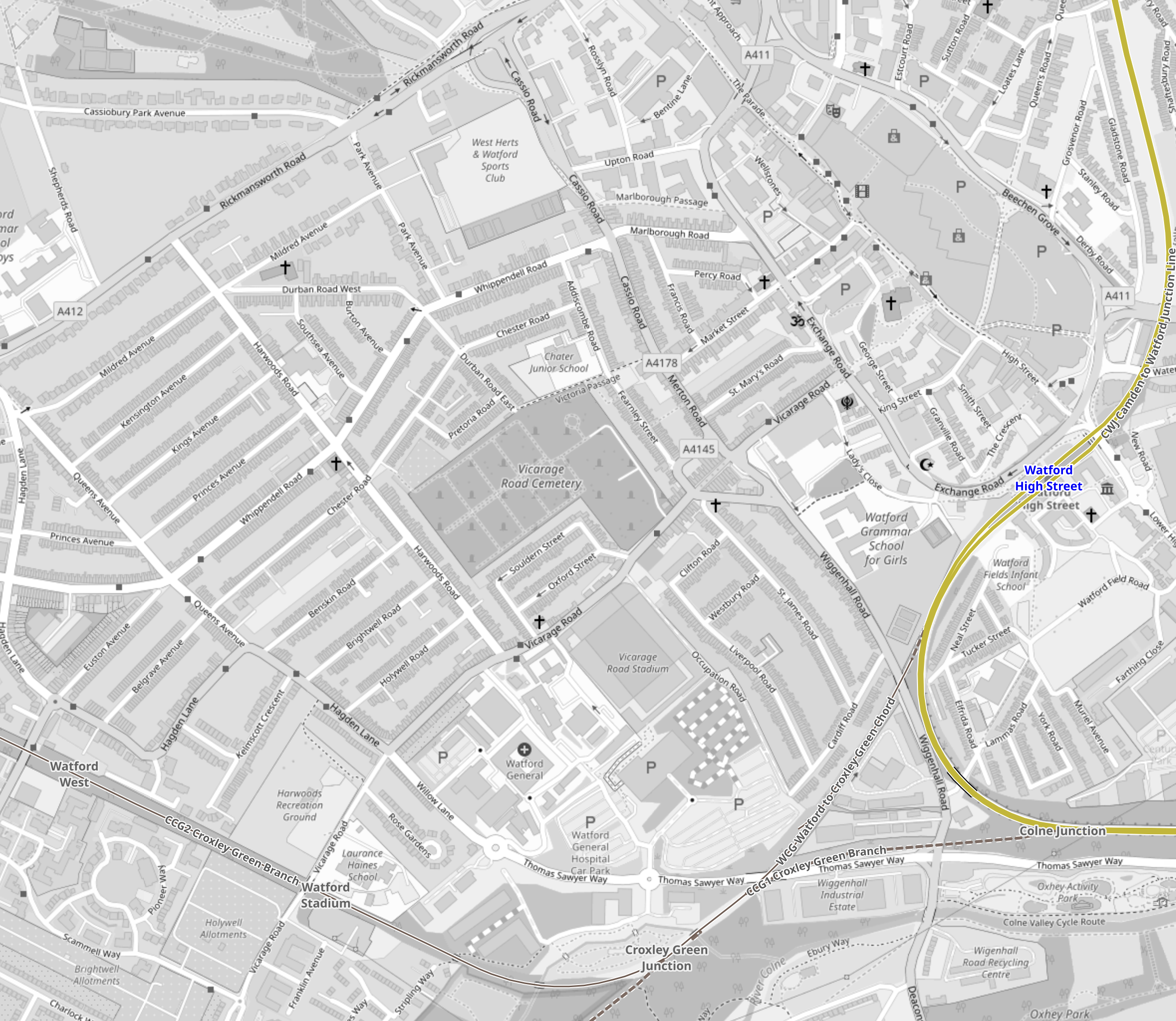
This map from OpenRailwayMap shows the Eastern section of the Croxley Rail Link.
Note.
- The yellow track is the Watford DC Line, which goes through Watford High Street station.
- A disused line runs via the Croxley Green Chord to the disused stations of Croxley Green, Watford Stadium and Watford West.
- Vicarage Road and Watford General Hospital are to the North of the disused line.
The original plan for the Croxley Rail Link would have seen a double-track along the line of the old railway with stations at Vicarage Road and Watford General Hospital.
I don’t see why tram-trains could join the Watford DC Line to the South of Watford Junction station, go through Watford High Street station and then continue along the reinstated track.
The Western Section Of The Croxley Rail Link
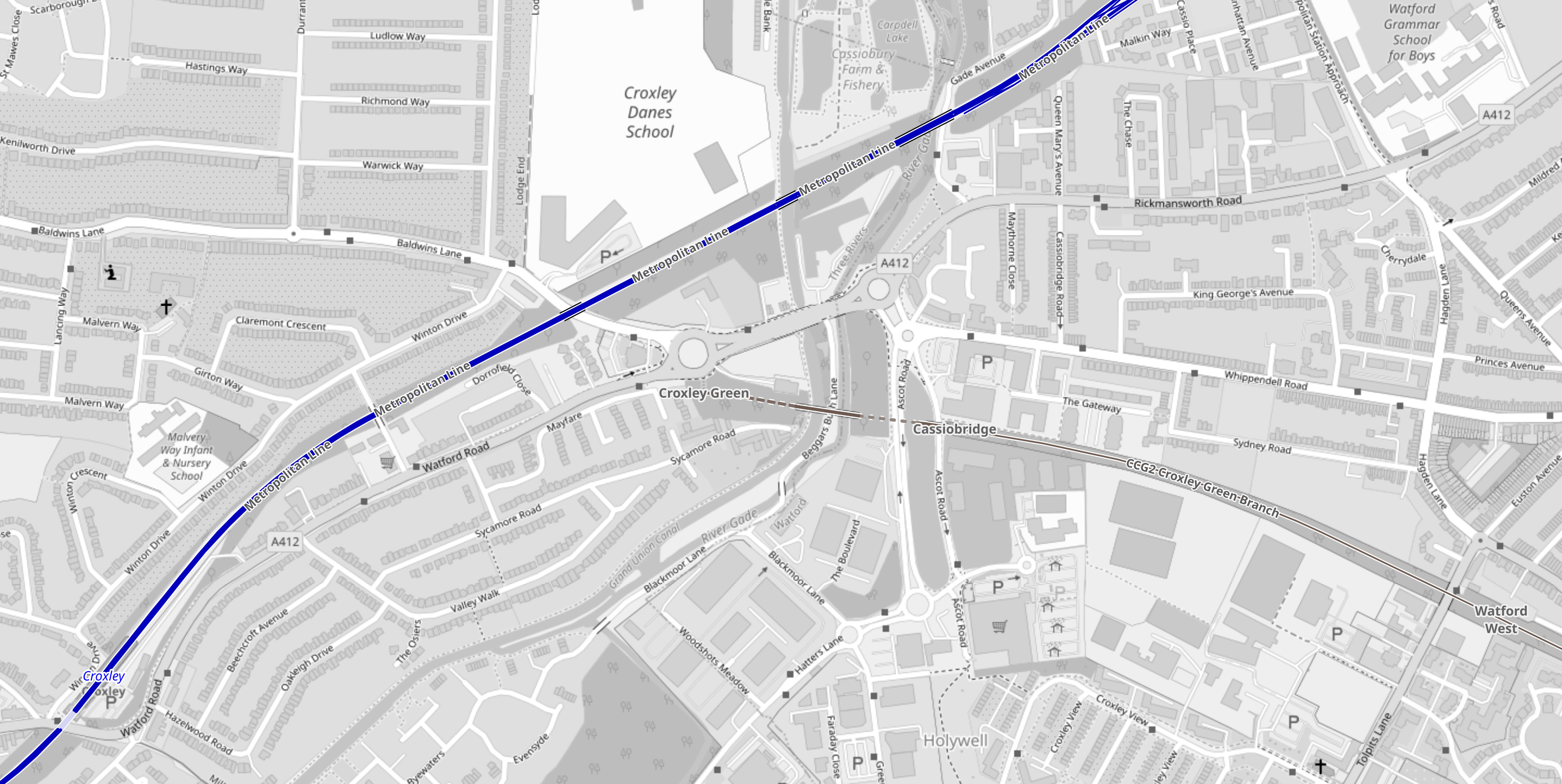
This map from OpenRailwayMap shows the Western section of the Croxley Rail Link.
Note.
- The blue track is the Metropolitan Line, which runs to Watford station.
- The disused line runs West from the former Watford West station to the roundabout at Croxley Green on the A 412.
The original plan involved a large double-track viaduct, which is shown in this visualisation from the Watford Observer.
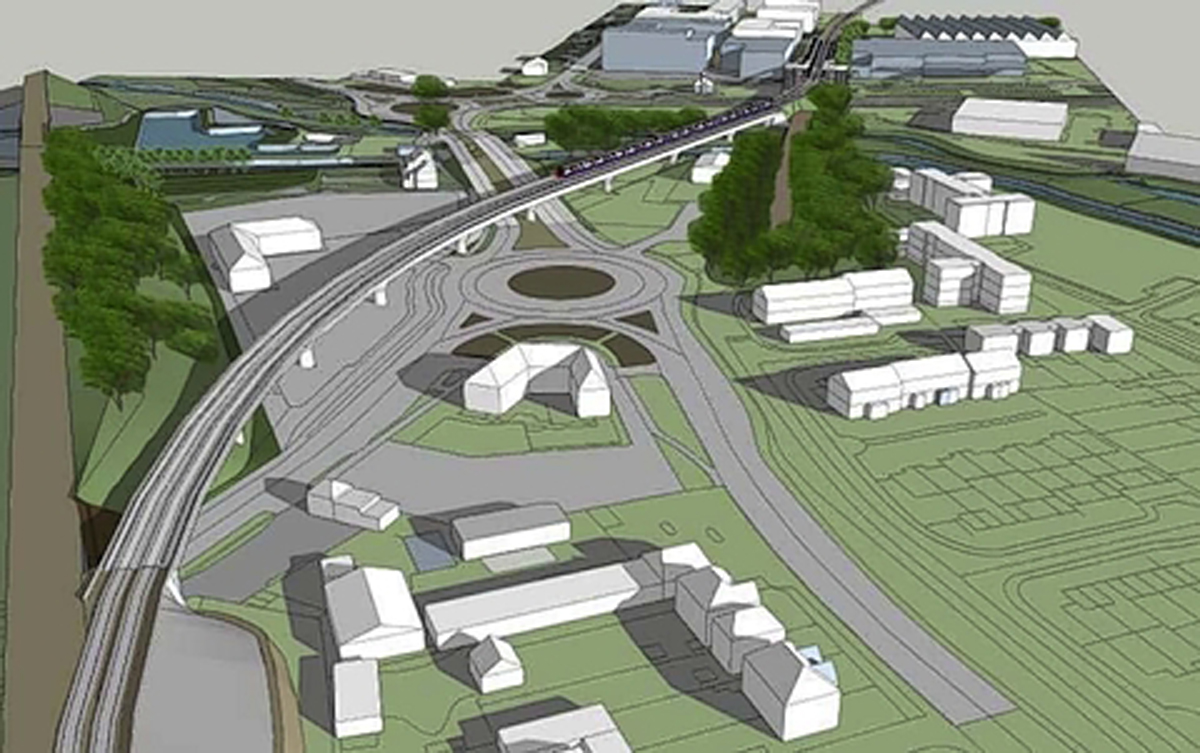
Note that the roundabout is the Croxley Green roundabout.
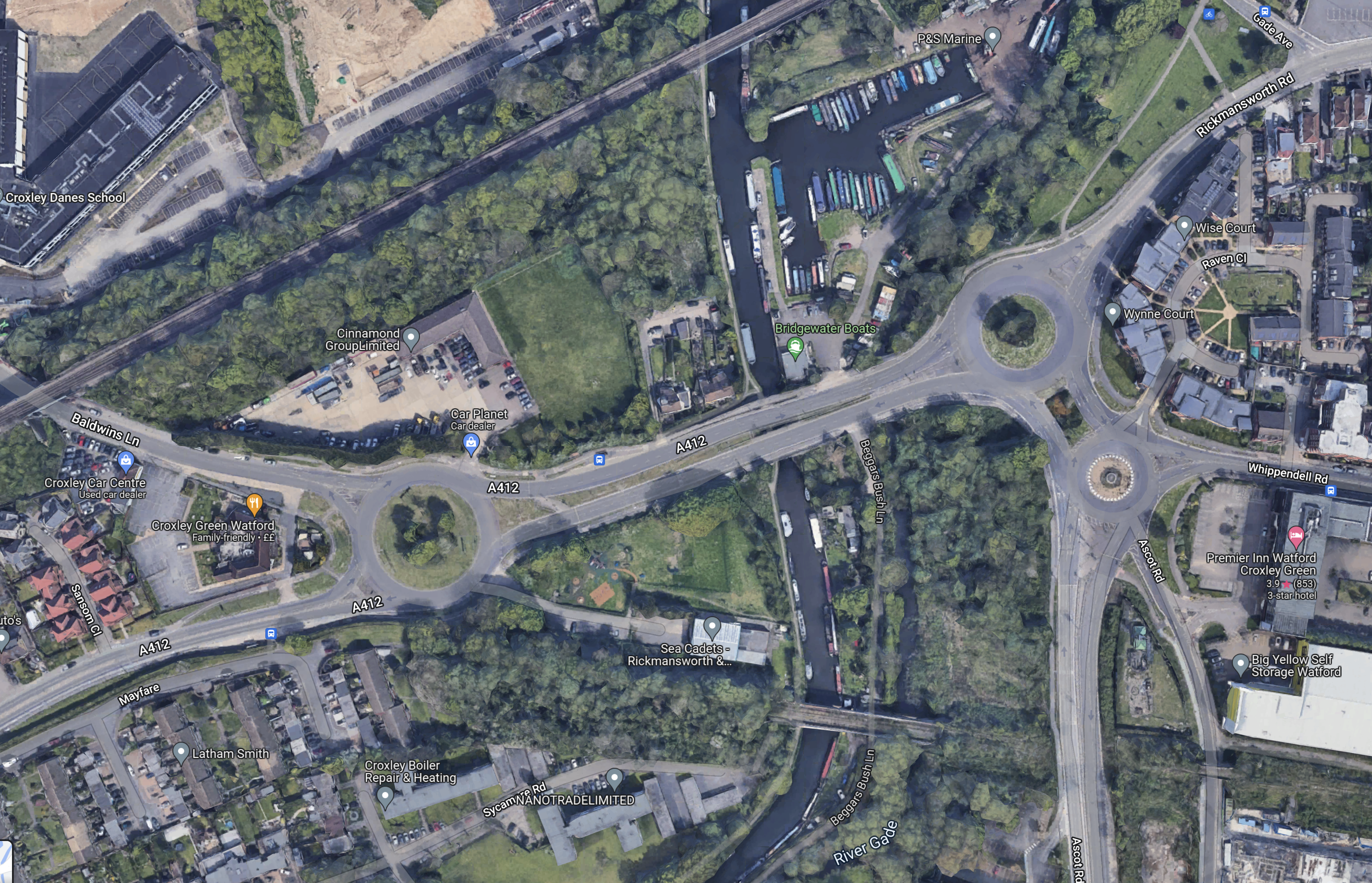
This Google Map shows the Croxley Green roundabout.
Note.
- The Metropolitan Line to Watford station runs across the North-West corner of the map.
- The Croxley Green roundabout is the roundabout in the West of the map.
- The disused railway runs from South of the roundabout to the South-East corner of the map.
- The proposed Cassiobridge station would be in the South-East corner of the map.
I wonder, if it would be possible to build a Croxley Green station to the South of the roundabout.
This would be an interim solution until it is worked out how to connect the Croxley Link to the Metropolitan Line.
Solutions could be.
- The original solution of a massive flyover, which would be very expensive and disruptive to build.
- Street-run the tram-train, which I feel are needed on the Croxley Link to Croxley station.
- Build a Croxley Green station on the Metropolitan Line to the North of the roundabout.
I think that experienced transport planners can find an acceptable solution.
Would A Lower Cost Rail Link To Skelmersdale Be Possible?
In the Wikipedia entry for Skelmersdale railway station, there is a section called Reopening Proposals, where this is said.
Skelmersdale has been described as the largest town in North-West England that doesn’t have a railway station, although Leigh, Greater Manchester, which also has no station is larger.
This section called 2022, gives the latest status of the proposals to connect Skelmersdale to the UK rail network.
Government reinforces that the station proposals are being considered. Rosie Cooper calls for the new Rail Minister to visit Skelmersdale, in order to aid the DfT’s decision. However, the Department for Transport announced in July 2022 that it was rejecting the Strategic Outline Business Case, throwing the scheme into doubt. The DfT instead suggested that better bus links with the Kirkby–Wigan rail line would be a cheaper way of improving connectivity for Skelmersdale.
This Google Map shows the town of Skelmersdale.
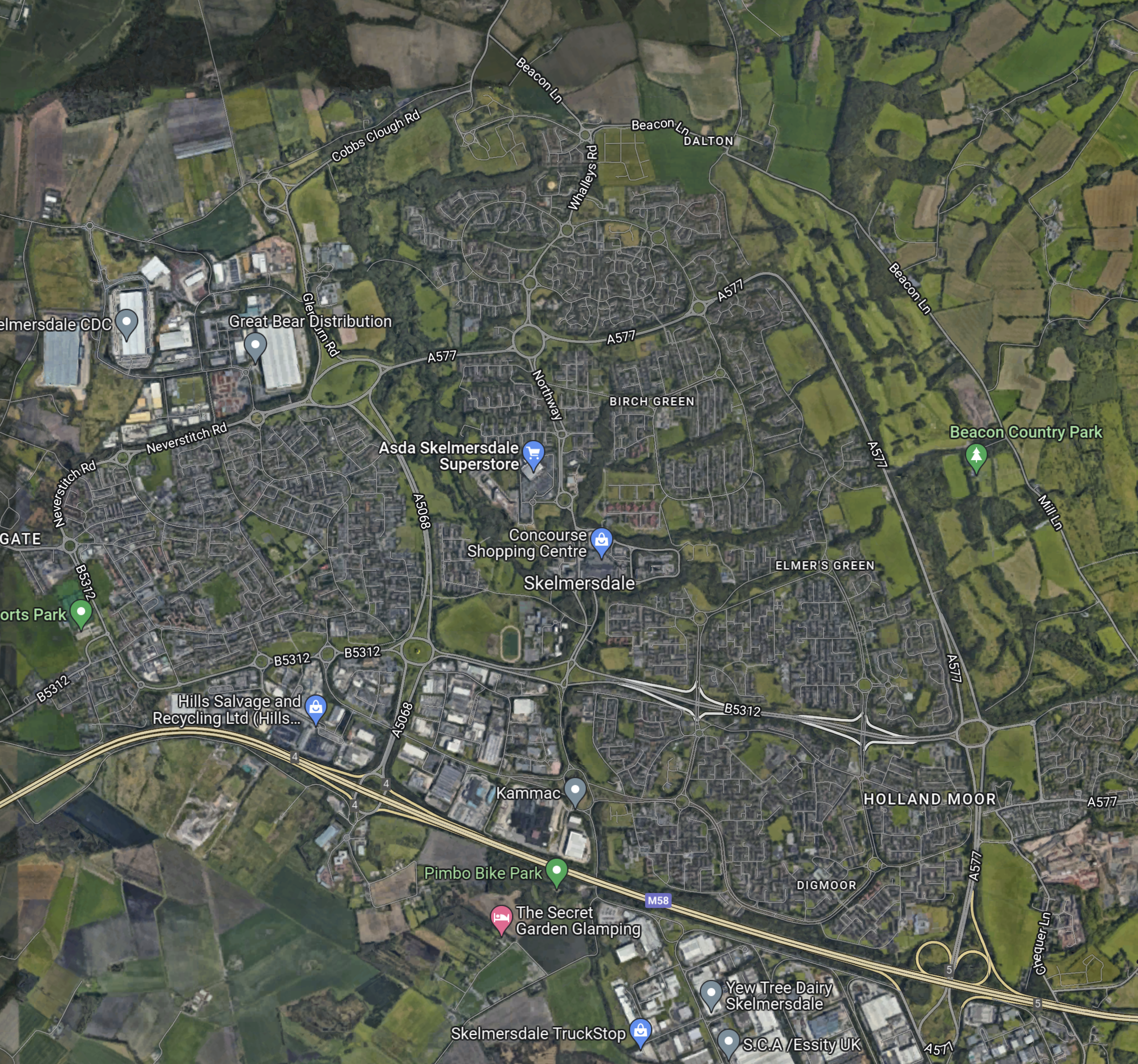
Skelmersdale is a town with an extensive road network, with good links to the M58 motorway.
I would suspect, that those who don’t have access to a car or some other form of personal transport, are second-class citizens.
According to Wikipedia, in the latest statement from the DfT, this was said.
The DfT instead suggested that better bus links with the Kirkby–Wigan rail line would be a cheaper way of improving connectivity for Skelmersdale.
I would simplify the DfT statement by removing the word bus. All transport links should be improved.
Consider.
- By the end of 2023, there will be five stations between Kirkby and Wigan; Headbolt Lane, Rainford, Upholland, Orrell and Pemberton.
- Upholland station is the nearest to Skelmersdale.
- Headbolt Lane station is being built with approximately 300 car parking spaces.
- Rainford station has ten car parking spaces.
- Upholland station has no car parking.
- Orrell station has no car parking.
- Pemberton station has no car parking.
- From Google Maps it doesn’t look promising to add parking at Rainford, Upholland, Orrell and Pemberton stations.
- Only Headbolt Lane station will have bicycle parking.
- Headbolt Lane station will have direct rail access to Liverpool.
- Headbolt Lane, Rainford, Upholland, Orrell and Pemberton stations will have direct rail access to Wigan and Manchester.
- Headbolt Lane station will be built with provision for buses.
- Skelmersdale bus station is at the main shopping centre in the centre of the town.
After Headbolt station opens in 2023, I would do the following.
- Provide a high-capacity bus service between Headbolt Lane station and Skelmersdale.
- Provide secure bicycle parking at Rainford, Upholland, Orrell and Pemberton stations.
- Investigate a bus service between Upholland station and Skelmersdale.
- Monitor all passenger movements in the area, to see whether a rail link is needed.
Once Headbolt Lane station and the new services settle down, it should be possible to make a good estimate of the number of passengers who would use the rail link.
These are my thoughts on a lower-cost service to a new Skelmersdale station.
The Current Plan For A Branch To Skelmersdale
This map from OpenRailwayMap shows the proposed future railway between Skelmersdale and the Wigan and Kirkby Line.
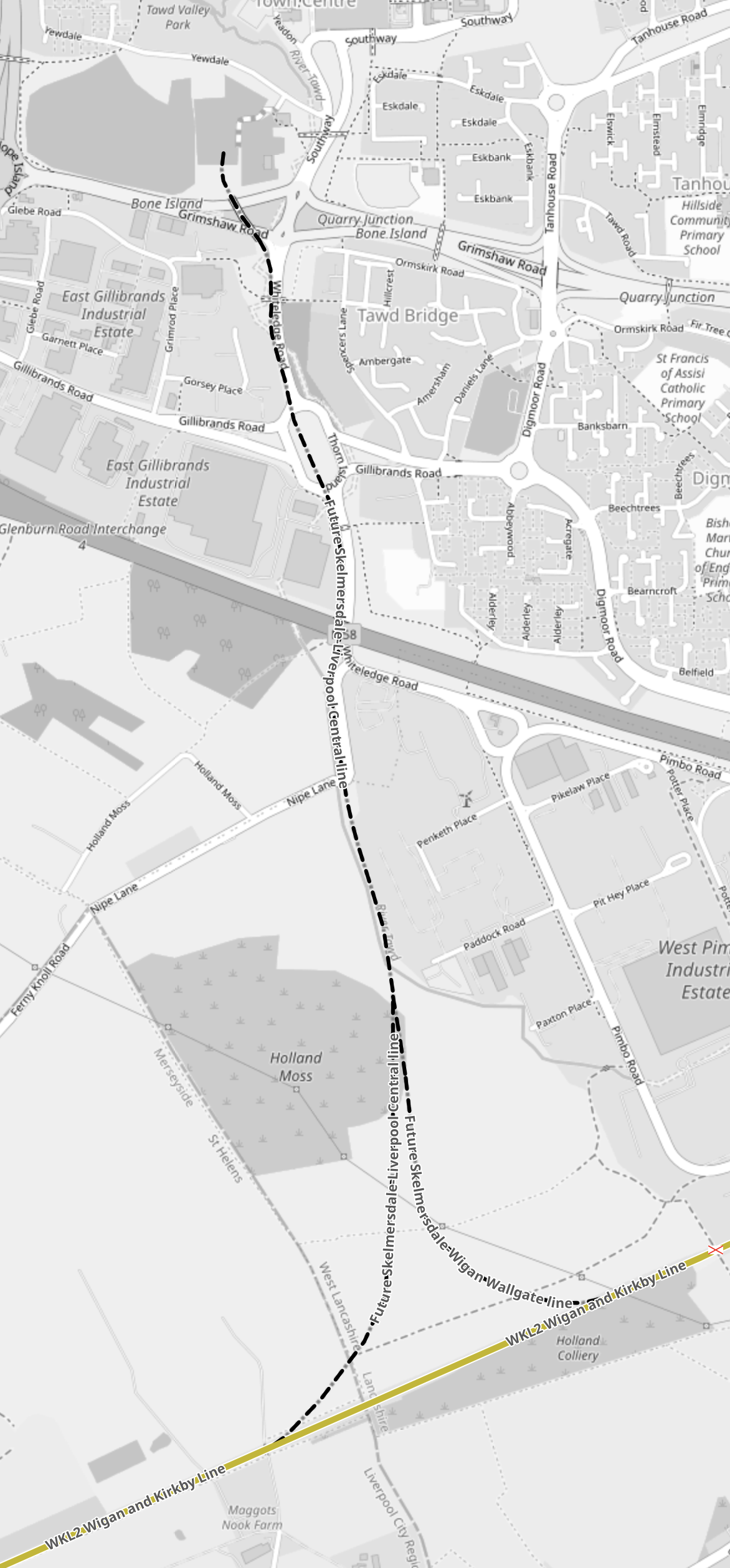
Note.
- The new branch to Skelmersdale is shown dotted.
- The Northern end of the branch is in the Concourse shopping centre in Skelmersdale.
- The branch goes under the M 58 Motorway.
- The branch joins the Wigan and Kirkby Line in a triangular junction.
- Rainford station is to the West of the junction.
- Upholland station is to the East of the junction.
It could be a complete solution.
Will There Be A Direct Service Between Skelmersdale And Liverpool?
I feel the design of Headbolt Lane station precludes this, as there doesn’t appear to be a line through Headbolt Lane station, as all three platforms are terminal platforms, with two serving Liverpool and one serving Wigan and Manchester.
Passengers would need to change at Headbolt Lane station, if travelling between Skelmersdale And Liverpool.
Will There Be A Direct Service Between Skelmersdale And Manchester?
This would appear to be possible.
Could The Original Route Be Used?
The original Skelmersdale Branch ran between Rainford and Ormskirk, with a station on the West side of Skelmersdale.
This Google Map shows the route.
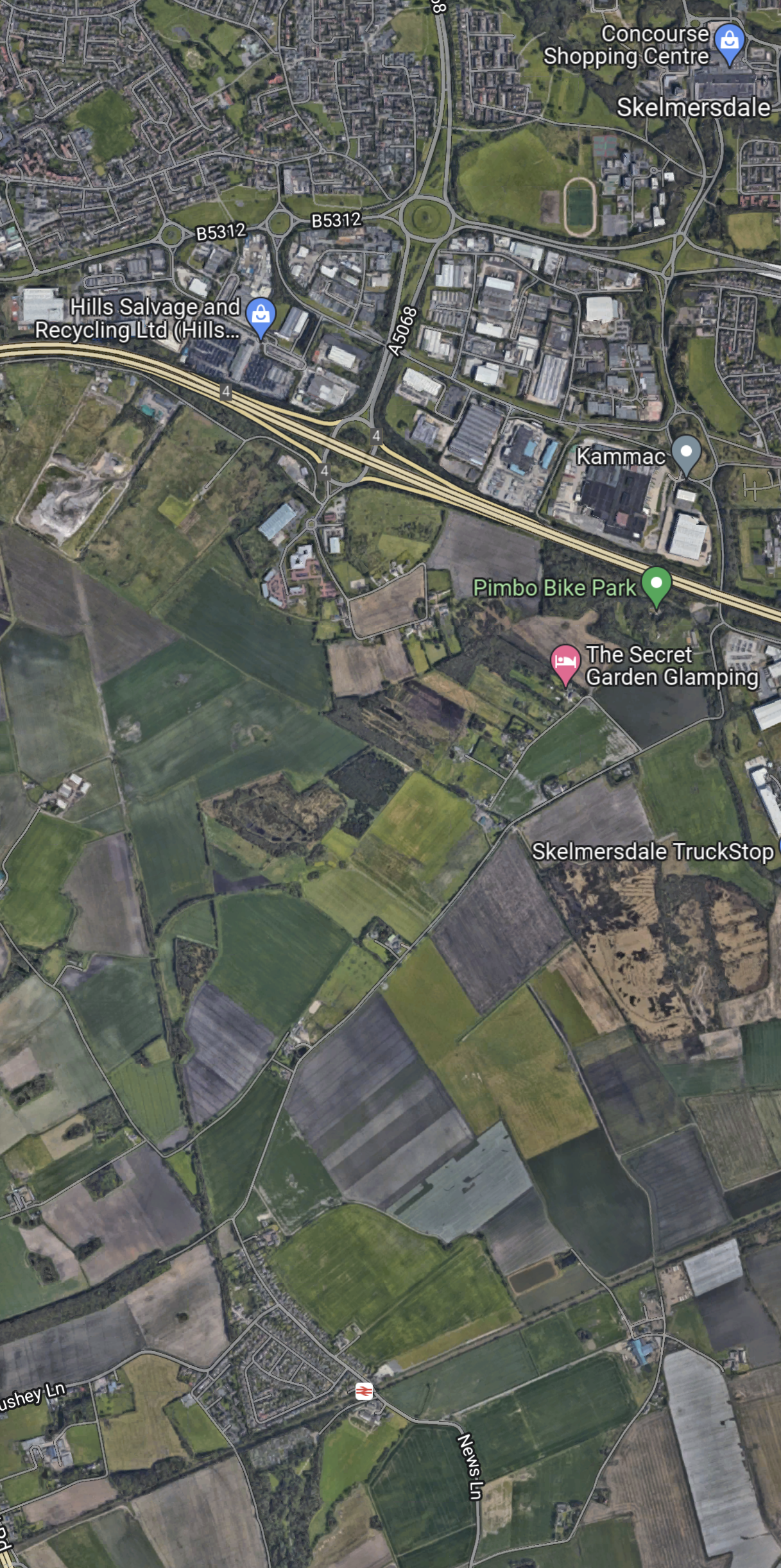
Note.
- Skelmersdale town centre and the Concourse shopping centre are in the North-East corner of the map.
- The M 58 motoway runs across the top of the map.
- The dark green scar of the Skelmersdale branch runs down the West side of the map.
- Just below, where the motorway and the old railway cross, there is a large landfill.
- Rainford station on the Wigan and Kirkby Line is towards the bottom of the map.
I wonder, if a lower-cost track layout could be slotted in partially using the route of the old railway.
- It would be mainly single track.
- The branch would only connect to Headbolt Lane station.
- A passing loop would be needed to run two trains per hour (tph).
- It might be possible to slot a single-track through to the centre of Skelmersdale.
Would it be an alternative, if a Park-And-Ride station were built near or on top of the landfill?
What Would Be The Train Service?
Southport station has the following services.
- Four tph to and from Liverpool
- Two tph to and from Wigan Wallgate and Manchester
I think reasons of fairness would dictate that Skelmersdale has a two tph service to both Liverpool and Manchester.
It is also worth looking at the services through Wigan Wallgate station.
- 1 tph – between Southport and Alderley Edge via Westhoughton and Manchester Piccadilly
- 1 tph – between Southport and Stalybridge via Westhoughton and Manchester Victoria
- 1 tph – between Kirkby and Blackburn via Atherton and Manchester Victoria
The third service does not run on Sundays. This is surely an omission in the timetable, that should be rectified.
Wigan Wallgate And Skelmersdale Via Headbolt Lane
As I said earlier Headbolt Lane station is a station with three terminal platforms, two of which will have trains to and from Liverpool and the other will have trains to and from Wigan Wallgate and Manchester.
If Headbolt Lane and Skelmersdale stations are connected by a route using the original branch, it would be possible to run a service between Wigan Wallgate and Skelmersdale stations with a reverse at Headbolt Lane station.
Note.
- The Kirkby and Wigan Wallgate Line is double-track and all stations have two platforms.
- A passing loop on the Headbolt Lane and Skelmersdale section would probably be needed for two tph.
- Passengers between Skelmersdale and Liverpool would change at Headbolt Lane station.
- There would be no changes to services between Liverpool and Headbolt Lane stations and they would remain at 4 tph.
- Preferably, Wigan Wallgate and Skelmersdale would operate at two tph.
- All stations between Wigan Wallgate and Headbolt Lane would get two tph to Manchester.
- I estimate that Wigan Wallgate to Skelmersdale is less than twenty miles.
- In Bolton-Wigan £78m Rail Electrification Project Announced, I indicate that Wigan Wallgate station will be electrified.
The service to Manchester could either be direct or with a change at Wigan Wallgate to a Southport service.
A Shuttle Train Between Wigan Wallgate And Skelmersdale Via Headbolt Lane
This may be an alternative to running the Skelmersdale service all the way to Manchester.
- Services would terminate in the bay Platform 3 at Wigan Wallgate station.
- Passengers to and from Manchester would catch a Southport train.
- The frequency of the shuttle train would be two tph.
Using a shuttle would need less trains.
Rolling Stock
The Wikipedia entry for the Kirkby branch line, shows the service being run by a Class 150 train, which are diesel-powered.
Services on the Manchester and Southport Line are run by a variety of diesel multiple units and all Class 769 trains.
If the platforms at Headbolt Lane and Skelmersdale are built to handle four-car trains, then Northern have any number of diesel multiple units and the Class 769 trains, which could run the service.
But there is also the possibility of using battery-electric multiple units, like the Class 321 BEMU train, that I wrote about in Eversholt Rail And Vivarail To Develop Class 321 BEMU.
- The distance between Wigan Wallgate and Skelmersdale is probably about twenty miles.
- Charging would be needed at Skelmersdale station.
- Wigan Wallgate would need an electrified route to Manchester.
- It also appears that the Class 321 BEMU, which will have a 30 minute range could handle the Wigan Wallgate and Southport leg on batteries.
- If a battery-electric shuttle train is used between Wigan Wallgate and Skelmersdale, it would be charged at both ends of the route.
It appears to me, that if Network Rail electrify between Wigan Wallgate and Manchester, then services between Manchester and Kirkby, Skelmersdale and Southport could be run by Class 321 BEMU trains, which with their Renatus interiors will not be British Rail trains rescued from the scrapyard.
It will also mean passengers between Liverpool and Skelmersdale will be using two smart trains.
Conclusion
Consider.
- New track should be the minimum possible between Headbolt Lane and Skelmersdale stations.
- Network Rail must electrify between Manchester and Wigan Wallgate.
- Class 321 BEMU trains should be used between Manchester and Headbolt Lane, Skelmersdale and Southport.
I believe that there is an affordable solution to the provision of electric train services to Skelmersdale somewhere in my ramblings.
The Third Route To Zero-Carbon Transport
The two most common routes to zero-carbon transport are.
- Battery-electric vehicles
- Hydrogen fuel-cell vehicles
Note that most hydrogen-fuel cell vehicles also have a battery.
But I believe there’s a third route and that is the use of hydrogen in an internal combustion engine.
Earlier today, I wrote Rolls-Royce And AVK Provide Over 3.5 Gigawatts Of Emergency Power Capacity In The UK, which is based on a Rolls-Royce press release, with the same title.
This is an extract.
And this is said about the use of hydrogen.
Rolls-Royce is also currently developing its mtu gas engine portfolio for power generation so that the engines can run on hydrogen fuel in future, enabling a Net Zero energy supply. The company is also launching complete mtu hydrogen fuel cell solutions, that emit nothing but water vapor from 2025. This will enable CO2-free generation of emergency power for data centers and many other critical applications.
I certainly think, that they are going in the right direction.
Rolls-Royce mtu have a lot to lose, if their diesel engines that power trains, heavy equipment, ships and emergency power generators are replaced by other companies zero-carbon solutions.
- Large investments will need to be made in hydrogen electrolyser and fuel cell production.
- Some traditional factories making diesel engines will be closed and could this mean redundancies?
- A lot of retraining of staff at both manufacturer and customer will need to be made.
But a traditional internal combustion engine, that runs on hydrogen or even both hydrogen and diesel makes the transition to hydrogen a lot less painful.
Other companies going this route include Cummins, Deutz and JCB.
Conversion Of Existing Diesel Engines To Hydrogen
Surely, if an equivalence hydrogen engine exists for all of their diesel engines, a company like Cummins or Rolls-Royce mtu can produce a sound engineering route to decarbonise some of their existing applications.
A classic application would be converting London’s Routemaster buses to hydrogen, which I wrote about in Could London’s New Routemaster Buses Be Converted To Hydrogen Power?
This was my conclusion in that post.
I believe from my knowledge of Cummins and the way they work, that they will come up with a hydrogen-based solution, that will replace the Cummins diesel in these buses with a zero-carbon engine.
If Cummins don’t then someone else will.
Whoever solves the problem of converting London’s new Routemasters to hydrogen will have one of the best adverts for their product, there has ever been.
After converting London’s thousand Routemasters, the engineers could move on to anything powered by a Cummins engine.
As this is a world-wide problem, I believe that the manufacturers of cars, buses, trucks and many other vehicles will offer zero-carbon solutions for their products, as it will be necessary for survival.
If you have just bought a new diesel BMW and your government says that in two years time, diesel will no longer be available, you’re up the creek without a paddle. But if BMW can convert it to hydrogen for a small fraction of the cost of a new electric equivalent, you have a more available way out.
‘Spaceport In A Box’ To Launch UK’s First Rocket From Home Turf
The title of this post, is the same as that of this article on The Times.
This is the sub-heading.
A British company’s mobile spaceport can send satellites into orbit from anywhere in the world. Its initial blast-off point is Unst
These are some more points from the article and myself.
The UK Has Never Sent A Rocket Into Space From Home Turf
Our satellites have always been launched from French Guinea, Kazakhstan or the United States.
Spaceport In A Box
The mobile launch system which can be packed into a dozen shipping containers and taken anywhere in the world.
Launch From Unst
Unst is the most northerly of the Shetland Islands and is an ideal location for polar launches.
It Will Be Very Difficult To Compete With SpaceX On Price
This is because SpaceX launch up to a hundred satellites a time on a huge rocket.
Skyrora Can Provide Precise Launches
Skyrora claim to be able to launch a single satellite at great precision. As a Control Engineer, I think that is possible.
100,000 Satellites By 2030
This figure will include a large number of UK-built satellites.
So why shouldn’t we have our own launch technology.
Sixteen Launches Per Year
Skyrora are talking of this number of launches per year from Unst.
Conclusion
This is a well-thought out project.
Read the article in The Times.
AA Unveils Hydrogen Fuel Cell Patrol Vehicle
The title of this post, is the same as that of this article on FleetNews.
This is the introductory paragraph.
The AA has revealed a hydrogen fuel cell roadside breakdown vehicle – the Hyundai NEXO – to target breakdown jobs in ultra-low emission zones.
Could we see other service companies switching to the Hyundai NEXO.
Heritage Train Company Launches First Class Service In Competition With Avanti West Coast
The title of this post, is the same as that of this article on Business Live.
These are the two introductory paragraphs.
A heritage train company is launching a charter service between London and the North West to help passengers frustrated by Avanti West Coast’s severe disruption.
Crewe-based Locomotive Services Group will begin operating a first class-only charter service to and from London Euston on Friday.
These are more details of the service.
The train’s air-conditioned carriages are restored British Rail Mark 3 stock with three-abreast seating, tables, power points and large windows.
The service will only operate on Fridays for the next three weeks, and will run at 110mph using electric locomotives.
It will depart from Crewe at 2.29pm, running non-stop to arrive at London Euston at 4.12pm.
The train will set off to return north at 5.27pm, calling at Birmingham International, Birmingham New Street, Wolverhampton, Stafford, Crewe and Wilmslow before arriving at Manchester Piccadilly at 8.45pm.
I have a feeling that the Mark 3 coaches, were acquired from Greater Anglia.
Locomotive Services Group, also owns a couple of main-line registered Class 90 locomotives.
I am seriously, thinking of taking one of their trips.
I can travel in Mark 3 and Mark 4 coaches, all Stadler and Hitachi trains, but if I travel in a Class 390 train, the air-conditioning plays havoc with my body.
Avanti West Coast can’t put Class 807 trains on London Euston and Liverpool Lime Street. too soon for me!
Chaos As Train Passengers Locked In At Lake District Station
The title of this post, is the same as that of this article on Cumbria Crack.
These two paragraphs outline the story.
Passengers on a delayed train had to climb over spiked fences after they discovered they were locked in at Oxenholme station.
People on a delayed Avanti West Coast service from London arrived at the Lake District station to find that staff had gone home for the evening, locking up behind them.
I have arrived late at several stations in London after they have closed and there is always a signed route out, when the staff have locked up and gone home.
These pictures show Crofton Park station.


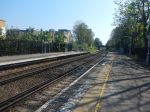
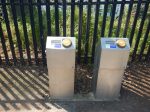




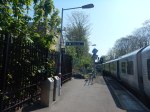
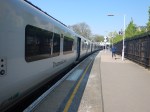
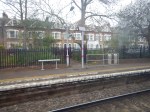
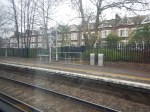
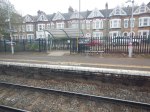
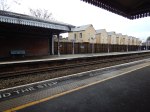

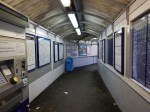
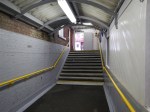


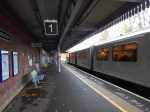
Note.
- The exits out of the station are always open.
- The exits have contactless readers.
- The exits also allow a step-free route from one platform to another.
- There is CCTV on the exits.
Exits like these can surely be provided at Oxenholme station.
Ryze Hydrogen – Every UK Region Needs A Hydrogen Hub
The title of this post, is the same as that of this article on Hydrogen Central.
This is the first paragraph.
The past few weeks have seen another flurry of new hydrogen cluster announcements across the UK.
The article then lists all the hydrogen recently-announced hubs being developed in the UK.
It is all very detailed and is a must read, if you are interested in acquired a single hydrogen vehicle or perhaps a whole fleet.
 The Anonymous Widower