Abellio To Lose ScotRail Franchise Three Years Early
The title of this post is the same as this article on Rail Magazine.
This is the introductory paragraph.
The ScotRail franchise managed by Abellio will end in March 2022 – some three years earlier than planned, Scottish Transport Secretary Michael Matheson confirmed on December 18.
I don’t live in Scotland, so perhaps I shouldn’t comment too strongly.
- When I’m in Scotland, I find the performance of ScotRail little different to Greater Anglia, which is also managed by Abellio.
- In the last three or four years, I have only suffered serious delays a couple of times on Greater Anglia and one was severe weather-related and the other was the usual suspects trying to steal the overhead wires.
- In that period, I can’t remember being delayed seriously in Scotland.
- I was also in Scotland for the Commonwealth Games and the rail service coped well with all the visitors.
But Scotland has suffered more than its fair share of Network Rail and train delivery problems.
- Late delivery of electrification.
- Poor design of the Borders Railway.
- Problems with the new Class 385 trains from Hitachi.
- Problems with the delivery of the Inter7City trains.
- Disruption caused by the rebuilding of Glasgow Queen Street station.
Is another factor, the endorsement of the SNP in the recent General Election?
I have a feeling that this enforced divorce will be a pension pot for lawyers.
Northern Welcome New Link Between East And West Yorkshire
The title of this post is the same as that of this article on Rail Technology News.
This is the introductory paragraph.
Rail Operator, Northern Railway, is celebrating the improved links between East and West Yorkshire today (Dec 19) following the introduction of a new service on the network, providing a direct service between Halifax and Hull.
The tone may be a bit self-congratulatory by Northern, but it is to me a very necessary service.
- The trains run hourly.
- Looking at today’s early morning Saturday service, it appears to have doubled the frequency to and from Leeds.
- Families and friends are more spread out these days..
- Events like football matches and concerts bring in supporters and attendees from a lot further, than when the rail services were carved in stone.
I shall be very interested to see the figures for ridership on this new service..
The Suffolk Experience
Over the last few years, Suffolk’s cross-county service between Ipswich and Cambridge has gone from an hourly single-car Class 153 train through two and three-car Class 170 trains to the proposed four-car Class 755 trains.
Greater Anglia may be having trouble introducing the Class 755 train, but the proposed capacity increase is there. They are also proposing to double the frequency on the Eastern section of the route.
Nationwide
Hopefully, we’ll see more improvements in services on routes like these all over the country. Certainly, Northern and Greater Anglia have been increased threir train fleets to provide more services.
I would also like to see a nationwide capacity standard for routes like these between cities and large towns.
More Eurostar Services Between London And Amsterdam Are On The Way
This article on NL Times is entitled NS, Eurostar To Run 5 Trains Daily Between Netherlands & London; More Sustainable Than Flying, Says NS.
The article contains these points.
- Five trains per day between London and the Netherlands.
- This is a total of 4,500 p-assengers in both directions.
- The train only creates twenty percent of the carbon emissions per passenger journey.
- Currently, twenty-three percent of passengers between London and the Netherlands use rail.
- A fourth train will be added in 2020, with a fifth in 2021.
- Eliminating the Customs check in Brussels when travelling to the UK, should bring Amsterdam to London times to around four hours.
NS or Dutch Railways seem fairly bullish about expanding the services between London and the Netherlands.
I believe that NS are right.
- The British and especially Londoners are very used to taking four hour journeys on a train to Edinburgh and Glasgow.
- The British with their poor language skills, don’t consider the Netherlands to be as foreign as Belgium, France and Germany
- The Dutch will surely develop better rail connections from Amsterdam into Northern Germany.
- Will the Dutch persuade Austrian Railways to run NightJet services from Amsterdam to Central Europe?
I also feel that just as people cruise from port-to-port, there will be a parallel development of rail cruising from city-to-city. Surely, Amsterdam would be a place for the cautious to start.
Conclusion
NS seem to be thinking of more than five trains per day and I wouldn’t be surprised to see around ten trains per day before 2030.
Hertfordshire County Council’s Aspiration For A Watford Junction And Aylesbury Service
This article on Ian Visits is entitled Watford Junction Station Could Become A “Super-Hub”.
This is the introductory paragraph.
A new Watford Junction to Aylesbury rail service, along with a new link between Stevenage and Luton are two of the proposals being put forward by Hertfordshire Council.
The proposals are contained in this document on the Hertfordshire County Council web site, which is entitled Rail Strategy.
In TfL Seeks New Procurement Plan For Metropolitan Line Extension, I proposed a service run by Chiltern Railways between Watford Junction and Amersham stations.
The rest of this article is a rewrite of part of that linked post, which explores the possibilities of a service between Watford Junction and Aylesbury stations.
This Was My Original Simple Proposal
I think it would be possible to design a simpler link with the following characteristics.
- Watford station would remain open.
- A four trains per hour (tph) link would run all day between Watford Junction and Amersham stations.
- Stops would be at Watford High Street, Vicarage Road, Cassiobridge, Croxley, Rickmansworth, Chorleywood and Chalfont & Latimer.
No-one would get a worse service than currently and the new stations of Cassiobridge and Vicarage Road, would make rail an alternative for many travellers.
The cross-Watford service would give access to these London services.
- Chiltern at all stations between Croxley and Amersham.
- London Midland at Watford Junction.
- Metropolitan Line at Croxley, Rickmansworth and Amersham.
- Virgin Trains at Watford Junction,
- Watford DC Line at Watford High Street and Watford Junction
The Bakerloo Line at Watford Junction and Watford High Street, could possibly be added, if the line is extended. Which I doubt, it will be!
Hertfordshire is proposing the terminal is Aylesbury, which seems to be a good idea. But I’ll examine that later.
The next few sections, will cover various issues with the route.
New Track
There would need to be new track between Croxley and Watford High Street stations.
Will The New Stations Have Two Platforms?
All proposals have shown new stations on the new track at Cassiobridge and Vicarage Road.
I believe that money can be saved by creating two much simpler stations.
- Only one platform, but probably an island platform with two faces like Watford High Street station.
- No expensive footbridge if possible.
- Only one lift.
Cassiobridge would be more complicated because of the viaduct connecting the line towards Croxley station.
This visualisation shows the viaduct and the location of Cassiobridge station.
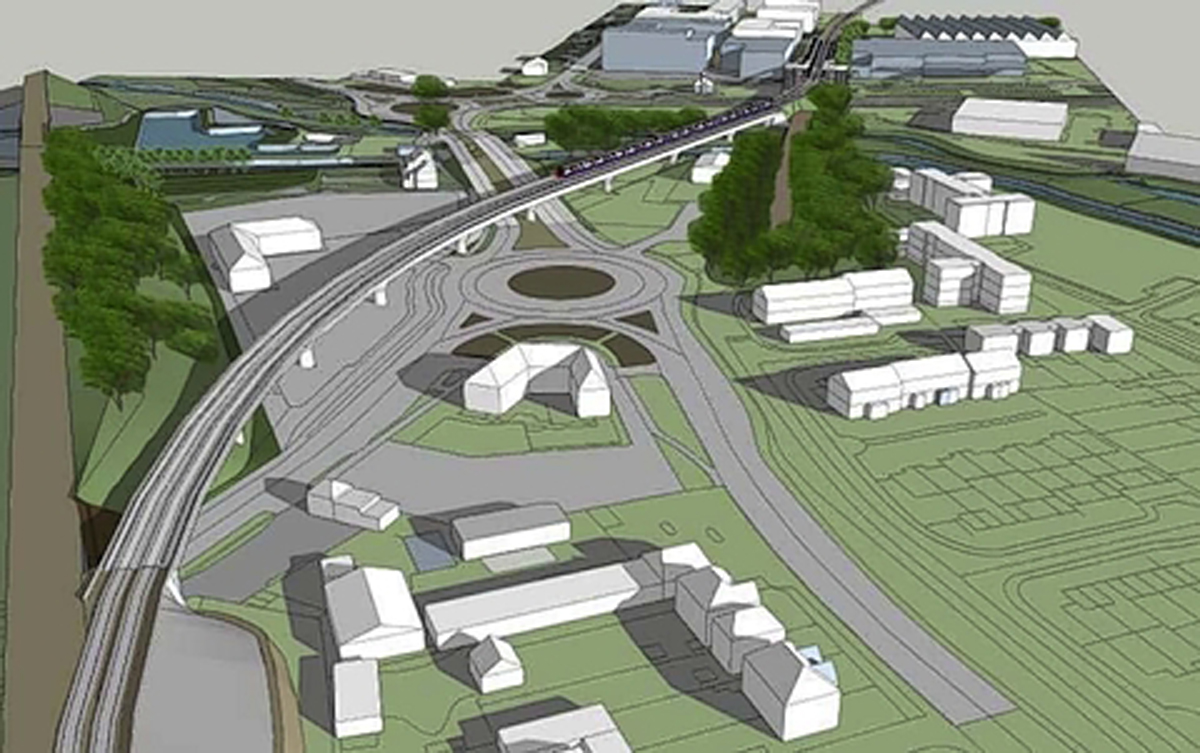
Cassiobridge station will be behind the trees towards the top-right of the image.
Would The New Track Be Single Or Double-Track?
There is space for double-track and the two ends of the route are already electrified double-track.
But surely the viaduct shown above would be much more affordable, if it were to be built for only one track!
Trains would need to pass at places East of Croxley station, but then if the line was double-track through and to the East of Cassiobridge station, trains could pass with impunity.
Consider.
- The Borders Railway looks to have too much single-track
- The Barking Riverside Extension is being built with a double track.
Too much single-track is often regretted.
Why Four Trains Per Hour?
Four trains per hour (tph) is becoming a standard, as it encourages Turn-Up-And-Go behaviour from travellers.
It also fits well with keeping the four tph Metropolitan Line service to Watford station, as this could give a same platform interchange at Croxley station.
Would The New Track Be Electrified?
The only part of the route that is not electrified is the about three miles of new track between the Watford Branch and the Watford DC Line.
All current electrification is either third-rail or to the London Underground standard. and any future electrification would probably be to the London Underground standard, so that S Stock can work the route.
I believe that the Class 710 trains will have a limited onboard energy storage capability, which could enable the trains to bridge the cap in the electrification between Watford High Street and Croxley stations.
How much would not electrifying the new track save?
How Long Will A Journey Take From Amersham Or Aylesbury To Watford Junction?
Consider.
- Amersham to Croxley takes about 30 minutes, but it does involve a change to a bus.
- The Overground takes three minutes between Watford Junction and Watford High Street stations.
- Chiltern Railways achieve a twelve minute time between Amersham and Rickmansworth.
I suspect that a modern train like one of London Overground’s Class 378 trains could do the journey in a few minutes under half-an-hour.
As Amersham to Aylesbury takes about sixteen minutes, that looks like a trip between Aylesbury and Watford Junction would take about forty-five minutes.
Amersham Or Aylesbury?
My original plan used Amersham, as it has a turnback facility.
But Aylesbury looks to have space as this Google Map shows.
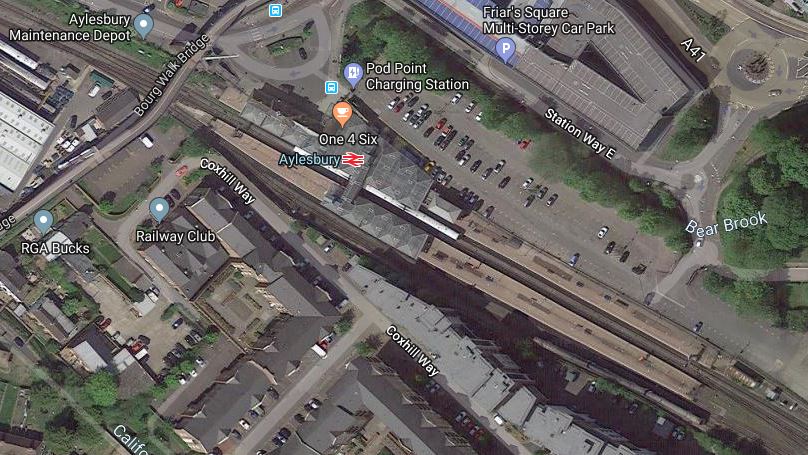
It should also be noted that the forty-five minute journey time between Aylesbury and Watford Junction stations, would give a two hour round trip, with relaxed fifteen minute turnround times.
This would allow time to top-up the batteries.
What Class Of Train Could Be Used?
Four-car Class 378 trains or the new Class 710 trains would be ideal. As the Class 378 train is out of production, it would have to be Class 710 trains or something similar from Bombardier. But other manufacturers might have a suitable train.
Battery power would be required, but that is becoming a standard option on metro trains like these.
How Many Trains Would Be Needed?
If the trains could do an Out-and-Back journey in an hour, then four trains would be needed to provide a four tph service.
A two-hour time would need eight trains.
Will The Link Have Any Other Services?
I have seen to plans to use the line for any other passenger or freight services.
Will There Be Infrastructure Issues At Existing Stations?
As all of the trains, I’ve mentioned and the London Underground S Stock trains, share platforms all over North West London, the answer is probably no, with the exception of a few minor adjustments to signs and platforms.
Croxley Station
Croxley station would be unchanged.
But in addition to the 4 tph between Baker Street and Watford, there would be 4 tph between Watford Junction and Amersham.
Platform 1 would handle.
- Baker Street to Watford
- Amersham to Watford Junction
Platform 2 would handle.
- Watford to Baker Street
- Watford Junction to Amersham
This would mean that if the trains alternated, the maximum wait for a connection would be about 7.5 minutes.
What I feel would be the two most common connections, would just involve a wait on the same platform.
I suspect that those, who timetable trains, would come up with a very passenger-friendly solution.
Watford Station
A property developer once told me, that the most profitable developments, are those where a railway station is involved.
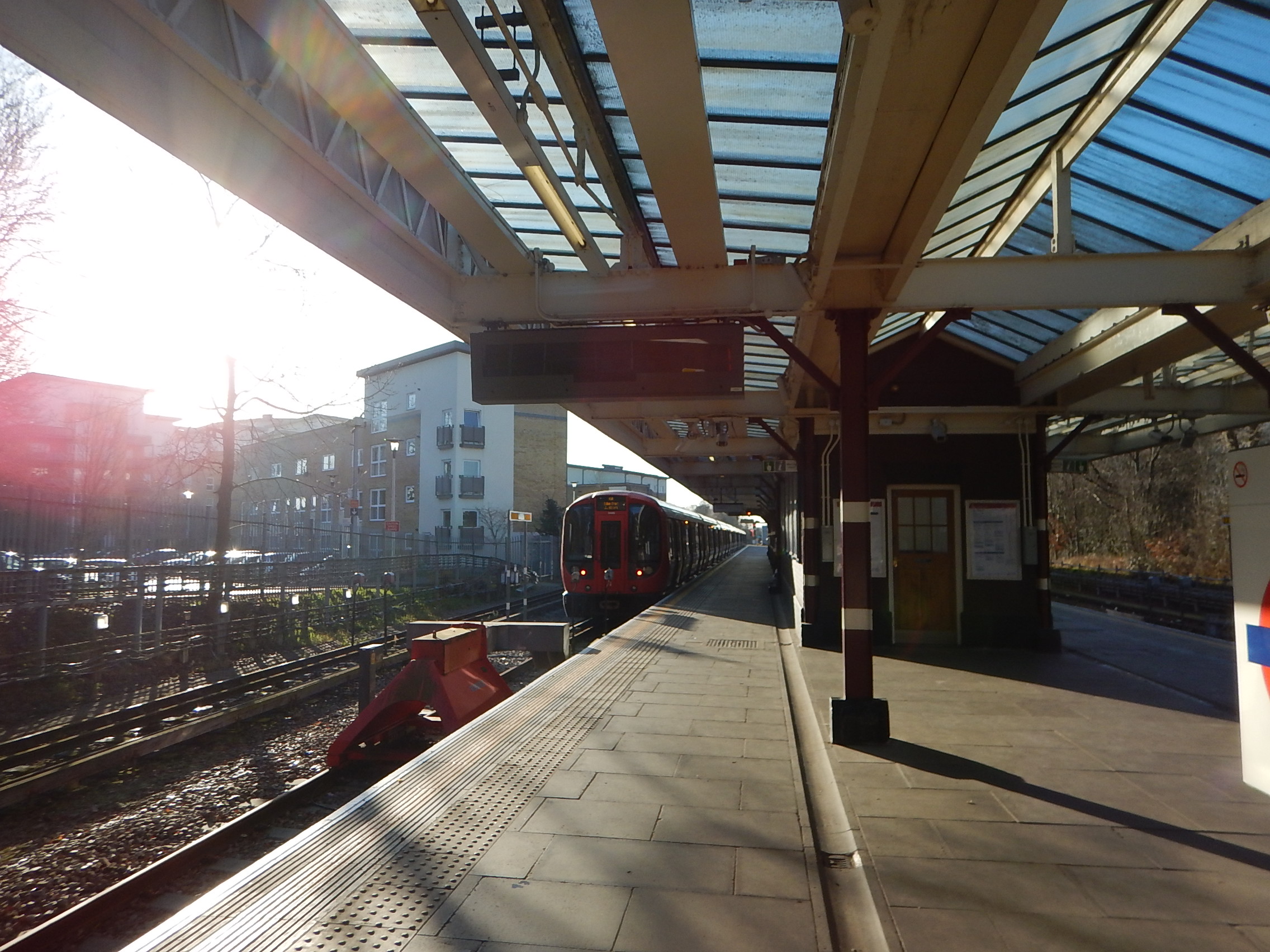
So would the development of the extension involve a rebuild of Watford station to provide the following?
- A modern future-proofed station, with all the capacity that might be needed in the next forty years or so.
- Appropriate housing or commercial development on top of the new station.
- Sensible amounts of parking for travellers.
With four tph to and from London in the basement, it would surely be a profitable development.
Watford Junction Station
Watford Junction station has four bay platforms 1-4, that handle the three tph service on the Watford DC Line.
At stations like Clapham Junction, Crystal Palace, Dalston Junction, Highbury and Islington and New Cross, single platforms handle four tph with ease for London Overground services.
This means that handling four tph to Amersham in addition to current services would not be difficult.
The only work, that I think should be done, is make sure that these platforms are long enough to take two of the future Class 710 trains working as an eight-car train.
There could even be two platforms left for Bakerloo Line services, if it were to be decided, that these services would go to Watford Junction.
Elton John Plays Vicarage Road Stadium
This or some football matches at Vicarage Road Stadium, would be the biggest test of the Link.
Note the following.
- Some stations like Watford High Street can already handle longer trains than the hundred metre long, five-car Class 378 trains they currently do.
- Some stations like Croxley can handle the 133 metre long S Stock trains used on the Metropolitan Line.
So to future-proof the Link for massive one-off events would it be sensible to make the platforms long enough for eight-car trains or two Class 710 trains working as a pair?
Benefits
The benefits of this approach are as follows.
- Watford station keeps its current service to London.
- Watford gets a four tph link across the South of the town, serving the Shopping Centre, the Hospital and the Stadium.
- Amersham or Aylesbury to Croxley stations get a link to the West Coast Main Line.
- It could be built as a single track line without electrification.
- Trains to run the services could be more easily available.
- Simple island platform-based stations could be built at Cassiobridge and Vicarage Road.
In addition, Chiltern Railways, London Midland, London Overground and Underground, all gain a feeder railway bringing travellers to their services to and from London.
Cost Savings
Note.
- Transport for London needs cost savings on this project.
- Redevelopment of Watford station as a station with oversite development could raise a lot of money.
- The Croxley Link could be built as a single-track link without electrification and run initially using battery-electric trains.
I also feel, that building the line this way would deliver it earlier, thus improving cash-flow.
The simple link would need at the minimum.
- A single- or double-track railway without electrification between Croxley and Watford High Street stations.
- Two stations with island platforms at Cassiobridge and Vicarage Road
- A viaduct to connect Cassiobridge station to the Watford Branch.
- Some Class 710 trains or similar.
If skates were worn, the link could probably open in 2025.
My Bus Stop At Moorgate Has Been Reopened
The easiest way to get to my house is to get a 21, 76 or 141 bus from outside Moorgate station. All stop within a hundred metres of my house.
For several years the stop has been a temporary affair, whilst Moorgate station is rebuilt.



But now it’s a proper stop with a next bus display and a shelter.
Much of what I need in life, is available close to this stop.
- On the other side of the road is a Marks and Spencer store with both food and clothes.
- Within twenty metres of the stop, there are Boots, Hotel Chocolat, Pret a Manger and Leon.
- There’s a PC World and a Rymans around the corner.
And underneath it all is Crossrail!
I will have my own personal frequent bus route to London’s new rail line!
A Design Crime Of A Bus Livery
This bus livery must be the worst I’ve seen and it does appear sometimes, that designers are looking to design the worst they can.

I didn’t have any idea what it was advertising.
Greater Anglia’s New Stansted Service To And From Norwich
Stansted Airport railway station now has the following rail services.
- Four trains per hour (tph) Stansted Express services to and from Liverpool Street station.
- One tph to and from Cambridge.
- One tph to and from Birmongham New Street
- One tph to and from Norwich, which started on December 15th, 2019.
This morning I wen to the station to use the new service to Cambridge.


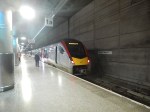
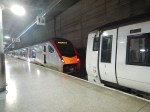
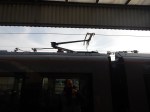
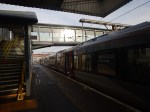

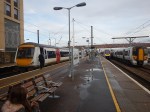

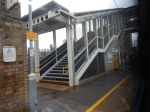
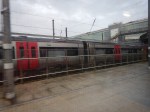
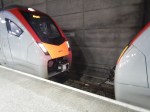

Note.
- Platform 1 at Stansted Airport, is used to handle two trains.
- The Class 755 trains appeared to be using overhead 25 KVAC.
- The Cambridge-Ipswich and Norwich-Stansted services appear to offer interchange possibilities at Cambridge could be developed in the future.
- It appeared that a new Class 755 train had failed and was parked in Platform 1a at Stansted.
The service certainly seemed to be attracting more than a handle of passengers.
These are a few extra thoughts.
Whittlesford Parkway Station
Whittlesford Parkway station has a Holiday Inn hotel and a large car park, as this Google Map shows.
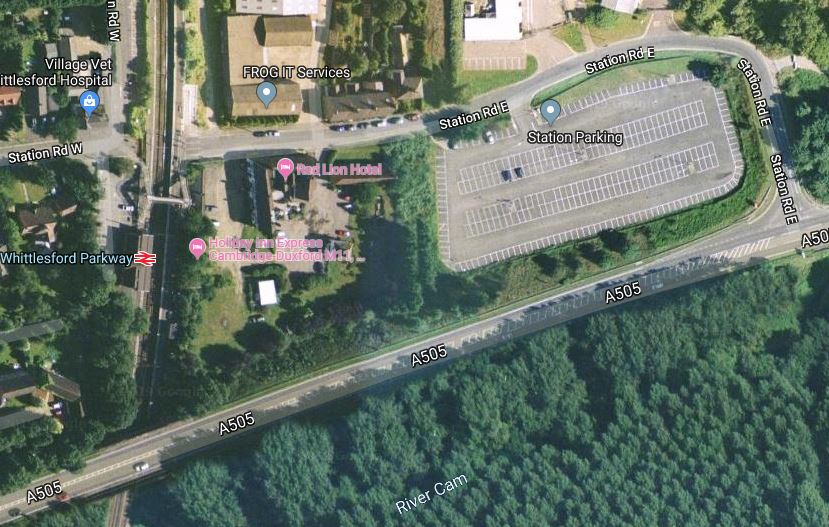
When I lived in the area, I used to use it as a station for travelling to and from London.
Consider.
- Whittlesford Parkway to Stansted Airport takes twenty-six minutes by train.
- There are two tph to and from Stansted Airport.
- Given the station’s convenient position on the road network and the good train service to Stansted Airport, I suspect some Airport users will use the station as an alternative place to park.
- It will certainly make a sensible drop off point for Stansted passengers and workers.
In my view, the only improvement needed, is a step-free bridge.
Audley End Station
Audley |End station is another station that is served by trains going between Stansted Airport and Cambridge and Norwich.
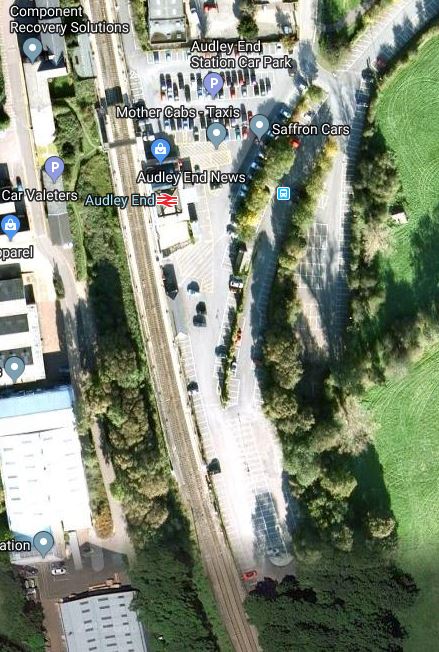
As the map shows, car parking is not as extensive.
Commuting From Audley End And Whittlesford Parkway To Norwich
C, my late wife was a barrister, who regularly drove to Norwich for a day in Court.
If there had been a train service between Whittlesford and Norwich, she might have used it.
But it does appear, that early morning services start from Cambridge.
Early And Late Trains Between Norwich and Stansted Airport
It appears to me, that that the timetable between Norwich and Stansted Airport may not start ealy enough and perhaps run late enough, given the hours that flights arrive and depart at the Airport.
Conclusion
This is going to be a worthwhile service, but I don’t think it is fully developed yet.
Could Suffolk Have It’s Own Version Of London’s Freedom Pass?
London has a travel pass for certain groups of passengers, like the elderly and the disabled called a Freedom Pass.
This is the introduction forthe Freedom Pass from Wikipedia.
Freedom Pass is a concessionary travel scheme, which began in 1973, to provide free travel to residents of Greater London, England, who are aged 60 and over (eligibility age increasing by phases to 66 by 2020) or who have a disability. The scheme is funded by local authorities and coordinated by London Councils. Originally the pass was a paper ticket, but since 2004 it has been encoded on to a contactless smartcard compatible with Oyster card readers.
I have a Freedom Pass, as I am seventy-two and it really gives me freedom, as my eyesight isn’t good enough for me to drive.
Other parts of the UK like Manchester and Newcastle have similar schemes that allow a degree of free travel on local trains, trams and light rail systems.
But generally English counties like Suffolk don’t have such a scheme.
East Anglia’s Rail Revolution
All of Greater Anglia’s trains are being replaced with new Stadler Class 745 and Class 755 trains.
In InterCity Quality For Rural Routes, I said this.
Greater Anglia are purchasing a fleet of 38 trains with a total of 138 carriages to replace 27 trains with a total of 58 carriages.
- This is a forty percent increase in the number of trains.
- This is nearly two and a half times as many carriages.
- The average number of carriages per train is raised from 2.1 to 3.6.
That is a massive increase in train capacity.
I don’t believe that Greater Anglia will park these trains in a siding, but use them to increase frequencies.
Greater Anglia are having signalling problems introducing the new trains, but we have already seen the following in Suffolk.
Four-car Class 755 trains running from Ipswich to Cambridge, Felixstowe and Lowestoft.
As the frequency is still the same and train length has increased from one, two and three cars, this is almost a doubling of capacity.
The UK’s Contactless Ticketing Revolution
London started wide-scale contactless tickerting and in places, it is applied to rural routes like Iver and Reading on TfL Rail’s new Western branch, where frequencies are more Suffolk, than Central London.
I believe in the next few years, the average passenger going between say Newmarket and Ipswich in Suffolk, will touch-in at Newmarket with their credit card and touch-out at Ipswich, just as passengers do now, millions of times all over London, every day of the year.
London’s Freedom Pass looks to the readers in London, as just a different credit card, so it is able to allow passengers through.
I believe that once Suffolk goes contactless with ticketing, then it will be possible to overlay a Suffolk Free Travel Pass on the system.
What Lines Would Be Allowed To Be Used By Passengers With A Suffolk Free Travel Pass?
These are routes that are wholly or partly in Suffolk.
Ipswich And Cambridge
The Ipswich and Cambridge Line currently has one train per hour (tph) and is wholly in Suffolk, except for a short section at the Cambridge end of the route.
Would a Suffolk Travel Pass allow travel to Cambridge?
I suspect that both Cambridgeshire and Suffolk would have reasons for a compromise , as both counties could benefit from visiting Travel Pass holders.
I would include Ipswich and Cambridge in a Suffolk Free Travel Pass.
Ipswich And Diss
The section of the Great Eastern Main Line, between Ipswich and Diss, currently has two tph and is wholly in Suffolk, except for a short stretch at Diss, which is just over the border in Norfolk.
I would include Ipswich and Diss in a Suffolk Free Travel Pass.
Ipswich And Felixstowe
The Felixstowe Branch Line currently has one tph and is wholly in Suffolk.
But this route is planned to be upgraded as I wrote in Could There Be A Tram-Train Between Ipswich And Felixstowe?.
- Tram-trains would start at Ipswich station and run to \felixstowe.
- Tram-trains could start on the forecourt of Ipswich station and could run through the streets of Ipswich, via Portman Road, the Town Centre, Christchurch Park, Ipswich Hospital, the proposed new housing at Westerfield and Ransome’s Retail Park before joining the Felixstowe Branch, in the area, where it crosses the A14.
- It could even do more street running in Felixstowe to connect to the Town Centre and the Sea Front.
- Frequency would be four tph.
Removing the passenger service from the rail lines between Derby Road and Ipswich stations, would allow more freight trains to run through the area.
I would include Ipswich and Felixstowe in a Suffolk Free Travel Pass.
Ipswich and Lowestoft
The East Suffolk Line currently has one tph and is wholly in Suffolk.
I believe that this line could be developed by adding a second hourly service to Aldeburgh.
I would include Ipswich and Lowestoft in a Suffolk Free Travel Pass.
Colchester And Peterborough
The current service runs between Ipswich and Peterborough, and is a service of one train per two hours.
Greater Anglia plan to do the folloeing.
- Increase the frequency to one tph.
- Extend the route to run between Colchester and Peterborough.
- It will terminate in a bay platform at Colchester.
The route will be mainly in Suffolk, with thends in Cambridgeshire and Essex.
- Passengers for the North and Scotland will change at Peterborough.
- Passengers for London will change at Colchester, Ipswich, Cambridge and Peterborough.
- Passengers for Stansted Airport, Hertfordshire and West Essex will change at Cambridge.
- Passengers for Sudbury will change at Colchester.
This route will become a very important connecting service.
Because of this connectivity, I would include Colchester and Peterborough in a Suffolk Free Travel Pass.
Colchester Town And Sudbury
The Gainsborough Line currently has one tph and is an isolated line that is half in Suffolk and half in Essex.
I would include Colchester Town and Sudbury in a Suffolk Free Travel Pass.
How Would It Be Funded?
Wikipedia says this sabot the funding of London’s Freedom Pass.
The cost of providing the travel concession is negotiated between London Councils and the local transport operator Transport for London. It is funded through a mixture of national grant and council tax.
Although a similar process could be used for a county like Suffolk, other elements are present, that have effects on use and revenue.
Only One Train Operator
There is only one train operator involved; Greater Anglia.
This must make planning and operation easier.
Greater Anglia Should Benefit From Passengers Travelling Further
Will passengers use their passes to get to Ipswich and Peterborough to travel further?
If they do, then Greater vAnglia won’t be bothering.
Greater Anglia may be able to fill the twelve-car Clsass 745 trains in the Peaks, but filling them in the Off Peak will be more difficult.
Would a Suffolk Free Travel Pass attract passengers to the trains?
Modal Change
This is a big imponderable in any calculation.
If you live near a station, would you be more likely to use the train to go to work, shopping or a meal in Ipswich, Bury St. Edmunds or Cambridge, if the train was free?
Only partly, but if the car parking was expensive or always full, that would be a deterrent.
People plan travel against a large range of parameters and cost is one of them.
Would a Suffolk Free Travel Pass take pressure off the roads.
Trips To The Coast
There are only two rail-connected coastal towns in Suffolk; Felixstowe and Lowestoft.
Travel on a sunny day between Ipswich and Felixstowe and the train can be packed with passengers going for a stroll along the sea front.
With more capacity, this usev will increase and especially amongst those who would be eligible for a Suffolk Free Travel Pass.
Carbon Emissions
People are starting to take notice of carbon emissions.
But they’re not buying electric cars, as they worry about the range.
So taking the train is a sop to the pressure of their conscience or that of their children.
Stansted Airport
There are two tph between Cambridge and Stansted Airport.
Travelling from say East Suffolk to the sun, could start with a train to the nearest airport using a train at Cambridge.
East-West Suffolk Travel
Suffolk is not the largest county in England, but East West travel by road can take longer than the train.
Greater Anglia are planning two East-West services at a frequency of one tph.
- Colchester and Peterborough via Ipswich, Needham Market, Stowmarket, Bury St. Edmunds and Ely.
- Ipswich and Cambridge viaNeedham Market, Stowmarket, Bury St. Edmunds and Newmarket.
Note that Ipswich and Bury St. Edmunds stations will have a frequency of two tph.
The East-West Railway, currently being built between Oxford and Cambridge is proposing more improvements for Suffolk.
- A new hourly Manningtree and Oxford service, via Ipswich, Needham Market, Stowmarket, Bury St. Edmunds, Newmarket and Cambridge.
- A new A14 Parkway station, where the Cambridge and Peterborough routes divide to the North of Newmarket.
- Tram-trains at a frequency of four tph between Ipswich and Felixstowe.
Note that Ipswich and A14 Parkway stations willl have a frequency of three tph.
I also think that operationally, there could be another improvement.
Ipswich station has a limited number of platforms and expanding it will be difficult.
But I believe that operations could be eased, if the Ipswich and Cambridge and Ipswich and Lowestoft services were to be combined into a single cross-Suffolk Cambridge and Lowestoft service, with a reverse at Ipswich.
These routes between Cambridge and Suffolk will spread the Cambridge effect across the county and in return Suffolk will provide the housing and other resources that Cambridge needs.
People Will Be Working Longer
We are going through an employment revolution for those past retirement age for various reasons.
- Economic necessity.
- Some people l;Ike and/or need the camaraderie of working.
- Some people have much-needed skills.
- Some business owners and self-employed prefer working to retirement.
- Flexible and part-time working is expanding.
A Suffolk Free Travel Pass would be used by a lot of those who are still working and paying Income Tax.
Healthcare
I have no figures, but I suspect in London, Freedom Pass holders are bigger users of the NHS and hospitals.
Healthcare in East Anglia is changing, with increasing dependence on the three largest hospitals at Cambridge, Ipswich and Norwich.
This means that going to hospital for a check-up often means a fifty mile drive and a long hassle over the limited parking.
Published plans mean that Cambridge and Ipswich hospitals will be rail-connected at each end of Suffolk.
Would it be easier to use the train from many parts of Suffolk?
It should also be noted, that those with health problems, that need regular hospital visits in London, are issued with a Freedom Pass for travel, as it’s cheaper than sending a car.
Any county bringing in a free travel scheme would surely use it to help those needing to go to hospital regularly.
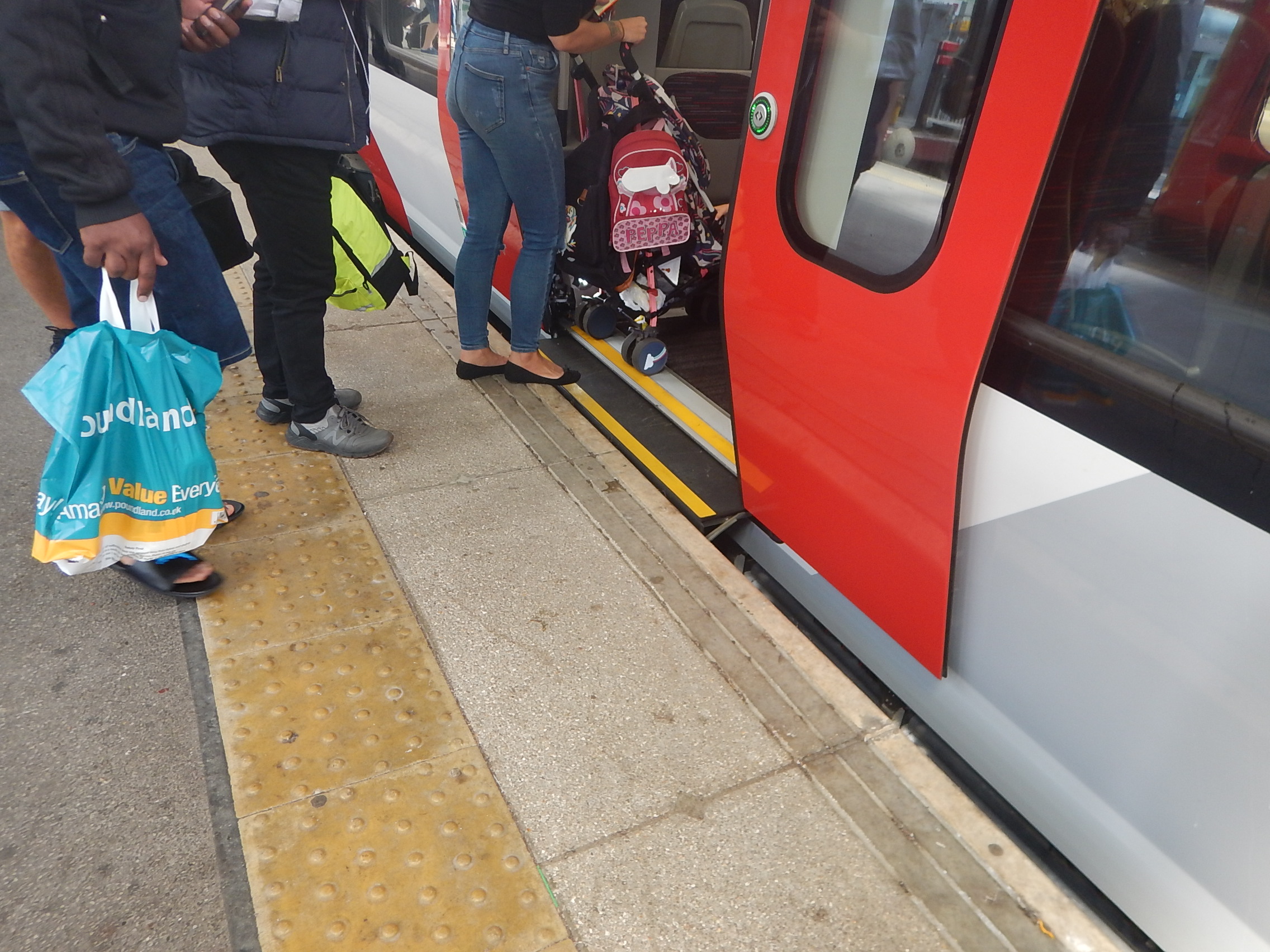
Greater Anglia’s new trains are all step-free, as this picture shows.
I believe that good rail-connected hospitals can improve the efficiency of the NHS.
Summing Up Funding
All of these developments across Suffolk will see a large increase in Suffolk’s economic activity and the consequent tax take from Council Tax and Business Rates.
I believe that Suffolk could probably afford to fund their share of a Suffolk Free Travel Pass.
Given the reduction in carbon emissions, that would probably occur, surely Government would contribute a share.
As Greater Anglia would surely benefit from onward journeys to and from London, they can probably afford to do a good deal for free travel in Suffolk. After all, they’ve already built in the capacity to their business model.
Restrictions On Use
There may need to be restrictions on use, like some routes apply in London.
For instance, using trains to and from London to perhaps travel between Ipswich and Stowmarket, may be restricted in the Peak.
It will all depend on Greater Anglia’s capacity.
Would It Work For A Group Of Counties?
I don’t see why not!
Perhaps instead of Cambridgeshire, orfolk and Suffolk, all having their own Free Travel Passes, would an East Anglian one work better?
Conclusion
If London can have a Freedom Pass, then why not Suffolk? Or other English and Welsh counties for that matter?
I have rambled through several ideas and possibilities.
But I believe that Suffolk with the powerhouse of Cambridge in the |West can see an improvement in economic activity, can go a long way to funding a Suffolk Free Travel Pass.
This in turn could generate further economic activity and the tax revenue that would be generated to pay for the scheme.
Suffolk though is lucky in that it aslready has the rail network and Greater Anglia have purchased enough trains. Only a hanful of extra stations and some branch line reopenings would be needed.
I shall return regularly to this post.
A Radical Government Would Consider Making Bus Travel Free
The title of this post is taken from the sub-title of the first leading article in today’s Times.
This is the last paragraph.
This is an opportunity for the government to be bold and help those deprived northern areas that voted Conservative for the first time. It should raise spending on buses and force the mainly private companies to provide many more services and routes. It should also encourage them to use electric or hydrogen-powered vehicles. But if it really wants to encourage a better quality of life and improved economic prospects for the north and other regions, it should consider making bus journeys free. At present millions of elderly people and children benefit from free bus passes . Why not extend this to all? That would send a message that this really is a people’s government.
The Times has a point. In fact it has several.
Pesa And PKN Orlen To Develop Hydrogen Fuel Cell Trains
The title of this post is the same as that of this article on Railway Gazette.
This is the introductory paragraph.
Rolling stock manufacturer Pesa and energy company PKN Orlen signed a letter of intent to develop hydrogen fuel cell trains on December 12.
I am pleased that Poland appears to be turning to trains that emit less carbon, but I do worry about how the hydrogen is produced.
It appears the Dutch are moving towards green hydrogen, which is produced by the electrolysis of water using electricity produced by offshore wind farms.
But how are the Poles producing their hydrogen?
I did find this article on biznewsalert.com, which is entitled Poland Wants To Be A Hydrogen Kuwait. P2G Can Help.
This is the introductory sentence.
Hydrogen could drive low-carbon transport and also help reduce CO2 emissions. Although it is a distant perspective for now, the production of the element could support onshore wind farms.
It does appear that the Poles are thinking along lines, that will reduce carbon emissions.
What is P2G?
P2G or Power-to-Gas has an informative Wikipedia entry.
This is the first paragraph, which outlines the process.
Power-to-gas (often abbreviated P2G) is a technology that converts electrical power to a gas fuel. When using surplus power from wind generation, the concept is sometimes called windgas. There are currently three methods in use; all use electricity to split water into hydrogen and oxygen by means of electrolysis.
There certainly a lot of activity in the sector.
My Experience Of Polish Transport
Poland is a large country with an extensive rail system. I have travelled long distances across the country and many of the passenger trains are electric.
I can’t remember seeing a freight train, but I do remember large numbers of diesel trucks moving freight across the country.
Conclusion
Hydrogen could be a very important fuel for transport in Poland.
 The Anonymous Widower