Oxbourne House Is A Mixed-Use Retail And Residential Project Located On Europe’s Busiest Shopping Street
The title of this post is the same as that of this article on the Fletcher Priest web site.
This is the introductory paragraph.
The project includes high quality apartments and a prominent retail provision, as well as step-free access to Bond Street Underground and Crossrail Station below, where a new street-level station entrance has been constructed off Marylebone Lane.
Note that Fletcher Priest are the architects.
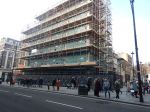
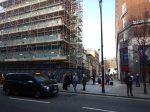
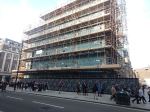
These pictures show the state of the building on December 29th, 2019.




This Google Map shows the location along Oxford Street.
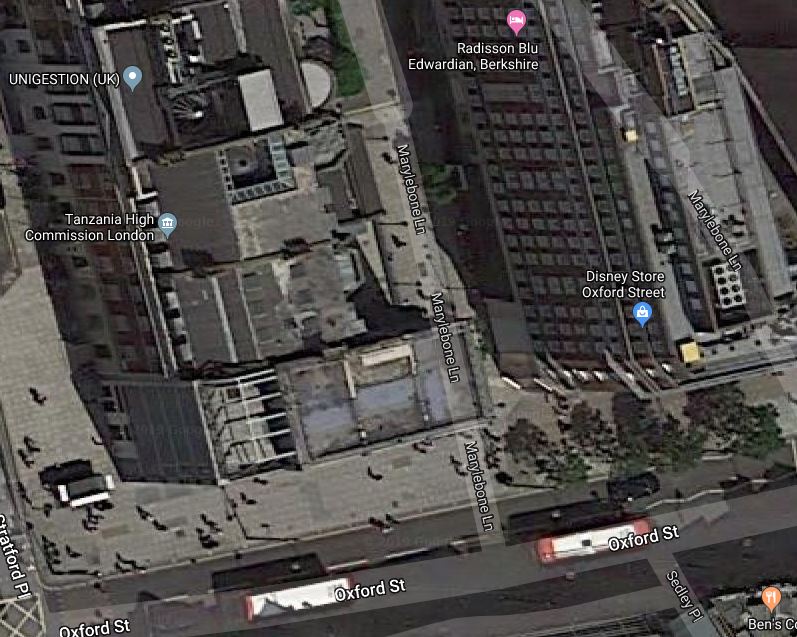
Note.
- Oxbourne House is the building along Oxford street with the ribbed structure on its Western end.
- The pedestrianised Marylebone Lane, at the Eastern end of Oxbourne House, running down towards Oxford Street.
- The recently built entrance to Bond Street station is hidden by Oxbourne House.
- The Radisson Blu Edwardian Berkshire hotel on the other side of Marylebone Lane.
This second Google Map shows the wider picture.
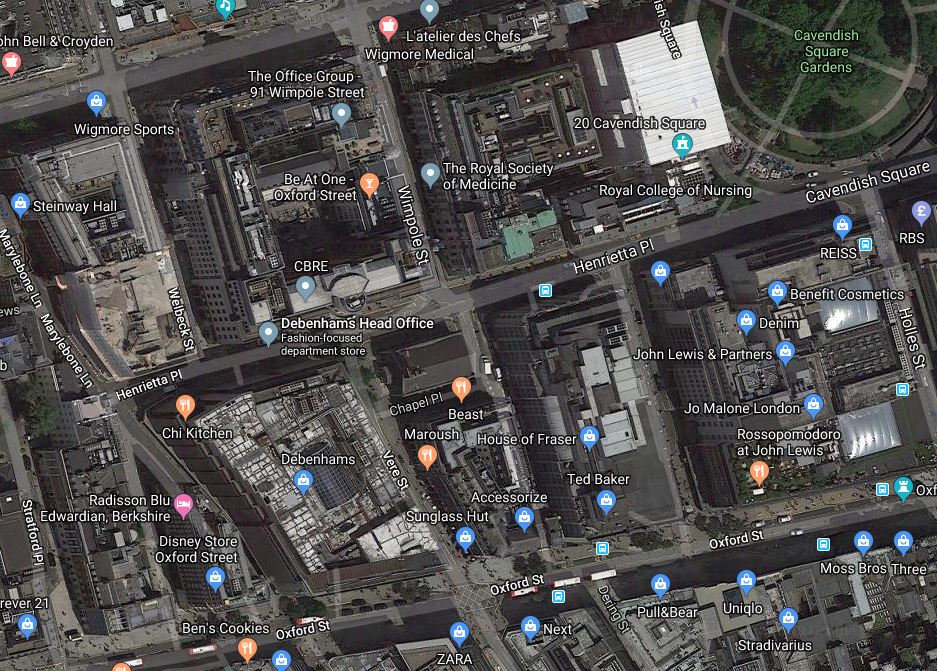
Note.
- Marylebone Lane and the Radisson Blu hotel are to the left of this map.
- Cavendish Square is in the North-East corner of the map.
- Debenhams, House of Fraser, John Lewis are in a line to the East of the entrance.
It looks to be a well-placed entrance.
It Gives Rear Entry To The Department Stores
Will travellers for Debenhams, House of Fraser, John Lewis and Cavendish Square use the pedestrianised Marylebone Lane and Henrietta Place route, in preference to the crowded route along Oxford Street?
Perhaps if Henrietta Place were to be pedestrianised as well and the signage was clear, many savvy duck-and-divers may be tempted!
I describe the current walking route in Walking From Cavendish Square To The Marylebone Lane Entrance Of Bond Street Station.
Access To Harley Street
The Marylebone Lane/Henrietta Place route gives good access to Harley Street and all its consultants, clinics and facilities.
If as I suspect the route were to be pedestrianised or at least had the kerbs removed,, as the Marylebone Lane entrance to Bond Street station has step-free access to all platforms, Harley Street would have better step-free access to public transport, than many hospitals.
Access To The New Cavendish Square Development
This proposed Cavendish Square Development seems to be mainly upmarket shops and medical facilities like consulting rooms and probably expensive diagnostic equipment.
The access from Bond Street station will be better than to Harley Street.
- the route will be built step-free.
- There might only be one road to cross at most.
- It will be shorter.
- As an aside, I suspect taxis will be able to drop and collect visitors from inside the development.
I wonder how many consultants will move from Harley Street to the Cavendish Square development.
Conclusion
The new Marylebone Lane entrance to Bond Street station, gives step-free access to an area to the North of Oxford Street
The new entrance also acts as the foundation for Oxbourne House, whose development probably contributed to the creation of the new step-free entrance.
Thoughts On Step-Free Access At Oxford Circus Station
The London Underground station most in need of step-free access is probably Oxford Circus, where the Bakerloo and Victoria Lines have a cross-platform step-free interchange, which connects to the Central Line.
- Oxford Circus is the third-busiest station on the Underground.
- The capacity of the station probably limits the capacity of the Victoria Line.
This map from carto.metro.free.fr, shows the lines through the station.

Note.
- The cross-platform interchange between the Bakerloo and Victoria Lines
- The Central Line running East-West under Oxford Street.
- Crossrail is shown by dotted lines, passing to the South of the station..
South of the Central Line, it would probably be difficult to squeeze in lifts and more escalators, but to the North, there may be space for another entrance building.
- The great advantage of making either the Victoria or Bakerloo Lines at Oxford Circus step-free, is that the other one will get it as well.
- I think it will probably depend on which of the buildings in the area, need to be replaced.
- I also suspect that the areas under Oxford Circus, Oxford Street and Regent Street are well surveyed, as there has been continuous development of Oxford Circus station since the 1960s.
On the other hand, the opening of Crossrail, with a new entrance to Bond Street station in Hanover Square, may mean that passenger numbers reduce at Oxford Circus, thus allowing a simpler solution.
I wouldn’t be surprised to see a very innovative solution to provide step-free access at Oxford Circus station.
I feel that the Proposed Shopping Centre Under Cavendish Square could be the elephant in the room.
- An upmarket shopping centre and medical centre needs good access for taxis, cars and public transport.
- Cavendish Square was used to build the Victoria Line.
- Tunnelling techniques have improved since the 1960s.
This Google Map shows Cavendish Square and the area between the square and Oxford Circus station.
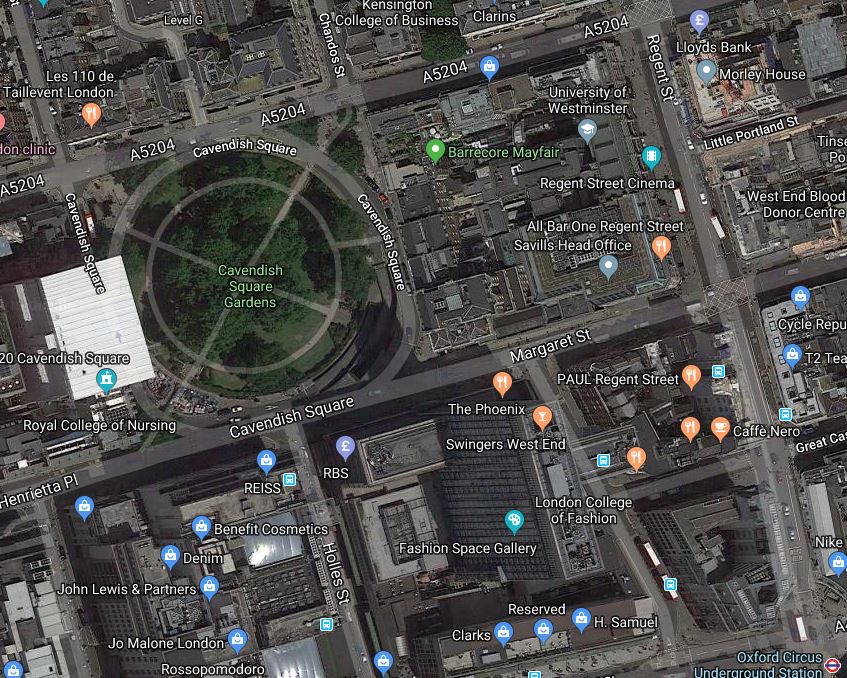
Consider the four corners of the map..
- Oxford Circus station is in the South-East corner.
- Harley Street is just on the map at the North-West corner.
- The BBC is just off the map in the North-East corner.
- John Lewis’s flagship store occupies the South-West corner.
But perhaps the most interesting building is the former BHS flagship store, that lies to the East of John Lewis, with Cavendish Square to the North and Oxford Street to the South.
The proposed development under Cavendish Square will be upmarket and it will need high quality access to attract tenants, visitors and clients.
- I doubt there will be masses of car parking, although they could probably dig up to a hundred metres below the square. Could there be an automatic car park, where vehicles are taken and stacked deep underground?
- Good access for taxis, private hire vehicles and delivery trucks will be needed..I suspect that planning permission, would specify electric vehicles only.
- The Bond Street station complex, with Crossrail, Central and Jubilee Lines is perhaps two hundred metres away. I feel the developers of Cavendish Square, will see access to Crossrail as being essential.
- Oxford Street station is closer, but good access will be needed between the station and Cavendish Square.
Access to Bond Street and Oxford Circus stations would probably be via wide, deep tunnels with travelators as are being installed to solve the horrendous access problems at Bank station.
The former BHS building could be key in any design.
- The BHS building has a superb location.
- Tunnels between the two stations and the Cavendish Square complex could go via any development of the BHS building.
- It might be possible to go higher on the site.
- It might even be possible to put another station on the Central Line in the basement.
There is certainly a lot of scope for an innovative solution at Oxford Circus station.
RENFE To Launch Avlo Low-Cost High Speed Rail For Everyone
The title of this post is the same as that of this article on Railway Gazette.
The title says it all and it looks like the Spanish are going the way of the French.
As High Speed Rail networks get larger,and able to handle more trains, it appears that the train operators, run out of premium passengers and turn to other markets.
SNCF have already launched a low-cost service called Ouigo, so it looks like the Spanish are following along similar lines.
In some ways is rail following air travel with low-cost companies offering a more affordable service.
On the whole, the UK, will find it more difficult to offer these services, as we don’t have the rail capacity. In part, this is due to the late development of high speed lines like High Speed Two.
But competitive services using a low-cost model are running or in development.
- Grand Central between London and Bradford and London and Sunderland.
- Hull Trains between London and Hull
- First East Coast Trains between London and Edinburgh.
- Grand Union between London and Wales and London and Stirling.
It should be noted that First East Coast Trains and Hull Trains will be running similar new Hitachi trains to the dominant operator on the route; LNER.
But then Ryanair and easyJet fly similar planes to British Airways and Air France!
Conclusion
It does appear that low-cost operators are providing competition, just as they have done with the airlines.
Manchester Metrolink’s New £350 Million Trafford Park Line To Open In April
The title of this post is the same as that of this article on Rail Magazine.
The Wikipedia entry for the Trafford Park Line, says this about the planned opening.
The final stretch of track was laid November 2019, with the first test trams running soon after. In December 2019 it was announced that the line was expected to be opened in April 2020, seven months earlier than originally planned.
I wonder why, the line is opening early.
It would be interesting to know!
It could be the old chestnut of bad planning, with planners putting in a lot of float, so they are not late.
The Junction At Pomona Station
This Google Map shows the junction at Pomona, where the Trafford Park Line leaves the Eccles Line.
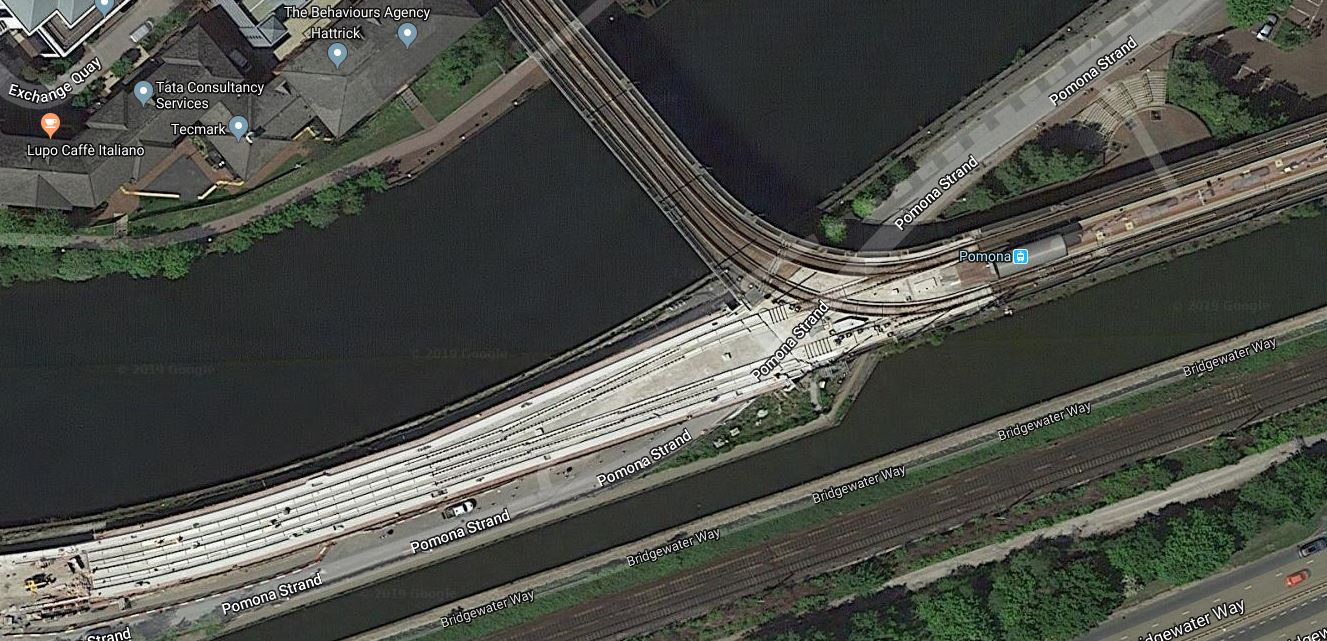
I don’t know when the picture was taken, but you can clearly see tracks going West.
Wharfside Tram Stop
This Google Mapshows the Wharfside tram stop.
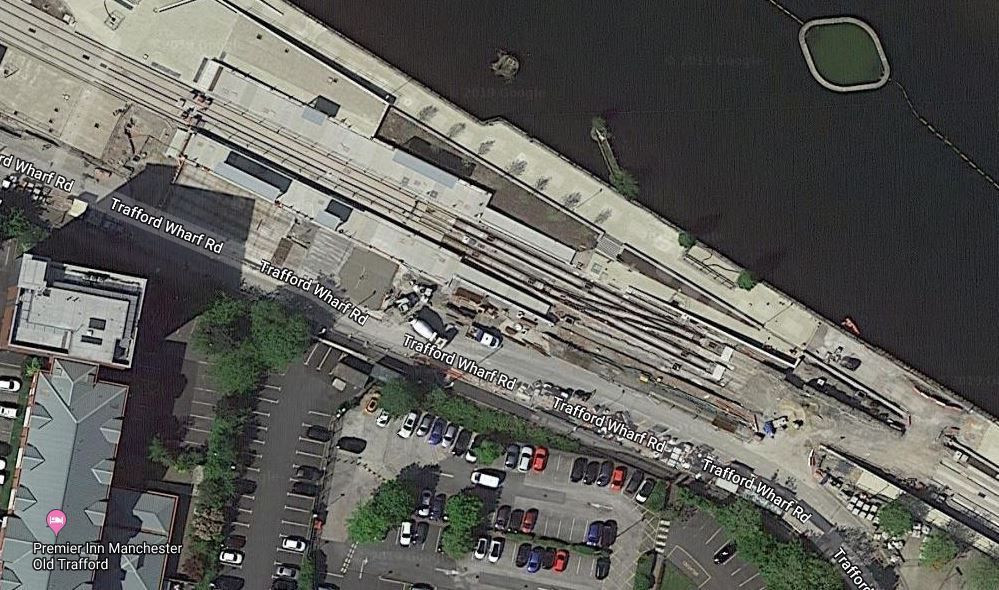
It does look like there are only a few more tracks to lay.
The Trafford Park Line And The Imperial War Museum North
This Google Map shows the Trafford Park Line threading its way past the IWM North.
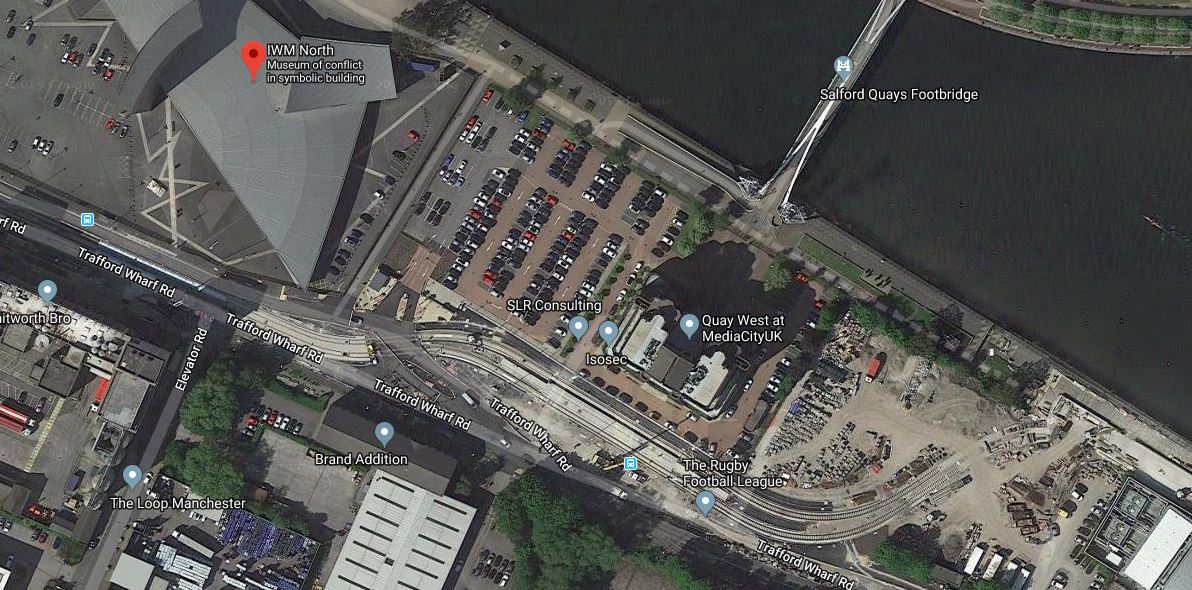
The works seem mainly complete.
The Terminus At The Trafford Centre
This Google Map shows the Trafford Centre.
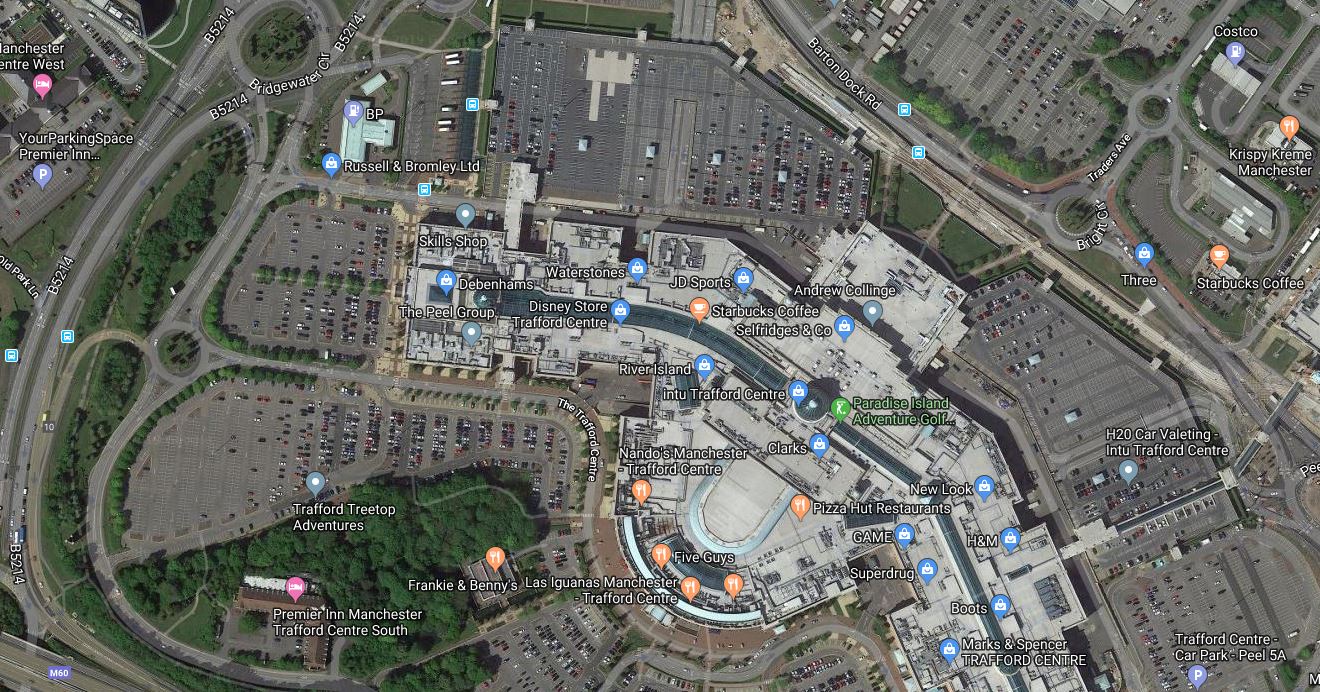
The tram stop will be in the North East of the Centre.
This enlargement shows ithe tram stop more clearly.
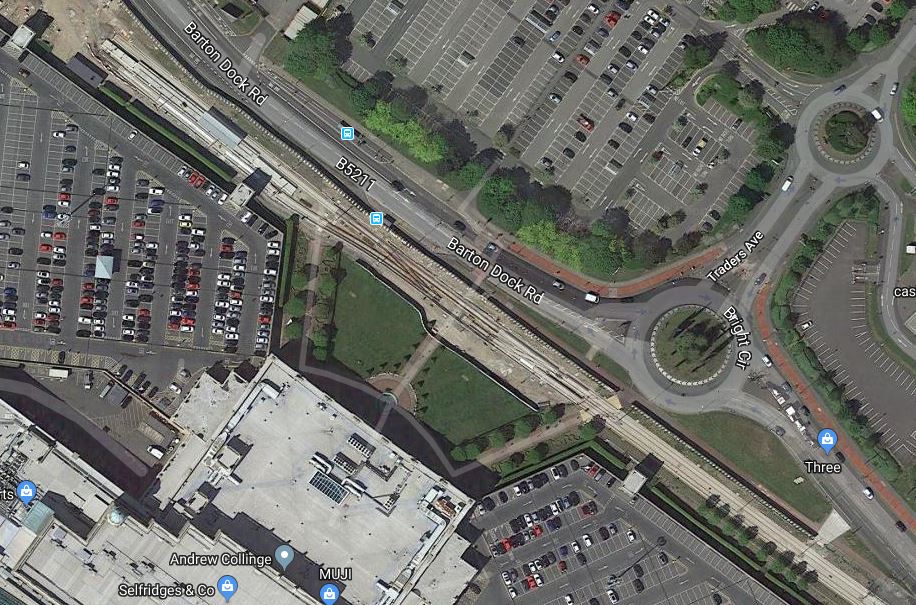
Note that the tracks will be extended to the North-West to Port Salford on the other side of the Mancvhester Ship Canal.
Tram Services On The Trafford Park Line
Trams will run between the Trafford Centre and Crumpsall on the Bury Line.
- Crumpsall has been updated with a third platform.
- Trams will call at Deansgate-Castlefield, St. Peter’s Square, Piccadilly Gardens, Market Street, Stutenhill and Manchester Victoria station in the City Centre.
- At present there appear to be no plans to connect the Trafford Centre with Manchester Piccsadilly station.
It looks to be that some passengers will change in the City Centre to get to and from the Trafford Centre.
What Is A Pimby?
We all know that a Nimby (Not In My Back Yard!) doesn’t want fracking, a nuclear power station or a new railway to be built or something similar near to where they live.
But I believe, we could see the rise of a new type of protestor – the Pimby or a Please In My Back Yard!
I was reading this article on CleanTechnica, which is entitled Coal-Killing Long-Duration Energy Storage For Vermont (Vermont?!?).
The article is about Highview Power’s planned energy storage facility in Vermont, which I wrote about in Encore Joins Highview To Co-Develop Liquid Air Energy Storage System In Vermont.
This paragraph is from Highview.
“Unlike competing long-duration technologies, such as pumped hydro-power or compressed air, Highview Power’s CRYOBattery™ can be sited just about anywhere. The CRYOBattery has a small footprint, even at multiple gigawatt-levels, and does not use hazardous materials.”
You could imagine a community, , perhaps miles away from the nearest power station, where jobs and economic prospects are being held back by a dodgy power supply.
So the community might start to protest not about building perhaps a gas-fired station to satisfy their electricity needs, but in favour of a Highview Power system and some renewable wind or solar power.
Pimbys might also protest in favour of a new railway station or electrification of their branch line. Providing the power for the latter would be a good use for a Highview system.
How I Became A Convert To Hydrogen
The title of this post is the same as that on this article on the Sydney Morning Herald.
I think that this article is significant, as it is written by Dr.Alan Finkel, who is Australia’s Chief Scientist.
It is a well-written article about the production of hydrogen with an Australian slant and is a definite must-read.
Greater Anglia Submits Bid to Improve Colchester Station
The title of this post is the same as that as this article on Rail Advent.
Colchester station is a busy station, that handles four and a half million passengers in a year.
The main stations on the Great Eastern Main Line have following passenger numbers in millions.
- Shenfield – 4 – Fully step-free
- Ingatestone – 0.8
- Chelmsford – 8.5 – Fully step-free
- Hatfield Peverel – 0.4
- Witham – 2.5 – Fully step-free
- Kelvedon – 0.8
- Marks Tey – 0.6
- Colchester – 4.5 – Partially step-free
- Manningtree – 1.2 – Fully step-free
- Ipswich 3.3 – Fully step-free
- Needham Market – 0.1
- Stowmarket – 1.0 – Going step-free
- Diss – 0.7
- Norwich – 4.4 – Fully step-free
I think it is fairly obvious, that the the very busy Great Eastern Main Line has not been high in the queue for full step-free access.
As the article says, Colchester has a lift on one side of the station, there is only a wheelchair stair lift on a staircase on the other side.
Why did one of the busiest stations on the line get only half a solution?
Probably, a civil servant who lives in leafy Surrey, said “Colchester has two entrances! Their driver can come round! And it’s only East Anglia!”
There are developments, that are happening, that make updated step-free access at Colchester station absolutely essential.
- Greater Anglia are replacing the train fleet and all those new trains will attrract more passengers.
- All the new trains are step-free between train and platform.
- Greater Anglia will be increasing the frequency of trains between Colchester and Stowmarket and probably in other sections of the route as well.
- Greater Anglia are introducing a new service between Sudbury and Colchester Town. Wheelchair passengers between London and Sudbury will need to change at Colchester, as Marks Tey is not step-free.
- Greater Anglia is extending the Peterborough and Ipswich service to Colchester. This will surely increase the number of passengers wanting to cross over at Colchester.
The current system will work until three people turn up in wheelchairs at the same time.
Greater Anglia will get it in the neck, when the fault lies with the civil servants’ belief that East Anglia is a backwater that doesn’t need good facilities.
Other Stations
These stations on the Great Eastern Main Line has no step-free access or plans to install it.
- Ingatestone
- Hatfield Peverel
- Kelvedon
- Marks Tey
- Needham Market
- Diss
Note.
- Strangely, Ingatestone is probably the most important, as when the line is closed for engineering works, it is used as a bus interchange.
- Marks Tey is also important, because of interchange between Sudbury and London. Watch this one as Pritti Patel is the MP.
- Diss has had serious disabled access problems in the past.
- Needham Market could be difficult, but Stowmarket is an alternative.
All the stations between Liverpool Street and Shenfield will be fully step-free, when Crossrail is completed.
Conclusion
Personally, I feel that the whole Great Eastern Main Line should be made step-free.
Will The Queen Be Amused?
The picture shows another terrible bus livery in dark colours.
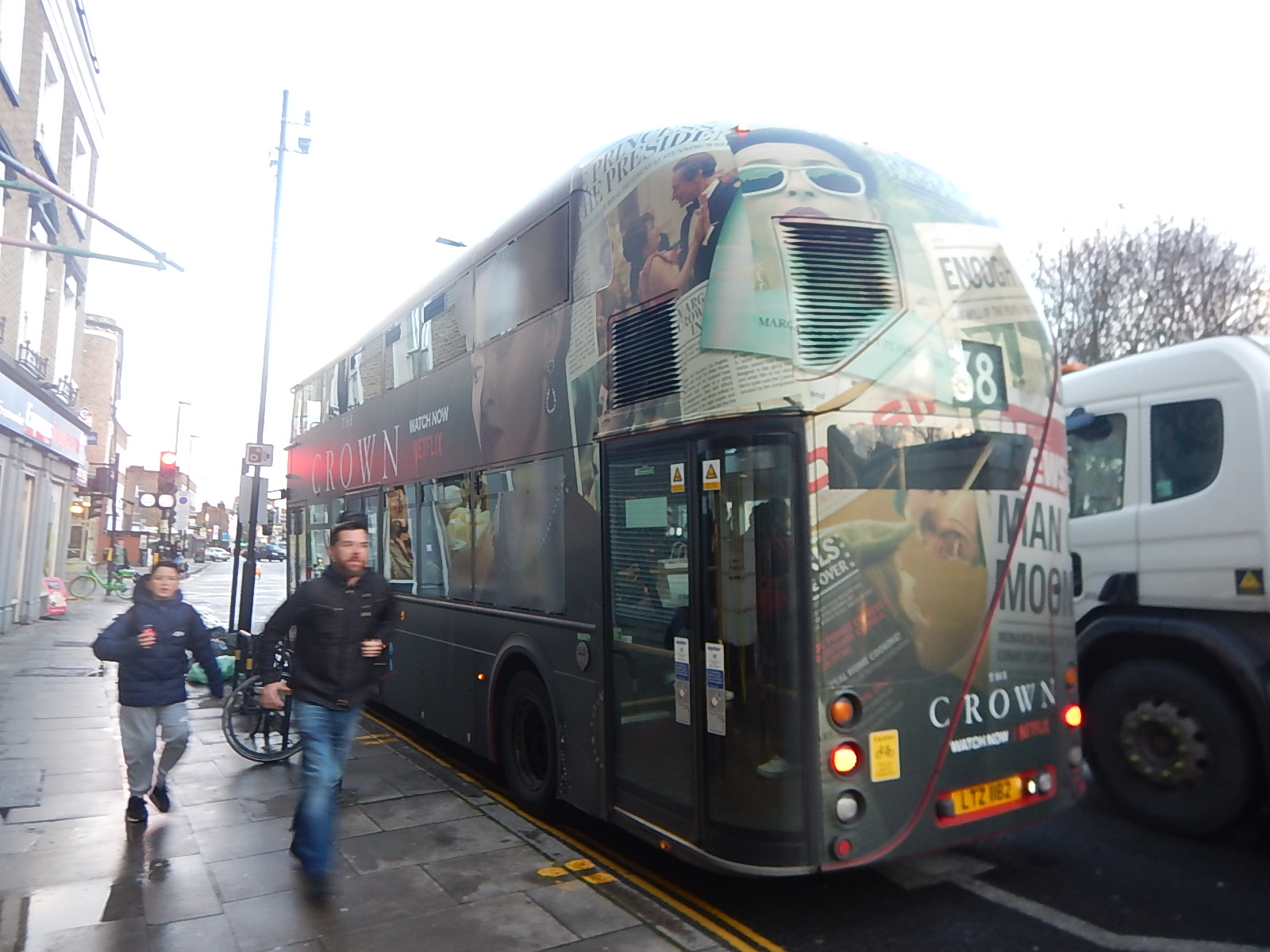
Try spotting one of these in the distance with dodgy eyesight!
There seems to be a design competition, to see who can design the most camouflaged bus!
When I first saw this bus, I thought it was advertising Crown’s new paint for the Army!
See Fist-Fighting Mice On The London Underground
The title of this post is the same as that of this article on Ian Visits.
An extraordinary picture is being shown.
 The Anonymous Widower