MTR Vying To Join Heathrow Southern Rail Bid
The title of this post, is the same as that of this article in New Civil Engineer.
The title gives you all you need, but consider these facts about MTR.
- MTR is a Hong Kong company with a revene of about £4 billion per year, which is about the same size as the Stagecoach Group.
- MTR will be running Crossrail for Transport for London.
- MTR in partnership with First Group, are running South Western Railway.
In addition, FirstGroup are running Great Western Railway.
So it could seem logical for MTR to be included in the consortium behind Heathrow Southern Railway, as they could have a lot of influence on the consortium’s policies.
In an argument about train paths or stations, MTR or their partner; First Group, will be involved on both sides.
The problem is Heathrow Airport and their ownership of Heathrow Express, especially if it is extended deep into South Western Railway territory at Basingstoke, Guildford or Working.
This is said on the Heathrow Southern Railway web site.
Whether or not a third runway is built, many more passengers and airport workers need to be accessing Heathrow by train. The Government’s recent M25 South West Quadrant Study ruled out widening the motorway. HSR provides the alternative, switching traffic from the roads and contributing to improving local air quality. We estimate that HSR will reduce use of this section of the M25 by over three million car trips a year.
Heathrow might be a greedy bully, but they probably need a superb rail service more, than they need to own Heathrow Express.
MTR and AECOM, who is a large partner in Heathrow Southern Railway partner, are big enough to stand up to anybody.
Traffic Between Windsor And Staines After The Building Of Heathrow Southern Railway
Currently, Windsor and Eton Riverside station has a two train per hour (tph) service to Waterloo, which calls at Staines.
These are also the only trains on the Staines-Windsor Line.
So if, there are four tph on a Crossrail service from Heathrow to Staines, as I talked about in Heathrow Southern Railway’s Plans For Staines, then that only raises the frequency of the trains on the Southern part of the Staines-Windsor Line to six tph.
In his article about the Heathrow Southern Railway in the December 2016 Edition of Modern Railways, Chris Stokes says this.
With the addition of a chord at Staines, it would also be potentially possible to operate a half-hourly Weybridge – Virginia Water – Egham – Terminal 5 service, providing a further attractive local link to Heathrow.
If this service were to be added, that only raises the frequency to eight tph.
I suspect that if modern signalling techniques were applied, that the capacity of this route would be above this frequency.
Heathrow Terminal 5 Station
I doubt there will be any problems of capacity at Heathrow Terminal 5 station.
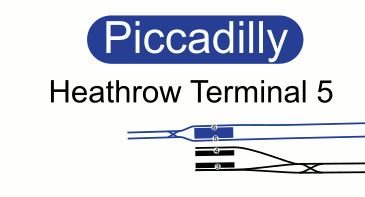
The station has been built with two Piccadilly Line and four heavy rail platforms.
This map from carto.metro.free.fr, shows the platform layout.
Note.
- It would appear there are only two heavy rail platforms in use.
- Through trains would use these currently in use platforms.
- The two spare platforms could be arranged, so that they could handle a terminating train from either direction.
- The terminating platforms can probably handle four tph or even six tph.
- The through platforms can handle well over ten tph, with the right signalling.
Someone seems to have got the design right.
The Future Of Heathrow Express
In his Modern Railways article, Chris Stokes says this about services from Woking to Heathrow.
We have assumed half-hourly services from Basingstoke and Guildford to Heathrow and Paddington, providing a 15-minute frequency from Woking, with stops at Farnborough Main (Basingstoke services), Working, Terminal 5, Terminal 2 and 3 and Old Oak Common.
He also says that this service could take over the Heathrow Express paths and it would use the through platforms at Heathrow Terminal 5 station.
This arrangement has several advantages.
- Heathrow Express doesn’t terminate in the tunnels under Terminal 5.
- No new train paths between Heathrow and Paddington are required
- Heathrow Express gets new destinations without any expensive new infrastructure.
But it would appear that Heathrow Express may have a future.
Heathrow Southern Railway’s Plans For Staines
In an article in the December 2016 Edition of Modern Railways about the Heathrow Southern Railway, Chris Stokes outlines how railway will serve Staines.
The addition of a bay platform at Staines, deliverable within the existing railway boundary, would assist service resilience and potentially allow extension of Crossrail services from T5 to Staines, providing a highly attractive alternative route from Staines to central London, together with enhanced interchange with South Western services. Journey times from Staines to Paddington would be as fast as to Waterloo, with excellent central London distribution provided by Crossrail. We would expect the majority of Staines to central London passengers to transfer to Crossrail, with significant interchange to Crossrail from intermediate stations between Staines and Reading, relieving overcrowding between Staines and Waterloo.
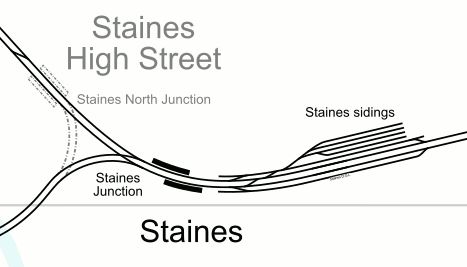
This map from carto.metro.free.fr shows the rail lines at Staines station.
Note.
- London trains take the lines to the East.
- Windsor and Heathrow trains take or will take the lines to the North-West.
- Reading trains take the lines to the South-West.
Heathrow Southern Railway plan to add a bay platform in the North West corner of the station.
- It will be built on current railway land. (Chris Stokes)
- It will help with the resilience of the train service. (Chris Stokes)
- It could possibly be the terminus of an extended Crossrail service from Heathrow Terminal 5. (Chris Stokes)
I shall now look at various features, benefits and possible problems in detail.
Could A 205 Metre Long Platform Be Built?
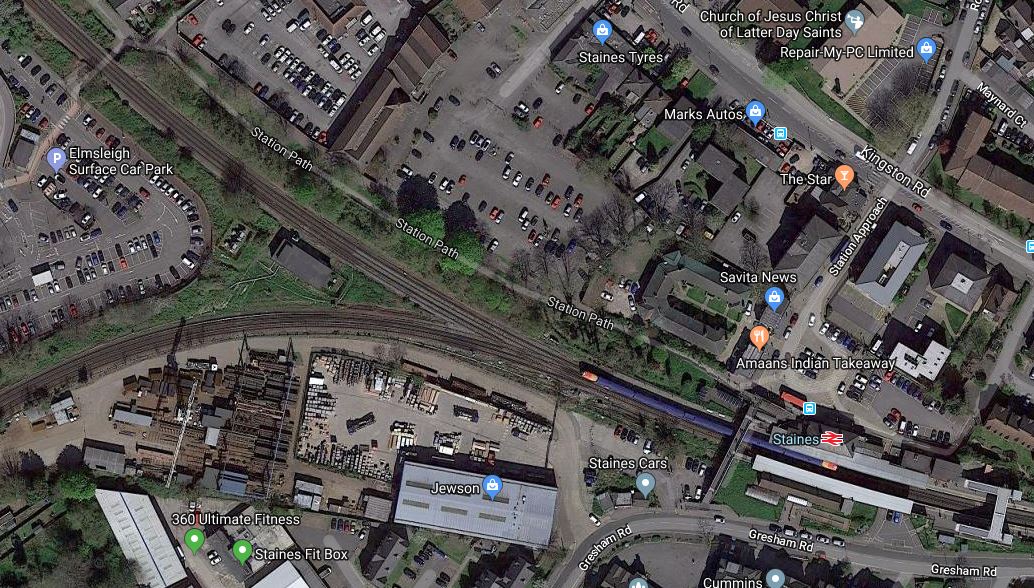
The Google Map shows Staines station.
Note.
- The five-car blue train in the station.
- The train is probably a Class 458 train, which is just over a hundred metres long.
- Crossrail’s Class 345 trains are up to 205 metres long.
- The two footbridges over the tracks.
- The junction, where the tracks split to the West of the station.
These pictures show the area, where the new bay platform would go.





The Station Path and the green space are clearly shown on the Google Map.
Using the train in the station as a hundred metre ruler, I feel that with good design a platform, that was long enough for a Class 345 train could be built.
- The path would be landscaped.
- The platform would connect to the London-bound Platform 1.
- There is probably space for some shelters and other facilities.
- There might be a new entrance to the station at the West end.
Platforms have been built in much more difficult locations than this.
What Frequency Of Trains Could The Platform Handle?
Many terminal platforms in the UK handle four trains per hour (tph).
Crossrail will actually handle 12 tph using three terminal platforms at Shenfield station, when the station gets the full service in May 2019.
I don’t think it would be outrageous to say, that the single bay platform at Staines station would be able to handle four tph.
Would Crossrail Want To Serve Staines?
Crossrail’s current service plans are lop-sided, with more trains going to the East than to the West. This means that 12 tph turnback at Paddington station.
I’m sure they would welcome extra termini in the West!
Heathrow Southern Railway’s plan is that trains will pass through Heathrow Terminal 5 station and then take the new rail link to Staines.
Crossrail’s current plan envisages two tph terminating in Heathrow Terminal 5 station, but I don’t think with the right signalling and timetable, that running four tph through the airport to the bay platform at Staines, would be impossible.
But this will only happen if there are the passengers to use the service.
Who Might Use Crossrail To And From Staines?
Chris Stokes said this.
We would expect the majority of Staines to central London passengers to transfer to Crossrail
As there is research behind the proposal, this will be right.
But there is one group of passengers, who will welcome Crossrail with open arms.
That is those people, who live in Staines or the surrounding area and work or want to work at Heathrow.
As Chris Grayling announced that Southern access to Heathrow was a priority, I discussed it with one of South Western’s station staff.
They put me right about getting from Staines to Heathrow for an early shift.
Crossrail’s Plans for Heathrow at 6th January 2019
Om the 9th January 2019, Wikipdia said that following Crossrail trains will run to Heathrow.
- Terminal 4 – Four trains per hour (tph)
- Terminal 5 – two tph
In addition it looks like Heathrow Express will run four tph to Terminal 5.
Heathrow Southern Railway plan to run the Heathrow Express services through to Basingstoke, Guildford and Woking.
If Crossrail were to run four tph to Staines in addition the extended Heathrow Express at four tph, that would only be one train every seven and a half minutes. Compare this with the time it takes of ten minutes to turn trains in the platform at Heathrow Terminal 5 station.
I would suspect it could be possible to run four tph through Terminal 5 to a bay platform at Staines.
Conclusion
It’s amazing what can happen, when you add a simple bay platform!
New Heathrow Rail Link To Lead The Way For Future Transport Funding Schemes
The title of this post, is the same as that of this Press Release on the Department of Transport web site.
This is the opening two paragraphs.
Private companies have been asked to come forward with ideas to deliver a new southern rail link to Heathrow Airport.
The link will be one of the first projects under government plans to invite third parties – such as local authorities and private sector companies – to invest in the rail network, over and above the £47 billion the government is already planning for the next 5 years.
In the past, I have talked about two privately-funded schemes for access from the South to Heathrow.
The Times is saying today, that it could be the second scheme.
But Heathrow can be such a money-earner, you do wonder if other schemes to serve the airport will be put forward.
How Would A Scheme Work In Practice?
A consortium consisting of engineering, financial and railway interests would put forward a scheme.
They would do the following.
- Design the scheme and ensure it was acceptable to all stakeholders, including Network Rail, the Office of Rail and Road, local authorities, train operating companies, passengers, residents and in the case of Heathrow, the airport itself.
- Raise the finance to build the scheme from appropriate institutions like insurance companies, banks and pension funds.
- Build the scheme and get it approved by the appropriate companies, authorities and regulators.
- Once the scheme is commissioned, trains using the scheme would pay appropriate track access charges, in the same way, that they do now, when they use Network Rail’s tracks.
- Maintenance would be the responsibility of the consortium, that built the scheme.
In some ways the consortium functions like a mini-Network Rail, as it obeys all the same standards with regards to engineering and safety.
But.
- The finance is not provided by taxpayers.
- Any profits go to those, who conceived, built or financed the project.
- Risks associated with the project are not borne by the Government or taxpayers.
If say in ten years time, the consortium goes bust, then I suspect that the assets would be bought on the cheap, by either Network Rail or another investor, who would learn from the original consortium’s mistakes.
Not that I think that will happen!
Has Anything Similar Been Done Before In The UK?
I think it is true to say, that various innovative ways have been found to fund railways in the UK.
The article from the Independent, which was written in 1992 is entitled Canary Wharf Banks Agree Funding For Jubilee Line.
This is a paragraph from the article.
The Government has always insisted that the scheme will not go ahead without private funding. In return for the financing, the banks are believed to be insisting that the Government chooses Canary Wharf as the site for the relocation of about 3,000 civil servants from the Department of Environment and the Department of Transport. It is also considering three other sites in the area.
So it looks like relocating three thousand civil servants got the Jubilee Line built!
Chiltern Railways have expanded by leaps and bounds over the years and some of their methods have been professional and innovative.
Project Evergreen with three phases has expanded and improved their passenger services.
This is an extract from the section of Wikipedia, that talks about the project.
Chiltern Railways former chairman Adrian Shooter said, “This is the biggest passenger rail project for several generations not to call on the taxpayer for support. Working closely with Network Rail, we are going to create a new main-line railway for the people of Oxfordshire and the Midlands. This deal demonstrates that real improvements to rail services can be paid for without public subsidy by attracting people out of their cars and on to trains.”
I don’t know whether this relates to all of Project Evergreen or just one part.
This is also said.
Network Rail provided the capital for the upgrade and will recover this through a facility charge over the subsequent 30 years, initially payable by Chiltern until its franchise expires, and then by the next franchisee. The infrastructure upgrade was carried out by main contractor BAM Nuttall, in partnership with Jarvis and WS Atkins.
It may all sound complicated, but Chiltern Railways is a train operating company that commuters don’t seem to complain about.
Could Any Other Schemes Be Funded Using The Department for Transport’s New Model?
Building the southern access into Heathrow Airport will be a large project costing more than a billion pounds.
But that doesn’t that all projects need to be that size!
I suspect, that the DfT’s model will be applied to some projects, as small as a hundred million pounds.
These are my thoughts on future projects, which I have split into various sections.
Airports
If a scheme like the Heathrow scheme gets the go-ahead, then I think this could lead to other airport links being designed, funded and built using a similar model.
At present, Aberdeen, Bristol, Doncaster-Sheffield, East Midlands, Glasgow, Leeds and Liverpool airports are looking to improve rail access and the DfT’s model may be a way to build some, if the demand is there.
Network Extensions
The proposed Heathrow Southern Railway is effectively a well-thought out extension to three networks; Crossrail, Heathrow Express and South Western Railway to all of their mutual benefit.
I doubt there’ll be such big extensions, but there are some useful ones being planned.
- Bramley Line -The track-bed of this route is still there and connecting March to Wisbech could create a new commuter route for Cambridge.
- Fawley Branch Line – This would provide a passenger service and serve new housing developmemts in Hythe and Fawley.
- Ivanhoe Line – Proposals to improve this service in Leicestershire with new stations.
- Merseyrail Northern Line Extensions – The £300 million extension to Skelmersdale is being planned and another from Ormskirk to Preston is proposed using battery trains.
- North Downs Line – This line could be updated to provide an improbred Reading- Gatwick. Would it make a freight route for Minis from Oxford to the Channel Tunnel?
- Skipton To Colne Reinstatement – This project of just a dozen miles is high profile amongst Conservative politicians and would provide another route across the Pennines.
- West London Orbital – This £264 million extension to the London Overground would create two new lines in North West London.
This is by no means a complete list, but it shows how many routes could benefit with reinstatement or improvement.
Electrification
Why shouldn’t electrification be privately funded, with the builders and investors getting their returns, through an electrification access charge, which would be similar to a track access charge.
I discuss possible electrification schemes in Charting An Electric Freight Future.
The linked article is mainly about freight, but I suspect there are examples, where some shortish stretches of electrification could be privately-funded.
If electrification experts identified the problems of the past few years and how to solve them, there must be a case to formulate a business that merged engineering, finance and construction, that was able to install electrification on time and on budget.
Depots
Greater Anglia has commissioned a new depot at Brampton on a design, finance and build basis and it’s not the only depot built this way.
But that is more traditional financing.
Stations
The financing of some stations has been extraordinarily innovative.
I suspect that that some deals will get even more so.
Some will even charge for passengers per day.
Conclusion
One of the reasons, I like the DfT’s proposal of mixing design, finance and build with a good helping of innovation, is that this closely follows the model that we used with Metier Management Systems, when we started the company in the 1970s, to develop our Project Management system called Artemis.
- We designed the systems.
- We financed the systems.
- We installed the systems
- We maintained the systems.
- The customers wanted the systems.
- Customers paid so much a month.
The cream on top was the lashings of innovation.
There might be a lot of extra finance flowing into UK railways!
,
Access To The Western End Of The Camden High Line
I took between Camden Road and Camden Town stations on Sunday.
I was investigating two questions.
- How would you provide access to the Western end of the Camden High Line?
- How would you improve interchange between the North London Line and Northern Line stations?
These are some of the pictures that I took.
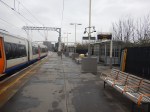

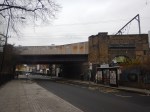



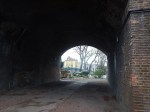
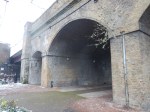

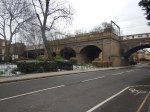
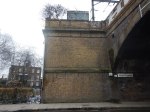
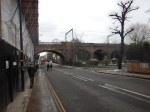
I can see a few strengths and problems.
Architectural Quality
Camden Gardens has several Listed buildings, but the viaduct appears not to be Listed.
The brick viaduct is a substantial one and like most of this type of structure in the UK, Network Rail seem to keep it in good condition.
You have to remember that there was a derailment on the bridge, which I wrote about in Fall Out From A Train Crash. So I suspect, it has had a detailed check-up since.
The only eyesore is the steel bridge over Camden Street. But Network Rail have ways of making them look better. A good coat of paint would help.
Camden Gardens
To my mind, Camden Gardens needs development. Not in any negative sense, but it is surrounded by pedestrian traffic generators.
- Camden Road station to the East
- The Regents Canal to the South
- Camden Town station to the South, which will have a new step-free Northern entrance, about a hundred metres from the Gardens.
- |A large mixed development on the other side of Kentish Town Road.
- It is on the direct route between Camden Road station and the tourist attractions around Camden Lock.
It could be developed into a convenient oasis for those walking in the area.
Perhaps there needs to be a cafe in one of the arches.
Camden Interchange
In Boris Johnson’s Transport Infrastructure Plan for 2050, the Appendix mentioned that there will be an interchange between Camden Town and Camden Road stations. Unfortunately, a copy of the report is not available on the Internet.
But it can’t be deleted from my memory.
I feel strongly, that as after the expansion of Camden Town station, the two stations will be physically closer, that a Western entrance to Camden Road station, should be built, if the sums added up.
Consider.
- It would create a convenient interchange between the two rail services.
- It would improve access from Camden Lock and the new developments on the North side of the Regent’s Canal.
But it could also create access to the Camden High Line.
The Height Of The Viaduct
The viaduct is high, as the last-but-one picture in the gallery shows.
Because of the railway tracks, between the two platforms, which means the only way to cross is to walk to the other end of the platforms and go down and up again, design of affordable and practical access, will be challenging.
A Station Entrance On The Camden High Line
The first picture in the gallery, shows the shrubbery on the two disused tracks, that could become the Camden High Line, behind a fence.
It would surely be possible to create a ticket gate in a small building on the wide platform.
Conclusion
With clever design it would be possible to provide access to the Camden High Line and the station in a single development.
First Sighting Of A Battery Taxi
London is getting battery taxis. They are officially called LEVC TX.
I took these pictures from the back platform of a New Routemaster bus.



It certainly looks good from the front. And I’ll try one when I can!
I have a feeling that, because it looks right, the early adopters will do well, as punters will want to give it a try.
If it is reliable and the costs stack up for the drivers, I think it could sell well.
This is a review of the LEVC TX.
If it ends up in large numbers on the streets of London and other British cities, it may actually start a substantial move to electric vehicles.
Imagine coming into St. Pancras on Eurostar and then you and your family take an electric taxi home to Hampstead, Kensington or like me, to Dalston! Will your kids, badger you to get an electric car, because it is good for the environment and so cool?
I don’t know! But electric taxis could be the advertising for all electric vehicles!
What Is The Operating Speed Of Class 710 Trains?
So far, five classes of Aventra trains have been allocated TOPS numbers and their own Wikipedia pages.
- Crossrail – Class 345 trains – 145 kph
- London Overground – Class 710 trains – Speed not disclosed
- Greater Anglia – Class 720 trains – 160 kph
- South Western Railway – Class 701 trains – 160 kph
- c2c – Class 711 trains – 160 kph
The other orders for West Midlands Trains are given as 145 kph for the Cross-City Line and 180 kph for longer distance trains, in Wikipedia.
Looking at these speeds, I think that the operating speed of the Class 710 trains, must either be the 145 kph of the Crossrail trains or the 160 kph of the suburban trains. Or they could be the 121 kph of London Overground’s Class 378 trains.
But it has not been disclosed.
As probably most Aventras use similar running gear and electrical and control systems, I wouldn’t be surprised that maximum operating speed, is just a setting in the train’s control computer.
London Overground’s Aventra Routes
Timings on London Overground’s routes, that will be run by Class 710 trains are as follows.
- Euston – Watford Junction – 47 minutes – 15 stops
- Liverpool Street – Cheshunt – 39 minutes – 15 stops
- Liverpool Street – Chingford – 27 minutes – 6 stops
- Liverpool Street – Enfield Town – 33 minutes – 13 stops
Comparing the new Class 710 trains to the current Class 315 and Class 317 and Class 378 trains, there are or may be performance differences.
- Class 315 and Class 378 are slower trains with a 121 kph operating speed.
- Class 317 trains have an operating speed of 161 kph.
- Dwell times mat be less on the new trains compared to some or all of the existing types.
So how will these differences effect the various routes?
Euston – Watford Junction
There seems to be long turnrounds on this service and I’m fairly certain faster trains could run this service more efficiently, which may mean that the same number of trains could run at a frequency of four trains per hour (tph).
Liverpool Street – Cheshunt
This service is based on a six minute turnround and I suspect could be run more efficiently, if a faster train could get each way in under thirty minutes.
Liverpool Street – Chingford
It looks like this four tph service is run pretty efficiently, but there is a ten minute turnround at Chingford.
Liverpool Street – Enfield Town
The Liverpool Street to Enfield Town service waits nineteen minutes before returning, so small savings in dwell times and a faster train, might allow a two tph service to be setup, where trains depart on the half-hour, using just two trains.
Four tph, which is planned to start on this route in 2019, would need just four trains.
Summery Of London Overground Routes
Faster trains with shorter dwell times will certainly improve the timings and frequency of London Overground’s services, that they intend to run with Class 710 trains.
I’m pretty certain, that they will enable the following.
- Four tph – Euston to Watford Junction
- Four tph – Liverpool Street to Enfield Town
They will also improve timings on Liverpool Street to Cheshunt.
Conclusion
But what will be the operating speed of the Class 710 trains?
I said it will be somewhere between 145 kph (90 mph) and 160 kph (100 mph)
Or it could be the 12kph of the current Class 378 trains.
Consider.
- I think that 145 kph, will be able to handle the two planned increased frequencies of four tph.
- 145 kph is identical to the Crossrail trains.
- 160 kph is identical to the Greater Anglia trains.
- 121 kph is identical to the London Overground Class 378 trains.
- 160 kph seems to be the speed of suburban Aventras.
It’s a difficult one to call!
Thoughts On The Bakerloo Line Extension
It is being proposed that the Bakerloo Line be extended to South East London.
- There will be two new stations on the Old Kent Road.
- There will be a connection to the existing New Cross Gate station.
- The extension will terminate at Lewisham station.
- The extension will be totally underground.
- Provision will be made to extend the line further.
Almost nothing has been said about the frequency of trains on the line, stabling arrangements for the trains or what happens in the North.
The Train Frequency
Wikipedia gives the current off-peak services on Bakerloo line as.
- 6 tph (trains per hour) from Harrow & Wealdstone to Elephant & Castle
- 3 tph from Stonebridge Park to Elephant & Castle
- 11 tph from Queen’s Park to Elephant & Castle
This forms a 20 tph service (or a train every 3 minutes) between Queen’s Park and Elephant & Castle.
New Trains And Signalling On The Bakerloo Line
As there will be new modern signalling and new trains on the Bakerloo Line in the future, are Transport for London relying on these to increase the frequency of trains.
Currently, there are thirty-three trains in service and according to the November 2017 Edition of Modern Railways, these will be replaced with forty new trains, which will give a twenty-five percent capacity increase.
As the Northern and Jubilee Lines run at 27 tph, with modern signalling and newer rolling stock, I suspect that at least this train frequency could be achievable.
Depots And Sidings
The Bakerloo Line has three depots.
London Road
London Road depot is located between Lambeth North and Elephant and Castle stations.
This Google Map shows the location of the depot.
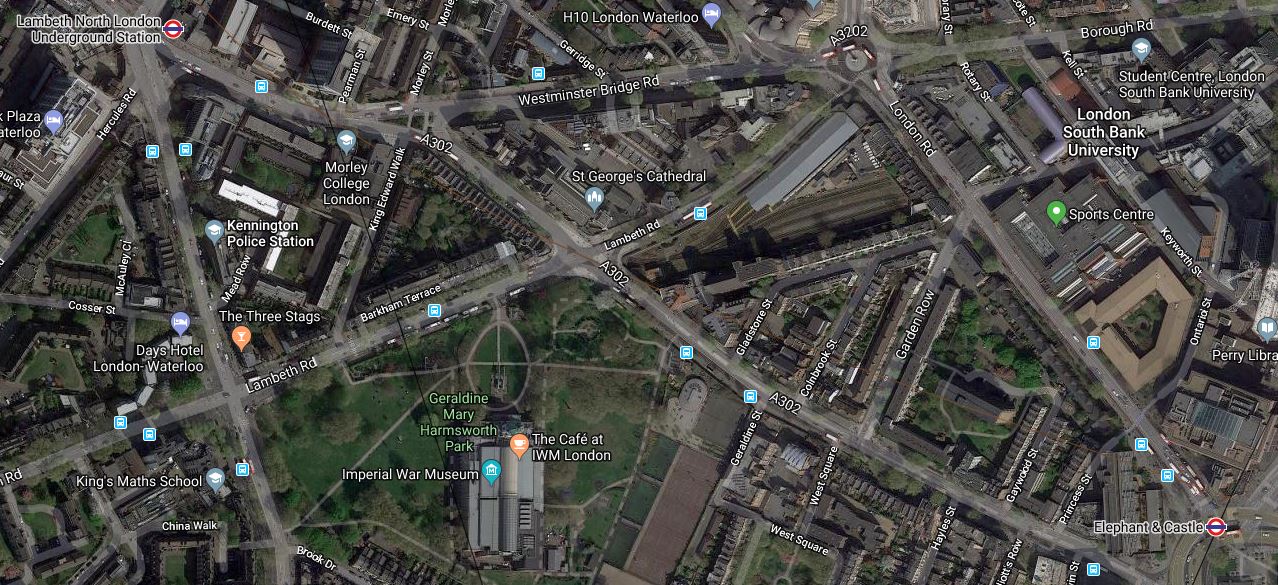
It is the V-shaped site, just below the roundabout, at the top of the map, where London Road, Westminster Bridge Road and Borough Road meet.
However good this depot is for servicing trains, it strikes me that it is in a location, where land is very expensive.
I think one of two things will happen.
- The depot will be closed and the land given over to development.
- The depot will be rebuilt and there will be housing or commercial development on top.
If the latter happens, it is probably an affordable way to get a modern depot. White City depot on the Central Line is already under property development.
Stonebridge Park
Stonebridge Park Depot is relatively modern and is located to the North of Stonebridge Park station.
This Google Map shows the location of the depot.
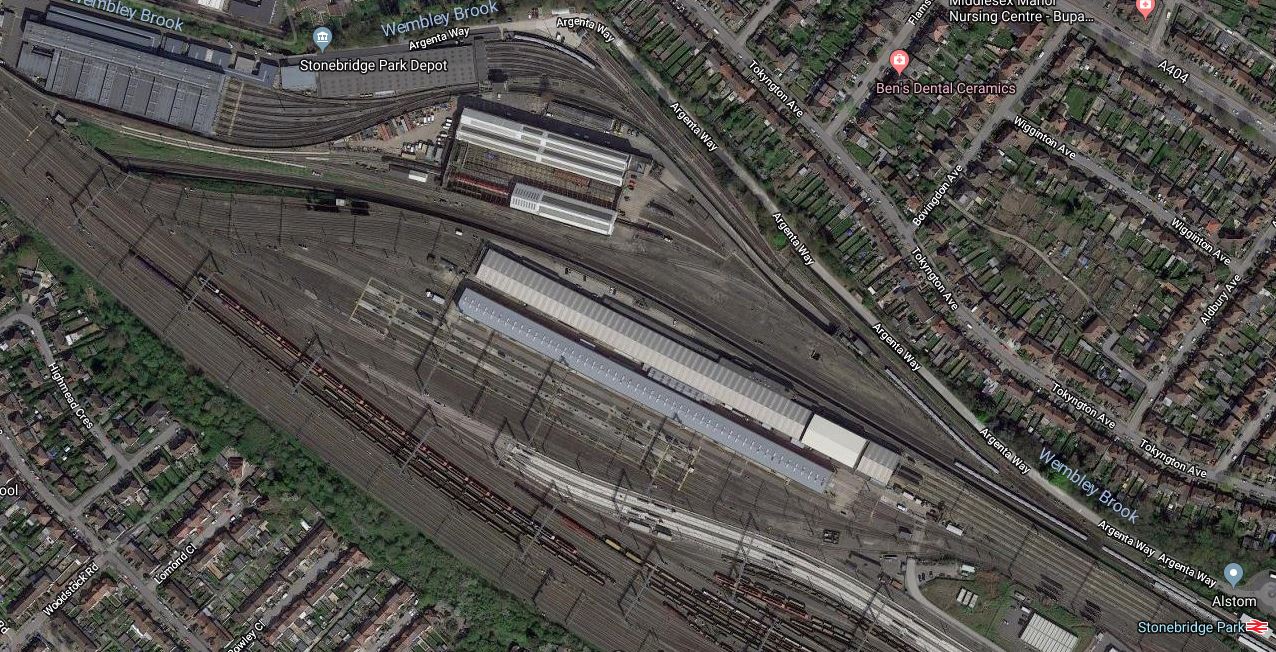
Because of its young age and size, the only thing likely to happen at Stonebridge Park would be some modernisation for the new trains and a possible appropriate increase in capacity.
Queen’s Park
Queens Park Depot is not large and is effectively two sheds either side of Queens Park station.
This map from carto.metro.free.fr shows the track layout at Queens Park station.
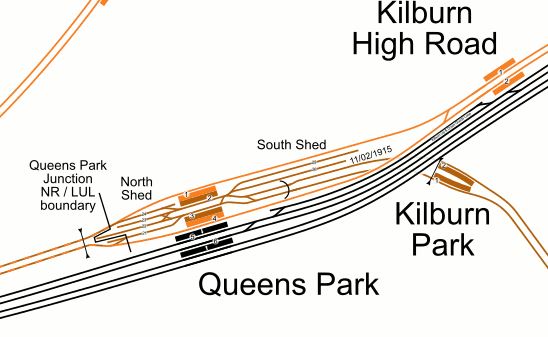
Note.
- The North and South Sheds.
- The cross-platform interchange between the Watford DC Line and the Bakerloo Line.
- The platforms on the main lines are not operational at present, but may be so in the future.
Compared to the other two depots, Queens Park would appear to be less important.
I suspect though, that Transport for London have plans to improve operations at Queens Park.
Conclusion
The following should be noted.
- The new trains will probably, be the same length as current trains.
- But as there are going to be 40 instead of 33, more space will be needed.
- A rebuilt London Road depot with housing and/or commercial development on top, could raise a substantial sum.
- There is space for extra sidings at Stonebridge Park depot.
- There will be turnround sidings on the extension to Lewisham in the overrun tunnels, which is standard London Underground practice.
- The new trains should need less maintenance than the current nearly fifty-year-old 1972 Stock trains.
I think by some clever design, that the extra seven extra new trains will be incorporated in the two major depots of Stonebridge Park and London Road, with some help from Lewisham and Queens Park.
North Of Queens Park
These are various points and issues.
Queens Park Station
Queens Park station is a six platform station.
- Two platforms for the Watford DC Line
- Two platforms for the Bakerloo Line
- Two unused platforms for the slow lines into Euston station.
There is an excellent cross-platform interchange between the Wstford DC and Bakerloo Lines, which is level between train and platform.
Wikipedia also says this about the station.
Queen’s Park is planned to become a step-free station and the project will be completed in 2019.
I visited the station this morning and saw no work in progress.
This picture shows the station’s rudimentary nature.
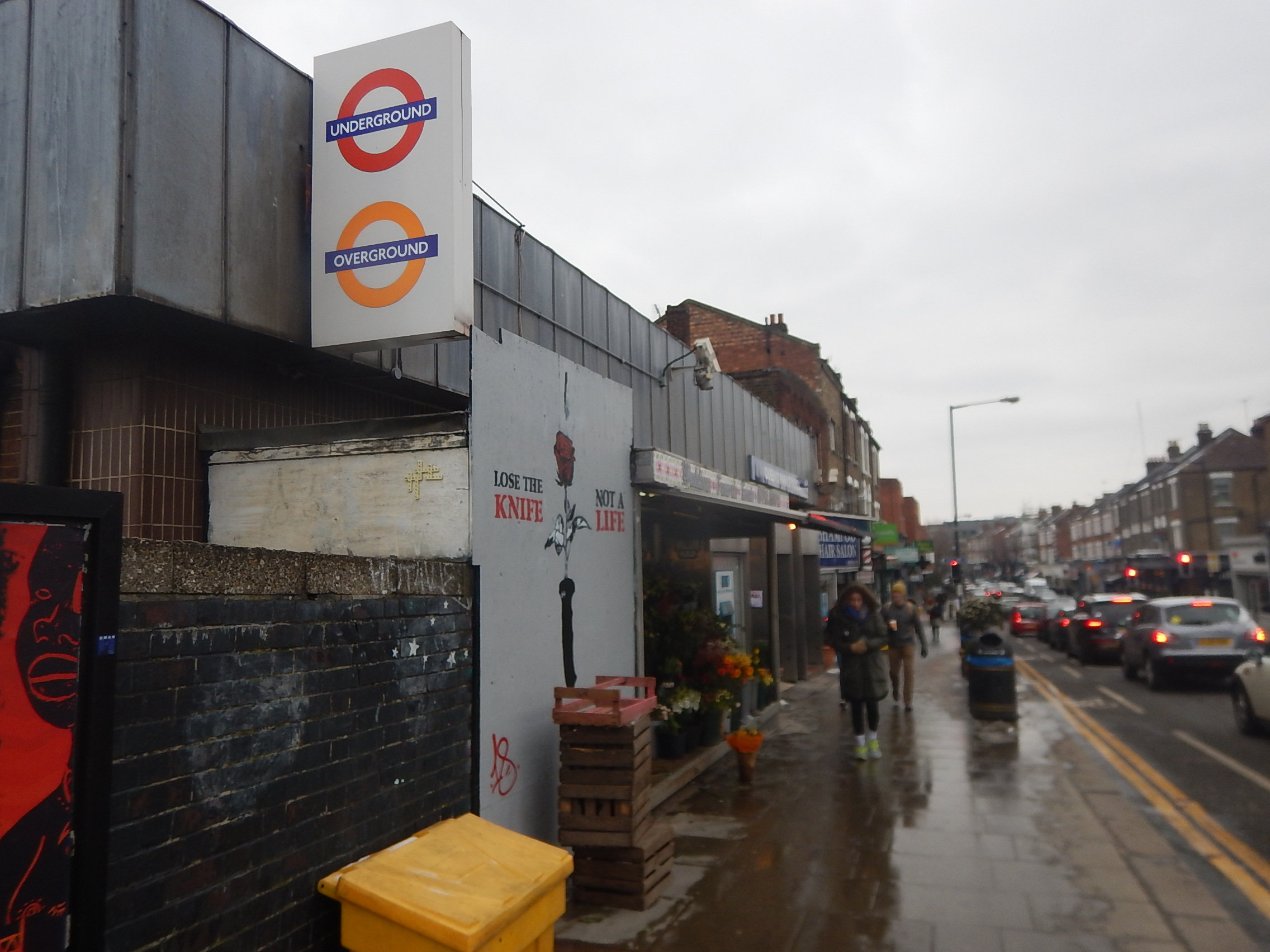
Opposite the station is a typical new block of housing, with a Marks and Spencer Simply Food store underneath.
So perhaps a developer will build some much needed housing.
- Underneath would be a much-improved station, with full step-free access.
- There could be some retail units.
- They might even rebuild the sheds of the depot, that I mentioned earlier to improve the operation of the trains.
- The two disused platforms could be refurbished.
These pictures show the platforms.


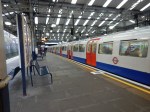

This project could be carried out independently of the Bakerloo Line Extension.
The Bakerloo And Watford DC Lines Share Tracks
Between Queens Park and Harrow and Wealdstone stations, the two lines share tracks, with trains calling at eight intermediate stations.
Current Bakerloo Line frequencies are.
- 9 tph between Stonebridge Park and Harrow and Wealdstone
- 12 tph between Queens Park and Stonebridge Park.
In addition, there are three tph on the London Overground between Queens Park and Watford Junction.
This arrangement means that passengers between Queens Park and Watford Junction stations have a flexible route to and from London, with a choice of Euston or Central London termini.
The Watford DC Line Fleet Is Being Changed
London Overground are replacing the current five-car Class 378 trains on the Watford DC Line with four-car Class 710 trains.
This might seem to be a reduction in capacity, but it is part of a cunning plan.
- The Class 378 trains will go to the East London Line, to enhance services.
- It means that London Overground can maintain all the dual-voltage Class 710 trains at Willesden TMD.
- Class 710 trains can’t work the East London Line, as they have no end doors for tunnels.
To compensate for the shorter trains, the frequency on the Watford DC Line will be raised from three to four tph.
The Watford DC Line will actually get a small capacity increase from fifteen carriages per hour to sixteen, with a much more passenger-friendly frequency of a new train, which may be slightly faster, every fifteen minutes.
But there is also a nugget in the tail.
The Watford DC Line currently handles five-car Class 387 trains. So if in a few years there is a need for more capacity, the Class 710 trains could be lengthened by adding a fifth carriage.
Given too, that there could be a lot of resignalling on this line, in conjunction with the Bakerloo Line extension and the new Bakerloo Line trains, I would not be surprised if train frequency and/or length on the Watford DC Line were to be increased again.
The Platform Height Problem On The Shared Platforms
These pictures show some of the platform height problems on the platforms shared by Bakerloo and Watford DC Line trains.

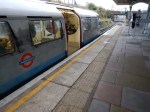
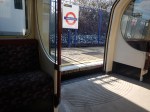
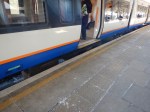
The interchange at Queens Park station is level between both trains and the platform.
Both the Class 710 trains and the new Bakerloo Line trains will be walk-through, which will ease the design of an acceptable dual-height platform, when both new trains are in service. Passengers will be able to walk up and down to find a seat or a convenient place to exit.
One solution to the height proble, would be to lower the platform, so that it is level with the height of the new Bakerloo Line trains.
A hump similar to a Harrington Hump could be added at a convenient point.
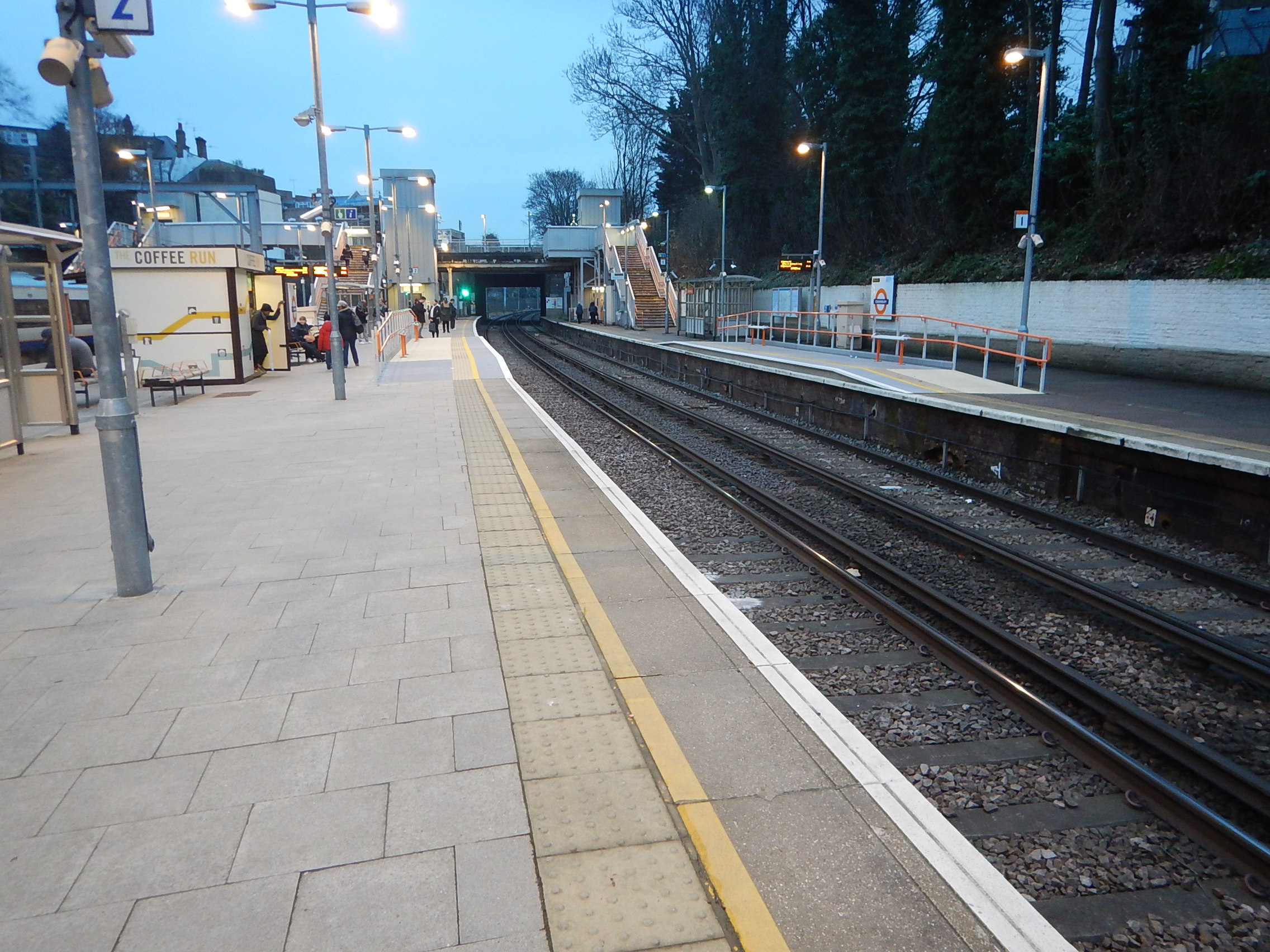
This picture shows two well-designed humps at Canonbury station.
The humps on the Watford DC Line, would be sized as follows.
- Height would allow level access to a Class 710 train.
- Width would be determined by safety.
- Length would probably be sized to fit two cars, which would be 40 metres.
The humps would be placed at an appropriate point on the platforms, which are long enough to take the current 113 metre long 72 Stock trains.
- Drivers of Class 710 trains, would stop, so that, cars 2 and 3 were aligned with the hump.
- Drivers of Bakerloo Line trains would stop, so they had the hump in the middle of the train.
Doors would then only open, where the access from train to platform was level.
All this would probably be handled automatically, with the driver monitoring everything.
It’s almost as if the trains had their own built-in platform-edge doors, which would ensure that safety was at least as good as it is now.
Will The New Class 710 Trains Reduce Timings On The Watford DC Line?
Conclusion
Everything published about the proposed Bakerloo Line Extension, does not mention the following.
- Trains and their frequency
- Depots
- What happens North of Queens Park station.
Until proven otherwise, there seems to be few difficult problems, that effect the building of the Bakerloo Line Extension.
Modernising the line and building the extension would appear to be a series of separate projects.
Existing EVs Could Steer Energy To 300,000 Homes
The title of this post, is the same as this article on the Utility Week web site.
This is the opening two paragraphs.
Existing electric vehicles (EVs) in the UK could contribute more than 114MW to the National Grid, enough to power over 300,000 homes.
Research commissioned by Ovo Energy suggests the figure could be achieved based on the current 19,000 Nissan Leaf EVs registered in the UK using new vehicle-to-grid (V2G) chargers.
The article goes on to discuss this in detail.
So what is vehicle-to-grid?
Wikipedia has this summary.
Vehicle-to-grid (V2G) describes a system in which plug-in electric vehicles, such as electric cars (BEV), plug-in hybrids (PHEV) or hydrogen Fuel Cell Electric Vehicles (FCEV), communicate with the power grid to sell demand response services by either returning electricity to the grid or by throttling their charging rate.
Vehicle-to-grid can be used with gridable vehicles, that is, plug-in electric vehicles (BEV and PHEV), with grid capacity. Since at any given time 95 percent of cars are parked, the batteries in electric vehicles could be used to let electricity flow from the car to the electric distribution network and back. This represents an estimated value to the utilities of up to $4,000 per year per car.
If you are thinking about buying an electric car or van, read the article and other sources. Wikipedia seems a good start.
At its simplest, it would appear that if you buy an electric vehicle, it would be prudent to fit a V2G charger in your garage or parking space.
I would expect, that the charging system is sophisticated, so that if you want to use the car, there is sufficient charge and the power hasn’t been sold back to the grid.
It will be very interesting to see how this technology develops.
Why Some UK Rail Passengers Are Using Avocados To Get Discounted Fares
The title of this post, is the same as the title on this article on Global Rail News.
Note the offer is not available with ticket machines, as they don’t have a big enough slot!
 The Anonymous Widower