Nottinghamshire MPs Pressing Government For Robin Hood Line Rail Extension
The title of this post is the same as that as an article on Notts TV.
This is an extract.
Besides the six mile-plus extension from Warsop to Ollerton, the plan would involve re-opening existing stations in Warsop, and Edwinstowe and building a new station in Ollerton.
The existing line is operated on a franchise held by East Midlands Trains, which is due for renewal in the coming months.
A Department for Transport spokesman said the extension is being consulted on as part of the franchise renewal, with a decision expected next month.
I have always liked this rail project and linking it to the new franchise will surely push it up the list of new projects.
It is actually, a low-cost project, as the track already exists and is regularly used by both Network Rail and East Midlands Trains for test purposes and to train drivers.
I have flown my virtual helicopter over the route and between the Robin Hood Line and Ollerton, there is a lot of double-track with the Eastern end single track, Part of the line is the High Marnham Test Track. The track-bed would appear to lead all the way to Lincoln.
It appears to be that the major costs would be.
- Replacing the track.
- Adding new signalling to replace the previous system destroyed by vandals.
- Building three new stations.
- Finding a few extra trains.
Surely, some good engineers and designers could turn this at an affordable cost into a worthwhile and well-used passenger rail line between Mansfield and Ollerton.
The New Fanchise And Rolling Stock
East Midlands Trains’ current fleet is diesel-only and includes the following units from the last century.
- 17 – 75 mph Class 153 trains
- 15 – 75 mph Class 156 trains
- 25 – 90 mph Cl;ass 158 trains
Many routes are run by inadequate trains and with the East Midlands franchise up for renewal, there is likely to be a reorganisation of rolling stock.
All recent new franchise awards have involved fleets of new trains and I doubt this one will be any different.
HS2
Although HS2 doesn’t arrive at East Midlands Hub station at Toton until 2032, I feel that the over the next few years, rail lines in the Nottingham and |Derby areas will be developed to make this new station a focus.
In After The Robin Hood Line Will Nottingham See The Maid Marian Line?, I discussed possible rail development between Toton and Mansfield based on this article in the Nottingham Post.
Conclusion
What the planners decide about HS2 will decide whether the Robin Hood Line is extended to Ollerton.
Development of Lincoln to Toton as a 90 mph route, with proportions of 100 mph running, would certain transform the area.
Doubts Arise About A third Runway At Heathrow
I have always been sceptical about a third runway at Heathrow and put down my thoughts in Will The Third Runway At Heathrow Be Actually Built In The Near Future?.
Media reports are now saying that there should be more consultation, due to the election stopping the publication of updated forecasts for passengers and pollution. The Labour Party also seems to be against the idea.
By the end of 2019, Crossrail and Thameslink will be fully operational and I believe that they will push everybody including politicians, airline boses and other business leaders to seriously rethink their positions. The statements of Willie Walsh; the Chairman of the airline group;IAG seems increasingly sceptical about Heathrow’s third runway.
2019 also marks the date when Gatwick Airport can start to think about developing a second runway.
In Could Thameslink Connect To Heathrow?, I showed that it would be possible to create a high-capacity link between Heathrow and Gatwick via Thameslink.
- The link would connect Gatwick, Heathrow, HS1 and HS2.
- No expensive infrastructure would be needed.
- This link could easily accommodate four trains per hour and possibly double that, when Heathrow rebuilds its terminals to make it a greener airport, more reliant on rail.
It could be in place in 2020.
Conclusion
All of these forces will kick the third runway even further into the future.
Could Thameslink Connect To Heathrow?
This may seem an outrageous idea.
But I think it could be possible.
Can Class 345 Trains And Class 700 Trains Use The Same Tracks And Platforms?
Crossrail may use Class 345 trains and Thameslink may use Class 700 trains, but can the two trains use the same tracks and platforms?
Recently, Cambridge North station has opened and it will certainly be compatible with Class 700 trains and Greater Anglia’s Class 720 trains, which are closely related to the Crossrail trains.
Heathrow’s platforms do not have platform-edge doors.
Both trains are designed to work at high frequencies using ERTMS.
So I think the answer to my question is a solid yes!
How Would Thameslink Trains Get To Heathrow?
The original plan for Heathrow Express envisaged using both Paddington and St. Pancras as terminals in Central London.
It would have used the Dudding Hill Line as a connection between the Great Western Main Line and the Midland Main Line.
This Google Map shows the tracks to the East of Acton Main Line station.
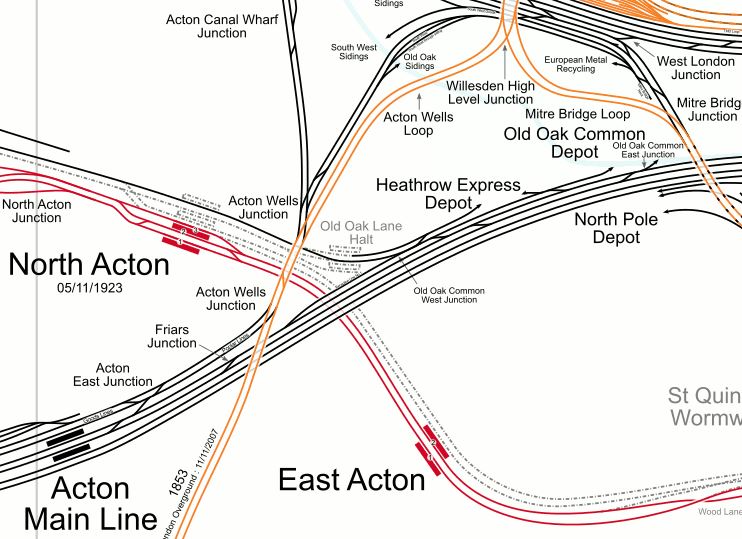
Note.
- The four tracks of the Great Western Main Line run through Acton Main Line station.
- The most Southerly pair of tracks are the fast lines, whilst the next pair are the slow lines as used by Crossrail.
- The tracks shown in orange are the North London Line.
- The two extra lines to the North of Acton Main Line station are the Goods Lines, connect at Acton Wells Junction to the North London Line, so freight trains can go across London between the Great Western Main Line and Stratford.
After crossing over the Central Line, the route splits with the North London Line going East to Stratford and the Dudding Hill Line going North through Acton Canal Wharf Junction.
To get to and from Heathrow, the services would take the same route as Crossrail to the West of Acton Main Line station.
The services would use the existing Cricklewood Curve Junction to connect with the Thameslink route to the North of Cricklewood station.
What New Infrastructure Would Be Required?
The infrastructure needed would not be of the sort of scale needed for Crossrail or Thameslink.
- The Dudding Hill Line is would need to be electrified.
- The Dudding Hill Line is double-track throughout.
- The 30 mph speed limit of the Dudding Hill Line would need to be increased.
- Would Harlesden and Dudding Hill stations be reopened or other new ones built?
- The stations at Heathrow could probably handle Class 700 trains without too much difficulty.
- There might be a need for a flyover to sort out the tangle of lines between Cricklewood and St. Pancras.
But nothing is too complicated or difficult.
What Frequency Of Thameslink Trains Would Serve Heathrow?
Currently, the following services are provided
- Heathrow Express has four tph to Terminal 5 via Heathrow Central
- There is a shuttle between Heathrow Central and Terminal 4, run by Heathrow Express.
- Heathrow Connect run two tph to Heathrow Central.
When Crossrail opens in December 2019, the service to Heathrow will be four trains per hour (tph) to Terminal 5 and two tph to Terminal 4.
Crossrail will also provide the shuttle between Heathrow Central and Terminal 4.
It is certainly not a system designed by any individual or committee with any sense of good design.
At least, both Terminal 4 and Terminal 5 stations have two terminal platforms, so the two stations should each be able to handle up to eight tph.
If they did this would mean up to sixteen tph on the Heathrow spur, which would be well within the capability of the route and trains running using ERTMS, which will handle up to 24 tph on both Crossrail and Thameslink in the few years.
Under current plans, it appears that when Crossrail opens, the stations will get the following services.
- Heathrow Central – 10 tph
- Heathrow Terminal 4 – 2 tph plus shuttles
- Heathrow Terminal 5 – 8 tph
I’m assuming that Heathrow Connect will quietly fade away.
With a bit of reorganisation of the services, it should be possible to squeeze another six tph into the airport, without building any new terminal platforms.
So I feel that say four tph Thameslink trains to Heathrow would be possible.
Could Crossrail Handle The Extra Trains?
The Thameslink trains would have to run on the Crossrail tracks between Acton Main Line station and Heathrow Airport Junction.
Currently Crossrail are proposing running 12 tph on this section, so as ERTMS can handle double this, I suspect there shouldn’t be too much of a problem.
Could Thameslink Handle The Extra Trains?
This article on Rail Engineer, which is entitled Thameslink Signalling Update, says this about possible Thameslink frequencies.
To meet the specification of 24 tph through the Thameslink core section, it is necessary to deploy Automatic Train Operation (ATO). This will provide a peak theoretical capacity of 30 tph, thereby creating a reliable 24 tph service with acceptable recovery margins.
So an extra six tph could be possible.
Would A Service Between Heathrow and Gatwick Airports Be Possible?
In my view it would be the logical service.
It would certainly be possible!
And it could also be a journey without any change of train!
Would There Be Any Other Useful Connections?
These are a few thoughts and ideas.
Same Platform Interchanges
Cross-city lines like Crossrail, Merseyrail’s Northern Line and Thameslink, have the advantage, that if you are going in the right direction, but are on a train to the wrong destination, you can just get off the train and wait for the correct train.
So if you leave Heathrow on a Gatwick train and you need to go to Maidstone East, you would get off at any of the stations in the central core and wait until the next Maidstone East train arrives.
Everybody will have their own favourite interchanges. Mine would probably be Blackfriars station, as it is above the Thames, has lots of seats and there is a large coffee shop on both platforms.
The ability to do this will mean that all stations South of West Hampstead Thameslink station will have a very easy link to and from Heathrow.
Reversing Stations
Crossrail has several stations where you can reverse your direction of travel by just walking across the platform. Whitechapel station will allow passengers to go between Abbey Wood and Shenfield stations without going up or down any steps or escalators.
Thameslink only has one reversing station at London Bridge station, although St. Pancras Thamslink has escalators and lifts to allow passengers to change direction in a short time.
West Hampstead Interchange
If plans for a West Hampstead Interchange materialise, this will link the following lines.
- Chiltern Railways
- Jubilee Line
- Metropolitan Line
- Midland Main L:ine
- North London Line
Note.
- This could be a very good interchange to be connected to Heathrow.
- West Hampstead Interchange would be a good alternative until Old Oak Common station is built.
- Passengers going between Heathrow and stations on the Midland Main Line to the North could change here.
Those like me living along the North London Line would find it a convenient way to get to and from Heathrow.
Kings Cross And St. Pancras Stations
The massive complex at Kings Cross and St. Pancras stations currently links the following lines.
- Eurostar
- Midland Main Line
- East Coast Main Line
- Southeastern Highspeed services
- Circle Line
- Hammersmith and City Line
- Metropolitan Line
- Northern Line
- Piccadilly Line
- Victoria Line
But the only way to get directly to Heathrow is a nearly hour long journey on the Piccadilly Line. Thameslink could be just over half that time, in a less cramped train.
Blackfriars Station
I use Blackfriars station a lot, as it is my the Tate Modern.
But others will use it as a same platform interchage for reasons I outlined erlier.
London Bridge Station
London Bridge station is another important interchange, with links to the following lines.
- Southeastern services to Kent
- Southern services to Surrey and Sussex.
- Jubilee Line
- Northern Line
Note.
- This new station is well-equipped and interchange is totally step-free.
- It is also a short walk to the city across London Bridge.
- This station will be a very good same platform interchange.
- The station allows passengers to reverse direction by just walking across the platform.
As with West Hampstead, this could be a very good interchange to be connected to Heathrow.
East Croydon, Orpington and Wimbledon Stations
East Croydon, Orpington and Wimbledon stations, which are important local hubs, would all be well-connected to Heathrow.
Collateral Benefits
Crossrail 2
Crossrail 2 is planning to have a Euston St. Pancras station, which is described like this in Wikipedia.
It would be a “mega station” serving the existing Euston, King’s Cross and St. Pancras main line stations. If funded and completed, it will be one of two such stations on the Crossrail 2 route (the other being Dalston).
If this station is designed properly, I am sure it will have the following.
- A step-free and convenient link to both Thameslink and Eurostar.
- Some form of high-capacity hi-tech people-mover, stretching under Euston Road, linking Kings Cross, St. Pancras and Euston stations.
I believe a station design is possible that makes the connection between HS1 and HS2 a no-hassle transfer for all passengers in less than ten minutes.
The people-mover should be in place when HS2 opens in December 2026, so that a credible HS1 to HS2 link opens at the same time.
Gatwick, Heathrow, HS1 And HS2 Will Be On One Rail Line
This could be of tremendous benefit to Londoners, travellers, tourists, rail companies and airlines, but Heathrow might not like it, as it could undermine their dominant position.
If Crossrail 2 opens around 2030, this will bring Stansted into the hub.
The Most Important Railway Station In The World
Eventually, Euston St. Pancras station will become the busiest and most important railway station in the world.
How Will Terminal Development At Heathrow Affect Crossrail And Thameslink?
Heathrow are disclosing a master-plan, for rebuilding a lot of the airport to make it more efficient and up with the best.
- There will be two main terminals; Heathrow West and Heathrow East with satellites in between handling the actual planes.
- These two terminals and the satellites will be between the two existing runways, with a passenger and baggage transport system beneath.
- Terminal Five will become Heathrow West.
- An extended Terminal Two will become Heathrow East.
- Crossrail, Heathrow Express and the Underground will serve both main terminals.
I believe that this rebuilding could start in the next few years.
Heathrow will make sure they future-proof rail access, so we could see.
- More terminal platforms at both Heathrow East and Heathrow West
- Through platforms at Heathrow West to allow trains to go West from both terminals.
- Freight shuttles bringing in provisions for the airport, the airlines and the aircraft.
This will allow Crossrail, Thameslink, Heathrow Express and other operators to have as many services as is thought necessary.
The biggest constraint will be the capacity of the Great Western Railway and the two tracks used by Crossrail.
Will Other Operastors Be Allowed Use Heathrow?
This probably depends more on politics than anything else, but technically these facts apply.
Bombardier Aventras
Bombardier have hinted that the design of an Aventra can provide commuter trains like Crossrail’s Class 345 trains and 125 mph expresses.
So it would be likely that a 125 mph Aventra of appropriate length would be able to serve Heathrow, if that were thought necessary!
All Trains Would Be Electric
I suspect that regulations would mean all trains would be electric, as you don’t want diesel or hydrogen fuels in the tunnels under Heathrow.
ERTMS
I also suspect that all trains using the eathrow stations would need to be equipped with ERTMS.
Possible Routes
Who knows what routes will become possible, but as the list of trains grows that are acceptable to Heathrow, various possibilities will arise.
- Great Western Railway to Bristol
- Great Western Railway to Cardiff
- London Overground to Clapham Junction station
- London Overground to Stratford
- South Western Railway to Southampton
- East Midlands Trains to Bedford/Kettering/Corby
- West Midlands Trains to Watford/Milton Keynes/Birmingham
After Heathrow terminals are updated to East and West, there would be scope for cross country routes going vaguely South-West to North-East calling at both terminals in Heathrow.
Will Thameslink And Crossrail Strangle Heathrow Express?
I wonder if a ink to Thameslink will be more valuable to Heathrow, than Heathrow Express.
- Abandoning Heathrow Express would release valuable platform space at Heathrow and Paddington.
- Crossrail and Thameslink together would have connections all over London, rather than just Paddington.
- Crossrail to and from Paddington would only take about five or six minutes longer.
- Heathrow Express will have to update their trains with ERTMS and to compete with Crossrail.
- Heathrow Express usually means a taxi to your hotel to and from Paddington.
- Crossrail will connect the West End, The City and Canary Wharf to Heathrow.
Convenience and cost will eventually strangle Heathrow Express.
Conclusion
The following statements would appear to be true.
- Class 345 and Class 700 trains can use the same infrastructure.
- Crossrail and Thameslink both use ERTMS.
- The stations at Heathrow,the Western section of Crossrail and the Thameslink core have spare capacity.
This means it should be possible to extend Thameslink services to Heathrow with a frequency of at least four tph, using an electrified Dudding Hill Line.
Some new infrastructure would be required, but nothing as comprehensive, as that for Crossrail and Thameslink.
HS2’s Depot North Of Crewe
This article on Rail Technology Magazine is entitled Maynard: HS2 will not deliver full potential unless east-west links improved.
The article relates to a debate in the House of Commons, where Paul Maynard, who is the Minister for Rail, reiterated the Gpvernment’s commitment to Northern Powerhouse Rail (NRP), or HS3.
He then went on to say, that the site of the depot in the Crewe area would be at Wimboldsley.
This Google Map shows the area.
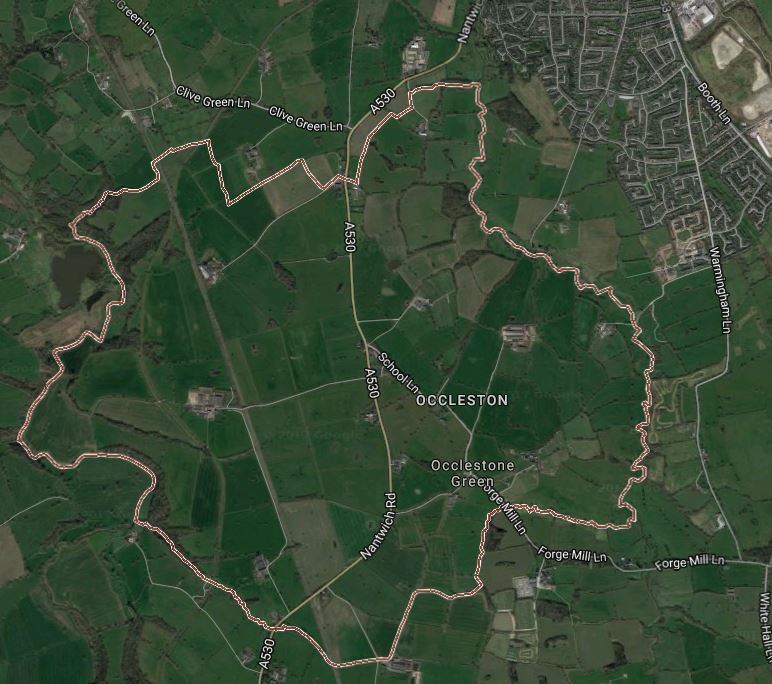
Note.
- The line drawing out Wimbordsley
- The West Coast Main Line going North-South across the map.
- Crewe is a few miles to the South.
- The town in the North-East corner is Middlewich.
They certainly seem to have chosen an area which is mainly agricultural land.
Thoughts On Highspeed to Hastings
Since I wrote Kent On The Cusp Of Change – Highspeed To Hastings, a couple of months ago, several things have happened.
And Now There Are Three!
Trenitalia has pulled out of bidding for the new Southeastern franchise as reported in this article in the International Rail Journal.
This leaves just three bidders.
- A joint venture of Abellio, East Japan Railway Company and Mitsui
- Govia
- Stagecoach
The same joint venture were recently awarded the West Midlands franchise.
The new franchise will be awarded in August 2018, with services starting in December 2018.
Electrification Has Been Abandoned
Major electrification schemes have been abandoned, so I suspect it will be even more unlikely that Ashford to Hastings will be electrified.
The Aventras Are Coming
Class 345 trains have started to appear on Crossrail and it is my opinion that they are a fine train.
In An Exciting New Aventra, I laid out the philosophy of the new trains and in How Long Will It Take Bombardier To Fulfil Their Aventra Orders?, I discussed how Bombardier will build the trains, at a rate of twenty-five carriages a month.
The rate comes from this article in The Guardian, which is entitled Full speed ahead for train builders as minister pulls plug on electrification, where I found this useful nugget of information, from the General Manager of Bombardier’s Derby plant.
Building trains in an “ergonomically correct” fashion, he says, means completing and testing the carriage’s constituent parts, then assembling them, rather than wiring them up afterwards – and also takes the risk away from a production line which boasts a rate of 25 carriages per week.
It sounds like Bombardier’s engineers have been drinking and swapping ideas, with Toyota’s production engineers a few miles down the road at Burnaston.
The New South Eastern Franchise
So do we have any clues as to what the new South Eastern franchise will be doing?
South Western Railway
South Western Railway‘s routes have a similar pattern to those of the South Eastern franchise, with an intense suburban network and longer distance services.
You could also argue that Greater Anglia isn’t much different.
Both these other franchises have are replacing their suburban trains with new 100 mph trains with all the trimming like wi-fi and toilets.
Both have chosen a mix of five and ten-car Aventras.
This would appear to give the following advantages.
- The 100 mph trains with excellent acceleration and smooth regenerative braking help to make services faster and more frequent.
- A near identical fleet will help maintenance and crew training.
- It is easier to get the train-platform interface better, if only one class of train calls at a station.
- Platform compatibility with Crossrail and Crossrail 2.
I suspect that the new South Eastern franchise will think on similar lines.
The Networkers Must Be Going
Southeastern currently has a total of 674 Networker carriages, most of which will surely be moved on by the new franchise holder.
I believe that these trains with their 75 mph speed and average performance, is not high enough for efficient timetabling of services and that consequently the new franchise holder will probably replace these trains with 100 mph units.
One choice would be to use a mix of new five and ten-car Aventras as chosen by Greater Anglia and South Western Railway. Replacing Networker carriages with the same number of Aventra carriages would take around six months of production at Bombardier.
The Aventras must be high on the list of new trains, as some of the new trains, may have to use the same platforms as Crossrail, if the line is extended from Abbey Wood station.
The Extra High Speed Trains
To serve Hastings and increase the number of Highspeed services, the new franchise holder, will have to obtain some more trains that can use High Speed 1.
Some of these trains will need the ability to travel on the Marshlink Line between Ashford and Hastings.
Consider.
- It probably wouldn’t be a good idea to have two different types of trains working to Ashford on High Speed 1.
- Class 800 trains, which are closely related to the Class 395 trains have onboard diesel power and might have energy storage to handle regenerative braking.
- Class 395 trains are getting towards ten years old and are approaching the need for a refresh.
- Hitachi have built trains with onboard energy storage in Japan.
- Diesel fuel might not be allowed in the tunnels of High Speed 1.
- Hitachi would probably be very disappointed to not get this order.
More Class 395 trains fitted with either onboard energy storage must be the favourite.
Conclusion
Kent will get Aventras to improve suburban services and more Class 395 trains with batteries for Highspeed services.
Why Do UK Train Operating Companies Dislike Siemens Trains?
This post was suggested by this article on Global Rail News, which is entitled TransPennine Express Class 397 Fleet Taking Shape.
The following sections describe how the various train companies are replacing their trains built by Siemens.
TransPennine Express
TransPennine Express (TPE) currently have two fleets of Siemens trains; Class 350 and Class 185 trains.
Class 350 trains
TPE currently has a fleet of ten four-car Class 350 trains, which were built by Siemens and are used on electrified services between Manchester Airport and Scotland. They are being replaced by twelve five-car Class 397 trains.
The comparison between the two trains gives clues as to why the fleet is being replaced.
- The Class 397 trains are 125 mph capable, which means they can mix it with the Virgin’s Class 390 Pendelinos of a similar performance.
- The Class 350 trains are only capable of 110 mph.
- The fleet needed to be increased in number to handle services between Liverpool and Scotland.
- The five-car Class 397 trains fit the capacity needed for the Scottish routes better than the four-car Class 350 trains.
- The Class 350 trains don’t have wi-fi/4G and power-points to the current standard on some of the latest trains, like the Aventra.
I’ve not ridden in these trains, so I can’t comment on their quality.
I suspect it’s that the Class 397 trains have the 125 mph capability and adding another 110 mph train from Liverpool to Scotland would be too much for the West Coast Main Line to handle.
If you look at the current scheduled times of Virgin and TPE between Wigan North Western and Glasgow and Scotland, you get the following.
- Virgin – Wigan North Western to Glasgow – 2 hours 31 minutes
- TPE – Wigan North Western to Glasgow – 2 hours 46 minutes
- Virgin – Wigan North Western to Edinburgh – 2 hours 39 minutes
- TPE – Wigan North Western to Edinburgh – 2 hours 53 minutes
So it looks like the new 125 mph trains could save around fifteen minutes on a journey between North West England and Scotland. In addition to the quicker journey time for passengers, it might mean that TPE can use their trains more efficiently.
Nothing has been said, but I suspect that the new Class 397 trains can couple and uncouple automatically, as the Class 395 trains do regularly.
This would allow TPE to run a service like this.
- Two five-car trains start independently from Liverpool and Manchester Airport.
- The trains would couple together at Wigan North Western or Preston.
- They would then run to Carstairs at 125 mph.
- The trains would then split.
- One train would go to Glasgow and the other would go to Edinburgh.
The Southbound service would reverse the process.
In the 1960s, I travelled from Glasgow to Manchester on a service like this. T remember, that I was very late into Manchester, as we were delayed at Carstairs by the late arrival of the train from Edinburgh.
It looks to me, that TPE have decided to replace their Class 350 trains, with a faster and more flexible fleet, that can be run according to passenger demand.
Class 185 Trains
TPE also have a fleet of fifty-one three-car Class 185 trains, that were built by Siemens in 2005-2006.
These trains were in some ways very badly-specified for the route and have some deficiencies.
- There are not enough of them and they suffer badly from overcrowding.
- They are 100 mph trains, which means they are inadequate on the West Coast and East Coast Main Lines.
- They lack wi-fi and power sockets.
- They are diesel trains, that sometimes work on electrified lines, like Liverpool to Manchester and Leeds to Newxastle.
It is no surprise that TPE have decided to replace twenty-two of the Class 185 trains with Class 68 locomotive-hauled Mark 5 coaches and Class 802 trains.
- This gives a twenty-seven percent increase in the number of carriages.
- The Class 802 trains are 125 mph capable, so will be very handy for Liverpool to Newcastle and in a few years time to Edinburgh.
- The coaches are also built to be capable of 125 mph, but they would need faster locomotives to run at that speed.
- The new fleet will have the wi-fi and power sockets that passengers require.
This new fleet will certainly be better suited to TPE’s needs.
Greater Anglia
Greater Anglia are replacing all their trains, including their fleet of twenty-one four-car Class 360 trains, that were built by Siemens in 2002-2003.
However, in the August 30th Edition of Rail Magazine, there is an article entitled Trio Of Class 360 Desiros Reach Norwich For GA Timing Test.
It appears that, as the fastest trains in Greater Anglia’s fleet, they are being tested in case the new Class 745 trains are not ready before January 1st, 2020, when the Mark 3 coaches have to be retired.
South Western Railway
South Western Railway have a mixed fleet, which includes a lot of trains built by Siemens.
Class 707 Trains
South Western Railway (SWR) are still taking deliveries from Siemens of a fleet of thirty five-car Class 707 trains, that they inherited from South West Trains.
However, they have decided to replace the trains and their Class 455 trains with new Aventras.
I think that the main reason for having a fleet of 100 mph suburban trains, is that they get lots of advantages when it comes to creating passenger-friendly timetables.
But there are other reasons.
- SWR have said that all their trains will have toilets. The Class 707 trains don’t.
- The new fleet contains a lot of ten-car trains, whereas the Class 707 trains are all five cars.
- If all the trains are identical, this must give advantages with respect to management of trains and staff.
It looks to me, that South West Trains choice of fleet wasn’t in tune with SWR’s philosophy.
The Return Of The Class 442 Trains
Surprisingly, SWR are bringing back thirty-year-old Class 442 trains for the London to Portsmouth routes.
SWR probably need more trains to augment their forty-five Class 444 trains and a hundred plus Class 450 trains, which were all built by Siemens around the turn of the millennium.
Refurbishing the Class 442 trains is probably more affordable than ordering more trains from Siemens.
They can also be fitted with wi-fi, which the Class 444 and Class 450 trains lack.
West Midlands Trains
West Midlands Trains will takeover from London Midland in December 2017.
Currently, London Midland operate seventy-seven four-car Class 350 trains, built by Siemens in 2004-2014.
West Midlands Trains have promised to introduce 225 new carriages on Euston services.
As these trains work on the West Coast Main Line will they be 125 mph units like the Class 397 trains, so they can mix it with the Pendelinos?
Whatever happens, it does seem that the 100-110 mph Class 350 trains without wi-fi, may be living on borrowed time.
Thameslink
Thameslink is now a rail line run exclusively by Class 700 trains, built by Siemens in the last few years.
The trains were ordered without wi-fi and passengers are often critical of the trains.
In my opinion, the trains are inferior to Crossrail’s Class 345 trains, which have both wi-fi and 4G connectivity.
Conclusions
When I travel in a train that Siemens have built for the UK network, I often feel disappointed and think that they could have done better.
Perhaps the exceptions are South Western Railway’s Class 444 and Class 450 trains, but they lack wi-fi. These trains were built some years ago before it had been invented.
Wi-Fi
The Department for Transport now insists that passengers get free wi-fi and Crossrail is throwing in 4G connectivity as well.
I’m not sure, if there’s a Siemens train in the UK with wi-fi.
But then most trains in Germany have very poor wi-fi in my experience.
Could the design of Siemens trains make fitting of wi-fi and UK-sized power sockets difficult?
Contracts
Most trains these days are leased on long-term contracts, which includes maintenance. Could this cause problems with updating trains?
With the old BR-era trains, there are several depots and factories where trains can be updated and Bombardier seem to update their old tranis regularly at Derby. So is Siemens unprepared to update its older trains on the UK network?
The Aventras Are Coming
The first Class 345 trains are appearing with a quiet and smooth ride, excellent performance and wi-fi and 4G connectivity.
Siemens will have to raise their game to compete.
The Crossrail Era Cometh
This title of this post comes from a comment on the Drapers Online web site.
It discusses the effect Crossrail is going to have on the shops in Oxford Street. This paragraph is typical of the bullish tone of the comment.
The Elizabeth Line is central to ushering in a new chapter for Oxford Street and the wider West End. The line is expected to bring an extra 60 million visits to the area each year, in addition to the current 200 million annual visits. Retailers in the West End will receive a huge boost from two new stations opening at Bond Street and Tottenham Court Road.
I wonder when a railway got such a large comment in a magazine or web site, devoted to the fashion business.
Please Do Not Wait In The Green Lanes
These pictures show an experiment in Kings Cross St. Pancras tube station, on the Southbound Victoria Line platform, which aims to make boarding and unloading of trains faster.


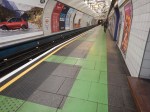
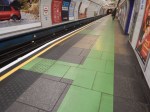
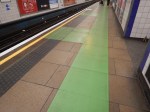
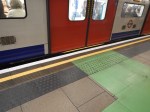
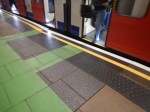
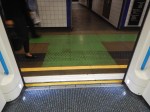
The idea is you don’t wait on the green lines, which are reserved for those getting on and off the trains.
The pictures were taken at ten in the morning, so I’ll go back one day in the Peak, to see how it works at a busy time.
But I do think it could be a good idea and a bit like platform edge doors, without the expense of the doors.
Note how the train stops precisely as indicated by the green lines. But then the stopping position of the train is determined automatically and has been since the Victoria Lie opened in 1967.
Why GA Uses Locomotive-Hauled Trains And Why The Class 755 Trains Are Coming
The first part of the title of this post is the same as that of an article in Rail Magazine, which is well worth a read.
Some interesting points.
- Norwich-Sheringham had 200,000 passengers per year in 1996; it is 600,000 now.
- Competition between Yarmouth and Norwich is the X1 bus with wi-fi and charging sockets and a fifteen minute frequency.
- Level crossing accidents are a problem.
- Locomotive-hauled stock is not a cheap option.
- When Norwich City are at home, extra capacity is needed.
I suspect that Greater Anglia would like to not have to use locomotive haulage.
Class 755 Trains
The article certainly shows why they chose the fleet of Class 755 trains with 24 x four-car and 14 x three-car units.
- A three-car or four-car train can be rostered accordingly.
- The trains are bi-mode, being able to work electrified and non-electrified routes.
- The trains are 100 mph trains and probably have a much shorter station dwell time, which must reduce some journey times.
- The trains will probably have charging sockets, 4G and wi-fi.
- There appear to be enough trains for increased frequencies on all services.
- I suspect that, as the trains will probably carry a high-proportion of leisure passengers, there will be adequate space for buggies, bicycles, large cases and wheel-chairs.
I’ll look at the routes where Class 755 trains will be used.
Some general points apply.
- Several proposed routes like Norwich to Stansted Airport are partially-electrified.
- Most timetables away from the electrified lines are written for a 75 mph Class 150 train.
- Some routes need more capacity and more frequent services.
Norwich To Yarmouth
Currently, this is a one train per hour (tph) service, which takes 33-37 minutes with four or five stops. Two trains are probably needed to run the service, although Greater Anglia do combine it with the Lowestoft services.
Note the following.
- Norwich to Yarmouth is not an easy drive in a car.
- |The X1 buses have a frequency of four tph.
- There are generous turnround times at Norwich and Yarmouth.
- The Wherry Lines are being resignalled, according to this article in Rail Engineer, which is entitled Atkins Awarded £29m Resignalling Contract In Anglia.
I would not be surprised to see the Norwich to Yarmouth service speeded up such that a Class 755 train could do a complete round trip in an hour.
- This would mean the current hourly service would need just one train.
- This would allow a four tph service to be run by just four trains.
- The trains could alternate between the two possible routes to give all stations at least a two tph service to both Norwich and Yarmouth
- Four tph would be a true Turn-Up-And-Go service.
To summarise, the current hourly service would need one train, but a much more customer-friendly four tph would need four trains.
How would a four tph service rejuvenate Yarmouth?
Norwich To Cromer And Sheringham
Currently, this is an hourly service, that takes just under an hour with seven stops. This service needs two trains.
Note the following.
- The Bittern Line is double-track from Norwich to Hoveton and Wroxham station.
- From there it is single-track, with passing opportunities at North Walsham and Cromer stations.
- A new station could be built at Rackheath for an eco-town development of 5,000 houses.
- The line has recently been resignalled.
I am fairly certain that the extra performance of the Class 755 trains, will allow a two tph service between Norwich and Sheringham.
This two tph service would need four trains.
To summarise, the current hourly service would need two trains, but a much more customer-friendly two tph would need four trains.
Norwich To Lowestoft
Currently, this is an hourly service, that takes 35-47 minutes with either one or six stops.
The current service would need two trains.
Note the following.
- The line is double-track.
- As with Norwich to Yarmouth, the current timings are such, that they can be achieved by a 75 mph Class 150 train.
- All the Wherry Lines will be resignalled.
I suspect that two tph may be possible with Class 755 trains, by means of some innovative timetabling.
It might be possible that if a train went fast one way with just one stop and slow the other with six stops, that it could do a round trip to Norwich in an hour.
A two tph service run like this could need just two trains, with the fast trip in probably something under twenty-five minutes.
To summarise, the current hourly service would need two trains, but a much more customer-friendly two tph could also need two trains.
Lowestoft To Yarmouth
There must be lots of good reasons concerning commerce, tourism, leisure and families to connect the two biggest towns in the very East of England by rail. Great Yarmouth is slightly larger with a population of 70,000 to Lowestoft’s 60,000.
Because no connection exists, I’d always thought that to provide one was difficult, as it would perhaps envisage building a large bridge across the water in the area. But I have just read a section entitled Direct Yarmouth Services in the Wikipedia entry for Lowestoft station. This is said.
In January 2015, a Network Rail study proposed the reintroduction of direct services between Lowestoft and Yarmouth by reinstating a spur at Reedham. Services could once again travel between two East Coast towns, with an estimated journey time of 33 minutes, via a reconstructed 34-chain (680 m) north-to-south arm of the former triangular junction at Reedham, which had been removed in c. 1880.The plans also involve relocating Reedham station nearer the junction, an idea which attracted criticism.
Surely if Network Rail has suggested this link in this study on their web site, it must be fairly easy to reinstate, as they don’t want to start any more fiascos.
There are several possible reasons.
- Has the Todmorden Curve shown that these links generate traffic and revenue for Network Rail? Perhaps, they’ve even got the maps out and looked for similar curves to Todmorden.
- Does this link give an extra route between Norwich and Ipswich, that makes it easier for passengers to do certain journeys without changing trains?
- There is a significant number of journeys betwen Lowestoft and Yarmouth by rail and road.
- Does it make it easier for trains to serve Lowestoft and Yarmouth?
- Perhaps reorganising the rail lines and station at Reedham realises a sizable piece of land for development.
- Do Network Rail want to create a record for reopening the oldest closed railway line? 135 years has probably not been beaten.
This map shows the area of the proposed junction.
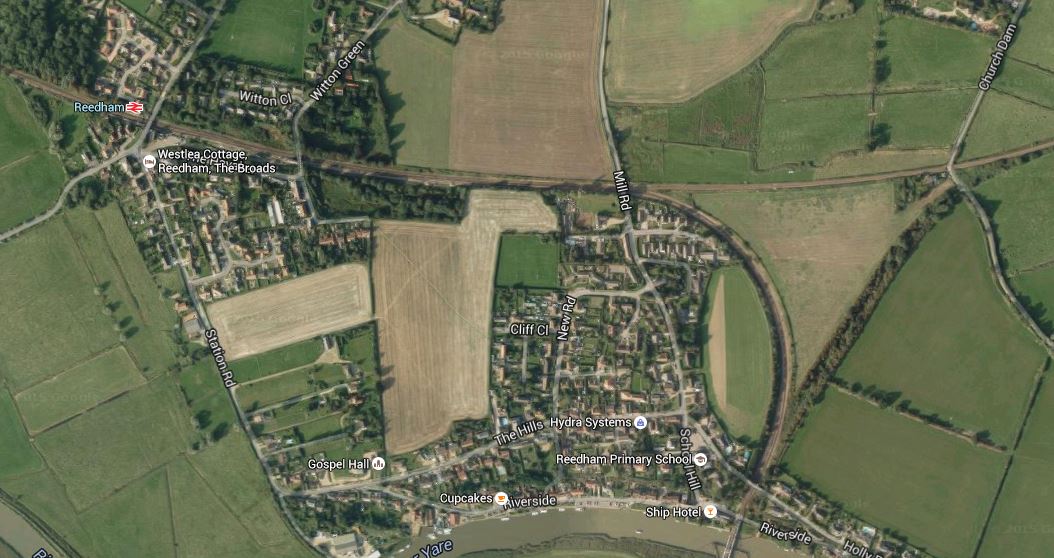 Norwich is to the West, Yarmouth to the North East and Lowestoft is to the South.
Despite being removed in 1880, the line of the third side of the junction is still visible.
But there is opposition as this article in the Great Yarmouth Mercury details. Perhaps, the locals don’t want any more housing?
The article mentions a cost of a billion pounds, which would make it a no-no! However the Todmorden scheme cost less than ten million pounds for a similarly-sized curve.
Currently, the fastest Lowestoft to Yarmouth journey takes about eighty minutes with a change at Norwich.
But these timings are also possible.
- Reedham to Yarmouth – 16 minutes
- Reedham to Lowestoft – 26 minutes
I suspect canny locals know that some trains connect well, so do the trip in under an hour.
It would appear though that if the Reedham chord was relaid, that Yarmouth to Lowestoft could be achieved in about fifty minutes.
I suspect that even if the Reedham Chord is not relaid, Greater Anglia may have plans to incorporate this service into the pattern of trains on the Wherry Lines.
They’ve certainly even got enough trains to run a shuttle using a three-car Class 755 train between Lowestoft and Yarmouth with a reverse at Reedham station.
An hourly service would need only one train.
Norwich To Stansted Airport
Greater Anglia have said that this new hourly service will replace the current service from Norwich to Cambridge on the Breckland Line.
Consider.
- Norwich to Cambridge takes 70 minutes, which is probably timed for 75 mph trains.
- Cambridge to Stansted Airport takes 30 minutes
- Trowse bridge at Norwich, is a major bottleneck on all trains connecting Norwich to the South and it may be improved or replaced. I wrote about Trowse Bridge in Is This The Worst Bottleneck On The UK Rail Network?
- Some sections of the line are electrified.
Would a round trip be possible in three hours?
This would need three trains for an hourly service and six trains for a two tph service.
When this hourly service is combined with services from other operators, there will be two tph from Norwich to Stansted Airport.
So I suspect only one tph will be needed on this route.
To summarise, the current hourly service would need three trains.
Ipswich To Lowestoft
Currently, this is an hourly service, that takes a few minutes under an hour and a half with nine stops.
Looking at the timetable for the 11:17 from Ipswich, the various sections of the journey take.
- Ipswich to Lowestoft – 86 minutes
- Turnround at Lowestoft – 24 minutes
- Lowestoft to Ipswich – 89 minutes
- Turnround at Ipswich – 41 minutes
Which gives a round trip time of four hours.
This is from the Wikipedia entry for the East Suffolk Line and describes the infrastructure.
The line is double-track from Ipswich to Woodbridge and from Saxmundham to Halesworth with the rest of the route being single track, apart from a short passing loop at Beccles. The line is not electrified, has a loading gauge of W10 between Ipswich and Westerfield and W6 for all other sections, and a line speed of between 40-55 mph.
Also note the following.
- The current four hour round trip means that four trains are needed for the service.
- Up and down trains pass at XX:25 at Beccles station and at XX:54-57 at Saxmundham station.
- The turnround times at Ipswich and Lowestoft are long, so that the timetable works and the trains can pass at Beccles and Saxmundham.
Given some track improvements, removal of a couple of level crossings and some clever timetabling, I suspect that the Class 755 trains could probably travel between Ipswich and Lowestoft in around an hour. Greater Anglian would like that for marketing reasons.
Turning these trains in thirty minutes would give a three hour round trip and reduce the number of trains required to three.
The real benefit comes if the line could be upgraded such that the Class 755 trains could do the round trip in two hours, which would reduce the number of trains required to two.
I suspect that there is extensive work being done to find a method to get a time of under an hour between Ipswich and Lowestoft.
When they’ve cracked that problem, they’ll probably move on to increasing the services on the line to two tph.
If they can crack both problems, two tph between Ipswich and Lowestoft running in around an hour, would need just four trains.
To summarise, the current hourly service would need three trains, but a much more customer-friendly fwo tph would need four trains.
When the Lowestoft to London service is introduced, this will probably be a single morning train to London and an evening train back. This would need an additional train.
Ipswich To Felixstowe
Currently, the service is hourly and a single train does a round trip in an hour.
The track is being improved and I’m fairly sure that two tph are possible, which would need two trains.
To summarise, the current hourly service would need a single train, but a much more customer-friendly two tph would need two trains.
Ipswich to Cambridge
Currently, the service is hourly and a single train does a round trip in three hours.
Note the following.
- Three trains are needed to run the hourly service.
- The current three-car trains can get very crowded.
- Some sections of the line are electrified.
- Haughley Junction is going to be improved.
I feel that the Ipswich to Cambridge time can be reduced to under an hour by the new trains.
This would have the following effects.
- Reduce the number of trains required for an hourly service to two trains.
- It might be possible to run a two tph service with four trains.
I suspect that two tph all the way from Cambridge to Ipswich may not be needed, as Greater Anglia’s proposed timetable includes two tph between Ipswich and Bury St. Edmunds and the proposal was developed before Cambridge North station threw a new big and important station into the mix.
Consequently, we could see something very different at the Cambridge end of the route.
Perhaps an hourly service between Cambridge, Cambridge North, Ely and Bury St. Edmunds, needing perhaps two trains.
To summarise, the current hourly service would need two trains, but a much more customer-friendly Western end would need perhaps two extra trains.
Improvements At Ipswich Station
Ipswich station will need extra platform capacity to handle extra services to Cambridge, Felixstowe and Lowestoft.
Colchester Town To Sudbury
Greater Anglia have said that this new route will replace the current service on the Gainsborough Line.
Current timings on this route are.
- Colchester Town to Marks Tey – 14 minutes
- Marks Tey to Sudbury – 20 minutes
- Turnround at Sudbury – 5 minutes
- Audbury to Marks Tey -19 minutes
- Marks Tey to Colchester Town – 16 minutes.
- Turnround at Colchester Town – 5 minutes
This gives a round trip of 79 minutes, with a Marks Tey to Marks Tey time of 44 minutes.
Note the following.
- One train would be needed to run an hourly service, if the round trip could be reduced between an hour.
- Some sections of the line are electrified.
- The Gainsborough Line has an operating speed of 50 mph.
- A new platform will be needed at Colchester Town station.
I think is is highly likely that the Class 755 train will be able to do the round trip in under an hour.
If the time spent on the branch could be reduced to under thirty minutes, then two tph on the route are possible, which would need two trains.
To summarise, the current hourly service would need one train, but a much more customer-friendly two tph would need two trains.
Colchester To Peterborough
Greater Anglia have said that this new hourly service will replace the current service from Ipswich to Peterborough.
Current timings on this route are.
- Colchester to Ipswich – 20 minutes
- Ipswich to Peterborough – 99 minutes
A round trip should be possible in four hours.
Note the following.
- Four trains would be needed to run an hourly service, if the round trip could be under four hours.
- Some sections of the line are electrified.
If this service could be run at two tph, this would need eight trains.
I doubt two tph would be needed, as other trains and operators shadow the route.
To summarise, the proposed hourly service would need four trains.
Summary Of Class 755 Train Services
This is a summary of the current and proposed routes, with their frequencies and the trains needed
- Norwich to Yarmouth – Hourly needs one train.
- Norwich to Sheringham – Hourly needs two trains.
- Norwich to Lowestoft – Hourly needs two trains.
- Lowestoft to Yarmouth – Hourly needs one train.
- Norwich to Stansted Airport – Hourly needs three trains.
- Ipswich to Lowestoft – Hourly needs three trains.
- Lowestoft to London – One train per day would need one train.
- Ipswich to Felixstowe – Hourly needs one train.
- Ipswich to Cambridge – Hourly needs two trains.
- Colchester Town to Sudbury – Hourly needs one train.
- Colchester to Peterborough – Hourly needs four trains.
This is a total of twenty-one trains, which is less than the current number of trains running the service.
The reduction in trains needed is because of the following.
- Class 755 trains are 100 mph trains and the timetable is written for 75 mph trains.
- Class 755 trains will be able to stop at a station quicker than current trains.
- Class 755 trains can take advantage of electrification where it exists.
Three- or four-car trains can be scheduled according to traffic needs.
In my analysis, I added what I thought would be more customer-friendly services.
- Norwich to Yarmouth – Four tph needs four trains.
- Norwich to Sheringham – Two tph needs four trains.
- Norwich to Lowestoft – Two tph needs two trains.
- Lowestoft to Yarmouth – Hourly needs one train.
- Norwich to Stansted Airport – Hourly needs three trains.
- Ipswich to Lowestoft – Two tph needs four trains.
- Lowestoft to London – One train per day would need one train.
- Ipswich to Felixstowe – Two tph needs two trains.
- Ipswich to Cambridge – Hourly needs two trains. Plus two trains to shuttle around Cambridge, Ely and Bury St. Edmunds.
- Colchester Town to Sudbury – Two tph needs two trains.
- Colchester to Peterborough – Hourly needs four trains.
This is a total of thirty-one trains, which is still below the total number of thirty-eight trains.
Greater Anglia probably won’t expand services in the way I have suggested, but consider the following.
- They have a flexible fleet with both three- and four-car Class 755 trains.
- They are the dominant passenger operator.
- Norwich and Cambridge stations have good platform capacity and Ipswich can be improved.
- Most of the signalling and track is in excellent condition.
This would enable train services to be increased as required.
There would also be trains available for new services such as.
- Cambridge to Wisbech.
- Ipswich to Aldeburgh
I could even envisage a Bury St. Edmunds to London service, that splits and joins with the Lowestoft to London service at Ipswich station.
Greater Anglia have planned well.
Infrastructure Required
The infrastructure required to run all these trains includes
- The Wherry Lines are being resignalled, This may not be needed, but it will certainly make things easier.
- Some platforms may need to be lengthened.
- Ideally, all the station platforms will be adjusted so that their height fits the Class 755 trains.
- The Reedham Chord may be reinstated to allow direct Lowestoft to Yarmouth services.
- Track improvements might night be needed on the Esst Suffolk Line.
- Ipswich station will need extra platform capacity to handle extra services to Cambridge, Felixstowe and Lowestoft.
- Colchester Town will need a second platform for the service to Sudbury.
No electrification is required, although to perhaps extend the wires for a few hundred metres in a few places might ease operation.
- From Norwich to where the Bittern and Wherry Lines divide.
- From Ipswich to where the East Suffolk and Felixstowe Lines divide.
- At Marks Tey along the Gainsborough Line.
This will allow the Class 755 trains to run on electricity for longer.
Conclusion
I’m probably very wide of mark, but iI do feel there is scope with the large number of Class 755 trains ordered by Greater Anglia to improve trains in East Anglia by a large amount.
The Terrace At Blackfriars Station
I took these pictures at Blackfriars station.



It looks like a terrace overlooking the Thames.
This Google Map shows the area of the station from above.

The terrace seems to be under construction on the East side of the station.
It does seem rather a wasted space.
 The Anonymous Widower