Lord Adonis On Crossrail Of The North
There has been a lot of talk recently about HS3, Northern Powerhouse Rail or Crossrail Of The North.
On Radio 5 Live, this morning, Lord Adonis said a lot of sensible things about the high speed line from Liverpool to Hull via Manchester and Leeds.
His plea was for a plan for a start and he suggested that an objective would be to halve the journey time from Manchester to Leeds and have a train every few minutes.
He suggested it could be probably built using a mixture of new track alignments and existing railways.
I agree with what he said, but the problem is that every Tom, Dick and Harriet has their own ideas of what they want.
How Would I Design Crossrail Of The North?
I can at least look at this without favouring any one of the North’s great urban area.
Urban Areas Of The North
I will list those with populations of over 200,000,, from this list in Wikipedia.
- Manchester – 2,553,379
- West Yorkshire – 1,777,934
- Liverpool – 864,122
- Tyneside – 774,891
- Nottingham – 729,977
- Sheffield – 685,368
- Teeside – 376,633
- Stoke-on-Trent – 372,775
- Sunderland – 335,415
- Birkenhead – 325,264
- Hull – 314,018
- Preston – 313,322
- Blackpool – 239,409
- Barnsley – 223,281
Urban areas with populations between 100,000 and 200,000 include Wigan, Mansfield, Warrington, Doncaster, York, Burnley, Blackburn, Grimsby, Accrington, Burton, Lincoln and Chesterfield.
Some of the connections between pairs of these areas are truly dreadful despite being only fifty or so files apart.
Northern Connect
I would think it reasonable that all these centres of population have good, preferably direct, connections between them.
Northern obviously think this way as they are creating a concept called Northern Connect, using new Class 195 trains to connect many of these areas with a quality service.
The North TransPennine Routes
TransPennine operate these North Pennine routes.
- 1 train per hour (tph) – Liverpool Lime Street to Newcastle
- 1 tph – Manchester Airport to Middlesbrough
- 1 tph – Manchester Airport to York
- 1 tph – Liverpool Lime Street – Scarborough
- 1 tph – Manchester Piccadilly to Hull
Note that the opening of the Ordsal Chord iin a few months, might change the routing of some of these services.
All of these services use the Huddersfield Line between Manchester and Leeds, stopping at both Huddersfield and Leeds stations.
Manchester Victoria To Leeds
As Lord Adonis said, the important section is between Manchester Victoria and Leeds stations.
I’ll start with a comparison of a series of rail journeys, all of which are about the same length.
- The fastest trains between Manchester Victoria and Leeds take forty-nine minutes, with a stop at Huddersfield, and are just 1 tph
- Norwich to Ipswich in a couple of years, will take 30 minutes at a frequency of 3 tph.
- Glasgow to Edinburgh currently takes about fifty minutes, at a frequency of 4 tph.
- Cardiff to Swansea currently takes 52-54 minutes, at a frequency of 2 tph.
It does seem that the North has a point if two of East Anglia’s larger cities get a better service than Leeds and Manchester.
The Huddersfield Line And The Great Eastern Main Line Compared
It is also enlightening to compare the Manchester to Leeds Line via Huddersfield to Ipswich To Norwich section of the Great Eastern Main Line.
It should be noted that I’m comparing these two lines, as both have lived on scraps from Central Government for decades. I also know the Great Eastern Main Line well!
- Both lines are double-track.
- Norwich-Ipswich is flat.
- The Huddersfield Line is rather hilly
- Norwich-Ipswich has only two stations and only the occasional slower service.
- The Huddersfield Line has numerous stations and local services.
- Norwich-Ipswich is electrified to a robust standard.
- On the Huddersfield Line, only Manchester to Stalybridge is scheduled for electrification.
- Norwich-Ipswich has a 100 mph speed limit, that could possibly be raised in places.
- I can’t find the speed limit on the Huddersfield Line, but suspect it could be less than 100 mph.
It is truthful to say that the Huddersfield Line is a much more challenging route than the Norwich to Ipswich.
The Effect Of Electrification On The Great Eastern Main Line
It might appear that the electrification of the Great Eastern Main Line makes for the difference in times.
But it should also be remembered that Ipswich to Norwich wasn’t electrified until the mid 1980s and if I remember correctly before that date, the fastest expresses were timed at two hours from Norwich to London with just two stops. The fastest services now are ten minutes under two hours with four stops.
With the introduction of the new Class 745 trains, timings of ninety minutes have been promised to the Department for Transport.
Timings did not drop significantly with the electrification in the mid-1980s, Services just became more reliable with more stops, as electric trains can accelerate better.
The decrease in timings over the next few years will be down to the following.
- Removal of bottlenecks like Trowse Bridge.
- Increase in speed limits.
- Trains with a shorter dwell time at stations.
- Trains with better acceleration and braking.
- Improved track and signalling.
- All passenger trains on the line will have the same performance.
I will be very interested to see what timings, the Class 745 trains eventually achieve!
Electrifying Between Leeds And Manchester Victoria Stations
It looks like the electrification between Manchester Victoria and Stalybridge stations will be complete by the end of this year.
The central section of the route is problematical with the Grade 1 Listed Huddersfield station and large numbers of bridges.
In TransPennine Electrification And Piccadilly Upgrade Now Also In Doubt, I came to these conclusions about electrifying the route.
-
Electrification would not go anywhere near Huddersfield, as the heritage lobby and their lawyers would have a field day.
-
Standedge and Morley tunnels are over 2,000 metres long, double track and Standedge is level. If they needed refurbishment in the future, perhaps they could be electrified with an overhead rail, so that bi-modes could have a couple of miles of electricity.
-
Electrification might be extended at the Manchester and Leeds ends of the line, so that the two cities could improve their local suburban electric networks.
-
An alternative would be that the Leeds and Manchester suburban electric networks were provided with a few Class 769 trains or even some brand new four-car bi-modes.
-
Services between Leeds and Manchester would be run by fast bi-modes.
Is there a more difficult stretch of possible electrification in the UK?
The Ultimate Bi-Mode Train
Currently four bi-mode trains are planned for introduction into the UK.
- Hitachi Class 800 trains and Class 802 trains.
- Stadler Class 755 trains
- Porterbrook Class 769 trains
Note.
- Two hundred and eleven bi-mode trains have been ordered.
- Nineteen Class 802 trains have been ordered for TransPennine routes.
In Do Class 800/801/802 Trains Use Batteries For Regenerative Braking?, I look at the prospect of using energy storage in Hitachi’s bi-mode trains.
The Class 802 train is probably something like the ultimate bi-mode train.
- 125 mph using electrification.
- 100 mph under diesel power
- Regenerative braking at all times using energy storage.
- Automatic pantograph raising and lowering.
- Sophisticated in-cab signalling.
Obviously, interior fitment would be up to the operator.
Class 195 Trains
Northern is acquiring 25 x two-car and 30 x three-car Class 195 trains.
These are 100 mph trains, so it must be a good idea to make sure all Northern services that use the same routes as TransPennine services are run by these faster trains.
Short/Medium Term – A Classic Manchester Victoria To Leeds Route
TransPennine Express are already planning to run Class 802 trains between Liverpool and Newcastle via Manchester and Leeds. It looks to me, that whoever plans their train policy, saw the electrification crisis coming.
I wonder what times they can achieve between Leeds and Manchester Victoria, if the following were to be done.
- Stalybridge to Manchester Victoria electrification is complete.
- Track and signalling is the best it can be.
- The route has a 100 mph operating speed.
- All trains on the route are 100 mph capable.
- Northern replaces their scrapyard specials with Class 195 trains.
The reason for the same operating speed of 100 mph, enables trains to follow each other in a stream. It could be 90 mph, if that was easier for the route.
Station dwell times can also be reduced.
Due to overcrowding, the TransPennine dwell times, must currently be some of the worst in the UK.
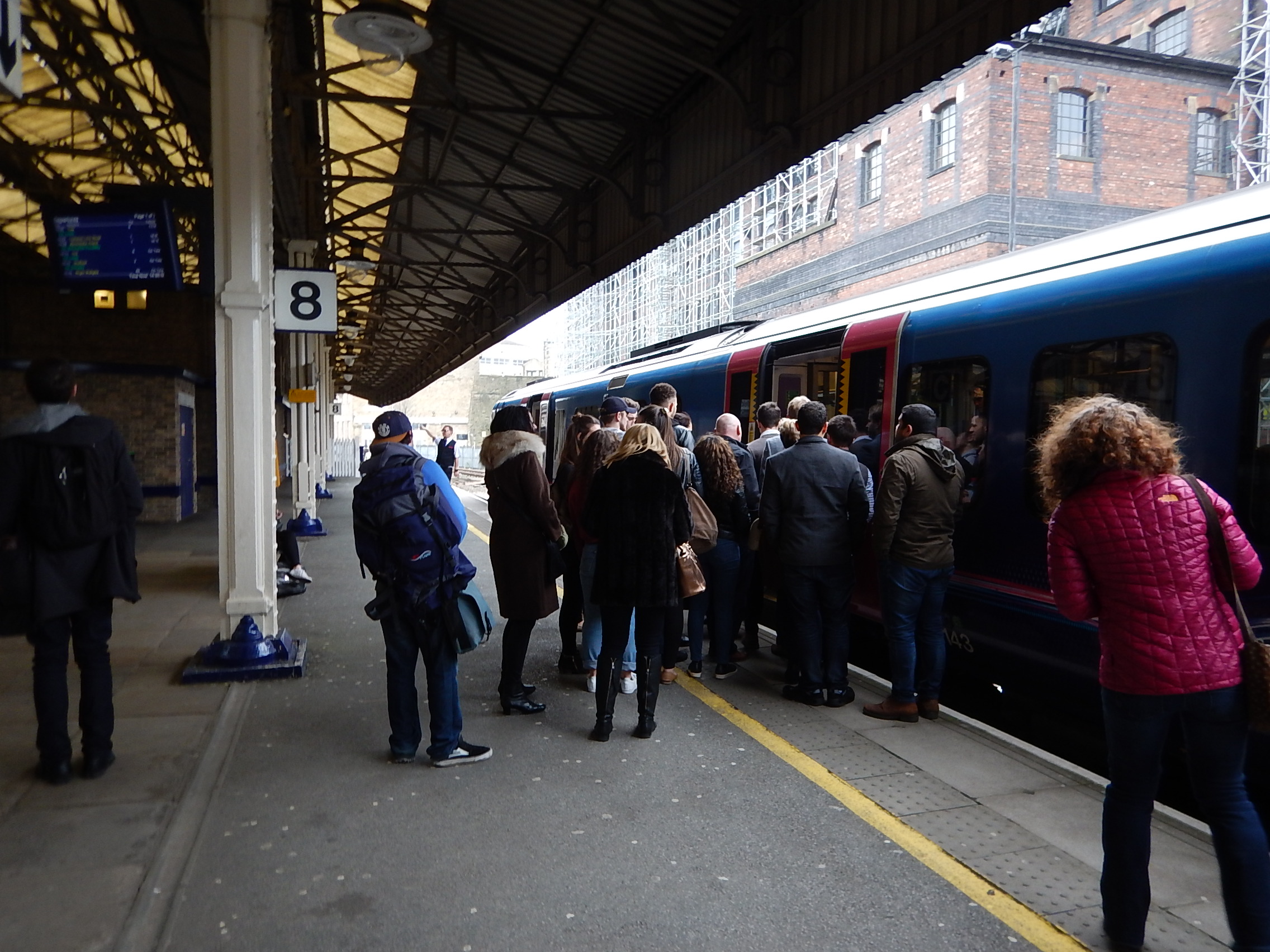
This is typical at Huddersfield.
Not even the Japanese with their pushers could get this to work.
But a modern train like the Class 802 train with wide lobbies and adequate capacity should cope.
So what time could be possible, if everything goes as planned?
If Norwich to Ipswich which is about the same distance as Leeds to Manchester, can be achieved in thirty minutes, I believe it is possible that the Northern route could be achieved in the same time or perhaps thirty-five minutes.
Thirty-five minutes should be adequate for a few years, if say there was a train every ten minutes!
Long Term – A Genuine High Speed Manchester Victoria To Leeds Route
I’ve flown my virtual helicopter between Manchester and Leeds and it is not flat agricultural land like seventy percent of the route of HS2.
I believe that creating a genuine high speed route, with say a 140 mph top speed across the Pennines will be a major engineering challenge that will make Crossrail in London look easy.
It may even be more economic to develop 140 mph hydrogen-powered tilting trains, that can run on the classic route at 125 mph.
Only one thing matters to passengers; a fast reliable and very comfortable and affordable train service across the country.
Manchester Victoria To Manchester Airport
When the Ordsall Chord opens any Leeds to Manchester Victoria service can continue to Deansgate, Oxford Road, Manchester Piccadilly and Manchester Airport stations.
Manchester Victoria To Liverpool
Currently, services between Liverpool Lime Street and Manchester Victoria stations take a few minutes over half-an-hour.
I would suspect that thirty minutes is achievable, if the following is done.
- The four-tracking at Huyton is completed.
- Track and signalling is the best it can be.
- The route has a 100 mph operating speed.
- All trains on the route are 100 mph capable.
- Northern replaces their scrapyard specials with Class 195 trains.
I suspect all of this is in progress.
Note, this is very similar work, to that needed between Manchester and Leeds.
Leeds To Hull
Currently, services between Leeds and Hull stations take a few minutes under an hour.
A few thoughts on the route.
- The Selby Line from Leeds to Hull is double-track and not electrified.
- From my virtual helicopter, it appears to be straight in very flat country, so it is no wonder Hull Trains offered to electrify the line.
- If the Selby swing bridge were to be sorted, it could become a 100 mph line with trains to match.
- Northern replaces their scrapyard specials with Class 195 trains.
- Modern in-cab signalling.
I suspect quite a few minutes could be taken off this route which is about fifty miles.
I suspect this line will eventually be electrified, as it could give sound time savings and it looks relatively easy.
York To Scarborough
Currently, services between York and Scarborough stations take forty-nine minutes, with one tph.
- Similar improvements to the double-track unelectrified line as for the Leeds to Hull route, could be made.
- But if the line has a problem , it is that it has 89 level crossings, although Network Rail intends to close them all before 2025.
I wonder, if the time can be reduced between York and Scarborough, such that two tph can be timetabled.
I doubt York to Scarborough will be electrified.
Northallerton To Middlesbrough
This short line is quite heavily used and is a valuable diversion route, so I suspect nothing urgent needs to be done.
Like Leeds to Hull, I suspect this line will eventually be electrified.
Conclusions
I have come to the following conclusions.
- Manchester Victoria to Leeds is achievable in half-an-hour with the new trains on order and no major infrastructure, other than that already planned.
- Any line where TransPennine Express services run needs to have the highest possible operating speed and no slow trains.
- Northern need to get their Class 195 trains into service as soon as possible.
Improvements are much-needed in the North, which could include.
- A short/medium term plan to deliver the best possible service with the new trains ordered by Northern and TransPennine Express.
- A long term plan to deliver a genuine 140 mph service across the North of England.
- A plan to improve the Calder Valley and Hope Valley Lines across the Pennines.
- A plan to improve some of the poor connections across the North.
- A strategy to make the best use of connections with HS2.
A detailed plan is needed that lays down what should be done in the next ten to twenty years.
The plan is also needed as soon as possible.
The Crazy Idea Of Female-Only Compartments On Trains.
This article on the BBC is entitled Labour MP says ‘merit’ in women-only train carriages.
This is the first paragraph.
Women-only train carriages could combat the rise in sexual offences on public transport, a Labour MP has said.
My use of crazy in the title of this post, is based on what Lord Adonis said on Radio 5 Live, this morning. He also indicated that the solution was to moderate peoples’ and especially men’s behaviour everywhere.
But I don’t think female-only compartments are a good idea for very practical reasons.
The latest generation of commuter trains like the Class 378 trains of the London Overground are walk-through.
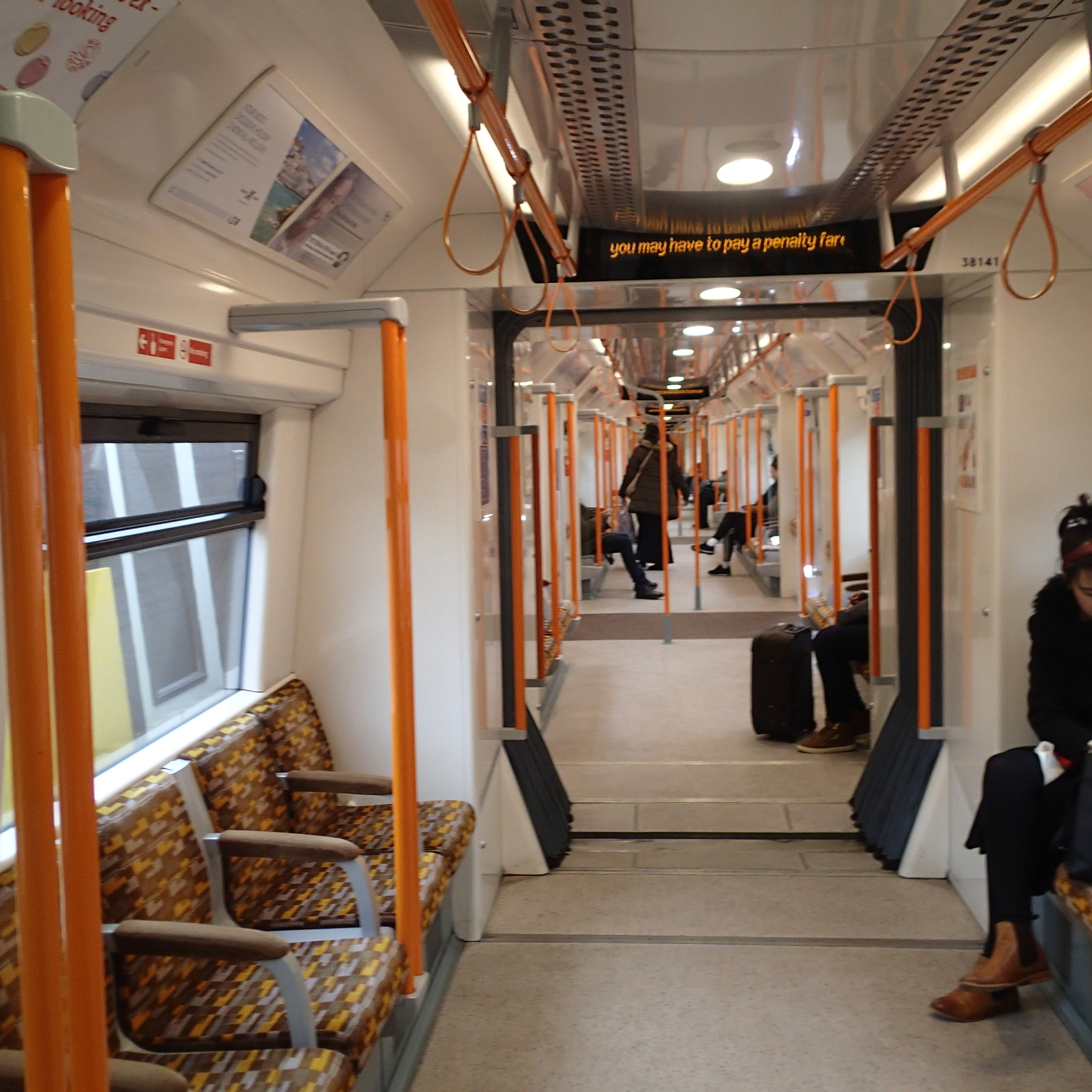
This seems to be a design that is used in modern London Underground and Crossrail trains. Putting separate compartments in a train like this, would block off the ability to walk along the train to perhaps position yourself at the appropriate place to disembark at your station.
I also think that this type of layout is safer and more passenger-friendly.
About a year ago, I had a severe nose-bleed on a train, caused by an excessive sneeze. I had no tissues, but a lady sitting opposite had several and even helped clean me up.
I’d be interested too, to see an analysis of all harrassment on trains differs according to train type.
Conclusion
Like Lord Adonis, I tend to believe that harrassment on trains is better stopped by other means.
Technology Doesn’t Have To Be Complex
This article on the Rail Tecjnology Magazine web site is entitled Easing The Capital’s Cramped Carriages.
On the London Overground, the Class 378 trains are Electrostars with an air suspension.
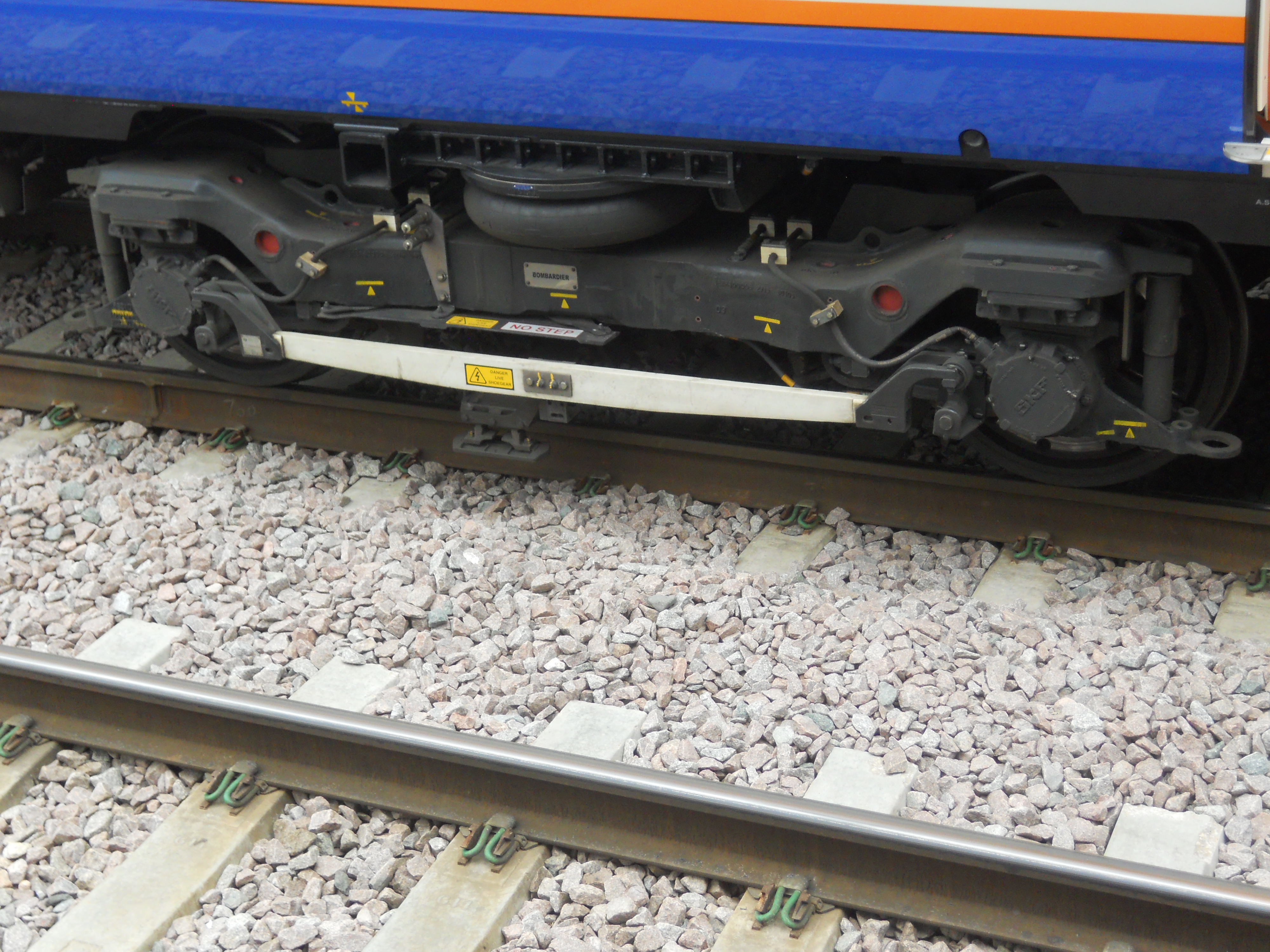
Note the rubber suspension bag between the bogie and the car on this Class 378 train. As more people, dogs, buggies and heavy bags are loaded into the train, more air is pumped into the suspension bag to keep the train level, so that the train rides better and passengers don’t have to step up and down to get in.
The pressure in the bag gives a very good estimate of the number of passengers in each particular carriage in the train.
The Rail Technology Magazine article describes how this information is collected and then processed and distributed to the iPads and iPhones of station staff, so they can direct passengers to the least crowded parts of the train.
I have read that other train manufacturers are working on sophisticated head-counting software using CCTV cameras, as I saw deployed on a 141 bus in Transport for London’s Latest Plot To Get Us To Climb Stairs. That device has disappeared, so I suspect there were problems, privacy issues or it just cost too much.
The system on a Class 378 train must be a lot simpler and cheaper to install, especially if the train has been wi-fi enabled. The Class 378 trains don’t have wi-fi, but many Electrostars do.
As information is always key in any system, it can lead to various developments.
- Modern station displays can be updated to show the train loading.
- There may be cases where train loading affects the platform a train would use at a terminus.
- Automated messages about train loading could be displayed on the train.
- Detailed train loading information must be useful in designing a train interior and also station layouts.
I suspect that those behind this project have got lots of applications.
The Texas Bullet Train
In the past, I have spent quite a few hours driving the long distances around Texas.
This article in Global Rail News is entitled Progress For Texas’ High-Speed Railway.
Texas Central Railway is proposing a high speed rail line between Dallas-Fort Worth and Houston, with the following characteristics.
- 240 miles long.
- Stations at Dallas-Fort Worth and Houston.
- Routed along major infrastructure corridors like Interstate highways and freight railways.
- Ninety minute journey time.
- A train every thirty minutes.
- Based on Japanese Shinkensen technology.
- Wikipedia mentions, that the line could open as early as 2020.
- Possibility of expansion to Austin and San Antonio.
- Fluor Corporation, which is a very large engineering and construction company, headquartered in Texas, is involved in the design.
There’s more here on the Texas Central web site.
There’s also an appraisal of the line in this article in Dallas News, which is entitled Proposed Routes for Dallas-Houston High-Speed Rail Revealed.
Some points from the article.
- Dallas would like the railway to connect to their extensive DART light rail system and perhaps even terminate at Dallas Union station.
- A construction cost of $10 billion is given.
- An in service date of 2021 is given.
Dallas certainly seems in favour of the project.
Conclusion
There certainly seems to be a degree of good will and support for this project.
Being Texas, they just had to label it a bullet train, but I’m more surprised that they seem to use railway instead of railroad.
The Transformation Starts Here
This article in Rail Magazine is entitled First GWR High Speed Train Off-Lease This Month.
It describes how the first InterCity 125 for ScotRail is leaving Great Western Railway for refurbishment to meet the new regulations coming in on the 1st of January 2020.
What other train in the world, after forty years front-line service, could be given a full upgrade to be made ready for more years of service?
The Beginning Of The End For The Thameslink Works
They seem to have been going on for ever, but this article in Rail Engineer entitled Thameslink – The Final Countdown, describes the work in the last few months before the new Thameslink service opens next year.
This is the first paragraph.
With just a few months to go, including two major commissionings, the rebuilt, remodelled and resignalled London Bridge becomes fully operational on 2 January 2018. The Thameslink service resumes through the high level station via the new segregated alignment between Blackfriars and Bricklayers Arms Junction, engineered into the remodelled layout as a key objective of the project together with the introduction of Automatic Train Operation (ATO) overlay to ETCS.
So it looks like from January 2nd, 2018, instead of a jolly round South London, Thameslink trains will be calling at their own pair of platforms in London Bridge.
Other points and milestones flagged up in the article include.
- British Rail’s Network South East proposed thought up this plan in 1990.
- The complete concourse at London Bridge opens in January 2018.
- Other fit out work in London Bridge station will continue until May 2018.
- Most of the track works at London Bridge will be sorted during the August Bank Holiday blockade.
- The Christmas 2017 Blockade will finish things off for the January 2nd opening.
- ATO (Automatic Train Control) will go live on 2nd January 2018 and allow twenty trains per hour (tph), through the Central Core of Thameslink.
- 24 tph will start with the May 2018 timetable change.
Let’s hope it’s all been worth the trouble and strife.
Certainly, the flag-ship of the scheme; London Bridge station looks capable of becoming one of the world’s great railway stations.
- Interchange between the various routes at the station is easy.
- Signage and information set new standards.
- It has a proper bus station and taxi rank.
- Although not completed yet the connection to the Underground looks like it will be much better than most .
But to me, the biggest advantage is that London Bridge will become an easy-to-access rail hub, which will be my starting point for many journeys, as I have a regular bus service to the station from virtually outside my house.
The high-frequency rail link between London Bridge and Waterloo East station, also gives me a relaxed route home from Waterloo station using the 141 bus from London Bridge station to a stop perhaps fifty metres from my house.
Going to London Bridge station, the walk is a perhaps a hundred metres to the bus stop, but there is no roads to cross. The buses run from five in the morning to midnight and during the day, there is a bus every few minutes, which takes just under half-an-hour to London Bridge. According to Transport for London’s Journey Planner, the fastest journey is thirty-three minutes with a lot more walking, the Overground and the Jubilee Line.
St. Pancras takes the same time with a long underground walk to Thameslink, so it looks like my fastest way to Gatwick and Brighton will start with a bus to London Bridge station.
Conclusion
I don’t know what it’s like in other cities, but in London, it’s often as quick, but easier and more pleasant to use the buses rather than the Underground or equivalent, if the journey is short.
First, MTR Take Charge On South Western
The title of this post is the same as this article on RailNews.
Some points from the article.
- The Class 707 trains are going because they are more expensive to lease.
- 400 extra trains on Sundays.
- Comprehensive refresh of all trains
- All suburban trains will have toilets.
- Southampton Central and Wimbledon stations to be updated.
- Flexible tickets for part-time workers.
- A new tariff for sixteen to eighteen year olds in full-time education.
Perhaps the most interesting point, was that they have decided to look at the future of the Island Line with the local Council.
A few thoughts on their plans.
Class 707 Trains
In An Exciting New Aventra, I commented on this article in Rail Engineer, with the same title.
I said this in my post.
The Most Affordable Train
The article describes how the train was designed to give the best whole life cost.
This sentence sums up the philosophy.
It’s actually about a 50/50 split between the whole life cost and the first capital cost. That makes it a bit more difficult because we’ve got be competitive on the first practical cost, but additionally we have to offer a really high availability, strong reliability, combined with much better energy consumption and less track damage.
As someone, who used to own a finance company, that leased trucks and other expensive equipment, the product described is the sort of product that leasing companies love.
That looks like a good reason to lease an Aventra.
More Trains On Sundays
All train companies seem to offer this.
All Suburban Trains Will Have Toilets
A lot of train companies seem to care about toilets, so is there a correlation between decent toilets and increased revenue?
Flexible Tickets For Part Time Workers
Do travellers get this in London? If so, extending it over the whole area must be logical!
16-18 Year Old Tickets
London does this!
Island Line
This is one of these routes, where someone will come up with an idea, that’s so Monty Python, it will work superbly!
Is A Bi-Mode Aventra A Silly Idea?
In How Long Will It Take Bombardier To Fulfil Their Aventra Orders?, when discussing the new West Midlands Trains franchise, that has recently been awarded, I said this about the proposed eighty new carriages for the Snow Hill Lines.
As it is unlikely that the Snow Hill Lines will be electrified in the near future, could we be seeing an Aventra bi-mode for the Snow Hill Lines?
So is the bi-mode Aventra a silly idea?
The Five-Car Aventra
It looks like the formation of a five car Aventra like a Class 720 train is something like DMSLW+MS+MS1+PMS+DMSL
The codes are as follows.
- D – Driving
- L – Lavatory
- M – Motor
- S – Standard Class
- W – Wheelchair
So this means the following.
- All cars are motored for fast acceleration and smooth regenerative braking.
- As all cars are motored, there must be a heavy-duty electrical power bus running the length of the train.
- Both driving cars have a toilet.
- The wheelchair area and the fully-accessible toilet are probably together in one driving car.
- The pantograph is on one of the middle three cars.
It should also be noted that the Aventra has a slightly unusual and innovative electrical layout.
This article in Global Rail News from 2011, which is entitled Bombardier’s AVENTRA – A new era in train performance, gives some details of the Aventra’s electrical systems. This is said.
AVENTRA can run on both 25kV AC and 750V DC power – the high-efficiency transformers being another area where a heavier component was chosen because, in the long term, it’s cheaper to run. Pairs of cars will run off a common power bus with a converter on one car powering both. The other car can be fitted with power storage devices such as super-capacitors or Lithium-ion batteries if required.
This was published six years ago, so I suspect Bombardier have refined the concept
It would appear that this could be the reason, why in the document I found MS1 was used for one of the intermediate cars, as this is the car with space for the energy storage.
Do Aventras Have Batteries For Regenerative Braking?
Until I get a definitive statement from Bombardier, that they don’t, I will believe that they do for the following reasons.
- In Do Class 800/801/802 Trains Use Batteries For Regenerative Braking?, I said I would be very surprised if the answer to this question is No!
- In Class 345 Trains And Regenerative Braking, I showed that there were no giveaway electric fires on the roof to handle regenerative braking.
- Batteries would be the ideal way to drag a Class 345 train to safety in case of complete electrical failure in the Crossrail tunnel.
- The Germans, the Japanese, the Swiss and probably the Basques are experimenting with batteries to handle regenerative braking.
- Hybrid vehicles like cars and buses do it all the time.
But the main reason, is that as an Electrical Engineer, I believe it to be stupid and seriously bad design to not use some form of energy storage to handle the energy produced by regenerative braking.
Energy Storage In A Bi-Mode Train
If you look at the five-car Class 720 train, all axles are motored. This will give fast acceleration and smooth regenerative braking, which is just what both train operators and passengers want.
If a bi-mode train had energy storage, if say its speed was checked by a yellow signal, it would be able to regain line speed using the energy stored when it slowed down. So passengers wouldn’t have to endure the vibration of the diesel engine and the jerks as it started.
No competent engineer would ever design a modern bi-mode train without energy storage.
Where Would You Put The Power Pack On An Aventra?
Although space has been left in one of the pair of power cars for energy storage, as was stated in the Global Rail News article, I will assume it is probably not large enough for both energy storage and a power pack.
So perhaps one solution would be to fit a well-designed power pack in the third of the middle cars, which would then be connected to the power bus to drive the train and charge the battery.
This is all rather similar to the Porterbrook-inspired and Derby-designed Class 769 train, where redundant Class 319 trains are being converted to bi-modes.
Diesel Or Hydrogen Power Pack
Diesel will certainly work well, but London and other cities have hydrogen-powered buses.
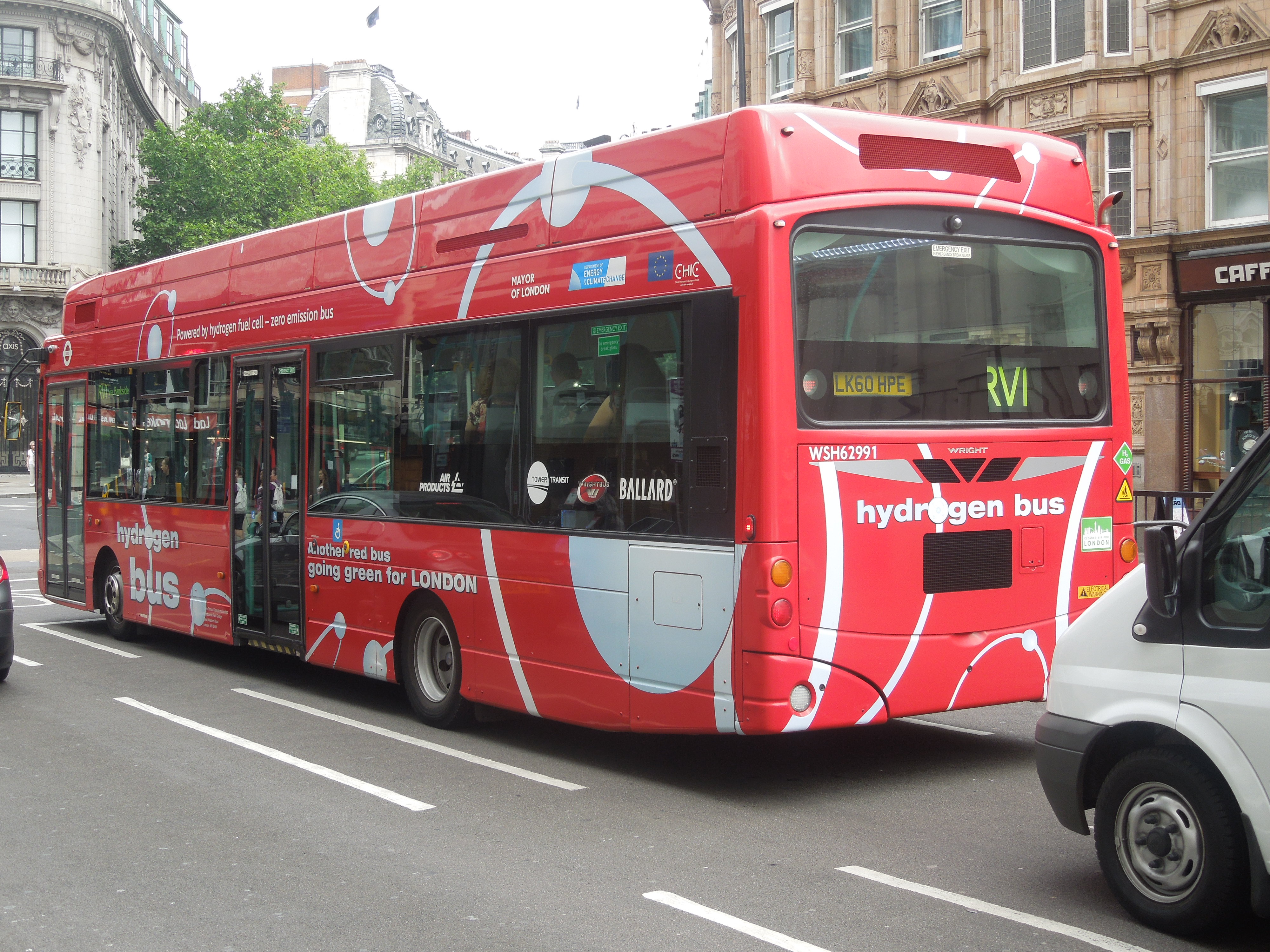
The picture is from 2013, so the technology has probably moved on. This Fuel Cell Bus section in Wikipedia gives the up-to-date picture.
Automatic Power Source Selection
Effectively, the ideal bi-mode train will be a tri-mode and will have the following power sources.
- Traditional electrification.
- On board diesel or hydrogen power.
- Energy storage, charged from the electrification or from regenerative braking.
The power source would be chosen automatically to minimise the use of both diesel/hydrogen power and electric power from the electrification.
Modern trains like an Aventra can raise and lower the pantograph automatically, so they can do this to make best use of what electrification exists to both power the train and charge the energy storage.
Techniques like these will be used to minimise the use of the diesel or hydrogen power pack.
Intermittent And Selective Electrification
On lines like the Snow Hill Lines sections could be electrified, where the engineering is easy and affordable, to with time reduce the use of unfriendly diesel or expensive hydrogen.
Strangely, one of the first places to electrify, might be the tunnels, as after the electrification of the Severn Tunnel, our engineers can probably electrify any railway tunnel.
I also don’t see why third rail electrification can’t be used in places like on top of viaducts and in well-designed station installations.
The 125 mph Bi-Mode Aventra
This article on Christian Wolmar’s web site is entitled Bombardier’s Survival Was The Right Kind Of Politics. This is said.
Bombardier is not resting on its laurels. Interestingly, the company has been watching the problems over electrification and the fact that more of Hitachi’s new trains will now be bi-mode because the wires have not been put up in time. McKeon has a team looking at whether Bombardier will go into the bi-mode market: ‘The Hitachi bi-mode trains can only go 110 mph when using diesel. Based on Aventra designs, we could build one that went 125 mph. This would help Network Rail as it would not have to electrify everywhere.’ He cites East Midlands, CrossCountry and Wales as potential users of this technology.
So Bombardier don’t think it is silly. Especially, the statement that Bombardier could build an Aventra that could do 125 mph running on diesel.
Applying, what we know about the power in the bi-mode Class 800 and Class 769 trains, which have three and two diesel power-packs respectively, I suspect that to create a five-car Aventra, that is capable of 125 mph on diesel, would need the following.
- At least three diesel power-packs.
- Regenerative braking using onboard energy storage.
- Automatic pantograph deployment.
- Automatic power source selection.
The light weight of the Aventra would be a big help.
It is my belief that energy storage is key, for the following reasons.
- Stored energy from braking at a station from 125 mph, would be used to get the train back to operating speed, without using a large amount of diesel power.
- Braking and acceleration back to operating speed, perhaps after being slowed by another train, might not need the diesel engines to be started.
- Starting a journey with an optimum amount of power in the battery might make getting to operating speed easier.
It would be a rough engineering challenge, but one I believe is possible.
Consider the routes mentioned.
East Midlands
Consider.
- 125 mph running would certainly be needed on this route.
- Battery power could be used to boost the trains to 125 mph.
- Electrification will be available between St. Pancras and Kettering.
- Electrification might be impossible between Derby and Sheffield because the Derwent Valley is a World Heritage Site.
Some form of charging might be needed at Derby, Nottingham and Sheffield.
A bi-mode train would be ideal for Norwich to Liverpool, although there’s not a great deal of electrification.
Cross Country
CrossCountry use several electrified lines on their various routes..
- York to Edinburgh
- Birmingham New Street to Manchester Piccadilly
- Bournemouth to Basingstoke
- Stansted Airport to Ely
Note that parts of some of these routes allow125 mph and Bournemouth to asingstoke is electrified using third-rail.
A dual voltage, 125 mph bi-mode train would probably fit CrossCountry’s routes well.
Wales
Except for the South Wales Main Line, there’s little electrification in Wales, but a 125 mph bi-mode train could be used on the following several partially-electrified routes.
- Carmarthen to Manchester Piccadilly.
- Holyhead to Manchester Piccadilly
- Holyhead to Liverpool via the Halton Curve.
- Birmingham to Shrewsbury.
- Swansea to Newport
Currently most of these services are served by 100 mph Class 175 trains. If nothing else, they would probably be more spacious, faster and fuel-efficient.
Conclusion
A five-car Aventra bi-mode is definitely not a silly idea.
It would be a sophisticated train with the following characteristics.
- Electric drive
- Regenerative braking.
- 25 KVAC overhead and 750 VDC third rail capability.
- Automatic pantograph deployment.
- Onboard energy storage.
- Automatic power source selection.
- Diesel or hydrogen power-pack
- 125 mph capability.
The first four are probably already in service in the Class 345 train.
.
How Long Will It Take Bombardier To Fulfil Their Aventra Orders?
I was reading this article in The Guardian, which is entitled Full speed ahead for train builders as minister pulls plug on electrification, when I found this useful nugget of information, from the General Manager of Bombardier’s Derby plant.
Building trains in an “ergonomically correct” fashion, he says, means completing and testing the carriage’s constituent parts, then assembling them, rather than wiring them up afterwards – and also takes the risk away from a production line which boasts a rate of 25 carriages per week.
It sounds like Bombardier’s engineers have been drinking and swapping ideas, with Toyota’s production engineers a few miles down the road at Burnaston.
But even so 25 carriages a week is an impressive figure, as that is almost three Class 345 trains for Crossrail in a week.
Bombardier have not been producing at that rate until now, as if they had, there would be Aventras in sidings all over the place. In The Class 345 Trains Are More Numerous, I described how I saw four yesterday and Transport for London have said they will have they will have eleven in service by September.
But this is all consistent with not going into full production, until you are sure, that you’ve got everything right, as any prudent company would do!
The Trains On Order
Bombardier have the following orders for Aventras.
- Crossrail – Class 345 – 70 x nine-car – 630 cars – To be delivered in 2015-2018
- London Overground – Class 710 – 45 x four-car – 180 cars – To be delivered in 2017-2018
- Greater Anglia – Class 720 – 89 x five-car – 445 cars – To be delivered in 2018-2020
- Greater Anglia – Class 720 – 22 x ten-car – 220 cars – To be delivered in 2018-2020
- South Western Railways – Class xxx – 30 x five-car – 150 cars – To be delivered in 2019-2020
- South Western Railways – Class xxx – 60 x ten-car – 600 cars – – To be delivered in 2019-2020
- West Midlands Trains – Class xxx – 36 x three-car – 108 cars – To be delivered from 2020
- West Midlands Trains – Class xxx – 45 x five-car – 225 cars – To be delivered from 2021
- c2c – Class xxx – 10 x six-car – 60 cars – To be delivered from 2021
This gives a total of 2,618 cars to be built.
The Building Schedule
Orders 1 and 2 are both directly or indirectly for Transport for London, with Wikipedia stating that the Class 710 trains for the Lea Valley Lines are being stabled at Ilford TMD, where the current Class 345 trains are also stabled, whilst they are being tested between Liverpool Street and |Shenfield stations.
I suspect that this close relationship between the orders means that Bombardier and Transport for London have agreed a delivery schedule, that brings in trains as they are needed. There’s not much point in building Class 345 trains for Crossrail, when some won’t be needed until 2019, if there is a more urgent need for Class 710 trains for the Overground.
To improve matters for Bombardier, Orders 3 and 4 for Greater Anglia, will probably be stabled in part at Ilford TMD.
Bombardier have not only got four substantial initial orders, but because they can all be introduced into service from Ilford TMD, they must have a tremendous advantage in terms of testing, introduction into service, manpower and costs.
So it looks to me that the two London orders will be built first, followed by the Greater Anglia and then the South Western Railways.
The London orders total 810 cars, which would take 32 weeks using Bombardier’s figure of 25 cars per week in The Guardian.
But assuming they started full production on the 1st of August, that gives them seventy-two weeks until the end of 2018, which gives a equired production rate of under twelve cars a week.
Surely, given their past history of building around a couple of thousand Electrostar cars, that must be achievable. Especially, as the modular structure of the Aventra, which has been developed with suppliers, must make building quicker.
The Greater Anglia and South Western Railways orders, which total 1,415 cars, would need to be built in 2019-2020 or lets say a hundred weeks.
So the build rate would be 14 cars a week, which is well below Bombardier’s figure.
The Body Shells
It should also be stated that Bombardier make their body shells at Derby, whereas Hitachi make their’s in Japan and ship them to Newton Aycliffe. This must ease having a high production rate for Bombardier, as for this you must have timely and reliable deliveries.
The Class 345 and 710 trains seem to have different car lengths, so it would appear that their production of body shells is flexible.
Little can be discerned about the production process from the Internet, as articles like this one on Global Rail News, which is entitled Bombardier completes first Crossrail body shell, are short on production details.
If they have a capacity to produce twenty-five body shells a week, I don’t believe that this can be done without the use of sophisticated designs assisted by large amounts of automation, as used in most car and van body production.
I have found this picture of a number of Aventra car body sides on the Internet.
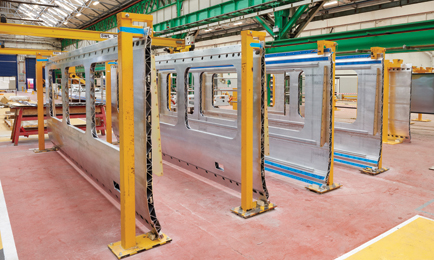
Note the double-skinned nature of the body sides, with reinforcing ribs inside, which must have great strength, light weight and a minimum number of components. I have read somewhere, that Bombardier are extruding aluminium for body components.
All of the holes could then be automatically cut by robots.
The joys of modern manufacturing!
Final Assembley
Modern manufacturing methods, as employed by car companies for years doesn’t mean you have to produce a sequence of identical vehicles on the line. Computer systems make sure all the components to build each car arrive at the right time.
A Class 345 train might have four or five different types of car, so similar methods would be used to speed production of the individual cars.
West Midlands Trains
Abellio, who own Greater Anglia, have decided they want to use Aventras on their new West Midlands Trains franchise.
According to Wikipedia, the new franchise is proposing to introduce the following trains
- 333 new Aventra carriages in three and five-car trains.
- 80 new CAF Civity carriages in two and four-car trains.
Some of the trains are direct replacements for other trains.
- The 36 x three-car Aventras will replace the 26 x three-car Class 323 trains.
- The CAF Civity trains will replace various diesel multiple units around Birmingham.
In some ways the puzzle is that there are 29 x five-car Aventras on order for electrified suburban lines.
Adding up the current and future number of electrified carriages on Birmingham suburban routes, shows that the number of carriages to be used will increase by three times.
New electrification is on the way.
- Chase Line to Rugeley Trent Valley.
- Cross-City Line to Bromsgrove.
But these short schemes won’t need all those trains, unless West Midlands Trains are going to run ten-car trains across Birmingham.
But possibilities exist.
- Electrification further towards places like Nuneaton and Worcester.
- Electrification of the Camp Hill Line across the City Centre.
- Aventras will be using batteries to reach places without electrification.
- Some Aventras could be bi-mode. I discuss the concept of a bi-mode Aventra in Is A Bi-Mode Aventra A Silly Idea?.
All will become clear in the next couple of years.
The West Midlands Trains orders for Aventras total 333 new carriages, which will all be pretty similar to previous orders, except in details like car length, number of cars, top speed and the interiors.
At Bombardier’s quoted production rate of 25 cars per week,l that means they would take jus fourteen weeks to build them, after the design was finalised.
That sounds unbelievable!
c2c
This order is for just sixty carriages, which will be delivered as six x ten-car trains.
This is an extract from c2c’s Press Release.
The Aventra is one of the fastest-selling trains in the UK rail industry, and these new trains will be manufactured at Bombardier’s factory in Derby. Each new train, which will operate in a fixed set of 10-carriages, will include over 900 seats, plus air-conditioning, wifi, plug sockets and three toilets onboard. Each new carriage is larger and contains more seats than on c2c’s current trains, so each 10-carriage new train provides capacity for 15% more passengers onboard compared to a current 12-carriage c2c train.
So three x four-car trains working as a twelve-car train are replaced by one ten-car train, which results in.
- A modern instead of a twenty-year-old train.
- 15% more capacity.
- Wi-fi and plug sockets.
- Better passenger experience.
- Two cabs instead of six.
- Fixed-formation trains don’t have end gangways.
- Twenty bogies instead of twenty-four.
Revenue per train will surely increase, but electricity and maintenance costs will also decrease.
So the accountants get a double dose of pleasure!
c2c also hint that more new trains are on thew way.
But as they are also reported to have extended the lease on their Class 387 trains, they have excellent cover whilst waiting for delivery of new Aventras.
Currently, they have the equivalent of 25 x twelve-car trains with a few spares.
So a complete train replacement if they like the Aventras, will probably be something like another twenty to thirty trains.
This would seem to be a very low-risk plan!
The New South Eastern Franchise
The needs of the current South Eastern and West Midlands franchises are surprisingly similar.
- High speed running on HS1 and the West Coast Main Line.
- Suburban services in city networks; London and Birmingham.
- A few short branch lines.
- Some lines without electrification.
- An ageing fleet without wi-fi.
So could we be seeing a mass fleet replacement with Aventras, as in West Midlands Trains.
Note that one of the bidders for this franchise is the same consortium of Abellio, East Japan Railway Company and Mitsui, who successfully bid for West Midlands Trains.
Abellio bought a large number of Aventras for Greater Anglia and helped develop battery power for the trains.
So could we be seeing a large number of Aventras added to the fleet for the South Eastern franchise?
Currently, the franchise runs 824 Electrostar and 674 Networker carriages.
To replace the Networkers would be 27 weeks of production at Bombardier’s rate of 25 carriages a day.
The South Eastern franchise also needs more high speed trains for HS1. I can’t believe that Bombardier couldn’t achieve a top speed of 140 mph with an Aventra. They probably will have a solution for covering the line between Ashford and Hastings. My money’s is on some form of energy storage.
Conclusion
Bombardier would not quote the capability of being able to make 25 trains per week to a newspaper like the Guardian, if they didn’t know it was possible.
But to meet the deliveries needed by the four initial customers, probably needs about half the quoted production rate, which is the sort of conservative thinking I like.
This gives Bombardier the float to sort out production problems or non-delivery of sub-assemblies outside of their control.
But it would also give them the capacity to fit in other orders. Suppose Crossrail decided to extend to Gravesend or Southend and needed another five Class 345 trains, then in theory, that is only two days production, provided the suppliers can deliver.
The UK’s railways are going to be full of Aventras.
Personalised Water From South Western Railway
I was at Waterloo station this morning and the new operator; South Western Railway, was giving out free water.
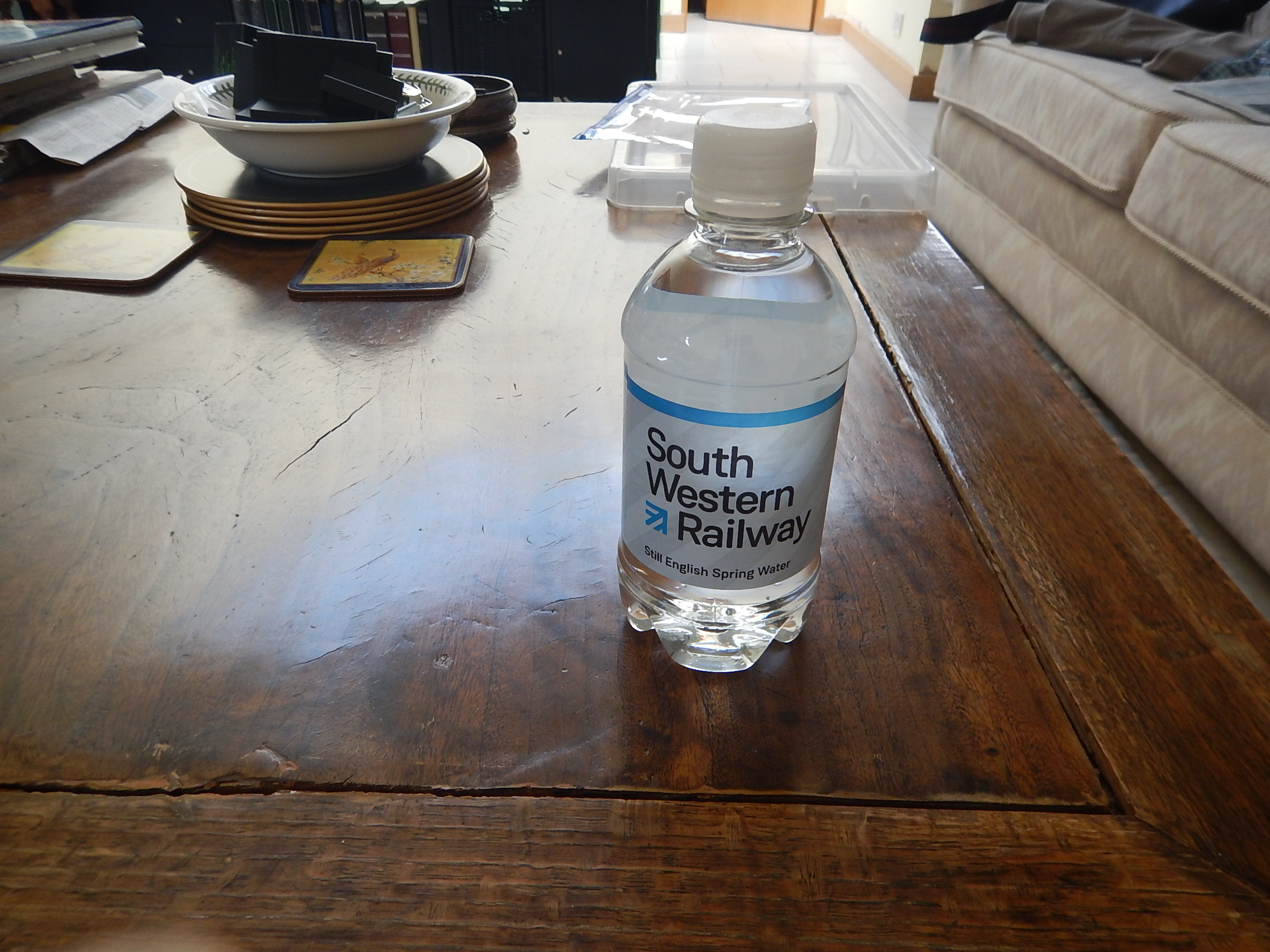
The postcode on the water is HR1 3EY, which suggests the water came from Berrington Water.
 The Anonymous Widower