Disabled Passenger Numbers Hit Record Levels
The title of this post is that of an article in Rail Technology Magazine.
It certainly shows that rail companies are going the right way!
One thing you notice in London is the increase in the number of disabled and blind passengers being guided by staff.
Perhaps the perceived increase in London is due to their simple policy on help. This is said.
On the Tube, TfL Rail and Overground, station staff will also accompany you to the train and help you on board and, if needed, can arrange for you to be met at your destination. Anyone can use this service, but it is particularly used by blind and visually impaired passengers and people using boarding ramps onto trains.
If you would like to use this service, ask a member of staff when you arrive at the station.
I hope things are as relaxed elsewhere.
Where Are The Class 700 Trains?
According to the Class 700 entry in Wikipedia, the first train should have entered service on Saturday.
But it didn’t and there’s nothing on the Internet as to why!
Electrification Of The Midland Main Line Along The Derwent Valley
As I went to Sheffield yesterday, I took these pictures as the train ran along the Derwent Valley on the Midland Main Line between Derby and Chesterfield.


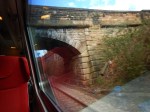
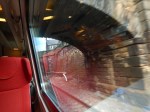
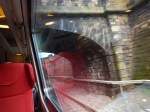
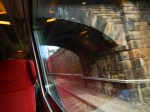

The river from Matlock in the North to Derby in the South, is the centre of the Derwent Valley Mills World Heritage Site.
And Network Rail want to electrify this line, so that fast electric trains can run between Sheffield and London via Derby!
This map shows the Midland Main Line from Trent Junction, South of Derby and Nottingham to Chesterfield.
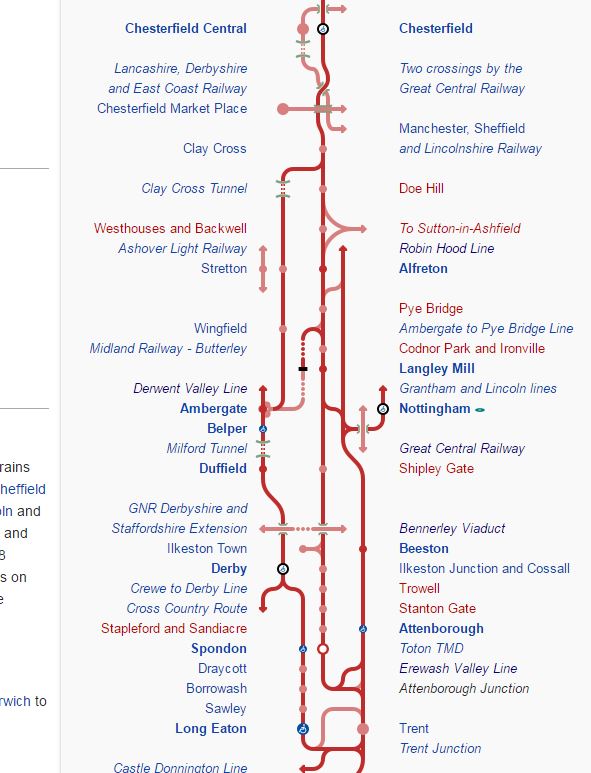
Note the following about the route of the Midland Main Line.
- My train ran via Derby, Belper and Ambergate stations, up the route on the West of the map.
- Trains via Nottingham would go up the East, before joining the Erewash Valley Line directly up the middle to Chesterfield.
- A new Ilkeston station is being built, between Nottingham and Attenborough stations.
- There is pressure to expand the Robin Hood Line by reopening the Ambergate To Pye Bridge Line between the two stations.
- HS2 is supposed to join up with the Nottingham Express Transit in the Toton area.
- How many of the closed stations in the area will be reopened?
It’s certainly all happening around the Midland Main Line between Derby and Nottingham.
This is said in Wikipedia about the future of the Erewash Valley Line.
Network Rail as part of a £250 million investment in the regions railways has proposed improvements to the junctions at each end, resignalling throughout, and a new East Midlands Control Centre.
As well as renewing the signalling, three junctions at Trowell, Ironville and Codnor Park will be redesigned and rebuilt. Since the existing Midland Main Line from Derby through the Derwent Valley has a number of tunnels and cuttings which are listed buildings and it is a World Heritage Area, it seems that the Erewash line is ripe for expansion.
It would seem fairly logical to perhaps make the Erewash Valley Line an electrified one, with a maximum speed, as high as practically possible and just run self powered trains through the Derwent Valley.
There would be two real possibilities for running the services for the London Sheffield services, including those via Nottingham, up the electrified Erewash Valley Line.
- Class 801 electric trains
- Bombardier’s 125 mph Aventra which was reported as possible by Ian Walmsley in the April 2015 Edition of Modern Railways.
Obviously, other manufacturers would offer suitable trains.
For the London to Sheffield route via Derby, the following trains could handle the twenty miles between Derby and Clay Cross, that could be without electrification.
- Class 800 electro-diesel trains
- Bombardier’s 125 mph Aventra which can probably be modified with an IPEMU-capability.
- Voyagers modified as electro-diesel trains, as was proposed in Project Thor, could probably handle the gap.
- A Class 88 locomotive and a rake of coaches with a driving van trailer.
If all else couldn’t handle it, InterCity 125s certainly could.
Surely though, it would help the train operator to have one fleet, so I think we’ll either see mixes of Class 800/801s or Aventras with and without an IPEMU-capability.
The Class 800/801s could certainly do it, but in his article about the Aventra, Ian Walmsley said this about an order for Aventras.
But the interesting one to me is East Midlands Trains electrics. As a 125 mph unit it could cope well with Corby commuters and the ‘Master Cutler’ crowd – It’s all about the interior.
So the same train could do all express routes and also act as the local stopping train.
The maze of lines shown in the map, would be an absolute dream for such a train!
I also think it would be pushing it to run the Hitachi trains through Derby and the Voyagers and the Class 88 solutions aren’t that elegant and would be very much stop-gap solutions. Loved as the InterCity 125s are, after a lifetime of very hard service, they are probably ready for retirement.
As the gap is only about twenty miles, I suspect that Network Rail’s and Bombardier’s engineers have got the engineering envelopes on the table in a local hostelry in Belper to solve the problem of getting 125 mph Aventra IPEMUs to jump the gap, so that services between London and Sheffield, can stop at Derby.
Why are they in Belper? Look at this Google Map of the railway through the town!
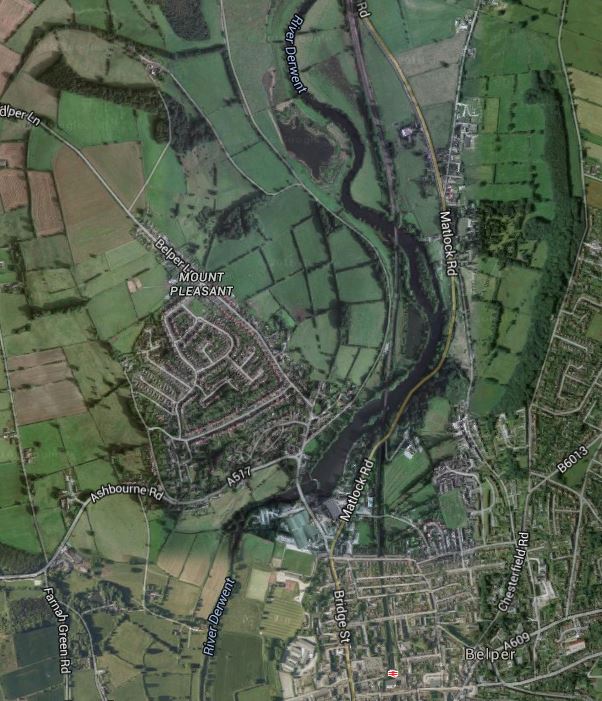
Midland Main Line Through Belper
Note the following.
- There must be half a dozen stone bridges north of Belper station, similar to ones shown in the gallery of this post.
- The River Derwent seems to be crossed by the railway, periodically for fun.
- Get that line right, probably without electrification and their uncluttered design will live for centuries.
- Get it wrong and they’ll be lynched by the local Heritage Taliban!
- If Aventra IPEMUs can’t be made to jump the gap, there’s always the reliable Derby-built InterCity 125.
Just as Great Western Railway use iconic photos of Intercity 125s running through Dawlish in their advertising, I think that East Midlands Trains will use video of 125 mph Aventra IPEMUs speeding with little noise and disturbance, through the towns, villages and countryside of the Derwent Valley.
If this could be made to happen, at an affordable cost, everybody concerned will see positive commercial effects.
My First Pictures Of A Class 399 Tram-Train
In Sheffield, I took these pictures of a Class 399 tram-train in the depot on the way to Meadowhall.
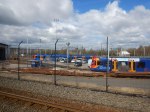
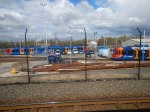
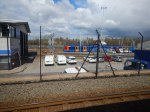
In two picture theres is also one of the current Supertrams.
The difference between the two trams, is that the current ones have full length windows in the doors, whereas the tram-trains have shorter windows.
Although, work appears to be continuing at South Meadowhall to connect the tram and heavy rail networks, nothing much was worth photographing.
The Class 88s are Coming
according to this article in the International Railway Journal, the first Class 88 locomotive has been moved to a test track in the Czech Republic.
The article also says this.
The four-axle class 88 has a maximum output of 4MW under 25kV 50Hz ac electric traction and 700kW under diesel power, delivering tractive effort of 317kN in both modes. The 160km/h units are equipped with regenerative braking and will have a 500kW electric train heating rating.
So it looks like, the locomotive like its cousin, the Class 68 locomotive, which is used by Chiltern Railways, can also be used on passenger trains.
As Chiltern have shown hitching a rake of refurbished Mark 3 coaches and a driving van trailer to a diesel locomotive makes for a very acceptable train for passengers and operator alike.
Creating such a train using a Class 88 locomotive would be at least as good and it could work efficiently on electrified lines.
It would be doing a similar job to to the bi-mode Class 800 trains destined for the East Coast Main Line and Great Western Main Line.
The specification would be different and this might suit some mainstream or niche operators better.
- It would only be a 100 mph, rather than a 125 mph train.
- The length of the train and its configuration could be geared to the operator’s needs.
So which of the train operating companies, could use a new electro-diesel passenger locomotive with bags of grunt?
Direct Rail Services
Direct Rail Services ordered the first batch of Class 88 locomotives, so they must have a business plan.
Still owned by the Government, they have a main duty of moving nuclear flasks around the country, but they seem to be developing a business of spotting gaps in the locomotive market and specifying suitable locomotives and ordering them. Wikipedia has a section on the use of Class 68 locomotives, which says this.
The Class 68 is a mixed-traffic locomotive intended for use on both passenger and freight trains. DRS has a contract with VSOE to provide locomotives for its Northern Belle service. DRS has indicated that the locomotives will likely be used on container traffic, and on Network Rail trains for which it is contracted to operate, but that they will not be used on nuclear flask trains.
The first passenger trains hauled by Class 68s were DRS special services for the 2014 Ryder Cup at Gleneagles.
Chiltern Railways have sub-leased six Class 68s from December 2014, which have replaced Class 67s on its Chiltern Main Line services between London and Birmingham. These are painted in Chiltern mainline silver livery and are fitted with Association of American Railroads (AAR) push-pull equipment to allow them to operate with Mark 3 coaching stock sets. Two DRS-liveried locomotives (68008 and 68009) have also been fitted with AAR push-pull equipment.
You could sum up DRS’s use of Class 68s, as providing a smart diesel locomotive for quality passenger services.
I suspect use of the Class 88 locomotive will be similar.
East Anglia
The new East Anglia franchise must be a good prospect.
Up to at least the 1970s, there were regular services from London to Great Yarmouth and Lowestoft and I can remember in the late 1970s getting the train from Woodbridge direct to London, at least a couple of times.
And it was no clapped multiple unit, but a proper rake of Mark 2 coaches, that included a buffet car, with a big diesel locomotive on the front.
There has been speculation that the new franchise would include direct services between London to Lowestoft, but as the route is not electrified from Ipswich, an alternative type of train must be used.
The tender document for the franchise gives the operator a way to provide these services. It says this.
Improve the quality of trains running on East Anglia’s network, providing a modern service with state of the art trains – extra points will be awarded to bidders who include plans to trial new technologies in rolling stock.
In my view there are two ways to provide a Lowestoft service, that would score extra points.
- Use an IPEMU, charging the on-board energy storage between London and Ipswich and at Lowestoft.
- Use a Class 88 locomotive on a rake of Mark 3 coaches and a driving van trailer.
I suspect, that the operator would extend an appropriate number of London to Ipswich services to Lowestoft.
The IPEMU would probably be at maximum energy storage range, but the Class 88 locomotive option, would give them other possibilities.
- They could replace the 1980s-built Class 90 locomotives on Norwich services, where necessary.
- London to Norwich services could be selectively extended to Great Yarmouth.
- They could run an alternative London to Norwich service via Cambridge, either as a regular service or when the Great Eastern Main Line is having one of its many blockades.
It should also be noted that the power of a Class 90 locomotive is only 930kW, which is less than a quarter of the Class 88 locomotive, working in electric mode and just 230kW less when in diesel mode.
I don’t know anything about how the power of the locomotive affects journey times, but it could help the operator achieve the much-wanted Norwich-in-Ninety and Ipswich-in-Sixty targets.
But the regenerating braking of the modern locomotive, must surely contribute to energy savings.
One problem that the East Anglian operator wouldn’t have is a shortage of coaches and driving van trailers, as they have 130 and 16 respectively of each.
But they would need to upgrade the coaches, so they met the latest access and disability regulations, but as Chiltern have shown, this is not only possible, but creates one of the best railway coaches in the world.
They may need to lengthen a few platforms, but that will be needed whatever trains are used.
In the future, Class 800/801 trains or another manufacturer’s equivalent will probably work the long-distance services, but there is a gap of a few years to fill, by which time the Class 88-hauled trains will hopefully have defined the market.
I estimate that direct trains from Great Yarmouth and Lowestoft to London, could be up to twenty minutes quicker than the current services, once Norwich-in-Ninety was achieved. Given other examples of increased passenger usage after this type of speed improvement, I’m sure the potential operators have a handle for the increased revenue that would result and will bid accordingly.
The Two Virgins
I doubt whether Virgin West Coast and Virgin East Coast will have too much use for a Class 88 locomotive pulling a rake of coaches and a driving van trailer.
It would probably not be fast enough to mix it with the current 125 mph trains on their routes, but there might be particular operations for which such a train would be an affordable solution.
One that comes to mind, is running the direct service between Euston and Holyhead, if it ever needed more capacity on the route.
But what do I know?
East Midlands Trains
The routes run by East Midlands Trains will be electrified in the next decade and as the electrification grows out of London to the North, they may have a temporary need for a train, that can run on both electrified and non-electrified lines.
They could probably hire in a Class 800 train, but a Class 88 and a rake of coaches would be an alternative.
Chiltern Railways
Chiltern Railways already run six Class 68 locomotives, which is a diesel cousin of the Class 88. So when services start to the electrified Milton Keynes in a couple of years, a Class 88 could be used on these services to take advantage of the wires at the Northern end.
Conclusion
The Class 88 locomotive will probably be a very good niche locomotive for passenger trains, especially if it is as well-received as the Class 68.
But it could be a very large niche!
Gatwick Express Embrace Contactless Ticketing
I took this screen capture this page on from the Gatwick Express web site.
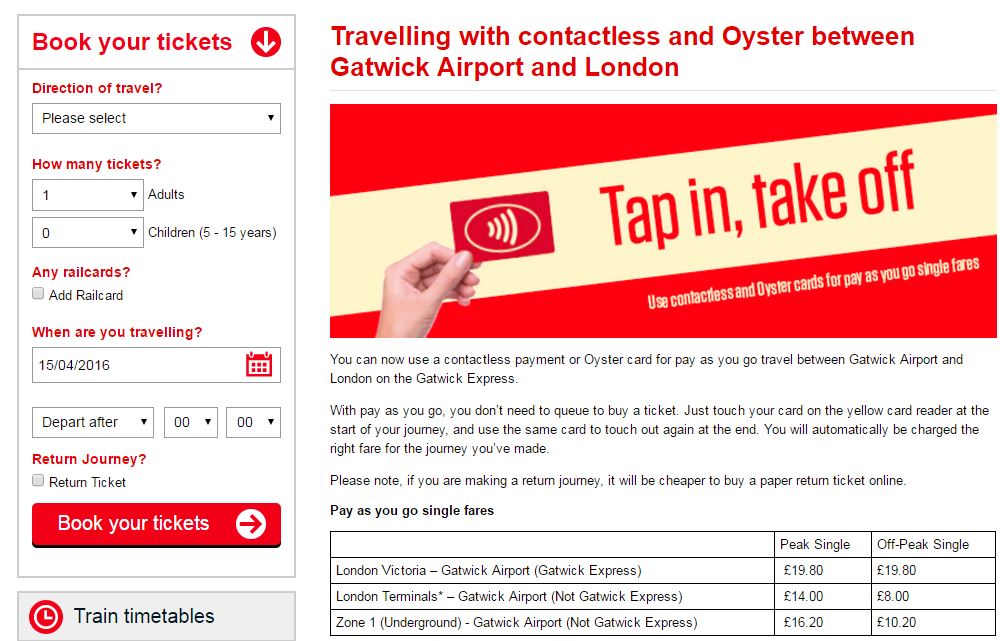
It does seem they are embracing contactless ticketing to Gatwick. They do add this caveat.
Please note, if you are making a return journey, it will be cheaper to buy a paper return ticket online.
From here in the wilds of Dalston, I shall probably never use Gatwick Express, except to catch an early flight, when I would take one of two night buses; N38 and N73 or a mini-cab to Victoria.
I will probably use Thameslink from London Bridge or use the East London Line to get to Croydon.
I will certainly use a contactless bank card for the last leg to Gatwick, as it is not in Freedom Pass territory. As contactless costs just three pounds between East Croydon and Gatwick, I wouldn’t put it past the Airport to allow Freedom Passes to Gatwick, if Heathrow don’t allow them on Crossrail to the there.
There’s a war out there and the two main protagonists; Helpful Gatwick and Greedy Heathrow are laying out their policies.
Luton Airport Goes For Light Rail
This article in The Guardian is entitled Luton airport to replace bus transfers with £200m light rail link.
Passengers will take the light rail link between Luton Airport and Luton Airport Parkway station, where they will use Thameslink and Midland Main Line trains to travel North and South.
This Google Map shows the area, where the rail link will run.
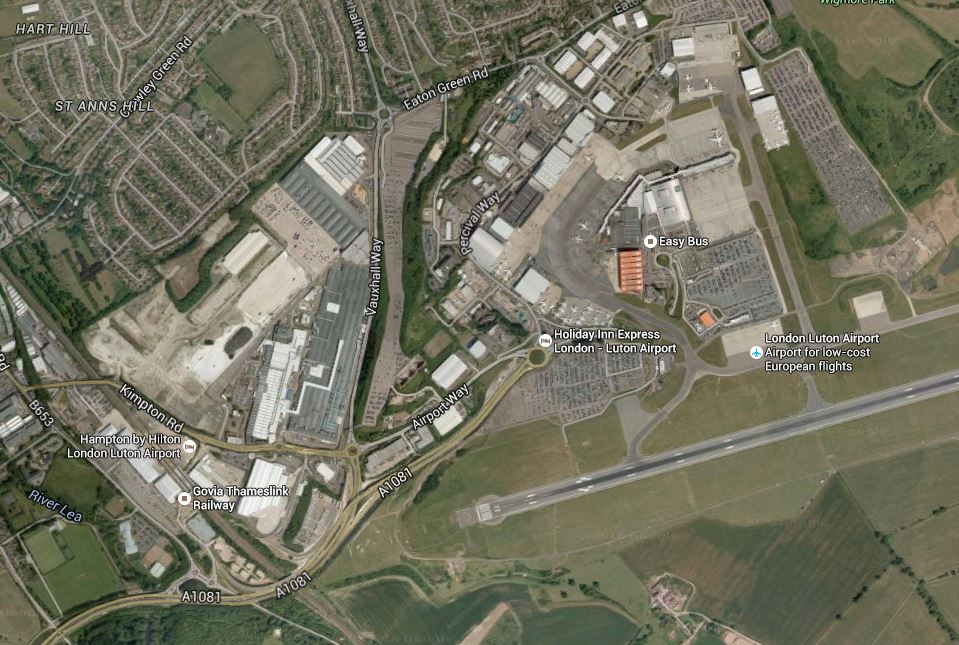
Luton Airport And Luton Airport Parkway Station
The Midland main Line and the station are close to the end of the runway.
A few months ago, an article in Railway Technology was entitled Luton Airport reveals plans for new direct rail service.
What isn’t shown from the map, but is very much obvious if you’ve piloted an aircraft out of Luton Airport, is that the end of the runway is on top of a hill and the railway is at the bottom.
I said this in Will Bombardier Develop The Ultimate Airport Train? about running trains into a Luton Airport station.
I think that railway engineers can create an elegant junction here, where trains can easily go in both directions between London and the Airport. Designing a line connecting the North and the Airport could be more difficult, but even so given the terrain and that some of the junction will be inside the airport boundary, a solution must be possible.
One thing that could help, is that if Class 387/2 IPEMUs were to be used on all Luton Airport services, then the branch would not need to be electrified.
If it was decided to run it in a tunnel under the car parks, then surely a tunnel without overhead wiring would be a smaller, simpler and more affordable proposition.
As the Railway Technology article was only published in July 2015, after promising results from the IPEMU train, could it be that this rail link is not possible with conventionally-powered electric trains?
But I now think that there are other problems with a direct rail link into the airport, even with the help of IPEMU and other recently-developed technology.
- In other documents, it is stated that Luton Airport wants four trains an hour to the capital and it has to be asked if there are enough paths available to the South.
- It probably is more difficult than I thought to run trains to and from the North to the airport.
I also wonder, if after Luton Airport Parkway station has been rebuilt for the light rail link, that this might open up other possibilities for development in this part of Luton.
I also found the original press release about the link. This is said.
The light rail link is part of a broader rail connectivity improvement plan, which aims to introduce a 20 minute express rail service with four fast trains per hour between LLA and central London as part of the upcoming East Midlands rail franchise. LLA is also currently working with Transport for London to add the airport to the Oyster network which will help ensure smooth connections for passengers travelling by rail.
Everything will hopefully become clearer, when the full plans for the link are published.
In a few months time, when Luton and Gatwick have contactless ticketing, who will be next in the queue; Heathrow or Stansted?
Transport for London have certainly started the game of contactless cards, by playing two powerful aces.
I wouldn’t be surprised to see Stansted and Southend accept contactless ticketing before the end of 2016, leaving Heathrow as the odd one out!
A Part-Solution To The Level Crossing Problem?
Several times in my life, I have been delayed on trains, by accidents at level crossings.
Luckily none of them were that serious, but this list of United Kingdom level crossing accidents, includes quite a few where several died.
So I was pleased to find this data sheet on the Internet for a Vector LX. This is said.
VECTOR LX is now in operation at multiple level crossing sites around the UK, operating as an unattended enforcement system. VECTOR LX is a highly capable monitoring and enforcement tool that continually captures and analyses data, identifying offenders and providing valuable ‘intelligent’ data.
Using a unique combination of ANPR, video and scanning radar, VECTOR LX not only identifies when offences occur, but gathers a wealth of ‘situational awareness’ data to identify behaviours at different times of day. All of this is delivered without the need for road loops or intrusive connections into the traffic signals, providing a system that is powerful, effective and simple to maintain.
Surely, it is a part-solution to the problem of drivers weaving through the barriers.
Is The West Midlands Going To See A Boom In Rail Station Building?
Yesterday, when I wrote West Midlands To Get A New Freight Interchange, I wondered, if the original Four Ashes station would be rebuilt.
On looking at the list of proposed stations on Wikipedia, I noticed the first was Brinsford Parkway station, which I’d never heard of before.
But it turned out it was just a couple of miles South of Four Ashes. Wikipedia says this about Brinsford Parkway station.
It would be located on the Rugby-Birmingham-Stafford Line loop of the West Coast Main Line, and would give the north of Wolverhampton local commuter trains easing congestion on the A449, M6 and M54 motorways. Penkridge is the only station that still remains open on the line between Wolverhampton and Stafford.
The proposed station would serve a new development on the MoD depot at Brinsford (whose builder would fund the station), other local communities and passengers drawn from the motorway network. It would provide Park and Ride facilities, with a large car park.
It sounds like Wulfrunians are thinking holistically!
It looks like a good idea to me, as it ticks a lot of boxes.
So, I then went through Wikipedia’s lists of current and proposed station projects, to see what other interesting ones were in the pipeline. I found these in the West Midlands.
- Aldridge on the Sutton Park Line, which has been proposed for reopening
- Castle Bromwich on the Birmingham to Peterborough Line
- Fort Parkway on the Birmingham to Peterborough Line
- Hazelwell on the Camp Hill Line, which has been proposed for reopening
- Kenilworth – Crawling into reality, quite a few years late
- Kings Heath on the Camp Hill Line
- Moseley on the Camp Hill Line
The West Midlands has certainly expanded its suburban services with electrification, new trains and the Midland Metro in the last couple of decades and it looks like they will be building more train and tram lines in the future.
Birmingham To Peterborough Line
In my view the most interesting proposal is the two new stations on the Birmingham to Peterborough Line. Except for Water Orton, this line is station free between Coleshill Parkway and Birmingham New Street.
If Fort Parkway and Castle Bromwich stations were to open, surely two trains per hour on this line will not be enough, so I do wonder if there are plans to add extra services to and from somewhere like Nuneaton with its connections up and down the West Coast Main Line and possibly extend them the other way to perhaps the new Bromsgrove station to the West of Birmingham.
It strikes me that there will be some reorganisation. I suspect though, that one of the problems is that it would appear that the line from Nuneaton to Birmingham is not electrified, although Nuneaton and Birmingham New Street stations are. There is also incomplete electrification between Birmingham New Street and Bromsgrove stations.
It looks to me like a cash of call in some Aventra IPEMUs. The only problem might be hauling a full load of passengers up the Lickey Incline on the on-board energy storage.
Inaccurate Marks And Spencer Contactless Payments
I use contactless payments regularly in Marks and Spencer and I’ve never had a payment problem, but some of the transactions end up with very strange locations on my credit card statement.
I’ve found.
- Cambridge Station, Cambridge
- Birmingham New Street, Birmingham
- Reading Station, SSP Reading
- Euston Scot, Euston Station
- Piccadilly Station, Manc
- Heathrow Airport SSP
I know these are all Marks and Spencer despite no indication, as they are for between seven and eight pounds, which is a typical price for a pack of gluten-free sandwiches, a drink and perhaps a biscuit or fruit.
I also know, that in the last month, I’ve bought sandwiches in Marylebone station and I can’t find the transaction.
So did my credit card company reject it, as someone had put some total garbage in the contactless card system in the otlet in the station?
With contactless payments, becoming very much the norm for many customers, they must get this right.
I certainly, haven’t lost out, but I think there’s at least two payments, that seem to have gone missing in cyberspace.
I think the lesson of this tale, is that if you are a small owner-managed store or a large chain, you must set up your contactless system correctly, as it at one level might be an irritance to customers and at a higher one, it might cost you money.
 The Anonymous Widower