Wales Gets Details Of Vivarail’s D-Train
This article on the Walesonline web site is entitled First glimpse at London Underground carriages which could be used on Welsh train lines to ease overcrowding.
It talks about how Arriva Trains Wales have been sent details of Vivarail’s D-Train. This is said.
Vivarail spokesman Alice Gillman says the firm’s engineers believe the refurbished rolling stock would be suitable for lines in Wales including the Heart of Wales Line.
But she said at the moment there had been “no follow up” from the Welsh Government or Arriva Trains Wales.
A Welsh Government spokesman said: “Ministers have made it clear that any rolling stock used on the next Wales and Borders Franchise and Metro should be of a higher standard. It is up to ATW to manage capacity requirements for the current franchise.”
But perhaps the most interesting part of the article is this vote.
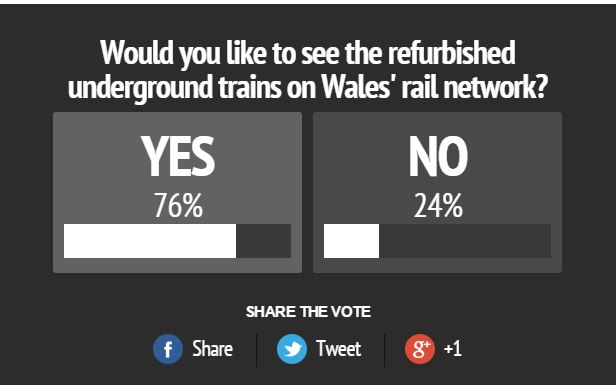
Vivarail Vote In Wales
Now the Welsh are not stupid and so I would suspect this vote is sensible, unless it’s only had a few votes.
So could it be, that those voting have got rather fed up with the trains that are used on the Welsh rail network? Some are not the best trains on the UK’s rail network!
One of the great things about the D-Train, is that once the train is certified and Vivarail have built a few examples, they can be trialled on lines all over the country.
I’ve now read about four or five articles about the D-Train and places where they might be used. None have been hostile, so either Vivarail are doing a good PR job or the concept appeals to serious engineers, train companies, politicians and passengers. At least enough to give the concept a trial with an open mind!
Somebody, asked me when the last truly dreadful train was delivered to the railways of the UK?
I don’t think it’s happened very often since the Pacer trains were delivered in the 1980s. The body shells of the D-Trains may be of a similar vintage, but they are a much better train in the opinions of most commentators.
How To Work Outdoors
We all love working outside in the dark and wet, repairing things and perhaps digging holes.
Wouldn’t it be much nicer to do the work indoors in a workshop.
The problem is much worse on the railways, where when say you want to check rails, points or sleepers, you need to make sure the workers are protected from passing trains.
So I was intrigued to see this report on Rail Engineer entitled Video: Mobile Maintenance Train.
Talk about taking your shed with you and parking it over the problem!
It’s such a brilliant concept, I find it amazing that this hasn’t been standard practice for at least fifty years!
Do they have trucks like this, so they can repair potholes or accident damage on motorways?
The Curse Of The Coeliac Traveller
On Tuesday with my jaunt round the East Midlands, the weather played its part in that my intended pit-stop in Carluccio’s at Lincoln had to be cancelled because of the rain. This wasn’t too serious as I’d had a double-egg pot at Leon in Kings Cross before I left.
I could have got something in Nottingham before I went up the Robin Hood Line, but I decided to do the trip to Worksop first.
Unlike many other main stations like Birmingham, Cambridge, Manchester Piccadilly and Sheffield, there is no Marks and Spencer Simply Food, so there was nothing gluten-free to eat in Nottingham station. Except possibly salads and a banana, which I’ve eaten so much of on my travels, that aversion therapy has worked its evil magic.
After returning from Worksop, I had about forty minutes to get something to eat before catching the hourly train to Peterborough to get home. This was not enough time to have a meal in any number of places in Nottingham, so I decided to go to the city centre to get some sandwiches in Marks and Spencer. But they didn’t have any!
I was quite hungry by now, but luckily I found a Holland and Barrett, where I bought a couple of EatNakd bars to replace the two I’d brought from London and eaten en route.
After all I only needed to keep going for another couple of hours until London, where I could either eat at Kings Cross/St. Pancras or after a short bus ride to Islington.
I got to Peterborough with ease and then I sat for an hour in a train waiting for clearance to leave.
But it never did, as there had been someone killed by a train at Sandy.
So in the end hunger got the better of me and I left the train and walked in to Peterborough to get some supper in Carluccio’s.
I finally got home at eleven, which was about three hours later than planned.
I do wish that people wouldn’t practice assisted dying using trains!
It must be so much easier for non-coeliacs to travel, as they can pop-in to so many places to buy a sandwich or a burger.
Is The Vivarail D-Train On A Roll?
I have a Google Alert for Vivarail and over the last few days, it has produced quite a few hits.
This article for the Manchester Evening News is worth reading.
People are sceptical, but some of the reports from possible buyers and passengers, think that the Vivarail D-Train might just be able to step into the gap left by Pacers.
In Raw Material For A New Train, I gave my view and thought they would be a success.
The people who must be really worried, are the manufacturers of new trains. If Vivarail could make this concept work with something as old as the D78 Stock, could they do a job with trains built in the intervening years, that are now thought to be just a bit tired.
Is There A Pattern In The Performance Of Train Operating Companies?
I don’t care about the politics of rail nationalisation, as I just want my train to be on time and be safe, clean and comfortable.
I think this article from Rail Technology Magazine is showing a pattern of good performance.
If you read the article, it looks like two groups of train operating companies (TOCs) are doing better.
Locally controlled TOCs like London Overground, Merseyrail, ScotRail and TfL Rail, all seem to be doing well.
Two other TOCs that have a close relationship with their railway lines; C2C and Chiltern are also at the top of the pile.
I do wonder that as these two types of companies give passengers a quick and easy and often political way to complain, that they know if they muck-up they’ll be deep in e-mails, phone calls and letters, if they don’t perform.
I think this shows that we should increase areas of the country, where there are more arrangements of these types.
For instance, should short distance metro services in areas like Birmingham, Bristol, Cardiff, Glasgow, London, Manchester, Leeds, Nottingham and Newcastle, be under more direct control from the local authorities.
And also, where the operator has a virtual monopoly of track use, as does First Great Western to Bristol and the South West and Abellio Greater Anglia does in East Anglia and North Essex, should there be a more direct relation between track and train companies.
My belief is that people on the ground, be they passengers or rail staff, see problems and opportunities that are best served by a strong degree of local control or lins to those, who are providing the infrastructure.
This is well illustrated by the performance of TfL Rail on the Shenfield Metro, since being under the control of TfL Rail. The article says this.
And despite its good performance, other TOCs were close seconds, with TfL Rail raising its PPM dramatically compared to the same period last year – up by 8.5% to 96.9%. TfL also reported significantly less cancellations and lateness, from 4.9% in period 5 last year to 1.5% this year.
Previously, this line and the service was managed by Abellio, who are headquartered in Norwich.
In some ways it’s probably more about having a good management and communications structure for the train operating company, the track on which the trains run and the stations to where the trains go.
I also feel that a lot of the smaller developments in the UK rail system are locally-based projects like the reopening of branch lines and the creation of new stations, are projects that are better managed through a devolved rather than a centralised structure.
From Nottingham To Peterborough
I took an East Midlands Trains service to Norwich to get to Peterborough. I wanted to look at the Allington Chord. Wikipedia says this about the chord under its entry for the East Coast Main Line.
The Allington Chord was constructed near Grantham in 2006, allowing services between Nottingham and Skegness to call at Grantham without having to use the ECML, trains now passing under the line. This provided sufficient extra capacity for 12 additional services between Leeds and London each day.
This certainly illustrates the improvements gained, when these crossings of the East Coast Main Line are sorted. Could similar improvements be gained when the Newark Crossing is eliminated.
I took these pictures on the journey.












My problems then started as I reported here in The Curse of the Coeliac Traveller.
Is This A Platform For Future Tram-Trains?
Whilst I waited for my train to Grantham, I had a quick look at the Northernmost Platform at Nottingham station. Platform 1 is a through platform and it looks like there could be access from both sides in the future.


The redesigned Nottingham station certainly has all sorts of possibilities for future development. This Google Map shows the layout.
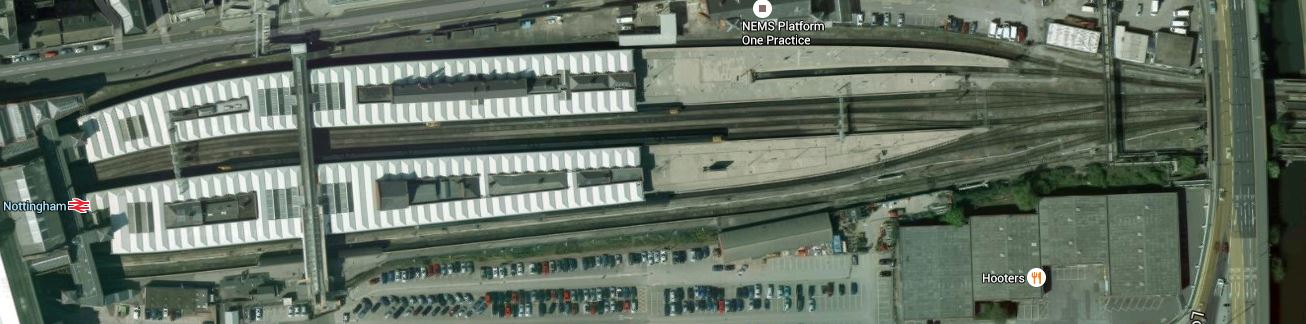
Nottingham Station Layout
Platform 1 is at the top, with the East-facing bay plstform 2 clearly visible.
It would appear that tram-trains could use the outer platforms and then be connected to wherever, as the station sits on a large site with space to the North and South.
The section called Railway Platforms in the Wikipedia entry for Nottingham station, says this.
Finally the southern side platform is numbered 7, and can accommodate a thirteen coach train. Sufficient space exists to the south of this platform to add a second platform face, effectively converting this side platform into an island platform, if traffic increases to justify it.
When you compare Nottingham to other places like Birmingham, Manchester or Leeds, the city is truly lucky to have a station with so many possibilities.
There also are not many places in the UK , where you could run the main tram line at right-angles over the main station. But it is a very good way of connecting the two modes of transport.
To the East of the station, there is also an enormous site with these derelict buildings.
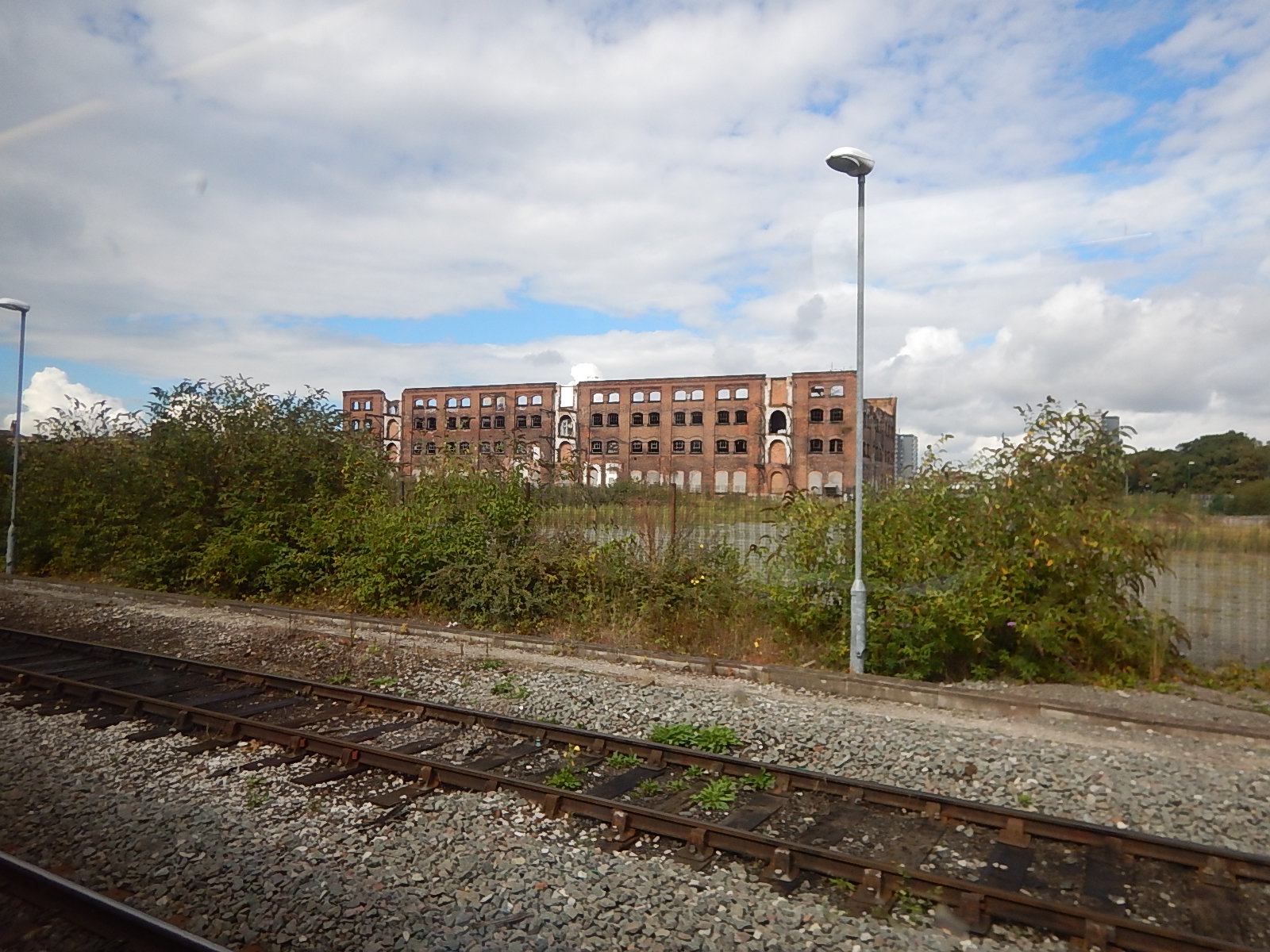
A Derelict Site To The East Of Nottingham Station
The city must have plans for these.
But then Nottingham is very much saying that the City has an exciting and prosperous future.
Up And Down The Robin Hood Line
The Robin Hood Line was one of the first old railways to reopen.
It had been closed in the nineteen-sixties to save money, although parts were kept open to serve collieries and power stations.
It had then been reopened in the nineteen-nineties.
These pictures show the line as I rode from Hucknall to Worksop and back to Nottingham.


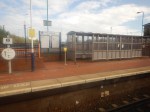


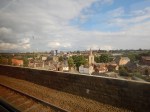
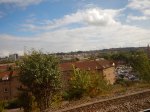

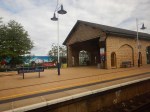

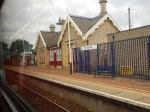
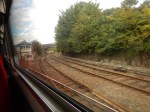
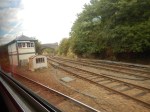
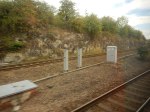


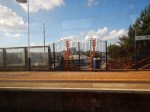
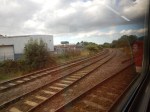
It is not an unattractive line, with the least attractive thing about the line being the Class 156 train.
Two branch lines are likely to be developed.
The proposed Ollerton branch leaves to the East, North of Shirebrook station.
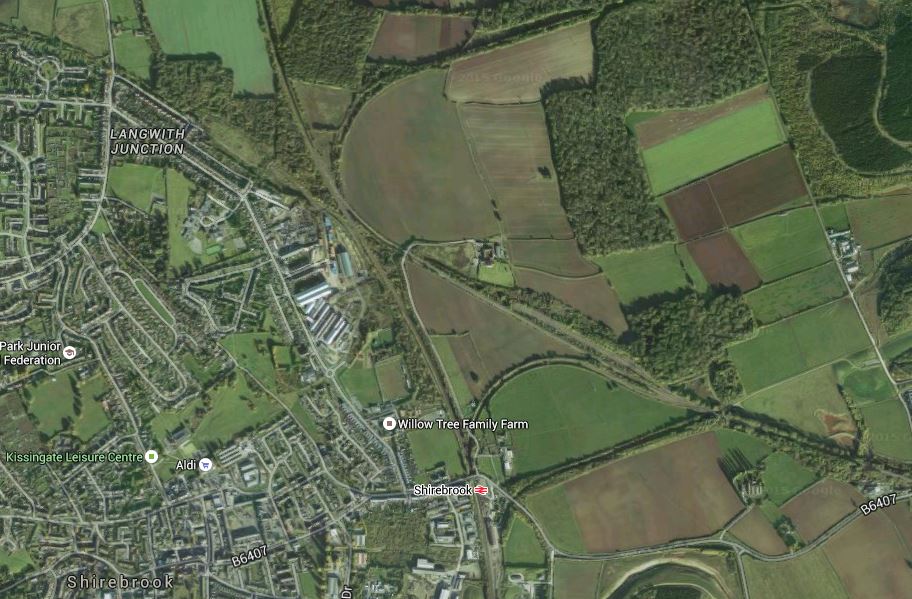
Shirebrook Station
And the Branch that leads to the Erewash Valley Line is just South of Kirkby-in-Ashfield station.
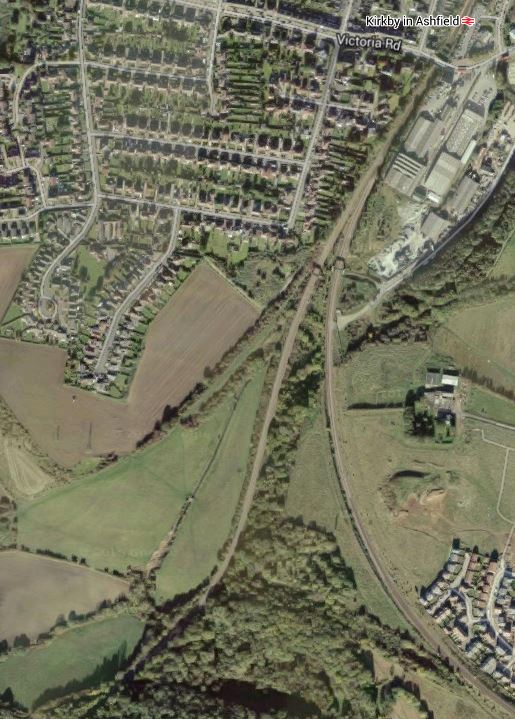
Kirkby-In-Ashfield Station
A large amount of development could happen to the Robin Hood Line in the next few years.
It has a lot of things going for it.
- The Government has backed the extensions to the line.
- The track needed is used regularly.
- The East Midlands and Nottingham in particular support new railways.
- The line could mean an increase in prosperity in the area.
- There’s no electrification needed.
- If they play their cards right, they should be able to rustle up some rolling stock, if various plans work out.
- The funding appears to be in place.
Network Rail also needs an early win and Robin Hood might just steal it for them!
Hucknall On The Nottingham Express Transit
I took these pictures as I rode to Hucknall on the Nottingham Express Transit.
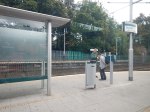
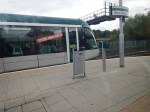
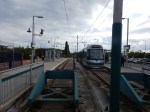
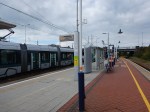
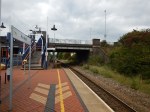
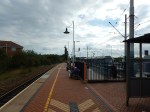
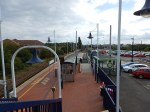
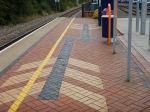
They show how the Robin Hood Line runs alongside the tram and it is just a simple walk-across to exchange between the tram and the train. This Google Map shows the layout.
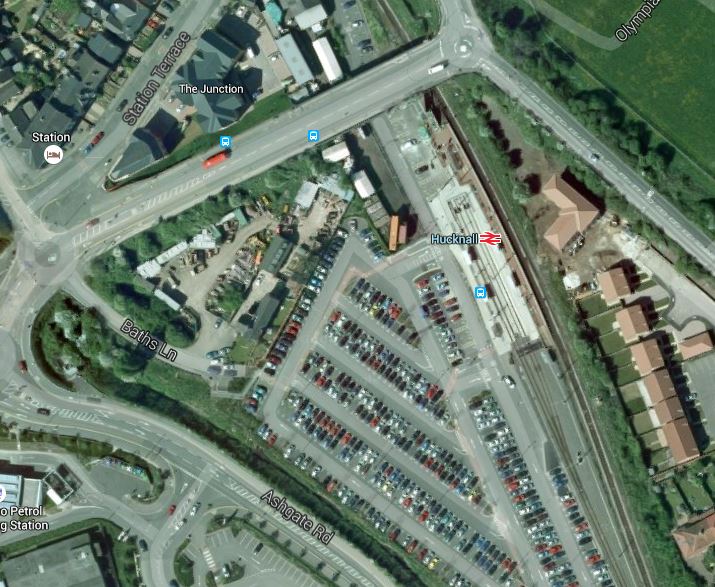
Hucknall Station
Hucknall station appears to be a remarkably simple interchange between tram, train and car. It is also surrounded by bus stops.
Passengers just walk between the trams and the single train platform on the level. So it is a truly step-free interchange!
The tram stop opened in 2004, which probably means that it was designed too early to have used tram-train technology.
But of all the places in the UK, this would probably have been the easiest to have built a tram-train interface, where trams could continue running on an electrified Robin Hood Line.
But that is all in the past and it’s too late now to build the line for tram-trains.
The Newark Crossing
To improve services between Lincoln and Nottingham, the Route Utilisation Strategy (RUS) for the East Midlands recommends doing something about the notorious flat junction at Newark, which is best described as a cross roads, where a B-road crosses a motorway. This is said.
Of the remainder, the RUS recommends that the provision of a flyover at Newark is further developed in CP4 to refine the infrastructure costs and potential benefits. It is recognised that the development of the East Coast Main Line Intercity Express Programme service requirements beyond those proposed for LDHS services from May 2011, combined with freight growth beyond 18 freight trains per day on the east – west corridor, may drive the requirement for the flyover in CP5.
I shall now look at this Victorian railway relic.
This Google Map shows the location of the crossing.
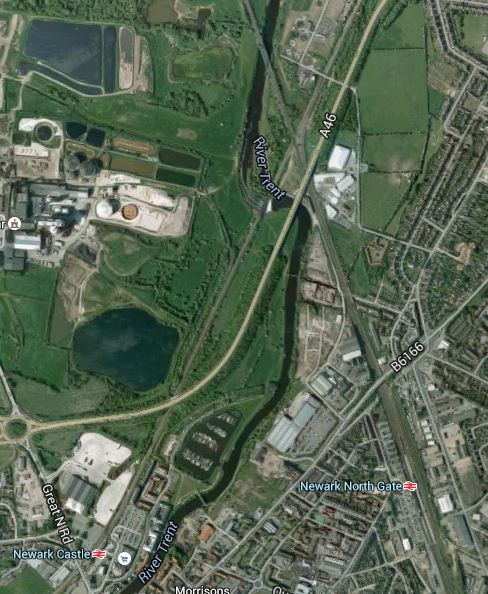
Newark Crossing
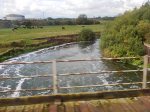
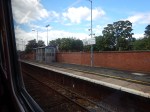
Newark Northgate station is on the East Coast Main Line, which runs top to bottom right on the map, whereas Newark Castle station is on the Nottingham to Lincoln line, which runs top to bottom left. To make matters worse the two lines cross by the River Trent and the A46, with the A1 a short distance to the East. These pictures were taken in quick succession from a train going from Lincoln to Nottingham.


The Civil Servant who signed that the road off, should have the knighthood taken away, that he obviously got for making a decision, which should have included sorting the railway, by building a flyover to take both the railway and the A46.
If this crossing were to be sorted, it would deliver benefits all up the East Coast Main Line and on the routes that use it from Nottingham to Lincolnshire.
I can’t find anything on the Internet, but hopefully some Network Rail engineers have the envelopes and fag packets on the table.
In my view there are two possible solutions to the problem of the Newark Crossing. But whatever solution is chosen, these criteria must apply.
- The new crossing must be able to handle probably twenty long freight trains and upwards of a couple of dozen passenger trains pass every day, that need to cross the East Coast Main Line.
- It must be built without any long closures of the East Coast Main Line.
The first approach is the obvious one, where a flyover or an avoiding line on a different route, is built to allow trains on the Nottingham to Lincoln Line to cross the East Coast Main Line. But if it is so obvious and as I suspect that the place where it would be built has been surveyed and examined in great detail, then Network Rail must have a plan that has a reliable cost and time-scale assigned to it.
As the benefits of eliminating the Newark Crossing must be very well defined, it would therefore appear that the cost of building the flyover is way out of line, as otherwise this important project would be published somewhere on Network Rail’s web site.
This snippet from the RUS suggests the problem.
The gradient of the flyover will need to be able to accommodate the freight trains travelling east – west along this corridor. A key geographical constraint is the proximity to the River Trent and the A1 trunk road which adds to the overall construction cost for the flyover.
As freight trains and especially those going from East to West, will only get longer and heavier, there will have to be a large margin for increasing weight and length built in to any design for the crossing, which not only crosses the East Coast Main Line, but the River Trent. The river probably kills off any chance of a dive-under.
The other approach is that Network Rail are working on a radical plan, that perhaps uses some of the many Nottingham rail lines to completely by-pass the Newark Crossing. Trains could cross the East Coast Main Line on either the Allington Chord, North of Grantham or where the High Marnham Test Track crosses South of Tuxford.
 The Anonymous Widower