I’ve Now Got A Back Garden!
On BBC Breakfast this morning, the weather is coming from Woodberry Wetlands, which is London’s newest Nature Reserve, that opens to the public today, after being opened by Sir David Attenborough yesterday.
This Google Map shows the area.
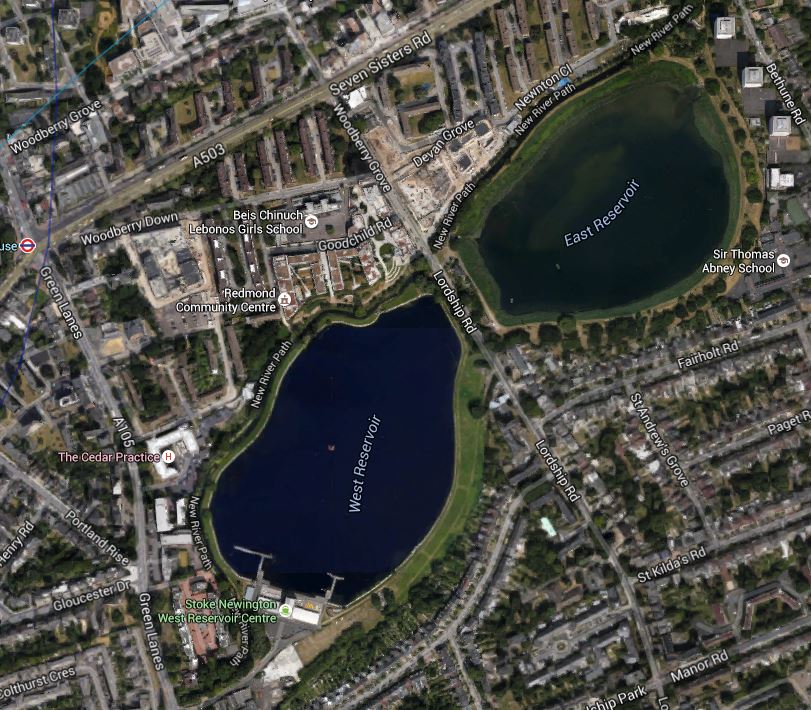
Woodberry Wetlands
One entrance is on the road between the two reservoirs and I think there is a second one by the Castle.

To get there, I just walk across the road by my house and get a 141 bus to the castle. It takes me about ten minutes.
How many readers of this blog realised that North London had such an impressive castle?
It was built to keep Tottenham and Arsenal supporters apart. Tottenham is to the North-East and Arsenal is to the South-West.
This morning, I visited Woodberry Wetlands.
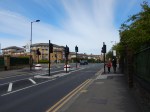
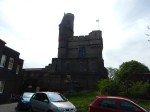





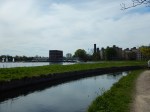







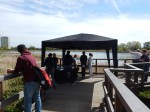










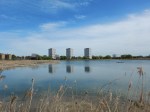

I walked across from where the 141 bus dropped me by the Castle along the New River Walk.
It was crowded, as would be expected on the first day.
One thing that surprised me was that I saw a fox in broad daylight, strutting about as cool as you like.
I think it will turn out to be a popular attraction, but I think that transport bus, bicycle and walking access should be improved.
- Probably the easiest way to go is to walk from Manor House station. Some signs showing the shortest walking route would help.
- The maps on the web site need updating with buses from both entrances.
- Bicycles were everywhere and there needs to be better storage.
- A bus running between the reservoirs would certainly help.
It is the sort of attraction, that would benefit from some Boris bike stations.
- Manor House station
- Finsbury Park station
- The Castle
- The entrances to the attraction.
The first two would also serve Finsbury Park.
My Father Has Been Proved Right!
My father described himself as a left-wing Tory. Today, he would probably have approved of the views of the likes of Michael Hesseltine or Kenneth Clarke.
I’m not sure what he actually did in politics, but I do know that he once worked at the League of Nations in Geneva before the Second World War. During the war, he was for some time a Civil Servant, but apart from one or two clues, I don’t know much. I should have a look at Kew and the web site.
I also know that I never heard him say anything racist and when someone questioned why he actually printed letterheads and wedding stationery for the local black community in Wood Green, he rebuked them by saying that as long as their money had the Queen’s head on it, he’d do business with everyone.
I also know that he was firmly anti-fascist and was at the Battle of Cable Street, where as he said, all the East End stopped Mosley and his Blackshirt thugs, marching through.
Recently, I took a taxi, where the driver had had talks with his Jewish grandfather, who had also been at Cable Street. His grandfather, like my father was adamant that it was not just the communists who stopped Mosley, but a wide alliance of right-thinking people in the East End.
I use the term London Mongrel to describe myself and my father used it himself, in my presence a couple of times, which is where I picked it up. You have to remember that the Nazis referred to people who were part-Jewish as mischling, which roughly means mongrel or half-breed. My father wasn’t Jewish but his great-great-grandfather, who I refer to as the Tailor of Bexley, was probably a Prussian Jew, who had run away from Napoleon.
As the term dates from the Nuremberg Laws of 1935, it would very much have been a term of the time my father was on the fringe of politics, so it is no surprise that he used it.
Incidentally, I’m probably more of a mongrel than my father, as my mother’s father was a Huguenot engraver and her mother was a posh lady born in Dalston Junction from Devonian yeoman stock with the surname of Upcott. Cullompton Museum told me that the family were very much involved in the development of worsted serge and made a fortune from it. This section in the Cullumpton Wikipedia entry, says more about the cloth trade and the Upcotts.
I once asked my father, if he’d ever wanted to stand as an MP and he replied that he’d been asked to put his name forward as a candidate for a by-election, but a young Duncan Sandys was chosen instead, which my father thought was probably the right choice.
Searching Wikipedia says that this was the Norwood By-election of 1935. Wikipedia says this.
The by-election was held due to the resignation of the incumbent Conservative MP, Walter Greaves-Lord. It was won by the Conservative candidate Duncan Sandys.
An Independent Conservative candidate was fielded at the by-election by Randolph Churchill, who sponsored Richard Findlay, a member of the British Union of Fascists to stand. This got no support from the press or from any Members of Parliament, despite Randolph being the son of Winston Churchill. Ironically, in September that year, Duncan Sandys became son-in-law of Winston and brother-in-law of Randolph by marrying Diana, the former’s daughter.
Knowing my father’s strong anti-fascist views, it fits with his version of the tale. The other thing that fits, is that although my father had met and liked Winston Churchill, he had no time for his son, Randolph.
Indirectly, I think I benefited from my father’s political contacts, as after the war, when he rebuilt his printing business in Wood Green, his largest customer was Enfield Rolling Mills, whose Managing Director was John Grimston, the Earl of Veralem, who was eight years younger than my father and had been MP for St. Albans a couple of times.
When in the early sixties I needed a summer job to earn money and I couldn’t have my usual one in his print works, as my father’s business was bad, my father phoned the Earl and asked if he had something that would suit.
The Earl of Veralem said yes and I had a very good job in the Electronics Laboratory for two summers, where I learned an amazing amount about life and making things.
I have no idea of the Earl’s politics except that he was a Conservative MP and very much thought to be a good boss of the company, by those with whom I worked.
One view of my father’s though, was that as he hated the likes of Hitler and Stalin equally, he said several times to me, that the extreme left are no different to the extreme right.
Reading this article on the BBC entitled Livingstone Stands By Hitler Comments, I can only conclude that the Labour Party has proved my father to be right.
The Millwall Path
This path wasn’t here, the last time I walked this way. So I had to explore.








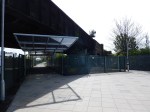

It eventually led to South Bermondsey station.
I think that this could become a popular walking route, as it links up to the path I took from Surrey Quays station, that goes to the still-to-br-built New Bermondsey station and on to Queens Road Peckham station.
It would appear that there is the possibility of opening another path through the arches close to the Millwall Path.
This would probably.
- Give good walking and cycling access between the development between the railway lines of the dive-under and South Bermondsey station.
- Open up more uses for the land between and the buildings under the dive-under.
- Create a direct walking route between the Surrey Quays area and Millwall Football Ground.
I think the whole area could make a very good designer shopping outlet or perhaps a high-technology or design cluster, as there are stations at each of the three corners of the site.
It is certainly a site with possibilities!
How Many Shoppers Will Mourn The Death Of BHS?
I suspect, I’ve not been into BHS to buy anything this century.
I used to use the one in Ipswich occasionally, as they had a very conveniently placed toilet if you were passing on the way between a lunchtime pub and the football. But now that I live in London, when I go to the football, my route is different and the station and the ground have good toilets as well.
I also used to use their Oxford Street store, as a cut-through from Oxford Circus station to John Lewis, especially when it was raining. But about five years ago, BHS blocked the route off, so that ended my visits to that store.
I shan’t be bothered if all the BHS stores in the country close. And I suspect most people, unless it effects their employment won’t be bothered either.
In fact, it might be better for me, as I wonder if John Lewis will take over the Oxford Street store and use it innovatively with their flagship store next door.
My Solar Panels Are On The Roof
My solar panels are now on my large flat roof.
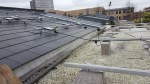



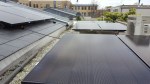
The installation was surprisingly painless, with the only work inside the house, the fitting of the control box near to my main consumer unit.
I have been monitoring all weekend on my laptop.
Could New Technology Help Save Steel Jobs?
One of my first jobs was in the instruments laboratory of Enfield Rolling Mills in the early 1960s. As someone with a mind like a sponge, I never missed storing away every piece of useful engineering and scientific information, I might encounter.
The company was involved in the rolling and the production of materials from non-ferrous metals, like copper, bronze, brass and aluminium. For instance, they did a lot of work with the continuous casting of metals like bronze and aluminium.
The company also used scrap metal as a source of raw material for their processing. One of their problems was identifying the scrap before processing and they had experimented with using a radioactive isotope to see, if it could give them an accurate opinion.
It probably wasn’t the best thing to do!
But since then technology has moved on.
I just wonder now, whether mass spectrometry could correctly identify the exact grade of a large piece of brass, bronze or steel!
If it could, I suspect that we could use our scrap metals to avoid refining new.
So I searched using “automatic steel scrap sorting” and found this page entitled Laser Methods For Automatic Scrap Metal Sorting.
And this page on the Oxford Instruments web site entitled Scrap Metal Analysis, Sorting and Recycling.
Who needs blast furnaces?
We just mine the scrap, rather than send it to China!
Shooting Down A US Heavy Helicopter
About twenty years ago, I heard a story, how an engineer at Cambridge University, programmed a computer to recognise the Duke of Edinburgh’s voice.
I have also read about smart mortars, that look for something big, metallic and making a lot of noise and if it appears to be a tank, they hit it.
Last night, I was woken by the distinctive noise of President Obama’s helicopter as it flew over East London from Stansted. The noise is just so distinctive.
How long will it be before someone parks a missile on a roof with a smart guidance system, looking for a distinctive noise signature in the sky?
Sorting Out IKEA
Ever since Summer 2015, I’ve been unable to purchase anything on-line from IKEA. It is very difficult trying to build a kitchen in phases to have to go to the store to buy or order everything. Especially, when you can’t drive. I am lucky, that I can get a 341 bus to IKEA from about two hundred metres away and can even catch a bus from closer, that uses the same stop as the 341 at Manor House station. So it might take about an hour, but it’s not an arduous journey.
I think that the reason for non-delivery, is that they don’t like my home address, as they use a system that checks it against a list of ones with a large number of problems in the past. These were long before I bought the house.
If this is the case, a friend who used to be the Compliance Director of a major finance house in the City, said make a request to see what they have on you, under the Data Protection Act. So I searched Google and found this page on the IKEA web site, entitled Privacy Policy.This is said.
For the purposes of the Data Protection Act 1998 IKEA Limited, is the “data controller” collecting your data. Our registered company address is: 500-600 Witan Gate House, Witan Gate West, Milton Keynes, Buckinghamshire, MK1 1SH. If you have any questions regarding this policy or in respect to data privacy, our contact details are;
IKEA, Customer Support, Kingston Park, Peterborough, Cambridgeshire, PE2 9ET
Telephone number: 0203 645 0000
e-mail:customer.service@ikea.com
So I sent this e-mail to the e-mail-address on Monday morning.
I will give you a bit of background.
In December 2010 I purchased and moved to XXX XXXXXXXXX XXXX, London N1 XXX, where I have lived by myself since.
The property was built new around 2000 and before I purchased the house, it was let out to a selection of tenants, most of whom seemed to have skipped without paying the bills for energy and lots of other purchases, judging by the number of bailiffs, who used to call.
From 2011 to July 2015, I bought more than several IKEA products on-line and they were all successfully delivered against xxxxx@xxxxxxxxxx.com to the N1 XXX address. I had started to rebuild the kitchen and currently it sits half-completed.
Order numbers include XXXXXXXXX, XXXXXXXXX, XXXXXXXXX and XXXXXXXXX
In October 2015, I tried to place some further orders and despite getting the initial confirmation e-mail several times, no product was ever delivered.
In the end, I took a taxi to Edmonton and ordered and paid for the products in the store. They were delivered OK, but I had to waste an afternoon travelling to Edmonton and pay extra for the taxis.
Because of the difficulty, I assumed it was an unsuspected problem with my credit history, so I joined Experian and when I looked last week, my credit score was 986, which according to a friend, who runs a financial business, is good.
But it doesn’t appear to be good enough to buy products on-line at IKEA!
I am now ready for the next phase of the kitchen. So as to test if the hiccups of last summer, were just a passing issue, I attempted to place a small order. Despite getting the order number of XXXXXXX and the first confirmation e-mail, no money has been taken from my credit card and I have not had the Delivery Advice e-mail advising me of the actual delivery date. On trying to track the order, it is not in your Order Tracking system.
Obviously, I would like to find out, why you can’t accept my orders and to that end, I want to obtain all the information you hold about myself and my address and e-mail address, under my rights as laid out by the Data Protection Act.
I understand there could be a charge for this.
Obviously, confidential information has been redacted.
So far, two days later I’ve not had a reply or even an acknowledgement to my e-mail.
Today, I will be sending a copy by post.
Another Suicide Bombing
This morning, this report on the BBC, is talking of another suicide bombing in Afghanistan.
Correct me if I’m wrong, but I can’t think of any suicide bombing, where the perpetrator wasn’t Muslim.
So why is this deadly practice an exclusively Muslim phenomena?

