A Design Crime – The Average Smoke Detector
On Saturday Evening, the smoke detector in my bedroom decided to go off.
I was able to silence it about three times, but it refused to go off permanently.
I then decided to take it down, by standing on the bed.
Unfortunately, I slipped and broke the detector.
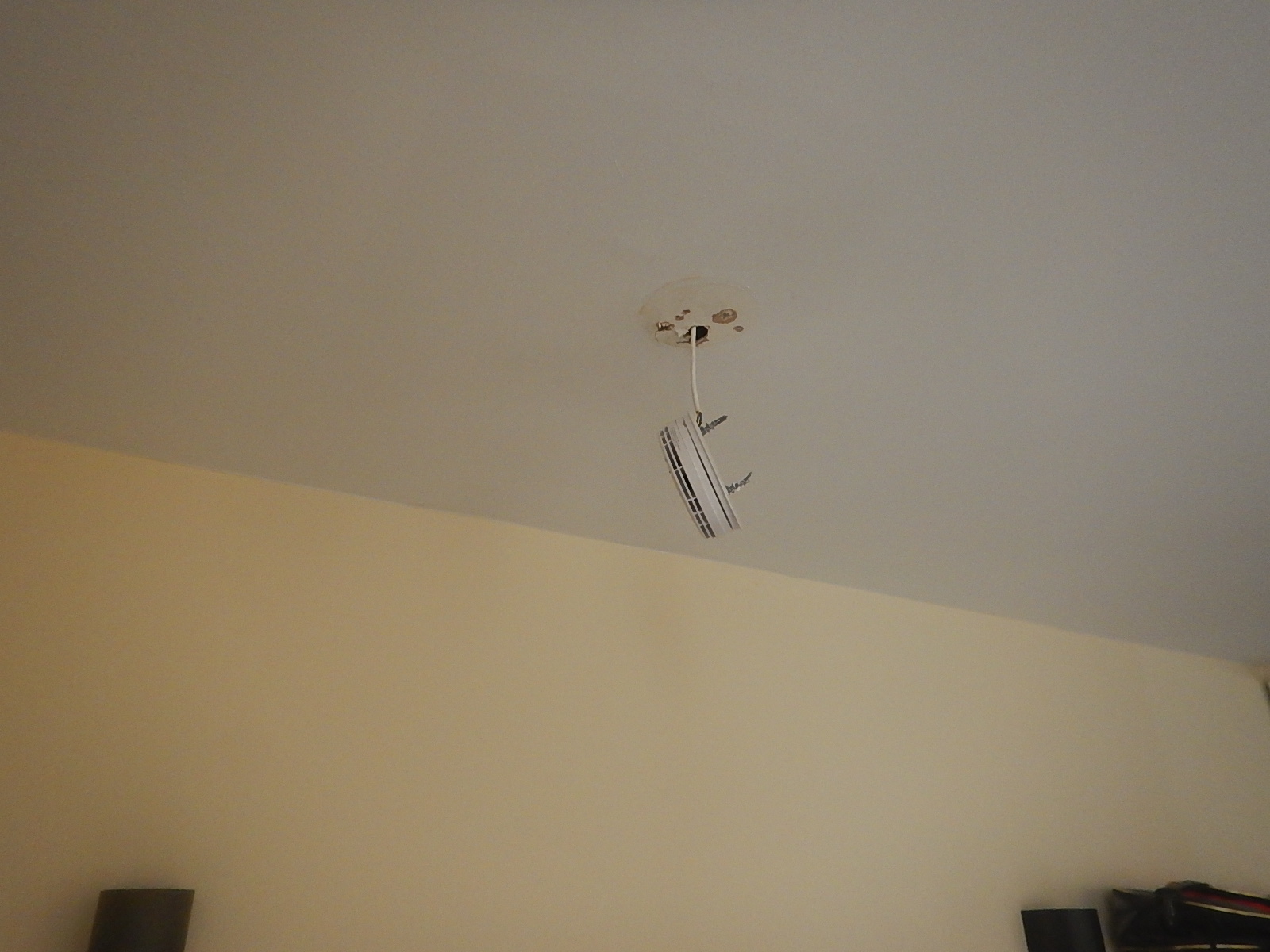
It is not the first altercation, I have had with the cheap and nasty smoke detectors in this house, which were probably bought in Istanbul market for a few pence.
- In my view, there is a need for a superior type of smoke detector wired into a building in a better way.
- It should be possible to replace a failed detector, like I had on Saturday in a simple operation without any tools.
- There should also be a master switch in the house, that switches off all the smoke detectors.
- Instructions on how to deal with the smoke detectors in case of failure should be in an obvious place in the house, like on the door of the meter cupboard.
Smoke detectors are too important, to be designed down to the cheapest possible station and most are a true design crime.
Marks And Spencer In Dalston Was On The Ball
This morning, I walked to Marks and Spencer in the Kingsland Road for essential supplies.
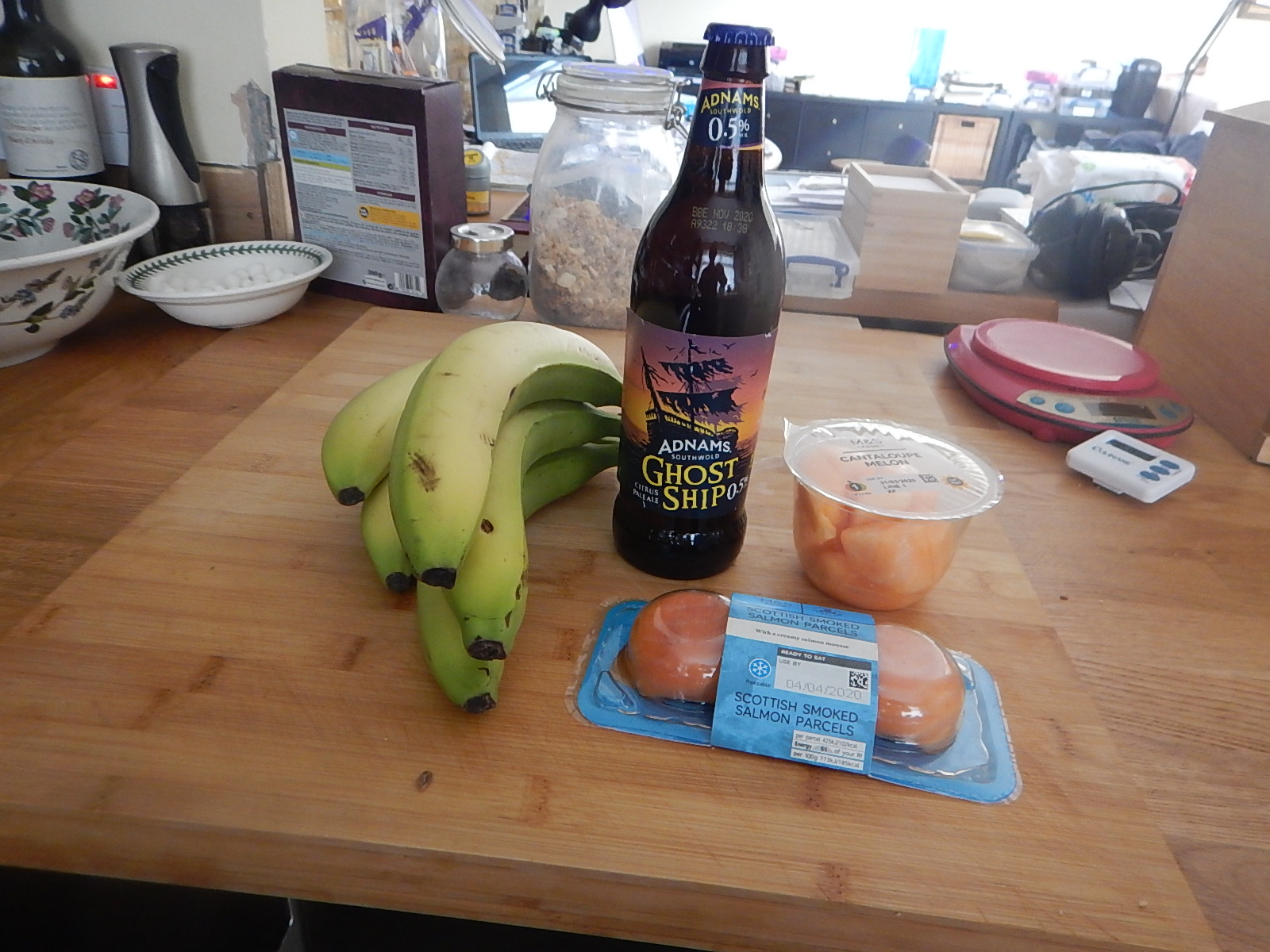
I got more than I needed and now have enough food in the fridge and my cupboards for the next ten days.
The hold-up in the store were the tills, but one of the assistants had taken control of the situation, by marshalling customers to spare self-service tills, scanning goods and helping to get the customers out of the store as fast as possible.
It was real East End spirit in action.
Remember that the BBC soap, was nearly shot in a real square close to Dalston and in some ways the chivvying and banter could have been transposed.
Is EastEnders dealing with COVID-19? I doubt it!
This Is My Second Lockdown
I can’t be the only person, but in the 1970s, I has locked myself away for nearly a year before. I did it to write the first version of the Project Management software; Artemis.
There are some differences between my situation then and my situation now.
- My wife was alive then and we saw each other for perhaps two days a week.
- I could drive and I occasionally went down the Clopton Crown for the odd pint and meal!
- I hadn’t been diagnosed as a coeliac, as that happened in 1997.
- There was no Internet or social media.
- There was no Radio 5 Live.
- I am a better cook now, than I was then.
- I am within walking distance of a Marks and Spencer Simply Food store.
I think the rules for surviving are as follows.
- Eat and drink enough.
- Have entertaining radio or television on.
- Break the day up with a bit of exercise.
- Get a good night’s sleep.
- Arrange good weather.
Let’s hope this lockdown turns out as well as the last.
Proudly South African Hydrogen Breakthrough With Shell’s Backing
The title of this post, is the same as that of this article on Creamer Media’s Mining Weekly.
This is the introductory paragraph.
At this time of huge coronavirus uncertainty, the chests of a group of engineers here must surely be bulging with pride following their major Proudly South African world breakthrough that could speed up the global deployment of hydrogen as a competitive universal and environment-friendly energy carrier.
I think it got a bit jumbled in the typing.
Reading the article it does seem that various developments are coming together in South Africa.
- A much simple electrolyser to produce hydrogen.
- South Africa’s platinum for catalysts.
- Large amounts of renewable energy.
The aim is to produce hydrogen at a comparable price with petrol.
This paragraph stands out.
South Africa has the combined solar and wind potential to produce competitive hydrogen, which can meet the world’s new environmental requirements.
The article talks about exporting hydrogen to Japan.
Conclusion
South Africa is a country that needs all the good news it can get.
This looks like it could be some of the best.
But how many other hot countries can take advantage of what looks like a breakthrough in the electrolysis of water to produce hydrogen for a fuel?
My Daily Exercise
My father always said I was born lucky!
When I bought this house in Dalston after my stroke, I bought it because of the location.
- There are four London Overground stations within walking distance.
- Four bus stops are within a hundred metres, which are served by five bus routes, one of which goes to King’s Cross, St. Pancras and Euston
- There are more than ten bus routes within walking distance.
- I have three bus routes to and from the Angel for the shops and Chapel Market, where my paternal grandmother, used to shop before the First World War.
- If I walk the other way, there was the rather run down Kingsland Road with a Sainsbury’s and lots of unhealthy takeaways.
But then Marks and Spencer opened a Simply Food store in the Kingsland Road by Dalston Kingsland station.
- It is about a fifteen minute walk from my house.
- It has a full range of their gluten-free food.
- It stocks everything I need regularly.
It was certainly my luck, that they opened this store.
Today, I took my daily exercise by walking to the store and bringing home enough food for a couple of days.
- Is this killing two birds with one stone?
- The walk along the Balls Pond Road was notable because there was only little traffic and few pedestrians on one of East London’s main arteries.
- A sizeable proportion of the shops were shut.
It was also very breezy and was this good to protect me from COVID-19, by blowing it away?
Walking Through De Beauvoir Town
I took these pictures as I walked through de Beauvoir Town, as I walked through today on my way to and from the doctor’s to get my hand dressed.
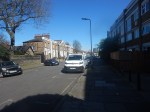
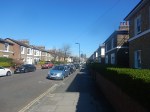
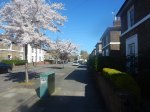
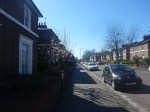
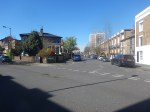
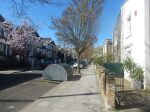
There wasn’t many people about and I perhaps only got within three metres to one person and her dog.
What would help would be a few seats, so that elderly people like me could take a break.
Lancashire’s Eden Project Encouraged By Survey Results
The title of this post is the same as that of this article on the Lancashire Post.
Apparently, 99 % of those surveyed were in favour.
More can be found at edenproject.com/north.
The Diamond Light Source And COVID-19
Deep in the Oxfordshire countryside on the Harwell Science and Innovation Campus, there is this large building.

It is around twenty-eight metres across and is houses the Diamond Light Source.
When you are in a war, military commanders call up their largest and most powerful weapons, when they are up against it.
Think about Barnes Wallis‘s weapons of the Second World War; the bouncing bomb and the ten-tonne Grand Slam bomb.
The Diamond Light Source is described on its web site like this.
Diamond Light Source is the UK’s national synchrotron science facility, located at the Harwell Science and Innovation Campus in Oxfordshire.
Another section on their web site details the cost.
Diamond’s construction was funded by its two shareholders, the UK Government through the Science and Technology Facilities Council (STFC), which has contributed 86% of the investment, and the Wellcome Trust charity, which has a 14% stake in the facility.
Diamond’s construction is taking place in phases. Phase I cost £263 million and included the synchrotron machine itself, the surrounding buildings and the first seven experimental stations or beamlines. This phase was completed on time, on budget and to specifications in January 2007. Phase II funding of £120 million for a further 15 beamlines and a detector development programme was confirmed in October 2004 and completed in 2012. Diamond can potentially host up to 40 beamlines so there will be continual construction within the main building.
In the first year of operations (2007/8) Diamond’s operational costs were £23 million, in 2012/13, with 22 beamlines the operational costs were £40 million. As we enhance the facility by adding new beamlines the operational costs will increase. However, the more beamlines we have, the more cost effective we become, as the cost of running the machine is shared by a growing number of experimental stations.
It looks like capital costs were nearly £400 million, with yearly running costs of £40 million.
Earlier in the week, The Times detailed the work that Diamond was doing with British scientists and Chinese samples from Wuhan to find out the structure of the the COVID-19. The article said this.
A beam of light in an Oxfordshire laboratory that is ten billion times brighter than the Sun has been illuminating an object ten billion times smaller than a pinhead (Tom Whipple writes). In the shadows it produces may lie clues to defeating coronavirus.
The Diamond Light Source at the Harwell campus near Didcot is one of the most sophisticated microscopes in the world. Gwyndaf Evans, the principal beamline scientist, said that over the past three weeks there had been one goal — looking for ways to thwart coronavirus.
And I thought, Gwndaf Evans was a successful Welsh rally-car driver.
The Diamond Light Source web sire has a page for the Public on its research into coronavirus.
Read this page and certainly the last section, which is entitled What Is The Scientific World Concentrating On With The Current Outbreak of COVID-19?, where this is said.
The COVID-19 outbreak is at a critical stage, the WHO suggests that China, through tough and effective containment has bought other countries more time. This is the third bat-derived coronavirus to cause outbreaks of human disease in less than 20 years, and the most serious.
The response to COVID-19 has been remarkable: first reports of an unknown pneumonia were on 31st December 2019 and by 11th January, six virus sequences were made available. Structural biologists moved extraordinarily quickly, getting synthetic genes made immediately, rushing to pick them up the day they were finished, and in less than a month, on 5th Feb the first structure, of the main protease was released by the PDB, from Zihe Rao and Haitao Yang’s team at ShanghaiTech. By then these coordinates had already been distributed by the team to 300 groups. In addition by this point, the protein had been used for in vitro assays and a collection of licenced drugs with potential antiviral activity had been identified and made available publicly.
Indeed by now, 35 clinical trials have been started, with the first just closed, so the first results should start to emerge quickly. However, these are re-purposed compounds, the route to tailor-made molecules will be longer but scientists across the world are working to find these.
I am heartened by what I have read today and feel that we are making progress towards at least winning a battle against COVID-19.
COVID-19 Only Research Other User Operations Suspended
This is the headline on one of the latest news pages on the Diamond Light Source web site, where this is said.
Given the rapid spread of COVID-19 Diamond Light Source wishes to minimise travel and the number of people on site, and we have in the first instance taken the decision to suspend user operations from our facilities until 28th April. A further extension of that period might become necessary, and we will keep users informed during the coming weeks.
However, it is still possible to run sessions remotely but only with samples connected with work associated with combating COVID-19 either through an already approved BAG or through the rapid access application.
Is Diamond concentrating all its immense muscle on COVID-19?
Conclusion
It looks like to get results you need teams of brilliant collaborating scientists and lots of money.
And all backed up by sophisticated tools, like the Diamond Light Source!
Is the world planning a bigger one?
Surely, as each of these viruses seems to get more deadly and more difficult to combat we will need it.
Et Toi, Papa? Boris Johnson’s Dad Seeks To Become A French Citizen
Surely, this is the headline of the week in The Sunday Times.
Apparently, Stanley’s mother was born in Versallies!
And you don’t get any more French than that!
Carry On Blogging
At seventy-two and after recovering from a serious stroke ten years ago, I could be considered to be in a relatively high-risk category from COVID-19.
I also live alone and am a coeliac.
But.
- I have reasonable supplies of ready-meals, tea, milk, beer and packaged foods to last for a week.
- I test my INR and on Friday it was 2.5.
- I weigh about 61 Kg.
- I exercise regularly and can easily walk a couple of miles briskly.
- I have plenty of INR testing strips, with probably enough to last until August.
- I have about two months of drugs, but there is supposed to be a system lunched this week to get drugs to people like me.
- I have an on-line subscription to The Times, so I can read their news in detail and get access to all their puzzles.
- I can walk round the corner to a shop, where I can get milk and other daily supplies.
- I can easily walk to my GP’s surgery and the local Marks and Spencer Simply Food.
- I have a son, who can put shopping on the door-step, ring the bell and run!
- I have enough cash to pay for goods that neighbours or others might deliver.
I also have the great advantage, that my front door almost opens onto the street, so I can receive deliveries without meeting the courier, by just leaning out the window and telling them to put them on the step.
I very much feel, that I can set myself up to just carry on blogging.
Others can help here by doing the following.
- Suggest topics, where they would like my comments.
- Sending me stories, that I might like to read on topics like battery-power, branch line reopening, design, energy storage, hydrogen-power, innovation, extreme science, humour and life in general.
- Sending me positive stories about COVID-19.
It’s probably best, if you don’t send me stories from the BBC and The Times as I read them extensively.
I shall always reply, if I can. Hopefully, I will try and treat subjects in a light-hearted manner to ease the burden of these serious times.
We must all carry on!
 The Anonymous Widower