Could Tram-Trains Be Used To Advantage In Croydon?
The Croydon Tramlink has been around since 2000 and doesn’t get mentioned very often with respect to either expansion or tram-trains.
Tramlink Route 1
The Tramlink Route 1 to Elmers End, does not give much scope for tram-trains as Elmers End is the only station with a rail connection, other than East and West Croydon.
That is unless you wanted to run tram-trains up the Hayes Line to perhaps Lewisham or even Cannon Street.
These pictures show how the tram interfaces to the rail line at Elmers End.

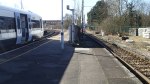
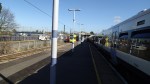
It would appear to my untutored eye, that trams might be able to connect northwards, but southwards looks difficult. This is probably confirmed by this Google Earth image of the station.
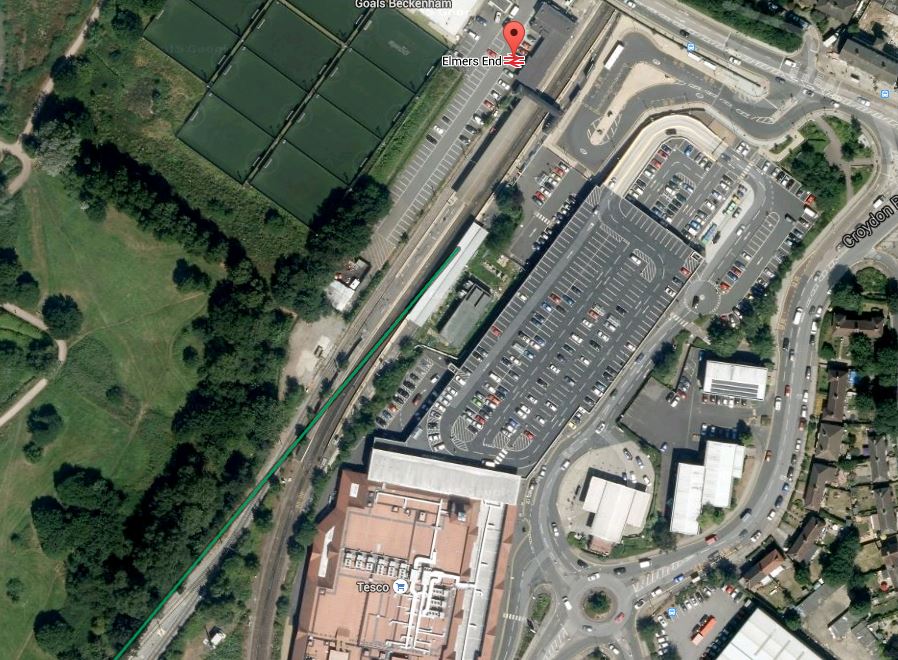
Elmers End Station
If Route 1 was run by tram-trains, that continued after Elmers End, this would not cause any problem at the Croydon end, as they’d just go round the loop and back to the east.
So it looks like there is little scope to put tram-trains on Route 1 and then run them up and down the Hayes branch.
Tramlink Route 2
The Tramlink Route 2 to Beckenham Junction actually runs alongside the electrified railway between that station and Birkbeck. If that line had been built in France or Germany in the last few years, I think they would have used tram-trains to provide the service.
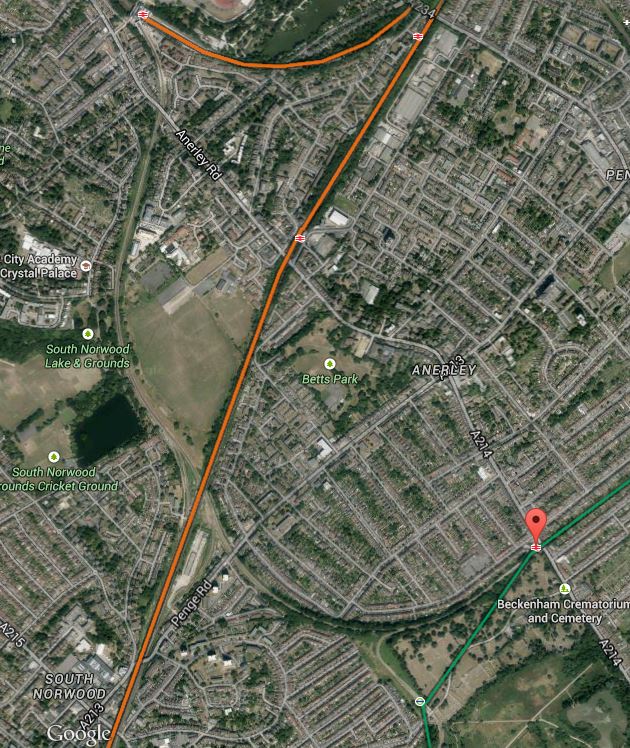
It is in the area of Birkbeck station, shown here in a Google Earth image that tram-trains could be used to advantage.
Birkbeck To Crystal Palace
Note the red arrow pointing out Birkbeck station, the orange lines denoting the East London Line and the green line denoting Tramlink Route 2.
The Crystal Palace Line and Tramlink Route 2 are both single-track lines from west of Birkbeck most of the way to Beckenham Junction, with the railway carrying just two trains an hour each way.
It has been a long-term ambition of Tramlink to run the trams on-street to Crystal Palace, but with tram trains you only need a small piece of infrastructure.
At the bottom of the image, there is a blue roundel at a kink on the green line denoting Harrington Road tram stop. From here, the line goes northwards and turns to run alongside the railway to Birkbeck station.
The line goes to Crystal Palace station if you could turn left. That station is at the end of the topmost orange line on the map.
Here’s a large scale Google Earth image of the area, where Route 2 joins the main line railway.
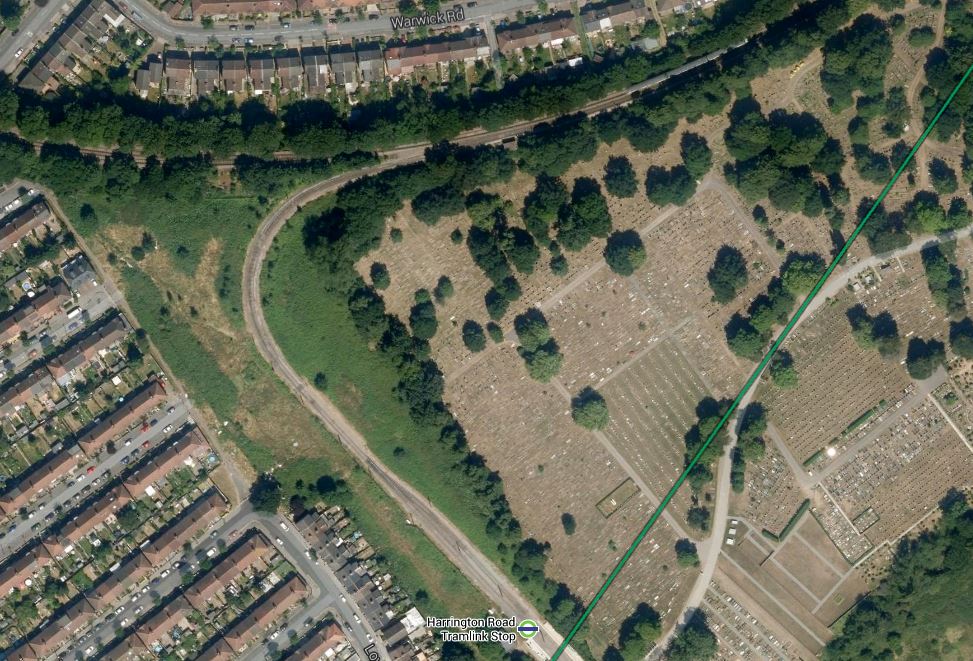
Tramlink Route 2 To Crystal Palace
There is probably enough railway land where the lines meet to create a simple triangular junction that would allow tram-trains to go from Harrington Road to Crystal Palace. As tram-trains are in effect normal trains on the main line, they would use the normal platforms.
The only problem is to decide where they reverse and go back to Croydon.
Looking at the Crystal Palace Line, the tram-trains could even be run all the way to and from Victoria or London Briodge, but that probably wouldn’t give enough capacity. So a bay platform will have to be brought into use somewhere. This is Platform 1 at Crystal Palace station, where it might be possible.
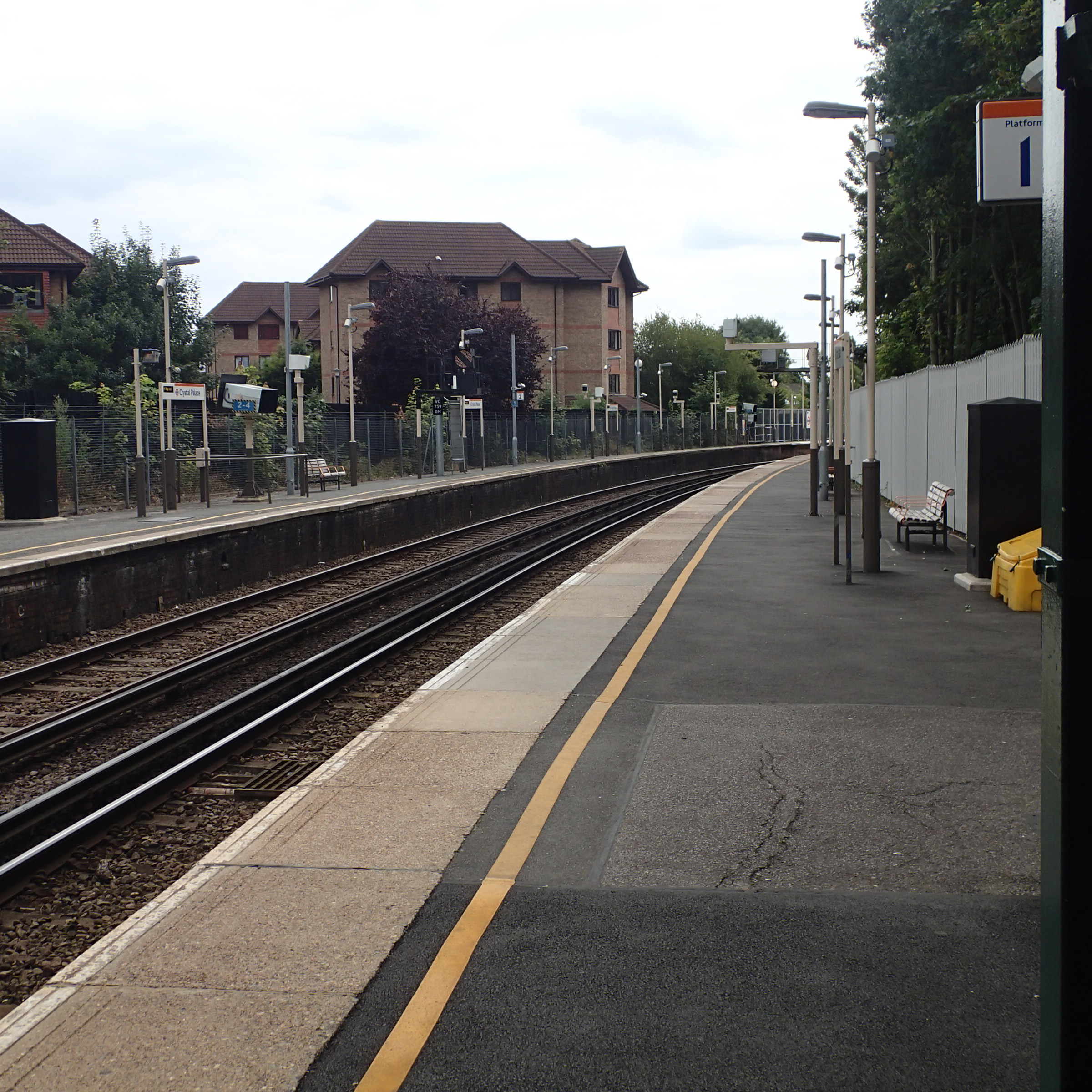
But it would need some good architecture and clever engineering.
Incidentally, the line has an operating speed of sixty miles an hour, so the Class 399 tram-trains would not interrupt any traffic, if they went all the way.
Where the tram-trains terminate will also be determined by passenger statistics.
If a variant of Route 2 was run by tram-trains, that continued to Crystal Palace, this would not cause any problem at the Croydon end, as they’d just go round the loop and back to the east.
The Hayes Line
Closely related to Tramlink Routes 1 and 2 is the Hayes Line.
I get the impression that it is a bit of a nuisance to train operating companies, as it’s always being talked about as a possible new terminus for the Bakerloo Line. Withdrawal of passenger services from the line have also been proposed and rejected in the recent past.
This Google Earth image shows how it crosses the Crystal Palace Line to the west of Beckenham Junction.

Hayes Line Crossing The Crystal Palace Line
The Hayes Line crosses from north to south, but it is not a complete junction, where tram-trains coming from Crystal Palace could access the line. But there would appear to be the space for the necessary infrastructure.
As I said in the section on Tramlink Route 1 it could also be linked to that route at Elmers End.
There may also be advantages in running tram-trains as trams on the Hayes Line.
Remember that if you ran tram-trains from Victoria to Beckenham Junction and/or from Cannon Street to Hayes, you don’t necessarily have to stop running the current trains.
But overall, I have my doubts about tram-trains on the Hayes branch, without some radical thinking.
Perhaps it is extended to the south past Hayes station as a tram route or Elmers End could be developed as a full interchange for trams and tram-trains, working the two routes.
But as there are more urgent proble,s and proposals on Tramlink, I think nothing much will happen on the Hayes branch.
Tramlink Route 3
The Tramlink Route 3 to Wmbledon has two connections with the rail network; Mitcham Junction and Wimbledon.
I am not knowledgeable about routes and traffic levels in that part of London, to postulate if tram-trains would be any advantage and give better connectivity for rail passengers.
However one of the proposed extensions of Tramlink is to Sutton station. Look at the layout at Mitcham Junction in this Google Earth image.
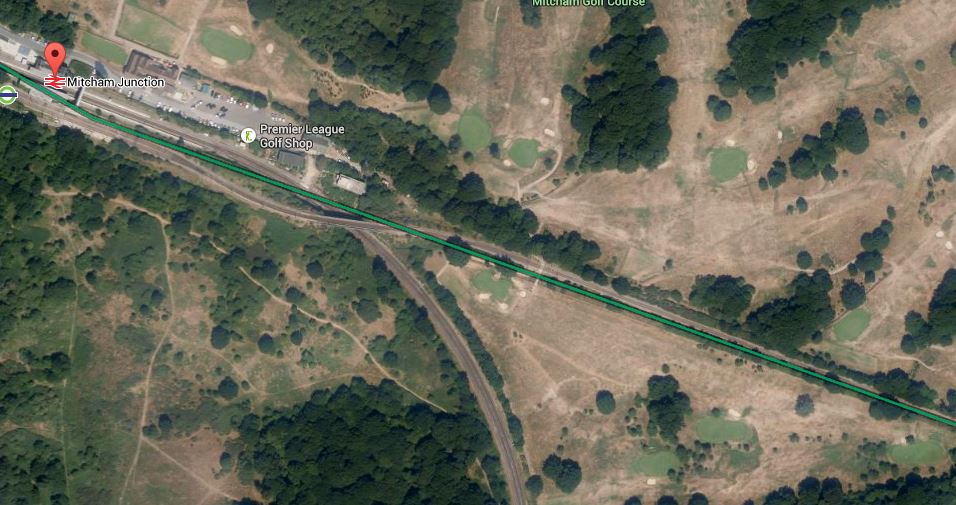
Mitcham Junction
It might be possible to put a curve between Tramlink Route 3 and the Sutton and Mole Valley Lines that go south to Sutton and Epsom. According to Wikipedia Sutton station used to have a bay platform for local services from Mitcham. Could it be reinstated?
Tramlink Route 4
The Tramlink Route 4 to Elmers End is a partial dupication of other routes.
Proposed Routes
There are several proposed routes for the Tramlink.
I have already dealt with the extensions to Crystal Palace and Sutton and how tram-trains might help.
But could tram-trains help with other extensions. I also think that if anybody suggests more street running of trams, this might get short-shrift from car drivers, so a lot of the proposed extensions might be difficult to get planned.
As to getting to Mitcham Town Centre from Mitcham Junction, they probably won’t help unless another station is added to the line between Mitcham Junction and Mitcham Eastfields. But as the latter station was only opened in 2008, I can’t see that happening.
The route south to Purley would probably be liked by passengers, but it would probably be difficult to fit into Croydon’s crowded town centre.
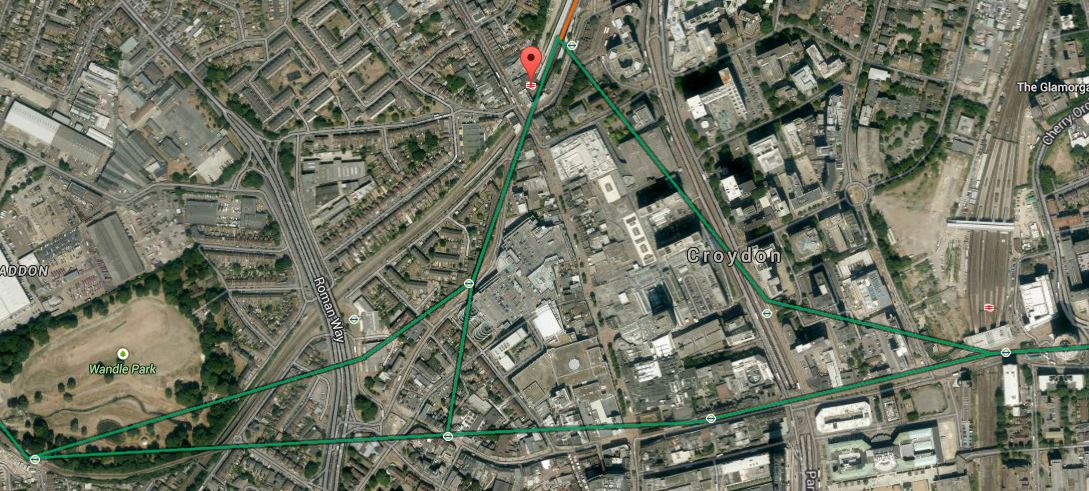
Croydon Town Centre
The red arrow points to West Croydon station, with East Croydon station at the right, with the green lines showing the current tram routes.
The only way to go south would probably be with a lot of unpopular street running.
However, a route to Brixton could be fairly easy for a tram-train, by going via either Mitcham Junction or Crystal Palace.
The Tram-Trains Go Anywhere Capability
I am assuming that the tram-trains chosen are something like the Class 399, with the following characteristics.
1. Ability to use third rail or overhead 750 V DC.
2.Double-ended and able to use both tram and train platforms.
3. 110 kph and main line crash protection.
4.ERTMS
A tram-train with this level of capability could go virtually anywhere in South London, provided the track layout allowed it to get on the full-size railway.
So where could a tram-train go from Croydon?
Brixton – Via Crystal Palace, Gypsy Hill, West Norwood, Tulse Hill and Herne Hill
If the Victoria Line was extended to Herne Hill, this would give South London a very useful tube connection. You could also build a decent station at Brixton to link all the lines together.
Bromley South – Via Beckenham Junction
Epsom – Via Mitcham Junction and Sutton
Clapham Junction – Via Mitcham Junction, Balham and Wandsworth Common
Lewisham – Via New Beckenham, and Catford Bridge
This would link the Tramlink to the DLR
Orpington – Via Beckenham Junction and Bromley South
New Cross – Via New Beckenham, Catford Bridge and Lewisham.
This route actually extends the New Cross branch of the East London Line to Hayes.
Whatever happens in Croydon, I think it would be a good idea if perhaps four trains per hour of the eight extra that could be sent down the East London Line were to be sent to the Hayes Branch or Orpington via Lewisham. It would connect that part of South London to Crossrail at Whitechapel.
Could Tram-Trains Be Used To Advantage In Edinburgh?
This might be design by hindsight but after viewing the tram-trains of Kassel, Karlsruhe and Mulhouse, I do wonder if tram-trains could be used to advantage in Edinburgh, alongside the new tram system.
To the west of Haymarket station, the trams and rail lines share a corridor, with the tram tracks to the north. So as the Edinburgh trams run on standard gauge tracks, any tram-trains coming or going to the west could just cross over between the two sets of tracks. This Google Earth image shows the tram stop and the train station at Haymarket.
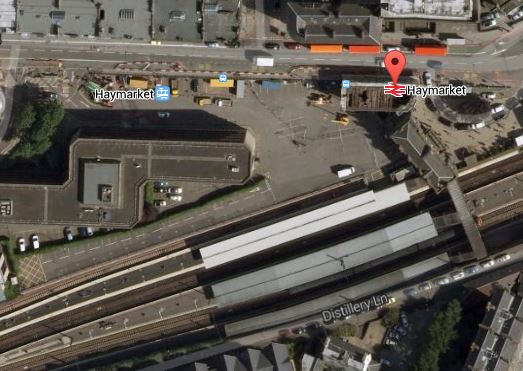
Trams And Trains At Haymarket
Unfortunately, I think the image pre-dates the operation of the trams, but compared to some of the complicated layouts and tunnels in Germany, it should be very simple. As was shown in Paris, tram-trains can be built that run on both the 750 V DC used by Edinburgh trams and the 25 kV AC used on the electrified main line to both Glasgow and London from Edinburgh.
The Edinburgh trams run every 8-10 minutes during the week, so there should be capacity to run some train-trains through the city centre section, without much modification.
But where would they go at the eastern end?
The obvious place would be to go straight on past Waverley station and the Balmoral Hotel and then return to the rail lines to the east of the station, if that was possible. This is a Google Earth image of the area.

Edinburgh Waverley
If they ever extend the tram to Leith and Newhaven, that may or may not be a possibility. The Edinburgh trams are built to a very tight specification, which is designed to go round sharp corners and not make too much noise. Running straight between Haymarket and Waverley may be an easier task, than turning sharply on and off Princes Street.
As with Crossrail and Thameslink in London, where tunnels link two railways lines together, thus saving terminal platforms in the city centre, an east-west tram-train across Edinburgh, would reduce the needed platform capacity in both Waverley and Haymarket stations.
I have been looking at Google Earth images of Edinburgh and there are more railways than those that run passenger trains. I would assume they take freight from up the East Coast Main Line through the city. So could some of these lines be used by tram-trains to create much needed public transport routes in the city?
There is one interesting possibility. The Edinburgh Suburban and Southside Junction Railway, runs across the south of the city and is used by freight trains, but no passenger services. According to Wikipedia there is a campaign to reopen the line to Passenger services and also a proposal by Network Rail to electrify the line. Tram-trains could be a possibility for providing the service, as the line links to the main railway across Edinburgh at both ends.
It would probably be more affordable to provide the passenger services using tram-train technology, as the stops would be simpler and you could use an off-the-shelf Class 399 tram-train, if they have been proven to work in Sheffield.
In the Wikipedia for Edinburgh trams, they also talk about a new stop called Edinburgh Gateway, which would link to trains on the Fife Circle Line.
It has been proposed that the Fife Circle Line be extended to Leven by creating the Levenmouth Rail Link.
I’m pretty certain that in Karlsruhe or Kassel, the Germans, would run tram-trains on the Fife Circle and the extension to Leven, probably using 750 DC electrification all the way.
1. The station at Edinburgh Gateway could be a simpler affair, which would only need to accommodate compatible tram-trains and trams which could share platforms. Obviously, if longer distance trains to Glasgow or Aberdeen were stopping at the station, these would probably need their own platforms.
2. Creating a 750 DC tram line between Thornton and Leven, even if parts of the line carried freight trains, must be more affordable, than heavy rail.
3. Edinburgh would have the iconic images of tram-trains going over the Forth Rail bridge, which could be electrified to either system, as the tram-trains won’t care.
4. Operation of the tram-train would be a bit like the proposed tram-train test in Sheffield, where both ends of the line operate as trams, with a section of heavy rail in the middle.
5. Battery technology could also be used between Edinburgh Gateway and Thornton.
I’ve seen everything, I’m proposing here, in the last few weeks.
This musing of a Saasenach, does illustrate the importance of the tram-train trial between Sheffield and Rotherham.
Should An Overground Station Be Built At Hythe Road?
Some weeks ago Transport for London (TfL) launched a consultation on transport links and stations in the Old Oak Common area of West London.
A report in the Kilburn Times has said that the public have said that they’d prefer Option C of the TfL consultation, which involves two new Overground stations.
1. Old Oak Common on the North London Line, which would link to Crossrail and HS2.
2. Hythe Road on the West London Line.
This TfL map shows their locations.
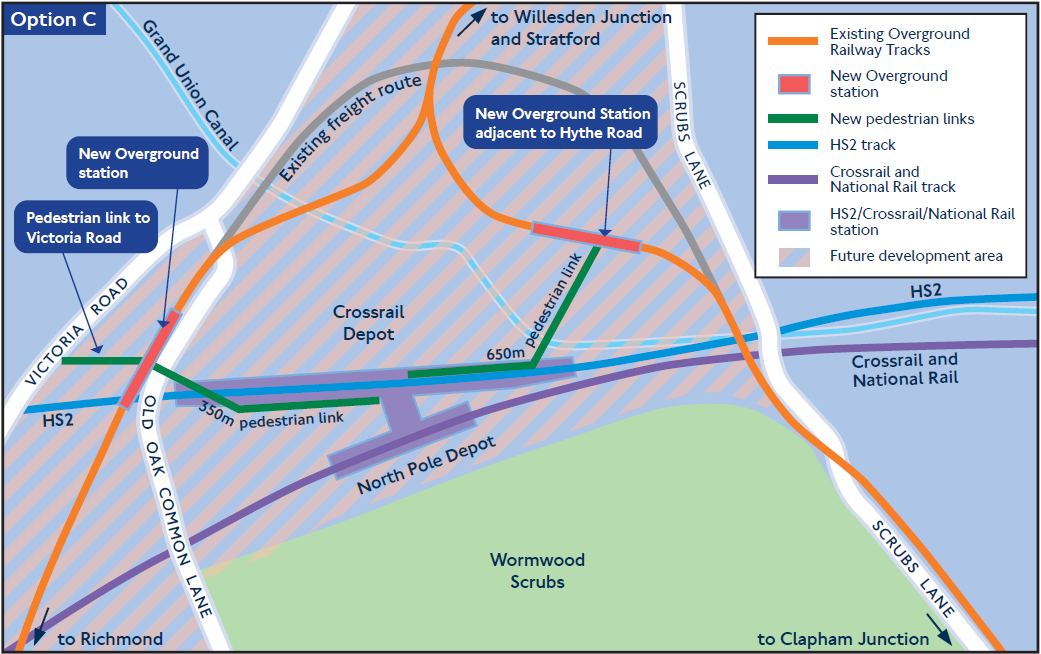
Option C Proposal At Old Oak Common
And this is a Google Earth image.
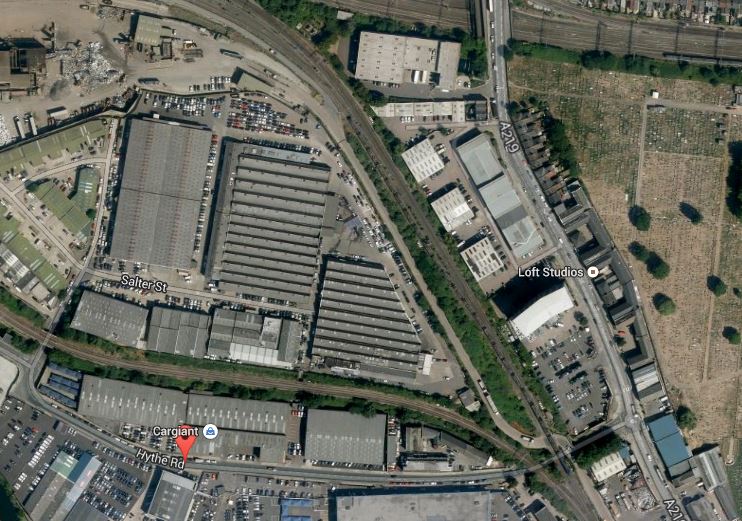
West London Line At Hythe Road
As TfL are saying that service frequencies on the West London Line will be four trains per hour, which is the same as that of trains to Heathrow on Crossrail, it strikes me that these two new stations will greatly ease access to Heathrow from South London and beyond.
From where I live in Dalston, the two station idea has the benefit that if I want to get on Crossrail to go to Reading or Heathrow, it is just a single change at either of the two stations, depending on where my westbound North London Line train is going. Old Oak Common would appear to be a shorter walk however.
But surely, if you are doing a big development as at Old Oak Common, you need as many connections as you can reasonably afford.
The Saddest Building In London
Others will have their own favourite building vying for this title, but surely Millennium Mills, the derelict flour mill by the Royal Victoria Dock is close to the top of a lot of lists of sad buildings.








For years it has stood there unloved between the dock and the Docklands Light Railway, pleading to be put out of its misery.
One of the problems with the building, is that it is full of asbestos and removal and disposal will cost millions.
But help is at hand according to this article in the Newham Recorder, which details a Government grant to kick-start the development. Here’s an extract.
The former flour factory, which was built in 1905, has been vacant since the early 1980s but will get a new lease of life as a hub for start-up businesses, while homes will be built on the surrounding land..
The £12m, which has come from the government’s Building Foundations for Growth Enterprise Zones capital grant fund, is being used to speed up the redevelopment.
It means work to remove asbestos can get under way much earlier than originally scheduled, speeding up the renovation by five years.
Judging by the picture in the report, it would appear that something positive is at last being done with one of London’s saddest buildings.
Custom House Station – 25th February 2015
I took these pictures today.

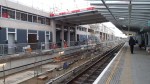
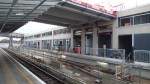
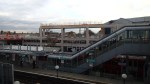

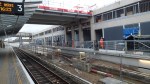
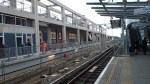
The works are showing how long the Crossrail stations will be. As a Crossrail engineer said to me a few months ago, you may get complaints about all the walking the two hundred metres from one end of the train to the other. As she was female, I suspect she was thinking high heels and not her sensible work boots.
Improving Rail Transport In Warwickshire
Warwickshire doesn’t often feature in rail infrastructure, but I was pleased to see that work is poised to start on a new station at Kenilworth, according to an article in Modern Railways. This will be served by new services on the Coventry and Leamington Line.
The council has even put up a blog. From which I clipped this plan of the new station.

New Kenilworth Station Plan
Compare this with the area now from Google Earth.
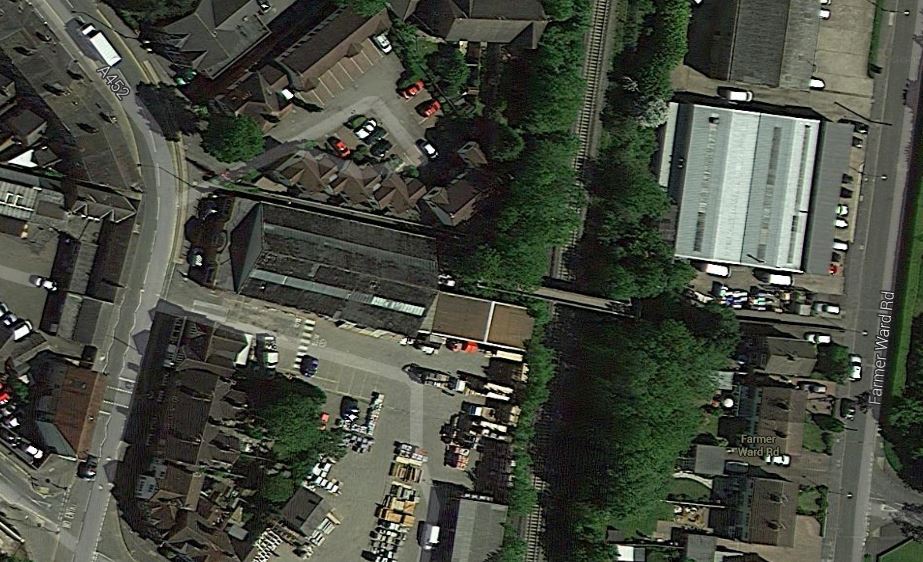
Kenilworth Now
Note that the current pedestrian bridge is retained. It also appears that the line through the station is going to be double-tracked.
Plans are also in place to upgrade the Coventry to Nuneaton Line, with better services and new stations at Coventry Arena and Bermuda Park, for which work has started in October 2014. Does this Google Eart image of the Coventry Arena, show the work site?
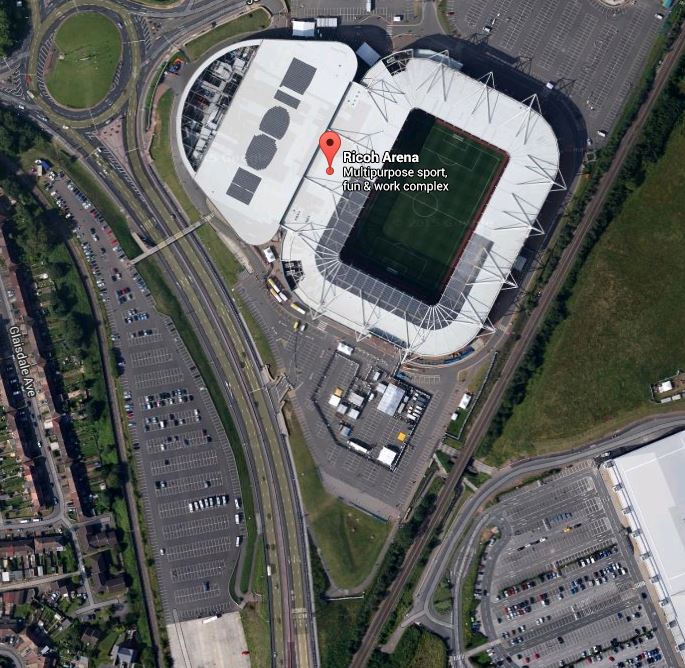
Coventry Arena Station Site
There’s an on-line leaflet describing the station improvements on the Nuckle on the Warwickshire County Council web site. The fenced-off com pound, would appear to be in the fright place for the station.
Fom this leaflet, I think that Bermuda Park station is north of the Griff Roundabout, where the B4113 joins the A444. The leaflet shows the station at some point on St. George’s Way, where the rail line goes close.
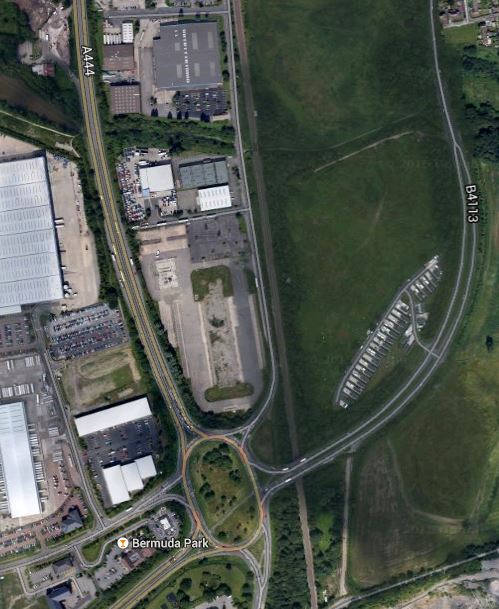
Bermuda Park Station
These three new stations and the upgraded lines are the sort of improvements to be welcomed.
As the Coventry to Nuneaton Line connects two electrified main lines, I wonder how long it is before the line gets wired? Or would this be a classic place to use a battery electric multiple unit?
An Ideal Place For A New Station
This map shows the development site at Kirkstall Forge in Leeds.
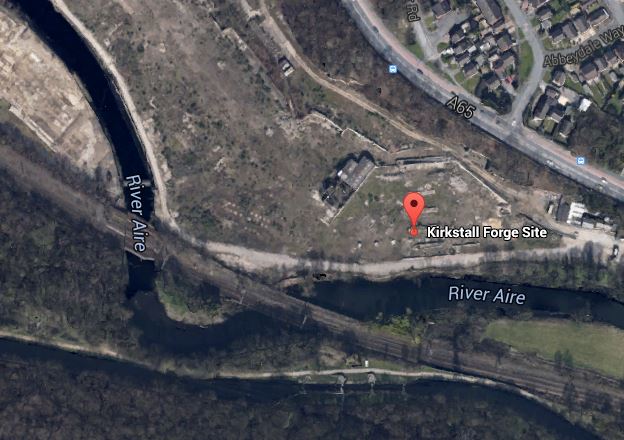
Kirkstall Forge
The site is being developed between the A65 and the River Aire and the Leeds to Bradford rail line in a £400million scheme. This is from the developer’s web site.
Kirkstall Forge will be transformed into a thriving mixed-use community in a wooded riverside setting. Ultimately it will deliver new homes, a high quality office park, shops, restaurants, a gym, crèche and other facilities. The scheme will create in the region of 2,400 new jobs, boosting the local economy by more than £5 million per year.
The DfT will provide a maximum of £10.3m towards the £16.9m needed to deliver railway stations on this site and at Apperley Bridge. The remaining 40% of the cost is made up of a local funding package comprising a private sector contribution of over £5m, supplemented by funding from the West Yorkshire Combined Authority.
Surely, this is the type of development that is good for everyone.
It will be interesting to know the extra return that developers get, by having a rail station in their plans. In London, a station is being provided at Barking Riverside for developments there, but stations in new developments seem to be fairly rare.
The US Has 2,000 Level Crossing Accidents A Year
This is a chilling statistic, which is stated in this article on the BBC, about this morning’s train crash in California. As 250 of these accidents involve fatalities they are a major tragedy and illustrate how level crossings should be eliminated or at least made safer.
In this country we still have more than 6,300 and get quite a few accidents. At least Network Rail is trying to cut the risk in several ways.
Having ridden in the cab of a High Speed Train, I’ve had a unique view of the dangers as we sped to Inverness, although nothing untoward happened. But as level crossings came into view, you kept your eyes peeled for something that might happen.
Greater Manchester To Control Local Health Budget
\This report on the BBC entitled Greater Manchester Councils ‘to control £6bn NHS budget’, is surely the way for healthcare to go in the UK, as I suspect that health needs in various parts of the country can be very different.
Manchester is getting increasingly like London with an elected mayor responsible for various issues. Some of these issues are related, like the provision of good public transport to and from hospitals, so it is only right that they are dealt with locally. I am lucky in that my three local hospitals; the Royal London, Homerton and University College are all an easy bus ride or train journey away, but what proportion of the UK population, need to get a car or taxi to their local hospital?
Are Tram-Trains A Good Idea?
After my trip around Germany and France, have I come to any conclusions about the concept of tram-trains?
I must admit, I was sceptical when I set out, as some of the claims about the advantages of tram-trains seemed too good to be true!
So what are their strengths? And how would they fit the planned test route to Rotherham that will extend the Sheffield Supertram?
Dual Voltage
In both Mulhouse and Paris, the tram-trains are dual voltage and can run on both 750 V DC and 25kV AC. This type of tram-train will become the standard as main lines are increasingly electrified with the higher AC voltage.
In the case of Sheffield, which will be electrified to London, Doncaster and other places in the next decade or so, dual voltage Class 399 tram-trains will be essential to future proof the system.
Standard Gauge
All except one of the tram and tram-train systems I used or saw were standard gauge systems. The exception was Darmstadt, where trams were of a narrow gauge. Any standard gauge system could be used by tram-trains of the same gauge. In the UK, France and Germany that means to incorporate tram-trains on a tram network, that the tram network must be standard gauge.
There are no tram systems in the UK, that are not standard gauge.
Tram-Trains Can Be Low Floor
Buses and trains are moving towards totally flat and low floors, where to enter you just step or wheel yourself across.
The Mulhouse and Paris Siemens Avanto tram-trains achieve this and it has been stated that the Class 399 tram-trains for Sheffield will be low-floor.
Tram-Trains Are Larger Than Trams
Generally tram-trains are larger than trams. I don’t know for sure, but this could be for crash-worthiness reasons when running as trains.
With Sheffield this is an advantage as the Sheffield trams are bigger than most of those in other systems.
Tram-Trains Are Faster Than Trams
I don’t know at what speed the tram-trains that I rode ran, but it was certainly faster than the average tram.
Tram-Trains Are Almost As Fast As Pacers
A Class 142 Pacer has a top speed of 120 km/hr, whereas the Siemens Avanto used in Mulhouse and Paris has a top speed of a hundred and the Class 399 tram-trains for Sheffield have a top speed of 110 km/hr.
I suspect though that the electric vehicles have better acceleration and braking, so they might even be quicker over a route like the Hope Valley Line. I won’t comment on the passenger experience, but I will say that they probably have a slightly higher capacity of over two hundred, if you count standing passengers.
Tram-Trains Release Platforms In City Centres
This was well-illustrated in Kassel, where the Hauptbahnhof has been effectively released for other uses after the building of two underground island platforms.
By joining services together it might also be possible to release platform needs, just as Thameslink and Crossrail will do in London.
I’ve spent a lot of time waiting for local train services in Sheffield, so is there any scope for joining more services together.
Acting Like Trams In A City Centre
This was impressively shown in Kassel, where except for the colour and size, you couldn’t tell which vehicles were trams and which were tram-trains.
Sheffield’s tram line layout is very like Kassel with a shared centre section.
Acting Like Trains On Train Lines
Once on a railway line, the trams must be able to use the voltage of that line, have the same crash protection and signalling of a train and have the performance not to interfere with all other traffic.
Tram-Trains Can Have Alternative Power Sources
Around the world, there are several examples of tram-trains that have on-board diesel engines as well. Kassel has ten for a start.
And there are of course the battery trams in Nice and Seville.
Tram-Trains Don’t Need Lines To Be Converted
If tram-trains need to use a line they don’t stop other traffic like freight trains and express passenger services using that line. In some places in the UK, tram lines have been created by ripping up heavy rail tracks, which might need to be used again.
Tram-Trains Can Create An Extensive Network
The Manchester Metrolink has a network of around ninety kilometres, whilst Sheffield’s Supertram has a length of around thirty.
Compare this to Kassel at over a hundred and eighty kilometres and Karlsruhe at over two hundred and sixty.
The two German cities are substantially smaller than the two major English ones.
Tram-Trains And Sheffield
Tram-trains are not some difficult concept, but any competent group of railway, tram, electrical and control engineers should be able to create a system that works pretty well.
At least in choosing the line to Rotherham, they haven’t set themselves too difficult a task. Sheffield also has a very good layout in the area to the east and north of the main line station.
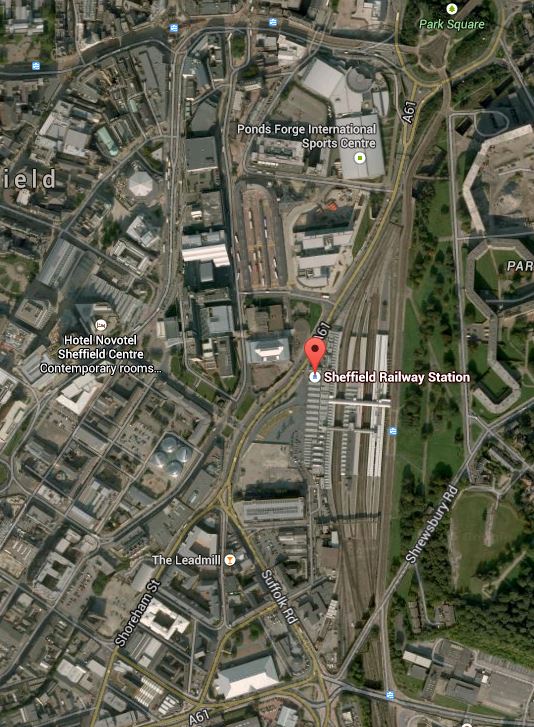
The Trams Around Sheffield Station
There are some things to note in this Google Earth map.
1. At the top right of the map, the three branches of the system meet in a triangular junction. The northern branch goes to Meadowhall and in the future Rotherham, the southern branch goes past the rail station and the western branch goes through the city centre. I don’t think that services use this junction in every posible direction, but it appears to have been future-proofed to cater for all eventualities.
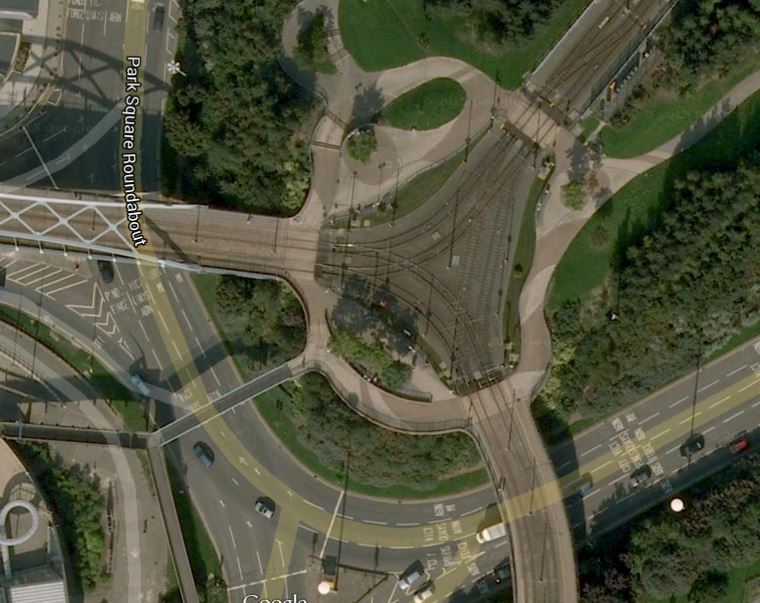
In this enlargement, the tracks and wires are clearly shown.
2. The southern branch past the station runs parallel to the rail lines.
3. There is quite a bit of space to put in extra tracks.
I also think, that after seeing the systems in Kassel and Karlsruhe, Sheffield could incorporate tram-trains fairly easily. Not being the first is a definite advantage, as ideas, designs and technology have moved on, as the Mulhouse system showed.
At some point in the future a lot of rail lines in the Sheffield area are going to be electrified to the main line standard of 25 kV AC and this might mean that the line used by the tram-trains to get to Rotherham in future may have this voltage. The Class 399 tram-trains themselves will be bought with a dual voltage capability, so they won’t care, but it seems a pity to put up one set of wires and then rip them down for another. Perhaps, you put up main line catenary initially and use it to provide a 750 DC supply! I’ll leave that one to the engineers.
An Extension To Dore
Plans have existed in the past to extend the Sheffield Supertram to Dore and some reports state that Dore will be linked to Meadowhall to improve HS2 connectivity. This Google Earth map shows Sheffield and Dore and Totley stations.
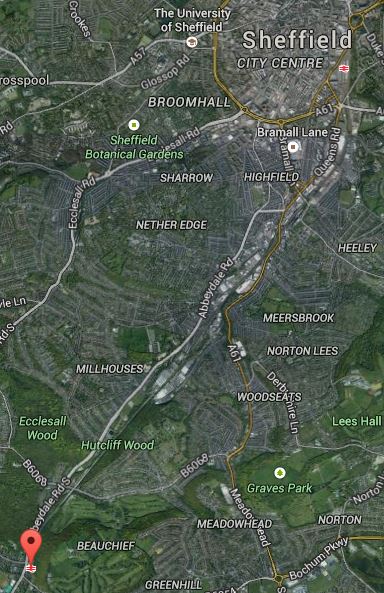
Sheffield To Dore
Dore and Totley station is on the Hope Valley Line, which will probably be electrified in the next ten years or so.
So could tram-trains come past Sheffield station and then go down an electrified Hope Valley Line?
I know little of the area, but because plans have been drawn up in the past, others must have a good idea. This document from Sheffield University written in 2003, gives a summary of what might happen.
But it predates any thought of tram-trains in Sheffield.
Could The Hope Valley Line Run Tram-Trains To Both Sheffield And Manchester?
This section in Wikipedia’s article about the Hope Valley Line, talks about proposals to to extend the Manchester Metrolink to Rose Hill Marple station on a spur off the line. Tram-trains could be used.
As Dore and Totley station is at the Sheffield end of the Hope Valley Line, could we see tram-trains going to both Manchester and Sheffield?
And What About Manchester And Sheffield?
I can remember reading in my Meccano Magazine in the 1950s about the ground-breaking electric-hauled Woodhead Line between the two cities.
This is said about tram-trains in the Wikipedia section for extensions to the Manchester Metrolink.
Metrolink and the TfGM Committee have prepared five costed proposals for extending Metrolink using tram-train technology over the existing heavy rail network in the region; along the Mid-Cheshire Line (between Stockport and Hale), the Hope Valley Line (between Manchester and Marple), the Glossop Line (between Manchester and the dual termini at Hadfield and Glossop), the Manchester to Sheffield Line (between Manchester and Hazel Grove), and along the Manchester to Southport Line (between Manchester and Wigan via Atherton), with an estimated total funding requirement of £870 million as of 2013.[197] TfGM intend to proceed to the identification of potential rail industry funding options, subject to a review of lessons from a tram-train pilot scheme in Sheffield.
So could we see the opening up of routes between the two cities using tram-trains, if the trial in Sheffield to Rotherham is successful.
The old Woodhead Line is just over sixty kilometres long, which means that from what I saw in Karlsruhe and Kassel, tram-trains could easily handle the distance between Manchester and Sheffield.
An interesting possibility for which the technology exists is a dual voltage tram-train leaving Manchester and taking the Hope Valley Line, which is electrified at its western end, which then travels over the Pennines to Dore, using either diesel or battery power, from where it becomes a tram on Sheffield’s network.
It won’t happen soon, but it is no fantasy, as I’ve seen all the technology needed in Kassel, Karlsruhe and Essex.
So will we see, heresy-of-heresies, an operational merging of the tram systems across the Pennines?
But imagine two, three or even four new tram-trains an hour on each of the routes between Manchester and Sheffield, that would extend their journeys into the city-centres, rather than need valuable platform space at Sheffield or Manchester Piccadilly stations.
I don’t know the lines well, so this might be pure speculation, but as the systems in Germany showed, if you get the track, power and signalling working, then good tram-trains can go virtually anywhere they’re needed.
A Vision For The North?
Let’s assume that the tram-train experiment from Sheffield to Rotherham is a success, which after my German and French experiences, I wouldn’t bet against.
So what happens next?
That is very much in the hands of the politicians, at both a national and local level, but from Sheffield and Manchester I could see tram-trains getting used on the numerous local lines that fan out from Manchester and Sheffield.
1. At present many of these lines are served by dreaded diesel Pacers, so the new tram-trains would be very welcome.
2. Some lines like the Hallam Line between Sheffield and Leeds via Barnsley could probably be just electrified with 750 V DC, to allow tram-trains to run.
3. As at Kassel not all lines would need to be electrified, as other technologies exist.
Everybody needs to have a bit of vision and if the Class 399 tram-trains, do what it says in the specification, we could be seeing them all over a dense network of lines in the north.
If all of these lines were upgraded, there is one thing that will happen for certain. The areas will improve in all ways, with better housing, more jobs and business and leisure opportunities.
Conclusion
To answer my original question, tram-trains are not a good idea, but a brilliant affordable solution to the big problem of urban transport all over the world.
In the UK, we must prove that the technology will work in a UK environment and I suspect there are many councils, tram and train operators eagerly awaiting the outcome.
 The Anonymous Widower