The Kiosks In Kings Cross Square
When I wrote this post in February 2013, I said this about the architect’s job.
Note the short fat tower to the left of the centre of the picture. This must be the top of some sort of shaft and if you look it is also in the design of the new piazza. I bet the architects are cursing it, very loudly!
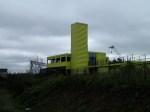
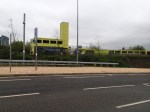
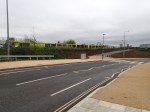
Today, I took these pictures, which show two kiosks for drinks and snacks.
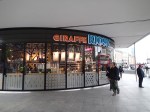

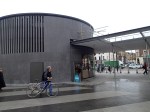
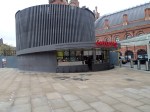

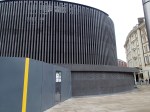
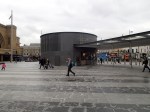
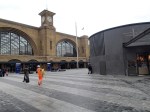
The architects seem to have defeated the short fat towers.
Is The Northern Hub Bold Enough?
Yesterday, on my trip to Blackburn, some of the problems that will be addressed by the Northern Hub developments became obvious.
Admittedly, my problems are slightly worse than most passengers as I’m a coeliac, so my chance of buying a decent gluten free meal in Blackburn is about the sane as finding a cold bottle of water in Hell. There isn’t even a Pizza Express, although they do have restaurants in Blackheath and Blackpool.
So to be safe, I have to go via Manchester or Leeds, where there are several good gluten-free restaurants, or at a pinch Preston, where there is a pleasant Pizza Express.
The main problem is that I’m coming up from London and I want to leave Manchester going to the North. Trains from Manchester Victoria to Blackburn are rather decrepit and cramped Class 150 Sprinter DMU or scrapyard specials as I called them in this post. They seem to run twice an hour, which is better than those from Leeds and Preston, which are just hourly.
You can get from Piccadilly to Blackburn, but it involves a change of train at either Salford Crescent or Bolton. The service is two trains per hour and is probably the best way to do it.
Linking the two main stations in Manchester is the key part of the Northern Hub and involves creating the Ordsall Chord. A plan with a similar objective from 1977 was the Picc-Vic Tunnel, but this much bolder plan was cancelled.
The Ordsall Chord won’t particularly help my journey of yesterday, as I would still do the same short journey to Salford Crescent or Bolton for a train to Blackburn. The stillborn Picc-Vic Tunnel would probably have had a similar effect to Thameslink in London, where for example arriving passengers from Newcastle going to say Sevenoaks dive into the low-level St. Pancras Thameslink station to get their train. So I would have probably dived into Piccadilly low-level station and got the next half-hourly train to Blackburn.
So I have to ask if the Northern Hub plan is bold enough!
But Manchester isn’t London and there is one big difference! London is very much bigger and the numbers of commuters and other rail users is substantially higher.
Another important factor is that Northern Rail runs trains, that discourage rather than encourage more users.
Because of this last point, the fact that a large amount of railway electrification and refurbishment of trains is taking place is very much a positive influence. Some voices in the North may have sniffed at refurbished Class 319 for their new electric services. But if the refurbishment is as good as it was for the Class 455 of South West Trains, no-one except the new train manufacturers will be complaining.
One great advantage of the Class 319, is that there are 86 trainsets, which would mean that electrifying further lines wouldn’t require the purchase of new trains.
We also have the problem in Europe, that there is a shortage of train building capability. So would we prefer to say buy new Chinese trains or refurbish sound trains in places like Allerton, Doncaster, Ilford and Derby? Especially, if the refurbished trains are just as reliable and comfortable, at a fraction of the cost!
In some ways though, the Northern Hub is an extremely bold project, as it is a bit like Topsy on Speed.
The idea of the Northern Hub was only first mooted in 2009 and now there a lot of work in progress like the restoration and roofing of Manchester Victoria station and the electrification of routes. I took this picture yesterday, as I travelled towards Blackburn.
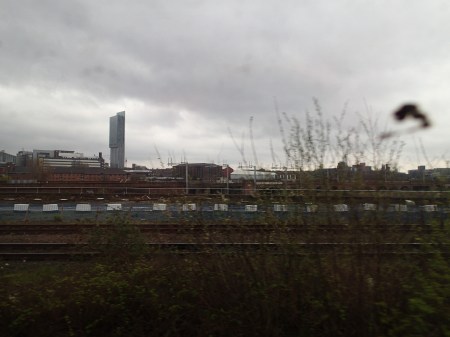
Electrification In Progress
Already the first parts of the project are in place, with new Class 350 electric trains now running from Manchester Airport to Glasgow and Edinburgh via Newton-le-Willows under newly installed wires.
Before the end of this year, you should see a new roof on Manchester Victoria and electric trains connecting Liverpool and Manchester for the first time. When you consider that both cities were electrified for important services to Crewe and the South by 1961 and to London in 1966, it is a disgrace that Liverpool and Manchester have had to wait nearly another fifty years for the electrified link to be inserted.
I described the Northern Hub project as Topsy on speed. In some ways, a project like Topsy is a nightmare to manage, but in one way the scope of this project is expanding relentlessly. And that is in the area of electrification. When first proposed it was intended to electrify the main lines between Liverpool, Preston and Manchester. Since then Blackpool and Huddersfield have been added. There is thought to be no connection between the fact that part of the Huddersfield line is known as the Real Ale Trail and the decision to electrify that line.
Knowing the area and its problems well as I do, I can’t believe that by 2020 there aren’t plans in place to add more lines to the electrification program.
Already the Todmorden Curve is being rebuilt, so that direct diesel services from Manchester Victoria to Burnley can begin later this year. Although Wikipedia says that services might not begin, due to lack of suitable rolling stock. Every line electrified would need new electric trains, but would also release some diesel ones for use elsewhere.
So do we have the virtuous circle, where by refurbishing Class 319 trains, we get the rolling stock to electrify lines, which releases much needed diesel trains to be used to provide a better and more frequent service on other lines to increase the passenger traffic, so that the lines are worth electrifying. And as any number of examples have shown, clean, reliable and frequent electric train services generate a momentum of their own.
In some ways, these lines are very similar to the Valley Lines in Wales. Important to their communities, but neglected and depending on scrapyard specials to move everybody around. But the government has plans for the Valley Lines, as detailed in this extract from Wikipedia.
On 16 July 2012 the UK Government announced plans to extend the electrification of the network at a cost of £350 million. This was at the same time of the announcement of electrification of the South Wales Main Line from Cardiff to Swansea. This would also see investment in new trains and continued improvements to stations. It is thought to start between 2014 and 2019.
We should boldly go on the development of the Northern Hub. On the other hand, progress has been so good this far, perhaps we just need to ensure that it continues at this rate.
I would also suggest that those in charge of the Valley Lines upgrade, take note of what must be good practice in Lancashire.
Inside The Olympic Park
I walked across from the ViewTube to Eastfield.
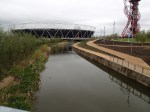

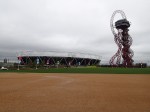
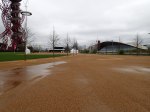
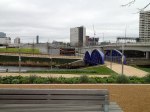
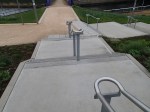
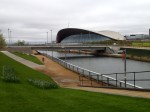


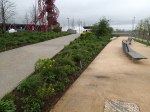
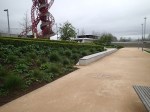
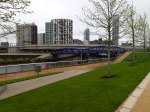


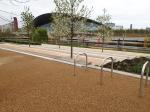






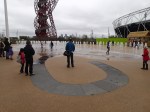
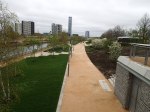
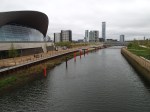
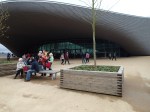
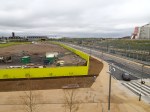
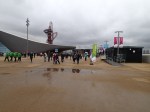
As the pictures show, there seems to have been a comprehensive upgrading of the site. All it needs now is to finish the Olympic Stadium.
My one doubt is the price of going up the Orbit. Remember that there is a good viewing gallery in John Lewis at Eastfield.
It certainly looks better now, than the site where the Athens Olympics of 2004 took place.
When it is complete with a fully refurbished Olympic stadium, it will be a unique attraction for London.
In some ways for me it could become a special place, as so much of my early years had connections with London’s second river, the Lee. I used to fish in it, I worked alongside it, I drunk by My youngest son, even lived close to it in Bow.
London’s second river has at last found its purpose in life. It’s just a pity that C and our youngest son aren’t here to see it.
Walking To The Olympic Park
I went to the newly-reopened Queen Elizabeth Olympic Park today by walking from Hackney Wick station.
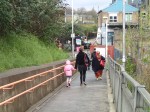

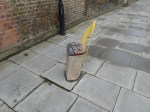

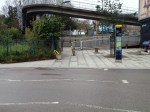
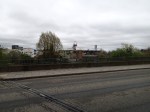
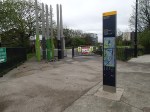
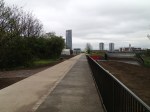
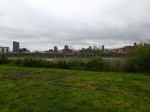
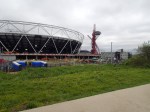
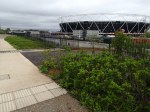
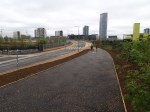
I actually stopped for a cup of tea at the ViewTube.
But it was an easy walk, once you started along the Greenway.
There is also a nice slope up and down from the ViewTube, which as is typical for a Sunday was fairly busy.
The Train From Hell
I won’t talk about the match at Blackburn, as Ipswich lost.
But I had one of the worst train journeys I’ve ever had returning from Blackburn to Manchester.
It was one of Northern Rail’s scrapyard specials, or a Class 150 or similar to name it correctly.
But the real problem was that it was full of drunken twenty somethings, who were drinking bottles of Foster and other rubbish. The noise was horrendous.
Until corrected, I would assume everybody was going from Blackburn to a night out in Manchester.
Such behaviour on the Underground, would have resulted in many taking a walk home.
I was glad to get off the train at Salford Crescent to get another train to Piccadilly. But that wasn’t without its contingent of drinkers.
The Worst Station In The UK
If they wanted to remake Brief Encounter, all they’d need to do was go to Manchester Victoria station and add a few steam trains. Not for nothing was it voted the UK’s worst station in 2009.
Although come to think of it, if a powerful steam engine, went through the station, it would probably cause the tonnes of muck in the station roof to fall off and kill a few passengers, even if the steam didn’t blow the station down.


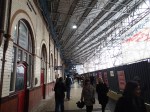


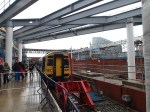


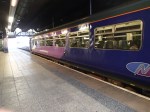

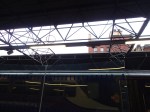
Salvation is at hand, as Network Rail are rebuilding the station and putting a new roof on the station, to protect the squalor from the elements.
At least the information screens work and I found my way successfully to the train.
Walking Across Manchester
I know I posted that it was wet, as I walked between Manchester Piccadilly and Manchester Victoria stations. But it wasn’t an easy walk!
There were a few signposts to Victoria, but I didn’t see one map anywhere, so in the end I followed the tram lines, which I knew went to the station. Or they did last time I was in Manchester, but now due to the rebuilding of Victoria they don’t. I met a couple from Bolton with their grandchildren at Victoria, who’d used the tram to get to Victoria. They missed the alternative stop and had ended up in Rochdale. So they had to come back on another tram.
Incidentally, when I left Piccadilly, I found that the free buses that go all over Manchester city centre don’t actually connect the two stations without a change. I suppose this is to ensure that those changing between the two stations with or without heavy baggage use a taxi or pay for a tram to get lost in Rochdale.
Because my eyes don’t respond quickly to fast moving objects from the left, I always cross the road using a light controlled crossing. For extra safety I generally use the thingy underneath to tell me of the green light. But I found a lot of these buttons were missing as I got near Victoria. As were the signposts! Vandalism or theft?
It’s Wet So It Must Be Manchester
To get to Blackburn I needed to get between Carluccio’s at Manchester Piccadilly station and Manchester Victoria station to catch the 13:00 train to Clitheroe.
I knew I was in Manchester, as it was raining.
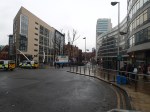

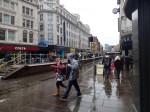
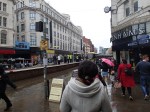
As I had bought my ticket from Manchester Stations to Blackburn for the princely sum of £6.95, I had to walk, as you can’t use these tickets on the tram to get between the two stations. Also, unlike Sheffield, my Freedom Pass where it is valid on the trams, it is not valid in Manchester.
Jodrell Bank
Jodrell Bank telescope is now clean and pristine and it would appear that Network Rail have cut back the vegetation, so you get good views of the iconic radio telescope from the train to Manchester.
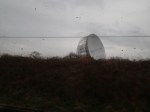
In the 1960s, when the line was first electrified to Manchester, some of the new engines were built in Manchester and there was a lot of publicity photos of blue electric engines running past Jodrell Bank. I can remember one, where the dish was upside down for cleaning. I found one like that here from 1960. The locomotive in the picture is actually a Class 84, which was built in Glasgow.
I called Jodrell Bank iconic. It must be one of the few scientific instruments or laboratories, that if you showed most people a picture, they could name it.
A Job Well Done
Everybody is breathing a sigh of relief after the reopening of the rail line to Plymouth and Cornwall yesterday. It’s all reported here on the BBC.
The only problem this summer is going to be that with all the publicity, many of those, who want to go to Devon and Cornwall, might decide to use the train. So can the wonderful Inter City 125s cope? They have yet to fail to meet a challenge yet!
There has been talk of opening an inland route, which could go round the North of Dartmoor by way of Okehampton and Tavistock. This is the route of the old London and South Western Railway from Exeter to Plymouth. The article in Wikipedia includes this.
There are proposals to reopen the line from Tavistock to Bere Alston for a through service to Plymouth. In the wake of widespread disruption caused by damage to the mainline track at Dawlish by coastal storms in February 2014, Network Rail are considering reopening the Tavistock to Okehampton and Exeter section of the line as an alternative to the coastal route.
I suspect there’s a team of exhausted engineers in Network Rail, who have the special engineering envelopes ready with a plan to reinstate this route for an encore after Dawlish. According to Wikipedia, the main viaducts seem to be intact, so it might not be the major job some might think.
As an engineer of sorts, I’d put the opening of this line in a box marked Difficult But Possible With Good Engineering.
Of course, Sod’s Law being what it is, if the old LSWR line was reinstated, there wouldn’t be any more trouble on the Dawlish line. But it would provide an easy route to get to Dartmoor and the surrounding part of Devon by train.
 The Anonymous Widower