Ricky Gervais And David Bowie
Ricky Gervais just told this tale on Radio 5.
He was playing a gig with David Bowie, so he asked, why he still did gigs like this.
I thought Bowie’s reply was classic.
To stave off the boredom before death!
I suspect that applies to lots of people.
Shuffling The Class 165 Trains
The May 2020 Edition of Modern Railways has an article, which is entitled West Of England Improvements In GWR Deal.
The sub-title is the following.
EMU Trailers Could Be Inserted Into Turbo DMUs
GWR‘s Turbo DMUs are.
- Class 165 trains of which there are fifteen three-car trains and twenty two-car trains.
- Class 166 trains of which there are twenty-one three-car trains.
The article says, they will be internally-refreshed with interiors better suited for long-distance services.
It also looks that they might get hybrid transmissions, if a trial with a Chiltern Class 165 train is successful. In Class 165 Trains To Go Hybrid, I wrote about this trial.
The article says this about the retractioned units.
The additional power available from the new hybrid units would allow the sets to be lengthened with trailers released from withdrawn Class 365 or 465 EMUs, lengtheing two-car Turbos by one vehicle and the three-car sets to five carriages. The EMU vehicles are 20 metres long, rather than the 23 metres of the DMU design, but it is thought integration into the diesel sets would be relatively simple.
This sounds like a cunning plan, from BREL’s book of Cut-And-Paste With Trains.
At the time of writing there are nineteen Class 365 trains in storage, which could release 38 trailer cars. However, Varamis Rail may need some of these trains for their proposed parcel business, that I wrote about in Varamis Plans Electric Freight To Carry Light Goods.
If all the fifty-six trains were to be lengthened, this would need ninety-two trailer cars. So I suspect, that GWR will be awaiting the retirement of some of the 147 Class 465 trains, which are currently in service with Southeastern.
A sister company to GWR, South Western Railway is transferring thirty Class 707 trains to Southeastern. I wrote about the transfer in Southeastern Signs Deal To Lease Unwanted Class 707s. As each pair of Class 707 trains, could release two Class 465 trains containing four trailer cars, this could be the source of sufficient trailer cars to lengthen the Turbos.
This would mean that the following suitable trailer cars would be available.
- Thirty-eight from stored Class 365 trains.
- Sixty from Class 465 trains displaced by Class 707 trains at Southeastern.
It’s a close-run thing.
But there may be trouble ahead, as Chiltern have twenty-eight two-car and eleven three-car Class 165 trains, which would need another fifty trailer cars, if Chiltern decided to lengthen their trains in the same way as GWR.
- There appear to be twenty-one trains or forty-two trailer cars in service with Great Northern.
- Six trailer cars should be available from the previous swaps.
So it looks like they are one train or two trailer cars short, if they want to do a full conversion.
Unless the thirty Class 707 trains going to Southeastern, with their faster operating speed can scoot route the network faster and do the work of more than thirty Class 465 trains.
Will A Rail Link Be Built Between Pitsea And Ingatestone?
In Issue 903 of Rail Magazine, there is a long article, which is entitled Felixstowe: Is 47 Trains A Day Achievable?.
The article details a large number of improvements that could be carried out to attain this frequency.
This is an interesting paragraph.
If anything. long-term plans could entail the building of a new rail link between Pitsea and Ingatestone, so that London Gateway traffic can run via Ipswich instead of Stratford.
So could a rail link between Pitsea and Ingatestone stations be built and how would it be used?
The Route
If you look at a map, that shows Pitsea and Chelmsford, you’ll notice that the dual-carriageway A130 links the two places.
- At the Chelmsford end it joins the A12 at junction 17.
- At the Pitsea end it joins the A13 to the East of the town.
- Sections of the road appear to have three-lane carriageways.
- Much of the road has been improved in recent years.
I feel a lot of the route of the rail link could follow the A130, with the rail link running down the Western side of the road.
Use Of The Shenfield-Southend Line
The Shenfield-Southend Line could be used for part of the route.
- It already connects to the Great Eastern Main Line (GEML) at Shenfield, though a flying junction.
- There is no connection between the Shenfield-Southend Line and the GEML to Chelmsford and Ipswich.
- The Shenfield-Southend Line crosses the A130 in an area of farmland.
Between Shenfield and the A130 are two important stations Billericay and Wickford.
The Connection At Shenfield
This Google Map shows the junction between the GEML and the Shenfield-Southend Line.
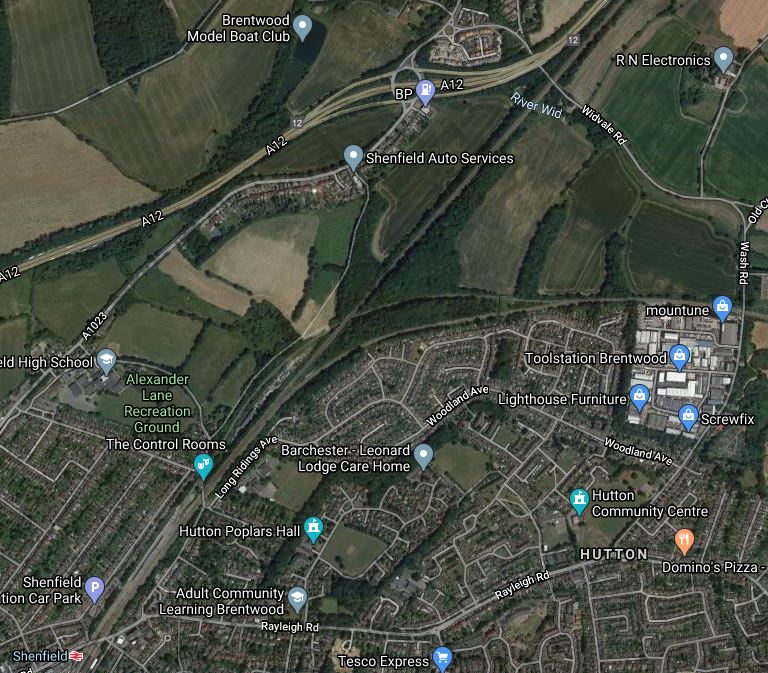
Note.
- Shenfield station is in the South-West corner of the map.
- The GEML goes straight in a North-Easterly direction to Ingatestone and Chelmsford.
- Ingatestone and Shenfield stations are about 3.5 miles apart.
- The Shenfield-Southend Line goes off to the East and connects to the GEML with a flying junction.
There would appear to be space to convert the flying junction into a full triangular junction by building chords, that allow access between the Shenfield-Southend Line and the GEML to Chelmsford.
Turning South At The A130
This Google Map shows where the Shenfield-Southend Line crosses the A130.
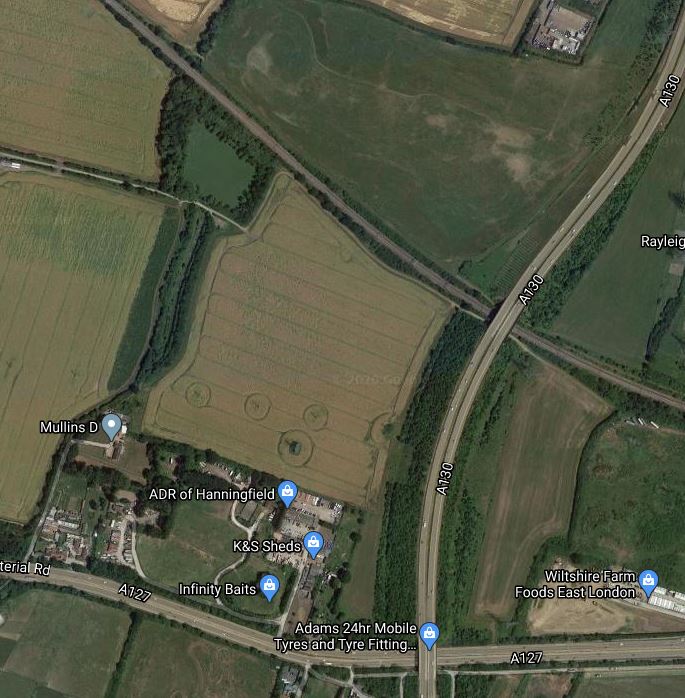
Note.
- The two major roads; the A130 and the A127 are clearly labelled.
- The Shenfield-Southend Line crosses the A130 from North-West to East.
- Billericay and Shenfield are to the North-West.
- Southend is to the East.
It looks like there is sufficient space to create a junction, which would allow trains to take a new rail line to and from the South, built alongside the A130.
The Connection At Pitsea Station
This Google Map shows the Southern section of the A130 that connects to the A13.
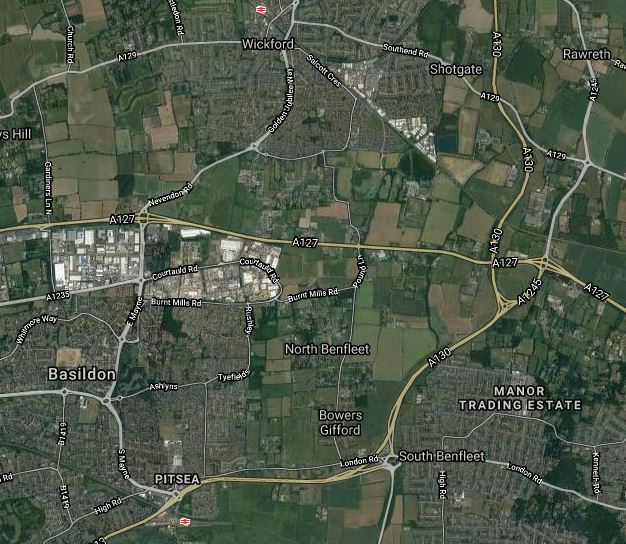
Note.
- Pitsea station is at the Southern side of the map.
- The A130 weaves its way North-South down the Eastern side of the map.
- The rail link could follow the A130.
The Google Map shows Pitsea station, the A13 and its junction with the A130.
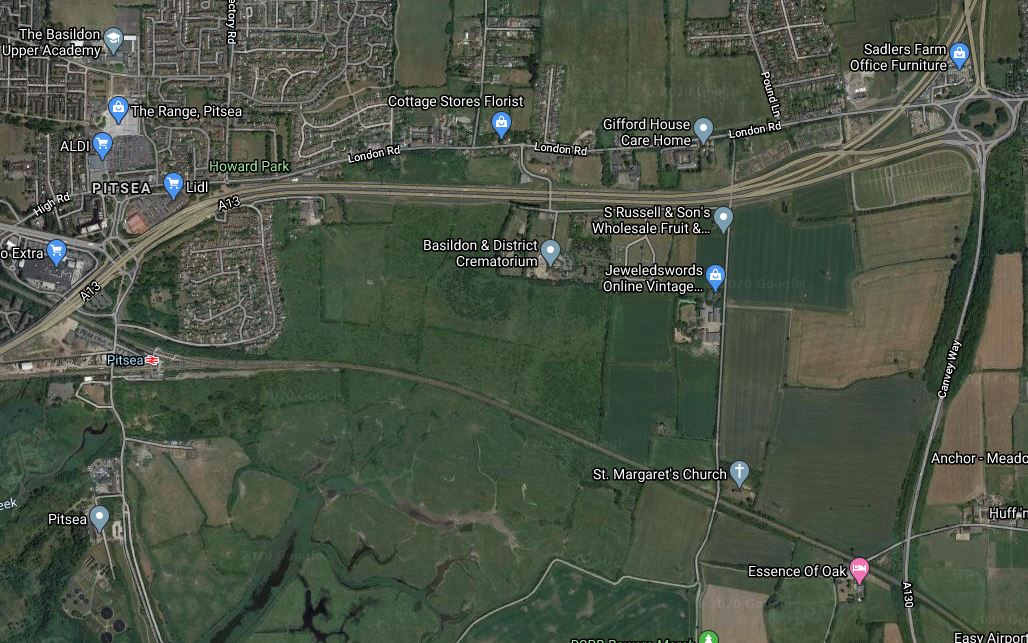
Note.
- The A13 going across the Northern side of the map.
- The A130 going down the Eastern side of the map.
- Pitsea station in the middle of the Western side of the map.
- The c2c railway between Pitsea and Southend Central stations going East from Pitsea station and passing to the South of St. Margaret’s Church.
It appears to me, that there would be enough space to build a full triangular junction between the rail link and the c2c railway.
A full triangular junction would enable trains to go between Chelmsford and all stations as far as Shoeburyness.
A Few Questions
These are a few questions.
Will Passenger Trains Use The Rail Link?
Consider.
- It would make it possible to create a direct train service that connected all the major towns in Essex; Colchester, Chelmsford and Southend.
- Chelmsford is the county town of Essex.
- Southend Central station has two West-facing bay platforms.
- Colchester station has a South-facing bay platform.
I think that the route must be built to perhaps allow an hourly CrossEssex service in both directions, at some date in the future.
Would There Be Any Stations On The Rail Link?
The route goes through Billericay and Wickford stations and also has a connection to the Crouch Valley Line.
How Long Is The Rail Link?
I estimate, it’s just under seventeen miles.
How Long Will Freight Trains Take Between Pitsea And Ingatestone?
The Felixstowe Branch is about twenty miles long and trains take a few minutes over the hour.
Will The Rail Link Be Single Or Double Track?
Despite the Covid-19 pandemic, there are still about a dozen trains going in and out of London Gateway on a typical day.
- This would be a train every ninety minutes in both directions on the rail link if they were all using it.
- London Gateway will expand.
- A passenger service on the rail link in the future, is a possibility.
- The Shenfield-Southend Line is double-track.
I feel that a single track railway would be short on capacity, so for preference, I’d build a double-track railway.
Will The Rail Link Be Electrified?
Consider.
- All passenger trains run by Greater Anglia and c2c to and from Southend are electric.
- Essex is a county where all rail lines are electrified, except for the spur that leads into London Gateway.
- The GEML and the lines to Southend have recently updated electrification.
- Freight trains can be hauled on the GEML by electric or bi-mode locomotives.
- Te section between the GEML and the A130 is already electrified.
It would be logical that the rail link should be electrified.
Thoughts About Capacity
Although a rai link between Pitsea and Ingatestone may be feasible, it doesn’t mean that it will be built.
- Will there be enough capacity across the Midlands or on the various routes to the North?
- Greater Anglia have ambitions and the trains to run more services.
- Would digital signalling on the GEML create extra capacity?
Extra Infrastructure
UK Gas Plans A Carbon-Free Future With Hydrogen
The title of this post is the same as that of this article on Eco Business.
This is the introductory paragraph.
A mixture of green hydrogen produced by surplus solar and wind power and bio-methane coming from farms and waste food will ensure the British gas industry a carbon-free future in 30 years, according to the country’s gas network operators.
It’s all part of a programme called Gas Goes Green.
It’s all part of a plan for the UK to go carbon-neutral by 2050, which is enshrined in UK law.
But there is competition to a hydrogen gas grid, as this paragraph from the article explains.
This ambitious plan faces some competition from the advocates of ground-source heat pumps as an alternative for heating homes. The pumps have the advantage of running on green electricity, and cut out the need for gas entirely, but they need to be installed in large numbers.
We should use every trick in the engineering locker to avoid generating carbon-dioxide. Ground source heat pumps, are ideal for new build properties.
I used a ground source heat pump for our indoor swimming pool at our house in Debach in the late 1980s. It was no trouble.
Daimler, Volvo Trucks Team Up On Hydrogen Fuel Cells For Heavy Trucks
The title of this post is the same as that of this article on Forbes.
This is the introductory paragraph.
Daimler and Volvo Trucks plan to collaborate on development and sales of fuel-cells for heavy-duty trucks, as the costs of new technology and uncertainty related to the coronavirus pandemic are pushing large manufacturers to pool resources.
It also appears, that they are open to other companies to join the over billion euro joint-venture.
To my mind, this deal is a massive endorsement of hydrogen, as the fuel of the future for heavy trucks and buses.
Battery-Powered Shunter Ready To Begin Testing
The title of this post is the same as that of an article in Issue 903 of Rail Magazine. The article describes how 08649, which is a Class 08 shunter is being converted to diesel-electric hybrid power.
- It appears, that the shunter wasn’t in the best of condition.
- A 6.8 litre John Deere diesel engine is to be fitted, which will be enhanced to Euro Stage 5.
- Tesla battery packs with a capacity of 300 kWh will be fitted.
- A bespoke control system is being developed.
The shunter is to be tested on the Chinnor & Princes Risborough Railway, when COVID-19 restrictions allow.
The reason for doing the work is not outlined in the article, although it does say this.
The work has been carried out by Meteor Power Ltd., which won a contract last year as part of the Department of Transport’s Innovation Carbon Reduction programme.
According to Wikipedia, 996 shunters were produced with another nearly two hundred similar shunters in other classes. Eighty two are deemed to have been preserved in Wikipedia, with sixty or so labelled as operational. Two operational examples are on the Chinnor & Princes Risborough Railway.
As some of the preserved examples are used by successful heritage railways and even commercial companies like Bombardier, perhaps Meteor have identified several possible commercial conversions.
Or it could be that Meteor want to show how their technology can reduce a company’s carbon emissions by re-putting a diesel engine with a hybrid transmission in a railway engine or a piece of heavy plant.
RENFE Ticket Offices Go Cashless
The title of this post is the same as that of this article on Railway Gazette.
This is the introductory paragraph.
National operator RENFE stopped accepting cash payments for tickets at booking offices with effect from March 27, citing hygiene reasons. The measure will last as long as the duration of coronavirus lockdown, now prolonged at least until mid-April.
Should we have done the same thing as Spain?
Passing Loop Hope For Windermere
The title of this post is the same as that of a small story in Issue 903 of Rail Magazine.
This is the opening sentence.
The local priority for the Windermere branch is for a passing loop to enable two trains an hour to operate.
These are the distances from Oxenholme Lake District station of the stations on the Windermere branch line.
- Kendal – 2.05
- Burneside – 4.02
- Staveley – 6.52
- Windermere – 10.15
Note.
- Distances are in miles.chains.
- The return distance of 20.30 miles should be within the capability of a battery-electric train, that left Oxenholme Lake District station with full batteries.
Halfway would surely be a convenient place for a passing loop, which would be a mile towards Windermere from Burneside.
This Google Map shows Burneside and Staveley stations and the countryside in between.
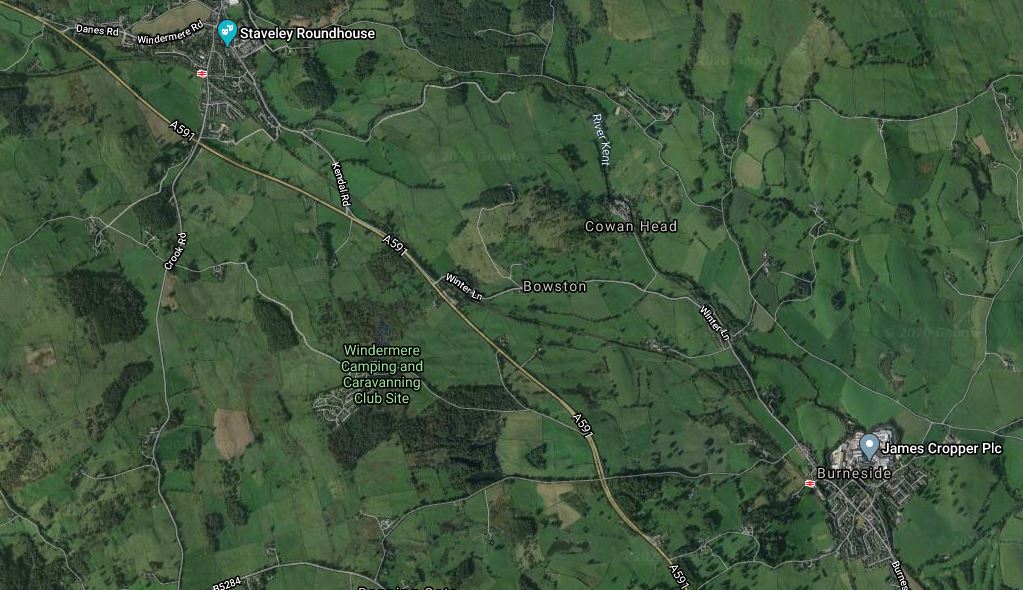
Note.
- Burneside station is in the South-East corner
- Staveley station is in the North-West corner.
- The North-East side of the route is mainly agricultural land.
It looks like a passing loop could be built in the region of Bowston.
- It would be approximately halfway.
- It would be on the North-East side of the existing track.
- It would need to be long enough to take the longest train likely to use the route.
- ,It would allow a doubling in frequency.
I don’t think it would be the most expensive of projects.
Operational Considerations
A half-hourly service could be run as follows.
- It seems likely that the trains will be four-car Class 331 trains, as I wrote about in Northern’s Battery Plans.
- Two trains would probably be timed to leave Oxenholme Lake District and Windermere stations at the same time.
- Trains currently take twenty minutes to travel along the branch and do the round trip in an hour.
- ,This twenty minute timing would give ten minutes to turn back the train at Oxenholme Lake District and Windermere.
- Ten minutes at each terminal station, should be enough time to fully charge the batteries for the next trip.
It should be noted that trains going to and from Manchester Airport would be able to charge their batteries on the electrified route between Oxenholme Lake District and Manchester Airport stations.
I think it would be likely, that there would be two services
- An hourly service between Windermere and Manchester Airport stations, which is the current service on the branch.
- An hourly shuttle service between Windermere and Oxenholme Lake District, which would be run by a single train.
The two services would alternate to provide the half-hourly service.
One of the advantages of a half-hourly service run by two trains, is that it may open the possibility of one train rescuing the other train if it fails.
If a train arrives at Windermere station with flat batteries, I suspect that as Windermere and Oxenholme have similar altitudes, that the second train could drag it back to Oxenholme station. Possibly without passengers.
Air Pollution May Be ‘Key Contributor’ To Covid-19 Deaths – Study
The title of this post is the same as that of this article in the Guardian.
This is the first two paragraphs.
High levels of air pollution may be “one of the most important contributors” to deaths from Covid-19, according to research.
The analysis shows that of the coronavirus deaths across 66 administrative regions in Italy, Spain, France and Germany, 78% of them occurred in just five regions, and these were the most polluted.
I think that this report could prove significant. But I have no idea why!
I grew up in a very polluted London, where regularly at Primary School we would be sent home early as the smog was so bad. In those days of the 1950s, there were few immigrants and I only remember one black person at school. She was the Deputy Head Girl! The few immigrants at school, were generally Poles, although I do remember one Spanish boy.
Southeastern Signs Deal To Lease Unwanted Class 707s
The title of this post is the same as that of this article on Rail Magazine.
This is the introductory paragraph.
New trains made redundant before they even entered traffic are set for a new home, with Southeastern signing a deal to lease the 30 five-car Class 707s.
These pictures show Class 707 trains.
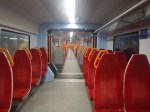
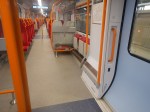
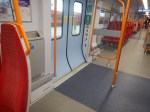
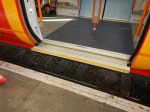
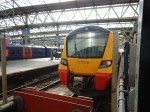
Having ridden in the trains many times, the trains don’t seem to have a major problem, except for the high step, which isn’t very wheel-chair friendly.
I can summarise the Class 707 fleet as follows.
- Thirty trains of five cars.
- 100 mph operating speed.
- Metro interior with lots of space, as I wrote about in The Space In A Class 707 Train.
- Air-conditioing
- 275 seats
- Built in 2014.
- Wi-fi
Looking at Southeastern fleet, they have a fleet of Class 376 trains.
- Thirty-six trains of five cars.
- 75 mph operating speed.
- Metro interior.
- 228 seats
- Built in 2004
Could it be that the Class 707 trains will replace these?
- They are ten years younger
- They have more seats.
- They are 25 mph faster and probably have better acceleration.
The Class 707 have better passenger features like air-conditioning, power sockets and wi-fi. They may also have shorter dwell times in stations, just because they are newer trains.
On the other hand, the fleet is six trains smaller.
I do wonder though, if the Class 707 trains are faster over a metro route, than the Class 376 trains, because of better performance, does this mean that fewer trains can work Southeastern’s metro routes?
Kent On The Cusp Of Change
The Kent On The Cusp Of Change article in the July 2017 Edition of Modern Railways discusses the improvements that may be made by the new franchisee of the Southeastern franchise.
In Kent On The Cusp Of Change – Elimination Of Slow Trains, I outlined the reasons for replacing the 75 mph trains in Southeastern’s fleet.
There are three sub-fleets of 75 mph trains.
- 36 x Class 376 trains
- 147 x Class 465 trains
- 43 x Class 466 trains
Note.
- The Class 465 and 466 trains generally work in ten-car formations of 2 x Class 465 and 1 x Class 466 trains.
- The Class 465 and 466 trains have toilets, but the Class 376 trains don’t.
- The Class 465 and 466 trains work both Main Line and Metro services.
- Surely, 75 mph trains will slow up Main Line services.
- I doubt that Class 707 trains can run Main Line services, unless they were updated with toilets.
It should also be noted that the trailer cars of Class 465 trains may be needed to lengthen Class 165 and 166 trains, as I wrote about in Shuffling The Class 165 Trains, where I estimated that sixty trailer cars would be needed from the Class 465 fleet.
I can see an intricate strategy being developed with the following objectives.
- Introduce the Class 707 trains on Southeastern’s Metro services.
- Withdraw sixty Class 465 trains so they can donate trailer cars to lengthen Class 165/166 trains.
- Reorganise some services, so Main Line services can be all 100 mph trains.
Southeastern may need to acquire some additional rolling stock.
- South Western Railway‘s thirty-six Class 458 trains, which are soon to be replaced with new Class 701 trains are a long-term possibility.
- South Western Railway’s ninety-one Class 455 trains, which are soon to be replaced with new Class 701 trains could be a stop-gap. Built in 1982, they still look good as I wrote in It’s Not A New Train.
- Greater Anglia will be withdrawing thirty Class 379 trains, which could be converted to third-rail operation and at the moment are homeless.
The first two fleets are 75 mph trains, but the Class 379 trains are 100 mph units, that could be ideal to support Southeastern’s Main Line services.
Conclusion
The Class 707 trains look like a good replacement for the Class 376 trains.
But because there appears to be a need for trailer cars to strengthen GWR’s Class 165 and Cass 166 trains, there also appears to be a need to withdraw some Class 465 trains, which creates the need for some detailed planning.
 The Anonymous Widower