What Percentage Of People In The UK Survive COVID-19?
This is only a simple analysis based on the COVID-19 statistics published on Sunday, 26th April.
- So far 152,840 people have been lab confirmed as having COVID-19.
- There has also been 20,732 deaths in hospitals.
- Suppose another 25% have died in care homes or in their own bed.
- That would give a total of 25,915 deaths.
- So rather crudely, if you get tested positive for COVID-19, you have a 17% chance of dying. What is the chance of dying from a serious stroke or breast cancer?
- On the other hand 126,925 or 83% have survived.
- Some, let’s say 20,000 are in ICU beds in hospitals, reducing the figures to 106,925 or 70% that survived.
We should be examining these seventy percent to see why they survived.
The official statistics concentrate on the negative side, but don’t publish figures like how many left hospital for convalescence at home or in an ordinary hospital ward!
Update – 27th April 2020
The actual figure of those in ICU beds yesterday was 18,667, which makes the figures 108, 258 and 71% have survived.
Steventon Listed Railway Bridge Saved From Demolition
The title of this post, is the same as that of this article on the BBC.
On the face of it it looks like victory for the Nimbys, who have saved a rather ordinary and possibly decrepit bridge from demolition.
But I believe there is more to this story than meets the eye.
The Bridge
The bridge at the centre of the argument may be Grade 2 Listed, but there are lots of similar bridges on UK railways in better condition with similar heritage, that don’t have a listing.
Type “steventon bridge electrification” into a search engine and you’ll find lots of images of the bridge.
- One picture shows, the bridge with the railway flooded, which puts an interesting slant on the debate. What are the foundations like?
- Notice, that the bridge seemed to suffer a rather botched repair at the hands of British Rail’s finest engineers.
- Having read a lot about this story, I suspect that the locals’ main reason for objecting, is that they don’t want the disruption, whilst it is rebuilt.
- Incidentally, I suspect Great Western Railway don’t want the bridge rebuilt either, as closure will be a long disruption to all services.
I have been involved in the refurbishment of several buildings of around the same age or even older than the bridge. This is the sort of construction, that will have to be replaced at some time. If it’s not replaced, some of the novel techniques that are now available to Network Rail will have to be applied.
Network Rail
The article says this about Network Rail’s solution to the problem.
But following what the company described as ‘extensive and breakthrough testing’ using computer simulations it found a speed reduction to 110mph through the village meant wires could pass underneath the existing bridge.
I do think, that 110 mph is rather convenient. if you look at the maximum operating speeds of trains and locomotives that will pass through.
- Class 801 train with digital signalling -140 mph
- Class 801 with conventional signalling – 125 mph
- Class 800/802 train on diesel power – 100 mph
- Class 80x train on battery power – 100 mph
- Class 387 train – 110 mph
- Class 90 locomotive – 110 mph
- Class 91 locomotive – 125 mph
- Class 93 locomotive – 110 mph
- High Speed Train – 125 mph
Very few trains will have to slow down.
Any train that used onboard power, like a High Speed Train or a Class 80x with batteries, could theoretically go through at the maximum speed, track, signalling and train taken together would allow.
Hitachi
In Issue 898 of Rail Magazine, there is an article, which is entitled Sparking A Revolution, which describes Hitachi’s work and plans on battery-powered trains. This is an extract.
Battery power can be used as part of electrification schemes, allowing trains to bridge the gaps in overhead wires where the costs of altering the infrastructure are high – in tunnels or bridges, for example. This would also have the immediate benefit of reducing noise and emissions in stations or built-up areas.
Elsewhere in the article, it is said that Hitachi trains will be able to do 100 mph on battery power for up to 60 miles.
But would they be able to do 125 mph on battery power for perhaps five miles? I can’t see why not!
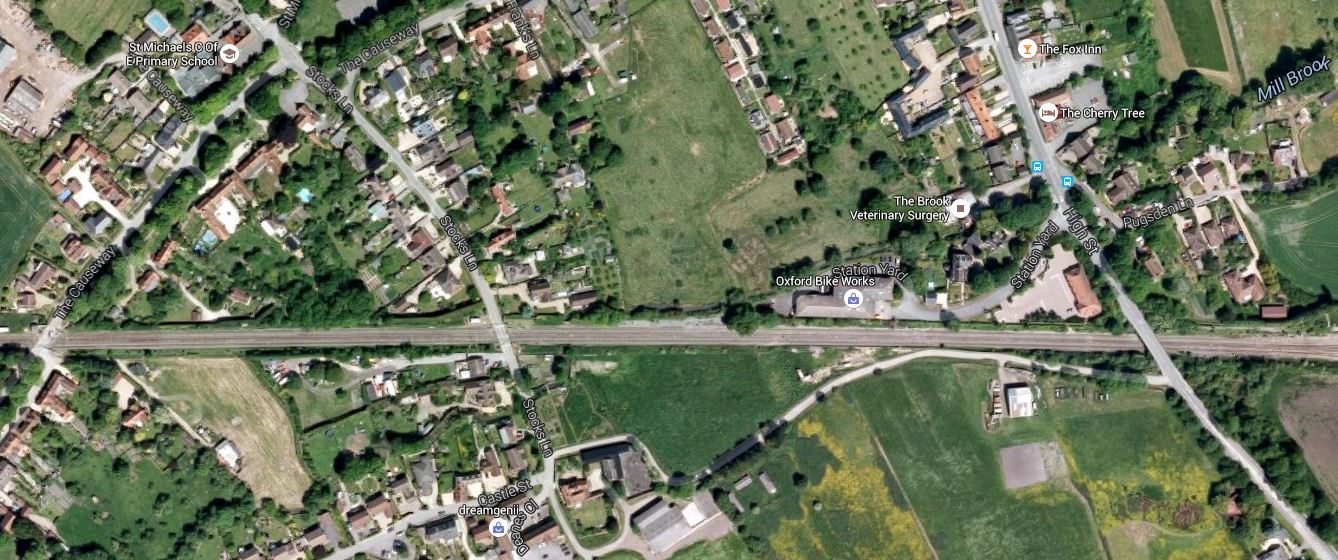
The Google Map shows the track through Steventon.
Note.
- The bridge in question is at the East.
- There are also a couple of level crossings in this stretch of track, where the height of wires is also regulated.
Perhaps, the pantograph should be dropped before going through section and raised afterwards, with power in the section taken from a battery.
Avoiding obstacles like this, may be an economic alternative, but it does require that all electric trains using the section are able to use battery power.
I have a feeling, I’ve read somewhere that a Class 88 locomotive can do a similar trick using the onboard diesel engine.
As a Control Engineer, who trained in the 1960s, I would expect that all pantographs can now be raised or lowered with all the precision and repeatability of an Olympic gold-medal gymnast!
I do wonder, if the Great Western Electrification Project had been designed around discontinuous electrification and battery-electric trains, the project would have gone better.
For instance, the Severn Tunnel is 7,000 metres long and trains take under four minutes to pass through. The Wikipedia entry for the tunnel has a section on Electrification, which details the complicated design and the trouble that there has been with corrosion.
Given that battery-electric trains have other advantages, design by hindsight, says that a tunnel without electrification and battery trains may have been a better solution.
Conclusion
Network Rail and Hitachi will get the speed of trains through Steventon up to 125 or even 140 mph, possibly by using battery power.
But whatever happens, I’m certain that the bridge will have to be rebuilt! It has the air of a derelict house, that will suck up all your money.
When The New Newport Railway Line To Cater For Major Events Is Set To Open
The title of this post is the same as that of this article on Wales Online.
If you’ve ever been to a major event at the Principality Stadium in Cardiff, as I have a couple of times, you’ll know that getting your train back to England can be a long wait.
So the Welsh have come up with a cunning plan to build a staging area, where they can hold trains near the former Llanwern steelworks site at Newport.
- It will be 2.4 km. long.
- I estimate that a nine-car Class 801 train is 234 metres long and holds 611 passengers, so the siding can hold ten trains which have a capacity of over six thusand passengers.
- It is part of a £50million plan for a new Llanwern station, which is part of the South Wales Metro.
- It will also be used for the testing of trains. It is very handy for CAF’s Newport factory.
This Google Map shows the site, with CAF’s factory highlighted.
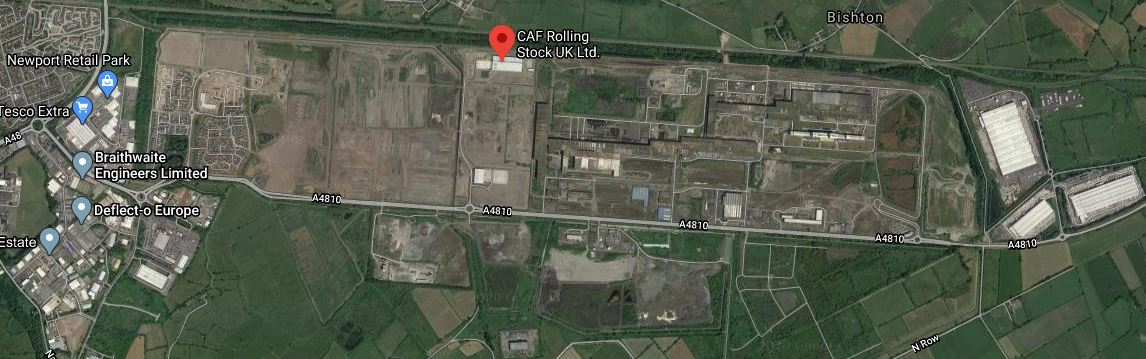
Note the South Wales Main Line running along the North of the massive steelworks site. So if the staging area, is built between the main line and the steelworks site, which contains the CAF factory, it will be convenient for both uses.
This looks to be a good plan, that will solve more multiple problems and needs.
The First Train To The New Platform 5 At Stevenage Station
I was sent this video, by the creator.
Visiting Stevenage from my local Essex Road station, is high on my list of priorities once COVID-19 has been given the good kicking it deserves.
Electrification Between Exeter And Plymouth
Eventually, there will be electric passenger trains between Exeter and Plymouth! Great Western Railway’s objective must be for passengers to board their Hitachi AT-300 train at Paddington and be powered all the way to Penzance by electricity, without using a drop of diesel. The added ingredient will be battery power.
In Sparking A Revolution, I gave Hitachi’s specification for a proposed battery-electric train.
- Range – 55-65 miles
- Performance – 90-100 mph
- Recharge – 10 minutes when static
- Routes – Suburban near electrified lines
- Battery Life – 8-10 years
As the distance between Exeter and Plymouth is 52 miles, the Hitachi specification could have been designed around this route, which as these pictures show is in places, very close to the sea, where the line runs along the South Devon Railway Sea Wall.



Global warming will probably mean, we’ll see a repeat of the major sea wall breach that happened at Dawlish in 2014.
I would suspect that the Network Rail’s solution to the problems of efficient low or zero-carbon traction between Exeter and Plymouth includes the following.
- A very robust railway.
- Extreme protection from almost everything the sea and the weather can produce.
- Could we see some concrete tunnels, like the Swiss and others use in mountainous areas to protect from snow? Rail Magazine says yes! At Horse Cove.
- No electrification as water and electricity are not a good mix, except in an electrolyser to produce hydrogen, oxygen and/or chlorine.
- Battery or hydrogen-powered passenger trains or freight locomotives.
- Digital in-cab signalling. Traditional signalling is even more expensive equipment to be swept away.
From media reports, this looks like the way Network Rail are thinking.
Charging The Trains
Battery-electric trains will need to be charged. There are three convenient stations; Exeter St. Davids, Newton Abbott and Plymouth.
- All have multiple platforms.
- The stations could be given the ability to charge battery-electric trains, either using 25 KVAC overhead electrification or a specialist charging system, like the one designed by Vivarail, that I wrote about in Vivarail Unveils Fast Charging System For Class 230 Battery Trains.
- Newton Abbot station would also charge any trains running on the eight mile branch to Paignton station.
As far as passenger services are concerned, it could be a very efficient zero-carbon railway.
Electrification At Exeter St. Davids
Exeter St. Davids is an important hub for services between Devon and Cornwall and the rest of Great Britain.
- GWR services run to London Paddington via Newbury.
- GWR services run to London Paddington via Bristol
- GWR services run to Plymouth and Penzance via Newton Abbott.
- GWR local services run to Barnstaple, Exmouth and Paignton.
- CrossCountry services run to the Midlands, North and Scotland via Bristol.
- South Western Railway services run to London Waterloo via Basingstoke.
In future, there could be services running to Plymouth on the reopened route via Okehampton and Tavistock.
All these services could be run by battery-electric trains for sixty miles from Exeter, if they could be fully-charged at the station.
Note.
- Trains to London Paddington and Bristol could easily reach Taunton, which is thirty miles away.
- Trains to London Waterloo could reach Yeovil Junction, which is fifty miles away.
- Trains to the West could reach Plymouth, which is fifty-two miles away.
- Barnstaple is forty miles away, so would probably need some help to get back.
- Exmouth is eleven miles away, so a return journey is probably possible.
- Paignton is twenty-eight miles away, so a return journey is probably possible, with a top-up at Newton Abbot if required.
Exeter is going to be very busy charging trains.
It should be noted, that trains to and from London Paddington and Bristol, all share the same route as far as Cogload Junction, where the London Paddington and Bristol routes divide.
- Cogload Junction is thirty-six miles from Exeter.
- Cogload Junction and Newbury, where the electrification to London Paddington starts are eighty-five miles apart.
- Cogload Junction and Bristol Temple Meads, where the electrification to London Paddington starts are forty miles apart.
I wonder if it would be sensible to electrify between Exeter St. David station and Cogload Junction.
- From my virtual helicopter, the line doesn’t look to be in the most difficult category to electrify.
- There is only one tunnel and a few old bridges and a couple of level crossings.
- Some of the route is alongside the M5.
- Trains would arrive in Exeter with full batteries and could do a quick stop before continuing their journeys.
- Trains would arrive at Cogload Junction and could reach Bristol Temple Meads without stopping for a recharge.
- Bristol services that are extended to Taunton and Exeter could be run by battery-electric trains.
I also feel, that with upwards of twenty-five miles of extra electrification between Cogload Junction and Newbury, that battery-electric trains could run between London Paddington and Exeter via the Reading-Taunton Line.
Electrification At Plymouth
As with Exeter St. Davis, Plymouth is an important hub for services between Devon and Cornwall and the rest of Great Britain.
- Most services run to Penzance in the West and Exeter in the East.
- There is a local service to Gunnislake, which is fifteen miles away.
Lots of charging capacity, will enable battery-electric trains to reach their destinations, except for Penzance
Trains Between Plymouth And Penzance
Hitachi must have despaired, when it was pointed out that the distance between Penzance and Plymouth is eighty miles! This is fifteen miles longer than the range of their proposed battery-electric train.
The simplest solution would be to build a battery-electric train with an eighty mile range, that could travel between Plymouth and Penzance on a single charge. With charging at Penzance it could return to Plymouth.
The longer range, would also mean that, with perhaps ten extra miles of electrification, that battery-electric trains could bridge the electrification gap between Cogload Junction and Newbury.
Other solutions range from selective electrification, all the way up to full electrification of the Cornish Main Line.
It should be noted that there are the following branches on the Cornish Main Line.
- The Looe Valley Line at Liskeard station – 8.75 miles – Uses a separate platform at Lskeard
- The Fowey Branch At Lostwithiel station – 4.75 miles – Possible reopening
- The Atlantic Coast Line at Par station – 20.75 miles – Uses a separate platform at Par
- The Maritime Line at Truro station – 11.75 miles – Uses a separate platform at Truro
- The St. Ives Bay Line at St. Erth station – 4.25 miles- Uses a separate platform at St. Erth
If these branches are going to be served by battery-electric trains, arrangements will have to be made for their charging. This could either be on the main line, at the remote terminal or at both.
Would it be easier to run the branches using battery-electric trains, if the Cornish Main Line was fully electrified?
The Cornish Main Line also carries a number of heavy freight trains, most of which seem to be going to or from Burngullow, so I suspect they are in connection with the movement of china clay.
Currently, these heavy freight trains appear to be hauled by diesel locomotives, but if the Cornish Main Line were to be fully electrified, could they be run by electric locomotives?
Electrification Of A Reopened Northern Route
In the May 2020 Edition of Modern Railways, there is an article, which is entitled Beeching Reversal Fund Bids.
This is the introductory paragraph.
Bids have been submitted to Government for a share of the £500 million ‘Restoring your railway’ fund launched by the Department for Transport in January. The fund is to be used to support proposals to reinstate axed local services, to accelerate schemes already being considered for restoration and also to promote new and restored stations.
One of the bids is for the Tavistock-Okrhampton Reopening scheme (TORs), which would reopen the former Exeter to Plymouth railway of the LSWR, as a new route between Exeter and Taunton in the East and Plymouth in the West.
- The original railway was double-track.
- Most of the infrastructure is intact.
- The route would totally avoid Dawlish.
This is also said in the Modern Railways article.
It proposes journey times could be as little as six minutes longer than via the existing route between Exeter and Plymouth and that there could be opportunities for freight trains to avoid the steep gradients over the Devon banks between Newton Abbott and Plymouth. Provision of electrification for TORs as part of a wider programme for main lines in the region is also advocated.
Could an electrified route via Tavistock and Okehampton be connected to an electrified Cornish Main Line, to create an electrified route across Devon and Cornwall?
Connecting At The Royal Albert Bridge
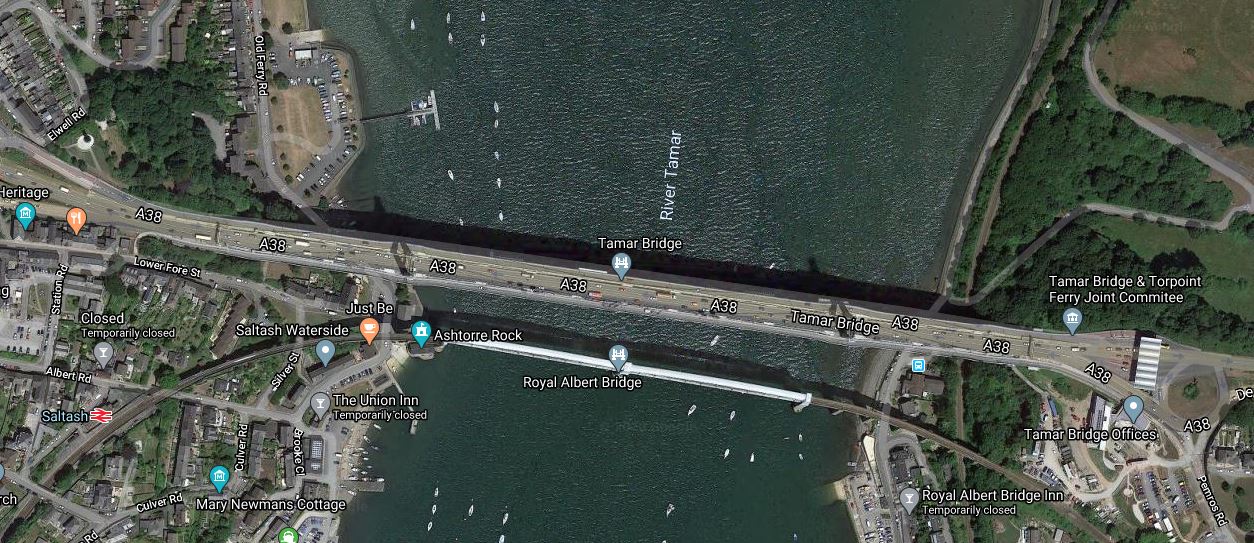
This Google Map shows the Royal Albert Bridge and the Tamar Bridge over the River Tamar.
Note.
- The Royal Albert Bridge to the South of the modern Tamar Bridge.
- The Great Western Main Line running East to Plymouth and West to Penzance.
- The Tamar Valley Line running up the Eastern bank of the River Tamar and under the Eastern approaches to both bridges.
- Going North on the Tamar Valley Line leads to the TORs and going South leads to Plymouth station.
I can see a difficult design problem at the Eastern end of the Royal Albert Bridge, as a very complicated junction will be needed to allow all trains go the way they need.
Trains wanting to call at Plymouth station and use TORs will need to reverse in the station.
Connecting At The East Of Exeter
This Google Map shows The Tarka Line and the Bristol-Exeter Line join at Cowley Bridge Junction.
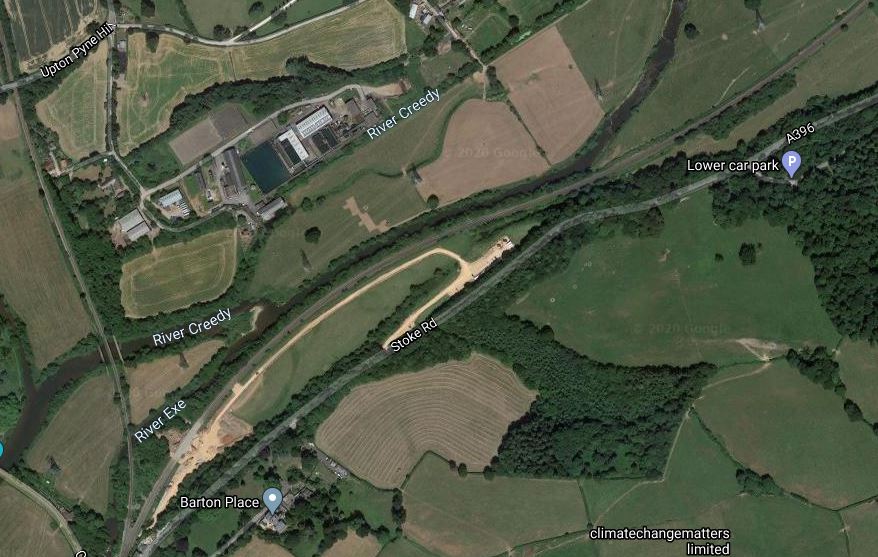
Note.
- The Tarka Line to Barnstaple and TORs leaves the map in the North West corner.
- The Bristol-Exeter Line to Taunton, Bristol and London Paddington leaves the map in the North East corner.
- Cowley Bridge Junction is in the South West corner of the map.
- Cntinuing South West leads to Exeter St. David’s station.
It looks to me, that Cowley Bridge Junction will need to be made into a full triangular junction, so that trains can go directly between the Bristol-Exeter Line and the Tarka Line.
Trains wanting to call at Exeter St. David’s station and use TORs will need to reverse in the station.
The Reversal Problem
If you wanted to run a passenger service between Taunton and Penzance using TORs with stops at Exeter, Okehampton, Tavistock, Plymouth and Truro, the train would need to reverse twice at Exeter and Plymouth.
These days with modern fast bi-mode multiple units, it’s not a problem, but in the days of Beeching, when the Tavistock and Okehampton route was originally closed in 1968, there probably wasn’t a suitable train other than a slow two-car diesel multiple unit.
I think, that fast expresses to and from Penzance will still take the current route.
- Battery-electric trains can handle the route at 100 mph.
- No reversals will be needed.
- There is a call at Newton Abbott for connections to Torquay and Paignton.
- Passengers wanting Okehampton, Tavistock and other stations on the TORs route can change at Exeter or Plymouth.
The Modern Railways article says this about services on the TORs route.
The case suggests that services could operate as an extension of the SWR Waterloo to Exeter service, or potentially as an extension of CrossCountry services beyond Exeter. During periods when the coastal route is blocked, additional services could use the TORs route, potentially running non-stop.
Note.
- As the extension of the SWR service would run the other way through Exeter St. David’s station, there would be no need to reverse.
- But I suspect the CrossCountry service would need the reverse.
- I feel for efficiency, that diverted freight services would need the efficient junctions at each end of TORs.
It probably would have helped if the Great Western and the London and South Western Railways had had a better crystal ball.
Fast Electric Freight Services To And From Devon And Cornwall
If the following lines are electrified.
- Cogload Junction and Exeter
- TORs
- Cornish Main Line
I feel that electric freight services will be able to run between Taunton and Penzance.
All it would need to complete the electrified route would be to electrify the following.
- Cogload Junction and Bristol
- Cogload Junction and Newbury
What would a high-speed freight route do for the economy of the two South Western counties?
Beeching Reversal Fund Bids
The title of this post, is the same as that of an article in the May 2020 Edition of Modern Railways.
This is the introductory paragraph.
Bids have been submitted to Government for a share of the £500 million ‘Restoring your railway’ fund launched by the Department for Transport in January. The fund is to be used to support proposals to reinstate axed local services, to accelerate schemes already being considered for restoration and also to promote new and restored stations.
Some of the bids are detailed.
Okehampton And Tavistock
If you were deciding what lines shouldn’t have been closed by British Rail in the 1960s, by hindsight, the Exeter to Plymouth railway of the LSWR, would be a railway that you wouldn’t close.
- The Northern route would be a valuable diversion, when the sea and the weather decide to attack Dawlish again. as they did in 2014.
- When COVID-19 is over, there will be more people going to Devon and Cornwall. A second rail route would be invaluable to get traffic off the roads.
- Attitudes are changing about zero-carbon travel and this will also nudge passengers towards rail.
- Four tracks between Exeter and Plymouth would allow more freight services to take trucks off the road.
- There may be new developments along the Northern route.
- It may be even be possible to electrify the Northern route.
At least, British Rail left the viaducts and bridges intact.
The Modern Railways article says this.
In the West Country, a new Northern Route Working Group has submitted a bid to the fund to develop a Strategic Outline Business Case for reopeing the former London and South Western Railway Main Line between Exeter and Plymouth via Okehampton and Tavistock. The proposal is backed by four local MPs and the working group of industry personnel.
These points are also made.
- The reopening is crucial to the resilience of the network.
- Reopening is complimentary to the ongoing work at Dawlish.
- Devon County Council is leading plans to reopen the 5.5 miles between Bere Alston and Tavistock.
- Devon County Council is pushing for a daily service between Exeter and Okehampton.
- The previous two developments, would leave the 16 miles between Tavistock and Okehampton to be restored.
- Much of the route is intact and structures survive, but some track has been sold off.
- The route will be useful during closure of the coastal route through Dawlish.
- Journey times might be only six minutes longer.
- It might be an easier route for freight trains.
As I said earlier, the proposers of the scheme think electrification could be possible.
Stratford And Honeybourne
The Modern Railways article says this.
A bid has been submitted for £75,000 to carry out an Economic Impact Assessment regarding reopening of the Stratford-upon-Avon to Honeybourne route.
These points are also made.
- The Honeybourne station and Long Marston section is in use to connect the Cotswold Line and the rail facility at Long Marston.
- The Long Marston and Stratford-upon-Avon station section has been safeguarded for reopening.
- Reopening is estimated at £110million.
- The assessment would enable benefits to be quantified.
Nothing is said about whether the route will be single or double track or what services will be run on the line.
There’s more on the Shakespeare Line web site.
This is said about train services.
- A reopened railway could provide the ability to operate orbital train services in both directions between Birmingham-Stratford-Evesham-Worcester-Birmingham providing connections for South Wales and South West at the new Worcestershire Parkway station.
- The reopened line would provide the ability to operate direct train services with a 12 mile shorter route between Stratford upon Avon, the Cotswolds, Oxford, Reading, Heathrow Airport and London Paddington.
I also think, I’ve read that the line could be used by freight services and heritage services on the Gloucestershire Warwickshire Railway, which could link Birmingham and Cheltenham.
It does appear to be a rail link with potential.
Rawtenstall Line
The Modern Railways article says this.
Meanwhile, Rossendale Council has submitted an application to the fund seeking to propose reinstatement of passenger services on the Rawstenstall Line, now part of the East Lancashire Railway.
A study published in 2018 determined that reinstating services along the ELR and then joining the Manchester to Rochdale Line would be feasible.
These points are also made.
- Rossendale is the only council in Lancashire without a rail link.
- 60 % of residents leave the borough each day for work.
Tram-trains have also been proposed for this route, as I wrote about in Could A Class 399 Tram-Train With Batteries Go Between Manchester Victoria And Rochdale/Bury Bolton Street/Rawtenstall Stations?
Conclusion
This is the closing paragraph of the article.
In addition to those mentioned, it is likely that other bids will have been submitted to the fund.
It certainly looks like the money in the fund, will be bid for, by worthwhile projects.
Trump’s Fake News
This article on the BBC is entitled Coronavirus: Trump’s Disinfectant And Sunlight Claims Fact-Checked.
This is the introductory paragraph.
President Donald Trump has questioned whether injecting people with disinfectants and exposing patients’ bodies to UV light could help treat the coronavirus.
The article then goes on to demolish Trump’s claims with the full force of scientifically-correct evidence.
Do they have whelk stalls in the United States? Trummkopf certainly doesn’t have the intelligence to run one!
DHL Targets 10-day China – Europe Transit Time
The title of this post, is the same as that of this article on Railway Gazette.
A few points from the article.
- The route is 9,400 km long.
- The train goes through Kazakhstan, Russia, Belarus, Lithuania and Russia’s Kaliningrad exclave.
- Entry to the EU is at Braniewo in Poland.
- The current terminals are Xi’an in China and Hamburg and Neuss in Germany.
- Other proposed terminals include Budapest and Milan.
- Estimated transit time is 10-12 days, as opposed to the current 15-plus days.
I’ve actually been to the area around Braniewo, which before the Second World War was partly in Germany. I wrote Railways In North East Poland about my trip, which was mainly to see wildlife.
We also got to see the Russian border.




The tag Poland In Winter shows all the posts from that trip.
Is Undiagnosed Coeliac Disease A Possible Explanation For High Deaths From Covid-19 Amongst Those Of Caribbean And Jewish Heritage?
In The Times today, they publish a list today of deaths per 100,000 people, who died in hospital from Covoid-19.
- Caribbean – 70
- Any other black – 48
- Total black – 43
- Indian – 30
- Any other Asian – 27
- All Asian – 27
- African – 27
- Overall – 26
- Pakistani – 26
- White British – 23
- Bangladeshi – 20
Some things jump out from the data,
- Those of Asian, African and Pakistani heritage have death rates similar to the general population.
- Bangladeshis do rather well, which is contrary to the expectations of some people.
- Those from the Caribbean, fare much worse than other black groups and Africans.
In the statistics, one group of immigrants were ignored. I live in Hackney and there have been a large number of Orthodox Jewish immigrants to the borough in recent years. From statements, by the Chief Rabbi, in The Times and on BBC Radio, he is worried and has closed all the synagogues under his control. Separating this group might give an insight into the data.
Recently my GP, asked if I had been vaccinated against measles, as Hackney is a measles hotspot. I haven’t been vaccinated, but I have had the disease. Apparently, the Orthodox Jewish groups have low vaccination rates.
I am also coeliac, which means I have a gluten allergy. Mine comes from an Ashkenazi Jewish line from the Baltic, but coeliac disease is also present in the Irish and some West Africans. In these three groups, historic famine seems to be the cause. Over the years, I have met several coeliacs from Jamaica and other islands in the West Indies, but never have I met any from Asia or East Africa.
Various research into coeliac disease has shown, that as many as one in a hundred of the UK population could be undiagnosed coeliacs. I wasn’t diagnosed until I was fifty, twenty years ago, so sufferers do slip through the net.
But research from Nottingham University has also shown, that coeliacs on a gluten-free diet are less likely to suffer from cancer, than the general population. Could this be because this group has a strong immune system, which gets an immune response in early on the cancer?
Undiagnosed Coeliacs And Pollution
I can speak of this with authority, as that was me as a child.
I grew up in Southgate in North London and the air was polluted with the smoke from domestic coal fires. I suffered badly and was a very unhealthy child, who regularly had three months off school.
My health improved about ten and it could have been one of three factors.
- I was exercising more, having learned to ride a bike.
- My parents had bought a house in Felixstowe, where we tended to spend lots of boring weekends and holidays.
- The Clean Air Act of 1956 had cleaned up London’s air.
My breathing certainly improved and I was a good enough athlete to make a school team at fifteen.
Recent research has shown, that there can be a link between air pollution and COVID-19. I wrote about this in Air Pollution May Be ‘Key Contributor’ To Covid-19 Deaths – Study.
These days, even in a polluted street, I don’t suffer much at all, but then I’m on a strict gluten-free diet!
Although, I do find that my breathing improves in the Spring, when we start to get longer days with lots of sunshine.
Undiagnosed Coeliacs And Strokes
I had my serious stroke because of atrial fibrillation. My father died after two serious strokes. He must have been coeliac, so were his strokes caused by the same reason as mine?
I have talked with cardiac specialists and they have felt, that my fifty years as an undiagnosed coeliac could have damaged my heart muscle to cause the atrial fibrillation.
Slavery
It would not be right to ignore slavery.
Millions of Africans were taken from West Africa to America and the Caribbean and they were probably fed nothing more than bread and water most of the time.
Did this increase the predominance of coeliac genes in those that survived the horrific treatment?
What Are The Bangladeshis Doing Right?
As a coeliac, if I’m stuck in a town, that is unknown to me and I need a meal, I’ll often go to the smartest Indian (Bangladeshi?) restaurant, as I’ve never found one with cloth tablecloths and napkins, that doesn’t do good gluten-free food. The only wheat they use is in the nans!
So has this diet given Bangladeshis a good immune system?
What Is The Figure For Jewish People?
In this article in The Times, Melanie Phillips says this.
As of last Friday, 335 British Jews had died of the virus, more than five times their proportion in the population.
Wikipedia gives the number of British Jews as 263,346 in the 2011 Census.
A rough estimate using these figures gives a figure of 127 per 100,000 of the population.
Conclusion
Could undiagnosed coeliac disease be the unexplained link as to why people with Caribbean heritage have higher deaths than those with African?
GWR and DfT’s Commitment To The Night Riviera
The May 2020 Edition of Modern Railways has an article, which is entitled West Of England Improvements In GWR Deal.
Under a heading of Sleeper Planning, this is said about plans for the Night Riviera.
Whilst GWR is already developing plans for the short term future of the ‘Night Riviera’ sleeper service, including the provision of additional capacity at times of high demand using Mk. 3 vehicles withdrawn from the Caledonian Sleeper fleet, it is understood the company has been asked to develop a long-term plan for the replacement of the current Mk. 3 fleet of coaches, constructed between 1981 and 1984, as well as the Class 57/6 locomotives, which were rebuilt in 2002-03 from Class 47 locomotives constructed in the early 1960s.
This must show commitment from both GWR and the Department for Transport, that the Night Riviera has a future.
These are a few of my thoughts on the future of the service.
The Coaches
I would suspect that GWR will opt for the same Mark 5 coaches, built by CAF, as are used on the Caledonian Sleeper.
I took these pictures on a trip from Euston to Glasgow.










The coaches don’t seem to have any problems and appear to be performing well.
The facilities are comprehensive and include full en-suite plumbing, a selection of beds including doubles and a lounge car. There are also berths for disabled passengers.
The Locomotives
The Class 57 locomotives have a power output around 2 MW and I would suspect a similar-sized locomotive would be used.
Possible locomotives could include.
- Class 67 – Used by Chiltern on passenger services – 2.4 kW
- Class 68 – Used by Chiltern, TransPennine Express and others on passenger services – 2.8 MW
- Class 88 – A dual-mode locomotive might be powerful enough on diesel – 700 kW
I wouldn’t be surprised to see Stadler come up with a customised version of their Euro Dual dual-mode locomotives.
 The Anonymous Widower