Cardiff Parkway Station: Work To Start In 2020
The title of this post, is the same as that as this article on the BBC.
This is the first two paragraphs.
Work to build a new £30m railway station on the outskirts of Cardiff is expected to start in 2020, after receiving Welsh Government backing.
The station in St Mellons will serve up to 32,000 residents, linking them to Swansea, Cardiff, London, Bristol and Birmingham and the South Wales Metro.
Cardiff Parkway station will be between Cardiff Central and Newport stations and it will be close to the existing St. Mellons Business Park.
It is planned to open in 2022.
Nothing is said about services at the station, but there currently appears to be about six trains per hour (tph) between Cardiff Central and Newport, serving places like Birmingham, London, Manchester and Nottingham, in addition to places in South Wales.
Many if not all, of the trains calling at the station, when it opens will be modern trains, designed to execute fast station stops, so I wouldn’t be surprised to see a frequency of at least six tph between the new station and both Cardiff Central and Newport stations.
- Two tph – Cardiff and London Paddington
- Two tph – Cardiff and Ebbw Vale Town
- One tph – Cardiff and Nottingham
- One tph – Cardiff and Manchester
This looks to me to be the sort of station development that should be copied elsewhere in the country.
Wake Up To Money – New Stations
I generally listen to this program on BBC Radio 5, before getting out of bed.
Today they asked for smaller ideas that would benefit, so I sent this message.
It costs around £10million to build a decent station on an existing railway line. We should be building tens of them to serve new developments and existing towns. Most new ones seem to be successful. James in Dalston
It was read out.
Various factors are also working in favour of new stations.
Successful New Stations
Success breeds success and there have been several examples of new station openings in the last decade, that have been very successful.
Other developments and existing towns want to have a similar success.
Innovative Design
Station design is getting better and more innovative, with features and modules cropping up all over the country.
Single-Platform Stations
Single-platform stations, like Cranbrook in Devon and Galashiels in the Borders, which both opened in recent years, have shown that single-platform stations are a more affordable alternative to an all-singing-and-dancing station with two platforms and an expensive step-free bridge.
New Trains With Fast Dwell Times
The new generation of trains like Aventras, Desiro Cities and Flirts are designed to slow from line speed, execute a station stop and get back to line speed, in a shorter time, than previous trains.
This has been achieved by.
- Faster acceleration
- Better braking
- Level access between train and platform
- Wide lobbies on trains
- Better platform design
- Walk-through trains
- Better information on trains
- Better staff organisation
Whereas a decade or two ago, an extra station stop would cause havoc with the timetable, it is now easier to add a stop at a new or existing station.
Developers Are Often In Favour
Developers seem to be moving away from a philosophy, that everybody using their office, commercial or housing development will come by car.
One developer told me, that you actually get a premium price if a housing development has its own train station.
Conclusion
I think that is very likely in the next few years, the number of new stations built will increase.
Porterbrook Awards £11m Contract To Modify New Digital Heathrow Express Fleet
The title of this post is the same as that of this article on Rail Technology Magazine.
These are the first two paragraphs.
Porterbrook has unveiled a £11m contract with Bombardier to modify 12 Class 387 trains in preparation for their use on the Heathrow Express rail link.
The 12 specially converted ‘Electrostar’ trains currently operate on London commuter services for GWR but will now form a dedicated Heathrow Express fleet of electric multiple-units.
As other Class 387 trains are used on Gatwick Express, I’m sure that the trains will end up as some of the best airport expresses in the world.
But I feel that this is the most significant paragraph in the article.
The deal will also see the company fit digital signalling equipment, called ETCS, to the Class 387s – the first-time digital signalling will have been fitted on an existing fleet of electric passenger trains and will result in ‘type approval’ from the ORR which will enable ETCS to be fitted on all Electrostar fleets.
Fitting ETCS to the Heathrow Express trains will have several benefits.
More Trains Between Paddington And Reading
With the refurbishment of the Class 387 trains for the Heathrow Express, there will only be three types of trains between Paddington and Reading stations.
- Class 387 trains
- Class 800/801/802 trains
- Class 345 trains
Within a few years, all of these trains will be able to use ETCS and the benefits will be more trains between Paddington and Reading stations.
The trains would probably be a few minutes faster too!
All Electrostars Will Be Able To Be Updated With Digital Signalling
If the digital signalling works for the Class 387 trains, it would appear that it could be fitted to all the other Electrostars.
This could be very significant, as several busy lines have a high proportion of Electrostars.
These are my thoughts on some lines.
Brighton Main Line
The trains working the Brighton Main Line include.
- Gatwick Express’s Class 387 trains.
- Thameslink’s Class 700 trains, which are already using ETCS.
- Southern’s Electrostars.
Could we see digital signalling increase the capacity of this line.
East London Line
The East London Line is an all-Electrostar line and in the next few years, with the coming of Crossrail, it will probably need more services.
I suspect it will be using digital signalling and ETCS in a few years time.
North And West London Lines
If the East London Line were to be successfully signalled to bring capacity benefits, I could see the North London and West London Lines following suit.
The Class 710 trains, that will be boosting passenger capacity are Aventras and will be compatible with digital signalling. The freight locomotives are also being upgraded to digital signalling.
c2c
In a few years time, c2c will be using only Electrostars and Aventras! So why not use digital signalling?
As more new trains arrive with digital signalling, more lines will be converted to digital signalling and ETCS.
Conclusion
The updating of twelve Class 387 trains for Heathrow Express is a big step in the creation of a digital railway.
Rail Company In Bid To Build Multi-Million-Pound Rail Depot Near Ipswich Station
The title of this post is the same as that of this article on Rail Technology Magazine.
This is the first two paragraphs.
Rail company Freightliner has revealed that it is hoping to build a new multi-million pound depot for its trains just outside Ipswich station.
Freightliner said it wants to build an extensive workshop to maintain its locomotives and wagons, with around 20 new full-time and part-time jobs created to help it carry out the maintenance currently carried out at other depots across the country.
This Google Map shows the current position of Freightliner’s yard at Ipswich station.
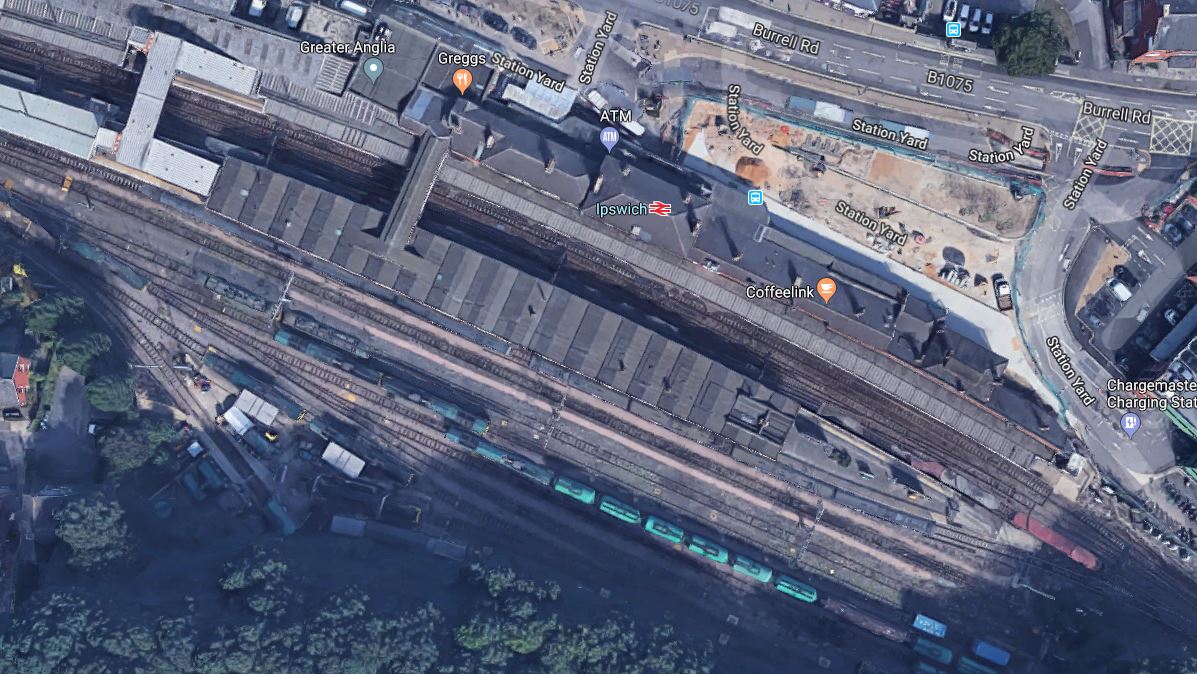
Note the yard tucked in to the South of the station. It looks like fuel is being delivered.
It is not very large and according to the article, its position means that to refuel, locomotives have to cross the Great Eastern Main Line.
Part of the yard could also become the site for additional platforms for Ipswich station.
This article in the Ipswich Star, says this about the position of the new depot.
It wants to build a massive new workshop to maintain its locomotives and wagons on land where there are currently little-used tracks beside Ranelagh Road.
This Google Map shows the position.
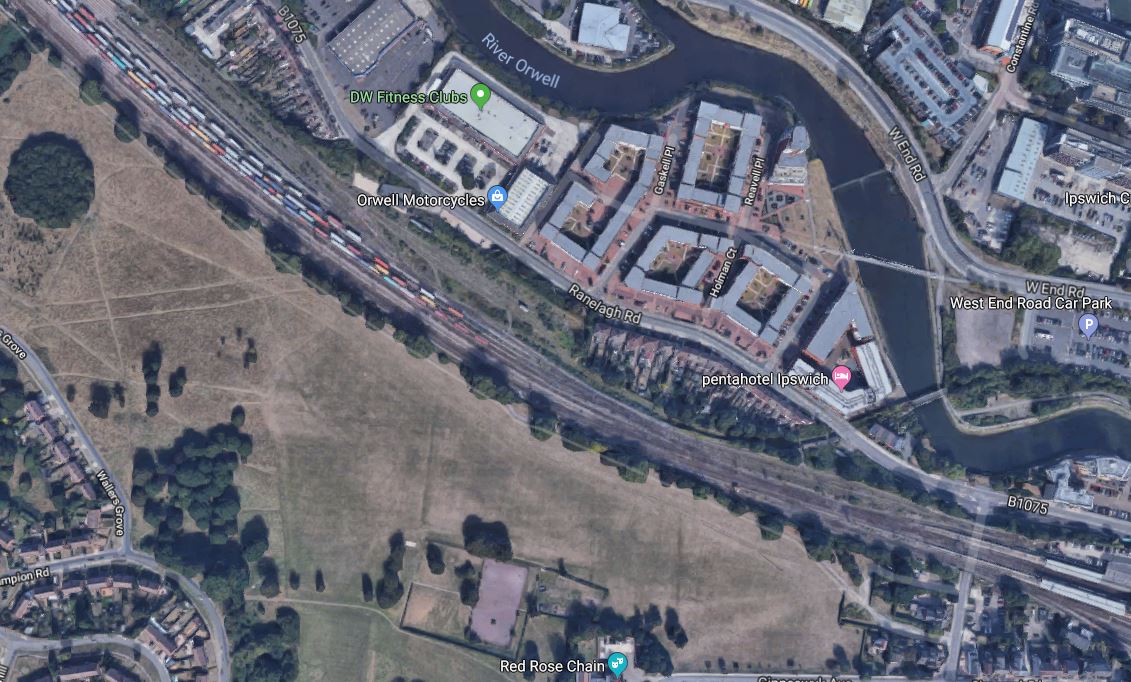
Several freight trains are visible in Ipswich Yard and just to the North are the little-used tracks, mentioned in the Ipswich Star. It looks like this will be the new location of the depot.
The new depot will be well out of the way of Ipswich station, which can just be seen in the bottom-right corner of the map.
As the new depot will create extra jobs and be able to handle wagon repairs, that currently need to go to Manchester or Southampton, it seems that Freightliner’s plan is a good one.
Infrastructure Delays Force Northern To Soldier On With Pacers
The title of this post is the same as that of this article on Rail Magazine.
This is the first paragraph.
Forty-six Pacers remained in traffic with Northern at the start of January, after they were supposed to have been sent off-lease.
Northern are saying they are still in service because of delays in the delivery of the electrification through Bolton, which would have allowed the replacement of Pacers with electric trains.
The situation has not been helped by the late delivery of eight Class 769 trains, which could be running partially-electrified routes.
The Class 331 trains should also be arriving this year.
As there are also some more Class 319 trains in store, it does look like Northern’s blaming of the late electrification is on the mark.
Seabed Rocks Could Act As Green Energy Stores
The title of this post is the same as that of this press release from the University of Strathclyde.
This is the first four paragraphs.
Rocks in the seabed off the UK coast could provide long-term storage locations for renewable energy production, new research suggests.
An advanced technique could be used to trap compressed air in porous rock formations found in the North Sea using electricity from renewable technologies.
The pressurised air could later be released to drive a turbine to generate large amounts of electricity.
Using the technique on a large scale could store enough compressed air to meet the UK’s electricity needs during winter, when demand is highest, the study found.
I read about this in today’s copy of The Times, which also says the following.
- There are suitable areas in the North and Irish Seas that can be used.
- The rocks could store fifty percent more energy than we used January and February.
As similar technology is being used in salt caverns in Germany and the United States, I feel that the idea has possibilities.
Hochtief Brought In For Crossrail Station Construction Work
The title of this post is the same as that of this article on Building.
This is the first two paragraphs.
Hochtief has been handed a £40m contract to carry out improvement works at three stations in west London that will be part of the Crossrail route when it opens.
In a deal published to the Official Journal, the German contractor has been chosen to carry out improvement work at Hayes and Harlington, Southall and West Drayton stations.
The article then goes on to give a detailed report oif the state of the Crossrail stations in the central section.
In the article, the new Crossrail boss; Mark Wild was also very forthcoming about the line’s problem.
My Project Management experience, says to me, that the standard of planning and reporting on the project wasn’t of the best.
When Are We Going To Get Some Rain?
It’s now over a month since I experienced any rain and I feel totally crap, with a very dry month and I suspect dry lungs as well.
I drinking lots of 0.5% alcohol beer, tea and lemonade, but it all seems to make no difference!
I need a right royal downpour, so I can walk around in it.
Thoughts On The West London Orbital Railway At West Hampstead Thameslink Station
I passed through West Hampstead Thameslink station today and took some pictures of the two tracks that run through the station on the South side of the four tracks of the Midland Main Line.
This map from carto.metro.free.fr shows the lines through the various stations at West Hampstead.
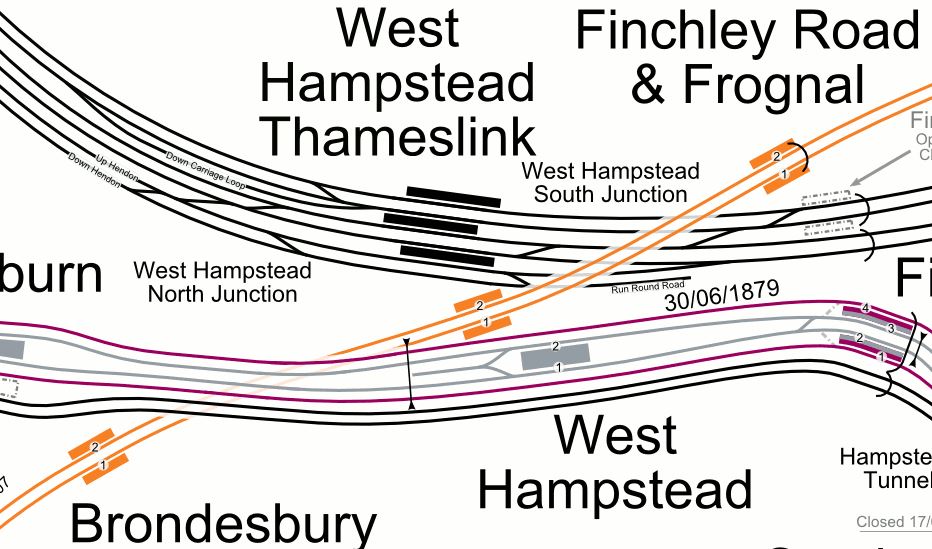
Note.
- The six tracks shown in black through West Hampstead Thameslink station.
- The Northernmost four tracks are those of the Midland Main Line.
- The Southernmost pair are labelled Up Hendon and Down Hendon and lead to the the Dudding Hill Line. via Cricklewood station.
- There is also a short track which is labelled Run Round Road, which could be useful to reverse trains on the West London Orbital Railway.
- The six tracks are crossed by the North London Line, which is shown in orange.
This picture shows the two Hendon Lines looking away from London from the footbridge of the station.
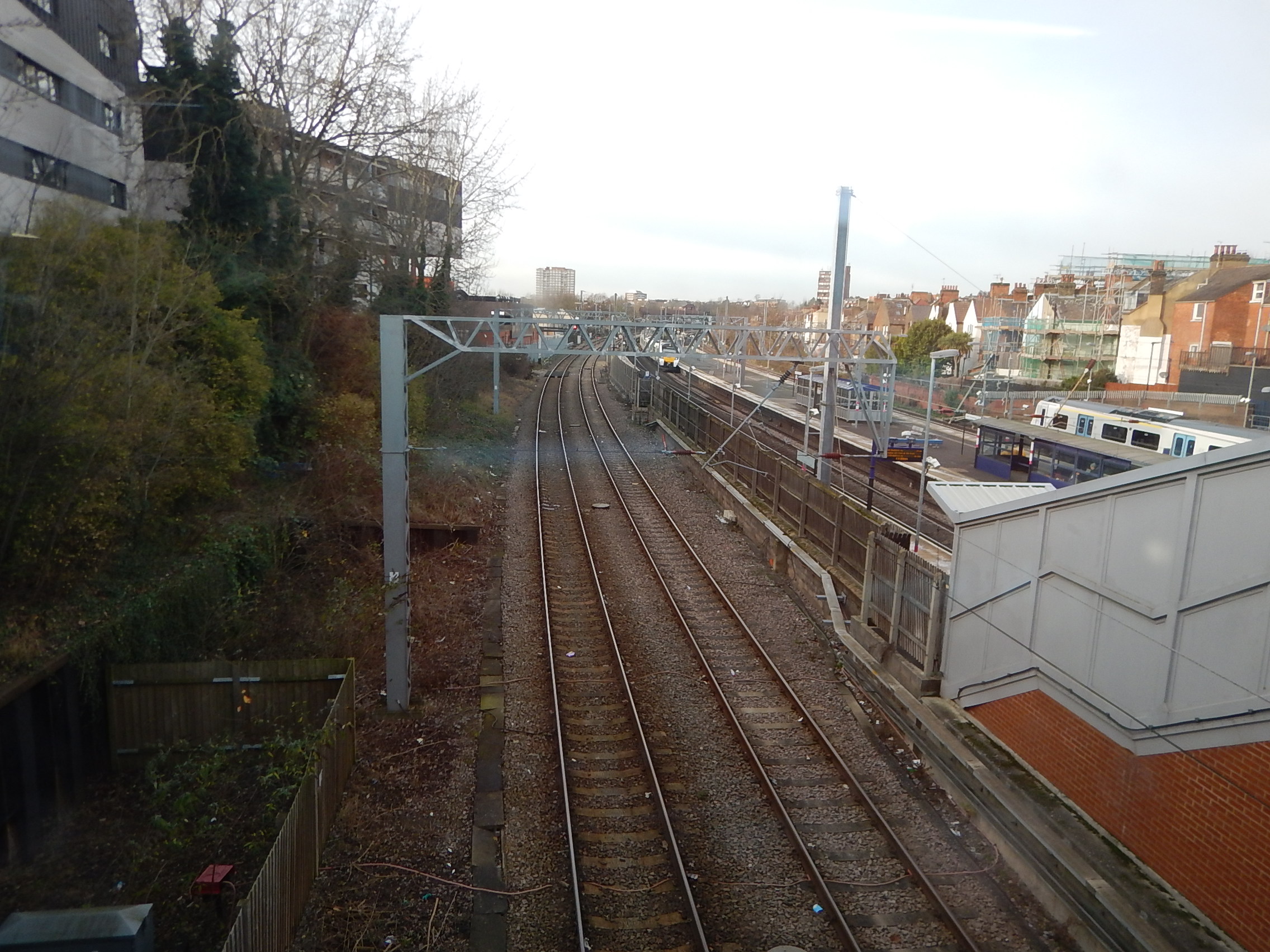
Note.
- The Down Hendon is on the left, with the Up Hendon on the right.
- Both tracks have 25 KVAC overhead electrification.
- The bridge, from which I took the picture, is step-free.
As there are numerous crossovers on the approach to the station, I feel that it would be possible to build a platform on the Up Hendon line.
- The platform would share an island and access with the existing Platform 4.
- It would be fully step-free.
- Electrification in the platform could recharge an electric train, that was using batteries.
- A single platform could handle the required four trains per hour (tph)
This picture shows the two Hendon Lines looking towards London from the footbridge of the station.
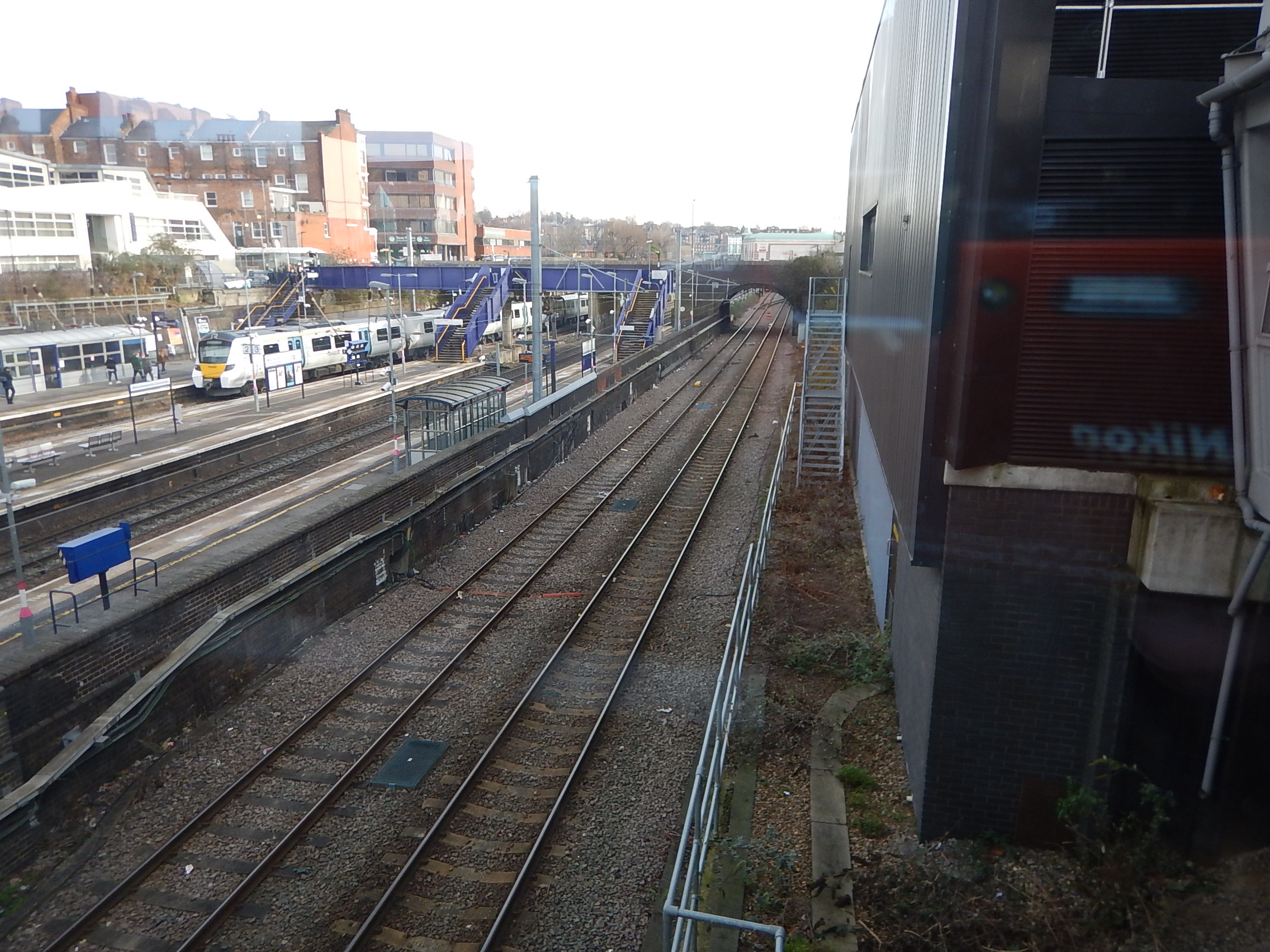
It would appear that if required the platform could be made long enough for an eight-car train or built on the Down Hendon line.
There are certainly possibilities to make the interchange between Thameslink and the West London Orbital Railway a very easy one, that is totally step-free.
Will The West London Orbital Railway Take Passengers From The North London Line?
I suspect that there are passengers, who will swap from the the North London Line to the West London Orbital Railway.
They will do it because the new route will be more convenient.
This will be no bad thing, as the North London Line can get crowded at times. And it will only get more so in the future!
 The Anonymous Widower