First ‘717’ In UK In June
The title of this post is the same as that of a short article in the May 2018 Edition of Modern Railways.
This is the first paragraph.
The first Class 717 EMU, built by Siemens for Govia Thameslink Railway’s Great Northern suburban services into Moorgate, is due to arrive in the UK in June.
The article also makes these statements, about the new Class 717 trains.
- The first unit is planned to enter service in September.
- The full fleet of 25 x 6-car units will be deployed in Winter 2018.
- The current Class 313 trains will be replaced.
- The new trains will have no toilets or First Class.
- The new trains will have power points and wi-fi.
By virtue of the cross-platform connection between the Northern City Line and Victoria Line, these trains will improve a valuable link between North East London and the City of London.
When Crossrail opens in December 2018 at Moorgate station, the Northern City Line will have a step-free below-ground connection to Liverpool Street station and all the Underground lines serving the two stations.
Ducking and diving will move to a whole new level.
What Will The New Trains Do For Me?
For my own part, if the frequency on the Northern City Line is increased, I shall use the line from Essex Road station to get to Moorgate for Crossrail and the Central Line.
I suspect my house will go up in value!
How Will The New Trains Affect The Service?
The New Trains Are Faster
The current Class 313 trains are 75 mph trains, whereas the new Class 717 trains are 100 mph trains.
This increased operating speed will have two effects, when running on the East Coast Main Line and to Letchworth Garden City.
- Time might be saved.
- As their operating speed is the same as Thameslink’s closely-related Class 700 trains, they might make keeping to time easier.
Time savings on the Hertford Loop Line, will be more difficult, as the line only has a 75 mph operating speed.
However, speed improvements on the Hertford Loop Line would surely result in faster trains to Hertford, Letchworth Garden City and Stevenage.
The New Trains Could Change Voltage Faster
Trains on the Northern City Line need to change voltage at Drayton Park station. I have observed Class 700 trains, do this on Thameslink and they do it without fuss and very reliably.
The Class 717 trains will probably use the same pantograph, so we could be seeing a smoother and faster changeover.
The New Trains Will Probably Be Ready For ERTMS
The Class 700 trains are fitted for ERTMS, so they can work the Thameslink tunnel under Automatic Train Operation.
As this method of signalling and control will be fitted to the East Coast Main Line to improve caacity, the new Class 717 trains will probably be ERTMS-ready.
It should be noted that the Hertford Loop Line has been used as an ERTMS test track and I suspect engineers know the performance improvement ERTMS would bring to the line.
I suspect in a few years, the Northern City Line and services out of Moorgate will be run automatically, with the driver monitoring the system.
The New Trains Will Stop In A Shorter Time At Stations
The new Class 717 trains will have the these advantages of modern trains over the current ones.
- They will be able to accelerate to line speed in a shorter time.
- They will be able to brake faster.
- Wider doors and larger lobbies will enable shorter loading and unloading times.
- The trains will have better systems to help the driver.
These will all result in time savings at each stops.
Currently, the four destinations have the number of stops to Moorgate.
- Hertford North – 49-53 minutes – 12 stops
- Letchworth Garden City – 75 minutes – 19 stops
- Stevenage – 68-72 minutes – 14 stops
- Welwyn Garden City – 47-48 minutes – 16 stops
Because of the high number of stops, saving a minute at each stop would speed up the train service.
Less Trains Could Be Needed For The Current Service
As an example, take the Moorgate to Letchworth service.
The current service is one train per hour (tph), which takes 75 minutes. In its simplest form, allowing for turnround at both ends, trains take up to three hours for the round trip, so three trains are needed for the service.
But if the faster Class 717 trains can save a minute at each stop and run faster on the East Coast Main Line, it might be possible to reduce the round trip to several minutes under two hours. If that is possible, then only two trains would be needed for the route.
Improve The Hertford Loop Line
With its low operating speed of 75 mph, the new Class 717 trains can’t take full sadvantage of their increased speed.
There are already plans for new bay platforms at Gordon Hill and Stevenage stations, so what other plans are being progressed to improve the Hertford Loop Line?
The New Trains Could Have Less Seats And More Capacity
I can only give a rough estimate for this as I can’t find the capacity of a Class 717 train.
These are cars, car length and capacity for various trains.
- Class 707 trains -five x 20 m. – 275 seats + 533 standing
- Class 717 trains – six x 20.2 m. – No figures.
- Class 313 trains – three x 20.2 m. – 232 seats
- 2 x Class 313 trains – six x 20.2 m. 464 seats
A rough calculation for the Class 717 train using the figures for a similar Class 707 train and adjusting for another ytailer carriage gives the following.
339 seats + 657 standing = 996 total
Incidemtally, I’ve stood on a crowded Class 707 train, and it was not an unpleasant experience, as there were plenty of handholds.
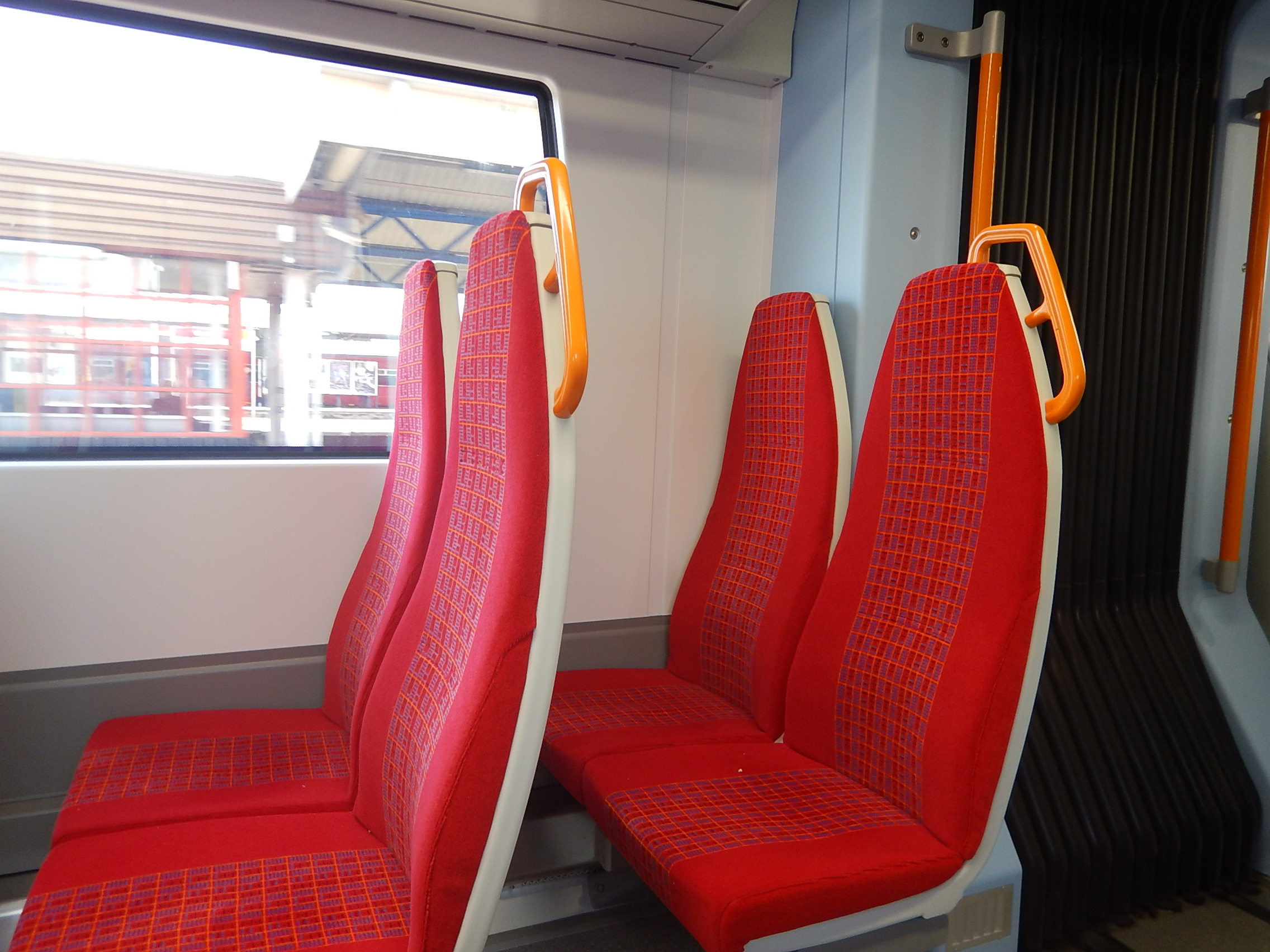
This picture shows handholds on the seats and between carriages.
I hope the Class 717 trains have 2 + 2 seating, like the Class 707 trains.
Improved Services To And From Moorgate
Current services to and from Moorgate station are as follows.
- Three tph to Welwyn Garden City
- Three tph to Hertford North, with one tph extended to Letchworth Gsrden City.
This means that there are six tph between Alexandra Palace and Moorgate stations.
From the May 2018 timetable change, the service levels will become.
- Four tph to Welwyn Garden City
- Five tph to Hertford North, with two tph extended to Stevenage or Watton-at-Stone.
- No direct services will run to Letchworth Garden City. Change seems to be a cross-platform interchange at Finsbury Park.
The service termination at Watton-at-Stone station is only temporary until Network Rail build a new bay platform at Stevenage station.
These changes mean that there will be nine tph between Alexandra Palace and Moorgate stations.
This frequency is already achieved in the Peak, from Monday to Friday. But it now appears, it will be running all day from the May 2018 timetable change.
I found this document on the Rail Delivery Group web site, which is entitled 6,400 Extra Trains A Week To Run To More Places, More Often.
It says these services will be added in 2019.
- An increase of 2 Hertford Loop trains per hour, Moorgate-Hertford
- An increase of 1 Hertford Loop train per hour, Moorgate-Stevenage
- An increase of 1 train per hour, Moorgate-Welwyn Garden City
In the May 2018 edition of Modern Railways, this is said.
New Class 717 EMUs will eplace the current Class 313s on these services from the autumn, with a further frequency boost planned in May 2019.
Adding this all together gives the following.
- Five tph to Welwyn Garden City
- Seven tph to Hertford North, with three tph extended to Stevenage.
This means that there will be twelve tph between Alexandra Palace and Moorgate stations. Or a train every five minutes.
It would appear that the overall effect of what Govia Thameslink Railway is doing is as follows.
- Restricting the running of Moorgate services on the East Coast Main Line.
- Provide a five tph Turn-Up-And-Go service from Welwyn Garden City.
- Provide a seven tph Turn-Up-And-Go service from Hertford North.
- Provide a six tph Turn-Up-And-Go Thameslink service from Stevenage.
- Provide a three tph service to Moorgate from Stevenage and Watton-at-Stone. Could it be expanded to a Turn-Up-And-Go four tph.
- Stations North of Stevenage will be served by Thameslink services to Cambridge and Peterborough.
- Thameslink services will stop at Stevenage and Finsbury Park for interchange with Moorgate services.
Will all of of this, downgrade Welwyn North station, by offering better services at Knebworth, Stevenage, Watton-at-Stone and Welwyn Garden City stations?
Consider.
- Welwyn North station handles about 600.000 passengers a year.
- Welwyn North station only has a service of two tph.
- Welwyn North station lies on the double-track section of the East Coast Main Line over the Digswell Viaduct.
- Knebworth station handles 600,000 passengers a year, but is on a four-track section of the line.
- Watton-at-Stone station, which is perhaps four kilometres to the East handles 100,000 passengers a year, but appears to be short of car parking.
I’m pretty certain, that if Welwyn North station could be closed, then the notorious bottleneck of the Digswell Viaduct could be eased.
So are Network Rail and Govia Thameslink Railway working towards a situation, where this will be able to happen.
They could do the following.
- Provide more car parking at Knebworth, Stevenage, Watton-at-Stone and Welwyn Garden City stations.
- Build a new Park-And-Ride station in South Stevenage on the Hertford Loop Line.
- Improve timings between Stevenage and Moorgate.
- Extend more Hertford North services to Stevenage. Six tph would probably be the limit for a single bay platform at Stevenage.
Shutting Welwyn North station would be controversial and heavily resisted.
How Many Trains Will Be Needed?
In May 2019, I think the service will be as follows.
- Five tph to Moorgate to Welwyn Garden City
- Four tph to Moorgate to Hertford North,
- Three tph Moorgate to Stevenage.
I’ll now look at each separately.
Moorgate To Welwyn Garden City
Trains take just under around 47-48 minutes and there are sixteen intermediate stops.
Currently, I suspect a train takes two hours to do a round trip, which would allow up to 12-13 minutes to turn round at each end.
- Three tph would need six trains.
- Four tph would need eight trains.
- Five tph would need ten trains.
But supposing the Class 717 trains, with faster running on the East Coast Main Line and faster stops could reduce this to under thirty minutes with a round trip of an hour.
- Four tph would need four trains.
- Five tph would need five trains.
Note.
- Currently, all trains are turned in Platform 4.
- Will Platform 4 be able to handle four tph after the May 2018 timetable change?
- Will Platform 4 be able to handle five tph after the May 2019 timetable change?
- There are sidings easily accessible to the North of Platform 4.
- Trains leaving Welwyn Garden City for Moorgate use a flyover to cross to the Up Slow line.
If five tph with just five trains is possible, it’s well worth achieving. But it could be a hard ask!
Moorgate To Hertford North
Trains take around 49-53 minutes and there are twelve intermediate stops.
This service would be another two hour round trip.
- Three tph would need six trains.
- Four tph would need eight trains.
- Five tph would need ten trains.
The new Class 717 trains couldn’t probably do the trip in thirty minutes, but a ninety minute round-trip would surely be possible.
- The proposed four tph would need six trains.
Note.
- Four tph is the frequency that will be running from May 2019.
- Four tph could also be easily handled in the bay platform at Hertford North station.
Any track improvement would help.
Moorgate To Stevenage
Trains take around 68-72 minutes and there are fourteen intermediate stops.
The new Class 717 trains with their faster running and faster stops, should be able to do this trip under the hour, with a possible two-hour round trip.
If this could be achieved the service would need the following trains.
- The proposed three tph would need six trains.
- Four tph would need eight trains.
Improving the Hertford Loop Line, so that the Class 717 trains could fully use their 100 mph operating speed could be key.
Summarising The Trains Needed
Summarising gives.
- Three tph between Moorgate and Stevenage would need six trains.
- Four tph between Moorgate and Hertford North would need eight trains with a two hour round trip.
- Cut that to a ninety-minute round trip and six trains could be needed.
- Five tph between Moorgate and Welwyn Garden City could possibly be run with five trains or need as many as ten.
A pessimistic answer for the number of trains could be as high as 24, which fits well with a fleet of twenty five trains.
But an optimistic solution might need.
- Six trains for Stevenage
- Six trains for Hertford North
- Five trains for Welwyn Garden City
This would leave several trains for increasing frequency.
Increasing The Service After May 2019
Improving The Hertford Loop Line
If the Class 717 trains could use their speed, this would enable faster journeys and could allow extra paths for more trains.
ERTMS On The Moorgate Lines
It is already used by Thameslink and is scheduled to be used on the East Coast Main Line.
Will it be added to the Hertford Loop Line and on the Northern City Line?
ERTMS and a degree of Automatic Train Control, could be a game changer.
Fitting the necessary equipment to the Class 717 trains, shouldn’t be the most difficult of jobs, as the system is already fitted to Thameslink’s Class 700 trains.
Increased Frequency Into Moorgate
Consider.
- Currently, in the Peak, the Class 313 trains running under control of conventional signalling manage 11 tph at times.
- From May 2019, Gover Thameslink Railway will be running 12 tph into Moorgate all day.
- Thameslink and Crossrail should be handling 24 tph, by the end of 2019.
- Brixton station on the Victoria Line handles upwards of thirty tph with two platforms.
- Transport for London and Londoners have a lot of experience about loading and unloading trains.
Look at this schematic of the vast Crossrail complex linking Liverpool Street and Moorgate stations.
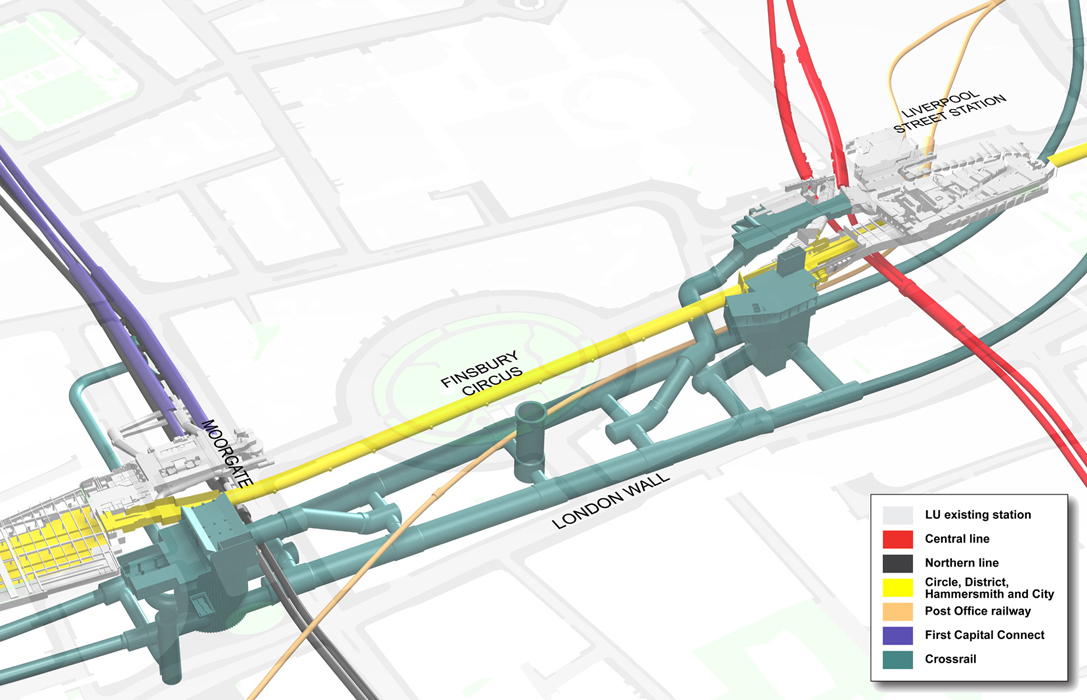
Note the Northern City Line in dark blue at the left, with a new pedestrian tunnel linking to Crossrail. This will help handle the passenger flows between Crossrail and the Northern City Line.
With ERTMS and Automatic Train Control, I wonder what, is the maximum number of trains that can be handled at Moorgate?
Twelve is obviously possible with the current infrastructure, as it is only one more than what is currently achieved in the Peak.
My experience says that with good electronic and organisational systems, that fifteen tph should be possible in both directions between Moorgate and Finsbury Park stations.
An Extra Train To Stevenage
Current plans envisage three tph between Moorgate and Stevenage.
The new bay platform at Stevenage would easily handle four tph and if the sufficient trains are available, I could see this extra service implemented.
The following frequencies would be achieved.
- Four tph – Stevenage and Watton-at-Stone.
- Eight tph – Hertford North.
The Northern City Line would obviously need to be able to handle the extra train.
Gordon Hill Station As An Extra Terminus
Gordon Hill station is sometimes used as an extra terminus to turn trains from Moorgate in the Peak.
I can see this continuing, as surely it increases the capacity at the Moorgate end of the line.
Conclusion
It will be interesting to swee how this line develops in the future.
Oxford’s Nimbys Are Getting Angry!
I keep finding articles on the web, like this article on the Oxford Times, which is entitled First Person: The Campaign To Keep Oxfordshire As It Is Now.
The title says it all.
It is all about opposition to the Oxford to Cambridge Expressway, which everybody wants in someone else’s back-yard.
My feelings are as follows.
- A fully-electrified freight route should be built between Southampton and the West Coast Main Line, preferably with 25 KVAC overhead wiring.
- The East West Railway should provide at least two fast trains per hour between Heathrow and Cambridge, via Reading, Oxford, Milton Keynes and Bedford.
- I would accelerate the construction of the East West Railway.
Only as a last project, would I build the Oxford to Cambridge Expressway.
L&G To Build 3,000 Affordable Homes By 2022
The title of this post, is the same as that of this article on Construction News.
This is said.
Legal & General is to start building affordable homes with the aim of delivering 3,000 a year by 2022.
The firm said it will target affordable housing due to underinvestment in the sector.
L&G is aiming to become the “leading affordable housing provider in the UK” by drawing on its £15bn investment programme, according to chief executive Nigel Wilson.
It looks like the story could be better than the headline.
Re-Use Rather Than Re-Cycle
I remember in the 1970s or 1980s hearing the Research Director of Pilkington on Radio 4, giving a defence of using glass as packaging.
He argued that one of the problems with glass coffee jars and sauce bottles was that after use and a quick wash, they looked like they could be refilled with new product. In those days, coffee jars were often used for the storage of small items like screws, clips and dry foods like rice and pasta.
Now we’ll buy a designer jars, like these from IKEA.
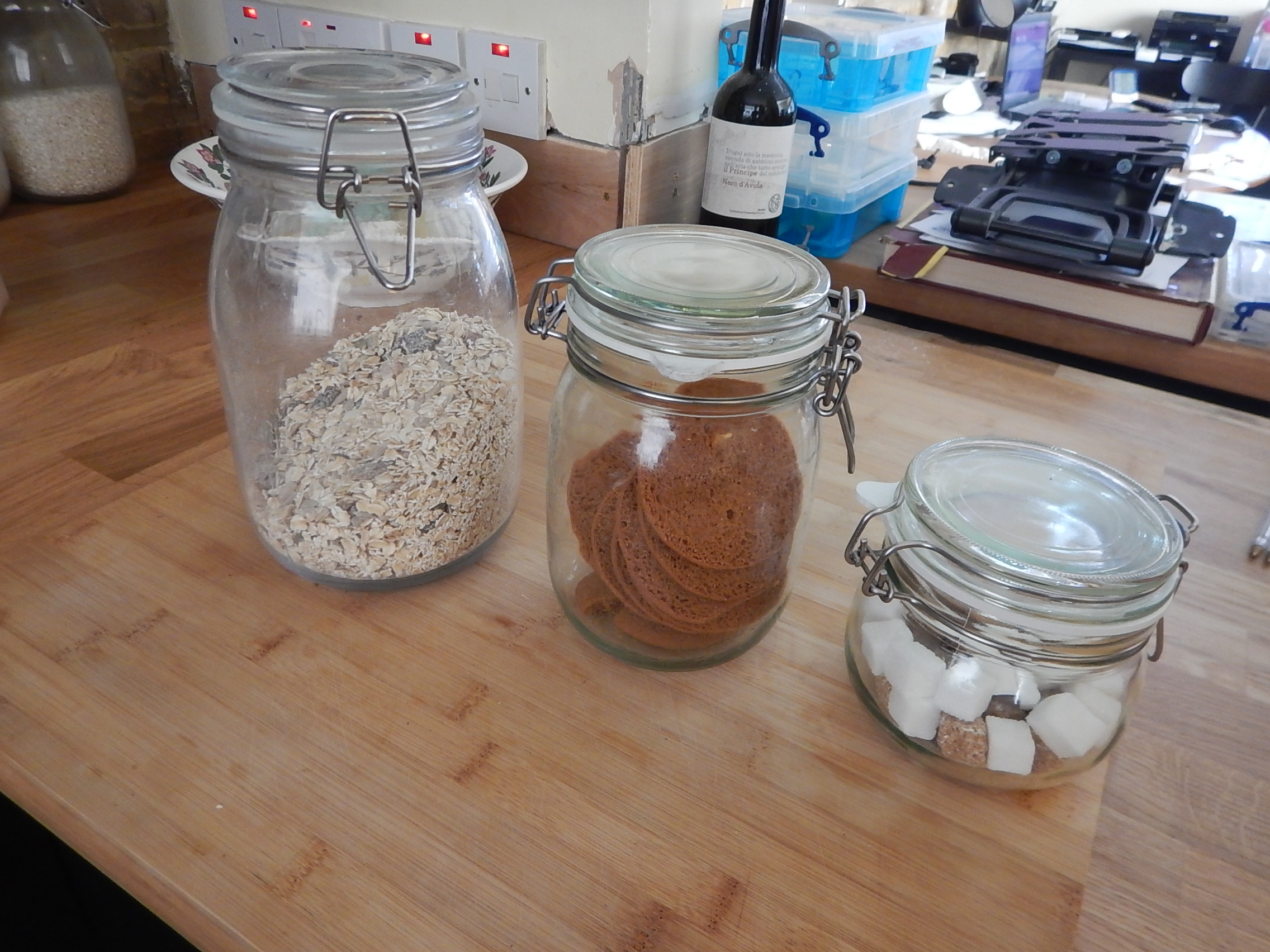
In those days a lot of milk and beer bottles were returned to the dairy or brewery, but are we going to send empty beer bottles back to some of the exotic places from where they came.
The Research Director argued, that the best thing to do with glass bottles was to smash them up and re-use for other purposes.
One of the uses he discussed was to use broken glass as an aggregate substitute in road construction. This does happen and I’ve read of by-passes being constructed on a bed of broken glass and seen broken glass being used under paving slabs.
Glass came from materials dug out of the ground and it’s going back under.
He also said that to create new bottles was cheaper, than reusing bottles, unless there was a direct link, like milk rounds from a dairy.
This morning on wake Wake Up To Money, they were discussing cutting the use of plastics. So I sent in the following text.
I wonder if black-plastic ready-meal trays could be replaced with a light-weight glass variant. Along with bottles, they would just be washed and crushed after use for aggregate. Several roads have been built on broken bottles.
It was read out.
Consider.
- We drink a lot of beer that comes in glass bottles. One of my beer bottles from Marks and Spencer weughs 280 grams.
- They would be oven-proof, microwave-safe and freezable.
- You could eat your meal out of the dish!
- They might save on washing-up time.
- They could go in the dry-recycling after a quick rinse.
But above all, they may have other uses.
I also suspect that the other pakaging could be similar.

Could a piece of plastic be glued to the tray in the same way?
My idea is probably total rubbish!
But some of Marks and Spencer’s pies already come in just an aluminium tray and a cardboard box.
They need to be cooked in an oven and are not microwavable.
The pie goes down the gullet and the aluminium tray and the cardboard box, go into the dry recycling.
One thing I will be right about, is to say that there are some clever packaging scientists and designers out there, trying to create a freezable ready-meal, that can be cooked in a microwave, that isn’t protected in anything that can’t go direct in the dry recycling.
Twyford Station – 26th April 2018
I went to Twyford station to get the train to Henley-on-Thames.
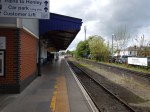
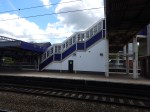
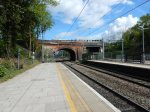
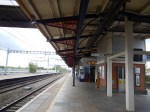
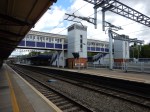

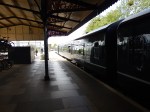
The station seems more of less ready for Crossrail.
What isn’t ready is the rail service to Henley-on-Thames station.
There are two trains per hour (tph) on the branch line and the trains take twelve minutes with two single-platform intermediate stations.
This is one of those branch lines, that need four tph to prise people out of their cars it is this one.
The two terminal platforms at each end can each handle four tph, it’s just that there is no passing loop on the line in between.
These are some pictures I took on the branch line.
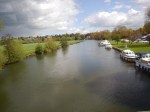

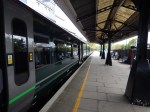

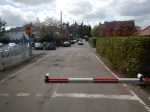

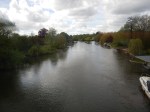
Note.
- It is a tidy branch line.
- There is only one level crossing.
- Henley-on-Thames station has a reasonably long platform.
- There appears to be more space for a second track, South of the Thames, rather than at the North.
With their purchase of Class 769 trains, GWR could be using some to provide direct services to London from this branch.
Windsor And Eton Central Station – 26th April 2018
These pictures show Windsor And Eton Central station.
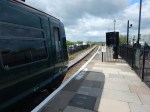

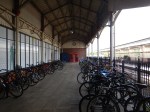


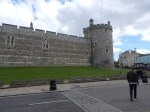
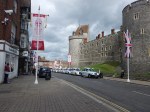

In some ways it is more of a Shopping Centre than a railway station.
The current service to Slough station, is one two-car Class 165 train every twenty minutes.
Consider.
- When Crossrail opens to Slough in December 2019, there will be at least six Crossrail trains per hour (tph), between Slough and Central London.
- There will also be at least four GWR tph between Slough and Paddington.
- The upcoming wedding of Prince Harry and Meghan Markel, will give Windsor masses of world-wide publicity.
- Passengers to Windsor increase significantly on a day with good weather.
I also reckon, that getting to Windsor via Crossrail and Slough could be up to twenty minutes faster, than using Waterloo and Windsor and Eton Riverside stations. So which way, would all the tourists use?
Increasingly, the current train service from Slough will become inadequate.
GWR have ordered nineteen Class 769 bi-mode trains, one of which could be used on the line to increase capacity.
- They would offer a doubling of capacity, from two-cars to four.
- Their slightly faster speed, might enable them to run at a frequency of four tph.
- The trains would probably fit Windsor and Eton Central station with selective door opening or a small platform extension.
Windsor and Eton Central station is going to get very busy.
Those tourists, who just want a selfie with the castle, should be able to take one, between successive trains.
Windsor could become a Tourist Hell!
Slough To Windsor And Eton Central Station – 26th April 2018
I took these pictures as I travelled from Slough to Windsor and Eton Central station.
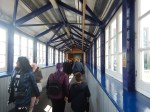
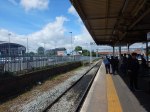
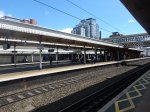


Note.
- Platform 1 at Slough has not been electrified, although the gantries are there.
- Some modern bridges probably stop full double-tracking of the route.
- There may be space for a passing loop on the line.
- The services is three trains per hour (tph) and the trip between the two stations takes just six minutes.
On balance if it were needed, I suspect that a track layout, signalling regime and operating method can be created that would allow a frequency of four tph.
A train would have fifteen minutes to do each round trip.
This would be tight, but I’m sure that there are operational methods, that could be used with a slightly faster Class 769 train to run the service.
West Drayton Station – 26th April 2018
I took these pictures at West Drayton station.
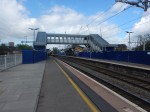
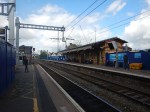

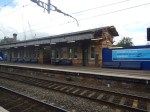
The station appeared to be staffed by TfL and they certainly had installed TfL’s new ticket machines.
High-Speed Handbacks Could Save NR £250,000 A Week
The title of this post is the same as that, of this article on Rail Technology Magazine.
The article described how by using a more sophisticated tamping machine, Network Rail are able to hand the track back faster after maintenance.
Many businesses, as Network Rail do here, use outdated processes to do regular tasks.
Often by using an improved procedure, companies can save money.
In this instance, Network Rail are saving enough in a year to perhaps build a small station.
Can you be sure, you use the best processes in your business?
 The Anonymous Widower