Will TSB Exist In A Couple Of Months?
I am seventy and I have been programming computers and using them since I was eighteen.
I also worked for Lloyds Bank in the 1970s, although not on their computing side, but as a high level consultant, where I was using data extracted from the main computer system to calculate bank costs, through a program I had written that was effectively a giant spreadsheet.
So I have heard a lot of stories from the 1960s, of when banks were first computerised, over drinks with bank e,employees.
One was about an absolutely brilliant fraud, that would make a good film.
None were as horrific as what TSB have inflicted on their customers over the last few weeks.
I like to check my bank account every morning, as in my view, that is the best way to pick up any fraud.
So if I had been a TSB customer, I would already have long ago moved my account.
It would be in everybody’s interest, if all TSB account holders moved to other banks.
As that would hopefully, close TSB!
This would surely mean, all banks and other financial institutions made sure they got their computing right.
From my computing knowledge, I do wonder whether the TSB problems are being caused by an evil programmer!
The chaos undoubtedly, could have been created deliberately.
But for what purpose?
- There is always a rogue state or organisation, wanting to create mischief.
- Banco Sabadell, who are TSB’s parent, are a publicly-quoted company. Their share price appears to have been falling recently. Could someone have placed a big bet on the share price?
- Chaos is a good smokescreen for fraud.
Hopefully, the truth will come out in the end!
How The Class 717 Trains Are Financed
This is a paragraph in an article in Rail Technology Magazine, which is entitled Brand-New £200m Class 707s Undergo Testing Ahead Of Autumn Roll-out.
The 25 six-car trains, financed by Rock Rail Moorgate, will be the first to be introduced in the UK using a new model for financing rolling stock. In an unprecedented move, the trains will be financed through long-term investment from pension and insurance companies.
So many of us will own a portion of these trains, through our pensions and insurance policies!
Great Northern’s Class 717s Under Test
The title of this post, is the same as that of this article on Global Rail News.
The title also says it all and it would seem that the aim of having Class 717 trains in service this year on the Northern City Line is feasible.
The article also says that twelve trains have been completed and another twelve are being built.
I suppose Siemens had an advantage, in that except for the end doors, they are probably very similar to the Class 707 trains.
From Lea Bridge Station To Coppermill Junction – 1st May 2018
I walked to the footbridge to the North of Lea Bridge station, before I took a train North.
I took some pictures around the bridge and some from the train.
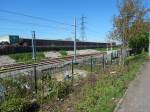

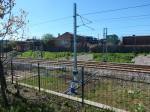
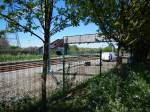
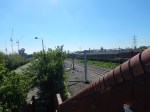
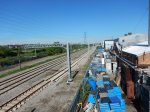
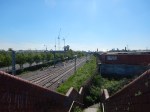
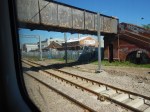
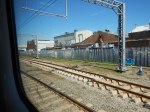
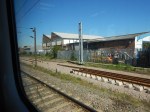
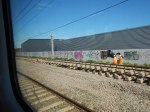
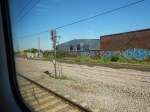
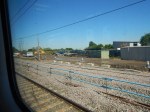
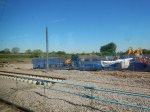
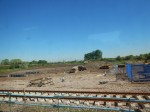
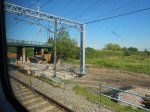
Lea Bridge Junction was the old name for the junction and has been shown on carto.metro.free.fr.
It would appear there are gaps in the track, so will these be used to put in points to link to possible fourth track or even the Hall Farm Curve, which would link the Chingford Branch Line to Stratford.
One thing that puzzles me about Lea Bridge Junction, is that the crossing appears to be unwired. Does this mean that trains will cross using a mixture of Momentum and/or battery power.
A Good Timetable Change In May For De Beauvoir Town
I live in the North of an area in London called De Beauvoir Town.
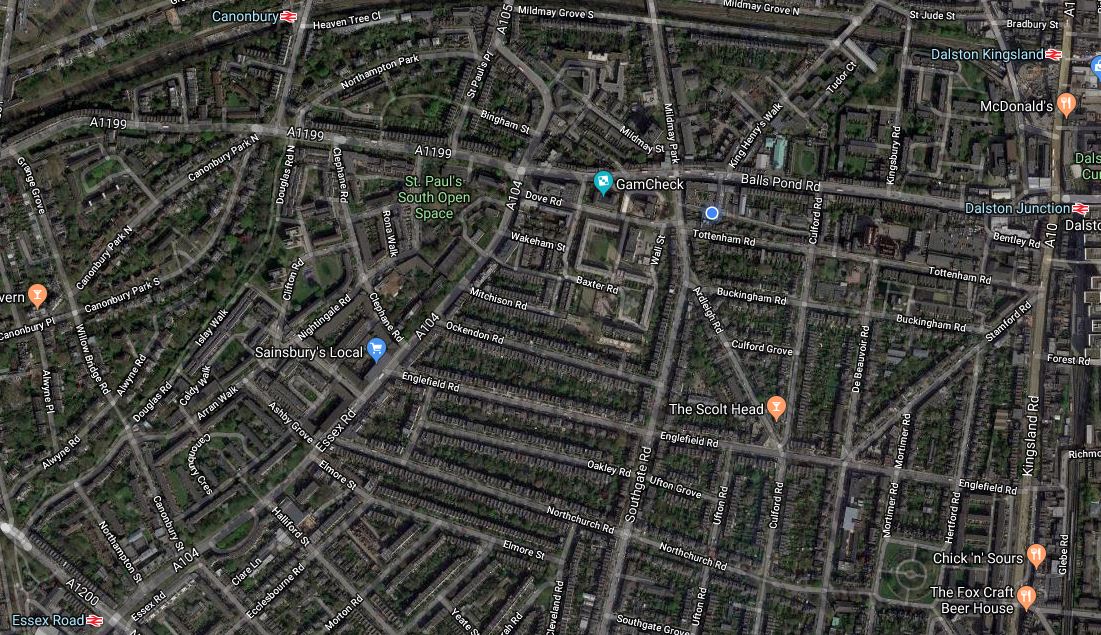
On the map, I live close to the junction of Mildmay Park/Southgate Road and the Balls Pond Road of Round the Horne fame!
The junction is a major bus interchange, with buses going regularly in all directions.
- North to Manor House, Turnpike Lane and Wood Green.
- South to Old Street, the City and London Bridge
- West to Highbury and Islington station, the Angel and the West End.
- East to Hackney, Waltham Forest and the River Lea.
All these buses was one of the reasons I moved here.
But note the railway stations ringing the area.
- Canonbury station is to the North-West about fifteen minutes walk away
- Dalston Kingsland station with its new M & S Food is a similar distance in the North-East corner of the map.
- Dalston Junction station is also in the North East corner.
- Essex Road station is in the South-West corner of the map.
But that is not all!
- Haggerston station is within walking distance on a good day, off the map to the South-East.
- Highbury and Islington station is a short bus ride off the map to the West.
- Angel station is a short bus ride off the map to the South-West.
- Manor House station is a short bus ride off the map to the North.
- Hackney Downs station is a short bus ride off the map to the East.
I can also get direct buses from local stops to Euston, Kings Cross, London Bridge, St. Pancras, Victoria and Waterloo.
From December 2018, I’ll be able to get a bus from the junction to the new Crossrail station at Moorgate/Liverpool Street.
Is there a better place to live for public transport?
On the twentieth of May, the date of the rail timetable change, things will get better.
An article on the timetable change in the May 2018 Edition of Modern Railways says this.
London Overground’s East London Line services are being recast in conjunction with the new Thameslink timetable. On the North and West London Lines, the off-peak timetable is being enhanced to match broadly the peak service, providing 8 tph between Stratford and Willesden Junction for most of the day seven days a week, with four continuing to Clapham Junction and the other four to Richmond.
London’s ugly duckling of the last century, is turning into a whole bevy of swans.
The service on the North London Line has improved several-fold since I moved here and will now be eight tph or a train every seven and a half minutes.
The East London Line will be recast, with another two tph this year to Crystal Palace station and two more next year to Clapham Junction station.
And then there’s the Northern City Line to Moorgate, that calls at Essex Road and Highbury and Islington stations!
In First ‘717’ In UK In June, I wrote about what will be happening in the May 2018 timetable change.
I said this.
From the May 2018 timetable change, the service levels will become.
- Four tph to Welwyn Garden City
- Five tph to Hertford North, with two tph extended to Stevenage or Watton-at-Stone.
- No direct services will run to Letchworth Garden City. Change seems to be a cross-platform interchange at Finsbury Park.
The service termination at Watton-at-Stone station is only temporary until Network Rail build a new bay platform at Stevenage station.
These changes mean that there will be nine tph between Alexandra Palace and Moorgate stations.
This represents a fifty percent increase in service frequency.
SJ Invests In Thriving Sleeper Trains
The title of this post is the same as that on this article on Global Rail News.
This is said.
Over the last five years, passenger numbers on its Malmö to Stockholm services have increased by 100 per cent.
There has also been growth on the Gothenburg-Stockholm-Umeå-Luleå-Kiruna-Narvi route, where passenger numbers have risen by 25 per cent.
That sounds like thriving to me!
So why is it that sleeper trains are thriving in the UK and Sweden, but countries like Germany have given up?
Malmö to Stockholm
These factors probably help this service
- Malmö is Sweden’s third-largest city.
- The frequent trains between Malmö and Stockholm take four and a half hours.
- Stockholm and Malmö are a very similar distance apart as London and Glasgow or Edinburgh.
- Malmö is only thirty-five minutes from Copenhagen by train.
As the Caledonian Sleeper works between London and Edinburgh/Glasgow, why shouldn’t a quality service work on a similar distance in Sweden?
Gothenburg-Stockholm-Umeå-Luleå-Kiruna-Narvi
These factors probably help this service
- The service effectively goes from the South-West of Sweden right up to the North.
- The distance as 1,600 kilometres
- I have been recommended to take this train to go to see the Northern Lights. So perhaps, it is useful for tourists.
- The service probably appeals to train enthusiasts.
- It is probably a reasonably civilised way to go to the North of Sweden.
I would certainly use it in winter to get to see the Northern Lights at Abrisko.
No ‘Ironing Board seats’ For Greater Anglia’s New Trains
The title of this post is the same as the title of this article on Rail Magazine.
The proof will be in the sitting, but the article encourages me, that comfort will be better than some recent new trains.
The Scotsman Gives A Warm Welcome To The Class 365 Trains
This article on the Scotsman is entitled New ScotRail Trains To Ease Crush On Edinburgh-Glasgow Line.
The article also has a rather interesting picture of a lorry-mounted train negotiating heavy traffic in Glasgow.
It broadly welcomes the Class 365 trains, and this is a comment from a rail group.
Andrew Stephen, of rail lobby group RailQwest and the Cumbernauld Commuters Association, said: “The Class 365s are perfectly serviceable and comfortable trains – and it is fortunate more than a few four-car sets are available.”
The article also confirms that ten trains will be going North.
As there are a total of forty of the Class 365 trains, that will be replaced by Class 387 trains and new Class 700 trains, I wonder where the others will be deployed.
ScotRail Hires In Class 365s For Glasgow-Edinburgh Route
The title of this post, is the same as thsat of this article on Rail Magazine.
This is the first paragraph.
Three Class 365s have been leased by ScotRail, with more to follow. They will be used on an interim basis on the Edinburgh-Glasgow Queen Street via Falkirk High route while windscreen modifications are made to Class 385s
The Class 365 trains may have been delivered in 1995, but they are no scrapyard specials.
I recently rode one to Cambridge and although some things are dated, the ride is good and they are 100 mph trains, just like the Class 385 trains.
Wikipedia and others reckon that as many as ten trains will go to Crossrail.
How Do The Trains Compare?
The trains are of different generations but how do they compare?
Train Length
On the major route, between Edinburgh and Glasgow, it is intended to run Class 385 trains as seven-car trains formed by a three-car Class 385/0 train
and a four-car Class 385/1 train. As the cars are twenty-three metres long, that gives a train length of 161 metres.
Each four-car Class 365 train is 81.9 metres long, so an eight-car unit would be just under 164 metres.
I doubt that three metres would cause too many platform-length problems.
Capacity
The capacity of a three-car Class 385/0 is 206 seats, so I suspect a four-car Class 385/1 would seat around 275. This would give a total capacity for the seven-car train of 481 seats.
I can’t find the capacity of a Class 365 train, but it has 2 +2 seating and a fair sprinkling of tables, so I suspect the capacity of the two different formations is not that different.
Operating Speed
Both trains have a 100 mph operating speed.
Passenger Comfort
I suspect that the Class 385 trains will be more to the standard ciustomers expect, wth wi-fi and power sockets and probably more tables.
But the Class 365 trains are one of the better 100 mph long-distance commuter trains, rating above Thameslink’s new Class 700 trains and below the Class 387 train.
Conclusion
The Class 365 trains will make quality substitutes.
Minister Claims Hydrogen Train On Trial In UK
The title of this post is the same as that of this article on Rail Magazine.
This is the first paragraph.
Rail Minister Jo Johnson told the Transport Select Committee on April 30 that a hydrogen train was on trial in the Lake District.
After the end of Amber Rudd’s political career yesterday, for not telling the truth to another Select Committee, I would be very surprised if Jo Johnson’s statement is not substantially correct.
Something strange is happening on the Windermere Branch Line.
- Most of the day, there is an hourly shuttle train between Windermere and Oxenholme Lake District stations.
- But the 10:56, 18:03 and 22:45 services from Windermerre, continue to Preston.
- The 06:23 from Oxenholm Lake District to Windermere starts from Lancaster.
- The 11:20 from Oxen Lake District to Windermere starts from Preston.
- The 18:30 from Oxen Lake District to Windermere starts from Barrow-in-Furness.
It doesn’t seem to be the sort of diagram for a regular scheduled service.
Could it be that Class 769 trains are being tested?
- Running on the West Coast Main Line between Preston and Oxenholme stations would be at up to 100 mph using the 25 KVAC overhead wires.
- Running to Windermere and Barrow-in-Furness stations would be under diesel power.
- Note that the service goes to Preston in the middle of the day. Could this mean , that they are thoroughly testing more than one train?
- From Preston the trains can go to turnback platforms at Barrow-in-Furness, Blackburn, Blackpool North, Blackpool South, Colne, Ormskirk and Windermere stations. So, Preston would be an ideal base from where to test the trains.
Could one of the trains under test be hydrogen powered?
If what Jo Johnson said is to believed, at least one of the test trains must be!
Who’d have thought, that an old British Rail-designed Class 319 train, that entered service thirty-years ago, could be the UK’s first hydrogen-powered train.
A Hydrogen-Powered Class 769 Train
Of course, the engineering must be possible .
- The train would need a hydrogen tank, a hydrogen fuel cell and a battery.
- They would probably be fitted under the train, where there wuld appear to be plenty of space.
But companies like Ballard have a lot of experience with building hydrogen-powered buses.
Don’t Rule Out Bombardier!
I believe that most train manufacturers are looking seriously at hydrogen power, as a greener alternative to diesel.
Two years ago, Bombardier showed their expertise with batteries, by developing the Class 379 BEMU demonstrator in just a few months.
Could Bombardier have taken an Electrostar or Aventra and fitted it with batteries and a hydrogen tank and a hydrogen fuel cell?
Conclusion
I think that Jo Johnson was telling the truth or at least enough of the truth, not to be caught misleading a Select Committee of the House of Commons.
 The Anonymous Widower