Victorian Tunnelling Uncovered At Bank Station
I took these pictures on the Southbound platform of the Northern Line at Bank station.


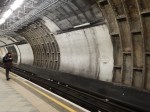

They show the old Victorian lining to the tunnel.
This visualisation, shows what the new Bank station will look like.
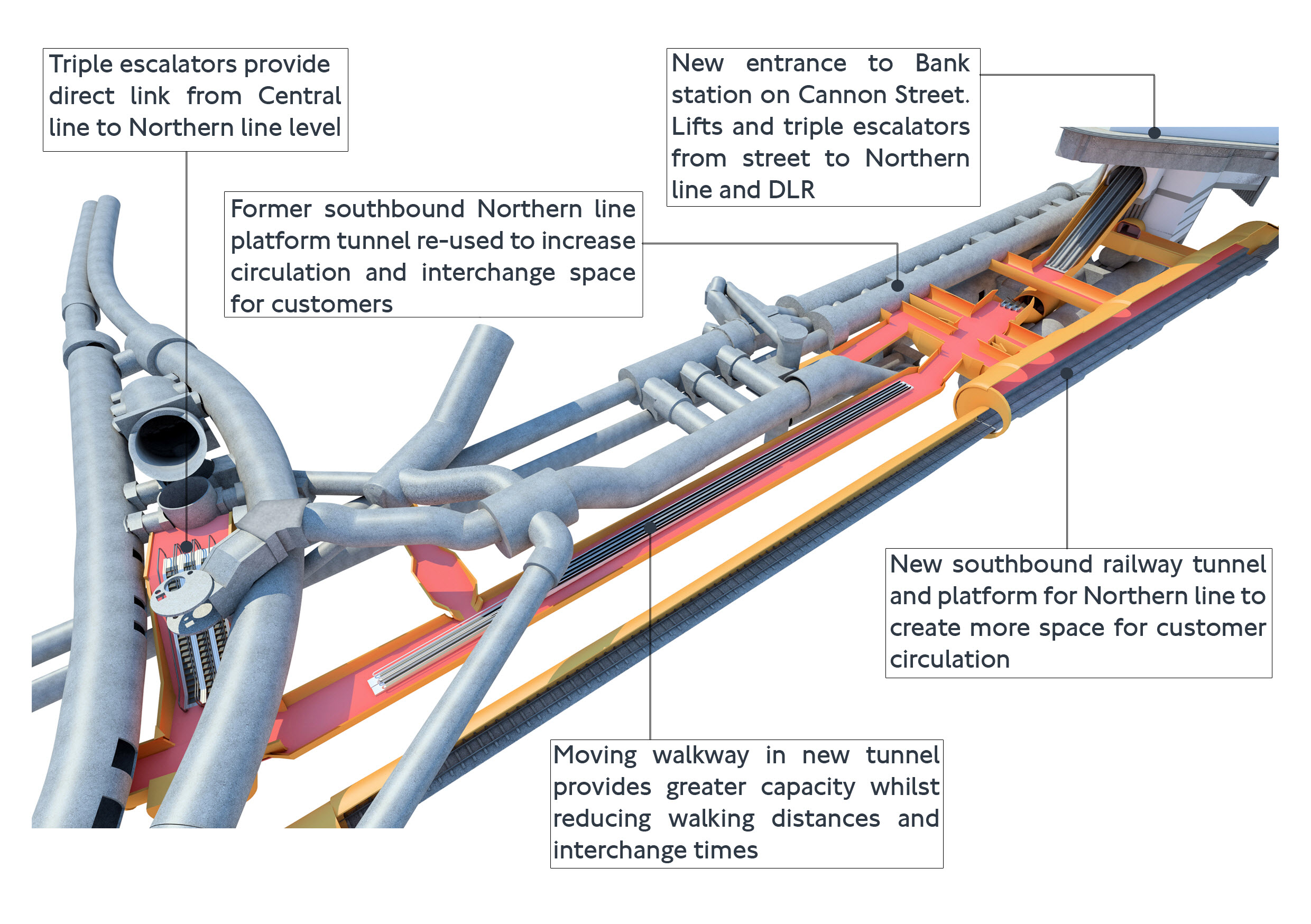
Note.
- The current two Northern Line tunnels are furthest away in the visualisation, with the Northbound one on the outside.
- The lines are aligned left sides together, which is opposite to normal British practice.
- The stairs that lead down from the passageways in the middle, where the tunnel size changes to accommodate the current platforms.
The plan looks to be as follows.
- A new Southbound tunnel will be dug to by-pass the current station. This tunnel is shown in the foreground.
- The current Southbound tunnel will be closed to trains.
- Southbound trains will be diverted to the new tunnel and possibly pass through Bank station without stopping for some time.
- The former Northern tunnel will be used to increase space for the Northbound platform.
Could the fitting out of all the tunnels in the middle be done last, with trains passing through on the outside?
A similar procedure was used at Angel, which explains the extra wide Southbound platform.
TfL Drives Forward With ‘Hugely Exciting’ Tube Station Development
The title of this post, is the same as the title of this article in Rail Technology Magazine.
The station involved is South Kensington station,
Work to be done includes.
- New housing will be added.
- Upgrading of the Grade II listed shopping arcade.
- A second entrance developed via the pedestrian subway will be developed.
- Facilities will be improved for current and new residents.
- Step-free access will be provided to the District and Circle Lines.
This article in the Architects Journal gives more details.
- Rogers Stirk Harbour are the architects.
- Native Land are the developers.
The article also hopes everything can be completed by 2022.
Is this development the shape of things to come?
You have the following.
- A tube station which is not in the best condition.
- There is space to add much-needed housing.
- It is an important transport location.
- Annual passenger entry and exit in 2016 was 33.6 million.
- It is a building with a partial Grade II Listing.
- TfL have appointed a world-class firm of architects.
A successful property developer, with access to finance, could turn this into something that benefits all stakeholders; local residents;TfL, London taxpayers, staff and passengers.
Within walking distance or a short bus ride of my house, there are seven stations.
- Dalston Junction is a new station with step-free access and high-rise housing on top.
- Haggerston station is a new step-free station, that is probably fully developed.
- Canonbury station is an older station, that has been made step-free. It is fully-developed.
But, the other four need development.
Dalston Kingsland
Dalston Kingsland station was rebuilt in the last couple of years with a new gate line and booking office.
- The station has narrow platforms, not much shelter and no step-free access.
- Passenger entry and exit for 2016-17 were over six million.
- Next door, Taylor Wimpey are building a residential tower called 57 East.
Full development of this station is probably waiting for a decision about Crossrail 2.
Essex Road
Essex Road station is a station out of another era, but what era is hard to say.
- It is a solid red brick building, built around the start of the Twentieth Century.
- The building has little architectural merit.
- Underground, the history of the station is echoed by faded Underground and Network Southeast liveries.
- It could do with a good clean.
- Access to the trains is by lifts and could probably stand-in for access to one of London’s Second World War bunkers.
- It may have lifts, but it is not step-free.
- Passenger entry and exit in 2016-17 was under a million.
It is a seriously neglected station.
This Google Map shows the location of the station.
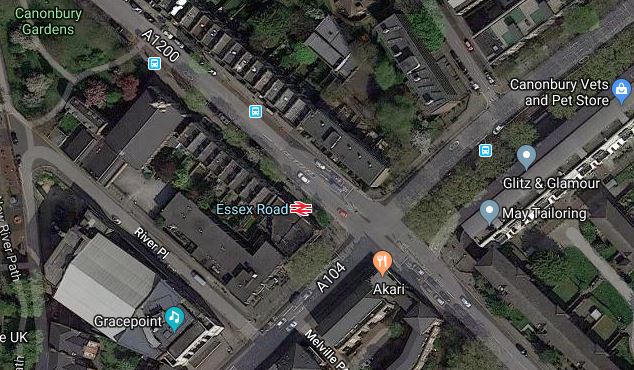
It is on a junction of two major roads, with some gardens, a few local stops and several important bus routes.
If the train-related parts of the building were updated with modern decor and lighting, full step-free access, this station could see a serious increase in passenger traffic.
The following, should also be born in mind.
- The rather rudimentary forty-year old Class 313 trains will be replaced by brand-new Class 717 trains designed for the unique operation of the Northern City Line.
- The new trains should bring an increase in frequency in trains through Essex Road station.
- At the end of 2018, the Northern City Line will have a step-free connection to Crossrail and a dry underground waking route to Liverpool Street station at Moorgate station.
There is also the possibility, that was raised by Chris Gibb, of transferring the Northern City Line to the London Overground. I wrote about this in Gibb Report – Moorgate Services Could Be Transferred To The London Overground.
So it would appear that whatever happens, the train service and station will be improved and Essex Road station will become a lot more important.
Surely, the obvious way to pay for the improvements at Essex Road station, is to develop the building into some housing in keeping with the area.
Highbury and Islington
Highbury and Islington station is the fifteenth busiest station in the UK and is busier than Manchester Piccadilly and Edinburgh Waverley.
It is a major interchange between the following lines.
- East London Line
- North London Line
- Victoria Line
- Northern City Line
Currently, it handles nearly thirty million passengers a year.
But that number is surely going to increase.
- The East London Line is adding another four trains per hour (tph)
- Extra trains will be running on the North London Line.
- Dear Old Vicky will cram more passengers in.
- The improved Northern City line will have more and better trains.
- The Northern City Line will provide a step-free connection for Victoria Line passengers to Crossrail.
Highbury and Islington station is a station where the below-ground platforms are in desperate need of improvement and step-free access.
At least there should be no problems demolishing the station buildings at Highbury and Islington, as a flying bomb did that in 1944.
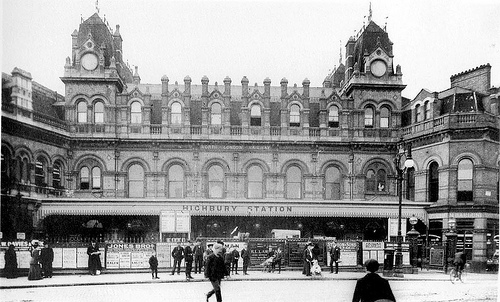
It was an impressive building.
However, there are factors that will help an architect, after the Nazi damage and some unsympathetic 1960s development, when the Victoria Line was built.
- The flying bomb destroyed all parts of the station with architectural merit.
- The Victorian bridge over the Overground lines is being replaced.
- The traffic is being sorted.
- Pedestrian areas are being created to link the station entrance to the green space in the middle of Highbury Corner.
- There is already an unused and intact second entrance to the station on the other side of Holloway Road.
This could be one of the best stations in London, with perhaps some of the best places to live in London on top.
Old Street
Old Street station is another bad station.
- It sits in the middle of a roundabout called Silicon Roundabout.
- The roundabout is surrounded by tower blocks, which are both residential and commercial.
- It is owned by Transport for London.
- It is served by the Northern and Northern City Lines.
- Passenger entrances and exits are amos thirty million a year.
- The station has escalators, but is not step-free.
This is surely, a site, where a tall residential block should be built above an improved station.
But getting the right building and mix will be difficult.
Conclusion
These four could all be redeveloped by imaginative architects and property developers to create better transport hubs and a sensible amount of useful housing development.
I hope TfL, architects and developers are scouring London for suitable sites.
Minister Confirms There Are ‘No Plans’ To Extend Crossrail To Basingstoke
The title of this post is the same as the title of this article on Rail Technology Magazine.
This is the first two paragraphs.
Jo Johnson has confirmed that there are no plans to lengthen Crossrail to Basingstoke despite speculation from other MPs.
Following questioning from North East Hampshire Conservative MP Ranil Jayawardena, the rail minister said the government’s priority was to see the current project delivered on time before considering any additional work
It is my view that Basingstoke, is one of several places, which have been mentioned as possible terminals for Crossrail.
A list could include.
- Basingstoke
- Beaulieu
- Chelmsford
- Ebbsfleet
- Gravesend
- High Wycombe
- Milton Keynes
- Oxford
- Southend Airport
- Southend Victoria
- Tring
Note.
- Some are safeguarded.
- Some have been promoted stronger than others and it is reasonable to assume that MPs will want Crossrail to turn up in their constituency.
These facts about Crossrail, say to me that extra destinations will be added.
- The current provisional schedule is twenty-four train per hour (tph), through the central tunnel.
- The capacity of the central tunnel is sometimes stated as thirty tph.
- Twelve tph are scheduled to be terminated at Paddington.
The initial infrastructure doesn’t seem to be pushed too hard.
This probably gives speculation to where the spare trains will go.
T
Is Hydrogen The Answer?
This excellent article on Rail Engineer, is a very good analysis of using hydrogen to power trains.
It is also crammed full of facts!
A Class 700 Train In Platform 5 At London Bridge Station
I took these pictures of a Class 700 train in Platform 5 at London Bridge station.

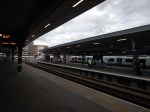
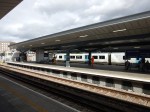

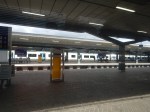
I assume it was there for driver training and was waiting to pass through the central section of Thameslink.
According to the March 2018 Edition of Modern Railways services through the Central London core will be.
May 2018: 18 Thameslink trains per hour (tph) through central London core (12 tph via London Bridge and six via Elephant & Castle)
At least drivers and other staff seem to be getting trained.
Distilling the report in Modern Railways, gives the following service from May 2018.
Via London Bridge
- 2 tph – Bedford – Brighton – semi-fast/fast – 12-car – All Day
- 2 tph – Bedford – Gatwick Airport- semi-fast/semi-fast – 12-car – All Day
- 2 tph – Peterborough – Horsham – semi-fast/semi-fast – 12-car – All Day
- 1 tph – Cambridge – Brighton – semi-fast-fast – 12-car – All Day
- 2 tph – Bedford – East Grinstead – fast/stopping – 12-car – Peak Only
- 1 tph – Bedford – Littlehampton – fast/fast – 12-car Peak Only
- 2 tph – Luton – Rainham – all stations/all stations – 12-car – All Day
Note.
- This means seven tph all day between central London and Gatwick.
- semi-fast/fast means semi-fast North of the Thames and fast South of the Thames etc.
Via Elephant & Castle
- 4 tph – St. Albans – Sutton – all stations/all stations – 8-car – All Day
- 2 tph – Luton/Kentish Town – Orpington – 8 car – All Day
Note.
- The four tph St. Albans – Sutton go round the Sutton Loop, with two tph in each direction.
Commitment To West London Orbital Rail Line
The title of this post, is the same as that of this article in Global Rail News.
This is the first three paragraphs of the article.
A new West London Orbital rail line has been included in a revised 25-year Transport Strategy for the city.
Its addition follows a public consultation. The document describes an extension of the Overground network connecting Hounslow with Cricklewood and Hendon via Old Oak, Neasden and Brent Cross.
The line would reinstate a regular passenger service on the Dudding Hill line, which links Acton and Cricklewood.
I like this proposal and I wrote about the railway in New Railway Line For West London Proposed.
In the related post, I said this about building the line.
This is no Crossrail or HS2, where billions need to be spent.
The three largest sub-projects would be.
Electrification of the Dudding Hill Line, if it is to be done.
Resignalling of the Dudding Hill Line.
Necessary track replacement and updating.
In addition, there are around ten station projects.There will also be a need for up to perhaps sixteen Class 710 trains. This could be around £90-100 million.
Since, I wrote that, things have moved on.
Trains
The first order for Class 230 trains has been placed, giving them credibility.
They could do the short routes on batteries.
But if these trains can do it on batteries, why can’t Class 710 trains?
So that means no new electrification!
Stations
Some of the stations, that will need to be built or modified, like Harlesden or Neasden, sit on sizeable brownfield sites.
Surely, property developers can be persuaded to build a station underneath much-needed housing.
It’s all about good design and very much in the Mayor’s thinking and the property developers’ interests!
Project Management
Get this right and, the line could be built simply and reasonably quickly.
The West London Orbital could be built to the following specification.
- No full electrification.
- Battery trains.
- Platforms long enough for four-car Class 710 trains.
- Bay platforms with possible charging at West Hampstead, Hendon, Hounslow and Kew Bridge stations.
- Four tph on both routes.
It lends itself to a very efficient way of building the railway.
- Update the tracks and signalling as required on the route.
- Build a platform on the freight line through West Hampstead Thameslink station.
- Build a bay platform that will accept a four-car train at Hounslow station.
- Establish a four tph shuttle service between West Hampstead Thameslink and Hounslow stations calling at Acton Central, South Acton, Brentford, Syon Lane and Isleworth.
- Stations could be built at Neasden, Harlesden and Old Oak Common, where there is a generous amount of brownfield land, with lots of space for housing above the tracks and platforms.
- Add a bay platform at Hendon and Kew Bridge stations.
- Establish a second four tph shuttle service between Hendon and Kew Bridge stations calling at Neasden, Harlesden, Old Oak Common, Acton Central and South Acton.
Note.
- Batteries would be charged South of Acton Central using the existing third-rail electrification.
- About five miles of the route would not be electrified.
- Housing developments on top of a station are a property developers dream.
The service could be started using Class 230 trains, with the option to switch to four-car Class 710 trains, powered by batteries, when more capacity is needed and Bombardier have fully developed the battery Aventra.
Is Crossrail Having An Affect On Train Purchases In The South East?
Crossrail and Crossrail 2 are designed to take-over suburban lines out of London.
Crossrail’s Trains
Crossrail has chosen to use Class 345 trains, which are Aventras built by Bombardier in Derby.
I would suspect that if Crossrail 2 is built, it will use the same trains, as a unified fleet must be easier and more affordable to manage.
Crossrail’s Suburban Routes
It is worth looking at the routes these services will take over and their future train fleets.
Great Eastern Main Line To Shenfield
The slow lines of the Great Eastern Main Line have been taken over by Crossrail to provide a service to their terminus at Shenfield.
Greater Anglia have chosen to replace their assorted suburban fleet with Class 720 trains, which are also Aventras.
This must be a sensible move, as there is likely to be a certain amount of platform sharing between Crossrail and Greater Anglia between Liverpool Street and Shenfield.
Wheelchair ramps would be the same, or would level access from platform to train be provided.
These pictures show Class 345 trains at Liverpool Street and Stratford stations.


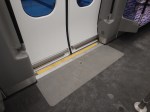

The step is not bad, but it is less than some on the London Overground. However, a few well-placed Harrington Humps would probably make entry and exit a lot easier.
It also must help, if Crossrail extends its route past Shenfield to perhaps Beaulieu, Chelmsford or Southend Victoria. Platforms updated for Greater Anglia’s Class 720 trains, would surely fit Crossrail’s Class 345 trains.
I also don’t think there are any platform length issues, although my research says that ten-car Class 720 trains are longer than nine-car Class 345 trains.
Great Western Main Line To Heathrow and Reading
The slow lines of the Great Western Main Line have been taken over by Crossrail to provide a service to their termini at Heathrow and Reading.
Great Western Railway (GWR) were forced to use Class 387 trains, due to electrification delays on the Great Western Main Line and late deliveries of Class 700 trains for Thameslink.
This is all a bit of a dog’s breakfast and I think there’ll be a bit of a sort-out, with perhaps..
- Electrification to Basingstoke, Newbury and Oxford.
- Crossrail with an increased frequency, serving all stations between London and Reading.
- Bedwyn and Oxford would be served by GWR’s five-car Class 800 trains, which would be at 125 mph between Eddington and Reading.
There could be some rather nice Class 387 trains going cheap?
But the result would be the slow lines would be Crossrail-only!
West Coast Main Line To Milton Keynes
This is a possible extension to Crossrail, from the mega hub at Old Oak Common station.
The current local operators on the West Coast Main Line are London Overground and West Midlands Trains.
Both operators have ordered new Aventras for these routes out of London.
London Overground is even replacing modern Class 378 trains with new Class 710 trains on the Watford DC Line.
Suburban Services Out Of Waterloo
If Crossrail 2 gets built, then some of these services will be taken over.
South Western Railway (SWR) have already ordered Class 701 trains for these routes.
This would appear to be a sensible move, as any improvements to platforms and stations made by SWR, will be compatible with Crossrail 2.
West Anglia Main Line To Broxbourne
If Crossrail 2 gets built, then some of these services along the West Anglia Main Line, will be taken over.
Greater Anglia have already ordered Class 720 trains for these routes.
This would appear to be another sensible move, as any improvements made by Greater Anglia, will be compatible with Crossrail 2.
Even after Crossrail 2 opens, Greater Anglia services will still be using the West Anglia Main Line, so there should be no compatibility problems.
North Kent Line To Abbey Wood, Ebbsfleet and Gravesend
The Mayor of London, several London Boroughs and other groups are pushing to extend Crossrail to Ebbsfleet.
Currently, there is a mixture of trains on the North Kent Line,
Consider.
- .In a few years time, there will be a new franchise holder.
- It is likely that a lot of trains will be replaced.
- It is likely that Crossrail and existing North Kent services will share a two-track railway.
It strikes me that there is a high chance that these replacement trains will be Aventras, as this will create a more efficient railway.
How Compatible Are Class 700 Trains With Aventras?
This question has to be asked, as the two different classes of trains will share routes and platforms.
- Along the North Kent Line if Crossrail is extended.
- Around the Cambridge area, where Thameslink and Greater Anglia share platforms.
I would assume that they must be very compatible, as the railway press isn’t saying anything to the contrary.
Surely, in a sensible world, both Thameslink and Crossrail would have used the same class of train!
Conclusion
It looks like there are advantages to having a line run by one family of trains.
- All trains will fit all platforms.
- Platform procedures will be similar for passengers and staff.
- Aventras can be fitted with the latest signalling and control systems.
Will these shared characteristics result in extra capacity?
West Anglia Route Improvement – STAR – 5th March 2018
These are some pictures I’ve taken and observations I’ve made in recent days.
An Unusual Train Movement At Stratford
I took some of the pictures for this post from a Stratford to Bishops Stortford train.
Whilst waiting in Platform 11 at Stratford, a Class 321 train, ran past my train and through Platform 12.
It could have just been an empty stock movement from Orient Way Sidings to Liverpool Street.
Or was it going round the High Meads Loop, possibly for driver training?
From Lea Bridge Station To South Of The Chingford Branch
Work has been progressing on this section, as these pictures show.


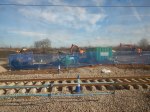

Track is starting to be laid, but there is no evidence of the points, where the three tracks will merge into two.
From North Of The Chingford Branch To Tottenham Hale Station
Work has been progressing here too!
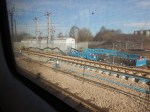
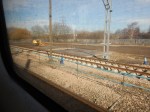
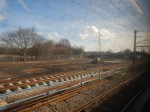
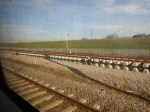

The Space Towards Chingford
This Google Map shows Coppermill Junction.

Note there is a lot of space on the Chingford side of the junction.
Could Network Rail be reinstating the Coppermill and Hall Farm Chords? Or at least creating the space to do it? I wrote about these chords in Rumours Of Curves In Walthamstow.
Nothing has been published or said, but there’s an awful lot of work going on to just add a third-track between Meridian Water and Lea Bridge stations.
The Island Platform At Tottenham Hale Station
An island platform is emerging at Tottenham Hale station.
The current platforms are as follows.
- 1 – Southbound to Liverpool Street and Stratford
- 2 – Northbound to Bishops Stortford,Cambridge, Hertford East and Stansted Airport.
This map from carto.metro.free.fr shows the new layout.
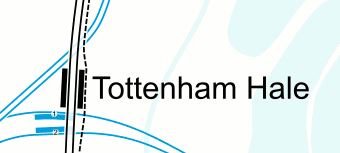
Blue is the Victoria Line.
So it looks like an extra Platform 0 is to be added on the new track, which will be an island platform with Platform 1.
These pictures show the current works.
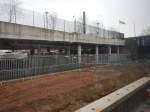
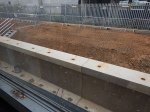

It looks to me, that there is a surprising amount of space and it might be possible to squeeze two tracks in the space.
Conclusion
Work is certainly progressing.
p
Could The Unwanted Class 707 Trains Be Converted To Hydrogen-Power?
South West Trains ordered a fleet of thirty Class 707 trains from Siemens for the route between Waterloo and Windsor and to increase services generally.
However, the new franchise holder; South Western Railway has decided to replace these new trains with new Class 701 trains from Bombardier.
Various reasons have been put forward for the very early replacement.
- Lower leasing costs.
- Lack of toilets on the new trains.
- The bad reputation with customers of the closely-related Class 700 trains on Thameslink.
- SWR want a unified fleet.
My observations include.
- MTR, who are a partner in SWR and the Crossrail operator, have got good reports of the Crossrail Aventras.
- SWR have ordered sixty ten-car trains and thirty five-car trains. So perhaps, SWT ordered the wrong mix of trains.
Crossrail 2 will probably use Aventras and it will take over some of SWR’s routes, So is there a degree of future-proofing for Crossrail 2 in the decision to abandon the Class 707 trains.
The Search For A New Operator For The Class 707 Trains
Wikipedia sums up the current situation.
Consequently, Angel Trains is looking for a future operator to lease these trains from 2019.
Will they find one?
The new franchise holder on Southeastern could be a possibility, if they decide to replace all their older units.
- Class 375 trains – 10 x 3 and 102 x 4
- Class 376 trains – 36 x5
- Class 465 trains – 147 x 4
- Class 466 trains – 46 x 2
This totals to 1,300 carriages. So they would have to buy a lot more trains of the same type to have an easy-to-manage unified fleet.
Buying that number of carriages, you will have to be very sure, that you had the design and the price right!
Northern and Scotrail could have been possible homes, but they have bought substantial numbers of other train manufacturers products.
\st.Pancras to Corby could be a possibility, but I think that route needs a faster train.
So is there a fleet of thirty five-car trains, that just don’t fit what train operating companies want?
The Need For A 100 mph Diesel Multiple Unit Replacement
Currently, there are the following larger DMUs on the UK network with speeds in the range of 90-100 mph.
- Class 158 train – 90 mph – 147 x 2 and 27 x 3
- Class 159 train – 90 mph – 30 x 3
- Class 165 train – 75/90 mph – 48 x 2 and 27 x 3
- Class 166 train – 90 mph – 21 x 3
- Class 168 train – 100 mph – 9 x 2, 8 x 3 and 11 x 4
- Class 170 train – 100 mph – 85 x 3 and 34 x 2
- Class 171 train – 100 mph – 12 x 2 and 8 x 4
- Class 172 train – 100 mph – 24 x 2 and 15 x 3
- Class 175 train – 100 mph – 11 x 2 and 16 x 3
This totals about 1200 carriages.
Note.
- Most are in good condition.
- Some are being replaced.
- They are run by most train operating companies.
- Some run on routes that are partially electrified.
- Trains sometimes run in longer formations to increase capacity
This story in City AM is entitled Transport Minister Jo Johnson Calls For Diesel-Only Trains To Be Ditched By 2040 And Fast Rollout Of Hydrogen Train Trials.
So is what Jo Johnson said feasble?
On a rough estimate there must be somewhere between two and four thousand carriages to replace before 2040, with some form of zero-carbon trains powered by batteries, hydrogen or Aunt Jemina’s extra strong knicker elastic.
Replacing four thousand carriages in twenty years is just two hundred a year or just four per week . Given that Bombardier have been quoted as saying that production rates as high as twenty-five carriages a week is possible in a single production line, I don’t think building the trains will be a problem.
|When you develop new or adapt technology in a disruptive way, you must be thorough in your development and testing.
So I think that Jo Johnson has come up with a feasible plan to decarbonise a lot of UK trains.
Lessons From The Alstom Coradia iLint
The world’s first hydrogen-powered train is a version of the Alstom Coradia Lint.
Alstom and Siemens have now merged their transportation interests, so could we be seeing a hydrogen-powered version of the Desiro City, which is the train family to which the Class 707 train belongs?
A hydrogen-powered Class 707 train, would probably be a useful train for a train operating company to have in its fleet.
Perhaps, the current unwanted thirty trains could be converted to dual-voltage hydrogen-powered trains?
Wikipedia gives details on the hydrogen-powered Alstom Coradia iLint.
- It is two-cars
- It is based on a successful train.
- It has a 140 kph operating speed.
- It has a range of 600-800 kilometres on a tank-full of hydrogen.
- It also uses a battery to store energy from traditional electrification, generated by hydrogen or from the regenerative braking system.
One of the keys to making it all work, is an intelligent computer system, that optimises energy generation and use according to the route.
A Hydrogen-Powered Class 707 Train
Could a conversion of a Class 707 train be tweaked to have the following performance and features?
- A 160 kph (100 mph) operating speed on hydrogen.
- The train already has this speed on electrification.
- Dual-voltage of 25 KVAC overhead and 750 VDC third-rail.
- A range on hydrogen in the region of four hundred miles.
- An interior designed for hundred mile trips, with toilets, wi-fi and power sockets.
The trains would need a substantial rebuild, but probably nothing too radical provided the hydrogen-powered generator, Hydrogen tank and the battery could be fitted in.
In The Formation Of A Class 707 Train, I describe hoe the Class 707 train, is two motored-cars, with three trailer-cars in between. I suspect, that the train can be lengthened or shortened by adding or removing trailer cars.
So could appropriate trailer cars be placed in the middle to create Battery, electric or hydrogen trains?
It very much looks like it!
Possible Routes
This train would be very useful for 100 mph partially-electrified routes.
- Basimgstoke to Exeter.
- Brighton to Ashford.
- London Bridge to Uckfield.
- Liverpool to Holyhead via the Halton Curve.
- Leeds to Carlisle via Settle.
- Newcastle to Carlisle
- Carlisle to Preston via Barrow and the Cumbrian Coast Line.
- Blackpool to Leeds via the Calder Valley.
- Blackburn to Manchester Airport via Todmorden
There are other routes, but most train operating companies have gone for a diesel or bi-mode solution.
Conclusion
I think that a hydrogen-powered Class 707 train is possible.
The Railway At Dawlish Is In Trouble Again
This report on the Guardian is entitled Waves Batter Railway Line At Dawlish Station As Storm Emma Hits UK. It has a video, which shows the ferocity of the storm.
But at least things seem to be happening to create an alternative route, when Emma and her friends are causing trouble!
This article in the Tavistock Times Gazette is entitled Okehampton Rail News Welcomed Across The Region.
This is the first paragraph.
The news that the Government is creating a plan to bring an all-week, all year train service to Okehampton has been welcomed by MPs — including those for Okehampton and Tavistock — and county councillors from across the area.
The article goes on to say that the Transport Secretary; Chris Grayling, has instructed Great Western Railway to produce a creditable plan for an all-week, all-year train service between Exeter and Okehampton.
It is not a complete railway line to Plymouth and Cornwall avoiding Dawlish, but surely, it will help get rail passengers round a blockage, perhaps by using coaches along the A38 between Bodmin Parkway and Okehampton stations.
I suspect that part of the GWR plan will be to be able to get a trusty short-formation InterCity 125 between Exeter and Okehampton in all but the worst weather.
I suspect too, that GWR and their drivers and other staff, know the limitations of InterCity 125s by now, when it comes to getting services through Dawlish in atrocious weather.
The BBC has this video of the last train going through before the line through Dawlish was closed in 2014.
 The Anonymous Widower