Siemens And South West Trains Unviel The Class 707 Train
In The Aventra Car Length Puzzle, I talked about the flexibility of Bombardier’s new Aventra trains. The first of these; Crossrail’s Class 345 trains, will hit the tracks in May 2017, when according to the September 2016 Edition of Modern Railways, they will enter service between Liverpool Street and Shenfield.
A month or so earlier,if all goes to plan, South West Trains will start running their new Class 707 trains, which are being built by Siemens in Germany.
This train is described in the following article in the same edition of Modern Railways.
The original in-service date of the Class 707 trains was July 2017, so having lost a bit of credibility with the late entry into service of the closely-related Class 700 trains, are Siemens trying to beat Bombardier’s Aventra into service?
Obviously, there a lot of new trains that will be ordered in the next few years and all tricks will be employed.
Reading, the article about the Class 707 trains, three things stand out thoughtful design, flexibility and future proofing.
- Although, the trains will be third-rail only, the first two trains will be fitted with pantographs during testing, to prove that the concept works. This means the trains could be passed to another operator in the future.
- No toilets are fitted, but all the wiring and plumbing is there, so they can be fitted later.
- Siemens have gone for 2+1 seating rather than longitudinal bench seating as on the Class 378 trains, because of the feet-sticking-out problem.
- The trains fature wide open gangways.
- The trains have air-conditioning.
- Unlike the Class 700 trains, the trains have wi-fi.
- The trains are full of electronics and are information-rich for passengers and drivers.
A lot of what I have said here, also applies to Bombardier’s Aventra.
This is said about the operation of Class 707 trains in Wikipedia.
The Class 707 units are intended primarily for services between London Waterloo and Windsor & Eton Riverside, allowing the Class 458 trains used on those services to be cascaded back to operations to Reading, which will then allow the Class 450s to move elsewhere. The intention is to run these services, as well as others via Staines, and some mainline services to Basingstoke, as ten-car trains with pairs of Class 707s.
So the lack of an end gangway will mean that the trains can’t run as a true ten-car train.
Of the other variants of these trains; Class 700 trains are fixed formations of eight and ten cars, that won’t be working as pairs and the Class 717 trains for Great Northern will have end gangways because of the tunnels they run through.
So I wonder why, South West Trains didn’t go for five-cars with end-gangways or ten-car trains.
Interestingly, Abellio’s order of new Aventra trains for East Anglia includes a mix of five and ten car trains. Will the five-car trains be able to work as pairs and will they be gangwayed? Nothing has been announced yet!
I think the theme running through both train designs, is the customer gets the trains that best fit their method of working.
London Bridge Station Will Be A Game-Changer For Many Passengers
After my first glimpse of the new London Bridge station, which I posted in London Bridge Station Wakes Up, I have a feeling that the station could be a gam-changer for many passengers.
These are a few of the ways the new station will help. Some are very specific for me, as I live in Dalston, without direct access to the Underground.
London Bridge Station Is Bus-Friendly
Ever since the new bus station at London Bridge has opened, it has been easier for those like me in Islington, Hackney and Tower Hamlets to get to the station, as there are several buses between our area and London Bridge.
But now the top entrance under the Shard is now complete, you can take one escalator to the concourse under all the tracks.
You can also still walk through direct to platforms 10-15, which I often do, as these platforms are the terminals for trains to and from Freedom Pass territory. There’s also a convenient M&S Simply Food, which I regularly use.
I also think that, as the concourse,has better access to and from Tooley Street, this will help those wanted to use buses on Tooley Street.
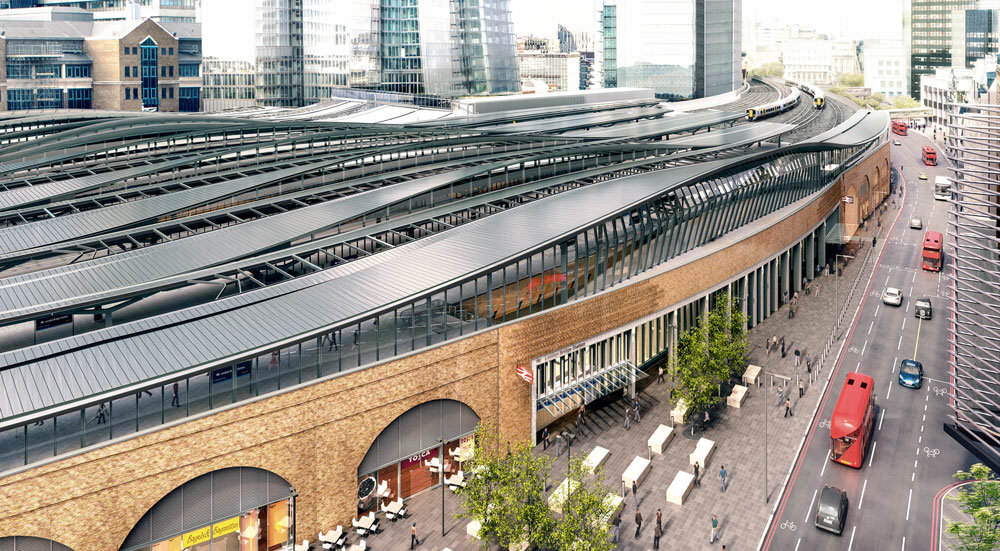
This visualisation from this page on the Thameslink Programme shows what Tooley Street will look like.
London Bridge Ststion And Tooley Street
There seems to be a wide pavement between the traffic and the station.
London Bridge Station Is Reasonably Tube-Friendly
The main London termini serving the South, are not as far as I’m concerned the easiest to get to by Underground, especially from East London.
Victoria and Waterloo are a long way to the West and Cannon Street and Charing Cross are downright difficult to get to.
However, the Northern and Jubilee Lines probably make London Bridge, the easiest terminal for the South for many to use.
Will Thameslink Be Considered Part Of The Tube?
Since it opened in the 1980s, I’ve always considered that Thameslink should have been considered to be another Underground line.
Although, I really haven’t used Thameslink seriously, until I moved back to London in 2010.
I believe that the following things should be done to make Thameslink better for passengers and increase ridership on the line.
- Show all Thameslink routes and stations on the Tube map.
- Allow Oyster and contactless bank card ticketing at all Thameslink stations.
- Have the same Freedom Pass rules as Crossrail.
- Run Thameslink stations under TfL design, information and operational rules.
- Thameslink stations should be manned from first to last train.
- Disabled passengers should be able to just turn up and ask for assistance.
- Thameslink should be part of the Night Tube.
As I suspect that as these conditions will apply to Crossrail, surely both lines running under the same rules would be very passenger friendly.
I look forward to the day, when I touch in with my bank card at Finsbury Park and touch out at Cambridge or Brighton.
London Bridge Station Will Be An Easier Walk To The City
I’ve walked across London Bridge in late afternoon on a sunny day and the pedestrian traffic to London Bridge station from the City is large.
It would appear that all the work being done on the Tooley Street side of the station, will open up routes to the concourse under the tracks and create better walking routes to and from the City.
Unfortunately, it’s probably not possible to totally pedestrianise Tooley Street, as there is nowhere for the traffic to go.
London Bridge Station For Cannon Street And Charing Cross Avoidance
Before work on the station started, you could always avoid going to Cannon Street or Charing Cross stations to get a train, by catching it as it passed through London Bridge
But it wasn’t the easiest of connections.
Now though with the new platforms 8 and 9 open, you can see how Cannon Street and Charing Cross services will be handled at London Bridge station.
London Bridge Station And Thameslink
If I needed to use the old London Bridge station to access Thameslink services, it wasn’t the easiest.
But now that I can see how I will access the Thameslink platforms at London Bridge, I will probably use a 141 or 21 bus through the City.
I have a feeling that London Bridge will see a bigger increase in passenger use of the Thameslink platforms, when they reopen, as the interchange at London Bridge will be so much easier than say St. Pancras.
In fact, London Bridge station, just amplifies how bad the passenger-friendliness is at St. Pancras station.
Island Platforms And Thameslink
On Crossrail all Central London stations between Woolwich and Paddington, would appear to be island platforms or ones where you can walk across between the Eastbound and Westbound platforms without any steps.
If you look at some of the classic Underground stations, built over the last hundred years, like Angel, Bermondsey, Gants Hill, Pimlico, Regents Park and Southgate, then they are all built to this simple design.
- Escalators and/or lifts are probably easier to provide, as these can descend to the central space to serve both lines.
- A large circulation space can be built between the tracks.
- When staff are provided on the platforms, it probably means they can be more efficiently provided.
- Passengers can easily reverse direction, either deliberately or because they’ve got on a train going in the wrong direction.
- The layout might be better for health and safety reasons, if say power fails on one track and passengers need to be evacuated.
It is for these and other reasons, that I think island platforms, should be built wherever possible.
But on the central section of Thameslink, only London Bridge has an island platform.
To make matters worse the idiots, who designed St. Pancras Thameslink station, inexplicably chose to build it with two separate platforms.
Thus, they made say New Barnet to Luton Airport with heavy bags, much more difficult than it should be.
You actually wonder, if that journey will be more convenient, when London Bridge is fully connected to Thameslink, by doing the extra stops to London Bridge and changing trains there.
Probably not, as the extra stops would take twenty minutes or so!
But if they had a good coffee stall and kiosk on the platform at London Bridge, you might think about it.
It Certainly Caught My Eye!
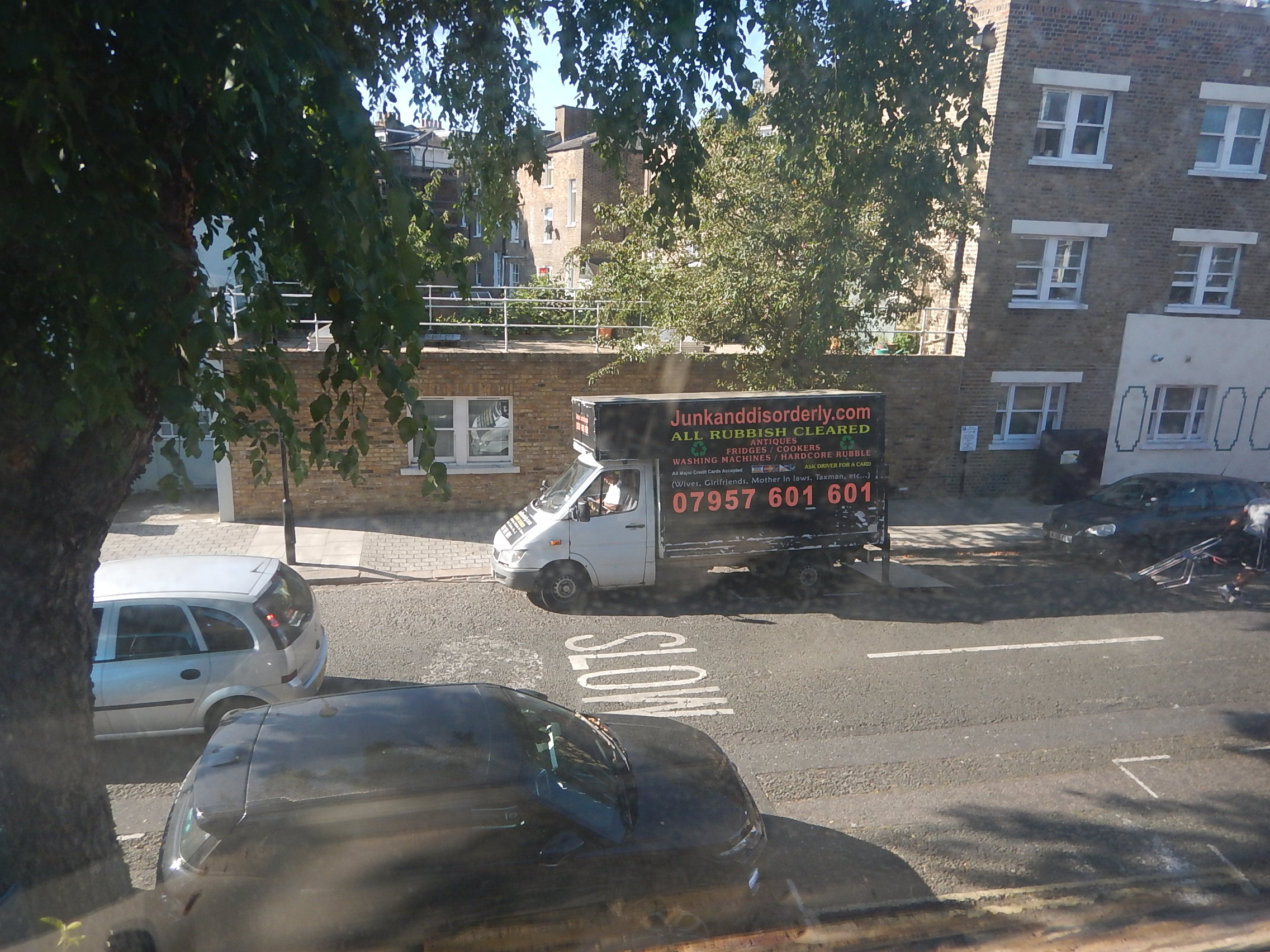
I am expecting a delivery this morning and when I heard a small truck pull up opposite, I had a look.
Junk And Disorderly
Well it gave me a laugh!
Twenty minutes later, I’d also done a deal worthy of Arthur Daley to remove some junk from my hall.
It all shows the value of having a good name for your company and using humour for advertising.
Although some might think some of the wording on the truck was a bit sexist, as they are saying they can clear your life of wives, girlfriends, mother in laws and taxmen.
Abbey Wood Station – 29th August 2016
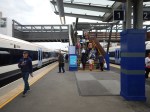
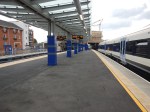
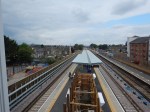
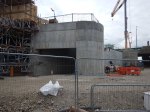
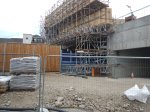
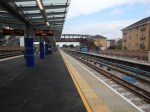
Abbey Wood Station, now appears to have two completed Southeastern platforms.
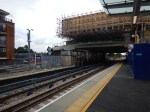
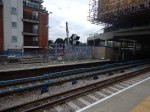
Note.
- The two Southeastern platforms form a wide island platform, which is numbered 1 and 2
- It would appear that there will be a second island platform for Crossrail. Could they be numbered 3 and 4?
- I also think, that both island platforms will be connected to the station building on the overbridge, by escalators and lifts
- It does seem to me that the space is a bit limited for the two Crossrail platforms and their overhead wires.
All pictures seem to show that the Southeastern lines are on the Southern pair of tracks and the Crossrail ones are on the Northern pair.
But under Future in the Wikipedia entry for Abbey Wood station, this is said.
Abbey Wood is being rebuilt in preparation for Crossrail, due to commence operation in 2018. Abbey Wood is the terminus of one of two eastern branches of Crossrail and will offer cross-platform interchange between terminating Crossrail services (at 12 trains per hour on new line) and existing Southeastern services (along existing tracks). This is instead of continuing services to Ebbsfleet International along existing tracks as those lines are congested and may delay Crossrail services.
Does cross-platform interchange mean that one Crossrail and one Southeastern track will share each platform?
This visualisation of the station doesn’t give any definite clues.
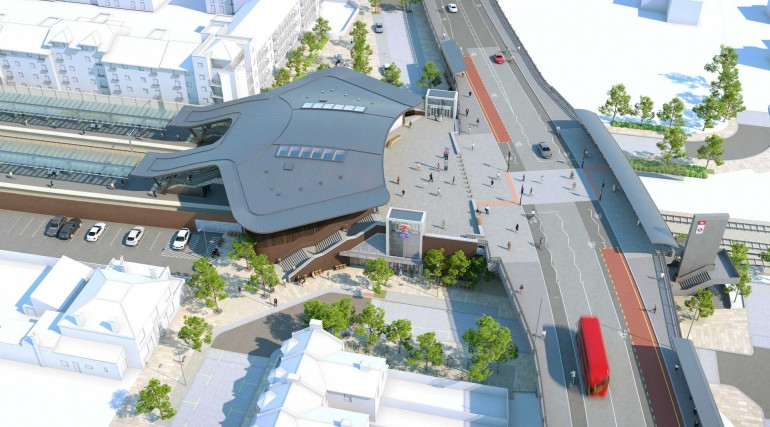
Abbey Wood Station
If we look at the morning peak and Southeastern trains turn up in Platform 1, with lots of passengers for Crossrail, surely if they’ve all got to go up one escalator and down another to get to Crossrail on the other island platform, it is a inefficient passenger flow, compared to a simple cross-platform interchange.
The reverse would happen in the evening.
So it must just be possible, that each island platform will have one Southeastern line and one Crossrail line.
Those Frenchmen at carto.metro.free.fr have this view of the lines between Plumstead and Abbey Wood stations.
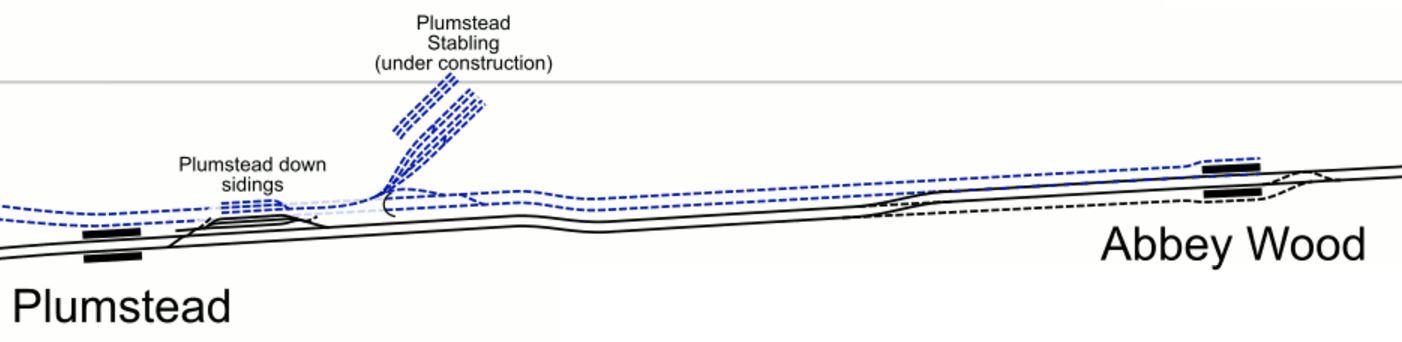
Crossrail Between Plumstead And Abbey Wood Stations
The map would appear to show the following.
- Platform 4 is a bay platform used by Crossrail and it is directly connected to the down (from London) Crossrail line.
- Platform 3 is directly connected to the up (towards London) Crossrail Line.
- There is no Crossrail lines shown to the East of Abbey Wood station.
- There is only one crossover between the two Crossrail lines, to allow trains from London to call at Platform 3 at Abbey Wood.
- The next crossovers on Crossrail, are at Custom House station.
- How do trains arriving in Platform 4 at Abbey Wood, get onto the up line through the tunnels?
- There would appear to have to be changes to the tracks, if Crossrail services are to be extended beyond Abbey Wood station.
I wonder if service levels give us any clues.
- At present there are eight Southeastern services per hour (tph) running through the station in the Off Peak.
- Six services go to and from Cannon Street and two terminate at Charing Cross.
- Wikipedia says Crossrail will run 12 tph in the Peak and 8 tph in the Off Peak.
Surely in an ideal world, if both services have an 8 tph frequency, it should be arranged that they the two services have a cross-platform interchange.
It should all be as clear as mud, in a few months.
Details Of The New London Bridge Station
These are a selection of pictures showing design details of the new London Bridge station.

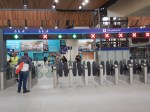
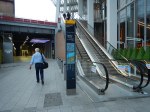
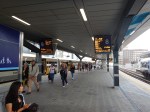

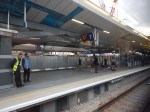
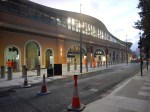
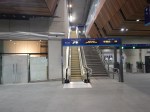
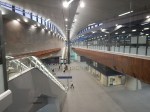
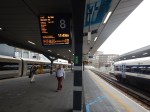
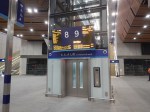
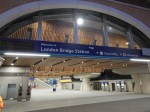
One thing that is noticeable, is that the station is very information rich. Are Network Rail trying to get passengers through the station with the minimum of questions asked to staff?
I will probably add some more pictures.
London Bridge Station Wakes Up
Part of the new concourse of London Bridge station opened at five o’clock this morning.


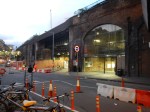
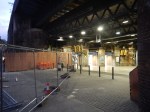
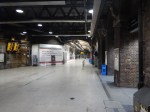
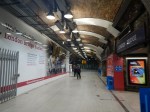
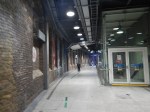
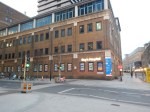
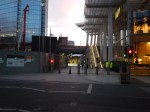

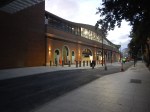
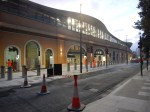
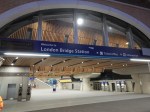
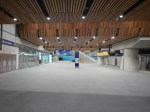
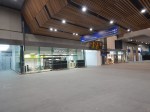
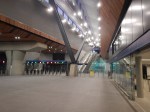
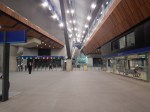
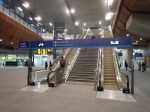

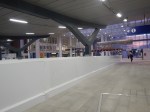

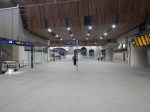
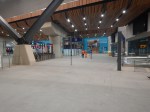
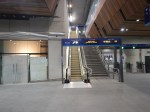
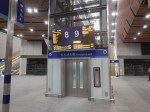
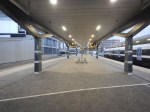
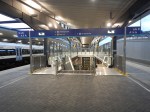

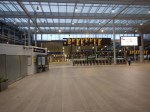
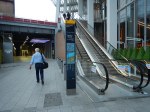

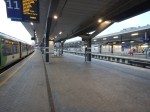
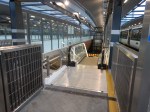
I got there around 05:30, so at least there would be some light.
Points to note.
- The concourse is underneath the platforms.
- Often when this is done, as at Brussels Midi, the concourse is dark and claustrophobic. London Bridge certainly isn’t, as natural light is allowed in and there are masses of LED lights.
- The concourse is split into an open side and one where you must have a valid ticket.
- Escalators join the platforms in the centre.
- The island platforms have three escalators, two sets of stairs and a lift.
- The first through platform; 8 and 9 for Charing Cross, form a wide island platform.
- If platforms 4 and 5 for Thameslink, are as wide as 8 and 9, they will be a game-changer for those with limited mobility on Thameslink.
- Currently, the only dreary public area, is the old cross-passage between Tooley Street and Guy’s Hospital, but that dates from a few years ago and is probably going to be updated.
It is certainly a very good start.
The Aventra Car Length Puzzle
I think that Bombardier have a very flexible nature to how long a car can be in the new Aventra. This flexible length, could be enabled in part, by the way the trains are built, which I believe used aluminium exclusions and a lot of specialist weldimg. I wouldn’t be surprised that if you wanted a 40 metre long car, then Bombardier would be able to build it.
They now have three orders for the train and they can be summarised as follows.
The information has been gleaned from Wikipedia, Modern Railways and other sources.
Crossrail Class 345 Trains
The Class 345 trains for Crossrail have the following characteristics.
- 9 cars – Wiki
- articulated trains
- 200 metres long – Wiki
- Around 23 metres long cars – MR
- 3 pairs of doors per car – MR
Seating will be a mixture of Metro-style and some groups of four.
This article in Rail Technology Magazine says a lot about the design of the trains. This is said about seating.
“The layout of the seats is also different per different carriage, so where people will crowd there’s more space, and at the end of the trains, where people might not be crowding on, there’s more seats. So a lot of thought has gone into the ergonomics of this train.
“But generally, the average journey on this train will be 15 minutes – so what people want is to be safe, comfortable, and air conditioned, but they really want to get on. Capacity is one of the big drivers – but 450 seats if a really good ratio.”
So perhaps the old Tube rule will apply – If you want a seat go to the front or back of a train.
Dividing nine-cars into a 200 m. long train, gives a car-length of 22.22 m, which is probably good enough for around 23 metres.
But if you assume that the two driving cars are identical and the trailer-cars between them are 23 metres long, you get two 19.5 metre driving cars at either end. Given that the train is articulated and there is a need for a Crash-worthiness crumple zone at both ends of the train, it could be that so that the middle trailer cars are identical as they are in the Class 378 train, that the end driving cars are slightly shorter, which could be structurally stronger.
If the two driving cars are 20 metres, then you get a trailer car length of 22.85 metres.
Could it be too that all different facilities like wheelchair spaces and transverse seating are in the driving car?
I also have this feeling, if I remember correctly, that if you can cantilever a heavy weight forward in the nose, that this helps dissipate the kinetic energy in a crash. It’s why car engines are often placed as far forward as the design will allow.
This statement can be found a couple of times on the Internet including in this article on Railway Gazette.
There will be a mixture of ‘metro-style’ and bay seating, with four wheelchair spaces and a number of multi-use spaces with tip-up seating to accommodate prams or luggage.
Only a detailed look inside a finished train will find out what they are really like.
London Overground Class 710 Trains
The Class 710 trains for London Overground have the following characteristics.
- 4 cars – Wiki
- articulated trains (?)
- Around 20 metres long cars – MR – Similar to Class 378 trains
- 2 pairs of doors per car – MR
Seating will depend on where the trains are deployed and will be Metro or traditional, although the September 2016 edition of Modern Railways says its all longitudinal. Passengers won’t like that between Liverpool Street and Cheshunt.
Abellio East Anglia Trains
These trains haven’t been allocated a class yet and this is the best description from this article in Rail Magazine describes the trains.
The Bombardier units will be based on the Class 345 Aventras being delivered for Crossrail, but with the focus on seating capacity rather than standing space. The trains will come in two versions: ten-car and 240 metres long; and five-car and 110 metres long. All will be electric.
Note, if these train and car lengths are correct, the cars are longer than for the Class 360 trains and a ten-car Aventra is as long as a twelve-car Class 360 train.
I think it would be reasonable to assume, that the driving and trailer cars for both length of trains are identical, as this would give the operator various advantages.
- Having only one type of driving car must ease driver training and rostering.
- Servicing will surely be easier to organise.
- If say a route needed a six-car train, then an extra car could be easily added.
Three different ways of calculating the car lengths can be used.
Method 1 – If d is the length of the driving car and t is the length of the trailer car, you get two simultaneous equations.
2d+8d = 240
2d+3t = 110
These give a trailer car length of 26 metres and a driving car length of 16 metres.
I don’t think that sixteen metres is too feasible, even if Bombardier could build one.
Method 2 – The driving cars are 20 metres long.
This car length would be a compromise driving car length that would work with both Class 345 and Class 710 trains, to give identical driving cars across all trains.
The length of a trailer car will be as follows.
- 10-car – 25 metres.
- 5-car – 23.3 metres.
What is intriguing is that if 25 metre trailer cars were used in a five-car train, this would give a train length of 115 metres. So two five-car train running as a pair, would fit any platform able to take a ten-car train.
Method 3 – The trailer cars are a fixed length.
- 20 metre trailer cars would give 40 and 25 metre driving cars for 10-car and 5-car trains respectively.
- 23 metre trailer cars would give 28 and 20 metre driving cars for 10-car and 5-car trains respectively.
- 24 metre trailer cars would give 24 and 19 metre driving cars for 10-car and 5-car trains respectively.
- 26 metre trailer cars would give 16 and 16 metre driving cars for 10-car and 5-car trains respectively.
I suspect there’s a compromise in there somewhere, that will allow both types of car to be all of the same length.
I suspect that it could be 20 metre driving cars and 25 metre training cars, as indicated by Method 2.
Consider.
- Both train layouts, allow two five-car trains to fit a ten-car platform and if they can, work as a pair.
- As with the Crossrail trains, I wonder if the driving cars will have all the specials like disabled toilets, wheelchair and bicycle spaces and First Class seating.
- You could even have different versions of the driving cars. First Class, bicycle, accessible toilet etc.
- Perhaps only one First Class seating area is needed per train.
- Would all routes need bicycle spaces?
- If the trailer cars were longer, then this would mean there could be a more relaxed interior with more space for tables.
Again as with the Crossrail trains, only a detailed look inside a real train, will show the car lengths and the interiors.
Conclusion
It all leads me to the conclusion that Bombardier have a very flexible design.
- Pictures show the driver’s cab to be generously-sized.
- Pictures show that the driver’s cab might be cantilevered outwards from the train, which would increase crash-worthiness.
- I’m tending to believe that driving-cars will all be the same for the driver, but the space behind the cab will be used for special parts of the train like disabled toilets, bicycle spaces and First Class seating. The latter is traditionally placed at one end of many EMUs, anyway.
- Trailer cars might be of a flexible length between 20 and 26 metres long.
- Saying you could only have one length of trailer and dtiving cars would be so Henry Ford
- The number of doors in each car can be two or three pairs.
Bombardier have attempted to allow the customer to procure a train to their precise needs.
But overall, I’m still puzzled.
A Contactless Card Explosion
According to Becky Barrow in the Sunday Times, it not yet ten years since contactless cards were introduced.
She says that during the first six months of this year, we spent £9.3billion using the cards.
In the same period of 2009, we spent just £315,953 and half of that was Patsy and Edina in Harvey Nicks.
That is some increase.
When contactless cards were introduced on London’s buses, after listening to quite a few idiot techophobe politicians, I set up a very tight Internet trawl about ticketing problems on London’s transport.
I have not found a single problem reported in a newspaper or web-site.
My problem with contactless cards, is that I can’t use them for small train or tram trips outside London. Every train company and local authority seems to be reinventing London’s wheel.
No wonder London gets all the tourists!
I also had a small problem where a branch of a well-known store set up their tills incorrectly and AMEX thought it was fraud and refunded my purchases.
Meet Linda From Coventry: She’s In The Driving Seat At Citroen
The title of this post is from an article in the Business section of The Sunday Times.
How many ladies run car companies? And how many are English and run iconic quirky French ones?
According to the article she is the first British woman to run a big car company and only the third woman in ever.
She’s probably one of the first widows of either sex too!
I think it must be well done to Linda from Coventry!
 The Anonymous Widower